Grand Winter Event

Auction #17

Part 1

Grand Winter Event

Auction #17

Part 2

of 4 pages

Lot : 1

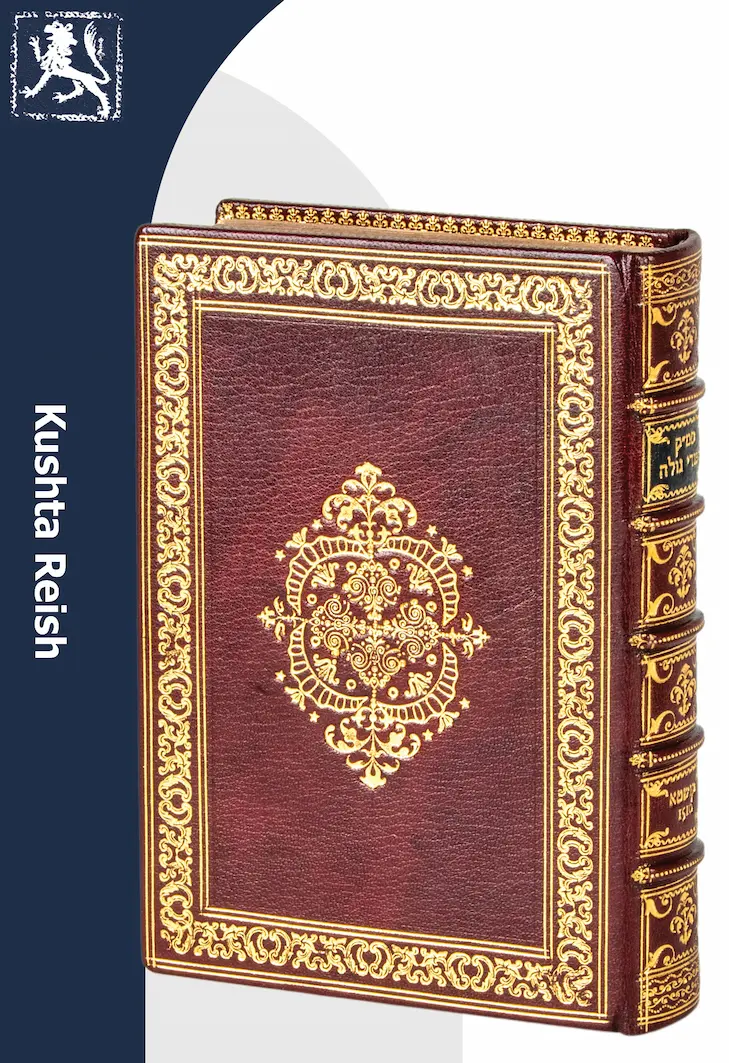
476 Year-old Tehilim Rare Sefer Tehillim. Basel, 1547 Small format (11 cm)
476 Year-old Tehilim Rare Sefer Tehillim. Basel, 1547 Small format (11 cm) Sefer Tehillim printed with beautiful calligraphy letters, and interleaved pages. The present edition was printed with Hebrew letters only, without any Latin inscription since it was published exclusively for the Jewish community. Interleaved: This Tehillim contains interleaves – a blank page between each printed leaf – designated for writing notes and comments. Leaves 190b-192a feature a unique title page titled “Kriah Meshunah” which is a list of kri u’ksiv and variances in nusach in the text. Colophon: Nic. Episcopium... & Basileae apud Hier Frobenium. The printer’s emblem appears on the title page and on the last page of the sefer. Basel, 1547. Page Count: [192] leaves. Page Size: 11 cm. Miniscule damage to margins of several pages. Title page with small tear but no damage to text and minor restoration at margin. Antique worn parchment binding with engravings and clasps. ................................................ Any inquiries about this lot ? We are available also on WhatsApp >>>

Lot : 2

Important Commentary on Tehillim Norah Tehillos. Singular Editon. Salonika, 1569 600 pages!
Important Commentary on Tehillim Norah Tehillos. Singular Editon. Salonika, 1569 600 pages! Large, two volumes, comprehensive commentary on the entire Sefer Tehillim by Rabbi Yoel Ibn Shuib, one of the great scholars and orators of the Spanish expulsion era. The commentary, which was never reprinted, is over 600 pages! long, and is one of the most comprehensive commentaries on Sefer Tehillim. Rabbi Yoel Ibn Shuib (1456-1510) was a Spanish Rabbi, commentator and orator in the era of the Spanish Expulsion. He served as Rabbi in Aragon and Navarre in north Spain. With the expulsion in 1492, he wandered to Salonika where he was appointed Rabbi of Aragon community in Salonika. He called out to the Anusim (Marranos), encouraging them not to fear but to embrace their faith and practice Torah openly. Rabbi Yoel Ibn Shuib compiled his present work on Tehillim in Toledo in 1489. His written legacy also includes Olas Shabbos (Venice, 1577) and a commentary on Eichah that was printed inside Rabbi Avraham Galanti’s Kol Bochim (Venice, 1589). He authored other works which have not been yet printed as mentioned in his son’s foreword. Provenance: Rabbi Wolf Heidenheim (1757-1832) signature appears on the title page and Vol. 2 has his handwritten comment. Salonika, 1569. Singular Edition. Vol. 1: 210, 4 leaves; Vol. 2: 211-322, [2] leaves. Page Size: Vol. 1: 19.5 cm; Vol. 2: 21.5 cm. Condition: Thick, high-quality white paper with minor stains. Margins of first leaves restored. Both volumes are bound in new matching leather bindings. ................................................ Any inquiries about this lot ? We are available also on WhatsApp >>>

Lot : 3

Tehillim with the Sforno’s Commentary. First Edition. Venice, 1586 Sefer Tehillim with
Tehillim with the Sforno’s Commentary. First Edition. Venice, 1586 Sefer Tehillim with the commentary of Rabbeinu Ovadya Sforno. The text of the Tehillim is printed with nekudos,   The Sforno’s commentary on Tehillim is a fundamental and important commentary on Tehillim. A summary of the meaning and intention of the mizmor precedes each chapter. Rabbi Ovadya Sforno (1478-1550) was one of the greatest commentators on Tanach, a genius in Torah and well-versed in many secular wisdoms. His commentary was accepted and highly acclaimed throughout the generations. Additionally, he was a famous doctor known throughout his generation as “Lord of Doctors”. Venice, 1586. First Edition. Page Size: 92 leaves. Page Size: 20 cm. Condition: Good. Light water stains on top margins. Parchment binding. Bibliography: Stefansky, Sifrei Yesod #22, comments. ................................................ Any inquiries about this lot ? We are available also on WhatsApp >>>

Lot : 4

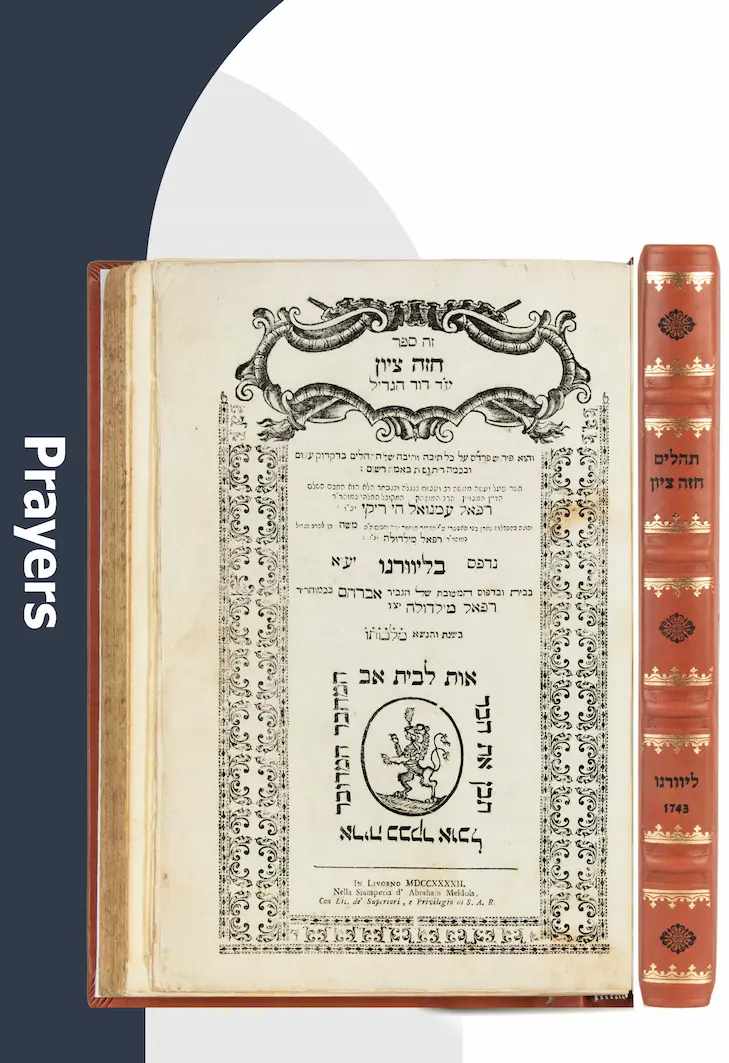
Tehillim with Chazeh Tzion , First Edition. Livorno, 1742 Sefer Tehillim with
Tehillim with Chazeh Tzion , First Edition. Livorno, 1742 Sefer Tehillim with the kabbalistic Chazeh Tzion commentary by the eminent kabbalist, Rabbi Emmanuel Chai Ricci, author of Mishnas Chassidim. The text of the Tehillim with nekudos is positioned in the center of the page, with the commentary surrounding it. The Dream At the end of the sefer, the author’s son relates at length the heartbreaking and tragic story of the death of his righteous father: “In 1741, he set out to Italy to garner financial support for his yeshivah and to publish his work on Tehillim, Chazeh Tzion. On his way home, while departing Modena to Bologna, he was assaulted by cruel bandits who attempted to forcefully defile his holiness by forcing him to eat pig’s meat. Rav Emanuel refused fervently and was brutally killed, sacrificing his life on Kiddush Hashem. After his passing, they found a document in which he had written that it was revealed to him through a dream that his soul was from the spiritual source of the Tanna Rabbi Yehuda ben Bava, one of the Asara Harugei Malchus, murdered on Kiddush Hashem. Rabbi Emanuel Chai Ricci (1688 - 1743) was a renowned kabbalist who journeyed to the Holy Land where he founded a yeshivah and beis medrash in Jerusalem. Years later, the Ohr Hachaim Hakadosh would establish his own yeshivah in the same beis medrash. Livorno, 1742. First Edition. Page Count: 138, [2] leaves. Page Size: 32 cm. Condition: Good. Minor restorations on sides of the title page and several stains in margins. New leather binding. Bibliography: Stefansky, Sifrei Yesod comments on #368. ................................................ Any inquiries about this lot ? We are available also on WhatsApp >>>

Lot : 5

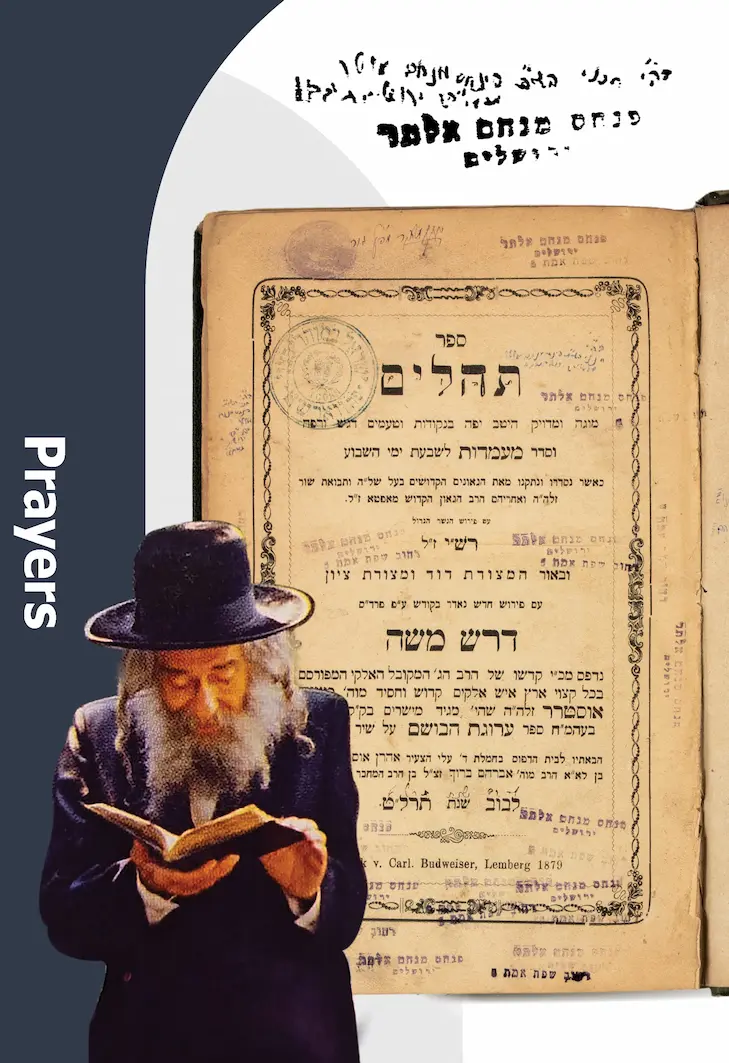
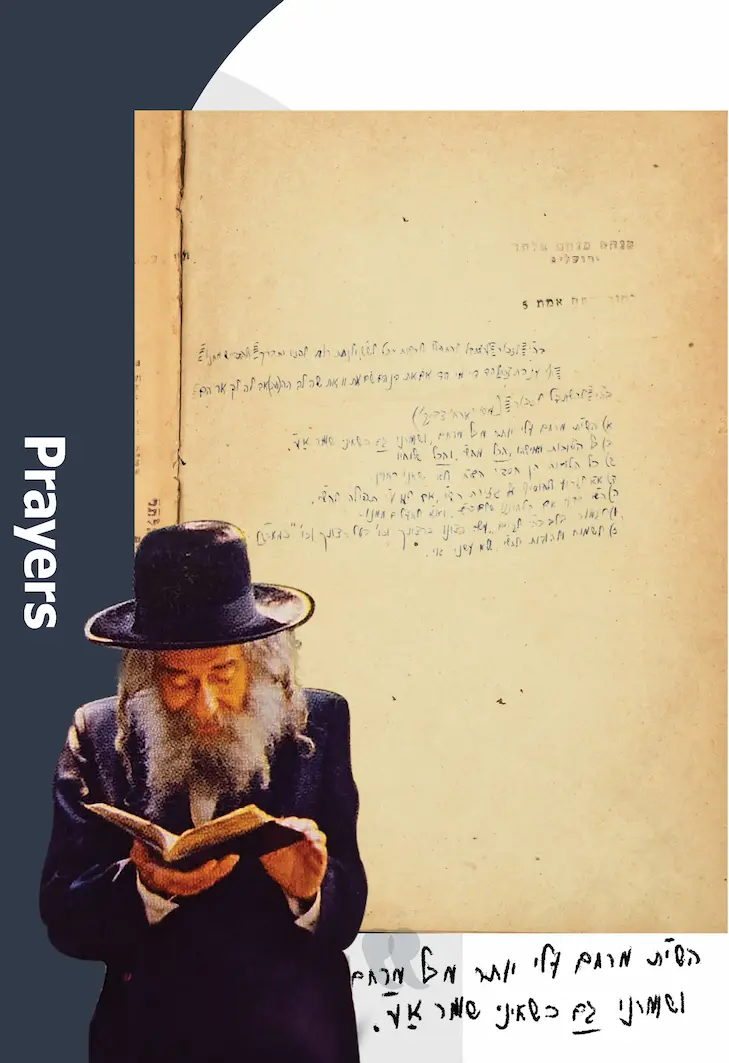
Autographed Tehillim of the Admor the Pnei Menachem of Gur with a
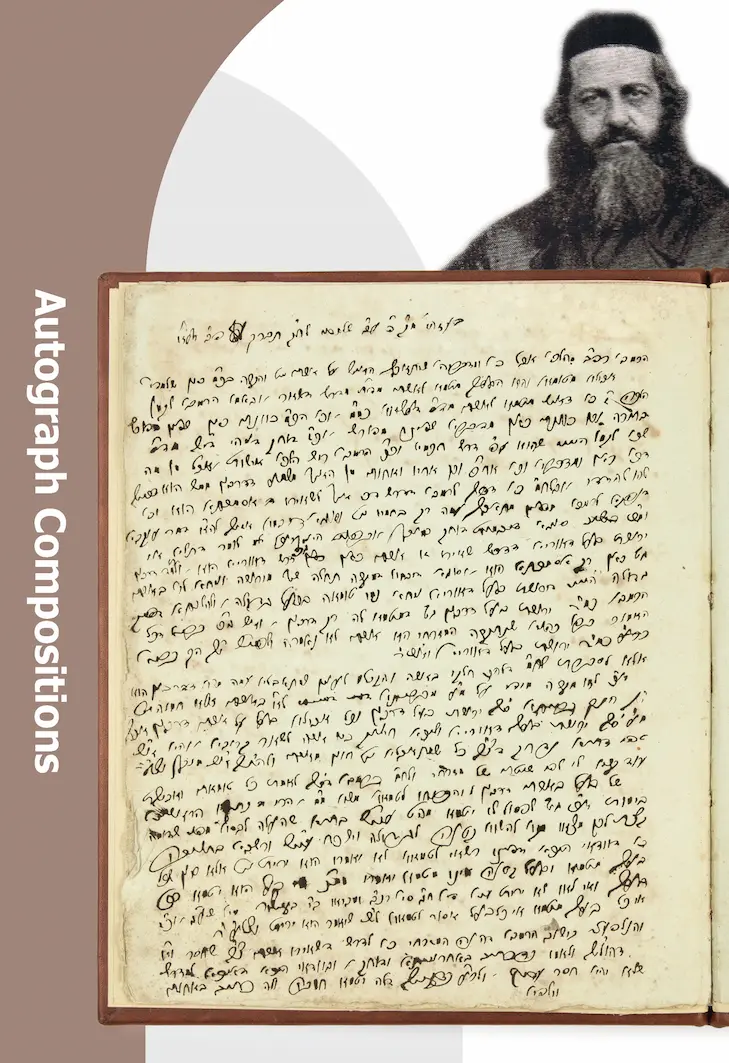
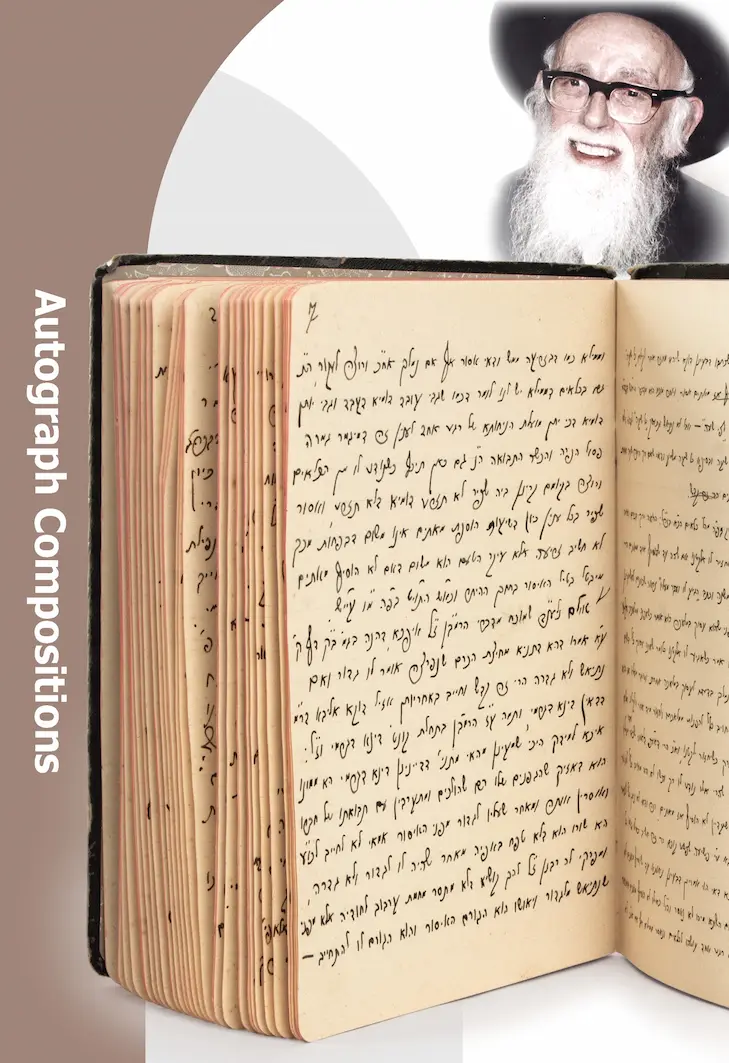
Autographed Tehillim of the Admor the Pnei Menachem of Gur with a page of personal inspiring words written by Admors hand. Tehillim with Kabbalistic commentary, owned and used by the Admor Rabbi Pinchas Menachem Alter of Gur, author of Pnei Menachem, with his autograph and handwritten notes. The Admor’s autograph appears three times in the beginning of the sefer and another time on the title page of Maamados. The first autograph appears on the flyleaf along with the inscription “B[’ezras] H[ashem] Y[isborach], Hash[em] Yis[borach] has granted me Pinchas Menachem Alter here in the holy city of Yerushalayim, may she be speedily rebuilt.” The flyleaf also contains handwritten notes on topics of faith, belief and service of Hashem which the Admor wrote to himself to review and memorize. B’ezras Hashem, to remember (from the sefer Orchos Tzaddikim): 1. H[ashem] Yis[borach] has more compassion on me than any other compassionate one, and He safeguards me even when I do not safeguard myself. 2. All favors from people come essentially from Hash[em] Yis[borach] and they are all His messengers. 3. All goodness is from the lovingkindness of Hash[em] Yis[borach], and not because we are worthy. 4. It is impossible to add or detract from a decree of Hash[em] Yis[borach], without praying to Hash[em] Yis[borach]. 5. Hash[em] Yis[borach knows if our faith is complete in Him, and one cannot hide from Him. 6. Commit in the heart to uphold “Make His Will your will” and “annul your will…” as written by Chazal. 7. Rejoice and thank Hash[em] Yis[borach] that He did not make me a gentile. The Admor Rabbi Pinchas Menachem Alter (1926-1996) was the seventh Admor in the glorious Gur dynasty, author of the Pnei Menachem, son of the Imrei Emes and grandson of the Sfas Emes of Gur. A genius and versed in all realms of Torah, he served for many years as Rosh Yeshivah of Yeshivas Sfas Emes before succeeding his brother the Lev Simcha as Admor of Gur. The Pnei Menachem, as he was popularly called after his sefer, placed great emphasis on prayer, and he was known to pray with trepidation and awe of his Creator. His body would tremble as he prayed, and he recited every word intently, with passion and ecstasy, while swaying fervently as his ancestors, the Chiddushei Harim and Sfas Emes, were known to do. He once expressed, “I am named for the author of the Sifsei Tzaddik who possessed the power of prayer.” The top of the title page also features the autograph of his grandfather the Admor Rabbi Yaakov Meir Biderman (1870-1941). Rabbi Yaakov Meir was the son-in-law of the Sfas Emes and edited all his works on Shas. Years later, in 1957, the Pnei Menachem compiled his grandfather’s chiddushim and printed them as the sefer Maor Yaakov. Rabbi Yaakov Meir’s daughter married his nephew, the Beis Yisrael of Gur. Lvov, 1879. First Edition. Page Count: [6], 9-345: 30 leaves (last count refers to Maamados). Description: Tehillim features a kabbalistic commentary by Rabbi Moshe Osterer of Brod, author of Arugas Habosem. Condition: Good. Antique slightly worn half-leather binding. ................................................ Any inquiries about this lot ? We are available also on WhatsApp >>>

Lot : 6

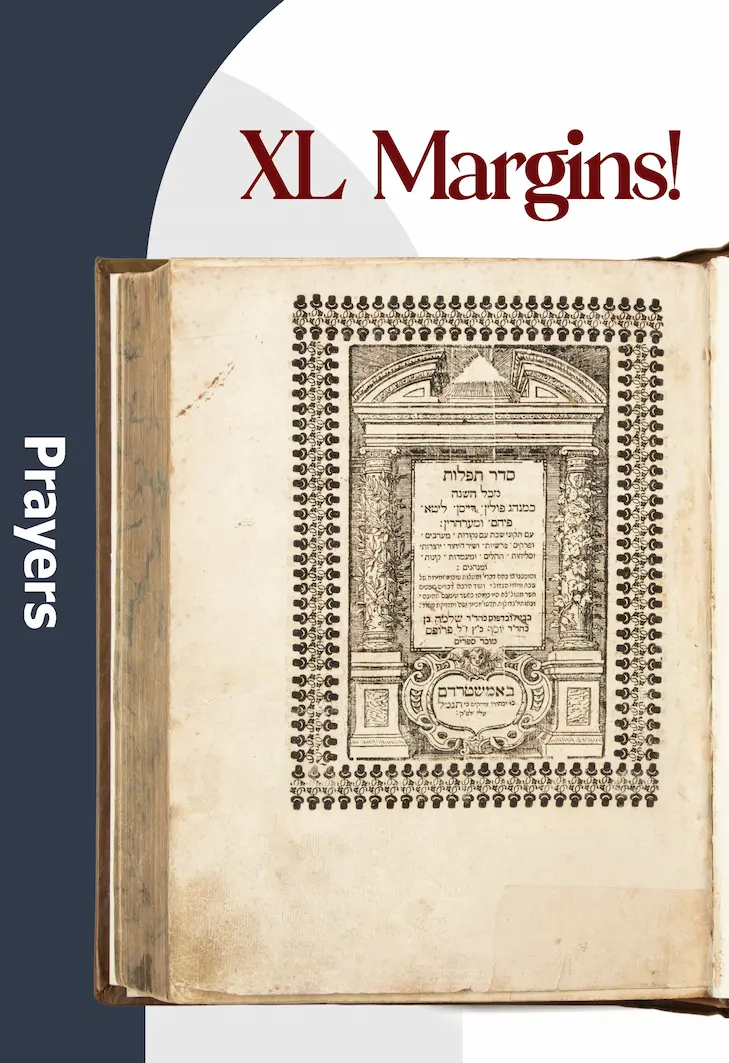
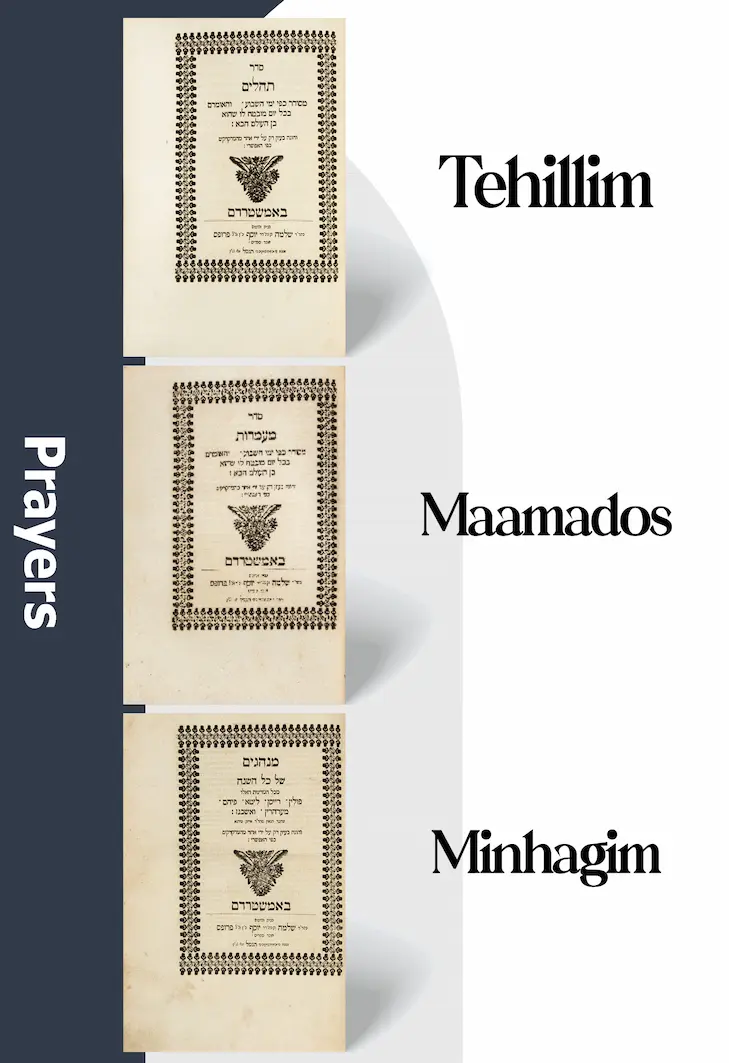
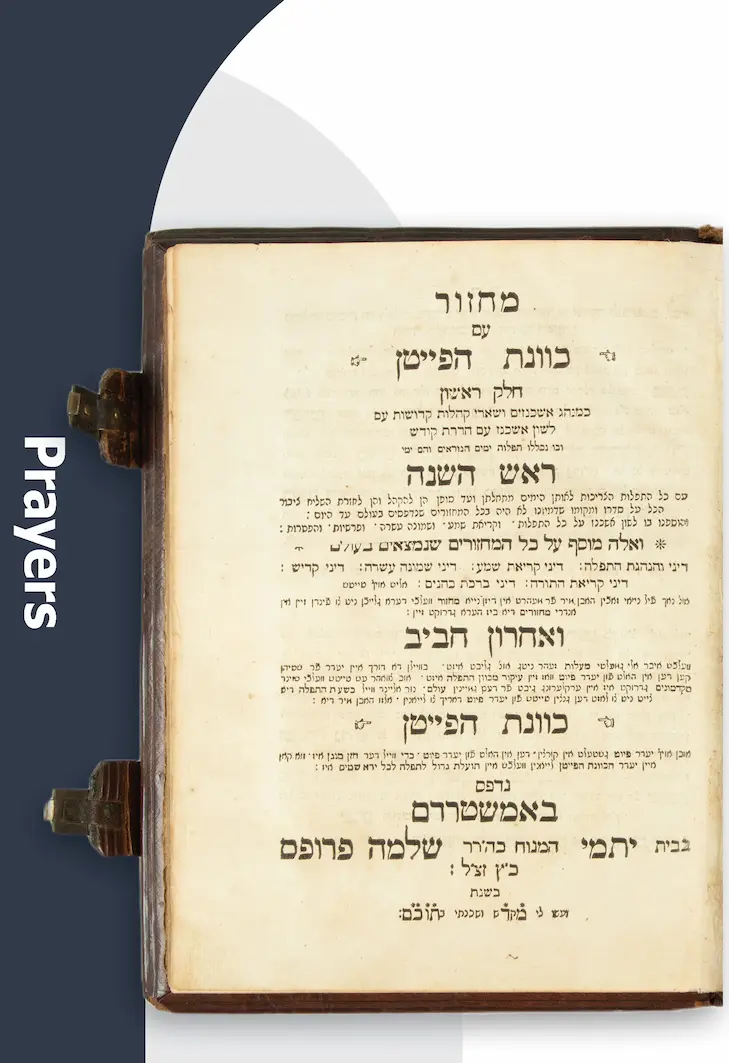
Rare compendium - Year-Round Siddur with Tehillim, Maamados and Sefer Minhagim. Impressive
Rare compendium - Year-Round Siddur with Tehillim, Maamados and Sefer Minhagim. Impressive extra-wide margins Amsterdam, 1713 Large, delightful siddur with prayers for the whole year in Ashkenazic rite, following the customs and nusach of Poland, Reisin, and Lithuania. The siddur includes Tehillim, Maamados and sefer HaMinhagim by Rabbi Eizik of Tirnau. This beautiful, large siddur features extra-wide margins with separate title pages for the siddur, Tehillim, Maamados and book of customs. This edition of the siddur is particularly rare, the Jerusalem National Library does not own a copy of this siddur. The scanned copy at the Jerusalem National Library which is taken from the Valmadonna Collection is missing the last three sections: Tehillim, Maamados and the customs. This siddur is complete and encompasses all parts of prayer including weekday, Shabbos, festivals, Yotzros, Selichos, Techinos, Pirkei Avos, Haggadah shel Pesach, Zemiros Shabbos and Tikkunei Shabbos, Tehillim, Maamados and the book of customs, authored by Rabbi Eizik of Tirnau. Amsterdam, 1713. Solomon Propes Press. Page Count: Siddur: [1], 233: Tehillim: 38: Maamados: 35: Book of Customs: [1], 37-56 leaves. Page Size: 27 cm. Inserted into the end of the Maamados section is a handwritten leaf with a table listing the calendar for the years 5568-5636 (1808-1876), with the charts all filled in with impressive calligraphy. Condition: Beautiful siddur. Title page margins are a ½ cm smaller than the rest of the pages. Two leaves have minor tears and are worn, yet almost completely intact. Old reinforcements in the margins of several pages; several stains. Elegant new leather binding. ................................................ Any inquiries about this lot ? We are available also on WhatsApp >>>

Lot : 7

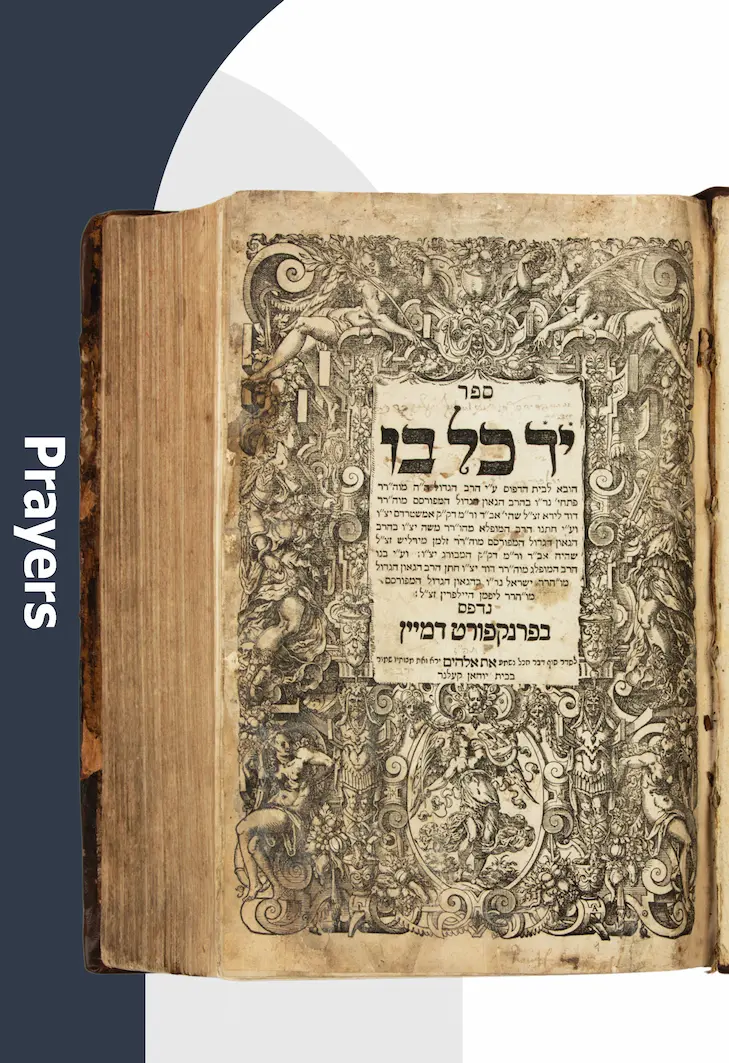
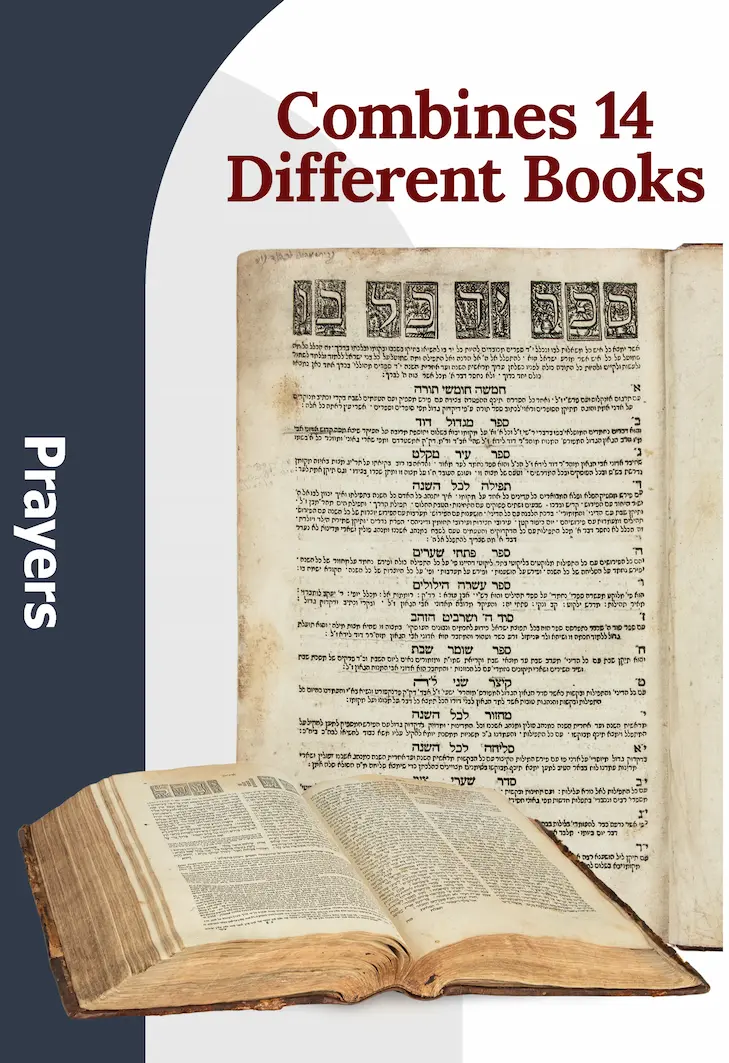
Impressive Torah anthology Contains 14 different books. Yad Kol Bo. Singular Edition.
Impressive Torah anthology Contains 14 different books. Yad Kol Bo. Singular Edition. Frankfurt am Main, 1725 Thick, heavy volume encompassing 14 (numerical equivalent of the Hebrew יד [yad]) works of Mikra and prayers with assorted commentaries. Particularly notable is the Pischei She’arim commentary on the siddur and Selichos, printed for the first time as a part of this sefer. Yad Kol Bo is regarded as one of the most impressive Torah and prayer anthologies ever printed. The sefer was printed by Rabbi Pesachya Lida ben Rabbi Dovid Lida and his brother-in-law Rabbi Moshe Mireles. The latter was the son of Rabbi Shlomo Zalman Mireles, Av Beis Din of Hamburg and father-in-law of the Chacham Tzvi. The Yad Kol Bo anthology includes a Chamishah Chumshei Torah (Tikkun Sofrim) with Oneklus’ translation, Rashi’s commentary and the Migdal Dovid commentary by Rabbi Dovid Lida, and Haftaros with a new commentary. The next section is a siddur and machzor for the whole year in Ashkenazic-Polish rite. The siddur includes Selichos, piyyutim, Maaravos and Yotzros, Tikkunei Shabbos, Hoshanos, seder Shomrim Laboker and Tikkun Leil Shavuos. All of the above prayers are accompanied by the Pischei Shearim commentary printed here for the first time and include laws of prayers and Kabbalistic intentions. The third and fourth sections are a Tehillim with the Asara Hilulum commentary, an anthology of ten commentaries in and of itself, and a Haggadah with instructions and piyyutim in Yiddish. The next units included in Yad Kol Bo are the sefarim Shaarei Tziyon, Kitzur Shl”a and the works of Rabbi Dovid Lida, among them Sod Hashem and Sharvit Hazahav on ritual circumcision; Ir Miklat on the 613 mitzvos, Migdal Dovid on Rashi’s commentary (with supplements by Rabbi Moshe Neimark), and Shomer Shabbos on laws and tikkunim of Shabbos. The sefer opens with two title pages, one fully illustrated with numerous historical figures, and the other listing all 14 works included in the anthology. With approbations by several prominent Rabbanim, including the authors of Pnei Yehoshua, Shav Yaakov and Knesses Yechezkel. Frankfurt am Main, 1727. First and singular edition. Page Count: [2], 94, 59; 4, [2], 5-74, 34; 56; 40 leaves. Page Size: 34 cm. Condition: Margins of both title pages lightly restored; stained, signs of use. Original binding - worn. Owners’ signatures. ................................................ Any inquiries about this lot ? We are available also on WhatsApp >>>

Lot : 8

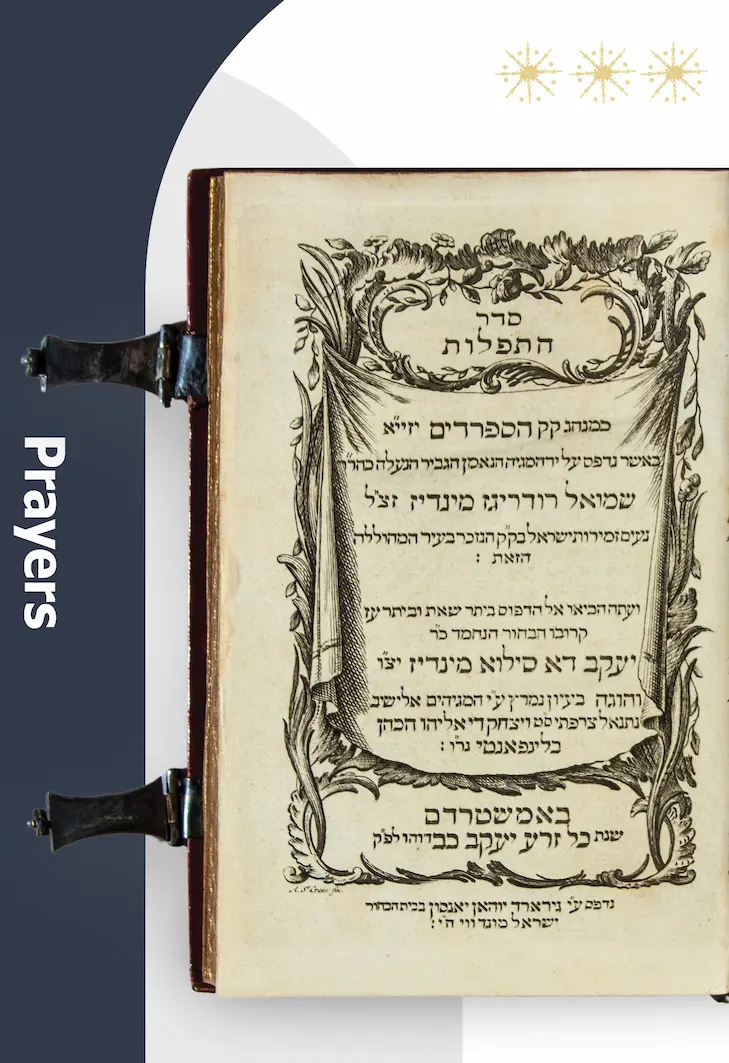
Siddur. Sephardic rite. Amsterdam, 1771 Spectacular siddur with ornate leather binding and
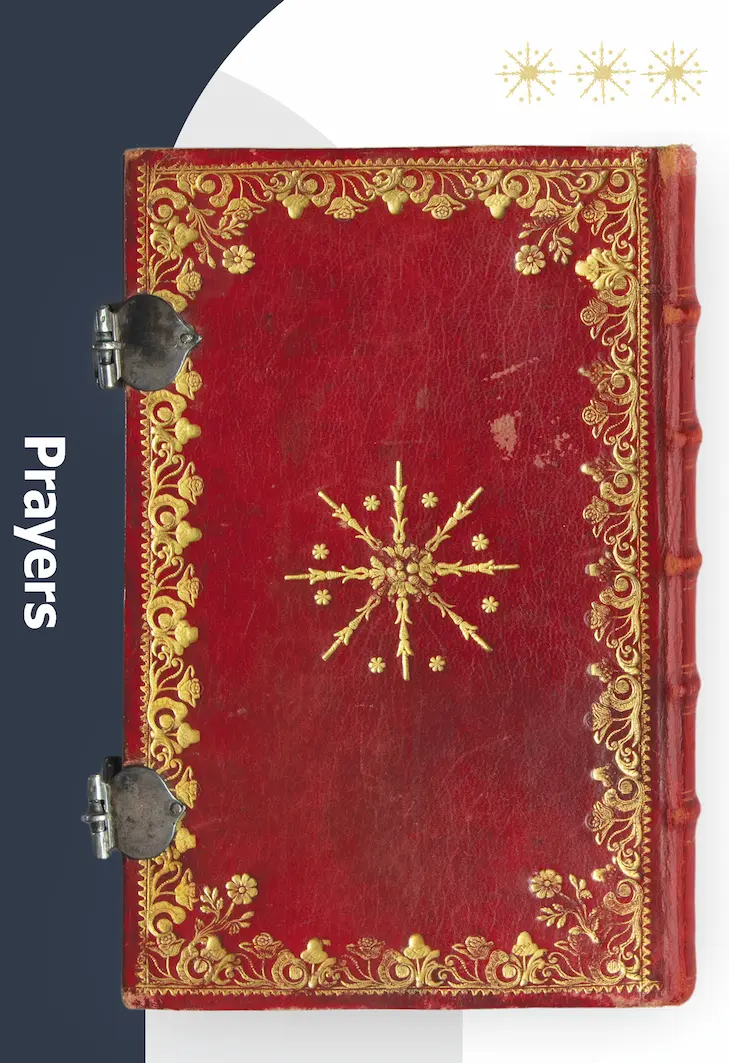
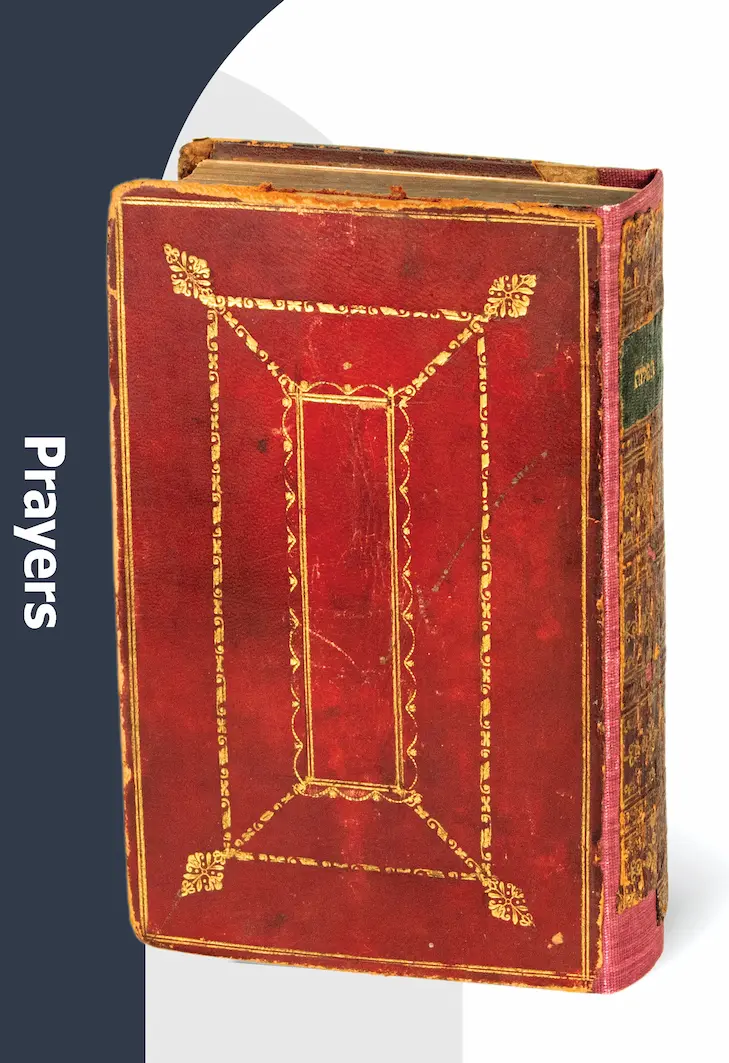
Siddur. Sephardic rite. Amsterdam, 1771 Spectacular siddur with ornate leather binding and clasps Siddur with weekday and Shabbos prayers in Sephardic rite. This siddur includes the Tefillas Hashkavah for Kedoshim burned alive in the notorious auto-da-fés. Beautiful copy in pristine condition with gilded edges and engravings. Antique red leather binding dating back to the printing era, with numerous gilded engravings and metal clasps. Leaf 159b bears the printer’s handwritten autograph and insignia of Jacob da Silva Mendes. [6] final leaves comprise a 114-year calendar (1770-1883) in Hebrew and Spanish. Includes Sefer Toldos Ha’adam, which is an order of blessings and prayers from the time a person is born until his passing. The beginning of the siddur features an approbation by Rabbi Shlomo Shalem, Rav of the Sephardic congregation in Amsterdam. Tefillas Hashkavah for Kedoshim In addition to the regular tefillos for weekday and Shabbos, this siddur also includes special prayers and piyyutim, among them “Hashkavas Srufim al Kiddush Hashem”, a special prayer recited upon those murdered in the auto-da-fés during the era of the Inquisition.  The majority of the Sephardic congregation in Amsterdam descended from the anusim (Marranos) who fled Spain during the era of the Inquisition and Expulsion and in the years thereafter. Amsterdam, 1771. Page Count: [1], 159, [6] leaves. Page Size: 17.7 cm. Preserved in new cloth-covered cardboard case. Provenance: William Gross Collection, Tel aviv Desctiption from The Gross Collection  ................................................ Any inquiries about this lot ? We are available also on WhatsApp >>>

Lot : 9

Siddur with Spanish Translation. Amsterdam, 1772 Beautiful copy! Order of prayers in
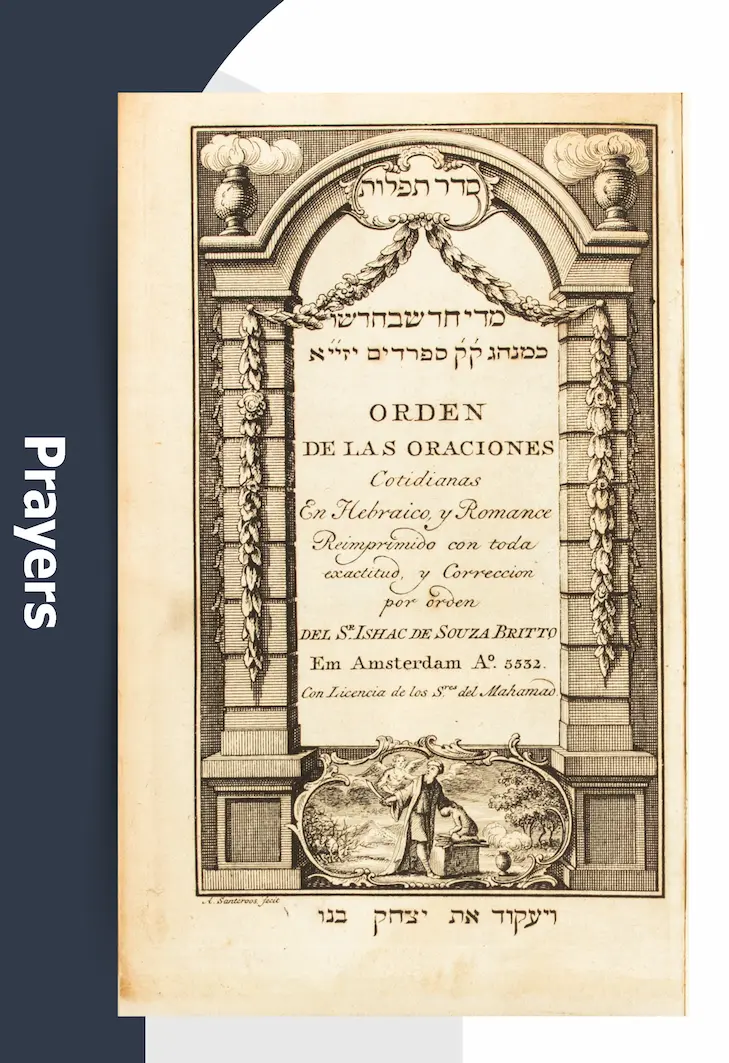
Siddur with Spanish Translation. Amsterdam, 1772 Beautiful copy! Order of prayers in Sephardic rite with Spanish translation on the facing side of each page. The siddur opens with two title pages, the first title page beautifully decorated with a copperplate engraving depicting Akeidas Yitzchak, autographed by the artist A. Santcroos. The siddur includes prayers for weekdays, Shabbos, Rosh Chodesh, Chanukah, Purim and Selichos for the month of Elul. The first page features a dedication in Spanish by the printer Isaac Suissa Burrito to Moshe ben Aharon de Pinto as well as a list of subscribers. This list represents a historic documentation of the members of the Spanish congregation in Amsterdam, rarely found in other sefarim from this era. The siddur was edited by Rabbi Yitzchak Hakohein Belinfanti with the approbation of Rabbi Shlomo Shalem, Rabbi of the Sephardic congregation in Amsterdam. Rabbi Shlomo Shalem writes that the siddur was printed alongside a Spanish translation since “many among us did not know or understand all that emerged from their mouths, and how shall they serve Hashem without knowing the meaning of the words of their prayers to Hashem?” Amsterdam, 1772. Propes Press. [1], 5, 271 leaves. Page Size: 18 cm.  Condition:  Old restorations on margins of two title pages. Beautiful, impressive copy. Original Amsterdam binding with restored spine. Preserved in a new case. Provenance: William Gross Collection, Tel aviv Desctiption from The Gross Collection ................................................ Any inquiries about this lot ? We are available also on WhatsApp >>>

Lot : 10

Beautiful Machzor Amsterdam, 1750 with Selichos, 4 volumes. Engraved gilded elaborate Amsterdam
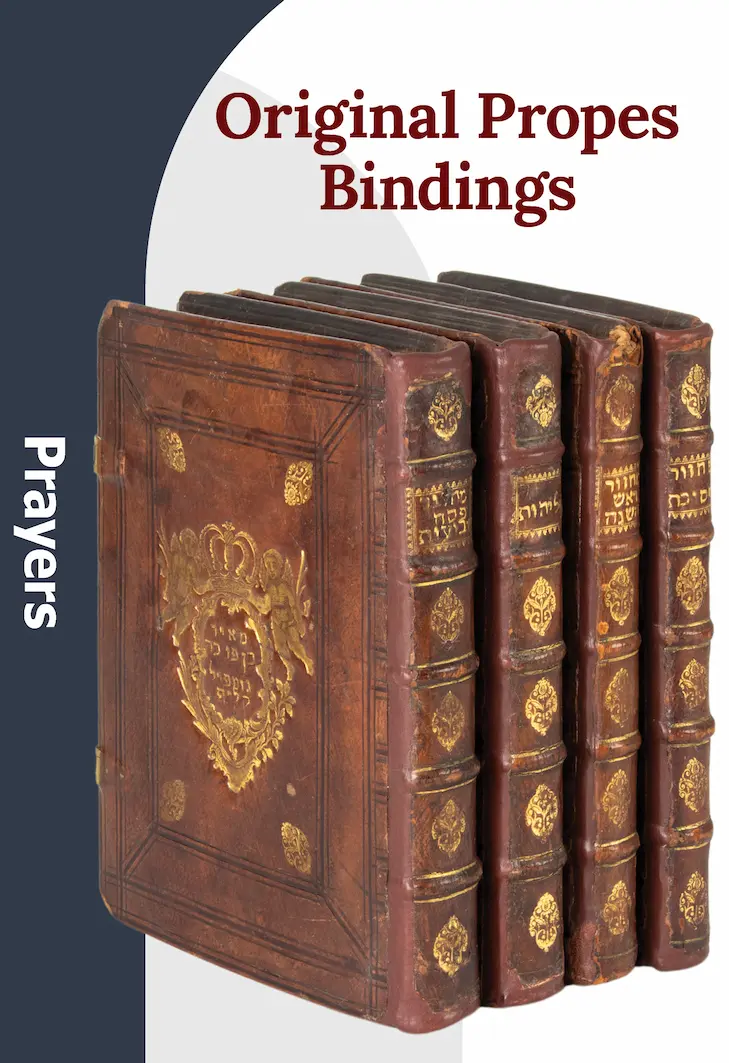
Beautiful Machzor Amsterdam, 1750 with Selichos, 4 volumes. Engraved gilded elaborate Amsterdam bindings Four volumes in leather-bound wooden bindings, featuring large, impressive engravings and original clasps. The bindings are the work of the illustrious Propes family, and the verso of each volume feature a gilded engraving of the family emblem depicting a shield bordering the family flag “Yedei Kohein (hands of the Kohein)”, with the name Propes engraved below. Atop the shield are two angels bearing the “kesser kehunah (crown of the priests)”. The same symbol is engraved on the front jacket of each volume, engraved in the center with the inscription: “Meir ben P.V.K.H. [philanthropist and director and honored rabbi] Gumpel Kliff.” Presumably, the printers gifted this set to the said Rabbi Meir Kliff. These artistic covers display the striking, elaborate masterpieces of 18th century Amsterdam printers. Description: Machzorim for Rosh Hashanah and Shalosh Regalim with commentary, halachos and customs in Yiddish. The Machzorim were printed in Amsterdam, 1750; and the volume of Selichos in 1720. Kavanas Hapaytan This is the first edition of machzorim printed with the famous Kavanas Hapaytan commentary. In this machzor, every piyyut is preceded with a brief introduction to the content of the piyyut. This addition to the machzor became very popular and was eventually introduced into many future editions. Each of the four volumes includes an approbation by Rabbi Aryeh Leib, Av Beis Din of Amsterdam, in the flyleaf. In his approbation, he extols the innovative concept of Kavanas Hapaytan. Rabbi Aryeh Leib was a son-in-law of the Chacham Tzvi and father of Rabbi Shaul of Amsterdam. Vol. 1: Rosh Hashanah: [1], 29: 12: 100 leaves. Vol. 2: Succos: [1], 29: 12: 109 leaves. Vol. 3: Pesach & Shavuos: [1], 29: 12: 111: 72 leaves. Vol. 4: Selichos: [2], 135, 67 leaves. Page Size: 24 cm. This set is missing the Yom Kippur volume. There are several known copies which have additional illustrated title pages inserted into the set. (See Genazym Catalog 12 #20). This set includes 4 volumes in their original ornate leather bindings with gilded engravings. This original first edition is exceedingly rare. Machzor Kavanas Hapaytan (Amsterdam, 1750) and Selichos (Amsterdam, 1720). Propes Press. First Edition. Page size: 24 cm. Four impressive volumes preserved in a new case. Provenance: William Gross Collection, Tel aviv Desctiption from The Gross Collection ................................................ Any inquiries about this lot ? We are available also on WhatsApp >>>

Lot : 11

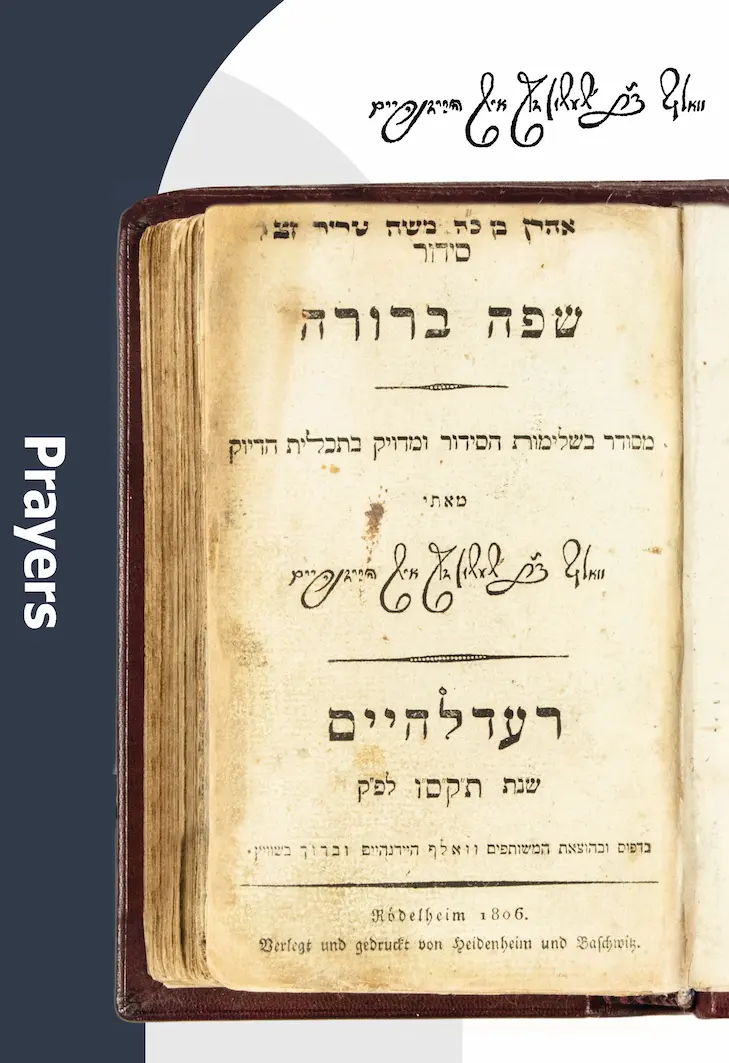
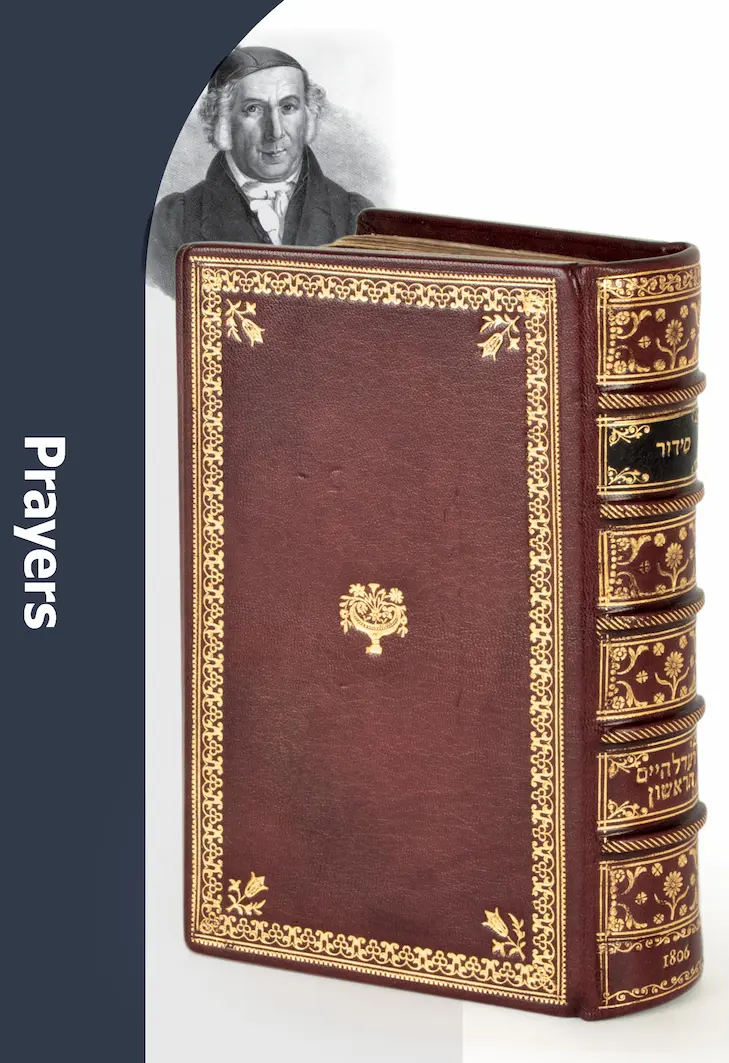
The Very First Rödelheim Siddur First edition of the most popular siddur
The Very First Rödelheim Siddur First edition of the most popular siddur in Germany and Western Europe! Siddur Safa Brurah. First Edition. Edited by Rabbi Wolf Heidenheim. Rödelheim, 1806 Year-round siddur with laws, customs and commentary: “Masterfully arranged, to be the most precise and accurate siddur from the pen of R’ Wolf ben Rabbi Shimshon of Heidenheim.” Siddurim edited by Rabbi Wolf Heidenheim were widely-acclaimed by Gedolei Yisrael for their precision and accuracy and were printed in quantities unparalleled throughout the ages. Since 1806, there have been over 200 (!) editions of both of Heidenheim’s Siddurim, the present Safa Berura Siddur and the Sfas Emes Siddur, making it incontestably the siddur with the greatest impact on the nusach of Ashkenazic siddurim printed thereafter. Due to their popularity and daily usage this first-edition siddur is exceedingly rare.  Nusach Ashkenaz Siddurim in Ashkenazic rite are divided into two main versions: Western Europe – Compiled by the early Rishonim of Ashkenaz, most notably the Maharil, and used by all western and southern congregations in Germany and neighboring countries, this nusach is known as "Nusach Bnei Rheinus" (nusach of residents of the Rhine). Eastern Europe – The nusach adopted by Ashkenazic Jews who wandered eastward toward Poland is known as "Nusach Bnei Ostreich" (nusach of residents of Austria). This nusach of tefillah first appeared in the writings of Rabbi Eizik of Tirnau, and was upheld by both the Maharshal and Rema, later spreading to all Poland and Lithuanian congregations, among others. Rabbi Wolf Heidenheim’s siddur primarily follows the Western European Ashkenazic nusach, nevertheless he notes the variations of the Eastern European nusach. The first 8 sides of the present Siddur Safa Brurah present a lengthy foreword by Heidenheim in Yiddish. Rödelheim, 1806. First Edition. Page Count: [8], 188 leaves. Page Size: 16 cm. Condition: Used, with multiple stains attesting to the extensive use of this siddur (most noticeably in the weekday prayers section). The margins of approximately 15 leaves are mildly shaved, yet professionally restored with virtually all text intact. The title page has minute margin restoration. The flyleaves feature handwritten prayers.  Siddur bound in ornate new leather binding with attractive leather-bound case. Bibliography: Stefansky, Sifrei Yesod (New Edition, 2024) #400; Appendix of Shaarei Tefillah p. 256, 260 #12 Provenance: Kestenbaum Auction #94 ................................................ Any inquiries about this lot ? We are available also on WhatsApp >>>

Lot : 12

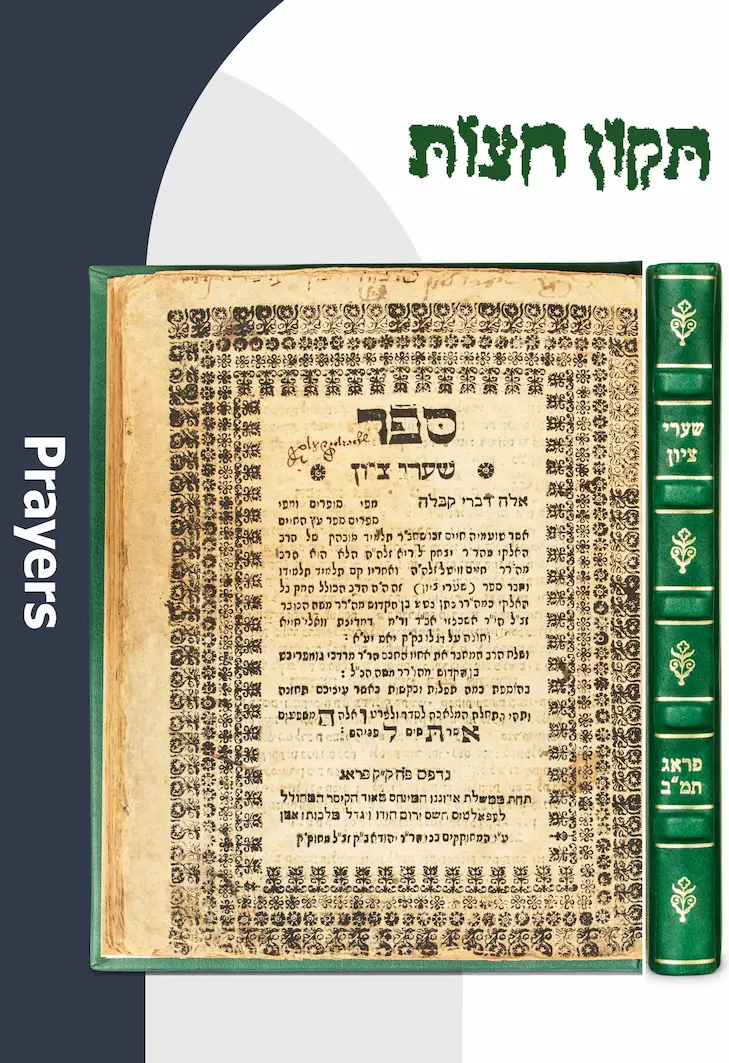
Anthology of Primary Kabbalistic Prayers Shaarei Tzion. Prague, 1682 Anthology of prayers,
Anthology of Primary Kabbalistic Prayers Shaarei Tzion. Prague, 1682 Anthology of prayers, tikkunim, supplications, and Seder Tikkun Chatzos with kabbalistic kavanos and customs compiled by the holy kabbalist Rabbi Nosson Nutta Hanover. Sefer Shaarei Tzion was enthusiastically received, and it is one of the most popular collections of tefillos. Early editions of this sefer are virtually nonexistent. The National Library does not possess a complete copy of this present edition. Shaarei Tzion played a significant role in establishing the text of Tikkun Chatzos and encouraging its recitation. The seder Tikkun Chatzos in the present sefer is stained with wax drippings, revealing that it was used, surely to recite this kabbalistic prayer at midnight. Rabbi Nosson Nutta Hanover (d. 1682) was a disciple of the saintly kabbalist Rabbi Shimshon of Ostropoli. Spared from the carnage of the Chmielnicki Massacres of 1648, he fled to Italy where he drew from the wisdom of Rabbi Chaim Cohen of Aleppo, a prime disciple of Rabbi Chaim Vital. He wrote of Rabbi Chaim Cohen: “And I received from him glorious wisdom.” In Italy, he also connected with some of the greatest kabbalists of his era, among them Rabbi Nosson Shapira, author of Matzas Shimurim, who carried with him from Jerusalem “bundles and bundles of letters from the Arizal.” It was these letters that served as the basis for his Shaarei Tzion. Prague, 1682. Page Count: [51] leaves. Page Size: 18 cm. Condition: Good, with wax drippings. New green leather binding. Provenance: Owners signature from Shlomo Zalan Delm, son-in-law of Rabbi Meir Stern, Av Beis Din of Amsterdam who published the Shu”t HaBach (Frankfurt am Main, 1697). ................................................ Any inquiries about this lot ? We are available also on WhatsApp >>>

Lot : 13

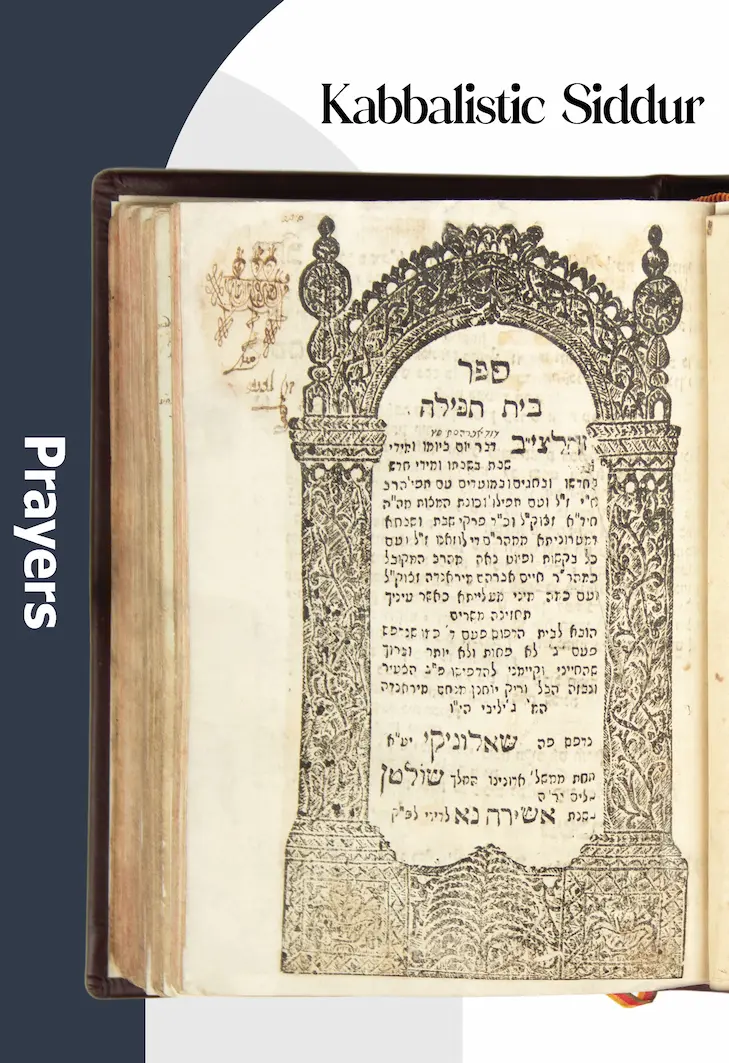
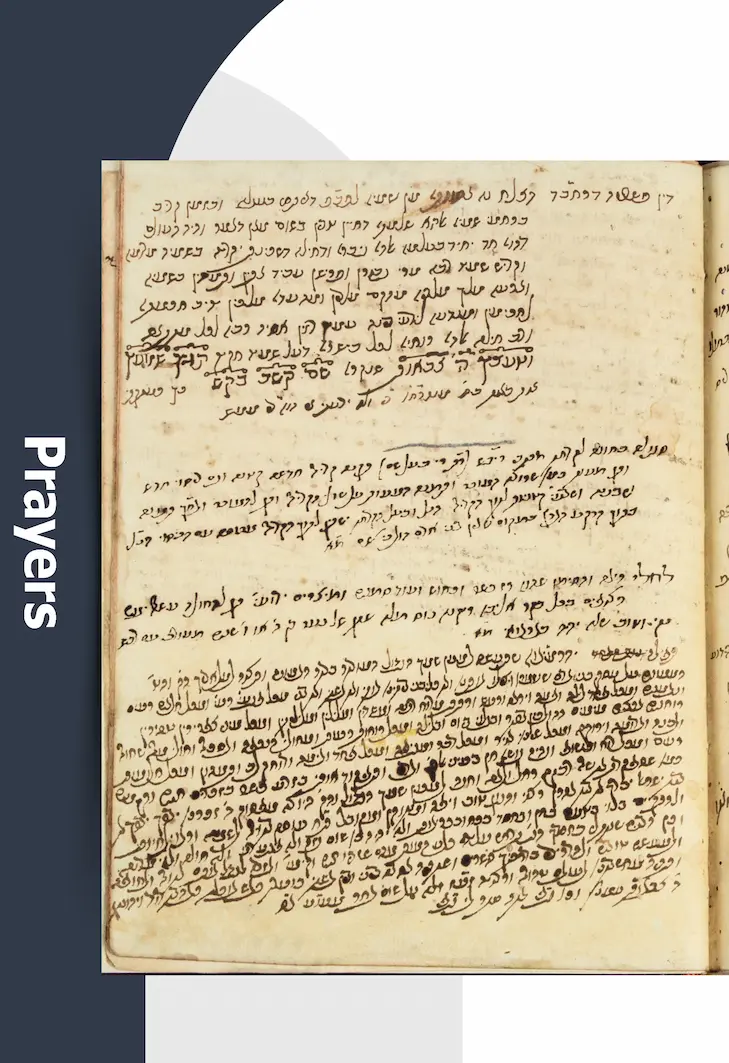
Very rare siddur! Kabbalistic Siddur Beis Tefillah  with Handwritten Glosses. Salonika, 1807
Very rare siddur! Kabbalistic Siddur Beis Tefillah  with Handwritten Glosses. Salonika, 1807 Siddur Beis Tefillah with prayers  for weekday, Shabbos and festivals, along with special Kabbalistic prayers and  intentions derived from Chemdas  Yamim and the Chid”a. Very Rare! Due to its popularity  at the time, there are hardly any remaining copies left, especially complete ones . The National Library in Jerusalem does not posses a copy of this siddur, nor is this prayer book listed in the Hebrew Bibliography. The siddur  has been recorded in Winograd’s Otzar  Hasefer Ha’Ivri based on the  present copy (which appeared in Judaica catalog in Spring, 1988 #33). The pages of the siddur feature  dozens of handwritten glosses, mostly of Kabbalistic nature .It also contains marginalia in Italian script.  18 handwritten leaves of prayers, customs and segulos are bound to the front and end of the siddur.  In the beginning of the siddur, at the top of leaf 2b, the annotator writes: “Behold I have discovered these  teachings that [belong] to one of the Kedoshim, who was the great Rabbi, our  Teacher Harav Moshe Zakut, Ztvk”l.”  On leaf 2b at the end of the  sefer, an additional comment states: “I received this from the Rabbinical  emissary Moreinu Harav Yechezkel Eliezer Aboulafia. It is a tried and true  segulah for any illness…."  The title page features the  owners’ signature, Avraham David Chai son of Shimson presumably Vivanti, Rabbi  of Ancona.  Leaves 146a-146b feature Megillas  Antiochus and the story of Yehudis in Ladino. Salonika, 1807. Page Count: 222 leaves. Page  Size: 18.5 cm. Mostly written on  greenish paper. Condition: Marginal tears and minor tears in text, all  restored. New leather binding. Preserved in a case lined with marble paper. ................................................ Any inquiries about this lot ? We are available also on WhatsApp >>>

Lot : 14

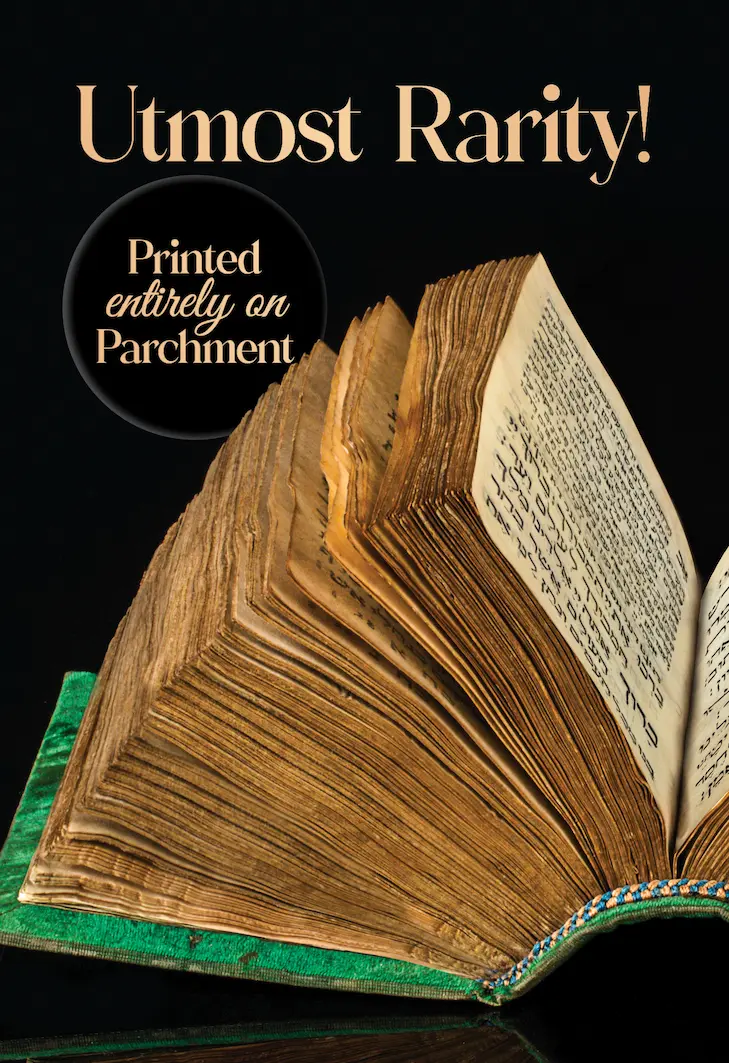
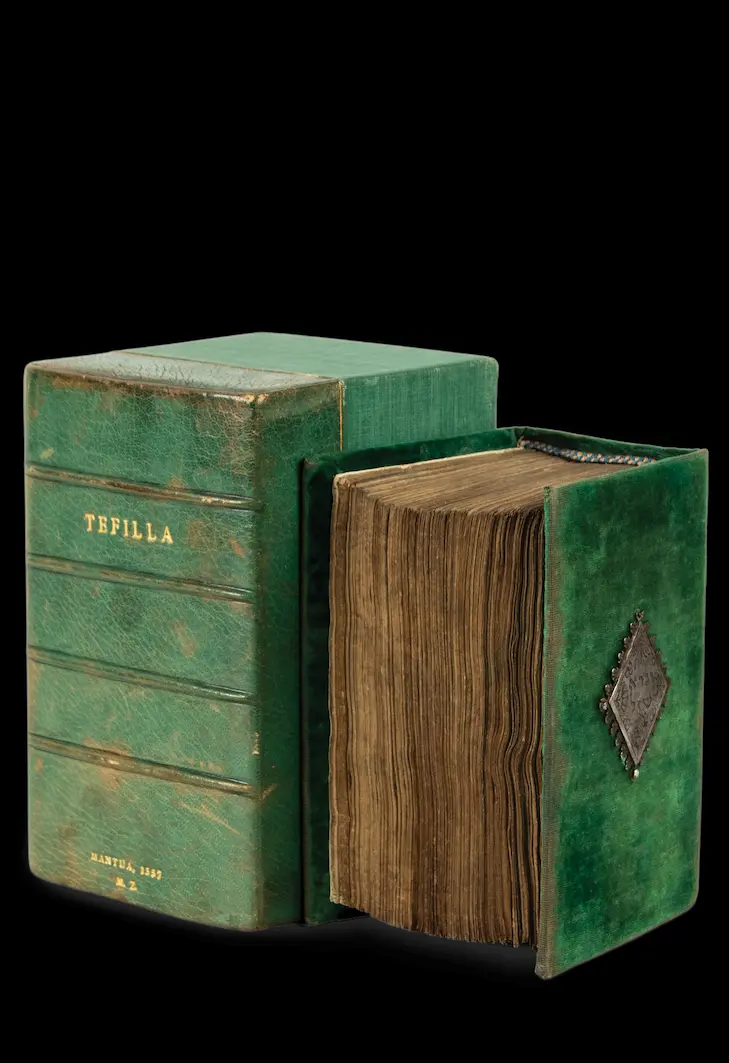
Treasure on Parchment Early Parchment Ashkenazi Siddur Mantua, 1557 Complete rare siddur
Treasure on Parchment Early Parchment Ashkenazi Siddur Mantua, 1557 Complete rare siddur printed entirely on parchment! Order of prayer according to the customs of Ashkenaz with many important features. The siddur includes prayers for the entire year with instructions in Yiddish. Printed on 289 thick parchment leaves . Very rare and valuable siddur, in Ashkenazic rite! The present siddur is fully intact and beautifully preserved. To the best of Genazym’s knowledge, there is no other copy of this parchment siddur with all sections intact. This parchment siddur is bound in green cloth and features decorative silver plates on both the front and back of the siddur. Front plate dated 1648! Books printed on parchment were custom ordered and reserved for the rich and famous or served as gifts to philanthropists and community dignitaries. Parchment was both expensive and challenging as a printing medium. The siddur is the most widely-used book in Jewish literature, and due to extensive use, most siddurim have become worn and faded over time. Early siddurim are extremely hard to find, especially siddurim from the 15th and 16th centuries. Content of Siddur: The siddur includes Prayers for Weekday, Prayers for Shabbos and Rosh Chodesh; Haggadah shel Pesach with laws and instructions in Yiddish; Birkas Hamazon; Maseches Avos; Prayers for the Festivals; Prayers for Yamim Noraim; Hoshanos; Piyutim for Simchas Torah. The siddur concludes with the words “The siddur for the whole year was completed on...the month of Shvat, 5218 (1557) here in the home of Vintorin Ruphinillo” and features the printer’s emblem of Yosef of Padua on the last page. The first part of the siddur, which continues until Kuntress 21, leaf 140b, includes Prayers for Weekday, with seventy-two verses and Hatavas Chalom; Prayers for Shabbos and Rosh Chodesh; Brachos for the Megillah and “Asher heini”; Shemoneh Esrei for Festivals; Tzidduk Hadin and Tefillas Haderech. Leaf 140b: “Prayers for Rosh Chodesh were completed by Yosef bar Yaakov Hy”d of Padua” and sealed with the printer’s emblem. The second part of the siddur, which includes Kuntress 22-27 (leaves 141-187) encompasses Eiruv Chatzeros; Eiruv Tavshilin; Haggadah shel Pesach with laws and instructions in Yiddish, complete with Birkas Hamazon and the Yiddish song Almachter Go-tt in; and Sefiras Haomer. Leaf 187b: “Completed…by and in the name of Yosef…of Padua…here in Mantua” and sealed with the printer’s emblem. The third part of the siddur, Kuntress 27 (leaf 188a) and on includes Maseches Avos; Shemoneh Esrei for Yamim Noraim; Hoshanos; and Piyutim for Simchas Torah. The siddur concludes with the words “The siddur for the whole year was completed on...the month of Shvat, 5218 (1557) here in the home of Vintorin Ruphinillo” and features the printer’s emblem of Yosef of Padua on the last page. Binding: The siddur is bound in green cloth, with colorful flyleaves complemented with gold. The binding features a hexagonal metal plate engraved with the year 1648 on the front plate and what is presumably the owner’s initials. The spine features three elliptical metal plates with serrated edges (similar to the cogs of a wheel). Previous owners: The siddur opens with a list of five owners whose autographs all appear on the page – some in Hebrew and some in Yiddish. The earliest signature is dated some three years after the siddur was printed (1559); and it is followed by signatures dated 1596 and 1723. Among the signatures are the names Hak[atan] Moshe Yehuda Leib ben Moreinu…Yehuda Leib zt”l, Moreh Tzedek here in Brusilla and the state of Bruran; and signatures of the Neimark family. Twenty-nine leaves (paper) are bound to the end of the siddur, offering space for extra tefillos. Two pages feature a handwritten tefillah dated to the 18th century. Mantua, 1557. Page Count: 289 leaves. Page Size: 13.5 (height) x 7 cm (thick!) Condition: Complete; in good condition. Title page dark and slightly faded. The first third of the siddur is creased on the center of the leaf, and there are signs of use and stains on other leaves. Several leaves have a minor crack, yet all the text is clear and intact. Preserved in attractive case with a leather spine. Box engraved with owner’s initials: M.Z. (This is none other than the renowned Jewish collector Michael Zagayski of Warsaw-New York.) Provenance: Michael Zagayski, Park Barnet Galleries, New York 1970 Lot 56 ................................................ Any inquiries about this lot ? We are available also on WhatsApp >>>

Lot : 15

Chamishah Chumshei Torah, Megillos and Haftaros. Venice, 1684 Chamishah Chumshei Torah, Megillos
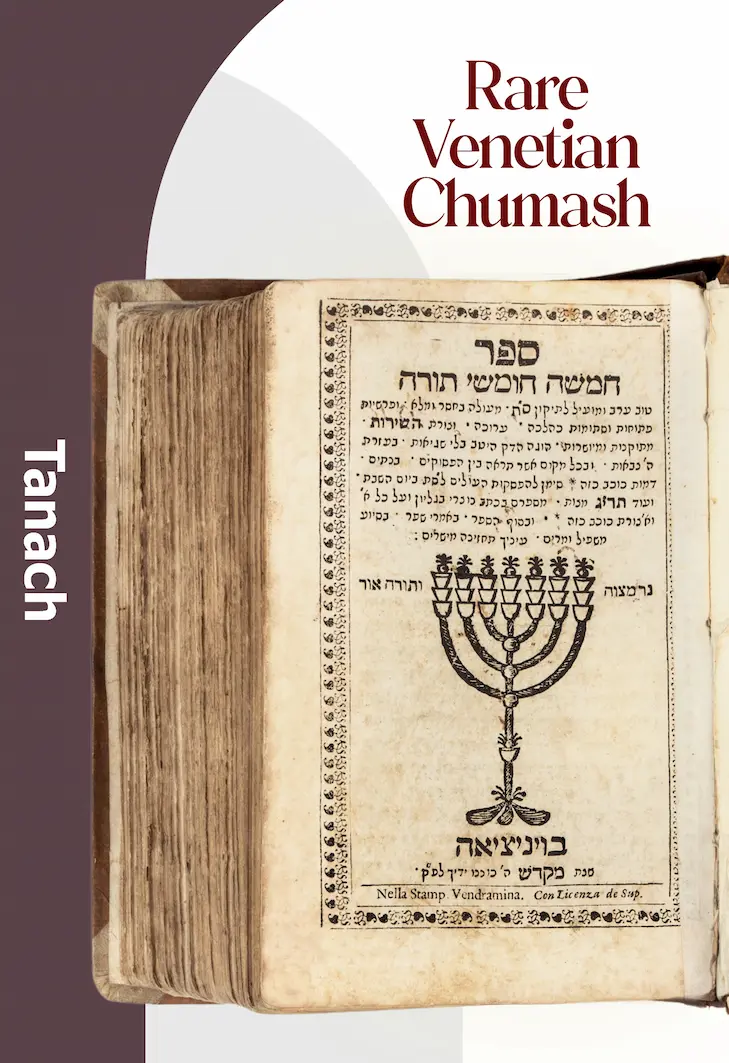
Chamishah Chumshei Torah, Megillos and Haftaros. Venice, 1684 Chamishah Chumshei Torah, Megillos and Haftaros with Targum Onkelos on facing sides of the page. A thick heavy sefer, meticulously edited and proofread, to be used as a tikkun for the purpose of writing a Sefer Torah. according to the opinion of Rabbi Menachem de Lonzano in his sefer Ohr HaTorah. Printed in the margins of the leaves of this Chumash, beside the text, are numbers (1-613) denoting the mitzvos as they appear in the Chumash. Leaf 441 and onward present: “Haftaros for the whole year following the custom of the holy congregations”. Venice, 1684. Page Count: 282, 282-329, 340-487, 489-508 leaves. Page Size: 16.5 cm. Condition: Good. Leaf 415 has a small, old piece of tape. Printed on the center of the title page is a menorah with seven branches. Original half-leather binding. Provenance: William Gross Collection, Tel aviv Desctiption from The Gross Collection ................................................ Any inquiries about this lot ? We are available also on WhatsApp >>>

Lot : 16

Tanach Goral HaGr”a Tanach. Amsterdam, 1701 Beautiful edition! Torah, Nevi’im and Kesuvim
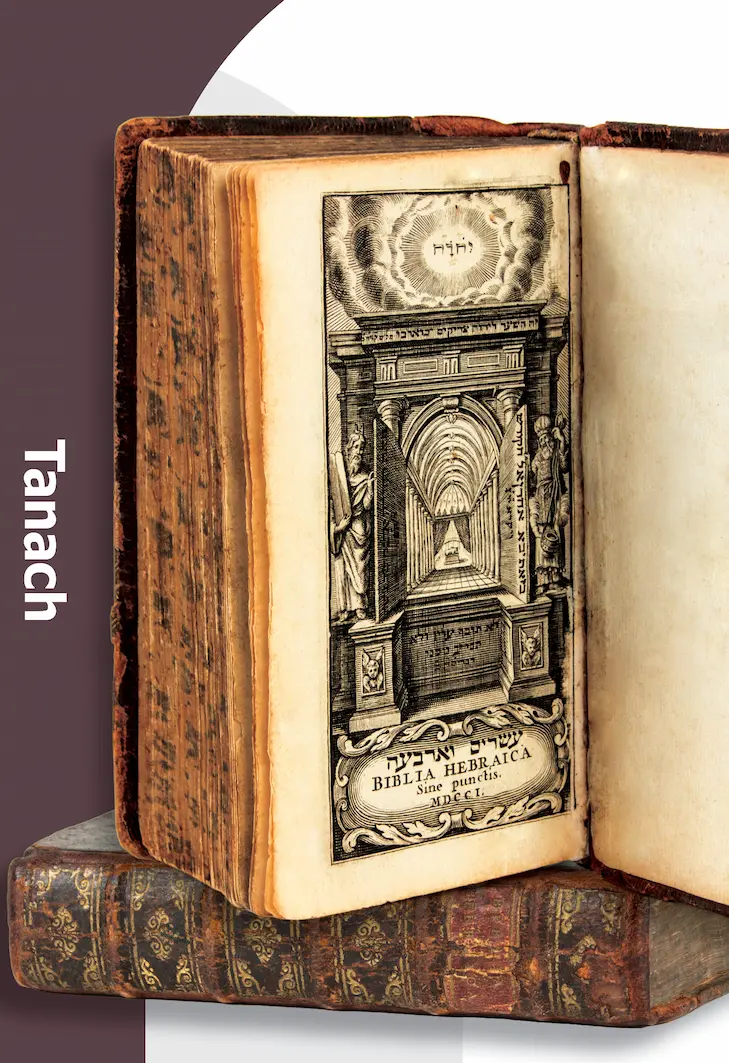
Tanach Goral HaGr”a Tanach. Amsterdam, 1701 Beautiful edition! Torah, Nevi’im and Kesuvim meticulously proofread, with charts of kri and ksiv, chaseiros and yeseros, and calendar of haftaros. Excellent condition with three title pages: The first title page is Hebrew copperplate; the second is in Hebrew; and the third is in Latin. Goral Hagra :This Tanach, whose text is printed in two columns, is used to conduct the famous Goral HaGr”a oracle. Rabbi Aryeh Levin, the celebrated ‘Tzaddik of Yerushalayim’ used this Tanach edition whenever he performed the Goral HaGr”a ceremony. One of the famous examples was when he identified the bodies of 35 Jews killed in Israel’s War of Independence. (See photo of Tanach in Ish Tzaddik Haya p. 114).  Amsterdam, 1701. Page Count: [6], 292 pages. [4] sides. Page Size: 15 cm. Description: Two columns per side; no nekudos; antique used leather binding. Spine has attractive gilded designs. Provenance: William Gross Collection, Tel aviv Desctiption from The Gross Collection ................................................ Any inquiries about this lot ? We are available also on WhatsApp >>>

Lot : 17

Sefer Yesod Rishonim! Daas Zekenim al HaTorah. First Edition. Livorno, 1783 Two
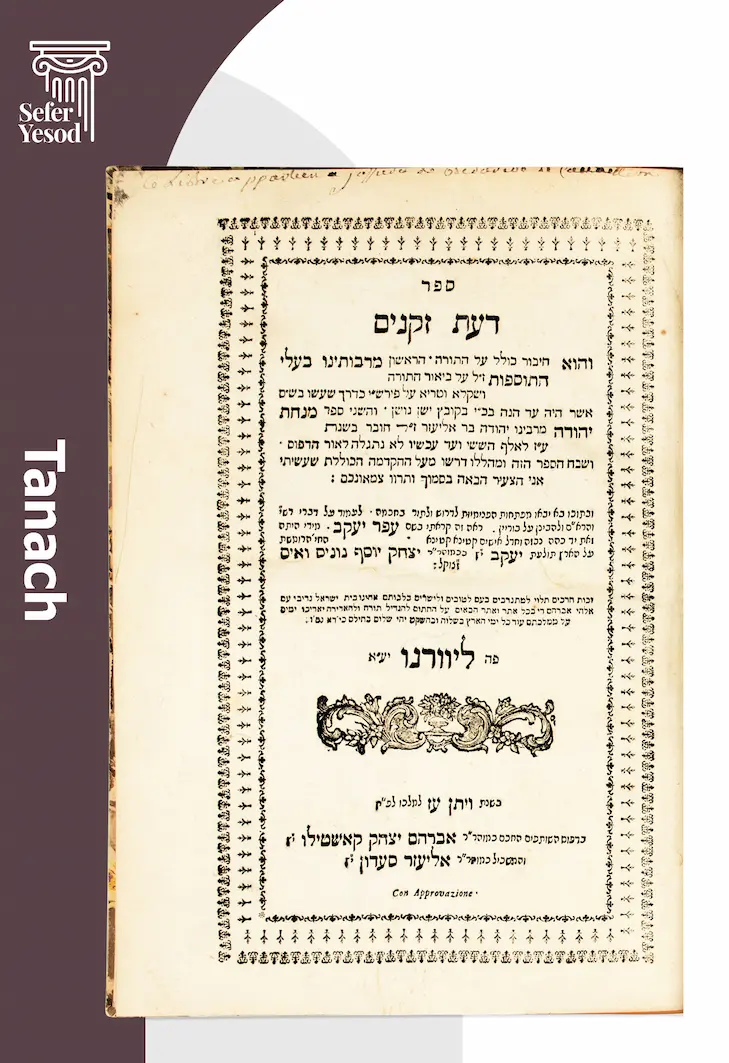
Sefer Yesod Rishonim! Daas Zekenim al HaTorah. First Edition. Livorno, 1783 Two primary works by Rishonim 1. Daas Zekenim by the Baalei Tosfos 2. Minchas Yehudah by Rabbi Yehuda ben Rabbi Eliezer, the Riva The Riva authored his sefer Minchas Yehudah in year 1313. In it, he cites many of his contemporary sages as well as sages from prior eras, most prominently Rabbi Moshe of Coucy, author of the Sefer Mitzvos Hagadol (Smag). Just as there are numerous compilations of the writings of the Baalei Tosfos on Shas, there are likewise extensive collections and commentaries by the Baalei Tosfos on the Torah, the most famous among them being Daas Zekenim, which has been printed in many editions of Mikraos Gedolos. The work is published by Rabbi Yaakov Nunis Vais, an Italian sage, who printed it along with his own chiddushim and references to Rashi and the Re’em, which he named Afar Yaakov. Rabbi Yaakov Nunis Vais possessed a handwritten manuscript of kabbalistic commentary on the Torah by the famed kabbalist Rabbi Moshe Zacuto, the Ramaz, which he printed for the very first time in this sefer. Livorno, 1783. First edition. Page Count: [9], 90, 29 leaves. Page size: 28.5 cm. Description: Endorsements by the Chida and Italian Schlores. Sefer Afar Yaakov has a separate title page. Binding: New half-leather binding. Condition: Good. Bibliography: Stefansky Sifrei Yesod #7. ................................................ Any inquiries about this lot ? We are available also on WhatsApp >>>

Lot : 18

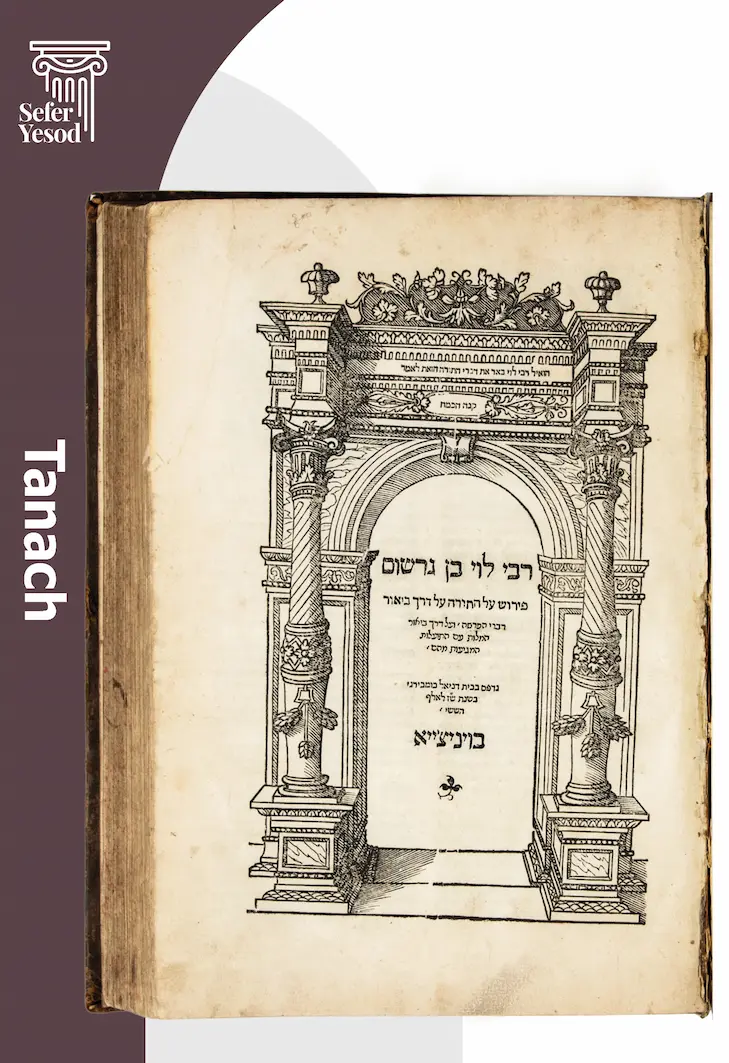
Sefer Yesod Rishonim! Ralbag’s Commentary on the Torah. Bomberg Edition. Venice, 1547
Sefer Yesod Rishonim! Ralbag’s Commentary on the Torah. Bomberg Edition. Venice, 1547 The Ralbag’s commentary is one of the classic commentaries on Chamishei Chumshei Torah. The present sefer is complete and in excellent condition. Rabbeinu Levi ben Gershon, the Ralbag (1288-1344) was one of the great Rishonim of Provence and a leading commentator on Torah and Nevi’im. He was “versed in Talmud and created a beautiful commentary on Torah and the books of the prophets” (Shu”t HaRivash Ch. 45) and “Who among those who toil in Torah and wisdom is unaware of the value and glory of the Ralbag and his genius?” (Malbim in his approbation to Sefer Hade’os V’hamiddos).  Venice, 1547. Page Count: 6, 9-249 leaves. Page Size: 29.5 cm. Condition:  Early restoration of margins of first 5 leaves; several miniscule holes in margins. Bibliography: Stefansky, Sifrei Yesod #8 ................................................ Any inquiries about this lot ? We are available also on WhatsApp >>>

Lot : 19

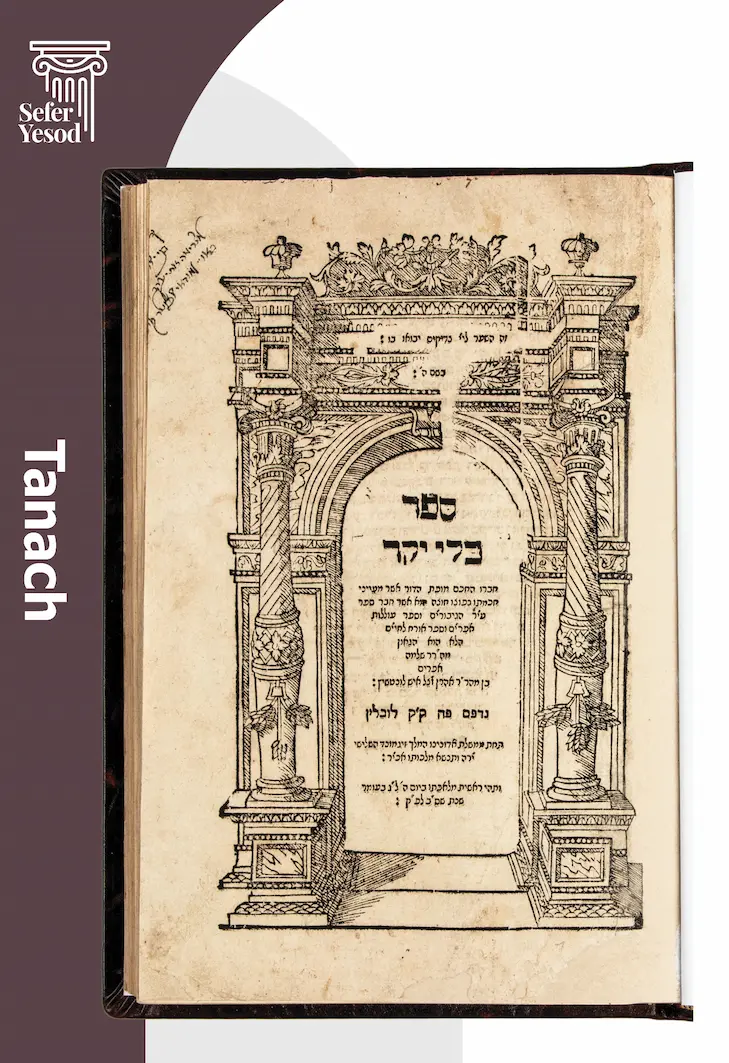
Sefer Yesod Kli Yakar al HaTorah. First Edition. Lublin, 1602 The Kli
Sefer Yesod Kli Yakar al HaTorah. First Edition. Lublin, 1602 The Kli Yakar is one of the fundamental commentaries on Chamishah Chumshei Torah. First edition, rare! Kli Yakar by Rabbi Shlomo Efraim Luntschitz, Av Beis Din of Prague and one of the greatest orators of his generation, is one of the most widely-acclaimed commentaries on Chamishah Chumshei Torah, encompassing an array of pshat, drush and mussar. One of the venerated 16th century Rabbanim in Prague, Rabbi Shlomo Efraim Luntschitz was a contemporary of the Maharal of Prague and Shl”a Hakadosh. He was a disciple of the Maharshal and Rabbi of the Tosfos Yom Tov and Rabbi Sheftel, son of the Shl”a. The value of the Kli Yakar commentary was discerned even before its publication at the turn of the 17th century. “The leaders and luminaries of the Three Lands who are at the forefront of the generation desired this composition, to the extent that they generously volunteered to sponsor the costs of the publication. They did not do this for any other new sefer printed at that time, and this attests greatly to the extraordinary value, significance and praise of this work” (Publisher’s foreword). In time, Kli Yakar would become an integral part of every Chumash Mikraos Gedolos. The present first edition is rare and on the top of collectors wishlist . Lublin, 1602. First Edition. Page Count: 153 leaves. Page Size: 28 cm. Each Chumash and parshah is preceded with an ornamental border. Condition: Miniscule restoration to first three leaves; top margins cropped, some leaves have minor damage to titles. Elegant new leather binding. Bibliography: Stefansky, Sifrei Yesod #25 ................................................ Any inquiries about this lot ? We are available also on WhatsApp >>>

Lot : 20

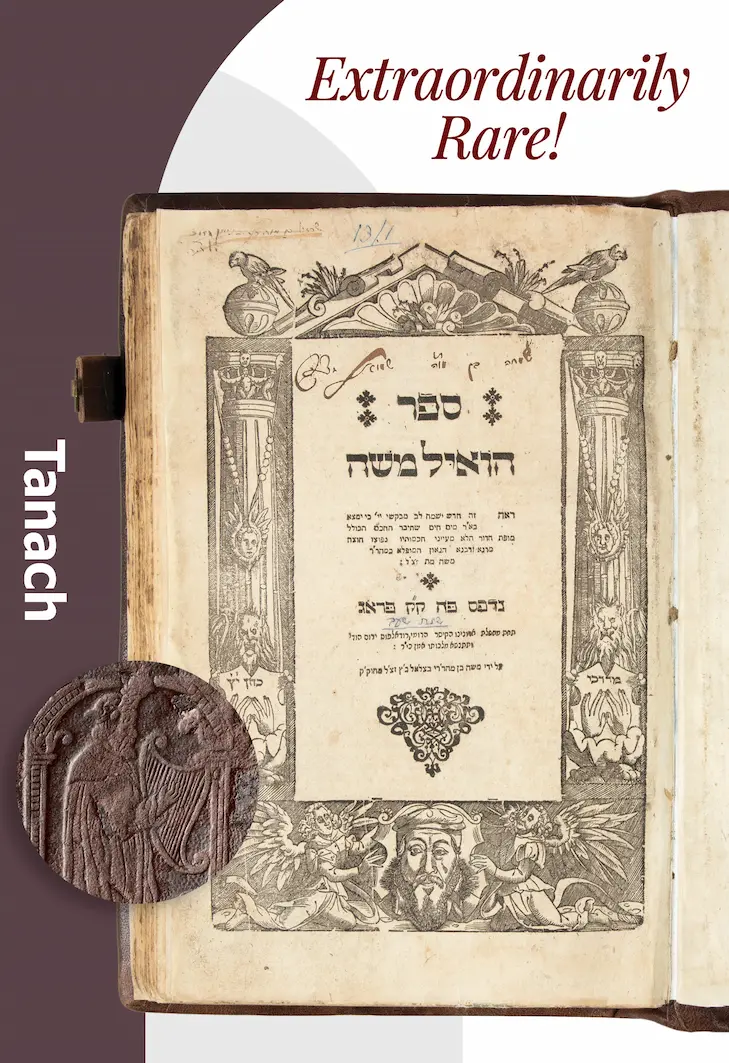
Extraordinarily rare! Ho’il Moshe. Singular Edition. Prague, 1612. From the author of
Extraordinarily rare! Ho’il Moshe. Singular Edition. Prague, 1612. From the author of Matteh Moshe Composition on Torah and Rashi’s commentary by Rabbi Moshe Meth, Av Beis Din of Preimshla. The sefer includes two parts: 1. Be’er HaTorah – on the Torah and Five Megillos according to pshat and drush. 2. Be’er Heitiv – on Rashi’s commentary. The two compositions were printed in two columns; Be’er HaTorah in block letters, and Be’er Heitiv in Rashi script. Rabbi Moshe, (circa 1540-1606) Av Beis Din of Belz, Apta and Premishla was the prime disciple of the Maharshal who took him under his wing. In his sefer Matteh Moshe, he includes any customs and rituals that he witnessed in the home of the Maharshal. In this sefer, as well, he quotes the Maharshal frequently. Rabbi Moshe numbered among the Gedolim of his era and corresponded with the Bach and the Masas Binyamin. Prague, 1612. First and singular edition. Page Count: 146: 14 leaves (page numbering incorrect). Page Size: 31 cm. Margins professionally restored with minor stains to margins. The printer’s emblem appears on the title page and on page 146. Wooden binding coated with antique leather and closure clasps. The center of the cover depicts an illustration of Dovid Hamelech playing his harp. ................................................ Any inquiries about this lot ? We are available also on WhatsApp >>>

Lot : 21

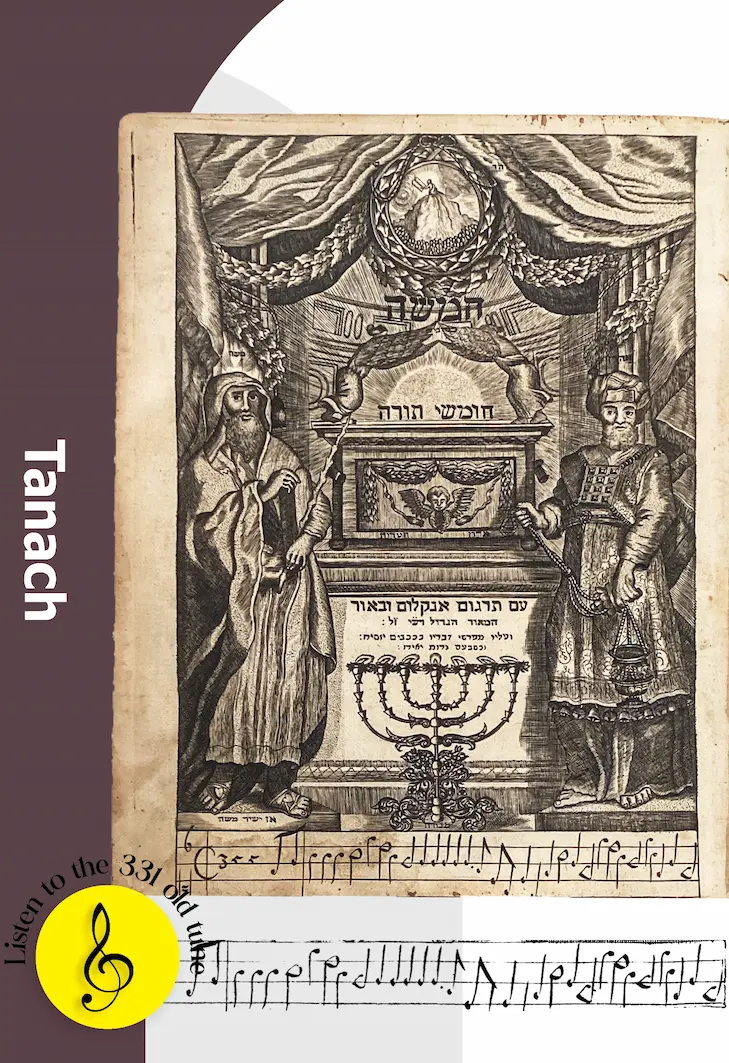
 Most important work on Rashi Sifsei Chachamim. Dyhrenfurth, 1693 Commentary and elaboration
 Most important work on Rashi Sifsei Chachamim. Dyhrenfurth, 1693 Commentary and elaboration on Rashi’s commentary on Chamishah Chumshei Torah by Rabbi Shabsai Meshorrer Bass. Rare copy, complete with illustrated title pages for Chumash, Megillos and Hatfaros. Taking note of the many learners who struggled to understand Rashi’s commentary, famous for its brevity, Rabbi Shabsai Meshorrer Bass undertook to create a commentary that would draw from the works of the great commentators on Rashi to illuminate and elaborate Rashi’s concise text. In time, his commentary, entitled Sifsei Chachamim, would become the most famous and popular among the commentaries on Rashi. Sifsei Chachamim was originally printed by the author in Amsterdam in 1680. The present sefer, the second edition, was printed in the private press Rabbi Shabsai opened in Dyhrenfurth and includes numerous additions (which are marked on the leaves of the sefer with the shape of a hand.) It is thus the first complete edition of Sifsei Chachamim! The abridged version of Sifsei Chachamim, called Ikrei Sifsei Chachamim, has been printed next to Rashi in nearly every Chumash. After this present printing, it was almost never reprinted in its complete form. Rabbi Shabsai Meshorrer Bass Printer and Author of Sifsei Chachamim on Rashi and Sifsei Yeshenim Rabbi Shabsai Meshorrer Bass (1641-1718) was an eminent scholar, progenitor of the Jewish bibliography, and author of the Sifsei Chachamim super-commentary on Rashi who left his stamp on Torah literature forevermore. His commentary is regarded as the classic elucidation of Rashi’s commentary on the Torah. His Sifsei Yeshenim was the first comprehensive Hebrew bibliography, encompassing a list of 2,200 Torah works in alphabetical order of titles. In this work, he notes the author, place of printing, year, and size of each book, as well as a short summary of its contents. His printing house in Dyhrenfurth was famous for printing the original editions of several fundamental works, including the Magen Avraham, Taz and Beis Shmuel. In his youth, he fled his native Poland after the murder of his parents and settled in Prague where he studied Torah. Blessed with a magnificent voice, he studied music under the famed cantor Rabbi Leib Shir Hashirim and supported himself as the baritone singer in the famous Altschule Choir in Prague, where he earned the title, Rabbi Shabsai Meshorrer Bass (Rabbi Shabsai, the baritone singer). The sefer opens with two title pages – the first, illustrated with copperplate drawings and music notes. The title pages of the Haftaros and Megillos sections feature a drawing of a man holding music notes accompanied by the words “yodeah nagen, (musician)”. These illustrations are clearly allusions to the author who was a renowned poet, and it is possible that the person depicted in the drawing is Rabbi Shabsai himself. Dyhrenfurth, 1693. Page Count: [6], 368; [335-]362 leaves. Page Size: 19 cm.  Bibliography: Stefansky, Sifrei Yesod #27, comments. .................................... ............ Any inquiries about this lot ? We are available also on WhatsApp >>>

Lot : 22

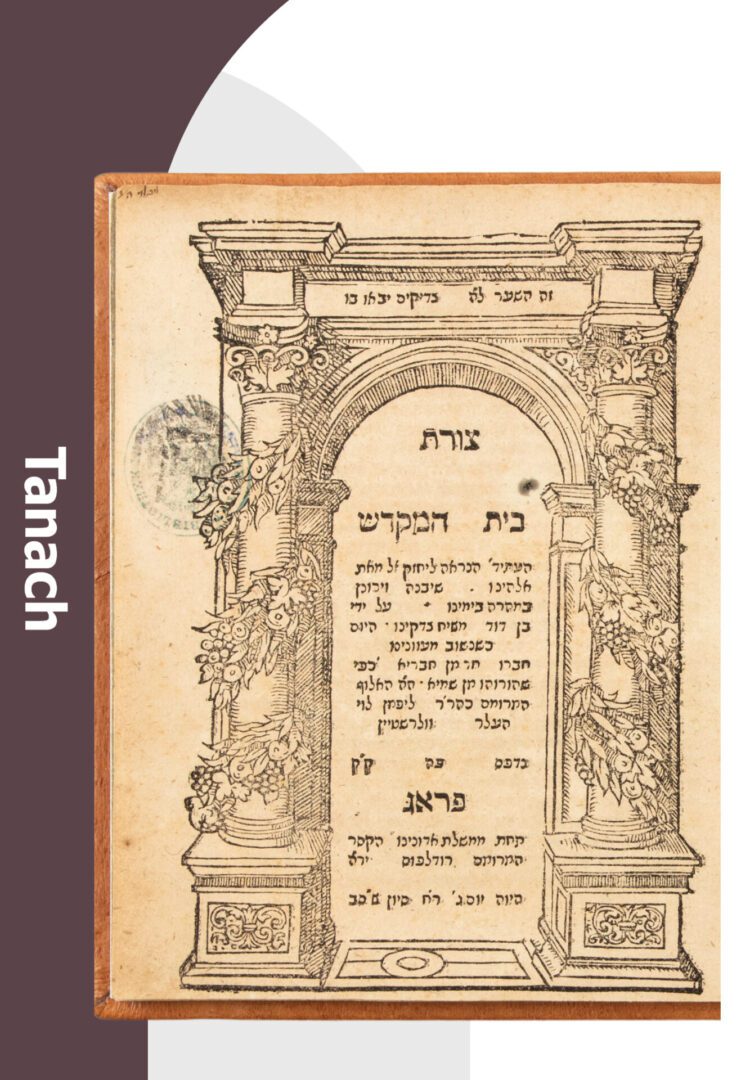
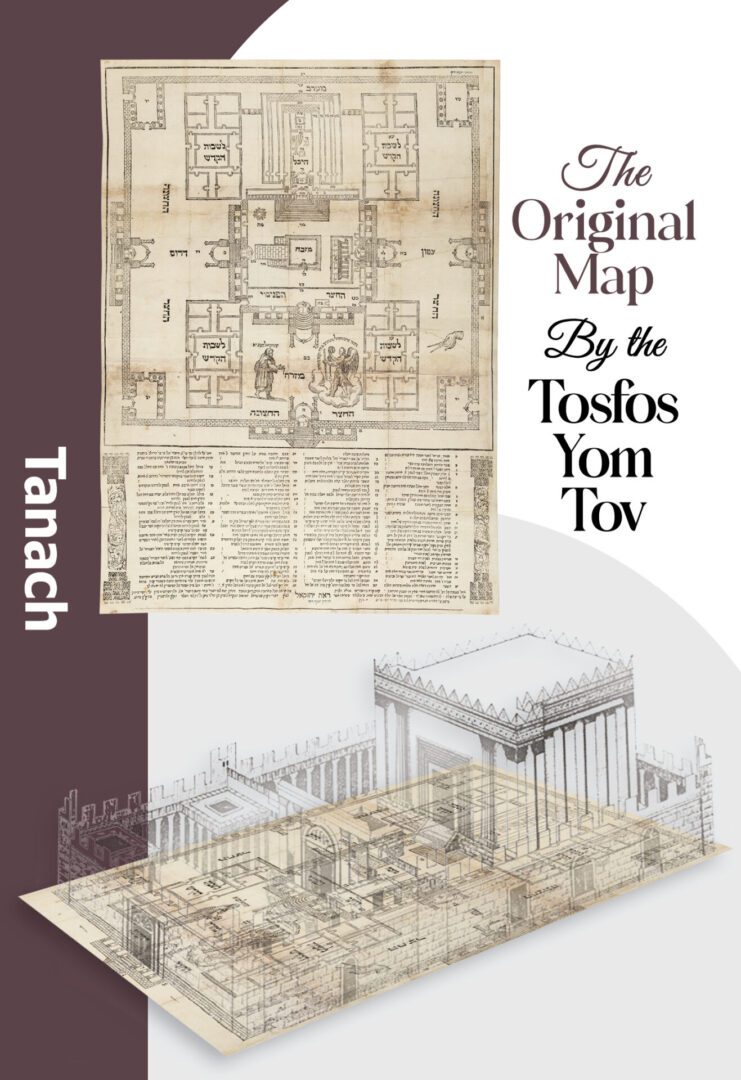
Jewish treasure! Map of the Third Beis Hamikdash by the Tosfos Yom
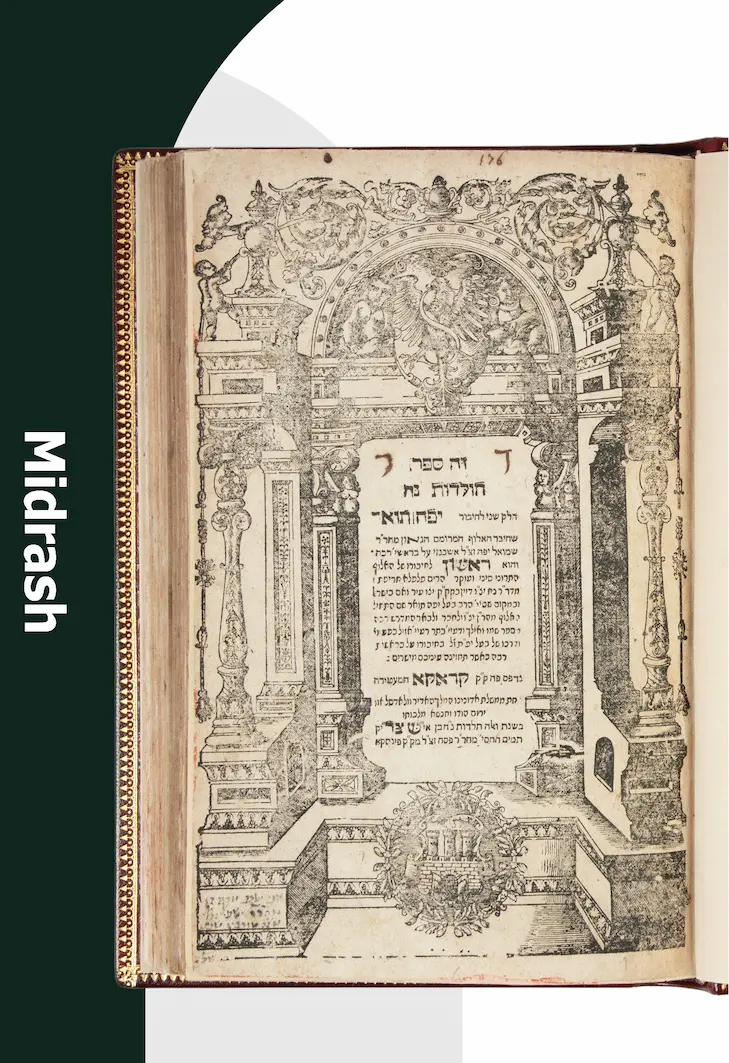
Jewish treasure! Map of the Third Beis Hamikdash by the Tosfos Yom Tov  Tzuras Habayis by the Tosfos Yom Tov First Edition. Prague, 1602 Elaborate description of the Third Beis Hamikdash based on the prophecy of Yechezkel Hanav by Rabbi Yom Tov Lipman Halevi Heller, author of the Tosfos Yom Tov, with a detailed diagram of the future Beis Hamikdash. This original edition of Tzuras Habayis presents a beautiful sefer, complete with the large diagram of the future Beis Hamikdash which was printed together with the sefer. This map is extremely rare, which to the best of Genazym’s knowledge, is one of two known to exist. The diagram is printed on an extra-large leaf measuring 55 cm (height) x 39.5 cm (width). The diagram was printed based on the illustration and drawings by Tosfos Yom Tov himself. He mentions this drawing in his preface: “And I saw that it is beneficial to present the shape as a general drawing to facilitate memory…the general shape of the entire building.” The Tosfos Yom Tov inscribes in the margins of the leaf: “ The words of the humblest of all in Israel, Yom Tov who is called Lipman son of Rabbi Nosson zt”l Heller of the holy congregation of Wallerstein, here in the holy congregation of Prague”. (The printer’s name appears on the bottom line.) The Tosfos Yom Tov also mentions this drawing in his preface to Maadanei Melech: “With the help of Hashem, I created a tangible image together with the book, in which I described to all scholars who are wise, and I named it Tzuras Habayis [which] was printed here in Prague in the year 5362 (1602).” The illustration is a detailed depiction of the form of the future Beis Hamikdash, including its walls, main hall, courtyard, chambers and vessels. The center of the leaf encompasses three drawings: A drawing of Yechezkel Hanavi; a drawing of the angel that revealed itself to Yechezkel to describe the image of the Third Beis Hamikdash (see Yechezkel Ch. 40-43); and on the right side of the leaf, a drawing of a compass inside the palm of a hand. On the margins of this leaf, the Tosfos Yom Tov explains that the compass serves as a scale for the learners’ use. “We placed a compass in a hand, where the distance is a scale of 6 amos, and based on this, all the measurements can be estimated.” The body of the sefer also includes two large illustrated diagrams. Rabbi Yom Tov Lipman Halevi Heller (1579-1644) is renowned for his landmark commentary on the Mishnah, Tosfos Yom Tov. He authored the present work Tzuras Habayis in 1602 when he was just 23 years old. Tzuras Habayis was universally accepted as a fundamental tool and aid to the study of the Beis Hamikdash. Any subsequent author who compiled works on this subject referenced the Tosfos Yom Tov’s famous work. In his preface to Tzuras Habayis, the author writes that “one who engages in the [study of the structure] of the Beis Hamikdash will merit participating in its construction in the future.” The right corner of the title page bears the signature of the owner, albeit the text is slightly cropped: “ Leib Levi He[ller].” its likely that this is the signature of the Tosfos Yom Tov’s son whom he refers to as “Rebbi Leiva” (Tosfos Yom Tov on Mikvaos 9:3; Megillas Eichah Letter 21) and was apparently the namesake of the Tosfos Yom Tov’s rebbi and mentor, the Maharal of Prague. Prague, 1602. First Edition. Page Count: [36] leaves + [1] very large leaf (55x39.5 cm). Condition: Attractive copy. Right margins of the bottom two-thirds of the diagram and other tears and holes (mostly in the blank parts of the diagram) were restored. New leather binding. Provenance: William Gross Collection, Tel aviv Desctiption from The Gross Collection p.s. the image of the model of bais hamikdash is for illustration purposes only, and it was taken from the Second Beis HaMikdash. .................................... ............ Any inquiries about this lot ? We are available also on WhatsApp >>>

Lot : 23

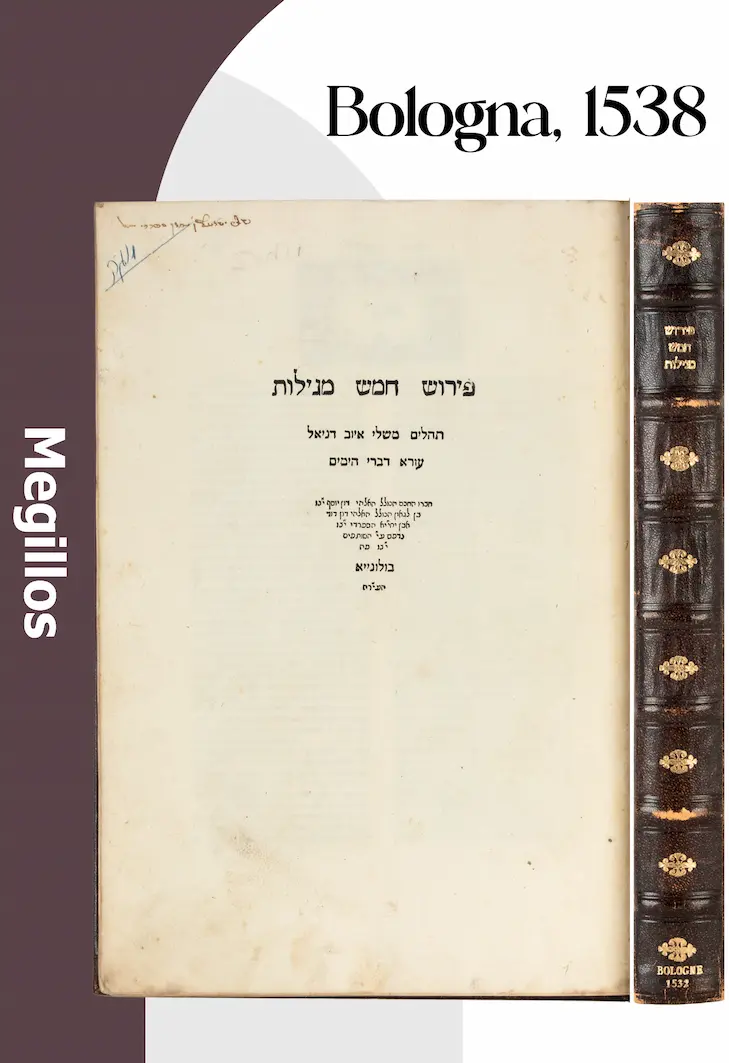
Commentary on the Megillos, First Edition. Bologna, 1538 Predcted the Jews Return
Commentary on the Megillos, First Edition. Bologna, 1538 Predcted the Jews Return to Eretz Yisroel c. 1948  by Rabbi Don Yosef Ibn Yichye  Commentary on the Five Megillos and Kesuvim by Rabbi Yosef Ibn Yichya. Bologna, 1538 Like many Torah sages and scholars, Rabbi Don Yosef Ibn Yichya attempted to calculate the time of the final Redemption. His predictions are astoundingly accurate in light of events that transpired centuries later. In his commentary on Daniel he writes: “At the end of approximately five thousand and seven hundred years ((5700= 1940) to the creation of the world, perhaps slightly before or after, our time will come with the help of Hashem so Bnei Yisrael may dwell securely in their Land.” Rabbi Don Yosef continues “ Three hundred years from the sixth millennium, so that it will be revealed before all that the truth is with them, and they will enjoy this world in body and soul, in exchange for their punishment of exile among the nations, in body and soul." Three hundred years from the sixth millennium of the Hebrew calendar is the year 1940, and “several years later” could easily mean 1948, the year the State of Israel was founded . “They will enjoy this world in body and soul, in place of their suffering in exile among the nations, in body and soul, ” Rabbi Don Yosef Ibn Yichya (1496-1539) recounts his life story in the preface to his sefer Torah Ohr, one of the many heartrending stories of Spanish Jewry of that era. During her first month of pregnancy, his mother fled Portugal to Italy to flee the Inquisition. Upon her arrival in Pisa, Italy, she once again faced another spiritual trial and she chose to jump off a roof in order to preserve her modesty. Miraculously, both she and her unborn child survived. She then continued to Florence where she gave birth to Rabbi Don Yosef in 1496. They subsequently moved, settling near Bologna where Rabbi Don Yosef dwelled until he passed away in 1539. His remains were sent for burial in Tzfas. Rabbi Don Yosef’s son Rabbi Gedalya Ibn Yicha relates in his famous work Shalsheles Hakabbalah that Rabbi Yosef Karo personally arranged his father's burial. Bologna, 1538. First Edition. Page Count: 40, 122 leaves. Page Size: 28 cm. Condition: Attractive copy printed on high-quality paper with  slight restoration of margins on several leaves. Quality new leather binding. ................................................ Any inquiries about this lot ? We are available also on WhatsApp >>>

Lot : 24

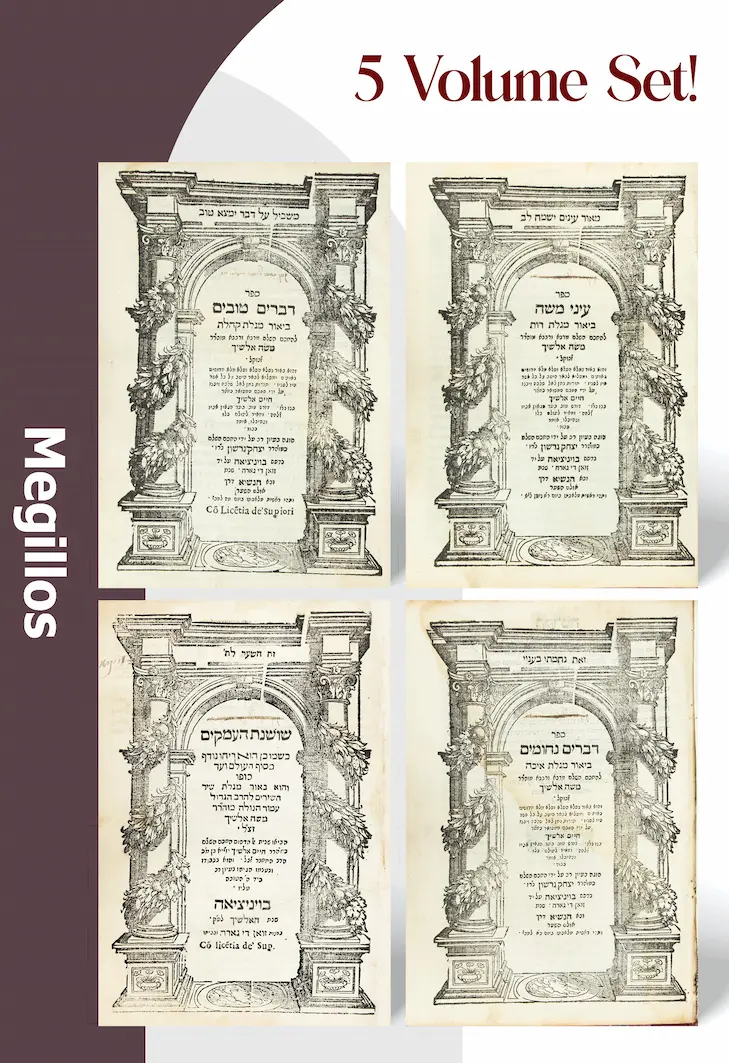
 Alshich Hakadosh on the Five Megillos. Venice, 1601-1606 Complete 5 volume Set
 Alshich Hakadosh on the Five Megillos. Venice, 1601-1606 Complete 5 volume Set Beautiful, complete 5-volume set of Rabbi Moshe Alshich’s commentary on the Five Megillos. 1. Masas Moshe on Esther. Venice, 1601. 86 leaves. 2. Devarim Tovim on Koheles. Venice, 1601. 38 leaves, [1] leaf. 3. Einei Moshe on Rus. Venice, 1601. 46 leaves, [1] leaf. 4. Shoshanas Ha’Amakim on Shir Hashirim. Venice, 1606. 60 leaves. 5. Devarim Nechumim on Eichah. Venice, 1601. 38 leaves, [1] leaf. The first four volumes are all first editions except Shir Hashirim yet the author’s son Rabbi Chaim Alshich.printed these 5 parts together. Rabbi Moshe Alshich’s (1506-1620) sefarim and commentary were universally accepted by Jewish congregations around the world. The Arizal attested that the Alshich's drashos were the epitome of truth (Chida, Shem Hagedolim), and the Minchas Elazar of Munkacs writes that the Arizal once remarked that upon glimpsing the heavenly entourage descending to attend the Alshich’s lectures, he joined them as well. Rabbi Yitzchak of Posen, the spiritual master of the Magen Avraham, recounted that the Alshich Hakadosh appeared in a dream to Rabbi Yitzchak’s own rebbi Rabbi Avraham of Barr during the times of the Chmielnicki Massacres and told him that since Rabbi Avraham cherished his sefer and learned it weekly, the Alshich had descended from heaven to rescue him from death. He instructed Rabbi Avraham to flee Barr that night, and indeed, the following day, the Jewish community was destroyed and all its members were killed, Hy”d (Printed in Kitzur Alshich. Amsterdam, 1698). Venice, 1601-1606. Five volumes. Page Size: 19.5 cm. Condition: Aside from minor, light water stains, the set is complete and in impressive condition. All volumes are bound in matching new half-leather binding and stored in a beautiful matching case. Marginalia: Both the beginning and end of Shir Hashirim, Eichah and Koheles feature marginalia in Italian, dating back to the printing era. The end of the Shir Hashirim features a commentary on a verse in the megillah which ends with a handwritten comment, “I heard this from the mouth of Moreinu Harav Rabbi Yitzchak Gershon n”y, ” one of the leading scholars and editors of Venice. Rabbi Yitzchak Gershon, a talmid of the Alshich, personally proofread and facilitated the printing of some of the Megillos at the latter’s behest (see title page of Megillas Esther). Bibliography: Stefansky, Sifrei Yesod #20 Extolling the Works of the Alshich Hakadosh “This man Moshe is renowned among the gates of the noteworthy, a preeminent lecturer and commentator, the illustrious Rabbi Moreinu Harav Moshe Alshich, who illuminated the eyes of Yisrael with his commentary on all 24 books, and there is none like it among all the commentaries that can be learned by all… Everyone reaps pleasure and gathers every Shabbos and festival to hear his elucidations. Lecturers find in his commentaries a strong, sturdy stake upon which to lean; and from his sweet words that enter the hearts, rebukers also found knowledge to rebuke the nation…” (Approbation of the Noda B’Yehuda to Toras Moshe by the Alshich (Karlsruhe, 1770). ................................................ Any inquiries about this lot ? We are available also on WhatsApp >>>

Lot : 25

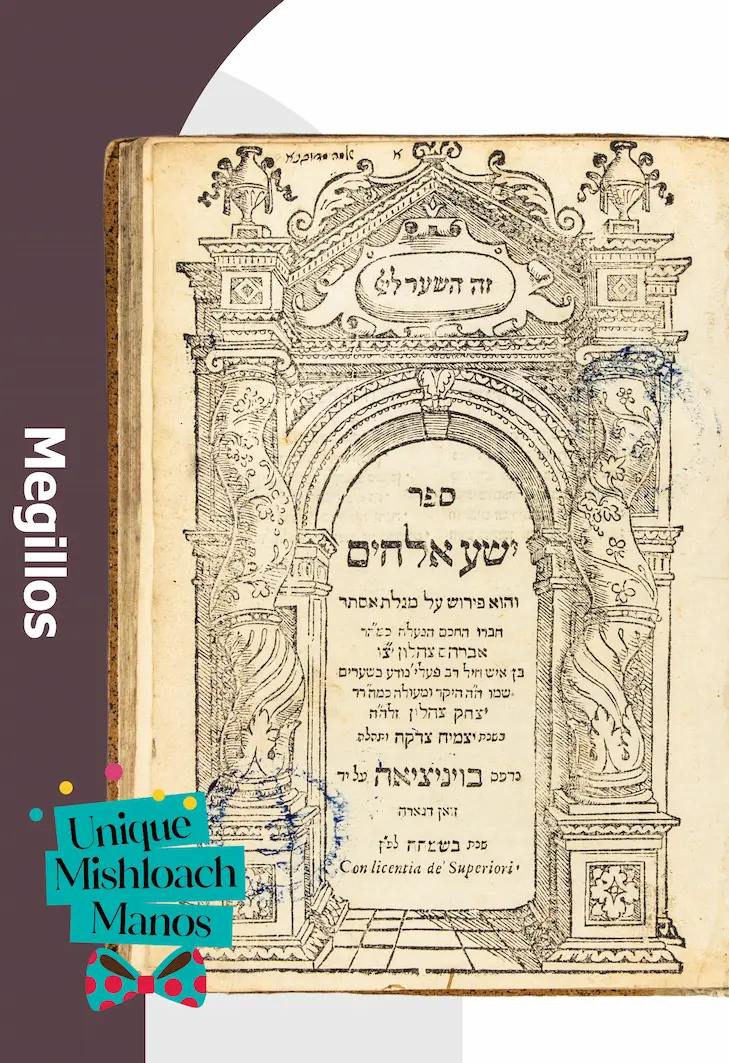
Yesha Elokim on Megillas Esther. First Edition. Venice, 1595 Commentary on Megillas
Yesha Elokim on Megillas Esther. First Edition. Venice, 1595 Commentary on Megillas Esther by Rabbi Avraham Tzahalon. Important commentary on Megillas Esther that has been cited by many Gedolei Yisrael throughout the ages. Rabbi Avraham Tzahalon (d. 1600), a grandson of Rabbi Yitzchak Karo, author of Toldos Yitzchak and grandfather of Rabbi Yosef Karo (see leaf 36a), was born in Tzfas. He journeyed to Bagdad where he compiled this impressive work on Megillas Esther in 1593 (see preface and colophon). Rabbi Avraham Tzahalon was the first among the Arizal's students to print his teachings when he included tikkunim for repentance in his sefer Marpeh Lenefesh (Venice, 1595). Venice, 1595. First Edition. Page Count: 36 leaves. Page Size: 18.5 cm. Condition: Antique quarter-parchment binding. Provenance: This sefer was originally in the library of the famed schlorley collector Chacham Shlomo of Dubna (1738-1813) and boasts his autograph on the title page. It later passed to Yaakov Naftali Hertz Levi of Amsterdam with his ex-libris. ................................................ Any inquiries about this lot ? We are available also on WhatsApp >>>

Lot : 26

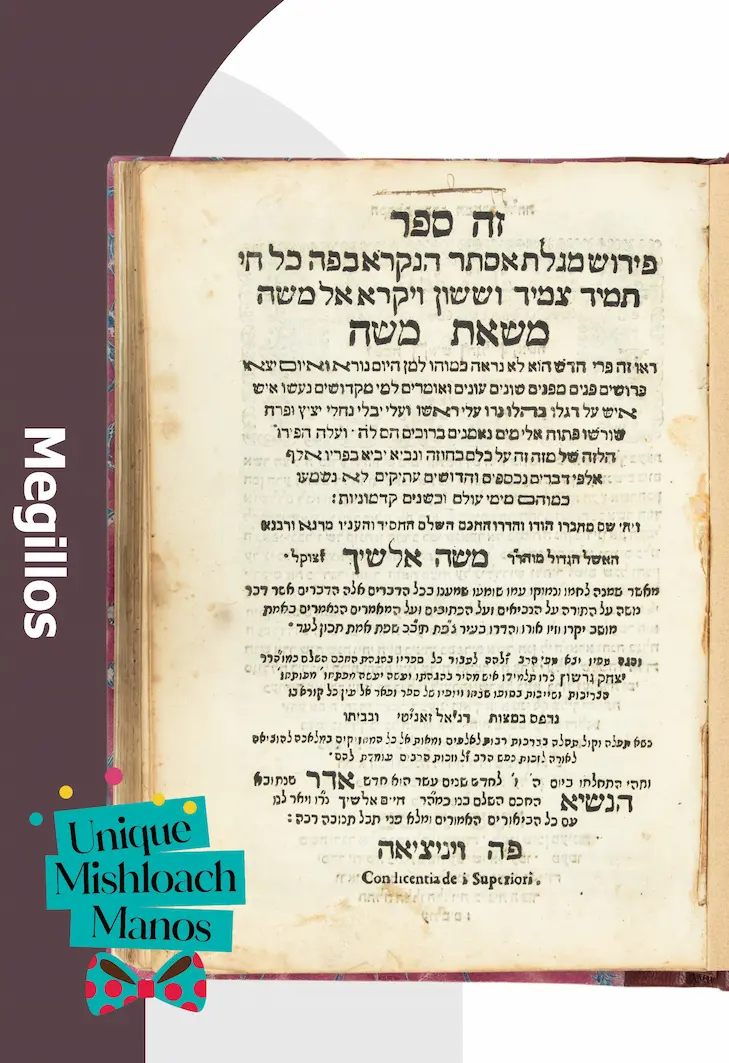
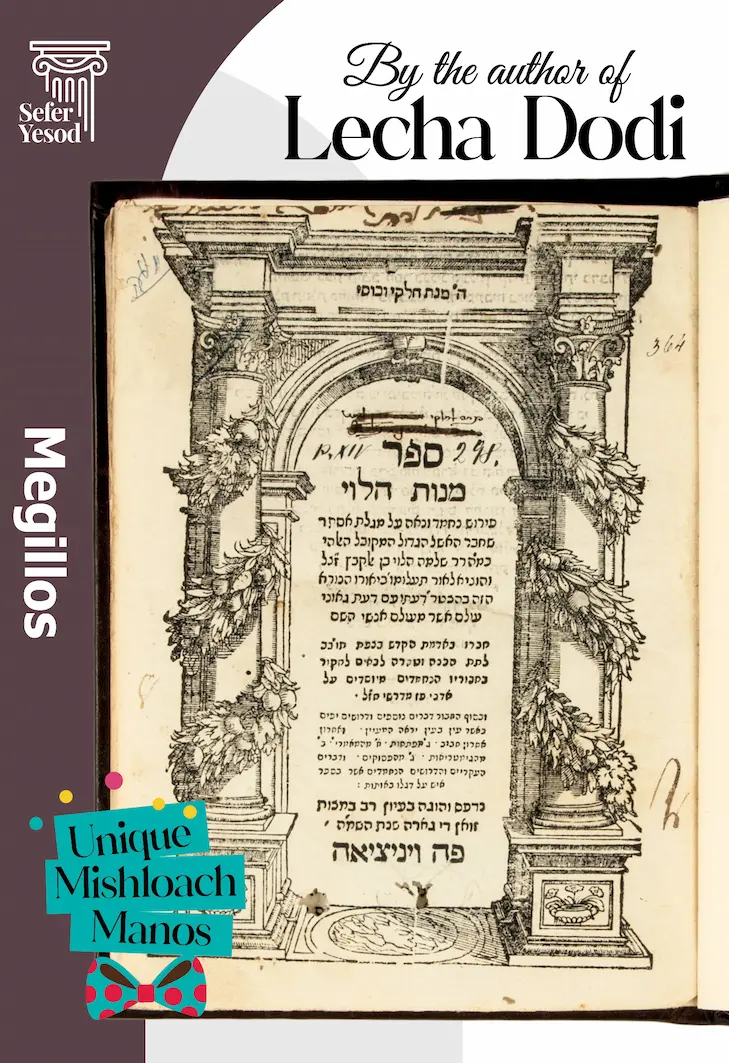
Rabbi Shlomo Elkabetz, Author of Lecha Dodi Sefer Yesod Manos Halevi -
Rabbi Shlomo Elkabetz, Author of Lecha Dodi Sefer Yesod Manos Halevi - Fundamental Commentary on Megillas Esther! First Edition. Venice, 1585 Megillas Esther with the classic lengthy commentary of the great kabbalist Rabbi Shlomo Halevi Elkabetz. This is a unique copy with a rare added page by the Rema of Pano (see below). This commentary was authored by Rabbi Shlomo Elkabetz in 1529 when he was only 24 years of age. As a chosson, he sent it to his father-in-law on Purim as mishloach manos (see leaf 1a). During this era, many of the great sages of Tzfas authored commentaries on the five megillos, yet the very first one was Manos Halevi by Rabbi Shlomo Elkabetz. The saintly kabbalist Rabbi Shlomo ben Moshe Halevi Elkabetz (1500-1576) was one of the great sages of Tzfas who is most famous for composing the piyyut Lecha Dodi, sung in Jewish congregations around the world to welcome the Shabbos. Rabbi Shlomo Elkabetz was the brother-in-law and spiritual master of the Ramak (see preface to Pardes Rimonim). A famous legend recounts that he learned together with Rabbi Yosef Karo one Shavuos night when a Maggid appeared to them from the heavens and taught them Torah, as Rabbi Shlomo himself divulged: “Hashem granted we should hear the Voice speaking to us from the mouth of the chassid [Rabbi Yosef Karo]...a powerful Voice... All the neighbors heard but did not understand. It was so pleasant, and the Voice grew stronger and more powerful, and we fell on our faces…in fear...” (Shnei Luchos Habris). Rare sefer! This copy contains an additional leaf inserted into the sefer. In this copy, on leaf 231b, directly after the words of Mahari Beirav, there is a printed essay by the Rema of Pano explaining the Zohar’s teachings on shalosh seudos. A closing statement by the proofreader Rabbi Yitzchak Gershon is printed on a separate leaf. Other known copies of this edition omit the Rema of Pano’s essay and replace it with the letter by Rabbi Yitzchak Gershon. Venice, 1585. First Edition. Page Count: [4], 231, [1] leaves. Page Size: 18.5 cm. Condition: Good. New leather binding. Bibliography: Stefansky, Sifrei Yesod#15 For more info ................................................ Any inquiries about this lot ? We are available also on WhatsApp >>>

Lot : 27

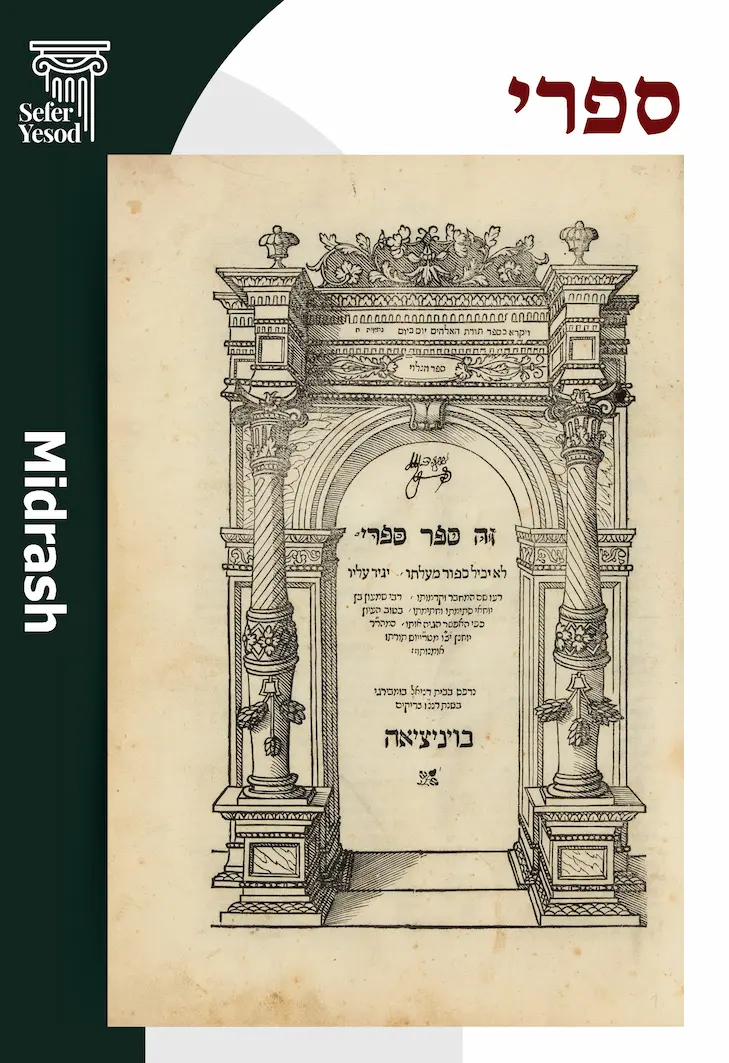
Sefer Yesod Fundamental midrashim by Chazal! Sifri on Bamidbar & Devarim. First
Sefer Yesod Fundamental midrashim by Chazal! Sifri on Bamidbar & Devarim. First Edition. Daniel Bomberg press , Venice, 1546 Proofread copy! Midrash halachah from the houses of study of the Tannaim, on Chumashim Bamidbar and Devarim. This first edition of Sifri was printed by the famed Italian printer Daniel Bomberg. The source of the midrashim included in the sefer are the batei medrash of Rabbi Yishmael and Rabbi Akiva. The Gemara (Sanhedrin 86a) relates that the teachings in Sifri were transmitted to future generations from the beis medrash of Rabbi Shimon bar Yochai (see Iggeres Rav Shrira Gaon). This sefer contains numerous amendments and annotations until leaf 33. The style of these amendments was typical in Egypt in the time of Rabbi Betzalel Ashknazi, it appears that the scribe was editing the sefer from an additional manuscript. Owner’s signature in Sephardic calligraphy. Venice, 1546. Daniel Bomberg Press. First Edition. Page Count: 63 leaves; 252 columns. Page Size: 29.5 cm. Condition: Slight damage and holes professionally restored. New leather binding. Bibliography: Stefansky, Sifrei Yesod #120 ................................................ Any inquiries about this lot ? We are available also on WhatsApp >>>

Lot : 28

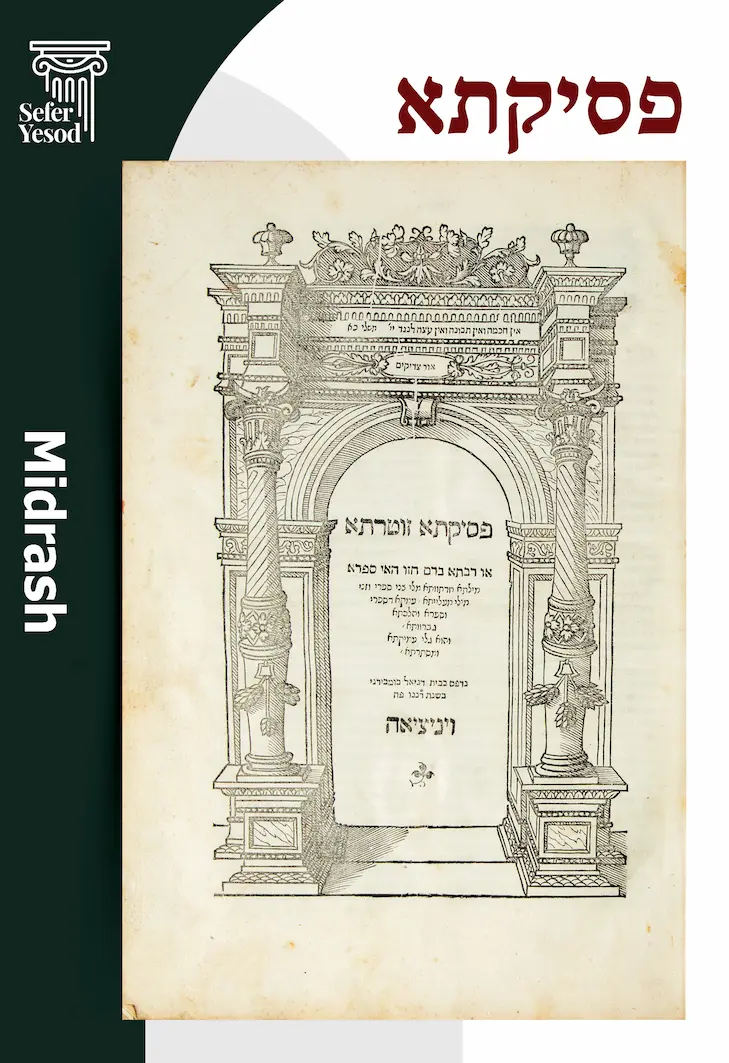
Sefer Yesod Pesikta Zutra. First Edition. Daniel Bomberg Press. Venice, 1546 Midrashim
Sefer Yesod Pesikta Zutra. First Edition. Daniel Bomberg Press. Venice, 1546 Midrashim on Vayikrah, Bamidbar and Devarim by Rabbi Tuvia ben Rav Eliezer . Rabbi Tuvia possessed numerous midrashim that were lost over the ages, and he compiled these into his Pesikta Zutra. Many of the important midrashim are sourced exclusively in this sefer. Pesikta Zutra is remarkable not only for its eclectic sources of midrashim, but also for the original commentaries and halachic rulings it encompasses. Rabbi Tuvia ben Rabbi Eliezer was of the earliest Rishonim. He dwelled in Kastoria, Greece in the 9th century, during the era linking the Geonim and Rishonim. Rabbi Tuvia’s sefer spread throughout all Jewish settlements in Germany, France and Spain, and the greatest Rishonim and Achronim throughout subsequent generations drew from his wisdom and halachic rulings. His writings are quoted extensively by Rishonim including the Rashbam, Rabbeinu Tam, Itur, Shvilei Haleket, Rabbeinu Yerucham, the Rosh, Chizkuni and more, and later by Achronim including Rabbi Shlomo Elkabetz, Maharshal, Maharsha and Minchas Shai. The sefer was originally named Lekach Tov, an allusion to the author’s name, Tuvia. Every new section begins with a verse that includes the word ‘tov.’ His compositions on Chumashim Bereishis and Shmos did not appear in print until 1878 when they were published by Rabbi Shlomo Buber who included a comprehensive study on the sefer and its author in his foreword to the sefer. Venice, 1546. First Edition. Daniel Bomberg Press. Page Count: 93 leaves. Page Size: 30 cm. Beautiful copy in good condition. New faux-white parchment binding. Bibliography: Stefansky Sifrei Yesod # 123 ................................................ Any inquiries about this lot ? We are available also on WhatsApp >>>

Lot : 29

Rare commentary on Medrash Rabba  Toldos Noach. Cracow, 1634 Medrash Rabbah Shemos
Rare commentary on Medrash Rabba  Toldos Noach. Cracow, 1634 Medrash Rabbah Shemos with comprehensive commentary by Rabbi Noach ben Rabbi Pesach of Pinsk, Dayan of Cracow on Midrash Rabba Sefer Shmos. The commentary contains many chiddushim taught by the author’s mentors, the Megaleh Amukos and the Bach. The approbation of the Megaleh Amukos, and a verbal approbation received from the Bach are both printed on the verso of the title page. In the body of the sefer, Rabbi Noach cites many chiddushim which he heard from his spiritual masters (see leaves 89b; 122a), and in the preface itself, he writes effusive praises of his rebbi, the Megaleh Amukos. The author follows the footsteps of Rabbi Shmuel Yaffe, author of Yeffe Toar and thus the title page notes the name of sefer as Yeffe Toar Volume Two. (At the time, Yeffe Toar had only been printed on Sefer Bereishis.) The title page features an illustrated border, as well as the Polish kingdom’s seal of the Polish eagle. The title page margins likewise feature the seal of the city Cracow. Rare Cracow, 1624. First Edition. 2, 143 leaves. Page Size: 28.5 cm. Condition: Holes and damage to text, professionally restored. Several leaves in the middle of sefer are printed on dark brown paper. Ornate new leather binding with case. ................................................ Any inquiries about this lot ? We are available also on WhatsApp >>>

Lot : 30

Sefer Yesod Tanna Dvei Eliyahu. Attributed to Eliyahu Hanavy , First Edition.
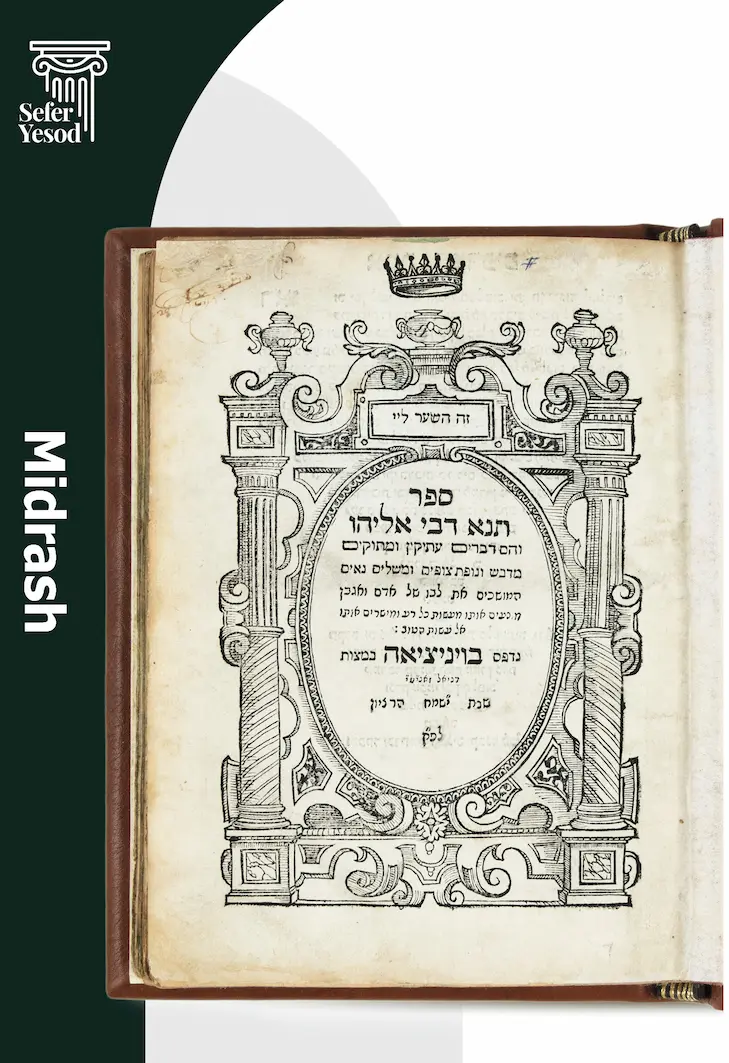
Sefer Yesod Tanna Dvei Eliyahu. Attributed to Eliyahu Hanavy , First Edition. Venice, 1598 Midrash Aggadah on the pesukim of the Torah and Nevi’im revealed by Eliyahu Hanavi. This Midrash is one of the fundamental works of Chazal. The Talmud Bavli relates that these Aggados were revealed by Eliyahu Hanavi to Rav Anan (see at length in Shem Hagedolim, Seder Eliyahu Rabba by the Chida). The present edition text of Tanna Dvei Eliyahu was based on a manuscript written in 4946 (1185). This Midrash is comprised of two sections: Seder Eliyahu Rabba (31 chapters) and Seder Eliyahu Zuta (25 chapters). Venice, 1598. First Edition. Page Count: 69 leaves. Page Size: 19 cm. Condition: Good. Minor repairs on margins of first and last leaves. New leather binding. Bibliography: Stefansky, Sifrei Yesod #133 ................................................ Any inquiries about this lot ? We are available also on WhatsApp >>>

Lot : 31

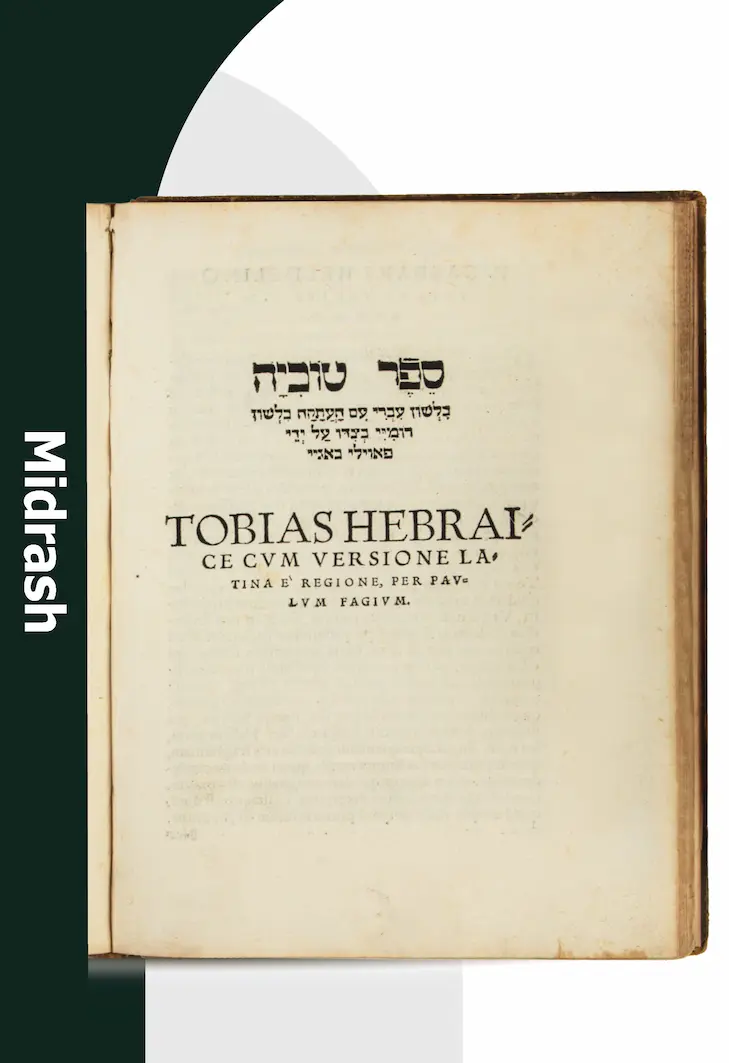
Sefer Ben Sira and Sefer Toviya. Isna, 1542 Two sefarim of scripture
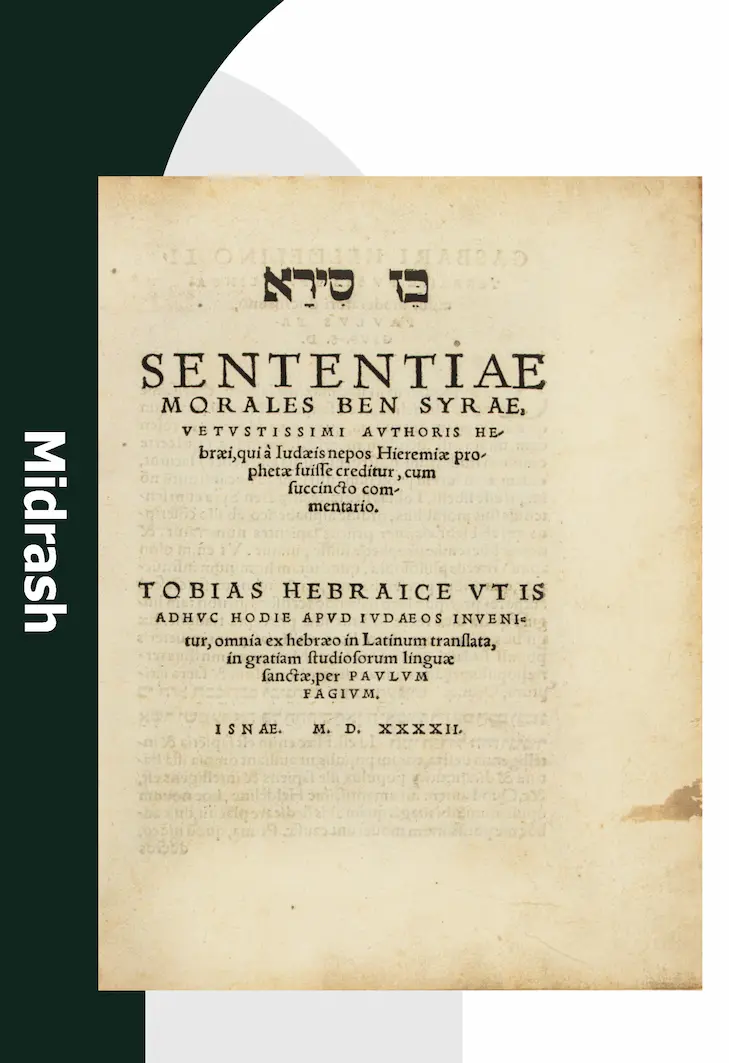
Sefer Ben Sira and Sefer Toviya. Isna, 1542 Two sefarim of scripture which were inscribed during ancient times known as sefarim chitzonim (Jewish apocrypha). these scriptures were excluded by chaza”l as not to be recognized as part of the holy Tanach. 1. Ben Sira – Wisdom and mussar in the original Aramaic version, complete with commentaries in lashon hakodesh and Latin.  Chaza”l refer to Ben Sira and quote it in several places in the Gemara (e.g. Chagigah 13a; Yevamosi 63b; Kesubos 110b). 2. Sefer Toviya – A work recounting the chessed, prayers and miracles that occurred to the heroes of the book – the father Tovi, and his son Tovia. This sefer was authored in lashon hakodesh and includes both the original Hebrew and Latin translation by the printer Paulo Baggios. Isna, 1542. Page Count: [57] sides. Page Size: 20.5 cm. Sefer Toviya has a partial title page and the last leaf features the printer’s emblem upon the entire page. Condition: Good with attractive margins. Slightly worn antique leather binding. ................................................ Any inquiries about this lot ? We are available also on WhatsApp >>>

Lot : 32

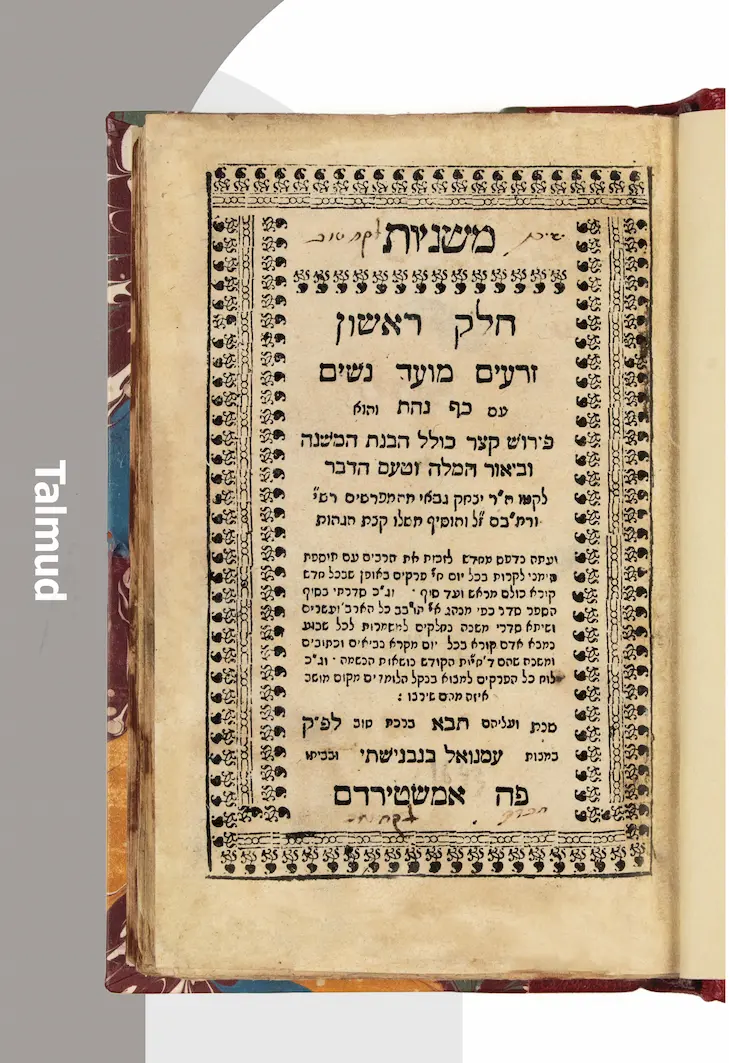
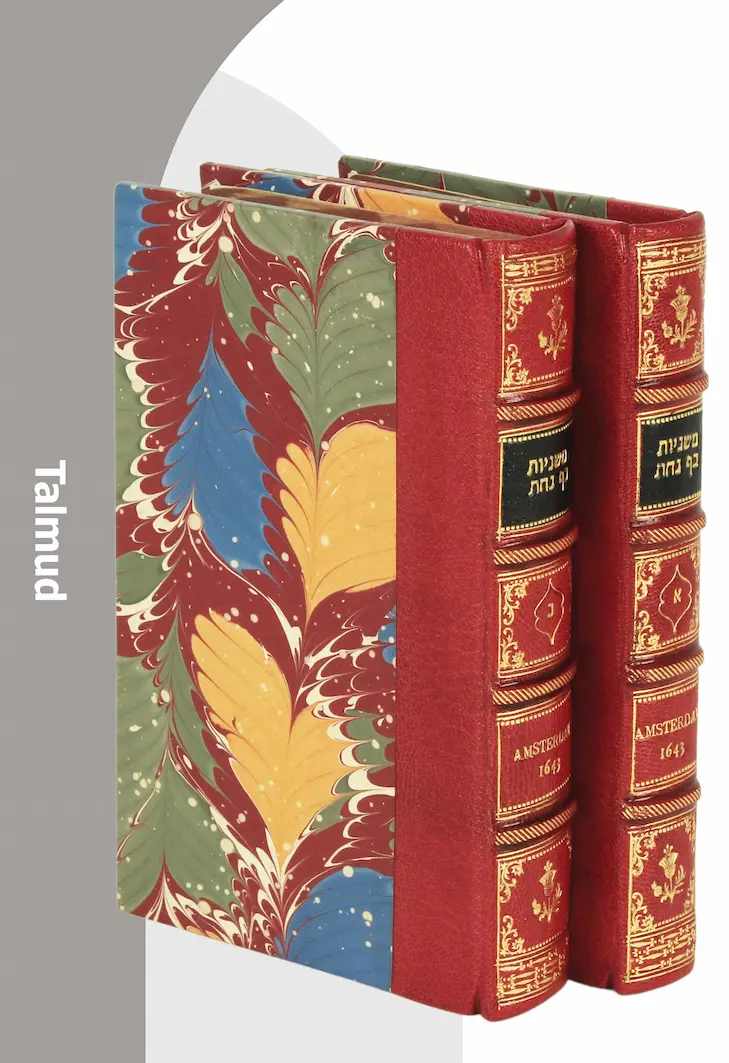
 2 volumes! Mishnayos Kaf Nachas. Amsterdam, 1643 Shisha Sidrei Mishnah with Kaf
 2 volumes! Mishnayos Kaf Nachas. Amsterdam, 1643 Shisha Sidrei Mishnah with Kaf Nachas commentary, a concise, basic interpretation of the Mishnah, its reasoning and explanation of hard words by Rabbi Yitzchak Gabbai. One unique addition to the Kaf Nachas Mishnayos is the small circles printed above the names of the Tannaim whose opinion are determined . In his preface, the author shares that his motive in compiling this sefer was to create an abridged, straightforward commentary on the Mishnah to facilitate the study of those who learn 18 chapters of Mishnayos daily. He explains that the present encompassing commentary enables learners to have a good understanding of the Mishnah without delving too deeply into the text. Mishnayos Kaf Nachas was originally printed in Venice, 1609, and became immensely popular among scholars and laypeople alike. Due to its popularity it was reprinted in numerous editions.  The end of Volume 2 in the present edition presents a schedule for weekly study of Tanach and Mishnayos. Rabbi Yitzchak Gabbai was the son of the righteous Rabbi Don Shlomo Gabbai and grandson of Rabbi Don Chaim Gabbai Hasephardi who was a resident of the famous Atlantic port city Safi, Morocco. Rabbi Yitzchak served as an editor in the Bragadin Press in Venice and named his son was named Yedidya Kaf Nachas after his father’s commentary. Rabbi Yitzchak Gabbai eventually established the first Jewish-owned press in Livorno. Amsterdam, 1643. Emmanuel Benbenishti Press. Page Count: Volume 1: Zeraim, Moed, Nashim: 172 leaves; Volume 2: Nezikin, Kodshim, Taharos: 244, [6] leaves. Page Size: 17 cm. Stained margins. Complete set bound in attractive half-leather bindings and matching case. ................................................ Any inquiries about this lot ? We are available also on WhatsApp >>>

Lot : 33

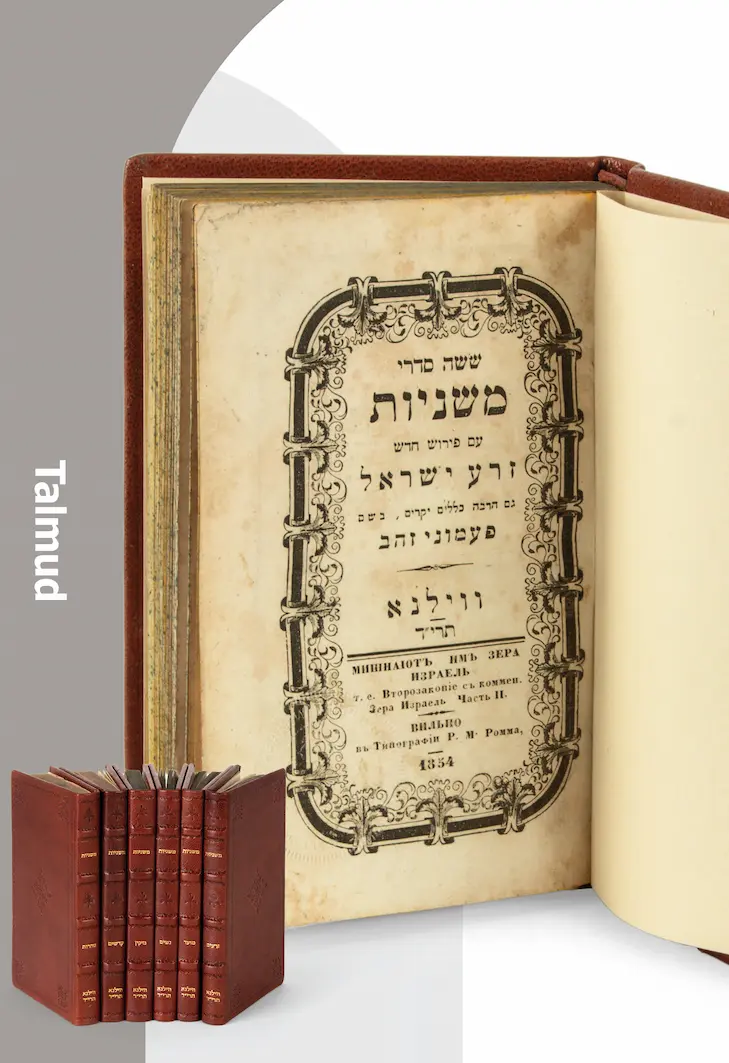
Zera Yisrael on Shisha Sidrei Mishnah by Author of Tiferes Yisrael. First
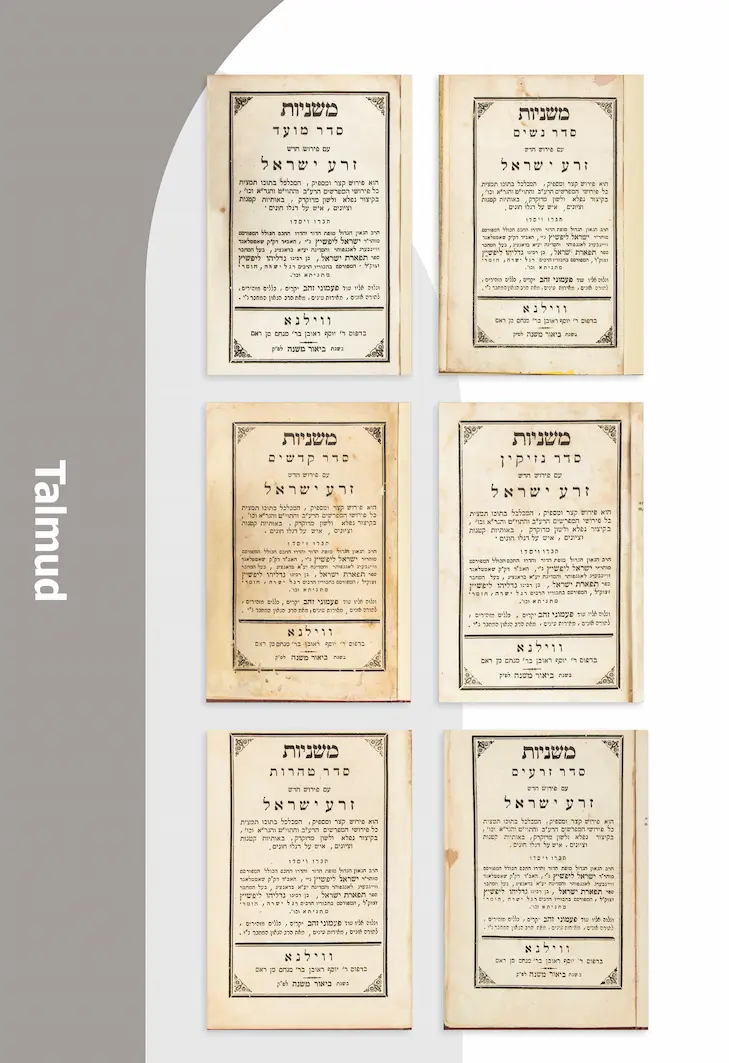
Zera Yisrael on Shisha Sidrei Mishnah by Author of Tiferes Yisrael. First Edition. Vilna, 1854 Complete 6-volume set! Short, concise commentary on Shisha Sidrei Mishnah by Rabbi Yisrael Lifschitz, Av Beis Din of Danzig. This sefer is an abridged version of his expansive Tiferes Yisrael commentary on the Mishnah. Although the Tiferes Yisrael is better known among the community of learners, Rabbi Yisrael writes in his preface to this sefer that “the short commentary is seven times more refined than his lengthy commentary on Shisha Sidrei Mishnah.” Nonetheless, Zera Yisrael was less popular than its predecessor. In his preface, Rabbi Yisrael also explains that he printed the present sefer in a small format so travelers would be able to carry it with them and learn from it during their journeys. The commentary on Sefer Zeraim opens with a lengthy pamphlet of rules and principles which he calls Paamonei Zahav. Rabbi Yisrael Lifschitz (1782-1860), Av Beis Din of Danzig, authored one of the most fundamental and widely-learned commentaries on Shisha Sidrei Mishnah. Since first appearing in print, Tiferes Yisrael has been printed in most Mishnayos alongside the landmark commentaries of Rabbi Ovadya of Bartenura and the Tosfos Yom Tov. In his foreword to Tiferes Yisrael, his son elaborates on his father’s remarkable sanctity, piety and righteousness. Vilna, 1854. First Edition. Page Count: Zeraim: 12, XII sides: 64 leaves. Moed: [65]-145 leaves. Nashim: [1] [146]-115 leaves. Nezikin: [2], 98 leaves. Kodshim: [1], 92 leaves. Taharos: [1], 93-220 leaves. Page Size: 15.5 cm. Condition: Vol. 1 stained and signs of wear; Vol. 5-6 have holes on 2 first and last leaves. The Institute for Hebrew Bibliography records [1] an additional leaf at the end of Volume 1. Seder Zera’im and Seder Nezikin each have an abridged pre-title leaf. Six volumes, all bound in matching new leather covers. ................................................ Any inquiries about this lot ? We are available also on WhatsApp >>>

Lot : 34

Daniel Bomberg Talmud Bavli Maseches Menachos. Venice, 1529 Maseches Menachos with the
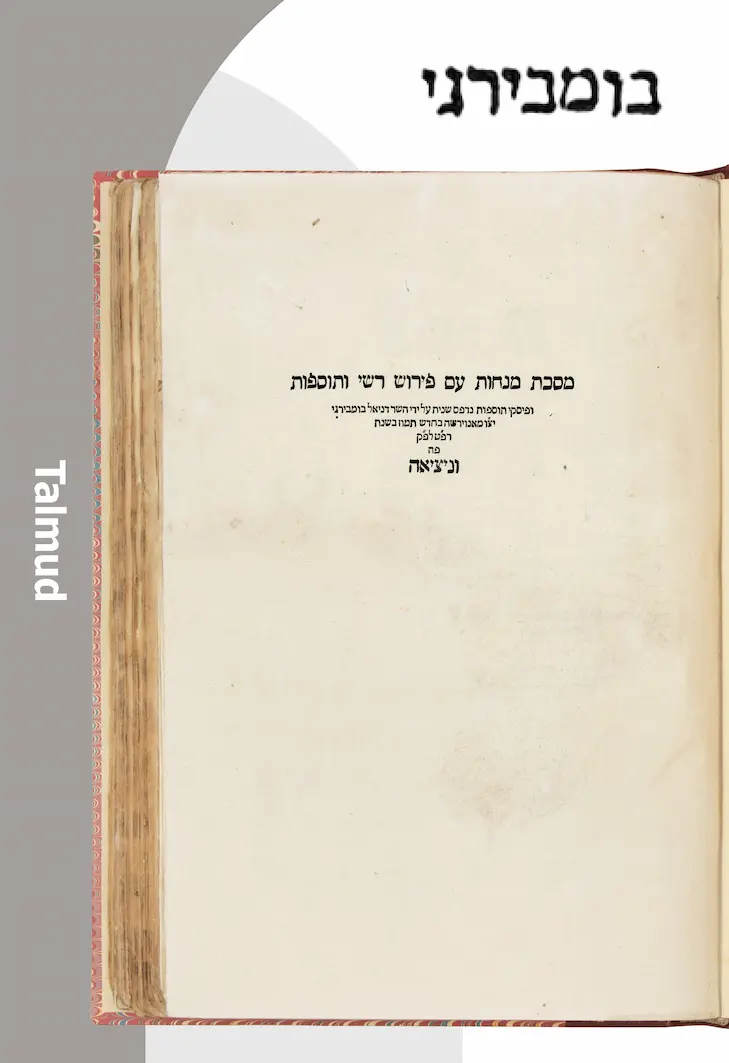
Daniel Bomberg Talmud Bavli Maseches Menachos. Venice, 1529 Maseches Menachos with the commentaries of Rashi and Tosafos; includes Piskei Tosafos. This is a complete volume from the second edition of the legendary Bomberg Shas, published by the Daniel Bomberg Press in Venice. Large format. Beautiful printing with dark ink on thick, high-quality paper. The Bomberg Shas The first complete set of Talmud Bavli was printed by the famed Daniel Bomberg Press in Venice between the years 1520-1523. The complete set was a masterpiece, with attractive, clear type and practically free of censorship. It likewise contained new additions that were printed for the first time based on handwritten manuscripts.  . Following the immense success of the first edition of Shas, Bomberg commenced printing a second edition which he completed in 1531. The second edition of the Bomberg Shas was printed precisely based on the prior edition, with slight changes. In the present second edition, the page number is noted on the left corner of the folio with the name of the maseches printed on its right. This has since become the standard practice in all editions of Gemara. Commonly regarded as the prototype for all future editions, the Venice Shas established the famous tzuras hadaf which fixed the number of pages in each tractate and served as the basis for all future printings of the Gemara. Until this very day, anyone who cites a source in Shas references the daf as established in Bomberg’s Venice Shas Rabbi Refael Nosson Nutta Rabinowitz, an expert on the printings of Talmud, wrote in reference to this project, “The structure and appearance of this Talmud is perfect in its magnificence and splendor. The paper is fine and the letters are black and luminous… No subsequent printings are as beautiful” (Ma’amar Al Hadpasas Hatalmud p. 41). Venice, 1529. Page Count: 112 leaves. Page Size: 37.5 cm. Condition: Good with attractive margins. A significant portion of the blank parts of the title page and back flyleaf was professionally restored; margins of first 11 leaves restored; part of text restored on leaf 8. Binding: Attractive new half-leather binding. ................................................ Any inquiries about this lot ? We are available also on WhatsApp >>>

Lot : 35

The first printing of Maseches Bechoros! Maseches Bechoros. Bomberg Press. Venice, 1522
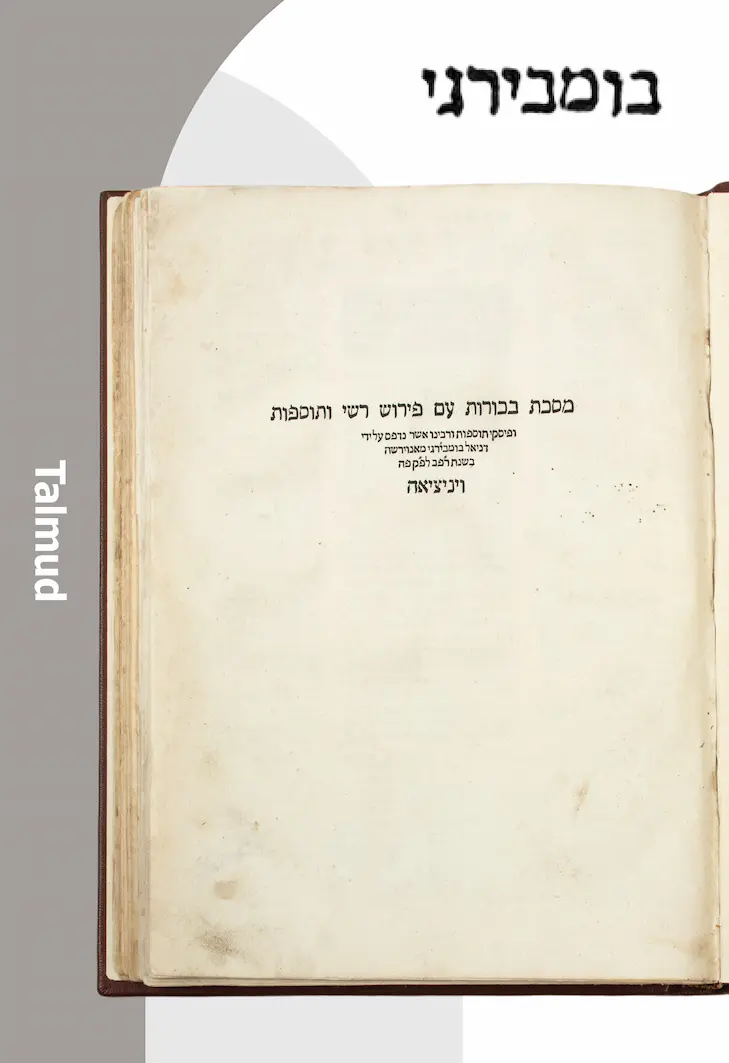
The first printing of Maseches Bechoros! Maseches Bechoros. Bomberg Press. Venice, 1522 Volume from the first complete set of Talmud Bavli! Maseches Bechoros with Rashi’s and Tosfos’ commentaries. This is a complete volume from the original first printed set of Shas by the famed Italian printer Daniel Bomberg Piskei Tosfos and Piskei HaRosh are printed in the back of the Gemara. This was the first printed volume of Maseches Bechoros. This masechta wasn’t printed throughout the entire incunabula or post-incunabula period; financial constraints prevented printers from printing masechtos that were not regularly learned in the framework of European yeshivos. (See preface of the printer Gershon Soncino in Michlol Kushta, 1533.) Beautiful volume of Gemara printed with dark ink on thick, high-quality paper. Venice, 1522. Daniel Bomberg Press. Page Count: 69 leaves. Page Size: 34 cm. Condition: Minor restoration on title page margin, and light repairs on margins of first 17 leaves. Light water stains. New leather binding. The leaves of the Gemara include notes and references in the Gemara and Tosfos. Similar markings were added for the first time into the Giustiniani Press Shas (Venice, 1551), yet the present markings seem to have been inserted beforehand. Bibliography: Stefansky, Sifrei Yesod #41 The Bomberg Shas The first complete set of Talmud Bavli was printed by Daniel Bomberg in his famed printing house in Venice between the years 1520-1523. The complete set was a masterpiece, with attractive, clear type and practically free of censorship. It likewise contained new additions that were printed for the first time based on handwritten manuscripts. Commonly regarded as the prototype for all future editions, the Venice Shas established the famous tzuras hadaf which fixed the number of pages in each tractate and served as the basis for all future printings of the Gemara. Until this very day, anyone who cites a source in Shas references the daf as established in Bomberg’s Venice Shas. Rabbi Refael Nosson Nutta Rabinowitz, an expert on the printings of Talmud, wrote in reference to this project, “The structure and appearance of this Talmud is perfect in its magnificence and splendor. The paper is fine and the letters are black and luminous… No subsequent printings are as beautiful” (Maamar al Hadpasas Hatalmud p. 41). ................................................ Any inquiries about this lot ? We are available also on WhatsApp >>>

Lot : 36

Fundamental halachic work The Mordechai. Riva de Trento, 1559 Halachic rulings in
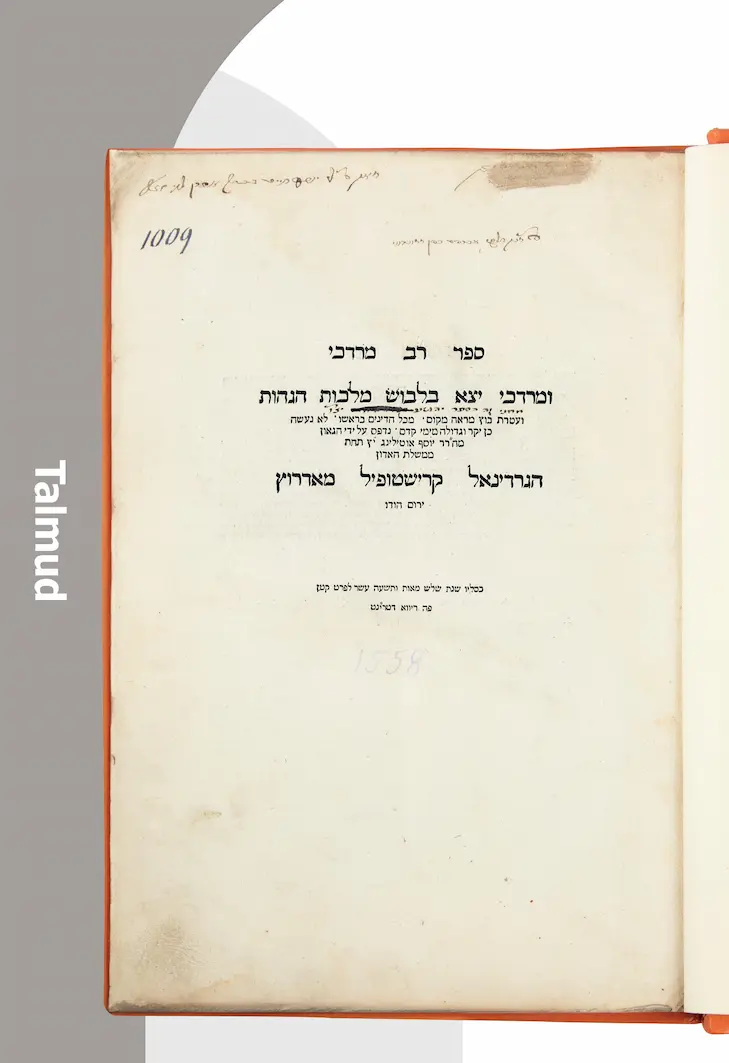
Fundamental halachic work The Mordechai. Riva de Trento, 1559 Halachic rulings in order of Shas. Contains rulings and teshuvos of the great Ashkenazic sages by Rabbeinu Mordechai ben Hillel. The Mordechai is a fundamental halachic work and a primary source of halachic rulings among Ashkenazic Jewry. Many of the rulings of the Rema in Shulchan Aruch are based on the Mordechai and the scholars in the Rema’s yeshivah in Cracow studied this sefer regularly. Until the present edition, the Mordechai was printed together with Hilchos HaRif, with each section printed alongside the relevant tractate. Here, for the very first time, the complete work of the Mordechai was printed as a single unit, offering a unique learning experience to the scholar who wishes to learn it in completion. The Mordechai was originally printed in Constantinople in 1509 and subsequently in Venice in 1521 (primarily based on the previous Constantinople edition). The present Riva di Trento edition was printed based on the Venice edition along with annotations. Rabbeinu Mordechai ben Rabbi Hillel (d. 1298) was a prime disciple of Maharam of Rothenburg, Rabbeinu Peretz and Rabbi Yechiel of Paris, and a brother-in-law to both the Smak and author of Hagahos Maimonios. He was murdered al kiddush Hashem in the Rintfleisch Massacres in Nuremburg in the year 1298. Riva di Trento, 1559. First Edition. Page Count: 150, [1], 154-192 leaves. Page Size: 31.5 cm. Condition: Good with owners’ signatures in Italian. New orange leather binding. Bibliography: Stefansky, Sifrei Yesod #139, Comments ................................................ Any inquiries about this lot ? We are available also on WhatsApp >>>

Lot : 37

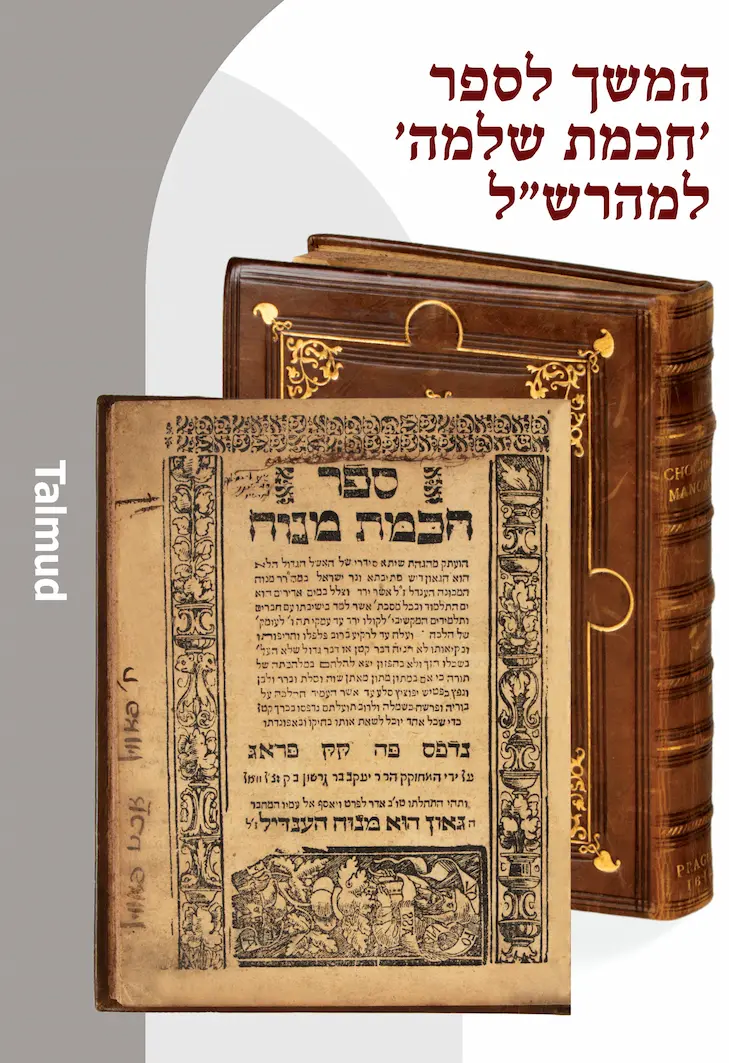
Chochmas Manoach. First Edition. Prague, 1612 First and very rare edition of
Chochmas Manoach. First Edition. Prague, 1612 First and very rare edition of comments and chiddushim on Shas by Rabbi Hendel Manoach ben Rabbi Shmarya. The sefer Chochmas Manoach was written as a supplement and continuation of the Maharshal’s landmark sefer Chochmas Shlomo, hence the name of the sefer Chochmas Manoach. In his preface, Rabbi Hendel’s son describes that after the new edition of Gemaros were printed in Cracow with the Maharshal’s corrections as noted in Chochmas Shlomo, many errors still remained in print, and his father sought to rectify this by completing the Maharshal’s work. Aside from the author’s notes on Shas, the sefer also contains numerous chiddushim and references to Talmudic sources, in a similar style to that used by the Maharshal. The present sefer encompasses Maseches Brachos and the complete Sidrei Moed, Nashim and Nezikin. Maseches Psachim also contains a commentary on the Haggadah. Chochmas Manoach was enthusiastically received by many scholars and due to its imperative importance it was attached to all the Vilna Shas Editions. Rabbi Hendel Manoach ben Rabbi Shmarya (circa 1540-1612) was a prime disciple of the Maharshal. He was a prolific author who put out numerous sefarim and responded to many teshuvos; his signature appears alongside other illustrious Torah luminaries as the Maharam of Lublin and Maharsha. In his latter years, he was involved together with his colleague Rabbi Yehoshua Falk Katz in arranging the divorce of a woman from her husband who had become an apostate. The episode, which later gained notoriety as the “Get of Vienna”, stirred great controversy among the Jewish world; the majority of Gedolim sided with Rabbi Manoach. Prague, 1612. First Edition. Page Count: 147 leaves. Page Size: 18.5 cm. Condition: Good, with minor stains. Leaf 18 has a small tear in the margin. The sefer was decoratively printed with illustrations, borders and embellishments. The final leaf has a full-page copperplate engraving of Dovid Hamelech with his harp. Impressive new leather binding. Lunzer-Valmadonna Collection Leaf 2b features an old owner’s signature that dates back to the printing period: “This came from Hashem to me, Shimon son of my father the great genius Moreinu Harav Yitzchak Katz y”t.” ................................................ Any inquiries about this lot ? We are available also on WhatsApp >>>

Lot : 38

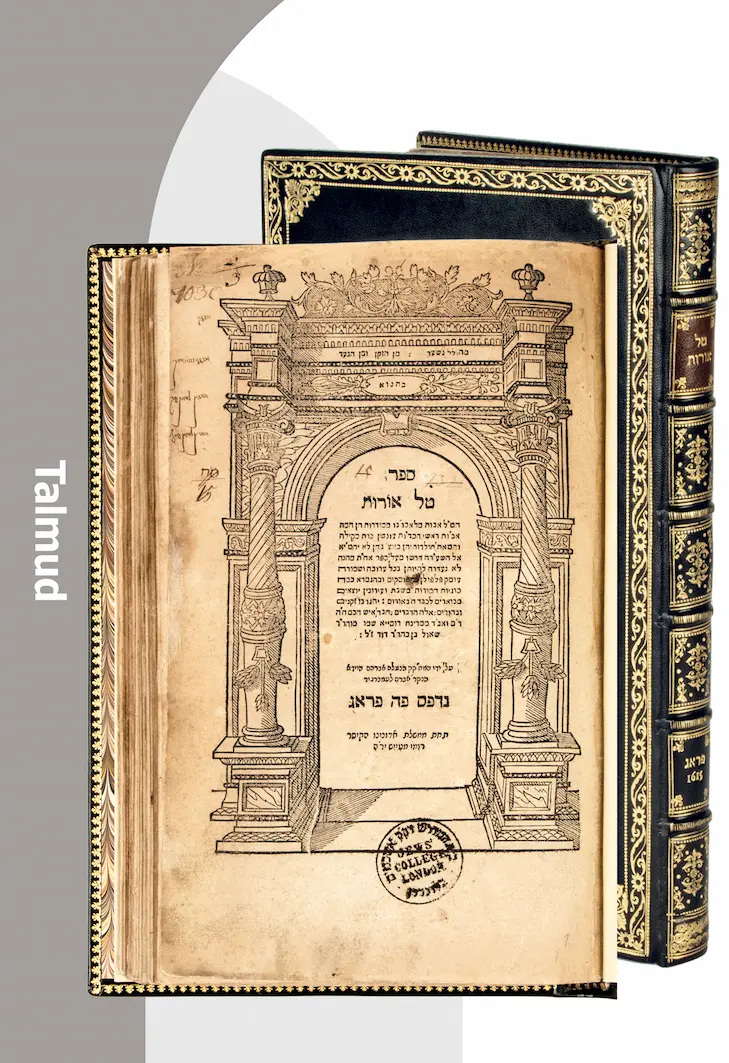
Original work on the 39 melachos of Shabbos. Tal Oros. First Edition.
Original work on the 39 melachos of Shabbos. Tal Oros. First Edition. Prague, 1616 Chiddushim in halachah and explanations of the 39 constructive Melachos prohibited on Shabbos by Rabbi Shaul ben Rabbi Dovid, Rosh Mesivta and Av Beis Din in Podolia (Russia). Rare sefer. This sefer was already regarded as rare in the times of the Chida as he inscribed in Shem Hagedolim regarding this book “it is not easily found”. In this enlightening work on the 39 melachos of Shabbos, the author presents a comprehensive explanation of each Melachah (work), beginning with references in the Gemara and continuing with the relevant writings and opinions of the Rishonim and Achronim until the author’s time. At the end of each section, Rabbi Shaul presents his own chiddushim and the practical halachic ruling. The Magen Avraham assigned great importance to this work, citing it several times in his writings. The sefer features approbations by the great Rabbis of the author’s era, among them the Maharsha, Shla Hakadosh and Kli Yakar. In the preface to his work, the author emphasizes the importance of learning hilchos Shabbos and expresses frustration with the ignorance regarding these critical halachos that are relevant on a weekly basis. His words were so powerful that the author of the later work Shvisas Shabbos copied and quotes his words in the preface to his sefer. Rabbi Shaul ben Rabbi Dovid (b. circa 1570) was a disciple of Rabbi Hersh Schorr, Av Beis Din of Brisk who was the prime disciple of the Rema (he is mentioned in his sefer on leaf 53b). Other works by Rabbi Shaul include Chanukas Habayis on Chanukah (Prague, 1616) and Seder Tefillas Haderech (Cracow, 1641). Prague, 1616. First Edition. Page Count: 3, 73, [1] leaf. Page Size: 29 cm. Condition: Minor stains; title page, last page and several other leaves professionally restored. New leather binding. ................................................. ............................................. “I saw this sacred work on the holy day of Shabbos composed by the mouth of a holy man… and many great insights and encompassing halachos are included in this work, and it is worthy to be studied throughout the Diaspora” (excerpted from the Shla Hakadosh’s approbation to the sefer). .................................... .................................................. ........ Any inquiries about this lot ? We are available also on WhatsApp >>>

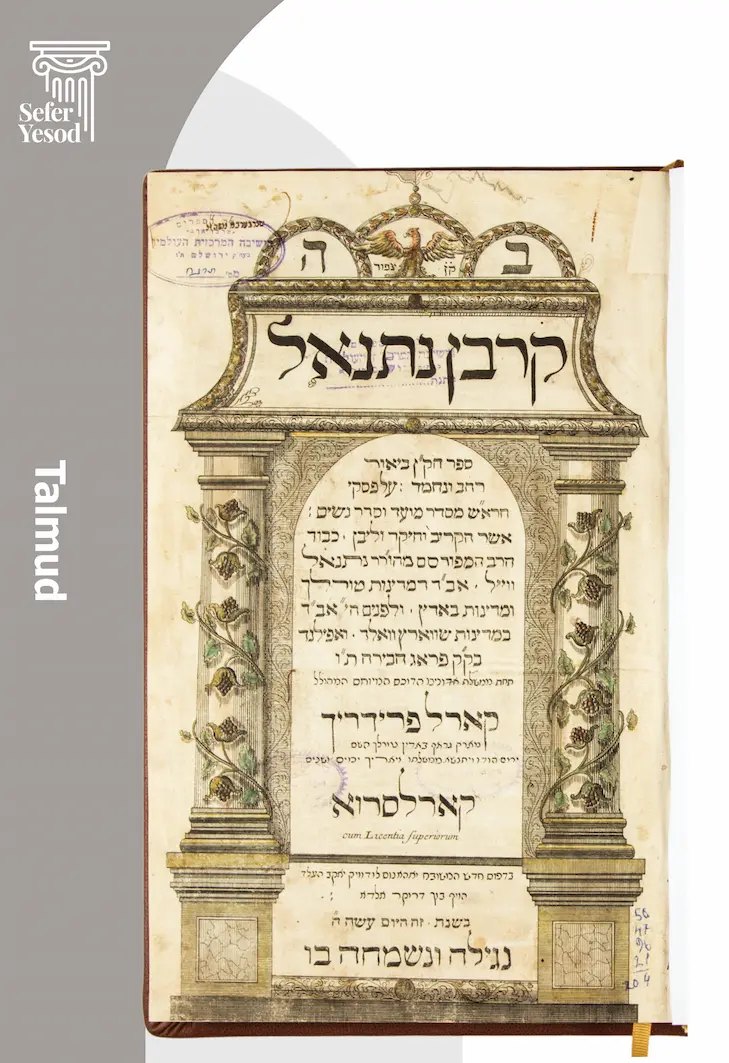
Lot : 40

Sefer Yesod Korban Nesanel. First Edition. Karlsruhe, 1755 Commentary, explanation, chiddushim in
Sefer Yesod Korban Nesanel. First Edition. Karlsruhe, 1755 Commentary, explanation, chiddushim in halachah and comments on Piskei HaRosh in Seder Moed and Seder Nashim by Rabbi Nesanel Weill, Av Beis Din of Karlsruhe. This sefer is fundamental to understanding the Rosh’s writings on Sedar Moed and Seder Nashim which lack the commentaries Maadanei Melech and Pilpula Charifta by the Tosfos Yom Tov. Rabbi Nesanel Weill (1689-1769), Av Beis Din of Karlsruhe, was a descendant of Mahar”i Weill and one of the greatest Achronim. He is commonly called after his sefer Korban Nesanel, a fundamental work on the writings of the Rosh which was highly praised by his contemporaries. The Avnei Nezer, for example, inscribed, “The sefer Korban Nesanel is very dear to me, for I heard from my honored father-in-law [Rabbi Menachem Mendel of] Kotzk great praises upon this sefer” (Chelek Ohr Hachaim Ch. 4:17). An illustrated title page that is virtually one of a kind in Torah literature appears in this sefer. The top of the page depicts a bird spreading its wings, with the words “kan tzippor (bird’s nest)” written on either side, alluding to the title of the sefer. In this present copy, the top half of the title page was colored by hand during the printing era. ................................................. .............................................. Chiddushim on halachah at the end of the sefer are marked by the author in the shape of a palm of a hand. These markings appear only in the present edition! ................................................. .............................................. Karlsruhe, 1755. First Edition. Page Count: [2], 148 [3] leaves. Page Size: 31.3 cm. Condition: Good. Top of the title page is slightly cropped. Artistic new leather binding. Bibliography: Stefansky, Sifrei Yesod #211 ................................................ Any inquiries about this lot ? We are available also on WhatsApp >>>

Lot : 41

Author’s personal corrected copy! Rabbi Shlomo Zalman Henna's important Tzohar Hateivah with
Author’s personal corrected copy! Rabbi Shlomo Zalman Henna's important Tzohar Hateivah with his autograph additions. Berlin, 1733 Foundations of Hebrew grammar by renowned Hebrew grammarian Rabbi Shlomo Zalman Henna with handwritten annotations. This sefer was the author’s personal copy! This is an interleaved copy (a blank sheet of paper appears between every two printed sheets), deliberately printed in this way on behalf of the author in order to facilitate the writing of comments, corrections and explanations. It is clear that the glosses in the sefer were written by Rabbi Shlomo Zalman, both from the handwriting which is an identical match to his other writings and from the content itself that corresponds to the text of the sefer. In his notes, Rabbi Shlomo Zalman also writes in first person: “I wrote” (gloss to 12a). Also, in other places, Rabbi Shlomo Zalman actually erased parts of the body of the sefer and wrote his corrections on the interleaf closest to the erasure. Rabbi Shlomo Zalman Henna (1687-1746) was born in the city of Henna, near Frankfurt, and from a very young age began studying the rules of dikduk. His first sefer, Binyan Shlomo, was printed in 1708 when he was just 21 years old! He became known as a brilliant and scholarly grammarian, and although some sages in his era, most notably Rabbi Yaakov Emden in his sefer Luach Eres, objected to Rabbi Henna’s proposed changes and amendments to tefillah, many were ultimately introduced into the popular Siddur Beis Tefillah (Yasnitz, 1725). (See Sifrei Yesod Appendix Shaarei Tefillah Letter 10). A kuntres entitled Michseh Hateivah which encompasses Rabbi Shlomo Zalman’s replies to the Yaabetz’s objection in Luach Eres, is printed at the end of the sefer. Rabbi Shlomo Zalman Henna’s handwritten glosses appear on 13 leaves, and several other corrections within the body of sefer. Berlin, 1733. First Edition. Page Count: 80, [1]. Folded chart (musical diagram). Page Size: 16 cm. Condition: signs of wear on folded chart leaf.  Antique leather binding with remnants of clasps. ................................................ Any inquiries about this lot ? We are available also on WhatsApp >>>

Lot : 42

Rabbi Wolf Boskowitz  Large Manuscript : Seder Mishnah Handwritten by Rabbi Wolf
Rabbi Wolf Boskowitz  Large Manuscript : Seder Mishnah Handwritten by Rabbi Wolf Boskowitz. Large 66-side manuscript handwritten by Rabbi Wolf Boskowitz on the Rambam Hilchos Tefillin and Sefer Torah. ................................................. ............................................ Seder Mishnah Seder Mishnah by Rabbi Wolf Boskowitz is one of the fundamental sefarim on the Rambam and encompasses all sections of the Yad Hachazakah. Rabbi Betzalel Ronsburg praised this work as “There is no other work like it, that covers every single chapter and halachah in all sections of the Rambam.” Rabbi Eliezer Zussman Sofer, author of Yalkut Eliezer, who saw the original handwritten manuscript urged the public to publish it, as he inscribed at the end of his preface to Sefer Hakaneh (Pest, 1867), “I declare my grief in public…The greatness of the genius, Rabbi of Yisrael, Rabbi Wolf Boskowitz zt”l is known throughout the world, and we saw wonders in his sefer Seder Mishnah on Sefer Hamada, and this Torah work lays [unpublished]… With my eyes, I read great compositions; manuscripts in his holy hand in the city of Pest…My soul will rejoice if I shall have the privilege, that in my merit it will be brought to print.” The first volume of Seder Mishnah was published in Prague in 1820, and additional volumes were printed throughout the coming years. Volume 1 features a broad range of letters of approbation by many distinguished Rabbanim who all praise both the author and his work, among them Rabbi Mordechai Banet, the Chasam Sofer, the Baruch Taam, author of Shemen Rokeach and others. ................................................. ............................................ Rabbi Binyamin Zev Wolf Halevi Boskowitz (circa 1740-1818) son of the author of Machatzis Hashekel. He was renowned in his lifetime as one of the geniuses of his generation, and he served as Av Beis Din in the cities of Assad, Prostitz, Kelin, Bonyhad and others. During his youth in Prostitz, the Chasam Sofer made the acquaintance of Rabbi Wolf and as he recounts in his approbation to the sefer Maamar Esther, “I know and I’ve witnessed the sparks of fire that emerged from his mouth for several years during my residence in Prostitz, where he revealed to me his mighty hand and outstretched arm to elucidates the verses of the holy works and sayings of Chazal in a way that is understood by all…His words which enter a listening heart have caused many to repent from sin and returned them to Hashem.  When I heard, I marveled, ‘There has never been one like this.’” (Chasam Sofer)  33 double-sided handwritten leaves (66 sides) marked 162-194. Page Size: 46 cm (height) x 28.5 (width). Inner margins reinforced with transparent tape. Mild imperfections due to acidity of ink. Seder Mishnah on Seder Ahavah (Jerusalem, 1966) was published based on this manuscript ................................................. Any inquiries about this lot ? We are available also on WhatsApp >>>

Lot : 43

Final volume discovered! Manuscript. Shu”t Teshuvah Me’ahavah.  Vol. 4. Unknown & Never
Final volume discovered! Manuscript. Shu”t Teshuvah Me’ahavah.  Vol. 4. Unknown & Never Printed! Shailos and Teshuvos on Even Haezer and sections of Shulchan Aruch Even Haezer, all neatly arranged for print. The manuscript contains chiddushim and many additions in the holy hand of Rabbi Elazar Fleckeles, Av Beis Din of Prague. ................................................. ............................................. During his lifetime, Rabbi Elazar Fleckeles published three volumes of his teshuvos under the title Teshuvah Me’ahavah during the years 1809, 1815 and 1821. Yet the final volume, which was compiled and prepared for print after 1822 (as indicated by the latest date appearing on the top of a teshuvah [leaf 1b]), he did not manage to publish and until this day was never printed. .................................................. ............................................ The present manuscript was written by a scribe (presumably his son in law Rabbi Shpitz) In addition there are handwritten amendments by Rabbi Fleckeles and additions to the text, which appear in the margins and between the lines, in addition there is a handwritten leaf in his handwriting placed between the pages of the manuscript with chiddushim on topics in Even Hezer. The verso of the leaf contains the draft of a letter. This manuscript was compiled and prepared for print, commencing with a beautiful poetic preface by the author, completely in rhyme. Each stanza begins with the words “Neum hagever (the words of the man)” and ends with his name “Elazar”. One of the teshuvos in this sefer features correspondence with Rabbi Elazar Fleckeles’ dear friend Rabbi Betzalel Rensburg (leaf 5a) and his son-in-law Rabbi Itzik Spitz, Av Beis Din of Wamsla (leaf 7b, 13b), as well as Rabbi Rensburg’s response to the author (leaf 12b). Rabbi Elazar Halevi Fleckeles (1754-1826) was the Av Beis Din of Prague. A descendant of the Maharal of Prague and prime disciple of the Noda B'Yehudah, he was one of the premier Rabbanim and halachic responders of his generation. Rabbi Elazar studied in the Noda B’Yehuda’s yeshivah for seven years and then maintained correspondence with his master. In his writings, he expresses effusive praise of the Noda B’Yehuda. In 1779, Rabbi Elazar was appointed Av Beis Din of Kojetein (Goitin) in Moravia, and in 1783, the Noda B’Yehudah invited him to serve as a dayan in Prague. In 1801, he began serving as Av Beis Din in Prague. He was known as a prominent darshan (orator) who battled fiercely against the Maskilim and Frankists in his era. His 3-volume work Teshuvah Me’ahavah is regarded as one of the premier anthologies of Halachic teshuvos. The present manuscript includes 26 handwritten double-sided leaves (49 sides), 2 additional leaves placed within the pages of the manuscript, and another 56 blanks. Page Size: 39 cm. Manuscript written on high-quality paper. Condition: Good in original binding without spine. The front cover is emblazoned with the words “T[eshuvah] M[e’havah] on [E]ven Hae[zer] V[olume] 4”. Provenance: library of Rabbi Mordechai Amram Hersh, Av Beis Din of Prague and Hamburg (1833-1908). The inner flap of the binding bears a label from his library. The manuscript then passed to the Carlebach family of Hamburg-Lakewood. For more info ................................................ Any inquiries about this lot ? We are available also on WhatsApp >>>

Lot : 44

Handwritten Glosses by Rabbi Shalom Zelig of Nadvorna’s – Talmid of Baal
Handwritten Glosses by Rabbi Shalom Zelig of Nadvorna’s – Talmid of Baal Shem Tov on Sefer Damesek Eliezer Sefer Damesek Eliezer al HaTorah with extensive marginalia by the Admor Rabbi Shalom Zelig of Nadvorna, father of the Admor Rabbi Tzvi Hirsh of Nadvorna, author of Tzamach Hashem Latzvi. The chiddushim and annotations inserted into the margins of this sefer span both the Revealed and Hidden Torah, and include a remarkable note of the Admor’s calculations regarding the coming of Mashiach (see below). Identification and Authentication of the Manuscript Leaf 4a notes the Admor’s dwelling place “Nadvorna”. In the body of the marginalia (leaf 47a), the annotator explicitly states “ I, Shalom Zelig, wrote this”, revealing his identity as the Admor Rabbi Shalom Zelig of Nadvorna, father of Rabbi Tzvi Hirsh of Nadvorna, author of Tzamach Hashem Latzvi. The handwriting on this manuscript is identical to the Admor’s handwritten glosses in Siddur Baal Shem Tov (see below). The present sefer Damesek Eliezer passed by inheritance to the Admor Rabbi Tzvi Hirsh’s grandson and namesake, Rabbi Tzvi Hirsh Maggid of Pietrow, who mentions this sefer in his preface to his commentary Tzamach Hashem Latzvi on the Haggadah (Sighet, 1910): “Being that I have in my possession the sefer Damesek Eliezer on the Mesorah that previously belonged to my grandfather Harav Hagaon Rabbi Shalom, who wrote on the leaves of the sefer wonderful words, I included them in this sefer, as well; and the father and son who see the chiddush shall rest in peace as their lips shall mouth [Torah in the grave].” The above refers to the present manuscript, and the Admor Rabbi Tzvi Hirsh printed several annotations that appear as marginalia in the present sefer. There is a famous siddur that belonged to the Baal Shem Tov Hakadosh in which his talmidim wrote their names in order to be mentioned by the Baal Shem Tov in his prayers. Rabbi Shalom Zelig inscribed his name before the brachah “Shema Koleinu”, signing it “Shalom Zelig ben Chay[a]”. Rabbi Shalom Zelig of Nadvorna was born circa 1738. As a young child, he was brought to the Baal Shem Tov who lifted him in his arms and played with him. Rabbi Shalom Zelig was a genius both in the revealed and hidden Torah. He married the daughter of Rabbi Elimelech, maggid of Dhurovitch and scion of Rabbi Shaul Wohl. They merited a son, Rabbi Tzvi Hirsh, Author of Tzamach Hashem Latzvi who was a beacon of light for Klal Yisrael. Sefer Damesek Eliezer Commentary on the Mesorah by Rabbi Eliezer, Av Beis Din of Pintchov. Yasnitz, 1723. First edition. Page Count: [4], 127, [2] leaves. Page Size: 19 cm.  This sefer is bound together with Geza Yehudah (Offenbach, 1738 Title page and leaves 11-12 missing. The sefer was already bound together with Geza Yehudah while in Rabbi Shalom Zelig’s possession, as he notes in the marginalia of the present sefer (leaf 68a). There are handwritten glosses from the Admor also on the margins of Geza Yehudah. When presenting his calculations of the time of the Redemption, the Admor inscribes on Leaf 91b: “I heard in the name of a great person an allusion to the Geulah and letters of “teiku” which are written in the Gemara regarding year 1756,” and he adds additional allusions and evidence. For more info ................................................ Any inquiries about this lot ? We are available also on WhatsApp >>>

Lot : 45

Large Handwritten Manuscript by Rabbi Yosef Heiman 1829-1849 With chiddushei Torah from
Large Handwritten Manuscript by Rabbi Yosef Heiman 1829-1849 With chiddushei Torah from the Maharam Ash and Chasam Sofer Thick , 600-sides manuscript replete with marvelous chiddushei Torah on many sugyos in Shas, halachos, shailos and teshuvos, and commentary on Nevi’im and Kesuvim, Aggados and Midrashim, along with drashos and a poignant hesped on the Chasam Sofer, all handwritten by Rabbi Yosef Heiman, Av Beis Din of Almashad. The drashos included in this manuscript were for Shabbos Shuva, Shabbos Hagadol, Shavuos, Erev Rosh Chodesh Nissan and a special drashah in honor of the dedication ceremony of the shul. Rabbi Yosef Heiman: A Talmid of the Maharam Ash and Chasam Sofer In this manuscript, the author cites numerous chiddushim on Aggadah that he heard directly from his two spiritual masters: the Maharam Ash and Chasam Sofer. The following samples show the reverence he gives them: “I heard from the mouth of the genius, our master, teacher and rabbi, Maharam Ash, n”y, ”  “In the name of the genius our master, teacher and rabbi, Moreinu Harav Moshe n”t, Av Beis Din in Pressburg, ”  He likewise quotes Moreinu Harav Shmelke [of Nikolsburg] zt”l as well as Rabbi Dovid Deitsch, author of Ohel Dovid. The end of the first pamphlet (leaf 91b) contains a list of noteworthy events that transpired during the author’s lifetime: “Today, Wednesday, 12 Tishrei, 5595 (1835), an earthquake with great clamor occurred here in the holy congregation of Almashad. I was sitting in shul, and there was a terrific blast. I went outside, and stones fell from the outside of the women’s gallery, and several vessels in the houses fell to the ground, and thank Hashem for sparing us and we did not incur any damage, so may He make for us miracles and wonders! ...There were other times when there were repeated earthquakes in the winter, and several buildings in other areas fell, and some very strong houses crumbled and were destroyed. Baruch Hashem for saving us…” “Today, Wednesday, the 2nd of …5601 (1841), we recited the blessing on the sun (birkas haChama) with the help of Hashem, here in the holy congregation of Almashad; and may Hashem grant that we should merit to say the blessing in Yerushalayim, our holy city, and bring our Mashiach close.” On leaf 49b, the author includes a stirring hesped that he delivered upon the Chasam Sofer which begins with the following: “With the help of Hashem. Wailing and great bitter eulogies, as due to our many sins, we have forfeited the man who was greater than giants, whose name precedes him far and wide, leader of all Diaspora Jewry, singular in his generation, the true genius, prince of Yisrael, and his sanctity is…Moreinu Harav Moshe Sofer zt”l, Av Beis Din of the holy congregation of P[ress]b[urg].” The title pages of the second and third pamphlets bears the author’s autograph: “HaK Yosef Heiman” and the title pages of the other pamphlets feature the autographs of his sons: “Shlomo, son of my father and master Yosef Heiman” and “Avraham Pinchas, son of my father and master Yosef Heiman ztv”la” and it appears that the latter relayed the chiddushim on the last page. Rabbi Yosef Heiman (d. 1856) was Av Beis Din of Almashad. Rabbi Yosef was born in Balash-Yarmut and was a student of Rabbi Mei Eisendstadt, Av Beis Din of Ungvar and author of Imrei Eish who also served as Rav in Yarmut between 1815-1835. In 1834, Rabbi Yosef was appointed Rav of Almashad, yet passed away in his native city of Yarmut on 7 Shvat, 5615 (1856) where he was laid to rest in the Jewish cemetery. (A photograph of his tombstone appears in Kovetz Alei Zichron Vol. 18 p. 4; Vol. 28 p. 58). The kovetz referenced above mentions a sefer Toldos Yosef (Pressburg, 1852) which Genazym has not been privileged to find and is not mentioned in known bibliographies. Almashad. The above mentioned dates in the manuscript range from years 5589-5609 (1829-1849). Page Count: 308 leaves (approximately 600 handwritten sides!) The sefer consists of several pamphlets bound together. Page Size: 23x27 cm. Binding: Original binding intact, missing spine. Several stains and tears. Good condition. The eulogy on the Chasam Sofer which appears in the end leaves of the manuscript was printed in Otzros Sofer Vol. 13 (2003) pp. 16-22. Aside from this eulogy, none of the other pamphlets are known to have been printed. Owners’ signatures: Avraham Gross of the holy congregation of Weitzen Hakatan Moshe Yechiel Shlesinger of Puschendorf Rabbi Yaakov Katz Stamp of Rabbi Aharon Mordechai Lieberman, Av Beis Din of Feldehaus Hy”d (descendant of the Pri Tzaddik of Tchaba and talmid the Unsdorfer Gaon)  ............................................ .... Any inquiries about this lot ? We are available also on WhatsApp >>>

Lot : 46

Drush 7 Adar - Unknown Chiddushim! Handwritten Chiddushim by the Ksav Sofer.
Drush 7 Adar - Unknown Chiddushim! Handwritten Chiddushim by the Ksav Sofer. Pressburg, 1862 Handwritten chiddushim on two sugyos in Maseches Moed Kattan by Rabbi Avraham Shmuel Binyamin Sofer, Av Beis Din and Rosh Mesivta of Pressburg and author of Ksav Sofer. To the best of Genazym’s knowledge, these chiddushim have never been printed. The Ksav Sofer writes an inscription on the title page. These chiddushim were delivered orally at a gathering of the Chevra Kaddisha in Pressburg on 7 Adar. The Ksav Sofer was his father’s closest disciple and adhered strictly to his path of Torah. The present composition mentions his father “And my father, my master, luminary of the Diaspora, zt”l said…” The Ksav Sofer Rabbi Avraham Shmuel Binyamin Sofer (1815-1873) was the author of Ksav Sofer and succeeded his father the Chasam Sofer as Av Beis Din of Pressburg. He “filled his father’s place completely, and did not deviate one iota from his ways… His glow enveloped him the whole day, and his ruach hakodesh lived on within him. The Hand of Hashem was known in all his deeds, for Moshe placed his hands upon him”, and all his character traits were our father’s elevated character traits - his Torah, his righteousness, his modesty and his leadership” (Rabbi Shimon Sofer, Av Beis Din of Cracow, in his introduction to Shu”t Ksav Sofer). ................................................. .............................................. During the final days of the Chasam Sofer’s life, he placed his hands upon the head of his son the Ksav Sofer and blessed him upon his appointment to the rabbinate of Pressburg. He said: “Your grandfather Rabbi Akiva (Eiger) on your right, your grandfather Rabbi Shmuel Schotten Katz on your left; an angel is on your head; and also I shall follow you and fulfill your words.” The Ksav Sofer later expressed that the Chasam Sofer’s hands upon his head felt like a blazing fire. .................................................. ............................................. Thus, at the young age of 24, the Ksav Sofer succeeded his father, the venerable Chasam Sofer, as Rav, Av Beis Din and Rosh Yeshivah of Pressburg. For the next 33 years, the Pressburg Yeshivah thrived, expanded and flourished under his talented leadership, cultivating generations of Rabbanim who disseminated Torah wisdom and fear of heaven throughout Hungary. Most Hungarian Rabbanim were either direct disciples of the Ksav Sofer or followers of his sacred legacy. Pressburg, 1862. [1], title page + 2 double-sided leaves (4 sides) written in the Ksav Sofer’s holy hand. Page Size: 21x26 cm. Light green paper. Good condition and well preserved. Ornate new leather binding. ................................................. .............................................. A Segulah for Healing The Ksav Sofer’s grandson the Daas Sofer would instruct sick patients to place one of his grandfather’s handwritten manuscripts beneath their pillows as a segulah for health and recovery. ( See attached content.) .................................................. ............................................. Any inquiries about this lot ? We are available also on WhatsApp >>>
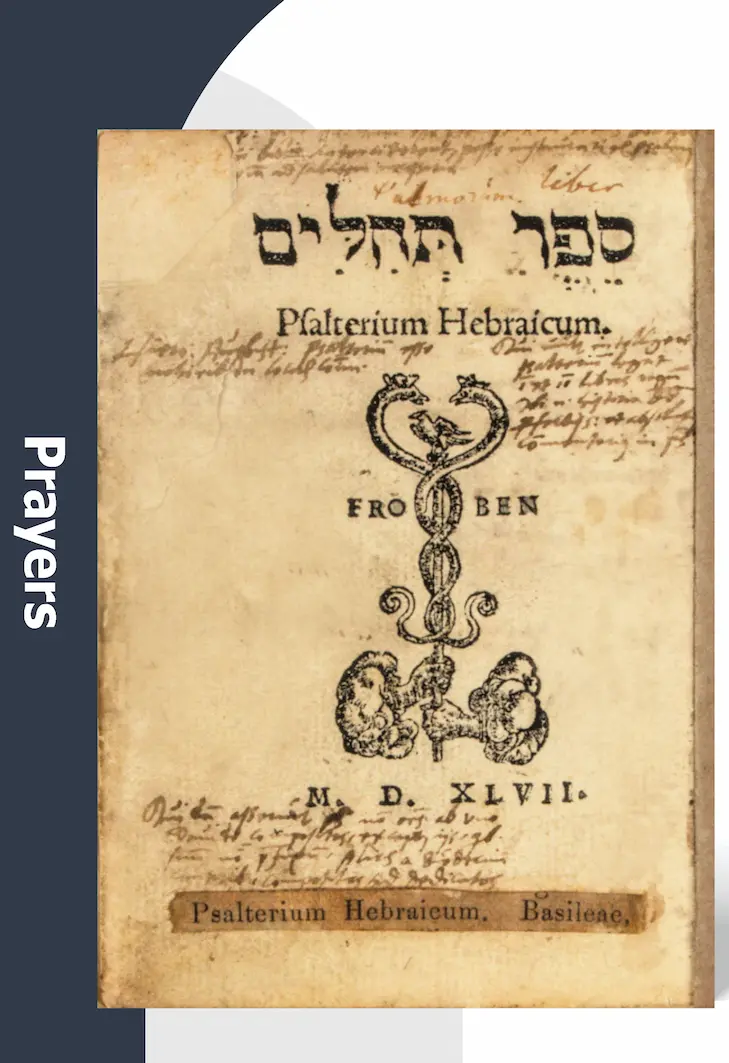
Lot : 47

Large Handwritten Manuscript of Chiddushim by Rabbi Shlomo Zalman Ullman, Author of
Large Handwritten Manuscript of Chiddushim by Rabbi Shlomo Zalman Ullman, Author of Yerios Shlomo A large manuscript of handwritten chiddushim on topics in Shas and Shulchan Aruch by Rabbi Shlomo Zalman Ullman, Av Beis Din of Mako and author of Yerios Shlomo. The manuscript opens with a table of contents entitled “List of Sugyos Found in This Sefer Composed by…My Father and Master the Great and Wondrous Genius Author of Yerios Shlomo”. Both the beginning and end of the manuscript feature the autograph of the author’s grandson Rabbi Meir Ullman [of Satmar], who was the son of Rabbi Shlomo Zalman’s son Rabbi Binyamin Ullman of Volka, who printed the Yerios Shlomo al Sugyos (Munkacs, 1813). Rabbi Shlomo Zalman Ullman (1792-1863) was one of the great Rabbanim and spiritual mentors in Hungary whose talmidim were great Rabbanim and morei hora’ah of the next generation i. Rabbi Shlomo Zalman was born in Ansbach to Rabbi Shalom Charif, author of Divrei Rash, and married the daughter of Rabbi Simcha Bunim Eiger, Av Beis Din of Mattersdorf and brother of Rabbi Akiva Eiger. In 1826, he was appointed Av Beis Din of Mako where he served as Rav for close to 40 years until his passing in 1863. He was a prolific author whose written legacy includes Sifrei Yerios Shlomo on Yoreh Deah, Shu”t, Sugyos and Drashos. Contemporary Rabbanim, among them Mahari Assad and the Divrei Chaim, lauded his wisdom and writings, and described him with awe-inspiring accolades. Mahari Assad portrayed him as “the light and sanctity of Yisrael” and “Glory of the generation, wondrous among the Sanhedrin”; and the Divrei Chaim wrote that “since the day the Noda B’Yehuda appeared, there has not been a work like this”. It is said that the Divrei Chaim would frequently quote from the sefer Yerios Shlomo. Large volume. 131 leaves; 260 large handwritten sides, nearly entirely handwritten by the author. Page Size: 21x41 cm. Condition: Good with new leather binding. ................................................ Any inquiries about this lot ? We are available also on WhatsApp >>>

Lot : 48

Discovery! Handwritten Manuscript of Unknown Chiddushim by Rabbi Moshe Chagiz Manuscript comprises
Discovery! Handwritten Manuscript of Unknown Chiddushim by Rabbi Moshe Chagiz Manuscript comprises commentary of Rabbi Moshe Chagiz on Aggados in Shas on Masechtos Shabbos and Eiruvin with annotations and references to the commentaries on Aggadah written in the sefarim of Rabbi Shlomo Algazi. The manuscript was fully written by the hand of Rabbi Moshe Chagiz. This manuscript is unknown and obviously, never printed. The present manuscript is structured in the same style as Rabbi Moshe Chagiz's other sefarim such as Leket Hakemach on Shulchan Aruch (Amsterdam,  1707; Hamburg, 1719) and Leket Hakemach on Mishnayos (Wandsbek, 1726). Rabbi Moshe Chagiz, also known as HaMeniach (1672-circa 1760) is the author of Leket Hakemach and Mishnas Chachamim. He was the son of Rabbi Yaakov Chagiz, author of Eitz Chaim and Halachos Ketanos, and a grandson and disciple of Rabbi Moshe Galanti, who was renowned as Harav Hamagen. In 1794, Rabbi Moshe Chagiz left Eretz Yisrael for the Diaspora where he dwelt for close to half a century before returning to the Holy Land. The year of his death is unknown, although the Chida writes that he passed away in Tzfas at over ninety years of age. Rabbi Moshe Chagiz gained worldwide repute for his fierce battle against the notorious Sabbatean Nechemia Chayun, yet he is remembered until this day for his prolific writings on all realms of Torah and mussar. The Pnei Yehoshua writes regarding Rabbi Moshe Chagiz’s mussar writings that “there was no one in the generation who knew how to deliver rebuke as he” (Approbation to Shu”t Shtei Halechem). Rabbi Shlomo Algazi (1610-1683) was one of the great 17th century Sephardic sages and authors whose prolific writings contain countless chiddushim on Shas. His chiddushim on Shas are scattered throughout the many sefarim he authored, making it difficult to locate his chiddushim according to the order of Shas. In the present manuscript, besides writing his own commentaries, Rabbi Moshe Chagiz presents Rabbi Shlomo Algazi’s chiddushim from all his numerous sefarim in the order of the Shas, summarizing them and providing a detailed reference as to where to find the original sources in Rabbi Shlom Algazi’s sefarim. The sefarim are referenced according to the initials of the many sefarim authored by Rabbi Shlomo Algazi as Zehav Sheba; Ratzuf Ahava; Taavah L’Einayim; Ahavas Olam; Keloris L’Ayin; HaLichos Eli; Yavin Shemuah. The sefer essentially serves as an index to Rabbi Shlomo Algazi’s writings on the above masechtos. Manuscript with handwritten marginalia. Page Count: [9] leaves; 18 handwritten sides. Page Size: 20x16 cm. Condition: Good. Leaf 7 with minor marginal tear. Attractive new leather binding. ................................................ Any inquiries about this lot ? We are available also on WhatsApp >>>
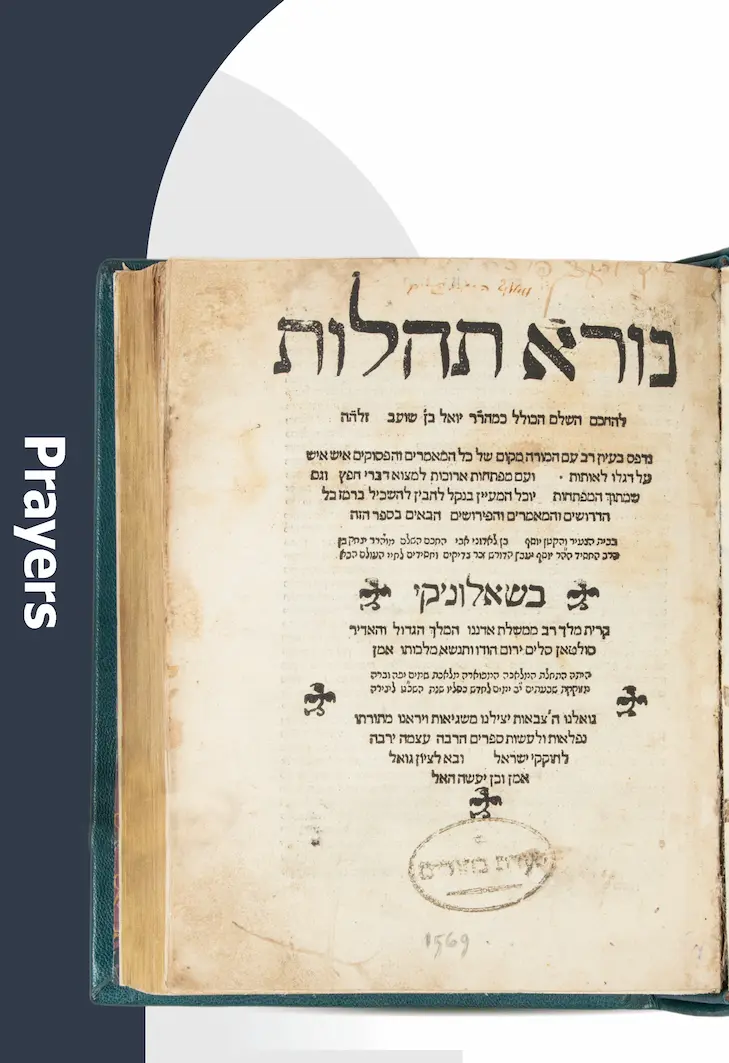
Lot : 49

Handwritten Commentary by Rabbi Yitzchak Zerachya Azzoulay with Autographed Comment by His
Handwritten Commentary by Rabbi Yitzchak Zerachya Azzoulay with Autographed Comment by His Son the Chida. Constantinople, circa 1741 Hand-written pamphlet containing commentary on Tanach and sermons by the sacred hand of Rabbi Yitzchak Zerachya Azzoulay, father of the Chida. Rabbi Yitzchak Zerachya kept this pamphlet with him and used it to record his chiddushim during his travels abroad. This pamphlet was bequeathed to the Chida, who inscribed an autograph comment in the margins of leaf 5a: “ Also I, in my explanations of the writings of the [Rambam printed in Shu”t Chaim Sha’al Vol. 2 Ch. 3]… Chida.” The Chida cited his father’s writings from this pamphlet in other sefarim as well. The second paragraph of this pamphlet, for example, is referenced in Pnei Dovid (Parshas Bechukosai #12). He notes his location at the top of leaf 5b: “ Constantinople”. It is known that Rabbi Yitzchak Zerachya Azzoulay sojourned in Constantinople while traversing Europe in 1741 to raise money for the residents of the Yishuv. The present manuscript is dated based on this information. Rabbi Yitzchak Zerachya Azzoulay (1702-1765), of the great Jerusalem scholars and tzaddikim in his era, as well as a revered dayan and Rosh Yeshivah. He was the son of Rabbi Yeshaya Azzoulay, grandson of Rabbi Yitzchak Azzoulay, and great-grandson of the saintly Kabbalist Rabbi Avraham Azzoulay, author of Chessed L’Avraham. Rabbi Yitzchak Zerachya studied Torah and Kabbalah under Rabbi Avraham Yitzchaki, author of Zera Avraham. His written legacy, aside from the present pamphlet is a composition entitled Zera Yitzchak, parts of which were printed in the sefer Min Hagenazim (Ahavat Shalom Institute Files 10,12), and the many teachings transmitted to his son and quoted throughout the seforim of the Chida. The author’s style entailed recounting lessons and messages taught by scholars and sages, and this genre is evident in the present pamphlet. In the pamphlet, he cites the Radvaz, Mahari Rosanis (author of Mishneh Lamelech), and some of the venerable sages of Jerusalem including Rabbi Dovid Habilio (HaCardach); Rabbi Shmuel Yisrael Meir Mizrachi (HaRimam), author of Pri Ha’aretz; Rabbi Yaakov Molecho (HaRim) and Rabbi Gedalya Chayun (Chara”g). Constantinople, circa 1741. Page Count: [7] leaves; 14 handwritten sides. Page Size: 15x10 cm. Condition: Miniscule holes; new cloth binding. ................................................ Any inquiries about this lot ? We are available also on WhatsApp >>>
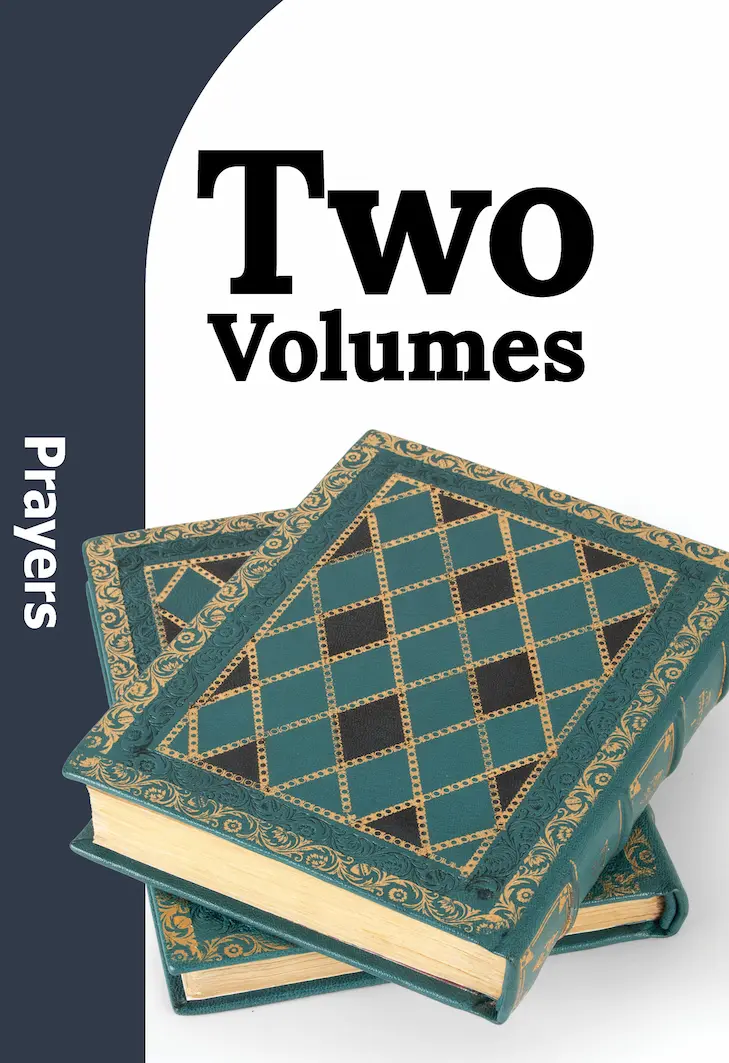
Lot : 50

40-Page Handwritten Notebook of Chiddushei Torah by Rabbi Shlomo Zalman Auerbach  Notebook
40-Page Handwritten Notebook of Chiddushei Torah by Rabbi Shlomo Zalman Auerbach  Notebook of handwritten chiddushei Torah on Mishnayos maseches Kilayim by Rabbi Shlomo Zalman Auerbach. Rabbi Shlomo Zalman Auerbach (1910-1995), author of Minchas Shlomo and one of the leading halachic authorities in the last generation. He dealt with many contemporary questions that reflected technological advancements of the times as well as the mitzvos hateluyos ba’Aretz, becoming the authority regarding any questions pertaining to mitzvos of the Land in Eretz Yisroel. His sefer Maadanei Eretz on Seder Zeraim is a foundational sefer on these topics. Rabbi Shlomo Zalman initially penned his chiddushim in this notebook on only one side of each page in order to allow space for future comments and amendments; indeed, several leaves do include writing on both sides where he later added notes and changes. These chiddushim were subsequently edited and arranged by Otzros Shlomo Institute in the order of the Rambam and printed in Rabbi Shlomo Zalman’s sefer Maadanei Eretz (Jerusalem, 2003). Page Count: 40 written sided. Notebook Size: 20x16 cm. Condition: Good. ................................................ Any inquiries about this lot ? We are available also on WhatsApp >>>

Lot : 51

Over 500 year old sefer! Amudei Golah by the Smak. First  Edition.
Over 500 year old sefer! Amudei Golah by the Smak. First  Edition. Constantinople, 1510 Kushta Reish  -  Sefer yesod Concise halachic composition on  imperative mitzvos and prohibitions, written in brief, summary form by Rabbeinu  Yitzchak of Corbeil from the Baalei Tosfos. This sefer is regarded as one of  the most fundamental and widely-learned sefarim; an original, complete first  edition copy, exceedingly rare. Amudei Hagolah gained renown as a fundamental work already during the era of the  Rishonim, as the Tashbetz wrote in his teshuvos (Vol. 1 Ch. 51): “The words of  this sefer are completely pure, and they are worthy of being trusted.” A significant portion of this  sefer is an abridged version of the Sefer Mitzvos Gadol (Smag) by Rabbi  Moshe of Coucy. Although the author named his sefer Amudei Golah, it is  more commonly called by the name Sefer Mitzvos Katzar (Smak) due to its being  a summary of the Smag. Rabbi Yitzchak of Corbeil, one of the 13th century Baalei Tosfos, was the son-in-law of  Rabbi Yechiel of Paris and brother-in-law of the Mordechai. He compiled his  sefer in order to indicate the sources and detailed halachos of every mitzvah  and stated his request: make as many copies of this sefer as possible in order  to disseminate it among the nation. The sefer was written circa 1247,  following a series of calamitous events that befell French Jewry, beginning  with the confiscation of Jewish books in 1240, the public debate between the  Jews of France and Christian representatives, and subsequent burning of the  Talmud and all sifrei kodesh in years 1242 and 1244 (S.Schwartzfuchs, Yehudei Tzarfat B’yemei Habeinayim pp. 121-218). Due the terrible dearth of sifrei  halachah that followed the tragic events described above, Rabbi Yitzchak  authored this sefer and divided it into seven amudim (pillars) in order to  motivate Jews throughout the Diaspora to study one pillar every day of the week;  hence the name of his sefer Amudei  Hagolah.  Constantinople, 1510. First  Edition. Page Count: [146]  leaves. Page Size: 19.6 cm. Title page with ornate border. Condition:  Two first and last leaves restored at margins; several other leaves very  lightly restored in the corners of the margins. Water stains and signs of use. Ornate red leather binding with gilded engravings and matching case. Marginalia: Many leaves of this sefer feature annotations, amendments and additions in old Yemenite handwriting. Bibliography: Stefansky, Sifrei Yesod #215 ................................................ Any inquiries about this lot ? We are available also on WhatsApp >>>
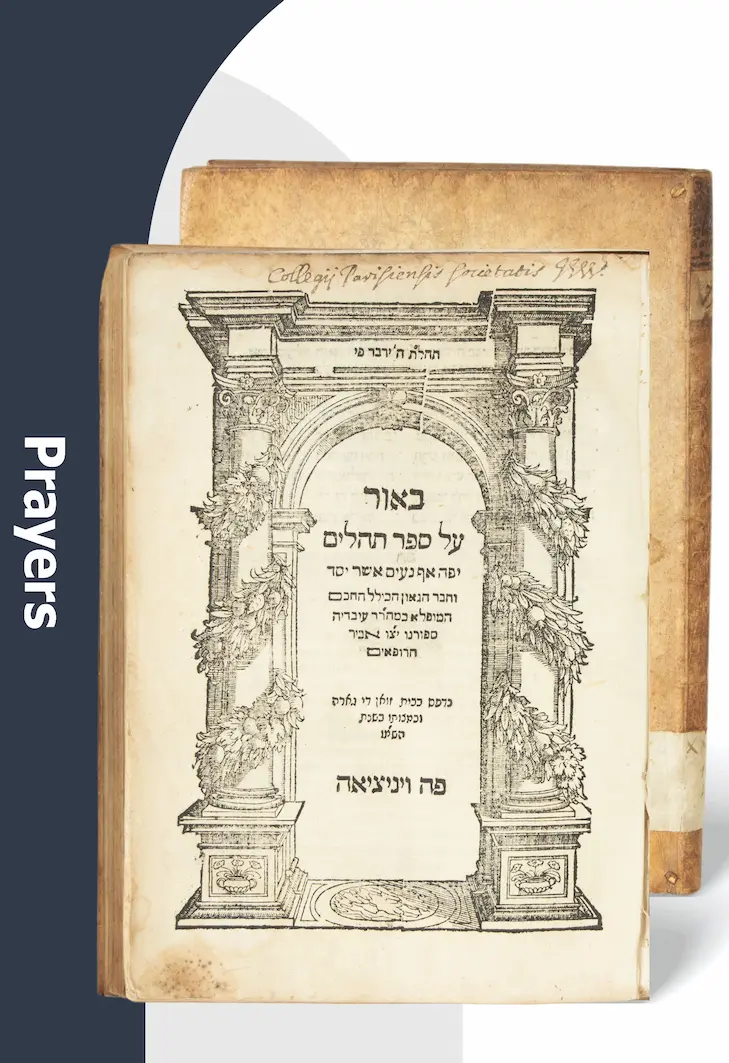
of 4 pages