Grand Winter Event

Auction #17

Part 1

Grand Winter Event

Auction #17

Part 2

of 4 pages

Lot : 153

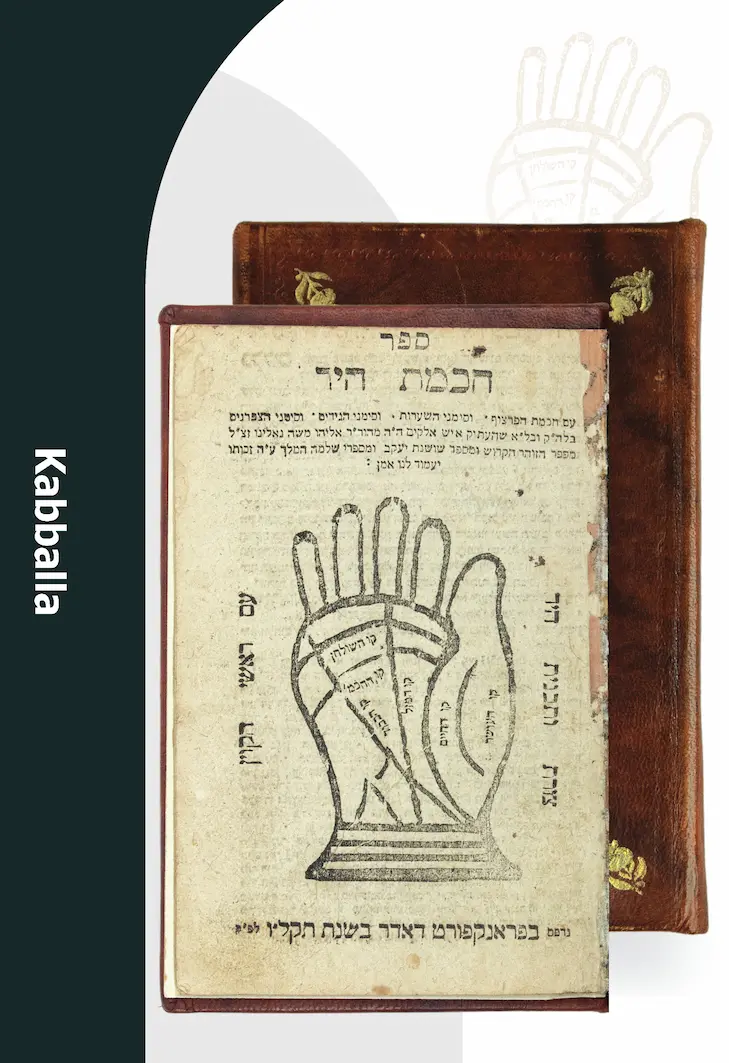
Chochmas Hayad Vehapartzuf with Yiddish Translation. Frankfurt an der Oder, 1776 A
Chochmas Hayad Vehapartzuf with Yiddish Translation. Frankfurt an der Oder, 1776 A sefer that reveals the wisdom of palm and face reading with the signs of hair, tendons and nails in Hebrew and Yiddish. Rabbi Eliyahu Galino compiled this sefer based on the Zohar, sefer Shoshanas Yaakov, and the writings of Shlomo Hamelech. An illustration of a palm depicting various lines and their meanings appears on the title page. This exceptionally rare edition with Yiddish translation is not listed in Otzar Sefer HaIvri.. Frankfurt an der Oder, 1776. [8] leaves. Page size 17 cm. Cropped upper margins with a small amount of title missing on several leaves. Good condition. New leather binding. Provenance: William Gross Collection, Tel aviv Desctiption from The Gross Collection .................................... ... Any inquiries about this lot ? We are available also on WhatsApp >>>

Lot : 154

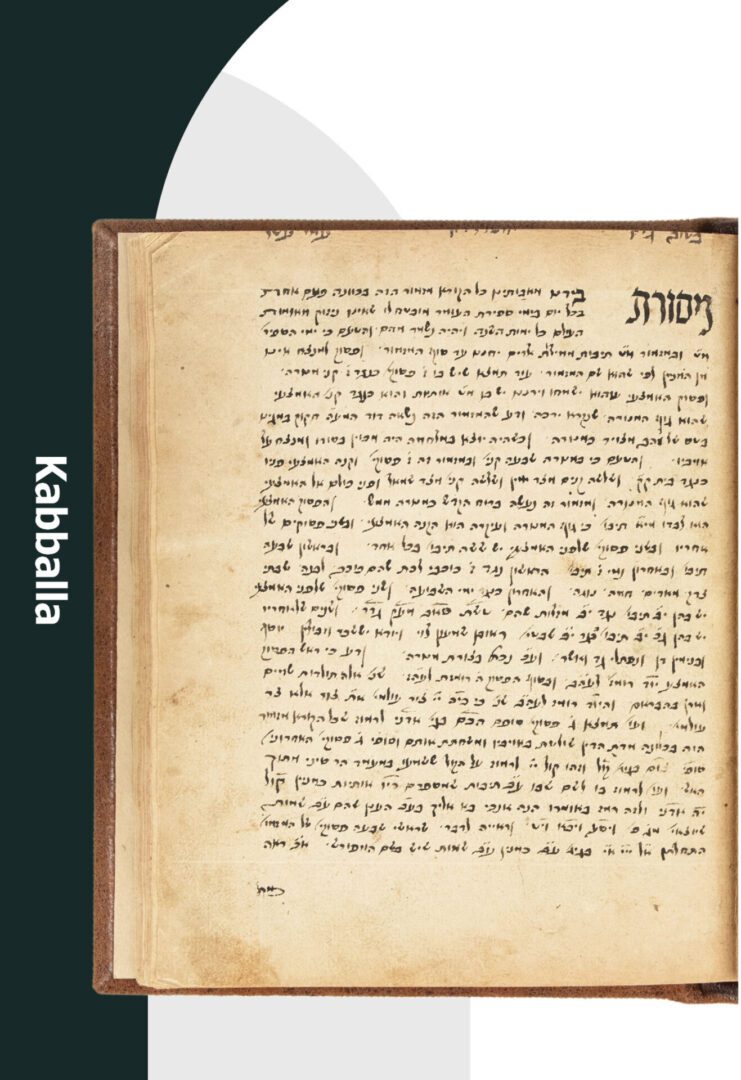
 Manuscript Collection of early Kabbalistic Works, Prague 1575 Rare historic anthology of
 Manuscript Collection of early Kabbalistic Works, Prague 1575 Rare historic anthology of kabbalistic manuscripts from the batei medrash of early Spanish kabbalists who lived in the period after the Ramban. Among the manuscripts in this anthology is a monumental kabbalistic work by the illustrious Spanish kabbalist Rabbi Moshe of Burgos upon the Maaseh Hamerkavah described in Sefer Yechezkel. This anthology was written in 1575, most likely in Prague. The date appears in the colophon: “Please, G-d, grant me to copy additional holy, exalted and awesome books, to be a help in times of trouble, and gird me with strength, and reinforce my power, and guide me on the heights of battle, and my fingers to the war of Torah, as Hashem spoke in the hands of MoShHe Lo” (Bamidbar 17:5). I have hereby completed it on the week of this parshah [Korach] in the year [5]535 [1575] on Tuesday, the twenty-ninth of Sivan.” Content of manuscript: 1. Sod HaMenorah HaTehora – Secrets and attributes of the psalm “Lamenatzeach beneginos” inscribed in the shape of a menorah. The author opens with the introduction “It is a tradition of our forebears that one who reads this psalm with sincerity every day, of the days of Sefiras Haomer, is guaranteed that he will not be harmed by the nations of the world throughout the year… And know that Dovid carried this psalm with him, engraved on his shield, with the Name in gold illustrated in the menorah.” This is an ancient composition whose author is unknown (leafs 1a-4b). 2. “Peirush Merkavah D’Yechezkel HA”A (Hanavi Alav Hashalom) is a lofty kabbalistic work delivered to select kabbalists whom Hashem calls” This section, from leaf 4b-44a, constitutes the majority of the manuscript. Here, the famed kabbalist Rabbi Moshe of Burgos authored a riveting commentary on the Maaseh Hamerkavah portrayed in Sefer Yechezkel. The present commentary has never been printed in its complete form. 3. Kabbalistic commentary on the passuk, יShmuel ch’ 16) “And one of the lads said, and he said, ‘Behold I saw a son to the son of Yishai Halachmi” (leaf 44b-45a). 4. Kabbalistic commentary on Zecharya’s candles (leaf 45a) by Rabbi Moshe of Burgos. 5. HaKruvim shel Maala (leaf 46a-46b). Part of this work was printed in sefer Kabbalas Ha’achim by Rabbi Yaakov and Rabbi Yitzchak Hakohanim (Jerusalem, 1927) p. 124. The study of kabbalah gained popularity in Spain and its environs in the generation following the Ramban. One of the greatest kabbalists of the era was Rabbi Moshe ben Shimon of Burgos (b. circa 1220) who absorbed the wisdom of Torah and kabbalah from his spiritual master Rabbi Avraham Abulafia along with his contemporary Rabbi Yosef Gekatilla. He also studied kabbalah under the saintly brothers Rabbi Yaakov and Rabbi Yitzchak Hakohein, who were two of the greatest Spanish kabbalists. The style of the above writings indicates that the texts in this anthology emerged from their beis medrash. Perhaps the most famous among Rabbi Moshe of Burgos’ compositions is Sefer Likutim miRabbi Hai Gaon (Warsaw, 1798). Rabbi Moshe authored this work, yet attributed it to Rabbi Hai Gaon since a large portion of the wisdom it contained was gleaned from letters written by Rabbi Hai Gaon. This sefer was cherished by the Maggid of Kozhnitz who inscribed numerous glosses and commentary upon the text and printed his work under the title Ner Yisrael. Prague, 1575. Page Count: 46 leaves. Description: Neat thin Askenazic cursive writing. Condition: Good. Bound in new leather binding.   Provenance: Carlebach Family Collection, Hamburg-Lakewood. ....................................... Any inquiries about this lot ? We are available also on WhatsApp >>>

Lot : 155

Fundamental Kabbalistic Work Ornamental Manuscript of Eitz Chaim. Eastern-Europe, 18th Century 18th
Fundamental Kabbalistic Work Ornamental Manuscript of Eitz Chaim. Eastern-Europe, 18th Century 18th century manuscript of Rabbi Chaim Vital’s monumental kabbalistic sefer Eitz Chaim. Beautiful Ashkenazic script, kabbalistic illustrations and adornments. The first pages open with an introduction by Rabbi Yaakov Tzemach to the sefer Ranu L’Yaakov, a preface by Rabbi Chaim Vital, the principles of the wisdom of kabbalah that Rabbi Chaim Vital authored in his latter years, a preface by Rabbi Meir Poppers, and a prayer to be recited before commencing the study of kabbalah. The colophon in the margin of leaf 127a notes the name of the scribe: “I, the author who speaks righteousness in honor of Torah and its scholars, Yehuda Yudel son of Moreinu Harav Yonah Katz.” Sefer Eitz Chaim was comprehensively edited by the renowned kabbalist Rabbi Meir Poppers based on Rabbi Chaim Vital’s personal manuscript of Mahadura Basra. The present sefer is regarded as the elemental kabbalistic work and includes all roots, principles and prefaces to kabbalah based on the teachings of the Arizal. Since the printing of Rabbi Meir Poppers’ edited edition of Eitz Chaim, it has been widely-accepted as the introductory work to kabbalah and studied extensively by kabbalists ever since (Y. Avivi, Kabbalas Ha’Ar”i Vol. 2 p. 636). Eastern Europe, 18th century. Clear, attractive Ashkenazic script characteristic of the era. The margins include several kabbalistic glosses in a different handwriting (see examples on leaves 77b, 95a, 100a). Page Count: 10, 128, [2] leaves (279 handwritten sides). Page Size: 31x20. Description: Original leather-bound wooden binding with remnants of metal corners and clasps. Binding is damaged. New fabric spine. The Rashash’s Testimony “The heavens are my witness that all that I engaged and studied [in kabbalah] are from the words of the Arizal and his disciple Moreinu Rabbi Chaim Vital z”l alone, and aside from them, I do not engage in any other sefer of the early or latter kabbalists… All their learning should be only in Eitz Chaim and Mevo She’arim and Shemone She’arim which are renowned entirely as the words of the living G-d” (Nahar Shalom L’Rabbeinu HaRashash p. 34a). ....................................... Any inquiries about this lot ? We are available also on WhatsApp >>>

Lot : 156

The Arizal’s Kabbalah Five Handwritten Manuscripts from the Legacy of the Arizal
The Arizal’s Kabbalah Five Handwritten Manuscripts from the Legacy of the Arizal and Rabbi Chaim Vital. Germany, circa 1700 A complete handwritten volume in Ashkenazic script which presents an anthology of manuscripts with the teachings of the great kabbalists among them the Arizal, Rabbi Chaim Vital, the Rema of Pano and Ramaz. This manuscript was written in Germany in approximately 1700 and contains numerous marginalia. 1. Pri Eitz Chaim by Rabbi Chaim Vital – A kabbalistic interpretation of the 613 mitzvos, both imperative commandments and prohibitions (leaves 1a-67a). The manuscript is according to the version edited by the famed kabbalist Rabbi Meir Poppers. The present manuscript is the second part (Nof haSheni) of Pri Eitz Chaim and was published under the title Taamei Hamitzvos together with Likutei Torah Zolkova, 1775). 2. Iggeres HaRamaz L’Rabbanei Cracow – This letter discusses the kabbalistic aspects of writing of a Sefer Torah, tefillin and mezuzos (leaves 76a-83b). 3. Nof Eitz Chaim by Rabbi Chaim Vital – “commentary based on the legacy of the Arizal on several verses in the Torah and teachings of our Sages” (leaves 87a-133b). The manuscript is according to the version edited by the famed kabbalist Rabbi Meir Poppers. The present manuscript is the second part (Nof haSheni) of Nofi Eitz Chaim and was published under the title Likutei Torah (Zolkova, 1775). 4. Third Nof of Sefer Eitz Chaim by Rabbi Chaim Vital – This manuscript, called Nof Eitz Chaim, is a commentary of several Aggados in the Gemara as taught by the Arizal (leaves 136a-150a). This is the third section (Nof) of Nof Eitz Chaim; and it has never been printed. The third Nof printed in Likutei Hashas (Koritz, 1785) contains other commentary. 5. Kan Tzipor by Rabbi Menachem Azarya of Pano – This manuscript is an abridged version of the sefer Kanfei Yonah (Kortiz, 1786) by the Rema of Pano the sefer Kan Tzipor has never been printed. The leaves of this epic manuscript include many variances in the nusach and additions, as well as marginalia that were obviously inscribed by a great scholar. This manuscript was originally discovered in the beis medrash of the prominent Jewish officer Rabbi Daniel Jaffe of Berlin (1723-1799) which was the preferred study hall of many rabbis and scholars, among them the Admor Rabbi Menachem Mendel of Riminov and the Author of Pri Megadim. The author of Pri Megadim attests in his preface that he authored the Pri Megaim in the said beis medrash. “And many thanks to the exalted and famous honorable philanthropists Rabbi Daniel Jaffe of Berlin who generously bequeathed from his wealth a fixed sum to support Torah scholars in his beis medrash. And also I established my [fixed place of study] here in his beis medrash where I found a house filled with sefarim and authored this composition. Hashem should reward his kindness.” Manuscript. Germany, circa 1700. Page Count: [180] leaves (12 leaves blank). Page Size: 20x16 cm. Attractive volume with neat, round Ashkenazic script. Margins were straightened by binder who preserved the marginalia in folds. The beginning of Vol. 1 and Vol. 5 features an aesthetic border used in Berlin presses of that era, with text inscribed in boxes on the title page. Condition: Good with new leather binding.   Provenance: London Beth Din Library. This manuscript is described in the Neubauer Catalogue, Genazym 2020. ....................................... Any inquiries about this lot ? We are available also on WhatsApp >>>

Lot : 157

Manuscript Year-Round Siddur with Kavanos of Arizal. Europe, 18th Century Distinguished provenance!
Manuscript Year-Round Siddur with Kavanos of Arizal. Europe, 18th Century Distinguished provenance! Siddur with prayers for the entire year with Kabbalistic intentions and customs, based on the siddur edited by the great kabbalist Rabbi Meir Poppers. This manuscript bears the distinguished provenance of a talmid of the Chasam Sofer and features his handwritten annotations. The siddur encompasses prayers for the entire year, beginning with prayers for weekday and Shabbos, Yamim Nora’im and festivals, Hakafos, Tikkun Chatzos, order of daily study and rituals, zemiros for Shabbos with commentary, kavanos during Tekios, Haggadah shel Pesach with kavanos, Sefiras Haomer with kavanos, and more. The manuscript is written in Ashkenazic calligraphy with neat, attractive letters, Kabbalistic charts and an illustration of the menorah. Titles and the first words of every paragraph appear in large block bordered letters along with Kabbalistic illustrations. This siddur is based on works of the saintly Kabbalist Rabbi Meir Poppers (d. 1662) who compiled the writings of the Arizal regarding intentions of prayers and the daily order of conduct and arranged them within the format of the present siddur which was disseminated widely among Kabbalists, Gedolim and Chassidic masters. Siddurim based on Rabbi Meir Poppers’ work would eventually gain renown under several titles including Siddur Ha’Ar”i (Zolkova, 1781); Siddur Rabbi Asher (Lvov, 1788); and Siddur Rabbi Shabsai miRashkov (Koritz, 1794), although there are marked differences between the manuscripts and the printed versions of these siddurim. The first page features the owner’s signature: “The youth and humble Gavriel Leib son of my father Rabbi Nosson Halevi”, and the siddur itself boasts several signed annotations by the same owner. One opens with the words, “ Gavriel Leib said” while the others are merely signed “ Gavriel”. The said Gavriel is none other than Rabbi Gavriel Halevi Dessauer, Av Beis Din of Balaton Kémer, Hungary. Rabbi Gavriel Halevi Dessauer (1805-1878) was the son of Rabbi Nosson Halevi, Dayan of Nitra, and a talmid of the Chasam Sofer. In his recommendation letter, the Chasam Sofer described his disciple: “He learned Torah in our Yeshivah and surpassed all his friends greatly”. He also inscribed a letter of approbation for Rabbi Gavriel’s seder Keses Gavriel (Pressburg, 1838). At the behest of the Chasam Sofer, Rabbi Gavriel copied a manuscript encompassing an anthology of teshuvos from the era of the Geonim (see manuscripts, National Library 3777F). Rabbi Gavriel was also a prolific author, and his printed legacy includes Yad Gavriel on Shulchan Aruch Yoreh Deah, Keses Gavriel on Iyov and much more. Europe, 18th century. 205 leaves (410 sides). Page Size: 17x22.5 cm. Thick, high-quality paper with slight stains. Condition: First leaves have minor damage to margins; otherwise in good condition. .................................... ... Any inquiries about this lot ? We are available also on WhatsApp >>>
Lot : 158

Manuscript Siddur HaRashash 2 Volumes of Tefillos with Kavanos for Yamim Noraim
Manuscript Siddur HaRashash 2 Volumes of Tefillos with Kavanos for Yamim Noraim and Shalosh Regalim 500 pages of kabbalistic kavanos and Yichudim for prayers for the Yamim Noraim and Shalosh Regalim compiled and edited by the Rashash. This manuscript, written in Yemenite script, is impressively arranged and inscribed with large, medium and small letters. It is replete with Holy Names that guide kabbalists during their prayers and is based on the sacred kavanos relayed by the saintly kabbalist Rabbi Shalom Mizrachi Sharabi, the Rashash. Content: Volume 1: Kavanos of Selichos; Prayers for Rosh Hashanah; Tekias Shofar (with mussar teachings for the second day of Rosh Hashanah by Rabbi Agan); Prayers for Yom Kippur; Seder HaAvodah; Kavanos during Shaking Lulav and Banging Aravos. Volume 2: Order of Lighting Chanukah Candles; Kavanos for the Blessing of the Megillah on Purim; Kavanos for Pesach and Haggadah shel Pesach; Kavanos for Shavuos and Sefiras Haomer (lengthy section prefaced by the Chai Bashemesh, the Rashash’s son Rabbi Yitzchak Chizkiyahu Sharabi); Lamenatzeach in the shape of a menorah. The kabbalist Rabbi Shalom Mizrachi Sharabi (d. 1777), widely known as the Rashash, was said to have possessed a spark of the soul of the Arizal and descended to the world in order to illuminate and clarify his teachings. The Rashash was the greatest commentator and interpreter of the Arizal’s legacy, and with his genius and clarity, presented the Arizal’s kavanos clearly. A native of Yemen, the Rashash journeyed to the Holy Land and settled in Jerusalem. During his early years there, he concealed his genius and greatness, but once his brilliance and righteousness became known, his spiritual master Rabbi Gedalya Chayun left instructions that he should succeed him as Rosh Yeshivah of Yeshivas Beis E-l, the famed beis medrash of kabbalists in Jerusalem. The Rashash’s disciples include Kabbalah giants as the Chida, Maharit Algazi, Rabbi Avraham Gershon of Kitov (brother-in-law of the Baal Shem Tov), and Rabbi Chaim de la Roza, among others. Siddur HaRashash The Rashash’s primary endeavor focuses on illuminating the profound Torah legacy of the Arizal and presents proper intentions during prayer. He achieved this through his famous Siddur HaRashash which is the siddur of choice among all kabbalists who pray with the holy intentions and Yichudim encompassed in the Names of Hashem. For many years, this siddur was available only in manuscript form and was possessed by the great tzaddikim and kabbalists of the era who delved into the wisdom of kabbalah in Yeshivas Beis E-l and copied this siddur along with its kavanos based on the Rashash’s personal manuscripts or their own understanding of the Rashash’s teachings. This is how there are presently several versions of siddurim with the Rashash’s kavanos, each bearing the unique fingerprint and amendments of the kabbalist who copied the siddur. Description: 2-volume manuscript in middle-Eastern-Yemenite script on paper. Vol. 1: 116 leaves; Vol. 2: 135 leaves (total 251 leaves and ~500 handwritten sides). Page Size: 16x21 cm. Condition: Good. Yemenite binding with engravings and remnants of clasps. ....................................... Any inquiries about this lot ? We are available also on WhatsApp >>>

Lot : 159

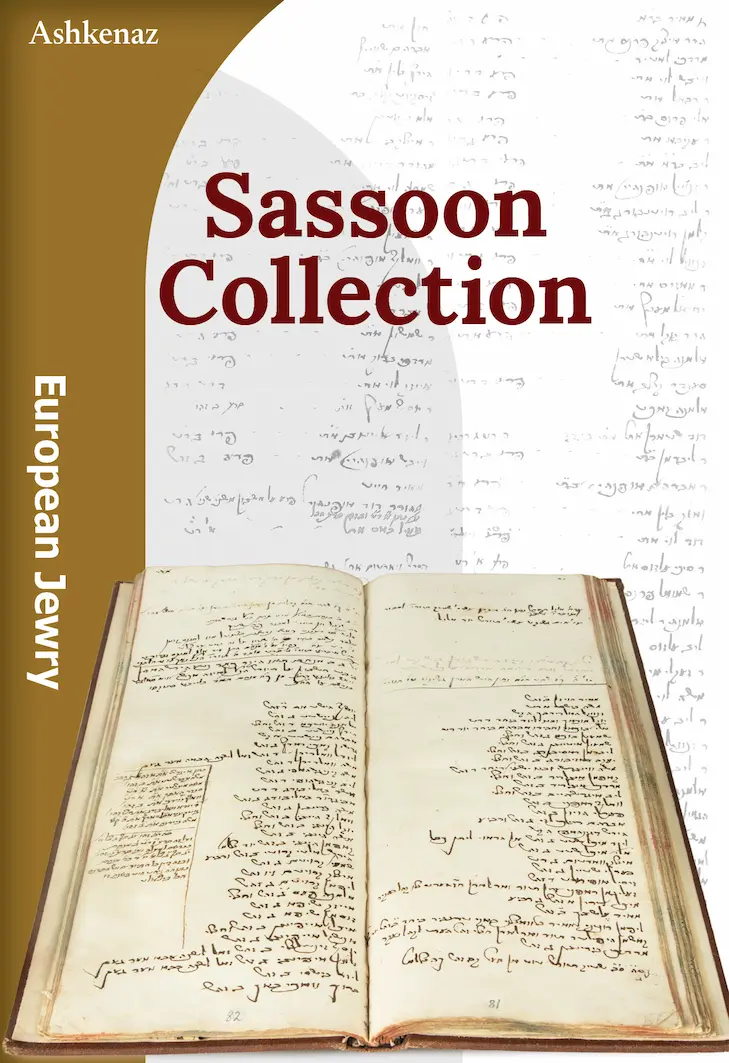
Rare manuscript from Sassoon Collection Ledger of ‘Travel protection’ Taxes of German
Rare manuscript from Sassoon Collection Ledger of ‘Travel protection’ Taxes of German Jewish Communities 1685-1686 Valuable historic documentation of 17th century German Jewish communities! This 17th century German ledger of community tax payments offers valuable information about the history of Jewish communities on the Rhine and other districts in Germany. The ledger mentions over 250 cities and towns with Jewish presence in the German Empire, as well as hundreds of names of Jewish residents who dwelled during this time. Some of the prominent cities featured include Frankfurt, Mainz, Metz, Manheim, Michelstadt, Speyer, Worms among others. Leaf 1a mentions Moreinu Rav Dovid Oppenheim, presumably the illustrious Rabbi Dovid Oppenheim who, at the time, was still a young man living in his native Worms and had not yet officially ascended to the Rabbinate. The list also includes other members of the Oppenheim family. The dates on the ledger begin at of Av, 5445 (1685)., .through year 1685 German Travel Tax The present ledger notes the details of payment of the notorious travel tax which was paid through “Geleitsbatzen”, special travel documents similar to the modern-day passport which verified the payment of the travelers’ security tax. Without these certificates, the guards stationed at checkpoints throughout the country would deny passage to jews within the country. The authorities compelled the Jewish community of Worms to purchase a specific number of these certificates for an inflated price and to sell them to Jewish travelers from all Germany communities (see Shemesh, Yuspa. Minhagim of the Congregation of Worms. Machon Yerushalayim Ch. 288, comments). The travel tax imposed on the Jews during this era is referenced in the teshuvah of Rabbi Chaim Yair Bachrach, Av Beis Din of Worms in Shu”t Chavas Yair (Ch. 182). “Reuven and Shimon traveled from Frankfurt to Worms…and since they did not have the travel documentation as required in the Electoral Palatinate… and one who does not have the documentation was fined ten gulden or whatever the tax officer desired…for the documentation lists the name of the document owner that he is permitted to travel in the country, free of taxes…” The certificates were sold at a considerable price, and the Jewish communities were forced to impose a special tax in order to issue them. Rabbi Yuspa Shamesh of the Jewish congregation in Worms during this era (d. 1678) writes about this tax under the title “Custom of Collecting Travel Tax”: “The gabbaim are appointed to [collect] the travel tax that the members of our community are forced to redeem every year from the authorities. And the expense is high, and it is not imposed merely on the members of our community, but on everyone, to the extent that without this documentation, no one may come and go, and thus it is our obligation to [charge it]. Those in need of the travel documentation are those who live within our community and in our environs… and also places that are not under our jurisdiction as Frankfurt and Mainz…all who come within the year to travel via this country, they are all included in the travel tax and the gabbaim are commanded to keep their eyes open upon residents near and far and all who owe this tax, that they should disburse the money, whether willingly or against their will… so all the travel certificates are sold…” Worms, 1685-1686. Handwritten in mixed Yiddish and Hebrew on long, narrow paper. Page Size: 32.5x10 cm. Page Count: [59] leaves (18 leaves are blank); total of 68 handwritten sides. Back flyleaf includes remnant of 15th century parchment leaf with Latin handwriting and music notes. Condition: Good. Original binding. Provenance: Sassoon Collection #981 Ohel David Catalog p. 968 ....................................... Any inquiries about this lot ? We are available also on WhatsApp >>>

Lot : 160

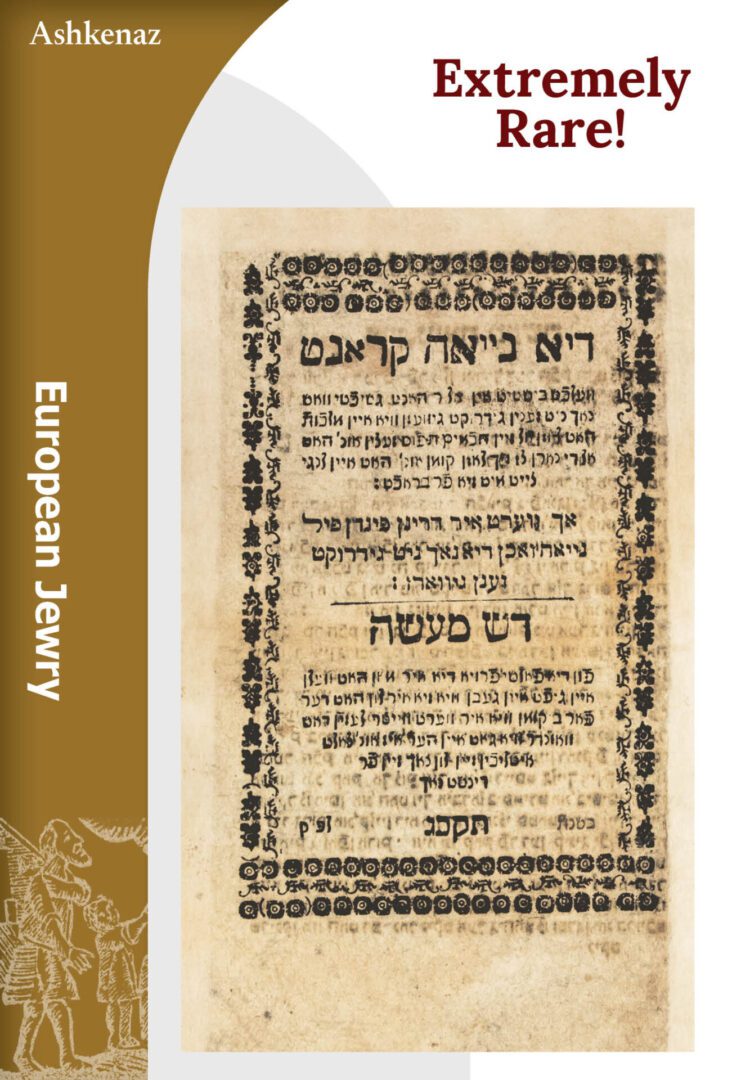
“Di Neieh Krant” – Early Yiddish Storybook with Woodcut Illustrations. Germany, 1763
“Di Neieh Krant” – Early Yiddish Storybook with Woodcut Illustrations. Germany, 1763 Very Rare! Storybook contains two stories in Yiddish from the early belles-lettres literary style period. 1. The first story is about a king who delivers an order to arrest and imprison all wise men and to invite all the fools of the kingdom to revel together with him. 2. The second story is about a woman who attempted to poison her husband and received her recompense. This story is a parable underscoring that every person receives his due. These stories, written in old Yiddish, were published for the first time in Germany. The book features three pretty woodcut illustrations. Germany?, 1763. 8 leaves. Page size: 19 cm. restorations at margins. New leather binding. ....................................... Any inquiries about this lot ? We are available also on WhatsApp >>>

Lot : 161

Ladino - German,  History of Spanish community in Vienna, Vienna 1888 This
Ladino - German,  History of Spanish community in Vienna, Vienna 1888 This book recounts the history of the Spanish Jewish community in Vienna. “The history of the Spanish-Jewish community in Vienna, from its establishment and until today, based on historical facts. Compiled in German by Adolf Smelianski, community secretary, and translated into Ladino by Rabbi Michael Papo, community officer.” This book was printed in both German and Ladino, with the German half printed left to right with its own title page. Original book cover with gilded illustration of the Beis Hamikdash. This book includes copies of historical certificates translated into Ladino. Page 16 includes the official titles and medals awarded by the Turkish Sultan to distinguished persons in the Spanish Jewish community in Vienna. Vienna, 1888. [9] leaves; 16 sides. [1] leaf. Page size: 29 cm. Good condition. Dov Hakohein, Otzar Hasefarim B’Ladino, (Jerusalem, 2022) # 2584 ....................................... Any inquiries about this lot ? We are available also on WhatsApp >>>

Lot : 162

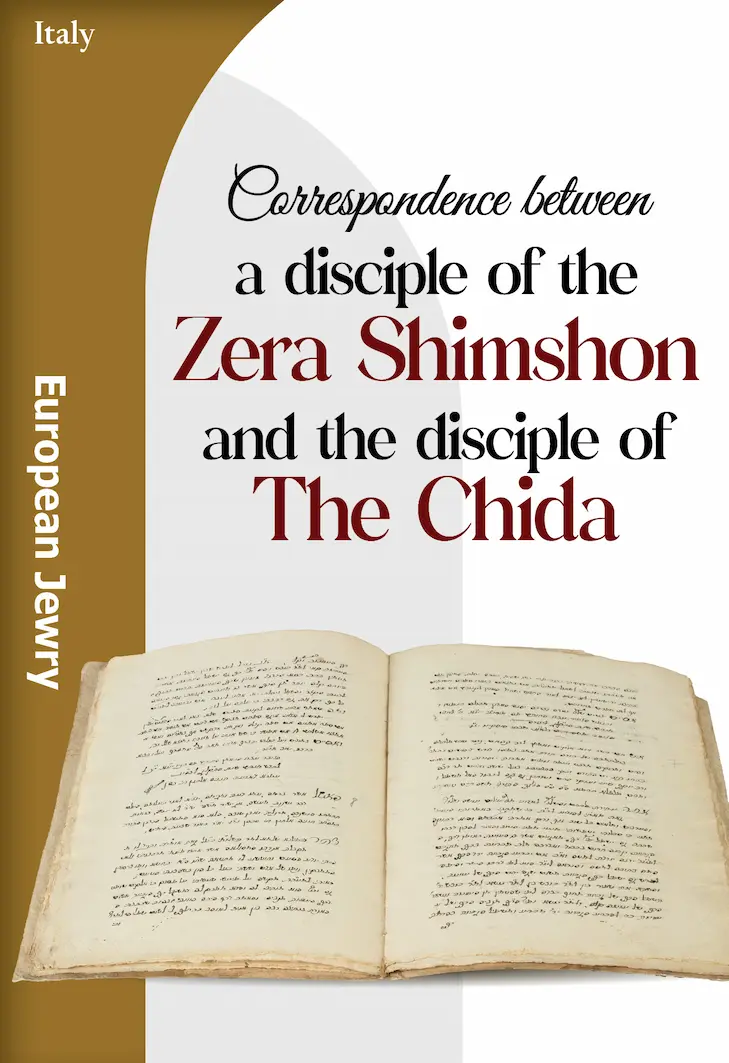
Discovery! Collection of  Letters by Italian Rabbis (1777-1778) unknown manuscript. Correspondence between
Discovery! Collection of  Letters by Italian Rabbis (1777-1778) unknown manuscript. Correspondence between Rabbi Chananya Elchanan Chai Cohen, Disciple of the Zera Shimshon, and Rabbi Moshe Chaim Soscino of Firenze, Disciple of the Chida Correspondence between two Italian sages, Rabbi Chananya Elchanan Chai Cohen, Av Beis Din of Firenze and a disciple of the Zera Shimshon, and Rabbi Moshe Chaim Soscino of Firenze, a disciple of the Chida. The present collection of 18 letters, which encompasses both blessings and divrei Torah, includes 8 letters by Rabbi Chananya Elchanan Cohen and 10 by Rabbi Moshe Chaim Soscino. To the best of Genazym’s knowledge, these letters are unknown and clearly have never been printed. Rabbi Chananya Elchanan Chai Cohen (1751-1836) was the prime disciple of the saintly kabbliast Rabbi Chaim Shimshon Nachmani, author of Zera Shimshon. In his writings, Rabbi Chananya Elchanan Chai Cohen publicized several poems composed by the Zera Shimshon, always referring to him by the title “mori v’Rabi.” He named his son after the Zera Shimshon. (see title page of his work Chanoch Lana’ar [Venice, 1804]). Rabbi Chananya was born and raised in Reggio, where the Zera Shimshon served as Rav. There, in his hometown, he taught Torah for many years and established legions of students who would later mature into the spiritual luminaries and Rabbanim of Italy. Rabbi Chananya was a man of many talents, a genius in Torah, an erudite lecturer, a grammarian and poet, as well as a prolific author of sefarim. Most famous among his sefarim are Chanoch Lana’ar and Reishis Lekach, which he wrote to Jewish Italian youth with the goal of guiding them along the path of Torah and fear of Hashem. Most of his sefarim were printed in his personal press which he founded in Reggio. In the sefer Zecher Tzaddik Livrachah (Toldos Gedolei Yisrael p. 325 [Trieste, 1853]), Rabbi Chananel Nifi, Av Beis Din of Tzinto, relates a miraculous tale that he heard personally from Rabbi Elchanan Chananya about his spiritual mentor, the Zera Shimshon. A fire once broke out in close proximity to the Zera Shimshon home and nearly reached his porch. The Zera Shimshon opened his window and recited a prayer as he was looking at the fire, and the fire immediately retreated and subsided (ibid p. 104). Rabbi Moshe Chaim Soscino (born 1759), was a dayan in Firenze. He studied Torah from Rabbi Menachem Azarya Padua, Av Beis Din of Firenze. (Both of these pieces of information were revealed only now based on the present manuscript [see leaves 2a, 7a).  Rabbi Moshe Chaim shared a close relationship with the Chida, as related by Rabbi Mattisyahu Nissim Tirani in his sefer Midbar Yachil (Firenze, 1810, leaf 5a). “The miracle of our generation, the light of life, the Chida, does not sway from loving him as a father.”   The Chida sent him several letters as teshuvos, and included several of his chiddushim and teshuvos in his sefarim (i.e. Shu”t Yosef Ometz Ch. 16, 103). Some of his chiddushim were printed in assorted journals, and most remain as manuscripts.  Some of the glosses that appear in sefarim are autographed with his initials “Machsi”. It appears that these letters were collected by Rabbi Elchanan Chai, since the very first letter is addressed to Rabbi Raphael Chaim Otlingo of Firenze. Description: Letters are dated 1777-1778. Page Count: 10 leaves; 20 handwritten sides. Size: 26x22 cm. Original cardboard binding. Slight tear on the first and last leaf, with no damage to text. Miniscule holes. To the best of Genazym’s knowledge, these letters were never printed. ....................................... Any inquiries about this lot ? We are available also on WhatsApp >>>

Lot : 163

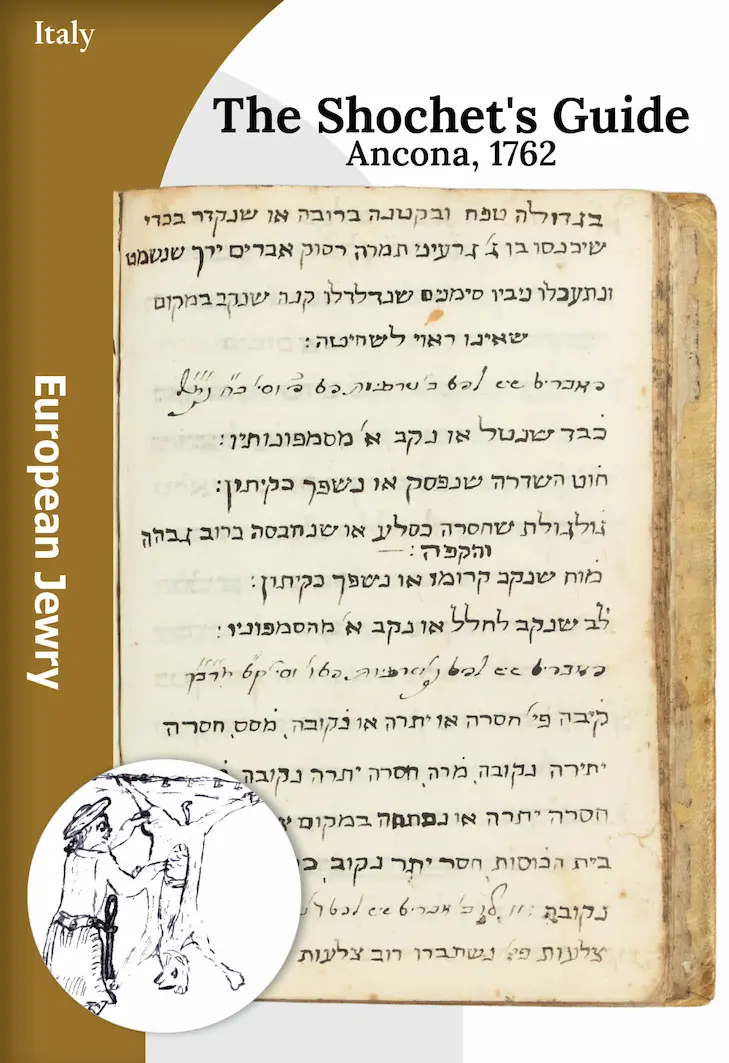
Manuscript Laws of Bedikos with Semichah Letter from Ancona Rabbis. Ancona, 1762
Manuscript Laws of Bedikos with Semichah Letter from Ancona Rabbis. Ancona, 1762 This manuscript of the Laws of Bedikos, presented in a question and answer form, along with “Warnings to the Bodek” was authored by a shochet and bodek from Ancona. It includes a comprehensive summary of the practical laws and instructions of bedikah that follow Anconian Jewish rite. The manuscript opens with two large illustrations spread out upon two leaves. The first depicts the hanging of an animal for the purpose of checking it, as well as an illustration of the lung of the animal marked with the names of each part of the organ. Attached to the pamphlet is an original semichah letter with signatures of the eminent Rabbis of Ancona, among them Rabbi Shabsai Yitzchak of Pano, Rabbi Moshe Shmuel Niniati (who corresponded with the Chida [see Shu”t Chaim Shaal Vol. 1 Ch. 40); Rabbi Moshe Shmuel ben Rabbi Binyamin Nachman and Rabbi Moshe Yehuda Chaim ben Rabbi Yekusiel of Sengallia (see Dr. Mordechai Vilensky, Rabbis of Ancona, Sinai 25, pp. 86-87). The present Laws of Bedikos discuss the examination of the internal parts of an animal after shechitah, performed to ensure that the animal is not treif. This process requires extensive knowledge and expertise, both in recognizing the internal organs of an animal and fluency in the laws of bedikos and treifos. The majority of this composition is written in two columns, question and answer form, with the question appearing in the right column and the answer in the left. In the course of his writings, the author references numerous customs of his native Ancona, along with one particular instruction that his Rabbi delivered during his visit to a slaughterhouse, “And my master...Moreinu Harav S.M. delivered a practical ruling on the 8th day of Tammuz, 1728 in the slaughterhouse” Ancona, 1762. [4], 35 leaves (74 handwritten sides). Page Size: 16 cm. Binding: Original parchment binding. .................................... ... Any inquiries about this lot ? We are available also on WhatsApp >>>

Lot : 164

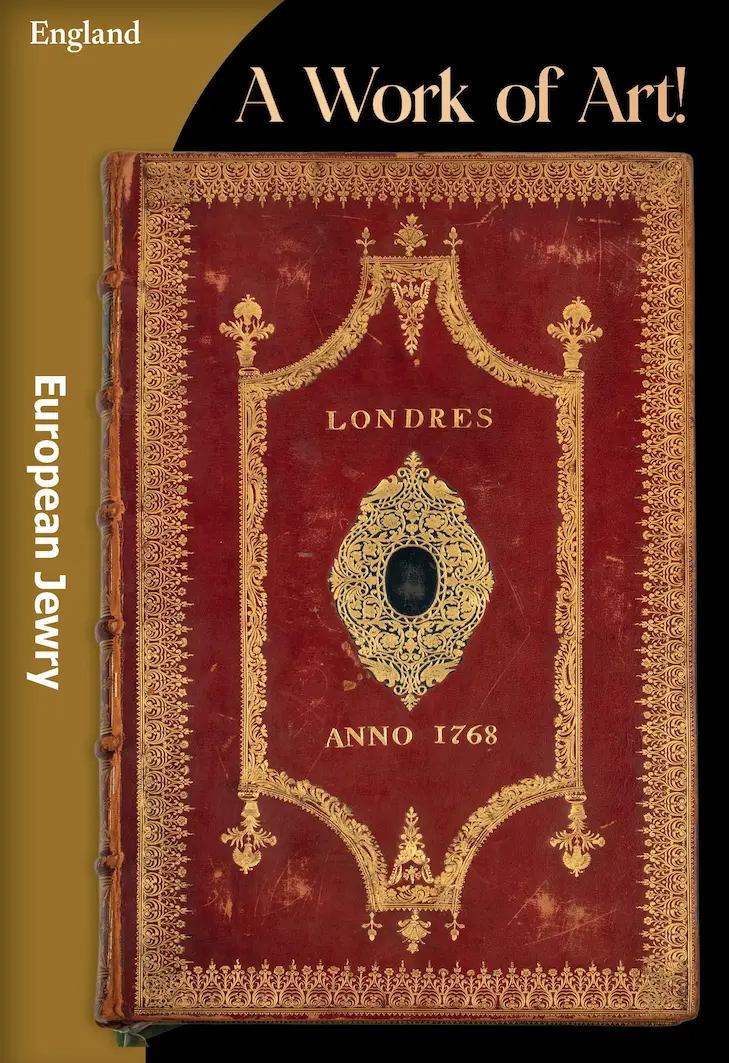
A work of art! Tanach with Spanish Translation. Amsterdam, 1762 Ornate Tanach
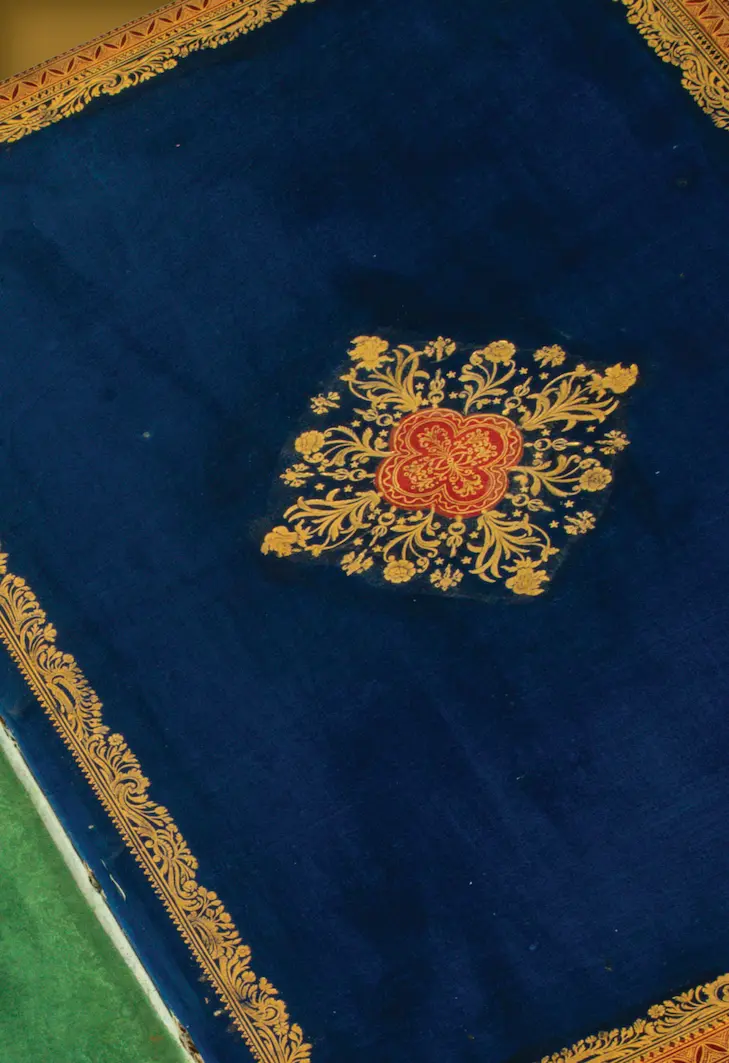
A work of art! Tanach with Spanish Translation. Amsterdam, 1762 Ornate Tanach with leather binding crafted by London artist. Torah, Nevi’im and Kesuvim precisely edited and printed on facing columns with Spanish translation. This sefer is a true artistic masterpiece crafted by the prestigious Propes Press in Amsterdam. The Tanach opens with the following inscription in Spanish: “Biblia en dos colunas, Hebrayco y Espanol... en la primera coluna, el original hebraico...en la segunda coluna, la traduccion en la lengua Espanola” which translates as “Special edition with Jewish translation in accordance with Spanish Jewish tradition” for the members of the Spanish expatriate congregations in Western Europe.” The sefer was printed in extra-large format (41 cm!) and boasts 4 title pages, with the first title page partially printed in red ink. This Tanach is exceedingly rare, both for its beauty and superb condition. It boasts gilded edges and is bound in a rich red leather binding with gilded engravings on both the interior and exterior bindings, which is a rare phenomenon. Both the cover and expensive marble paper were handcrafted by a London artist in 1768. Provenance: The owner’s name Isaac de Elias Lindo is engraved into the inner side of the front cover, and the name Londres Anno, 1768 is engraved into interior binding of the back cover. The Tanach opens with a lengthy foreword in Spanish in which the Propes brothers explain that their motives for printing an elaborate edition of Tanach with Spanish translation is that the majority of families in their congregation are Spanish speaking, and it is only proper that they should understand the holy scriptures in their mother tongue. They likewise relate that as young children growing up in the shadow of their noble father, the famous Jewish printer Solomon Propes, they view it as their privilege and duty to perpetuate his legacy. As such, the Propes brothers note that they spare no effort or resources to invest into the finest paper, ink and type with the goal of producing sefarim of superb quality. The translation of the text was rendered by Avraham Mendes de Castro, a resident of Curaçao, South America (see foreword). Amsterdam, 1762. Page Count: Torah: [6] leaves, 178 columns. Nevi’im Rishonim: [1] leaf, 179-332 columns; Nevi’im Achronim and Kesuvim: [1] leaf, 350 columns. Page Size: 41 cm. Condition: Excellent with light wear on spine of binding and border. The Lindo Family was one of the most prominent families in the Sephardic Jewish community in London during that era (see Wikipedia, Lindo Family). ....................................... Any inquiries about this lot ? We are available also on WhatsApp >>>

Lot : 165

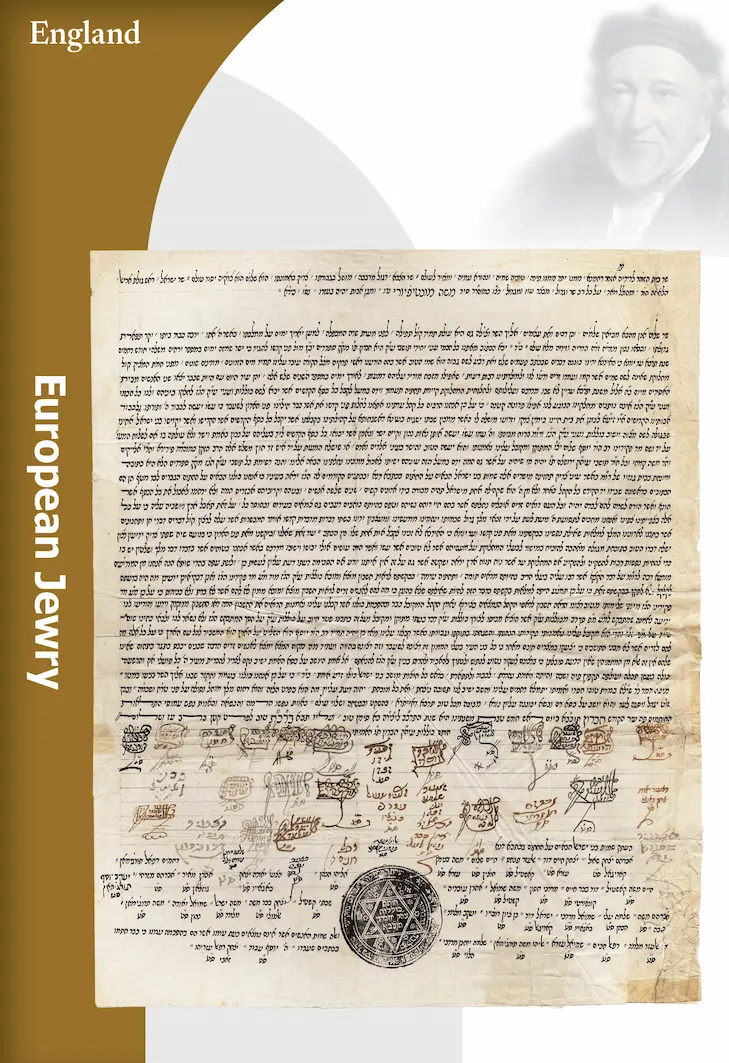
Historic Sephardic Dispute in Chevron Letter by Rabbanim and Community Dignitaries of
Historic Sephardic Dispute in Chevron Letter by Rabbanim and Community Dignitaries of the Sephardic Congregation to Sir Moses Montefiore. Chevron, 1862 Long letter written by the hand of a scribe and signed by the Rabbanim and community dignitaries of the Sephardic congregation in Chevron, to Sir Moses Montefiore. Background of the letter: In 1852, Rabbi Yosef Shalom, a cousin of the Ben Ish Chai, was asked to serve as the general treasurer for all Sephardic kollels in the Yishuv. Sometime later, conflict arose between the Sephardic kollels in Chevron and the leaders and administrators of the Sephardic kollels in Jerusalem. Tensions soared, and even the Jewish community in Chevron found itself divided into two separate camps, one siding with Rabbi Yosef Shalom of Chevron, and the other siding with the Jerusalem scholars. The present letter contains fascinating information about the conflict along with a request to Sir Montefiore to send funds exclusively to the hands of Rabbi Yosef Shalom, who was known as a faithful and honest bursar. The letter is signed by over thirty rabbinic figures and community leaders. Their stylistic signatures were deciphered for Minister Montefiore by the scribe in the margin of the letter. Among the signatures appearing on this letter are Rabbi Avraham Yitzchak Shaul Karigal; Rabbi David Conforti; Rabbi Moshe Castille; Rabbi Bentzion Rubio; Rabbi Moshe Turgeman; and Rabbi Moshe Yisrael Melamed, among others. To the best of Genazym’s knowledge, this historic letter, a treasure trove of details regarding this episode, has never yet been publicized. For further information regarding the debate, see Shever Poshim (Jerusalem, 1862); Zichronos L’ven Yerushalayim p. 42; Yehudei Bavel B’Eretz Yisrael pp. 24-25; Chevron pp. 145-147. Chevron, 1862. Thin paper. Page Size: 33x27 cm. Condition: Creases and tape reinforcement on verso. ....................................... Any inquiries about this lot ? We are available also on WhatsApp >>>

Lot : 166

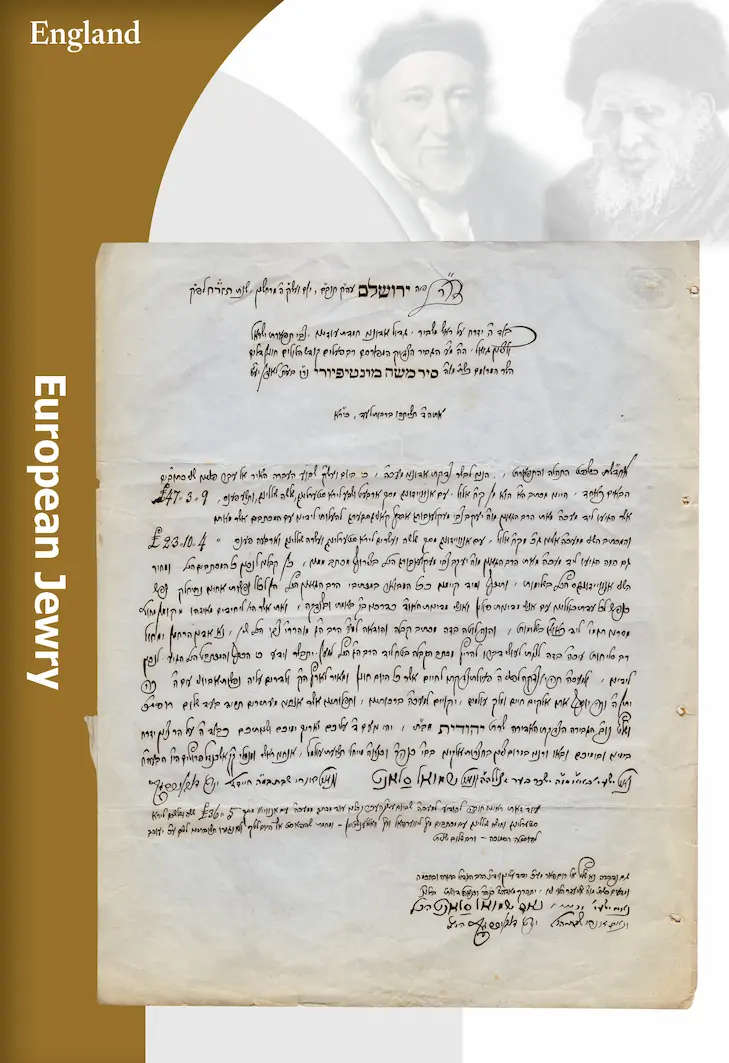
Letter from Rabbis of the Prushim Congregation in Jerusalem to Sir Moses
Letter from Rabbis of the Prushim Congregation in Jerusalem to Sir Moses Montefiore. Jerusalem, 1855 Heartfelt letter of thanks by the venerable rabbis of Jerusalem to Sir Moses Montefiore for his generous donation to benefit the poverty-stricken residents of Jerusalem. This donation had been dispatched via Rabbi Yaakov Tzvi, Av Beis Din of Keonigsburg and author of Haksav V’Hakabbalah The margins of the letter include a special inscription to Lady Judith Montefiore. The letter is autographed by the following Rabbis: 1. Rabbi Shmuel Salant (1816-1909) was the legendary Rav of Yerushalayim and leader of the Ashkenazic community for close to a half-century. He journeyed to the Holy Land in 1841 where he served in assorted spiritual leadership positions and directed myriad Torah and charity institutions in Jerusalem for seventy years. 2. Rabbi Yeshaya Bardaky (1790-1863) was the leader of the Ashkenazic Jewish community in Yerushalayim, a son-in-law of Harav Yisrael of Shklov (author of the Pe’as Hashulchan), and disciple of Harav Chaim of Volozhin. He journeyed to Tzfas in 1810, but following the devastating earthquake that ravaged the city, settled in Yerushalayim where he stood at the forefront of the Ashkenazic community. 3. Rabbi Uri Shabtai – was the son-in-law of Rabbi Yosef Zundel Salant, and one of the early dayanim in Jerusalem in the New Yishuv. 4. Rabbi Dovber Segal – A Jerusalem sage. He passed away the very year that this letter was written in 1855.  Each of the above Rabbis signed his name twice on this letter!. Jerusalem, 1855. Thin, light blue paper. Page Size: 27x21 cm. Good condition. ....................................... Any inquiries about this lot ? We are available also on WhatsApp >>>

Lot : 167

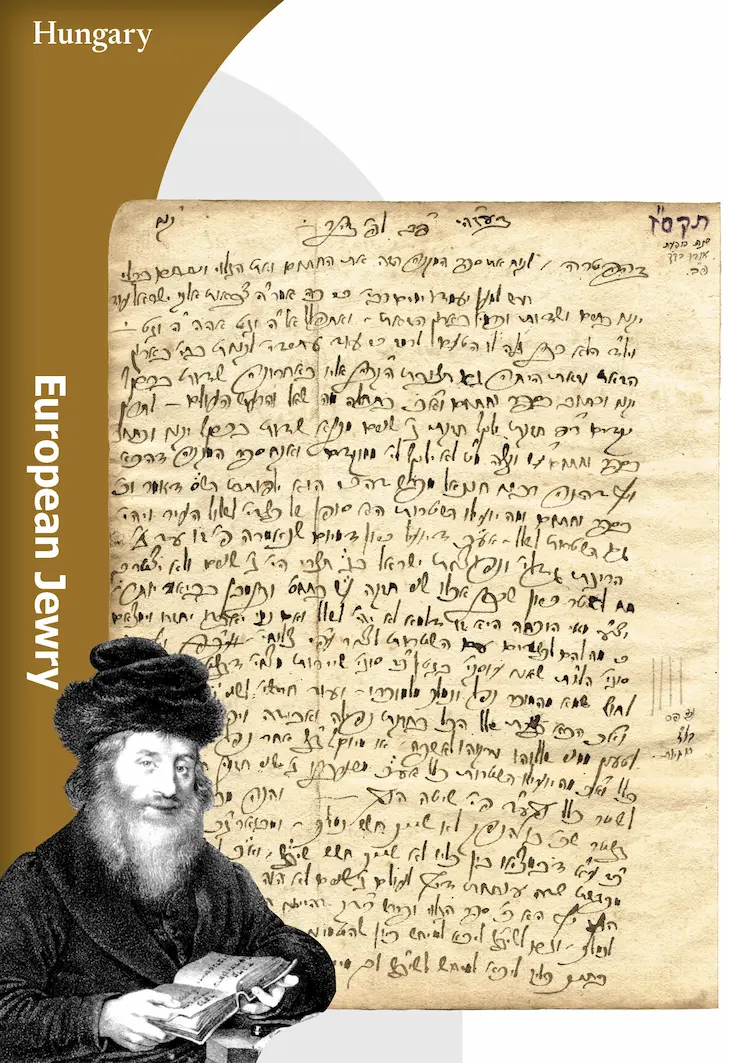
Handwritten Kabbalistic Drashah by the Chasam Sofer on Transforming Middas Hadin to
Handwritten Kabbalistic Drashah by the Chasam Sofer on Transforming Middas Hadin to Middas Hachessed. Pressburg, 1807 With the Shem Hameforash inscribed by the holy hand of the Chasam Sofer! Handwritten kabbalistic chiddushei Torah written in the sacred handwriting of the Chasam Sofer, Rabbi Moshe Sofer of Pressburg, whose name has been uttered in awe and fear by tzaddikim and Rabbanim for the past two hundred years. The present manuscript contains a drashah that the Chasam Sofer composed for Parshas Shlach, 5607 (1807), which was the same year that he arrived in Pressburg and opened his celebrated yeshivah. It also contains another complete drashah that he wrote for Parshas Behar . In the first derasha, the Chasam Sofer illuminates why the letter yud was added into Yehoshua bin Nun’s name. Basing his explanation on kabbalistic sources and teachings, he relates that the letter yud harbors the force to transform the attribute of judgment to the attribute of lovingkindness. In the course of his writings, the Chasam Sofer inscribes the Shem Hameforash, which is the symbol of Middas Harachamim. Pressburg, 1807. 2 sides handwritten by the Chasam Sofer. Page Size: 19x24 cm. Condition: Very good with minor stains. The present manuscript is an original work directly from the hands of the Chasam Sofer. These drashos were subsequently printed with some minor amendments in Chasam Sofer al HaTorah (Bamidbar, Shlach p. 64; Vayikra, Behar p. 81, Jerusalem, 2007). The Unparalleled Segulos of the Chasam Sofer’s Handwriting A Segulah for Yiras Shamayim Maharam Banet expressed that a mere glance at the sacred writing of the Chasam Sofer is segulah for yiras Shamayim. It is told that Maharam Banet once received a handwritten teshuvah from the Chasam Sofer and spent a great deal of time perusing it. When his students asked if the letter perplexed him, he replied, “No, but I am delving into this teshuvah, since the mere sight of his sacred writing increases fear of heaven.” (Drashos Chasam Sofer, Preface, p. 6) The Admor Rabbi Yoel of Satmar similarly expressed that seeing the handwriting of the Chasam Sofer can lead one to attain fear of heaven. A Segulah for Protection It is known that the Chasam Sofer’s family members and descendants would safeguard his letters and writings as a segulah for protection and security, affirming that they are auspicious for protection from trial or tribulation. Whenever his son Rabbi Shimon Sofer, Av Beis Din of Cracow, faced the Austrian Parliament, he would remove a letter written from his father from his breast pocket and carefully peruse it before rendering his decision. A Segulah for Health and Recovery The Daas Sofer would instruct sick patients to place a handwritten letter of the Chasam Sofer beneath their pillow as a segulah for health and recovery. (Beis Sofrim p. 173) A Segulah for Easy Childbirth The Chasam Sofer’s family would also place a handwritten letter by the Chasam Sofer beneath the head of a woman in the throes of difficult labor as a segulah for swift and safe childbirth. (Shu”t Shevet Halevi Vol. 6 Ch. 162 #2) The Chasam Sofer’s Text Markings The Chasam Sofer marked the end of every paragraph in his writings with a line and period. Rabbi Asher Anshel Weiss, Av Beis Din of Nagy-Falu, noted that the Chasam Sofer inserted these symbols into his writings based on the wisdom of kabbalah. (See Rabbi Nosson Stern in his preface to Drashos Chasam Sofer p. 19a, Comments) Toras Moshe al HaTorah The Chasam Sofer wrote of his own writings: “As long as Hashem shall grant me life and strength, I am prepared to learn together with anyone who wants to come, and I shall not be silent or rest…I am hereby writing all that Hashem has granted me in halachah and Aggadah” (printed in Pisuchei Chosan, Shu”t Chasam Sofer Yoreh Deah). ....................................... Any inquiries about this lot ? We are available also on WhatsApp >>>

Lot : 168

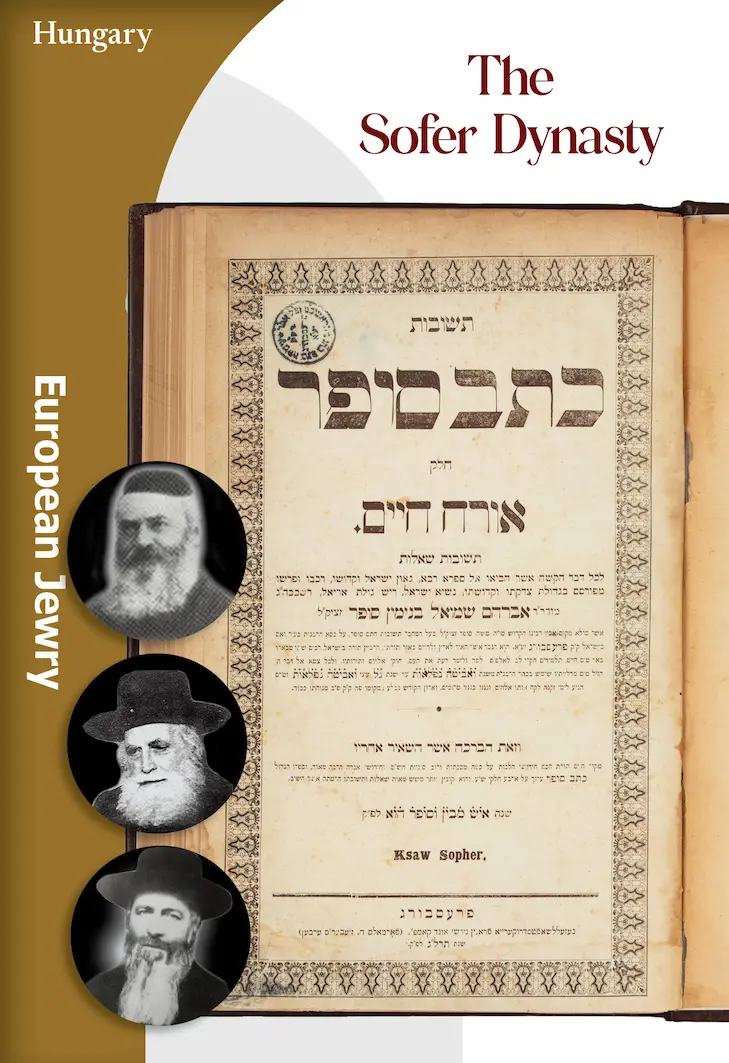
Distinguished provenance! The Sofer Family – Generations of Tzaddikim and Scholars The
Distinguished provenance! The Sofer Family – Generations of Tzaddikim and Scholars The Shevet Sofer’s Personal Copy of Shu”t Ksav Sofer with Handwritten Glosses by the Daas Sofer and Yad Sofer Shailos U’Teshuvos Ksav Sofer, Volume Orach Chaim by Rabbi Avraham Shmuel Binyamin Sofer, Av Beis Din of Pressburg and son and successor of the Chasam Sofer. The present sefer was the family’s personal copy of this holy sefer. Lovingly passed down and treasured from generation to generation, it bears numerous  autographs and handwritten glosses by the author’s illustrious descendants. The title page and flyleaf boast two stamps of Rabbi Simcha Bunim Sofer, Av Beis Din of Pressburg and author of Shevet Sofer. The flyleaf also contains a handwritten, autographed inscription by Rabbi Akiva Sofer, author of Daas Sofer, affirming that the sefer belonged to his father, the Shevet Sofer. Beneath this is another longer handwritten inscription dated 5568 (1808) by Rabbi Moshe Sofer of Erlau, author of Yad Sofer, affirming that the sefer belonged to Rabbi Akiva Sofer author of Daas Sofer. (Rabbi Moshe was both a cousin and talmid of the Daas Sofer). The Shevet Sofer Rabbi Simcha Bunim Sofer (1843-1907) succeeded his holy ancestors the Chasam Sofer and Ksav Sofer as Rav of Pressburg. He administered the great Yeshivah in Pressburg where he cultivated thousands of talmidim and gedolei Torah who spread their brilliance and ardor for Torah and holiness throughout the borders of Hungary. The Shevet Sofer’s spiritual leadership extended throughout Europe, and like his venerable father and grandfather, he was a prolific author whose written legacy includes dozens of volumes of chiddushei Torah, some of which survived the inferno as Shu”t Shevet Sofer, Chiddushei Shevet Sofer al HaShas, and Shaarei Simchah al HaTorah. The Daas Sofer Rabbi Akiva Sofer (1878-1960) perpetuated the golden legacy of ancestors, the Chasam Sofer, Ksav Sofer and Shevet Sofer as Rav and Rosh Yeshivah in Pressburg. In 1907, succeeded his father as Rav of the city, and in 1940, journeyed to Eretz Yisrael where he rebuilt his yeshivah in Yerushalayim.  The Yad Sofer Rabbi Moshe Sofer Hy”d of Erlau (1885-1944) was the son of Rabbi Shimon Sofer, son of the Ksav Sofer and author of Hisorrerus Teshuvah. Rabbi Moshe studied in the yeshivah of his cousin, the Daas Sofer and served as a dayan in Erlau where his father served as Rav. He perished al kiddush Hashem in the Holocaust inferno together with his father, and his son was the Admor Rabbi Yochanan Sofer of Erlau zt”l. Pressburg, 1873. First Edition. Page Count: [3], 130, [4] leaves. Page Size: 35.5 cm. Condition: Dark paper with damage in margins and page numbers of last pages. Attractive new leather binding. ....................................... Any inquiries about this lot ? We are available also on WhatsApp >>>

Lot : 169

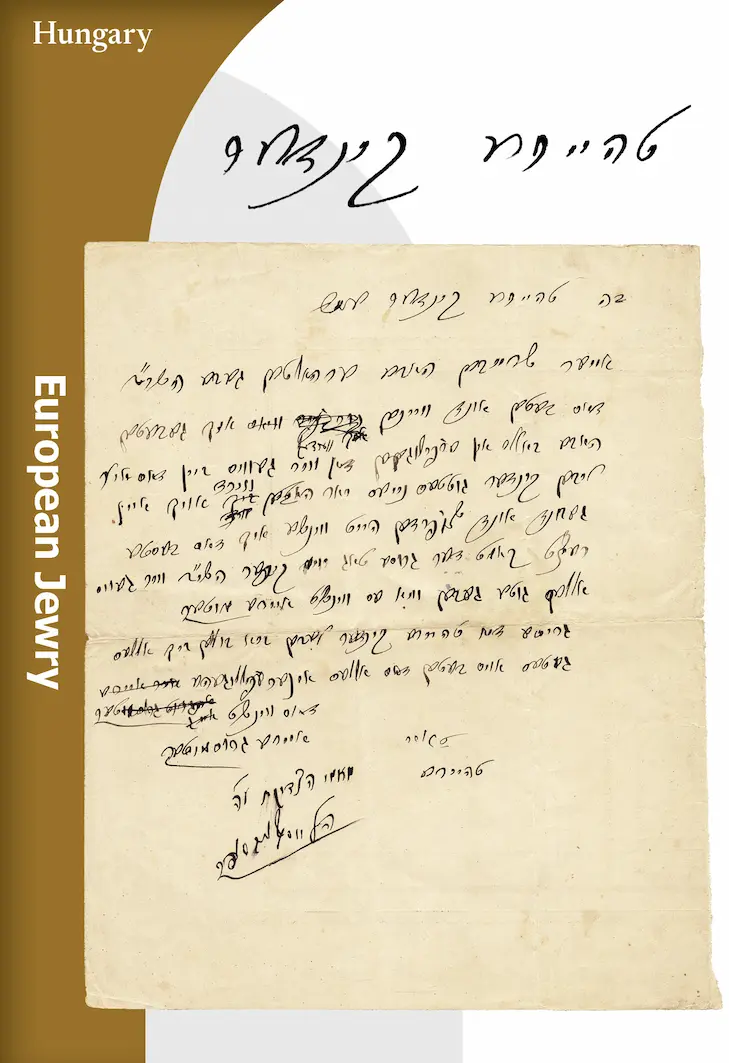
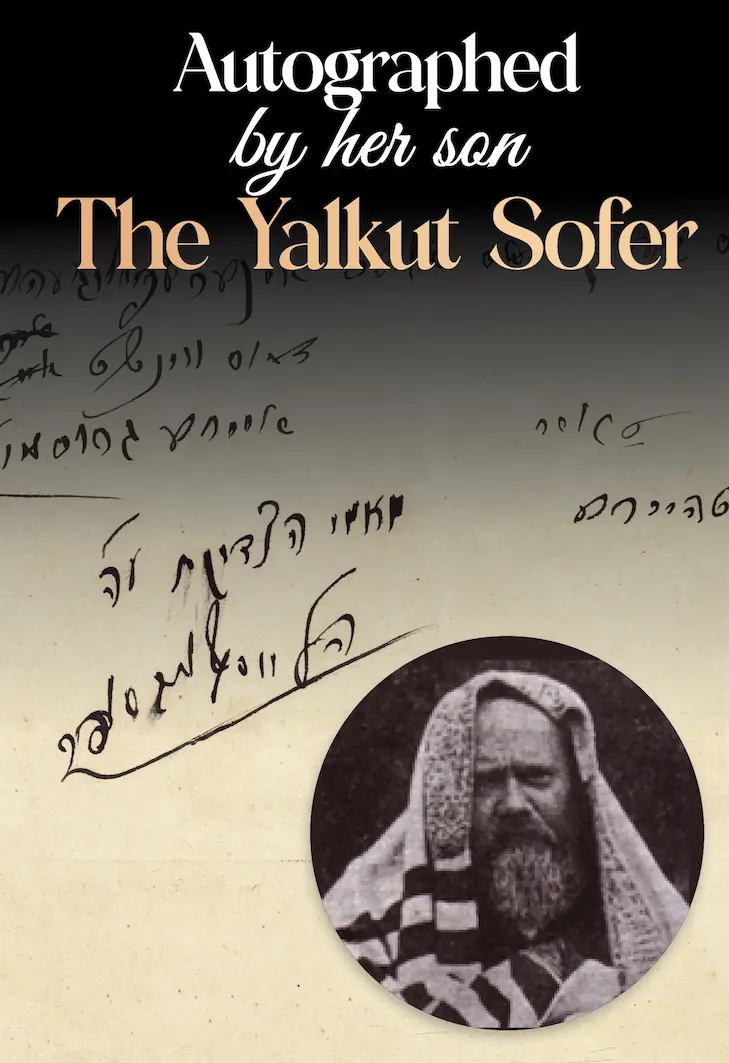
Letter of Blessing by the Yalkut Eliezer’s Wife Rebbetzin Chaya Sarah Sofer
Letter of Blessing by the Yalkut Eliezer’s Wife Rebbetzin Chaya Sarah Sofer to Her Grandchildren Autographed by her son the Yalkut Sofer Heartwarming blessings penned by Rebbetzin Chaya Sarah Sofer, daughter of Rabbi Yoel Ungar and wife of Rabbi Eliezer Zussman Sofer, Av Beis Din of Paks, Author of Yalkut Eliezer to her descendants. The Rebbetzin’s letter opens with the salutation, “Teire Kinder, Dear Children” and concludes, “Aier Grossmutter, Your Grandmother”. The significance that the Rebbetzin’s son the Yalkut Sofer assigned to this letter and the impact that he felt it would have on future generations is evident from the autographed inscription that he inserted in the margin: “From my mother, the tzaddekes” which is signed “The humble Yosef Leib Sofer.” Rebbetzin Chaya Sarah Sofer (d. 1904), righteous daughter of Rabbi Yoel Ungar, Av Beis Din of Rechnitz and author of Shu”r Riv”a, and wife of Rabbi Eliezer Zussman Sofer, Av Beis Din of Paks was renowned far and wide for her piety and wisdom. She passed away one year after her husband, and as she lay on her deathbed, she declared “Baruch haba! Welcome!” to the souls of her parents and husband who came to escort her to the World of Truth. She likewise confided in her children that she was greeting death without fear, as her husband had promised her a portion in the holy Torah that he had learned with her support. Before his passing, the Yalkut Eliezer wrote in his last will and testament to his offspring: “Take heed of the honor of your righteous mother, may she live… She has a great portion in the little Torah that Hashem Yisborach has granted me” (Mizkeres Paks Vol. 2 p. 67). The following was engraved upon Rebbetzin Chaya Sarah Sofer’s tombstone: “Here lies a woman, one of thousands, the righteous and pious Rebbetzin Maras Chaya Sarah a”h, daughter of Rabbeinu Yoel tzlhl”h and wife of Rabbeinu Eliezer Zussman ztll”a. She passed away on 6 Kislev, 5604 (1904) and was escorted to burial the following day by the masses, with great lamentation” (ibid p. 59). [1] leaf. Page Size: 17x21 cm. Folds. ....................................... Any inquiries about this lot ? We are available also on WhatsApp >>>

Lot : 170

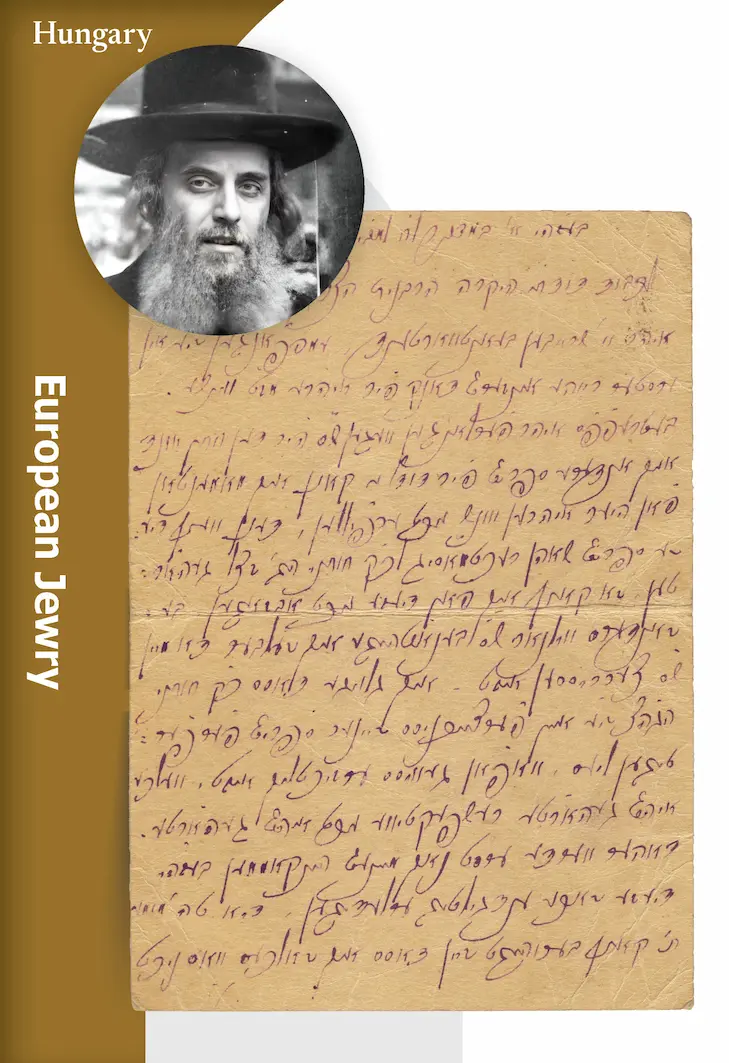
Handwritten & Autographed Letter by Rabbi Shimshon Altman Hy”d, Av Beis Din
Handwritten & Autographed Letter by Rabbi Shimshon Altman Hy”d, Av Beis Din ‎of Szentendre and Paks. 1931‎ This letter was written and autographed by the holy hand of the tzaddik Rabbi Shimshon ‎Altman Hy”d, Av Beis Din of Szentendre and Paks.‎ ‎ Rabbi Shimshon Altman (1894-1944) was the son of Rabbi Yehudah Altman, author of ‎Shu”t Mei Yehudah. A disciple of the Daas Sofer, he received semichah both from his ‎venerable master and the Gaon of Unsdorf, author of Be’er Shmuel. Rabbi Shimshon ‎married the daughter of Rabbi Shimon Sofer, a son of the Yalkut Eliezer, and succeeded his illustrious father-in-law as Rav and Rosh Yeshivah of both Szentendre and Paks. He ‎was deported to Auschwitz along with his kehillah on 17 Tammuz, 5704 (1944) where he ‎perished al kiddush Hashem.‎ Rabbi Shimshon’s written legacy includes the three-volume Shiboles Hanahar which ‎includes shailos and teshuvos and chiddushim both on Torah and Shas. His customs ‎were printed in Nachal Sorek (Bnei Brak, 2016).‎ One of Rabbi Shimshon’s greatest talmidim was the Admor Rabbi Yochanan Sofer of ‎Erlau, author of Imrei Sofer who writes in his approbation to Shu”t Shiboles Hanahar: ‎‎“There is no way to estimate or describe the pleasure that we drew from listening to his ‎illuminating lessons and gazing into his holy face which exudes radiance…especially ‎when I entered into his sanctum, when he was closeted in his study with his sefarim and ‎learning, adorned in tefillin…For he is like an angel of the G-d …”‎ Szentendre, 1931. Postcard. Double-sided, handwritten in Yiddish. Fold marks.‎ ....................................... Any inquiries about this lot ? We are available also on WhatsApp >>>

Lot : 171

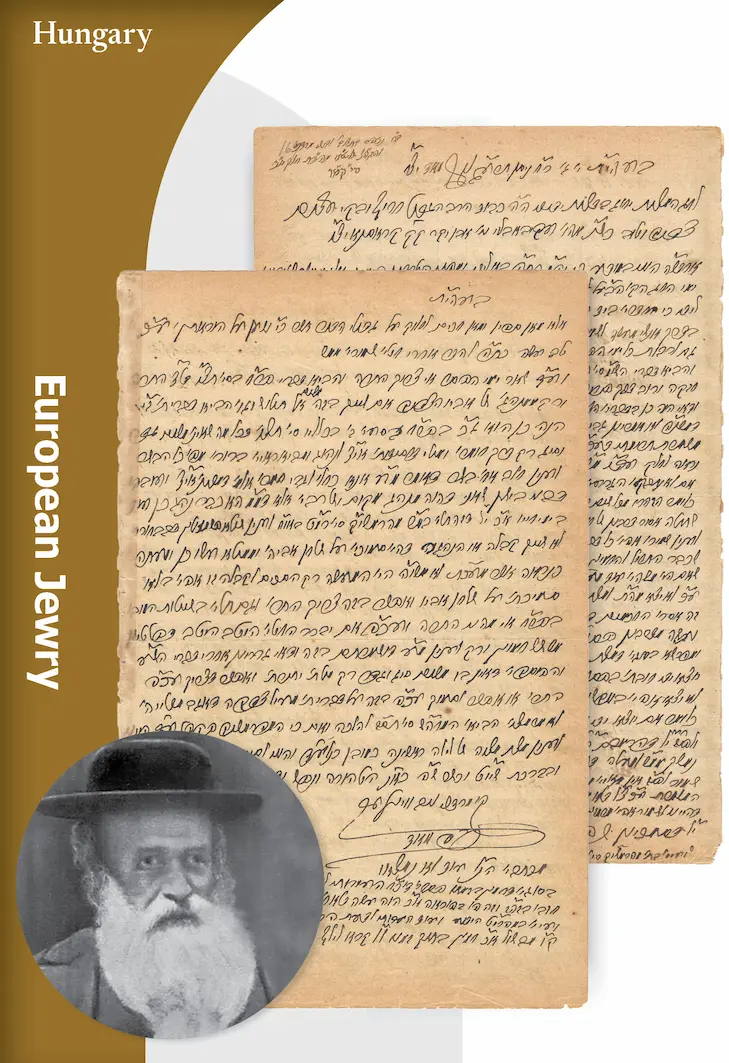
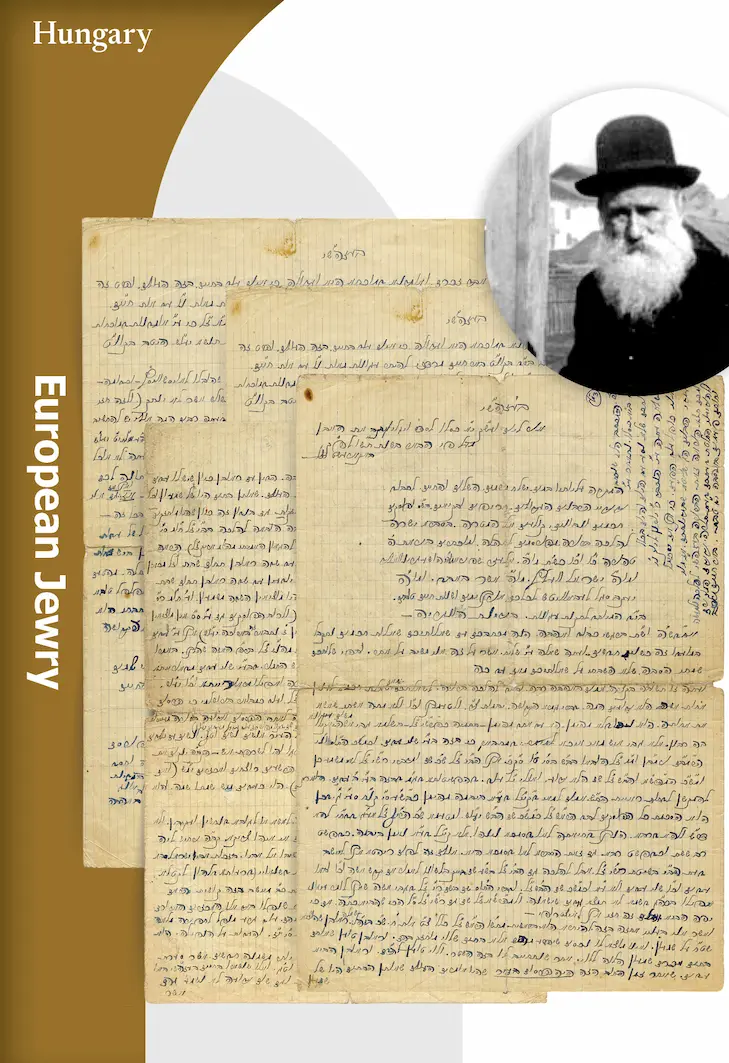
Handwritten, Autographed Halachic Responsum by the Levushei Mordechai, Rabbi Mordechai Winkler, Av Beis Din of Mád. Rosh Chodesh Nissan, 1913

A teshuvah regarding one whose custom was to eat matzah shemurah from the time of harvest. The letter discusses whether it is permissible to be lenient in a year with an abundance of rain, and if he must perform hataras nedarim.

The teshuvah is completely handwritten and bears the autograph of the Levushei Mordechai Harav Mordechai Halevi Winkler, Av Beis Din of Mád. It likewise contains additional responsa regarding the correct blessing on machine matzah which does not qualify as bread; using matzah as lechem mishneh on Erev Pesach that falls on Shabbos; and kinyanim used to sell chametz. The letter contains a reference to the ruling of the Chasam Sofer.

The letter begins with the author’s apology for being unable to write at greater length due to the pressure and constraints of Erev Pesach. “Your letter came before me…Yet due to the pressure of the imminent holiday, I cannot write lengthily for I was barely able to access this sheet of paper while the rooms are all being cleaned and whitewashed, as is the custom of our righteous women…”

The Levushei Mordechai (1845-1932) was a pillar of Torah and halachah throughout Hungary and regarded as the posek hador during the last two decades of his life. He stood at the helm of the Yeshivah Gedolah in Mád where he cultivated a generation of gedolei Torah, and his brilliant responsa were compiled into the 4-volume series Levushei Mordechai. He was the father-in-law of Maharit”z Dushinsky.

Mad, 1913, one leaf written on 2 sides, 2315 cm, good condition.
15 cm, good condition. Actual responsa printed in Shu”t Levushei Mordechai (2) Yo”d Ch.146, this manuscript contains an additional 4…

Lot : 172

Historic Halachic Teshuvah on Holocaust Survivors! Handwritten & Autographed Halachic Responsa by
Historic Halachic Teshuvah on Holocaust Survivors! Handwritten & Autographed Halachic Responsa by Harav Chaim Mordechai Roller, Av Beis Din of Niamtz, Regarding Remarriage of Holocaust Agunim. Bucharest, 1946. Halachic responsa by Hagaon Harav Chaim Mordechai Roller, Av Beis Din of Neimetz, to the special Beis Din that formed in Budapest to rule upon the status of Holocaust agunos.  After the Holocaust, the Gaon of Niamtz Rabbi Chaim Mordechai Roller authored a landmark teshuvah permitting the remarriage of agunim who had received testimony that their wives had been taken to Auschwitz and sent to the left to their deaths. Following this resolution, another complicated question arose regarding whether the newly-freed agunim were permitted to marry their late wives’ sisters. Whereas the prohibition of polygamy is prohibited by Cherem D’Rabbeinu Gershon, marrying one’s wife’s sister during her lifetime is prohibited by the Torah. This question was relayed to the venerable Gaon of Neimatz who ruled leniently based on three foundational premises: 1. “We have clear knowledge and information that the entire city—men, women and children, were led to Auschwitz, and it is known that, due to our many sins, they were all murdered and became ashes for fire…and not one escaped these brutal villains, may their names be blotted out, (and if one survived, it was miraculous), and this constitutes testimony of two witnesses.” 2. The Zohar Hakadosh in Parshas Vayeshev states: “One who falls into the hands of a villain is worse than one who plummets into a pit of snakes and scorpions.” Particularly in this case, the intention of the Nazis was only to annihilate and exterminate the victims. 3. Eight months have passed since the end of the war, and no word was heard from these women. The Gaon of Niamtz concludes: “The combination of these three is the foundation of this heter to permit the husbands of the women taken to Auschwitz, etc. [to marry] their wife’s sister…according to halachah.” In the body of this teshuvah, Rabbi Chaim Mordechai Roller asserts that his ruling is unequivocal halachah. Father of Agunos Rabbi Chaim Mordechai Roller, Av Beis Din of Niamtz Rabbi Chaim Mordechai Roller (1868-1947), author of Shu”t Beer Chaim Mordechai, was the preeminent halachic authority in Europe between the two world wars and most famous for his legendary efforts to free war agunos and agunim. Following World War One, Rabbi Meir Arik appealed to him to free his daughter from the shackles of an agunah, and he subsequently published a comprehensive booklet on this intricate subject called Beer Chaim Mordechai (1923). During the post-Holocaust years, he was revered as the undisputed halachic authority regarding agunos and agunim who had survived the inferno. “Eyewitnesses describe that it was chilling to observe him author a teshuvah regarding an agunah. On one hand, he faced the severe prohibition of adultery, and on the other, the inexpressible sorrows of his people who had survived the blood, fire and mortar of the German beasts, may their name and memory be blotted out. Based on these, it was up to him to determine if the agunah’s husband had been murdered. He authored these heterim with a bleeding heart and soul” (Biography at the end of Shu”t Beer Chaim Mordechai Vol. 3), This teshuvah was dispatched to the members of the special Beis Din in Budapest that was established to deal with the questions regarding agunos; Rabbi Elazar Shapiro Av Beis Din Kivishad[N1] ; Rabbi Yehoshua Greenwald, Av Beis Din Chust; Rabbi Yisrael Veltz, Av Beis Din of Budapest; Rabbi Asher Babad, Av Beis Din of Tartikov; and Rabbi Yaakov Segal Lebovits, Av Beis Din Kapish[N2] . Published in Shu”t Binyan Tzvi by Harav Tzvi Hirsch Meiselish Vol. 2 Ch. 55, with the names of the Rabbanim to whom the letter was addressed and the addition written across the top of the letter omitted. 11 Kislev, 5706; November 16, 1945. Page Count: 2 leaves; 3 sides. Page Size: 22x32 cm. Description: Handwritten and autographed with “Be’er Chaim Mordechai” thrice by Rabbi Chaim Mordechai Roller. Last side includes a private letter by Rabbi Shmuel Zanvil Kahana Frenkel, Nasi of Bureau of Orthodox Congregations in Hungary. Tears on fold marks professionally restored with all text intact.  Rare, historic teshuvah! .................................... ... Any inquiries about this lot ? We are available also on WhatsApp >>>
Lot : 174

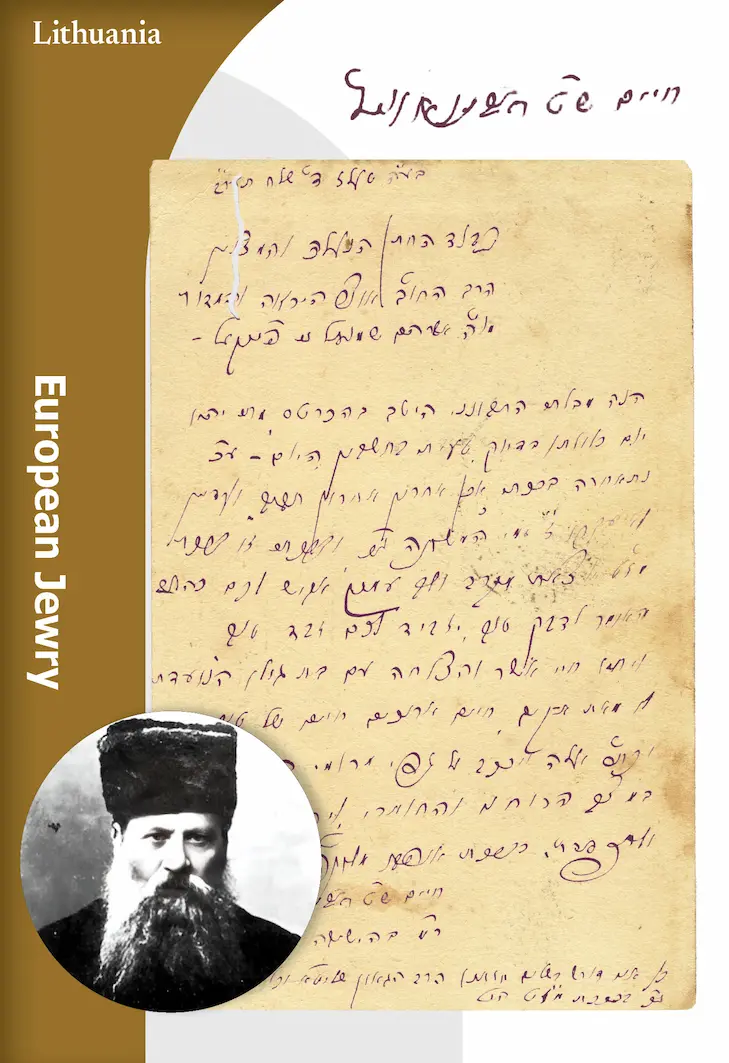
Handwritten & Autographed Letter by Rabbi Chaim Rabinowitz, Rosh Yeshivah of Telz.
Handwritten & Autographed Letter by Rabbi Chaim Rabinowitz, Rosh Yeshivah of Telz. 1912 Letter with mazal tov wishes handwritten and autographed by Rabbi Chaim Rabinowitz, Rosh Yeshivah of Telz, in honor of the marriage of Rabbi Avraham Shmuel Finkel, son of the Alter of Slabodka and future mashgiach in the Slabodka and Chevron Yeshivos. Rabbi Chaim Rabinowitz (1860-1931), renowned as Rabbi Chaim Telzer, was among the greatest Roshei Yeshivos in Lithuania “who molded the image of the Lithuanian yeshivos” (preface by Roshei Yeshivos of Telz to Chiddushei Rabbi Chaim Telzer). He was renowned as a genius and “marvelous mechadesh” who innovated brilliant chiddushei Torah and paved the path of yeshivah-style study distinct to Lithuanian yeshivos. His “chakiros” (studies) were widely-acclaimed in Lithuanian yeshivos during the era preceding the Holocaust. Rabbi Chaim served as Rosh Yeshivah of Knesses Beis Yitzchak in Slabodka. In 1905, after Rabbi Shimon Shkop relocated from Telz to Grodno, he was invited by Rabbi Eliezer Gordon to succeed Rabbi Shimon as Rosh Yeshivah of Telz. There, Rabbi Chaim taught Torah to hundreds of talmidim, who ultimately disseminated his wisdom and unique path in study to thousands. His shiurim were compiled and printed in the 3-volume masterpiece Chiddushei Rabbi Chaim MiTelz. The chosson Rabbi Avraham Shmuel Finkel (1887-1951) was the son of Rabbi Nosson Tzvi Finkel, Alter of Slabodka. Rabbi Avraham Shmuel served as Av Beis Din in Yasny, Lithuania, and thereafter, as a mashgiach in both the Slabodka and Chevron yeshivos. His lectures and the mussar he taught were printed in Nesivos Mussar. The margins of the letter include “Regards to your father-in-law Hagaon [Rabbi Yehuda Hachnochi, Av Beis Din of Chechonovitch] shlit”a”. Telz, 1912. Postcard. Light restoration. Handwritten and autographed with his full name “Chaim S.T. [Shalom Tuvia] Rabinowitz, R[osh] M[esivta] in the Yeshivah”. In later years, he would sign the name “Chaim” only. ....................................... Any inquiries about this lot ? We are available also on WhatsApp >>>

Lot : 175

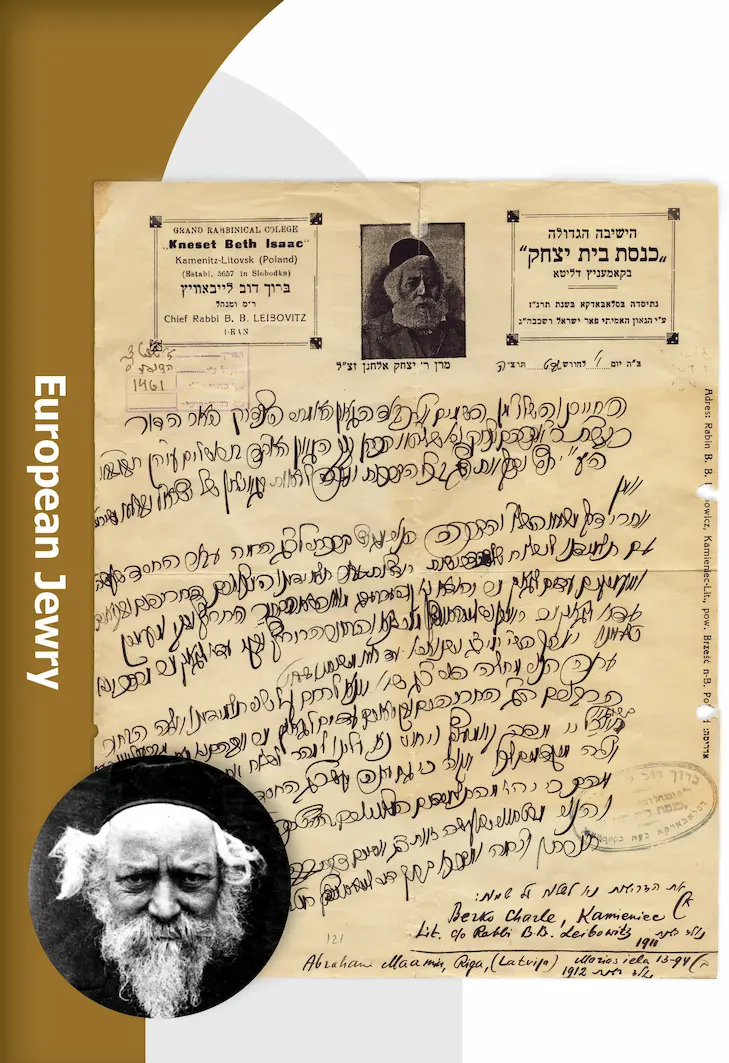
Rabbi Baruch Ber Lebowitz’s Care for his talmidim Letter From Rabbi Baruch
Rabbi Baruch Ber Lebowitz’s Care for his talmidim Letter From Rabbi Baruch Ber Lebowitz to HaRav Kook Chief Rabbi of Israel. Handwritten & Autographed Letter by Rabbi Baruch Ber Lebowitz, Rosh Yeshivas Kamenitz in Lithuania. Kamenitz, 1935  In this captivating, lengthy letter, Rabbi Baruch Ber Lebowitz, Rosh Yeshivas Kamenitz and author of Birkas Shmuel, appeals for assistance to enable for the aliyah of two talmidim. The letter is handwritten, signed and stamped by the Rosh Yeshivah. With the threat of conscription into the Soviet army looming forbiddingly over the heads of his beloved talmidim, Rabbi Baruch Ber was consumed with fear for their fate and endeavored greatly to arrange their passage to safer shores. In this letter, he appeals to Rabbi Avraham Yehuda Kook with a heartfelt request that he “have compassion on two of our talmidim” and make necessary arrangements to procure certificates for their immigration to Eretz Yisrael. He further expresses his appreciation for the certificates that Rabbi Kook had obtained for other talmidim in the past. With love and pride in his students, Rabbi Baruch Ber extols his students’ praises effusively in this letter. Rabbi Baruch Ber Lebowitz (1870-1940) was one of the greatest Lithuanian Roshei Yeshivos and Torah luminaries in the pre-WWII era. His riveting lectures attracted the crème de la crème of aspiring Torah scholars for their brilliance, enthusiastic presentation, depth and analysis that culled from the methods of his rebbi Rabbi Chaim Soloveitchik of Brisk. Like the latter, he was a man of truth and integrity who favored no one, yet simultaneously gentle and compassionate as a father to his talmidim. His work Birkas Shmuel is considered one of the fundamental lomdishe sefarim and learned extensively in contemporary yeshivos. Kamenitz, 1935. Yeshivah stationery. Handwritten, autographed and stamped by Rabbi Baruch Ber. Slight damage with all text intact. יום ו’ לחודש שבט תרצ”ה החיים והשלום מן השמים לכבוד הגאון האמתי הצדיק פאר הדור כקש”ת ר’ אברהם יצחק שליט”א הכהן קוק הגאון האב”ד בירושלים עיה”ק תבוב”א העליון ית”ש יברך את ה”ג בכל הברכות ויזכה לראות בגאולתן של ישראל ובבא משיחנו אמן אחרי דרך מבוא השלום והברכה הנני מגיש ברכתי לכ”ג הרמה עבור החסד שעשה עם תלמידינו לשלוח שלשה דרישות חדשות עבור תלמידינו המצוינים החריפים ובקיאים ומעמיקים עדים לגאון מר יהודה נ”י קופערבערג מווארשא והבחור החריף ובקי מעמיק עדיו לגאון וכו’ ראובן נ”י לייבאוויץ…. והבחור החריף עדיו לגאון מר מרדכי נ”י טשענוו… יאריך הש”י ימי כ”ג ושנותיכם עד בוא משיחנו בב”א.  עתה הנני מחלה פני כ”ג שיחי’ ונא לרחם על שני תלמידינו אלה, הבחור הרבנים הג’ החריפים ובקיאים עדים לגאון מר אברהם נ”י מאמין מברעסלאוו כעת בריגא ומר דוב נ”י חארליי מפה קאמעניץ ויחוס נא עלינו למהר לשלוח את הדרישות, ושני אלה מוקדמים לכל. אקוה כי גם עתה יעשה כ”ג החסד עם ישיבתינו ויקבל נחת מהם, כי יהיו מהתלמידים המצוינים בהישיבה הק’ בתורה ויראה. והנני מבטחוני שיעשה זאת כ”ג אסיים דברי בברכה רבה הדורש שלום תורתו… ומברכו ברוך דוב ליבבאוויץ ר”מ בישיבה הק’ בית יצחק   Any inquiries about this lot ? We are available also on WhatsApp >>>
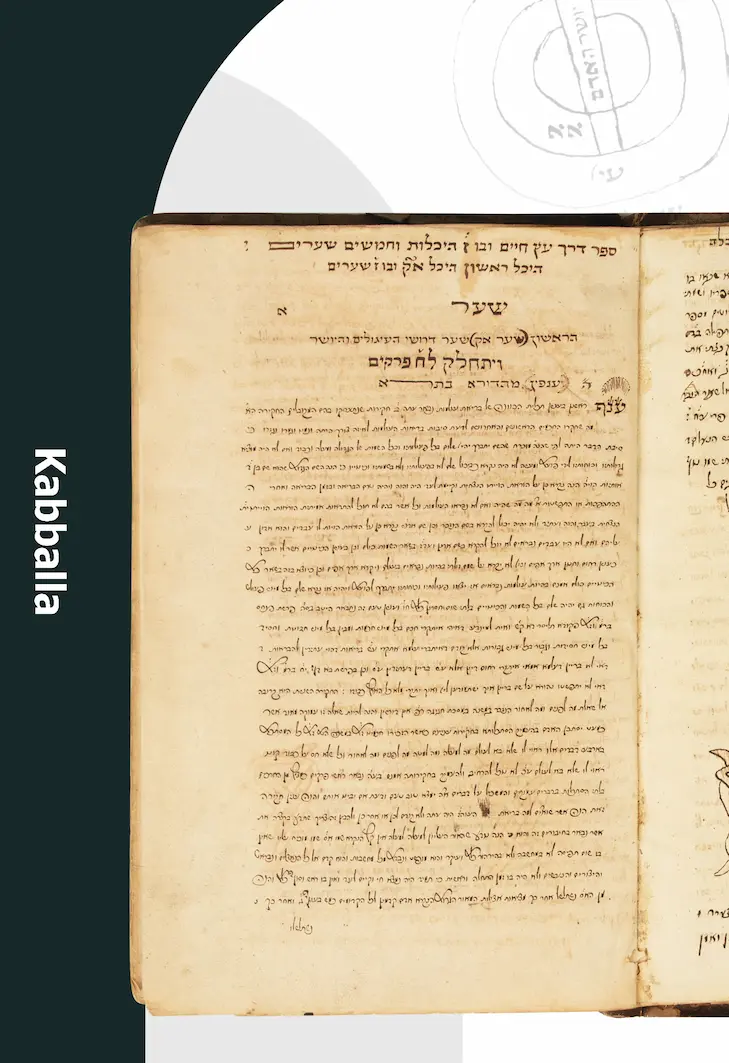
Lot : 176

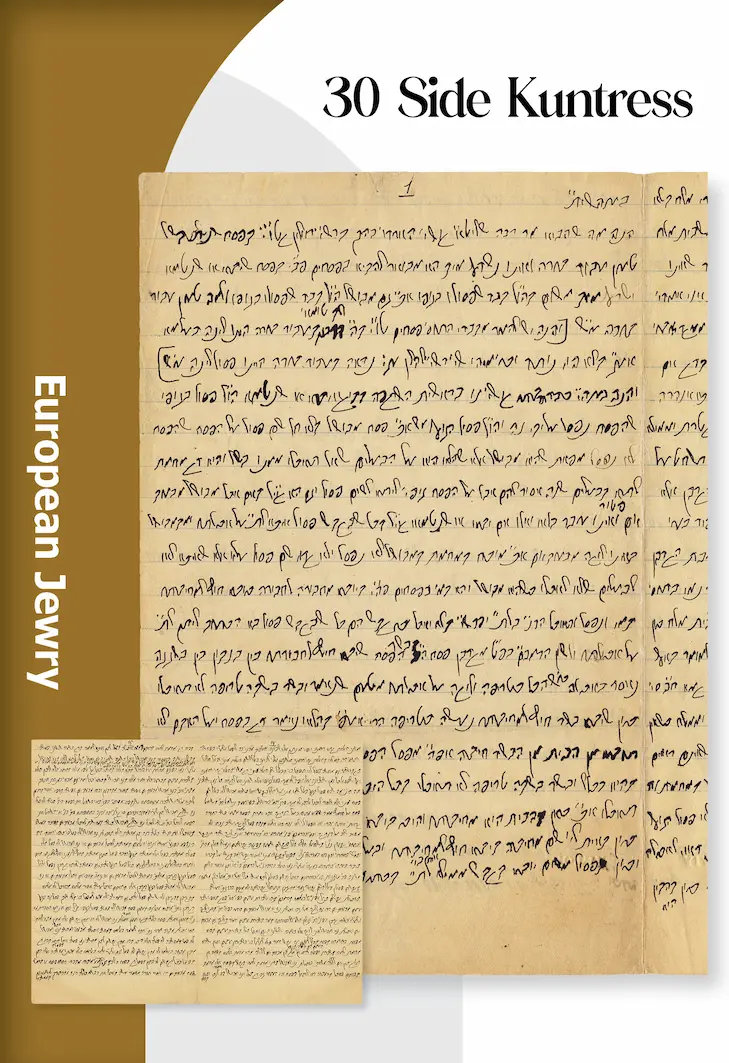
Handwritten Kuntress of Chiddushei Torah and Letter by the Avnei Nezer’s Talmid
Handwritten Kuntress of Chiddushei Torah and Letter by the Avnei Nezer’s Talmid Rabbi Michael Forshlager. Letter and handwritten pamphlet replete with chiddushei Torah by Rabbi Michael Forshlager, close disciple of the Avnei Nezer and author of Toras Michael. This pamphlet was not included in either his sefer Toras Michael or anthology of letters included in Michael B’Achas. The first page of the kuntress is a letter to Rabbi Moshe Shmuel Shapiro, maggid shiur in Yeshivas Rabbi Chaim Berlin. The letter is followed by 28 sides of handwritten chiddushei Torah. Rabbi Michael Forshlager (1884-1959) was a genius, a pious and devoted talmid and chassid of the Avnei Nezer who described him with: “He pulls the Tosfos and Rashba out of his sleeve”. During the Avnei Nezer’s final years, he relayed his teshuvos to Rabbi Michael for his perusal and review before mailing them. Rabbi Michael discoursed in halachah with some of the greatest Torah luminaries of his times who occasionally visited Sochochov to bask in the holy court of the Avnei Nezer, among them Rabbi Yosef Engel and his rebbi the Chelkas Yoav. In 1921, Rabbi Michael emigrated from Europe to the United States, and although he endeavored to remain out of the limelight, he quickly gained renown as one of the great scholars and sages in America. Rabbi Aharon Kotler, Rosh Yeshivah of Lakewood, expressed that “Rabbi Michael is the greatest gaon in all of America!” and in this correspondence with the Admor Rabbi Yoel of Satmar, the latter addressed him with great honor (see Shu”t Divrei Yoel Orach Chaim Ch. 8). Rabbi Michael Forshlager’s life story is presented at length in his sefer Michael B’Achas (New York, 2014).  Page Count: 30 sides. Page Size: Sides 1-16: 21x12 cm; sides 17-28 and letter: 16x13 cm. Condition: Professional restorations of tear on first and last page with minute missing text. ....................................... Any inquiries about this lot ? We are available also on WhatsApp >>>

Lot : 177

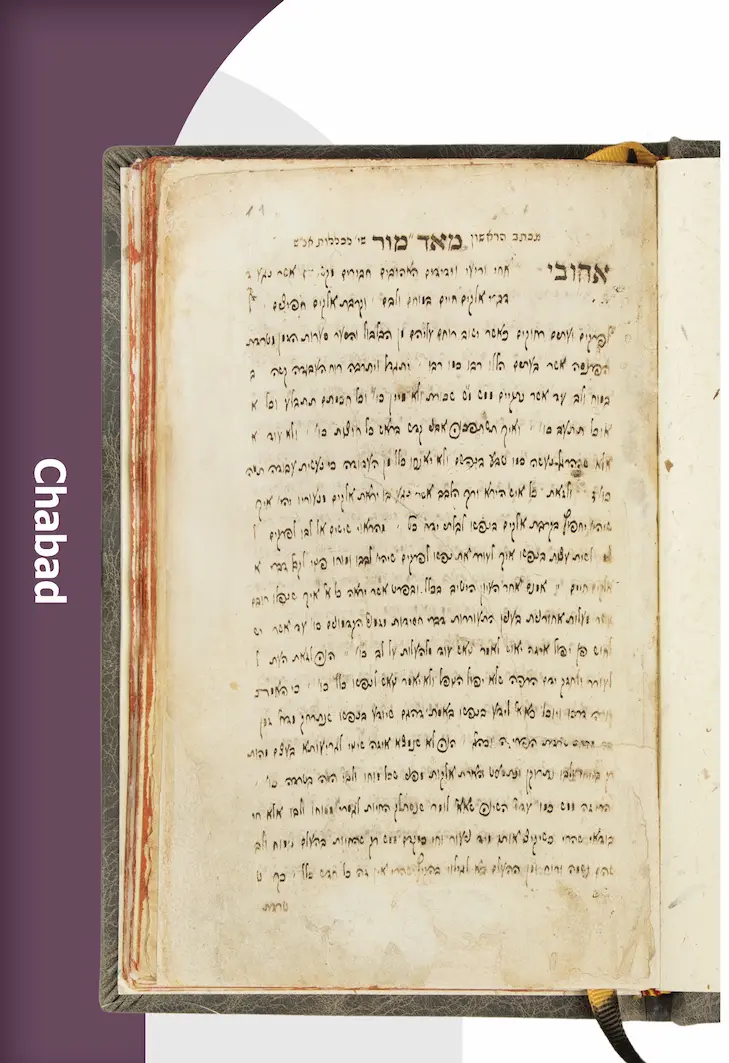
Manuscript Chabad Bichel Handwritten Bichel "Igros Kodesh" by the Mitteler Rebbe. 1824
Manuscript Chabad Bichel Handwritten Bichel "Igros Kodesh" by the Mitteler Rebbe. 1824 Handwritten “Igros Kodesh”, holy letters by the Mitteler Rebbe to his chassidim at the start of his tenure in 1814. This manuscript was written by a scribe and includes sixty-six sides of handwritten prose in neat, beautiful script. 1. “First Letter by the Admor Shyichyeh to All Anash”: From the title of this letter, it appears that the Bichel must have been written during the Admor’s lifetime (prior to 1828). The letter first appeared in print in Warsaw, in 1868 as the preface to Kuntress Hahispa’alus. In this marvelous letter, the Admor summarizes the general state of his chassidim’s avodas Hashem and arouses them to repent and toil in the wisdom of Chassidus which, he writes, “brings the mind and heart to wonder”. He also pledges to guide each chassid individually, each man in accordance to his ways and needs, both when his chassidim journey to his Holy Court together and return with his holy teachings, and also through his travels to outlying towns and villages which he was instructed to do by his father the Alter Rebbe prior to his passing (Igros Ha’Admor Ha’emtzai, 2013 p. 62). 2. “Second Letter to All Anash in Our Land”: This 46-sided letter gained renown and was later printed under the title Kuntress Hahispaalus. At the end of the letter, the Admor clarifies that everything he writes in the letter was written from the heart, based on over 20 years of learning and training in the home and Holy Court of his father, the Alter Rebbe, and based on what he garnered over the years from letters written by his chassidim. The final last lines of the letter were added later in a different handwriting. The Mitteler Rebbe Harav Dov Ber Schneerson (1733-1828) expounded upon the lofty teachings of his father the Baal Hatanya, and institutionalized the Lubavitch Chassidus. He succeeded his father as Admor in 1813 and led his flock until his untimely passing in 1828 at the young age of 54. Page Count: 33 leaves (66 sides). Page Size: 19x12 cm. Beautiful, neat script. Condition: Holes and damage professionally restored. Bound in ornate gray leather binding with matching case. Bibliography : See more about the Mitteler Rebbe’s letters in Iggros Ha’Admor Ha’emtzai, Letters 10, 16; Maamarei HaAdmor Hazakein – Kuntressim pp. 186-190. ....................................... Any inquiries about this lot ? We are available also on WhatsApp >>>
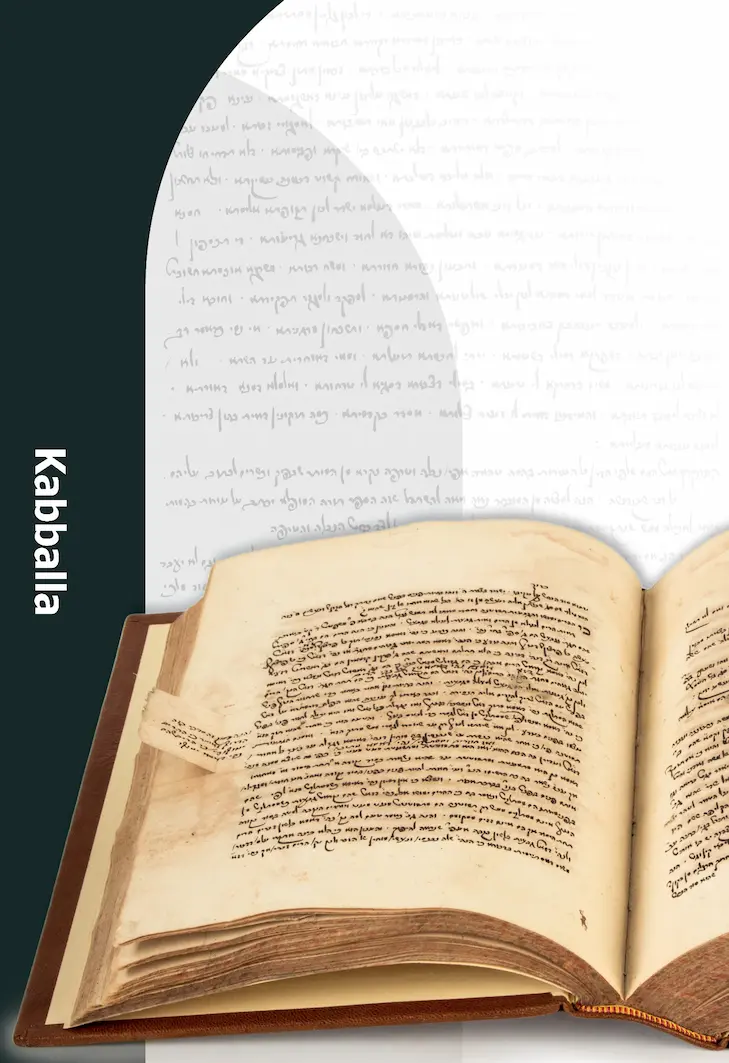
Lot : 178

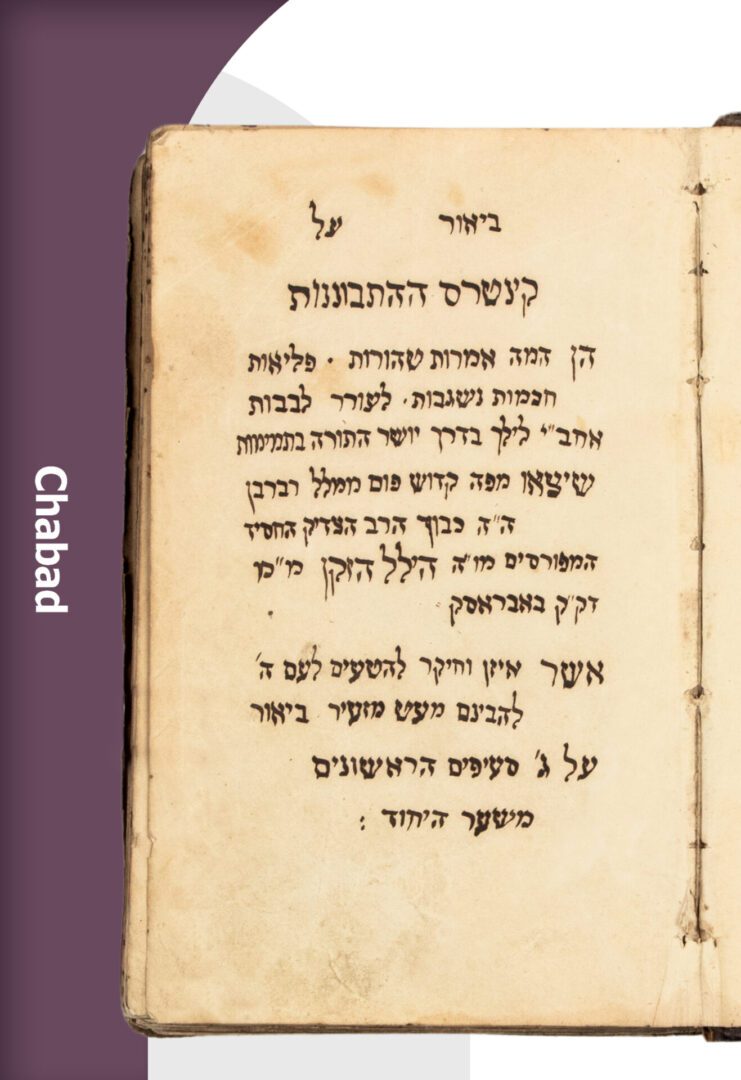
Chabad Manuscript of Likutei Biurim by Rabbi Hillel of Paritch and Bichel
Chabad Manuscript of Likutei Biurim by Rabbi Hillel of Paritch and Bichel of Essays by the Tzemach Tzedek Manuscript of Likutei Biruim by the legendary Chabad Mashpia Rabbi Hillel Paritcher on the teachings of the Admor Rabbi Dovber of Lubavitch. The manuscript includes two units with two separate title pages: 1. Elucidation of Kuntress Hahisbonenus (also called Shaar HaYichud) 2. Elucidation of Kuntress Hahispa’alus These essays, illuminating and expounding upon the teachings of the Admor Rabbi Dovber of Lubavitch, renowned as the Mitteler Rebbe, were printed in Likutei Biurim (Warsaw, 1968), however the present manuscript was copied long before the printing, as evident from the fact that Rabbi Hillel Paritcher’s name is inscribed on the title page without any suffix as “zt”l.” Rabbi Hillel of Paritch (1798-1864) was one of the illustrious figures in the history of Chabad. He was the prime disciple of the Mitteler Rebbe, and even the Tzemach Tzedek conferred great honor upon him and sent many pupils to him to teach and mentor. Rabbi Hillel delved deeply into the Torah of Chabad and was one of its greatest scholars and commentators. In his latter years, he served as Rav of Babruysk. His written legacy includes Likutei Biurim and Pelach Harimon which are both fundamental Chassidic works from Chabad. The second half of this handwritten manuscript encompasses 9 lengthy essays by the Admor Rabbi Menachem Mendel Scheerson, author of Tzemach Tzedek. The following is the list of essays: Eilech Li El Har Hamor; B’zohar Parshas Vayigash, Vayevarech Yaakov es Pharaoh; Chachlili Einayim Miyayin (2 essays); Naftali Ayalah Shluchah; Ki Hashem Elokeichem; Al Kein Kara Layamim Ha’eleh Purim (2 essays); Ben Poras Yosef The end of the manuscript features the signature of the scribe “By the laborer who engages in this sacred work Dov Ber son of Moreinu Harav Yitzchak Chazines of the holy congregation of Tillinesht”. Attractive calligraphy. 83: 60, [130] leaves. Page size: 17 cm. Original half-leather binding. ....................................... Any inquiries about this lot ? We are available also on WhatsApp >>>

Lot : 179

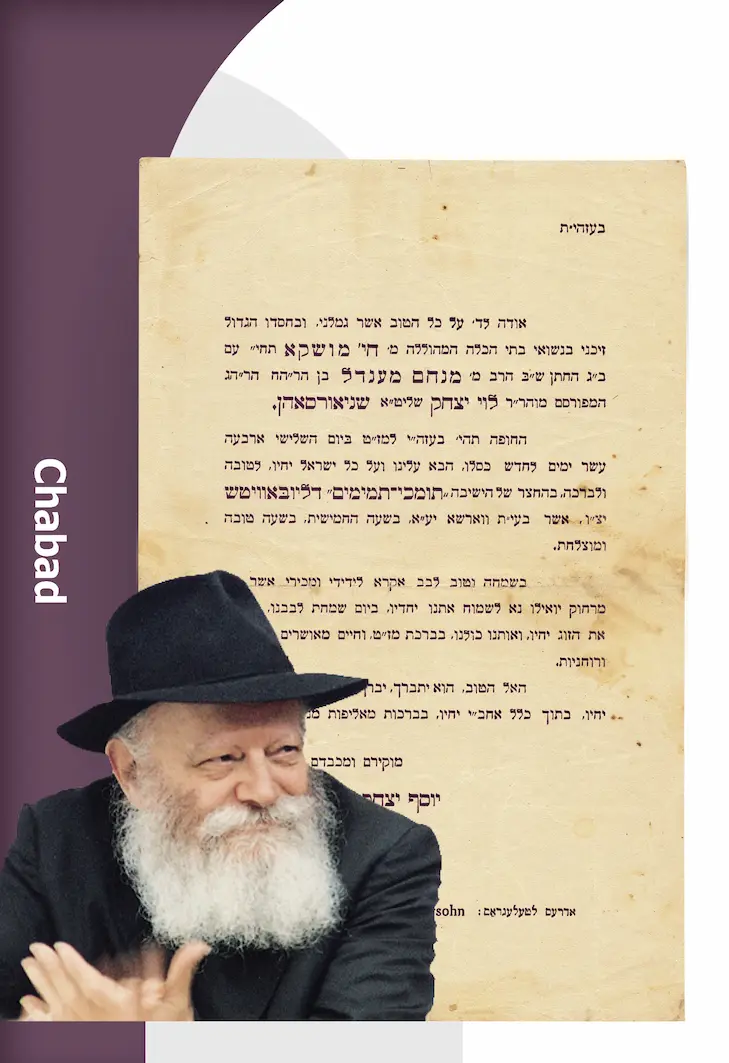
Original Wedding Invitation from the Wedding of the Admor Rabbi Menachem Mendel
Original Wedding Invitation from the Wedding of the Admor Rabbi Menachem Mendel Schneerson to Rebbetzin Chaya Mushka, Daughter of the Rayatz. Warsaw, 1928 Original Wedding Invitation sent by the Admor Rabbi Yosef Yitzchak Schneerson, renowned as the Admor Rayatz, in honor of the marriage of his daughter Rebbetzin Chaya Mushka to the future Admor Rabbi Menachem Mendel Schneerson. Warsaw, 1928 The wedding took place on 14 Kislev, 5689 (1929) at the “fifth hour” in the courtyard of the Yeshivas Tomchei Temimim in Warsaw, Poland, and was celebrated by Rabbanim, Admorim and throngs of Chabad chassidim. This event marked the beginning of the seventh link in the golden chain of Chabad and the seventh arm of the menorah representing Chabad leaders. Years later, the Lubavitcher Rebbe once spoke on his anniversary and expressed  “This was the day which bound me to you, and you to me, and together we shall strive and bring the true and complete redemption.” ....................................... Any inquiries about this lot ? We are available also on WhatsApp >>>
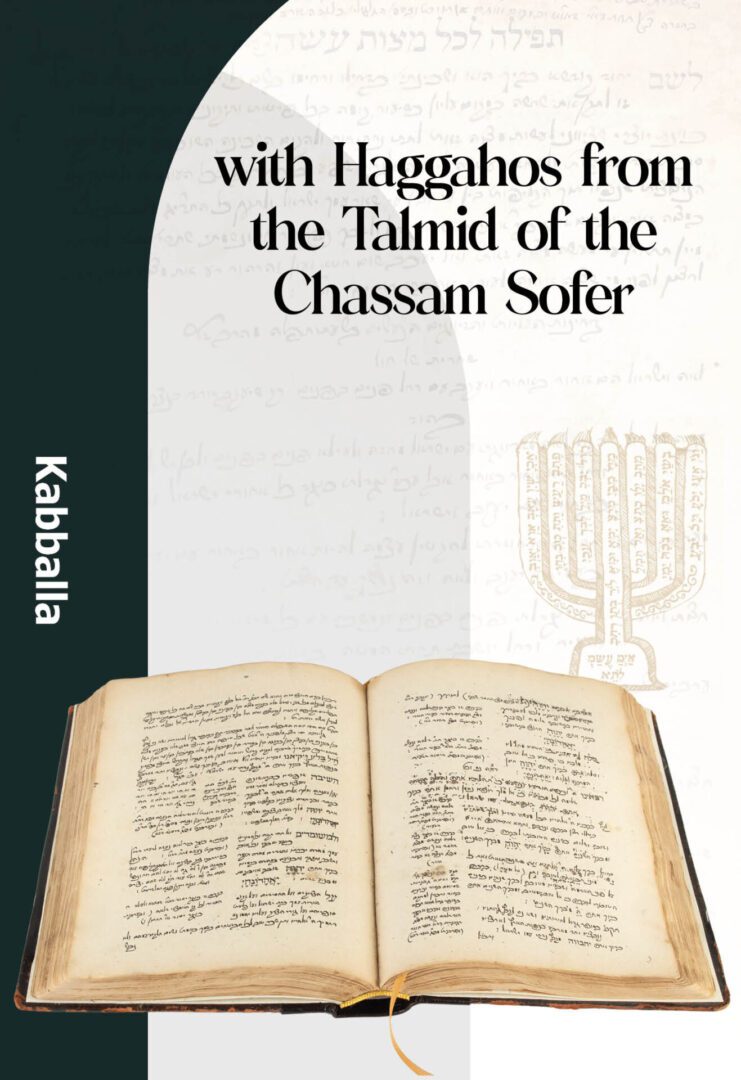
Lot : 180

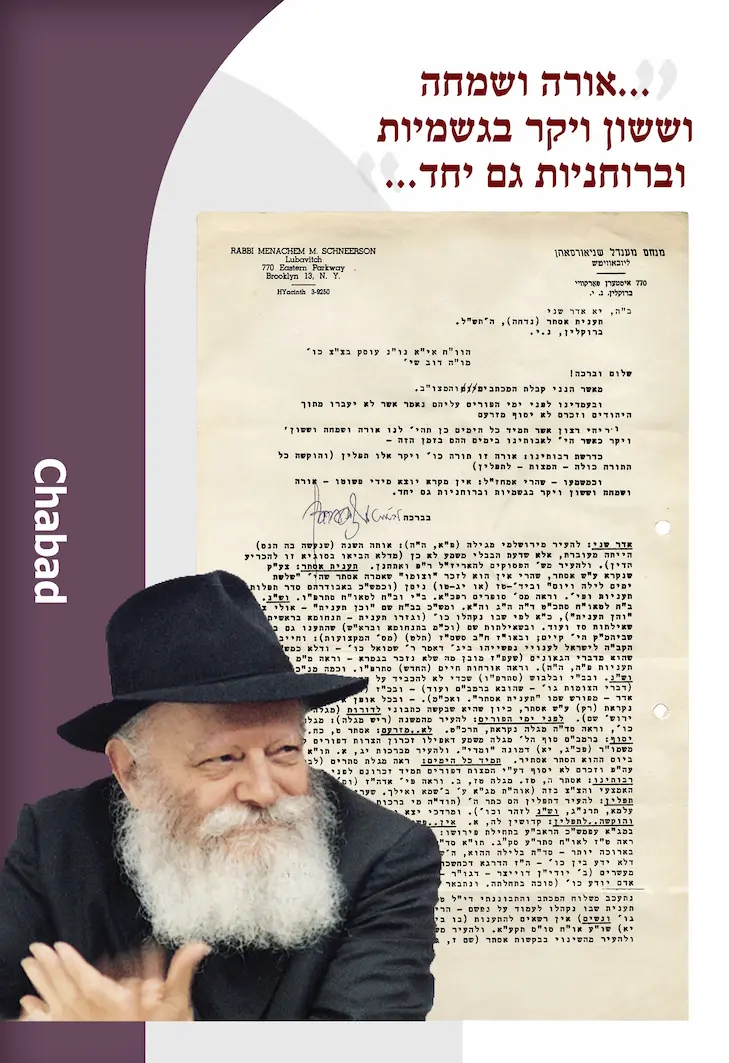
Thirty days prior to the holiday… “During these days prior to Purim…
Thirty days prior to the holiday… “During these days prior to Purim… May it be Hashem’s will that we shall always have…light and joy… both materially and spiritually.” Autographed Letter of Blessing and Chiddushei Torah for Purim by the Admor Rabbi Menachem Mendel Schneerson of Lubavitch. Brooklyn, 1970 Heartwarming letter of blessing in honor of the upcoming days of Purim replete with chiddushei Torah encompassing the Rebbe’s great wisdom in both the Revealed and HiddenTorah and Chassidus. Typed on the Rebbbe’s Stationary and is autographed by him along with one handwritten word לבשו"ט, which is an acronym for “lebusuros tovos, for good news.” The letter opens with a beautifully-worded blessing: “As we approach these days of Purim upon which it is said, ‘They shall not be revoked from amidst the Jews, and their memory shall not cease from their seed. May it be the will [of Hashem] that all days should always be like this, and we shall have light and joy and gladness and honor as our forefathers had in those days in this time… Light and joy and gladness and honor materially and spiritually…” The second half of the letter contains lengthy divrei Torah regarding Adar Sheini, Taanis Esther and Purim. The Admor Rabbi Menachem Mendel Schneerson (1902-1994) was the seventh Admor of the Chabad-Lubavitch dynasty and one of the foremost Chassidic leaders in the last generation. His Torah empire extends around the globe, where his emissaries actively engage in outreach and promote mitzvah observance in order to hasten the coming of Mashiach. Brooklyn, New York. 11 Adar II, Taanis Esther, 1970. Condition: Good. This letter was printed in Igros Kodesh Vol. 26 Letter#9869; Likutei Sichos Vol. 6 p. 371. ....................................... Any inquiries about this lot ? We are available also on WhatsApp >>>

Lot : 181

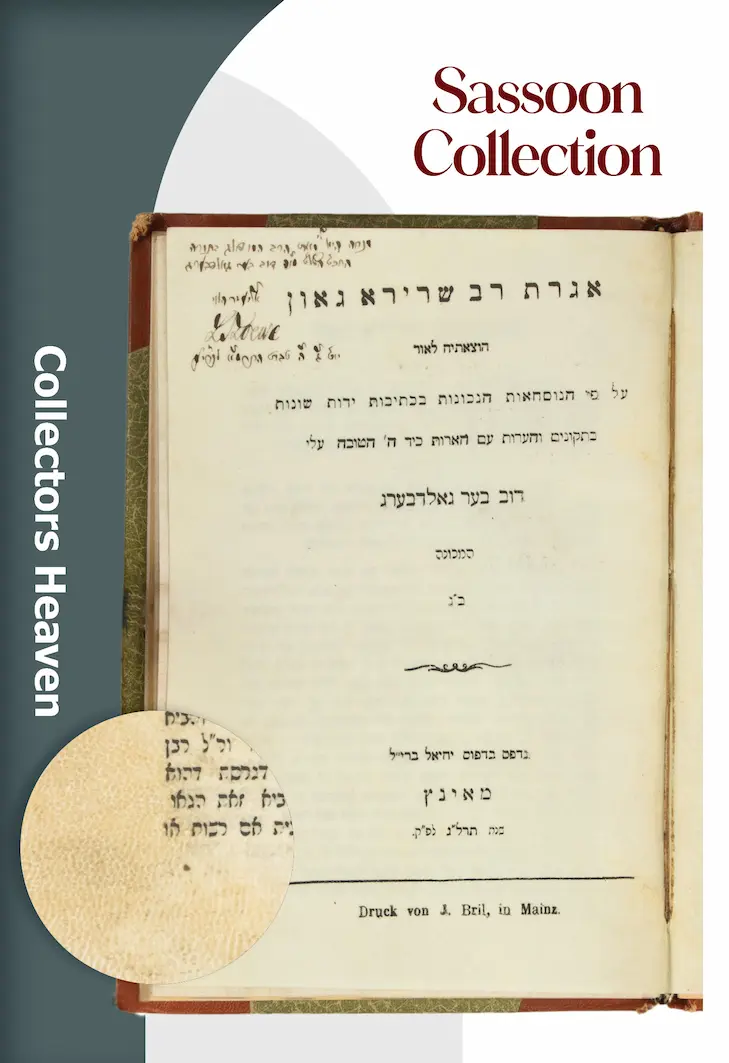
Valuable copy printed on parchment! Sassoon Collection  Iggeres Rabbi Shrirah Gaon. Mainz,
Valuable copy printed on parchment! Sassoon Collection  Iggeres Rabbi Shrirah Gaon. Mainz, 1873 Printed entirely on parchment, this remarkable copy was sent by the editor Ber Goldberg to Rabbi Doctor Eliezer Halevi, renowned secretary of Sir Moses Montefiore. Eventually, this work was acquired by the famed collector David Suleiman Sassoon who marked the purchase date in the flyleaf as 17/4/1936. While called a “letter”, Iggeres Rabbi Shrirah Gaon is actually a complete, comprehensive work discussing the writing of the Mishnah and editing of the Talmud, as well as the order of the Talmudic Sages, Sabora’im and Geonim. It is regarded as a fundamental source, and in many cases, is the only source of many Jewish historical facts. The letter was authored by Rabbi Shrirah Gaon, Rosh Yeshivah of the hailed Pumbedisa Yeshiva, in response to inquiries and questions sent by Rabbi Yaakov ben Rabbi Nissim of Kairouan, North Africa in the year 888. The present edition of the famed Iggeres was printed based on a manuscript edited and corrected by Ber Goldberg (1801-1884). The flyleaf, which is also crafted of parchment, features a beautiful dedication by the publisher that was written in the year 1881 as well as a small leaf bearing a letter of recommendation. The title page contains an inscription by Rabbi Doctor Eliezer Halevi (1709-1888), recipient of this prestigious gift. The latter was a student of the Chasam Sofer and Maharam Banet. In 1838 he accepted the post of serving as Sir Moses Montefiore’s personal secretary and advisor. Mainz, 1873. Page Count: [1], 68 sides. Page Size: 18 cm. Half leather binding by the Sassoon Library. Provenance: Rare copy discovered in the Sassoon Library. It first appeared during the sale of the Sassoon Library on Sotheby’s in London, 1971 as Lot #295. Sefarim Printed Entirely on Parchment This sefer is noteworthy not only for its printing, but also for its content which hails from the era of the Geonim. The vast majority of sefarim printed throughout the ages are printed on paper. Only a small minority, perhaps one in a million, was printed on parchment, and always to ensure that it would be a unique piece. The present copy of Iggeres Rabbi Shrirah Gaon on parchment was a private custom order that the editor wished to convey as a prestigious gift to the personal secretary of Sir Moses Montefiore who managed all the latter’s accounts. Provenance: Rabbi Doctor Eliezer Halevi, personal secretary to Sir Moses Montefiore. For more info ....................................... Any inquiries about this lot ? We are available also on WhatsApp >>>
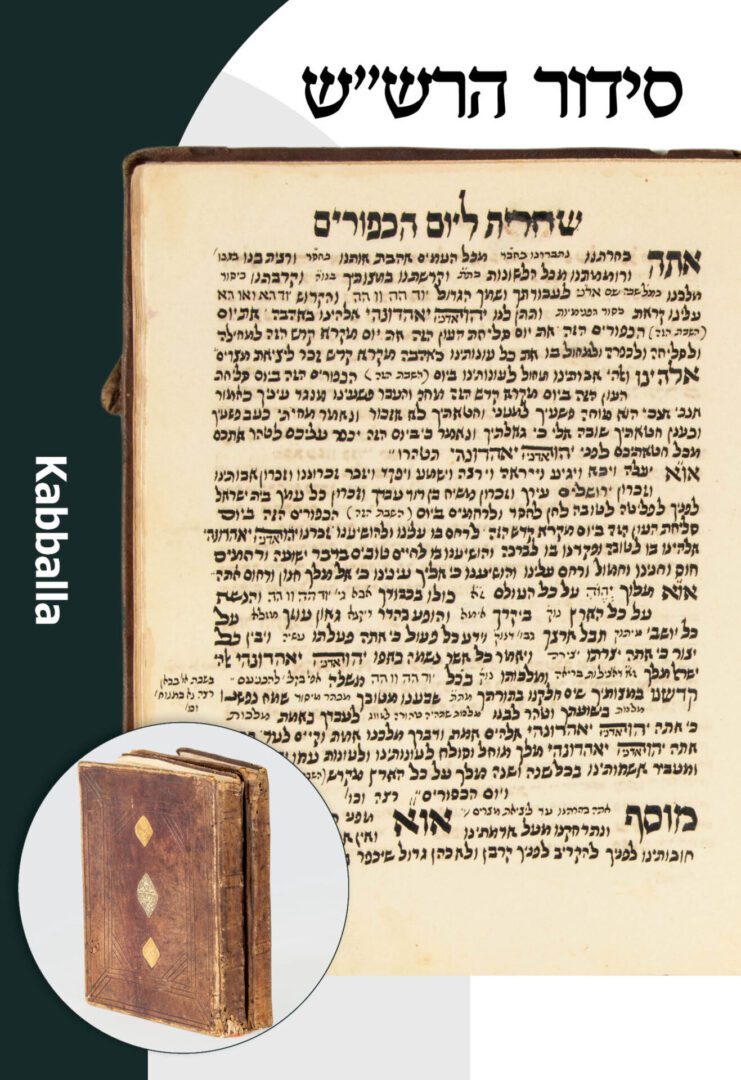
Lot : 182

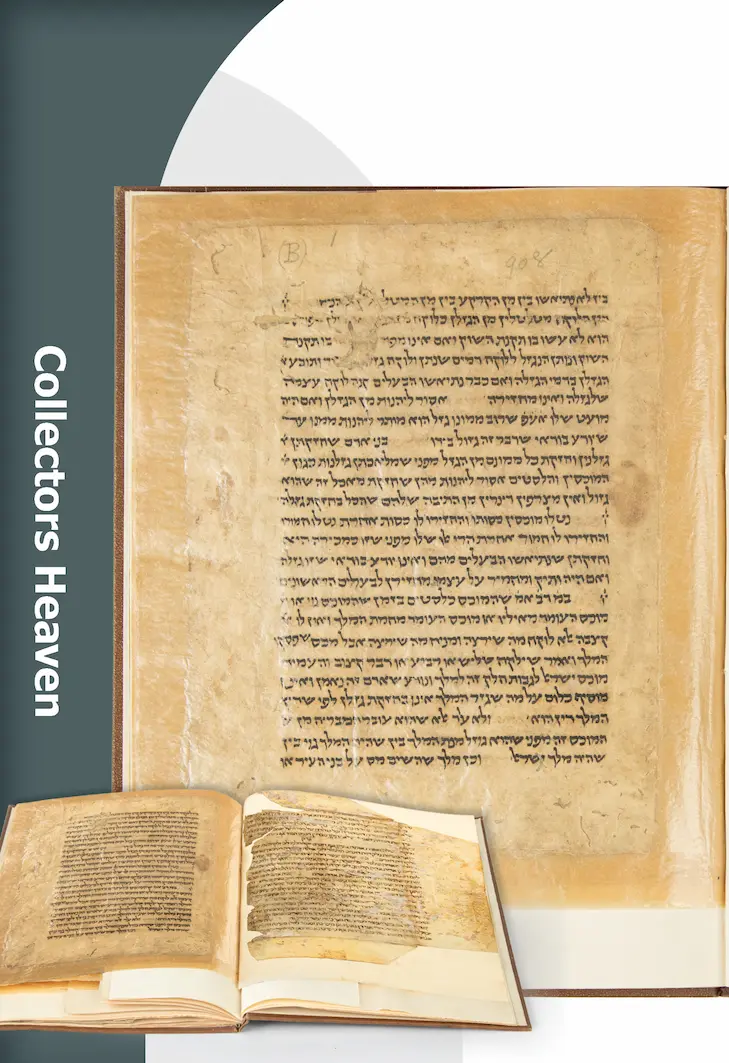
Sassoon Fragment Collection.
 Ancient & Rare Documents from the Sassoon Library

Collection of manuscripts, documents and letters on various topics ranging from the 13th-19th centuries from: Spain, China, Egypt, Yemen and Bagdad.

All articles listed below were collected and bound together by the famed Jewish collector David Sassoon who describes this anthology in his Ohel David Catalog #604.

1) 13th-14th century handwritten leaf on parchment from Midrash Toras Kohanim on Sefer Vayikrah. The script is in Sephardic block style.

2) 16th century Mishnah Torah L’HaRambam – 4 leaves (8 sides) in Yemenite script from Sefer Nezikin, Hilchos Gezeilah va’Aveidah with page titles in large red letters.

3). Letter dated 1646, autographed by Rabbi David Gershon, Rabbi of Rashid and one of the great Egyptian Rabbis of the 17th century. The letter was dispatched to Rabbi Azarya [Zevi] and mentions “The philanthropist, the exalted…Yitzchak Luria Ashkenazi, presumably a descendant of the Arizal. This letter is incomplete and it is also cropped into the end words of each line.
The verso features a handwritten title page to sefer Pnei Moshe on Yerushalmi Masechtos Brachos, Peah, and Dmai by Rabbi Moshe ben Achaviv, author of Get Pashut.

4)  Summary of Chinese War in Judei-Arabic by Shlomo ben David ben Chacham Moshe. Bagdad-Indian script. [2] leaves. Blue paper. Hong Kong, 1856. (These leaves were printed in the Doresh Tov journal which appeared in Bombay presumably based on the present manuscript.)

5) 17th-century community ledgers in Hebrew and Spanish. 1 large leaf, written in four columns each column is 3315 cm, one in Hebrew the rest are in Spanish. This text references Rabbi Zerachya Guetta, one of the great 17th-century Spanish Rabbis.
15 cm, one in Hebrew the rest are in Spanish. This text references Rabbi Zerachya Guetta, one of the great…

Lot : 183

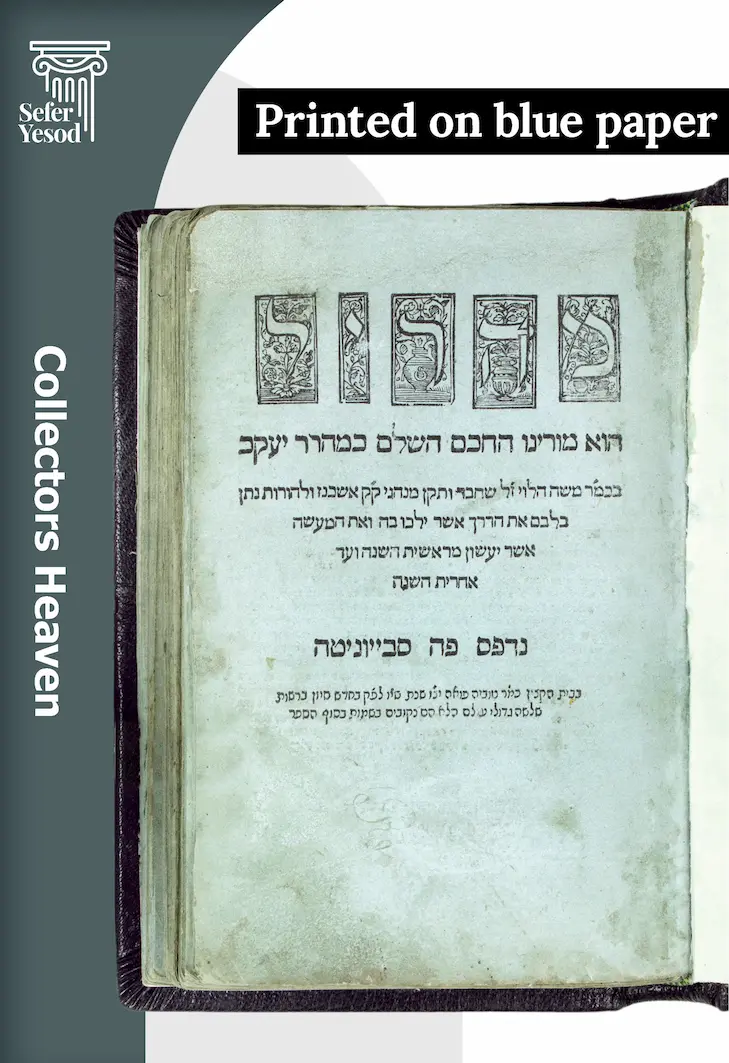
Sefer Yesod The basis of all Ashkenazic rites and customs! Sefer Maharil.
Sefer Yesod The basis of all Ashkenazic rites and customs! Sefer Maharil. First Edition. Sabbioneta, 1556 Jewish laws, halachic rulings and customs for the entire year by the Maharil, Rabbi Yaakov Segal Moelin. The sefer includes the customs of the Maharil’s Rabbi, Rabbi Shalom of Neustadt. This is a very rare copy printed entirely on blue paper. Rabbi Yaakov Segal Moelin (d. 1427), known as the Maharil, is acclaimed as ‘the father of Ashkenazic customs, ’ and his sefer is regarded as a fundamental halachic masterpiece. He is best known for his codification of the customs of Ashkenazic Jews, and his writings were one of the prime influences on the Rema’s rulings in the Shulchan Aruch. All Ashkenazic Jews deriving from Polish and German roots, ascribe to and follow his customs. The Maharil studied under the great Ashkenazic sages Rabbi Shalom of Neudstadt and Rabbi Avraham Klausner, and all Gedolim in the ensuing generation regarded themselves as his students and drew from his wellsprings of Torah wisdom. Sabbioneta, 1556. 116 leaves. Page size: 19.5 cm. Good condition. New leather binding. Stefansky Sifrei Yesod #253 ....................................... Any inquiries about this lot ? We are available also on WhatsApp >>>

Lot : 184

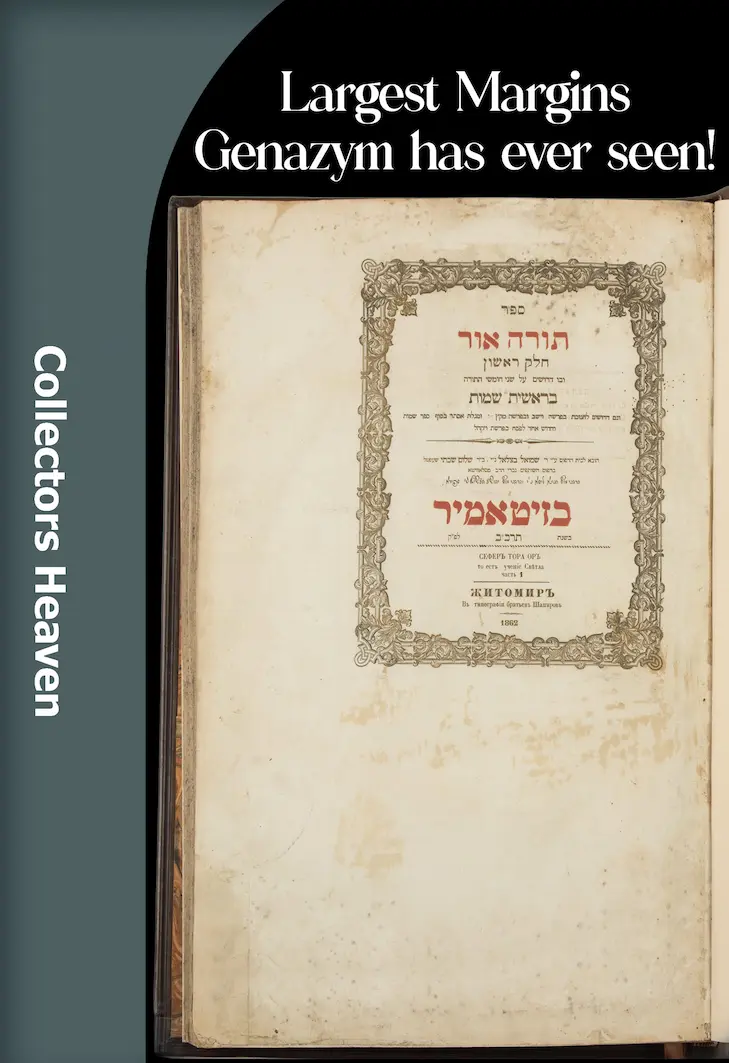
One of a kind! A Shapira Press Masterpiece! Torah Ohr by the
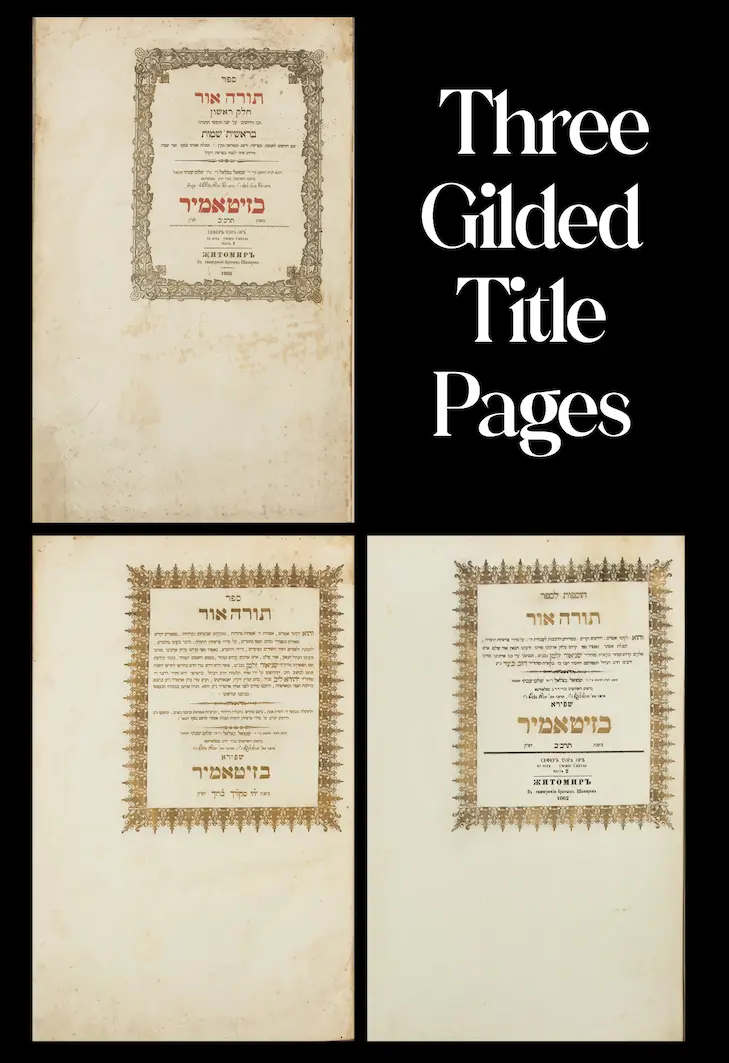
One of a kind! A Shapira Press Masterpiece! Torah Ohr by the Baal Hatanya. Zhitomir, 1862 Extra-wide margins and three gilded title pages! Lectures on the weekly Torah portions of Sefer Bereishis and Shmos, Chanukah and Megillas Esther by the Admor Rabbi Shneur Zalman of Liadi, the Baal Hatanya. This is a one-of-a-kind sefer, a true masterpiece printed in the hailed Zhitomir press by the illustrious Shapira family. The bottom margins of the sefer are extra-wide, measuring 17 cm (!) which is almost equal in size to the body of the text. The outer margins are also unusually wide, measuring 8 cm. The height of the present sefer is 41 cm which is significantly larger than standard copies which average 25 cm. The sefer was printed on thick, high-quality, expensive paper, and all three title pages are printed in shiny gold front. The first title page is also partially printed in red ink. Zhitomir, 1862. First Edition. Shapira Press by the grandchildren of the Slavita Rav, Rabbi Chanina Lipa and Rabbi Yehoshua Heschel Shapira Page Count: 204: 48 sides. Page Size: 41 cm. Extra large copy! Last 48 sides feature supplements to Torah Ohr. Condition: Very good. First pages of the supplement are water-stained and slightly dark.  Attractive new leather binding. Bibliography: Stefansky, Sifrei Chassidus #612 ....................................... Any inquiries about this lot ? We are available also on WhatsApp >>>
Lot : 185

Magnificent title page! Nachalah Bli Metzarim. Singular Edition. Vilna, 1836 Essays on
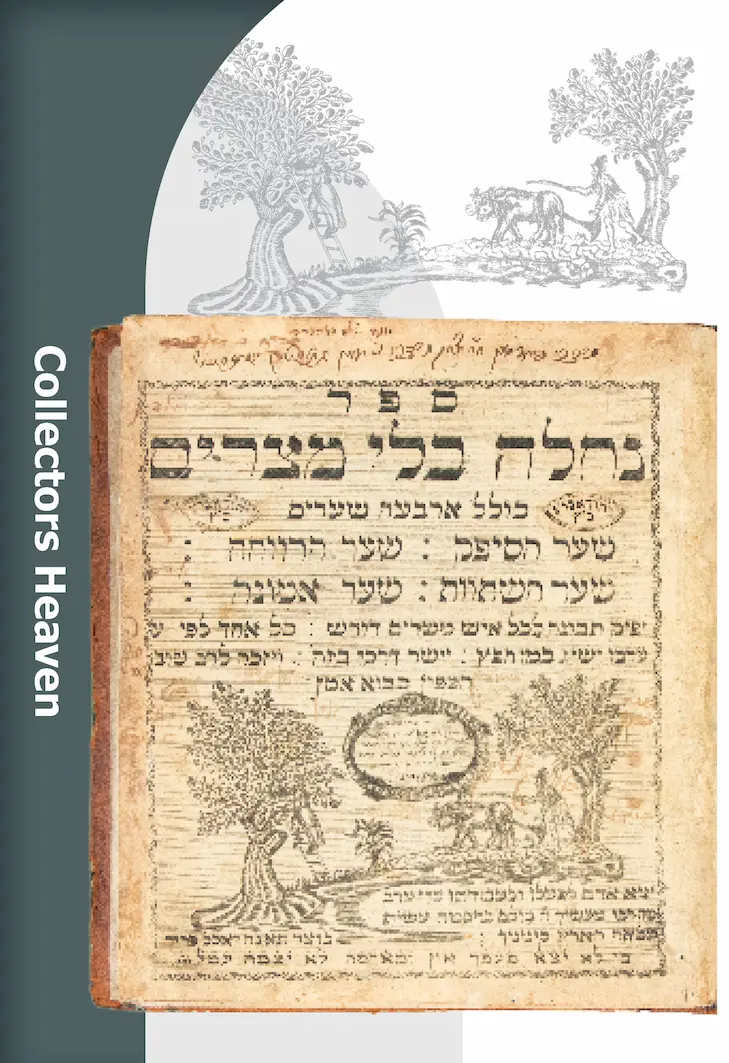
Magnificent title page! Nachalah Bli Metzarim. Singular Edition. Vilna, 1836 Essays on topics of mussar and derech eretz by Rabbi Yaakov Yeshaya Pras. In this sefer, the author specifically focuses on the quality of histapkus, sufficing with one’s possessions and avoiding the pursuit of luxuries, honor and wealth. The first page of the sefer features a striking unusual title page with illustrations of a man plowing his field and a farmer standing on a ladder, picking fruit off a tree. Little is known of the author, although he did print another two sefarim during this era—Amud Hatevech and Meah Maamarei Chochmah. Vilna, 1836. Singular edition. [1], 16 leaves. Page size: 20 cm. Title page and last page reinforced. Good condition. Old binding. The title page bears the autograph of the great Rabbi Mordechai Friedman of Mezritch who owned an impressive library. ....................................... Any inquiries about this lot ? We are available also on WhatsApp >>>

Lot : 186

First Hebrew book printed in Germany!  Darkei Lashon Hakodesh. Augsburg, 1520 Important
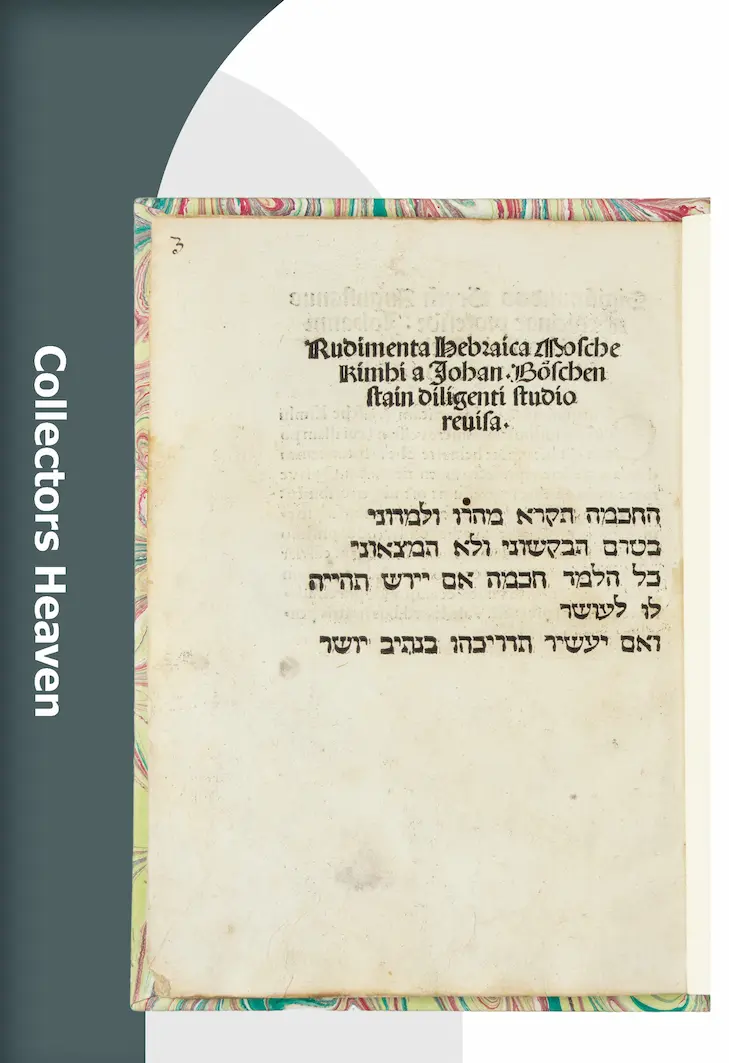
First Hebrew book printed in Germany!  Darkei Lashon Hakodesh. Augsburg, 1520 Important work of Hebrew grammar by Rabbi Moshe Kimchi, brother of the Radak. This sefer, written in clear, concise prose, was so popularly received by the masses that it was translated into several languages. It is also known by the title Mahalach Shvilei Hada’as, based on its opening words which feature the acronym of the author’s name, Moshe. The sefer is an attractive work, printed with large letters and nekudos upon thick, high-quality paper. The sefer opens with a foreword from the publisher who signs his name with his first name.only—Refael. It also contains a brief introduction in Latin. Very rare. Darkei Lashon Hakodesh was the very first Hebrew book printed in Germany. Augsburg, 1520. The year and city where this sefer was printed appears in Latin in the colophon. Page Count: [28] leaves (7 pamphlets of 4 pages each). Page Size: 21 cm. First leaf is a semi title page and features a poem praising the attributes of wisdom. Condition: Good with new binding. The pages of the sefer feature many handwritten glosses in Latin. ....................................... Any inquiries about this lot ? We are available also on WhatsApp >>>
Lot : 187

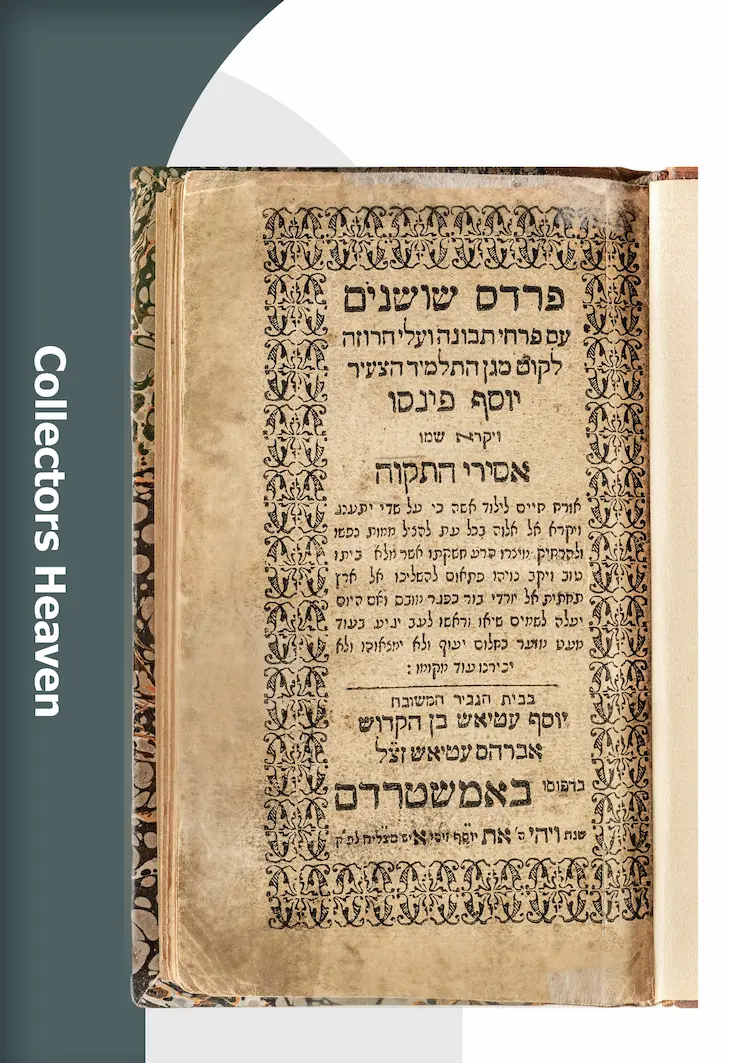
First Jewish play ever published! Asirei Hatikvah. Amsterdam, 1673 Pardes Shoshanim –
First Jewish play ever published! Asirei Hatikvah. Amsterdam, 1673 Pardes Shoshanim – Asirei Tikvah. This 3-scene play by Rabbi  Yosef Pinso conveys Jewish ethics and philosophy through  poetic dialogue. Asirei Hatikvah was the first Hebrew play published (A. Yaari. Hamachazeh HaIvri, Jerusalem 1957 p. 104). The characters in this play  include a king and a fool; the Satan; Pleasure; Truth; and its purpose is to  distance a man from his heart’s negative desires. The beginning of the book  features numerous poems both in Hebrew and Spanish by Amsterdam Rabbanim and  poets, among them Rabbi Yitzchak Abuhav; Rabbi Avraham Hakohein Pimintel; Rabbi  Shlomo de Olviera, and others. Book complete, contains all pages  in Portuguese, Spanish and Latin. Amsterdam, 1673. First edition. [2], 54 leaves. Page size: 14.5 cm. 6 first leaves are slightly  shorter than other leaves. Title page margin lightly restored. Good condition;  new half-leather binding. Rare! Provenance: William Gross Collection, Tel aviv ................................................ Any inquiries about this lot ? We are available also on WhatsApp >>>

Lot : 188

Rare Find! First Aleph-Beis book Printed in Eretz Yisroel, Derech Hayashar La-Yeladim
Rare Find! First Aleph-Beis book Printed in Eretz Yisroel, Derech Hayashar La-Yeladim Jerusalem, 1862 Derech Hayashar La-Yeladim (for Children) First and Only Edition Jerusalem, 1862 First Aleph-Beis book for children printed in Eretz Yisroel. This book was created by Rabbi Nechemia Mizrahi to teach aleph-beis to Persian-speaking children from Dagestan, a Russian province in the North Caucasus of Eastern Europe along the Caspian Sea. In the preface, the author Rabbi Nechemia Mizrahi notes that his fellow Jews in Dagestan were gravely ignorant of lashon hakodesh, and that sadly, there were actually grown men who didn’t know even a single Hebrew letter! The lack of Hebrew language skills was most conspicuous among adolescents, and Mizrahi thus took it upon himself to travel to Jerusalem to print this work in order to teach lashon hakodesh to the Persian and Caucasian Jewish communities. This book is exceedingly rare! It is assumed that the author took all copies of the book with him back to Persia, and over the years, these copies were used extensively and eventually disposed  due to wear and tear. Derech Hayashar Layeladim includes an aleph-beis chart with nekudos; a Hebrew-Persian dictionary; reading paragraphs; sections of prayers; and lessons in mussar for adolescents both in Hebrew and Persian. The National Library possesses a single copy missing 2 pages. This copy is complete and in good condition. Jerusalem, 1862. Singular edition. Yisrael Beck Press. 28 leaves. Page size: 17 cm. New leather binding. Complete copy! Provenance: William Gross Collection, Tel aviv Desctiption from The Gross Collection ....................................... Any inquiries about this lot ? We are available also on WhatsApp >>>
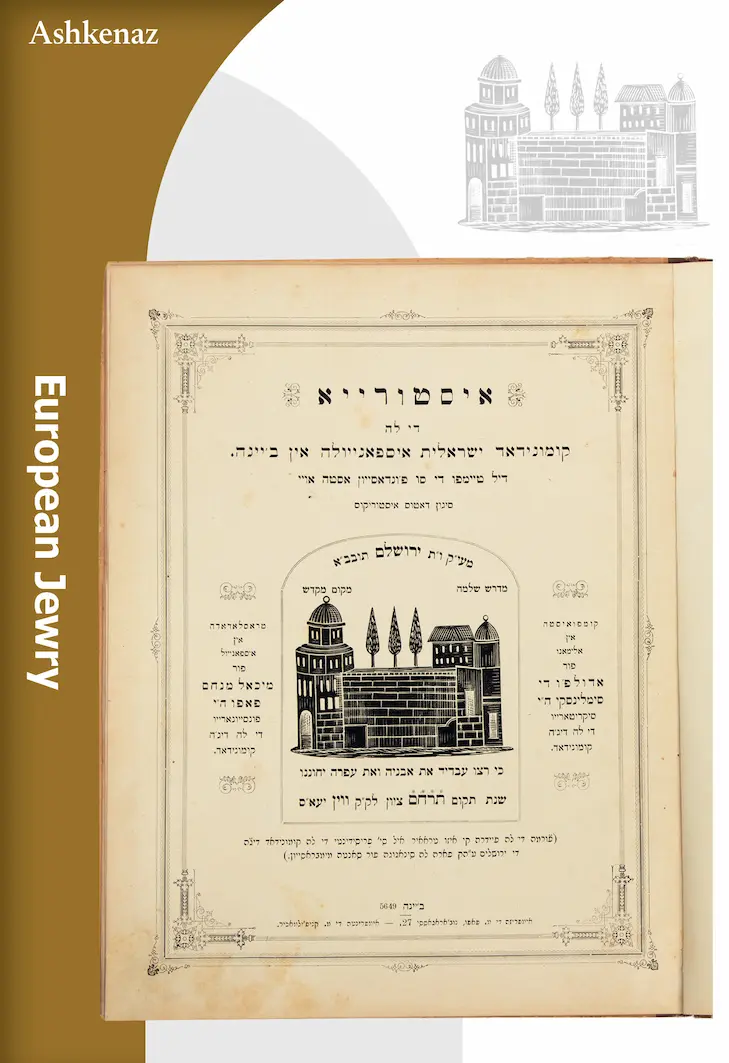
Lot : 189

Contesting Card Games Tzachkan Melumad U’Mischaret. First Edition. Leipzig, 1686 A fascinating
Contesting Card Games Tzachkan Melumad U’Mischaret. First Edition. Leipzig, 1686 A fascinating composition by Rabbi Yehuda Aryeh of Modena against playing card games. Written in dialogue form between two young men, Eldad and Meidad, this delightful work presents the advantages and detriments of card games, with each party defending one side of the argument. At the end, the opponents bow to one another as they mutually conclude that these games should be best avoided. Card games gained popularity among Italian Jewry during the 16th century, inspiring Rabbi Yehuda of Modena, who was still a youth at the time, to author this work which was originally entitled Sur Me’ra, (Venice, 1596). The book features a translation into German (in Gothic letters) by Shlomiel ben Tzur Shadai, a pen name for the notorious apostate Baruch of Prostitz who, upon his conversion to Christianity, changed his name to Albricht Christian Friedrich. Various sources imply that he returned to Judaism toward the end of his life (Chaim Michal, Ohr Hachaim p. 440-441). Leipzig, 1686. First edition with German translation and additions. Page Count: [27], 159, [5], sides. Page Size: 15 cm. Condition: Good. Attractive, high-quality printing. New binding. Very rare! ....................................... Any inquiries about this lot ? We are available also on WhatsApp >>>

Lot : 190

Satirical Maseches Purim Maseches Purim, Haggadah & Selichos for Purim. Lemberg, 1848
Satirical Maseches Purim Maseches Purim, Haggadah & Selichos for Purim. Lemberg, 1848 Satirical Maseches Purim from the “Talmud Shikorim, ” Haggadah for Leil Shikorim (Night of Drunkards) and “Selichos” for Purim. A parody tractate from “Talmud Shikorim” (Talmud of Drunkards) styled after the Gemara, surrounded by a pseudo-Rashi, Tosfos and Maharshah. The present edition included the first “Hagahos v’Tosfos Chadashim” (new comments and additions). There is a longtime custom on Purim for shrewd and witty students to weave brilliant, complex and convoluted–yet meaningless–divrei Torah. For this purpose, congregations would appoint a Purim Rav who would amuse his listeners with humorous and comical foolishness disguised as brilliant teachings to bring laughter to the audience on purim. Gedolei Yisrael starting from the 17th century condemned compositions such as Maseches Shikorim, in its various versions regarding it as a sacrilegious and irreverent mockery of the Gemara. See Haberman, Areshes Hashem pps. 136-144 regarding Maseches Shikorim. Lemberg, 1848. 24 leaves. Page size: 19 cm. Minor damage to margins. Good condition. New binding. ....................................... Any inquiries about this lot ? We are available also on WhatsApp >>>
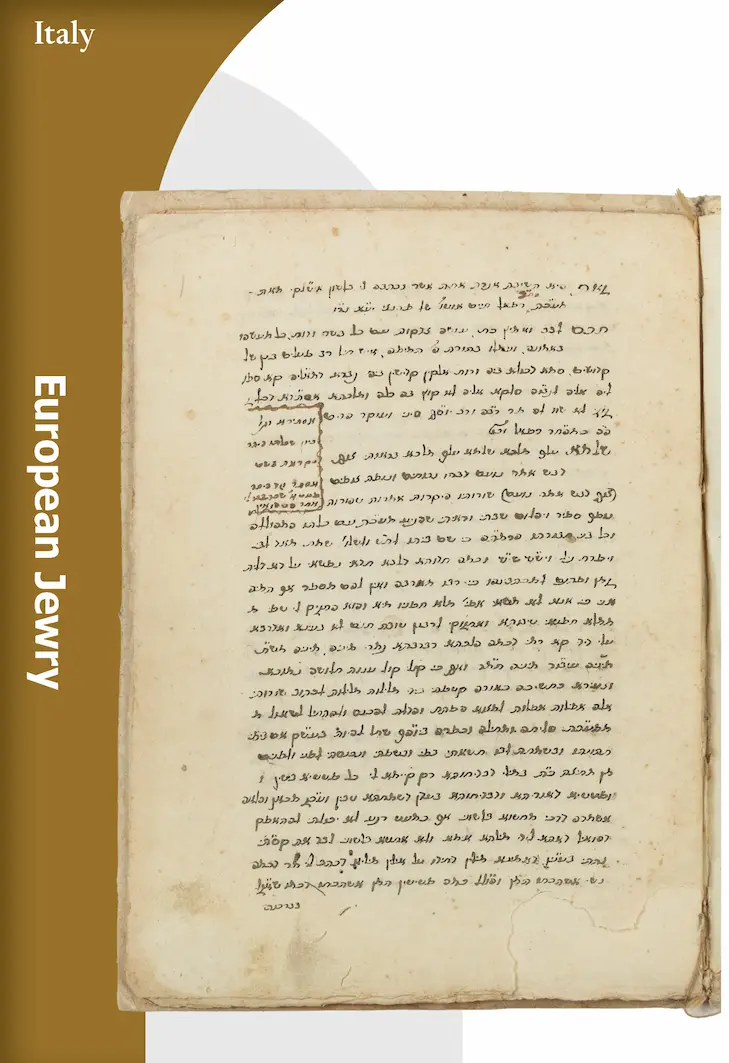
of 4 pages