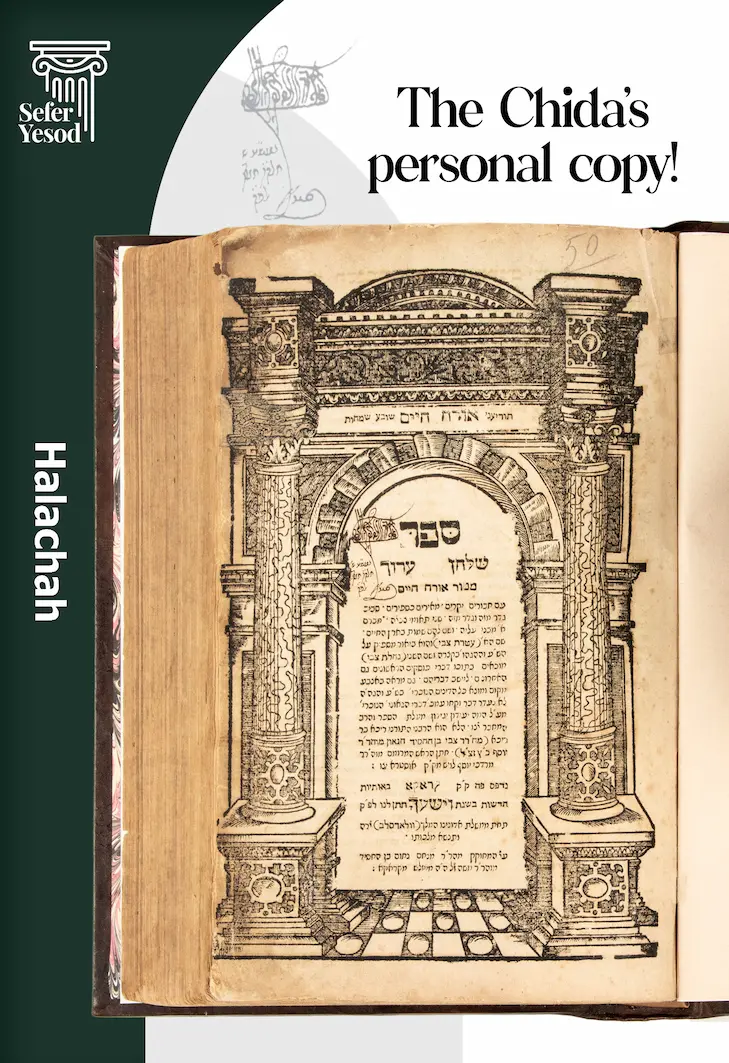
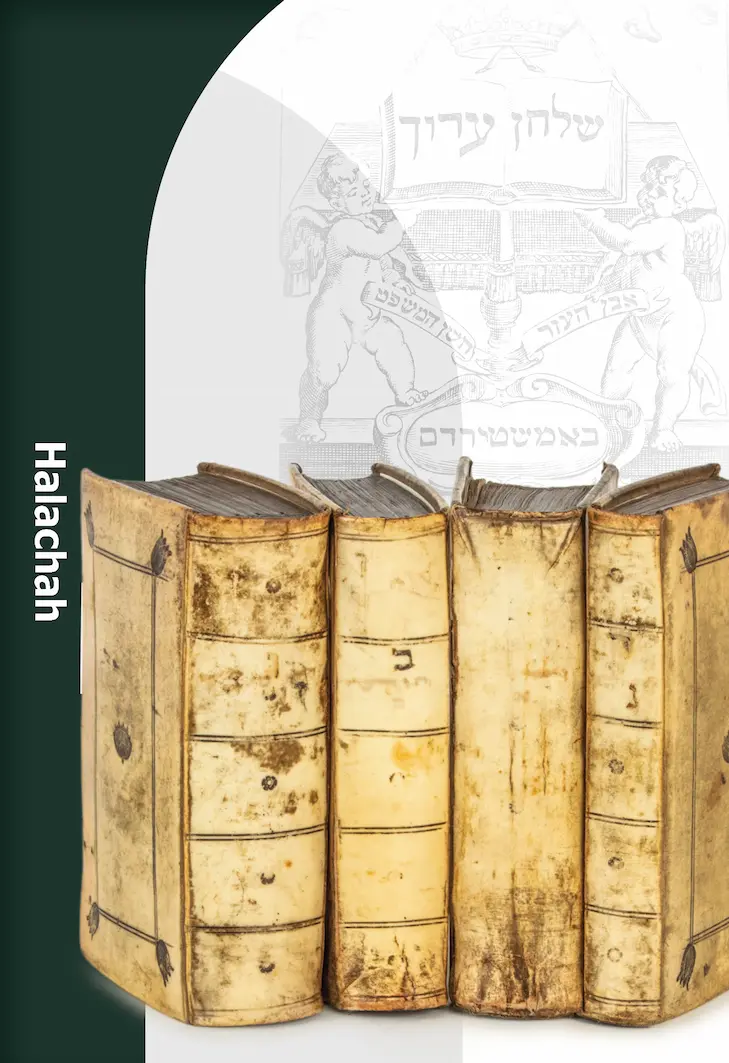
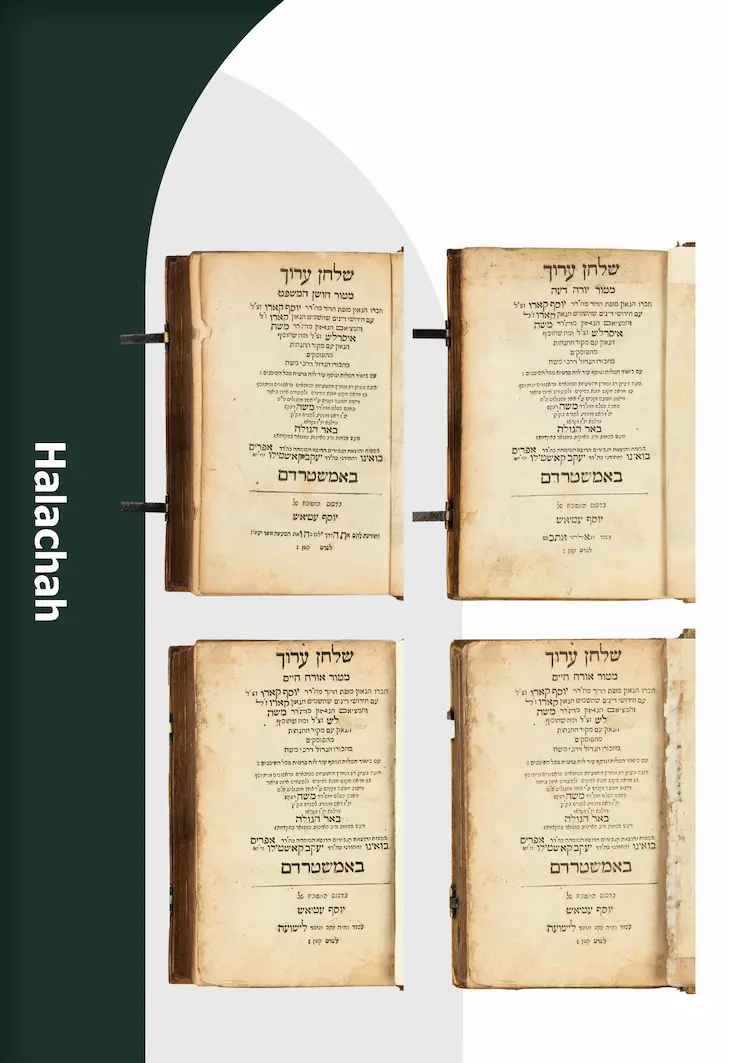
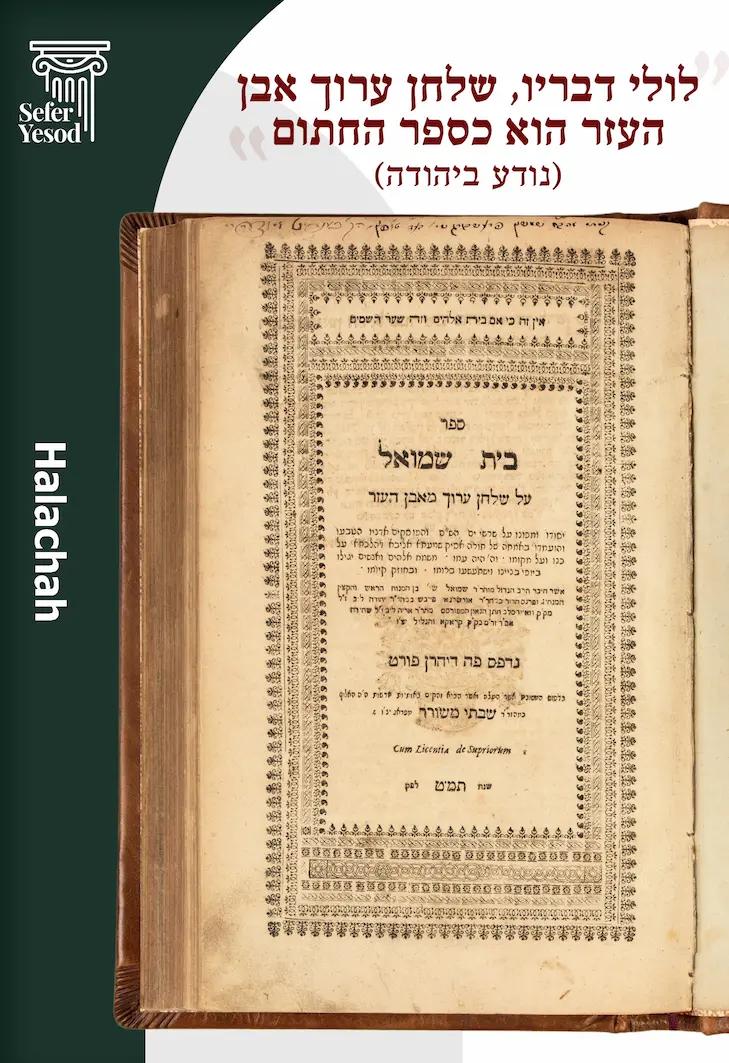
Grand Winter Event

Auction #17

Part 1

Grand Winter Event

Auction #17

Part 2

of 4 pages

Lot : 103

“To protect and do everything in our power to preserve the fortress
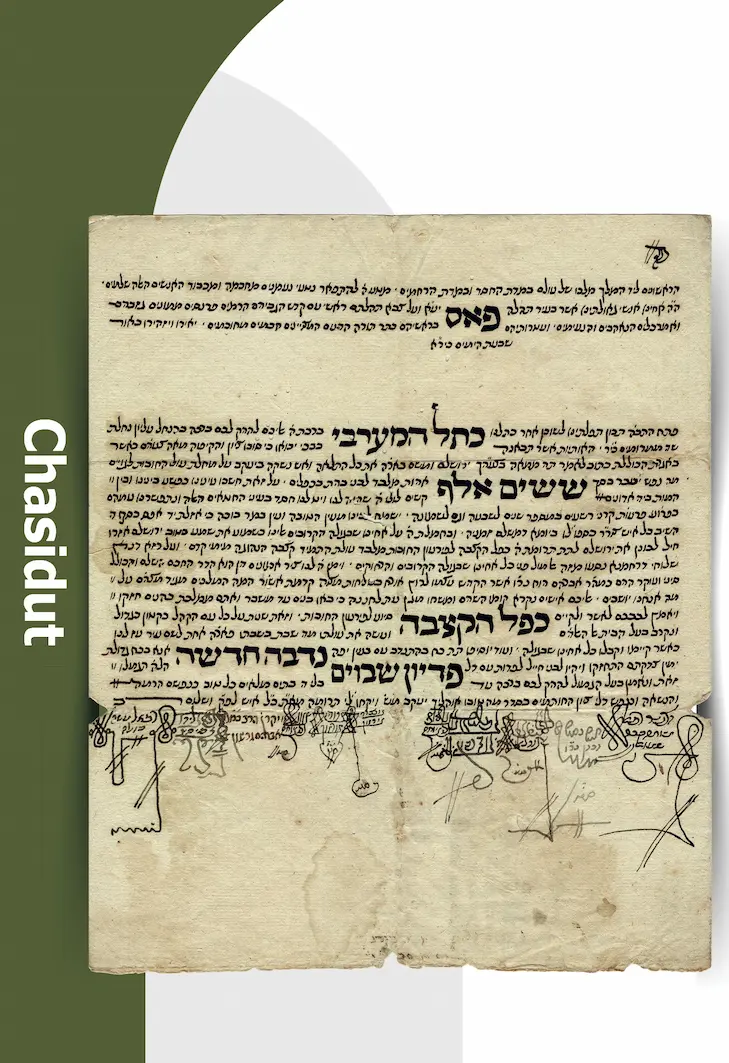
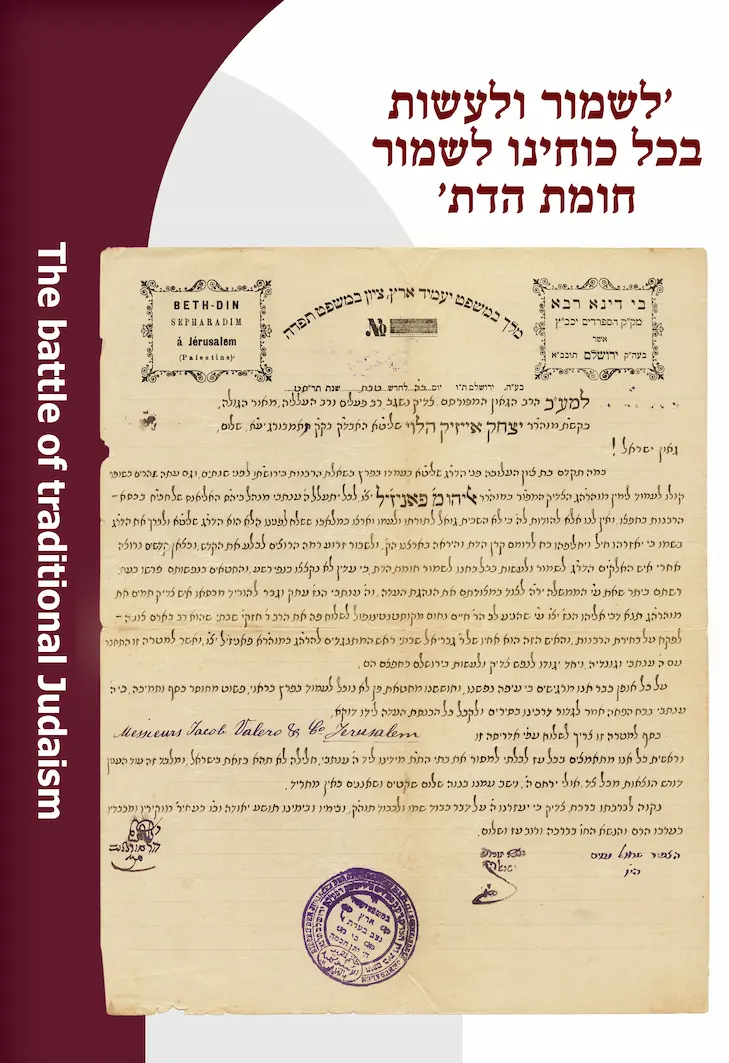
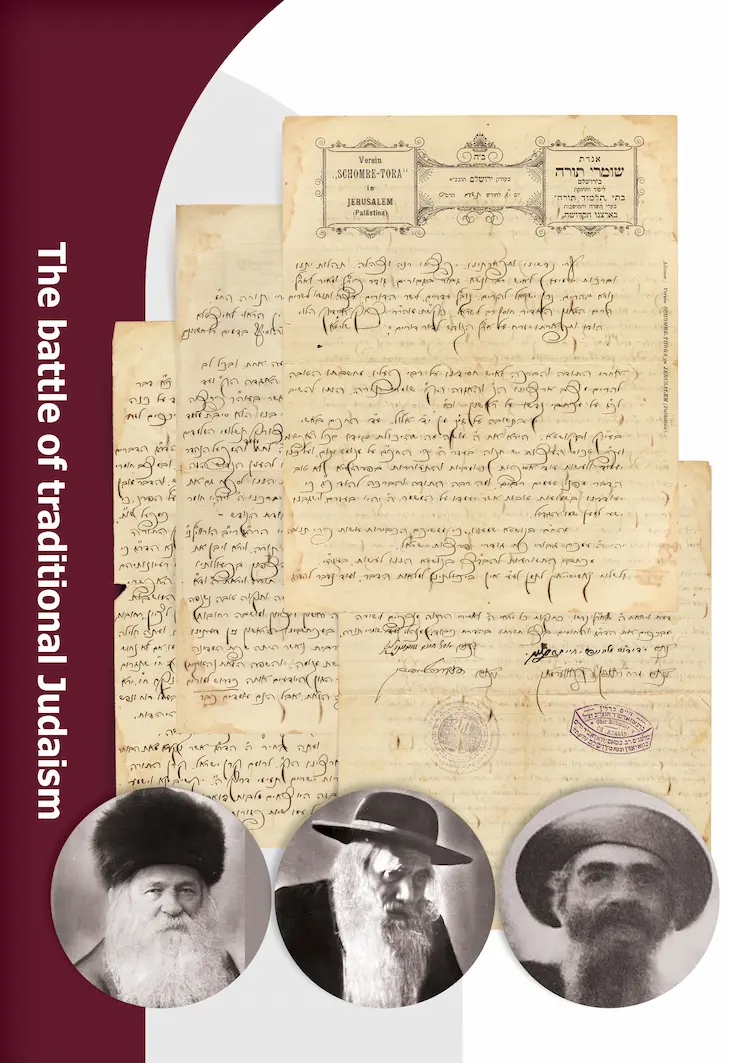
“To protect and do everything in our power to preserve the fortress of our faith” Letter Autographed by Sephardic Rabbanim of Jerusalem 1909 Letter from the great Sephardic Rabbanim members of the Sephardic Beit Din in Jerusalem. In this letter, the Rabbanim lament their lack of strength and inability to compete with the efforts of Albert-Abraham Antébi, director of the Alliance Israelite Universelle in Jerusalem. The objective of the Alliance School was to “trap the leadership of the congregation”. The Rabbanim express that “we fear that we shall be unable to narrow this breach properly”. However, “we are striving with all our might not to deliver the houses of the Talmudei Torah to Mr. Antebi. Heaven forbid that this should occur in Israel!” The letter is autographed by the prominent Rabbanim: Rabbi Shmuel Nissim (1841-1916) was Rosh Av Beit Din of the Sephardic congregation in Jerusalem and stood at the forefront of the community for many years (Yehudei Hamizrach B’Eretz Yisrael Vol. 1 p. 470) Rabbi Chaim Dovid Suranga (1842-1915) was one of the renowned Rabbanim of Jerusalem and community activist who had a powerful impact on his congregation. He served as Raavad of Jerusalem and dayan for many years (ibid 480). Rabbi Mordechai Israel (1851-1916) numbered among the great Rabbanim of Jerusalem and Tzfas. During his final years, he served as Raavad. Jerusalem, 25 Teves, 1909. Official stationery of the Sephardic Beis Din. Page count: [1] leaf. Page Size: 29x23 cm. Condition: Creases and several scattered holes. ....................................... Any inquiries about this lot ? We are available also on WhatsApp >>>

Lot : 104

Proposal to Join the Constantinople Rabbinate Letter by Rabbi Rephael Aharon ben
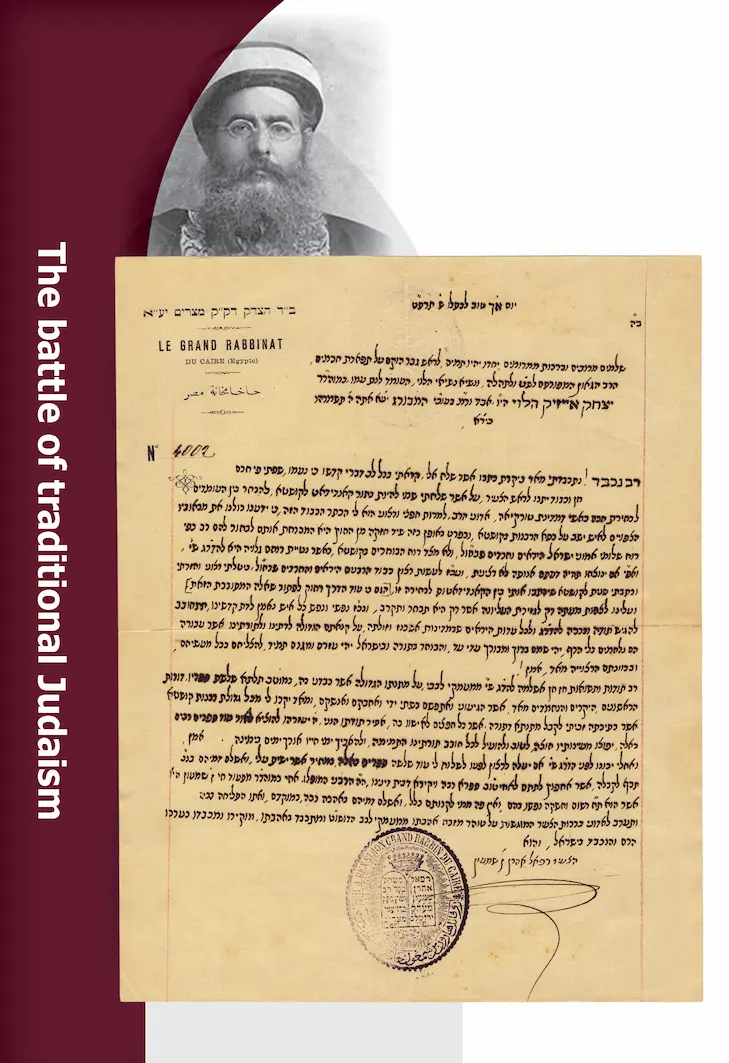
Proposal to Join the Constantinople Rabbinate Letter by Rabbi Rephael Aharon ben Shimon, Av Beis Din of Egypt. 1909 Handwritten letter by Rabbi Rephael Aharon ben Shimon, Av Beis Din of Egypt and author of Nahar Mitzrayim and Tuv Mitzrayim, complete with his autograph and impressive stamp. In the framework of their battle to preserve the spiritual sanctity of Jerusalem and shield it from the schemes of the Enlightenment and Alliance schools, Gedolei Yisrael fought mightily to prevent the appointment of an enlightened Jew to the position of Chacham Bashi, which was the title designated for the Chief Rabbi of Constantinople and Ottoman Empire. The Chacham Bashi exerted powerful influence on Jewish congregations throughout the Empire and, specifically, on the schools and religious institutions in Jerusalem. Rabbi Yitzchak Eisik Halevi, who spearheaded this critical battle, dispatched an urgent appeal to Rabbi Rephael Aharon ben Shimon with a request to announce his candidacy for the coveted position of Chacham Bashi and endeavor to represent the needs of religious congregations in the Ottoman court. Rabbi Rephael Aharon replies that although he personally has no inclination to accept the position, “To fulfill the will of the honorable and [G-d] fearing Rabbanim in the Diaspora, I have annulled my own desires and wrote to Constantinople that they should write my name among the candidates for this position.” Rabbi Rephael Aharon ben Shimon (1847-1929) was born in Jerusalem to Rabbi David ben Shimon, who was renowned as the Tzuf Dvash. (Rabbi Dovid also authored Shaar Hachatzer.) In 1888, Rabbi Rephael Aharon set out twice as a Rabbinical emissary of Kollel Adath Hamaaravim in Jerusalem, and in 1891, was inaugurated as Chief Rabbi of Egypt where he endeavored mightily to cultivate religious observance and battled furiously against the winds of the Enlightenment. In 1921, Rabbi Rephael Aharon returned to his native land in Jerusalem where he passed away seven years later. His legacy includes the works Nahar Mitzrayim and Tuv Mitzrayim. Cairo, 21 Kislev, 1909. Stationery of the Egyptian Beis Din. Page Size: 27x21 cm. Handwritten, autographed and stamped with his impressive seal. Condition: Good. Learn more about Rabbi Rephael Aharon ben Shimon and his correspondence regarding the Constantinople Rabbinate in Igros Rabbi Yitzchak Eisik Halevi (Jerusalem, 1972) p. 156. ....................................... Any inquiries about this lot ? We are available also on WhatsApp >>>
Lot : 105

Letter by Rabbi Chaim Berlin, Rabbi Yosef Chaim Sonnenfeld and Prominent Jerusalem
Letter by Rabbi Chaim Berlin, Rabbi Yosef Chaim Sonnenfeld and Prominent Jerusalem Rabbanim Regarding the Compromised State of Religion and Religious Schools in Eretz Yisrael. Jerusalem, 1909 In this letter, four eminent Rabbanim of early 20th century Jerusalem express their thoughts and feelings regarding the campaign to preserve religious schools in Jerusalem. In this letter, they emphasize the need of acting subtly, without grand public assemblies or fanfare that attract undue attention. Further in the letter, the Rabbanim describe at length the efforts taken by Agudas Shomrei Torah which was established in Jerusalem with the goal of opening new religious institutions in the burgeoning new towns and settlements. They specifically describe their vigorous efforts in the cities of Petach Tikva, Rishon Letzion, Rechovot and Ekron. The letter was handwritten by Rabbi Zerach Braverman and autographed by four famous Rabbanim: Rabbi Chaim Berlin (1833-1913) was the son of the Netziv and succeeded his father as Rosh Yeshivah in Volozhin. In 1805, Rabbi Chaim journeyed to the Holy Land and settled in Jerusalem. Following the passing of Rabbi Shmuel Salant, he accepted the spiritual leadership of Jerusalem. Rabbi Yosef Chaim Sonnenfeld (1849-1932) was the first Rav of the Eidah Hacharedis in Jerusalem. He stood at the forefront of the public battles to preserve the spiritual sanctity of Jerusalem. Rabbi Zerach Braverman (1857-1838) was a disciple of the tzaddik Rabbi Nachum’ke of Horodna and prime disciple of Maharil Diskin. He was one of the eminent spiritual leaders of Jerusalem and founder and Rosh Yeshivah of Yeshivas Meah Shearim. Rabbi Dovber Halevi Epstein (circa 1854-1931) was the son of the author of Aruch Hashulchan. As a brilliant scholar and talented public activist, he endeavored greatly on behalf of all institutions and organizations in Jerusalem. Jerusalem, 13 Tishrei, 5669 (1909). Folded leaf with 4 handwritten sides. Page Size: 29x22 cm. Several water stains. ....................................... Any inquiries about this lot ? We are available also on WhatsApp >>>

Lot : 106

Chassid Yaabetz’s Commentary on Maseches Avos. Adrianople, 1555 This commentary authored by
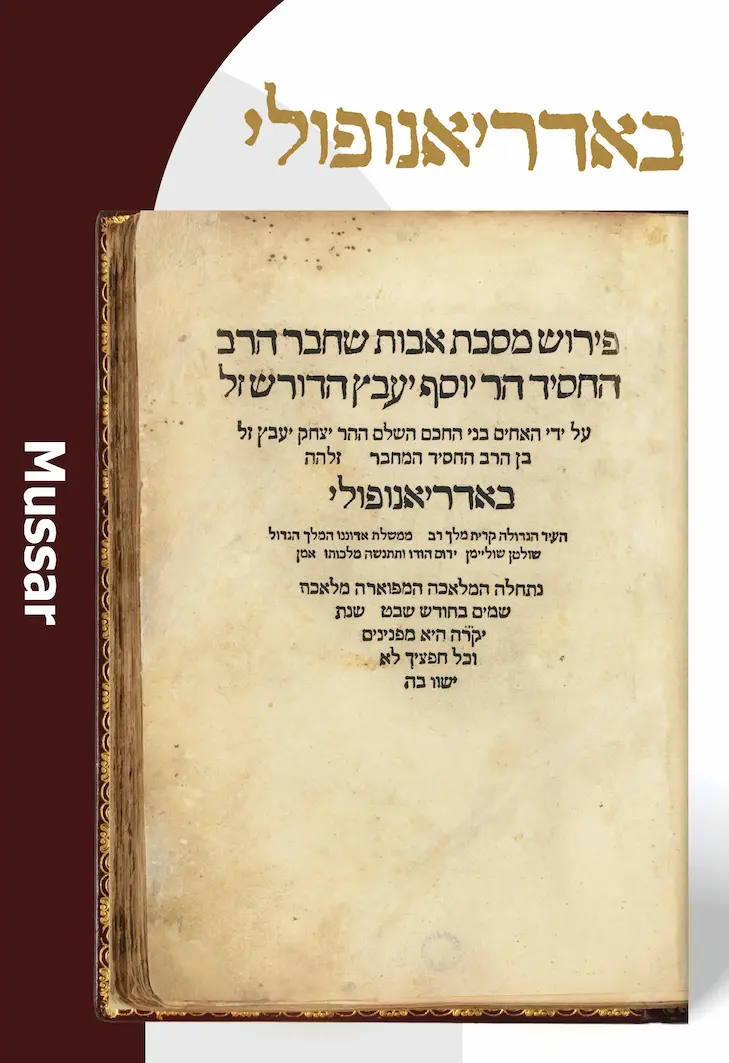
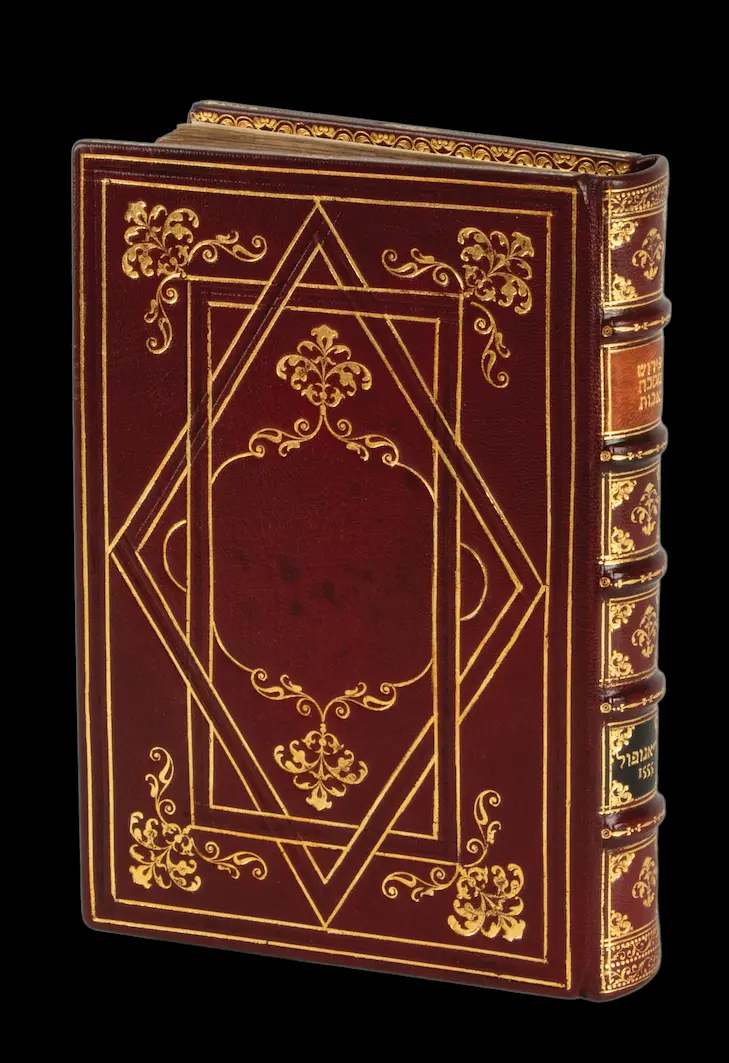
Chassid Yaabetz’s Commentary on Maseches Avos. Adrianople, 1555 This commentary authored by the Chassid Rabbi Yosef Yaabetz is one of the important commentaries on Maseches Avos. It was printed in the Adrianople Press in Turkey in 1555! Rare Print Adrianople, present day Edirne, in Turkey was a city replete with Talmudic scholars, and it was actually there that Rabbi Yosef Karo commenced the writing of the Beis Yosef. A Hebrew press was there in the 16th century, but only four sefarim were ever printed there. This commentary was one of those sefarim. Rabbi Yosef Yaabetz (d. 1508) was venerated as one of the foremost Torah luminaries and spiritual leaders of Spanish Jewry during the era of the Expulsion. He was highly regarded by his contemporary Gedolim and earned the distinguished title “HaChassid Yaabetz”. Rabbi Yosef was born in Lisbon, Portugal where he was a student of Rabbi Yitzchak Abarbanel. He married the sister of Rabbi Yitzchak Arama, and following the cruel expulsion of Jews from his native land, immigrated to Italy. His sefarim were lauded by Gedolim from all sectors, including Chassidic masters. The Admor Rabbi Tzvi Elimelech of Dinov, author of Bnei Yissachar, authored a commentary on three of Chassid Yaabetz’s sefarim. Adrianople, 1555. First Edition. Page Count: [96] leaves. Page Size: 21 cm. Condition: Title page and following two leaves lightly restored on margins; several leaves stained, but otherwise in good condition. Ornate new leather binding with case. Bibliography: Stefansky, Sifrei Yesod. New Edition, 2024 p. 43 ....................................... Any inquiries about this lot ? We are available also on WhatsApp >>>
Lot : 107

Manoach Halevavos. First Edition. Lublin, 1596 first commentary on sefer Chovos Halevavos
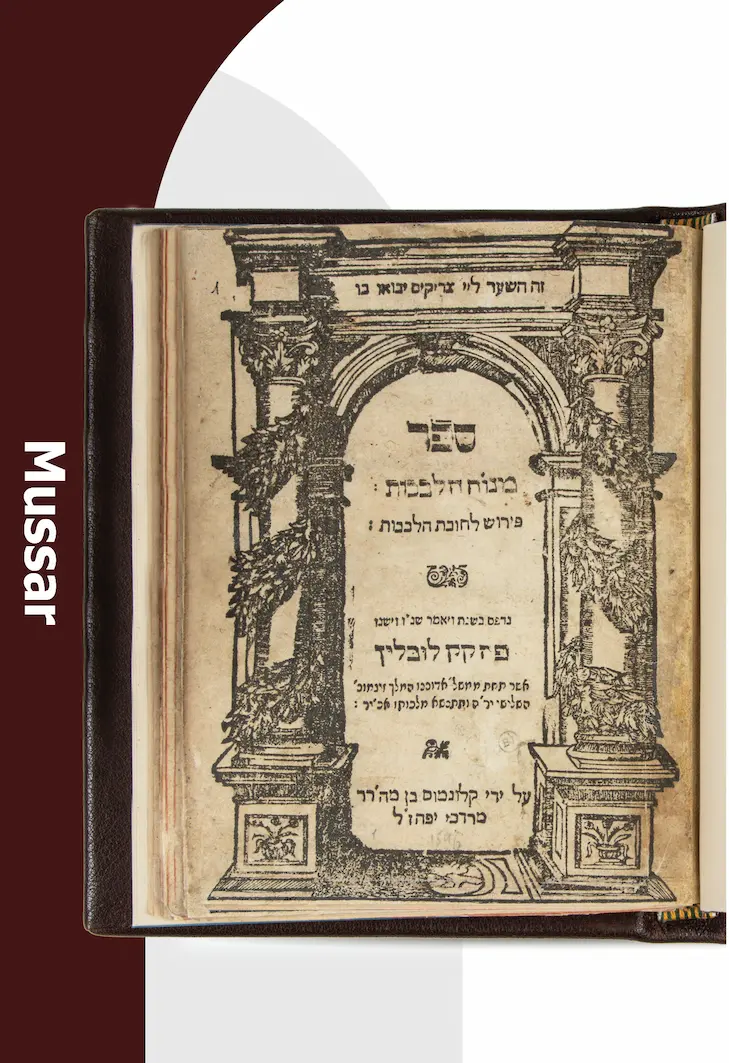
Manoach Halevavos. First Edition. Lublin, 1596 first commentary on sefer Chovos Halevavos This is the first commentary on the sefer Chovos Halevavos by Rabbeinu Bachya, autherd by Rabbi Hendel Manoach ben Shmarya, also known from his renowned work Chochmas Manoach which is printed in the Vilna Shas. The sefer Chovos Halevavos is among the first and most prominent sifrei mussar authored throughout Jewish history. It was translated from Arabic into lashon hakodesh, in a concise form making it difficult for many to understand. Rabbi Manoach authored a comprehensive commentary on the sefer in order for it to be easily understood.. This commentary was enthusiastically received and printed in numerous editions due to its popularity. An original first edition as the present sefer is exceedingly rare. Rabbi Hendel Manoach ben Rabbi Shmarya (circa 1540-1612) was one of the great Polish Rabbis of his era. He was a prolific author who authored numerous sefarim and responded teshuvos along with the great Achronim of his times; his signature appears alongside other Torah luminaries as the Maharam of Lublin and Maharsha. In his latter years, he was involved together with his colleague Rabbi Yehoshua Falk Katz (the Sm”a) in arranging the divorce of a woman from her husband who had become an apostate. The episode, which later gained notoriety as the “Get of Vienna”, stirred great controversy among the Jewish world, although the majority of Gedolim sided with Rabbi Manoach. While he authored many sefarim, only a handful were printed. His sefer Chochmas Manoach also appears in this Catalog see lot # ? . Lublin, 1596. First Edition. Page Count: 45, [1] leaf. Page Size: 18 cm. Condition: Last page and corners of leaves restored. Attractive new leather binding. Bibliography: Stefansky, Sifrei Yesod #458, notes. For more information regarding the author and his works, see Dmuyot V’Eiru’im HIstoriim p. 11-27/ Yeshurun, Vol. 17 pp. 792-799/ ....................................... Any inquiries about this lot ? We are available also on WhatsApp >>>

Lot : 108

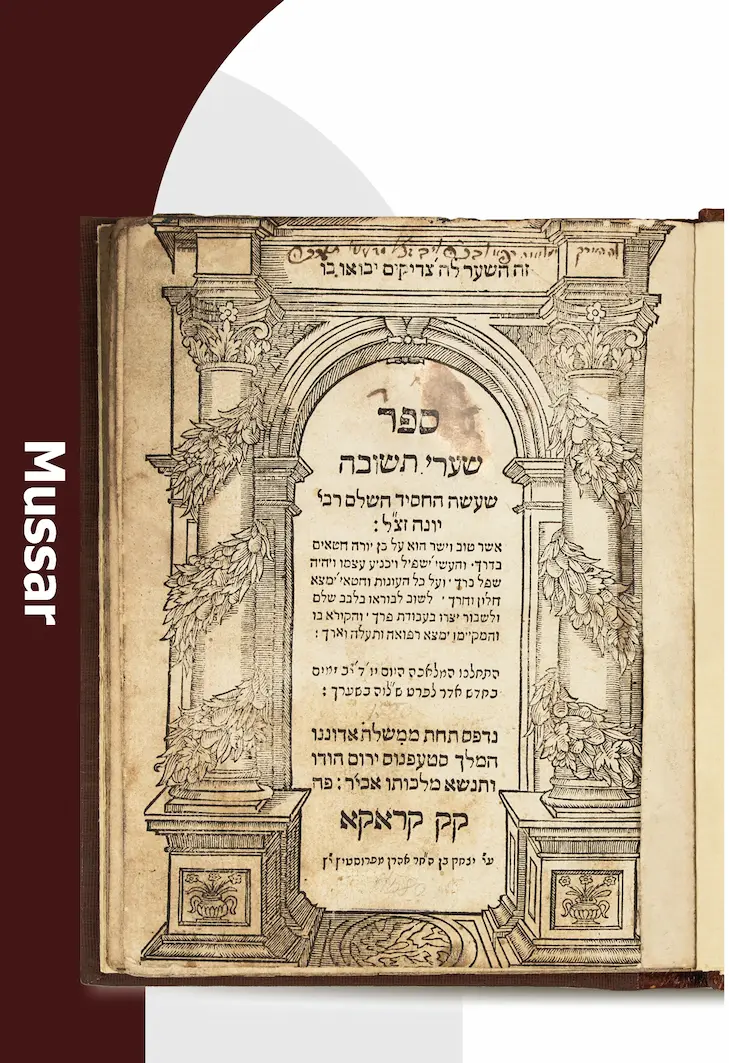
Fundamental Mussar. Shaarei Teshuvah by Rabbeinu Yonah. Cracow, 1581 Shaarei Teshuvah by
Fundamental Mussar. Shaarei Teshuvah by Rabbeinu Yonah. Cracow, 1581 Shaarei Teshuvah by Rabbeinu Yonah of Gerona is the most foundational sefer of mussar and Torah ethics. Sefer Shaarei Teshuvah is the premier work written on the subject of Teshuvah, and it has been described as the “Shulchan Aruch for the laws of repentance.” Rabbeinu Yonah of Gerona (d. 1263) author of Shaarei Teshuvah. As a prominent Rishon, he was renowned for his extreme piety and holiness which earned him the distinguished titles “the Chassid Rabbeinu Yonah” and “Rabbeinu Yonah Hakadosh.” He was the Rabbi of both the Rashba and Rabbi Aharon Halevi, and was both a cousin and mechutan of the Ramban. This sefer includes Sefer Hayirah by Rabbeinu Yonah, which is also regarded as a fundamental work and includes several significant halachic issues that are frequently cited by later Rabbinical authorities. Cracow, 1581. Previous editions were printed in Italy and Turkey; this is the first which was printed in Ashkenaz Page Count: 44 leaves. Page Size: 18 cm. Condition: Top margins cropped; title cropped on several pages. Plain cloth binding. ................................................ Any inquiries about this lot ? We are available also on WhatsApp >>>
Lot : 109

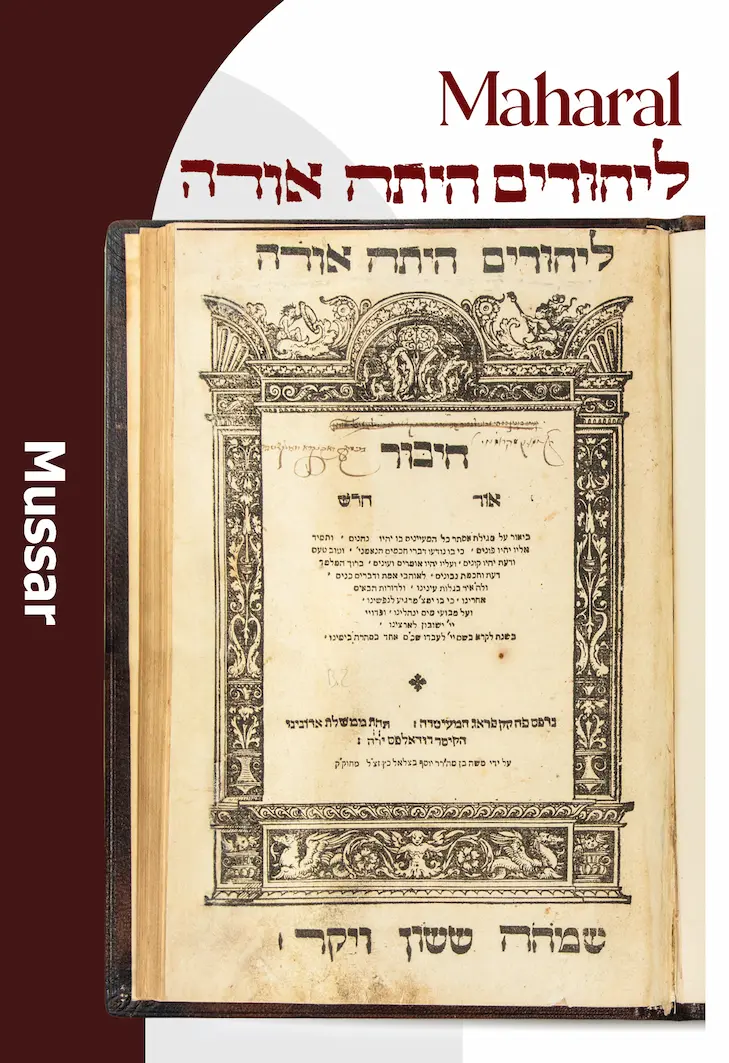
The Maharal on Purim and Chanukah Ohr Chadash by the Maharal of
The Maharal on Purim and Chanukah Ohr Chadash by the Maharal of Prague. First Edition. Prague, 1600 Ohr Chadash – Commentary on Megillas Esther and essays on the miracle of Purim. Ner Mitzvah – Essay on the miracle of Chanukah. The present sefer is the first edition of Ohr Chadash by the great luminary Rabbi Yehudah Loew, the Maharal of Prague; it was self-published. Rabbi Yehudah Loew (c.1512-1609), the Maharal of Prague, was one of the greatest Jewish sages; a prolific author whose deep philosophical works on all realms of Torah are fundamental Jewish classics. He was described as “Crown of the sages and leader of his generation; all the nations followed his light, and his teachings were celebrated by Jews throughout the Diaspora”  (Tzemach Dovid by Rabbi  Dovid Ganz [Prague, 1592]); “He engaged in the Divine spirit” (Rabbi Naftali Katz, his grandson and author of Semichas Chachamim in Shu”t Chacham Tzvi Ch. 76); “He is as strong as an iron pillar; the nation of Yisrael relies on him” (Shu”t Geonei Basrai Ch. 10 by the Tosfos Yom Tov). The works of the Maharal were regarded as an innovative path in Jewish philosophy and gained immediate acclaim throughout the nation. They are considered to be fundamental Jewish works in hashkafah, emunah and commentary on Aggados Chazal. The Maharal was revered by all sectors, including the early Chassidic masters who compared his teachings to those of the greatest kabbalists. Prague, 1600. First edition. Page Count: 60 leaves. Page size: 27.5 cm. Condition: Good. Margins of title page and following page restored. Slight damage to title page border. Title page surrounded by ornamental border. New leather binding. The title page bears the autograph of the tzaddik Rabbi Shimon Kromonoy Oppenheim (1753-1851), a talmid of the Noda B’Yehudah. Rabbi Shimon served for close to fifty years as a dayan and Raavad in Budapest and authored Har Hacarmel and other sefarim. Following the instructions that he left in his last will, the following inscription was engraved upon his tombstone: “I beseech those who visit graves and who wish to linger here at my grave to pray. If, chas veshalom, hardship shall befall them, they should pray at my graveside and give [charity] to elevate my soul, and the Master of Mercy shall hear their cries. Amen.” Until this very day, Rabbi Shimon Kromonoy Oppenheim’s tombstone is a popular pilgrimage site for those seeking salvation, and his grave is perpetually covered with stones and kvittels. ................................................ Any inquiries about this lot ? We are available also on WhatsApp >>>

Lot : 110

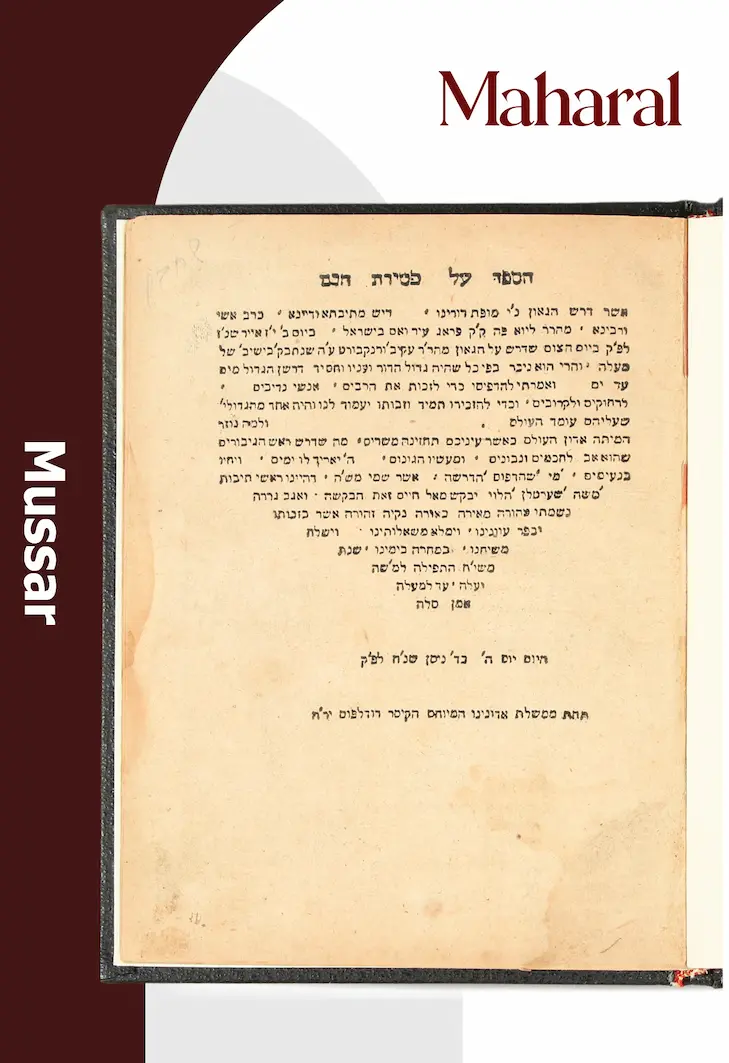
Brought to Print Personally by the Maharal of Prague! The Maharal’s Hesped
Brought to Print Personally by the Maharal of Prague! The Maharal’s Hesped on the Tzaddik Rabbi Akiva of Frankfurt. Prague, 1598 Hesped given by the Maharal of Prague for the tzaddik and chassid Rabbi Akiva Frankfurter. This work was brought to print by the Maharal himself. Whenever faced with trial or tribulation, the Chasam Sofer would donate tzedakah l’iluy nishmas Rabbi Akiva Frankfurter, and his descendants follow this custom until this very day (see Chut Hameshulash p. 170, and Tomer Devorah printed at the end of Minhagei Baal Chasam Sofer p. 158 [photo attached]). Rabbi Akiva (Ginzburg) of Frankfurt (d. 1597) was one of the great Rabbanim of 16th century Germany and renowned for his enthralling lectures and mussar. He was an ancestor of Rabbi Akiva Eiger (see copy of family lineage). Rabbi Akiva Frankfurter’s contemporary, the author of Tzemach Dovid, writes that the former was recalled to the heavenly yeshivah in the year “Shem Tov” which has the numerical equivalent of 5397 (1597), “and from him all the tzedakah funds benefiting the poor of Eretz Yisrael were established”. Testimony to his greatness is evident from the fact that the Maharal not only delivered a eulogy for him, he also undertook the publication of it as well. Prague, 1598. First edition. Extremely rare! Page Count: [7] leaves. Page Size: 8 cm. Condition: Good with water marks at margins. New binding. Genazym 2020 ....................................... Any inquiries about this lot ? We are available also on WhatsApp >>>
Lot : 111

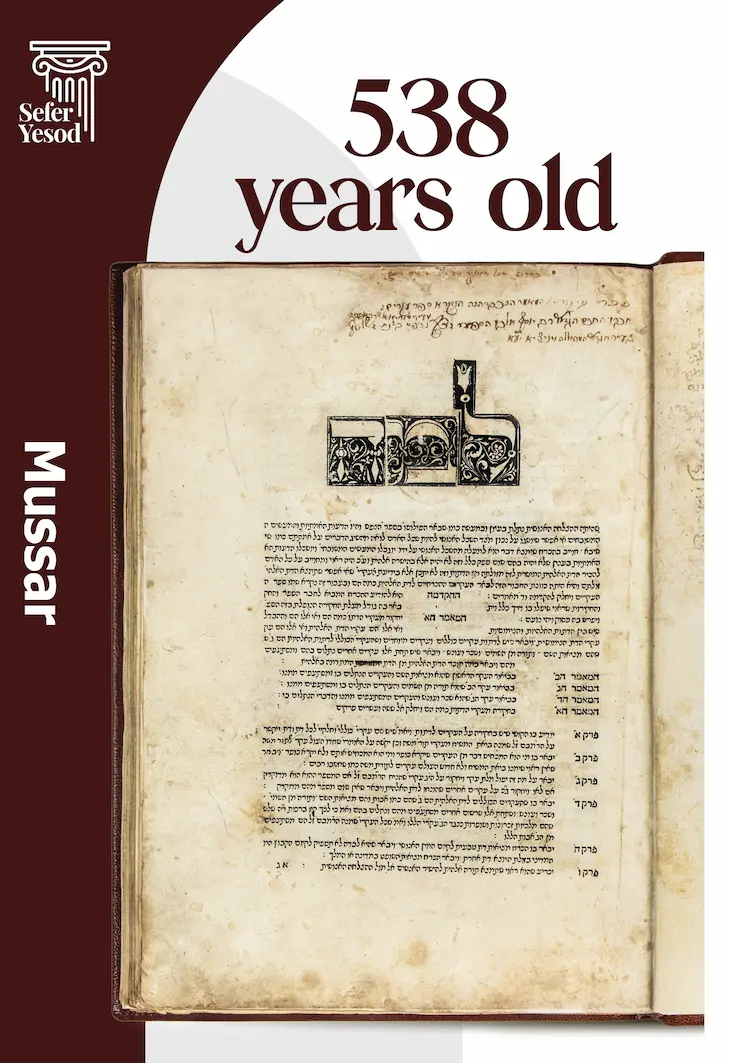
Sefer Yesod Incunable! The principles of faith.  Sefer Ikrim. Soncino, 1486 Complete
Sefer Yesod Incunable! The principles of faith.  Sefer Ikrim. Soncino, 1486 Complete with wide margins. Fundamentals of Jewish faith and principles of emunah by 15th century Spanish scholar Rabbi Yosef Albo. Good copy, complete with the rare pages that were mostly removed by the censor (see below) from most copies. Leaves 56-58 (Kuntress 8, leaves 2-4) contain material with strong arguments criticizing Christian thought and philosophy and were thus torn out of the majority of copies by the censors. The present sefer is complete and includes these leaves in their entirety. The book opens with an introduction by Reb Yisroel Nathan Soncino, renowned as the Mechokek, who was the father of Jewish printing (as described by Gershom Soncino in the subsequent Rimini edition of this sefer (Rimini, 1528). This first edition Sefer Ha’Ikrim was printed in a single column in block letters with headers and bookmarks. The opening words of the introduction and beginning of the book are decorated. The end of the sefer features a fascinating colophon that reads: “…It was completed here in Soncino in the country of Lombard under the government of…the Duke of Milan…on the twenty-first day of the month of Teves Year 5246 to the creation of the world…For Torah will emerge from Zion and the word of Hashem from Soncino.” Rabbi Yosef Albo (circa 1380–1444) was a Spanish Rabbi, scholar and philosopher who was a disciple of Rabbi Chasdai Crescas, talmid of the Ran and author of Ohr Hashem. Rabbi Yosef authored this sefer in response to the bitter decree of 1391 when all Jews in Spain were collectively ordered to convert to Christianity. His goal was to strengthen the spirit and faith of the Jews during these difficult times. Soncino, 1486. First edition. Soncino Sons Press. Page Count: 108 leaves. 14 booklets. Booklets 1-2: (8); Booklet 3: (6); Booklets 4-13 (8); Booklet 14: (6) leaves. Leaves 1a, 108b are blank. Page Size: 2° (29.9 cm.) Condition: Slightly stained in margins. First leaves and last leaf professionally restored at margins. 12 leaves were shorter than the others and were re-margined professionally. New leather binding. The first blank page in the beginning of the sefer features an antique deed (mostly erased) following with “the custom of the holy congregation as Tollitola” (as inscribed at the end of the deed). This draft of deed was common among deeds written during the era of the Spanish expulsion (see Shu”t Ohalei Tam, Ibn Yichya CH. 172). The page margins also boast frequent annotations and markings in old Italian handwriting. Leaf 7a features the owner’s inscription: “This reached our possession, the heirs of Mordechai Mamili z”l.” Bibliography: Stefansky, Sifrei Yesod – Incunabula #i65/ P. Tishbi, Kiryat Sefer 63, 1990-1991 pp. 615-621 #36/Yakirson, Catalog of Hebrew Incunabula from the Collection of Beit Hamedrash LaRabbanim in America #27 Eternal Treasures This sefer endured over half a millennium with all leaves intact! Fortified by the faith of thousands of Jews throughout the ages, it survived 537 years of pogroms, censors, the Inquisition, wars, persecution and public book burnings in Italy and all over the world. This sefer symbolizes the Jewish eternity Incunabula Incunabula (plural of incunable) are books, printed in Europe prior to the year 1500. The word derives from the Latin term ‘cradle’ or ‘swaddling cloth, ’ connoting the infancy of the printed word. While the incunabula actually stretches across a half-century, from 1445-1500, the first Hebrew presses opened only two decades later, and thus the period of Hebrew incunabula is reduced to a mere thirty years, from 1469-1500. The estimated number of Hebrew works printed during the incunable period is approximately two hundred. Incunabula are desirable collectibles, highly sought-after by antique Judaica collectors. The greatest libraries in the world vie for the number of incunabula in their treasured collections. ................................................ Any inquiries about this lot ? We are available also on WhatsApp >>>
Lot : 112

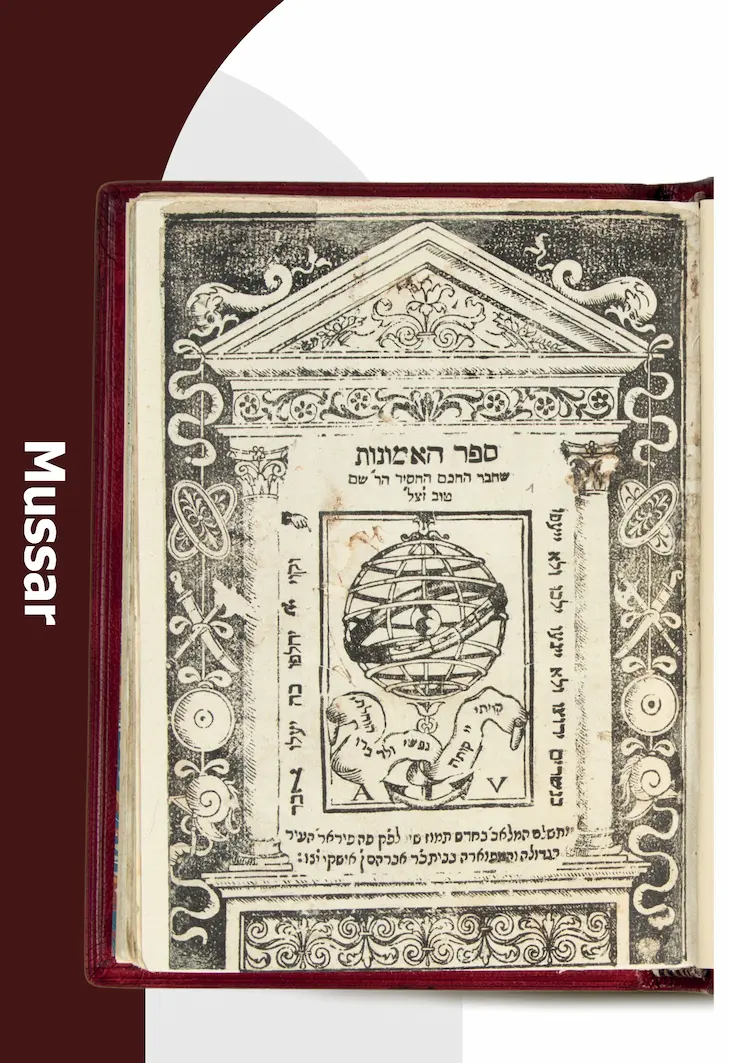
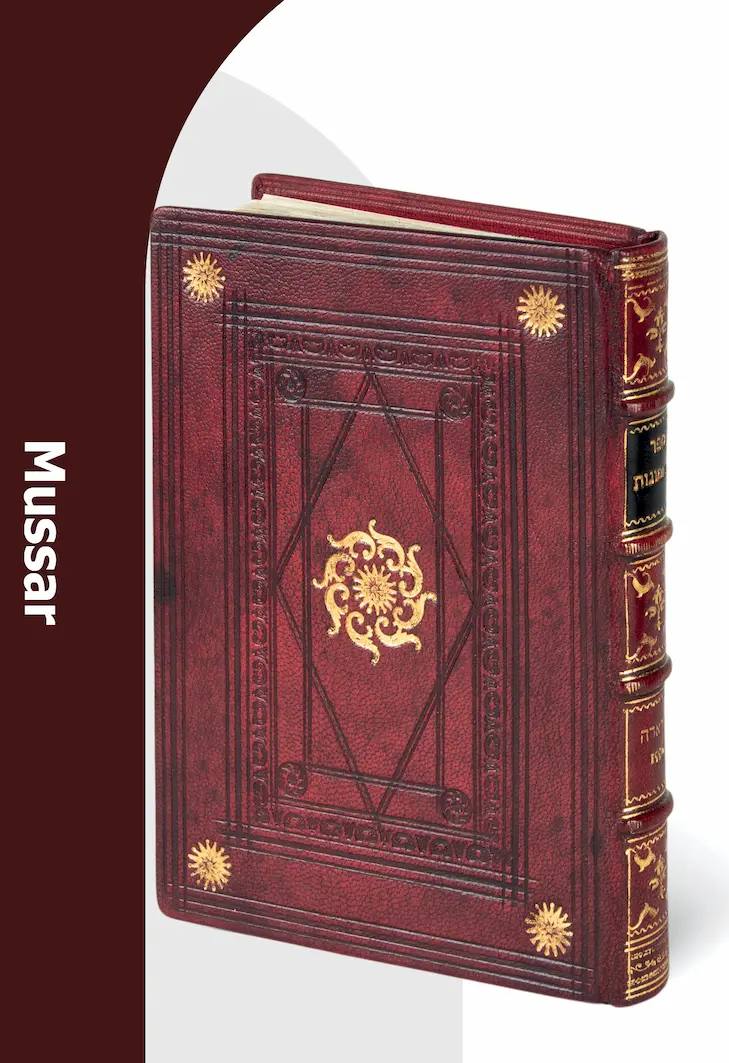
The Book of Faith First Edition. Ferrara, 1556 Rabbi Shem Tov ibn
The Book of Faith First Edition. Ferrara, 1556 Rabbi Shem Tov ibn Shem Tov’s foundational sefer on emunah. In this landmark sefer, Rabbi Shem Tov states that authentic faith must rely on what Jews refer to as “pure faith” - “emunah peshuta”, and condemns those who base their beliefs on philosophical discussion and empirical evidence. In his preface, he warns that many Jews who based their principles of faith on philosophy and evidence ultimately abandoned their faith and became heretics or apostates. The Shl”a Hakadosh writes, “The chassid Rabbi Shem Tov in his preface to his Sefer Ha’emunos was resentful of the philosophers in our nation, and he scorned them, and in his conclusion expressed, ‘When I delved into their words, a fire ignited inside me, for a malignant disease has sprouted among Bnei Yisrael, and I saw that throughout all these generations, they denied and switched [their faith] in their investigations'' (Shl”a, Maseches Shavuos Ch. Ner Mitzvah #59). Rabbi Shem Tov ibn Rabbi Shem Tov (d. 1430) was a 15th century Rosh Yeshivah and kabbalist in Spain, who was one of the foremost opponents to the study of philosophy. His son Rabbi Yosef ben Shem Tov authored the sefer Kavod Elokim (Ferrara, 1557), and his grandson Chacham Rabbi Shem Tov authored the famous commentary on the Rambam’s Moreh Nevuchim (Venice, 1551) and Drashos HaTorah (Salonika, 1525). His commentary on maseches Avos was printed in contemporary times. It is intresting to note that while the grandfather Rabbi Shem Tov was vehemently opposed to the study of philosophy, his own grandson Chacham Shem Tov authored an important commentary on the Rambam’s Moreh Nevuchim! See lot # 63 Comments of Maharam Alashkar The end of the sefer features a special 16-leaf additiont with a separate title page entitled, “Hasagos mi’Rabbi Moshe Alashkar” on this work. In his booklet, Maharam Alashkar defends the Rambam’s and refutes the author’s arguments. (excerpted from Shu”t Maharam Alashkar Ch. [Sabbionetta, 1654]. Ferrara, 1556 (Colophon states 1557). First Edition. Page Count: 117. Page Size: 118 cm. Condition: Good, with lower margin of title page slightly cropped until border. Minor restorations with no missing text. New leather binding with decorative engravings. Printer’s emblem of Avraham ben Osaki appears on both title pages and at the end of the sefer.   Bibliography: Stefansky, Sifrei Yesod, HOsafos L’Sifrei Mavhsheves Yisrael p. 142.) ....................................... Any inquiries about this lot ? We are available also on WhatsApp >>>

Lot : 113

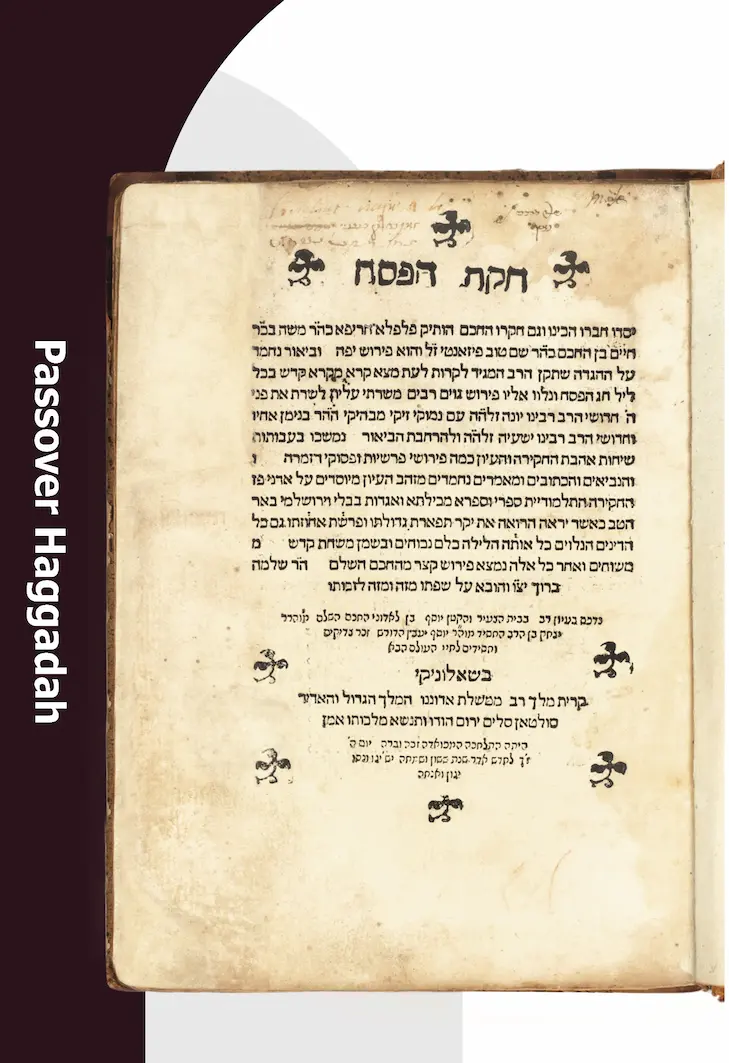
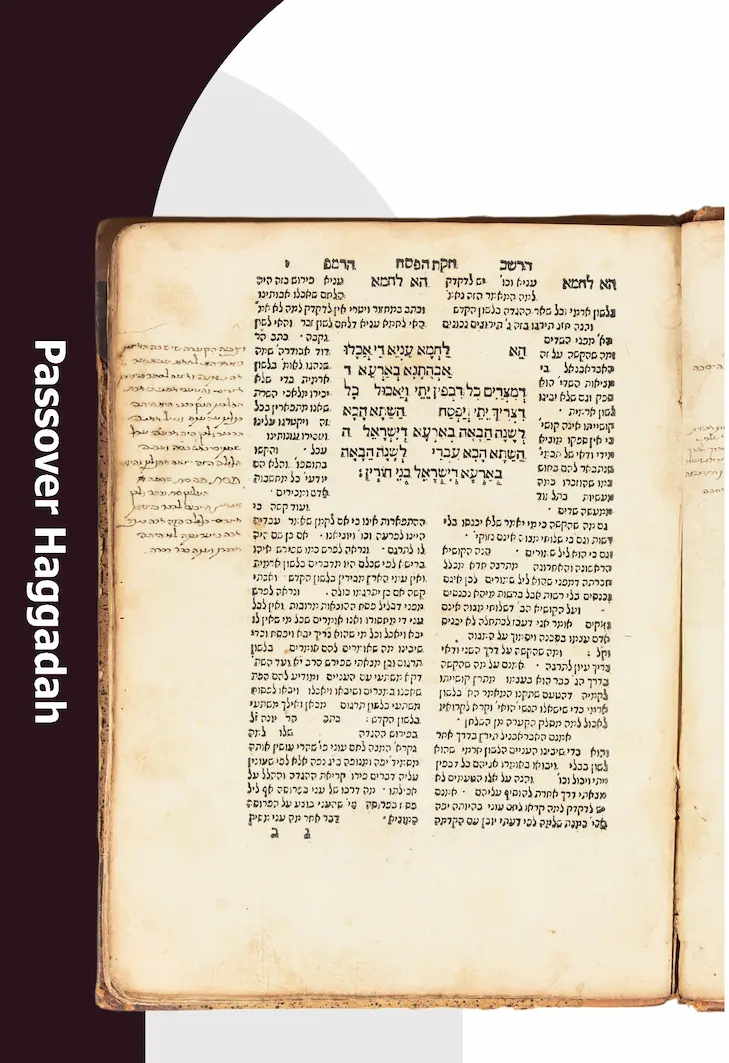
Rare, important Haggadah! Chukas HaPesach. First Edition. Salonika, 1569 Haggadah with instructions
Rare, important Haggadah! Chukas HaPesach. First Edition. Salonika, 1569 Haggadah with instructions in Ladino and commentary by Rabbi Moshe Pizanti of Tzfas. The author possessed several manuscripts containing commentaries by some of the venerable Rishonim among them Rabbi Tzidkiya Harofeh, author of Shibolei Haleket and Rabbi Yeshaya di Trani, author of Tosfos Ri”d, which were printed for the first time in the present sefer. Rabbi Moshe Pizanti lived in Tzfas where he acquired Torah and wisdom from Mahar”i Beirav (see leaf 21b). Parnassa forced him to wander throughout Turkey and the Balkan States in the course of which he published his sefer Chukas HaPesach. Sadly, he was murdered by Ottoman Turks in Greece in 1573 (see Shu”t Mishpitei Shmuel Venice, 1599 Ch. 27). Printed in this Haggadah alongside Rabbi Moshe Pizant’s lengthy commentary is a short commentary by Rabbi Shlomo Baruch. Salonika, 1569. First Edition. Page Count: 71, [1] leaf. Page Size: 20 cm. Condition: Title page margin restored; light water and wine stains; half-leather binding. Additional Information: The leaves of this Haggadah feature numerous handwritten annotations and additions including laws and customs, as well as profound kabbalistic explanations written by an unknown (yet) Italian kabbalist. Bibliography: Otzar Hahaggados #27 ................................................ Any inquiries about this lot ? We are available also on WhatsApp >>>
Lot : 114

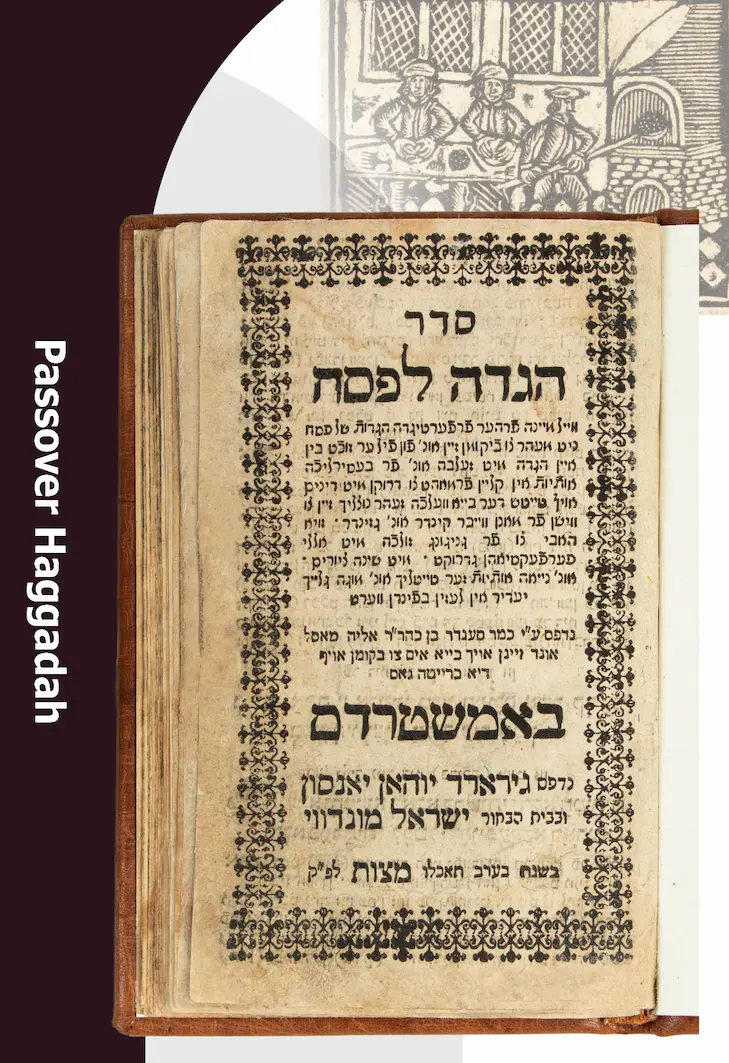
Haggadah with Illustrations. Amsterdam, 1776 Haggadah shel Pesach with halachos, songs and translation
Haggadah with Illustrations. Amsterdam, 1776 Haggadah shel Pesach with halachos, songs and translation into Yiddish. This Haggadah features two illustrations. The popular German song Almachter Go-tt which is customarily sung at the end of the seder by many Ashkenazic families, and particularly those with Yekke roots, is printed at the end of the Haggadah (leaf 26b). The Haggadah also has two illustrations, one depicting matzah baking (leaf 2b) and the other depicting Havdalah (leaf 4b). Amsterdam, 1776. Page Count: 28 leaves. Page Size: 15 cm. Condition: Good; margins lightly restored. Bibliography: Otzar Hahaggados #276; Yaari Haggados #180 ................................................ Any inquiries about this lot ? We are available also on WhatsApp >>>

Lot : 115

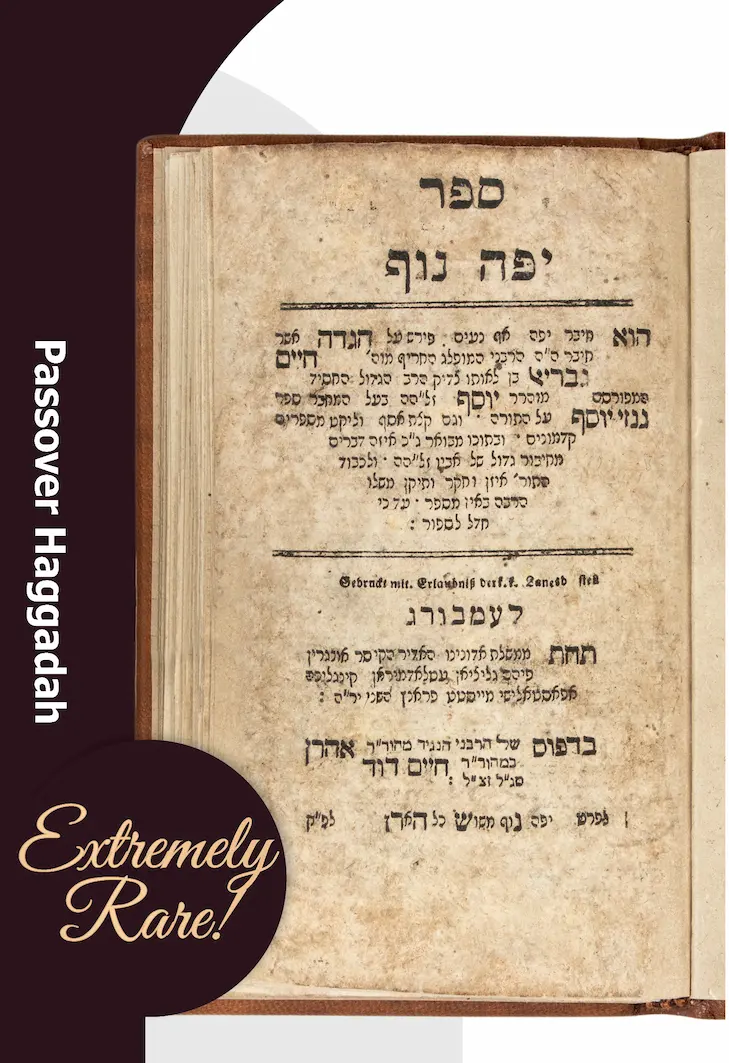
Chassidic treasure! Haggadah shel Pesach with Yeffe Nof Commentary. Lemberg, 1795 Haggadah
Chassidic treasure! Haggadah shel Pesach with Yeffe Nof Commentary. Lemberg, 1795 Haggadah with Yeffe Nof commentary by Rabbi Chaim Gavriel Bloch son of the Admor Rabbi Yosef Bloch, author of Ginzei Yosef. This is an exceedingly rare Haggadah, a Chassidic treasure which to the best of Genazym’s no other copy is known in any private collection. his Haggadah, which was the second Haggadah with a Chassidic commentary ever printed. It was preceded only by the Chelkas Binyamin Haggadah (Lemberg, 1794) which appeared one year earlier. Rabbi Chaim Gavriel Bloch (d. 1820), Av Beis Din of Koniv, was the son of the Admor Rabbi Yosef Bloch, a disciple of the Maggid of Mezritch, author of Ginzei Yosef. Rabbi Chaim Gavriel was a great Chassidic scholar who also authored Amira Ne’imah (Pod Brezitz, 1803). In his present commentary on the Haggadah, he repeatedly cites his father’s sefer Ginzei Yosef which he brought to print. Rabbi Chaim Gavriel’s granddaughter married the Admor Rabbi Yissachar Berche of Nadvorna, founder of the illustrious Nadvorna dynasty (and son-in-law of Rabbi Avraham Leib of Nadvorna). The sefer opens with an endorsement by Rabbi Yissachar Ber of Zlotchov, author of Orach Chaim and another disciple of the Maggid of Mezritch. The present Haggadah includes a lengthy commentary on the songs “Echad mi yodeiah” and “Chad gadya”. Lemberg, 1795. First Edition. 40 pages.   Page Size: 18 cm. Professionally restored. New leather binding. Bibliography: Stefansky, Chassidus #158; Otzar Hahaggados @ 389 ................................................ Any inquiries about this lot ? We are available also on WhatsApp >>>
Lot : 116

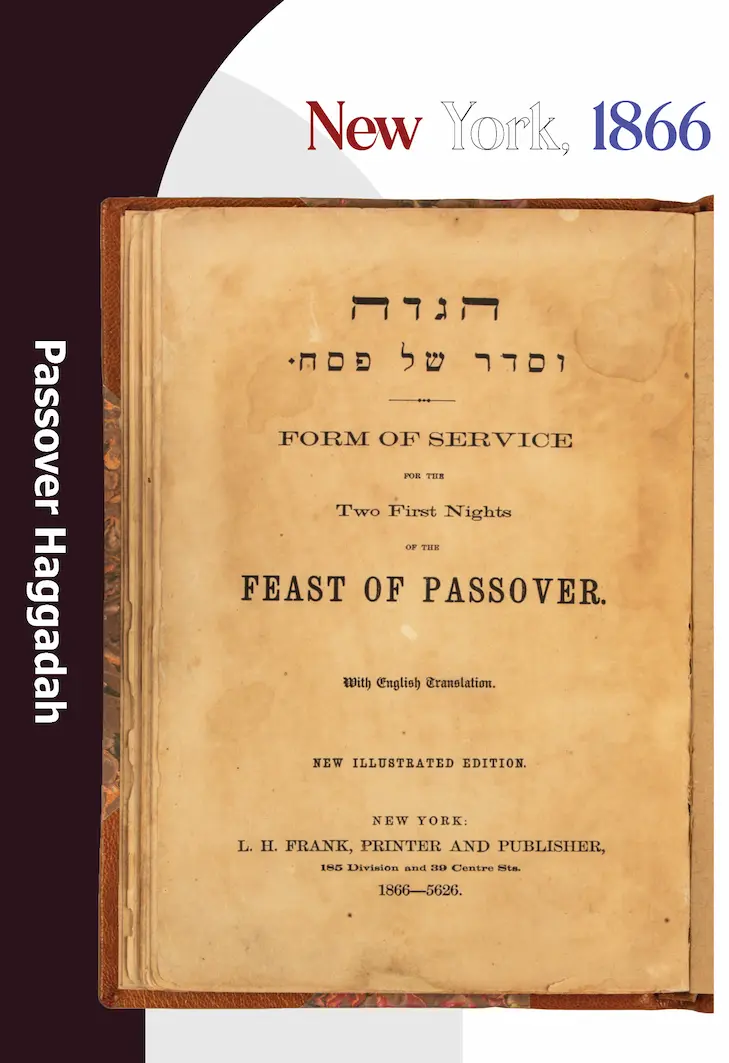
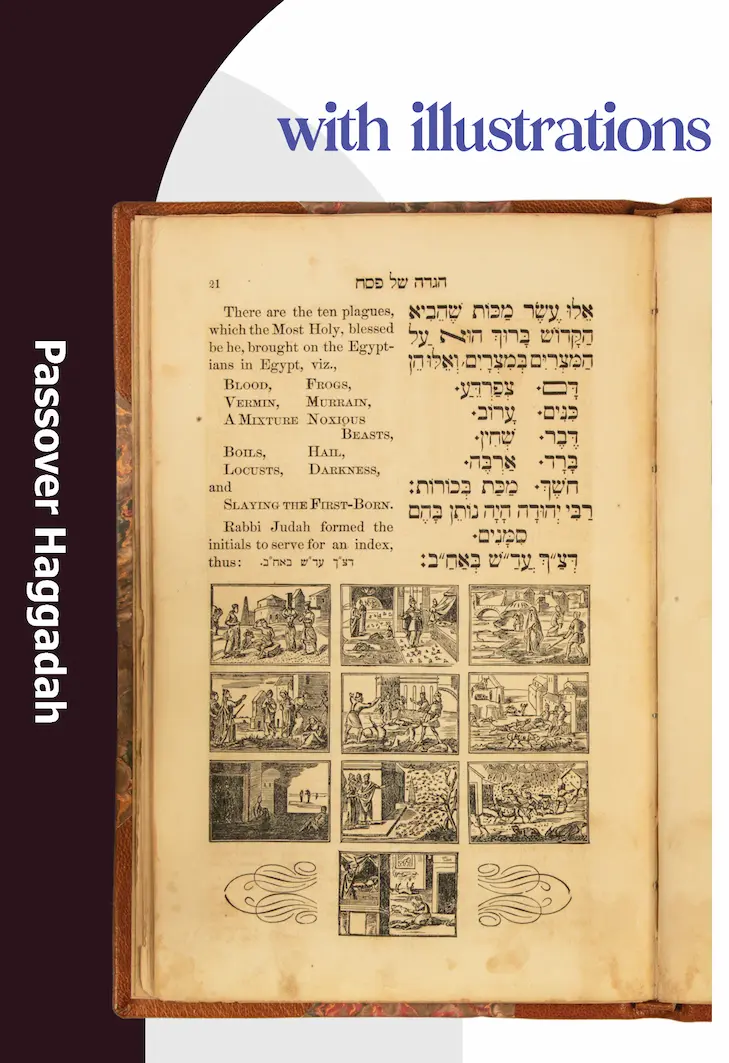
First Illustrated Haggadah with English Translation Printed in America. New York, 1866
First Illustrated Haggadah with English Translation Printed in America. New York, 1866 Haggadah with English translation in facing columns with illustrations. The Haggadah features 9 half-page illustrations and another 10 miniature illustrations depicting the Ten Plagues (side 21). This was the first edition of a Haggadah printed in the United States with illustrations interwoven into the text. The present Haggadah is particularly rare; the Jerusalem National Library does not possess a copy of it. It was recorded in Otzar Hahaggados based on a copy in a private collection. New York, 1866. Page Count: 60 sides. Page Size: 22 cm. Condition: Several wine stains and minor breakage in margins. New half-leather binding. Bibliography:  Goldman, Hebrew Printing in America #133 Otzar Hahaggados #1283 ................................................ Any inquiries about this lot ? We are available also on WhatsApp >>>

Lot : 117

Haggadah with Marathi translation. Bombay, India 1846 Rare Hebrew Haggadah edited by
Haggadah with Marathi translation. Bombay, India 1846 Rare Hebrew Haggadah edited by Rabbi Chaim Yosef Halligua with Marathi translation. This was the first Haggadah printed alongside its translation into Marathi, an Indian-Aryan language spoken among Indian Jews. The title page boasts “See this new [work] which has never existed before.” The Haggadah is lithographed with the text and translation on facing pages. It is based on the manuscript of the famed Yemenite teacher Avraham ben Yehuda Jamal of Cochin. The Haggadah opens with 13 illustrations depicting the seder symbols. Leaf [5] features an illustration of the seder plate and foods placed on it. The title page is elaborately illustrated in Amsterdam Haggadah style. Bombay, 1846. Haggadah text and translation on facing pages. Page Count: [5], 35 leaves. Page Size: 23 cm. Condition: Miniscule holes, most professionally restored. New half-leather binding. Bibliography: Yaari Haggados #656 Otzar Hahaggados #895 Yaari, List of Books Printed in Bombay #92 Congregation Bene Israel in India The first Jews to settle in India founded a community in Cochin which became known as Congregation Bene Israel, and the first Jewish works printed in the country were likewise printed by the Jews of Cochin who held fast tenaciously to their faith and maintained their distinct Jewish lifestyle and tradition in India throughout what is possibly close to two millennia. (See: Yaari, Hadfus HaIvri B’Artzot Hamizrach #52) ................................................ Any inquiries about this lot ? We are available also on WhatsApp >>>
Lot : 118

One of the most beautiful Haggadahs ever printed! Illustrated Passover Haggadah. Trieste,
One of the most beautiful Haggadahs ever printed! Illustrated Passover Haggadah. Trieste, 1864 Haggadah with Italian translation by Rabbi Avraham Chai Morforgo with 58 copperplate illustrations and music notes. The Trieste Haggadah is renowned as one of the most elaborate Haggadahs ever printed! This particular Haggadah features striking font, initials and decorative letters, along with 58 copperplate illustrations drawn by maestro C. Kirchmayr whose autograph appears on the corner of the title page and initials on every drawing. The Hebrew text and its Italian translation are positioned on facing columns. The present Haggadah is with its original green leave cover. In his acclaimed article Hahaggadah Hametzuyeers B’Dfus (Areshes 3, 1961 pps. 27-8), Betzalel Roth writes that there is but one 19th century Haggadah worthy of creating a new legacy in illustrated Hebrew literature, and this is the Haggadah printed in Trieste in 1864. “The typeset is particularly impressive, and the text is complemented by 58 copperplate illustrations, with drawings added to almost every page. Aside from the traditional illustrations, there are numerous unusual drawings of the conquest of Jericho, downfall of Sancherev, feats of Belshatzar and more “. Triest, 1864. First Edition. Page Count: [4], 64, [2], sides. Page Size: 33.7 cm. Condition: Minor stains, signs of use and reinforced margins. New half-leather binding. Bibliography: Otzar Hahaggados #1217, Yaari, Haggados #899 ................................................ Any inquiries about this lot ? We are available also on WhatsApp >>>

Lot : 119

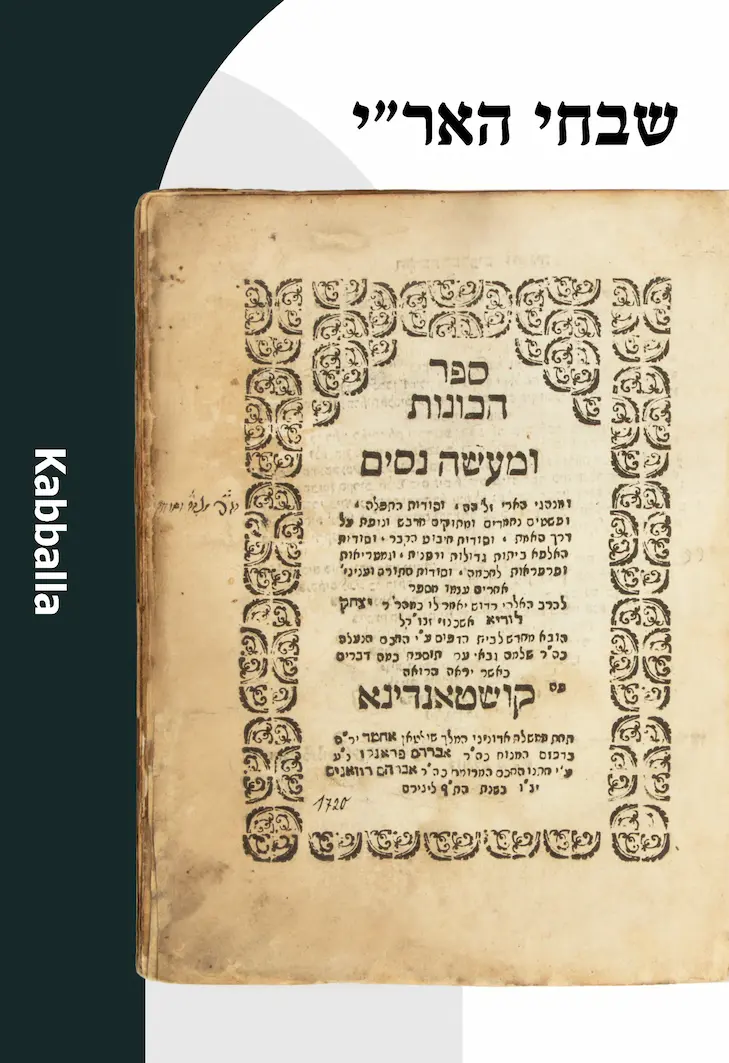
Shulchan Aruch Ha’Ar”i and Tikkun Olam by Rabbi Shabsai of Rashkov. Rabbi Shlomo Yarish Rappaport Press. Lvov, 1788

These two works were printed by Rabbi Shlomo Yarish Rappaport’s press during the very same year that it printed the legendary Noam Elimelech .The workers employed by the Rappaport Press whose names appear in the colophon of the present sefer are the same workers who appear in the colophon of the Noam Elimelech.

1.Shulchan Aruch Ha’Arizal – Customs and intentions of the Arizal presented in the order of the Shulchan Aruch.
This work contains a special segulah to recite during times of troubles, as well as a segulah for a healthy childbirth,Nevuas Hayeled, and the Iggeres HaShabbos by the Ibn Ezra.

2. Seder Klolos Tikkun V’Aliyos Ha’olamos.Kiztur Kavanas Ha’Ar"i” – kabbalistic intentions from the Arizal for weekday, Shabbos and Yomim Tovim prayers, by the Admor Rabbi Shabsai of Rashkov. First edition. Very rare booklet.

The intentions included in this sefer, written in a very abridged format, were printed six years prior in the famed Siddur Reb Shabsai (Koritz, 1794).
The holy kabbalist and Admor Rabbi Shabsai of Rashkov was one of the Bnei Heichala Kaddisha and among the very first talmidim of the Baal Shem Tov. Rabbi Shabsai numbered among a cluster of scribes who wrote Sifrei Torah, tefillin and mezuzos and copied Kabbalistic manuscripts for the Baal Shem Tov in a state of tremendous spiritual sanctity. He is best renowned for his Siddur Reb Shabsai which is regardedas one of the premier Chassidic siddurim.

Rabbi Shabsai was born in Rashkov, Serbia, yet aside from his birthplace, his life is shrouded in secrecy to the extent that even his year of birth and death are unknown. The Admor Rabbi Zusha of Anipoli, in his approbation to Rabbi Shabsai’s siddur, describes him as “the famous chassid, the Kabbalist, man of G-d” and the author of Toldos Yaakov Yosef cites him numerous times in his sefer.

The above sefarim feature the same symbol; asterisks () to those that appear in the sefer
) to those that appear in the sefer Noam Elimelech, which are said to contain deep Kabbalistic meanings and secrets…

Lot : 120

The Rebbe Reb Shmelke Rare First Edition Darchei Yesharim by the Admor
The Rebbe Reb Shmelke Rare First Edition Darchei Yesharim by the Admor Rabbi Shmuel Shmelke of Nikolsburg. Poland, circa 1820 Recommended actions and customs to enhance a Jew’s spiritual sanctity and achieve piety from the moment one arises in the morning until retiring at night, by the Admor Rabbi Shmuel Shmelke Halevi Horowitz of Nikolsburg. The title page presents a brief inscription describing the purpose of this sefer: “Beneficial customs to rectify the sin of defiling the bris and for all things… [pertaining] to sanctity”. ................................................. ............................................. This is the Admor Rabbi Shmuel Shmelke’s first printed work! ................................................ .............................................. The sefer contains 67 chapters in Hebrew and Yiddish, all with nekudos. The final page presents a “ Tikkun for Tinokos shel Beis Rabban.” ................................................. .............................................  “He should read this book of middos three times every day, and he should not desist” (Section 58). .................................................. ............................................ The Admor Rabbi Shmuel Shmelke Halevi Horowitz of Nikolsburg (1726-1778) was among the early Chassidic masters. He was called by the title “The Rebbe Reb Shmelke” by Chassidim around the world. In his youth, he studied the entire Shas and all of Poskim together with his eminent brother, the Baal Hafla’ah, and soon became a close disciple of the Maggid of Mezritch, traveling together with his brother to seek the Maggid’s wisdom. In 1775, he became Rabbi of Nikolsburg and all of Moravia. His disciples include the illustrious Chassidic masters Rabbi Moshe Leib of Sassov, Rabbi Levi Yitzchak of Berditchev, the Kozhnitzer Maggid, the Chozeh of Lublin, the Riminover, and Rabbi Mordechai Banet who succeeded him as Rabbi of Nikolsburg. The list of actions and customs that Rabbi Shmuel Shmelke enumerates in this sefer cast an awe-inspiring glimpse upon the Admor’s illustrious spiritual stature and unparalleled sanctity, as well as the immense caution he displayed in every matter pertaining to sanctity and cleaving to Hashem. Russia-Poland, circa 1820. Exceedingly rare and valuable first edition. Page Count: [8] leaves. Page Size: 18 cm. Light blue paper. Good condition. New leather binding with case. Bibliography: Stefansky, Sifrei Chassidus #142 ................................................ Any inquiries about this lot ? We are available also on WhatsApp >>>
Lot : 121

Menachem Tziyon by the Admor Rabbi Menachem Mendel of Riminov. First Edition.
Menachem Tziyon by the Admor Rabbi Menachem Mendel of Riminov. First Edition. ‎Czernowitz, 1851‎ Sacred lectures delivered by the holy Admor Rabbi Menachem Mendel of Riminov on ‎Shabbosos and Yomim Tovim; transcribed by his prime disciple the Admor Rabbi Yechezkel ‎Panet, Av Beis Din of Carlsburg and author of Mareh Yechezkel.‎ The Admor Rabbi Menachem Mendel of Riminov (1745-1815) was one of the fathers of ‎Chassidus in Poland and Galicia. As the prime disciple of Rabbi Elimelech of Lizhensk, he was crowned Admor after the latter’s passing in 1786, and drew thousands to his Holy Court ‎in Riminov. Among his noted disciples were the Admor Rabbi Naftali Tzvi of Ropshitz; the ‎Admor Rabbi Tzvi Hirsh of Ziditchov; the authors of Maor Vashemesh, Bnei Yissachar and ‎Malei HaRo’im, and the Admor Rabbi Yechezkel Panet who collected and edited the  lectures ‎in this sefer.‎‎ ‎ The Admor Rabbi Yechezkel Panet (1783-1845) Av Beis Din of Carlsburg and author of ‎Mareh Yechezkel was introduced to the Admor Rabbi Menachem Mendel of Riminov by his ‎friend the Admor Rabbi Naftali Tzvi of Ropshitz. In a famous letter printed in Mareh ‎Yechezkel Ch. 104, Rabbi Yechezkel describes how his soul connected immediately to the ‎soul of the Admor Rabbi Menachem Mendel and he began transcribing his lectures and ‎discourses, eternalizing them for posterity. Rabbi Menachem Mendel of Riminov never ‎penned his teachings on paper, and it is only through his disciple Rabbi Yechezkel's work that his Torah remains with us ...‎ Czernowitz, 1851. First Edition. Page Count: 60 leaves. Page Size: 18.8 cm. Condition: ‎Good. Fold mark on title page; minor damage to corners; partially printed on blue paper. ‎Attractive new leather binding.‎ Bibliography: Stefansky, Chassidus #349‎ ................................................ Any inquiries about this lot ? We are available also on WhatsApp >>>

Lot : 122

Rabbi Nachman of Breslov. And the principle is that one should take
Rabbi Nachman of Breslov. And the principle is that one should take great care to be in a state of joy constantly Maaglei Tzedek Advice and guidance in avodat Hashem. First Edition. Shapira Press. Józefów, 1846 Proper conduct and advice in matters pertaining to serving Hashem, as taught by the Admor Rabbi Nachman of Breslov to his students and followers. This sefer, while printed in Józefów, made use of the family press that had originally been located in Slavita. During the brief hiatus between the closure of the Shapira Press in Slavita and its reinstatement in Zhitomir, members of the Shapira family printed several sefarim in Józefów, Poland. The present sefer was one of these rare sefarim. Józefów, 1846. First Edition. Page Count: 28 sides. Page Size: 16 cm. American binding. Condition: Good. Bibliography: Stefansky, Chassidus #353; Keonig, Neve Tzaddikim pps. 73-74 Distinguished provenance! Personal copy of Rabbi Akiva Eiger’s talmid. The following inscription appears on the title page: “The possession of my great master, my father and teacher, Morienu Harav Baruch of Laszla” (1815-1879), Gaavad of Głowno and the prime disciple of Rabbi Akiva Eiger (see Meoran shel Yisrael Vol. 2 p. 343). ................................................ Any inquiries about this lot ? We are available also on WhatsApp >>>
Lot : 123

“All my words are taken from the wisdom of my honorable father
“All my words are taken from the wisdom of my honorable father and teacher.” Two-Volumes of Keser Torah by the Admor Rabbi Meir of Berditchev, son of Rabbi Levi Yitzchak of Berditchev. First Editions. Mezhyrov-Zhitomir, 1803-1806 Chiddushim on the Torah, Rambam and masechtos in Shas by the Admor Rabbi Meir, son of the Admor Rabbi Levi Yitzchak of Berditchev, author of Kedushas Levi. It is rare to find both volumes of this sefer, which were printed in two separate years and places, as a single, complete set. Both volumes of Keser Torah open with chiddushim relayed by the author’s father Rabbi Levi Yitzchak of Berditchev and his paternal grandfather Rabbi Meir, Av Beis Din of Hoskav. The author’s subsequent chiddushim reference the teachings of the eminent progenitors of Chassidus, among them the Baal Shem Tov, Maggid of Mezritch, Admor Rabbi Nachum of Chernobyl, and include quotes from the sefarim of the Noam Elimelech and Ohr Hachaim. The Admor Rabbi Meir of Berditchev (d. 1806) was an illustrious tzaddik, the son and prime disciple of his father the Admor Rabbi Levi Yitzchak of Berditchev, and a student of the Admor Rabbi Menachem Nachum of Chernobyl (see Vol. 1 leaf 32b: “I heard from the tzaddik R’ Nachum in the name of the tzaddik the Baal Shem Tov”). Rabbi Meir passed away during his father’s lifetime, and Chassidic lore relates that Rabbi Levi Yitzchak escorted his son’s aron to the cemetery joyful in the knowledge that he was restoring the precious soul that he’d received as a deposit from the heavens with the same purity that he’d received it. Vol. 2 features the autograph of Rabbi Menachem Nachum Delgach of Berditchev-Kishinov, a prominent chassid of the Admor Ohr Yisrael of Sadigura. Mezhyrov-Zhitomir, 1803-1806. First Edition. Two Volumes. Bibliography: Stefansky, Chassidus #251-252 ................................................ Any inquiries about this lot ? We are available also on WhatsApp >>>

Lot : 124

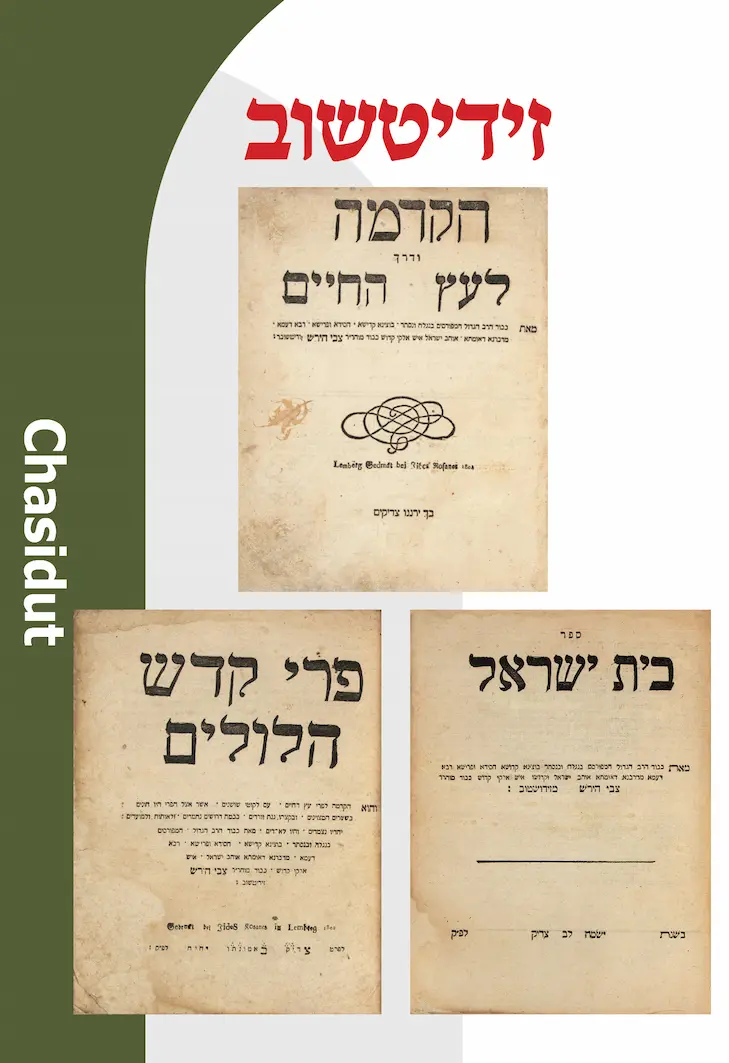
Three Sefarim by the Admor Rabbi Tzvi Hersh of Ziditchov – Hakdamah
Three Sefarim by the Admor Rabbi Tzvi Hersh of Ziditchov – Hakdamah V’Derech L’Eitz Chaim – Pri Kodesh Hilulim – Beis Yisrael All first editions Lemberg, 1832-1834 1. Hakdamah V’Derech L’Eitz Chaim – Also renowned as Sur Me’ra V’asei Tov, this sefer contains an introduction and vital foundations for any student who wishes to commence the study of Kabbalah, as well as stirring words of inspiration, encouraging the learner to cleave to the Kabbalistic teachings of the Arizal. This was the first sefer authored by the Admor Rabbi Tzvi Hersh of Ziditchov to be printed. It appeared in print approximately one year after his passing. Lemberg, 1832. Page Count: [1], 25 leaves. Page Size: 24 cm. Stefansky, Chassidus #183 2. Pri Kodesh Hilulim – Introduction to the sefer Eitz Chaim by Rabbi Chaim Vital with sermons for the festivals. The sefer was edited and prepared for print by the author’s nephew and son-in-law, the Admor Rabbi Yehuda Tzvi of Rozdol. Lemberg, 1832. Page Count: [1], 21, 15, [1], leaf. Page Size: 24 cm. Stefansky, Chassidus #483 3. Beis Yisrael – Kabbalistic commentary on the Torah. This sefer was edited and prepared for print by the author’s nephew and son-in-law, the Admor Rabbi Yehuda Tzvi of Rozdol. Lemberg, 1834. Page Count: [1], 32, 31-34 [1] leaf. (Last page is marked 40). Stefansky, Chassidus #86 All three sefarim are bound together in a new leather binding. The margins of the first two sefarim and end of the third sefer all feature handwritten Kabbalistic annotations and chiddushim in old script. The flyleaf of Vol. 1 also features a handwritten kvittel. The holy Kabbalist and Admor Rabbi Tzvi Hersh Eichenstein of Ziditchov (1763-1831) was described as the “Sar Beis Hazohar - Minister of the House of the Zohar, ” due to his phenomenal mastery of the wisdom of Kabbalah. His nephew Rabbi Yitzchak Eisik of Ziditchov attested that he once heard his uncle express that he numbered among the disciples of Rabbi Shimon bar Yochai; and his nephew Rabbi Yitzchak Eisik of Komarno inscribed that “His soul is the soul of Moreinu Harav Chaim Vital.” In his endorsement to Ateres Tzvi Vol. 2, the Bnei Yissachar inscribed: “I have rarely seen or heard in this generation of one who delves into the wondrous wisdom of Kabbalah as Rabbi Tzvi Hersh Eichenstein of Ziditchov, and he is singular in his generation in the wisdom of truth.” ................................................ Any inquiries about this lot ? We are available also on WhatsApp >>>
Lot : 125

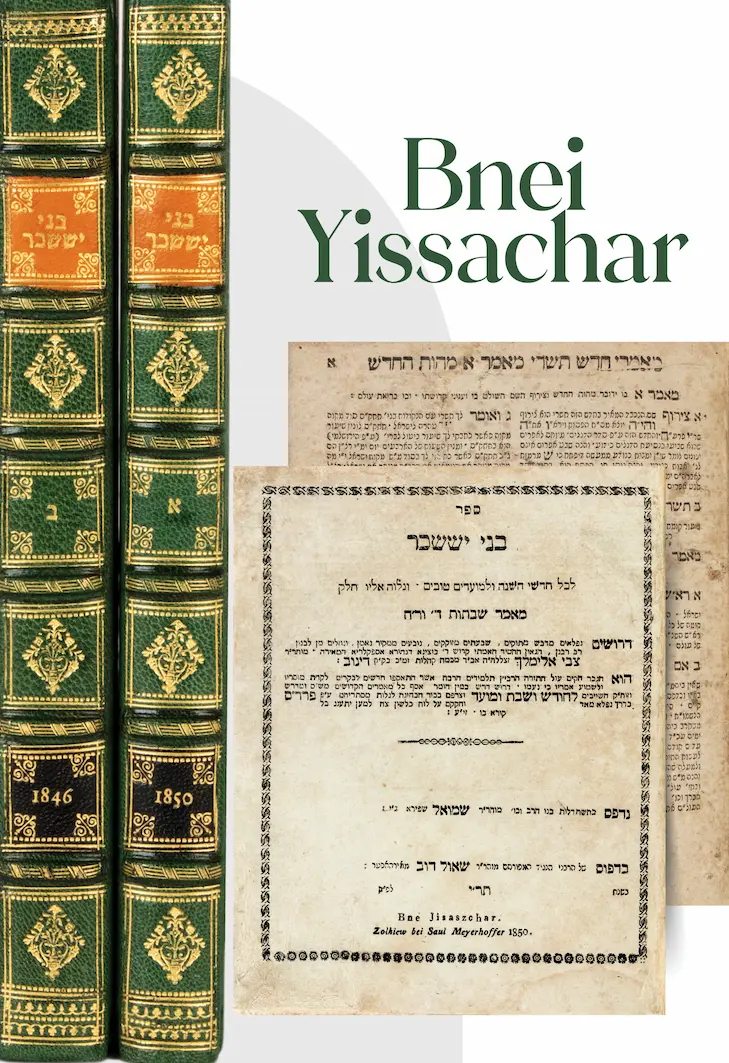
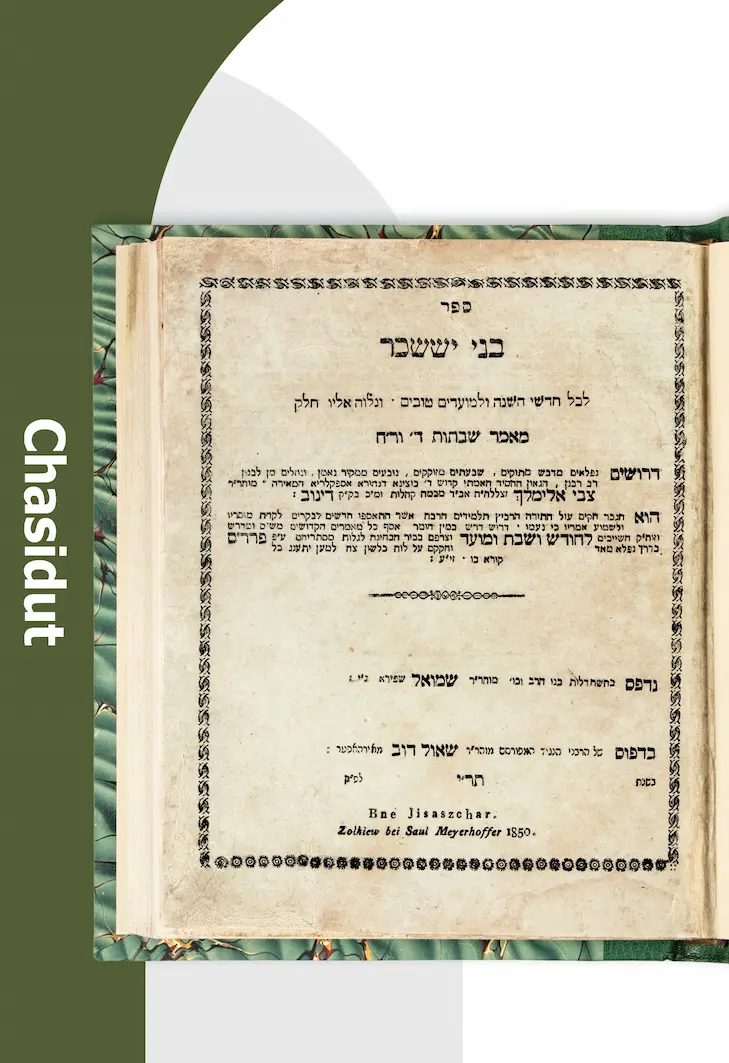
“All his words in the sefer Bnei Yissachar were said with ruach
“All his words in the sefer Bnei Yissachar were said with ruach hakodesh” (The Admor Divrei Chaim of Sanz [Beis Shlomo p. 2, Irshava, 1928]) Fundamental Chassidic Work 2-Volume Set of Bnei Yissachar. First Edition. Zolkova, 1846-1850 Two complete volumes of essays on Shabbos and Rosh Chodesh based on the wisdom of kabbalah and Torah of Chassidus by the Admor Rabbi Tzvi Elimelech of Dinov. Volume 1: Essays on the months of Nissan through Elul and Shabbosos throughout the year. Zolkova, 1850. Page Count: [1], 24, 72 leaves. Page Size: 24 cm. Volume 2: Essays on the months of Tishrei through Adar. Zolkova, 1846. Page Count: 226 leaves. Page Size: 23.8 cm. Volume 2 was printed prior to Volume 1. The former was printed without a title page in order to conceal the printing location and date from the censor. (See Ohel Naftali p. 99 [Warsaw, 1911]). In his preface to his sefer Yodei Binah (Munkacs, 1911), the Bnei Yissachar’s son Rabbi Elazar Shapira of Lancut explains that his father gave his sefer the unusual title Bnei Yissachar after his Rabbi and mentor the Chozeh of Lublin revealed that his soul derived from the tribe of Yissachar. The Bnei Yissachar, the Admor Rabbi Tzvi Elimelech of Dinov (1783-1841) was one of the great Admorim and progenitors of Chassidus, renowned throughout the world for his piety, sanctity and righteousness. His sefer Bnei Yissachar is a fundamental Chassidic work “and the world was filled with his wisdom and Torah which shines from one end of the world until the other” (Divrei Chaim in his preface to the Bnei Yissachar’s sefer Reiach Dudaim). He was a prolific writer whose sefarim serve as cornerstones of the Chassidic library and offer a faint glimpse into his awe-inspiring genius and fluency in all realms of Torah; “and many thirstily drink from his holy words” (ibid). Condition: Both volumes are in good condition. Volume 1: Several pages torn on edges of bottom margins (some restored). Volume 2: Professionally restored; leaves 5-6 slightly cropped; both volumes bound in attractive new leather bindings and preserved in case. Bibliography: Stefansky, Sifrei Yesod #393; Sifrei Chassidus #91-92 ................................................ Any inquiries about this lot ? We are available also on WhatsApp >>>
Lot : 126

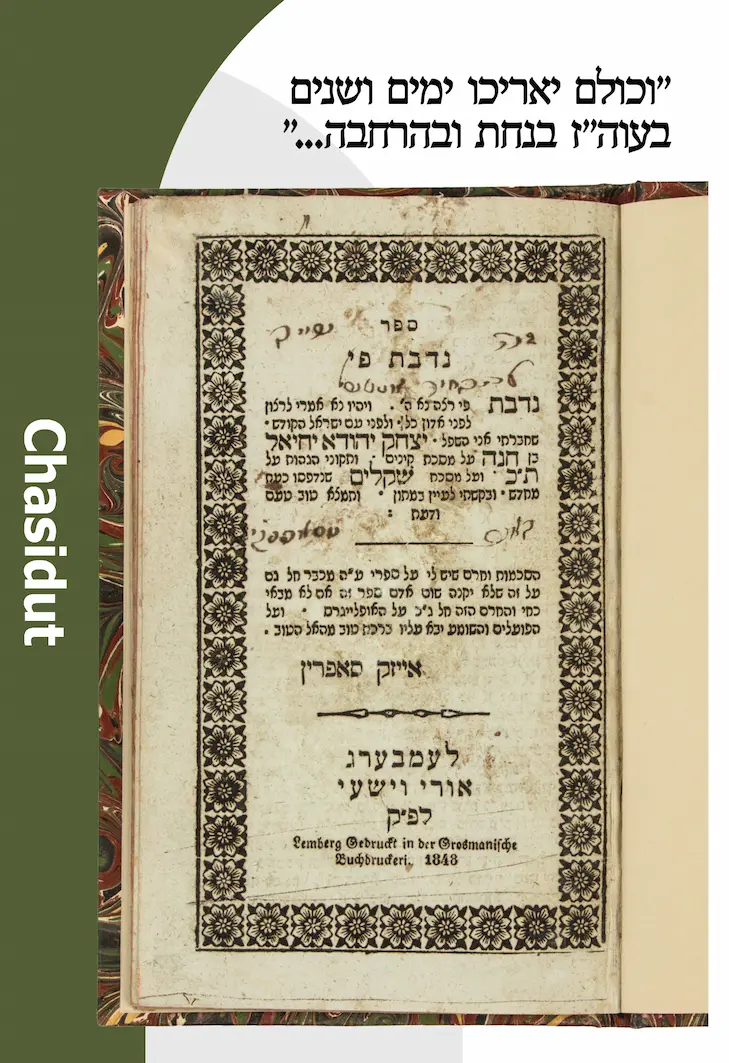
“They should be blessed with lengthy days and years in this world,
“They should be blessed with lengthy days and years in this world, with nachas and comfort… Nidvas Pi by the Admor of Komarno. First Edition. Lemberg, 1853 This sefer includes three works by the Admor Rabbi Yitzchak Eisik Yehuda Yechiel Safrin of Komarno. Mosar Asiris HaEifah – Amendments and supplements to his sefer Asiris HaEifah on Toras Kohanim (Lemberg, 1849) Mosar Shekalim – Amendments and supplements to his sefer Pnei Zaken on Talmud Yerushalmi Maseches Shekalim (Lemberg, 1851) Mosar Kinim – Commentary on Maseches Kinim The Admor Rabbi Yitzchak Eisik Yehuda Yechiel Safrin of Komarno (1804-1874) was an exalted tzaddik and miracle worker, a celebrated genius and prolific author both on the Revealed and Hidden Torah, and one of the greatest Admorim and Kabbalists of his time. From a remarkably early age, he attained outstanding spiritual accomplishments, drawing from the wisdom of his uncle Rabbi Tzvi Hersh of Ziditchov. He personally attested that he possessed sparks from the souls of the Arizal and Baal Shem Tov, and his son inscribed in his preface to sefer Zohar Chai, “Several times, I witnessed with my own eyes that when one came to appeal on behalf of a sick patient, he would tell me, ‘This one shall live, and this one shall die…’ almost like Rabbi Chanina ben Dosa.” His famous works include Heichal Habrachah, Otzar Chaim, Nesiv Mitzvosecha, Asiris HaEifah and Notzer Chessed. The last pages of this sefer contain a long list of “Names of participants…who committed to purchase the sefarim Asiris HaEifah with Pnei Zaken…” In his preface to the list on leaf [13a], the Admor inscribes a special blessing to these supporters: “They should be blessed with all the blessings listed in the Torah, and no evil should come to them, and they should all have lengthy days and years in This World, with nachas and comfort, and in the World to Come…” All known bibliographies list the printing year as 5608 based on the Gregorian printing date of 1848, however the actual printing year was in 1853 according to the author’s inscription of the numerical value of the words ק" = תריג"אורי וישעי לפ" which is 1853, and this date has been proven accurate. (A primary proof is that the sefer includes annotations to his sefer Pnei Zakein which wasn’t printed until 1851). Lemberg, 1853. First Edition. Page Count: 8, [9] leaves. Page Size: 19 cm. Condition: Good with new binding. Bibliography: Stefansky, Sifrei Chassidus #171 ................................................ Any inquiries about this lot ? We are available also on WhatsApp >>>

Lot : 127

The Baal Shem Tov’s Nephew Rabbi Yakar, Jerusalem, 1771 Son of Rabbi
The Baal Shem Tov’s Nephew Rabbi Yakar, Jerusalem, 1771 Son of Rabbi Avraham Gershon Kitover Autographed Letter of Endorsement Rabbi Avraham Gershon Kitover, one of the great scholars in the city of Brod, was deeply inspired by the Baal Shem Tov and became one of his prime disciples. His sister was wed to the Baal Shem Tov, and the two brothers-in-law were exceedingly close. The Baal Shem Tov appointed his brother-in-law to teach his son Rabbi Tzvi, and subsequently charged him with the formidable task of teaching and spreading chassidus in Eretz Yisrael. In 1747, Rabbi Avraham Gershon journeyed to the Holy Land and settled in Chevron. Following repeated appeals however, he relocated to Yerushalayim where he served as spiritual leader of the Ashkenazic Yishuv until his passing in 1761. Throughout the years, he corresponded frequently with his brother-in-law the Baal Shem Tov, and many of these letters became famous. In one letter, he writes, “Your name is already renowned throughout Yerushalayim, and the sages here have requested that I urge you to settle permanently here, as they yearn to see your face.” Rabbi Avraham Gershon’s son, Rabbi Yakar, traveled with his father to Eretz Yisrael where he gained repute for his brilliance in Torah and fear of heaven. After his father’s death, he succeeded him as Rav of the Ashkenazic community yet traveled frequently abroad to fundraise for the poverty-stricken residents of the Yishuv. He passed away in 1779 and was buried beside his father on the Mount of Olives. This letter, autographed by Rabbi Yakar, son of Rabbi Avraham Gershon Kitover and nephew of the Baal Shem Tov, is an endorsement letter from the sages of Jerusalem to the spiritual leaders of Fez, recommending Rabbi Avraham Revach, a renowned fundraiser, as an emissary of the Yishuv. In the letter, the signing Rabbanim describe the grave challenges plaguing the beleaguered residents of the Holy Land due to the burden of debt. The deed is signed by Rabbi Yakar ben Rabbi Avraham Gershon Kitover, as well as ten Sephardic sages. 1. Rishon Letzion Rabbi Refael ben Rabbi Shmuel Meyuchas (d. 1771), author of Pri Ha’Adamah. 2. Rabbi Refael Moshe Bula (d. 1773), one of the great sages of Yerushalayim and author of Get Mekushar. 3. Rabbi Chaim Nissim Hakohein was a great sage in Yerushalayim who signed alongside the above on numerous halachic declarations and letters. 4. Rabbi Yisrael Yaakov Burla (d. 1797 was Raavad in the Beis Din of Maharit Elgazi, and author of Mekor Yisrael. 5. Rabbi Efraim Navon (d. 1784) was the son of Rabbi Yehudah Navon, author of Kiryas Melech Rav, and a grandson of the Machaneh Efraim. He authored Beis Moshav. 6. Rabbi Mordechai Yosef Meyuchas, Rishon Letzion, son-in-law of Maharit Elgazi, and author of Birkos Mayim and other sifrei kodesh. 7. Rabbi Mantzur Marzuk (d. 1789) authored Tzur Teudah and Korban Elitzur, among others. 8. Rabbi Seadia Marzuk (d. 1773), Rabbi Matzur Marzuk’s brother. 9. Rabbi Shmuel Eliyahu Bechar Meyuchas, one of the illustrious sages in Yerushalayim. 10. Rabbi Eliyahu Tzvi, one of the venerable sages of Yerushalayim. His signature appears on many a letter and endorsement, and he traveled abroad to raise funds for the Yishuv together with Rabbi Yaakov Burla and Rabbi Yakar Kitover whose names are mentioned above. Jerusalem, 1771. Page size: 26x21 cm. Small tears with no missing text. Small  holes. This letter was written in 1771 on behalf of the shlucha d’rabbanan Rabbi Avraham Revach (Yeari, Shluchei Eretz Yisrael p. 851). ................................................ Any inquiries about this lot ? We are available also on WhatsApp >>>
Lot : 128

The Rozla’s Personal ‘Siddur – Kavanos Ha’Ar”i’ with his Handwritten Kabbalistic Chiddushim
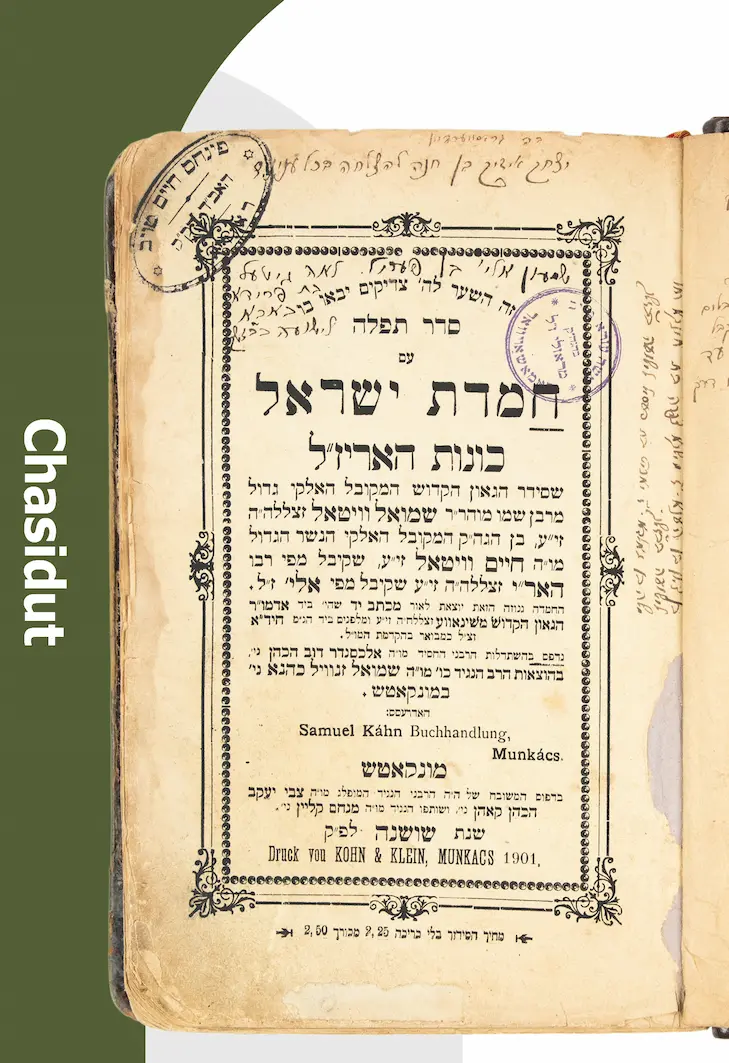
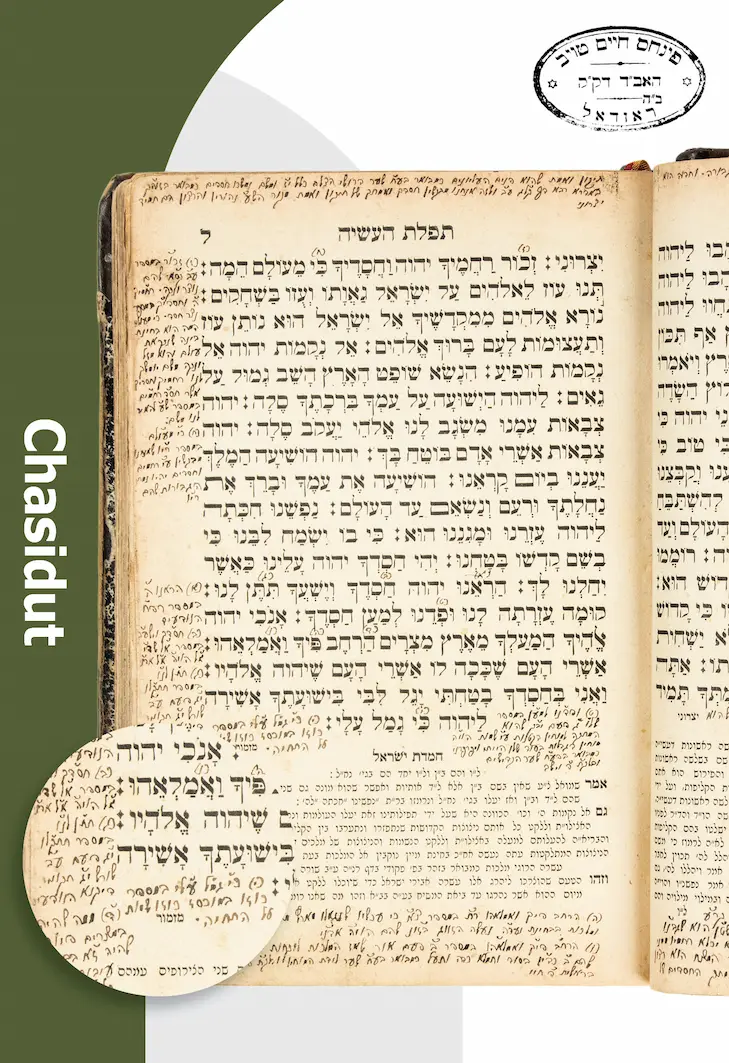
The Rozla’s Personal ‘Siddur – Kavanos Ha’Ar”i’ with his Handwritten Kabbalistic Chiddushim Siddur Chemdas Yisrael with kavanos of the Arizal edited by Rabbi Shmuel Vital, son of Rabbi Chaim Vital. An important and widely acclaimed Kabbalistic siddur. The title page bears the seal of the holy Admor and kabbalist, Rabbi Pinchas Chaim Taub of Rozla. The leaves of this siddur and its flyleaves feature dozens of handwritten Kabbalistic chiddushim, gematrios and combinations of sacred letters, all in the Admor’s writing. The chiddushim in the beginning of the siddur are marked with the time and date and when they originated in his holy mind. The following presents several examples: “It came to my mind at the time of shaking the [lulav] on Chol Hamoed Succos, Year 5617…” “A Yichud rose to my mind on Thursday, Parshas Chukas, during prayers…” “It came to my mind on Leil Shabbos Kodesh Parshas Chukas while reciting Kiddush in [the year] 5612…” “It came to my mind on Thursday, Parshas Re’eh 5628 in Carlsbad…” “A Yichud rose to my mind, ‘And You are exalted forever, Hashem, ’ on Thursday, Parshas Nitzavim, 5619…” The title page also features the seal of Rabbi Pinchas Chaim’s son, the Admor Rabbi Moshe Ezra Taub of Szamosújvár-Gherla, Transylvania, Hy”d. Lists of kvittelach appear on the title page of the siddur and are also interspersed among its pages. Rabbi Pinchas Chaim Taub of Rozla (1867-1936) was the son of the Admor Rabbi Yehuda Tzvi of Rozla (the Second), and a direct male descendant of Rabbi Yitzchak Eisik of Kaliv. He was a close disciple and son-in-law of the Admor Rabbi Eliezer Tzvi Safrin of Komarno, and privileged to know his maternal great-grandfather the Admor Mahari of Komarno. Rabbi Pinchas Chaim was renowned for his astounding brilliance and fluency in Kabbalah, and his contemporary Chassidic Admorim all honored and esteemed him greatly. The Admor Rabbi Tzvi Elimelech of Bluzhov once remarked that Rabbi Pinchas Chaim was “singular in his generation”, and when the latter once visited the Ahavas Yisrael of Vizhnitz, the Admor dressed in Shabbos garments in honor of his illustrious guest. (See more in his son’s sefer Aveidas Haperach). Rabbi Pinchas Chaim Taub’s grandson was the Admor of Kaliv Zt”l. The present Siddur Chemdas Yisrael was printed based on a manuscript in the possession of the Chida. The manuscript reached the hands of the Admor Rabbi Yechezkel of Shinova who later handed it to the Minchas Elazar for printing. Munkacs, 1901. First Edition. Page Count: [4], 280 leaves. Page Size: 23 cm. Condition: Good, with signs of use, especially on leaves of Kiddush. Original binding; preserved in new case. ................................................. ............................................. The Phenomenal Segulah of the Siddur “…Even one who does not engage in the Hidden [Torah], my advice to him is that he should purchase this siddur so it shall serve as an excellent protection in his home against plague and illness, and for bountiful blessing and success, children, longevity and prosperity…” (Approbation of Imrei Yosef of Spinka). “It is a segulah for the body and soul, to protect them from any pain and damage, with this holy siddur in his house” (Approbation of the Admor Rabbi Yosef of Kosson). .................................... .................................................. ........ Any inquiries about this lot ? We are available also on WhatsApp >>>
Lot : 129

The Yishmach Moshe Father of the Sighet-Satmar Dynasty Sacred copy with distinguished
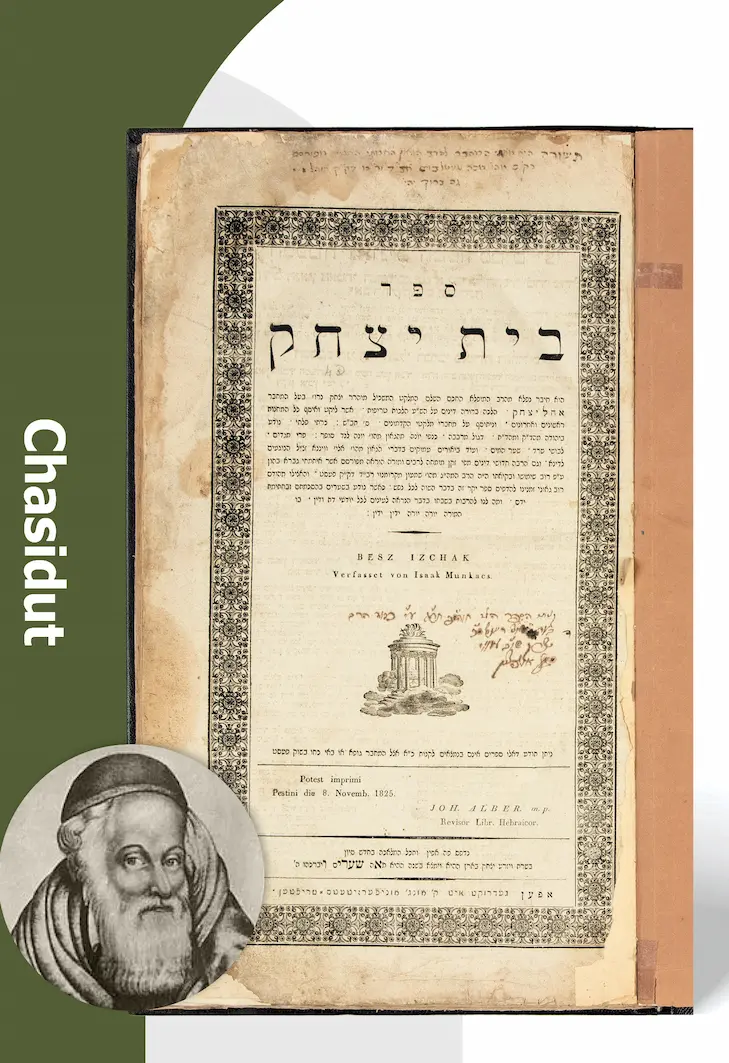
The Yishmach Moshe Father of the Sighet-Satmar Dynasty Sacred copy with distinguished provenance!‎ The Yismach Moshe’s Personal Copy of Sefer Beis Yitzchak gifted by the author. Ofen, 1827‎ Sefer Beis Yitzchak on hilchos treifos with a handwritten dedication by the author Rabbi ‎Yitzchak ben Rabbi Eliezer of Munkacs to the Yismach Moshe, Rabbi Moshe Teitelbaum of Ujhel. Father of the Sighet-Satmar Dynasty.‎ The Beis Yitzchak inscribed a  personal dedication in the upper part of the title page.‎ He writes: “A gift from me, the  author, to the Rabbi… who is well known, Rabbi Moshe Teitelbaum, ‎Av  Beis Din and Rosh Mesivta of the Ohel community, may he also be blessed.”‎ This present sefer includes hundreds of handwritten comments, remarks and chiddushim on the ‎page  margins. (Seemingly, these were not written by the Yismach Moshe.) ‎ Rabbi Moshe Teitelbaum (1759-1841),   author of the Yismach Moshe, was a leading scholar of his time and one of the  celebrated teachers of Chassidus in Hungary. He is the father of the Sighet-‎Satmar dynasty and was renowned as a miracle-worker. It is told  that when the Ksav Sofer took ill, ‎his father the Chasam  Sofer sent word to the Yismach Moshe to pray on his behalf. The Beis Yitzchak was an expert  in the laws of shechitah and bedikos, and his sefarim Beis Yitzchak ‎and Ohel Yitzchak were used extensively by shochtim, bodkim, and Rabbanim during his era  Ofen, 1827. First edition. Page Count: [2], 87 leaves. Size: 40 cm. Condition: ‎Creases,   signs of use and reinforced margins. New binding.‎ Genazym 2020 ................................................ Any inquiries about this lot ? We are available also on WhatsApp >>>

Lot : 130

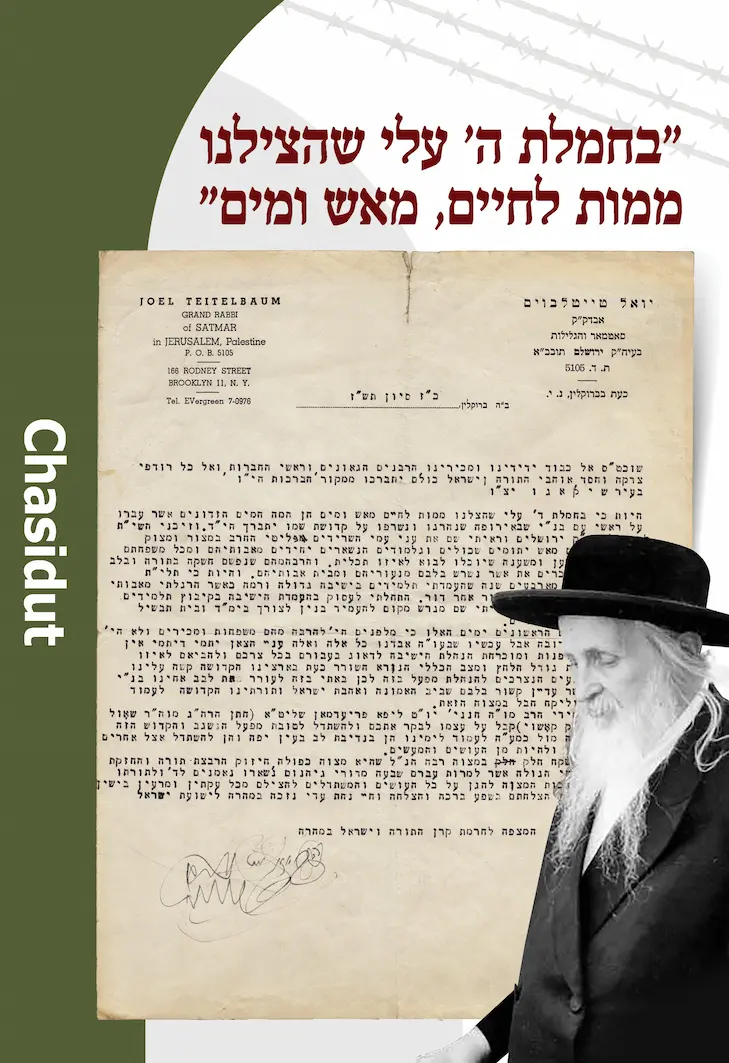
“With Hashem’s compassion, He rescued me from death to life” Historic Letter
“With Hashem’s compassion, He rescued me from death to life” Historic Letter by the Admor Rabbi Yoel Teitelbaum of Satmar Regarding the Founding of the Satmar Yeshivah in Jerusalem. 1947 Moving letter by the Admor  Rabbeinu Yoel of Satmar regarding the founding of the Bayit Leplitim Orphanage  for orphaned child Holocaust survivors. The letter opens with an  emotional expression of gratitude to Hashem, “With Hashem’s compassion upon me, that He rescued me from death to life, and from fire and water, from the cruel waters that passed over the heads of Bnei Yisrael in Europe who were slaughtered and incinerated while sanctifying His Holy Name, may Hashem avenge their blood. Hashem Yisborach granted me the privilege of arriving in the holy city of Jerusalem where I saw the destitute of my nation, survivors of the sword, suffering distress and privation, those who were salvaged from the inferno, yet who remain orphaned, bereaved and alone, the sole scions of their parents and entire families, with no one to aid or support them… And being that, praises to Hashem Yisborach, for over forty years, I have taught scholars in a great, glorious yeshivah, as I was instructed by my ancestors and holy Rabbis, generation after generation, I am endeavoring to found a yeshivah and assemble students who are remnants of the Diaspora. I purchased a lot where a building can be constructed to serve as a beis medrash, kitchen and accommodations for the bachurim.” The Admor writes that he is dispatching his disciple Rabbi Chananya Yom Tov Lipa Friedman, a son-in-law of Rabbi Shul Brach of Kashoy, to Chicago in order to raise money to found the yeshivah and orphanage. The Admor Rabbeinu Yoel Teitelbaum of Satmar (1887-1979), author of the Divrei Yoel, was the spiritual leader of the post-Holocaust Chassidic renaissance. Serving as a father and guide to  thousands of Holocaust survivors, he rebuilt the Chassidic court of Satmar both  in the United States and Eretz Yisrael. During his brief sojourn in Eretz Hakodesh after the Holocaust, the Satmar Rav invested enormous energies to  fortify pure Jewish education, and rebuilt the Satmar yeshivah in Yerushalayim. Brooklyn, 27 Sivan, 5707 (1947). Typewritten on stationery and autographed by Rabbi Yoel of Satmar. Condition: Fold reinforced on back. Printed in Igros Maharit Letter 309. ................................................ Any inquiries about this lot ? We are available also on WhatsApp >>>
Lot : 131

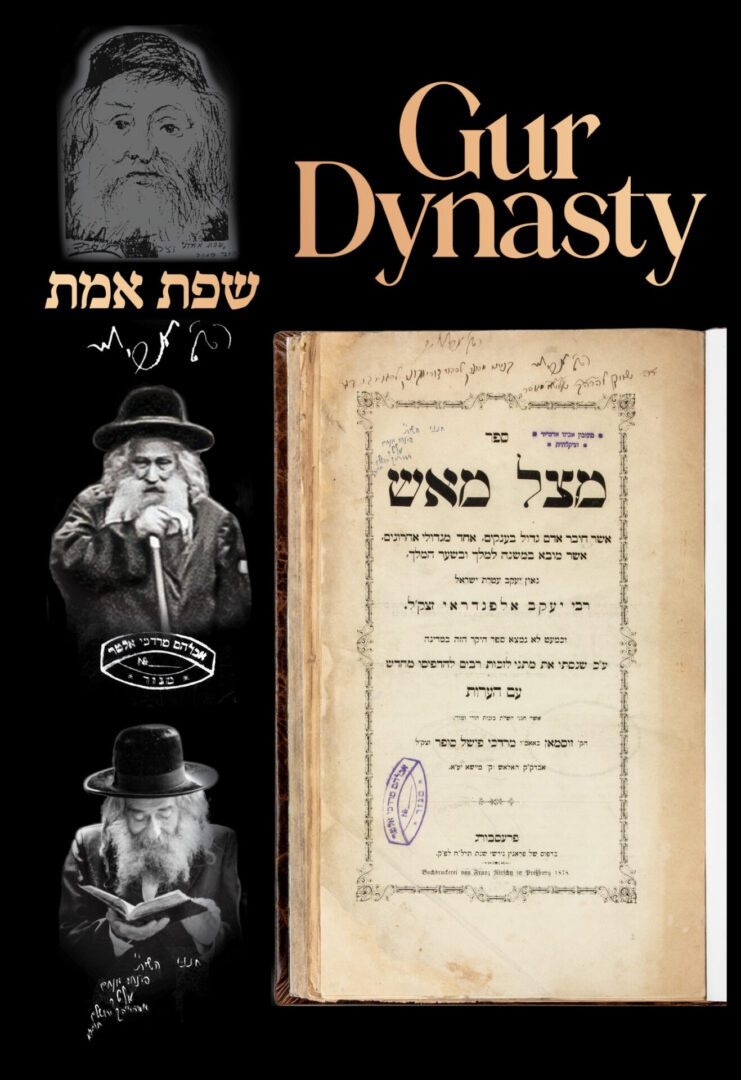
‎Sefer Autographed by the Holy  Admorim of Gur The Sfas Emes The
‎Sefer Autographed by the Holy  Admorim of Gur The Sfas Emes The Imrei Emes The Pnei ‎Menachem ‎ This sefer Mutzal Me’eish was in the possession of the holy Sfas Emes the Admor Rabbi Aryeh Leib Alter of Gur, and bears his holy handwritten autograph, the sefer was bequeathed to his son the Imrei Emes, and later to his grandson the Pnei ‎Menachem of Gur.‎ The holy Sfas ‎Emes inscribed “Hak[atan] Aryeh Leib” twice on the title page of the sefer Mutzal Me’eish. The title page bears as well the stamp of ‎the Imrei Emes “Avraham Mordechai Alter of Gur” and an autographed inscription handwritten by his ‎son the Pnei Menachem: “Hash[em] Yis[borach] has granted me, Pinchas Menachem ‎Alter of Yerushalayim Ir Hakodesh, may she be speedily rebuilt”. The sefer also bears the stamp “From the estate of our father the Admor Ztvkl”l” which ‎was stamped on the books of the 'Sfas Emes' after his petirah.‎ The Admor Rabbi Aryeh Leib Alter of Gur (1847-1905), renowned as Sfas Emes after his ‎sefer, was the grandson, prime disciple and successor of the Chiddushei Hari’m, founder of ‎the Gur dynasty. Following the passing of his grandfather in 1866, he was crowned Admor of ‎Gur at the young age of 19, yet he only accepted the leadership as Admor four years later. ‎Under his leadership, Gur flourished and expanded into the largest Chassidus in Poland, and his genius and brilliant method of illuminating the wisdom of Chazal drew thousands to flock to his Court. Both his sefarim the Sfas Emes on the Torah and his chiddushim on Shas are ‎regarded as fundamental works in Torah literature.‎ The Admor Rabbi Avraham Mordechai Alter of Gur (1866-1948), renowned as the Imrei ‎Emes, was the son of the Sfas Emes. He succeeded his father as Admor of Gur in 1905, ‎filling this position for 43 years. The Imrei Emes was one of the founders of Agudas Yisrael ‎and amongst the leaders of Torah Jewry during the catastrophic era of both World Wars. A tzaddik and ‎genius who mastered both the Revealed and Hidden Torah and influenced thousands, he left ‎an indelible impact on the Torah world.‎ The Admor Rabbi Pinchas Menachem Alter (1926-1996), renowned as the Pnei ‎Menachem, was the son of the Imrei Emes and seventh Admor in the glorious Gur dynasty. ‎A genius in all realms of Torah, he served for many years as Rosh Yeshivah of Yeshivas ‎Sfas Emes.‎ ‎ ‎ Description of sefarim:‎ ‎1. Mutzal Me’eish – by Rabbi Yaakov Alfandri with glosses by Rabbi Eliezer Zussman ‎Sofer, author of Yalkut Eliezer. Pressburg, 1878. First Edition. Page Count: [3], 102 sides. ‎Author’s stamp appears on flyleaf.‎ ‎bound together with sefer  Shu”t Rishmei Sheilah – by Rabbi Yisrael Moshe, Av Beis Din of Karnik. Warsaw, 1811. ‎ First Edition.  this sefer has the seal of the Imrei Emes and an inscription and autograph of the Pnai Menachem. Page Count: [3], 106, 18 leaves.‎ Condition: Both sefarim have professional restorations on the margins of assorted leaves ‎and are bound together in an elegant new leather binding.‎ Photo of the Sfas Emes is from the sefer Rinah V'Yeshuah. ................................................ Any inquiries about this lot ? We are available also on WhatsApp >>>

Lot : 132

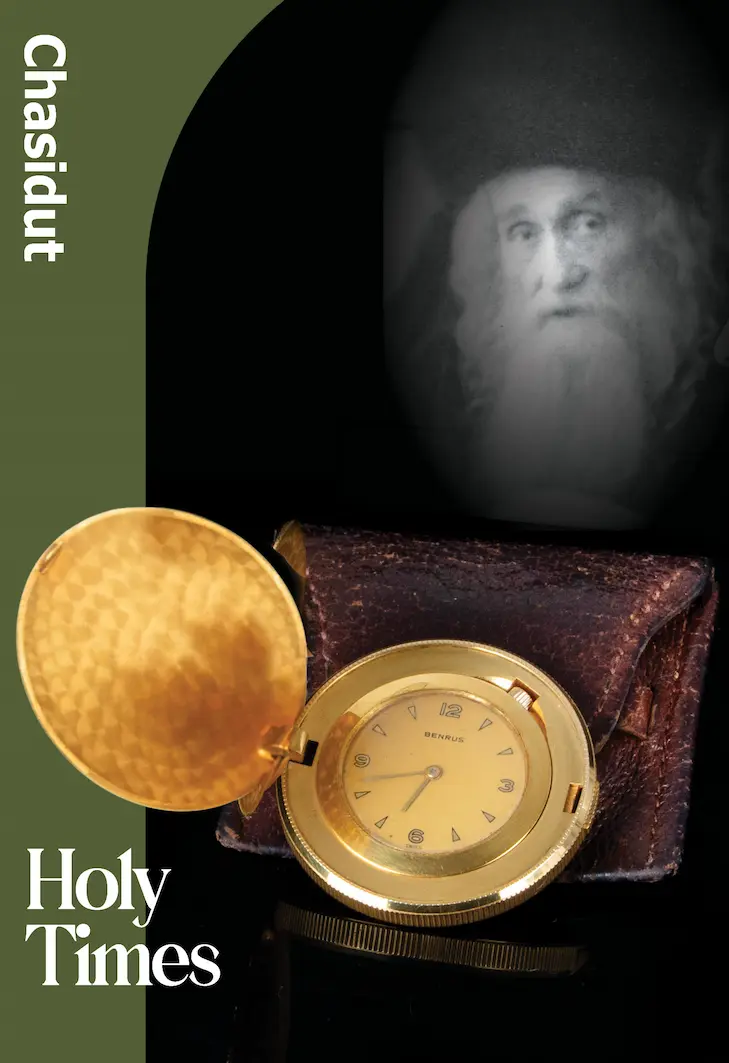
The Beis Yisrael of Gur’s Personal Gold Pocket Watch Gold pocket watch
The Beis Yisrael of Gur’s Personal Gold Pocket Watch Gold pocket watch belonging to the Admor Rabbi Yisrael Alter of Gur, known as the Beis Yisrael. The Beis Yisrael used this pocket watch daily for many years until his passing. The Beis Yisrael was renowned for his extreme punctuality and the immense value he assigned to time. Every moment is priceless, he often repeated, and would check his pocket watch numerous times throughout the day. The present gold pocket watch was gifted to the Beis Yisrael by Harav Hachassid Rabbi Avraham Binyamin Silberberg, Av Beis Din of Petersburg (1892-1963) upon his arrival to Eretz Yisrael during the early years of the Beis Yisrael’s leadership. The watchcase is engraved with the inscription “Gifted to the honored Admor of Gur shlit”a by Avraham Binyamin ben Hinda”. Following the passing of the Admor, his widow Rebbetzin Perel, gifted the gold watch to the chassid Rabbi Efraim Shraga Silberberg, son of the aforementioned Avraham Binyamin Silberberg. A signed affidavit by Rabbi Shmuel Silberberg, son of Rabbi Efraim Shraga Silberberg who inherited the watch from his father, is attached. There is also another affidavit confirming the authenticity of the watch, written and signed by the Pnei Menachem’s son Rabbi Yitzchak Dovid Alter, Rosh Kollel L’Hora’ah of the Gur Beis Medrash in Bnei Brak. In his letter, he attests that the pocket watch was used daily for many years by his uncle, the Beis Yisrael of Gur. Description: 18-karat gold Benrus pocket watch. This luxury watch company was founded in the 1930s by a Jewish proprietor named Benjamin Lazarus. The present watch face is branded with the company name Benrus above and Swiss below, and is engraved with the marking 18K. The front of the case is engraved with the image of a king and inscription “ Sovereign”, while the opposite side features the company’s logo – a sand clock with wings.   Item Size: Diameter of watch including case: 4 cm The watch is in good condition and preserved in its original leather satchel, which the Admor also kept in his pocket throughout the day. ................................................. ............................................. A zeiger iz dus beste mussar sefer The Admor Beis Yisrael of Gur was renowned for his remarkable punctuality and strict adherence to schedule, an attribute that he inherited from his own father the Imrei Emes, whom many claimed to set their watches based on his arrival to Shacharis. The present gold watch was the Beis Yisrael’s faithful companion throughout many years, and he checked it numerous times throughout the day to ensure that he was on schedule. He once expressed the concept of time in a letter of chizuk that he wrote to one of his chassidim: “A zeiger iz dus beste mussar sefer… A watch is the best mussar sefer, as he sees that time is passing; the hour has passed, and it will not return” ( Kovetz Tzfunos 5 p. 63). ................................................. ............................................. The Admor Rabbi Yisrael Alter (1895-1977) was renowned as the Beis Yisrael of Gur. A son of the Imrei Emes of Gur, as a child until the age of 10 Rabbi Yisrael was privileged to study and absorb the Torah of his grandfather, the Sfas Emes of Gur. Upon his father’s instruction, the Beis Yisrael founded and guided a group of “bnei aliyah” from the Gur chassidus during his father’s lifetime. Following the passing of the Imrei Emes in 1948, the Beis Yisrael succeeded his father as Admor of Gur. During the ensuing years, he rebuilt the chassidus in Eretz Yisrael from the ruins of the Holocaust inferno, restoring the crown of Torah and chassidus Gur to its glory. The Beis Yisrael also served as chairman of Moetzes Gedolei HaTorah in Eretz Yisrael, and in this capacity, left an indelible mark upon charedi society in Eretz Yisrael. ................................................ Any inquiries about this lot ? We are available also on WhatsApp >>>
Lot : 133

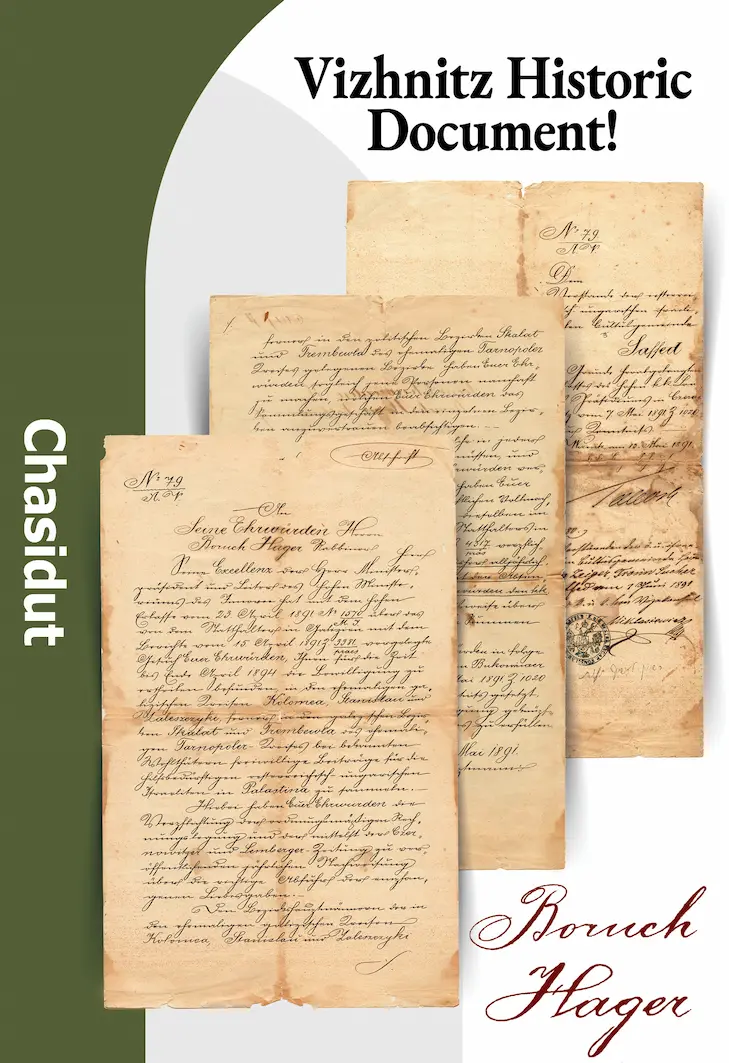
Vizhnitz Historic document! Letter by the Austro-Hungarian Empire to the Admor Rabbi
Vizhnitz Historic document! Letter by the Austro-Hungarian Empire to the Admor Rabbi Baruch Hager of Vizhnitz Authorizing the Collection of Funds for Kollel Galicia. 19 century An historic document addressed  to the Admor Rabbi Baruch Hager of Vizhnitz, author of Imrei Baruch by the regional governor on behalf of the Austro-Hungarian  Empire, approving the Admor’s request to fundraise for Austrian and Hungarian  Jews dwelling in Israel. “The Prime Minister and Minister  of the Interior issued an order in April 1891 granting you approval to collect  money as donations to benefit Austro-Hungarian citizens living in Palestine. [This order] is valid for a period of three years, until April 1894.” The approval is on the condition of appointing honest fundraisers who will manage the donations responsibly with  full personal supervision of the Admor, and to submitting detailed financial  reports to the government and publishing them in newspapers printed in Blumberg  and Czernowitz. The letter bears the governor’s  signature and the signature and stamp of the Austro-Hungarian Consul in Tzfas. A copy of the letter was sent to Rabbi Moshe Zeiger (Rabbi Moshe Charag) who was appointed to direct Kollel Vizhnitz in Tzfas. The Admor Rabbi Baruch Hager of Vizhnitz (1845-1893), son of the Admor Rabbi Menachem  Mendel of Vizhnitz and grandson of the Admor of Ruzhin, was the author of Imrei Baruch and second Admor of the glorious Vizhnitz dynasty. A tzaddik and one  of the undisputed spiritual leaders of his generation, he devoted great efforts  to fundraising for Kollel Galicia to support the poverty-stricken members of  the Yishuv in Eretz Yisrael. He collected and distributed enormous sums of  money to tzedakah, and when he passed away in his prime, many were left bereft  and lacking financial support. Vizhnitz, 1891. Folded leaf. Page Size: 33x21 cm. 3 handwritten sides. Condition: Stains and tears, but all text intact. Attached is a copy of the letter  in German with a full English translation. ................................................ Any inquiries about this lot ? We are available also on WhatsApp >>>

Lot : 134

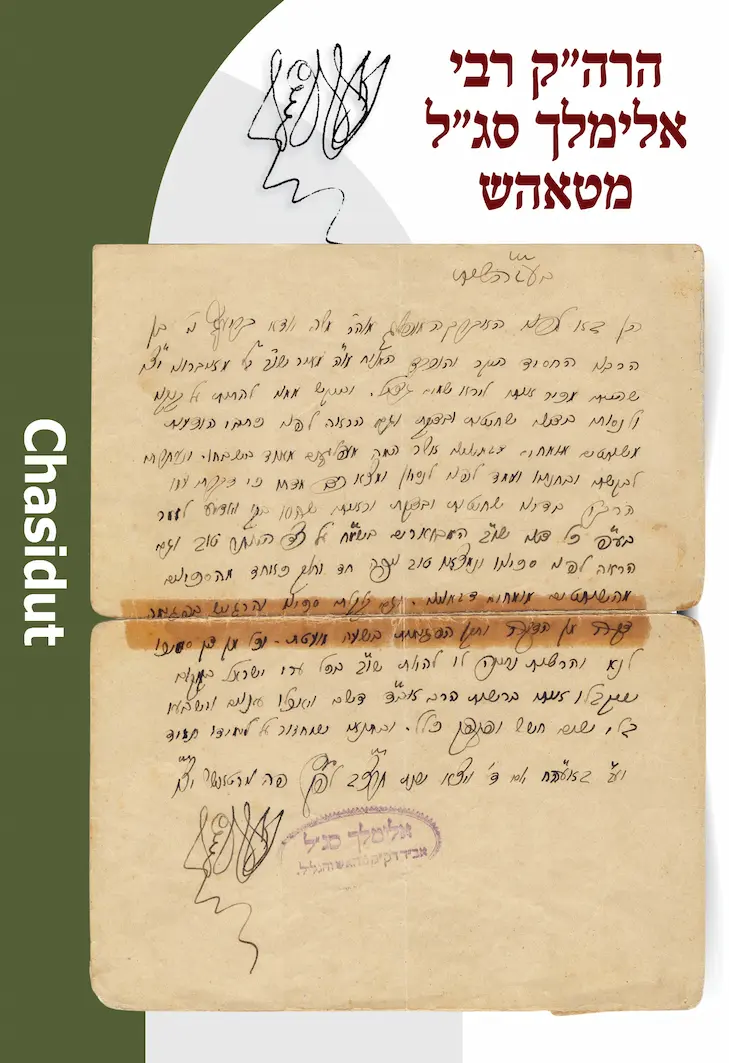
Handwritten & Autographed Semichah by the ‎Admor Rabbi Elimelech of Tosh. Nyírtass,
Handwritten & Autographed Semichah by the ‎Admor Rabbi Elimelech of Tosh. Nyírtass, 1932‎ Rare handwritten, autographed and stamped ordination letter for a shochet and bodek in the ‎holy hand of the Admor and miracle-worker, Rabbi Elimelech Segal-Loewy of Tosh.‎ The Admor Rabbi Elimelech Segal-Loewy of Tosh (1865-1943) was renowned as a ‎miracle-worker and revered for his great piety and sanctity. The son of the Admor Rabbi ‎Meshulam Feish Halevi of Tosh, the first Admor of the Tosh dynasty, he married the ‎daughter of Rabbi Yitzchak Eisik Weiss, Av Beis Din of Sveliava. Rabbi Elimelech was born ‎to his parents at a later stage in their lives. His father traveled to Lizhensk to pray at the tomb of ‎the legendary Rabbi Elimelech of Lizhensk that he be blessed with a son, upon fulfillment of the tefilla, he named him after Rabbi Elimelech. When Rabbi Elimelech was a young child, his father would fondly call him “the Rebbe Rabbi Elimelech”. Rabbi Meshulam Feish passed away several years later, leaving his son a young orphan; he was raised by his brother-in-law the Admor of ‎Kasani, author of Bnei Shileshim. As he matured, Rabbi Elimelech became a close disciple ‎of the Yitev Lev of Satmar, the Admor Rabbi Elazar Tzvi of Komarno, and the Admor Rabbi ‎Tzvi Elimelech of Bluzhov. His grandson was the Admor Rabbi Meshulam Feish Loewy of ‎Tosh-Canada Zt”l who passed away recently.‎ Nyírtass (Tosh), 1932. Handwritten, autographed and stamped. Page Size: 21x17 cm. ‎Condition: Dark stain in center of leaf (remnant of tape), yet all text is intact.‎ Excerpt: ‎“Behold this exceptional gentleman appeared before me…and requested that I test and question him on the laws of shechita and bedikos, and I consented to his request. I ‎tested him, and he passed the test… For I spoke to him at length regarding the laws of shechita and bedikos, and I saw that he is fluent and can properly recite all laws of ‎shechitah and bedikah by heart as explained by the S[imlah] Ch[adashah] in the optimal way.‎ ‎“He also showed me his knife, which I found to be in good condition, smooth and sharp… I ‎also damaged his knife, and he felt the slight defect and immediately repaired it in little time… ‎Permission is hereby granted to him to become a shochet and bodek in all Jewish cities… in the ‎place where he is accepted with permission from the local Rabbi and Av Beis Din…providing ‎that he reviews his studies constantly.” ‎ .................................... ............ Any inquiries about this lot ? We are available also on WhatsApp >>>
Lot : 135

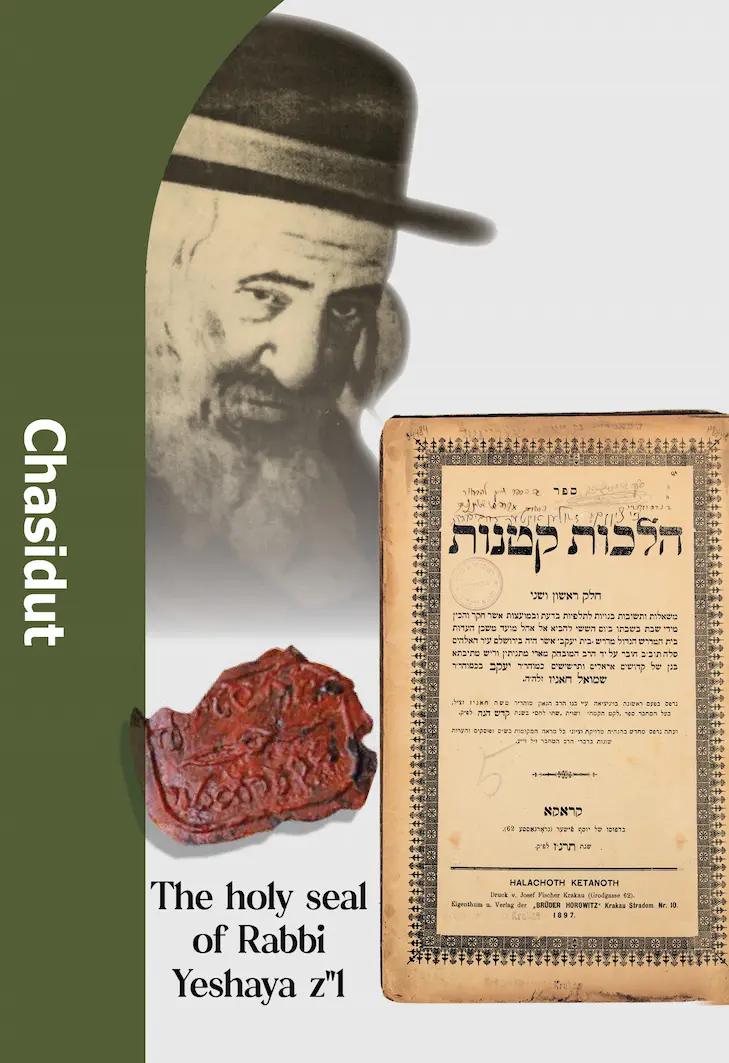
“This sefer belongs to the honorable holy Admor Rabbi and tzaddik renowned
“This sefer belongs to the honorable holy Admor Rabbi and tzaddik renowned throughout the world Who performs chessed for thousands, a holy flame and miracle worker, The honorable and holy Rabbi Yeshaya Steiner shlit”a”  Personal sefer of Rabbi Yeshaya of Kerestir!  Halachos Ketanos. Cracow, 1897 The flyleaf  features the red wax seal of Rabbi Yeshaya’le of Kerestir. One can clearly distinguish the words “Yeshaya Steiner B [Badrag] Kerestir”. and a long detailed inscription regarding Rabbi Yeshaya’le’s provenance: “This sefer belongs to the honorable holy Admor Rabbi and tzaddik renowned throughout the world  Who performs chessed for thousands, a holy flame and miracle worker, the honorable and holy Rabbi Yeshaya Steiner shlit”a”. Both the title page and final page feature the sacred autograph of Rabbi Yeshaya of Kerestir’s son and successor, the Admor Rabbi Avraham Steiner (1883-1927) who perpetuated his father’s sacred legacy of charity and loving-kindness and generated miracles and salvations for thousands of Jews. He passed away at a young age, when he was but 44 years old, and was buried beside his father in the Ohel in Kerestir. The sefer also bears the seal of the pious Rabbi Reuven Chaim Klein, son-in-law of Rabbi Yeshaya of Kerestir and author of Matteh Reuven. The Admor Rabbi Yeshaya Steiner (1852-1925), known far and wide as Rav Yeshaya’le Kerestirer, was a paragon of holiness, loving-kindness and charity who performed miracles and wonders for the masses and distributed colossal sums of money for charity. His door was open to every Jew, and every meal in his home was a communal gathering, as the poor and hungry came together to eat at his table. Rabbi Yeshaya’le was the prime disciple and personal aide of the Admor Rabbi Tzvi Hirsch of Liska who praised his student’s holiness and spiritual greatness. He was ordained by both the Admor of Sanz and Rabbi Mordecha’lei of Nadvorna to become Admor and leader of the community. Shu”t Halachos Ketanos by Rabbi Yaakov Yisrael Chagiz. Cracow, 1897. Printed on brown paper. Original binding is detached, although otherwise in good condition. Preserved in an ornate new leather box. Genazym 7 lot 49 ................................................ Any inquiries about this lot ? We are available also on WhatsApp >>>
Lot : 136

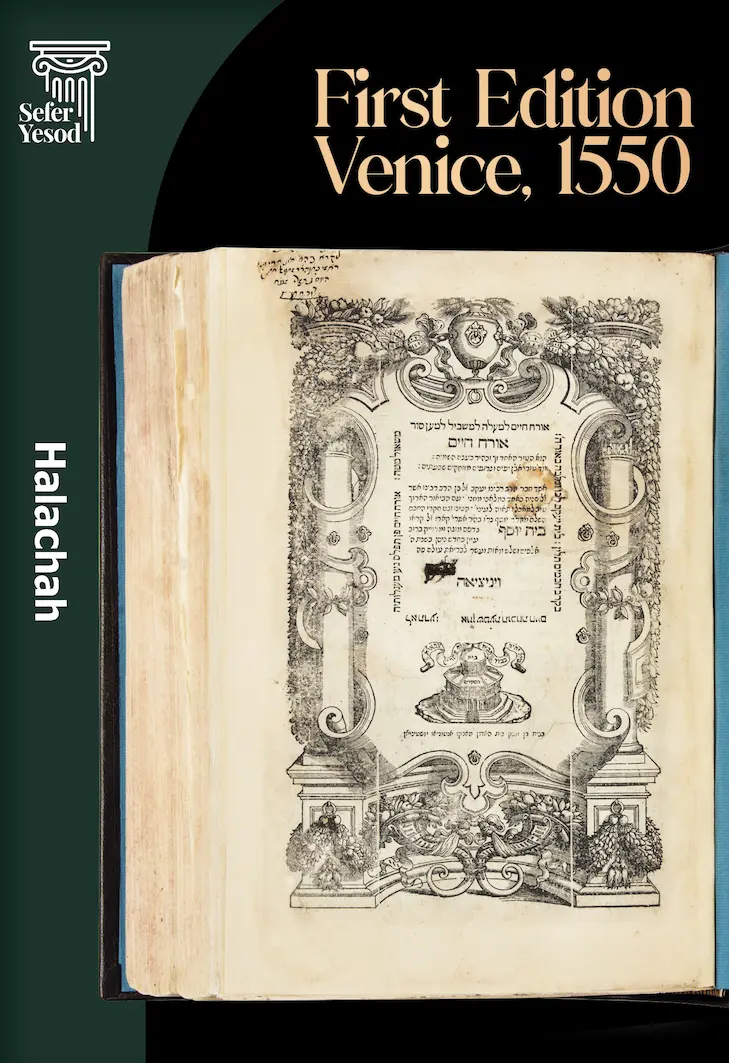
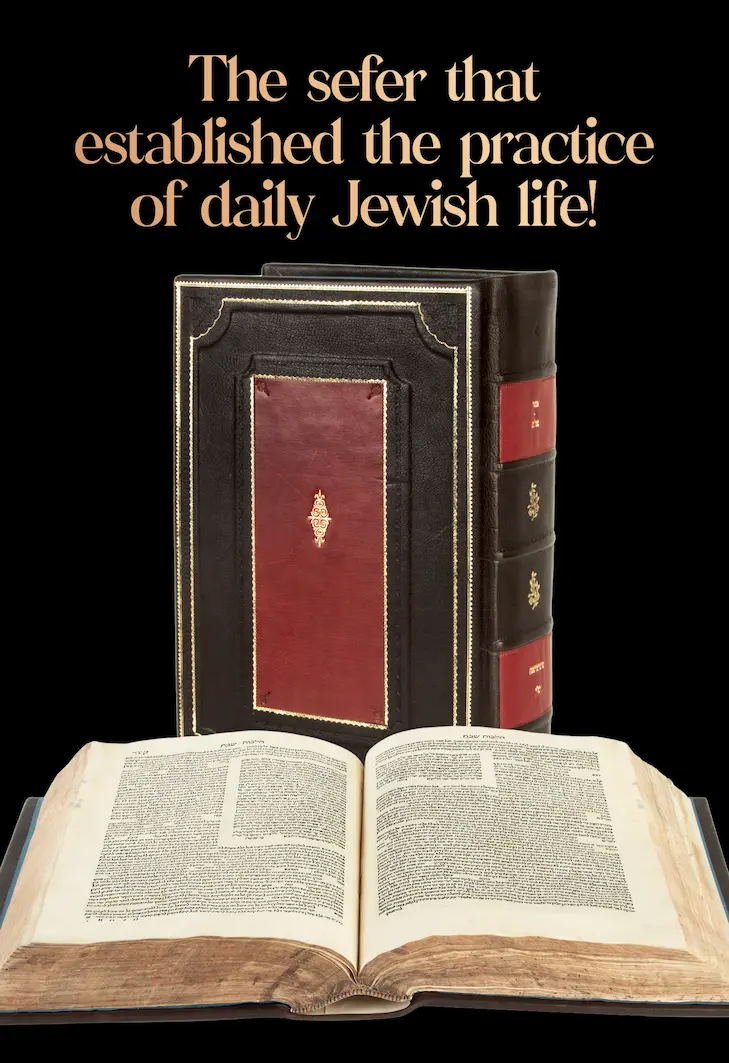
Sefer Yesod! The sefer that established the practice of Day-to-Day daily Jewish
Sefer Yesod! The sefer that established the practice of Day-to-Day daily Jewish life! Beis Yosef Orach Chaim. First Edition. Venice, 1550 Tur Orach Chaim by Rabbi Yaakov son of the Rosh, bordered by the commentary of the Beis Yosef by Rabbi Yosef Karo. This first edition bais Yosef was published by the author himself! Bais Yosef - Orach Chaim, which encompasses all halachos applicable to daily life, was the first work of Rabbi Yosef Karo to ever be printed, and it is also the most commonly used volume for its practical applications. Orach Chaim establishes the halachos governing the day-to-day life of a Jew. Rabbi Yosef Karo’s (1488-1575) Beis Yosef super commentary established the foundations of halachah for all generations. In his monumental work, he compiled sources of all halachos and rulings of the Poskim, along with the debates among the Rishonim, and according to his conclusions in the Bais Yosef he determined the halachic ruling in the Shulchan Aruch. Rabbi Yosef Karo authored his magnum opus over the course of 20 years, and then devoted approximately 12 more years to edit and prepare it for print. He named his work Beis Yosef at the instruction of the Maggid, an angel that visited him and taught him Torah. [See Maggid Meisharim, Vezos Habrachah. “And it spread throughout all of Yisrael, finding favor and acclaim in the eyes of all who saw it. And all the wise men and Rabbis exalted it and placed it as a crown on their heads, and elevated it above all the sefarim that preceded it…Our eyes see that anyone who delves into it, determines and teaches the law from it, and does not lift a hand to decree the law or teach the straight path without it…”(kneset HaGdola) Large thick volume. Complete and intact copy with all index pages printed in the beginning (“Pirtei Remazei Tur Orach Chaim” and “Remazei Hadinim Hamechudashim Hanirmazim B’biur…Beis Yosef”). The last leaf contains a large printer’s emblem of Marco Antonio Giustiniani. Venice [1550]. First Edition. 24, 459, [1] leaves. Page size: 35 cm. Professional restoration of title page margins and of approximately 50 first pages. Light water stains, primarily in margins.  new leather binding. Additional Information: On the margins of the sefer there are many haggaos written during the time of the printing in Sephardic Rabbinical handwriting .These haggaos are of similar character to those found in the sefer Bedek Habayis by Rabbi Yosef Karo which entails corrections and supplements to the Beis Yosef. Some of the annotations are cropped at the margins.   Stefansky, Sifrei Yesod # 152 ....................................... Any inquiries about this lot ? We are available also on WhatsApp >>>

Lot : 137

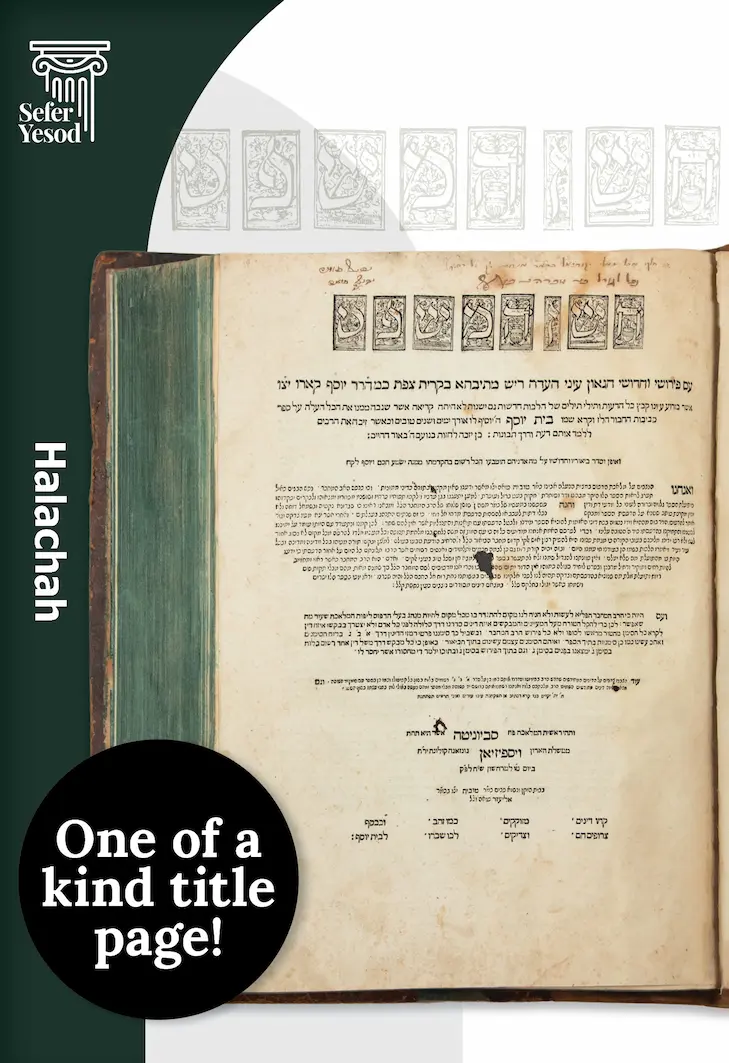
Sefer Yesod Beis Yosef Choshen Mishpat. First Edition. Sabbioneta, 1558-1559 One-of-a-kind title
Sefer Yesod Beis Yosef Choshen Mishpat. First Edition. Sabbioneta, 1558-1559 One-of-a-kind title page! Fundamental Sefer on Laws of Finances Tur Choshen Mishpat by Rabbeinu Yaakov son of the Rosh, bordered by the Beis Yosef commentary by Rabbi Yosef Karo. This first edition Bais Yosef was published by the author himself! Rabbi Yosef Karo’s (1488-1575) Beis Yosef supercommentary established the foundations of halachah for all generations. In his monumental work, he compiled sources of all halachos and rulings of the Poskim, along with the debates among the Rishonim, and according to his conclusions in the Bais Yosef he determined the halachic ruling in the Shulchan Aruch. “And it spread throughout all of Yisrael, finding favor and acclaim in the eyes of all who saw it. And all the wise men and Rabbis exalted it and placed it as a crown on their heads, and elevated it above all the sefarim that preceded it…Our eyes see that anyone who delves into it, determines and teaches the law from it, and does not lift a hand to decree the law or teach the straight path without it…” Rabbi Yosef Karo authored his magnum opus over the course of 20 years, and then devoted approximately 12 more years to edit and prepare it for print. He named his work Beis Yosef at the instruction of the Maggid, an angel that visited him and taught him Torah. [See Maggid Meisharim, Vezos Habrachah.] Singular Title Page! Unique title page! there is no other known identical title page Printed only on this title page is a lengthy paragraph regarding the dispute between the printers of Sabbionetta and Rabbi Moshe ben Shushan who had been appointed by Rabbi Yosef Karo to oversee the printing of his sefer (see printed declaration that appeared in Genazym Catalog 10 #249). The printers here accuse Rabbi Moshe ben Shushan of deliberately delaying the printing of the Bais Yosef unjustly. The disagreement between the printers and Rabbi Moshe ben Shushan grew to such proportions that the Rabbanim of Tzfas and Mantua were forced to intervene and eventually lead the parties to a compromise. Apparently, the concessions led to the omission of the present title page from other copies, leaving only the present copy as testimony to its creation. This controversy is mentioned and discussed by rabbi Yoseff Karo himself see Shu”t Avkas Rochel Ch. 193 by Rabbi Yosef Karo. Yosef Bachiri Press, p. 46 and abovementioned Genazym Catalog 10. Additional differences in this unique title page, is the mention that the sefer was printed in 800 copies which is not mentioned in any other source, also in this title page the date of the beginning of printing is noted “And the beginning of the work was …on the 15th day of Mar Cheshvan, 5518 (1559)” while in in the other title pages the printing date is recorded a few months later (Rosh Chodesh Adar, 5419 [1559]), making this sefer from the first copies produced. In 1931, Yeshaya Sonne purchased a copy of this sefer with a similar title page (but with variants) for the Bodleian Library in Oxford and published it in his article entitled “Rabbi Moshe ben Shushan and the Sabbionetta Printers” (Kiryat Sefer Vol. 8 Jerusalem, 1931 pps. 513-519). Sabbioneta, 1559. First Edition. Page Count: 332 leaves. Page Size: 37 cm. Condition: Complete, good copy with minor water stains and several pages with small marginal holes. Leather-bound antique wood binding. Printer’s emblem of Tuvia Poa appears in the margin of the last page. Bibliography: Stefansky, Sifrei Yesod #152 Provenance: The owner signs his name on the title page: “This is my portion from my labor, Yekusiel son of my father and master Menachem Katz z”l Rapa [=Rappaport].” The owner was presumably the son of the author of Minchah Belulah, It later passed by inheritance to his son Avraham Katz. Yechiel Poa Nesanel Poa (Nesanel son of Yechiel Poa was a Jewish printer in Amsterdam between the years 1602-1615, see Mechkerei Sefer p. 368). ....................................... Any inquiries about this lot ? We are available also on WhatsApp >>>
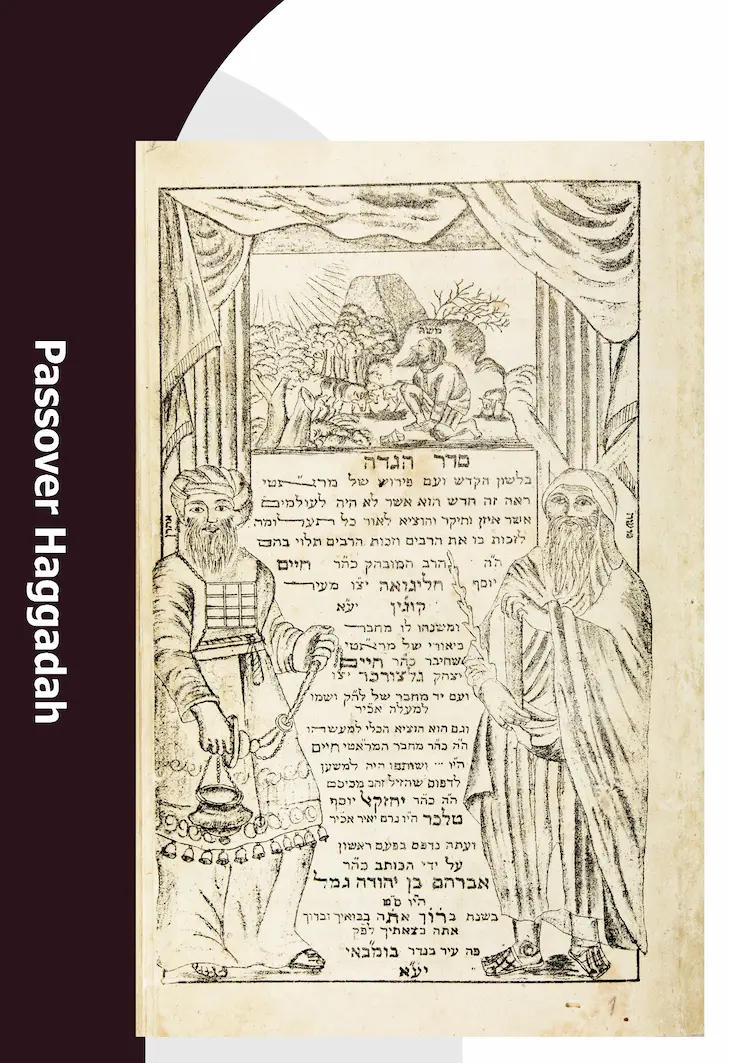
Lot : 138

Bedek Habayis by the Beis Yosef. Venice, 1606 Comments, amendments and supplements
Bedek Habayis by the Beis Yosef. Venice, 1606 Comments, amendments and supplements to the Beis Yosef on all four sections of Arba Turim by Maran Rabbeinu Yosef Karo. The sefer Bedek Habayis completes Rabbi Yosef Karo’s monumental work Beis Yosef. The author himself attests that the Beis Yosef is incomplete without it. Bedek Habayis adds many chiddushim, annotations and amendments into the Beis Yosef. In his preface, Rabbi Yosef Karo writes “After Hashem has helped me compose the sefer Beis Yosef and it spread throughout the borders of Yisrael, Hashem has helped me again to return and peruse it, and I thought of additional chiddushim and additions and annotations…Also the printers omitted much of what I wrote, and I had planned to add the extra chiddushim into the second edition, but I did not succeed… Ultimately, the Beis Yosef’s wish was granted, and future editions of Beis Yosef include the Bedek Habayis interspersed within the text. Venice, 1606. Second Edition. (The first edition was printed one year prior in Salonika, 1605, due to its rarity there are hardly any known extant copies.) Page Count: 68, [2] leaves. Page Size: 20 cm. Condition: Lightly restored with several stains. Owners’ signatures. New American leather binding. Bibliography: Stefansky, Yesod #153 in Comments. ....................................... Any inquiries about this lot ? We are available also on WhatsApp >>>

Lot : 139

425 year old Complete Set of Shulchan Aruch. Venice, 1598 Four volumes
425 year old Complete Set of Shulchan Aruch. Venice, 1598 Four volumes of Shulchan Aruch by Rabbi Yosef Karo with Biur Hamilos (explanation of hard words). Complete spetacular copy with all 4 volumes bound in elaborate leather bindings. The title page verso features a foreword by the famed Bragadin printers of Italy in which they recount their efforts to print Hebrew books for their Jewish customers. Throughout the pages of the Orach Chaim volume there are marginalia with handwritten chiddushim and explanation. Venice, 1598. Orach Chaim: 102 leaves. [1], Yore Dayah 102-193, [1] leaf ( incorrect page count); Even Haezer: 56 leaves; Choshen Mishpat: [1], 57-176 with separate title pages for each volume. Condition: Good with minor stains. Title page of Orach Chaim and last page in Choshen Mishpat restored at margins. Matching bindings; preserved in attractive matching leather case. ....................................... Any inquiries about this lot ? We are available also on WhatsApp >>>
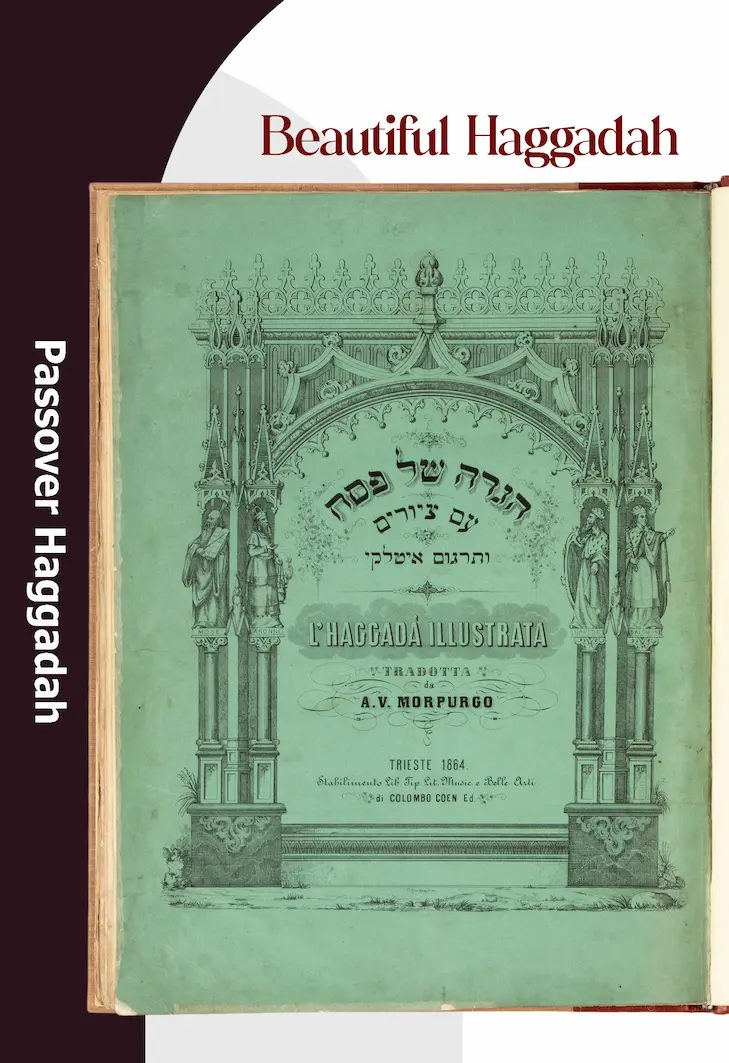
Lot : 140

The Chida’s personal autographed copy! Shulchan Aruch with Ateres Tzvi and Nachalas
The Chida’s personal autographed copy! Shulchan Aruch with Ateres Tzvi and Nachalas Tzvi. First Edition. Cracow, 1646-1650 Chiddushim, commentary and sources for Shulchan Aruch Orach Chaim by Rabbi Tzvi Katz, prime disciple of the Bach. Nachalas Tzvi is the first (!) of the Nosei Keilim of Shulchan Aruch Orach Chaim.The great Achronim, authors of Eliyahu Rabba and Pri Megadim, both cite and discuss his opinions. Rabbi Tzvi Katz was likewise the first to include glosses referencing the source of Rabbi Yosef Caro's halachic rulings in the Shulchan Aruch, preempting even the author of Beer Hagolah. This is an extraordinarily rare sefer due to the sequence of historical events that transpired at the time. In 1648-1649, (gezeiros Tac”h veTa”t) European Jewry suffered the brutal Chmielnicki massacres, and thousands were slaughtered, communities razed, and shuls and batei medrash burned to the ground at the hands of the vicious peasants. The printing of Nachalas Tzvi commenced in 1646, yet was interrupted in the wake of the massacres, and did not resume until four years later in 1650. Thus, the present sefer is a combination of pamphlets that were printed before the pogroms but miraculously survived and the remaining sections that were printed after the massacres. The sefer opens with approbations by the venerable Gedolim of Cracow, among them the Tosfos Yom Tov, Maginei Shlomo and Rabbi Yechiel Michel of Nimirov Hy”d, who was murdered in the massacres. He is mentioned by the author in Ch. 311. Rabbi Tzvi Katz (circa 1590-after 1661) was the son of Rabbi Yosef, Av Beis Din of Zaslav .Rabbi Tzvi studied under the Bach whom he quotes frequently in his works. During the horrors of the Chmielnicki massacres of 1648, Rabbi Tzvi was left tragically widowed and bereft of his entire family. This sefer was the personal copy of the Chida! The title page of this sefer bears the trademark elaborate handwritten autograph of Rabbi Chaim Yosef Dovid Azzoulay, the Chida, who inscribes that he purchased this sefer during a mission to Amsterdam in 1778. (The Chida notes in his sefer Maagal Tov pps. 127-153 that he sojourned in Amsterdam between 27 Teves and 21 Iyar, 5538 [1778]). Cracow, 1646-1650. First Edition. Page Count: 60, [204]. Page Size: 29 cm. Condition: Outer margins cropped, minor restorations, but otherwise in beautiful condition. Ornate new leather binding ........................................ Any inquiries about this lot ? We are available also on WhatsApp >>>
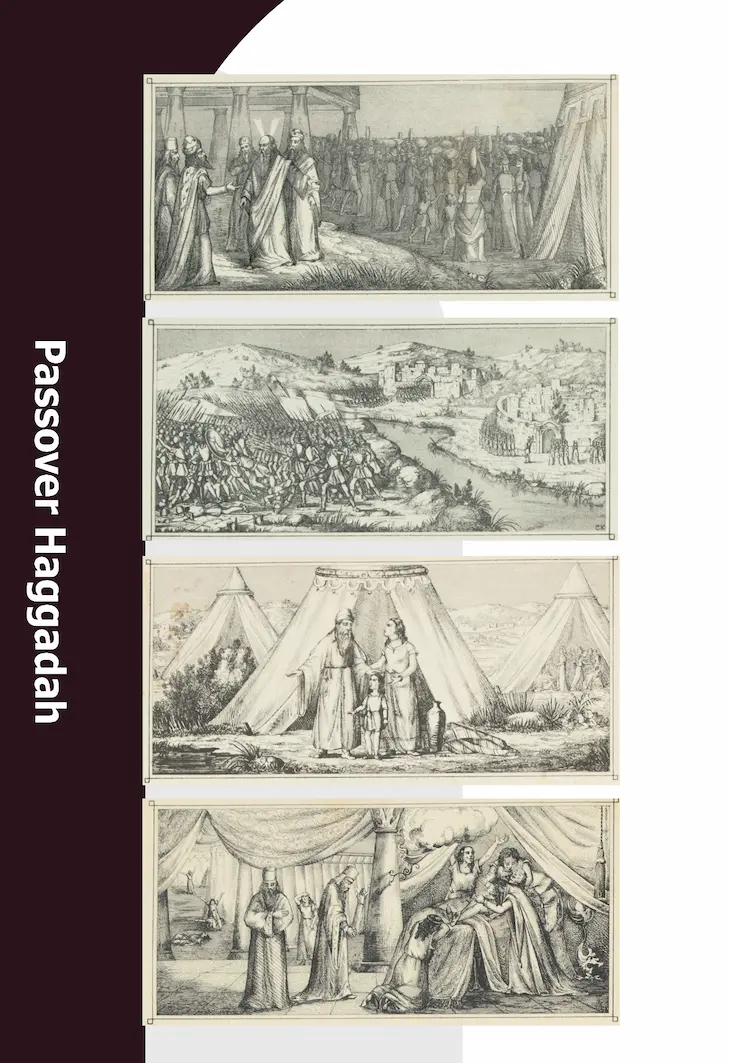
Lot : 141

Fundamental Sefer Yesod Complete Set of Shulchan Aruch with Be’er Hagolah. First
Fundamental Sefer Yesod Complete Set of Shulchan Aruch with Be’er Hagolah. First Edition. Amsterdam, 1661-1664  Shulchan Aruch with Be’er Hagolah a comprehensive work noting the sources of all the halachic rulings of the Shulchan Aruch and Rema by Rabbi Moshe Rivkash of Vilna. Complete set with four illustrated title pages, all bound in parchment bindings with gilded engraving, gilded edges and clasps. The printing of all four volumes of Beer Hagolah spanned four years, which is why an intact set of all 4 volumes is exceedingly rare. Since its original printing Be’er Hagolah has been recognized as one of the fundamental works and Nosei Keilim of the Shulchan Aruch. It is remarkably printed on all editions of Shulchan Aruch. Orach Chaim, 1661. Page Count: [4], 320 leaves. Yoreh De’ah, 1662. Page Count: [1], 302 [340] leaves. Even Haezer, 1662. Page Count: [1], 198, [1] leaves. Choshen Mishpat, 1664. Page Count: 481 leaves. Rabbi Moshe Rivkash (circa 1600-1671) was born in Prague and dwelled in Vilna. Fleeing the Cossack pogroms of 1655, he found refuge in Amsterdam, but returned to Vilna in his latter years. The author recounts his harrowing experiences in his introduction to his sefer. Rabbi Moshe Rivkash was the great-grandfather of the Vilna Gaon, whose commentary on the Shulchan Aruch is essentially an expansion of Be’er Hagolah. Amsterdam, 1661-1664. 4 volumes. First Edition. Page Size: 15 cm Condition: Complete set in good condition. First title pages of Orach Chaim, Yoreh Deah and parts of Choshen Mishpat are slightly restored. Each volume boasts an artistic copperplate on the pre-title page. Parchment binding with gilded engravings and edges and decorative clasps. The binding of Orach Chaim is slightly different than the others and missing the clasp closures. Bibliography: Stefansky, Sifrei Yesod #166 ....................................... Any inquiries about this lot ? We are available also on WhatsApp >>>

Lot : 142

“Without his words, Shulchan Aruch Even Haezer would be a sealed book”
“Without his words, Shulchan Aruch Even Haezer would be a sealed book” (Noda B’Yehuda) Beis Shmuel on Even Haezer. First Edition. Dyhrenfurth, 1689 Commentary and chiddushim in halachah on Shulchan Aruch Even Haezer by Rabbi Shmuel, Av Beis Din of Furth, one of the most foremost Nosei Keilim of the Shulchan Aruch. This sefer includes the body text of the Shulchan Aruch with the Beis Shmuel commentary at its side. Since its original publication, the Beis Shmuel was universally accepted as one of the premier commentaries on Shulchan Aruch and is regarded as an inseparable element of the study of Shulchan Aruch Even Haezer.  This book was printed in 1689 . Five years after in 1694, the author printed a second edition of the sefer with much text variants. The first edition original text was never reprinted. This is despite the fact that there are numerous points upon which the Beis Shmuel elaborated in his first edition but abridged in the second edition, and many Gedolim throughout the ages have specifically cited the first edition of the Beis Shmuel and quoted from its text. In 1726, the Beis Shmuel was first printed together with the Shulchan Aruch and Chelkas Mechokek. This ultimately established the traditional tzuras hadaf of the Shulchan Aruch with the text of the Shulchan Aruch in the center of the page flanked by its Nosei Keilim, Chelkas Mechokek and Beis Shmuel, as it appears in virtually every set of Shulchan Aruch today. Rabbi Shmuel ben Rabbi Uri Shraga Feivish (d. 1798), Av Beis Din of Furth, was a student of the Rabbi Heschel of Cracow and Rabbi Leib, Av Beis Din of Cracow, who took him as a son-in-law. Rabbi Shmuel began his Rabbinic tenure as Av Beis Din in Shidlov where he authored the current edition of Beis Shmuel; and in 1691, relocated to Furth where he was crowned Rabbi and Av Beis Din of the prominent Jewish community there. Gedolei Yisrael throughout the ages have extolled the Beis Shmuel as a monumental work and adhered to its rulings. The Noda B’Yehuda expressed that “Without his words, Shulchan Aruch Even Haezer would be a sealed book, and I am not qualified to dispute his words” (Shu”t Noda B’Yehuda, Even Haezer Ch. 104). Rabbi Akiva Eiger likewise wrote, “Who am I and what is my strength to counter the words of the Beis Shmuel?” (Shu”t Rabbi Akiva Eiger Vol. 3 Ch. 45). The Admor Rabbi Chaim of Sanz also wrote, “We bend our head submissively to accept the words of Maran, the greatest of the Achronim, author of the Beis Shmuel, with love” (Shu”t Divrei Chaim Vol. 2 Even Haezer Ch. 45). Dyhrenfurth, 1689. First Edition. Rabbi Shabsai Meshorrer Bass Press. Page Count: [1], 158 leaves. Page Size: 29.5 cm. Condition: Beautiful sefer with new leather binding. Bibliography: Stefansky, Sifrei Yesod #165 ....................................... Any inquiries about this lot ? We are available also on WhatsApp >>>
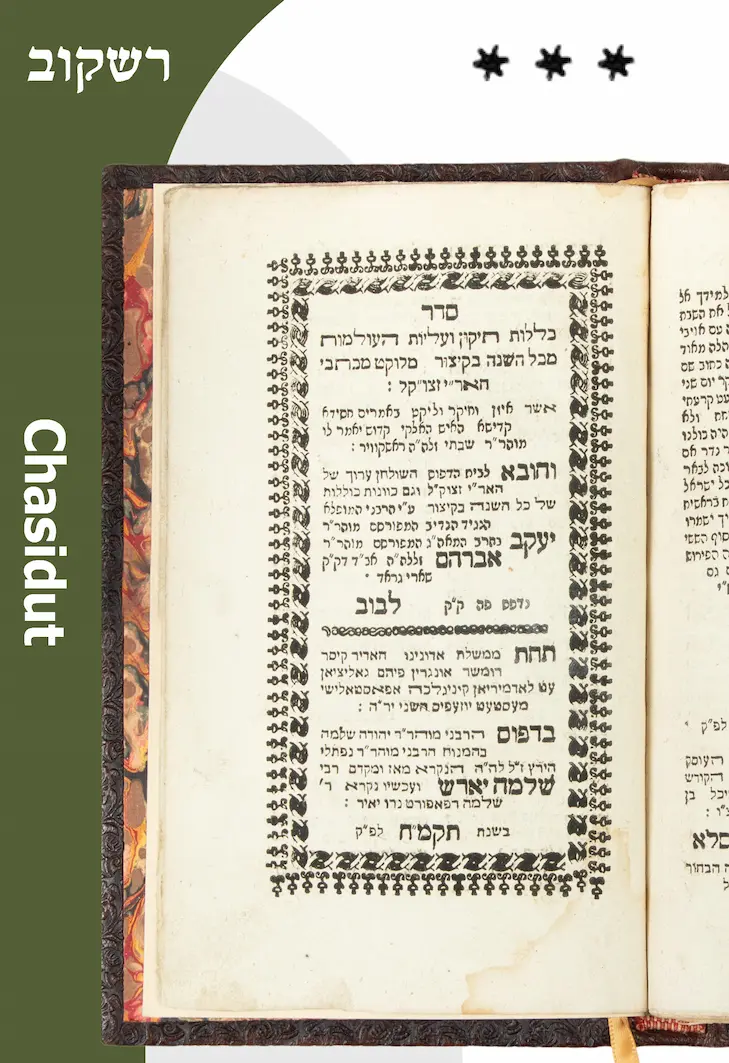
Lot : 143

Gevuras Anashim by the Shach. First Edition. Dessau, 1697 Comprehensive commentary on
Gevuras Anashim by the Shach. First Edition. Dessau, 1697 Comprehensive commentary on Tur and Shulchan Aruch Even Haezer Ch. 154 complete with halachic principles by Rabbi Shabsai Katz, author of the Shach. The second half of this sefer encompasses shailos and teshuvos by the Shach’s father Rabbi Meir Hakohein Ashkenazi, who was a talmid of the Sma and Maharam of Lublin. This section also includes discussion and correspondence with the authors of Chelkas Mechokek and Meginei Shlomo. Rabbi Shabsai Katz, the Shach (1622-1662) numbered among the greatest of the Achronim, and his halachic rulings were universally accepted throughout the Diaspora. He is most famous for his Sifsei Kohein supercommentary on Shulchan Aruch Yoreh Deah and Choshen Mishpat which graces every Shulchan Aruch today. The Shach’s comment in Choshen Mishpat (Ch. 122:34) alludes to an additional commentary on Shulchan Aruch Even Haezer that remains unknown. The present sefer, Gevuras Anashhim, is the Shach’s only known written work on Even Haezer. This sefer was printed by the Shach’s grandson Rabbi Yitzchak ben Rabbi Moshe Katz. Dessau, 1697. First Edition. Page Count: [2], 38 leaves. Page Size: 19.5 cm. Condition: Two dark stains on two first pages; owners’ signatures. Attractive new leather binding. Bibliography: Stefansky, Sifrei Yesod #162, Comments ....................................... Any inquiries about this lot ? We are available also on WhatsApp >>>
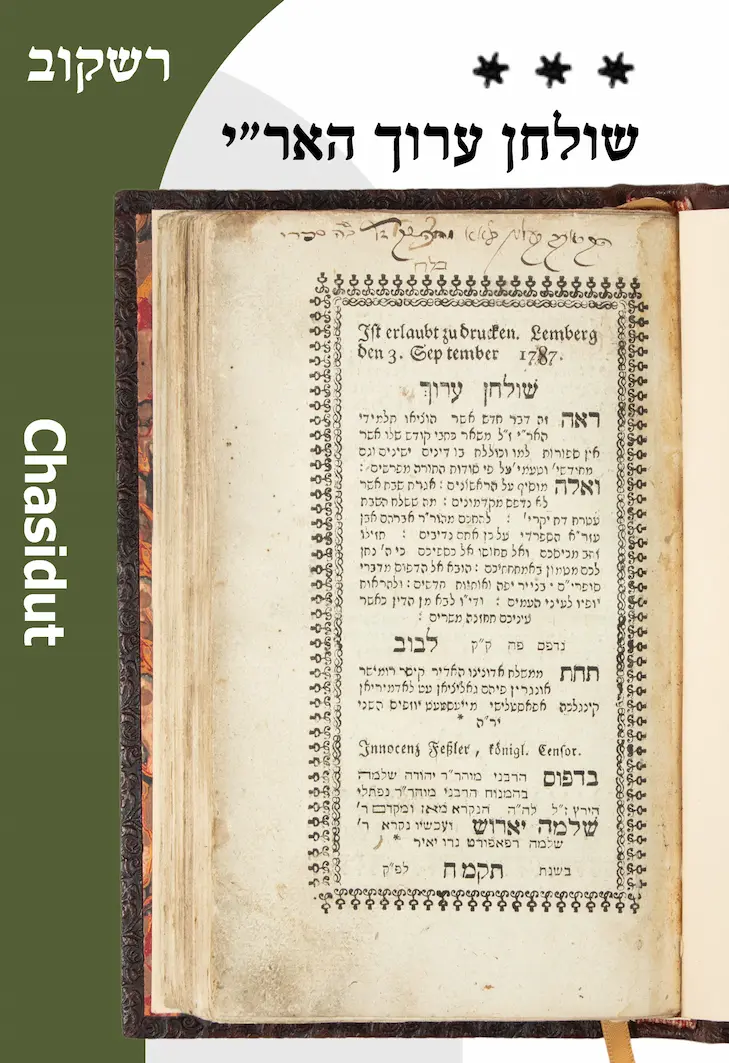
Lot : 144

First Printing of the Zohar Hakadosh! Sefer HaZohar. Mantua, 1558-1560 Remarkably beautiful
First Printing of the Zohar Hakadosh! Sefer HaZohar. Mantua, 1558-1560 Remarkably beautiful set! First edition set of Sefer HaZohar by the holy Tanna Rabbi Shimon bar Yochai.  Beautiful set with extra-wide margins. The Mantua edition of the Zohar is regarded as the most precise version of this fundamental work, and it was studied in depth by the Arizal and his disciples. Printing of the Zohar On Rosh Chodesh Iyar, 5318 (1558), the Mantua Press commenced the monumental project of printing the Zohar Hakadosh, which is the foundation of the study of kabbalah. The great kabbalists of the era regarded the printing of Zohar and its exposure to the masses as a heavenly sign that the merits accumulated from its study would lead the Jewish people out of exile and that “it will be for us as a shield in the coming trying generations, to grasp onto with a complete heart to our Father in heaven” (Rabbi Chaim Vital’s preface to Eitz Chaim). There is no doubt that this first printing of Zohar prompted a revolution in the study of the Hidden Torah and left a permanent mark on the Jewish world at large. It is also difficult to ignore the connection between the printing of the Zohar and the descent of the Arizal’s soul into the world during that generation. Notwithstanding, there were Rabbanim and scholars at the time who protested the dissemination of kabbalah, a factor that caused the printing to stretch over an extended period of time. The first volume features a lengthy halachic ruling by Chacham Rabbi Yitzchak De Latish who wrote that it is not only permissible to print the Zohar, but that it is also a mitzvah to do so and connects it to the hastening of the final redemption. The present sefer thus symbolizes the historic delivery of the wisdom of kabbalah to the Jewish nation at large! Manuta, 1558-1560. Volume 1: Bereishis: [8], 251 leaves; Volume 2: Shmos: 269 leaves; Volume 3: Vayikrah: 115 leaves; Volume 4: Bamidbar- Devarim: [2], 118-300 leaves. Page Size: 24 cm. Description: The margins of this set are significantly larger than margins in standard copies. The margins in Vol. 1 were professionally expanded in order to make it consistent with the other volumes. Vol. 2 restorations on title page, following page and last page and has several stains in the margins. Vol. 3 professional restorations of several miniscule holes in the margins of the last pages and several stains in the margins.  All four volumes are bound in attractive new binding and case. Owners’ signatures in Italian style handwriting in Vol. 2-3. “This came to my portion, the youth Avraham Norchi”, who may have been the father of Rabbi Yedidya Shlomo Norchi, author of Minchas Shai (who lived during this era). Bibliography: Stefansky, Sifrei Yesod# 324 ....................................... Any inquiries about this lot ? We are available also on WhatsApp >>>

Lot : 145

Sefer Yesod! Fundamental Kabbalistic Work Sefer Hayetzirah. First Edition. Mantua, 1562 Distinguished
Sefer Yesod! Fundamental Kabbalistic Work Sefer Hayetzirah. First Edition. Mantua, 1562 Distinguished provenance! Fundamental, ancient kabbalistic work attributed to Avraham Avinu with early commentaries attributed to the Rasag, Raavad, Ramban, the Baal Rokeach and the Spanish kabbalist Rabbi Moshe Butril. Sefer Yetizrah Sefer Yetzirah is one of the oldest known kabbalistic works, and also one of the most trusted, as evident from the commentaries of the Arizal and Vilna Gaon. Without a doubt, Sefer Yetzirah is the single most fundamental kabbalistic sefer along with the Sefer Hazohar by Rabbi Shimon bar Yochai. The present sefer encompasses kabbalistic formulas shaped in a circle that are intended for the combination of Holy Names that can be calculated by inserting a smaller circle into the middle of the large one. For this purpose, the last pages of the sefer boast a large page of small circles which is meant to be cut and connected into the interior of the larger circles. In this very rare copy of Sefer Yetzirah, all small circles were cut out of the original folded chart and glued into the relevant pages on leaves 8b, 10b, 33a and 77a. The leaf from which the above mentioned circles were cut out is an exceedingly rare find and missing from the majority of extant copies of this sefer. Neither the Jerusalem National Library nor the Bibliography of Hebrew Books has even a record of it in their respective bibliographies. The present sefer, however, has every part of the page cut out and added into the proper place. Mantua, 1562. First Edition. Page Count: 108 leaves. Page Size: 20.5 cm. Condition: Good with elaborate new leather binding and matching case. Bibliography: Stefansky, Sifrei Yesod #333 Lunzer-Valmadonna Collection Although the sefer attributes one of the commentaries to the Rasag it has been verified that the rasa”g did not author this commentary. His actual commentary was printed recently in the Kapach edition. In his preface to Eitz Chaim, Rabbi Chaim Vital writes that the commentary attributed to the Raavad was likewise not written by him, but authored by a great kabbalistic sage. Regarding the Ramban’s commentary, the Ramak in Pardes Rimonim notes that “We haven’t yet confirmed that this commentary is the Ramban’s.” The Rokeach’s commentary is abridged from its original form and printed in completion in Premishla, 1883. Distinguished provenance! This sefer belonged to prominent Italian Rabbanim and scholars. 1. The title page features the autograph of Rabbi Yaakov Daniel Ulamo along with a record of the purchase of the sefer from Rabbi Shmuel Baruch Borgi. Rabbi Yaakov Daniel Ulamo (d. 1757) was the Av Beis Din of Ferrara and author of Eden Aruch (Venice, 1743). He had the privilege of meeting the Ohr Hachaim Hakadosh in Ferrara (see Rabbi Chananel Nifi, Zatzal, p. 137). Rabbi Shmuel Baruch Borgi (d. 1737) was an esteemed Torah scholar inFerrara, a dayan on the Beis Din of Mahari Lampronti, and the author of Pachad Yitzchak. He received semichah from the Ramaz. 2. Rabbi Yaakov Baruch Cohen Vitaly was an august Italian sage. He is mentioned by Rabbi Chananel Nifi, ibid p. 225). 3. Rabbi Yosef Chaim Yareh was Av Beis Din of Ferrara and Mantua in the 19th century. ....................................... Any inquiries about this lot ? We are available also on WhatsApp >>>
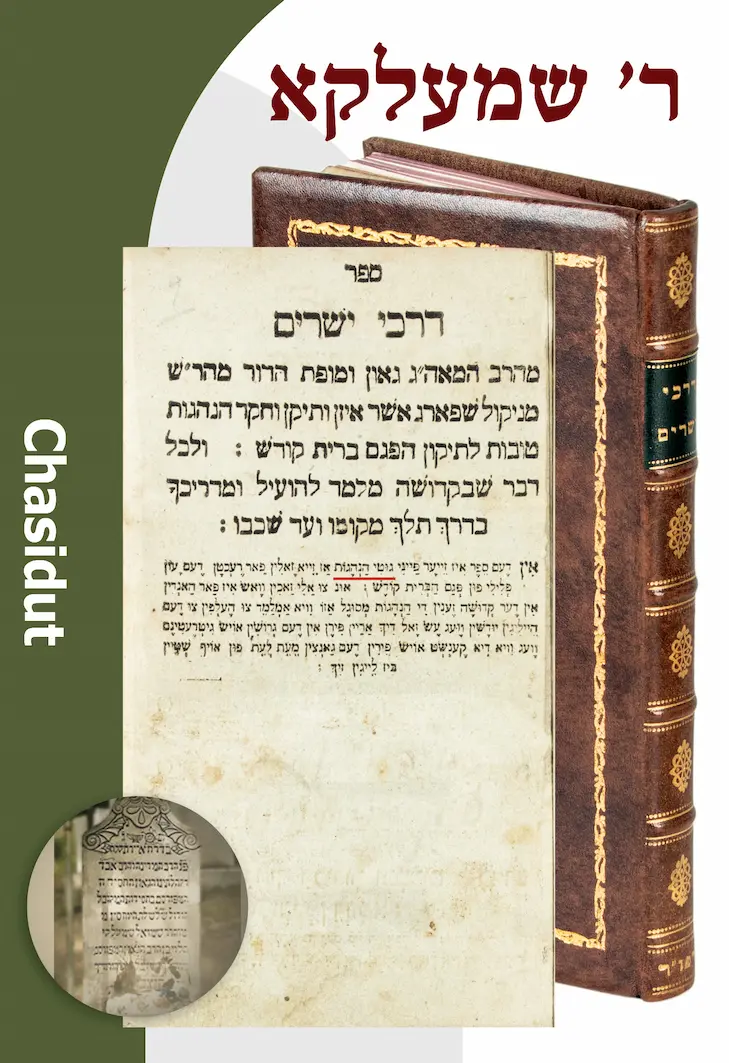
Lot : 146

Handwritten Kabbalistic Glosses. The first sefer published from the works of the
Handwritten Kabbalistic Glosses. The first sefer published from the works of the Arizal! Printed based on the teachings of Rabbi Chaim Vital Sefer Hakavanos L’Ha’Ar”i. First Edition. Venice, 1620 Intentions of prayer and collection of customs by the Arizal and kabbalistic explanations from the Ar”i z”l upon numerous teachings of Chazal. This sefer was printed less than fifty years after the passing of the Arizal, during the latter years of his prime disciple Rabbi Chaim Vital. Sefer Hakavanos L’Ha’Ar”i is the very first sefer published upon the Torah and legacy of the Arizal. The colophon at the end of the sefer states : “The labor was completed on Tuesday, the 5th of the month of Av…year 5380, in the same year that the all-encompassing Rabbi and saintly kabbalist Moreinu Harav Rabbi Chaim Vitaly ztvk”l was recalled to the heavenly Yeshivah.” This sefer was published by the kabbalist Rabbi Moshe Trinki, a Rabbinical emissary of the city of Tzfas (see Shluchei Eretz Yisrael p. 254). Distinguished Provenance The title page bears the initialized autograph of the holy kabbalist Rabbi Elazar Nachman Poa (d. 1659), disciple and confidante of the Rema of Pano and author of Midrash B’chiddush (Venice, 1641). The Chida writes that the signature “ARNN” represents the first and last letters of Rabbi Elazar Nachman Poa’s name. The title page margins likewise feature the autograph of Rabbi Yehuda Mindola, Av Beis Din of Mantua, who passed away in 1652. The leaves of the sefer encompass numerous handwritten annotations. Leaf 2b reveals lengthy kabbalistic discussion regarding the recitation of Viduy after prayers. At the top of this annotation, the author added the words “In the name of the Ar”i”. The end of the sefer has two handwritten leaves regarding revelations of the future. Venice, 1620. First Edition. Page Count: 65, [2] leaves. Page Size: 19.8 cm. Condition: Margin corners rounded; first pages professionally restored at margins. Attractive green leather binding with gilded engravings. Bibliography: Stefansky, Sifrei Yesod #345 ....................................... Any inquiries about this lot ? We are available also on WhatsApp >>>

Lot : 147

One of the original kabbalistic works! Megaleh Amukos. First Edition. Cracow, 1637
One of the original kabbalistic works! Megaleh Amukos. First Edition. Cracow, 1637 Distinguished provenance! Autographed by the Gur Aryeh. Megaleh Amukos. First Edition. Cracow, 1637 Distinguished provenance! Features the sacred autograph of the Gur Aryeh! Kabbalistic commentary including two hundred and fifty-two esoteric explanations of ‘Va’eschanan’, Moshe Rabbeinu’s prayer, by the saintly kabbalist Rabbi Nosson Nutta Shapira of Cracow.   Replete with gematria and profound kabbalistic teachings including the topic of gilgulim, which are regarded as fundamentals to learning kabbalah. The present first-edition sefer is an exceedingly rare and valuable find. Rabbi Nosson Nutta Shapira (1585–1633) was a grandson of the Maharnash, Rabbi Nosson Shapira of Horodna. He authored Mevo She’arim and was the chief rabbi of Cracow. Described by his descendant Rabbi Yehonasan Eibschitz “The third mouth of the Arizal” (preface to Kreisi U’pleisi), Rabbi Nosson Nuta was instrumental in disseminating the Arizal’s kabbalistic teachings throughout Poland. The Chida in Shem Hagedolim recounts that a Maggid appeared to Rabbi Nosson Nutta from the heavens, just like one appeared to the Beis Yosef. In his introduction to Megaleh Amukos, Rabbi Nosson Nutta’s son divulges that Eliyahu Hanavi appeared to him, as well. Cracow, 1637. First Edition. Page Count: [5], 166, 16, [8] leaves. Page Size: 17.6 cm. Condition: Good. Antique binding with new leather spine. Distinguished provenance! The title page bears the holy autograph of Rabbi Gur Aryeh Levi Pinchi (d. 1697) with his acronym HGA”L, who was one of the great scholars and spiritual leaders of Mantua in the era of the Ramaz. A genius in both the revealed and hidden Torah, he was one of the privileged few who overheard the Maggid (heavenly angel) conversing with the Ramaz (Shem Hagedolim, Ramaz). Rabbi Gur Aryeh’s comments on Shulchan Aruch were printed in Mantua, 1722. Bibliography: Stefansky, Sifrei Yesod #361 ....................................... Any inquiries about this lot ? We are available also on WhatsApp >>>
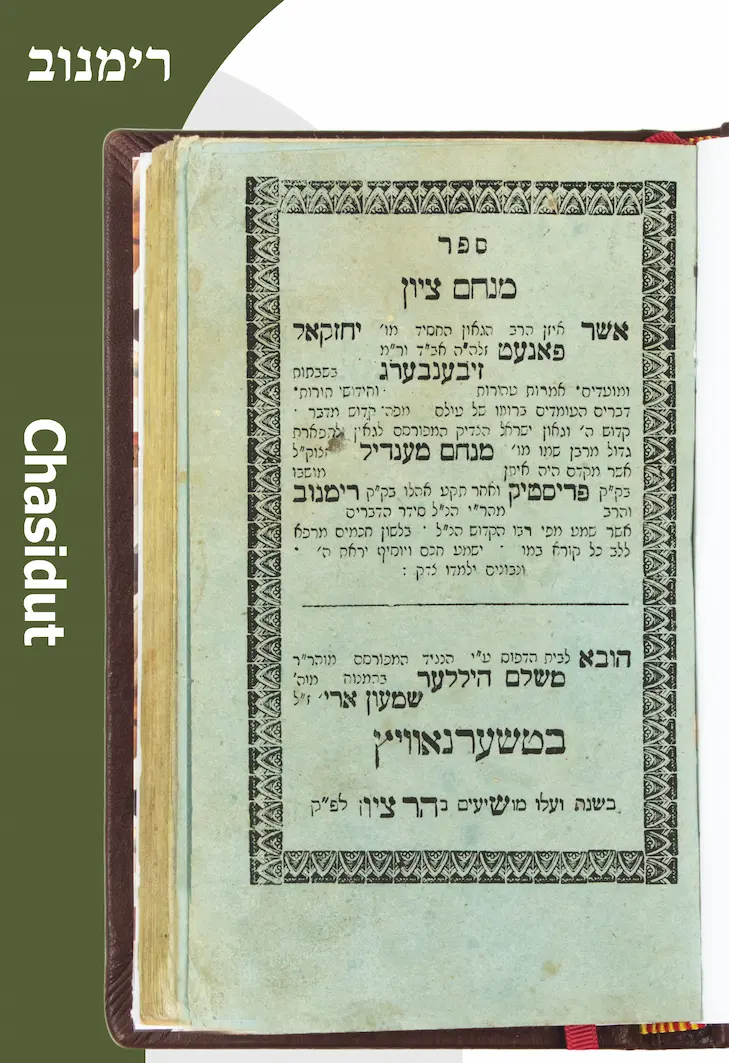
Lot : 148

Antique Kabbalistic work! Bris Menuchah. Amsterdam, 1648 Distinguished provenance! This sefer belonged
Antique Kabbalistic work! Bris Menuchah. Amsterdam, 1648 Distinguished provenance! This sefer belonged to tzaddikim and geonim! Bris Menuchah is one of the earliest known authenticated kabbalistic works to explain the name of Hashem and names of the heavenly angels. This sefer is generally ascribed to Rabbi Chamai Gaon, although there are others who attribute it to Rabbi Avraham bar Yitzchak MiRamon HaSephardi. Bris Menuchah is one of the oldest and most reliable kabbalistic works. Kabbalists throughout the generations were effusive in their praises of this sefer, and some even assert that the author was taught with ruach hakodesh, directly from the mouth of Eliyahu Hanavi! Antique Sefer with Sacred Provenance! 1. The flyleaf bears the autograph of Rabbi Tzvi Hersh Heller-Charif along with the inscription: “I purchased this holy s[efer] in honor of my Rock and Master on 29 Nissan, 5583 (1823) in Bonyhad. The humble Tzvi Hersh Heller.” Rabbi Tzvi Hersh Heller (1776-1835), author of Tiv Gittin, was one of the greatest scholars, teachers and disseminators of Torah in his generation, and his phenomenal genius earned him the moniker “Rabbi Tzvi Hersh Charif” (the sharp one). Rabbi Tzvi Hersh served as Rosh Yeshivah in Brod; Av Beis Din and Rosh Yeshivah in Ungvar; and Av Beis Din of Bonyhad and Obuda. After his passing, his widow married the Chasam Sofer. Numbering among his noteworthy talmidim were the authors of Kitzur Shulchan Aruch, Karnei Re’em, Rabbi Yoel Ungar of Paks, author of Shu”t Riva, and renowned Chassidic masters Rabbi Tzvi Hersh of Liska and Rabbi Shalom of Kaminka. 2. The title page and leaf 2a feature the autograph of Rabbi Shmuel ben Rabbi Avraham Weiss of Munkacs, father of the Imrei Yosef of Spinka. Rabbi Shmuel drew Torah, chassidus and kabbalah from the wellsprings of the Bnei Yissachar, Rabbi Yehuda Tzvi of Rodzol, the Sar Shalom of Belz, and Rabbi Yitzchak Eisik of Ziditchov who blessed him that he should be a miracle worker (preface to Beis Yitzchak). 3) The title page and last page of the sefer both feature the stamps of the tzaddik and kabbalist Rabbi Yitzchak Eisik Weiss, Av Beis Din of Svaliava, author of Beis Yitzchak, who was the brother of the abovementioned Rabbi Shmuel Weiss. Rabbi Yitzchak Eisik Weiss (1824-1894), Av Beis Din of Svaliava, was the author of Beis Yitzchak and one of the greatest Rabbanim and kabbalists in Hungary. In his youth, he studied chassidus and kabbalah under the Bnei Yissachar, Rabbi Yehuda Tzvi of Rodzol, the Sar Shalom of Belz and Rabbi Yitzchak Eisik of Ziditchov. He was a genius in the wisdom of kabbalah, and his nephew and disciple the Imrei Yosef of Spinka, who was one of his foremost talmidim, inscribed in the preface to his sefer Beis Yitzchak: “My uncle, the true genius, sharp and fluent in every cavern of revealed and hidden Torah, has ten hands…” In the preface to sefer Likutei Torah, he also wrote that his uncle compiled and edited the writings of his spiritual master Rabbi Yitzchak Eisik of Ziditchov and that the manuscripts were bequeathed to him as per Rabbi Yitzchak Eisik’s last will and testament. The Maharshag writes in his teshuvos: “This was the custom of the genius and kabbalist Moreinu hHarav Yitzchak Eisik…author of Beis Yitzchak on Megillah, and I knew that he is virtually the only kabbalist in this country…” (Shu”t MaharshagVol. 3 Ch. 30). 4) Rabbi Moshe ben Rabbi Binyamin Sinai of Unsdorf. Rabbi Binyamin Sinai (d. 1706) was renowned as the first Rabbi of Unsdorf. Rabbi Moshe was apparently his son. 5) Stamp of Rabbi Moshe Shmuel Halevi Rottenberg of Kleinswardein son of the Bnei Shileshim of Kassan. Bris Menuchah In his preface to Eitz Chaim, Rabbi Chaim Vital inscribes: “Sefer Bris Menuchah is truth and authored by a sage and scholar who is great in Torah and wisdom and who concealed his words in depth. It was composed based on the words of the tzaddik to whom Eliyahu appeared and taught.” The Ramak in Pardes Rimonim (Shaar Hanekudos Ch. 1) writes: “Bris Menuchah is a wonderful sefer explaining the Name [of Hashem], and surely these words of kabbalah [were taught] from mouth to mouth, or from the mouth of an angel [as] they are not concepts understood with precision and depth of intellect, but with an exalted perception that resembles ruach hakodesh.” The present sefer has been cited repeatedly by the greatest kabbalists of all times, among them the Ramchal, Vilna Gaon and exalted Chassidic masters (see Degel Machaneh Efraim, Parshas Bereishis citing his grandfather the Baal Shem Tov, and the writings of the Maggid of Mezritch). The Ninth Hour An Exalted Segulah The segulah of the Ninth Hour, which has gained renown in recent years, is sourced in the present sefer, Bris Menuchah, leaf 19: “It should be accepted that the ninth year is a select year; the ninth month is the best month, a month of desire; the ninth day of the month is the best of the month; and the ninth hour of the day is the best and choicest hour of the day…” Amsterdam, 1648. First Edition. Page Count: 40 leaves. Page Size: 18 cm. Condition: Good. Antique binding. Bibliography: Stefansky, Sifrei Yesod, Supplement p. 183 ....................................... Any inquiries about this lot ? We are available also on WhatsApp >>>

Lot : 149

Manuscript Bris Menuchah. Europe, 1600s Antique Kabbalistic work! Bris Menuchah is one
Manuscript Bris Menuchah. Europe, 1600s Antique Kabbalistic work! Bris Menuchah is one of the earliest known authentic kabbalistic works that seeks to explain the name of Hashem and names of the heavenly angels. This sefer is generally ascribed to Rabbi Chamai Gaon, although there are others who attribute it to Rabbi Avraham bar Yitzchak MiRamon HaSephardi. This manuscript was inscribed in neat, beautiful handwriting and features attractive margins. The sefer is replete with Holy Names and names of angels which are all written in block letters and embellished. The leaves of this manuscript feature multiple marginalia by a kabbalistic scholar who wrote on the first page “Behold, I am learning this sefer to unite Kudshe Brich Hu and His Shechinah, to publicize his G-dliness that He is Ruler.” The manuscript encompasses the vast majority of the sefer, ending on leaf 38a (compared to the Amsterdam printed edition that encompasses 40 leaves). Bris Menuchah is one of the oldest and most reliable kabbalistic works. Kabbalists throughout the generations were effusive in their praises of this sefer, and some even assert that the author was taught with ruach hakodesh, directly from the mouth of Eliyahu Hanavi! In his preface to Eitz Chaim, Rabbi Chaim Vital inscribes: “Sefer Bris Menuchah is truth. It was authored by a sage and scholar who is great in Torah and wisdom, who concealed his words in depth, and it was composed by the soul of a tzaddik of old to whom Eliyahu appeared and taught.” The Ramak in Pardes Rimonim (Shaar Hanekudos Ch. 1) writes: “Bris Menuchah is a wonderful sefer explaining the Name [of Hashem], and surely these words of kabbalah [were taught] from mouth to mouth, or from the mouth of an angel [as] they are not concepts understood with precision and depth of intellect, but with an exalted perception that resembles ruach hakodesh.” The present sefer has been cited repeatedly by the greatest kabbalists of all times, among them the Ramchal, Vilna Gaon and exalted Chassidic masters (see Degel Machaneh Efraim, Parshas Bereishis citing his grandfather the Baal Shem Tov, and the writings of the Maggid of Mezritch). Manuscript. [66] leaves. Page Size: 29x19 cm. Condition: Several marginal tears, and stains and damage to parchment due to the acidity of the ink on several pages, yet all text intact. The text on the last page is stained and reinforced with tape. Attractive blue-and-gold new leather binding with case. ....................................... Any inquiries about this lot ? We are available also on WhatsApp >>>
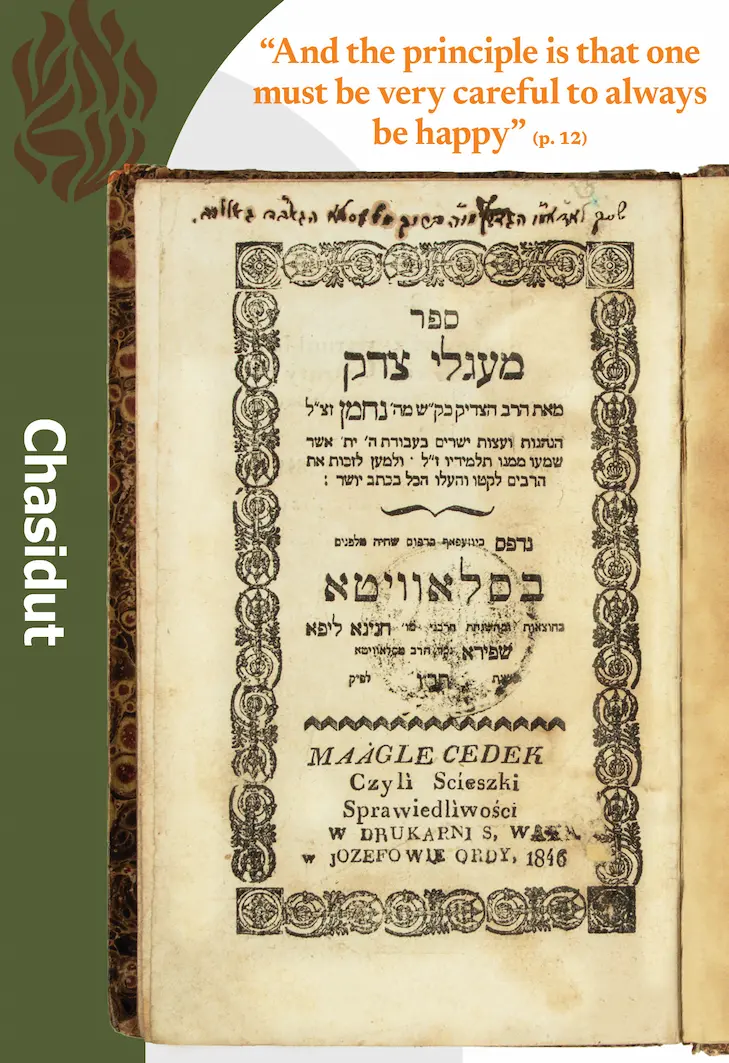
Lot : 150

Sefer Yesod Nagid U’Mitzvah. Shulchan Aruch Ha’Ari. First Edition. Amsterdam, 1712 Fundamental
Sefer Yesod Nagid U’Mitzvah. Shulchan Aruch Ha’Ari. First Edition. Amsterdam, 1712 Fundamental sefer presenting practical guidance to managing one’s daily schedule, praying and fulfilling mitzvos based on the kabbalistic teaching of the Arizal. The sefer contains numerous edits and annotations by the revered kabbalist Rabbi Yaakov Tzemach. The sefer opens (leaf 4a) with a large title “Shulchan Aruch Al Derech Ha’emes” The last page in the sefer features a large folded chart with an illustration of the menorah. This chart is exceedingly rare and missing from the vast majority of known copies. In the present sefer, the chart is complete. The second half of the sefer enumerates segulos, tikkunim and wondrous teachings by Rabbi Chaim Vital. Nagid U’Mitzvah was brought to print by Rabbi Yosef Elyashar based on a handwritten manuscript that he carried with him to Amsterdam while journeying to Europe on behalf of the destitute Yishuv in Yerushalayim (see Shem Hagedolim, Nagud U’mitzvah). Amsterdam, 1712. First Edition. Page Count: [2], 76: 24 leaves, [1] folded chart. Page Size: 15 cm. Condition: Miniscule hole on most pages. Original leather binding with new leather spine. Title page bears the autograph of Rabbi Yedidya Tiah Weil, Av Beis Din of Karlsruhe. Bibliography: Stefansky, Sifrei Yesod #364 Distinguished provenance! The title page of this sefer bears the autograph of Rabbi Yedidya Tiah Weil (1742-1806), Av Beis Din of Karlsruhe. Rabbi Yedidya Tiah Weil was the son of Rabbi Nesanel Weil, author of Korban Nesanel and the prime disciple of Rabbi Yehonasan Eibschutz (see approbation to Ye’aros Dvash, First Edition), as well as a distinguished author who composed many sefarim. He was renowned as both a genius in the Revealed and Hidden Torah who delved into the study of kabbalah. ....................................... Any inquiries about this lot ? We are available also on WhatsApp >>>

Lot : 151

Sefer Hakavanos and Maase Nissim – Shivchei Ha’Ar”i. Constantinople, 1720 Kabbalistic intentions
Sefer Hakavanos and Maase Nissim – Shivchei Ha’Ar”i. Constantinople, 1720 Kabbalistic intentions of prayers, the Arizal’s customs and essays of the teachings of the Arizal. The sefer opens (leaves 2-13) with Shivchei Ha’Ar”i which recounts the life story and praises of the Arizal Hakadosh. The present version was new and differed from the previous version printed in Taalumos Chochmah (Basel, 1629). It is based on the manuscript of Toldos Ha’Ari and on Emek Hamelech by Rabbi Naftali Bachrach (Amsterdam, 1648) which was compiled from letters written by Rabbi Shlomo Shlomil. This edition is the first to title this work “Shivchei Ha'Ar"i” which has become its common name. Constantinople, 1720. First edition of this version. Page Count: [1], 77 leaves. Page Size: 20 cm. Condition: Margins of leaf 2 restored, and another miniscule restorations on title page and assorted leaves. Antique leather binding. Very rare. Bibliography: Stefansky, Sifrei Yesod #362, Comments. Toldos Ha’Ar”i p. 18 and on; Shivchei Ha’Ari, Areshet 3 p. 144 ....................................... Any inquiries about this lot ? We are available also on WhatsApp >>>
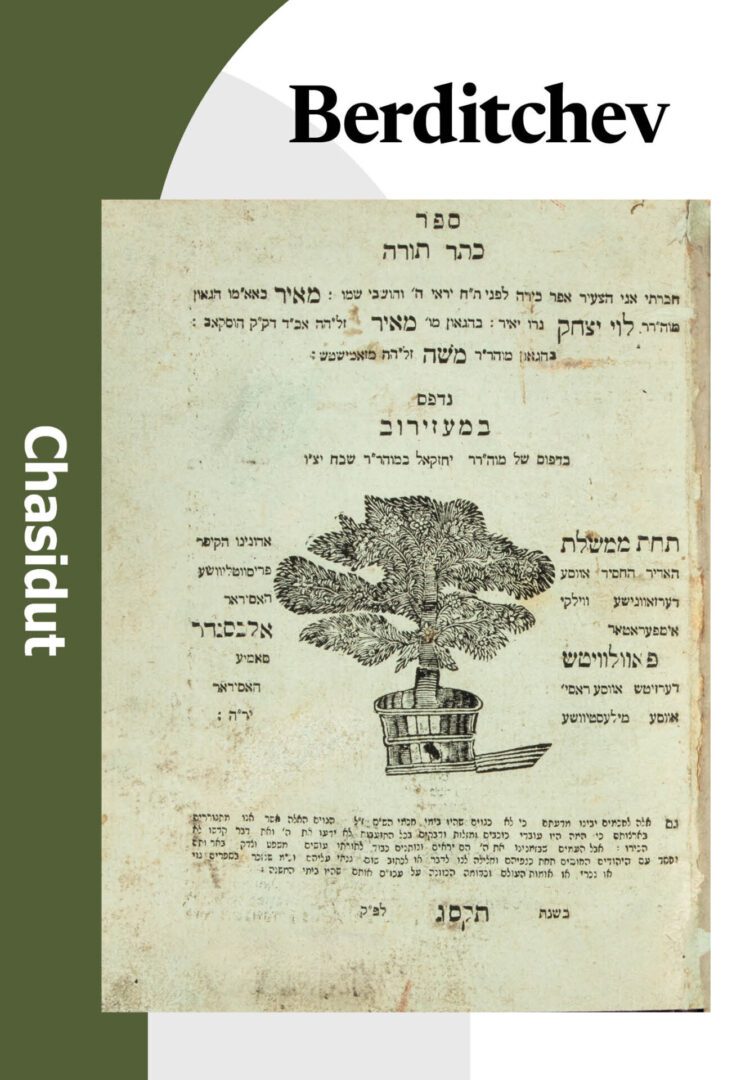
Lot : 152

Extra-wide margins! Safra D’Tzniusa with Vilna Gaon’s Commentary. First Edition. Vilna-Horodna, 1820
Extra-wide margins! Safra D’Tzniusa with Vilna Gaon’s Commentary. First Edition. Vilna-Horodna, 1820 Safra D'Tzniusa, which is attributed to have been authored by Yaakov Avinu is described as the “Foundation to all the teachings of the holy Zohar” with “a broad commentary of every essay and essay, and practically each and every word” by Hagaon Rabbi Eliyahu of Vilna, the Vilna Gaon. This work was edited and prepared for print by Rabbi Yaakov Moshe of Slonim, son of Rabbi Avraham ben HaGr”a, and features approbations by eminent Rabbanim of Vilna who asserted that he is the only individual authorized to publish the writings of the Gr”a. The Radal highly commended Rabbi Yaakov Moshe of Slonim’s publication and editing of Safra D'Tzniusa and inscirbed, “This is a singular work of the Vilna Gaon works that is praiseworthy, for it its arranged and collected precisely, with each section in its proper place” (Aliyos Eliyahu, Aliyas Kir, Ch. 38). The sefer begins with the lengthy, famous foreword by the Vilna Gaon’s prime disciple Rabbi Chaim of Volozhin. This preface is the foremost important description of the Vilna Gaon, his holiness and path in the wisdom of kabbalah. Vilna-Horodna, 1820. First Edition. Page Count: [6], 59, [3] leaves. Page size: 23 cm. Wide margins. Bibliography: Stefansky Sifrei Yesod #334; Winograd, Otzar Sifrei HaGr”a #696 ....................................... Any inquiries about this lot ? We are available also on WhatsApp >>>
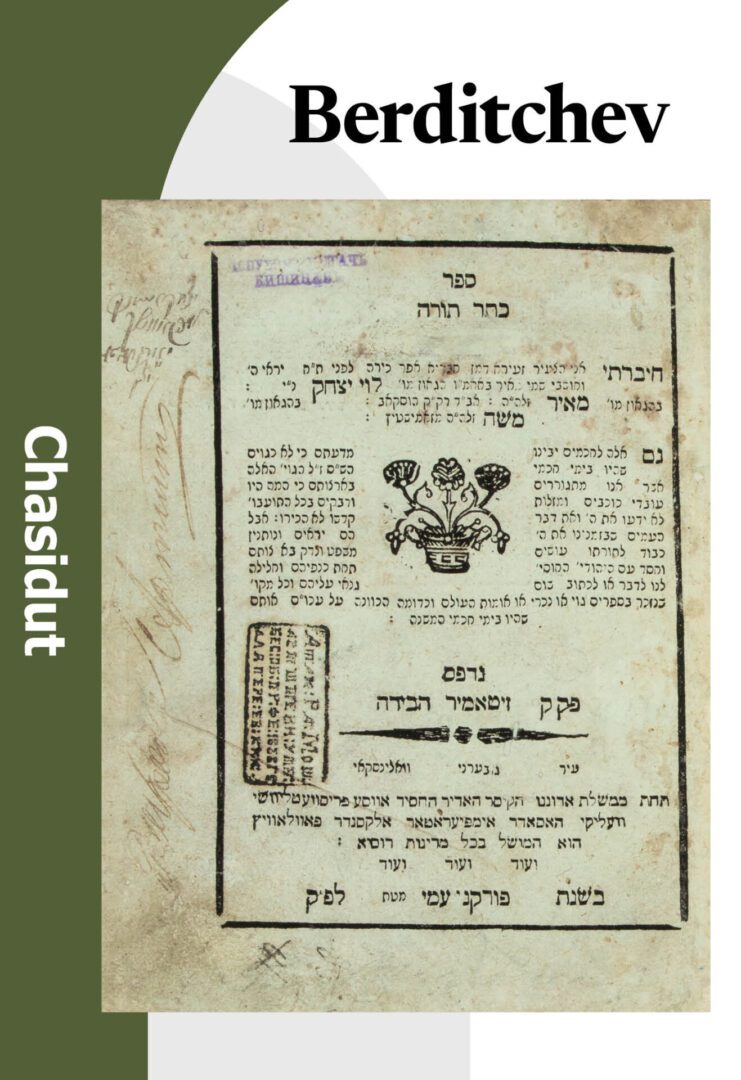
of 4 pages