Grand Winter Event

Auction #17

Part 1

Grand Winter Event

Auction #17

Part 2

of 4 pages

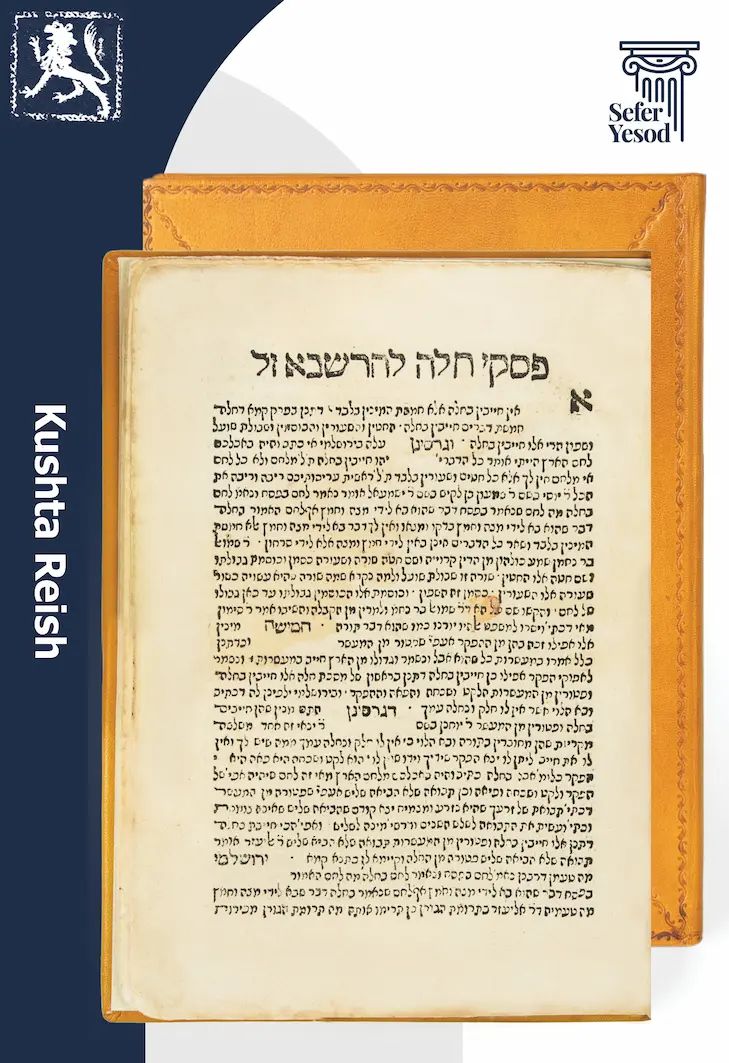
Lot : 52

Kushta Reish- Sefer Yesod   Piskei Challah L’HaRashba. First  Edition. Constantinople, 1515-1520 Halachos
Kushta Reish- Sefer Yesod   Piskei Challah L’HaRashba. First  Edition. Constantinople, 1515-1520 Halachos and halachic rulings  concerning the laws of challah by Rabbeinu Shlomo ibn Aderes, the Rashba. Piskei Challah L’HaRashba is the primary halachic work on challah and it is cited dozens of  times by the Beis Yosef on Tur  Hilchos Challah. The Rashba, Rabbeinu Shlomo ibn  Aderes, (1235–1310)  was one of the greatest spiritual luminaries in the era of the Sephardic Rishonim. He was a talmid of Rabbeinu Yonah and the Ramban, and his sefarim are among the  most studied works in Torah literature. Rabbi Yosef Karo praises him with the  accolade, “Pillar of the world; through his eyes, we see light” (Beis Yosef Yoreh Deah Ch. 110). Constantinople, 1515-1520. First  Edition. Page Count: [14]  leaves. Page Size: 19 cm. Printed without a title page. First leaf with  large title: Piskei Challah  L’HaRashba z”l. Condition:  Stains and minor damage to margins.New leather binding. Bibliography: Stefansky, Sifrei Yesod # 240. Hadfus HaIvri B’Kushta #84 ................................................ Any inquiries about this lot ? We are available also on WhatsApp >>>

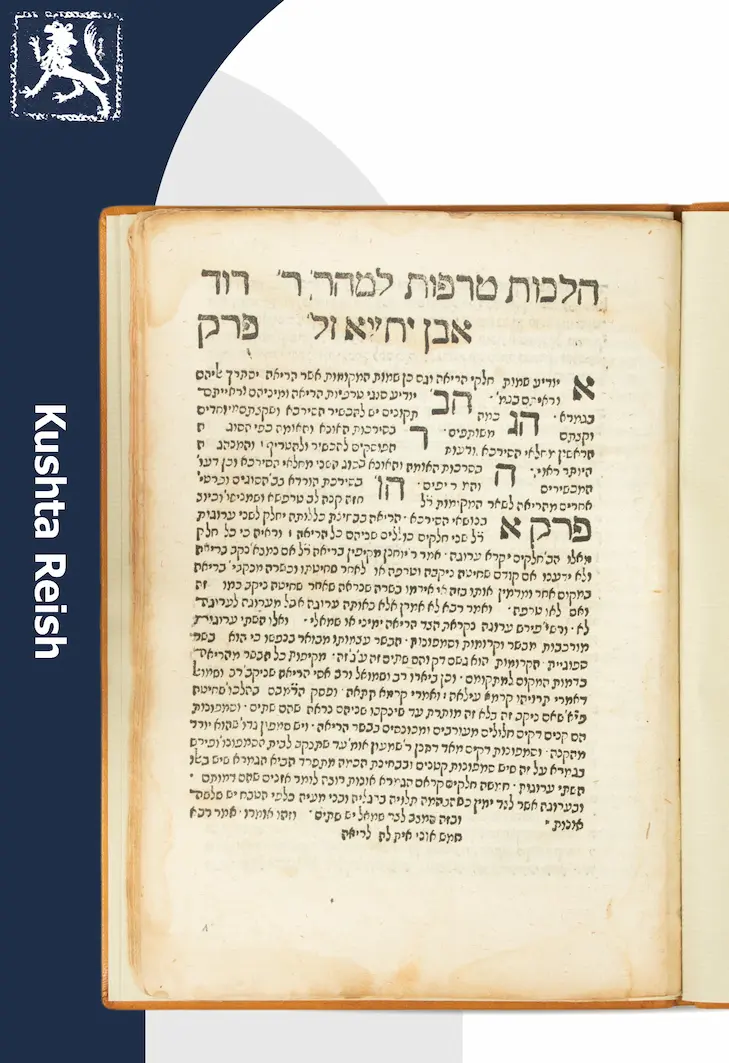
Lot : 53

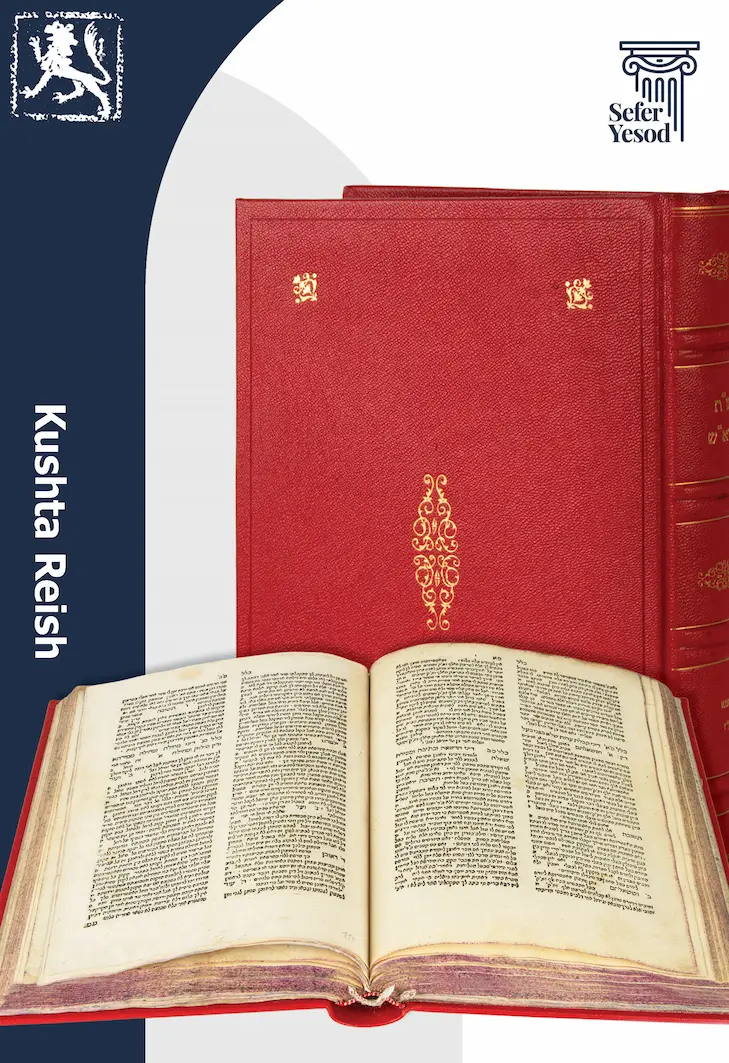
Kushta Reish First printed work on Hilchos Treifos Hilchos Treifos by Rabbi
Kushta Reish First printed work on Hilchos Treifos Hilchos Treifos by Rabbi Dovid ben Yichya. First Edition. Constantinople, 1515-1520 Laws of treifos with practical halachah and directives by Rabbi Dovid ben Yichya, based on the practices of Spain and Portugal. This composition on the laws of treifos is one of the primary works on treifos, and its importance is evident from the Beis Yosef Yoreh Deah Ch. 39 which concerns laws of treifos. In this section the Beis Yosef cites Rabbi Dovid ben Yichay’s sefer over fifteen times. Rabbi Dovid ben Yichya was one of the great sages of Lisbon, Portugal during the era of the expulsion. He corresponded extensively with Rabbi Eliyahu Mizrachi, the Re’em. When the Spanish exiles arrived en masse in Portugal, broken and destitute, he offered them great comfort and encouragement and personally supported them. Yet malicious parties reported him to King Johan II, purporting that he was encouraging Marranos (anusim) to return to their faith. Due to these accusations he was forced to flee his native land to Constantinople in Turkey. He also authored sefer Kav Venaki on Mishlei (Lisbon, 1490), Lashon Limudim (Constantinople, 1506) and others. He was the father of Rabbi Tam Ibn Yicha, author of Shu”t Ohalei Tam. Constantinople, 1515-1520. First Edition. Page Count: [9] leaves. Page Size: 19.5 cm. Printed without title page. Condition: Good with minor stains. New leather binding. Bibliography: Yaari, Constantinople #71 ................................................ Any inquiries about this lot ? We are available also on WhatsApp >>>
Lot : 54

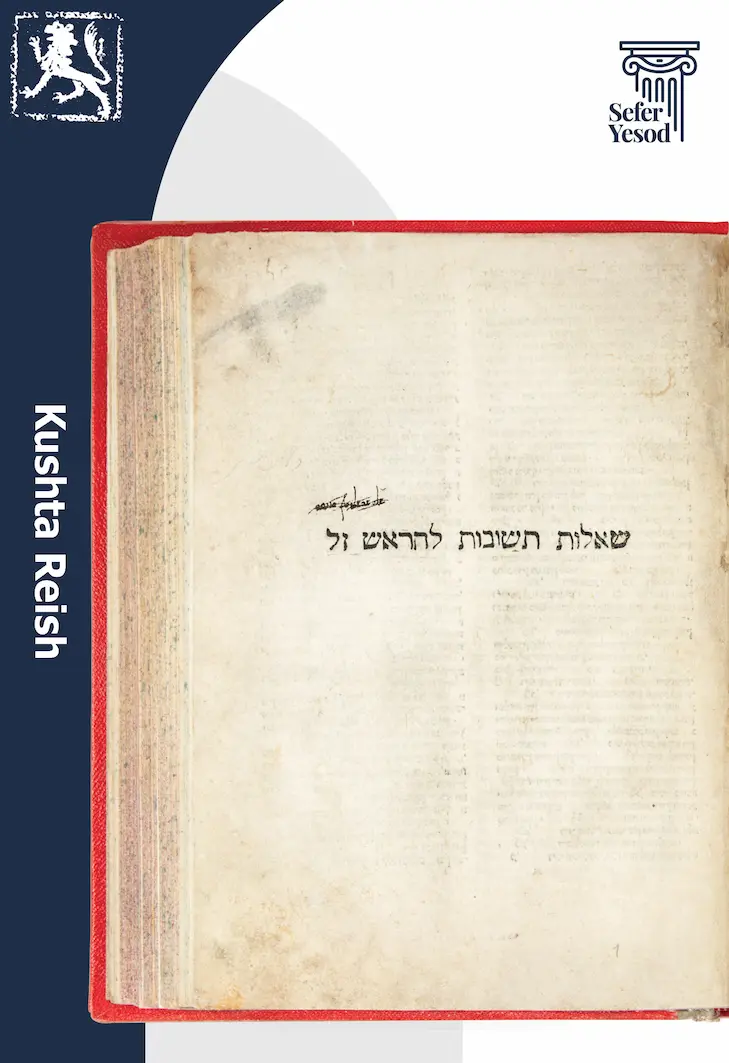
Kushta Reish- Sefer Yesod. Shu”t HaRosh. First Edition. Constantinople, 1517 Shailos and
Kushta Reish- Sefer Yesod. Shu”t HaRosh. First Edition. Constantinople, 1517 Shailos and Teshuvos by Rabbeinu Asher ben Yechiel, the Rosh. Shu”t HaRosh is one of the first and most elemental sifrei teshuvos to be printed. It is exceedingly rare to find this sefer in such pristine and complete condition. One of the first sifrei teshuvos ever printed! The Constantinople first edition of Shu”t HaRosh is of great significance, as it was this edition that the Bais Yosef used and studied from, and when he quotes from Shu”t HaRosh in the Bais Yosef it is based on this edition. The Constantinople edition of Shu”t HaRosh was not subjected to censorship, and its text is regarded as authentic and accurate compared to later editions which contain numerous errors (albeit there are some sections in this edition that were omitted in comparison to later editions). (See Y. Yudelov, Mevo L’Shu”t HaRosh, Machon Yerushalayim edition.) The Rosh’s many teshuvos were topically arranged and categorized by his disciple into 180 chapters. The Constantinople printer notes in his preface that he added subchapters to the sefer and explains his motive for doing so. Rabbeinu Asher ben Yechiel, the Rosh (circa 1245-1321) was one of the eminent early Rishonim and acclaimed as one of the “Three pillars of hora’ah'' together with the Rif and Rambam in which Rabbi Yosef Karo based his rulings on in the Shulchan Aruch. Rabbeinu Asher was born in Cologne, Germany where he studied under the Maharam of Rothenburg. In 1301, he fled Germany to Toledo, Spain out of fear of being falsely persecuted as was his Rabbi, the Maharam of Rothenburg who was falsely accused by the authorities and spent the rest of his life in prison. Colophon: “The questions and answers of Rabbeinu Asher z”l were completed today, on the 33rd day of the Omer of the year 5277, here in metropolitan Constantin[ople].” Constantinople, 1517. First Edition. over 500-years-old! Page Count: [190] leaves. Page Size: 27.5 cm. Condition: Stains and sign of moisture on margins; minor restorations on title page and other leaves. New red leather binding with case. Bibliography: Stefansky, Sifrei Yesod #267; Yaari, Constantinople #56 ................................................ Any inquiries about this lot ? We are available also on WhatsApp >>>

Lot : 55

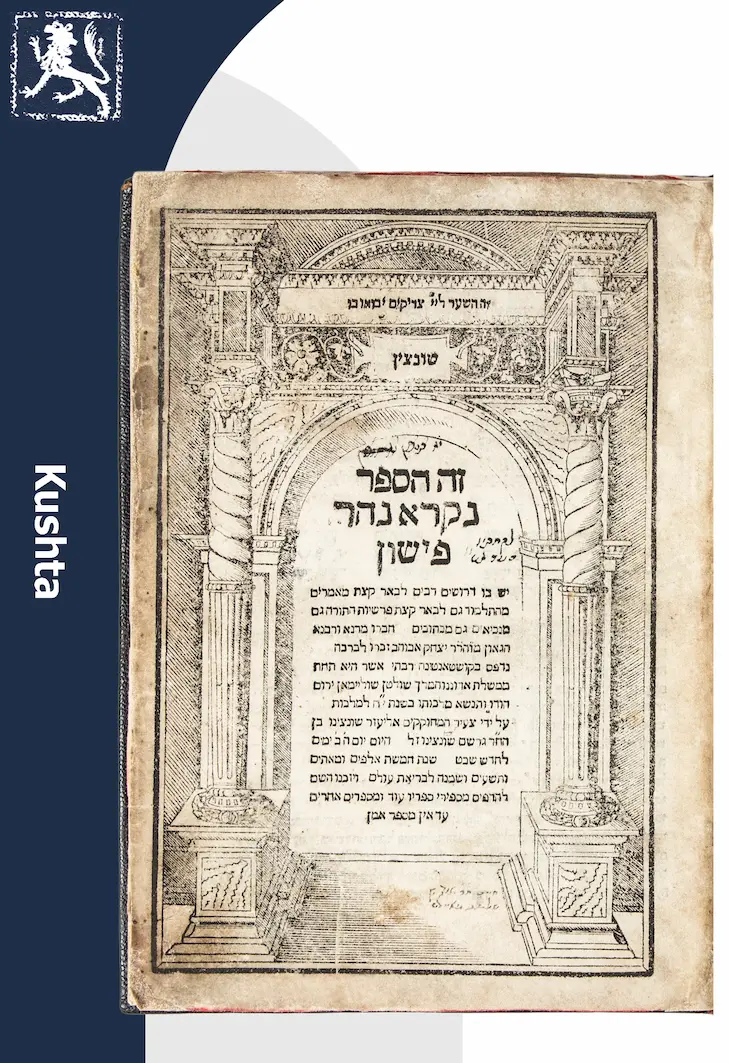
Kushta Reish   Nahar Pishon by Rabbi Yitzchak Abuhav. First Edition. Constantinople,
Kushta Reish   Nahar Pishon by Rabbi Yitzchak Abuhav. First Edition. Constantinople, 1538 Drushim on Tanach and on lessons of Chazal by the great 15th century Rabbi, scholar and Kabbalist Rabbi Yitzchak Abuhav. Published by the author’s son Rabbi Yaakov Abuhav; with an introduction from Rabbi Yaakov at the end of the sefer. Printed by the Gershom Soncino Press. The top of the title page is marked with the printer’s name Soncine. Rabbi Yitzchak Abuhav (1433-1493) was one of the great Sephardic Gedolim during the era of the Spanish Expulsion and was thus renowned as “the last gaon of Castile”. He is also called Rabbi Yitzchak Abuhav the II in order to distinguish him from his great-great-grandfather Rabbi Yitzchak Abuhav, author of Menoras Hamaor. Rabbi Yitzchak Abuhav was the teacher and spiritual mentor of Rabbi Yaakov Beirav who taught the Beis Yosef, and the latter thus commonly refers to him as “Rabbeinu Hagadol”. During the year of the Spanish Expulsion, he journeyed to Portugal in order to prevail upon the king to allow settlement of the exiles on Portuguese soil; he was niftar there several months later. Constantinople, 1538. First Edition. Page Count: [80] leaves. Page Size: 22 cm. Restorations at corners of margins. Bibliography: Yaari, Constantinople #126 ................................................ Any inquiries about this lot ? We are available also on WhatsApp >>>
Lot : 56

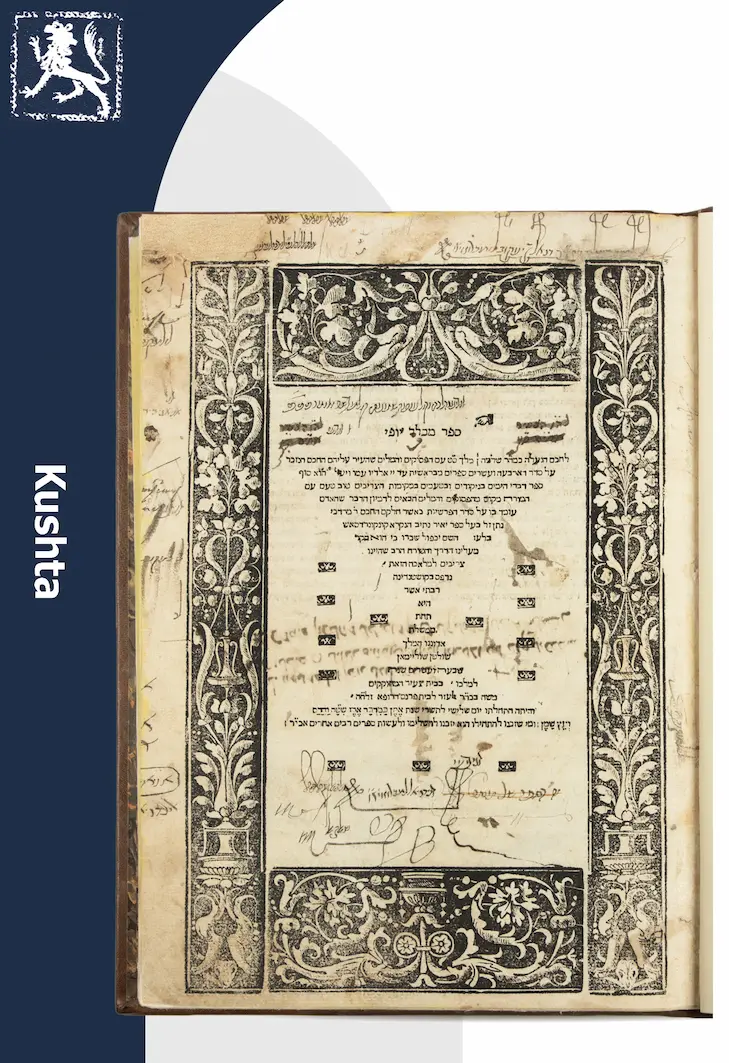
Michlol Yofi. First Edition. Constantinople, 1549 Commentary on the entire Tanach by Rabbi
Michlol Yofi. First Edition. Constantinople, 1549 Commentary on the entire Tanach by Rabbi Shlomo ben Melech. Important commentary on the 24  books of Tanach including important teachings and explanations of Hebrew grammar  and the proper way to read the Torah, Nevi’im and Kesuvim. Rabbi Shlomo ben Melech was born circa 1480 in Fez, Morocco. In 1520, Morocco was struck  by famine, and he relocated to Constantinople where he authored the present  sefer over the course of three years (see preface). Constantinople, 1549. First  Edition. Page Count: [192]  leaves. Page Size: 28cm. Printed by Rabbi Moshe Parnas. The title page  border is from the famed Soncino Press. Condition: Some leaves slightly cropped at margins; on some leaves text on margins are slightly cropped. New leather binding. The first leaf features  signatures and notes by the owners, among them the signatures of the  distinguished Lombrozo family and Rabbi Avraham Chaim Mussafia. Bibliography: Yaari, Hadfus HaIvri B’Kushta #148 ................................................ Any inquiries about this lot ? We are available also on WhatsApp >>>

Lot : 57

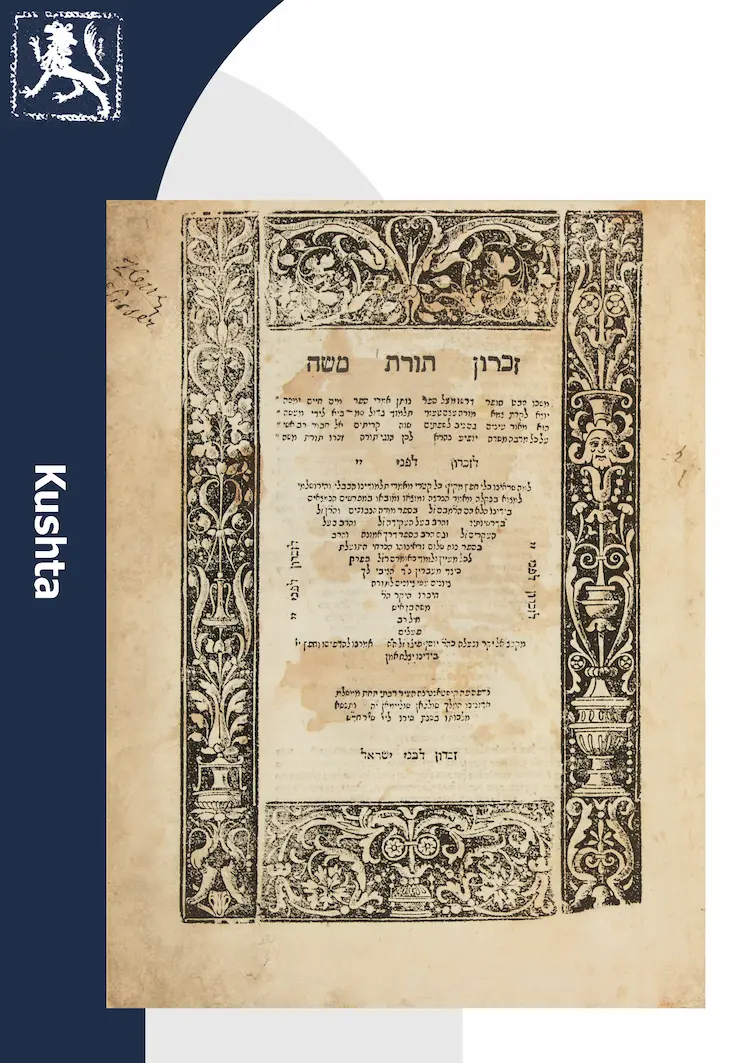
Zichron Toras Moshe. First Edition. Constantinople, 1554 Large, comprehensive sefer referencing all
Zichron Toras Moshe. First Edition. Constantinople, 1554 Large, comprehensive sefer referencing all teachings of Chazal on Aggadah cited in the Talmud Bavli, Yerushalmi and Midrash Rabba, arranged in alphabetical order by Rabbi Moshe Piccio. This sefer contains as well brief commentaries collected from sefarim authored by leading commentators and Rishonim, among them Moreh Nevuchim, Drashos HaRan, Sefer HaIkrim, Akeidas Yitzchak and more. Constantinople, 1554. First Edition. Page Count: [174] leaves. Page Size: 29.8 Cm. Title page border from the Soncino Press. Condition: Good with stains mostly mild. Censor’s erasures and stamps . Faux-parchment binding. Bibliography: Yaari, Hadfus HaIvri B’Kushta #154 ................................................ Any inquiries about this lot ? We are available also on WhatsApp >>>
Lot : 58

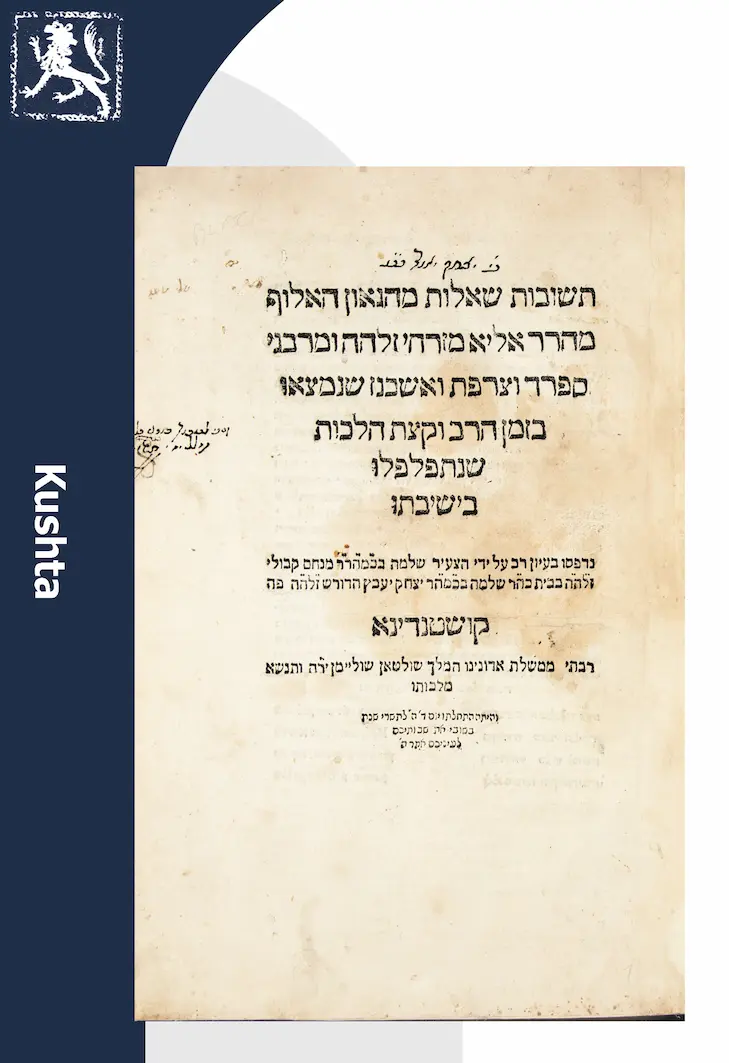
Sefer Yesod Shu”t HaRe’em. First Edition. Constantinople, 1560 Shailos and teshuvos on
Sefer Yesod Shu”t HaRe’em. First Edition. Constantinople, 1560 Shailos and teshuvos on practical halachah by the Re’em, Rabbi Eliyahu Mizrachi. Rabbi Eliyahu Mizrachi (1452-1525) was one of the greatest spiritual luminaries in Turkey of his era. His “Mizrachi” on Rashi on the Torah is regarded as one of the most fundamental commentaries on Rashi. The Re’em’s teshuvos likewise number among the primary sifrei teshuvos, and Gedolei Yisrael throughout the ages drew from his wisdom to formulate their own teshuvos. The Beis Yosef in Kessef Mishnah (Hilchos Gerushin 13a) copied a complete teshuvah of the Re’em that appears in the present sefer (Ch. 20), and the Maharchash relates in his teshuvos (Even Haezer Ch. 3) that the Maharival regarded the Re’em’s teachings as if “Moshe [heard them] from Hashem” (Shem Hagedolim). Constantinople, 1560. First edition. Page Count: [158]. Page Size: 27.5 cm. Condition: Good. Printed on thick, high-quality paper. Minor stains. Owners’ signatures in Sphardic script like wise The index pages have handwritten subtitles in Sphardic script. Bibliography: Yaari, Constantinople #161; Yudelov, Ginzei Yisrael #758; Stefansky, Sifrei Yesod #279. ................................................ Any inquiries about this lot ? We are available also on WhatsApp >>>
Lot : 59

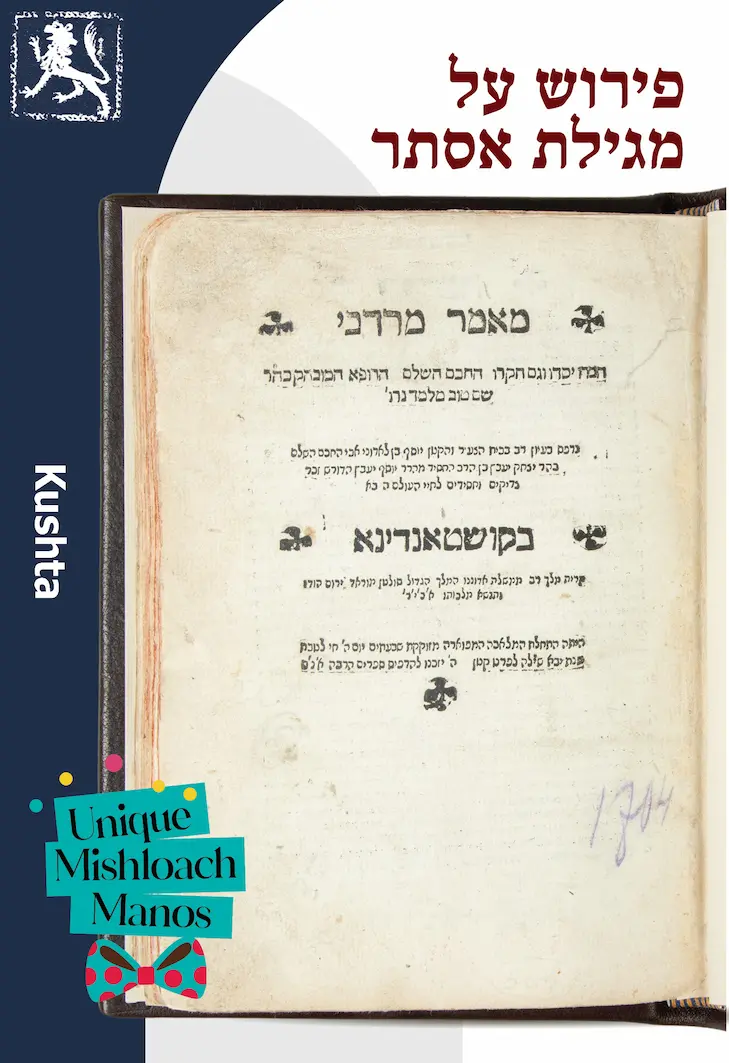
Rare Kushta Print! Maamar Mordechai. First Edition. Constantinople, 1585 An important, comprehensive
Rare Kushta Print! Maamar Mordechai. First Edition. Constantinople, 1585 An important, comprehensive commentary on Megillas Esther by Rabbi Shem Tov Melamed. The text of the Megillah is printed in block letters, with the commentary appearing after each respective verse in Rashi script. Rabbi Shem Tov Melamed authored Kesser Shem Tov al HaTorah (Venice, 1596). As one of the great Rabbinical figures in Moorea, Turkey, he was renowned as a genius who disseminated Torah to many students. His son is the famous Rabbi Melamed, author of Shu”t Mishpat Tzedek. Printed by Yosef Yaabetz, grandson of the chassid Rabbi Yosef Yaabetz. The Yaabetz family press was one of the most eminent printing houses in all of Constantinople. It was active for over thirty years, in the course of which it printed dozens of important sifrei kodesh. Kushta (Constantinople), 1585. First Edition. Page Count: 72 leaves. Page Size: 20.5 cm. Condition: Margin edges rounded, margins professionally restored. Attractive new leather binding. Bibliography: Yaari, Kushta #223 ................................................ Any inquiries about this lot ? We are available also on WhatsApp >>>

Lot : 60

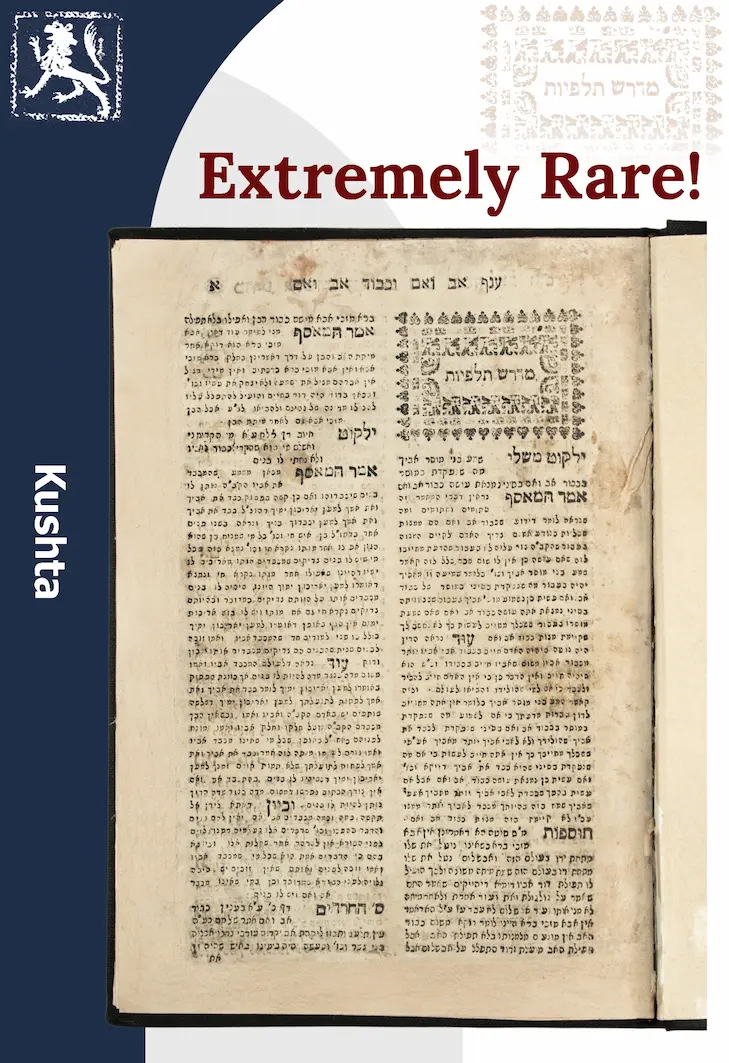
Remarkable find! Midrash Talpiyos. First Edition. Constantinople, circa 1720 Midrash Talpiyos, by
Remarkable find! Midrash Talpiyos. First Edition. Constantinople, circa 1720 Midrash Talpiyos, by Rabbi Eliyahu Hakohein of Izmir, in which he compiled an anthology of midrashim, and teachings of Chaza”l from over three hundred sefarim, many of them rare and singular manuscripts and added a commentary to the medrashim. It contains 926 (the numerical value of the word ‘talpiyos’) paragraphs in alphabetical order. This sefer, which contains 60 leaves, was only partially printed, with the printing incomplete for unknown reasons. The present printed edition of Midrash Talpiyos was unknown to the bibliographers who set about compiling lists of sefarim that were incompletely printed, and it is thus omitted from the records and articles dedicated to the category of incomplete prints. (Haberman, Areshes Vol. 3; Shisha, Areshes Vol. 5, Ben Menachem, V’im Bigvuros). The first to record the discovery of this partially-printed sefer found in the archives of Machon Ben Tzvi was Benayahu in his essay on Shivchei Ha’Ar”i in Areshes Vol. 3 p. 151. The same copy was then documented by Yaari in his work Hadfus HaIvri B’Kushta #302 which he labeled as “ the only copy in the world.” The saintly Rabbi Eliyahu Kohein HaItmari of Izmir (d. 1729), author of Shevet Mussar and Midrash Talpiyos, was a tzaddik and miracle worker “whose words were heard in the heavens.” He authored over thirty important sefarim, and the Chida attests that he was a talented orator who inspired many Jews with his impassioned sermons and mussar. Rabbi Chaim Palagi praises him effusively in his sefer and relates awe-inspiring stories about his wisdom and the wonders that he enacted. His name was uttered with respect by all Sephardic and Ashkenazic scholars. It is known that Rabbi Eliyahu Hakohein’s sefer Shevet Mussar lay perpetually on the desk of the Admor Rabbi Bunim of Peschischa who studied it regularly (see Ramasayim Tozfim on Tanna Dvei Eliyahu Ch. 30 Letter 87 and preface to Shevet Mussar [1989 Edition] p. 18.) The Admor Rabbi Yaakov of Shepitovka once wrote in a letter to his disciple, “My beloved, always study from the sefer Shevet Mussar” (printed in Imros Tehoros [Lemberg, 1892]). Constantinople, 1720. Abraham Franco and Abraham Rosanis Press. Page Count: 1-60 leaves. Page Size: 28.5 cm. Condition: Professionally restored at margins; first, last and several pages stained ................................................. Any inquiries about this lot ? We are available also on WhatsApp >>>
Lot : 61

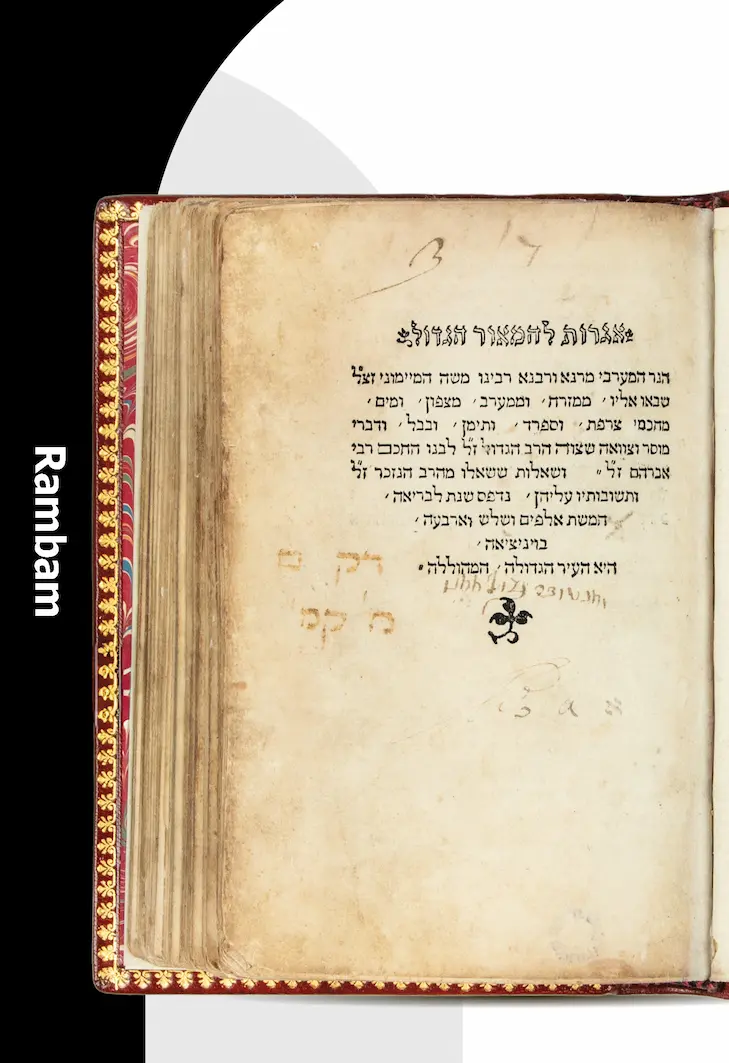
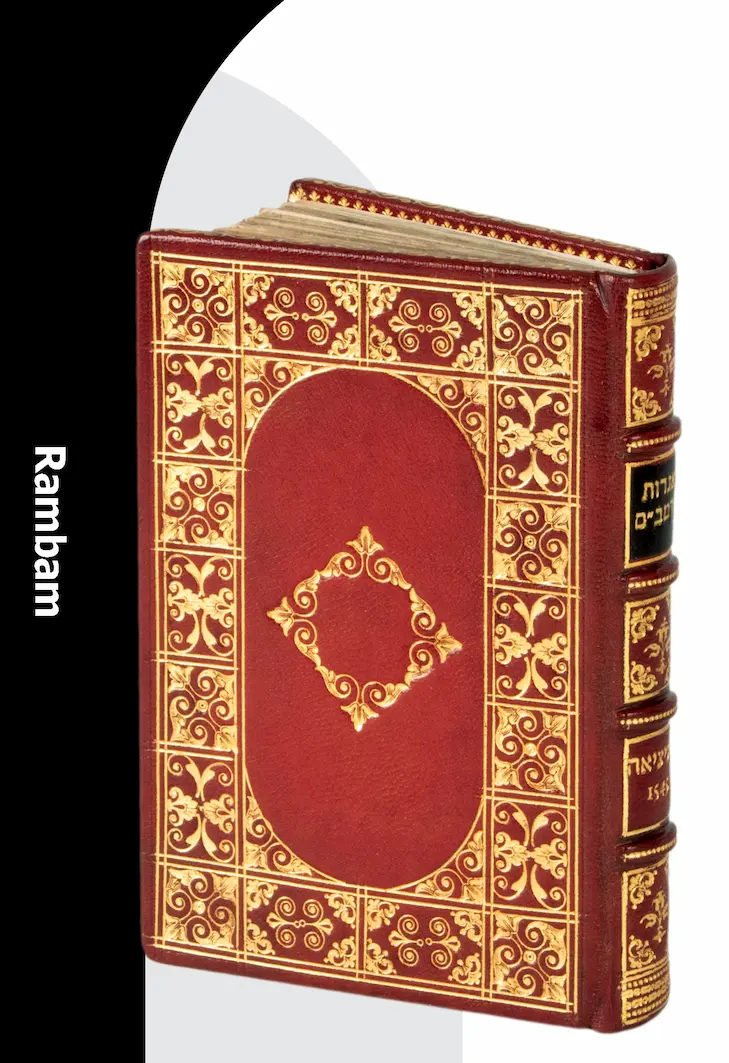
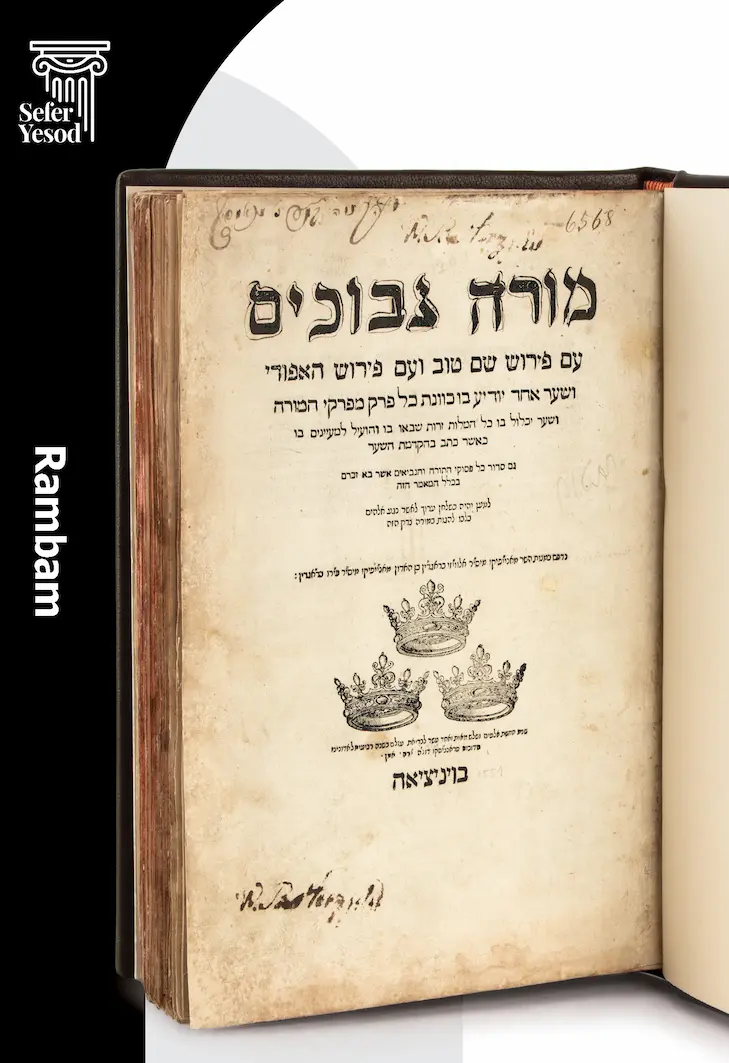
Teshuvos HaRambam. Venice, 1544 Igros Le HaMaor Hagadol – Letters to the
Teshuvos HaRambam. Venice, 1544 Igros Le HaMaor Hagadol – Letters to the Great Torah Luminary, Shailos, teshuvos and letters from Rabbi Moshe ben Maimon, the Rambam. The Rambam was one of the greatest meishivim in his era, responding to thousands of intricate questions sent to him from scholars in Eretz Yisrael, France, Spain, Yemen and Babylonia. The Rambam’s letters and teshuvos are a treasure trove of halachah and encompass the foundations of Jewish faith. The present sefer includes teshuvos to various halachic questions, as well as responses to questions challenging his rulings in Mishnah Torah or investigating the sources of his rulings. It also includes a letter of instruction to his son Rabbi Avraham, letters regarding the foundations of Jewish faith, and a collection of essays regarding the great controversy regarding the Rambam’s sefarim. Among the most famous teshuvos printed in this sefer are the Rambam’s responses to the sages of Lonil and his teshuvah to Dayan Rabbi Pinchas of Alexandria, which contain important foundations to the understanding of his halachic masterpiece Mishnah Torah. Giustiniani Venice, 1544. Page Count: 95 leaves. Page Size: 15 cm. The top title of the sefer Igros L’HaMaor Hagaol was printed in outline, a prestigious font among Venetian printers. Condition: Good. Several leaves with stained margins. Elaborate new leather binding. Bibliography: Stefansky, Sifrei Yesod #216, Comments ................................................ Any inquiries about this lot ? We are available also on WhatsApp >>>

Lot : 62

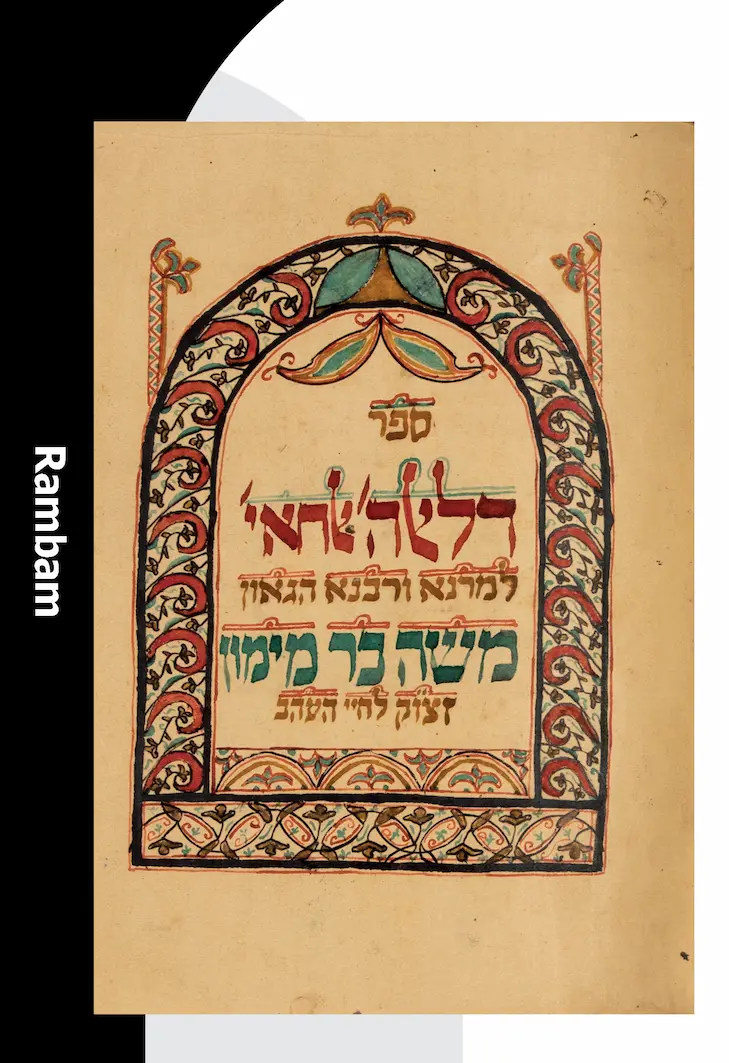
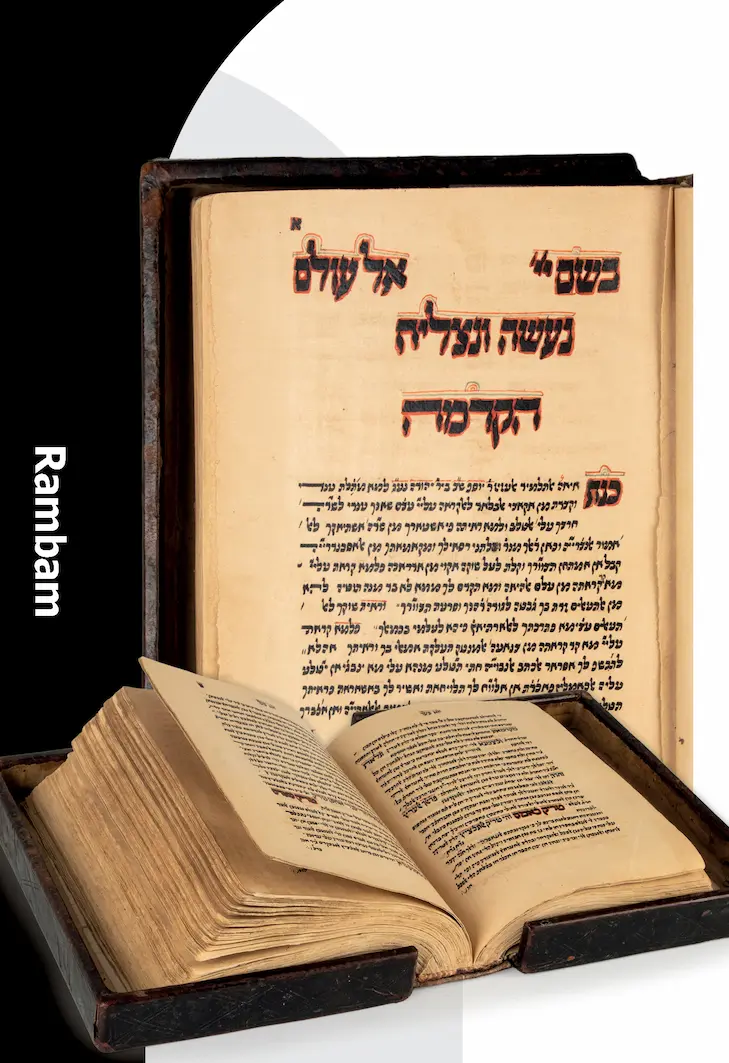
The Rambam’s Moreh Nevuchim in Its Original Arabic. Sana’a, 1924 Dlela Alchirin
The Rambam’s Moreh Nevuchim in Its Original Arabic. Sana’a, 1924 Dlela Alchirin دلالة الحائرين - the manuscript of the Guide to the Perplexed (Moreh Nevuchim) in its original Arabic! All three volumes of this sefer are complete and boast an illustrated bordered title page in color with colorful chapter titles. The manuscript opens with a table of contents for all three volumes of the sefer. The Rambam’s monumental work Moreh Nevuchim discusses fundamental topics of Jewish faith and theology and is regarded as the premier work of Jewish thought and philosophy. Written to address Jews who dwelt in Spain, Egypt, North Africa and Yemen, the sefer was originally authored by the Ramban in Arabic, although translations of the text already began appearing throughout the Diaspora during the Rambam’s lifetime. Yemenite Jews accepted the Rambam’s authority unilaterally, regarding his every word with awe and submission. Therefore, Yemenite scribes who copied the Rambam’s writings worked with utmost devotion to ensure absolute accuracy and flawless precision. Even during the Rambam’s life, Yemenite Jews engaged scribes and scholars to carefully proofread every manuscript containing the Rambam’s writing (see R. Y. Kapach in preface to Moreh Nevuchim p. 23). The colophon at the end of the manuscript reads: “Moreh Nevuchim was completed with the help of the One Who uplifts the perplexed, on Friday, Rosh Chodesh Av, 5684 (1924) to the creation of the world…and I, the simple of the simple, dust at the feet of the scribes Daoud ben Chaim ben Yosef Elbadichi…” Further in the colophon the printer reveals that he is very young, “And you, my brother who peruses [this], if you shall find an error, please judge me favorably, and the Blessed One shall judge you favorably, as I have written this while still a schoolboy…” An additional inscription by the scribe appears in a circular illustration on the verso of the title page: “I, who write this as the simple of the simple, dust at the feet of scribes, Daoud ben Chaim ben Yosef Elbadichi; and it was written in the country of Sana’a Ka-Bir Elazav may she be desolate and destroyed, and may Jerusalem be rebuilt and restored. Amen, may it be His Will.” (Ka-Bir Elazav was the Jewish neighborhood in Sana'a.) Sana’a, 1924. Page Count: [5], 278 [1] leaves (567 sides). Page Size: 24 cm. Description: Handwritten manuscript on paper. Neat, straight lines. Several annotations in margins. Bound in an impressive original Yemenite leather-bound wooden case which serves as both a binding and case. Condition: Good. ................................................ Any inquiries about this lot ? We are available also on WhatsApp >>>
Lot : 63

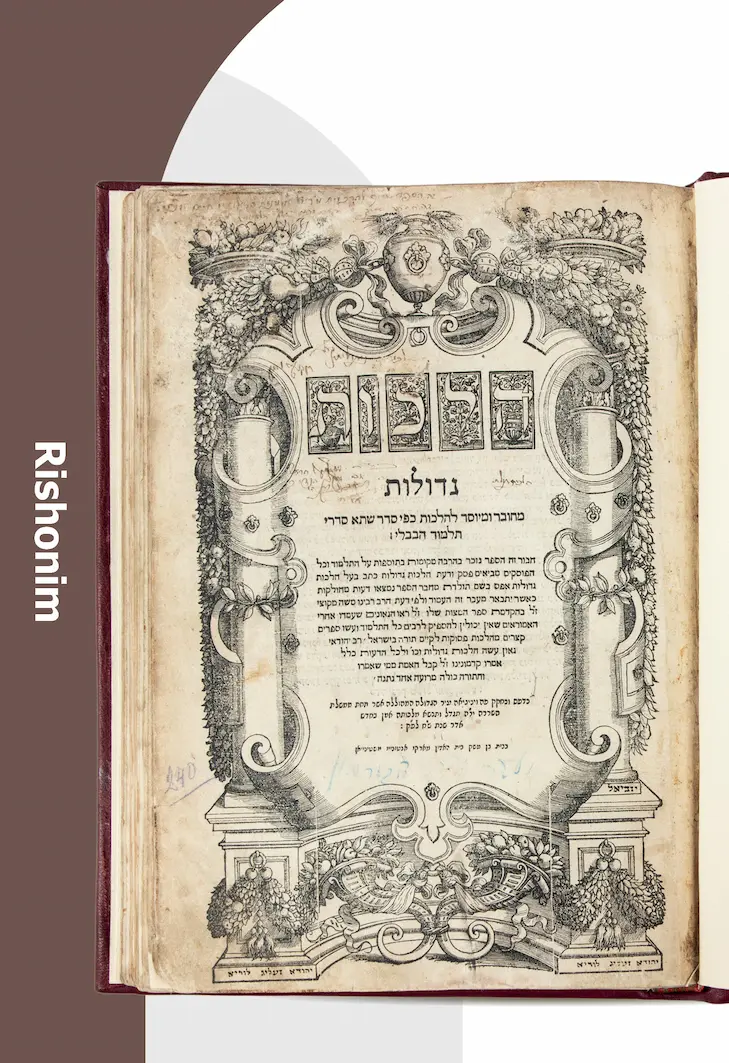
Sefer Yesod  Guide to the Perplexed The Rambam’s Moreh Nevuchim. Venice, 1551
Sefer Yesod  Guide to the Perplexed The Rambam’s Moreh Nevuchim. Venice, 1551 The Rambam’s monumental work Moreh Nevuchim discusses fundamental topics of Jewish faith and theology and is regarded as the premier work on Jewish thought and philosophy. Moreh Nevuchim was originally printed in Rome between 1469-1474 without any commentary or additions. The present Venice 1551 edition presents the first edition of Moreh Nevuchim with its great commentators: the commentary of Rabbi Shem Tov ben Rabbi Yosef; Perush Ha’Efodi by Rabbi Yitzchak Doran; Rules of Pirkei Hamoreh by Rabbi Yehuda Alharizi; and Perush Hamilos Hakashos by Rabbi Shmuel Ibn Taboon (who translated the Rambam”s work from Arabic). Moreh Nevuchim, by the Rambam cites logical proofs of the existence of a Creator, evidence of the creation of the world and the lack of G-d’s corporeal form. He also presents a broad explanation of the foundations of prophecy, Creation, Maase Hamerkavah, and reasons for mitzvos. Venice, 1551. Page Count: [12], 185 leaves; [1] leaves. Page Size: 29.5 cm. Condition: Good. Title page and first leaves professionally restored; minor restoration of other page margins; and few stains on first leaves. Attractive new leather binding. Bibliography: Stefansky, Sifrei Yesod #494 ................................................ Any inquiries about this lot ? We are available also on WhatsApp >>>

Lot : 64

Sefer Yesod List of the 613 mitzvos Halachos Gedolos. First Edition. Venice,
Sefer Yesod List of the 613 mitzvos Halachos Gedolos. First Edition. Venice, 1548 Halachos, halachic rulings and a list of the 613 mitzvos. This classic and fundamental sefer was one of the first halachic works compiled after the sealing of the Talmud in 500 C.E. The early sages describe this sefer with appreciation and honor, and very rarely dissent from its rulings, “as all the words of Halachos Gedolos are words of Kabbalah, as the Poskim write of it in every place” (Shu”t Maharik, end of Shoresh 150). The Chida writes similarly in the name of the Ohr Hachaim Hakadosh: “We heed the words of the author of Halachos Gedolos as all his words are Kabbalah” (Birkei Yosef, Ohr Hachaim Ch. 16). There are different opinions regarding the identity of the author of Halachos Gedolos. The Rambam, Raavad and Ramban conjecture that it was written by Rabbi Shimon Caeira of the Babylonian Geonim, whereas Rashi, Rashbam and the Baalei Tosfos attribute the sefer to Rabbi Yehudai Gaon. The sefer opens with a preface by the author, which seems to be the very first known preface to any Hebrew work. The author then continues with the list of the 613 mitzvos of the Baal Halachos Gedolos, which is regarded as one of the fundamental lists of the mitzvos. Venice, 1548. First edition.  Page Count: [4], 144 leaves. Page Size: 28.5 cm. Condition: Good. Several holes and minor stains.  Bibliography: Stefansky, Sifrei Yesod #220 ................................................ Any inquiries about this lot ? We are available also on WhatsApp >>>
Lot : 65

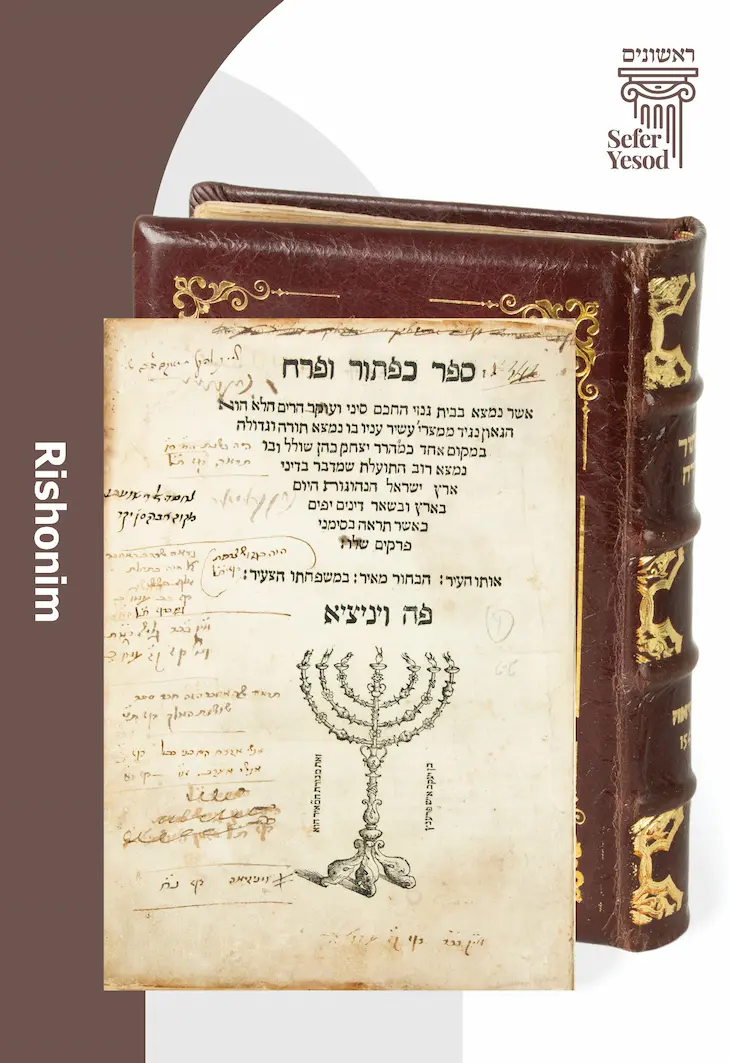
First fundamental work on the mitzvos of Eretz Yisrael! Kaftor Vaferach. First
First fundamental work on the mitzvos of Eretz Yisrael! Kaftor Vaferach. First Edition. Venice, 1548 The sefer Kaftor Vaferach by Rabbi Ashtori Haparchi, the very first researcher and historian of Eretz Yisrael, is the only sefer from the era of the Rishonim devoted entirely to the mitzvos and geography of Eretz Yisrael, and is regarded as a primary source for all matters pertaining to the Holy Land. While discussing the intricate halachos of the mitzvos hateluyos baAretz, the author clarifies the precise historical borders of Eretz Yisrael, topography of Yerushalayim, precise measurements of the Beis Hamikdash, botany of Eretz Yisrael, and sizes and weights of its currency. Rabbi Ashtori Haparchi, a pen name for Rabbi Yitzchak ben Moshe Hacohen, journeyed to Eretz Yisrael in the 13th century where he devoted a great deal of time to researching the Holy Land and identifying over 200 historical sites mentioned in Tanach and the Gemara. ................................................. .............................................. Some of the greatest Achronim, among them Mahari Beirav, the Beis Yosef, the Mabit and his son Maharit, Rabbi Betzalel Ashkenazy and others, cite this unique work and, when relevant, usually rule in halachah based on his findings. The Rema of Pano famously writes in his teshuvos (Ch. 25), “take notice of him [the words of the Kaftor Vaferach] as he is a great man, and all his words regarding coming to the Mikdash are truly kaftor vaferach [beautiful]”. ................................................. .............................................. Rabbi Ashtori Haparchi lived in the 13th century. Expelled from France in 1306, he journeyed to Eretz Yisrael and lived there for several years, concluding his sefer Kaftor Vaferach in the city of Beit Shean in 1322 (Kaftor Vaferach Ch. 51). For several hundred years, this work remained in manuscript form until it was finally printed in Venice based on a copy possessed by the celebrated Jewish philanthropist Rabbi Yitzchak Hacohen Sholel of Egypt. Venice, 1648. First Edition. Page Count: [182] leaves (original page count is erroneous). Page Size: 20.8 cm. Condition: Water stains, mostly minute holes. Owners’ signatures and annotations. Elaborate new leather binding. Bibliography: Stefansky, Sifrei Yesod #251 Owners’ signatures and annotations: Nosson Kremser Avraham ben Yakar Various marginalia and one long annotation (leaf 22b) beginning with the words “Avraham said:” ................................................ Any inquiries about this lot ? We are available also on WhatsApp >>>

Lot : 67

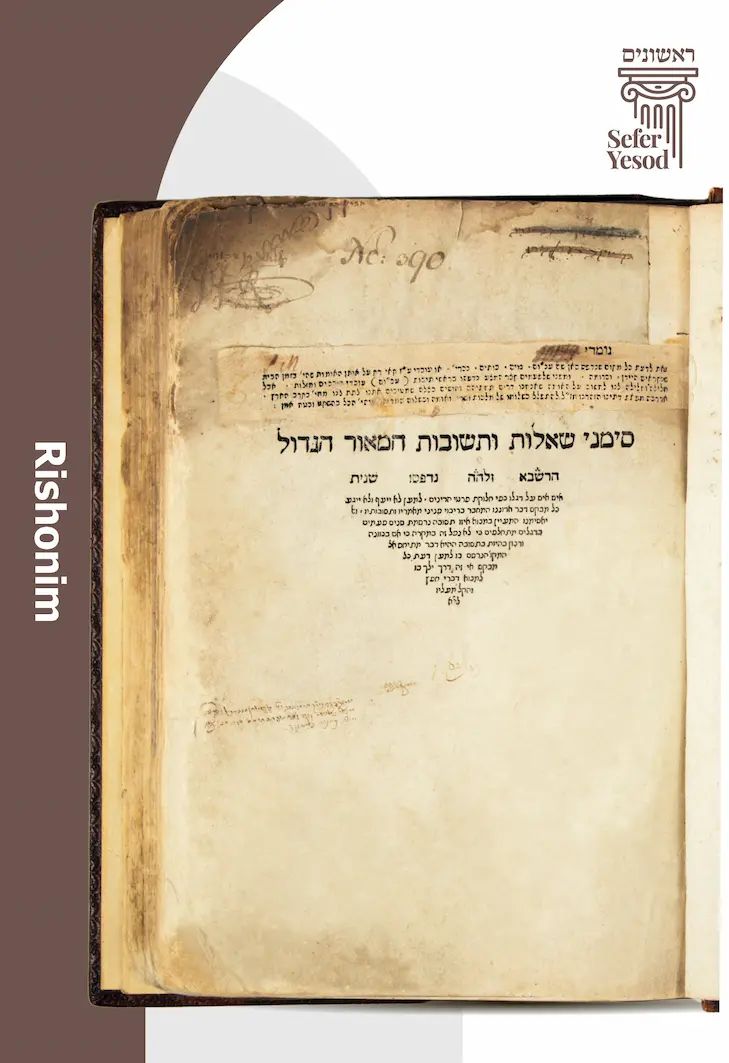
Sefer Yesod Shu”t HaRashba First Edition. Bologna, 1539 with Handwritten Glosses by
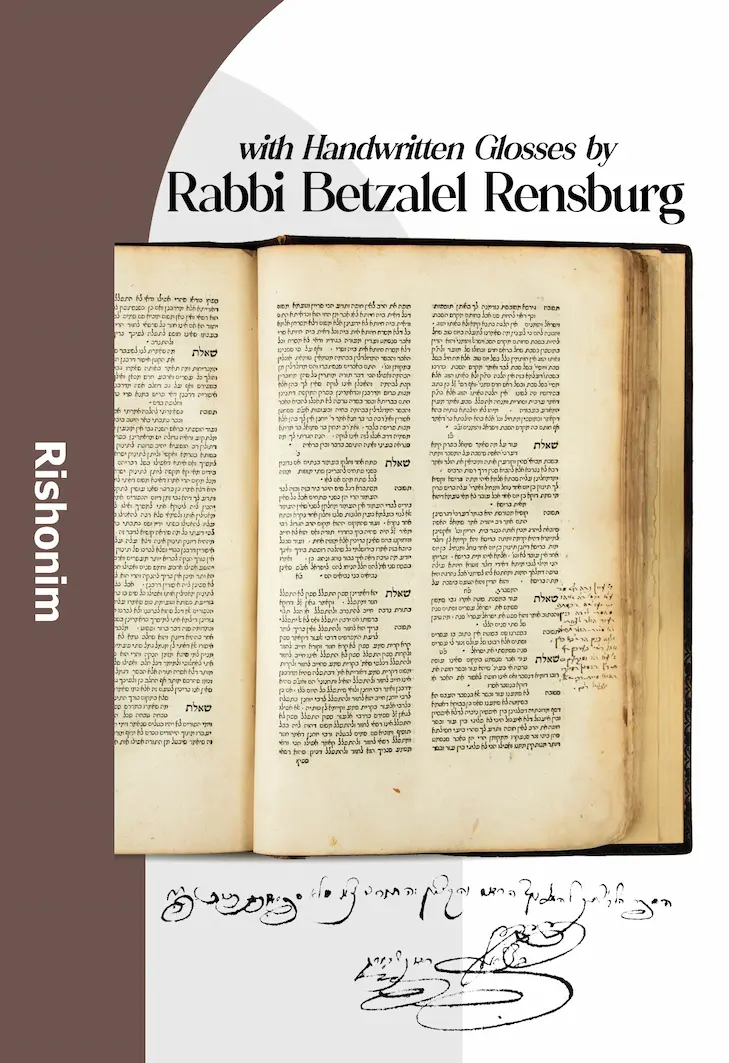
Sefer Yesod Shu”t HaRashba First Edition. Bologna, 1539 with Handwritten Glosses by Rabbi Betzalel Rensburg. Shailos and teshuvos by Rabbeinu Shlomo ben Aderes, the Rashba. The Rashba’s teshuvos were printed over the course of many centuries, and Poskim refer to the present anthology of teshuvos as Shu”t HaRashba Vol. 1. Rabbeinu Shlomo ben Aderes (1235–1310) more commonly known by his acronym, Rashba, was one of the premier Sephardic Rishonim and commentators on the Talmud. He was a talmid of Rabbeinu Yonah and the Ramban, and from his seat on the Rabbinate in Barcelona, dispatched thousands of teshuvos that were universally accepted as cornerstones of halachah. A significant portion of the Beis Yosef is based on the Rashba’s teshuvos, and in his writings, Rabbi Yosef Karo praises him with the accolade, “Pillar of the world; with his light, we see light” (Beis Yosef Yoreh Deah Ch. 110). The present collection encompasses 1,255 teshuvos! Both the title page and flyleaf feature the autograph of Rabbi Betzalel Rensburg of Prague, the leaves of the sefer include a number of handwritten glosses, one of which is autographed “Betzalel RB” (leaf 19b). Rabbi Betzalel Rensburg (1762-1821) was one of the great Achronim of Prague. He was a disciple of the Noda B’Yehudah who described him as “My friend, the wondrous and brilliant young man” (Noda B’Yehudah Orach Chaim Ch. 65). The Chasam Sofer also inscribed in his hesped, “The famous genius, pious and of holy birth, [who] sits and learns all day, and there is hardly anyone after him who resembles him” (Toras Moshe Hashalem, Devarim p. 184). His legacy includes Horeh Gever, Pischei Niddah and Hagaos on the Vilna Shas, among others. Upon the order of the censor, a small note was glued to the title page clarifying that the “gentiles” mentioned in sefer do not refer to the local gentiles but to gentiles from previous eras. The page numbers were inserted by hand by the censor. Bologna, 1539. First Edition. Page Count: [16], [1] 211, 215 leaves. Page Size: 28.2 cm. Condition: Rubbed and worn at margins, especially in corners of margins in first pages. Binding: New leather binding. Bibliography: Stefansky, Sifrei Yesod #266 ................................................ Any inquiries about this lot ? We are available also on WhatsApp >>>
Lot : 68

Sefer Yesod Shu”t HaRashba. Vol. 2 First Edition. Livorno, 1657 Shailos and
Sefer Yesod Shu”t HaRashba. Vol. 2 First Edition. Livorno, 1657 Shailos and teshuvos by Rabbeinu Shlomo ben Aderes, the Rashba. The Rashba’s teshuvos were printed over the course of many centuries, and Poskim refer to the present anthology of teshuvos as Shu”t HaRashba Vol. 2. Rabbeinu Shlomo ben Aderes (1235–1310) more commonly known by his acronym, Rashba, was one of the premier Sephardic Rishonim and commentators on the Talmud. He was a talmid of Rabbeinu Yonah and the Ramban, and dispatched thousands of teshuvos which were universally accepted as cornerstones of halachah. A significant portion of the Beis Yosef is based on the Rashba’s teshuvos, and in his writings, Rabbi Yosef Karo praises him with the accolade, “Pillar of the world; with his light, we see light” (Beis Yosef Yoreh Deah Ch. 110). Leaves 95-104 are marked “Teshuvos Me’HaRama” which refers to Rabbi Yaakov ben Moshe Levi Moelin, the Maharil. This was one of the very first Hebrew works printed in Livorno! Livorno, 1657. First Edition. Page Count: 8, 104 leaves. Page Size: 30.5 cm. Condition: Water stains and minor damage. Worn antique leather binding with new spine. Title page bears the autograph of Rabbi Koppel Shanigen (d. 1816), who served as Dayan of Würzburg alongside Rabbi Avraham Bing. Bibliography: Stefansky, Sifrei Yesod #266 ................................................ Any inquiries about this lot ? We are available also on WhatsApp >>>

Lot : 69

Two Fundamental Sefarim by the Early Rishonim! Avodas Hakodesh L’HaRashba and Baalei
Two Fundamental Sefarim by the Early Rishonim! Avodas Hakodesh L’HaRashba and Baalei Nanefesh L’HaRaavad. First Edition. Venice, 1602 Two primary halachic works by the early Rishonim. 1. Avodas Hakodesh – Laws of eiruvin, Yom Tov and muktzeh by Rabbeinu Shlomo ben Aderes (Rashba) 2. Baalei Hanefesh – Laws of niddah by Rabbeinu Avraham ben Dovid (Raavad) Rabbeinu Shlomo ben Aderes (1235–1310) more commonly known by his acronym, Rashba, was one of the premier Sephardic Rishonim and commentators on the Talmud. The Beis Yosef extols him with the praise, “Pillar of the world; with his light, we see light, ” (Yoreh Deah Ch. 110). He was a talmid of Rabbeinu Yonah and the Ramban, and authored thousands of teshuvos and chiddushim that are universally accepted as cornerstones of halachah. Rabbeinu Avraham ben Dovid (circa 1115-1199), known as the Raavad, was one of the early Rishonim and commentators on the Gemara, author of the Hasagos on the Rambam’s Mishneh Torah. The Ramban in his preface to Hilchos Niddah L’HaRamban praises the Baalei Hanefesh effusively, explaining that the Raavad preempted him with his sefer. Venice, 1602. First Edition. Page Count: 76 leaves. Page Size: 20 cm. Baalei Hanefesh is printed on leaves 48-75. Condition: Good. Architectural border on title page. Half-leather binding with attractive spine. Bibliography: Stefansky, Sifrei Yesod #239 ................................................ Any inquiries about this lot ? We are available also on WhatsApp >>>
Lot : 70

Halachic Fundamental. Sefer Yere’im. First Edition. Venice, 1566 Commentary on the 613
Halachic Fundamental. Sefer Yere’im. First Edition. Venice, 1566 Commentary on the 613 mitzvos by the great Ashkenazi Rishon Rabbi Eliezer of Metz. This fundamental halachic masterpiece is cited by some of the greatest Rishonim of all times, among them Maharam of Rottenberg; the Mordechai; Hagahos Maimoniyos; the Rekanti, and others. The author, Rabbi Eliezer of Metz, was a disciple of Rabbeinu Tam and he is quoted extensively by the Baalei Tosfos in their commentary on Shas. Two of his greatest disciples were the Ravia and the Rokeach. In his preface to this work, Rabbi Eliezer writes that he entitled his sefer ‘Yere’im, ’ explaining that “From this, they will to learn to fear Hashem.” Venice, 1566. First edition. 5, [4] – 146 leaves. Page size: 19 cm. Water stains. Last leaf professionally restored on margins. Attractive new leather binding Provenance: Kedem auction #82. Stefansky, Sifrei Yesod #226 .................................... ............ Any inquiries about this lot ? We are available also on WhatsApp >>>

Lot : 71

Fundamental Sefer on Choshen Mishpat Sefer Haterumos. First Edition. Salonika, 1596 Comprehensive
Fundamental Sefer on Choshen Mishpat Sefer Haterumos. First Edition. Salonika, 1596 Comprehensive halachic work on monetary matters by Rabbi Shmuel Hasardi, one of the 13th century Spanish Rishonim. Rare first edition! Sefer Haterumos is fundamental to the study of the laws of Choshen Mishpat. The author of Gidulei Terumah writes in his preface that “the vast majority of laws cited in Choshen Mishpat are derived from the work of the Baal Haterumos.” Rabbi Efraim Zalman Margalios wrote in his approbation to Gidulei Terumah (Zolkova, 1809) that “that Sefer Haterumos is the source of the majority of Torah written in Tur Choshen Mishpat .” Sefer Haterumos is cited by the greatest of Rishonim among them Rabbeinu Yerucham, the Tashbetz, Rivash, and is quoted hundreds of times in the Beis Yosef and Shach on Choshen Mishpat. Rabbi Shmuel Hasardi (circa 1190-1255) was born and flourished in the city of Sardinia, Spain where he corresponded repeatedly with the Rambam whose works he cited frequently in his sefer. Rabbi Shmuel also quotes Rishonim from Provence, among them the Raavad, Baal Haeshkol and others. Sefer Haterumos was brought to print at the behest of Rabbanim from Salonika, and with assistance from Rabbi Moshe de Medina, son of the Maharshdam, who served as a prominent Rabbi in Salonika. Salonika, 1596. First Edition. Page Count: 115 leaves. Page Size: 30 cm. Condition: Good with minor stains and lightly restored at margins. Attractive new leather binding. Bibliography: Stefansky, Sifrei Yesod #229 ................................................ Any inquiries about this lot ? We are available also on WhatsApp >>>

Lot : 72

Discovery! Manuscript  Prague, 1579 Collection of Early Works from the Rishonim. An
Discovery! Manuscript  Prague, 1579 Collection of Early Works from the Rishonim. An invaluable manuscript containing a collection of essays, which together comprise the legacy of Ashkenazic Rishonim regarding the laws and Kabbalistic secrets of safrus and writing Sifrei Torah, tefillin and mezuzos. Essays included in this historic manuscript encompass works from Rishonim that are the foundations for all Hilchos STa”M, codified by the Poskim throughout the past centuries regarding writing Sifrei Torah, tefillin and mezuzos. The manuscript also contains works that are completely unknown, and have not been found in any other manuscript. Manuscript Content: 1. Dinei Psuchos U’Sesumos (marked in pencil on leaves 193a-200b) Tikkun Sefer Torah authored by Rabbi Yom Tov Lipman Milhausen, author of Sefer Hanitzachon. Leaf 200b: “Tikkun Torah composed by Rabbi YT whose fruits [of his pen] are accurate and good.” This essay is mentioned by several Ashkenazic scholars, including the Rema in Darchei Moshe L’HaRema in Hilchos Sefer Torah. There were many years when this work was presumed to be lost, however it was rediscovered and printed in Kovetz Sinai Vol. 60 (1967) pp. 232-268. 2. Tikkun Alpha-Beta L’Rabbi Yom Tov Lipman Milhausen based on the Revealed and Hidden Torah (marked in pencil on leaves 200b-214b) This fundamental composition includes two parts: 1) Detailed explanation of the letter shapes based on the Revealed Torah 2) Kabbalistic explanation of the letters The end of leaf 214b bears the closing statement characteristically employed by Rabbi Yom Tov Milhausen: “this is the tefillah of Tivyomi (Yom Tov)”. 3. Remazim al Hatagim V’ha’osiyos (Allusions of the Crowns and Letters) (marked in pencil on leaves 215a-216b) This anthology concludes with a poem, with the first letter of each line forming the acrostic “Menachem bar Baruch”. Genazym has not found any mention of this composition and concluding poem in any other source. 4. Psuchos U’Sesumos shel Megillas Esther miRabbi Yehuda Hachassid (marked in pencil on leaf 217a) The handwritten title reads: “Psuchos and sesumos of Megillas Esther, I copied these from the manuscript of Rabbi Rabbeinu Yuda Chassid ben Rabbeinu Shmuel Chassid.” Prior to Rabbi Yehuda Hachassid’s manuscript of Megillas Esther, the prevalent source for Tikkun was Rabbeinu Tam’s personal manuscript of Megillas Esther, which the author mentions twice in the present essay. This primary source is particularly enlightening regarding the question of parshiyos psuchos and sesumos (spaces in Tanach denoting new sections) in Rabbeinu Tam’s Megillas Esther. While some opinions cite Rabbeinu Tam as saying that all parshiyos in the Megillah are sesumos, here Rabbi Yehuda Hachassid proves, based on Rabbeinu Tam’s Megillas Esther which he held in his possession, that some of the parshiyos are clearly psuchos. Aside from the essay in the present manuscript, there is one other known source of Rabbi Yehuda Hachassid’s above essay; see Yerushaseinu Vol. 1 Bnei Brak, 2007 pp. 26-27. 5. Sefer Baruch She’amar (marked in pencil on leaves 217b-245b) Fundamental composition on writing tefillin, beginning from the preliminary stage of processing the parchment and until the writing is complete. Baruch She’amar includes the essay Tikkun Tefillin by Rabbi Avraham of Zunsheim, a talmid of Maharam Rottenberg, along with numerous comments and additions by Rabbi Shimon ben Eliezer who was called “Baruch She’amar”. 6. Iggeres Teiman L’HaRambam Rabbi Nachum Maaravi (the copyist) called this famous essay “Pesach Tikvah, ” (literally “opening of hope.”) The famous letter penned by the Rambam to fortify the spiritual resolve and faith of Yemenite Jewry following a wave of false Messiahs that arose in Yemen and wreaked devastation and hopelessness among the masses appears at the beginning of the present manuscript and is marked in pencil as leaves 177a-179b. The present manuscript predates the original printing of Iggeres Teiman which was first printed in Taalumos Chochmah (Hanau, 1629). Prague, circa 1570-1579. Page Count: [69]. Page Size: 15x18 cm. Condition: Good with water stains. Attractive new leather binding. Provenance: Carlebach Family Collection, Hamburg-Lakewood ................................................ Any inquiries about this lot ? We are available also on WhatsApp >>>
Lot : 73

Sefer Yesod Rishonim Shu”t Maharam Rothenburg. First Edition. Cremona, 1557 Distinguished provenance!
Sefer Yesod Rishonim Shu”t Maharam Rothenburg. First Edition. Cremona, 1557 Distinguished provenance! Autographed by the Baal Shem of Michelstadt Shu”t Mahara”m of Rothenburg is one of the foundational authoritative halacha sefarim discussed and studied by all future Poskim, rishonim and achronim. There are two known anthologies of teshuvos by Maharam of Rothenburg, the first being the present sefer which is renowned among the Poskim as the Teshuvos Maharam Haktzaros (short Teshuvos of the Maharam) since the majority of teshuvos included in this anthology are quite short; while the second is called Shu”t Maharam MiRothenburg Ha’arukos (Long Teshuvos) and was printed in Prague, 1608. Rabbi Meir of Rothenburg (1215 -1293), renowned by his initials Maharam Rothenburg. The Meiri refers to him in awe as “Rosh Yeshivah of all of the land of France”, and he was the preeminent spiritual master and teacher of Torah luminaries as the Rosh, Mordechai, authors of Shaarei Dora and Hagaos Maimonios. In his latter years he was kidnapped by Christian aristocrats, incarcerated and held hostage for an exorbitant sum. He refused to be redeemed to prevent enemies of the Jews to resorting to such tactics in the future. He ultimately returned his soul while in prison. Distinguished provenance! The title page verso features the sacred autograph of the Baal Shem of Michelstadt: “I purchased this valuable and precious sefer for three marks. Zekel Leib of Michelstadt.” Renowned as the Baal Shem Tov of Michelstadt, Rabbi Yitzchak Aryeh (Zekel Leib) Wormser (1768-1848), Av Beis Din of Michelstadt, was a tzaddik and miracle worker who generated wonders and salvations for thousands of Jews. In his youth, he studied under Rabbi Nosson Adler who probably inspired his journey into the world of Kabbalah. Rabbi Zekel Leib promised that the prayers of anyone who would pray at his grave would be accepted, and until this very day, there is a steady stream of Jews visiting the Jewish cemetery in Michelstadt. (see Kivrei Tzaddikim B’Ashkenaz p. 126). His writings and chiddushim were published in the sefer Baal Shem MiMichelstadt (Machon Yerushalayim). Cremona, 1557. First Edition. Page Count: 108, [15]. Page Size: 19 cm. Condition: Good. Top margins slightly cropped; on some leaves cropped titles. Small ink stains on title page. Miniscule holes in back leaves. New leather binding. Bibliography: Stefansky, Sifrei Yesod #263 ................................................ Any inquiries about this lot ? We are available also on WhatsApp >>>

Lot : 74

The Alshich Hakadosh Responsa Shu”t Maharam Alshich. First Edition. Venice, 1605 Shailos
The Alshich Hakadosh Responsa Shu”t Maharam Alshich. First Edition. Venice, 1605 Shailos and teshuvos regarding practical halachah by Rabbi Moshe Alshich, the Alshich Hakadosh. Rabbi Moshe Alshich (circa 1508-1600), received semichah from Rabbi Yosef Karo and was titled Harav Hamusmach. He drew his wisdom in Kabbalah from the Arizal Hakadosh and was one of the spiritual mentors of Rabbi Chaim Vital. The Alshich Hakadosh, as he is famously called, served as a dayan and Rosh Yeshivah of two yeshivos in Tzfas where he disseminated Torah to many talmidim and authored numerous teshuvos. The preset sefer, Shu”t Maharam Alshich, encompasses 140 chapters on Yoreh Deah, Even Haezer and Choshen Mishpat, and one very fundamental and famous teshuvah on Orach Chaim (Ch. 110) regarding grafted esrogim. The latter teshuvah is cited by virtually every subsequent Posek who discusses this topic. In his sefer on Choshen Mishpat, the Shach cites the Alshich dozens of times! This sefer also offers an important historical documentation of the golden era of 16th century Tzfas to which the Alshich refers as “Ir Elokeinu, city of our G-d” (Ch. 53:96). Venice, 1605. First Edition. Printed by the Alshich’s son Rabbi Chaim Alshich. Page Count: [1], 243 leaves. Page Size: 19 cm. Condition: Good with light stains and new binding. Owners’ signatures in Italian script: “The youth Chaim Trivesh”. ................................................ Any inquiries about this lot ? We are available also on WhatsApp >>>
Lot : 75

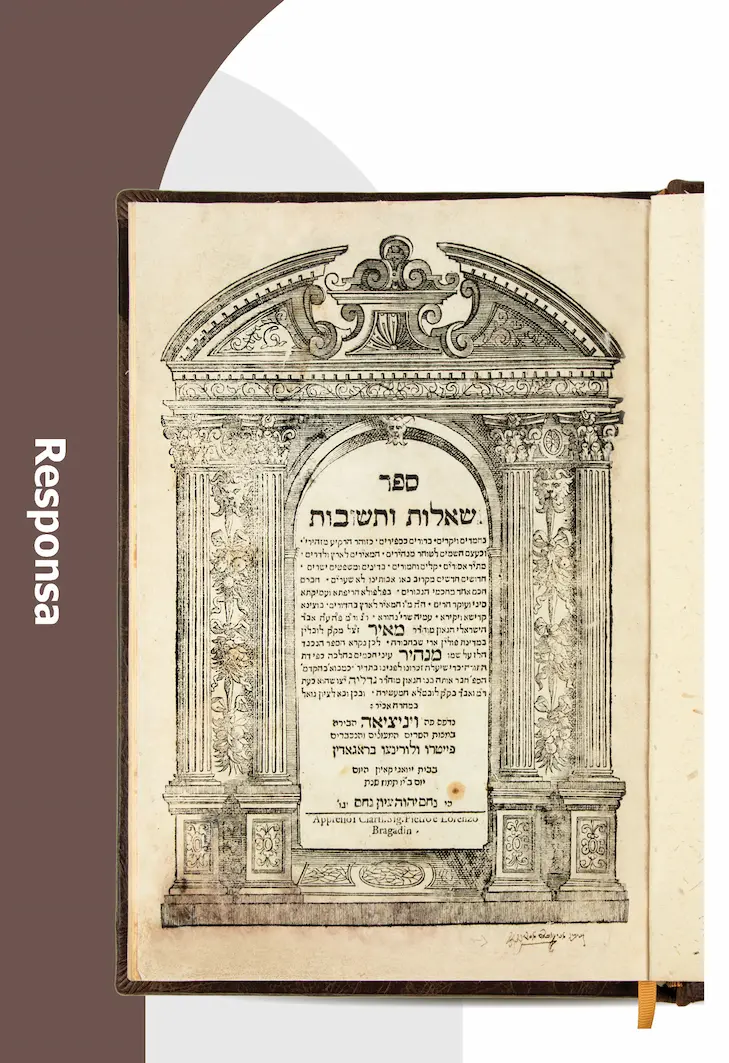
Sefer Yesod Shu”t Maharam of Lublin. First Edition. Venice, 1618 Halachic masterpiece
Sefer Yesod Shu”t Maharam of Lublin. First Edition. Venice, 1618 Halachic masterpiece arranged in shailos and teshuvos by Rabbi Meir, Av Beis Din of Lublin. Rabbi Meir ben Rabbi Gedalya of Lublin (1558-1616), famous as Maharam of Lublin, was one of the Achronim; a Rav and Rosh Yeshivah in some of the most prominent Jewish metropolises in Poland, among them Lvov and Lublin. His yeshivah produced some of the greatest Torah luminaries of all times including the Shl”a Hakadosh, Rabbi Meir Katz, father of the Shach, and the author of Maginei Shlomo. His monumental composition on Shas is included in many editions of the Talmud. The original title of this sefer, as noted in the title page and preface, was Manhir Einei Chachamim. Venice, 1618. First edition. Page Count: 114 leaves. Page Size: 28 cm. Condition: Light restorations to margins of title page and last page. Several leaves have miniscule holes in margins. New binding. Bibliography: Stefansky, Sifrei Yesod #289. winners sale 139 ................................................. ............................................. The margin of the title page features the autograph of Rabbi Avraham Amigo (circa 1610-1683) who was one of the venerable sages of Yerushalayim of old, a pious and righteous Kabbalist and revered halachic authority whose rulings are cited in the Pri Chadash. He was venerated by the greatest Sephardic sages; Maharam Ben Chaviv referred to him as “Gadol doreinu, the greatest of our generation” (Ezras Nashim p. 61) and Rabbi Moshe Chagiz called him “A minister and sage in Yisrael, ” (Shu”t Shtei Halechem Ch. 42). He spearheaded the movement to expel Shabsai Tzvi from Yerushalayim in 1664, and a collection of his novellae was published as Chiddushei Rabbi Avraham Amigo (Jerusalem, 1990). .................................................. ............................................ Any inquiries about this lot ? We are available also on WhatsApp >>>
Lot : 76

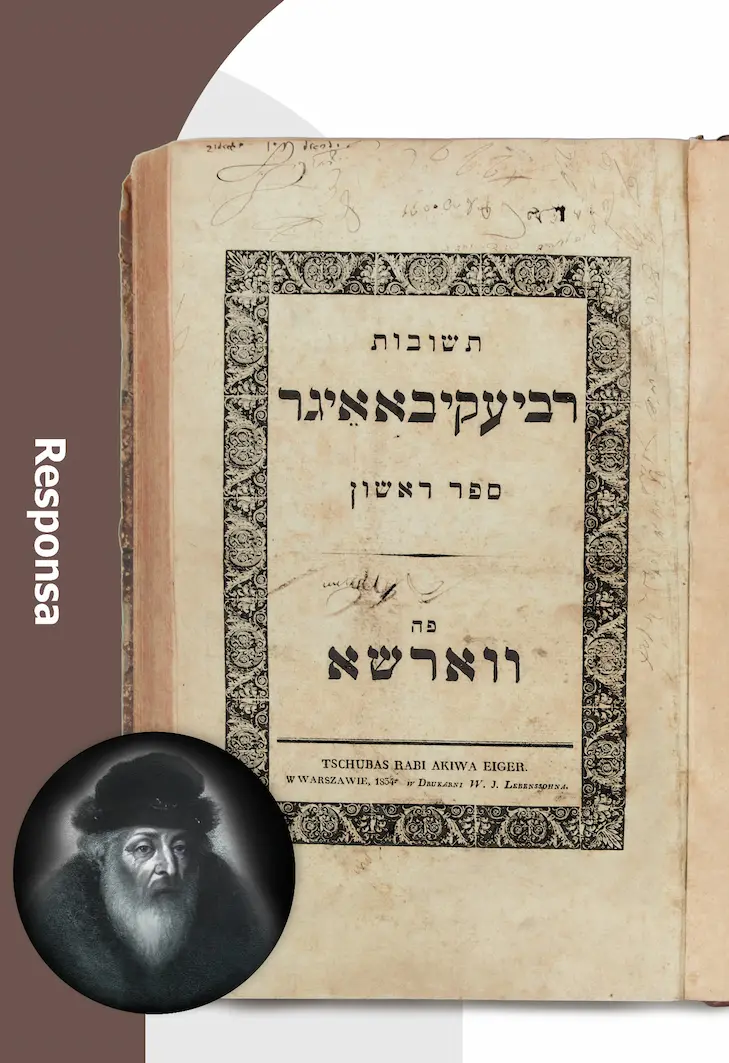
“Shu”t Rabbi Akiva Eiger overflows with Ruach hakodesh” (Avnei Nezer, ) Shu”t
“Shu”t Rabbi Akiva Eiger overflows with Ruach hakodesh” (Avnei Nezer, ) Shu”t Rabbi Akiva Eiger. First Edition. Warsaw, 1835 Sefer Yesod Monumental work of shailos and teshuvos by Rabbi Akiva Eiger, Av Beis Din of Posen printed during Rabbi Akiva Eiger’s lifetime. Fine copy with wide margins. In their preface to this fundamental halachic work, Rabbi Akiva Eiger’s sons quote their father who instructed them “to keep your eyes open to ensure that [the sefer] is printed on high-quality paper using dark ink and attractive type. For in my opinion, the soul awakens, the mind expands, and one's understanding is sharpened when learning from a clear and beautiful sefer.” Following his request, Shu”t Rabbi Akiva Eiger was indeed printed using the finest printing materials. The sefer was also adorned with illustrations of trees, towers, animals and birds. Teshuvos of Rabbi Akiva Eiger number among the fundamental halachic works from the era of the Achronim, and later Poskim regarded his rulings as halachah, similar to a sage from the era of the Rishonim. In his preface to Meromei Sadeh, Rabbi Chaim Berlin wrote of his father the Netziv: “And I attest in true faith…that he would often state that one who delves deeply into the teshuvos of Rabbi Akiva Eiger z”l will discover not only great wonders and genius from the depth of his brilliance and his diligent mind, but also pure fear of Hashem and humility within each and every line, and there is no greater mussar sefer than this… and the opinions of Rabbi Akiva Eiger z”l when ruling on halachah, whether stringently or leniently, would take precedence of numerous Poskim.” Warsaw, 1835. First edition. Two title pages. [1], 222 leaves. Page size: 34 leaves. Owners’ signatures. Good condition with worn old binding and new leather spine. Stefansky, Sifrei Yesod #310 .................................... ............ Any inquiries about this lot ? We are available also on WhatsApp >>>

Lot : 77

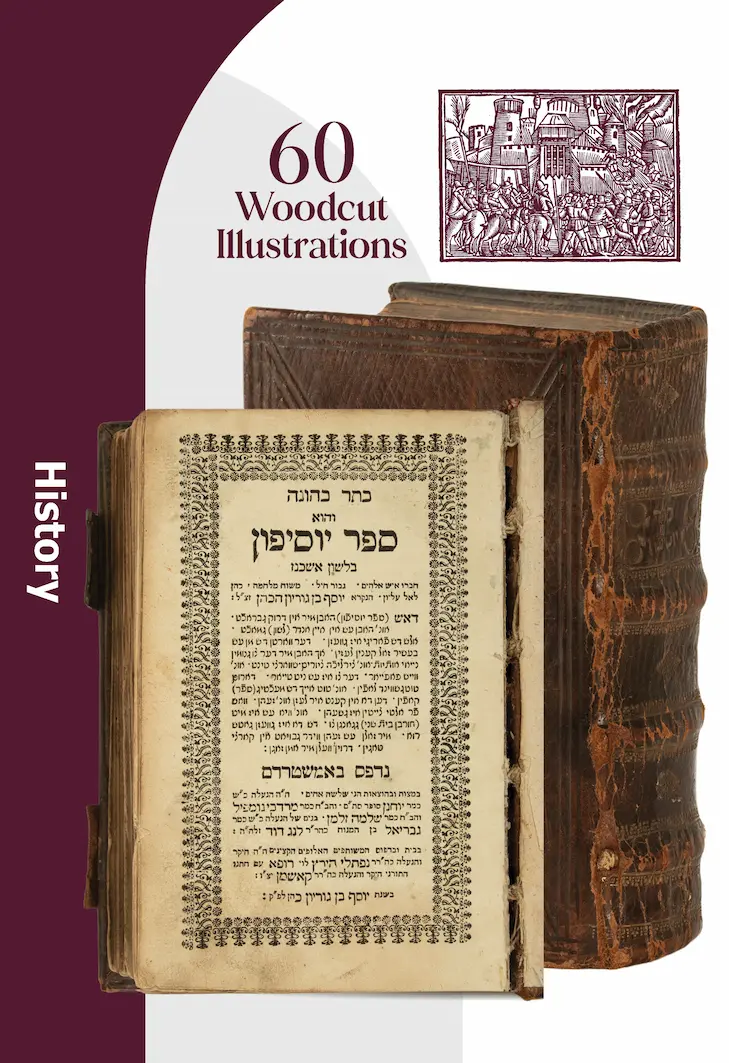
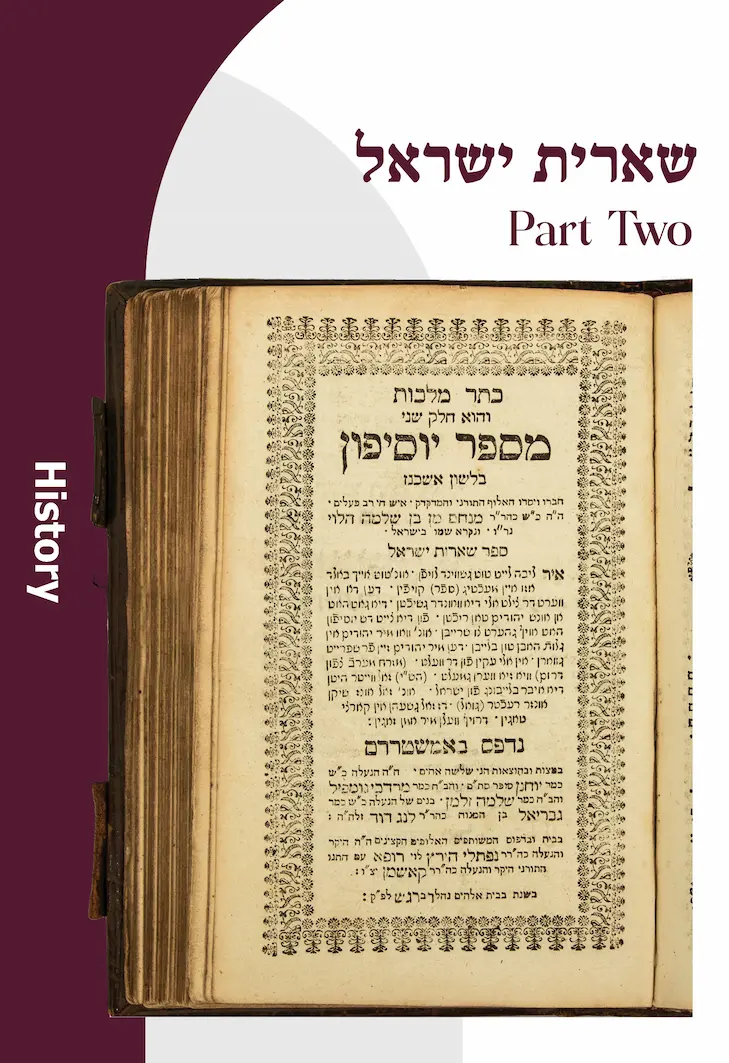
Book of Yosifon in Yiddish with 64 Woodcut Illustrations Bound Together With
Book of Yosifon in Yiddish with 64 Woodcut Illustrations Bound Together With First Edition of She’aris Yisrael. Amsterdam, 1743 1. Book of Yosifon – History of the Jewish people beginning with Adam Harishon and spanning the eras of the Babylonian kingdom, Alexander the Great, and Roman wars until the Churban by first-century historian Joseph ben Gurion Hakohein (Flavius Josephus). 2. She’aris Yisrael – History of the Jewish people in Yiddish from the era of the Churban until the times of the author, Rabbi Menachem Halevi Almander. This book is regarded as the sequel to Yosifon and often called Yosifon Vol. 2. She’aris Yisrael was immensely popular throughout history. This is the first edition of over twenty subsequent editions. Over 60 splendid woodcut illustrations pictorially depict Jewish history and the images of the famous kings and Caesars mentioned in this famous work. Both Kitzur Shulchan Aruch Ch. 91 and Mishnah Berurah 307:58 state that Josephus is not a secular work and that it is permissible to read on Shabbos as it encompasses mussar and teachings that cultivate fear of heaven. Both works feature endorsements by Rabbi Aryeh Leib, Av Beis Din of Amsterdam, who was the son-in-law of the Chacham Tzvi and father of Rabbi Shaul of Amsterdam. This translated edition underwent meticulous editing and amendments Amsterdam, 1743. [4], 244: [4] 148 leaves. Page size: 18 cm. The volumes feature separate title pages and are bound together in attractive old leather binding from the time of printing with remnants of clasps. Provenance: William Gross Tel Aviv ................................................ Any inquiries about this lot ? We are available also on WhatsApp >>>
Lot : 78

Collection of Early Jewish Sefarim.  Sifrei Yesod Seder Olam and Megillas Taanis.
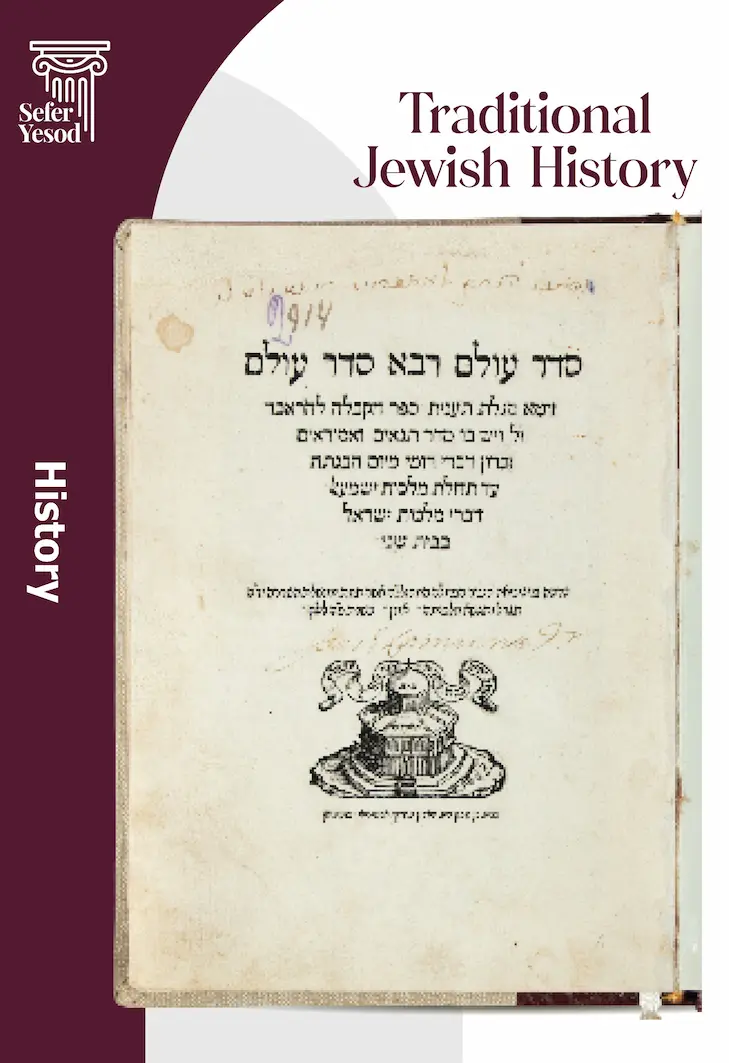
Collection of Early Jewish Sefarim.  Sifrei Yesod Seder Olam and Megillas Taanis. Venice, 1545 Megillas Taanis was compiled in the time of the bais Hamikdash The collection contains:. Seder Olam Rabba – Lists the history of the world from Creation until the era of Roman Emperor Hadrian. This work is attributed to the Tanna Rabbi Yosi ben Chalafta. Seder Olam Zuta – Abridged history of the world, based on Seder Olam Rabba with additions. This work was compiled during the era of the Geohim, and the Rema attributes it to the 11th century Rishon Rabbi Yosef Tov Elem. Megillas Taanis – written by Chananya ben Chizkiahu and his colleagues ( Shabbos 13b) approximately a hundred years prior to the destruction of the Second Temple. Megillas Taanis is probably the oldest known braisa we have.   Megillas Taanis - the Megila of Fast days, lists the days and the events which Chaza”l prohibited mourning and fasting in order to mark and celebrate the remarkable events that the Jewish nation experienced on these days. During the days of the Tanaim, many other dates and events were added to it. Seder Hakabbalah L’HaRaavad – Fundamental historic work documenting the history of Jewish scholars and rabbis by Rabbeinu Avraham ben Rabbi Dovid HaLevi, the first Raavad. Venice, 1545. Second Edition. Page Count: 62 leaves. Page Size: 20 cm. Condition: Top of title page restored, with no damage to text. Stains on margins of last pages. Distinguished provenance! The title page bears the autograph of Rabbi Yitzchak Lampronti (1679-1757), one of the great Italian sages of his era and renowned for his monumental work Pachad Yitzchak. Bibliography: Stefansky, Sifrei Yesod #121, Comments ................................................ Any inquiries about this lot ? We are available also on WhatsApp >>>
Lot : 79

Sefer Yesod Jewish history, Shalsheles Hakabbalah. First Edition. Venice, 1587 Historical-geographical work
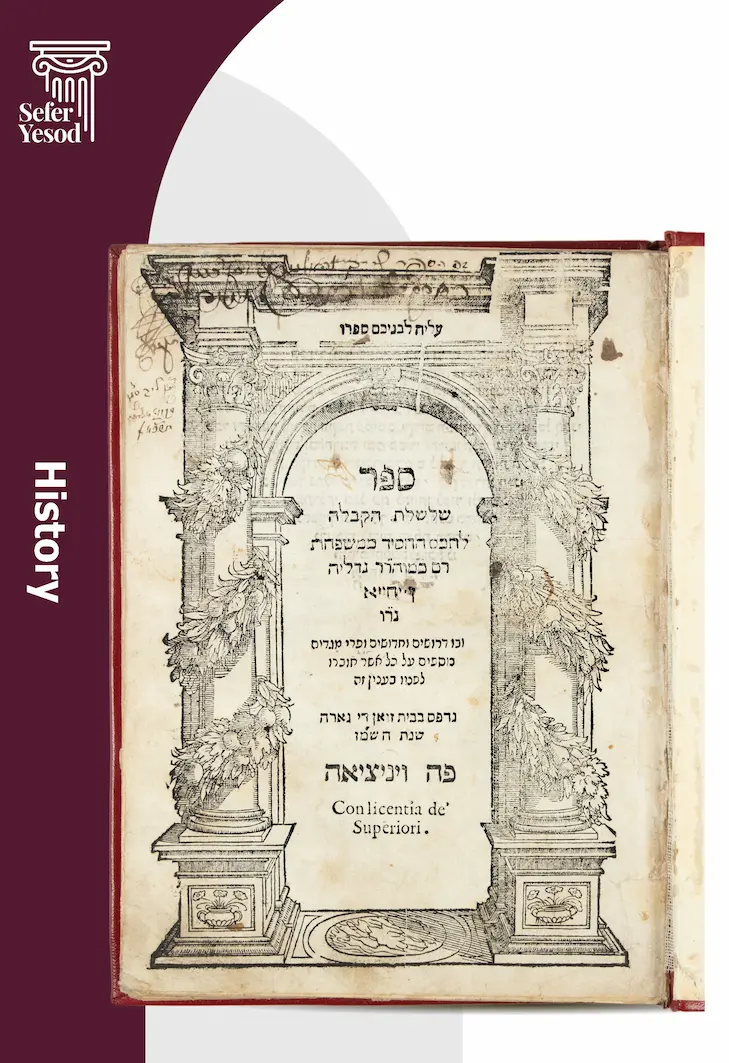
Sefer Yesod Jewish history, Shalsheles Hakabbalah. First Edition. Venice, 1587 Historical-geographical work by Chacham Rabbi Gedalya Ibn Yichya. This work documents the history of the world from the times of Adam Harishon and the transmission of Torah from the time of the Revelation until the era of the Rishonim and beginning of Achronim when this sefer was authored. Rabbi Gedalya Ibn Yichya (circa 1526-1587) was a scion of the illustrious Ibn Yichya family, one of the most prominent Jewish families among the Spanish and Portugal exiles. His father was Rabbi Yosef Ibn Yichya, a famous commentator on Nach (Bologna, 1598) (whose work appears in the present Catalog). Rabbi Gedalya dwelled and disseminated Torah in Italy. Aside from his monumental work Shalsheles Hakabbalah, he also authored numerous sefarim that remain unprinted. The present work was published by the kabbalist Rabbi Yosef Samiga, it includes a poem by the noted Jewish grammarian Rabbi Shmuel Arkwalti, author of Arugas Habosem. Despite the fact that this work contains numerous factual errors of historical events, as noted by the Yashar of Candia and Chida, it is still highly acclaimed as an important historical work and it is a primary source for various Jewish historical data. Venice, 1587. First Edition. Page Count: 122 leaves. Page Size: 18.5 cm. Condition: Minor restoration on title page margin. stains. New red leather binding. Bibliography: Stefansky, Sifrei Yesod #538 ................................................ Any inquiries about this lot ? We are available also on WhatsApp >>>

Lot : 80

Yichus Hatzaddikim. Venice, 1599 A first hand description of the burial sites
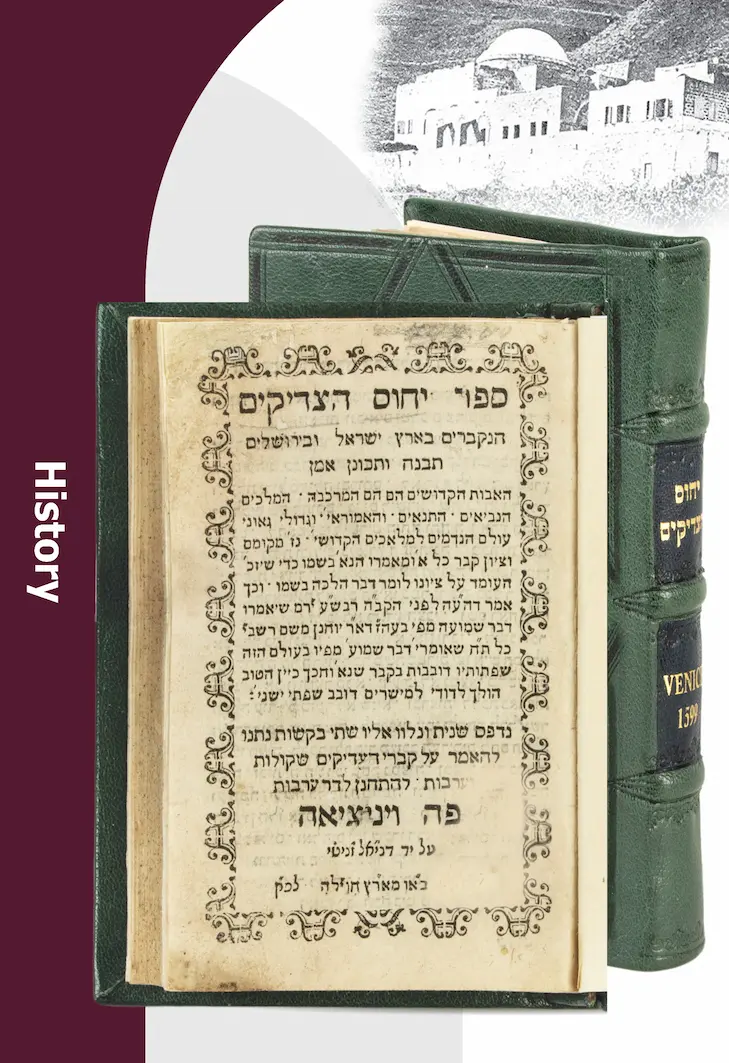
Yichus Hatzaddikim. Venice, 1599 A first hand description of the burial sites of the tzaddikim of Eretz Yisrael, “the holy Avos…Prophets, Tannaim and Amora’im and other Gedolim of later generations…” This sefer provides a specific coordinate for the burial site of each of the tzaddikim mentioned in this sefer, passages from the Torah repeated in their names to be recited at their respective tombs, and a prayer to be recited at the burial sites of tzaddikim. For hundreds of years, Diaspora Jewry treasured this sefer and cherished it dearly in their intense yearning to revisit their homeland and draw close to the tzaddikim laid to rest Eretz Yisroel. In the preface to his sefer, the author reveals that he traveled personally to Eretz Yisrael and marked the coordinates of various tombs based on his personal observations. Among the dozens of tombs that he mentions are Me’aras Hamachpeilah in Chevron, Kever Rachel in Bethlehem, Yosef’s Tomb in Shechem, Rabbi Shimon bar Yochai’s tomb in Meron, Rabbi Yehonasan ben Uziel’s tomb in Amuka “at the foot of the mountain”, Rabbi Akiva and the Rambam’s tombs in Teveria, and the tombs of various sages in Jerusalem.  The sefer also includes prayers for redemption from exile and the consolation of Zion and Jerusalem. In the last pages of the present edition of Yichus Hatzaddikim are three prayers composed by Rabbi Yehuda Aryeh of Modena. Venice, 1599. Third Edition.  Page Count: 104 leaves. Small Format: 13.8 cm. Condition: Good. Attractive new leather binding. Provenance: MICHAEL ZAGAYSKI, PARK-BARNET GALLERIES, NEW YORK 1970 LOT 23 ................................................ Any inquiries about this lot ? We are available also on WhatsApp >>>
Lot : 81

Sefer Yesod History of Gedolei Yisrael and their Sefarim  Shem Hagedolim by
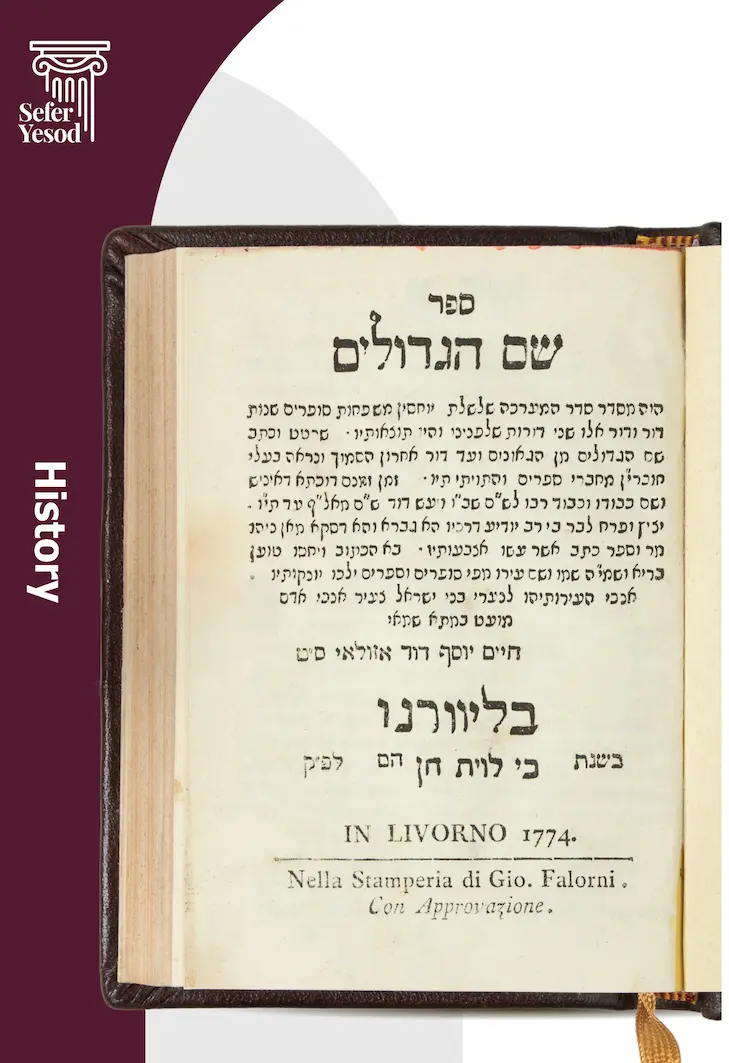
Sefer Yesod History of Gedolei Yisrael and their Sefarim  Shem Hagedolim by the Chida. First Edition. Livorno, 1774 Primary bibliographical and biographical work by Rabbeinu Chaim Yosef David Azzoulay, the Chida, documenting the lives and writings of Gedolei Yisrael throughout the ages, including manuscripts and printed sefarim. The Chida, Rabbeinu Chaim Yosef David Azzoulay, (1724-1806) a great scholar in both the Revealed and Hidden Torah, who Authored dozens of sefarim on all topics of the torah. Bibliophile, and pioneer in the publication of Jewish writings. In the course of his intrepid journeys throughout the Jewish world, he was exposed to thousands of manuscripts and rare sefarim, which he describes at length in his sefer Shem Hagedolim. This sefer is regarded as a primary, and in many cases, singular source of many compositions by the Rishonim and Achronim as well as a comprehensive history book spotlighting the lives and times of noted Jewish scholars and sages throughout the ages. The present volume was the first in what would become the Chida’s four-volume series of Shem Hagedolim. It was printed in 1774 and preceded the later volumes which were printed in 1786 (Volume 2) and the two volumes of Vaad Lachachamim which were printed in 1796 and 1798. Famed bibliographer Ben Yaakov eventually compiled all four volumes into a single work entitled Shem Hagedolim.Throughout his monumental editing project, Ben Yaakov introduced changes and edits into the sefer, and omitted small sections. This is the original first edition as authored by the Chida himself. Already during the Chida’s lifetime, Shem Hagedolim Vol. 1 became a rare find. As the Chida expresses on the title page of the second edition of this work, Shem Hagedolim Vol. 1 it was the only sefer among the many works that he authored to be printed in a second edition during his lifetime  Leaf 83a until the end presents sefer Chasdei Avos, a commentary on maseches Avos by the Chida. Livorno, 1774. First Edition. Page Count: 131, [1], leaf. Page Size: 14.3 cm. Condition: Good. New leather binding. Bibliography: Stefansky, Sifrei Yesod #544 ................................................ Any inquiries about this lot ? We are available also on WhatsApp >>>

Lot : 82

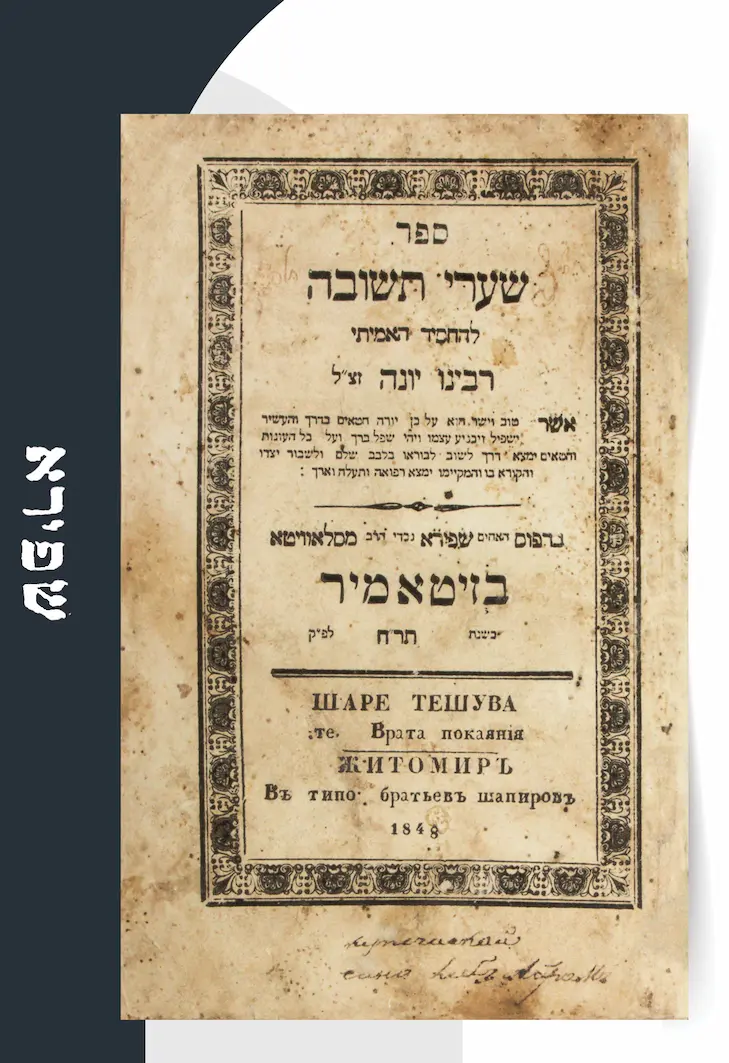
Shaarei Teshuvah by Rabbeinu Yonah. Shapira Press. Zhitomir, 1848 Shaarei Teshuvah by
Shaarei Teshuvah by Rabbeinu Yonah. Shapira Press. Zhitomir, 1848 Shaarei Teshuvah by Rabbeinu Yonah of Gerona, one of the early Rishonim, is the foundational source of later works of mussar and Torah ethics. The present edition is in small format and was printed by the “Shapira brothers, grandsons of the Slavita Rav.” Very Rare The Zhitomir edition of Shaarei Teshuvah is rare; not recorded in the Jerusalem National Library. It is listed in a bibliography based on an incomplete copy from a private collection. Foreword by Zhitomir Press The sefer opens with an introduction by the Shapiro printers who recount the many attributes and importance of this sefer, “And surely one who places his heart to [heed] the word of Hashem by reading this sacred work…a great and awe-inspiring composition replete with knowledge and wisdom…his soul and spirit shall return to Hashem with complete repentance.” The printers likewise issue a call to the public to lookout for manuscripts of Rabbeinu Yonah’s other sefarim mentioned in Shaarei Teshuvah, in an attempt to publish them. A foreword of this kind is rare for sefarim printed by the Shapira family press. Sefer Shaarei Teshuvah Shaarei Teshuvah was unanimously and enthusiastically accepted by Jewish congregations worldwide as a guidebook to repentance. “One who reads it shall be wise to increase his holiness and piety, and his heart shall hasten to return, for holy words penetrate the heart...” (Shem Hagedolim, Rabbeinu Yonah) and “Fortunate is the man who merits to learn it every day” (ibid, Shaarei Teshuvah). Zhitomir, 1848. Shapira Press. Page Count: [1], 55 leaves. Page Size: 17 cm. Condition: Stains on title page and last leaf. New binding. ................................................ Any inquiries about this lot ? We are available also on WhatsApp >>>
Lot : 83

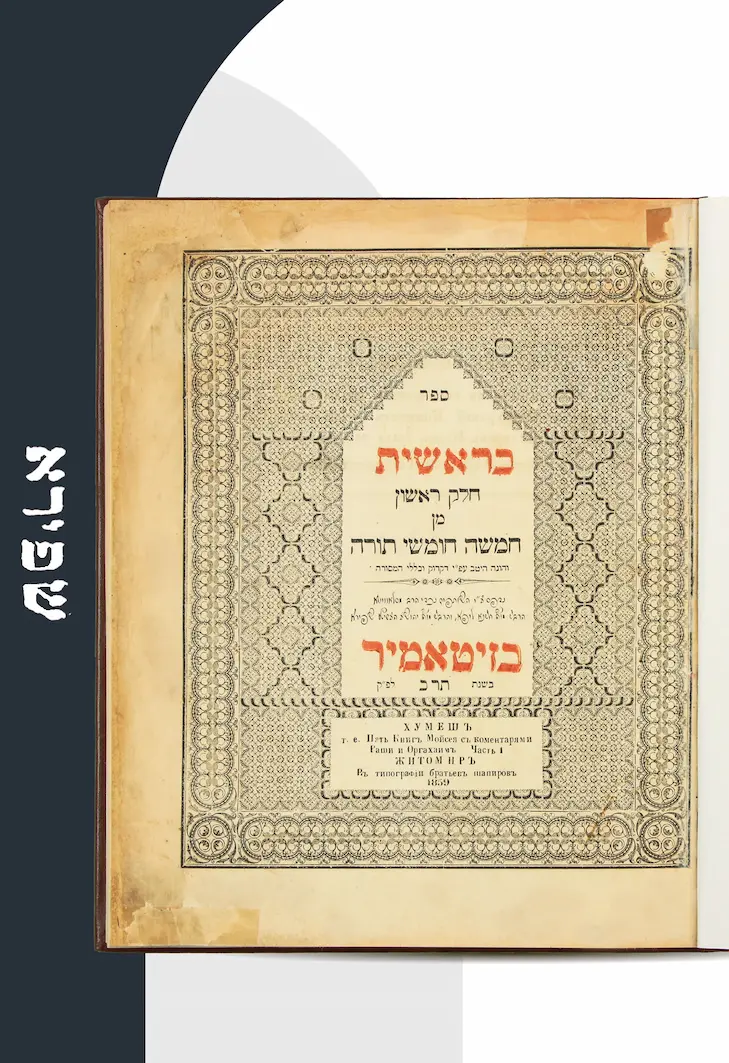
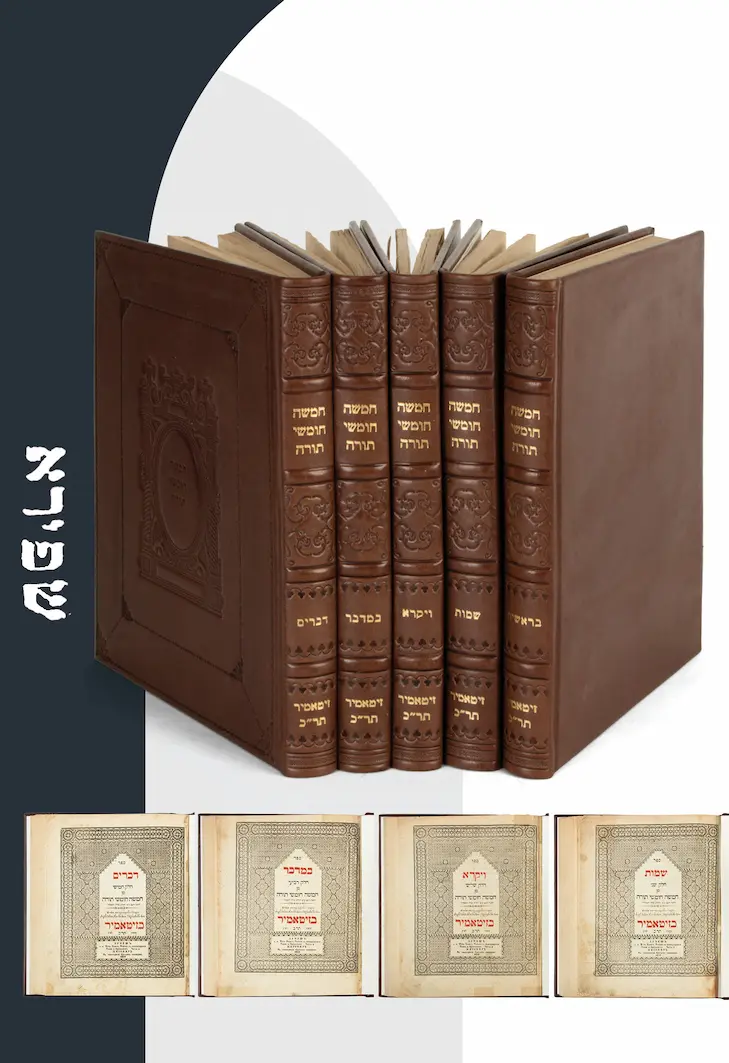
Complete 5 volume set.‎ Chumash Ohr Hachaim with Siddur. Shapira Press. ‎Zhitomir,
Complete 5 volume set.‎ Chumash Ohr Hachaim with Siddur. Shapira Press. ‎Zhitomir, 1860‎ ‎ ‎ Chamishah Chumshei Torah with the Ohr Hachaim’s commentary and an additional ‎commentary by a disciple of the Chida. This Chumash was printed in the acclaimed Shapira ‎Press in Zitomir by the righteous printers Rabbi Chanina Lipa and Rabbi Yehoshua Heschel ‎Shapira.‎ A siddur with prayers for Shabbos morning and Yotzros in the Chassidic nusach Sephard ‎appears at the end of each volume of Chumash, along with a 26-year calendar.‎ This is a beautiful set of Chumashim with 10 title pages, and includes five siddurim, one in ‎each volume of Chumash, all with matching leather bindings.‎ The text of the Chumash is accompanied by Targum Onkelus, Targum Yerushalmi and ‎Targum Yonasan, along with the commentaries of Rashi, Baal Haturim and Toldos Aharon. ‎The Five Megillos include the Rishon Letzion commentary by the Ohr Hachaim and Nachal ‎Eshkol by the Chida. All Haftaros include the Nachal Sorek commentary by the Chida.‎ Zhitomir, 1860. Shapira Press. Page Count: Bereishis: 343, 17, [1] side; Shmos: [4], ‎‎328, 333-376, 25, [1] side; Vayikra: 270, 28, [2] sides; Bamidbar: 290, 17, [1] side; Devarim: ‎‎296, 17, [1] side. Page Size: 26 cm. Description: Each volume includes 2 title pages, a main ‎title page partially in red ink and an additional title page with black ink. Condition: Impressive ‎set. Title page of Bereishis is restored in the margins and lightly stained.‎ ................................................ Any inquiries about this lot ? We are available also on WhatsApp >>>

Lot : 84

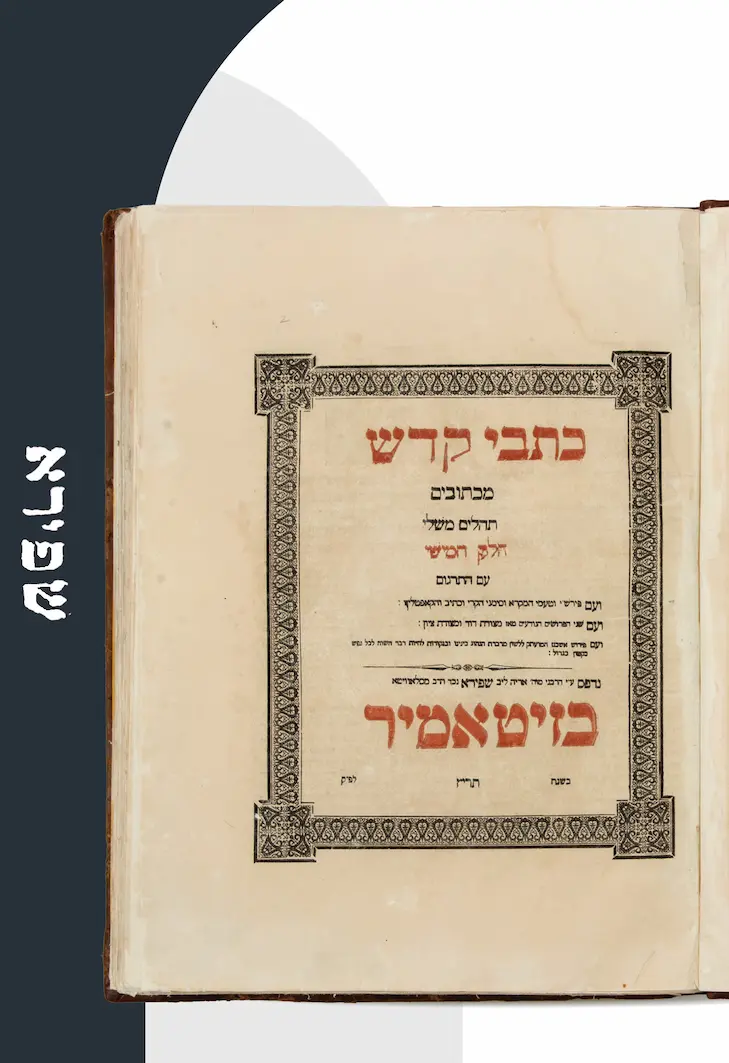
Kisvei Kodesh Tehillim with Commentary and Yiddish Translation. Shapira Press. Zhitomir, 1856
Kisvei Kodesh Tehillim with Commentary and Yiddish Translation. Shapira Press. Zhitomir, 1856 Beautiful sefer with extra-wide margins! Sefer Tehillim and Mishlei from the popular Shapira Press Kisvei Kodesh series with Yiddish translation, and commentaries of Rashi, Metzudos and Toldos Aharon. This sefer was printed by Rabbi Aryeh Leib Shapira, grandson of the Slavita Rav. Beautiful, large-format sefer with extra-wide margins , measuring 34 cm and original Zhitomir leather binding. The sefer opens with two title pages. Very Rare! The national library in Jerusalem does not possess this sefer.  Zhitomir, 1856. Page Size: 34 cm. Page Count: 174 leaves (344 sides). Sefer Tehillim (126 leaves) and Mishlei. Condition: Margins of several pages professionally restored and reinforced. Leaf 126 has mild tear with several words missing. ................................................ Any inquiries about this lot ? We are available also on WhatsApp >>>
Lot : 85

2-Volume Set of Machzorim for High Holy Days & Three Festivals. Shapira
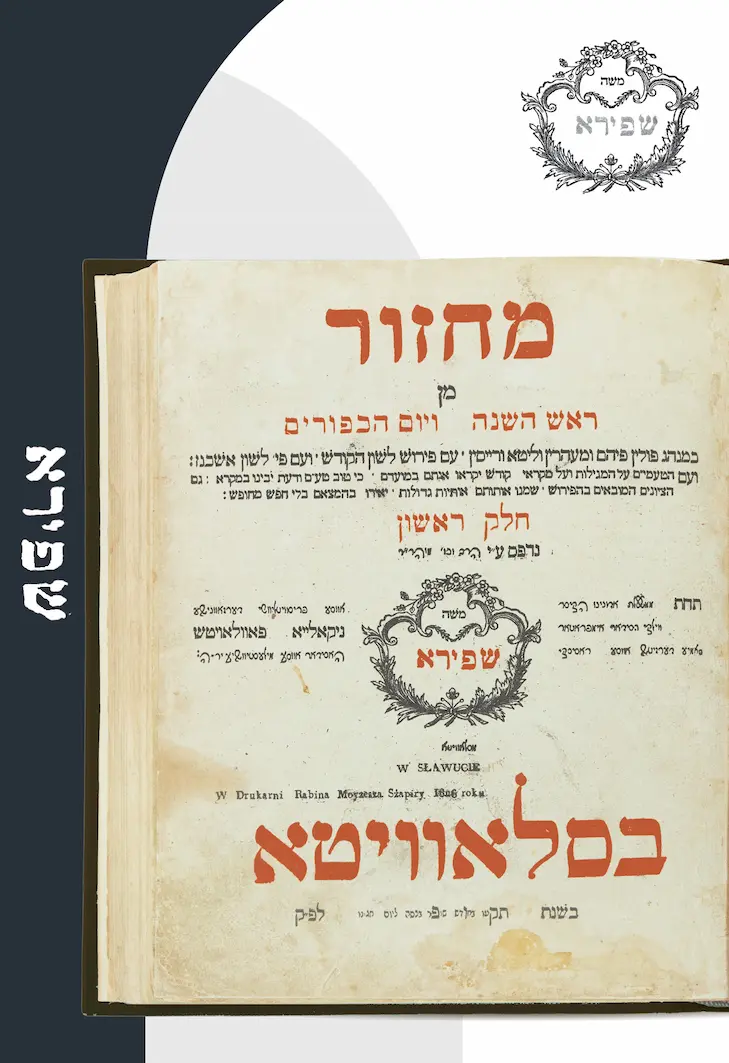
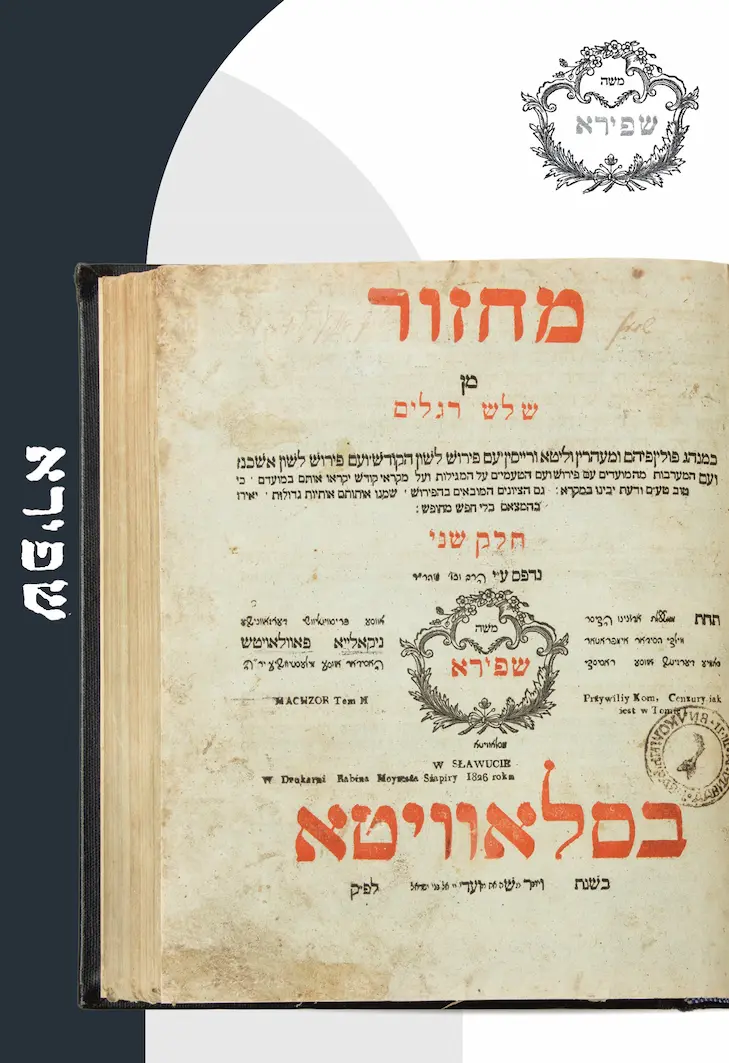
2-Volume Set of Machzorim for High Holy Days & Three Festivals. Shapira Press. Slavita, 1826 Order of prayers for the High Holy Days and three festivals in Polish rite, following the customs of Pihem, Moravia, Lithuania and Reisen. This set is complete with all piyutim and Yotzros, and features a translation and commentary in Yiddish. This set of machzorim was printed in the famous press of Rabbi Moshe Shapira, who was the son of the Admor Rabbi Pinchas of Koritz. Volume 1: Rosh Hashanah and Yom Kippur, complete with all Yotzros. Volume 2: Succos, Shemini Atzeres, Pesach, Shavuos, complete with all Yotzros. This is an impressive set printed in two large volumes on light green paper. Both title pages are printed in red ink. It is exceedingly rare to find a complete set in such pristine condition. The machzorim include approbations by the Rabbbanim of Ostroh and Sedilkov who extol the holy press founded by the righteous Admor Rabbi Moshe Shapira of Slavita. The section Tefillas Tal boasts 12 miniature drawings of the 12 mazalos. Slavita, 1826. Vol. 1: [2], 151 leaves. Vol. 2: 160 leaves. Page Size: 25 cm. Condition: Good with light defects in margins. Both volumes have matching new leather bindings. .................................................. ............................................. “One should accustom oneself to learn from a sefer printed by G-d fearing men. There is a story of a tzaddik who arrived in a certain town during the days of Selichos, and someone handed him a Selichah [book], and he said that he could not read the letters… until they gave him a Selichah that had been printed by those who fear G-d, ostensibly by the Slavita Press. Then the [tzaddik] said, ‘Now I can read the letters.’” “Therefore, every man who fears Hashem should strive to purchase all sefarim from old printings, the majority of which were printed by G-d fearing men, and especially from the Slavita and Zhitomir Presses [which were owned] by the grandchildren of the Admor of Kortiz, who were exalted and exceedingly pious printers.” (Taharas Hakodesh Ch. 6 by the Shomer Emunim) .................................... .................................................. ......... Any inquiries about this lot ? We are available also on WhatsApp >>>

Lot : 86

Slavita Shas! Rabbi Moshe Shapira’s Press Slavita, 1817-1822 Pristine Full 20-Volume Set!
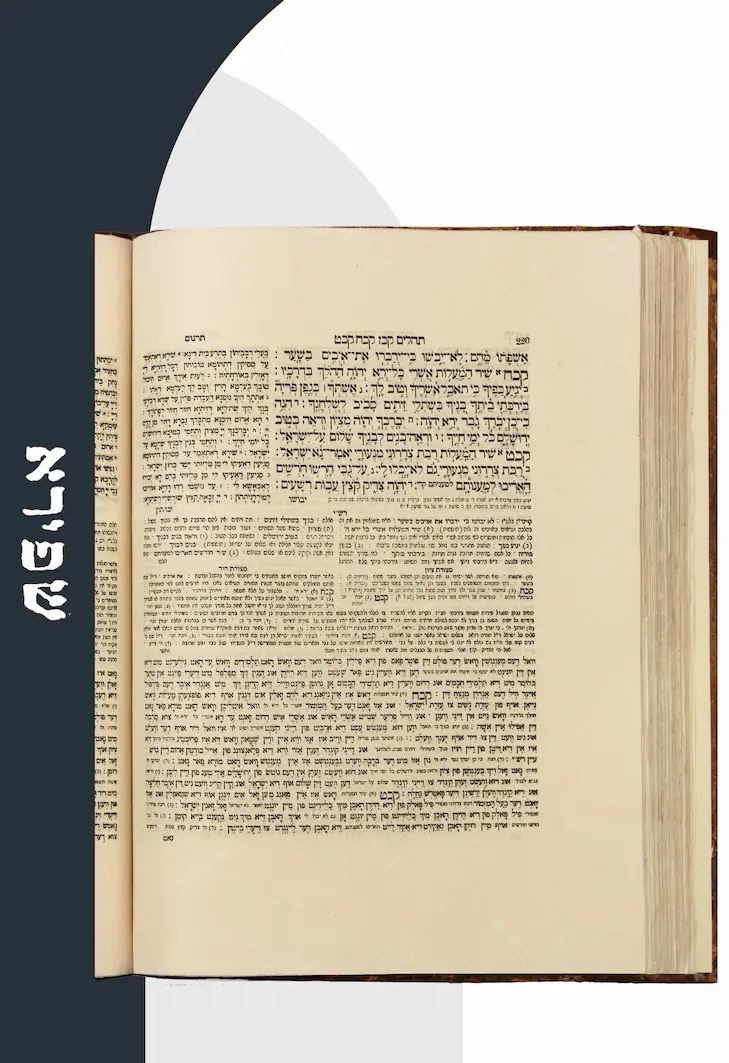
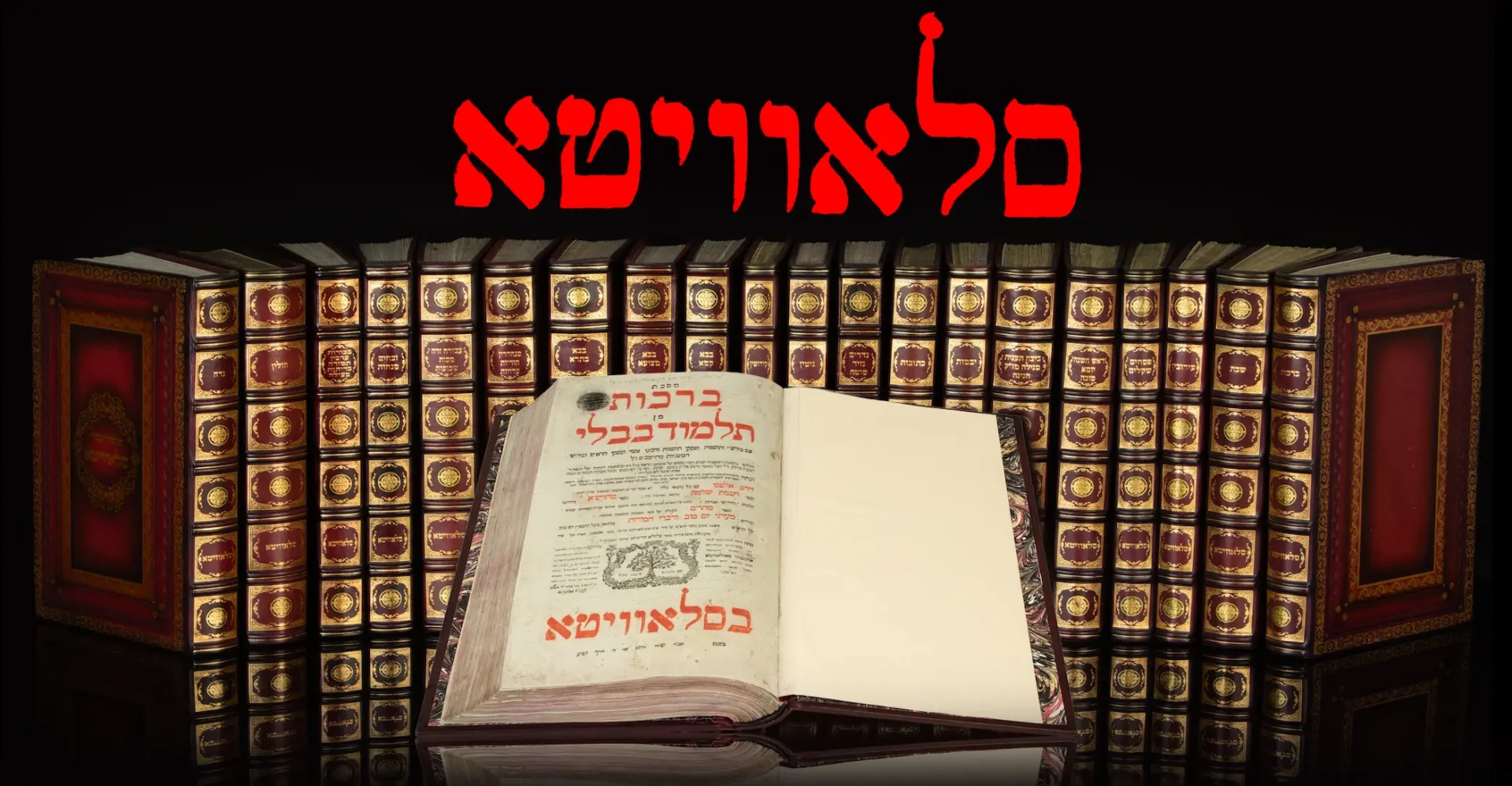
Slavita Shas! Rabbi Moshe Shapira’s Press Slavita, 1817-1822 Pristine Full 20-Volume Set!   A treasure trove of history and sanctity! Complete 20-volume set of Shas from the famed Slavita Press printed by Rabbi Moshe Shapira. Four unique elements distinguished the Slavita Shas from its predecessors: The sanctity entailed in its printing, the precise editing and proofreading, the addition of new Mefarshim, and the high-quality and grandeur of the paper and type. The Slavita Shas was enthusiastically acclaimed by thousands and was the preferred edition of Shas among Admorim, tzaddikim and chassidim throughout Europe and beyond. Chassidic masters praised this edition of Shas and professed that learning from the Slavita Shas is a segulah for successful learning. The day that an Admor or chassid was able to procure a personal set or even one volume of Shas was a personal holiday. Content: Gemara, Rashi, Tosfos, Ein Mishpat, Ner Mitzvah, Mesores HaShas, Hagahos Rabbi Yeshaya Pik of Berlin, Peirush HaMishnayos L’HaRambam, Piskei Tosafos, Piskei HaRosh (including Maadanei Yom Tov and Pilpula Charifta by the Tosafos Yom Tov), Maharsha, Maharshal and Maharam Lublin. For the first time in the history of the printing of Talmud, the Slavita Shas included the Rif and its Nosei Keilim, as well as the Mordechai and Tosefta at the end of each Masechta. This complete set of Shas includes three original title pages for the Rif, the first in Vol. 1 of Maseches Brachos; the second in Vol. 2 of Maseches Yevamos; and the third in Vol. 3 of Maseches Bava Kama.   “The town of Slavita gained renown throughout the Jewish world due to the legendary Slavita Press which was founded and personally managed by the righteous Admor Rabbi Moshe Shapira, son of the Admor Rabbi Pinchas of Koritz. The Baal Hatanya describes the Slavita Press as “The exemplary press which surpasses all other presses in these countries”, while the Admor Rabbi Mordechai of Chernobyl in his preface to Chumash Ohr Hachaim (Slavita, 1832) praises the Slavita Press for “illuminating the world with the precious sefarim that they print.” The Slavita Press was designated exclusively for printing sifrei kodesh, and every sefer was produced with sanctity, from fashioning the type which was created by the Slavita family, through immersing the printing plates in a mikveh prior to use. The Slavita Press printed many sifrei chassidus, Torah library classics, siddurim, machzorim and anthologies of prayer which were unanimously lauded by Chassidic masters throughout the generations. The crowning achievement of the Slavita Press was undoubtedly the printing of the magnificent 20-volume Shas. Admorim and tzaddikim throughout the generations extolled the Slavita Shas and would search far and wide to acquire and learn from its sacred volumes. Many expressed that learning a daf from the Slavita Shas is a segulah for success and fear of heaven. (See Mipi Sofrim U’sefarim Vol. 3 p. 447 by Rabbi A.D. Friedman of the Belz community in London; Zechor Yemos Olam Vol. 3 p. 523.) Rabbi Yitzchak Weiss, Av Beis Din of Verbov and brother of the Shimani Rav, wrote: “The righteous Rabbi Moreinu Harav Moshe Shapira…son of the Admor Moreinu Harav Pinchas of Koritz zy”a, who owned the illustrious Slavita press would print using silver type. On Erev Shabbos after immersing [in the mikveh] he would proofread this Shas that he printed. This Shas was extremely valuable in the eyes of tzaddikim” (Elef Ksav #292). The Admor Rabbi Shlomo of Bobov related that on the day that his holy grandfather the Admor Rabbi Shlomo of Bobov I was able to purchase a Slavita Shas, he was enveloped in such bliss that he wished to recite the blessing of “Shehechiyanu” on it. Therefore, on the second night of Rosh Hashanah before reciting kiddush, he placed a volume of Gemara on the table so he could include it in his blessing of “Shehechiyanu” upon the festival and new fruit (Pri Hakerem, Bobov, 1999 Issue 15 p. 2).  On the final Simchas Torah of his life, Rabbi Meir Shapira of Lublin, who was also a descendant of the Admor Rabbi Pinchas of Koritz, instructed his talmidim in Yeshivas Chachmei Lublin to circle the bimah while dancing with volumes of a Slavita Shas (Rabbi Binyamin Mintz, Meir B’Ahavah p. 26). Endorsements of the Shas   The sefer opens with an endorsement and letter by the Admor Hazakein of Chabad Rabbi Shneur Zalman of Liadi, the Baal Hatanya, authorizing the printer, the Admor Rabbi Moshe Shapira, to reprint the Shas which had been printed earlier at the Baal Hatanya’s behest during the year 1808 by his brother Mordechai and son-in-law Shalom Shachna. The approbation states as follows: “Hashem desires his righteousness; He shall increase Torah and He infused a generous spirit in the philanthropists of His nation…the Rabbi and luminary, the renowned genius who is extolled in Torah and fear of heaven, the treasure and son of holy progenitors, the honorable Moreinu Harav Moshe, n”y, Av Beis Din of the congregation of Slavita, whose heart desired to give for Hashem and print the Shas Bavli and Arba Turim in his splendid printing press which is superior to all other presses in these lands…  with boards that were printed recently by my faithful emissaries…my illustrious brother Moreinu Mordechai n”y and the…venerable late Rabbi Moreinu Harav Shalom Shachna z”l. And it is known to all that I have in my possession, a written and signed [affirmation], that they were messengers…” Further in the approbation, the Baal Hatanya issues a public ban against printing the Shas for another 25 years, “ And it shall be pleasant to those who heed this, and they shall be blessed with all goodness from the Beneficent G-d.” Preceding this approbation is a public declaration by the printer the Admor Rabbi Moshe Shapira himself who relates that he purchased the printing rights to the Shas from the Admor Rabbi Shneur Zalman of Liadi. This present set of Shas also contains approbations by the Admor Rabbi Avraham Yehoshua Heschel of Apta, author of Ohev Yisrael; the Admor Rabbi Yisrael of Pikov, son of the Kedushas Levi of Berditchev; the Admor Rabbi Mordechai ben Rabbi Pinchas of Koritz, and others. (Maseches Shabbos also contains an approbation by Rabbi Aryeh Leib Katzenellenbogen, Av Beis Din of Brisk.) Description:   38 masechtos (+ Sidrei Zeraim and Taharos); 43 title pages, most in red ink; printed on light blue paper. Binding: Bound in 20 separate elaborate new leather bindings. Page Size: 33.5 cm. Condition: Several masechtos were reinforced or restored on title page or other page margins; no damaged or missing text.   List of Masechtos: 1. Brachos (1817) [1], 137: 46 leaves (Hilchos HaRif); Mishnayos Seder Zera’im: 70 leaves (with separate title page) 2. Shabbos (1817) [1], 189: 92 leaves (Final Count: Rif) 3. Eiruvin (1817) [1], 129, 22: 89-131 leaves (Final Count: Rif) 4. Pesachim (1817) 137, 24: 130-173 leaves (Final Count: Rif); Shekalim (1818), 13 leaves. 5. Rosh Hashanah (1818) 40, 5: 206-221 leaves (Final Count: Rif); Yuma (1818) 105, 10:222-230 leaves (Final Count: Rif); Succah (1818) 66, 14: 230-257 leaves 6. Beitzah (1818) 50, 9: 182-184 leaves (Final Count: Rif); Megillah (1818), 38 , 6: 257-278 leaves (Final Count: Rif); Chagigah (1818) 28, 6 leaves; Taanis (1818), 36 , 6: 169-182 leaves (Final Count: Rif); Moed Katan (1818) 44, 3 leaves: 278-303 leaves (Final Count: Rif) 7. Yevamos (1818) [1], 144, 24: 64 leaves (Final Count: Rif) 8. Ksubos (1818) [1], 147, 25: [62, 2-] 145 leaves (Final Count: Rif) 9. Gittin (1818) [1], 111, 22: 144-207 leaves (Final Count: Rif) 10. Kiddushin (1819) 96, 19: 206-255 leaves (Final Count: Rif) 11. Nedarim (1818) 102, 7 leaves; Nazir (1818) 68 leaves; Sotah (1818) 51, 8-18 leaves 12. Bava Kama (1819) 150, 18: 61 leaves (Final Count: Rif) 13. Bava Metziah (1820) [1], 166, 25: 60-156 leaves (Final Count: Rif) 14. Bava Basra (1820) [1], 217. 36: 155-259 leaves (Final Count: Rif) 15. Sanhedrin (1820) 126, 41: 257-283 leaves (Rif); Horiyos (1821) 17, 2 leaves. Edios,    Avos, Masechtos Ketanos (1821) 36, 45 leaves 16 . Avodah Zara (1820) [1], 99-16:330-378 leaves (Final Count: Rif); Makkos (1820) [1], 27, 6: 282-287 leaves (Final Count: Rif); Shvuos (1820) 60, 9, 287-331 leaves (Final Count: Rif) 17 . Zevachim (1821) 126 leaves; Menachos (1821) [1], 117: 63-88 leaves (Halachos Ketanos LaRosh) 18. Chulin (1822) [1], 214, 32: 255-380 leaves (Final Count: Rif, Shaarei Shvuos L’Rabbi Yitzchak ben Rabbi Reuven; Maftechos HaRif according to the order of the Rambam by Rabbi Yehoshua Boaz, author of Shiltei Giborim) 19. Bechoros (1821) 80: 7 leaves; Erchin:37 leaves; Temurah: 35 leaves; Krisus: 30 leaves; Meilah, Kinim, Tamid, Middos: 42+ [2] leaves of charts with illustration of the Beis Hamikdash 20. Niddah (1822) 106, 17 leaves; Mishnayos Seder Taharos (1821) 171 leaves (with separate title page) ................................................ Any inquiries about this lot ? We are available also on WhatsApp >>>
Lot : 87

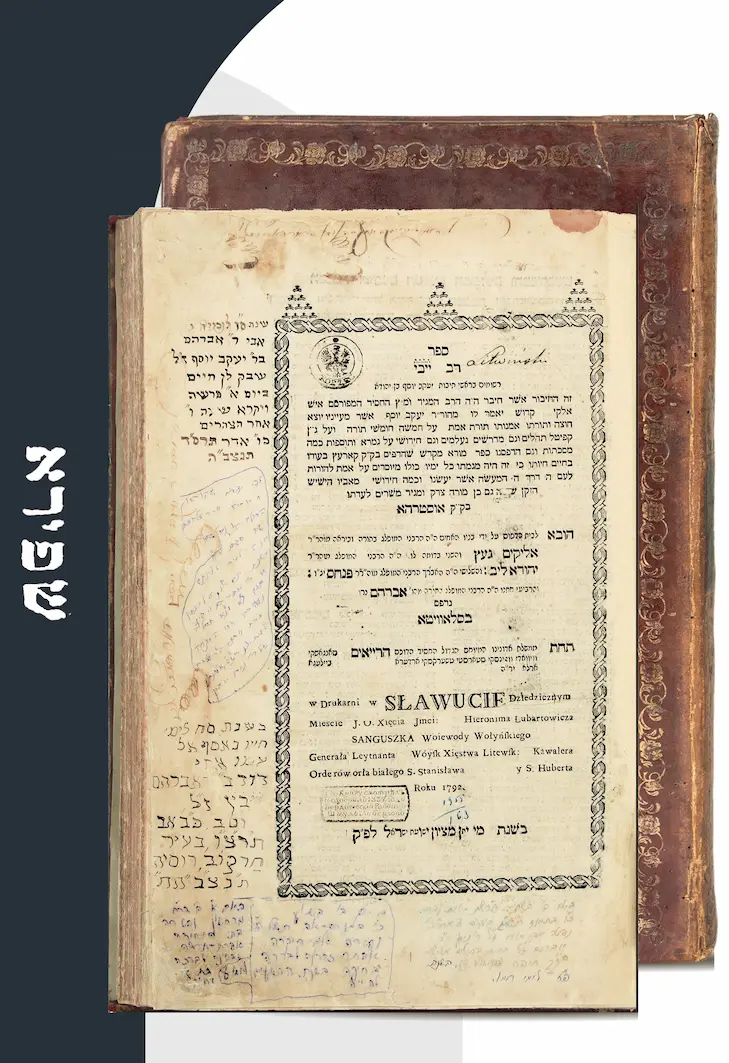
Early Chassidic work.‎ Rav Yaivy. First Edition. Slavita, 1792‎ Impressive wide-margin copy
Early Chassidic work.‎ Rav Yaivy. First Edition. Slavita, 1792‎ Impressive wide-margin copy with original binding .‎ Essays on Chassidus, commentary on the Torah, Tehillim, mussar and chiddushim on Shas ‎by the Admor Rabbi Yaakov Yosef, Maggid of Ostroh, disciple of the Maggid of Mezritch.‎ A large segment of this sefer is a commentary on 53 chapters of Tehillim, corresponding to ‎the 53 years Reb Yaivy lived. On the final day of his life, he elucidated Chapter 53 of ‎Tehillim.‎ Rav Yaivy was one of the first Chassidic sefarim ever published, as well as one of the very ‎first sefarim printed by the tzaddikim of Slavita in their famed Slavita Press. In this sefer, Rav ‎Yaivy cites many teachings from the Baal Shem Tov and his venerable disciples.‎ R abbi Yaakov Yosef of Ostroh, known as Rav Yaivy after his initials Yaakov ‎Yosef ben Yehuda (1738-1791) was a ‎prime disciple of the Maggid of Mezritch and close to many talmidim of the Baal Shem Tov. ‎In 1766, he succeeded his father Rabbi Yehuda Leib as Maggid Meisharim and Rav of ‎Ostroh, and he inscribed many of his father’s chiddushim in the present sefer.‎ Rav Yaivy’s drashos attracted crowds to Ostroh, and he inspired many souls to ‎embrace Chassidus. In this sefer, he strongly condemns perverse social pressure, corruption ‎and slander; he rebukes community dignitaries for intimidating the public and the affluent for ‎acting arrogantly due to their wealth. Most prominently though, he cautions the public ‎regarding the grave sin of talking during prayers, and the sefer actually opens with his special ‎pamphlet on the topic, Morah Mikdash, literally “fear of the temple”.‎ Despite his stark messages of reproof, Rav Yaivy’s sefer is also replete with overflowing love ‎and compassion toward Klal Yisrael, particularly for those who follow Hashem’s ways with pure ‎faith and do not pursue the vanities of this world.‎ The sefer opens with a written approbation by the Admor Rabbi Levi Yitzchak of Berditchev, ‎author of Kedushas Levi, who refers to the author Rav Yaivy as a “Holy man of G-d”. It also ‎features letters of approbation by the Rabbanim of Ostroh who inscribe, “And the wise man ‎will take wisdom and he will not fear the great expense, and should purchase this sefer ‎with great alacrity.”‎ Slavita, 1792. First Edition. Page Count: 2, 139, 47 leaves. Page Size: 34 cm. Condition: ‎First and last leaves and several other leaves restored at margins. List of owners on title page. Original Slavita Press leather binding! Bibliography: Stefansky, Chassidus #530‎ ................................................ Any inquiries about this lot ? We are available also on WhatsApp >>>
Lot : 88

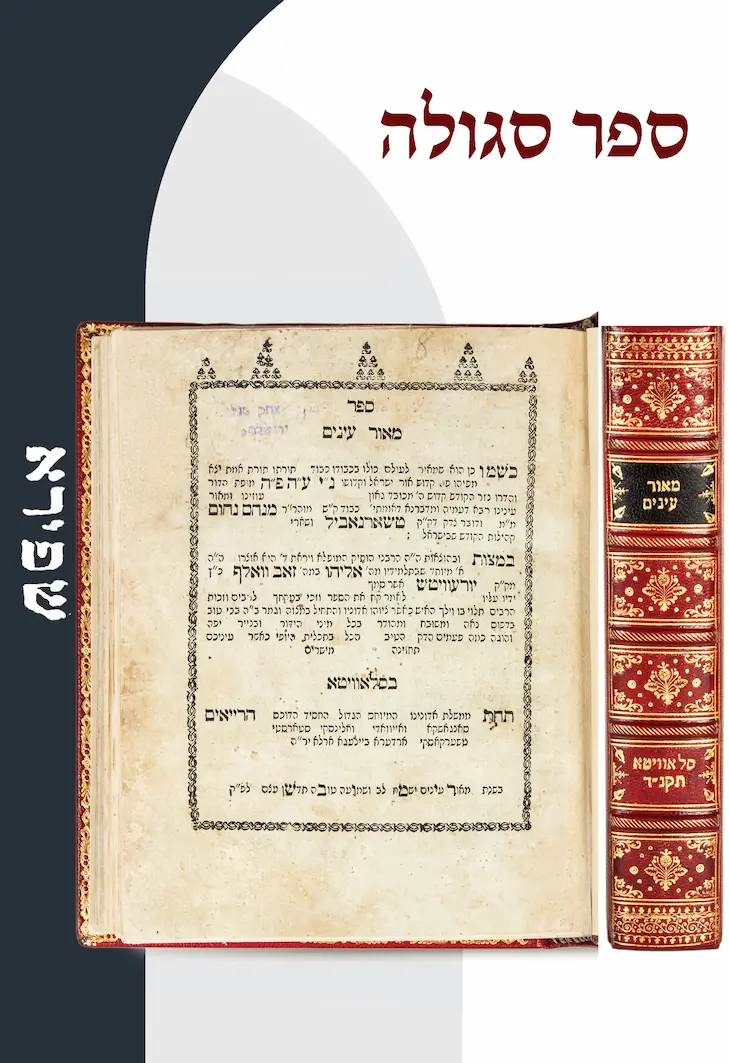
Fundamental Chassidic Sefer Meohr Einayim. First Edition. Slavita, 1798 Volume 1: Meohr
Fundamental Chassidic Sefer Meohr Einayim. First Edition. Slavita, 1798 Volume 1: Meohr Einayim – Commentary on Torah and anthology of lessons by the Baal Shem Tov Volume 2: Yismach Lev – Commentary on Aggadah and Pirkei Avos with Kavanas Hamikveh By the Admor Rabbi Menachem Nachum of Chernobyl (1730-1789), disciple of the Baal Shem Tov and progenitor of the Chernobyl dynasty. The Admor Rabbi Menachem Nachum personally instructed his disciple to print this sefer in Slavita (see below). ................................................. ............................................. Great Chassidic masters extolled the praises of the sefer Meohr Einayim as the “Entryway and beginning of Chassidus” (The Admor Rabbi Yisrael of Ruzhin). The Admor Levi Yitzchak of Berditchev attests in his approbation that “All his words are the words of the Living G-d.” The Admor Rabbi Yitzchak of Skver quoted the Chozeh of Lublin who expressed “I found such wondrous words in these three works , the Zohar, Ohr Hachaim and Meohr Einayim” ( Sippurim U’maamarim Yekarim, Zhitomir, 1903 p. 9). ................................................. ............................................. The first pages of the sefer feature an impressive collection of rare endorsements by the great progenitors of Chassidus, disciples of the Maggid of Mezritch, among them the Admorim Rabbi Zusha of Anipoli; Rabbi Yaakov Shimon of Shepitovka; Rabbi Levi Yitzchak of Berditchev; Rabbi Asher Tzvi of Ostroh, author of Maayan Hachochmah; and Rabbi Yehuda Leib Hakohein of Anipoli, author of Ohr Haganuz. The publisher relates in the foreword to this sefer that Rabbi Menachem Nachum of Chernobyl personally requested that his talmidim print his sefer in Slavita. “He placed his trust in him saying, ‘Take this sefer, and with your acquisition, you shall benefit the masses, and the merits of the public shall be in your merit, when you print it in the beautiful, glorified press founded in Slavita.’” ................................................. ............................................. Meohr Einayim was one of the earliest Chassidic works published in Slavita, appearing alongside other Chassidic classics as Rav Yaivy (1792); Noam Elimelech (1794); Tanya (1796); and Kedushas Levi (1798). .................................................. ............................................ Slavita, 1798. First edition. Rabbi Moshe Shapira Press. Page Count: Volume 1: [2] 159 leaves; Volume 2: [1] 34 leaves. Page Size: 19.5 cm. Condition: Good. Title page and several other leaves lightly restored. Title cropped on several leaves. Ornate new leather binding; preserved in matching case. Bibliography: Stefansky, Sifrei Yesod #382. Stefansky, Chassidus #308, 237.   It is interesting to note that the Admor Rabbi Zusha of Anipoli signed his approbation to this sefer as follows: “Sunday, 23 Cheshvan, to the sedra of ‘And behold Aharon’s staff blossomed, ’” a perplexing statement as this verse appears in Parshas Korach which is read a full six months later. Another Admor remarked that, here, Rabbi Zusha alluded to Rabbi Menachem Nachum’s grandson, the Admor Rabbi Aharon of Belz who was crowned Admor many years later on Sunday, 24 Cheshvan, and on this day “The staff of Aharon blossomed” (Admorei Belz Vol. 4 p. 78). ................................................ Any inquiries about this lot ? We are available also on WhatsApp >>>

Lot : 89

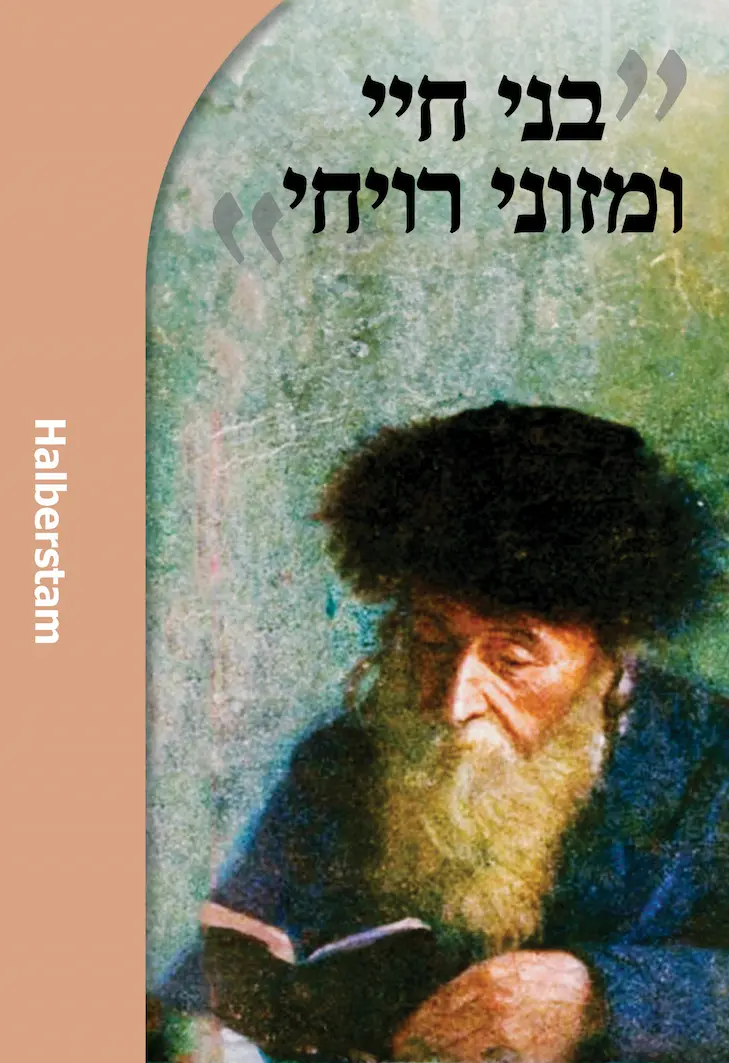
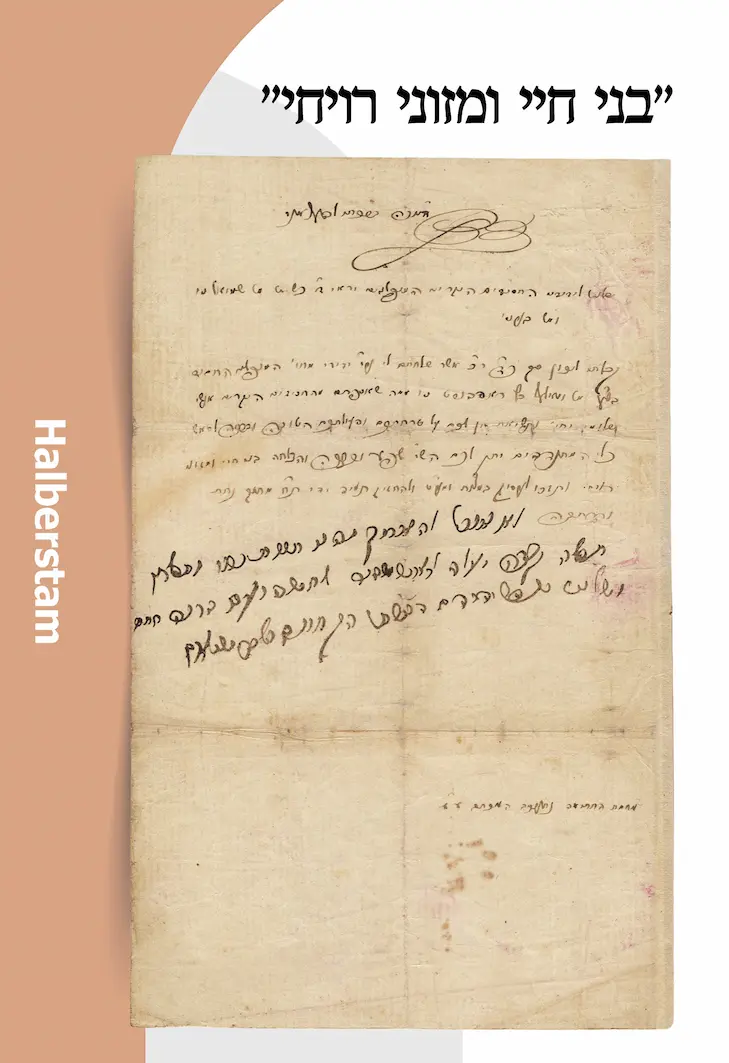
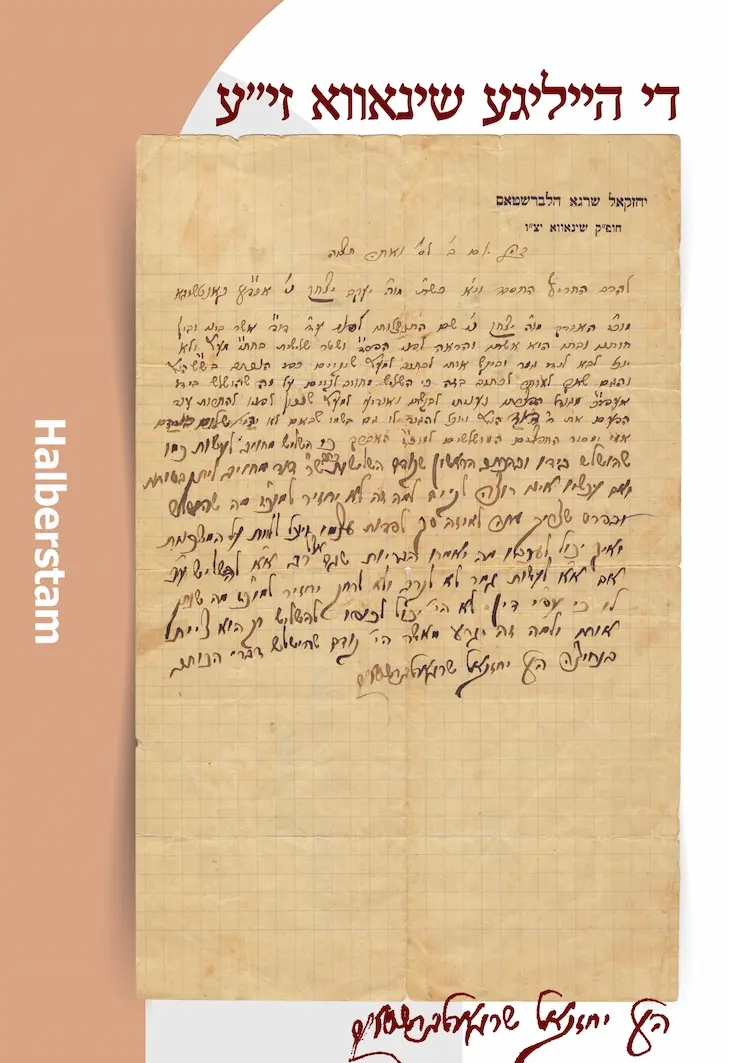
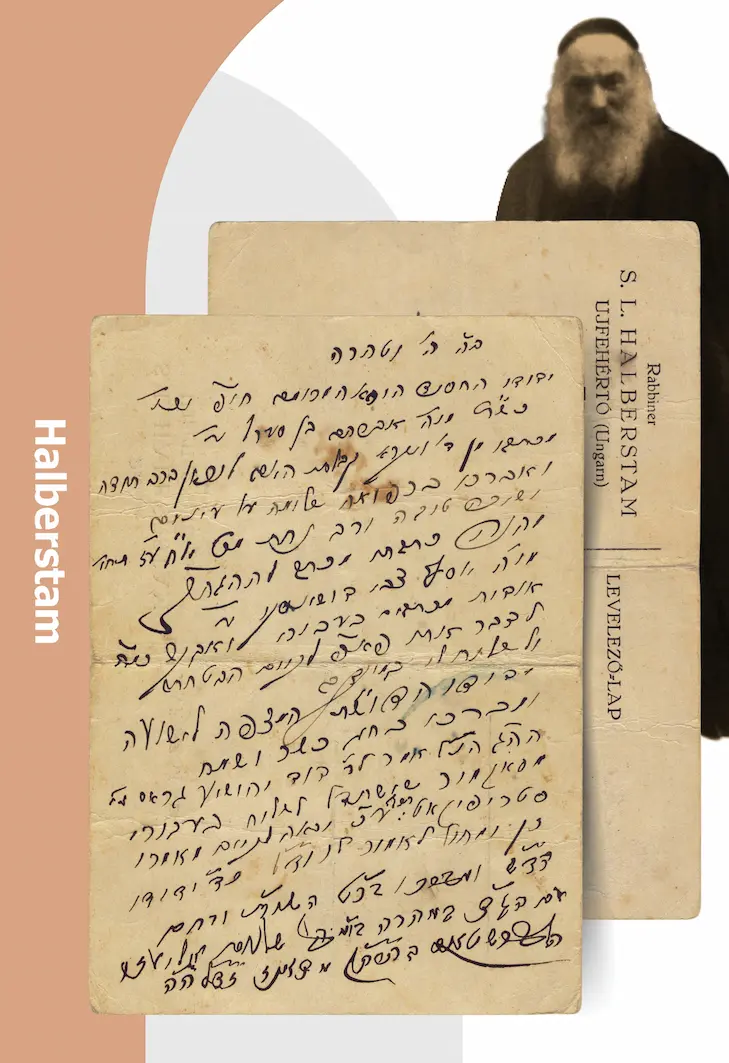
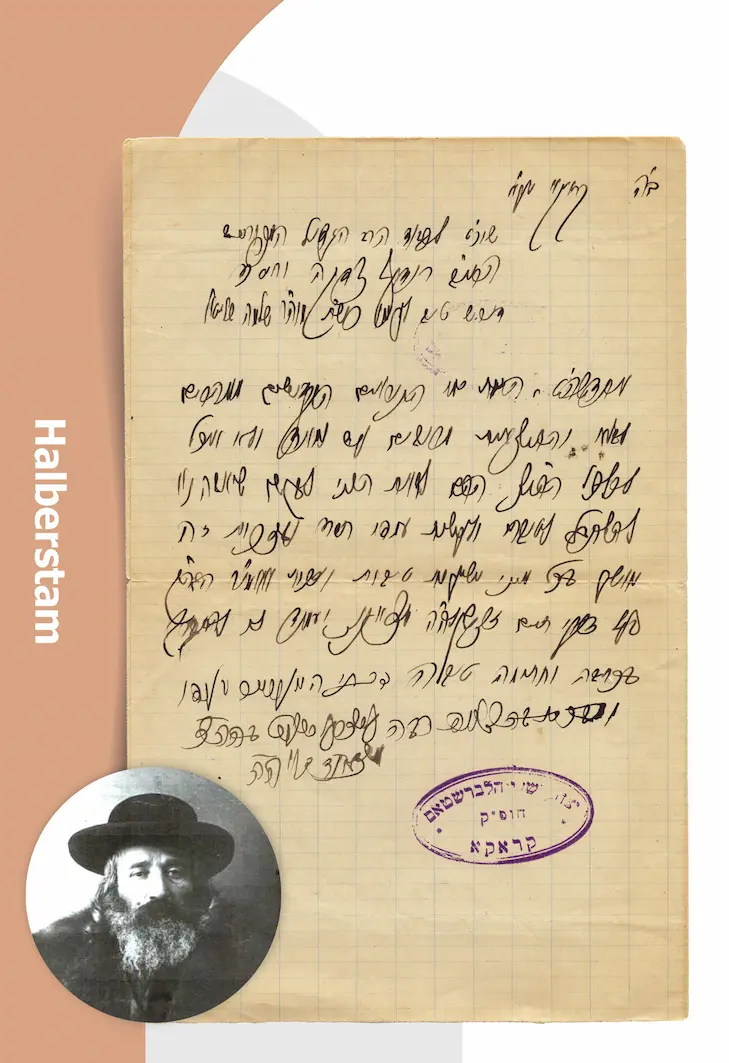
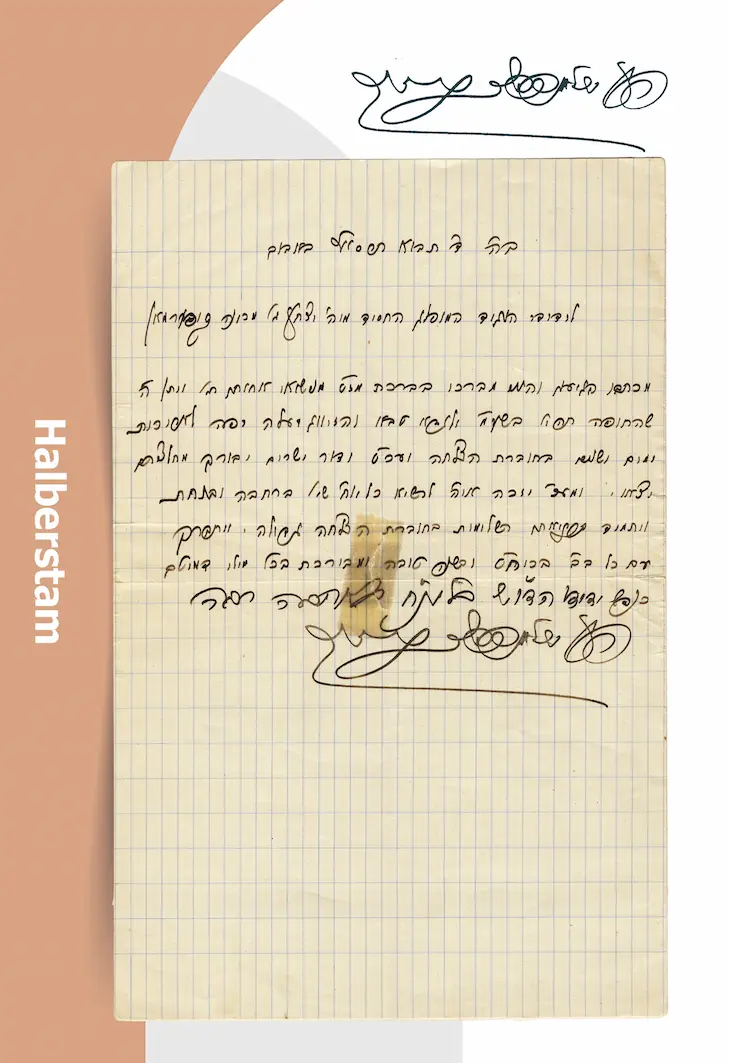
Sacred Letter by the Admor Rabbi Chaim Halberstam of Sanz, Author of
Sacred Letter by the Admor Rabbi Chaim Halberstam of Sanz, Author of Divrei Chaim. Sanz, 1868 Sacred letter replete with blessings by the saintly Admor Chaim Halberstam of Sanz, Author of Divrei Chaim to his chassidim and followers. The last three lines were written and autographed by the Admor’s holy hand. Among his words, the Admor showers the recipients with his bountiful blessings. “May Hashem, Blessed is He, grant you bounty, blessings and success, children, life and plentiful sustenance, and may you merit to engage in mitzvos and good deeds and support Torah scholars joyfully and with peace of mind.” The letter closed with the handwritten inscription of the divrei chaim “I cannot [write] lengthily, due to my physical weakness, and my prayer, a prayer short in words may it ascend to the heavens to bestow upon you blessing, life and peace as is the wish of your beloved dear freind [greeting you in peace] the humble Chaim Halberstam.” The Admor Rabbi Chaim Halberstam of Sanz (1793-1876), author of the Divrei Chaim, was one of the great tzaddikim of the Chassidic movement. He was a genius in both the Hidden and Revealed Torah a halachic arbitrator and spiritual leader to thousands. Before he was born, the Admor Rabbi Moshe Leib of Sassov blessed his mother that she would bear a child who would become the leader of his generation. At a remarkably young age, Rabbi Chaim married the daughter of the Baruch Taam, he learned and received much torah from him and later received semichah from him. In 1817, he was appointed Rav of Rudnick where he became a close disciple and ardent chassid of the Admor Rabbi Naftali of Ropshitz. In 1828, Rav Chaim was appointed Rav in Sanz, and two years later, crowned Admor of the city. And became the most venerated Admor and halachic authority in all of Galicia, the spiritual leader of his generation who inspired and influenced tens of thousands of chassidim, among them residents of Hungary and Poland, as well. Rabbi Chaim of Sanz was the consummate blend of Torah genius, sacrifice for avodas Hashem and perfection in chessed. He delivered routinely shiurim in torah and authored thousands of teshuvos. His emotional prayers were legendary, and held long inspiring tischim. He distributed all his wealth to charity, and his sons attest upon their venerable father in the foreword to Divrei Chaim al HaTorah, “He dedicated all his days to Torah and service of Hashem, with dveikus and great fear, and with genuine self-sacrifice… He afflicted himself throughout his life with fire and water, and immersed innumerable times in the mikveh. The charity that he distributed generously from his pure hands supported hundreds and thousands of poor and destitute…One could verily see the Divine Presence speaking from his throat.” Sanz, Chanukah, 1868. Page Size: 23x14 cm. Condition: Reinforced on back fold. Preserved in new leather binding. ................................................ Any inquiries about this lot ? We are available also on WhatsApp >>>
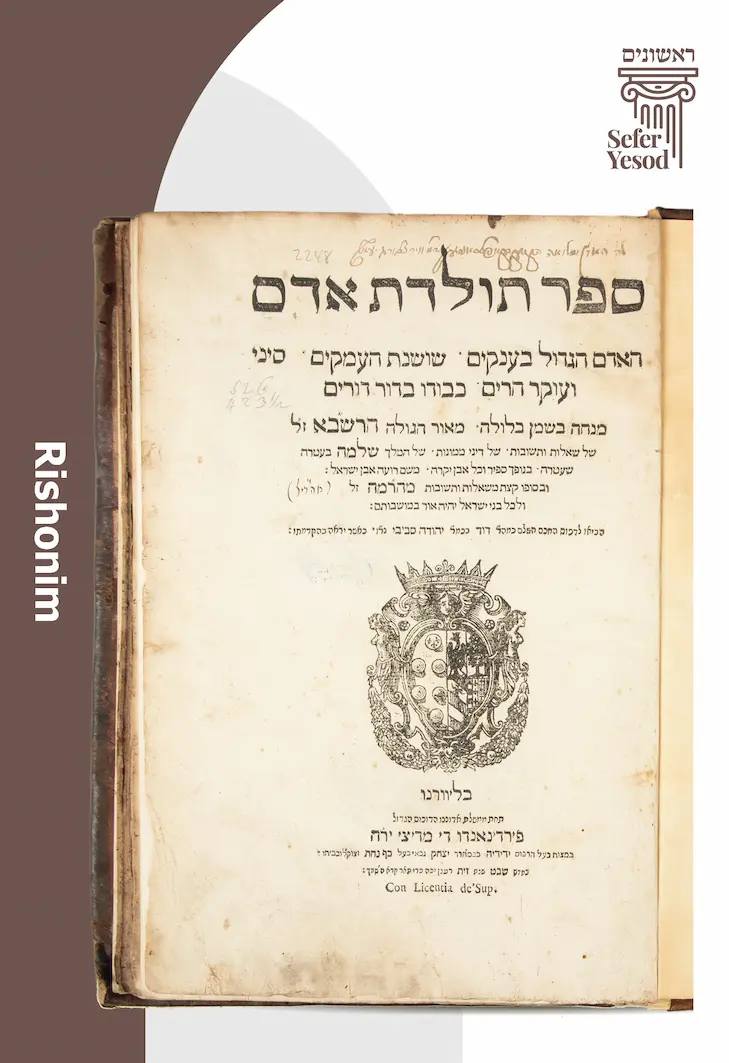
Lot : 90

Autographed Letter by the Admor Rabbi Yechezkel of Shinova. Letter by the
Autographed Letter by the Admor Rabbi Yechezkel of Shinova. Letter by the holy Admor Rabbi Yechezkel of Shinova, son of the Divrei Chaim of Sanz and author of Divrei Yechezkel, to Rabbi Yaakov Yitzchak [Halevi Horowitz], Av Beis Din of Kańczuga. This is a long and beautifully-written letter on personal stationery, with eight-and-a-half lines written and autographed by the holy hand of the Admor of Shinova. The autograph on this letter is particularly remarkable, as most known autographs of the Admor of Shinova appear with the letter lamed at the end of the name Yechezkel combined with the shin of the Admor’s middle name, Shraga. Here, both names appear separately and in full, and there are only a handful of known autographs like these. (See Divrei Yechezkel Hashalem, 1999 p. 265) To the best of Genazym’s knowledge, this letter has never been printed and is undocumented. The Admor Rabbi Yechezkel Shraga of Shinova (1811-1899) was the author of Divrei Yechezkel and eldest son of the legendary Admor Rabbi Chaim of Sanz. He married the daughter of the author of Aryeh Dvei Ilai and after his marriage grew close to his wife’s grandfather the Yismach Moshe. Rabbi Yechezkel Shraga was crowned Admor during his father’s lifetime and drew thousands of chassidim who revered him for his piety, genius and the miracles he engendered for the masses. The Gaon of Shamloy described him in his sefer: “A tzaddik who is the foundation of the world, from whom all the tzaddikim of the generation draw their [wisdom]…From him the bounty of parnassah descends… This is the tzaddik of the generation, the holy elder of whom we said, ‘In his shadow, we shall live.’ The entire world responded upon him, ‘He is holy; he is holy, ’ and [after his passing] there remained no one in the generation like him.” (Even Shlomo, Vayechi) Shinova, undated. Personal stationery. Page Size: 23x14 cm. Condition: Reinforced on back fold.  ................................................ Any inquiries about this lot ? We are available also on WhatsApp >>>

Lot : 91

The Razhporter pleading to save his life Important Autographed Letter by the
The Razhporter pleading to save his life Important Autographed Letter by the Admor Rabbi Shalom Eliezer Halberstam requesting to rescue him to Eretz Yisrael A poignant letter by the Admor Rabbi Shalom Eliezer of Ratzfert regarding the urgent need to obtain the coveted certificates enabling Jews to flee the burning soil of Europe and escape to Palestine. The letter opens with words of blessing for good health and healing following a disease that struck the recipient’s eyes. The last three lines of the letter are handwritten and autographed by the Admor Rabbi Shalom Eliezer Halberstam. In 1939, approximately six months prior to the outbreak of World War II, and again in 1943, the Admor of Ratzfert went to great lengths in order to obtain certificates that would enable him and his family to escape the Holocaust inferno and immigrate to Eretz Yisrael, which was then under the British occupation. In one letter, the Admor expresses that his yearning to settle in Eretz Yisrael perpetuates the desire of his holy father who always dreamed of settling in the Holy Land. In this undated letter, which was sent to Rabbi Avraham ben Serel [Gross], the Admor inscribes, “I penned a letter the gaon and tzaddik Moreinu Harav Yosef Tzvi Dushinsky n”y regarding letters [i.e. requests] on my behalf, and I request of your honor to speak to him face to face [and request] that he uphold his promise and send them to be as soon as possible. The said gaon told R’ Dovid Yehoshua Gross of Sakmur [rosh hakahal of Satmar who settled in Jerusalem in 1939] that he would endeavor to send me certificates, he should see to uphold his word.” The Admor’s efforts to obtain the life-saving certificates did not succeed, and he was tragically sent to Auschwitz where he was murdered alongside six million of his brethren. Rabbi Shalom Eliezer was renowned as a miracle-worker whose blessings were fulfilled. Countless marvelous stories and anecdotes attest to the power of his awe-inspiring blessings which were always fulfilled and recount the miracles and wonders that he enacted for Hungarian Jews. The Admor Rabbi Shalom Eliezer Halberstam of Ratzfert (1862-1944) was one of the younger children of the Divrei Chaim of Sanz. Although he was born during his father’s latter years, he was still privileged to reap from his bountiful wisdom and sacred ways in his early years of life. The Admor Rabbi Yehoshua of Belz once expressed, “We can not fathom the level of] sanctity in which the holy Admor of Sanz bore his children, and especially those born during his later years.” Circa 1900, Rabbi Shalom Eliezer relocated from Galicia to Hungary where he was crowned spiritual leader of Sanz chassidim in Hungary. World swiftly spread of his exceptional humility, piety and righteousness, and for forty years, he drew thousands of avid chassidim to his Holy Court. During the final months of the Holocaust, he was rounded up along with the Jewish residents of his town and deported to Auschwitz. Shortly before the aktion, he related that his father, the holy Divrei Chaim, had appeared to him in a dream and offered him with the choice of dying al kiddush Hashem or being rescued from the inferno, and he opted to sacrifice his life and sanctify Hashem’s Holy Name. Rabbi Shalom Eliezer Halberstam arrived in Auschwitz on 16 Sivan, 574 (1944) wearing a kittel and tachrichim beneath his Rabbinical garments. On that day, his soul ascended to Shamayim in the fires of the Holocaust, Hashem yikom damo. Ratzfert, 1931. Condition: Good. Printed in Tehillas Chaim Vol. 2 (Bnei Brak, 1995) p. 91 ................................................ Any inquiries about this lot ? We are available also on WhatsApp >>>
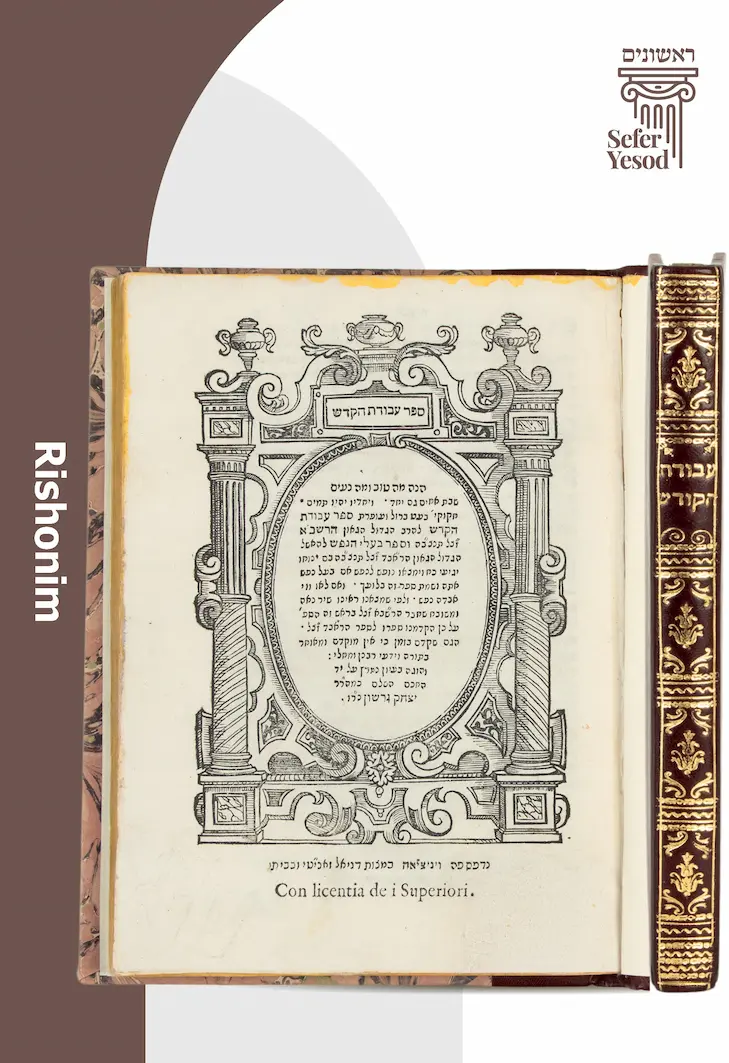
Lot : 92

“May the merit of my master, my father and teacher, the holy
“May the merit of my master, my father and teacher, the holy genius, author of the Divrei Chaim ztvk”l of Sanz safeguard you so you will be blessed with a Kesivah vaChasima tovah.” Letter of Blessing by the Admor Rabbi Yitzchak Yeshaya of Chechov Hy”d, Youngest Son of the Divrei Chaim of Sanz. Cracow, undated Letter of thanks and blessing signed by the holy hand of the Admor Rabbi Yitzchak Yeshaya of Chechov Hy”d. The letter is replete with blessings, yet the most stirring are the words “May the merit of my master, my father and teacher, the holy genius, author of the Divrei Chaim ztvk”l of Sanz safeguard you so you will be blessed, inscribed and stamped for goodness.” Born to his father in his latter years, the Admor Rabbi Yitzchak Yeshaya of Chechov Hy”d (1864-1943) was the youngest son of the Divrei Chaim of Sanz. His father attested upon the infant that “he has a sacred soul.” The Admor Rabbi Yehoshua of Belz once expressed “We have no concept [of the level of] sanctity in which the holy Admor of Sanz bore his children, and especially those born during his later years.” Rabbi Yeshayale, as he was known, was orphaned at the age of 12 and raised in the homes of his elder brothers, the Admorim Rabbi Yechezkel of Shinova, Rabbi Baruch of Gorlitz and Rabbi Dovid of Kashanov. After his marriage to the daughter of the Admor Rabbi Yechiel of Karilowitz, he became a close disciple of his wife’s grandfather Rabbi Yehoshua of Belz. At the age of 19, he was appointed Rabbi of Chechov and was later called by the name of the town, even though he settled in Cracow only ten years later in 1893. His Court encompassed thousands of chassidim, and he was said to bear a close resemblance to his father in conduct, character and leadership. On 3 Elul, 5703 (1943), he was murdered by the Nazi beasts while bedecked in his tallis. (Rabbeinu Hakadosh MiSanz Vol. 2 Ch. 25; Encyclopedia L’Chassidus Vol. 2 p. 412) Cracow, undated. Page Size: 23x14. Folded page. Condition: Good. ................................................ Any inquiries about this lot ? We are available also on WhatsApp >>>

Lot : 93

Progenitor of the Bobov dynasty Autographed Letter of Blessings by the Admor
Progenitor of the Bobov dynasty Autographed Letter of Blessings by the Admor Rabbi Shlomo Halberstam of Bobov. 1901 Autographed letter replete with blessings by the first Admor of Bobov Rabbi Shlomo Halberstam in honor of the marriage of his beloved disciple Rabbi Yitzchak Kupperman of Ushpitzin (later of Vienna).The letter includes blessings for longevity, righteous children, prosperity, nachas, health success and a good year complete with all blessings. The Admor Rabbi Shlomo Halberstam of Bobov (1847-1905) numbered among the great Admorim of east Galicia. The son of the Admor Rabbi Meir Nosson, third son of the Divrei Chaim of Sanz who passed away at a young age, Rabbi Shlomo was orphaned tragically at the age of eight but was then raised by his grandfather the Divrei Chaim who invested his heart and soul to prime the child for greatness. The Divrei Chaim assigned his grandson the sacred task of compiling and preparing his myriads of teshuvos for print, and in 1864, appointed Rabbi Shlomo, who was just a lad of 17, to the position of Rav of Bukowsko. In 1880, Rabbi Shlomo relocated to Vizhnitz to serve as Rav, and in 1892, to Bobov where he founded the glorious Bobov dynasty. Bobov, 1901. Page Size: 22x14 cm. Closing and signature by the holy hand of the Admor of Bobov. Tape marks on the verso of the letter. This letter was not included in the collection of letters printed in Michtavei Kodesh compiled by Rabbi Shmaryahu Citronenbaum (Brooklyn, 1973) ................................................. Any inquiries about this lot ? We are available also on WhatsApp >>>
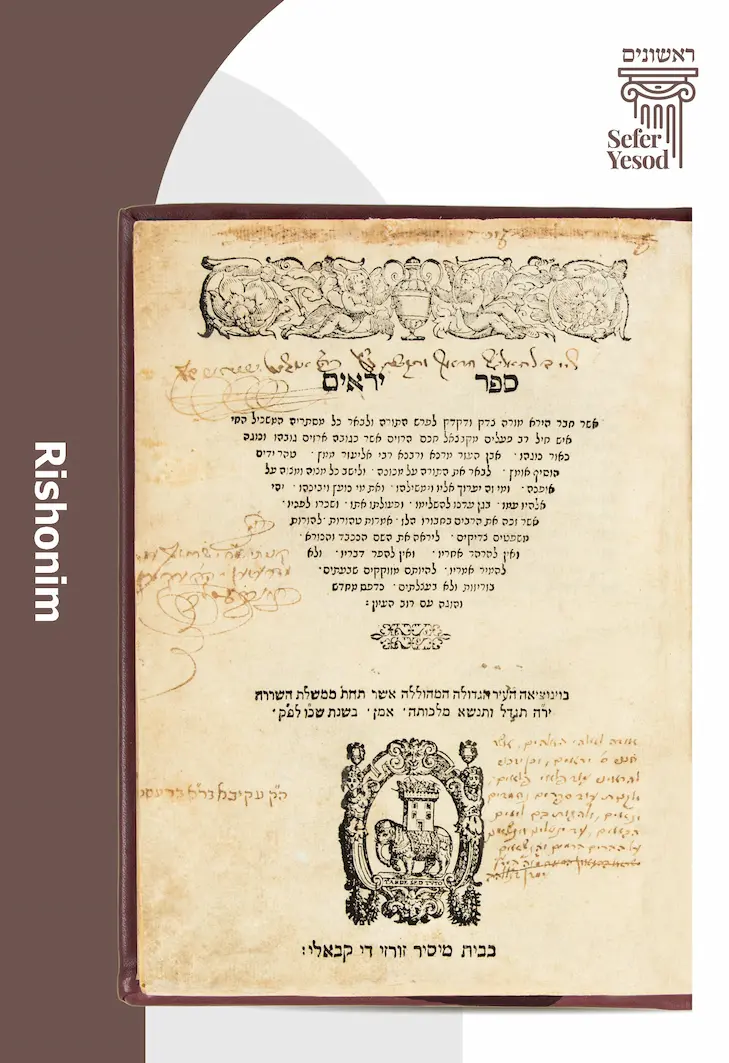
Lot : 94

Autographed Letter by the Admor Rabbi Moshe Unger of Tzfas, Son-in-Law of
Autographed Letter by the Admor Rabbi Moshe Unger of Tzfas, Son-in-Law of the Divrei Chaim of Sanz. Tzfas, 1897 Long letter by the Admor Rabbi Moshe Unger of Tzfas, oldest son-in-law and close disciple of the Admor Divrei Chaim of Sanz.  The final lines of the letter are handwritten, and the letter is autographed by “Hak[atan] Moshe Unger ben HaR[av] Hagaon of Dombrova and son-in-law of Har[av] Hatz[addik] Hagaon Hakadosh of Sanz ztvk”l.  The Admor Rabbi Moshe Unger (circa 1820-1898) was the son of the Admor Rabbi Mordechai Dovid of Dombrova. He wed Rebbetzin Miriam, eldest daughter of the Admor Rabbi Chaim of Sanz, author of the Divrei Chaim. His tombstone attests that he “basked in his [the Divrei Chaim’s] shadow for forty years”. Rabbi Moshe Unger was a genius, scholar and talented public figure who served as a close confidant and advisor to his venerable father-in-law regarding public and personal matters, most famously in regard to selecting candidates for the Nesius in Eretz Yisrael and fundraising for Kollel Galicia. During his latter years, Rabbi Moshe journeyed to Eretz Yisrael where he founded the community of Sanz chassidim in Tzfas (Rabbeinu Hakadosh MiSanz Vol. 2 p. 424). His sons-in-law include the Admor Rabbi Yehuda Tzvi Eichenstein of Dolina; the Admor Rabbi Naftali Chaim Horowitz of Dzikov; the Admor Rabbi Chaim Yaakov Horowitz of Ulnayov; and Rabbi Mordechai Dovid Unger of Zavna whose descendants serve as Admorim until this very day. The present letter was dispatched to the director of the Union of Officers and treasures in Amsterdam regarding funds for the chalukah in Tzfas. The letter then segues into personal matters, in the course of which Rabbi Moshe discusses his physical health and medical expenses. Tzfas, 1897. Page Size: 26x21 cm. Condition: Good. ................................................ Any inquiries about this lot ? We are available also on WhatsApp >>>

Lot : 95

Handwritten & Autographed Letter of Blessings by the Admor Rabbi Elazar Weissblum
Handwritten & Autographed Letter of Blessings by the Admor Rabbi Elazar Weissblum of Reisha. 1908 “I received the p[idyon] n[efesh], and Hashem…should help your son tomorrow… I hereby bless you and your family with all goodness.” A handwritten, autographed and stamped letter by the Admor Rabbi Elazar Weissblum of Reisha. The Admor Rabbi Elazar “Reisher” Weissblum (1838-1910) was the only child of the Admor Rabbi Elimelech of Rudnick, son of the Admor Rabbi Menachem Yissachar of Pshevorsk, who was the son of Rabbi Elazar of Lizhensk and grandson of the Noam Elimelech. Rabbi Elazar was orphaned of his illustrious father at a young age and spent the next year in the home of the Admor Rabbi Dovid of Dinov before being taken in by the Admor Rabbi Chaim of Sanz who raised him as his own child and married him off to his granddaughter, the daughter of his son the Admor Rabbi Dovid of Kashanov. Rabbi Elazar’s second wife was the daughter of Rabbi Chaim Yonah Halperin, Av Beis Din of Reisha whom he later succeeded. Rabbi Elazar Reisher was renowned as a genius and fluent in both the Revealed and Hidden Torah and deeply admired for his sanctity, intensity in prayer and frequent immersions in the mikveh. His Holy Court threw thousands of chassidim from both Poland and Hungary, and he swiftly earned a reputation as a miracle-worker who brought salvations to countless Jews. The Admor Rabbi Yechezkel of Shinova once expressed that “Rabbi Elazar Reischer was granted the keys from heaven to heal the infirm, ” and he often sent sick patients to Rabbi Elazar to receive his blessing after the doctors had despaired of healing them. In order to mask his sacred ways, Rabbi Elazar would write prescriptions for medicines to be used not to reveal his spiritual powers.. In 1902, he printed his Mishneh Lamelech commentary on Torah anonymously. Reisha, 1908. Handwritten and autographed letter on postcard. Verso features his stamp. Condition: Torn margins, but all text intact. ................................................ Any inquiries about this lot ? We are available also on WhatsApp >>>
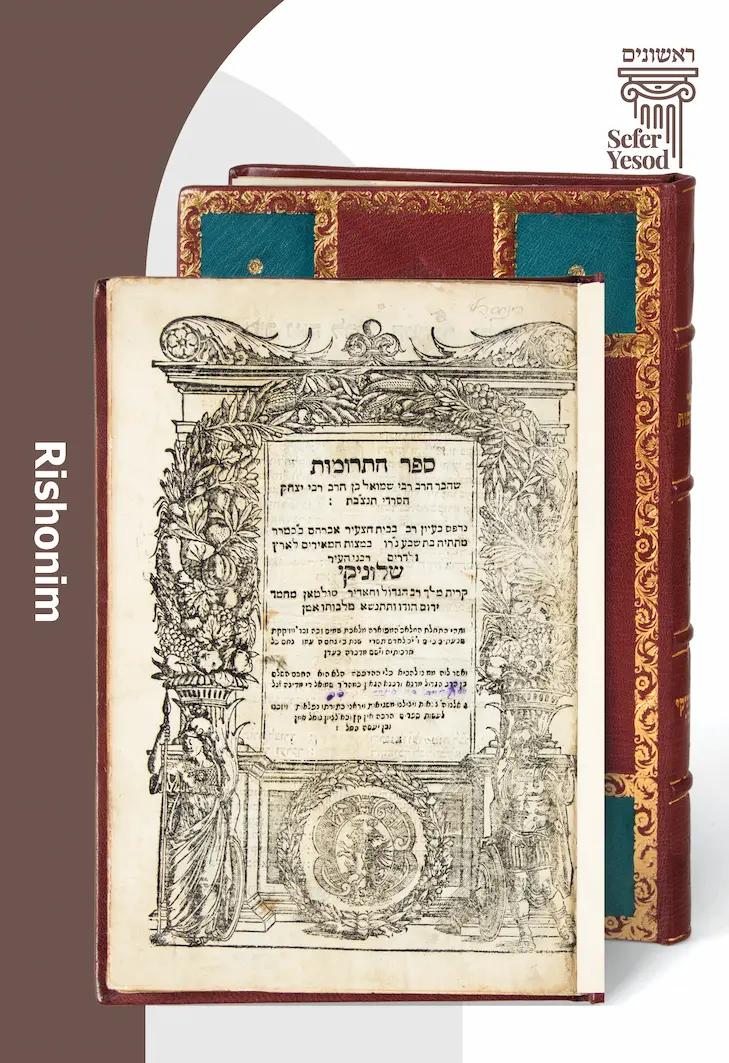
Lot : 96

Letter by the Admor Rabbi Aryeh Leibush Rubin of Cheshinov. Ancestor of
Letter by the Admor Rabbi Aryeh Leibush Rubin of Cheshinov. Ancestor of the Bobover Dynasty. Tomashov, 1932 Handwritten and autographed latter of the Admor Rabbi Aryeh Leibush Rubin, Av Beis Din of Cheshinov and grandson of the Dvirei Chaim of Sanz, regarding a deed of forgiveness written for the annulment of an engagement. The Admor Rabbi Aryeh Leibush Rubin of Cheshinov (1881-1942), son of the Admor Rabbi Yitzchak Tuvia Rubin (son-in-law of the Divrei Chaim of Sanz), was renowned for his extreme righteousness and piety. Rabbi Aryeh Leibush married the daughter of his cousin the Admor Rabbi Simcha Yissachar Ber Halberstam of Cheshinov where he was appointed Rabbi and Admor before the First World War. During the Holocaust years, he was exiled to Siberia where he perished, Hy”d. Rabbi Aryeh Leib was a genius and prolific scholar who was ordained by the Maharash Engel and Rabbi Meir Arik. In 1923, he settled in Tomashov, Poland where he founded a famous yeshivah. Sadly, all his writings were lost in the Holocaust.. Rabbi Aryeh Leibush was the father-in-law of the Admor Rabbi Shlomo Halberstam of Bobov who rebuilt the Bobover dynasty in America and ancestor of the subsequent Admorim of Bobov. Tomashov, 1932. Official postcard. Page Size: 10x15 cm. Condition: Good. ................................................ Any inquiries about this lot ? We are available also on WhatsApp >>>

Lot : 97

“The page is too short to contain the terrible tribulations we have
“The page is too short to contain the terrible tribulations we have suffered” Chilling Letter by Rabbi Yechezkel Shraga Halberstam of Yashlick Hy”d describing the suffering he and his family endured from the Nazi Germans ym”s. Bardejov, 1942  Heartrending historical account by Rabbi Yechezkel Shraga Halberstam Hy”d of Yashlick documenting the distressing sequence of events leading up to his and his family demise, the destruction of Jewish Slovakia and the glorious Sanzer dynasty during World War Two.  At the time, Rabbi Yechezkel Shraga was merely 21 years of age and engaged to the daughter of his uncle the Admor Rabbi Chuna of Kolshitz. In the course of the letter, Rabbi Yechezkel Shraga mentions several members of the extended Halberstam family whose tragic end is known to all; this historic letter is one of the last remaining testimonies regarding their whereabouts. The letter is replete with chilling descriptions of the horrors endured, describing a detailed account of the family’s frantic escape from their home with nothing but the clothing on their backs; and the miraculous rescue of his father—the Admor—from forced labor on Rosh Hashanah. He further describes the horrific occasion when the Nazis discovered the family hiding in the home of Rabbi Leizer Lazar, a scion of the Admor Rabbi Yaakov Lazar of Pshevorsk, Rav of Yashlick, and beat them nearly to death, forced them to shave their peyos and beards and kneel for hours at a time on the street while they pummeled them mercilessly. Rabbi Yechezkel Shraga Halberstam Hy”d (1921-1942) was the son of Rabbi Efram Dov of Yashlick, son of Rabbi Yechiel Nosson of Bardejov and a great-great-grandson of the Admor Rabbi Chaim of Sanz. He was engaged to his first cousin, the daughter of the Admor Rabbi Chuna of Kolshitz, yet both the bride and groom, and their families, all perished in the Holocaust inferno. Hashem yikom damam. This letter was written in Bardejov to where Rabbi Yechezkel Shraga fled, as described in his letter. Bardejov, 1942. Folded leaf written on 3 sides. Page size: 23x14 cm. Good condition. ................................................ Any inquiries about this lot ? We are available also on WhatsApp >>>
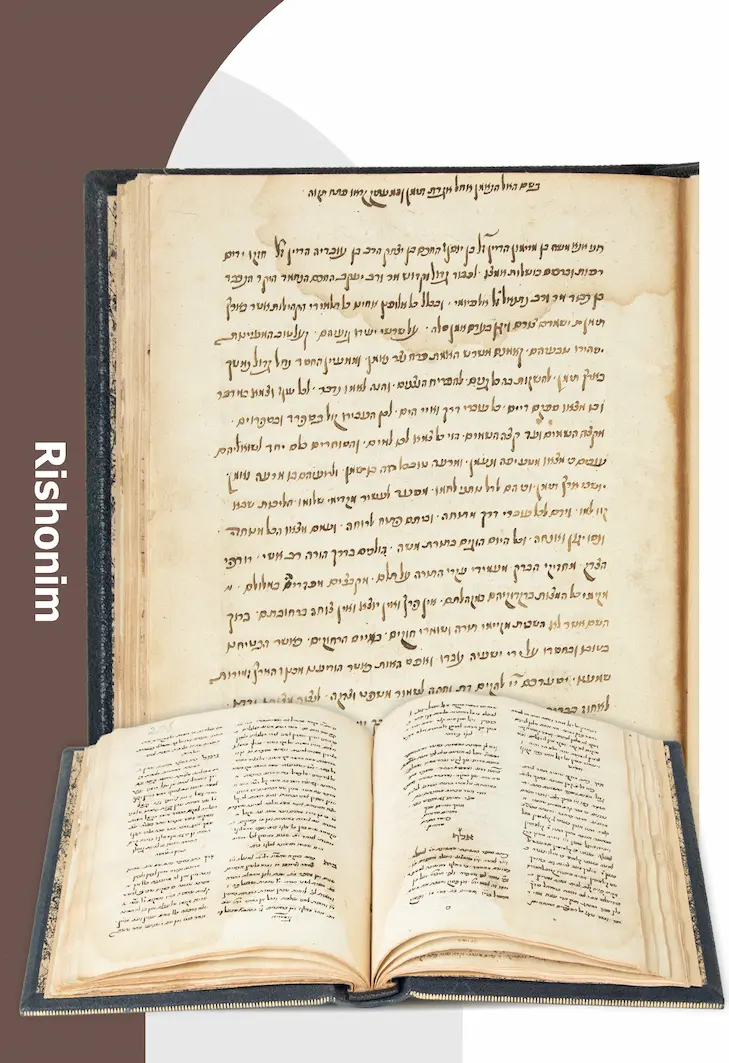
Lot : 98

Long Historical Letter by Rabbi Chaim Halevi Soloveitchik  Av Beis Din of
Long Historical Letter by Rabbi Chaim Halevi Soloveitchik  Av Beis Din of Brisk. 1909 The Battle by Gedolei Yisrael to Preserve traditional Judaism in Eretz Yisrael. An Historical account When the winds of the Enlightenment began blowing throughout Europe, one of the first objectives of the liberal movements to advance their agenda was to dismantle the institution of the traditional Rabbinate, by replacing the Rabbinate with “enlightened” Rabbis who would support their progressive ways and institutions. During the era these letters were written, Eretz Yisrael was under the control of the Ottoman Empire whose axis was in Constantinople. Ottoman authorities traditionally bequeathed the Chief Rabbi of Constantinople, known as Chacham Bashi, a wide scope of authorities and privileges that powerfully influenced and impacted Jewish communities throughout the vast Empire. In particular, the Chacham Bashi was able to facilitate the needs of the Jewish community in Eretz Yisrael and represent them to the authorities. Also included in the Chacham Bashi’s powers was the appointment of new Rabbis in the Holy Land. In 1909, progressive Jews exerted their influence in the Ottoman court to depose the Chacham Bashi, Rabbi Moshe Halevi, and campaigned strongly to appoint Chaim Nahum in his stead. Nahum, a graduate of the Alliance school and of Parisian Universities, Gedolei Yisrael of the era regarded his appointment as a severe blow to tradition, as well as a grave threat to the spiritual future of Eretz Yisrael. They put up a fierce battle to oppose the new Chacham Bashi and to preserve the religious character of the Holy Land and of Jerusalem in particular. Rabbi Yitzchak Eisik Halevi (1848-1914), author of Doros Rishonim, spearheaded this spiritual battle, and the letters in this collection are all addressed to him. The present collection constitutes an eye-opening historical documentary of the times, with letters spanning Gedolei Yisrael from Chassidic, Sephardic and Lithuanian (Misnagdim) sects, among them Rabbi Chaim Halevi Soloveitchik, the Avnei Nezer, Imrei Emes, Rabbi Chaim Ozer Grodzinski, and others. Each letter reveals the individual Rabbi’s unique perspective and pure Torah outlook on the concept of Rabbanus along with his personal battle to preserve spiritual sanctity during this turning-point in Jewish history. For further information regarding the battle waged by Gedolei Yisrael, see Rabbi David Kamenetzky’s work Rabban shel Yisrael (Jerusalem, 2021 Ch. 14). “The essence of the Jewish Rabbinate, in its true meaning, is to teach the nation Hashem’s Torah and Emunah, to practice, uphold and preserve the faith which is the basis of the nation and its existence.” Poignant Handwritten and Autographed Letter by Rabbi Chaim Halevi Soloveitchik, Av Beis Din of Brisk. 1909 A handwritten letter replete with emotion and fervor portraying the pure Torah perspective of Rabbi Chaim Halevi Soloveitchik through his efforts to preserve authentic Judaism and the traditional institution of the Rabbinate in Eretz Yisrael. In this letter, he relates the importance and significance of the position of Rabbanim in the Jewish community, their immeasurable influence on religious observance and sanctity among the nation. Rabbi Chaim vigorously decries the liberal movements and societies “whose thoughts and plans are only to destroy and eradicate all that is holy”. He also issues a heartfelt appeal to the nation as he exposes the liberal societies for their evil, proving that their efforts are devoted to destroy religion and uproot Jewish homes, ” and that they use Rabbis for their own perverted purposes. He adds that “Their Rabbis are not even worthy of being compared to the simplest layman among us, neither for his knowledge of Torah, nor for his observance of religious nor even his integrity or conduct.” Instead, he advocates for taking practical steps to prevent further travesty by dispatching a permanent emissary to Constantinople to “be there consistently, increase his endeavor without stopping, and not return home!” before prevailing upon the G-d-fearing members of Turkish society and authorities and succeeding at “rescuing the House of Israel.” An particularly long letter, with 35 handwritten rows. It is one of the longest known letters written by the hand of Rabbi Chaim Soloveitchik. Rabbi Chaim Soloveitchik (1853-1918) one of the greatest Torah luminaries and spiritual leaders of the 19th and early 20th centuries. His profound method of thinking and learning left an indelible mark on the yeshivah world today, and countless learners follow his path until this very day. He was called “A minister of Torah, a genius and truly pious, Rabbi of all of Yisrael who forged a path through the ocean of Talmud and paved a new path in the knowledge and understanding of the truth of Torah. He established legions of students by the thousands.” Brisk. 14 Cheshvan, 1909. Page Count: 2 handwritten, autographed sides; 35 lines. Condition: Good. Reinforced on fold. There are very few long letters written by the holy hand of Rabbi Chaim Soloveitchik of Brisk, who was known for curtailing his words and would weigh every word and syllable that he wrote. The present letter is remarkably long, ostensibly due to its weighty content regarding the preservation of Jewish faith, perpetuation the golden chain of tradition, and condemnation of those who wish to douse the flame of Torah and fear of heaven in order to advance and gain progress in an Enlightened world… ....................................... Any inquiries about this lot ? We are available also on WhatsApp >>>

Lot : 99

"All what Klal Yisroel is Lacking is Achdus" Sacred Letter by the
"All what Klal Yisroel is Lacking is Achdus" Sacred Letter by the Admor Rabbi Avraham Borenstein of Sochatchov, Author of Avnei Nezer. 1909 Sharply-worded letter of condemnation by the Avnei Nezer against those who “wish to uproot Torah and mitzvos from Yisrael.” This letter was handwritten by his son and successor the Admor Shem MiShmuel and features both the Avnei Nezer’s autograph, “Hak[atan] Avraham of Sochatchov” and stamp. In this letter, the Avnei Nezer advocates for an “assembly of righteous who will affirm their opinion, the opinion of the Torah, against all who wish to uproot Torah and mitzvos from Yisrael” and to protest the “bullies…who arose from our midst to annul Torah and mitzvos from Yisrael”. He describes that the latter are intimidating the people “to the extent that all who are straight and innocent, who are still truly the vast majority and composition of our holy nation, have placed their hands upon their mouths in fear of these errant ones, until there is no voice sounded to protest and object against them. And there are those whose ignorance makes them unable to distinguish between sacred and profane and between impure and pure.” The Avnei Nezer explains that the purpose of the assembly is “so the errant of our nation, wherever they are, will recognize and know that Torah and religion is not abandoned, and that baruch Hashem, even now at this evil time, there are still believers sons of believers, and that they are the vast majority and constitution of the Jewish nation; and all that is lacking is their unified assembly.” He concludes with the blessing that “the One Who guards His nation Yisrael eternally shall send His angel before you and make you successful…and you shall merit seeing the salvation of Yisrael along with all the salvations, and wisdom and knowledge shall emerge from Zion with the coming of the Redeemer speedily in our days. Amen!” The Avnei Nezer, the Admor Rabbi Avraham Borenstein (1839-1910) was one of the greatest Admorim in Poland, a genius and Torah scholar who was compared to Rabbi Yehonasan Eibeschutz. He was the son-in-law and prime disciple of the Admor Rabbi Menachem Mendel of Kotzk and was appointed as Rav and Admor of Sochatchov in 1883 where he led thousands of chassidim and guided countless talmidim to pursue his brilliant path of study. The Avnei Nezer was also one of the greatest meishivim in his generation, authoring countless teshuvos and chiddushim that were compiled into the 7-volume masterwork Shu”t Avnei Nezer and Eglei Tal. Sochatchov, 5 Kislev, 5669 (1909). Double-sided folded handwritten leaf. Page Size: 21x13 cm. Condition: Good. ....................................... Any inquiries about this lot ? We are available also on WhatsApp >>>
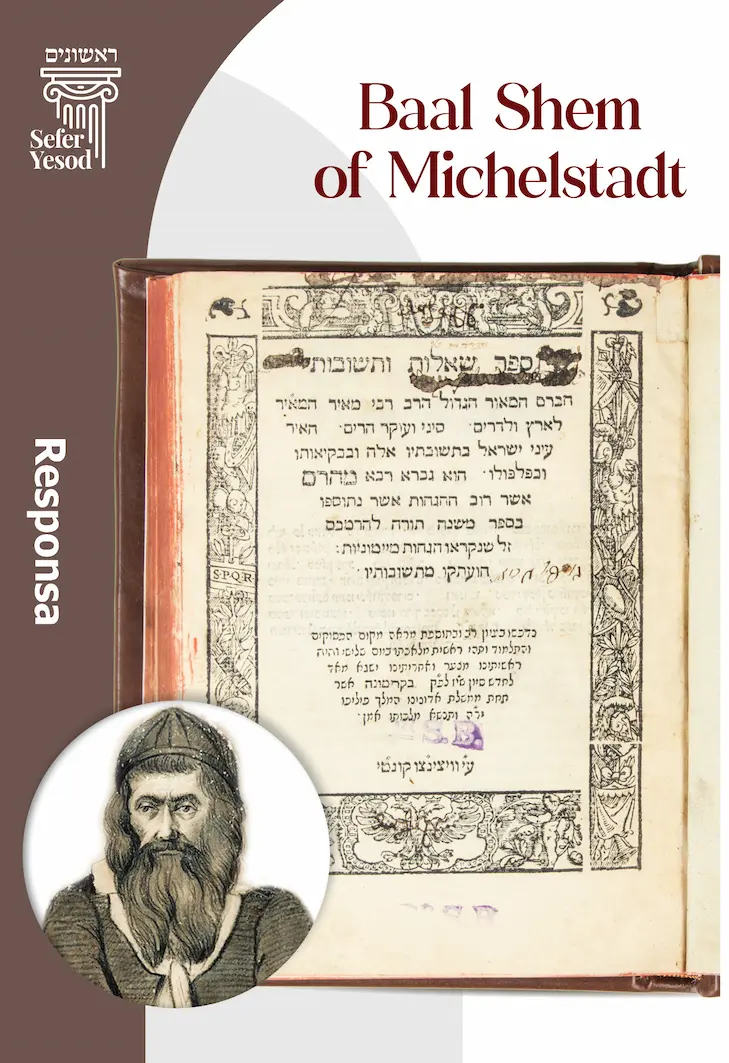
Lot : 100

Sacred Autographed Letter by the Admor Imrei Emes of Gur. 1909 Long
Sacred Autographed Letter by the Admor Imrei Emes of Gur. 1909 Long letter by the Admor Rabbi Avraham Mordechai Alter of Gur, author of Imrei Emes, complete with his sacred autograph. The body of the letter was handwritten by his brother-in-law Rabbi Tzvi Chanoch Levin, Av Beis Din of Bendin and son-in-law of the Sfas Emes of Gur. In this letter, the Imrei Emes expresses his grave distress upon “the breaches [manifested] by some of our nation’s contemporary youth…deriving from the liberal movements” which “seek to shed the yoke of Torah and Judaism…and now their hand is raised against the holy city of Jerusalem.” The letter teaches of the covert efforts made by Rabbi Chaim Soloveitchik to aid the campaign against the progressives , as the Imrei Emes expresses, “Therefore, how delighted we were to learn the secret from the faithful confidant of the Gaon of Brisk” that efforts are being taken “for the sake of Hashem and his Holy Torah, and to save tens of thousands of our Jewish brethren and their Judaism…and that those who fear Hashem are battling mightily to [preserve] our holy Torah.” He adds, “If only we also knew what we could do to assist them in their righteous activities.” The Imrei Emes proposes to unite all Kollel members in Jerusalem and encourage them to join forces in order “to use their combined power to impact our brothers, Bnei Yisrael, and Judaism in all lands.” Reading between the lines, it is clear that the Imrei Emes aspired to found a public organization that would unite Orthodox Jewry and serve as a spiritual bastion against the liberal movements sweeping through Europe, the Mediterranean, and Eretz Yisrael. This vision was indeed realized with the founding of Agudas Yisrael (Rosh Gulas Ariel Vol. 2 pps. 59-64). The Admor Rabbi Avraham Mordechai Alter of Gur (1866-1948), renowned as the Imrei Emes, was the third Admor of the Gur dynasty and a spiritual leader of thousands. Throughout his 43-year reign as Admor, Gur grew to become one of the largest Chassidic sects in the world. The Imrei Emes was one of the founders of Agudas Yisrael and world-acclaimed leader of Torah Jewry during the catastrophic era of both World Wars. A tzaddik and genius who mastered both the Revealed and Hidden Torah and influenced thousands, he left an indelible impact on the Torah world. Gur, Thursday, [Parshas] Vayeitze [9 Kislev, 5669], 1909. Folded leaf with 2 handwritten sides. Page Size: 21x13 cm. Reinforced on fold of first page. ....................................... Any inquiries about this lot ? We are available also on WhatsApp >>>

Lot : 101

“Together, we shall all endeavor for the sake of Hashem and our
“Together, we shall all endeavor for the sake of Hashem and our holy Torah” Letter by the Admor Rabbi Aharon Menachem Mendel of Radzymin. 1909 Strongly-worded letter by the Admor Rabbi Aharon Menachem Mendel Guterman of Radzymin condemning the Alliance Israelite Universelle for its attack of traditional Judaism and efforts to mitigate Jewish faith. “And they have come as far as our holy city of Jerusalem, to destroy and uproot Judaism and traditional education of our children in an alarming fashion. This is dreadful and cannot be abided.” A long letter covering two-and-a-half sides in beautiful calligraphy. The last line was handwritten by the Admor himself and features his autograph: “Seeking his welfare and the peace of his Torah with a yearning heart and soul; awaiting the salvations of Yisrael, Aharon Menachem Mendel.” In his letter, the Admor commends the covert efforts being made to oppose the Alliance and proposes the establishment of a permanent committee in Constantinople to represent the needs of Orthodox Jewry to the Ottoman authorities. He adds that as Nasi of Kollel Polin, he will personally appeal to authorities in Jerusalem to unite the local Kollels to endeavor “for the merits of thousands of Jews, to open their eyes and not be drawn after the terrible movement, to seal all breaches and continually strengthen and reinforce the pillars of religion with increased force and might.” The Admor Rabbi Aharon Menachem Mendel Guterman of Radzymin (1860-1934) was one of the great Chassidic Admorim in Poland. He was a disciple of both his grandfather the Admor Rabbi Yaakov Aryeh of Radzymin and the Avnei Nezer, and was acclaimed as a tzaddik and genius who excelled in Torah and pilpul. In 1903, he was crowned Admor of Radzymin, and in this capacity, dedicated his life to providing for both the public and private individuals in need. Rabbi Aharon Menachem Mendel was named Nasi of Kupath Rabbi Meir Baal Haness and endeavored greatly to support the burgeoning Yishuv in Eretz Yisrael. In 1929, he paid a historic visit to Eretz Yisrael, in the course of which he initiated setting up the mechitzah at the Kosel. Rabbi Aharon Menachem Mendel was never blessed with children, yet his written legacy includes Kuntress Chinuch Habanim, Alim L’terufah, and Tzemach Menachem. Radzymin, Thursday Parshas Chayei [Sarah] [25 Cheshvan, 5669], 1909). Folded leaf, written on two-and-a-half sides. Page Size: 20x13 cm. Condition: Good, save for a single water stain in the center of the page. ....................................... Any inquiries about this lot ? We are available also on WhatsApp >>>
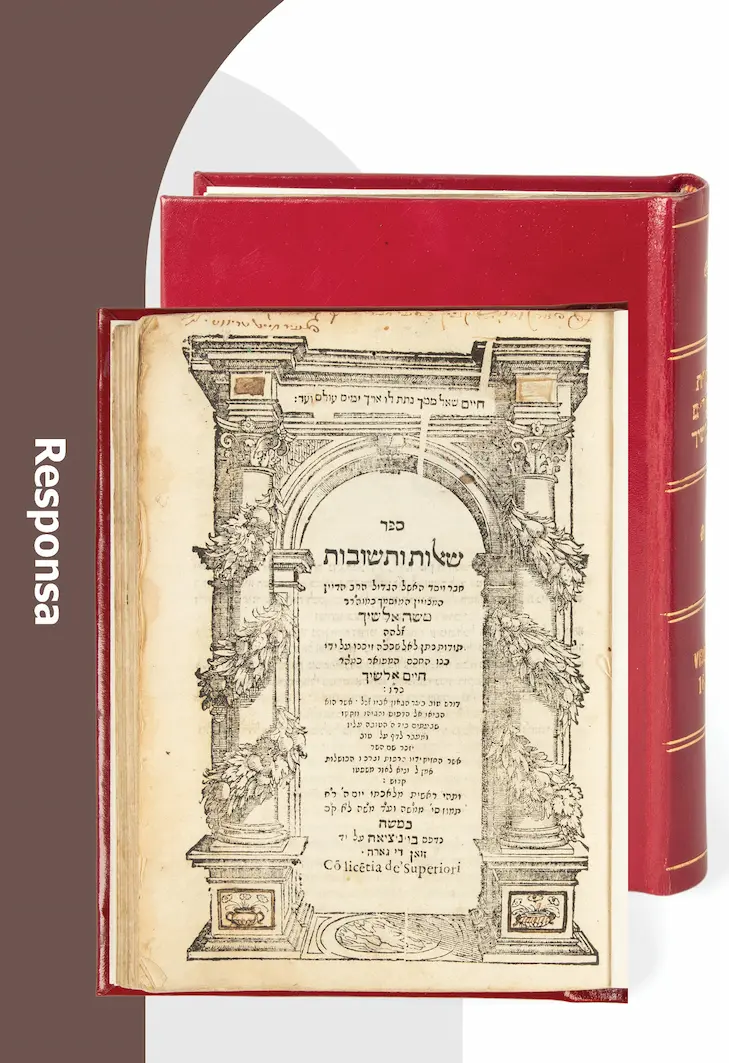
Lot : 102

The Battle to Preserve Authentic Torah Judaism in Eretz Yisrael Letter by
The Battle to Preserve Authentic Torah Judaism in Eretz Yisrael Letter by Rabbi Chaim Ozer Grodzinski, Av Beis Din of Vilna, and Telegram by Rabbi Shmuel Salant of Jerusalem. Vilna-Jerusalem, 1909 1. Handwritten and Autographed Letter by Rabbi Chaim Ozer Grodzinski, Av Beis Din of Vilna In their efforts to preserve the authentic Jewish character of the Rabbinate and Torah institutions in Eretz Yisrael and rescue them from the talons of the Enlightenment and French Alliance, Gedolei Yisrael in the early 20th century waged a mighty battle against the appointment of Chaim Nahum as Chief Rabbi of Constantinople and the Ottoman Empire. Despite the vehement opposition of Gedolei Yisrael, Nahum was named Chacham Bashi of the Ottoman Empire. Shortly after, Rabbi Yitzchak Eisik Halevi who had spearheaded the campaign and battle against Nahum, received word that the Roshei Kollelim in Jerusalem had dispatched a letter of congratulations and blessings to Nahum. Infuriated and betrayed, Rabbi Yitzchak Eisik sent a letter of complaint to Rabbi Chaim Ozer, dated 13 Shvat, 5669, in which he writes, “From Jerusalem, we received outrageous news that the Committee of all the Kollelim sent a letter of blessings to Nachum to [express] their support of him, and Rabbi Shmuel Salant’s signature even appears on [the letter]” (Igros Rabbi Yitzchak Eisik Halevi p. 162). Rabbi Chaim Ozer promptly dispatched an inquiry to Rabbi Shmuel Salant (see Kamenetzky, David. Rabban shel Yisrael, p. 485-486) who responded with a telegram (see below) to the Av Beis Din of Vilna. Rabbi Chaim Ozer immediately forwarded Rabbi Shmuel’s response and telegram to Rabbi Yitzchak Eisik, “I am attaching to this the TG [telegram] that I received from Hagaon Harav Shmuel Salant shlit”a from the holy city of Yerushalayim, may she be speedily rebuilt.” In the second half of the letter, Rabbi Chaim Ozer writes, “From Brisk, I have received word…that Hagaon Harav Chaim [Soloveitchik] is prepared to respond to Harav Hagaon Doctor Breuer that he will travel to the conference.” The above lines relate to the founding assembly of the worldwide Orthodox union of Agudas Yisrael in Hamburg in 1909 which Rabbi Chaim [Soloveitchik] indeed attended. Vilna, 21 Adar, 5669 (1909). Stationery. Page Size: 20x13. Condition: Light stains. This letter was printed in Igros Rabbi Chaim Ozer Vol. 2 Letter 588 [2001 Edition]. 2. Telegram from Rabbi Shmuel Salant Responding to Rabbi Chaim Ozer’s Inquiry In this telegram, Rabbi Shmuel Salant categorically denies the accusation and clarifies that no such letter of blessing was sent to Chaim Nahum. He describes the rumor to be baseless and false spread viciously to mislead the public. The telegram was typed in German and dated February 15, 1909 (24 Shvat, 5669). Condition: Minor tear, with all text intact. ....................................... Any inquiries about this lot ? We are available also on WhatsApp >>>
of 4 pages