


To attend this auction live or leave absentee bids
Lot : 57
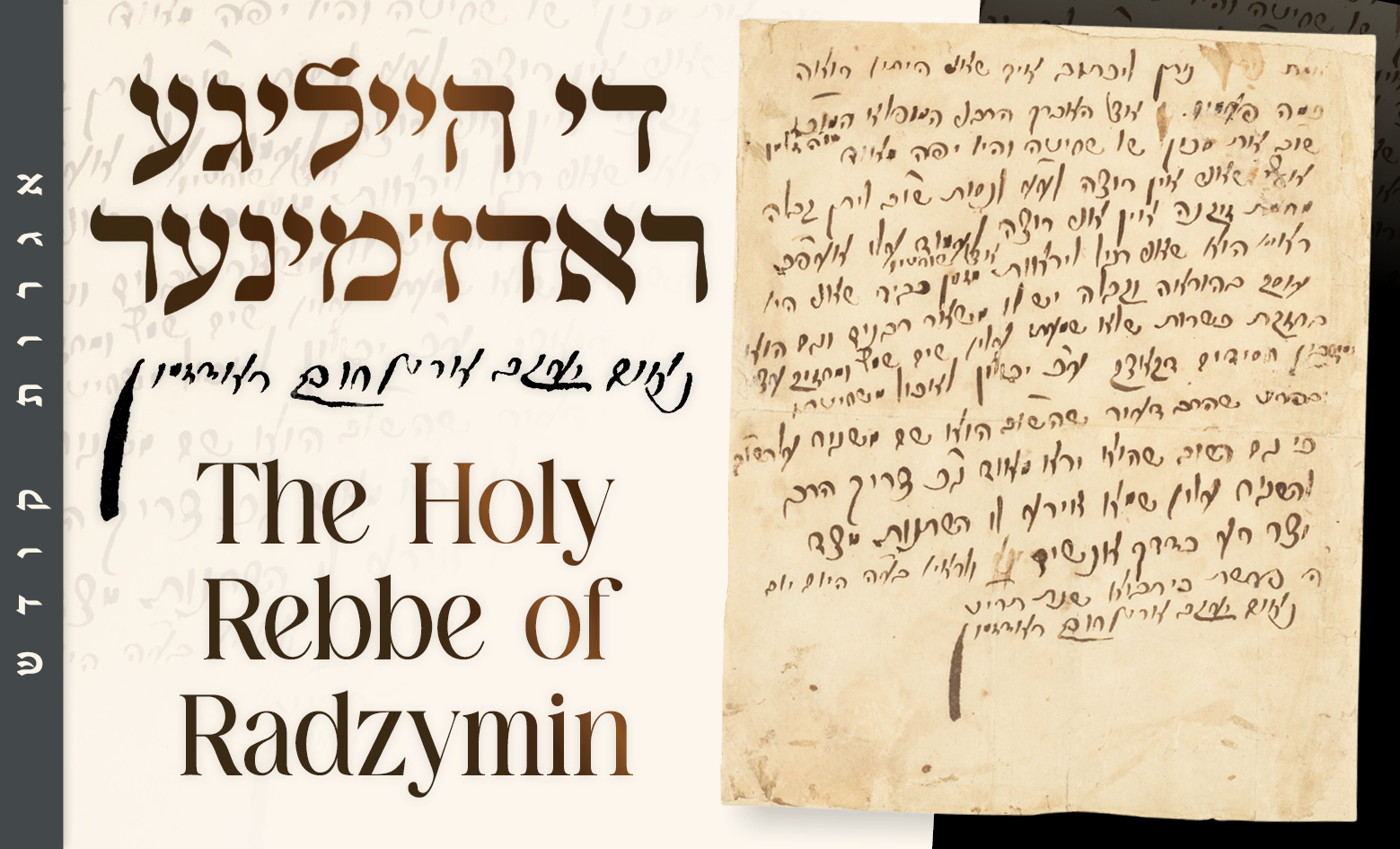
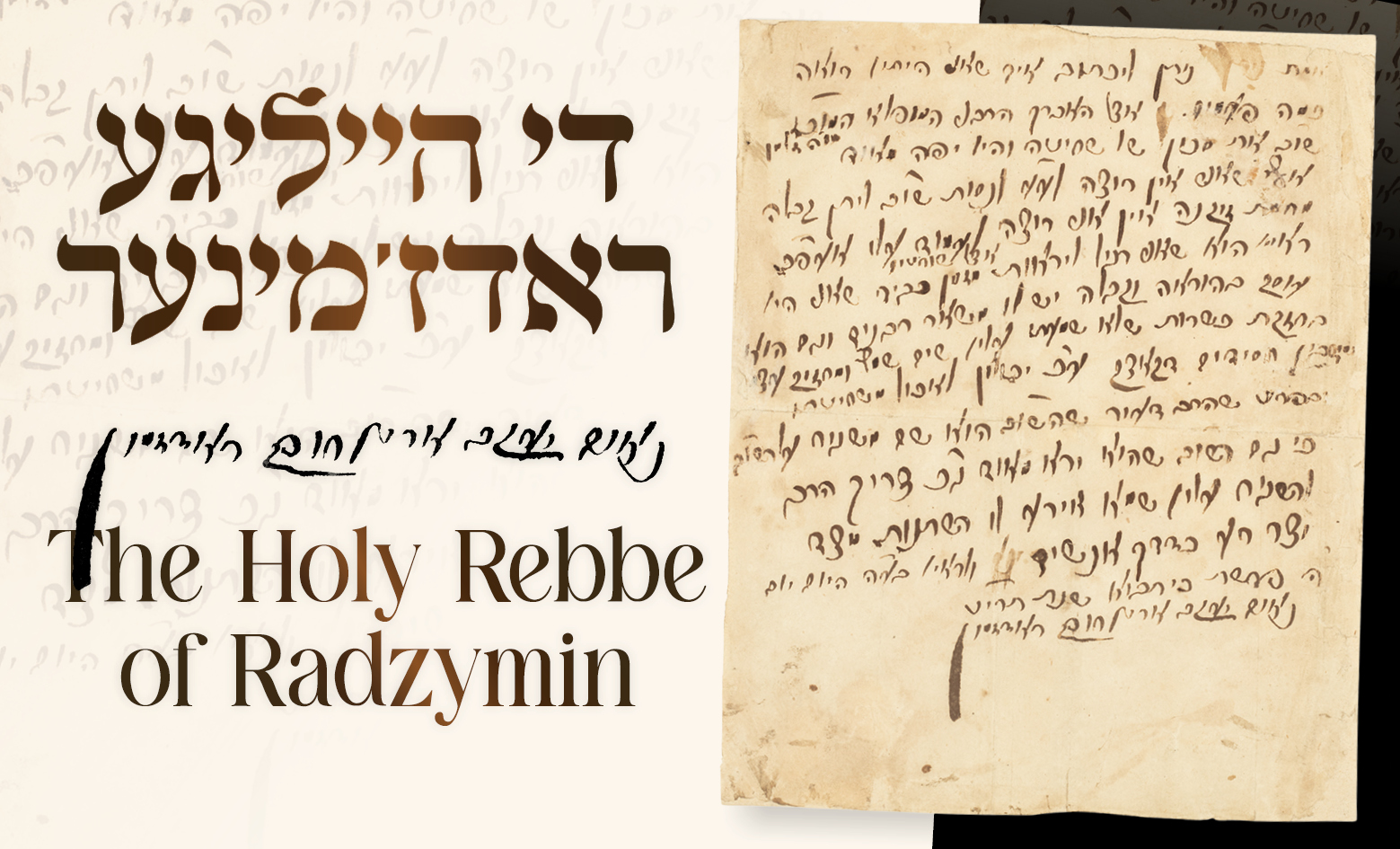
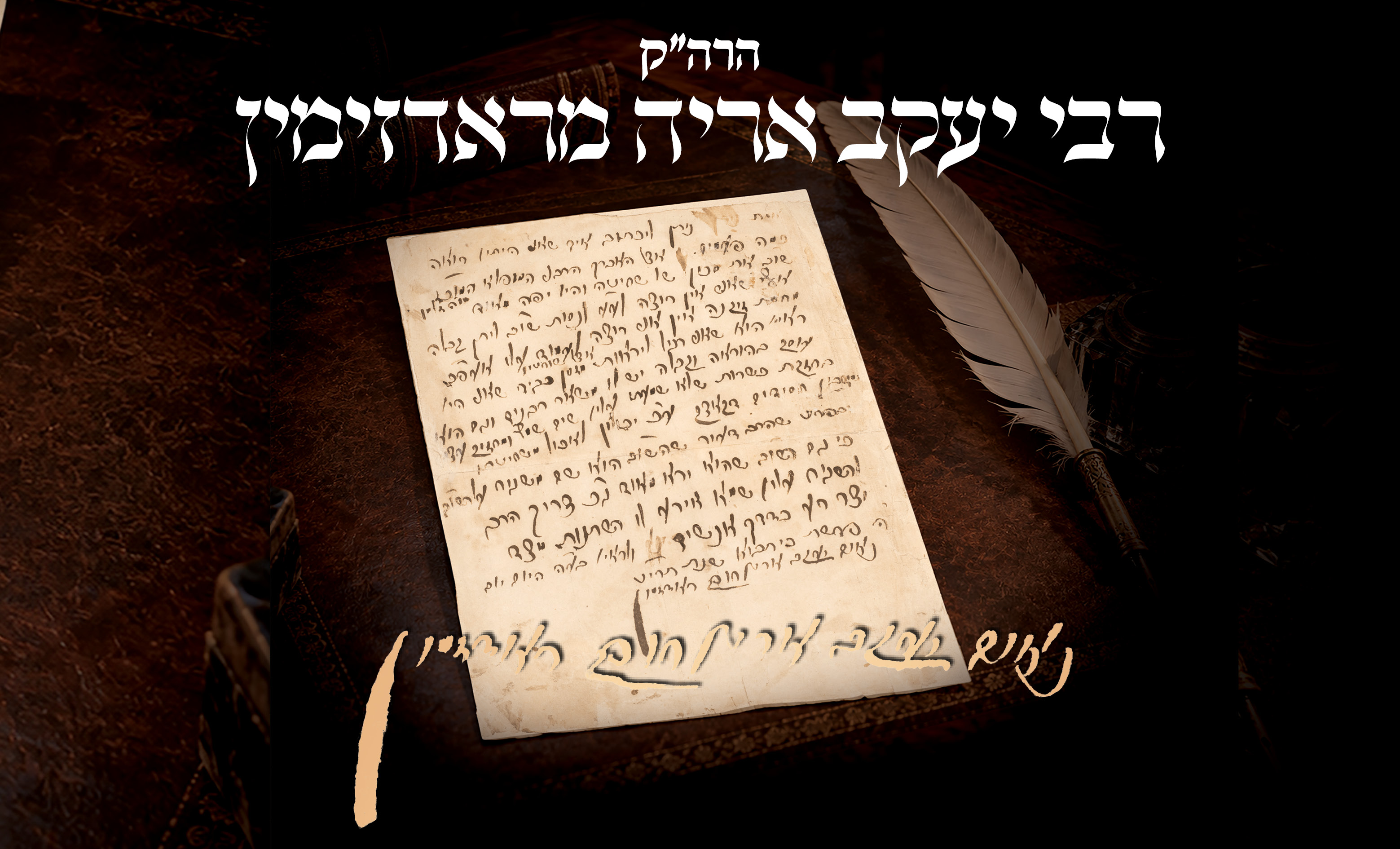
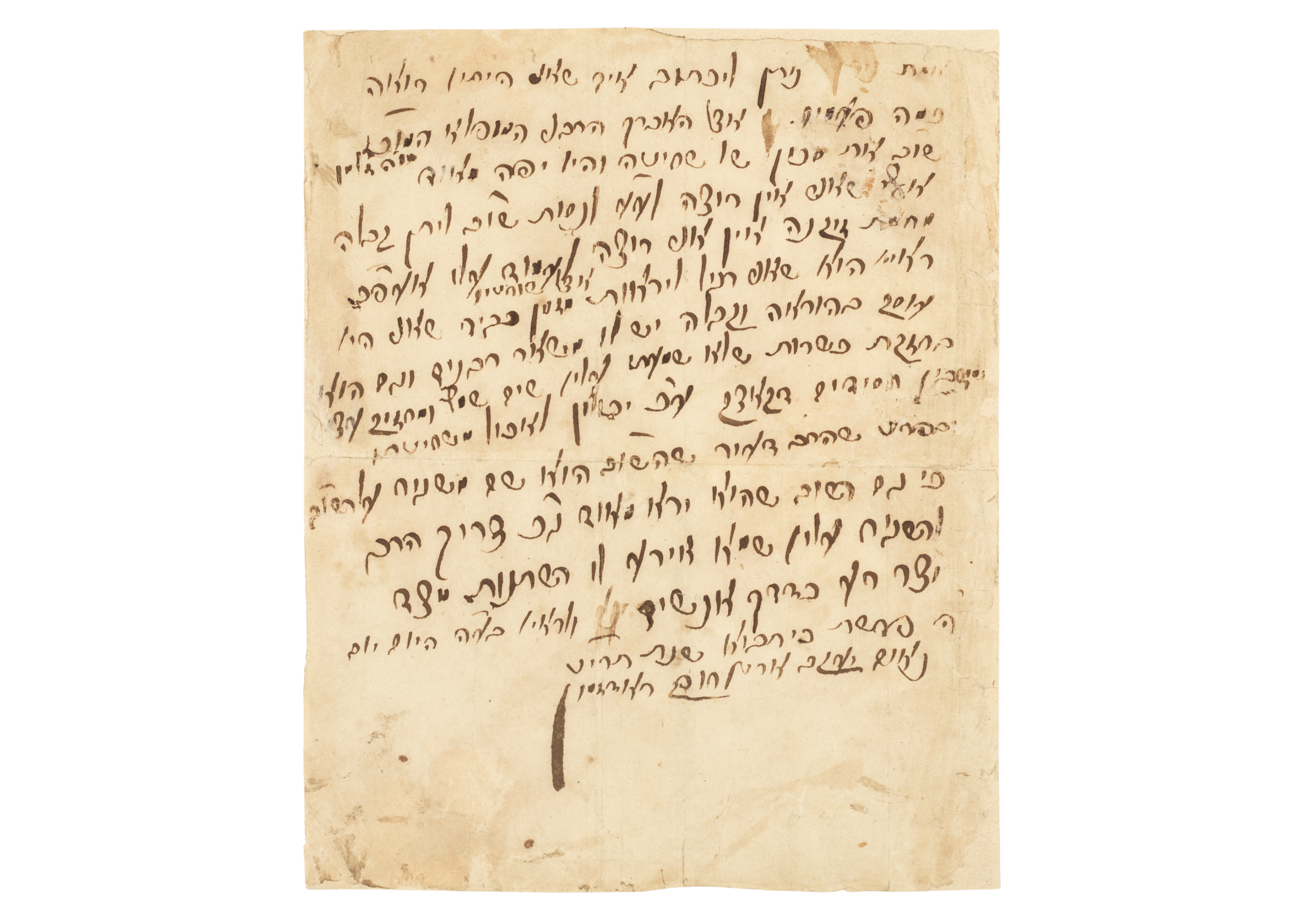
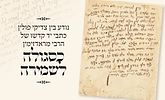
Rare Document written and signed by the Miracle Worker Rabbi Yaakov Aryeh of Radzymin – Radzymin, 1859
Rare Document written and signed by the Miracle Worker Rabbi Yaakov Aryeh of Radzymin – Radzymin, 1859
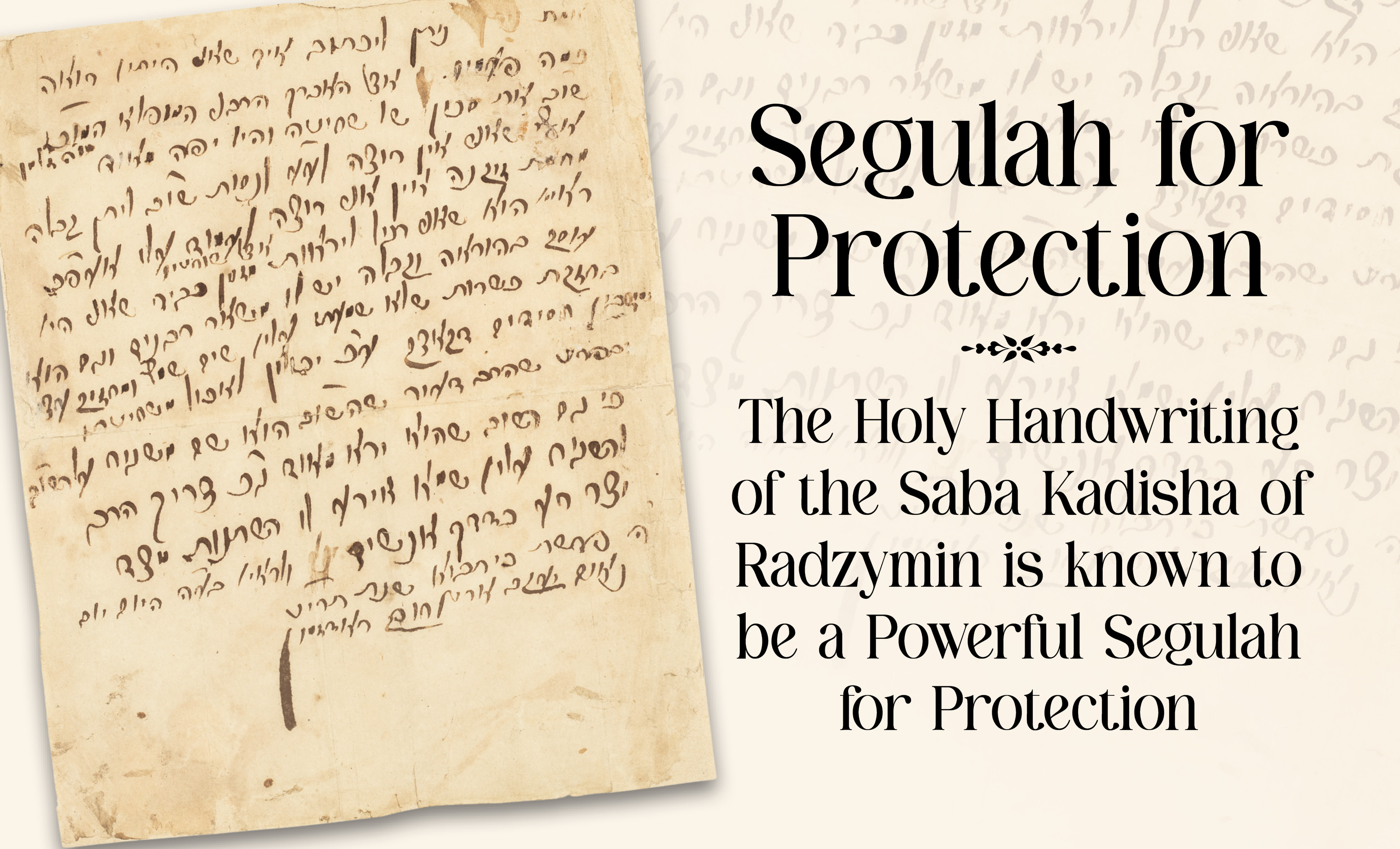
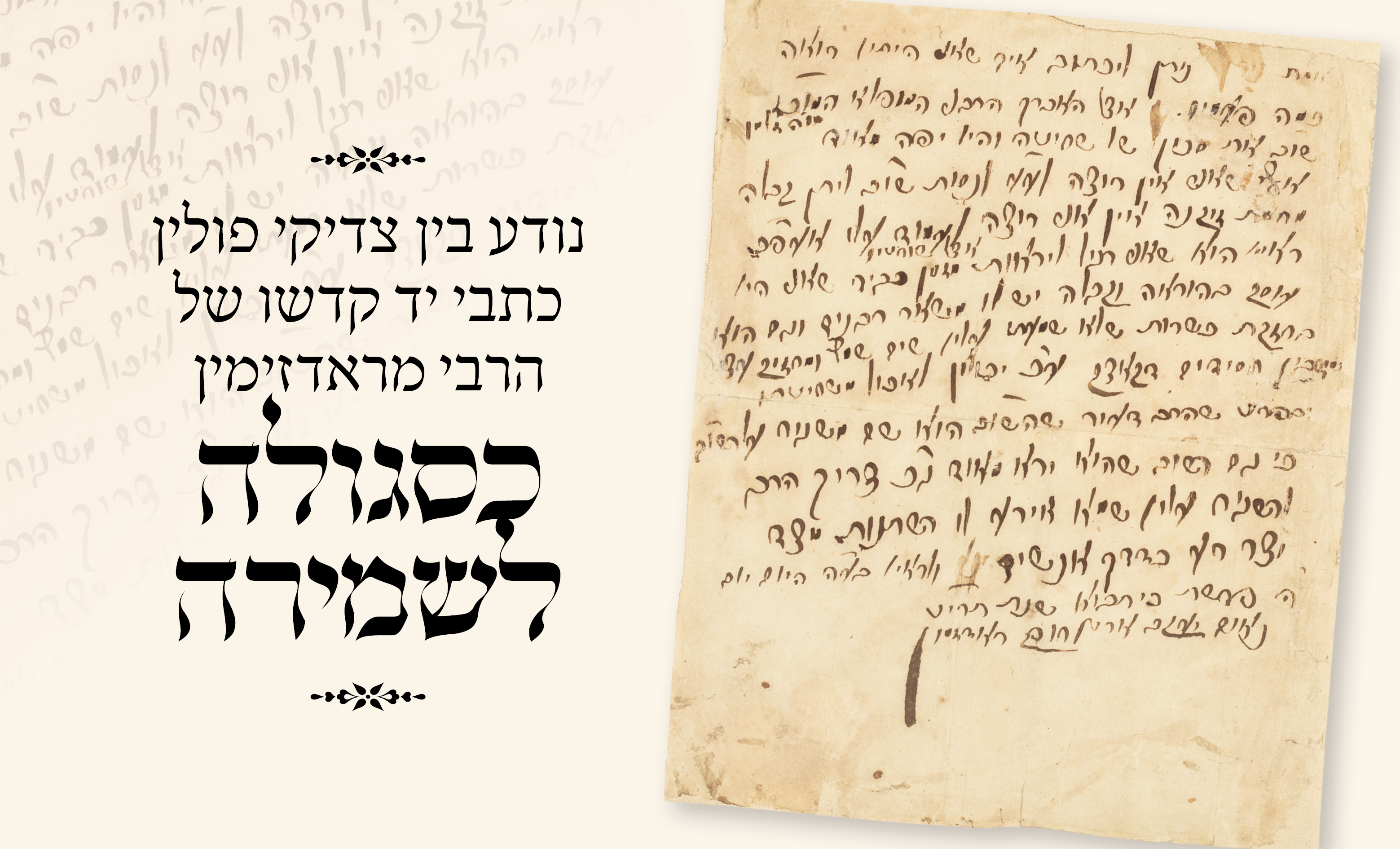
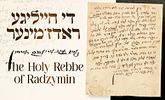
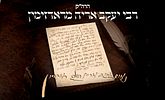
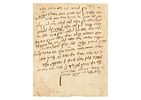
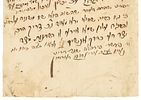
Semichah document for a shochet entirely in the holy handwriting and signed by the Admor Rabbi Yaakov Aryeh Guterman of Radzymin, known as the “Saba Kadisha” (holy grandfather) of Radzymin.
Only a small number of letters and manuscript leaves in his handwriting are known today. A semichah document such as this is exceedingly rare, and may be the only known surviving one.
In this remarkable letter, written with characteristic humility, the Saba Kadisha explains that although he had formerly been involved in matters of halachic certification and was accustomed to examining the knives of shochtim, he no longer wished to engage in such matters due to his advanced age. Nevertheless, since the shochet in question already possessed certifications from other rabbanim, he personally inspected and examined his knife and found that “it was very good.” He therefore agreed to grant him a written certification, especially since the shochet was known to be trustworthy and served “among the chassidim of Kotzk, ” concluding that “one may eat from his shechitah.”
The Rebbe further emphasizes: “Especially since the Rav of the town where the shochet resides supervises the shochet, for even a shochet who is very G-d-fearing must nevertheless be supervised by the Rav, lest he undergo some change due to the evil inclination, as is the nature of man.”
Rabbi Yaakov Aryeh Guterman of Radzymin (1792–1874), author of Divrei Aviv and Bikurei Aviv, was the founder of the Radzymin dynasty and one of the greatest Chassidic Rebbes and tzaddikim of Poland. In his youth, he studied under the Chozeh of Lublin and the Maggid of Kozhnitz, but his primary teacher was Rabbi Simcha Bunim of Peshischa. Following the passing of Rabbi Yitzchak of Vurka, he began leading his own court, and thousands flocked to Radzymin, and his influence spread throughout Poland. He was regarded as the elder statesman among the tzaddikim of his generation, and the leading Chassidic masters of the era deferred to his authority.
He became particularly famous throughout Poland for the miracles and salvations he wrought, and people witnessed firsthand the Divine Presence speaking through him and believed that whatever emerged from his mouth would come to pass.
After his passing, the ohel erected over his resting place became a famous prayer site. Before the Holocaust, multitudes of broken-hearted Jews and seekers of Divine mercy traveled there to pour out their hearts and seek salvation through the merit of the holy tzaddik. The site continued to attract people after the war, as the grave itself survived the Nazi inferno. Countless accounts have been told of childless couples and individuals facing severe difficulties who prayed at his grave and subsequently experienced remarkable deliverance. (Introduction to the Jerusalem, 2007 edition of Bikkurei Aviv.)
His life and wonders are chronicled in the sefarim Ma’asim Nora’im (Piotrków, 1914) and HaSaba Kadisha MiRadzymin (2012).
The Segulah of the Saba Kadisha’s Handwriting
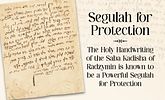
Among the tzaddikim of Poland, manuscripts written by the Rebbe of Radzymin were regarded as a powerful segulah for protection.
The Lev Simcha related that his father, the Imrei Emes, once gifted him with a manuscript written by his ancestor Rabbi Yaakov Aryeh of Radzymin, explaining that it served as a segulah for protection. (He was a descendant by marriage of the Radzymin dynasty because his father-in-law, Rabbi Nechemiah Alter, son of the Sfas Emes, had married the Rebbe’s great-granddaughter.)
Unfortunately, during their hurried escape from Poland, the manuscript was left behind.
The Lev Simcha later remarked, “My father was not one who attached significance to segulos. I therefore understood that if he nevertheless spoke of this manuscript in such terms, its significance must have been immeasurable. For that reason, after the war I acquired another manuscript written by the Saba Kadisha of Radzymin” (Libam Shel Yisrael, pp. 397–398; HaSaba Kadisha MiRadzymin, vol. II, pp. 545–548).
See also the approbation of the Imrei Emes to the sefer Divrei Aviv, where he writes: “In such difficult times, may his merit protect us and intercede favorably on behalf of our brethren, the Children of Yisrael, wherever they may be.”
When the Lev Simcha was blessed with his only son, he named him Yaakov Aryeh after the Rebbe of Radzymin; he is the current Gerrer Rebbe shlita.
Another prominent Rebbe today who bears his name is the Amshinover Rebbe shlita. (His grandfather, the Admor Rabbi Meir’l of Amshinov, was the son-in-law of Rabbi Chaim Yaakov Aryeh of Radzymin, a grandson of the Saba Kadisha of Radzymin.)
Radzymin, 1859
Size: 19 × 21 cm. Condition: Light professional restoration to folds and margins.
_____________________
Transcription of the Letter:
I can truthfully attest that on several occasions, I personally examined the shechitah knife of the distinguished young scholar, the bearer of this letter, Rabbi Zalman, shochet u’bodek, and found it to be in excellent condition.
Although at present, due to my advanced age, I no longer wish to test shochtim for the purpose of granting them certification, and therefore do not wish to undertake such responsibility, my examination nevertheless carries weight, as I have been accustomed to examining the knives of shochtim for many years, from the time when I was actively engaged in issuing halachic rulings.
He also holds certification from other rabbanim and has an established reputation for being trustworthy. I have never heard the slightest concern raised regarding him, and he conducts himself as an attendant among the Kotzk chassidim. His shechitah may therefore be relied upon.
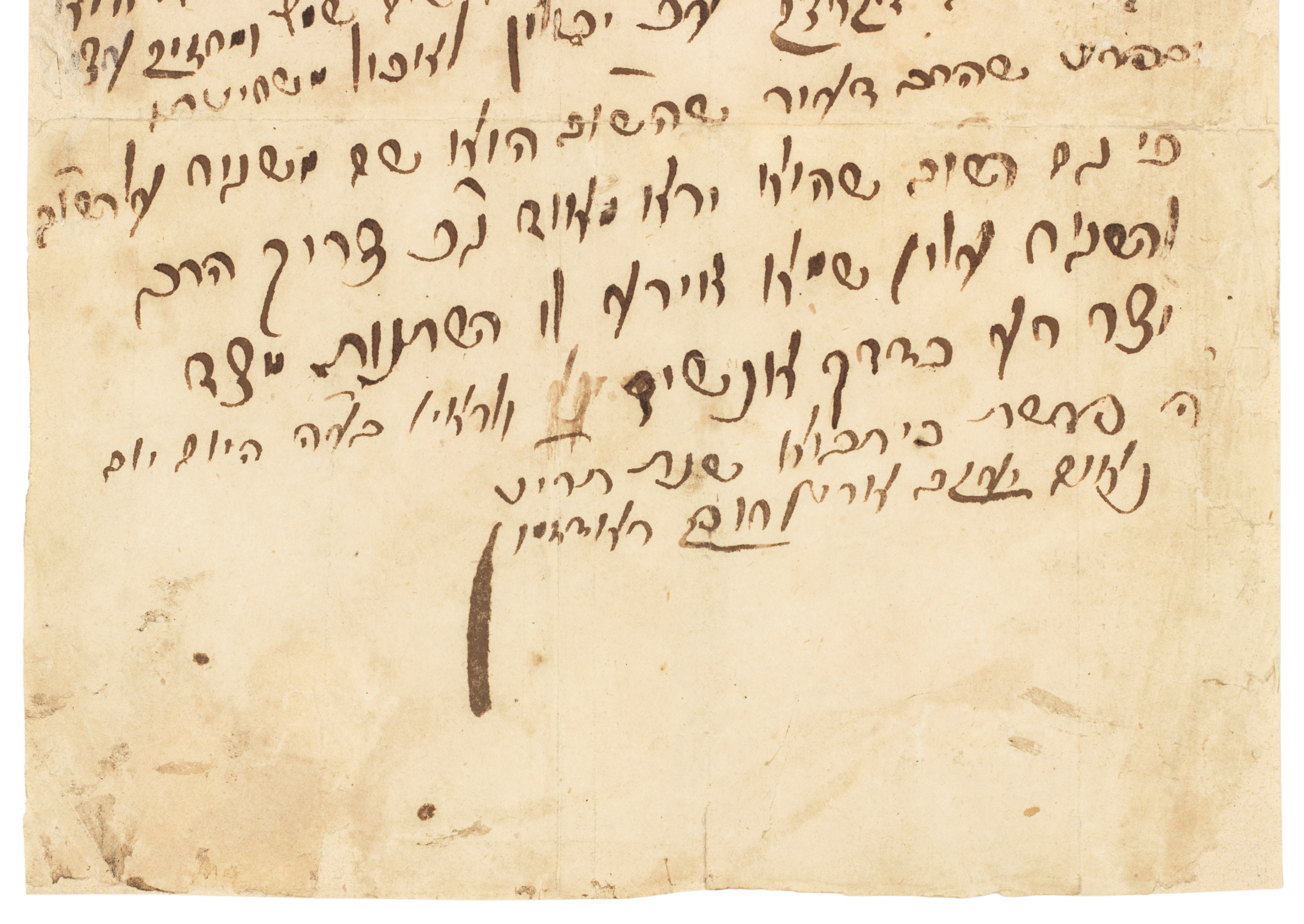
This is especially so since the Rav of the city where the shochet serves supervises the shochtim there. For even a shochet who is very G-d-fearing requires the supervision of the local Rav, lest some change occur in him through the influence of the yetzer hara, as can happen to people.
In testimony thereof, written with Hashem’s help, today, Thursday of Parshas Ki Savo, 1859.
Yaakov Aryeh
Radzymin
