


To attend this auction live or leave absentee bids
Lot : 56
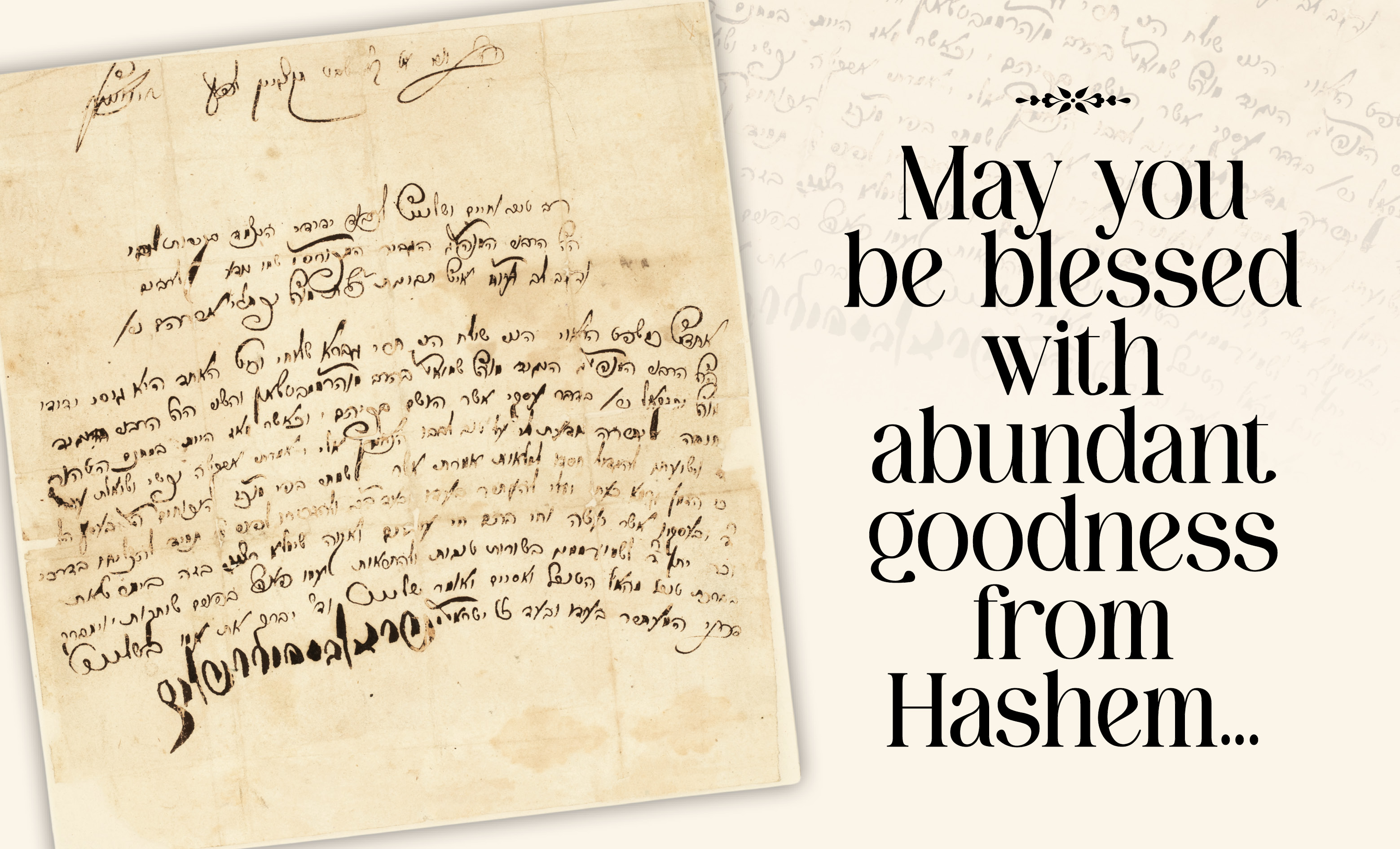
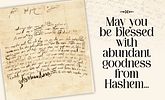
“I shall pray for you and your family and always remember you before Hashem, that He grant you success... in all your endeavors... May you be blessed with abundant goodness from Hashem... From one who prays for you and for all of Klal Yisrael.”
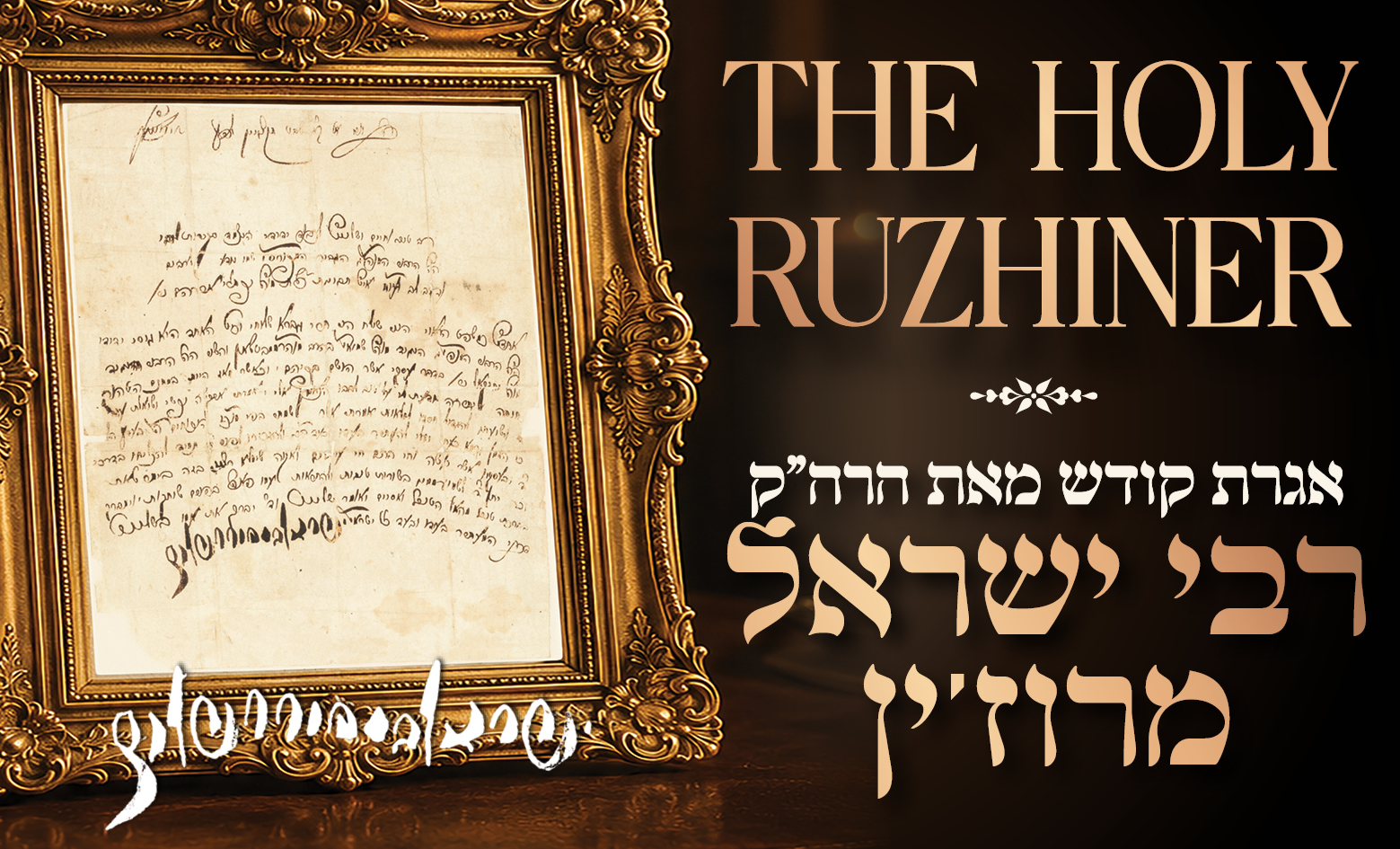
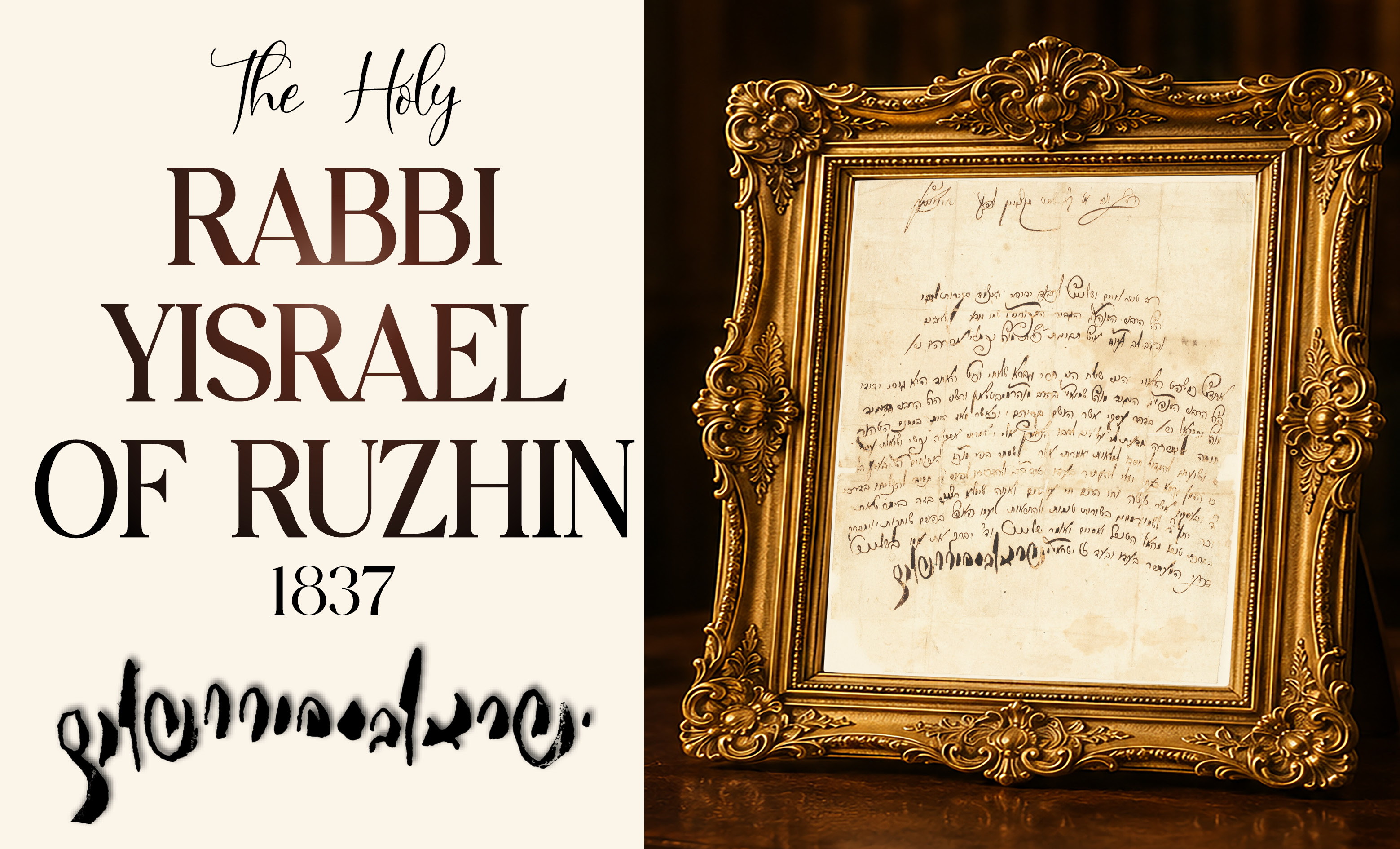
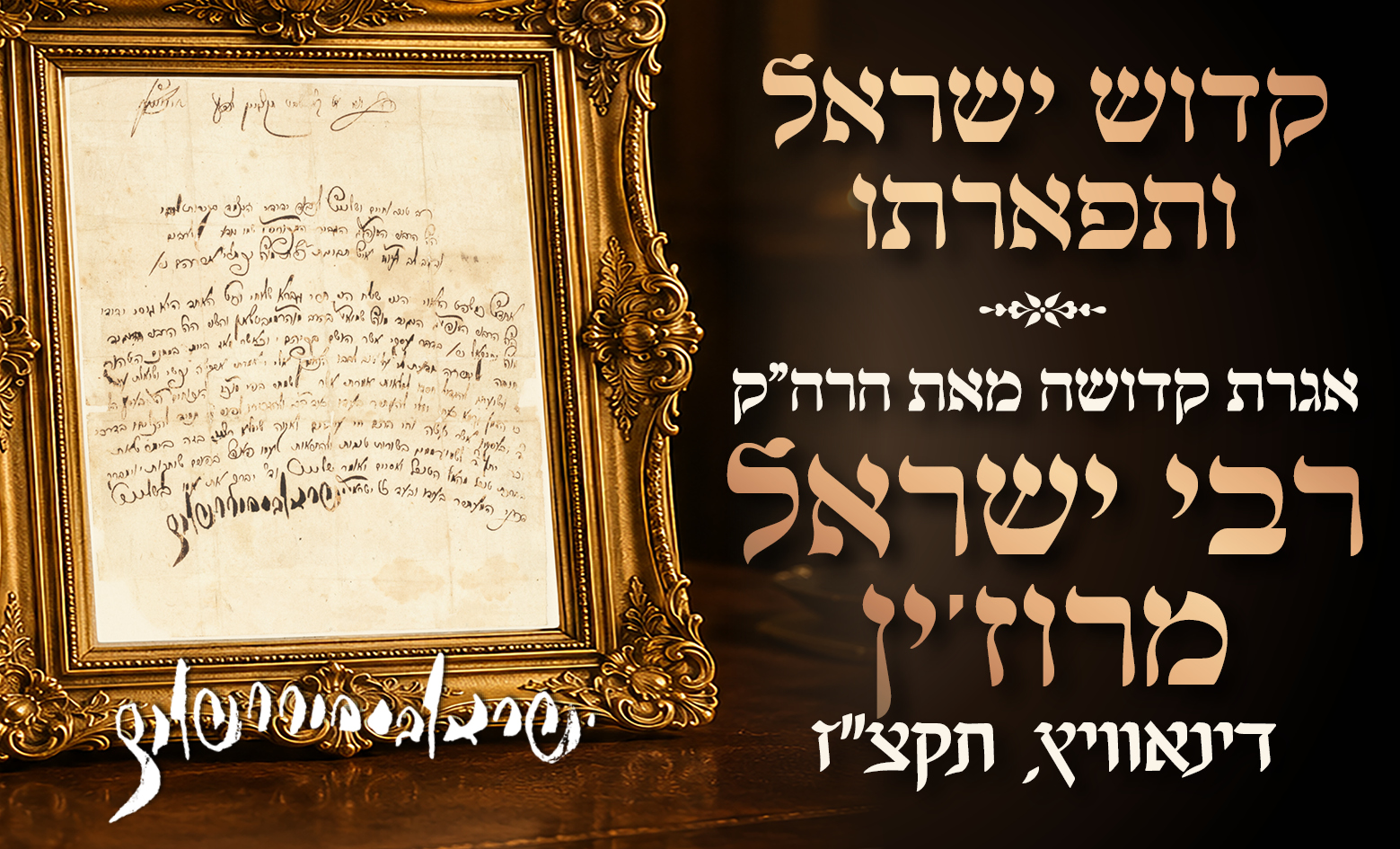
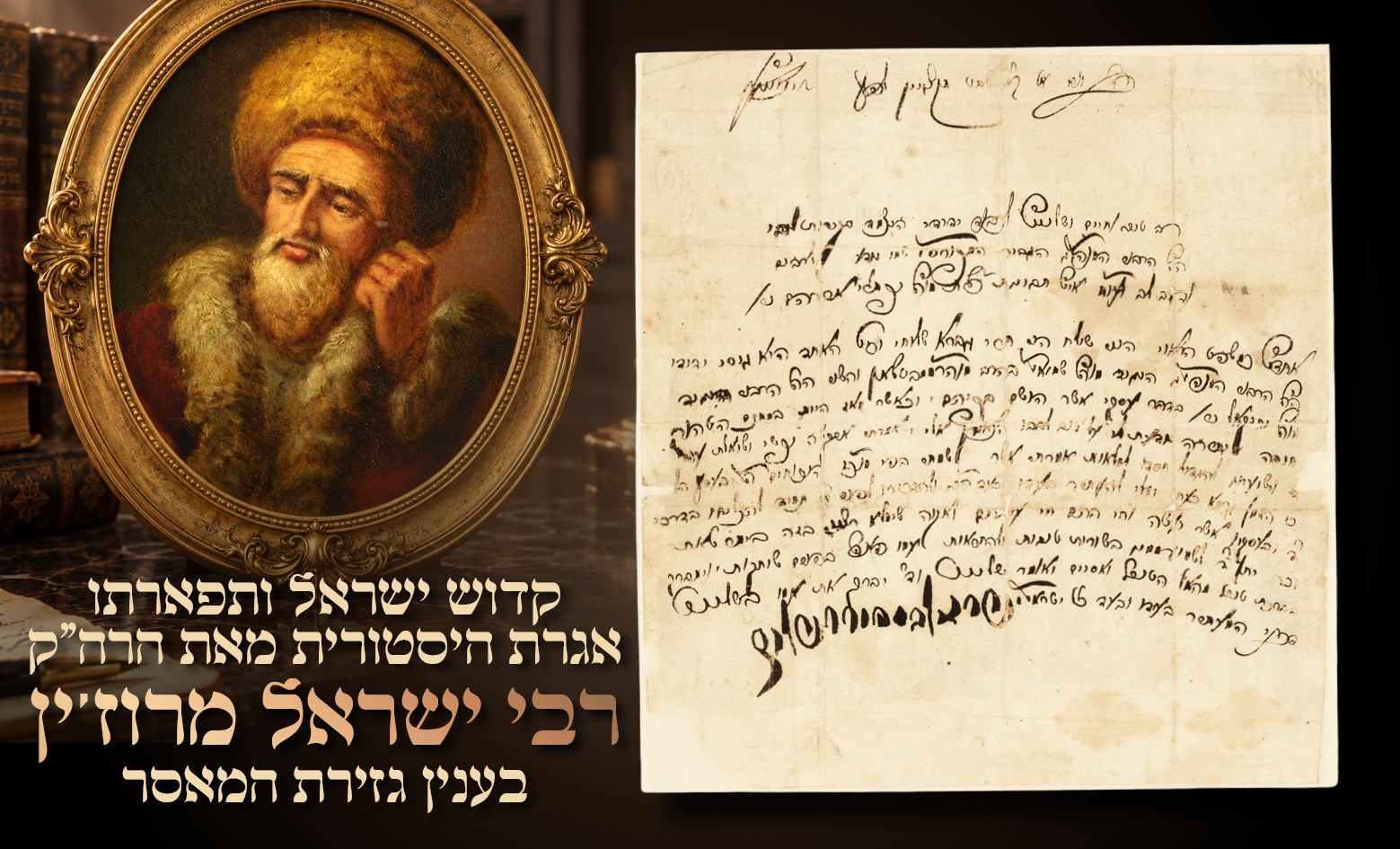
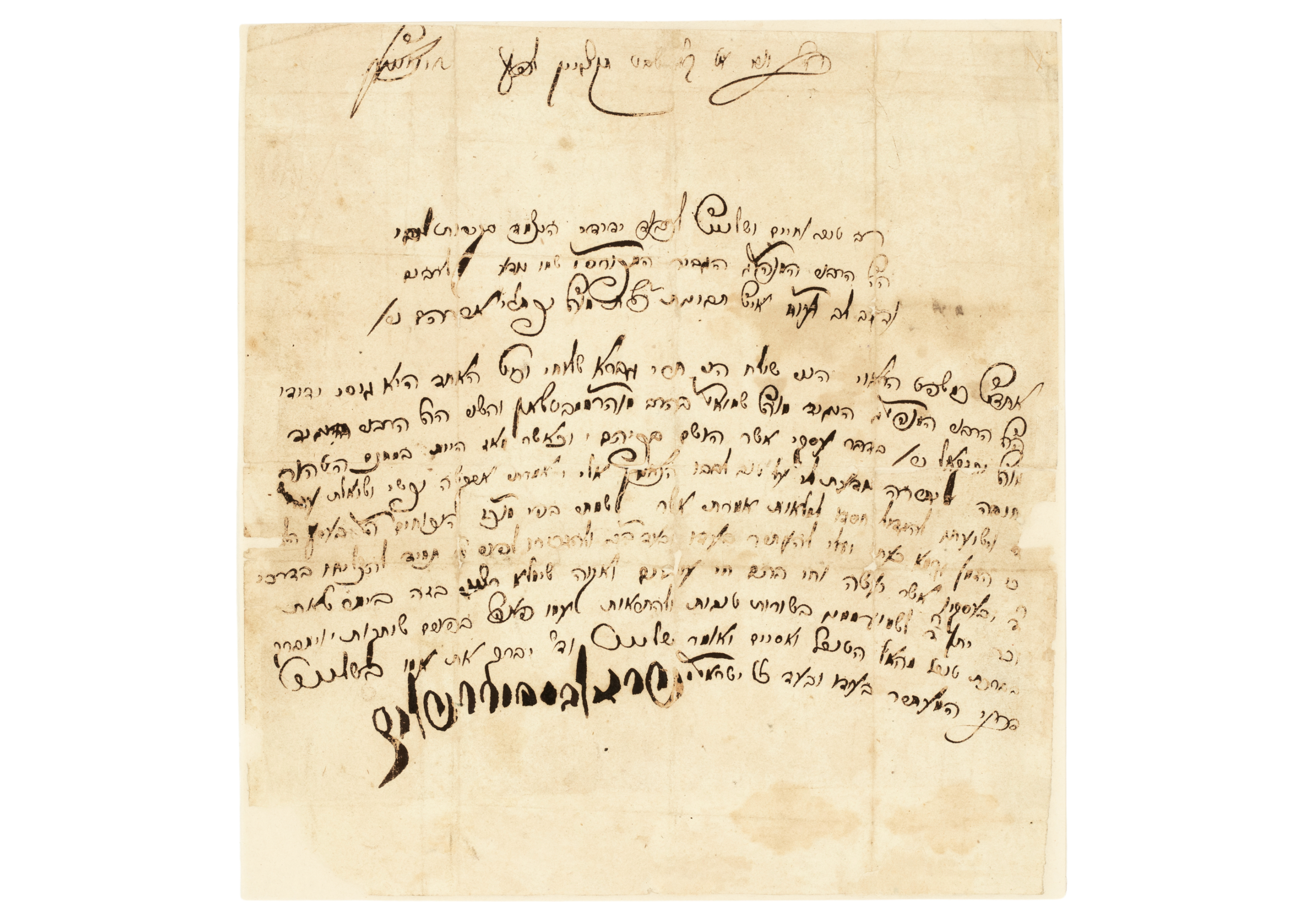
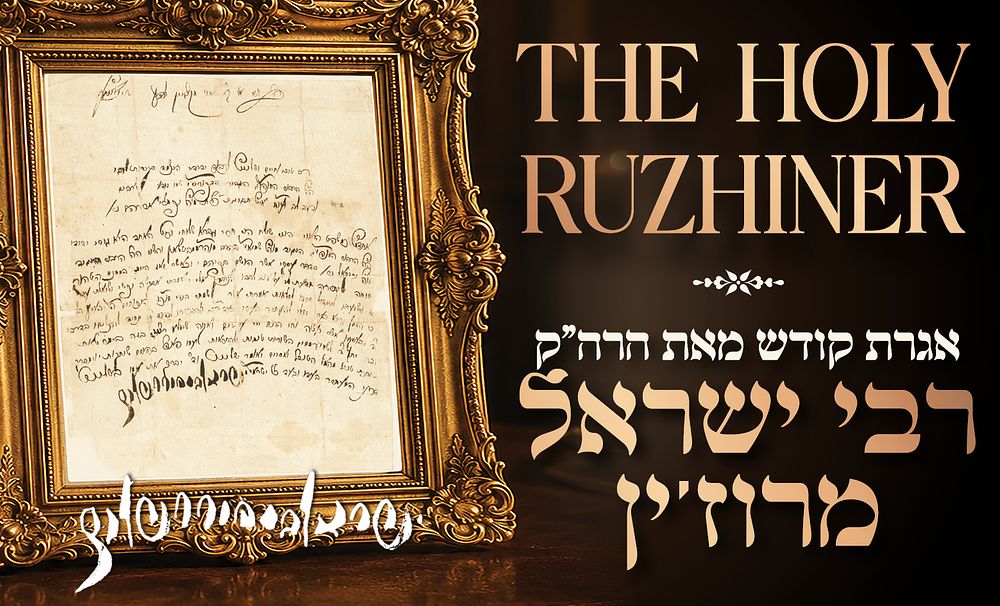
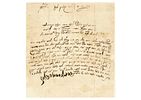
Historic Letter from Rabbi Yisrael of Ruzhin Concerning His ImprisonmentDinovitz, 1837
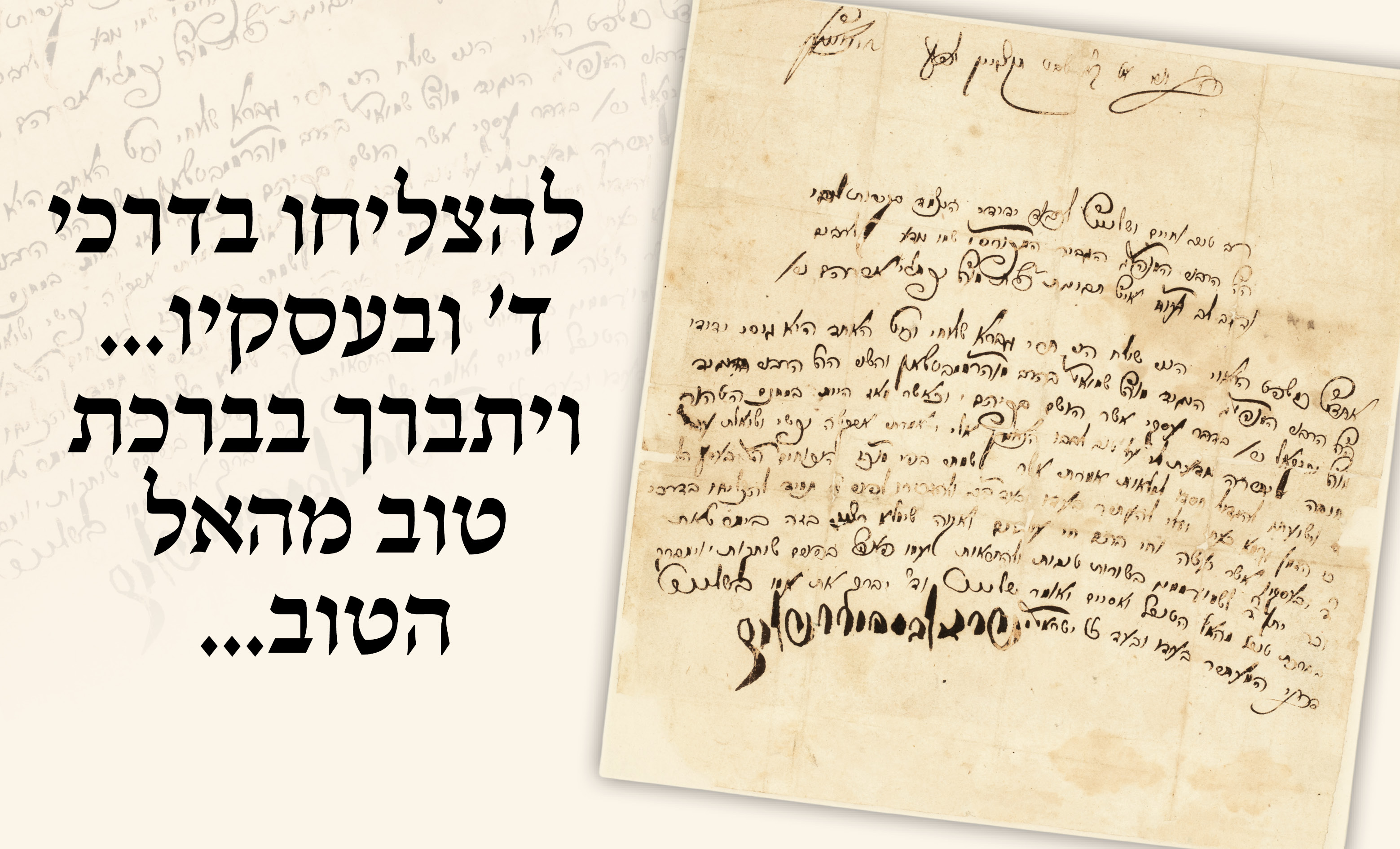
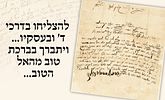
“I shall pray for you and your family and always remember you before Hashem, that He grant you success… in all your endeavors… May you be blessed with abundant goodness from Hashem… From one who prays for you and for all of Klal Yisrael.”
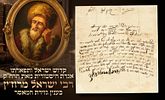
Historic Letter from Rabbi Yisrael of Ruzhin Concerning His Imprisonment
Dinovitz, 1837
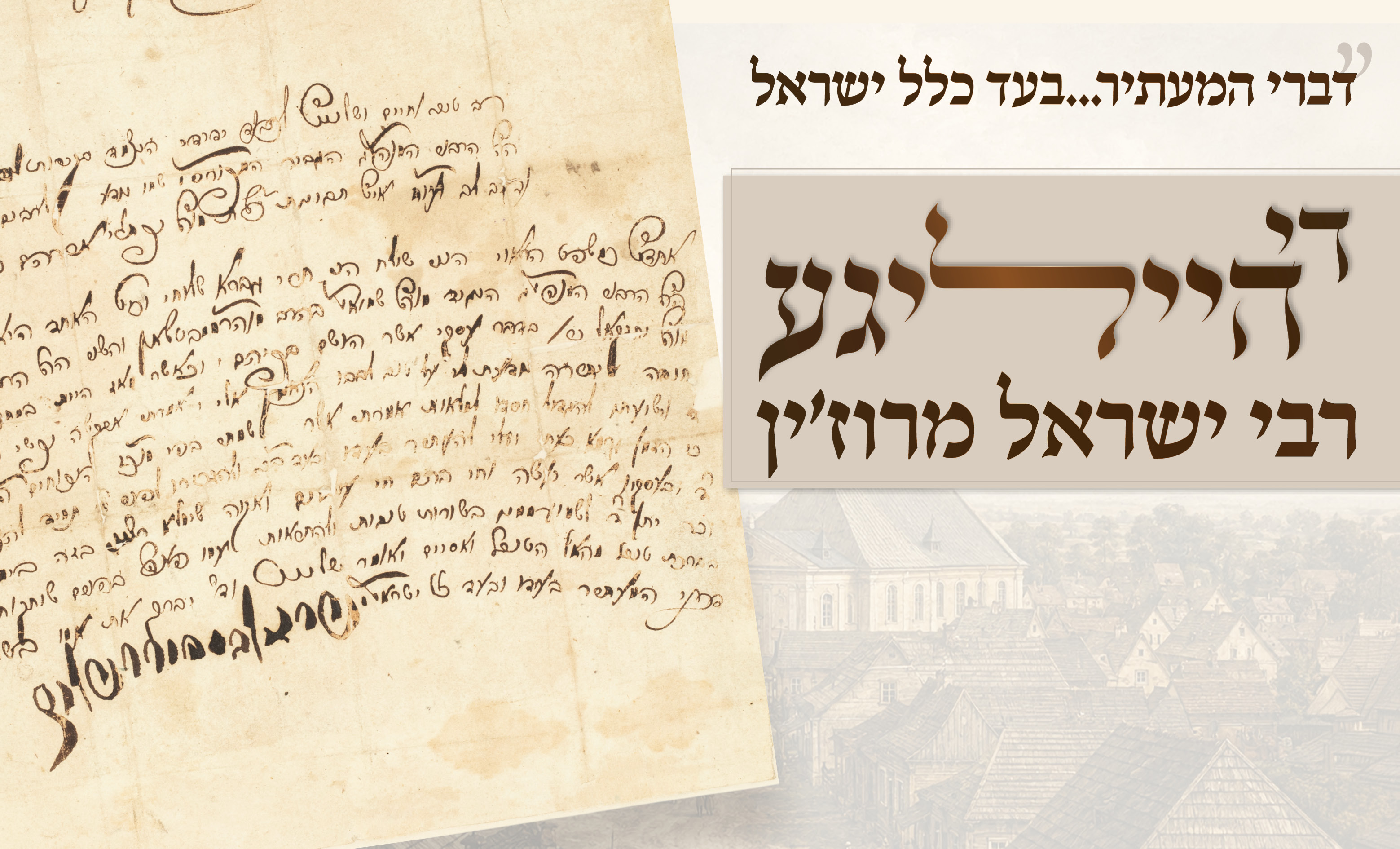
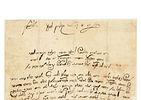
A letter bearing the handwritten signature of Rabbi Yisrael of Ruzhin, concerning his persecution and imprisonment by Tsar Nicholas I.
During this period, in 1837, the Ruzhiner Rebbe was staying in Dinovitz, Podolia, under constant surveillance and interrogation by the Tsarist authorities. For part of this time, he was also held under house arrest. This letter was written during this turbulent period and relates to efforts being made to extricate him from his predicament.
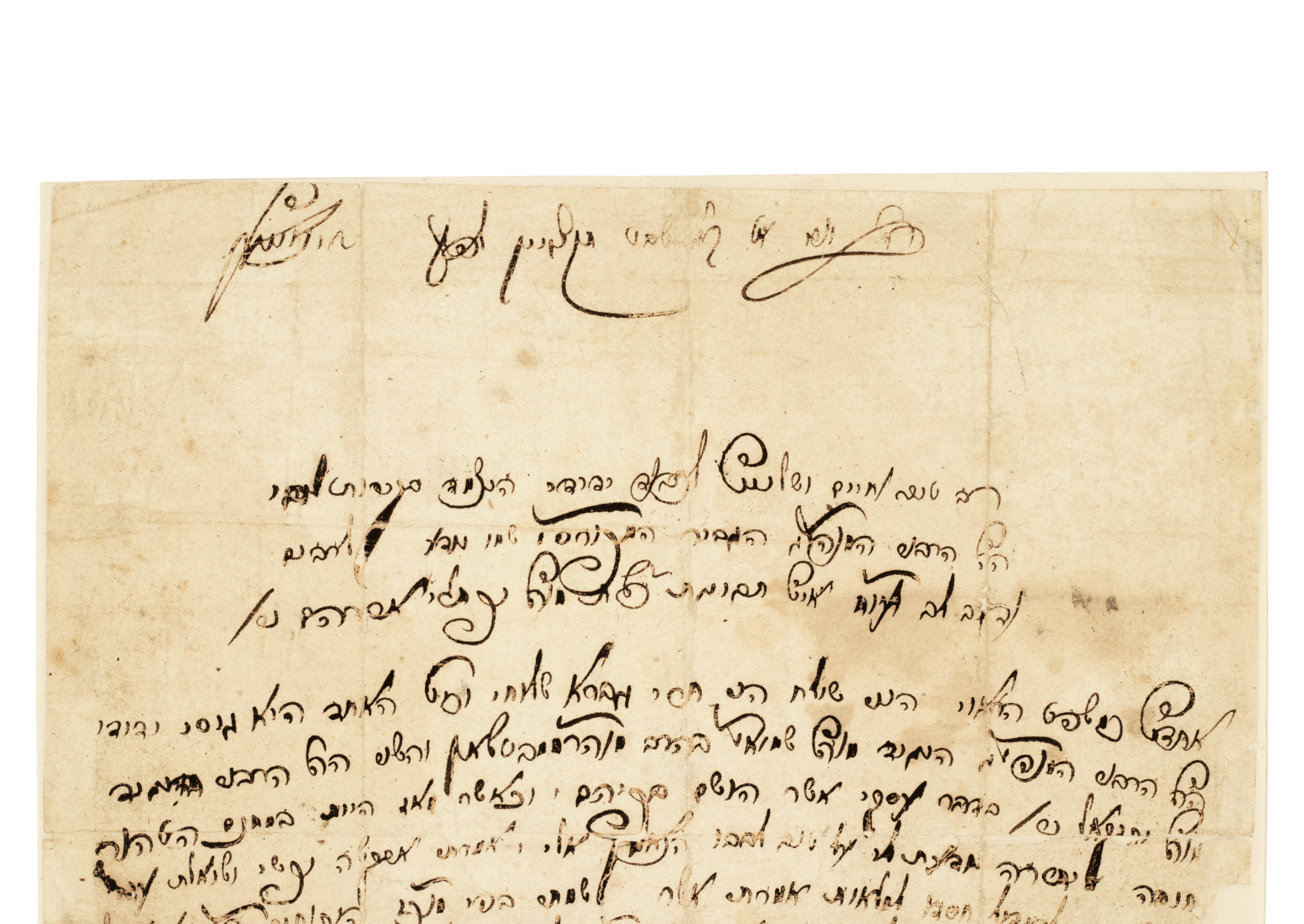
Because of the sensitivity of the matter, the Ruzhiner Rebbe naturally did not spell out its details in writing. Instead, he indicates that the bearer of the letter would discuss the matter personally, face to face, concerning “the affairs that have been entrusted to them to convey.”
The Ruzhiner Rebbe entrusted the letter to his brother-in-law, Rabbi Shmuel of Botoshan (son of his father-in-law, Rabbi Moshe of Berditchev), who worked tirelessly on his behalf during his imprisonment. He was to deliver it to Rabbi Naftali Avraham Kaufman, one of the prominent community leaders and wealthy dignitaries of Iași, and a son-in-law of Rabbi Yosef of Volochysk, Av Beis Din of Iași.
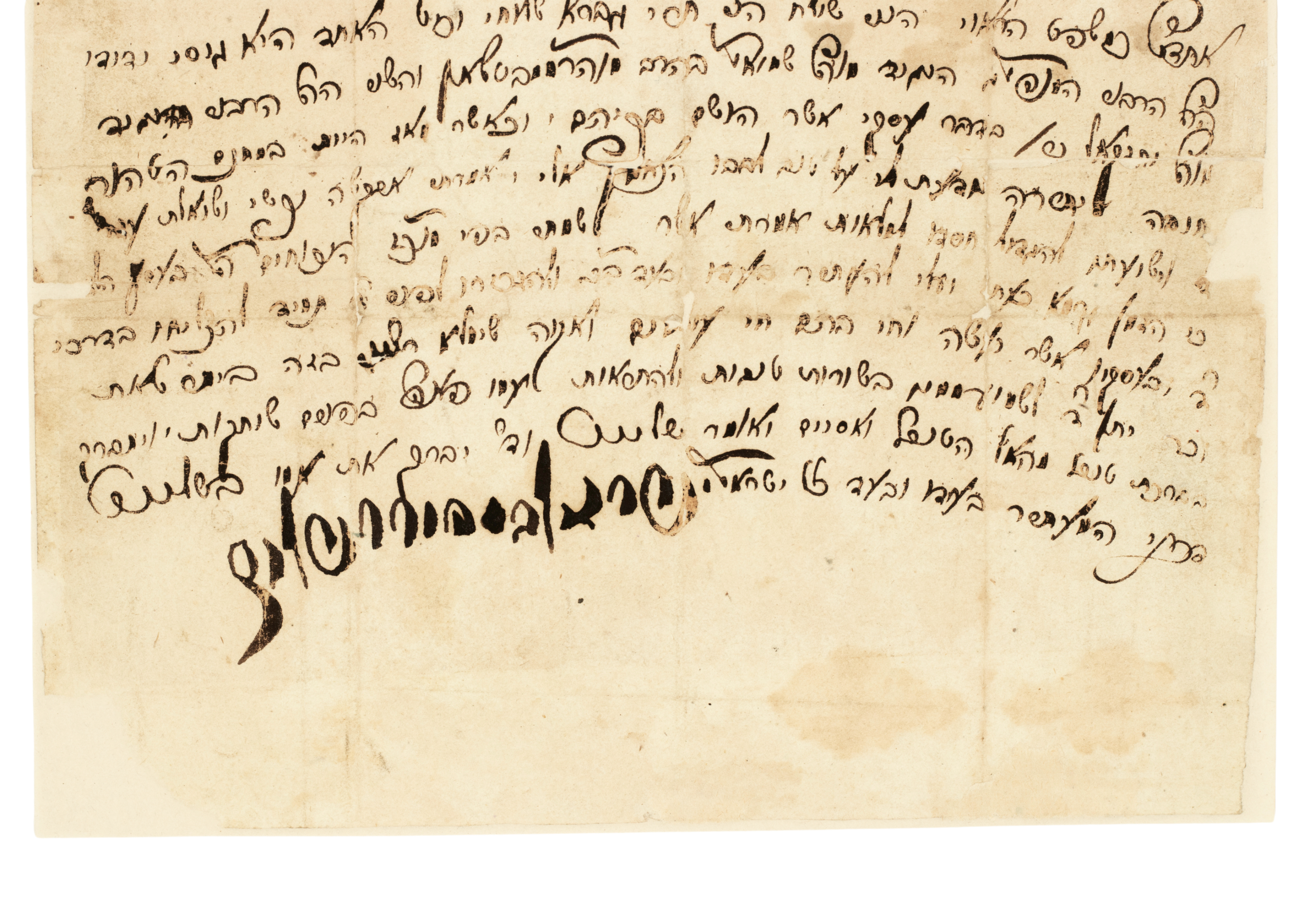
At the conclusion of the letter, the Rebbe adds his warm blessings:
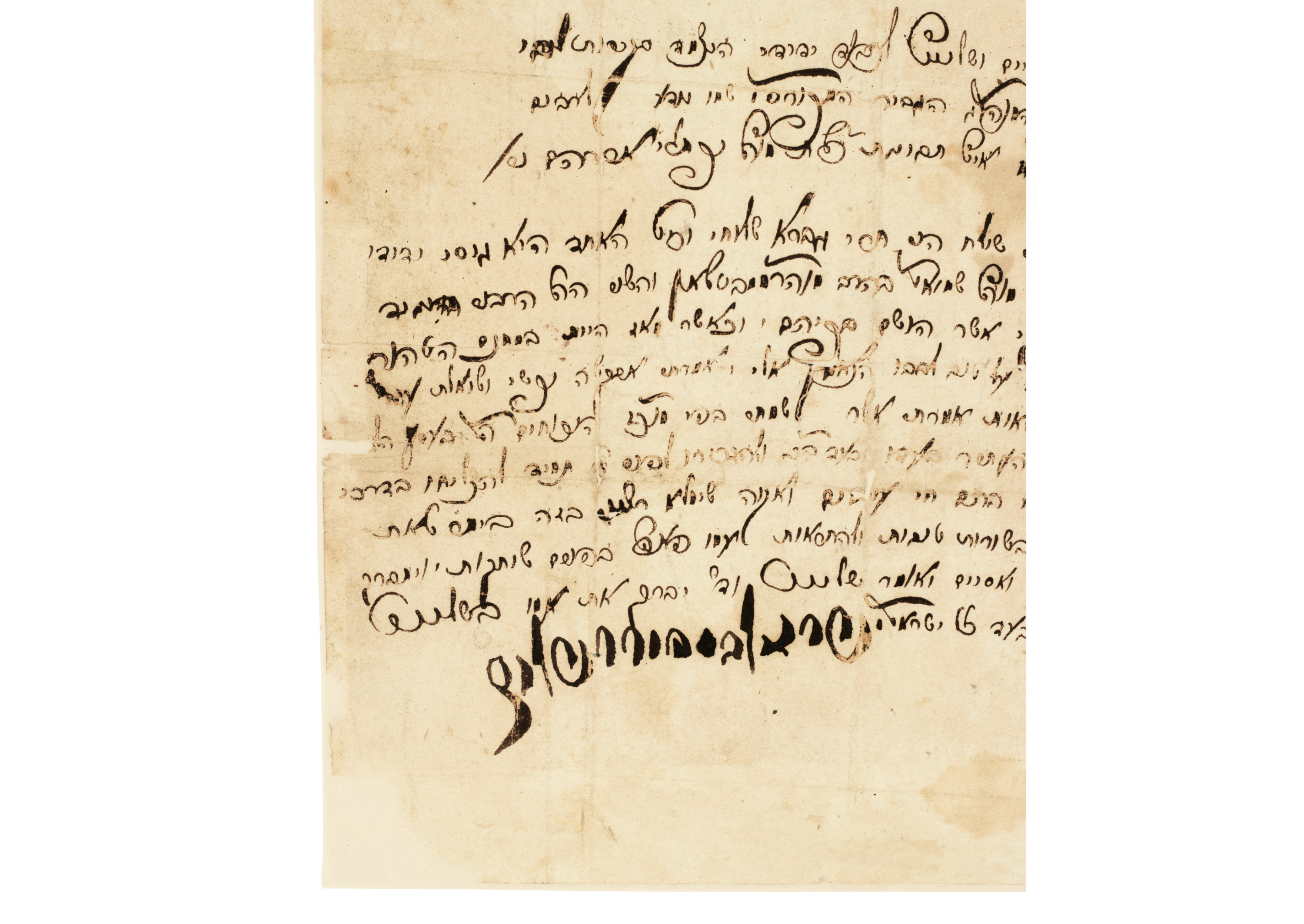
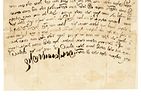
“I shall pray for you and your family and always remember you before Hashem, that He grant you success in His ways and in all your endeavors… May you be blessed with abundant goodness from Hashem… From one who prays for you and for all of Klal Yisrael.”
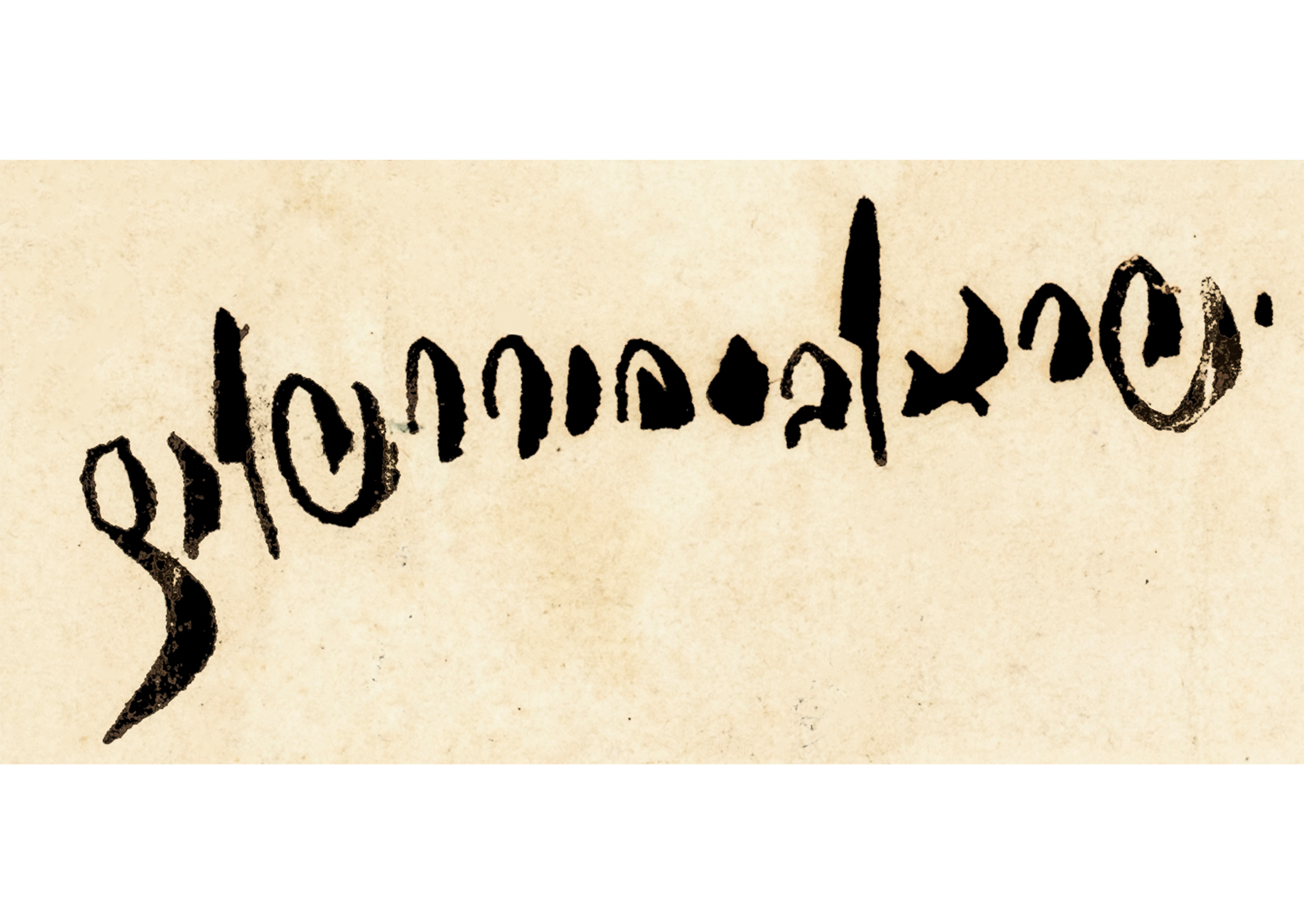
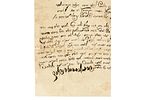
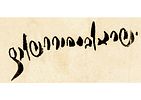
Dinovitz, 23 Shevat 1837. Written by a scribe and signed in the Rebbe’s own hand: “Yisrael, son of our teacher Rabbi Shalom.”
Size: 18 × 19.5 cm.
Condition: Damage to isolated letters along the folds and to margins, restored through professional conservation
Published in Iggros HaRav HaKadosh MiRuzhin U’Banav, edited by Rabbi Dov Ber Rabinowitz, gabbai of the Boyaner Rebbe (Jerusalem, 2003), Vol. 2, Letter 16, including a photograph of the letter (p. 60).
***
The Accusation and Imprisonment of Rabbi Yisrael of Ruzhin by Tsar Nicholas
One of the most fascinating and mysterious chapters in the life of the holy Rabbi Yisrael of Ruzhin was the story of his imprisonment and his struggle against Tsar Nicholas I, the ruthless ruler of Russia. Reliable Chassidic sources attribute to the Ruzhiner Rebbe statements portraying his struggle against Tsar Nicholas as a spiritual battle between the forces of holiness and those of impurity and the Sitra Achra.
The two were born on the same day, although the Tsar was born several hours earlier. The Ruzhiner Rebbe is said to have remarked that had he been born first, he would have vanquished him forever, “but even so, he will not prevail over me.”
The Shem MiShmuel records an explicit tradition concerning Rabbi Yisrael of Ruzhin’s struggle against Tsar Nicholas (Parshas Vayigash, 1918, p. 302):
“I heard from my revered father, the Avnei Nezer, who related in the name of my revered grandfather, the great Admor Rabbi Menachem Mendel of Kotzk, that he said regarding the holy Ruzhiner Rebbe zt”l, who openly confronted the power of the wicked king of his time in order to subdue it and these are his words: ‘How could one confront such a mighty king so openly? When one wishes to accomplish such a thing, it must be done in a manner that even an angel cannot perceive…’”
The Tsar continually sought grounds on which to imprison Rabbi Yisrael. Those who opposed the Rebbe’s regal manner of conduct informed the authorities that he was presenting himself as a king over the Jewish people, and that the funds he received were effectively taxes paid to him by his “subjects, ” thereby undermining their loyalty to the Russian crown.
After considerable effort and intrigue, the authorities finally found their opportunity. Two informers had been killed by unknown assailants, and malicious individuals testified before the authorities that they had been killed on the orders of the Ruzhiner Rebbe. He was arrested and subjected to harsh interrogation and torture, and was ultimately imprisoned for twenty-two months under severe conditions.
After countless attempts to secure his release and tremendous efforts in pidyon shevuyim, his chassidim finally succeeded in obtaining his freedom, and he returned to Ruzhin. He nevertheless remained under close police surveillance. When word reached him that the Tsar intended to exile him to Siberia, he fled, and through bribery and determined efforts, his followers succeeded in smuggling him across the border into Austria. The Tsar demanded his extradition, but the great Chassidic tzaddikim interceded on his behalf until he ultimately received permission to settle in Austria.
***
Rabbi Yisrael Friedman of Ruzhin (1796–1850) was one of the most revered and majestic figures of the great tzaddikim of Chassidus. He was the son of Rabbi Shalom Shachna of Prohobisht, son of Rabbi Avraham HaMalach, son of the Maggid of Mezritch, disciple and successor to the legacy of the Baal Shem Tov.
Already in his youth, he was renowned as a “wonder.” The older tzaddikim who had still gathered around the Maggid of Mezritch, some fifty years his senior, spoke of him in extraordinary terms and regarded him as an exceptional phenomenon. Even before his marriage, Rabbi Levi Yitzchak of Berditchev said of him, “Ribbono Shel Olam, You do not have many chassanim like this one.” Rabbi Mordechai of Chernobyl testified that the soul of the Baal Shem Tov rested within him; the Chozeh of Lublin said that he possessed the soul of Shlomo HaMelech; and the Apta Rav described him as “a Sefer Torah” and “a king of Yisrael.”
Orphaned as a child, he was raised under the guidance of his brother Rabbi Avraham of Prohobisht, who was known as “Der Kleiner Malach” — “the Little Angel.” Following his brother’s passing in 1813, Rabbi Yisrael began leading his community at only seventeen years of age.
His holiness and spiritual attainments reached extraordinary heights, and his manner of conduct was beyond ordinary understanding.
As a descendant of the Davidic dynasty, he led his court in a manner that was then unfamiliar to many: with the outward trappings of royalty. His chassidim acquired a magnificent palace for him, furnished and adorned with gold and silver, while his splendid carriage was drawn by four powerful horses.
Yet the Rebbe himself testified that he derived not even the slightest personal pleasure from his wealth. Outwardly there was royalty; inwardly, there was a broken heart and a body disciplined by self-denial.
Following the imprisonment described above, he established his residence in Sadigura, where he founded his renowned Chassidic court. Thousands flocked to him, among them many of the greatest rabbanim and tzaddikim of Russia, Poland, and Galicia.
The dynasty he established became one of the most distinguished in the Chassidic world, giving rise to the courts of Sadigura-Boyan, Chortkov, Stefanesht, Husiatyn, Bohush, Vasloi, Kapishnitz, and others. Among his sons-in-law were Rabbi Menachem Mendel of Vizhnitz and Rabbi Yitzchak of Skver.
“To mention his name is Torah; to remember his name is teshuva; to remember his name is love of Hashem and love of Yisrael. Thousands upon thousands were stirred to thoughts of teshuva merely by hearing the name Ruzhin.”
“To mention his name is Torah; to remember his name is teshuva; to remember his name is love of Hashem and love of Yisrael. Thousands upon thousands were stirred to thoughts of teshuva merely by hearing the name Ruzhin.”
(Abir Yaakov, by his great-grandson, Rabbi Avraham Yaakov of Sadigura, 3 Cheshvan, p. 10)
