




To attend this auction live or leave absentee bids
Lot : 55
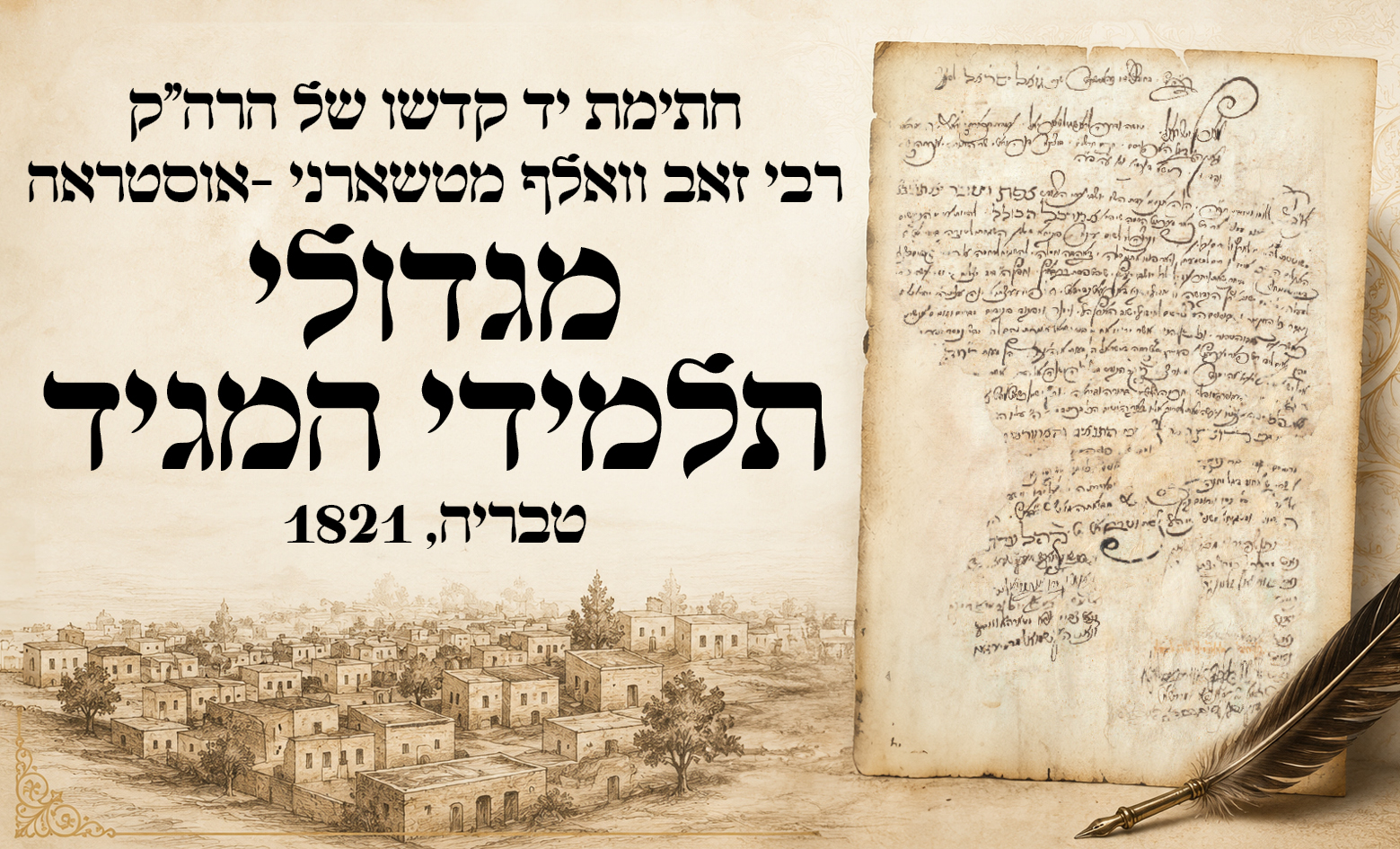
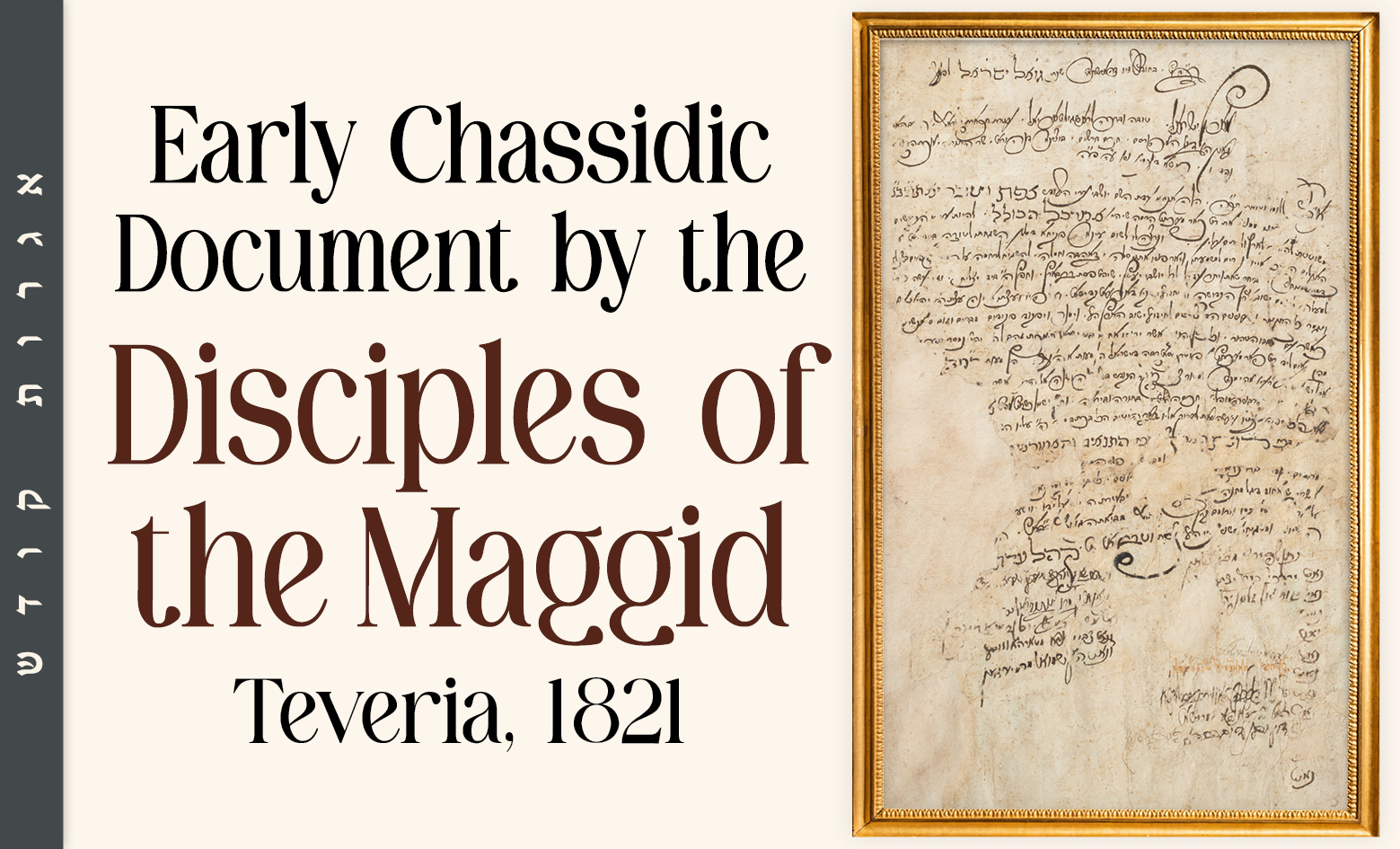
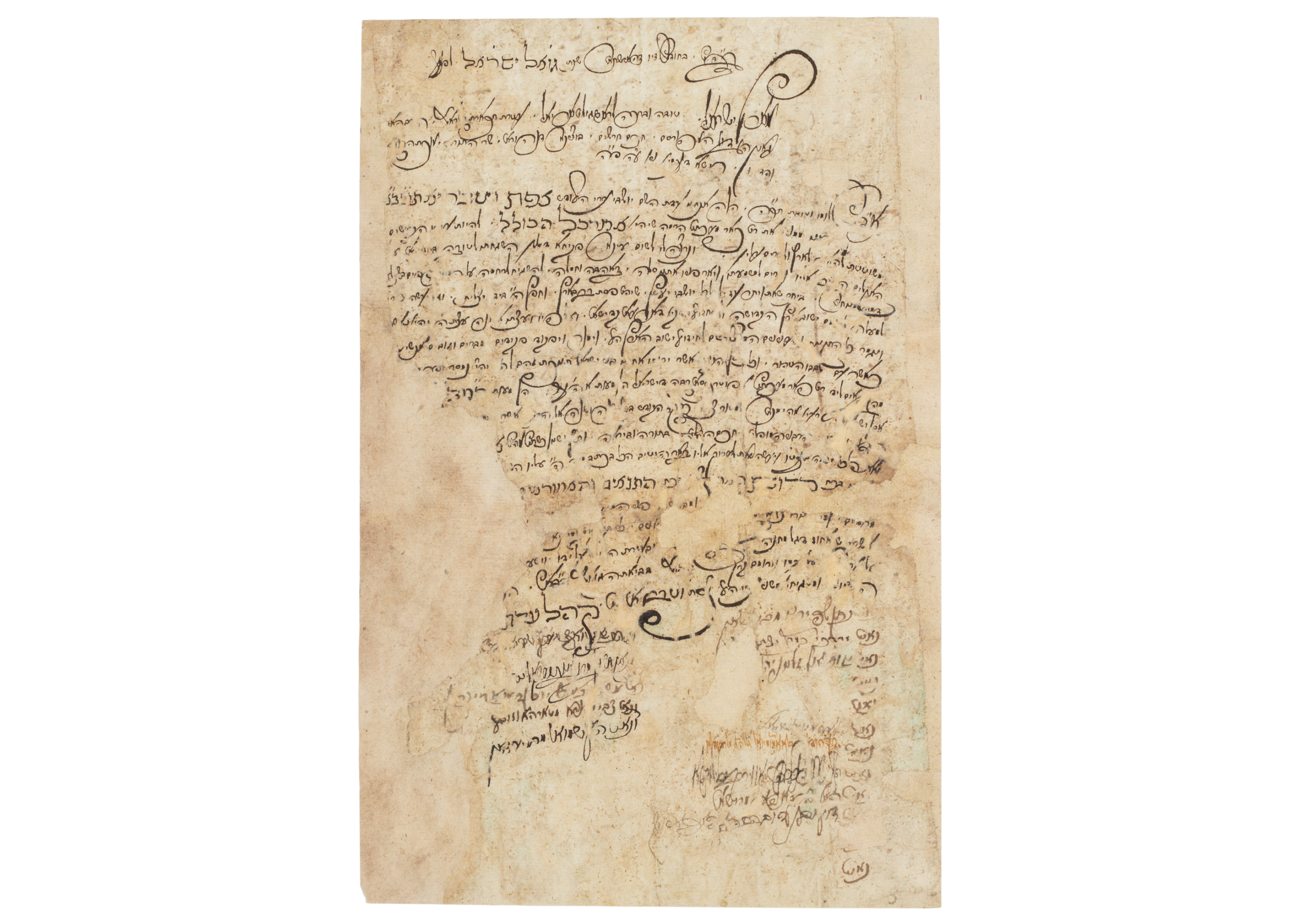
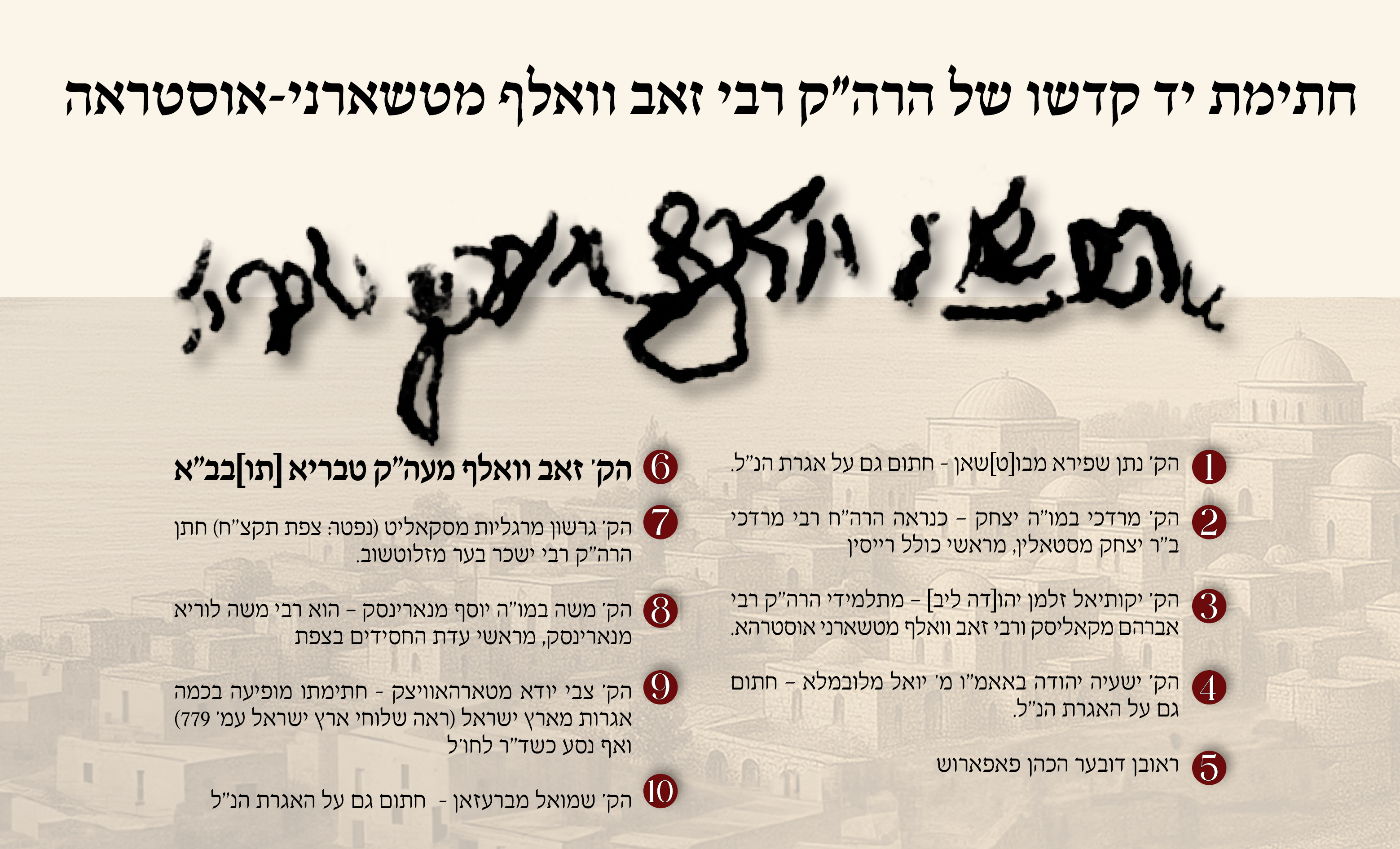
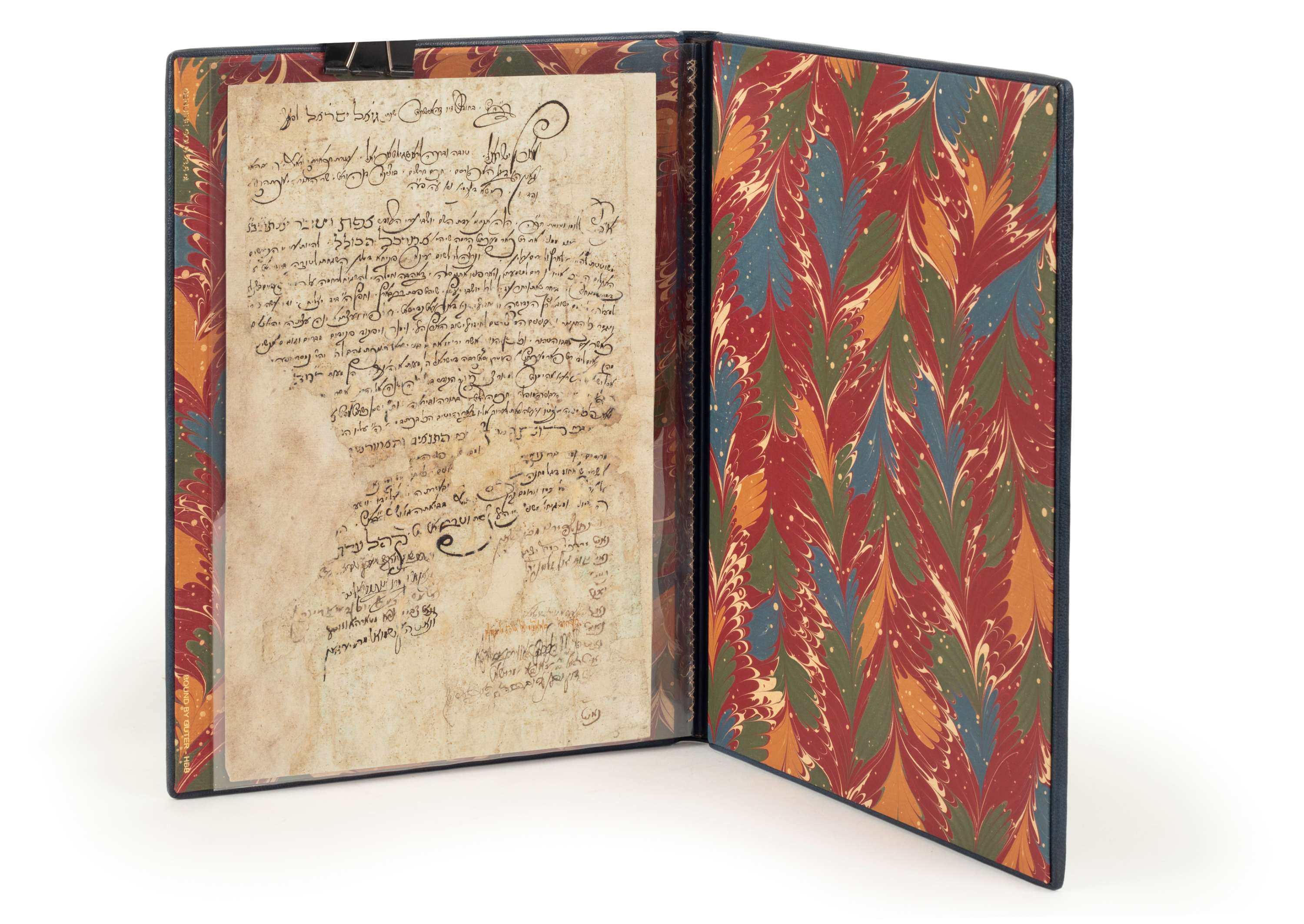
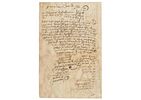
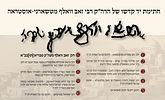
Signature of Rabbi Zev Wolf of Tcharni-Ostroh, Disciple of the Maggid of Mezritch, on Document of the Chassidic Kollel of Tzfat and Teveria – 1821
Signature of Rabbi Zev Wolf of Tcharni-Ostroh, Disciple of the Maggid of Mezritch, on Document of the Chassidic Kollel of Tzfat and Teveria – 1821
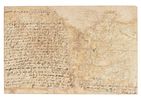
A document issuing the appointment of an ‘amarkal’ (administrator) of the Kollel Eretz HaKodesh, issued by the leaders of the Chassidic community in Tzfat and Teveria and bearing, at its head, the signature of Rabbi Zev Wolf of Tcharni-Ostroh. He was a leading member of the Maggid of Mezritch’s inner circle and leader of the Chassidic community in Teveria.
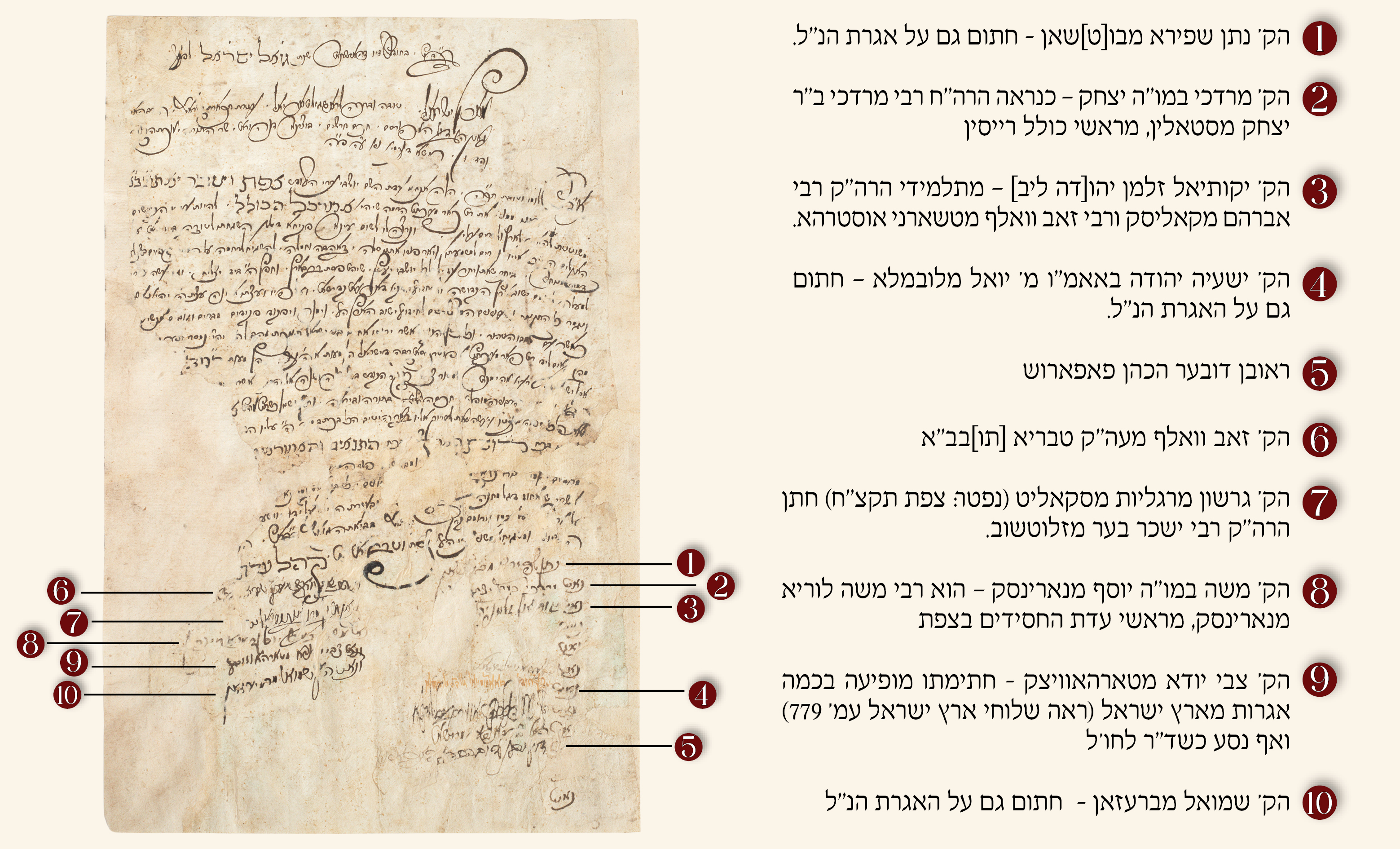
It is also signed by the administrators and leaders of the communities of Tzfat and Teveria, including Rabbi Gershon Margolios of Skalyt, a close disciple of Rabbi Levi Yitzchak of Berditchev, and Rabbi Zev Wolf’s disciple, the chassid Rabbi Yekusiel Zalman Leib, progenitor of the Barzel family (see below).
This document has never been printed and is not known from any other source.
The name of the recipient does not appear in the document. However, from the exceptionally exalted titles bestowed upon him — “Head of the Exile of Ariel, Crown and Glory of Israel, Radiant Luminary, Prince of Torah, Wonder of the Generation, Leader of the Nation and Illuminator of Israel” — it is evident that it was intended for one of the great sages or tzaddikim of the generation.
Rabbi Zev Wolf, Av Beis Din of Tcharni-Ostroh (circa 1755–1823), primary disciple of the Maggid of Mezritch, was one of the great Chassidic masters and was renowned as a miracle worker whose every word was fulfilled. His burning love of Eretz Yisrael led him to immigrate there in 1798 and he settled in Teveria. Prior to this, he spent a short period in Haifa, where he met Rabbi Nachman of Breslov. Following the passing of the Rav of Kalisk, Rabbi Zev Wolf stood at the head of the Chassidic community for thirteen years.
His son-in-law and successor as rav of Tcharni-Ostroh was Rabbi Yisrael Avraham, son of Rabbi Zusha of Anipoli. Rabbi Zev Wolf shared a deep and affectionate relationship with his mechutan, Rabbi Zusha. The son-in-law of Rabbi Yisrael Avraham was Rabbi Dovid of Tolna.
It is remarkable that despite being one of the main leaders of the community and working tirelessly on behalf of the Chassidic settlement — as Rabbi Nosson Neta HaKohen Dunner, Av Beis Din of Kalbiel, wrote: “He established the kollelim in the Holy Land, and organized the charitable contributions from abroad for Rabbi Meir Baal HaNes to strengthen the settlement of Eretz HaKodesh” (Menoras Zahav, leaf 4a) — his name appears only rarely in surviving documents and letters, and autograph signatures and letters from him are exceedingly scarce.
(This phenomenon has been noted by the historian of Chassidus, R’ Yitzchak Alfasi in HaChassidut VeEretz Yisrael, p. 433; Encyclopedia of Chassidus, vol. I, p. 514.)
His disciples include Rabbi Dovid Shlomo Eibeschitz, author of Levushei Serad and Arvei Nachal, and his primary disciple, Rabbi Menachem Mendel of Kosov, progenitor of the Vizhnitz dynasty. In a letter to him, Rabbi Zev Wolf promised that “your kingship will be renewed and will never depart from you, from your children, or from your descendants forever.”
His biography, miracle stories, and teachings were collected in the work Torat HaChassidim HaRishonim – Takifa D’Ara D’Yisrael (Bnei Brak, 1986).
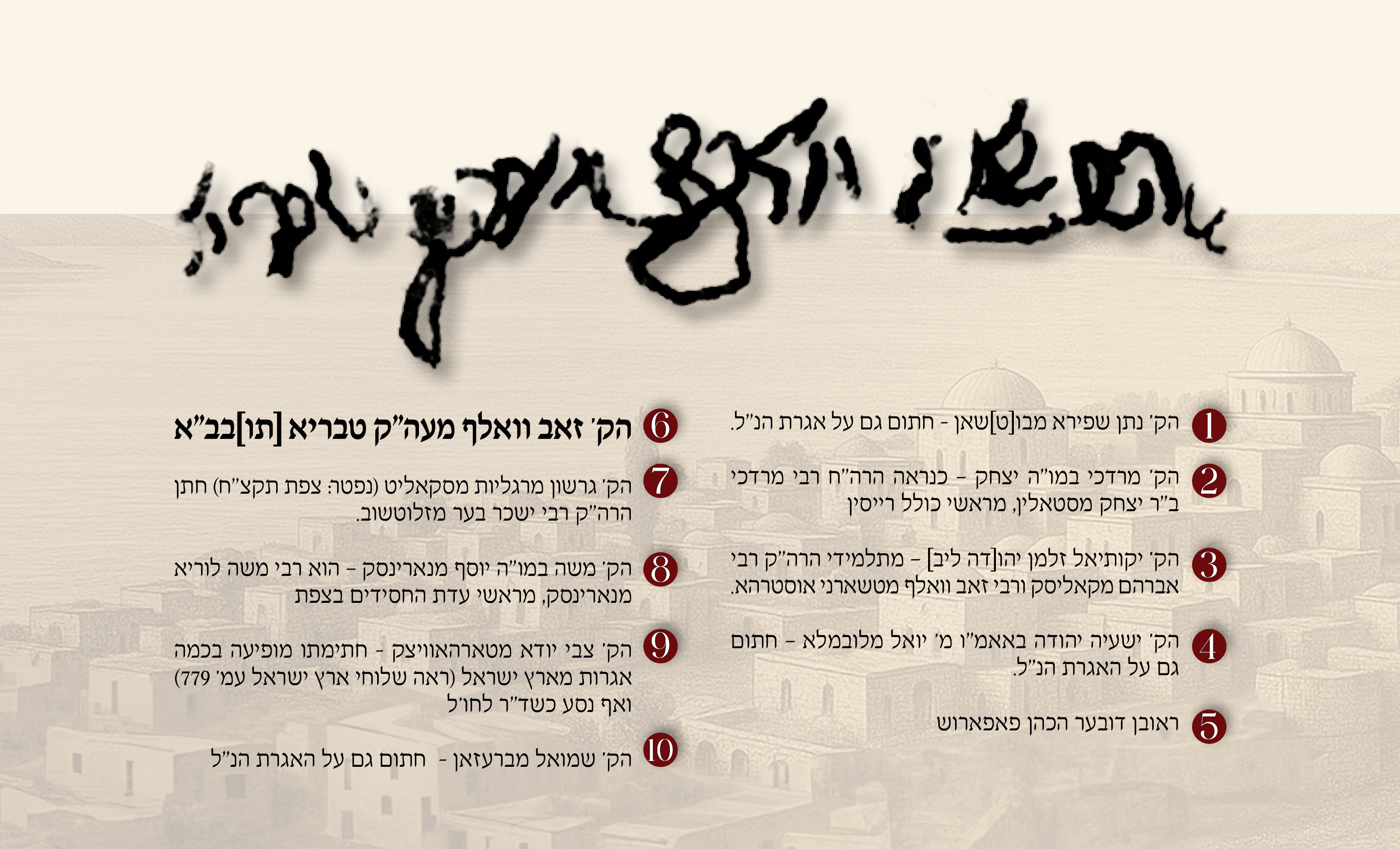
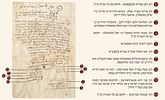
Signatories of the document:
Left Column
“HaKatan Zev Wolf of the Holy City of Teveria, may it be rebuilt and reestablished, Amen.”
“HaKatan Gershon Margolios of Skalyt” (d. Tzfat, 1838), son-in-law of Rabbi Yissachar Ber of Zlotchov, author of Mevaser Tzedek. Following his father-in-law, he immigrated to Eretz Yisrael and became one of the leaders of the Jewish community in Tzfat. He was a close associate of Rabbi Levi Yitzchak of Berditchev, who even stayed in Rabbi Gershon’s home, as recounted in his introduction to Tehillim with explanations from the Zohar (Tzfat, 1833).
Rabbi Moshe, son of Rabbi Yosef of Narinsk — identified as
Rabbi Moshe Luria of Narinsk, one of the leaders of the Chassidic community in Tzfas. He also signed a letter together with Rabbi Ze’ev Wolf in 1820 (Igros HaOhev Yisrael, Letter 34; Toras HaChassidim HaRishonim – Takifa d’Ar’a d’Yisrael, p. 117), as well as a communal letter issued by the heads of the Chassidic Kollel in 1828 (Sefer HaZikaron Aderes Eliyahu, p. 268).
“HaKatan Tzvi Yehudah of Tarahovitz” — his signature appears on several letters from Eretz Yisrael, and he also traveled abroad as an emissary.
“HaKatan Shmuel of Brezan” — also signed the aforementioned letter.
Right Column
“HaKatan Nosson Shapira of Butshan” — also signed the aforementioned letter.
“HaKatan Mordechai son of Rabbi Yitzchak” — likely the chassid Rabbi Mordechai son of Rabbi Yitzchak of Stolin, one of the leaders of Kollel Reisin.
“HaKatan Mordechai son of Rabbi Yitzchak” — likely the chassid Rabbi Mordechai son of Rabbi Yitzchak of Stolin, one of the leaders of Kollel Reisin.
“HaKatan Yekusiel Zalman Yehudah Leib” — progenitor of the Barzel family (Bnei Rabbi Zalman Leib), one of the leaders of the Chassidic community in Teveria and a disciple of Rabbi Avraham of Kalisk and Rabbi Zev Wolf of Tcharni-Ostroh.
“HaKatan Yeshayah Yehudah, son of our master Rabbi Yoel of Lubomla” — also signed the aforementioned letter.
Reuven Dov Ber HaKohen Paporush — a letter written by him from Teveria in 1822 was published in Maasef Tziyon, Year 3, Book 3 (Jerusalem, 1938), and later reprinted in Takifa D’Ara D’Yisrael, p. 92.
In addition, there are three other signatures.
Teveria, 1821. [1] leaf.
Size: 19 × 30 cm.
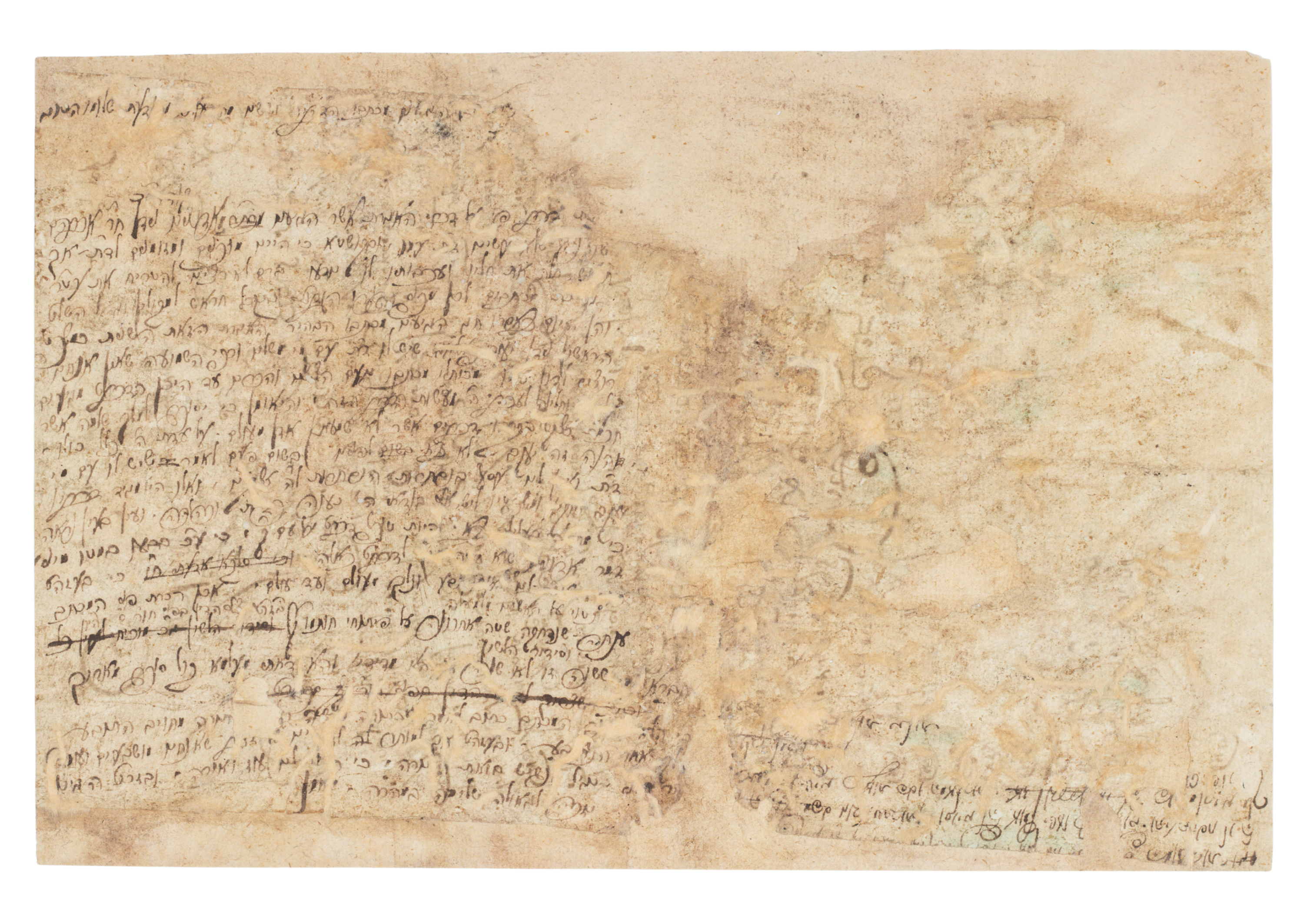
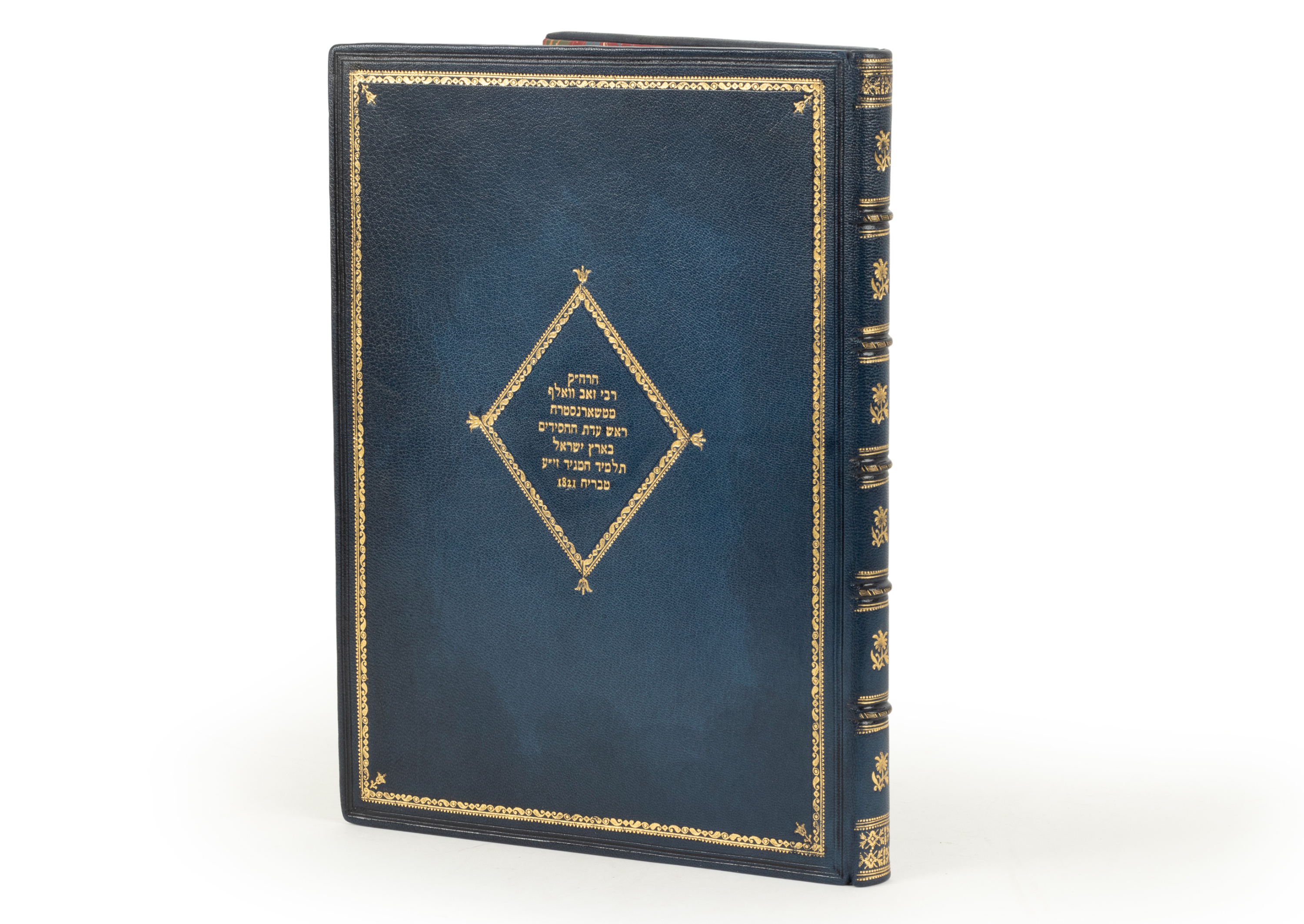
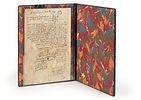
Condition: Over the years, the document sustained significant damage, though its historical importance and sanctity remain undiminished. Tears with losses (the vast majority of the text remains intact) and numerous holes, professionally restored. On the reverse is a draft letter concerning matters of the Kollel.
The Establishment of Kollelim in Eretz Yisrael
When Rabbi Menachem Mendel of Vitebsk led a group of chassidim who immigrated to Eretz Yisrael, he established a fund known as Kollel Reisin, which provided the financial foundation for supporting the chassidim living in Teveria and the Galilee. Subsequently, during the leadership of the Rebbe of Kalisk, the Kollel split, and with the approval of the Chassidic leaders, Kollel Volyn was established for immigrants from Poland, Galicia, Volyn, and Ukraine, while Kollel Reisin continued to support immigrants from White Russia and Lithuania. In later years, there was a reunification between the two kollelim, and the funds were collected for the entire community under the name Kollel Volyn.
At the head of these kollelim abroad stood a president and an “amarkal” – an administrator to whom all charitable contributions were sent and who bore responsibility for forwarding them to Eretz Yisrael.
Among the great Chassidic leaders who merited to serve as president of the Eretz HaKodesh fund were Rabbi Baruch of Mezhibuzh, Rabbi Mordechai of Neskhiz, the Apta Rebbe, the Ruzhiner Rebbe, and others.
