Lot : 40

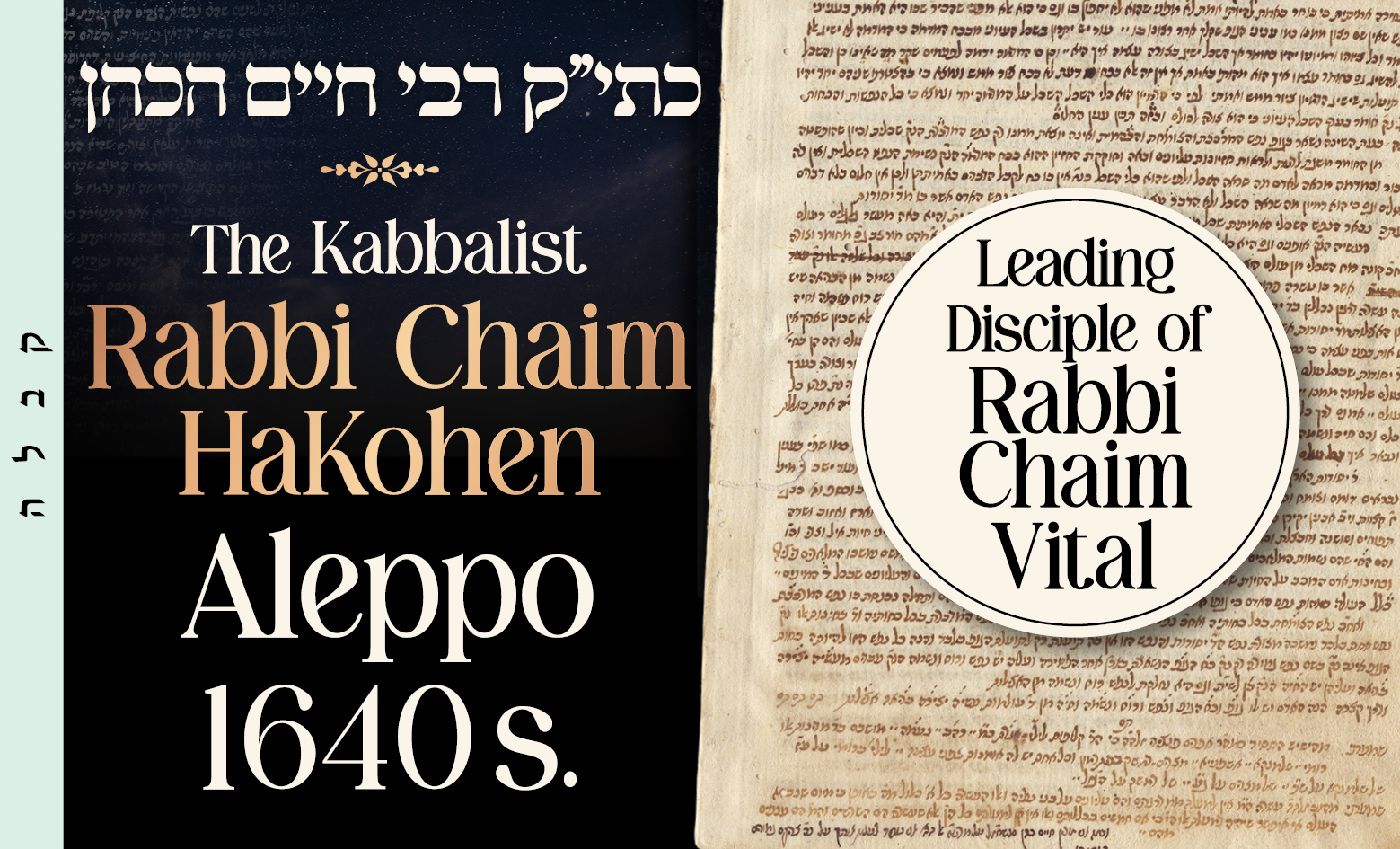
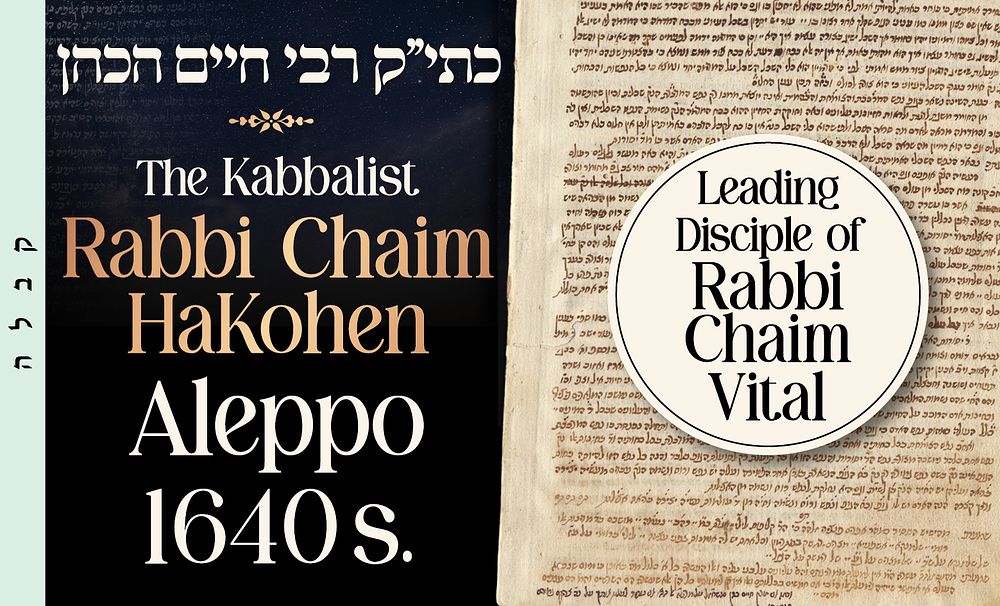
Manuscript of the Holy Kabbalist Rabbi Chaim HaKohen, Author of Mekor Chaim – Writing the Teachings of His Rebbi, Rabbi Chaim Vital

Images

Manuscript of the Holy Kabbalist Rabbi Chaim HaKohen, Author of Mekor Chaim – Writing the Teachings of His Rebbi, Rabbi Chaim Vital


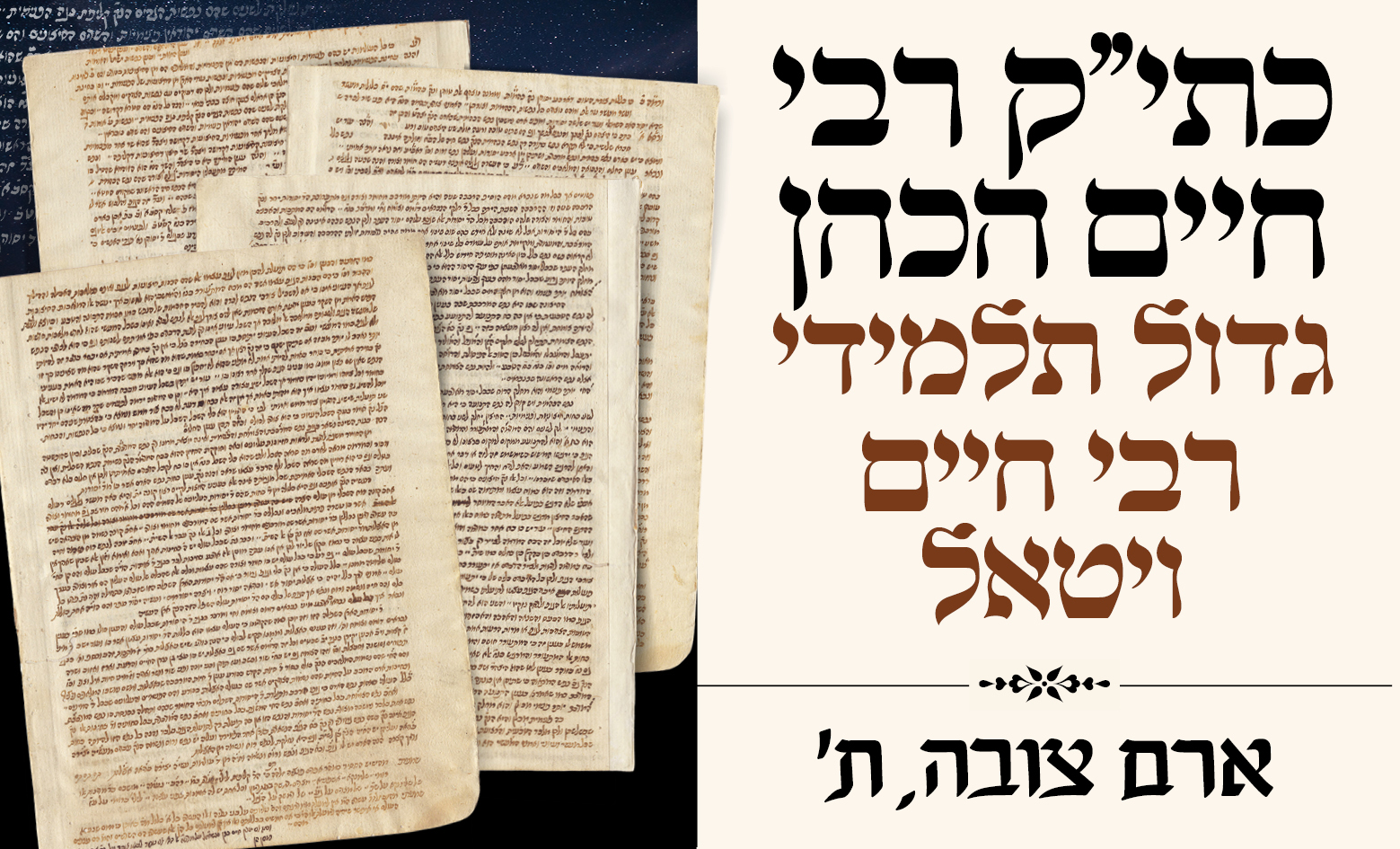
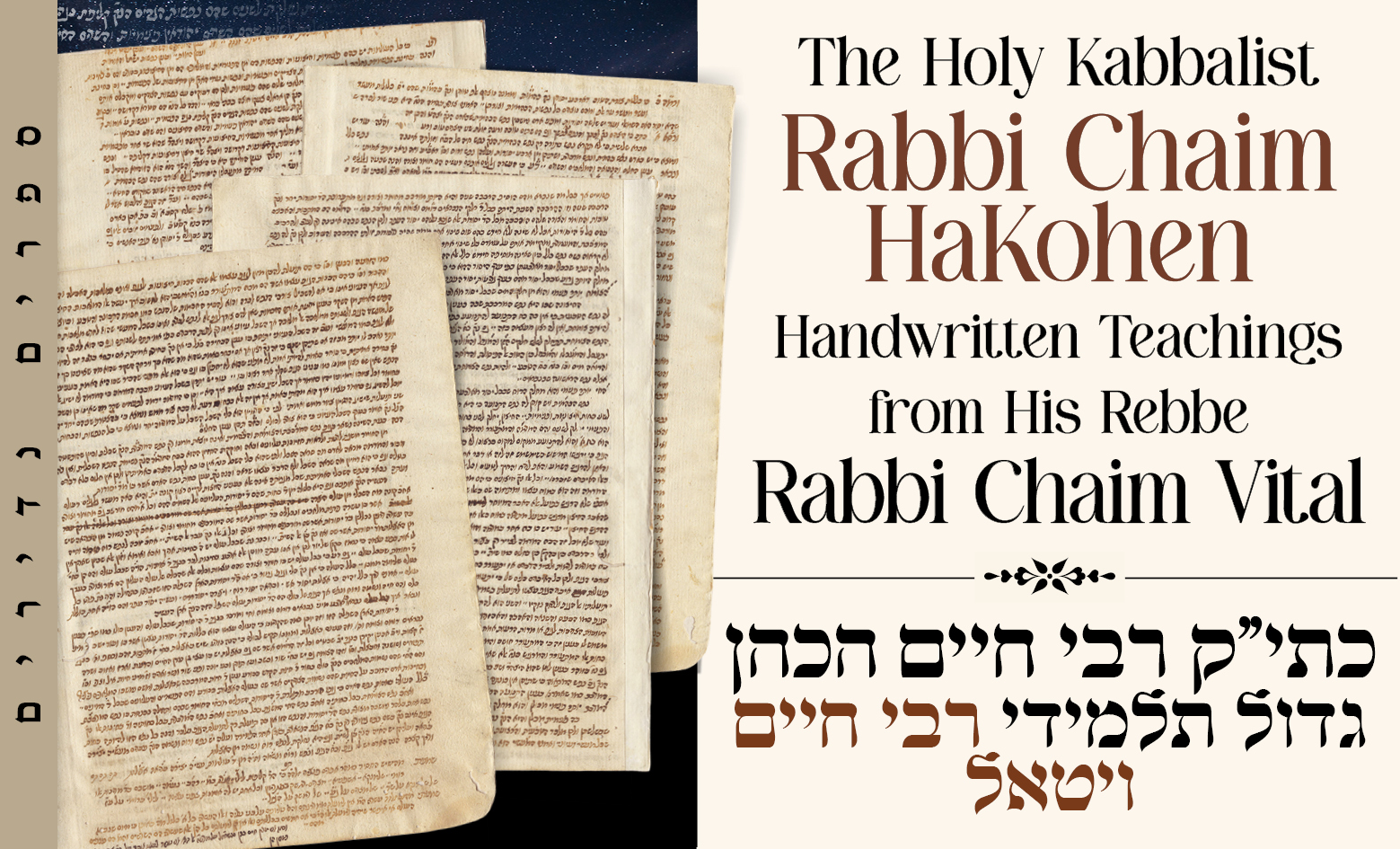
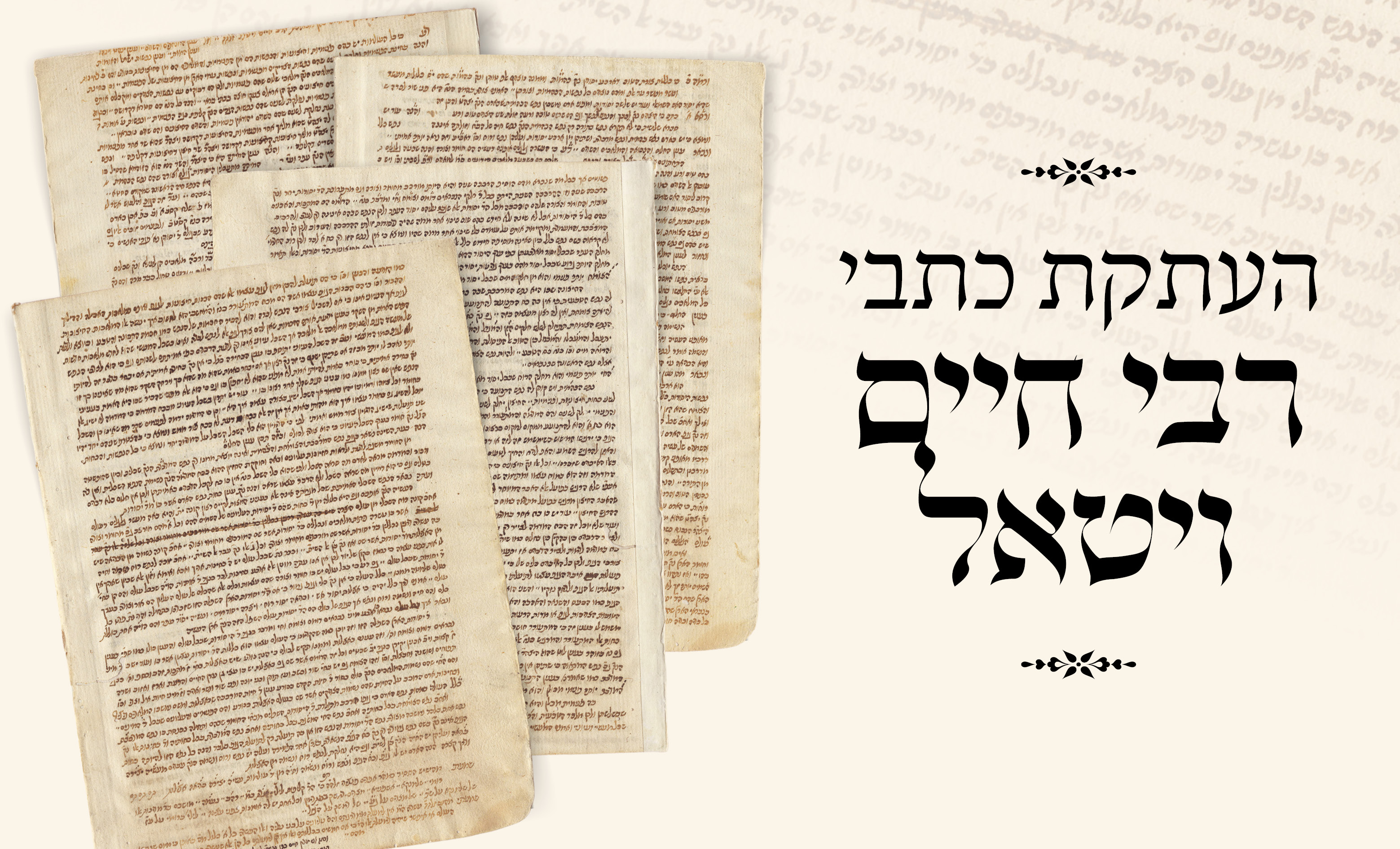
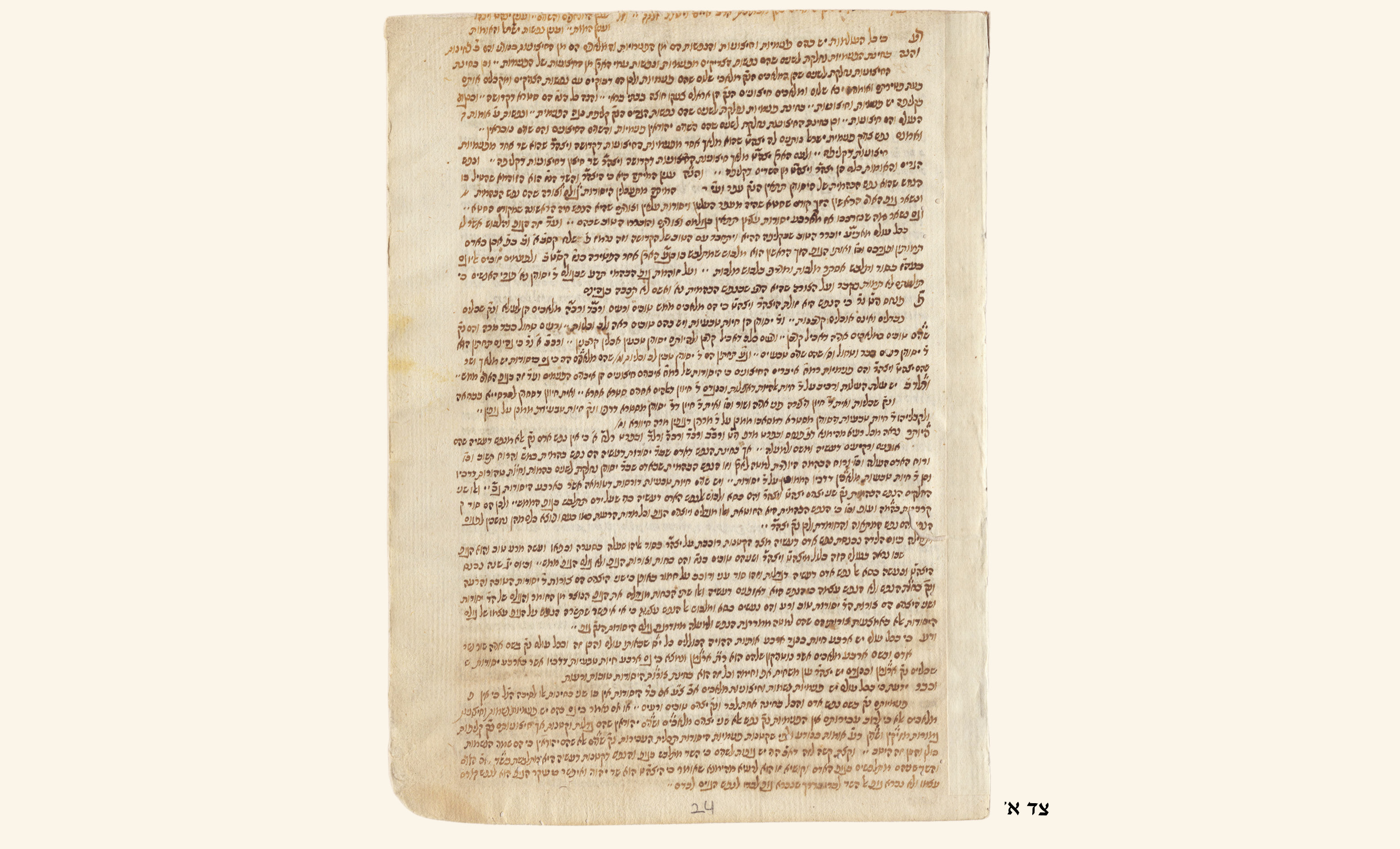
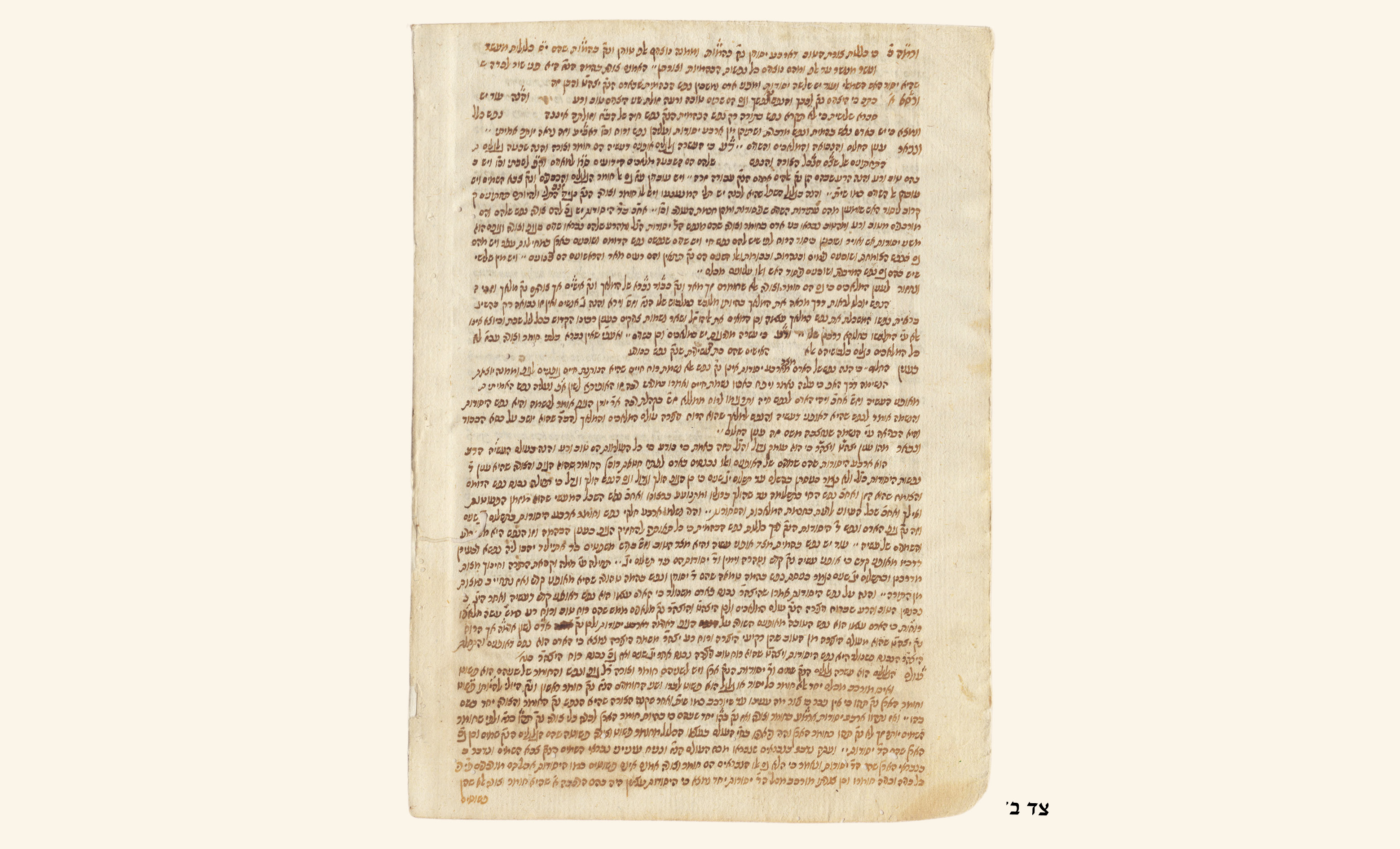
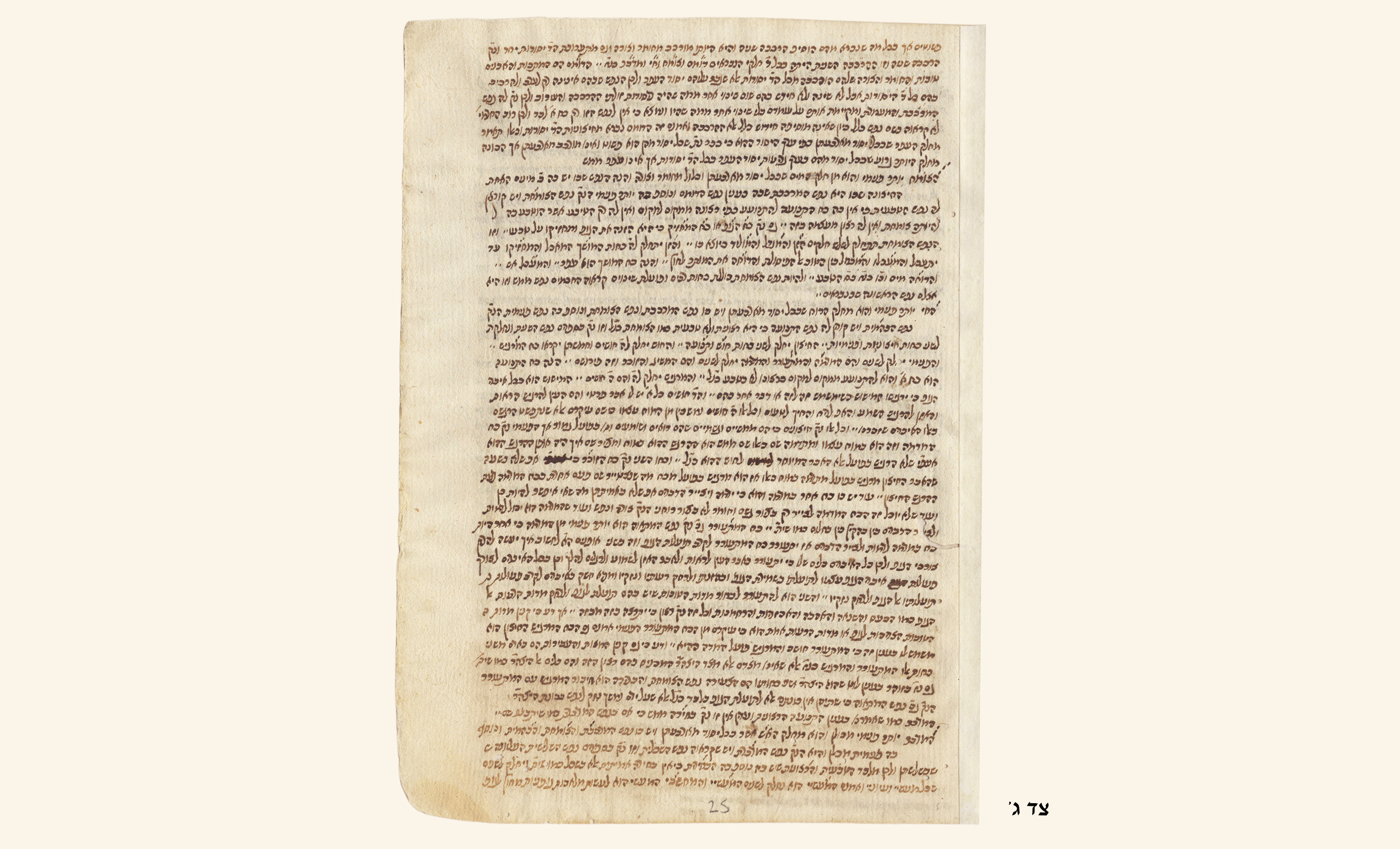
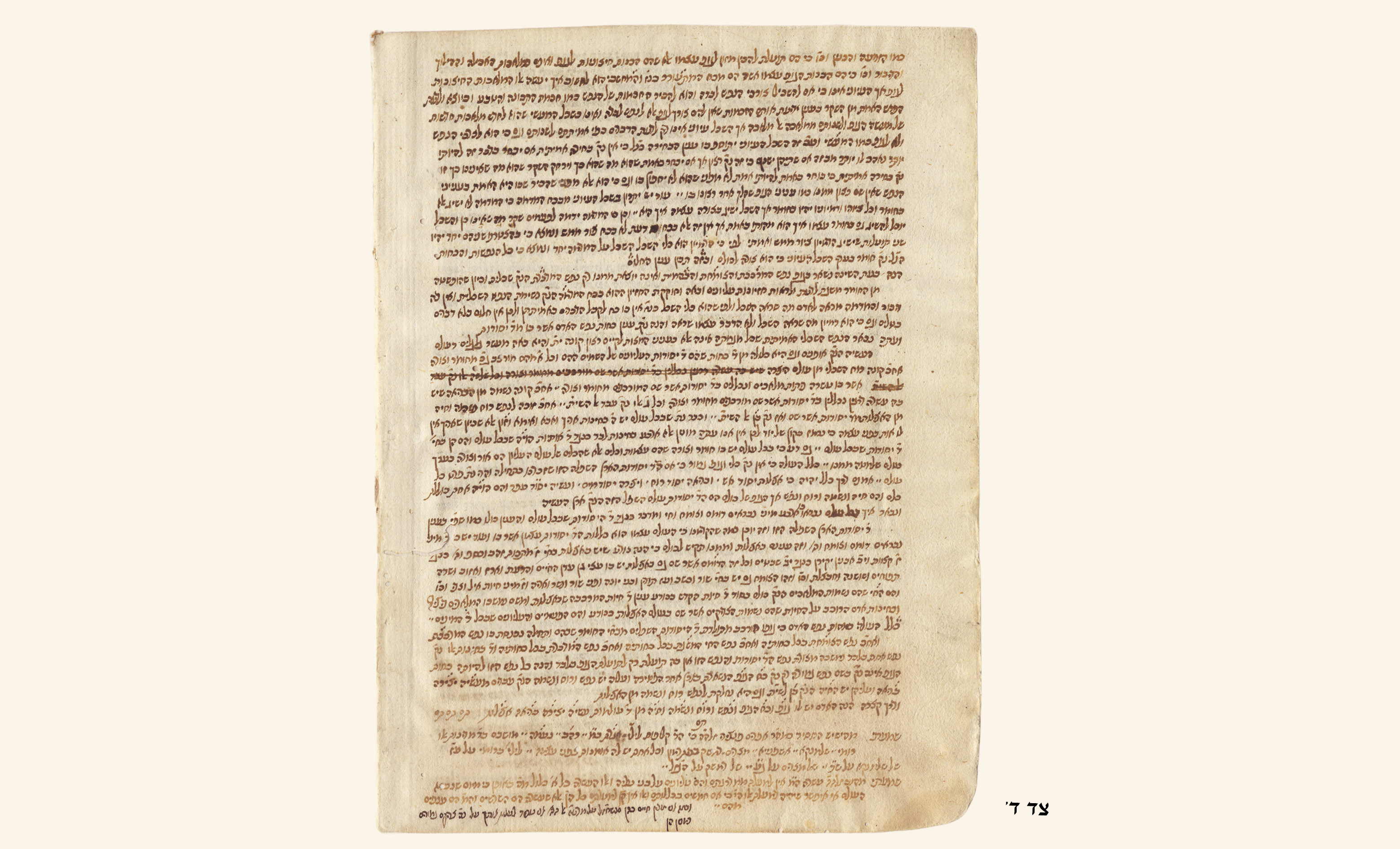
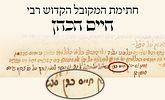
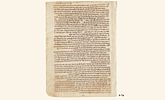
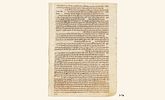
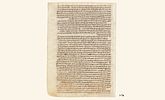
Two leaves comprising four fully written pages, in the holy handwriting of the great kabbalist Rabbi Chaim HaKohen, author of Mekor Chaim and Tur Barekes, including his signed gloss in the margin.

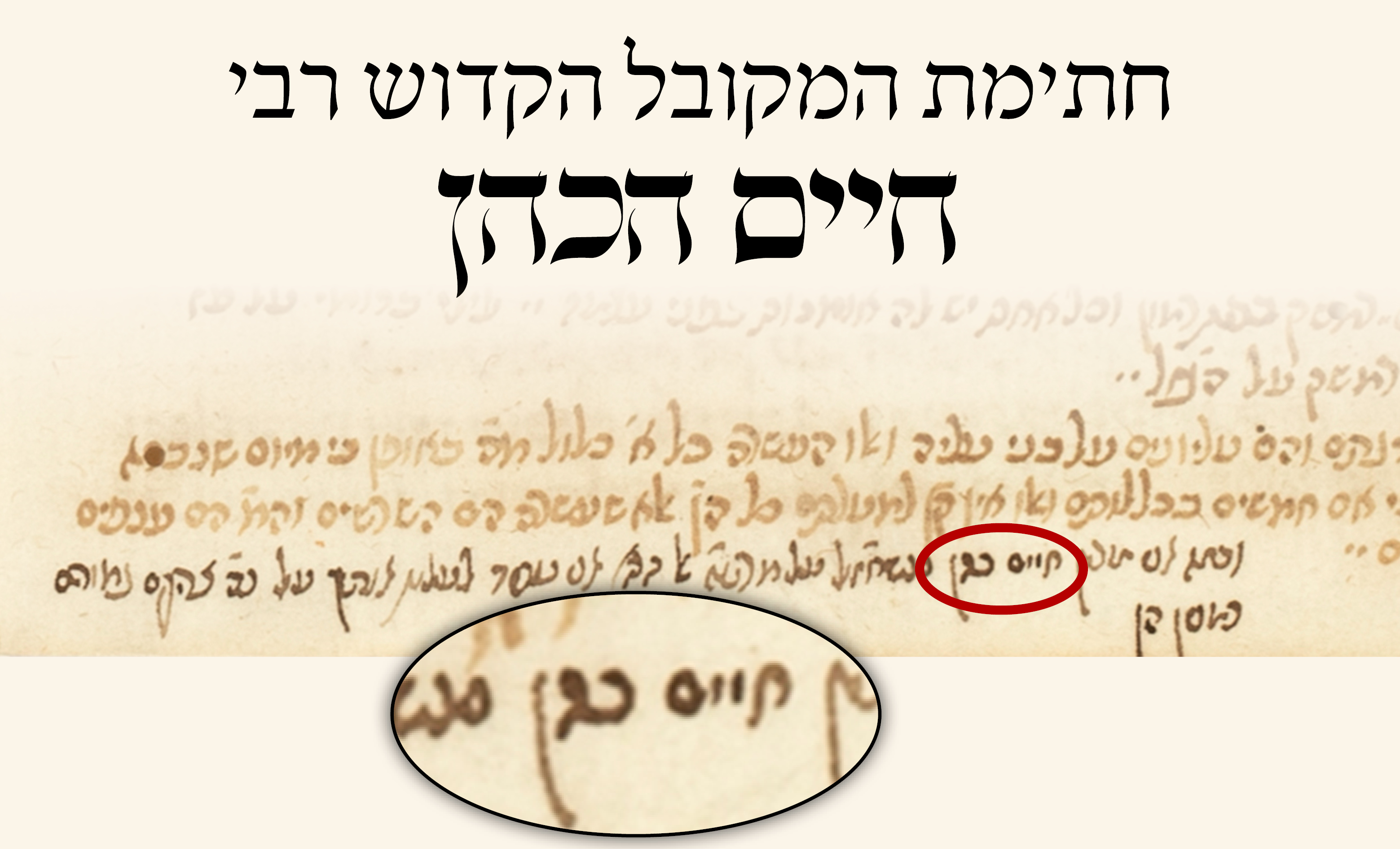
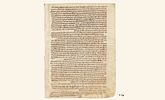
On the margin of the fourth page, Rabbi Chaim HaKohen added a gloss to the writings of his teacher, opening with the words: “Through this I understand, Chaim Cohen.”

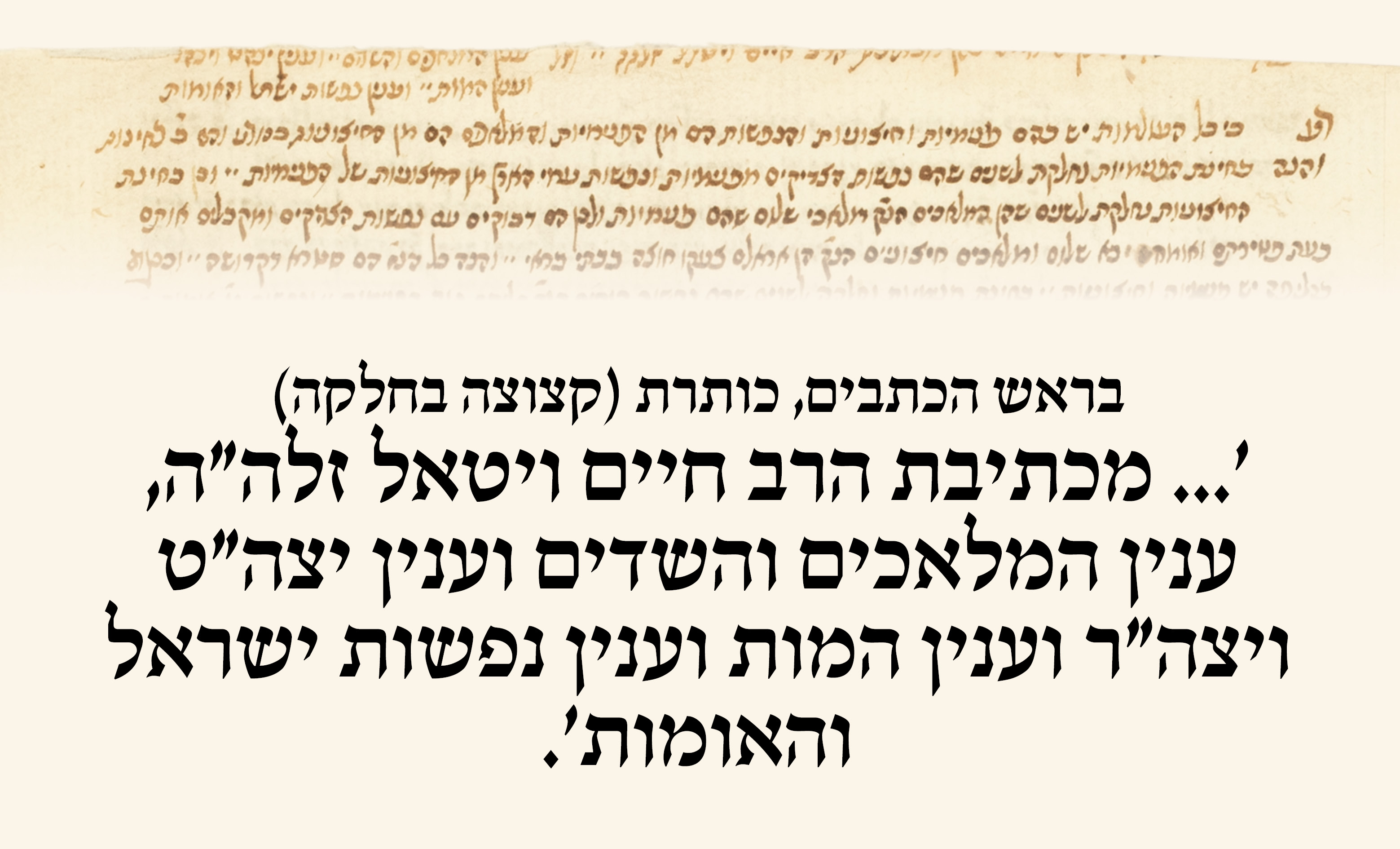
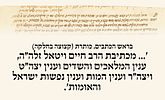
At the beginning of the manuscript appears the (partially trimmed) heading: “…from the writings of Rabbi Chaim Vital zt”l, on the subject of angels and demons, the subject of the Good and Evil Inclinations, the subject of death, and the subject of the souls of Yisrael and the nations.”

Besides the rarity of the autograph itself, this manuscript is of immense importance as it is an early copy of the writings of Rabbi Chaim Vital, transcribed by one of his leading disciples, who most likely copied the text directly from his teacher’s original manuscripts.

Manuscript contents: Shaar Kelipas Nogah, printed at the conclusion of Mavo Shearim and at the end of Etz Chaim by Rabbi Chaim Vital.

From 1595 until his passing in 1620, Rabbi Chaim Vital lived in Damascus, where Rabbi Chaim HaKohen studied Kabbalah under him for three consecutive years, becoming one of his foremost disciples. 

The kabbalist Rabbi Chaim HaKohen of Aleppo (c. 1585–1655) was born in Egypt, later settled in Tzfat, and from there moved to Aleppo. He eventually traveled to Italy to publish his works. He was one of the leading kabbalists of his generation, and even the renowned kabbalist Rabbi Moshe Zacuto (the Ramaz) sought his guidance on matters of Kabbalah. While in Venice for the publication of his sefer Toras Chacham (1654), he met the kabbalist Rabbi Nosson Nota Hanover, who became his disciple in Kabbalah. Rabbi Nosson later included in his famous sefer Shaarei Tzion Rabbi Chaim HaKohen’s piyutim “Kol Beramah Nishma” recited during Tikkun Chatzos, and “Dodi Yarad Legano.”

He became especially famous for his series of works entitled Mekor Chaim, in which he masterfully combined halacha, Kabbalah, and mussar.

Rabbi Chaim HaKohen was deeply revered by the Chida, who cites him dozens of times throughout his writings, referring to him with such exalted titles as “the saintly divine kabbalist, ” “the supremely holy one, ” and “the holy and exalted Ohr HaChaim.” During his first visit to Livorno in 1753, the Chida visited Rabbi Chaim HaKohen’s grave and prayed there (Ma’agal Tov, p. 4.) The Chida also had in his possession Rabbi Chaim HaKohen’s handwritten works on Megillas Esther and Koheles.

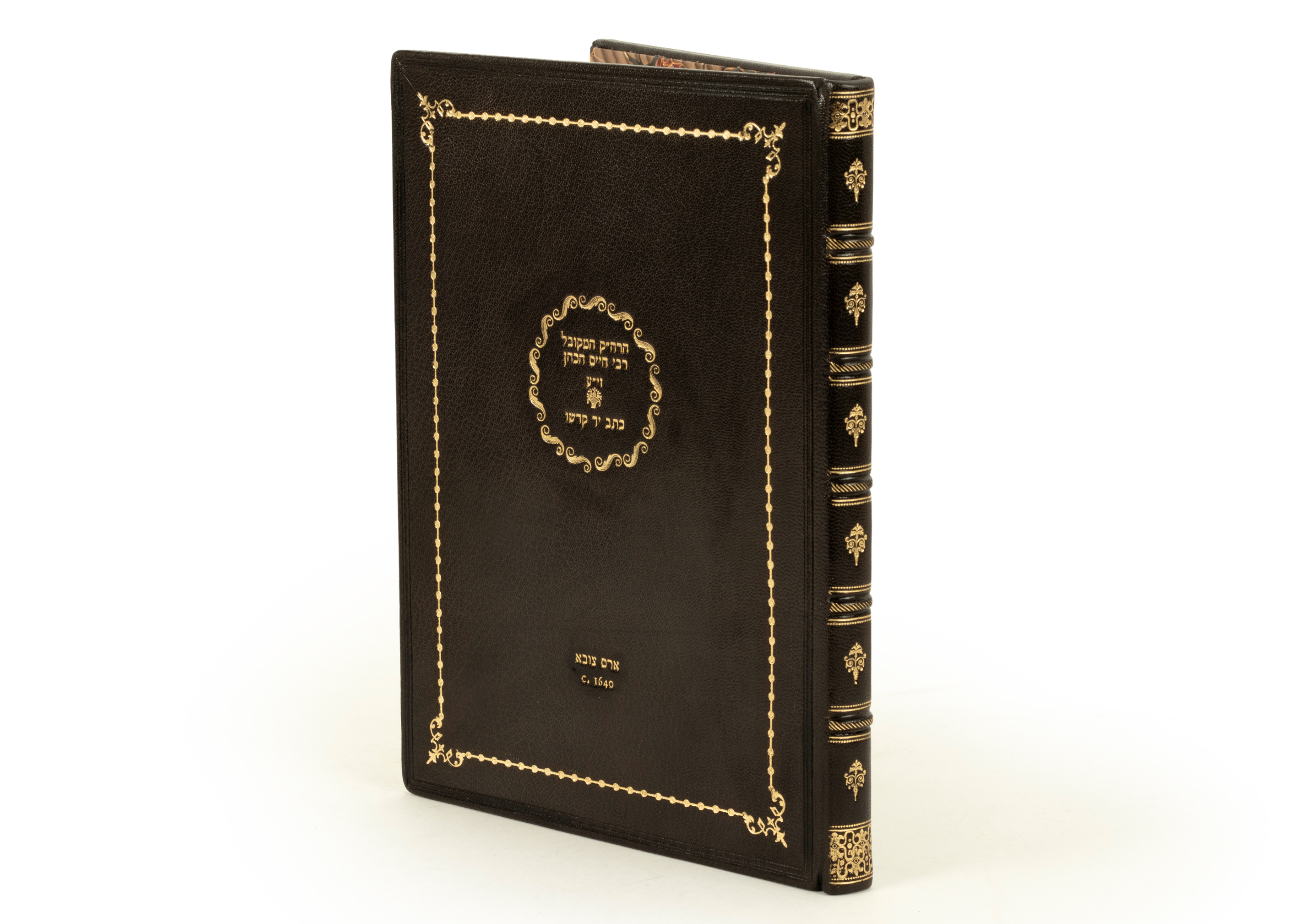
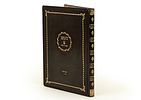
Page Count: [2] leaves (4 written pages), written in a fine, orderly writing. Size: 21 × 15 cm. Condition: A few small holes. Bound in a fine new leather binding.

_____________

A Tradition from the Elderly Kabbalist Rabbi Ephraim Pantziri

Toward the end of the fourth page there is a passage concerning the Four Kelipos and Lilith, also printed at the end of Mavo Shearim and Etz Chaim. Here, however, it is introduced with the words: “I heard from the saintly elder Rabbi Ephraim Pantziri of blessed memory, ” a noteworthy variant that warrants further scholarly study.

Rabbi Ephraim Pantziri was one of Rabbi Chaim Vital’s leading disciples in Damascus and one of the heads of the kabbalistic academy there.
_____________

The Writings of the Arizal and Rabbi Chaim Vital in the Teachings of Rabbi Chaim HaKohen

Rabbi Chaim HaKohen was Rabbi Chaim Vital’s foremost disciple, and Rabbi Chaim Vital was a disciple of the Arizal, and he therefore possessed manuscripts and precise traditions from the Arizal himself.

He devoted himself to preserving and disseminating the authentic teachings of the Arizal through his own works, and strongly opposed those who sought to alter them.

Rabbi Chaim HaKohen’s influence is especially evident in three areas:

1. He established halachic rulings based upon the teachings of the Zohar and the Arizal, frequently determining practical halacha in accordance with Kabbalah.

2. He arranged a system of kabbalistic prayer intentions based on the Arizal’s teachings, which became one of the principal sources for the spread of these traditions throughout both the Eastern Jewish communities and Europe.

3. He composed the famous lament beginning “Kol Beramah Nishma BiYelalah, ” recited during Tikkun Chatzos, which entered virtually all kabbalistic prayer rites and became an integral part of Tikkun Chatzos.

As Rabbi Chaim Vital’s closest disciple, Rabbi Chaim HaKohen remained firmly devoted to the manuscripts he had received from his teacher, who had received them directly from the Arizal. In his introduction to Mekor Chaim, he insisted that one follow only the Arizal’s writings as transmitted by Rabbi Chaim Vital. His words became well known and were cited by the Chida in Shem HaGedolim (entry “Kabbalah”). In summary, he writes: 

“They have overturned the proper order and violated the accepted tradition by printing the teachings of the Arizal… The Arizal never taught anyone besides the holy Rabbi Chaim Vital. Even the ten disciples who sat before him did not receive his teachings directly; he would deliver only a brief introduction and then depart, just as Moshe Rabbeinu did, and they learned the full teachings from Rabbi Chaim Vital. The Arizal himself wrote almost nothing, aside from one introduction concerning attachment to the righteous, which appears in Etz Chaim. Everything else came through my teacher, the holy Rabbi Chaim Vital… 

Moreover, even among the teachings entrusted to Rabbi Chaim Vital, there were four discourses which the Arizal placed him under a solemn oath never to reveal. So my teacher himself told me. Who, then, gave others permission to publish these teachings and expose them before those unworthy of them?… Alas, the world has been handed over to fools… In short, whoever is familiar with Rabbi Chaim Vital’s handwriting should rely only on those manuscripts and not upon any others. I have not spoken out of my usual inclination, but only so that those who fear Hashem may be spared from error, and thus I have discharged my own responsibility.”

Lot : 40

Manuscript of the Holy Kabbalist Rabbi Chaim HaKohen, Author of Mekor Chaim – Writing the Teachings of His Rebbi, Rabbi Chaim Vital

Start price: $50,000
|
Est. Price: $70,000 - $90,000

Manuscript of the Holy Kabbalist Rabbi Chaim HaKohen, Author of Mekor Chaim – Writing the Teachings of His Rebbi, Rabbi Chaim Vital


Two leaves comprising four fully written pages, in the holy handwriting of the great kabbalist Rabbi Chaim HaKohen, author of Mekor Chaim and Tur Barekes, including his signed gloss in the margin.

On the margin of the fourth page, Rabbi Chaim HaKohen added a gloss to the writings of his teacher, opening with the words: “Through this I understand, Chaim Cohen.”

At the beginning of the manuscript appears the (partially trimmed) heading: “…from the writings of Rabbi Chaim Vital zt”l, on the subject of angels and demons, the subject of the Good and Evil Inclinations, the subject of death, and the subject of the souls of Yisrael and the nations.”

Besides the rarity of the autograph itself, this manuscript is of immense importance as it is an early copy of the writings of Rabbi Chaim Vital, transcribed by one of his leading disciples, who most likely copied the text directly from his teacher’s original manuscripts.

Manuscript contents: Shaar Kelipas Nogah, printed at the conclusion of Mavo Shearim and at the end of Etz Chaim by Rabbi Chaim Vital.

From 1595 until his passing in 1620, Rabbi Chaim Vital lived in Damascus, where Rabbi Chaim HaKohen studied Kabbalah under him for three consecutive years, becoming one of his foremost disciples. 

The kabbalist Rabbi Chaim HaKohen of Aleppo (c. 1585–1655) was born in Egypt, later settled in Tzfat, and from there moved to Aleppo. He eventually traveled to Italy to publish his works. He was one of the leading kabbalists of his generation, and even the renowned kabbalist Rabbi Moshe Zacuto (the Ramaz) sought his guidance on matters of Kabbalah. While in Venice for the publication of his sefer Toras Chacham (1654), he met the kabbalist Rabbi Nosson Nota Hanover, who became his disciple in Kabbalah. Rabbi Nosson later included in his famous sefer Shaarei Tzion Rabbi Chaim HaKohen’s piyutim “Kol Beramah Nishma” recited during Tikkun Chatzos, and “Dodi Yarad Legano.”

He became especially famous for his series of works entitled Mekor Chaim, in which he masterfully combined halacha, Kabbalah, and mussar.

Rabbi Chaim HaKohen was deeply revered by the Chida, who cites him dozens of times throughout his writings, referring to him with such exalted titles as “the saintly divine kabbalist, ” “the supremely holy one, ” and “the holy and exalted Ohr HaChaim.” During his first visit to Livorno in 1753, the Chida visited Rabbi Chaim HaKohen’s grave and prayed there (Ma’agal Tov, p. 4.) The Chida also had in his possession Rabbi Chaim HaKohen’s handwritten works on Megillas Esther and Koheles.

Page Count: [2] leaves (4 written pages), written in a fine, orderly writing. Size: 21 × 15 cm. Condition: A few small holes. Bound in a fine new leather binding.

_____________

A Tradition from the Elderly Kabbalist Rabbi Ephraim Pantziri

Toward the end of the fourth page there is a passage concerning the Four Kelipos and Lilith, also printed at the end of Mavo Shearim and Etz Chaim. Here, however, it is introduced with the words: “I heard from the saintly elder Rabbi Ephraim Pantziri of blessed memory, ” a noteworthy variant that warrants further scholarly study.

Rabbi Ephraim Pantziri was one of Rabbi Chaim Vital’s leading disciples in Damascus and one of the heads of the kabbalistic academy there.
_____________

The Writings of the Arizal and Rabbi Chaim Vital in the Teachings of Rabbi Chaim HaKohen

Rabbi Chaim HaKohen was Rabbi Chaim Vital’s foremost disciple, and Rabbi Chaim Vital was a disciple of the Arizal, and he therefore possessed manuscripts and precise traditions from the Arizal himself.

He devoted himself to preserving and disseminating the authentic teachings of the Arizal through his own works, and strongly opposed those who sought to alter them.

Rabbi Chaim HaKohen’s influence is especially evident in three areas:

1. He established halachic rulings based upon the teachings of the Zohar and the Arizal, frequently determining practical halacha in accordance with Kabbalah.

2. He arranged a system of kabbalistic prayer intentions based on the Arizal’s teachings, which became one of the principal sources for the spread of these traditions throughout both the Eastern Jewish communities and Europe.

3. He composed the famous lament beginning “Kol Beramah Nishma BiYelalah, ” recited during Tikkun Chatzos, which entered virtually all kabbalistic prayer rites and became an integral part of Tikkun Chatzos.

As Rabbi Chaim Vital’s closest disciple, Rabbi Chaim HaKohen remained firmly devoted to the manuscripts he had received from his teacher, who had received them directly from the Arizal. In his introduction to Mekor Chaim, he insisted that one follow only the Arizal’s writings as transmitted by Rabbi Chaim Vital. His words became well known and were cited by the Chida in Shem HaGedolim (entry “Kabbalah”). In summary, he writes: 

“They have overturned the proper order and violated the accepted tradition by printing the teachings of the Arizal… The Arizal never taught anyone besides the holy Rabbi Chaim Vital. Even the ten disciples who sat before him did not receive his teachings directly; he would deliver only a brief introduction and then depart, just as Moshe Rabbeinu did, and they learned the full teachings from Rabbi Chaim Vital. The Arizal himself wrote almost nothing, aside from one introduction concerning attachment to the righteous, which appears in Etz Chaim. Everything else came through my teacher, the holy Rabbi Chaim Vital… 

Moreover, even among the teachings entrusted to Rabbi Chaim Vital, there were four discourses which the Arizal placed him under a solemn oath never to reveal. So my teacher himself told me. Who, then, gave others permission to publish these teachings and expose them before those unworthy of them?… Alas, the world has been handed over to fools… In short, whoever is familiar with Rabbi Chaim Vital’s handwriting should rely only on those manuscripts and not upon any others. I have not spoken out of my usual inclination, but only so that those who fear Hashem may be spared from error, and thus I have discharged my own responsibility.”

Manuscript of the Holy Kabbalist Rabbi Chaim HaKohen, Author of Mekor Chaim – Writing the Teachings of His Rebbi, Rabbi Chaim Vital


Two leaves comprising four fully written pages, in the holy handwriting of the great kabbalist Rabbi Chaim HaKohen, author of Mekor Chaim and Tur Barekes, including his signed gloss in the margin.

On the margin of the fourth page, Rabbi Chaim HaKohen added a gloss to the writings of his teacher, opening with the words: “Through this I understand, Chaim Cohen.”

At the beginning of the manuscript appears the (partially trimmed) heading: “…from the writings of Rabbi Chaim Vital zt”l, on the subject of angels and demons, the subject of the Good and Evil Inclinations, the subject of death, and the subject of the souls of Yisrael and the nations.”

Besides the rarity of the autograph itself, this manuscript is of immense importance as it is an early copy of the writings of Rabbi Chaim Vital, transcribed by one of his leading disciples, who most likely copied the text directly from his teacher’s original manuscripts.

Manuscript contents: Shaar Kelipas Nogah, printed at the conclusion of Mavo Shearim and at the end of Etz Chaim by Rabbi Chaim Vital.

From 1595 until his passing in 1620, Rabbi Chaim Vital lived in Damascus, where Rabbi Chaim HaKohen studied Kabbalah under him for three consecutive years, becoming one of his foremost disciples. 

The kabbalist Rabbi Chaim HaKohen of Aleppo (c. 1585–1655) was born in Egypt, later settled in Tzfat, and from there moved to Aleppo. He eventually traveled to Italy to publish his works. He was one of the leading kabbalists of his generation, and even the renowned kabbalist Rabbi Moshe Zacuto (the Ramaz) sought his guidance on matters of Kabbalah. While in Venice for the publication of his sefer Toras Chacham (1654), he met the kabbalist Rabbi Nosson Nota Hanover, who became his disciple in Kabbalah. Rabbi Nosson later included in his famous sefer Shaarei Tzion Rabbi Chaim HaKohen’s piyutim “Kol Beramah Nishma” recited during Tikkun Chatzos, and “Dodi Yarad Legano.”

He became especially famous for his series of works entitled Mekor Chaim, in which he masterfully combined halacha, Kabbalah, and mussar.

Rabbi Chaim HaKohen was deeply revered by the Chida, who cites him dozens of times throughout his writings, referring to him with such exalted titles as “the saintly divine kabbalist, ” “the supremely holy one, ” and “the holy and exalted Ohr HaChaim.” During his first visit to Livorno in 1753, the Chida visited Rabbi Chaim HaKohen’s grave and prayed there (Ma’agal Tov, p. 4.) The Chida also had in his possession Rabbi Chaim HaKohen’s handwritten works on Megillas Esther and Koheles.

Page Count: [2] leaves (4 written pages), written in a fine, orderly writing. Size: 21 × 15 cm. Condition: A few small holes. Bound in a fine new leather binding.

_____________

A Tradition from the Elderly Kabbalist Rabbi Ephraim Pantziri

Toward the end of the fourth page there is a passage concerning the Four Kelipos and Lilith, also printed at the end of Mavo Shearim and Etz Chaim. Here, however, it is introduced with the words: “I heard from the saintly elder Rabbi Ephraim Pantziri of blessed memory, ” a noteworthy variant that warrants further scholarly study.

Rabbi Ephraim Pantziri was one of Rabbi Chaim Vital’s leading disciples in Damascus and one of the heads of the kabbalistic academy there.
_____________

The Writings of the Arizal and Rabbi Chaim Vital in the Teachings of Rabbi Chaim HaKohen

Rabbi Chaim HaKohen was Rabbi Chaim Vital’s foremost disciple, and Rabbi Chaim Vital was a disciple of the Arizal, and he therefore possessed manuscripts and precise traditions from the Arizal himself.

He devoted himself to preserving and disseminating the authentic teachings of the Arizal through his own works, and strongly opposed those who sought to alter them.

Rabbi Chaim HaKohen’s influence is especially evident in three areas:

1. He established halachic rulings based upon the teachings of the Zohar and the Arizal, frequently determining practical halacha in accordance with Kabbalah.

2. He arranged a system of kabbalistic prayer intentions based on the Arizal’s teachings, which became one of the principal sources for the spread of these traditions throughout both the Eastern Jewish communities and Europe.

3. He composed the famous lament beginning “Kol Beramah Nishma BiYelalah, ” recited during Tikkun Chatzos, which entered virtually all kabbalistic prayer rites and became an integral part of Tikkun Chatzos.

As Rabbi Chaim Vital’s closest disciple, Rabbi Chaim HaKohen remained firmly devoted to the manuscripts he had received from his teacher, who had received them directly from the Arizal. In his introduction to Mekor Chaim, he insisted that one follow only the Arizal’s writings as transmitted by Rabbi Chaim Vital. His words became well known and were cited by the Chida in Shem HaGedolim (entry “Kabbalah”). In summary, he writes: 

“They have overturned the proper order and violated the accepted tradition by printing the teachings of the Arizal… The Arizal never taught anyone besides the holy Rabbi Chaim Vital. Even the ten disciples who sat before him did not receive his teachings directly; he would deliver only a brief introduction and then depart, just as Moshe Rabbeinu did, and they learned the full teachings from Rabbi Chaim Vital. The Arizal himself wrote almost nothing, aside from one introduction concerning attachment to the righteous, which appears in Etz Chaim. Everything else came through my teacher, the holy Rabbi Chaim Vital… 

Moreover, even among the teachings entrusted to Rabbi Chaim Vital, there were four discourses which the Arizal placed him under a solemn oath never to reveal. So my teacher himself told me. Who, then, gave others permission to publish these teachings and expose them before those unworthy of them?… Alas, the world has been handed over to fools… In short, whoever is familiar with Rabbi Chaim Vital’s handwriting should rely only on those manuscripts and not upon any others. I have not spoken out of my usual inclination, but only so that those who fear Hashem may be spared from error, and thus I have discharged my own responsibility.”