




To attend this auction live or leave absentee bids
Lot : 41
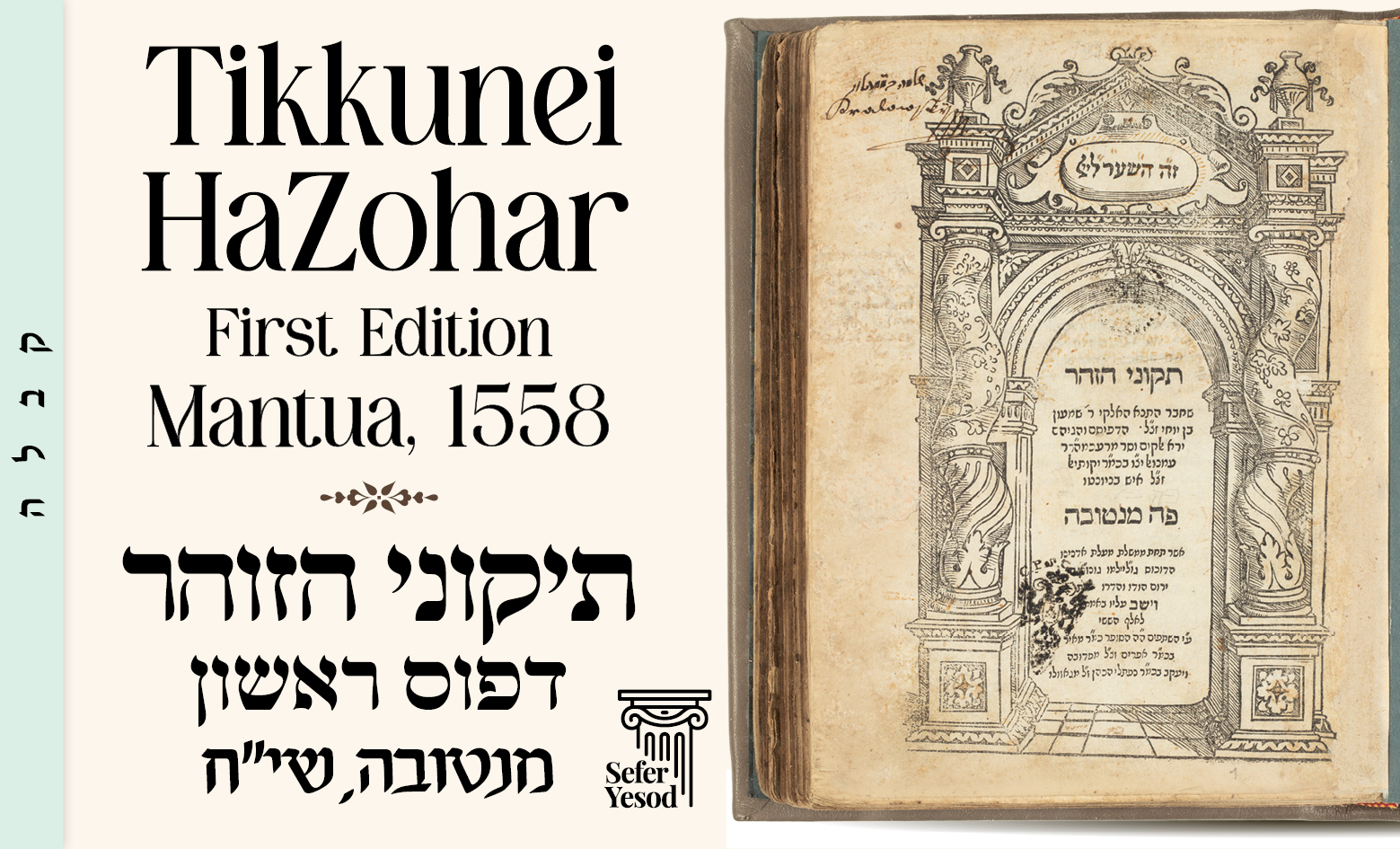
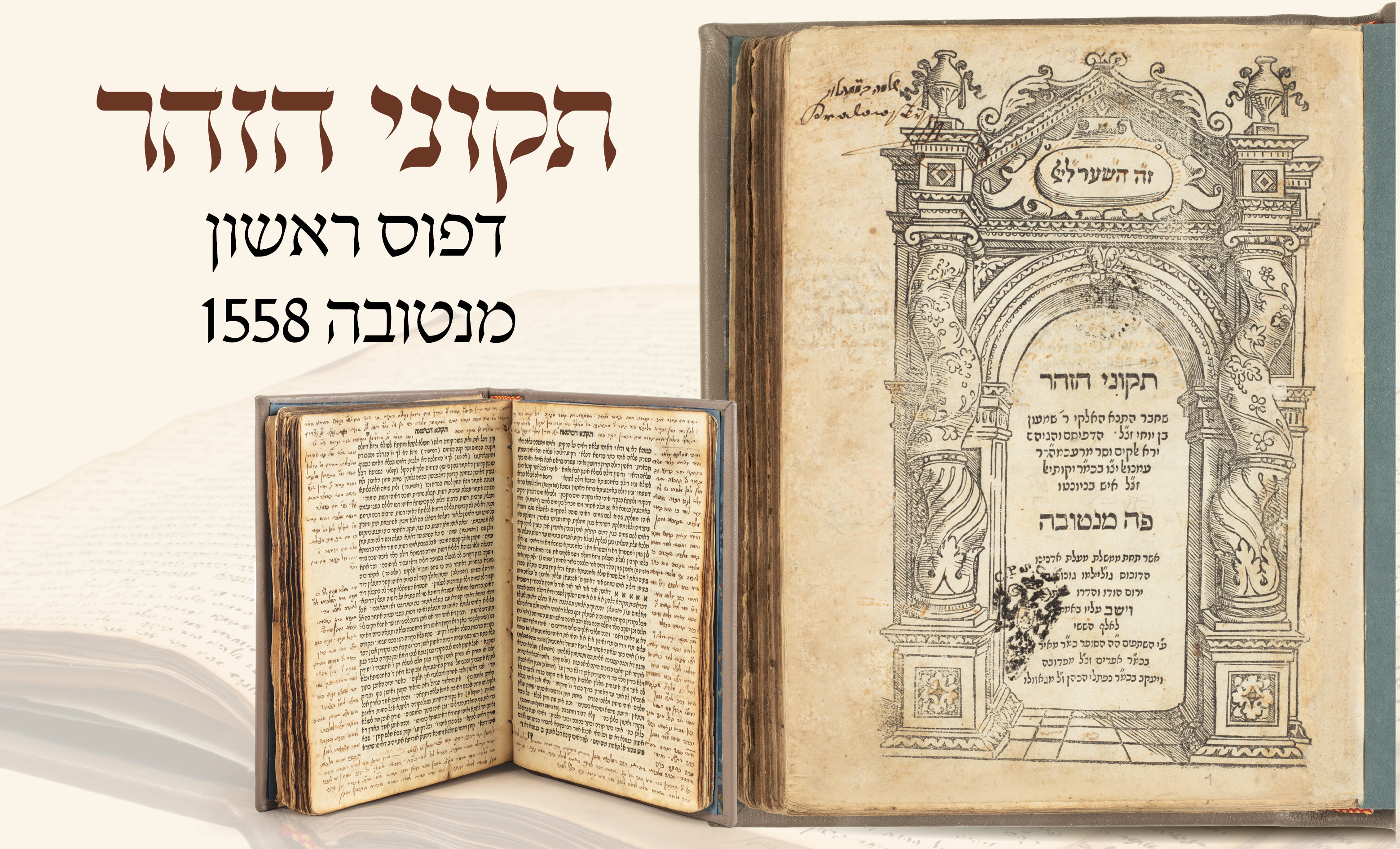
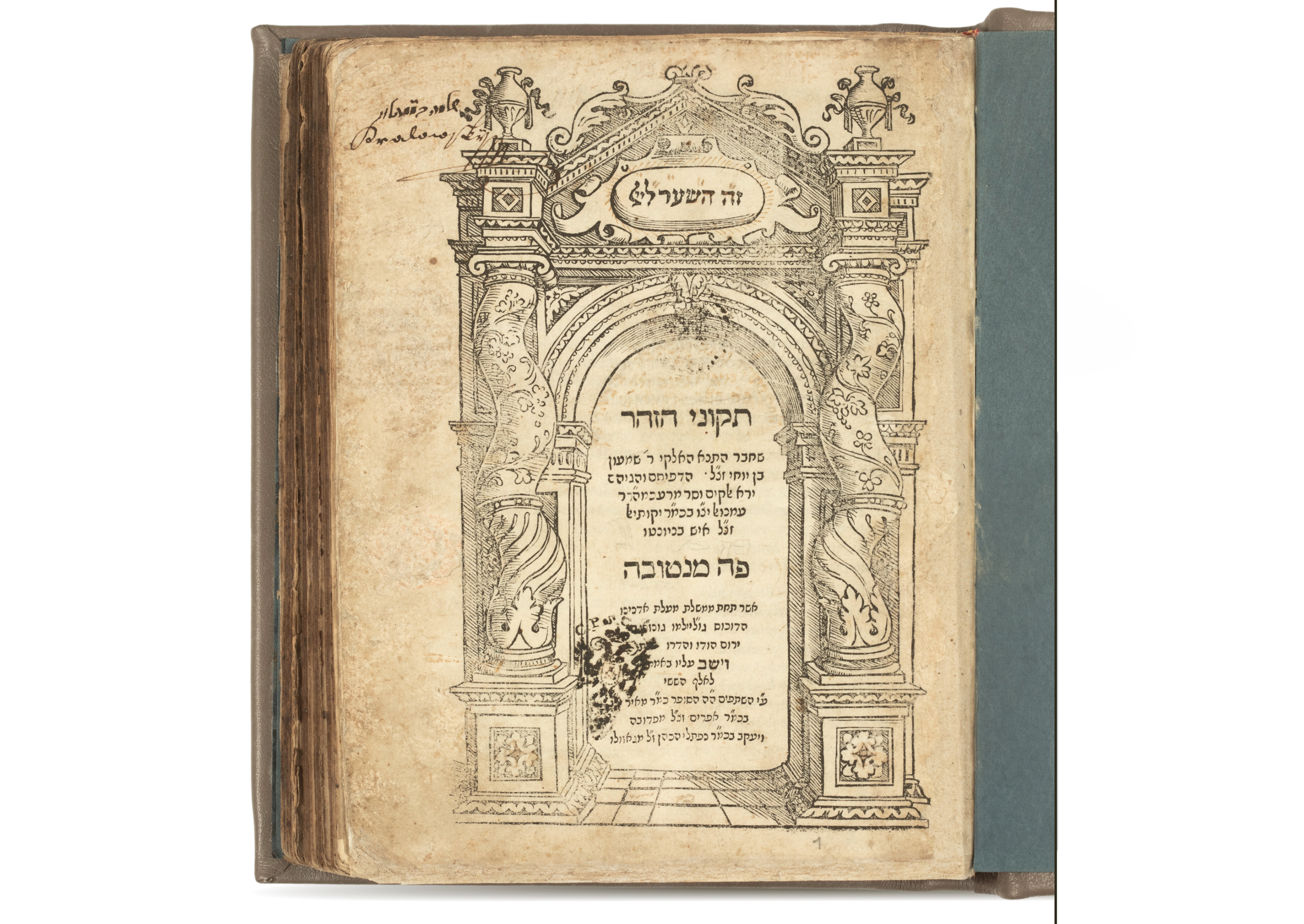
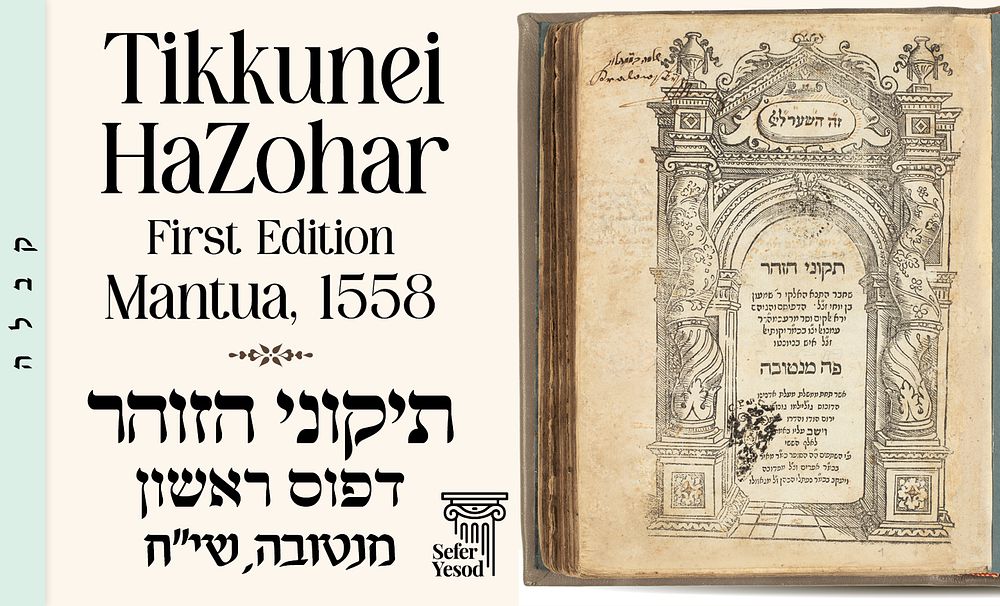
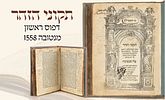
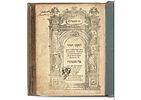
Kabbalistic Sefer Yesod Tikkunei HaZoharFirst Edition. Mantua, 1558.
Kabbalistic Sefer Yesod
Tikkunei HaZohar
First Edition. Mantua, 1558.
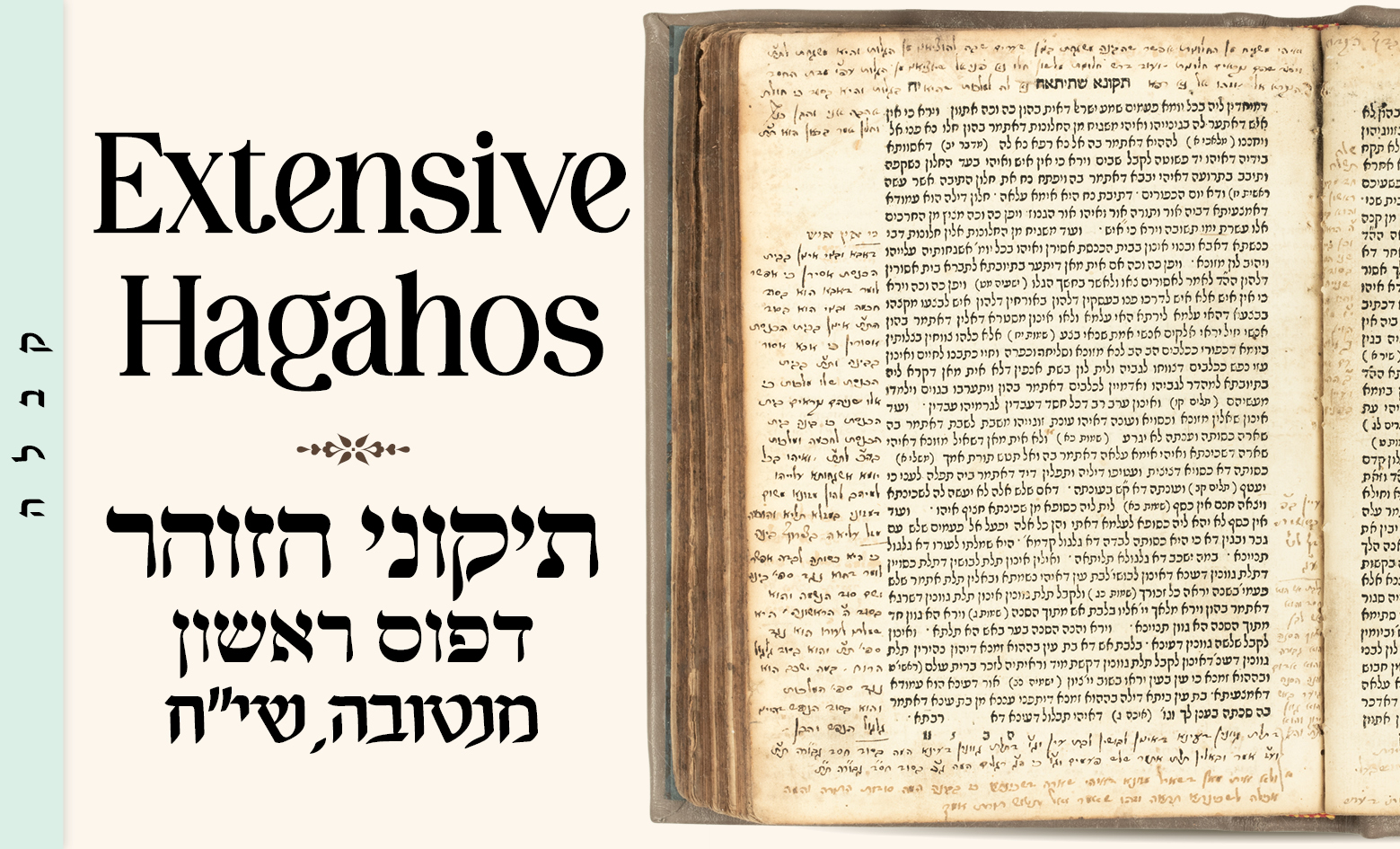
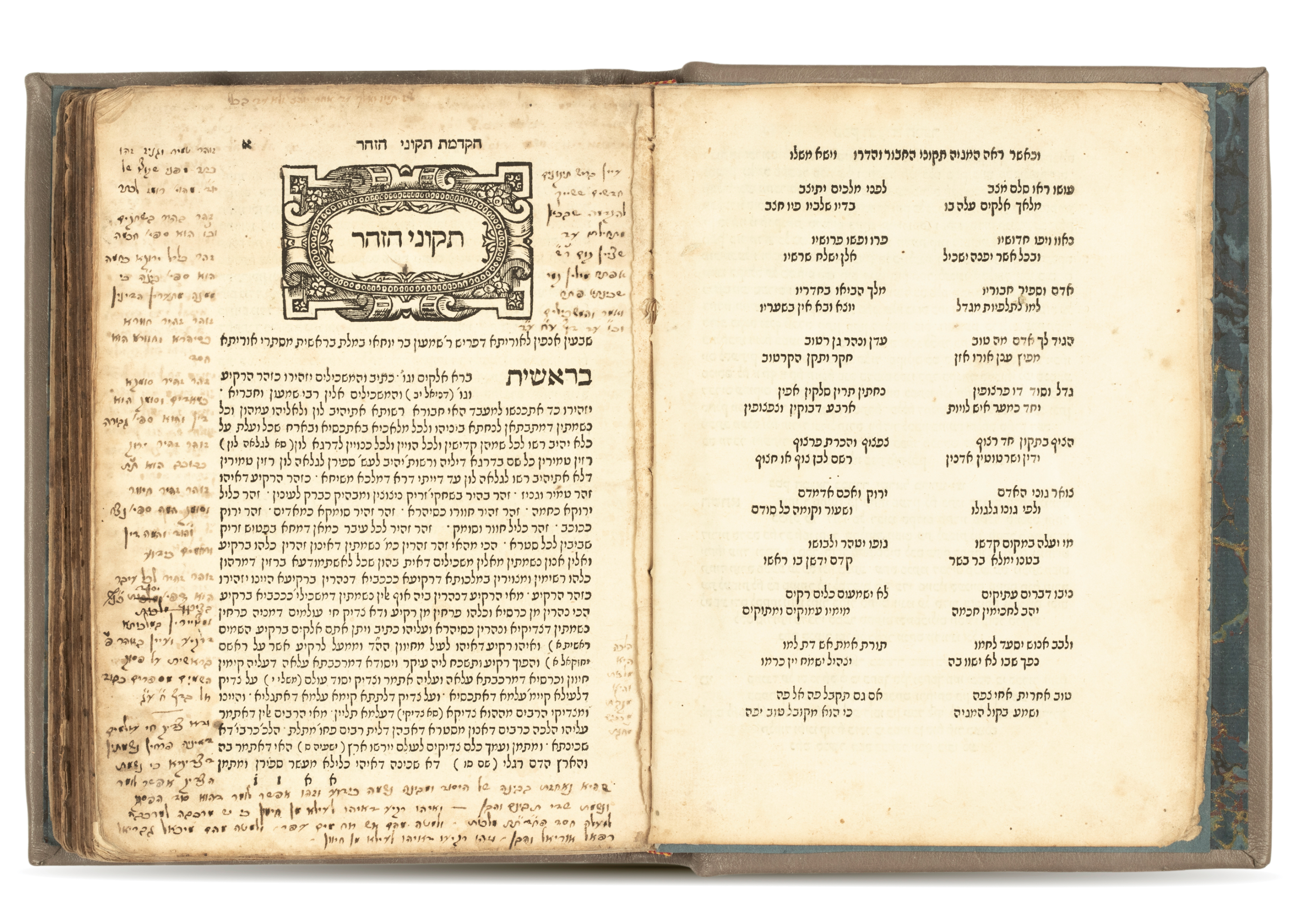
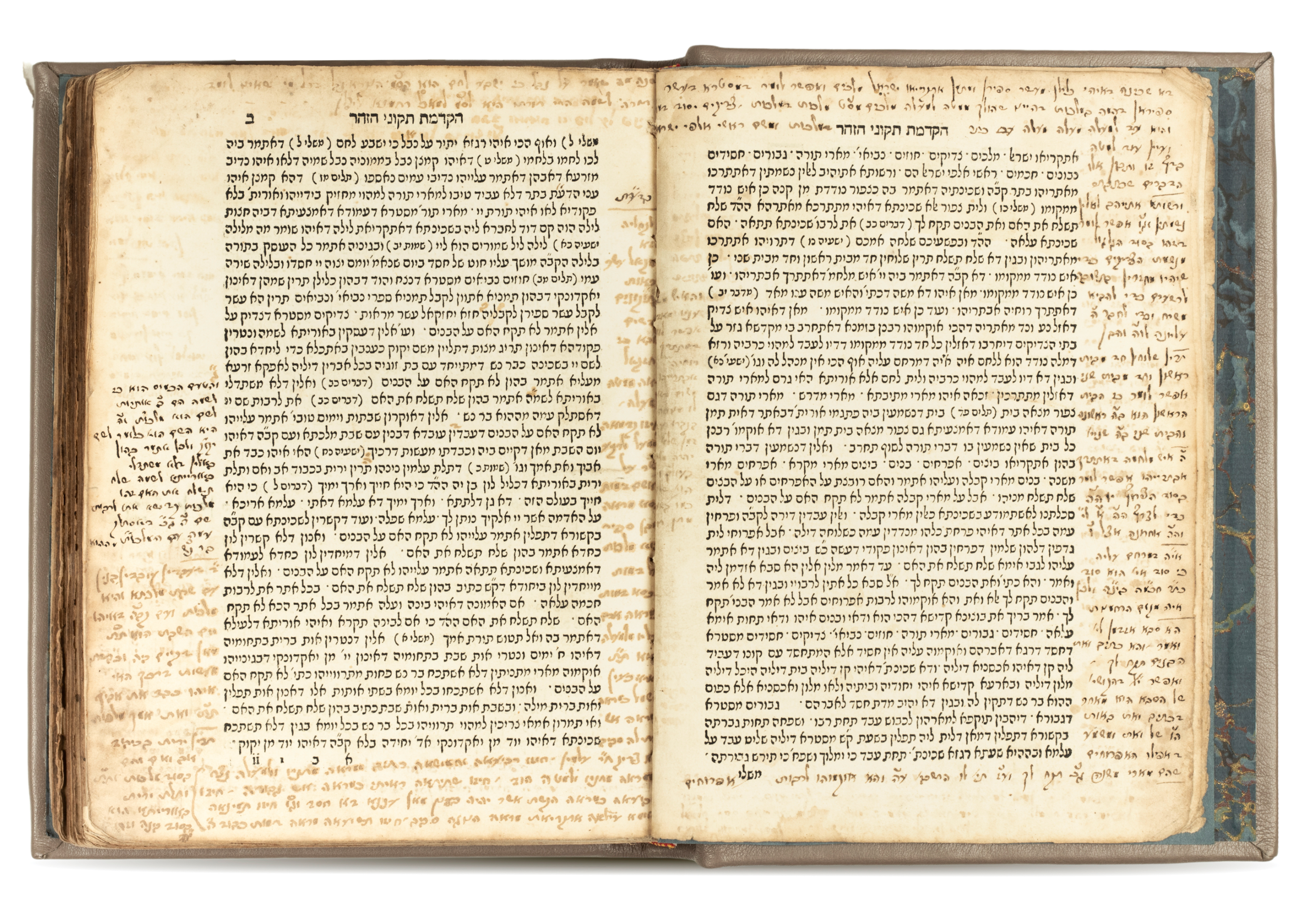
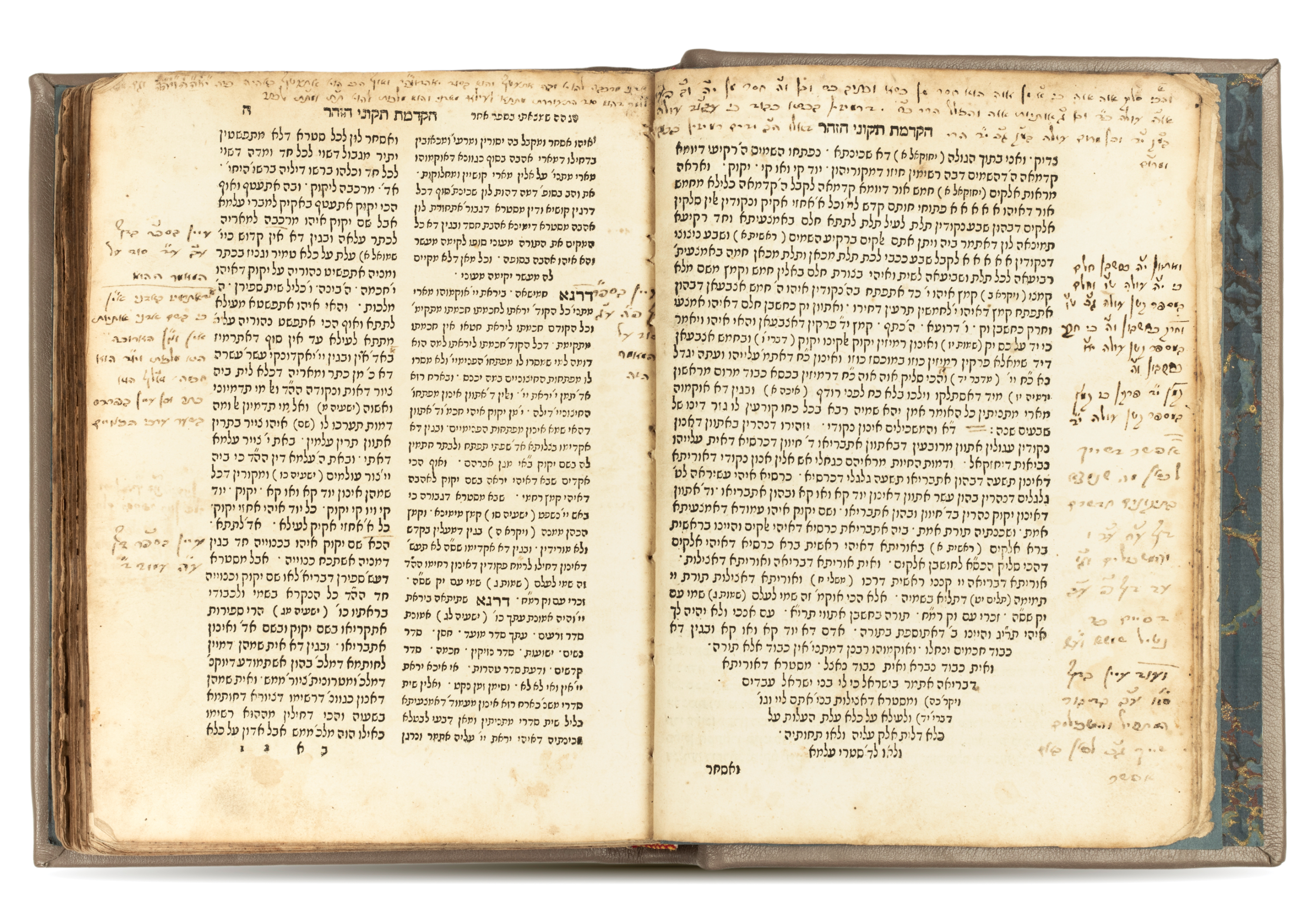
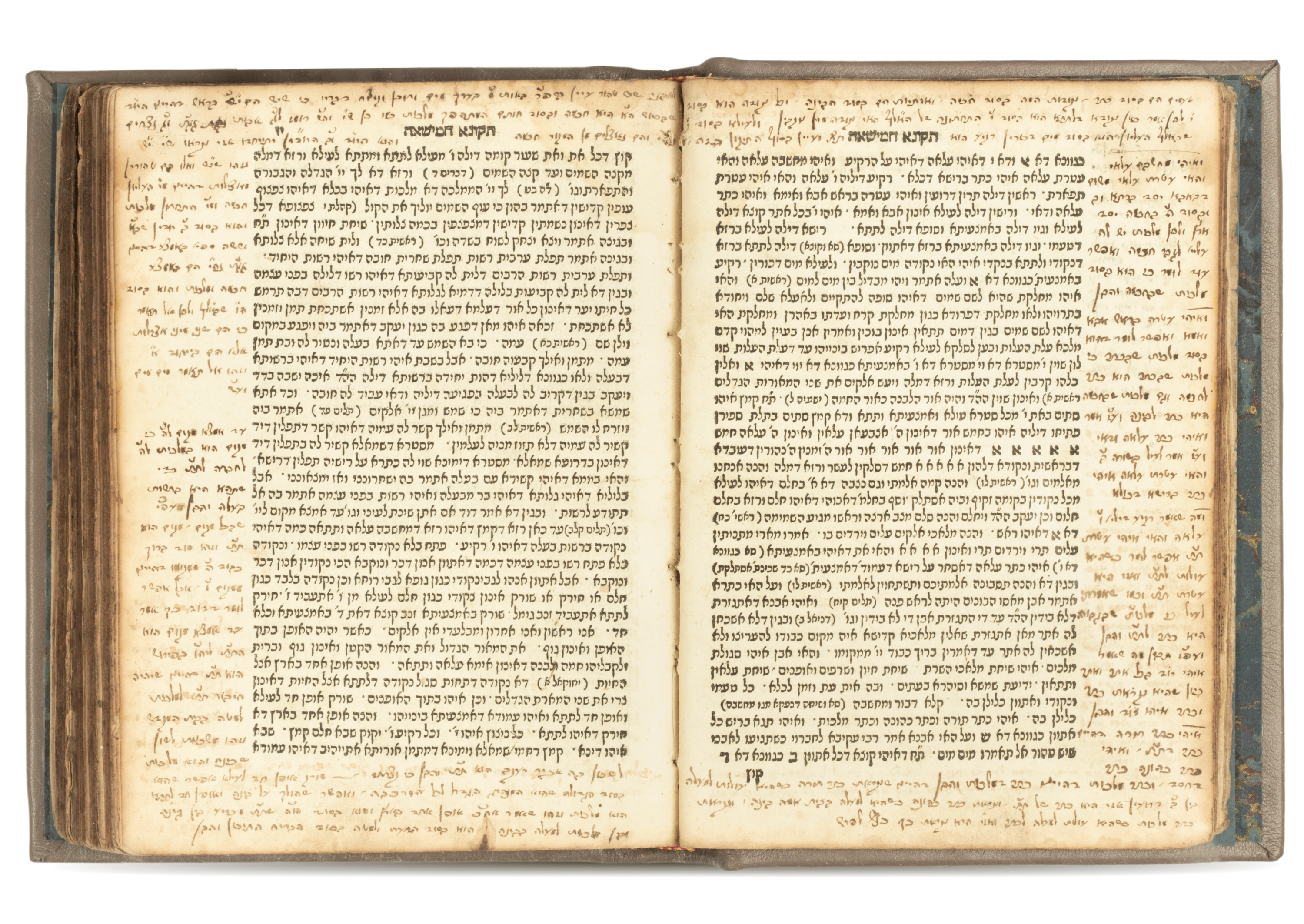
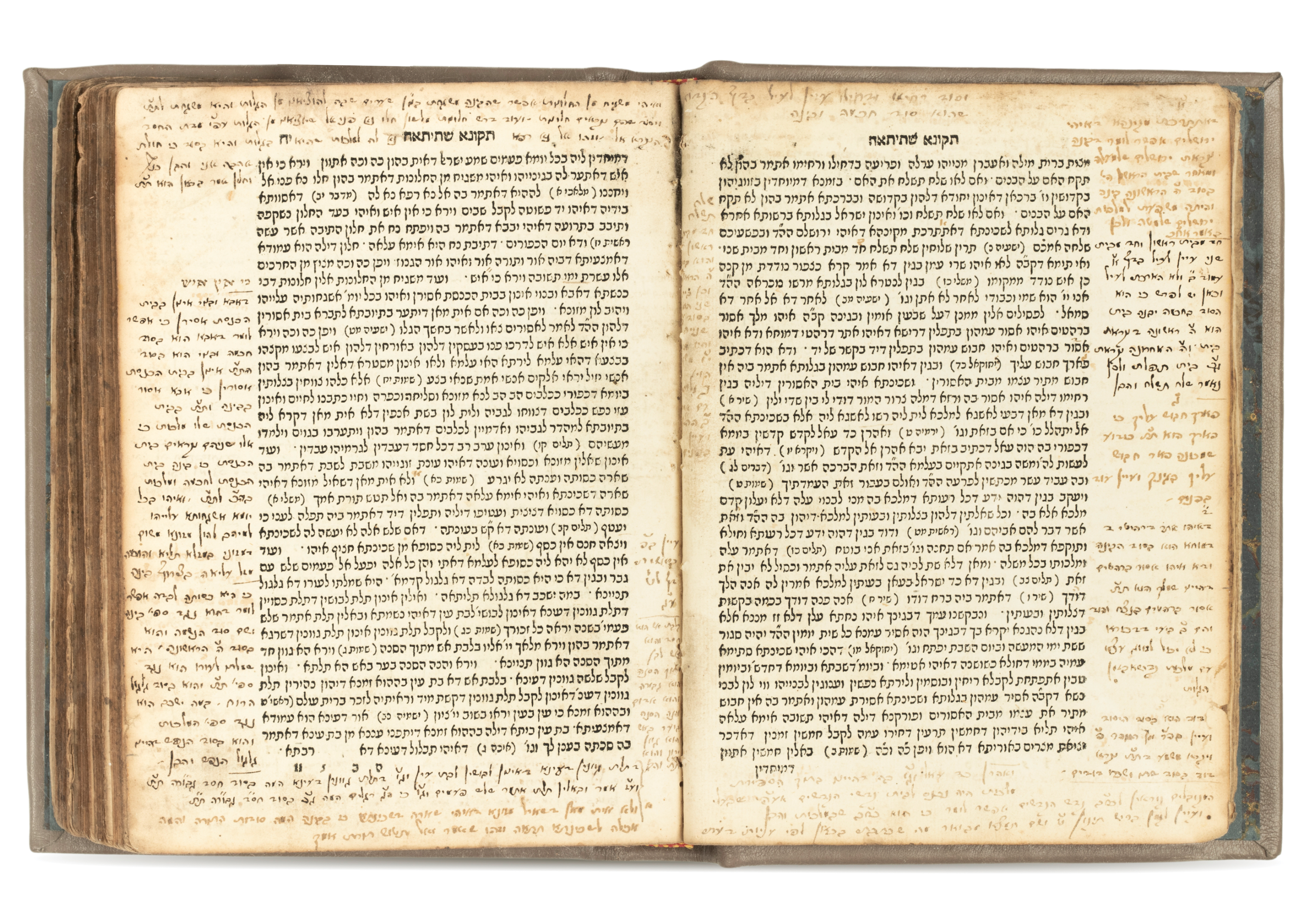
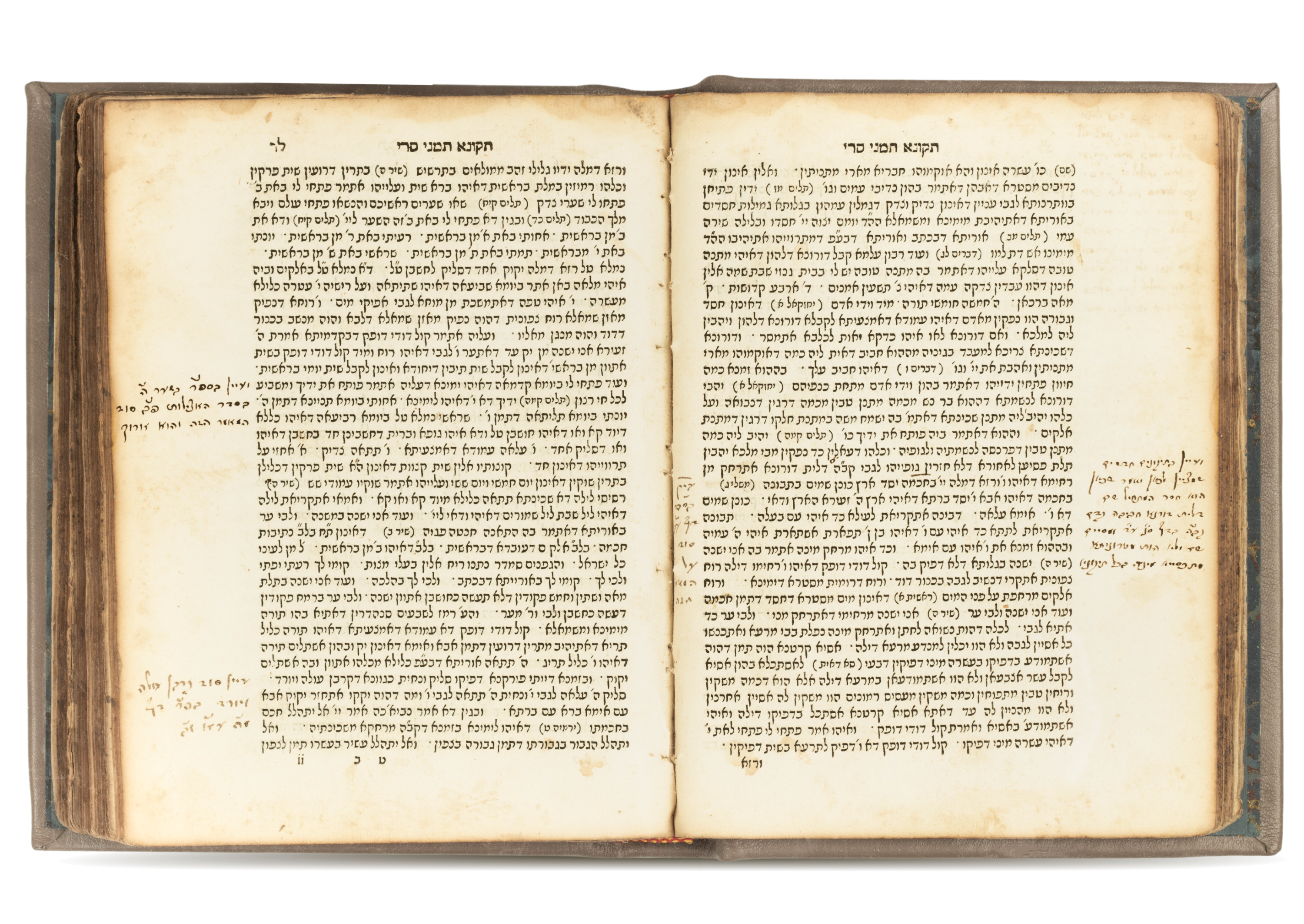
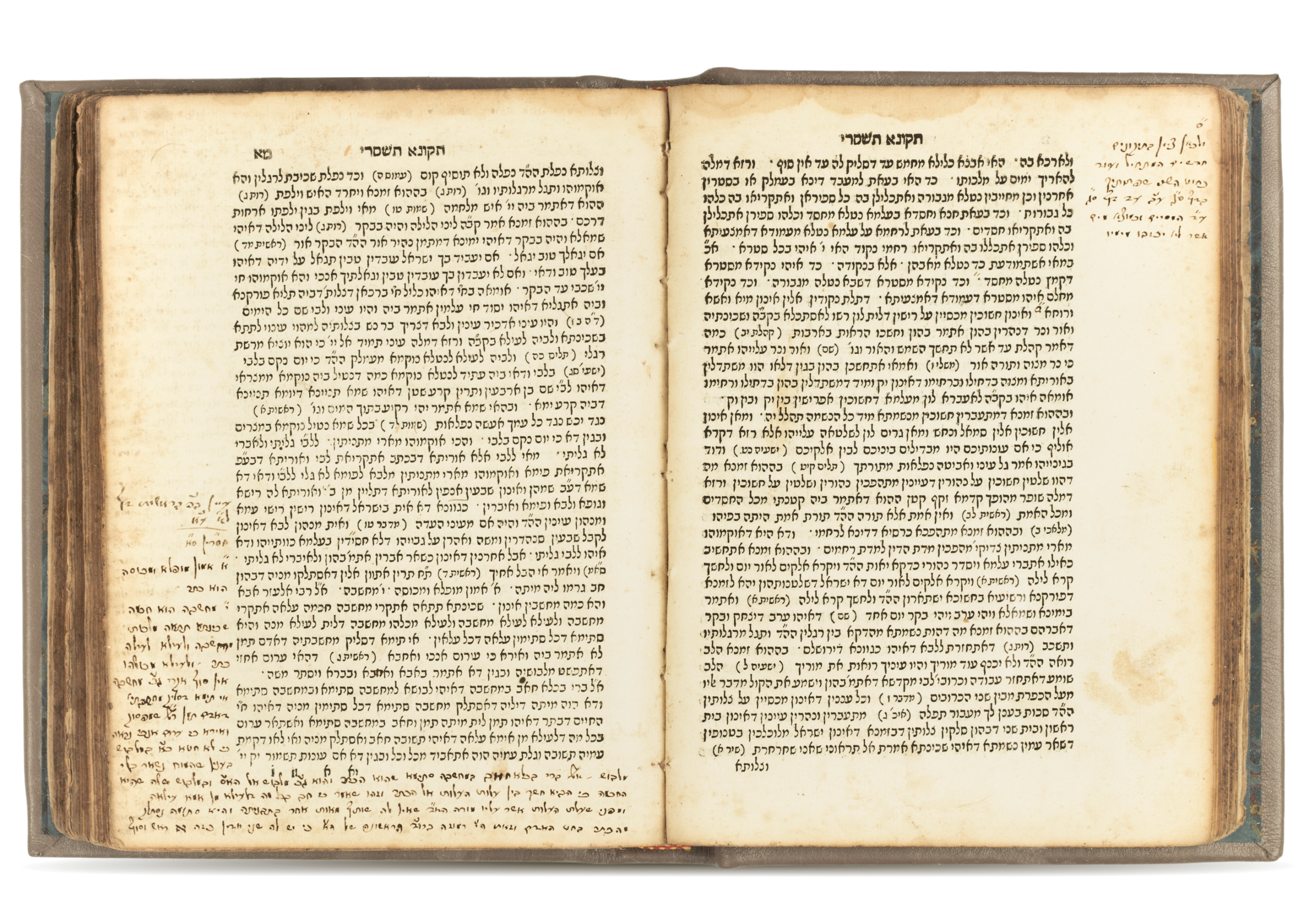
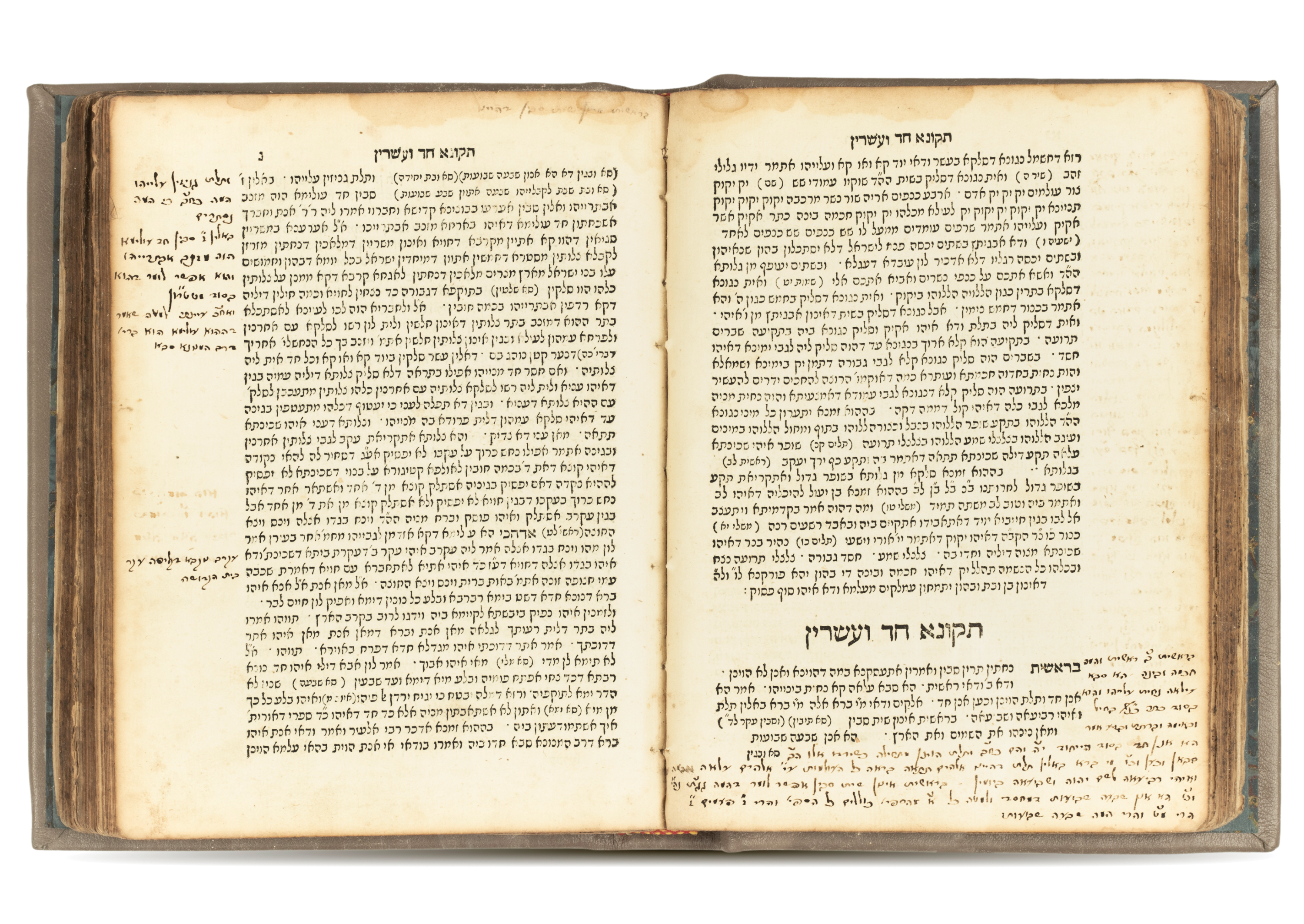
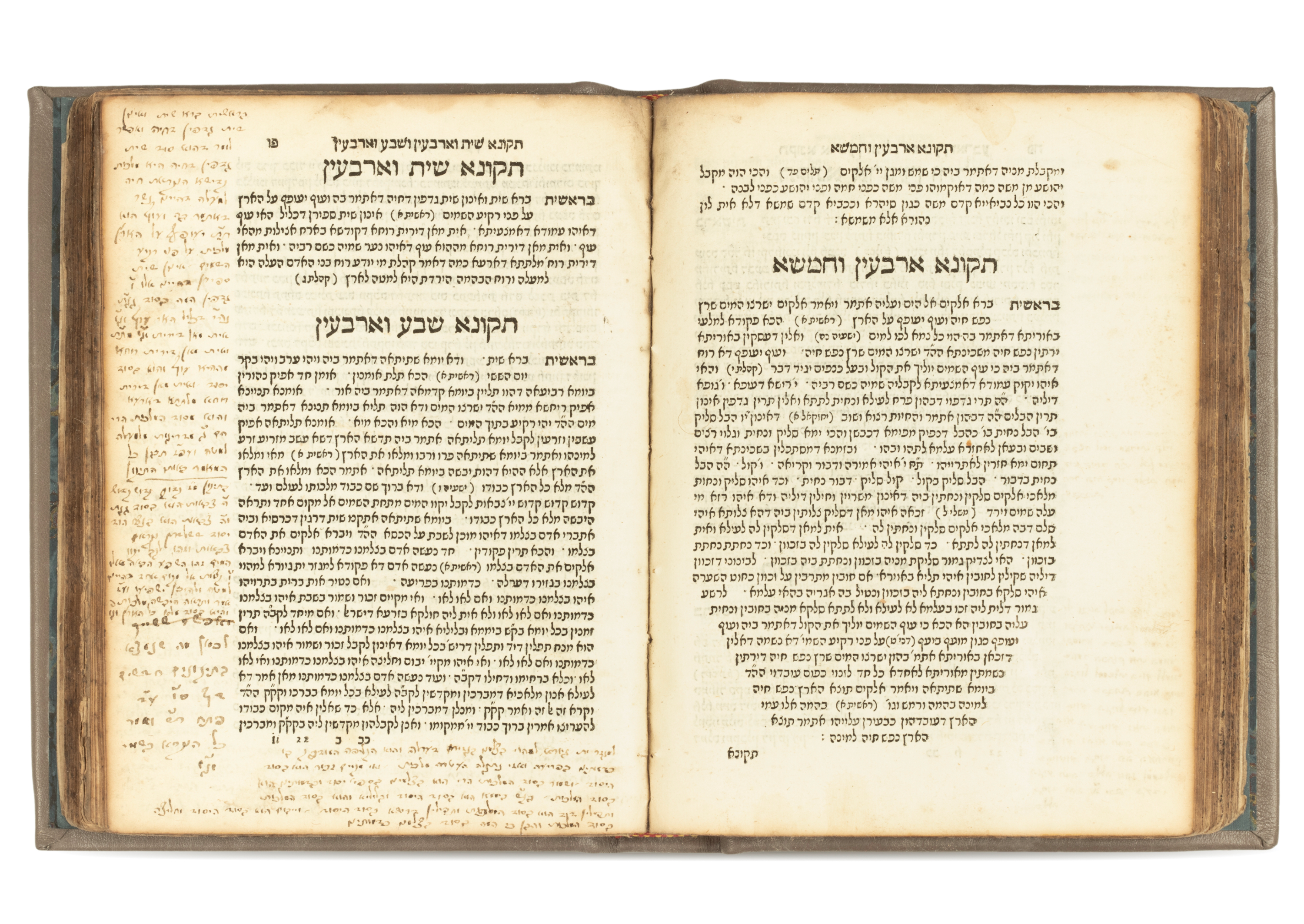
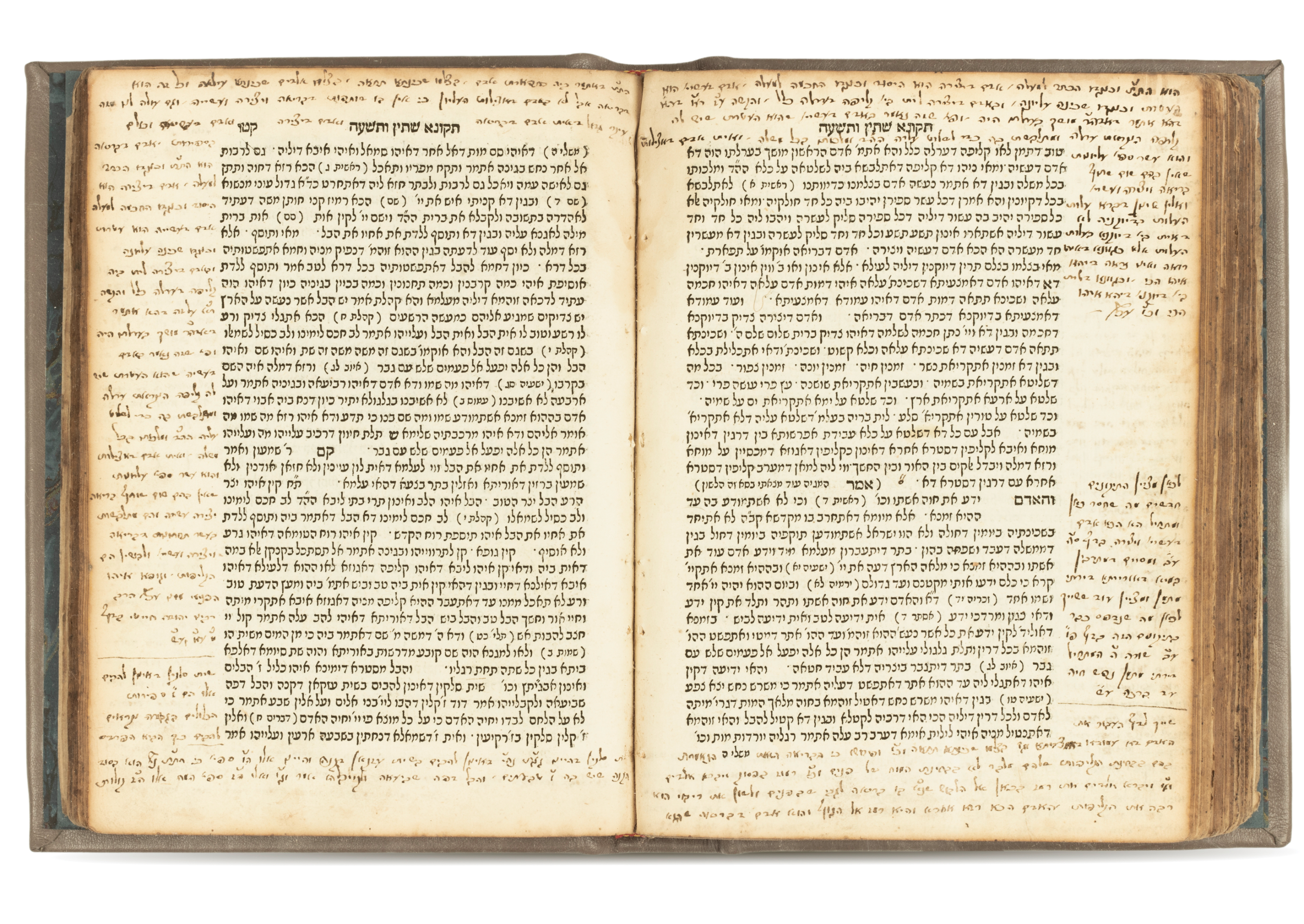
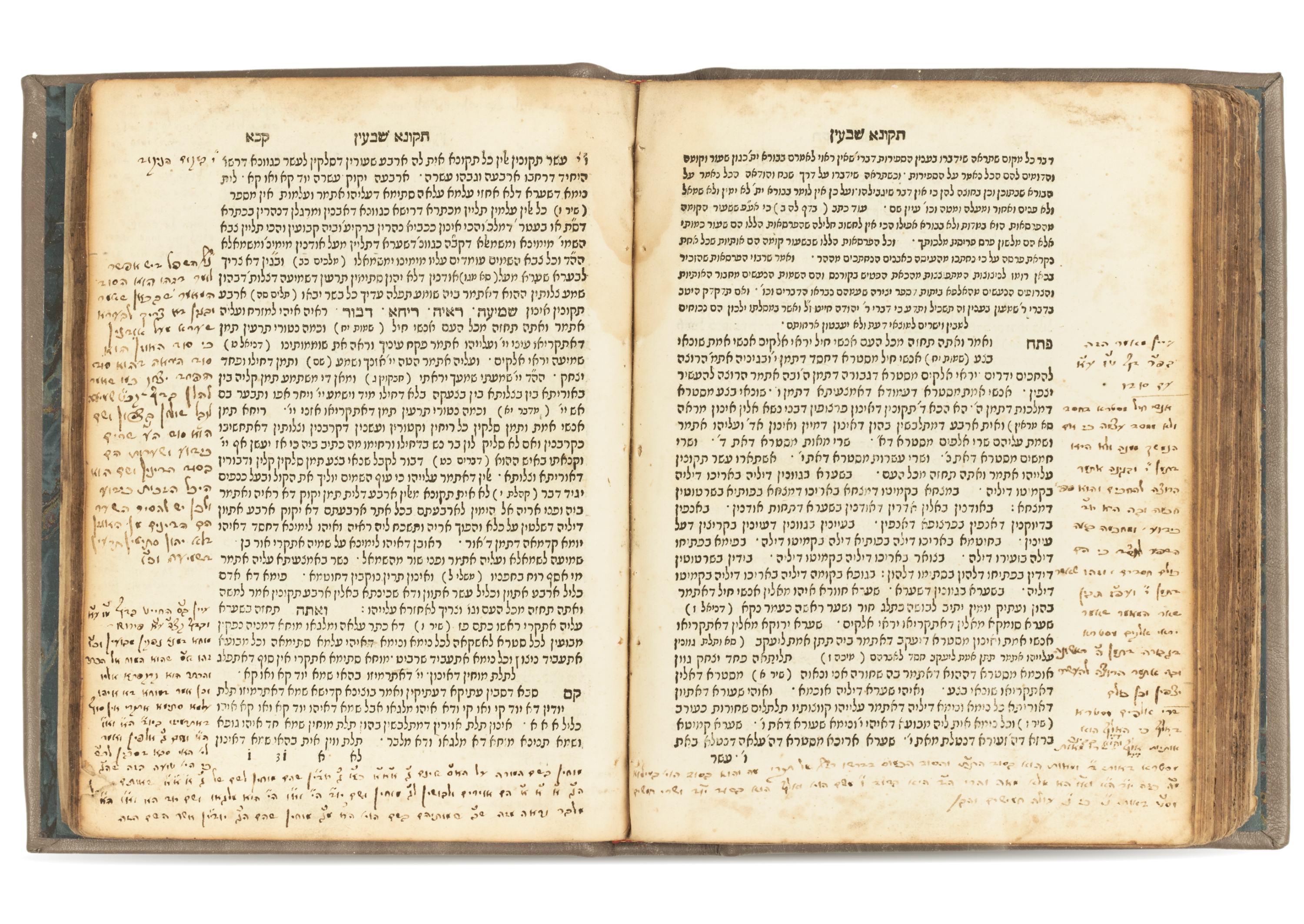
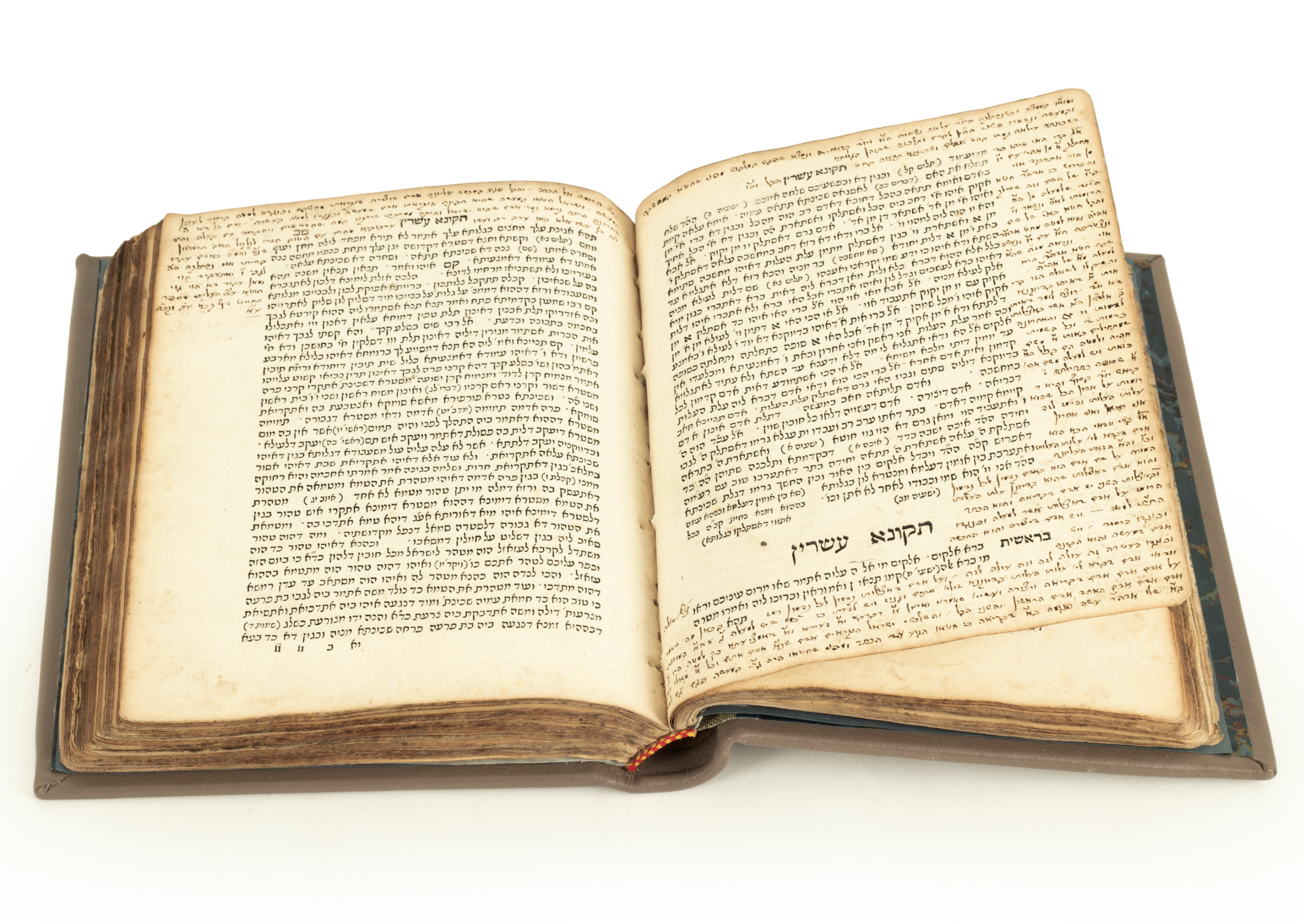
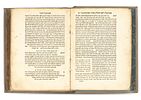
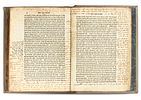
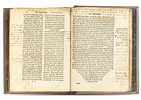
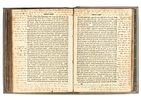
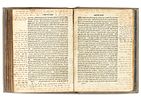
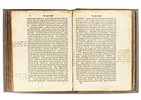
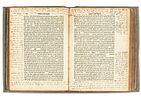
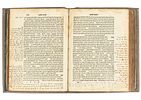
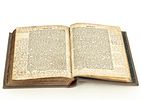
Sefer Tikkunei HaZohar contains seventy tikunim on the first word of the Torah – Breishis – by the holy Tanna Rabbi Shimon bar Yochai, with extensive handwritten Kabbalistic commentary in the margins.
The seventy Tikkunim present seventy interpretations of the word Bereishis. Within these seventy interpretations corresponding to the seventy facets of Torah, Rabbi Shimon bar Yochai concealed fundamental teachings of the hidden Torah.
Tikkunei HaZohar is an integral part of the Zohar, and was printed in Mantua at the same time as the first edition of the Mantua Zohar.
The name of the sefer is mentioned in the Zohar in Parshas Ki Savo. (See the preface to Mikdash Melech which explains why it was called “Tikkunim.”)
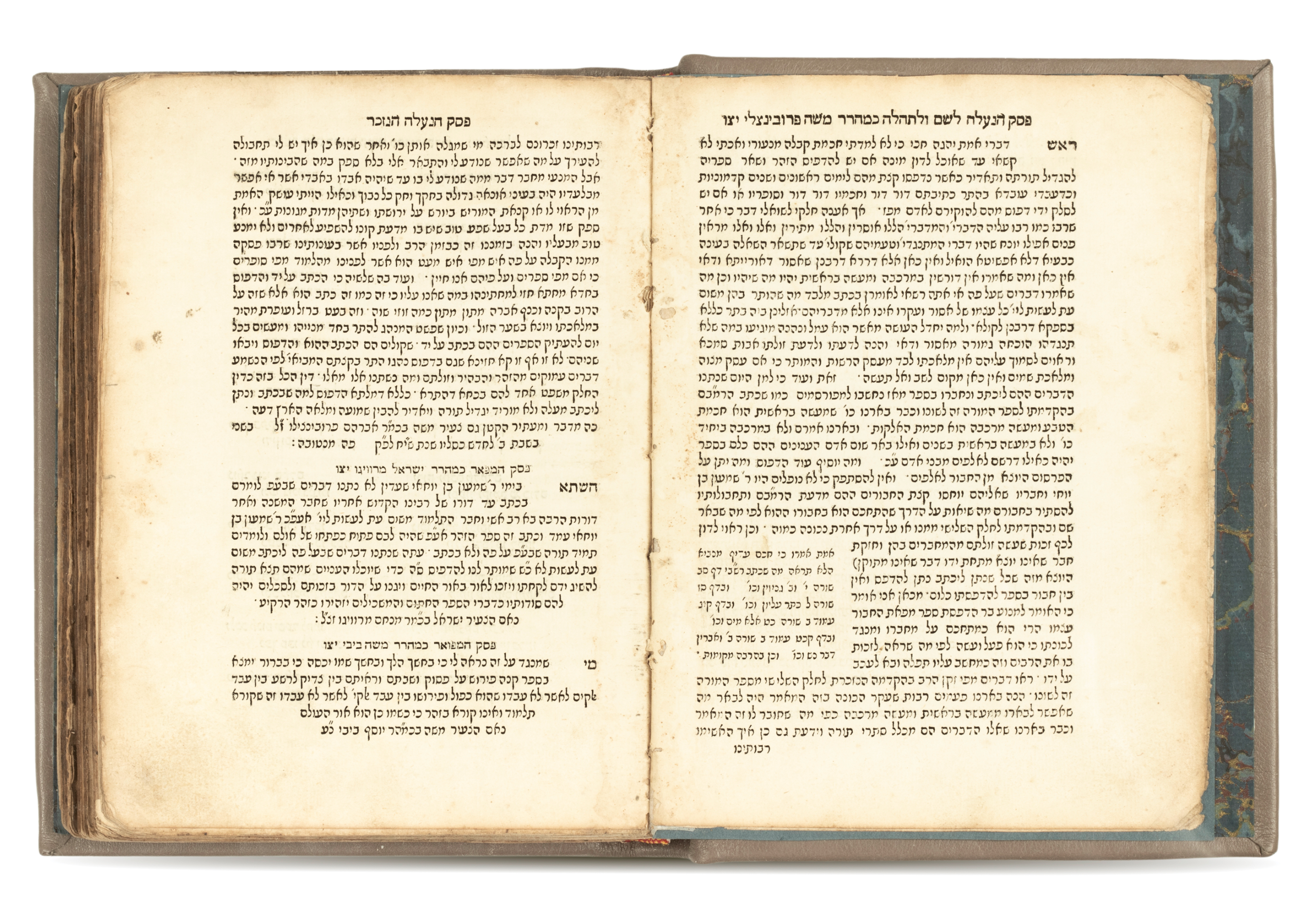
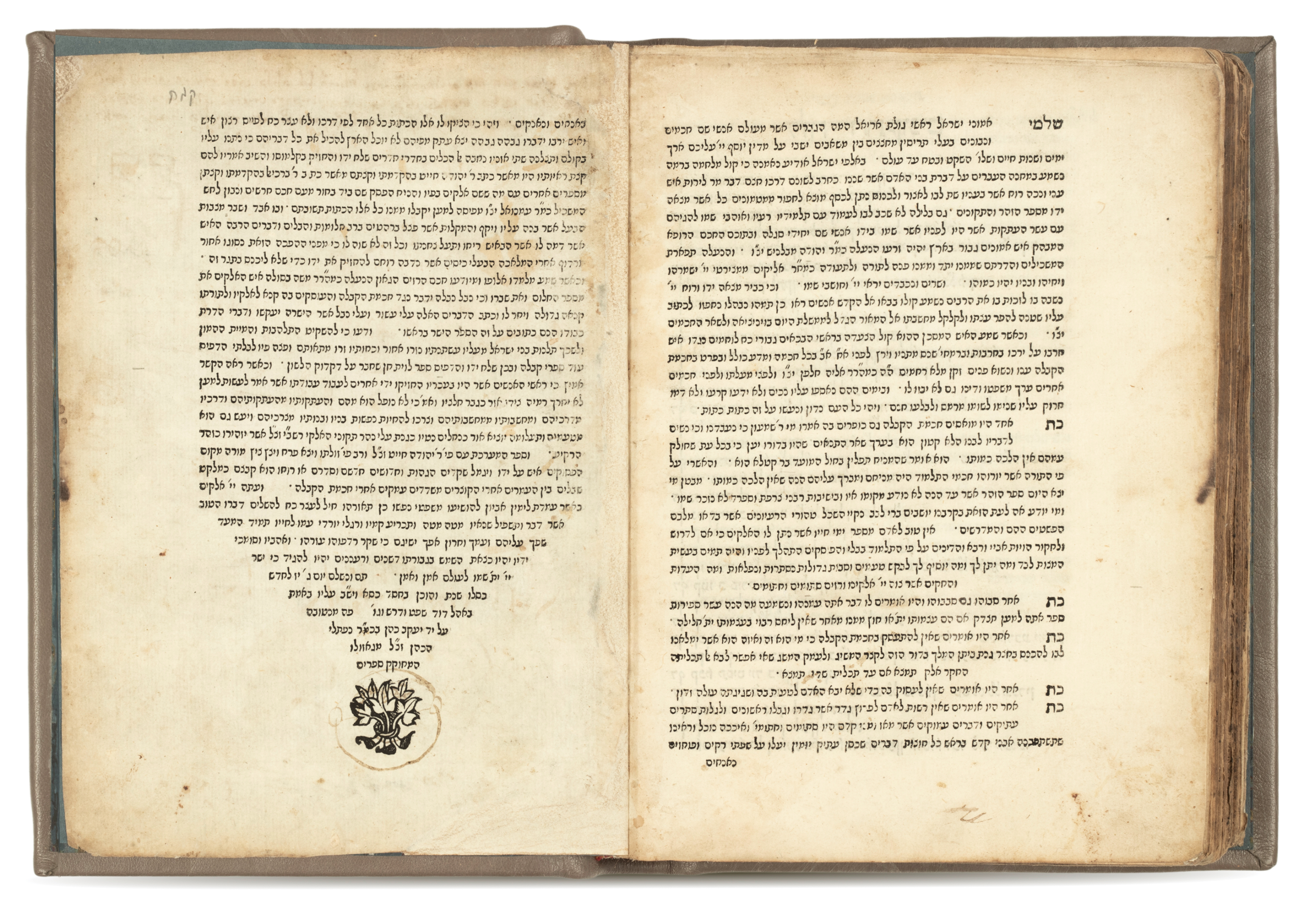
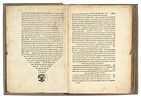
The opening pages of the sefer contain four halachic rulings by Italian rabbanim permitting the printing of the Zohar and Tikkunei HaZohar and the public dissemination of Kabbalistic teachings.
The sefer was brought to print and proofread by Rabbi Emanuel Benvenito, author of the sefer Levias Chen (Mantua, 1557).
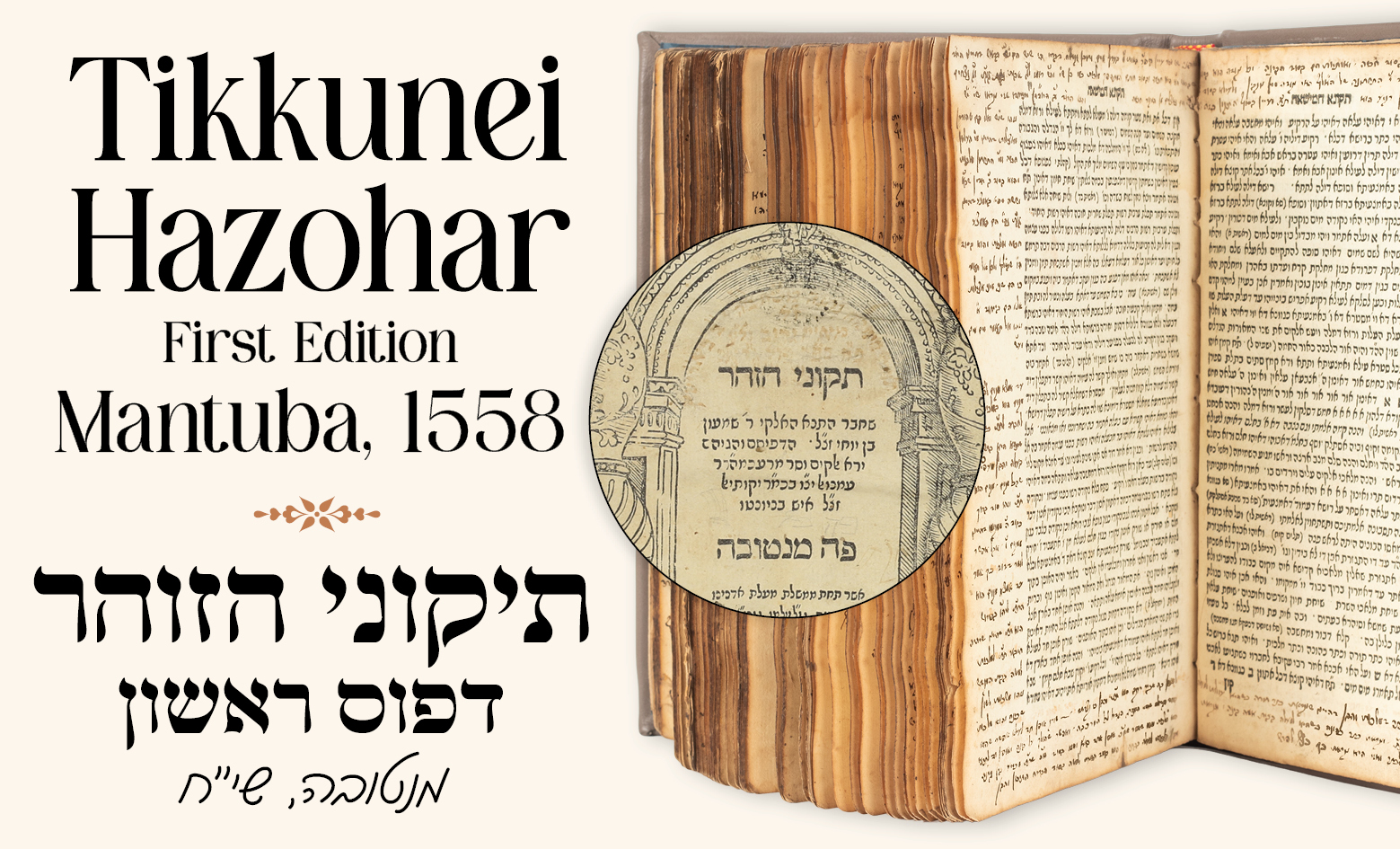
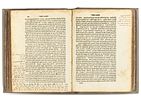
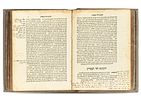
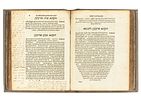
From beginning to end, the margins of this volume are filled with hundreds of kabbalistic chiddushim and explanations, together forming an extensive commentary on Tikkunei HaZohar.
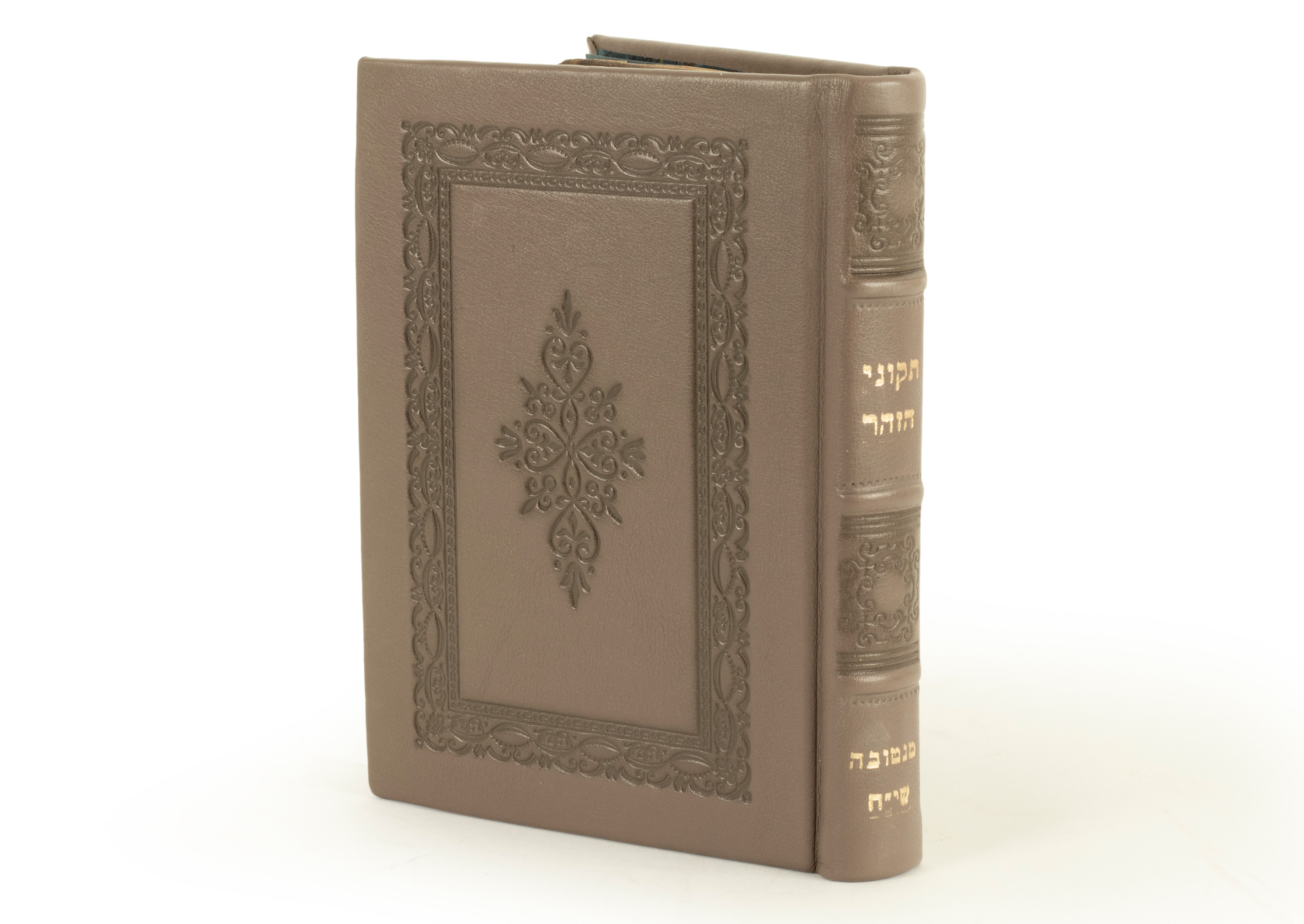
Mantua, 1558. First Edition.
Page Count: [4], 146, [2] leaves.
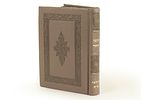
Size: 21 cm.
Condition: Good.
New leather binding
Stefansky, Sifrei Yesod, no. 329.
__________
__________
A Great Segulah
The kabbalists wrote – foremost among them the renowned kabbalist, author of Mikdash Melech, in the introduction to his sefer Kisei Melech on Tikkunei HaZohar – that
Tikkunei HaZohar should be studied from Rosh Chodesh Elul through Yom Kippur. This was indeed the practice of tzaddikim, and is considered a great segulah “to bring about tikkunim for every Jewish soul” (in the words of the Rebbe of Izhbitza in Mei HaShiloach). Several editions of Tikkunei HaZohar even include a daily schedule dividing the study among these days.
Tikkunei HaZohar should be studied from Rosh Chodesh Elul through Yom Kippur. This was indeed the practice of tzaddikim, and is considered a great segulah “to bring about tikkunim for every Jewish soul” (in the words of the Rebbe of Izhbitza in Mei HaShiloach). Several editions of Tikkunei HaZohar even include a daily schedule dividing the study among these days.
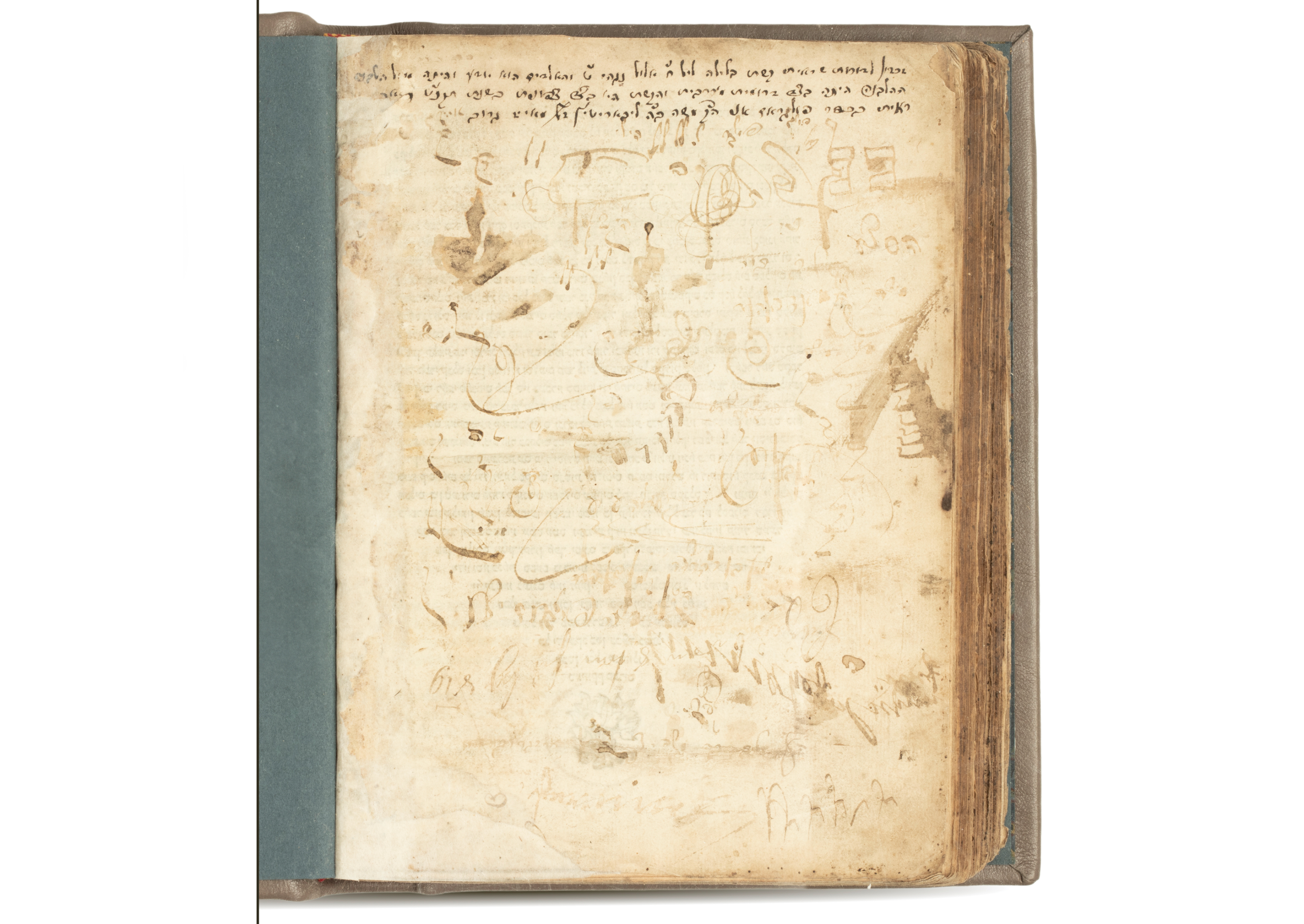
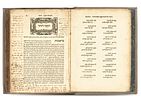
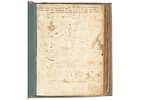
In the present volume, a handwritten study schedule appears at the beginning of the sefer, beginning on the first of Tammuz and continuing until after Yom Kippur.
