




Lot : 4

Two Sifrei Yesod First Editions Bound Together: 
Shu”t Ralbach - Kuntres HaSemichah, Venice, 1565
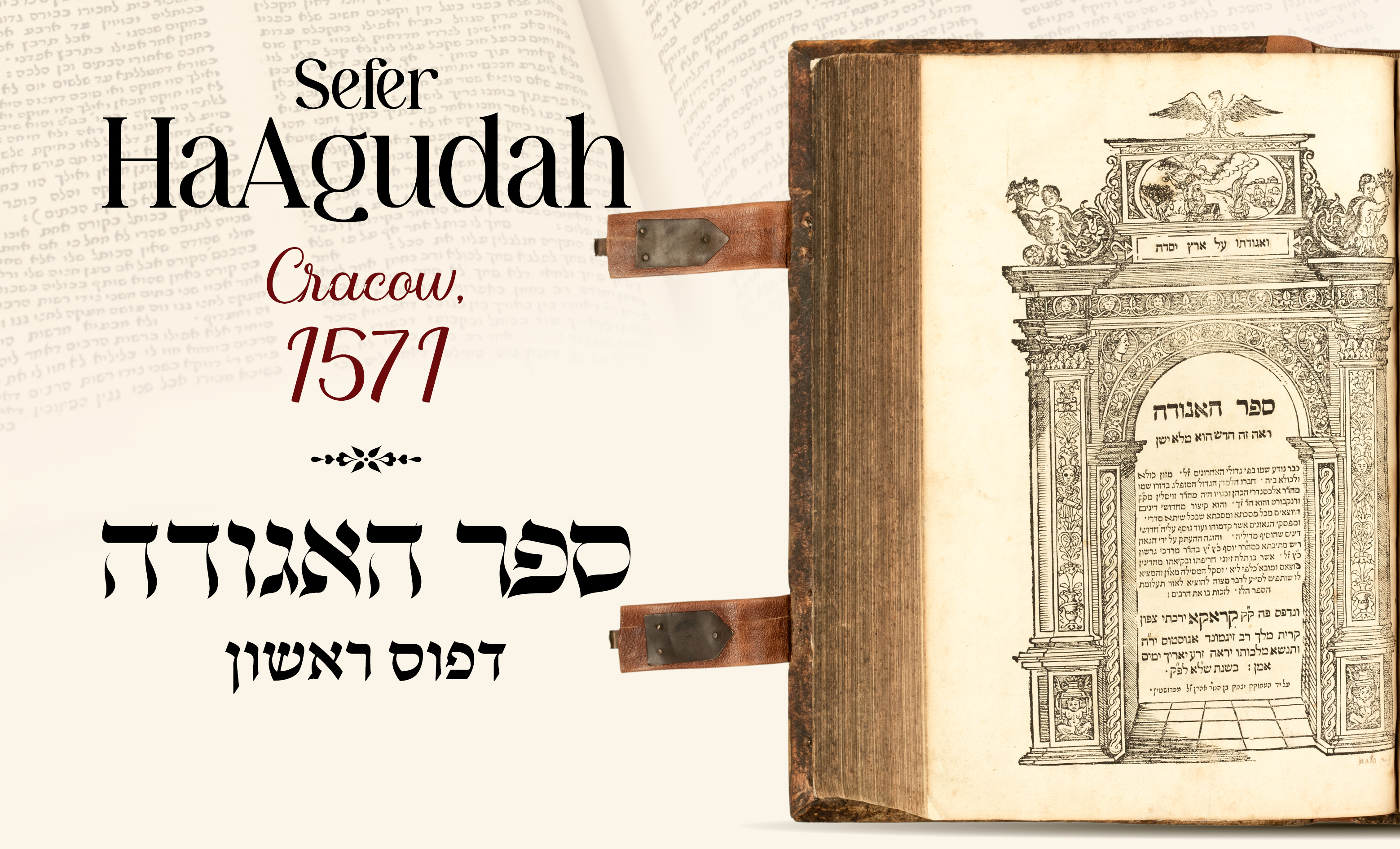
and Sefer Agudah, Cracow, 1571

Images
Two Sifrei Yesod First Editions Bound Together: 
Shu”t Ralbach – Kuntres HaSemichah, Venice, 1565
and Sefer Agudah, Cracow, 1571

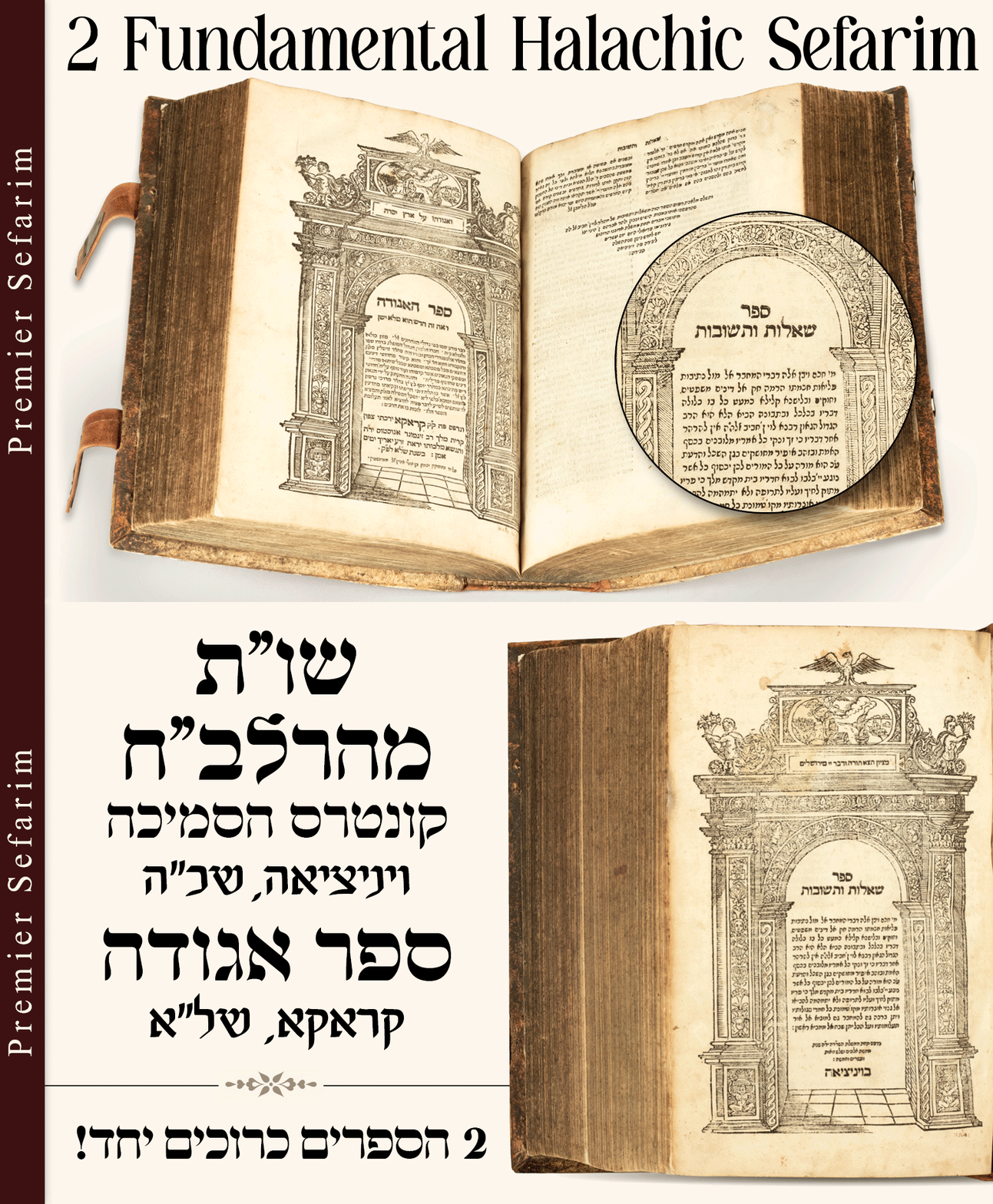
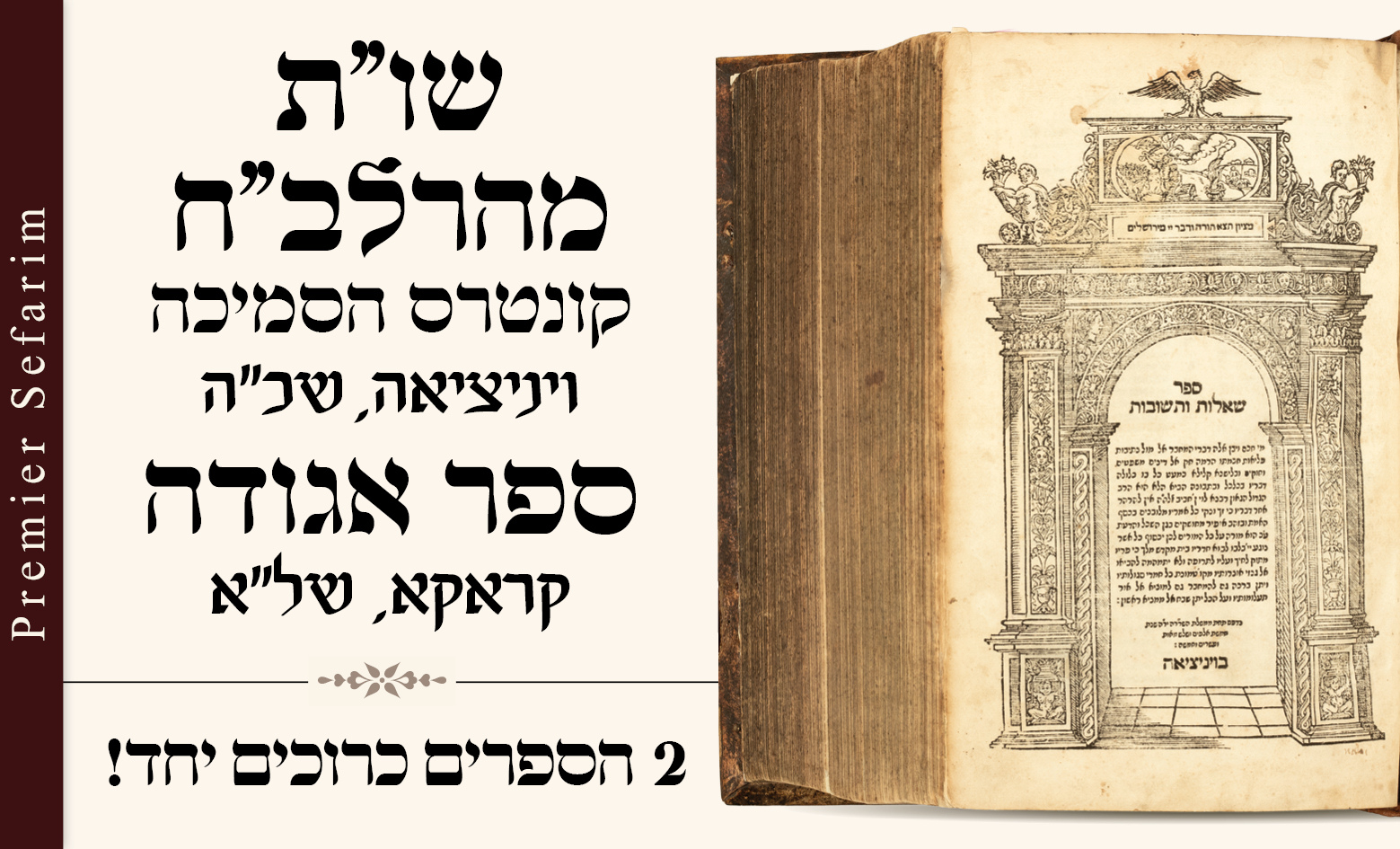
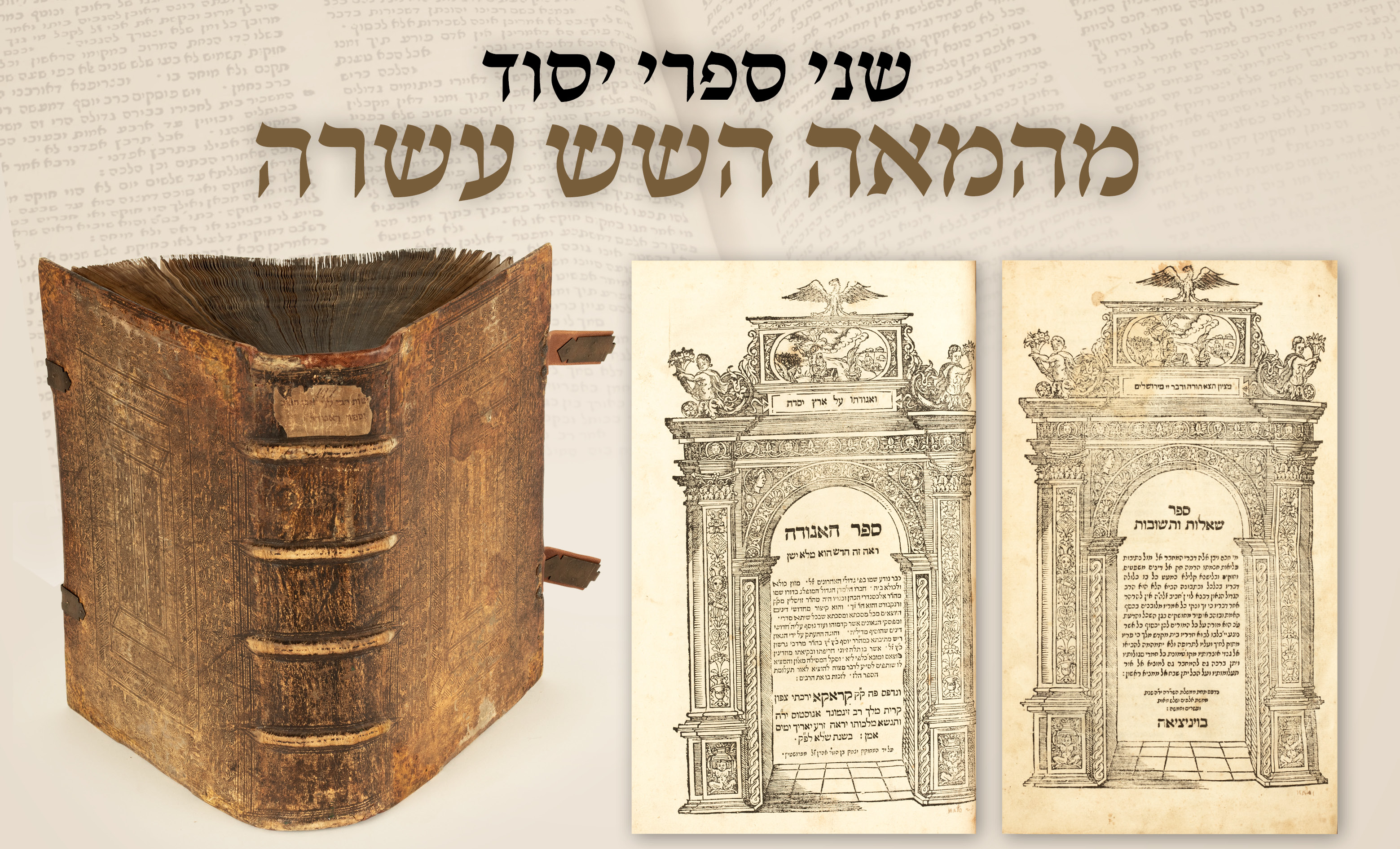
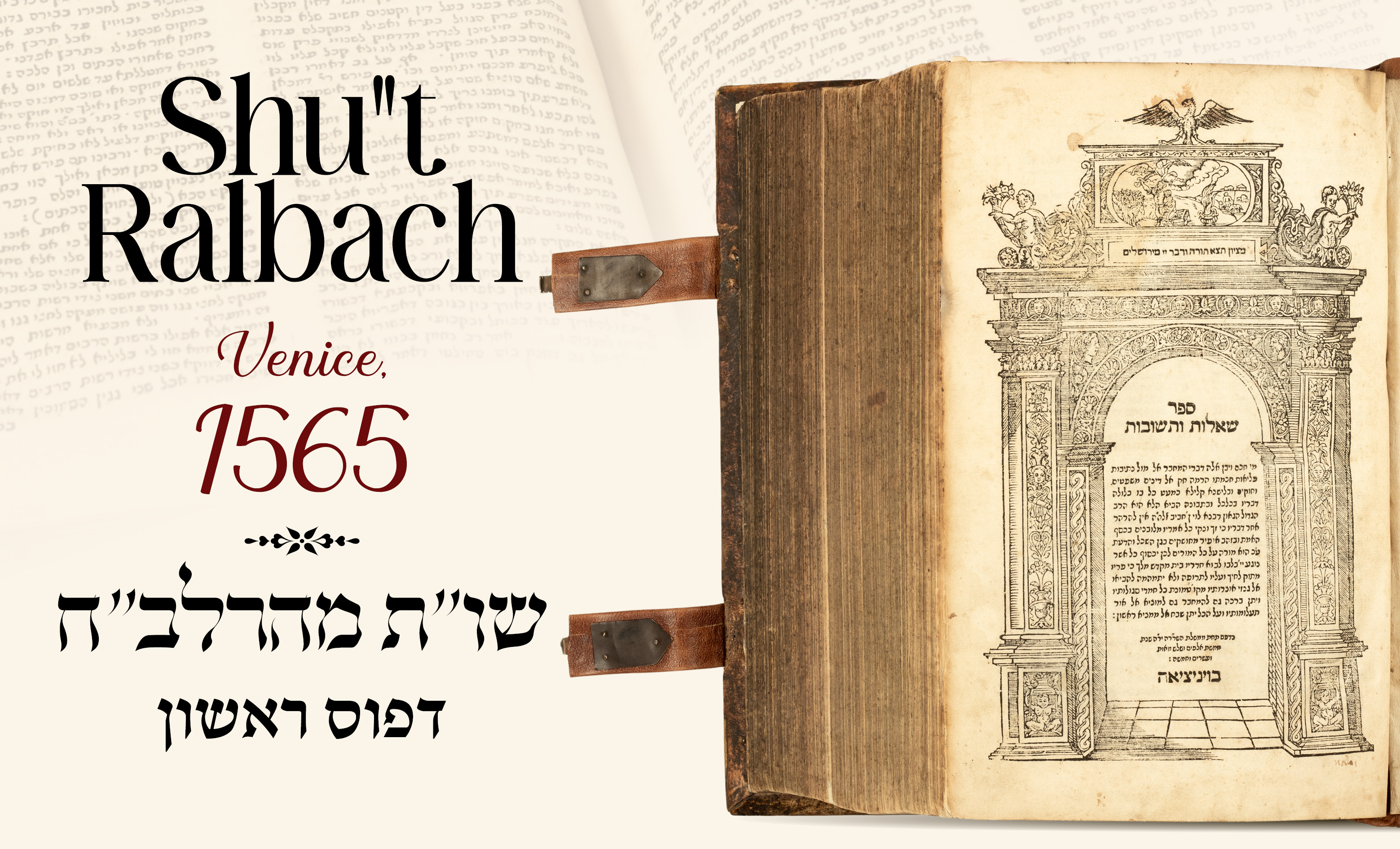
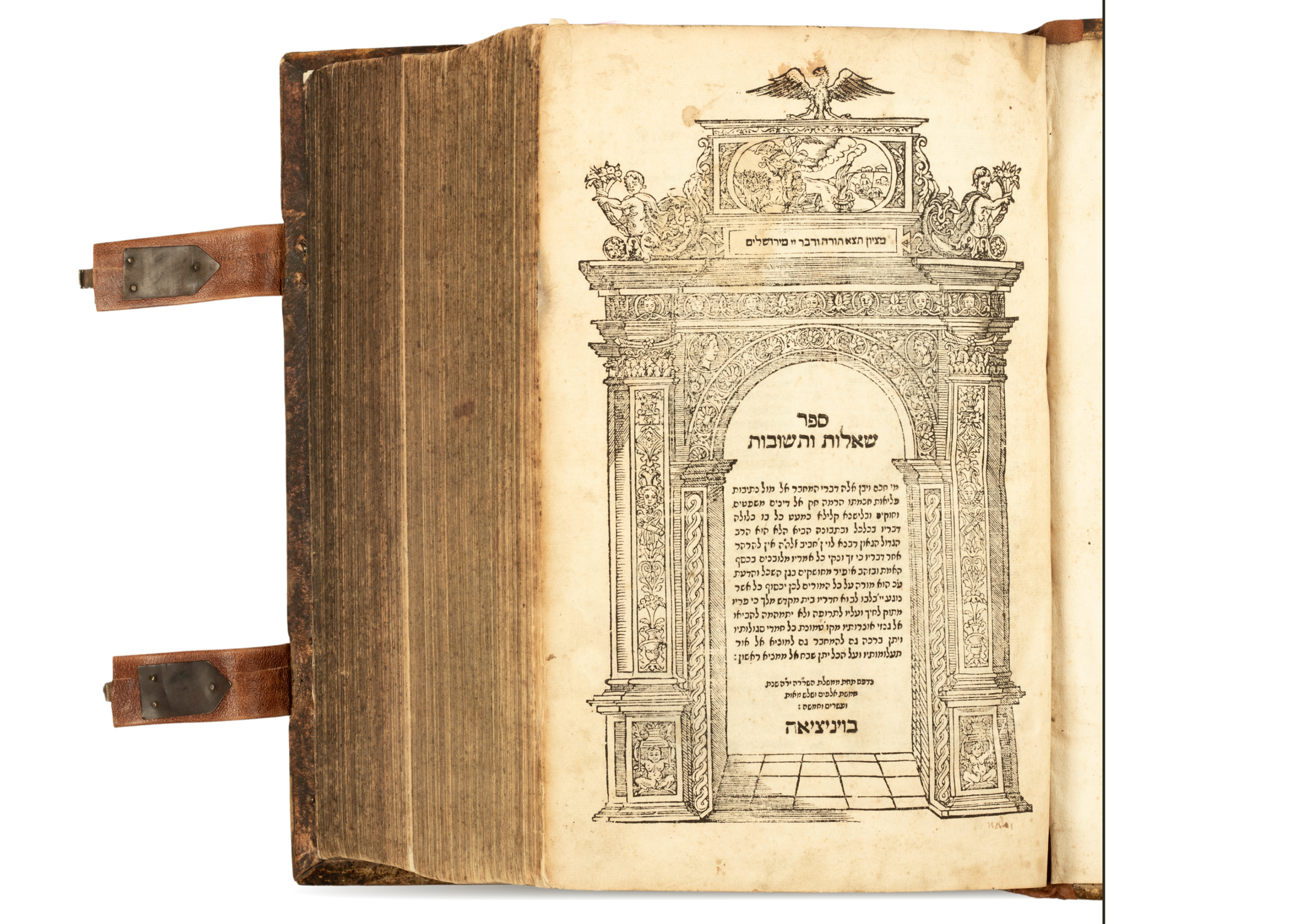
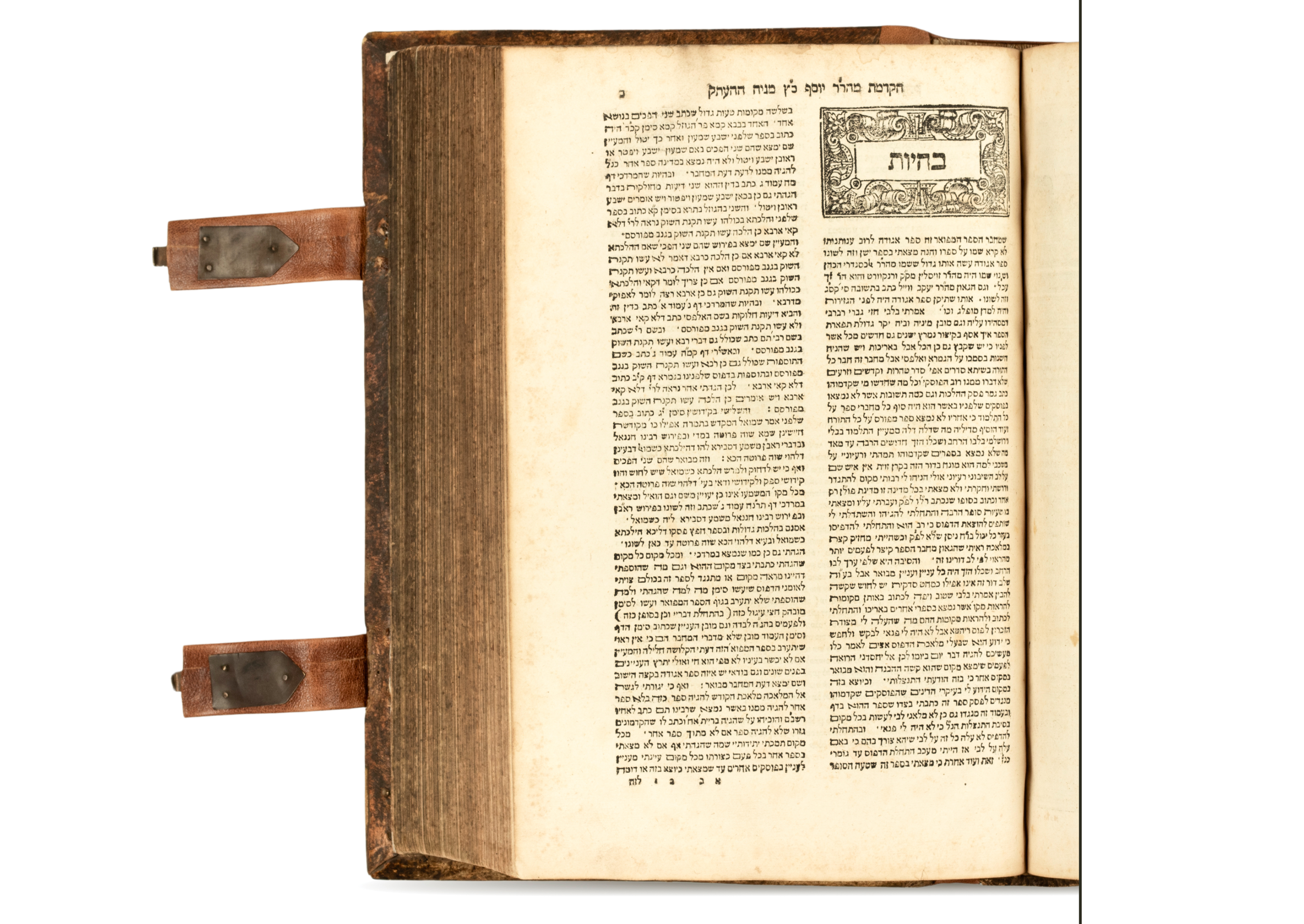
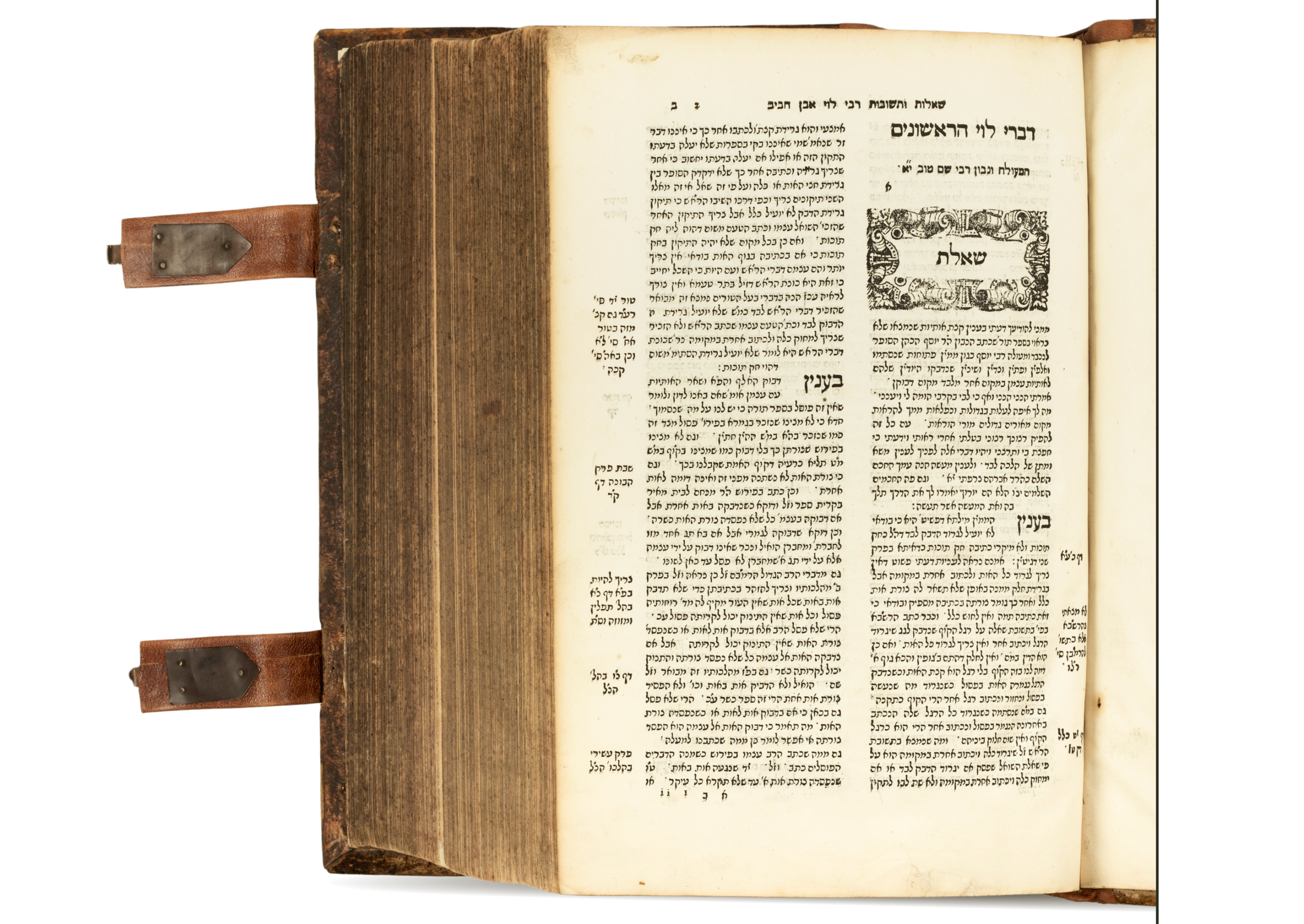
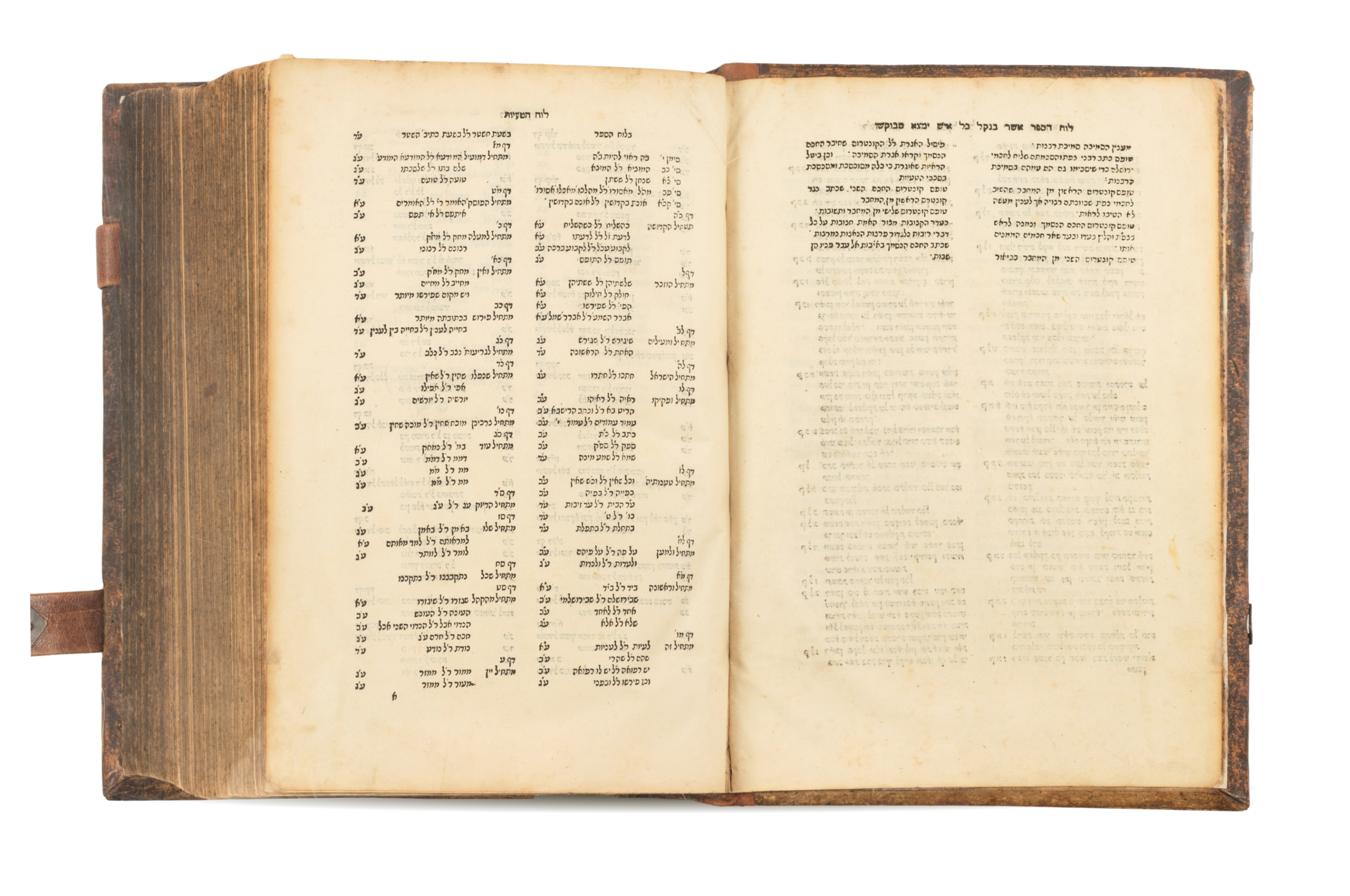
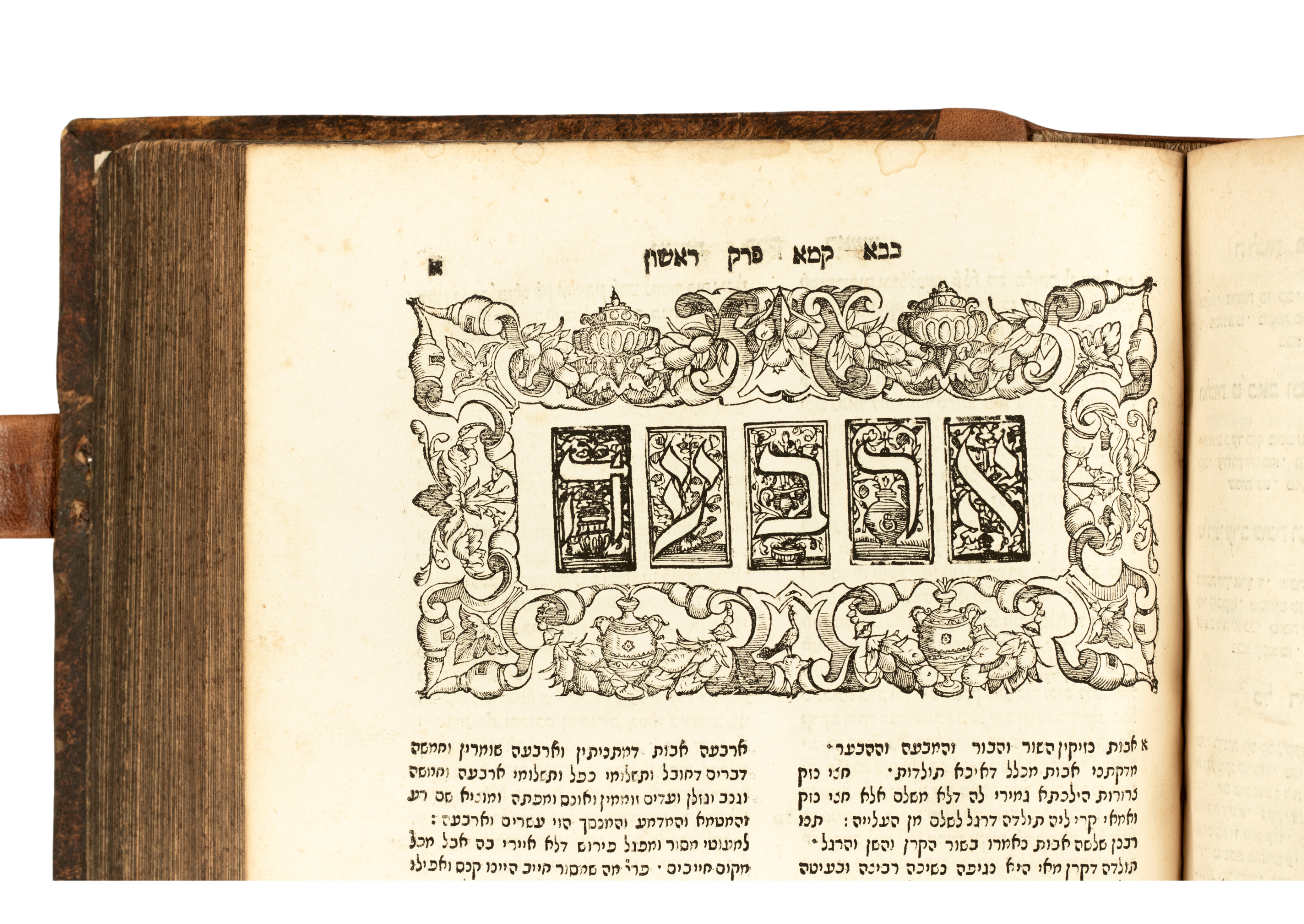
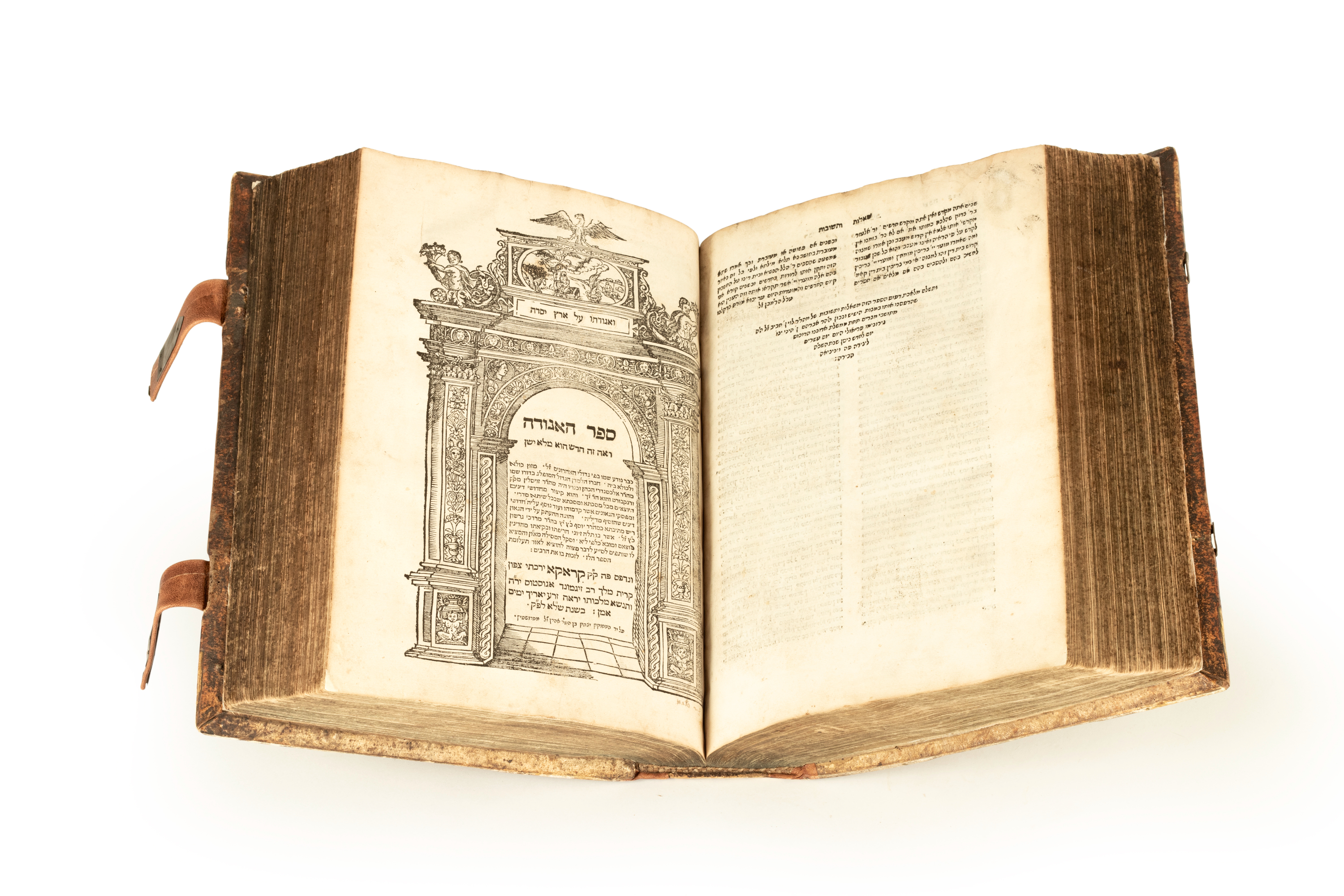
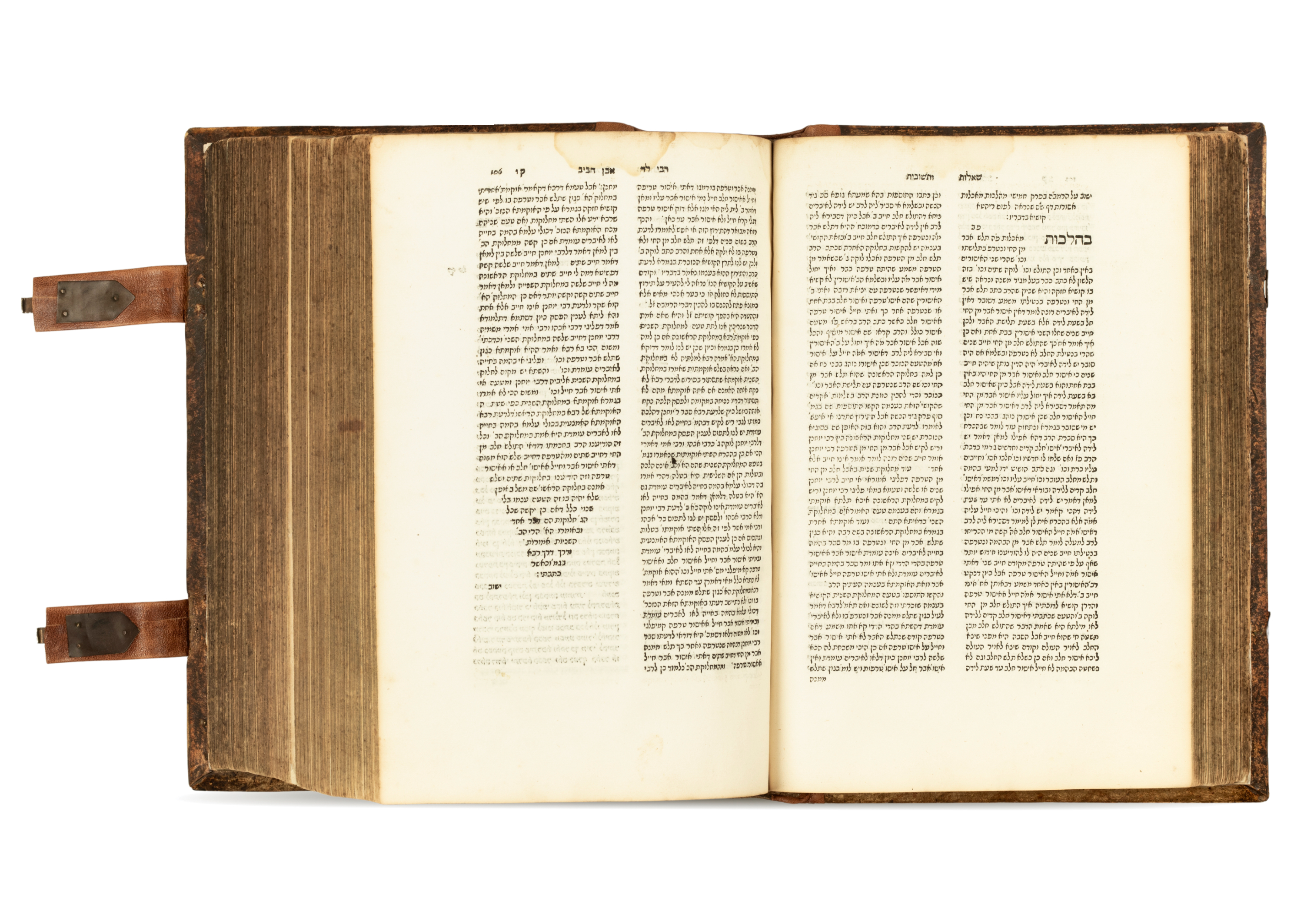
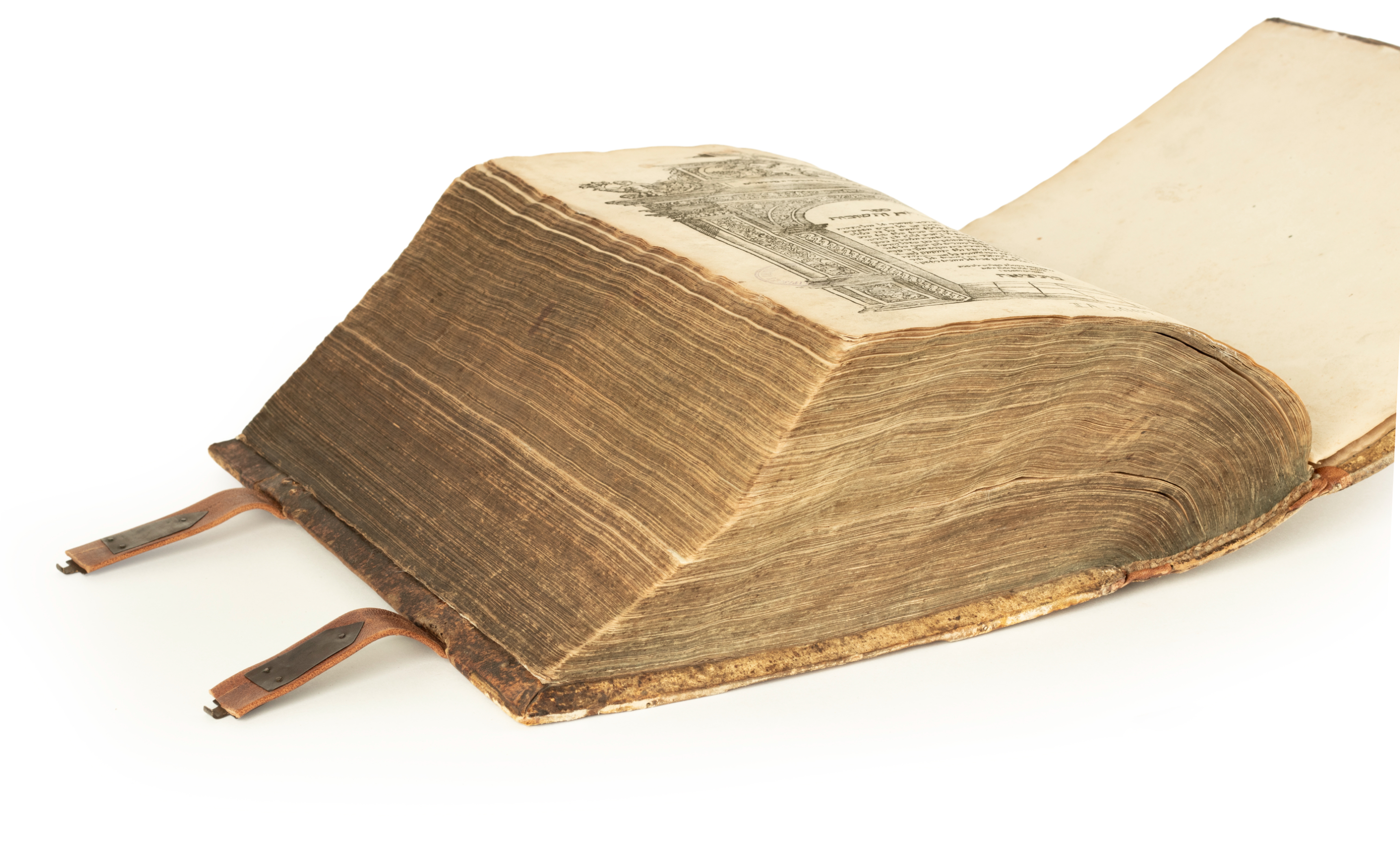
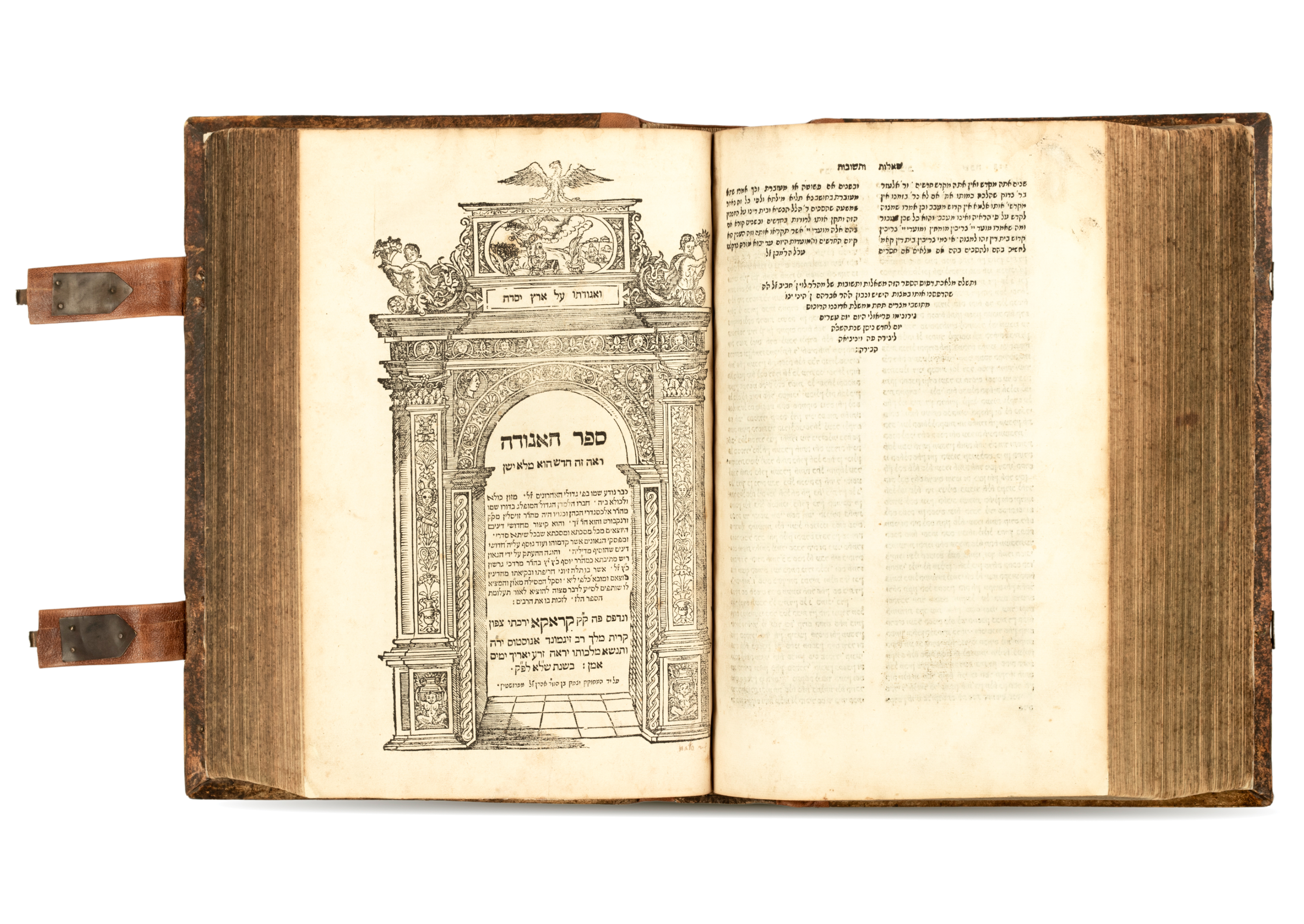
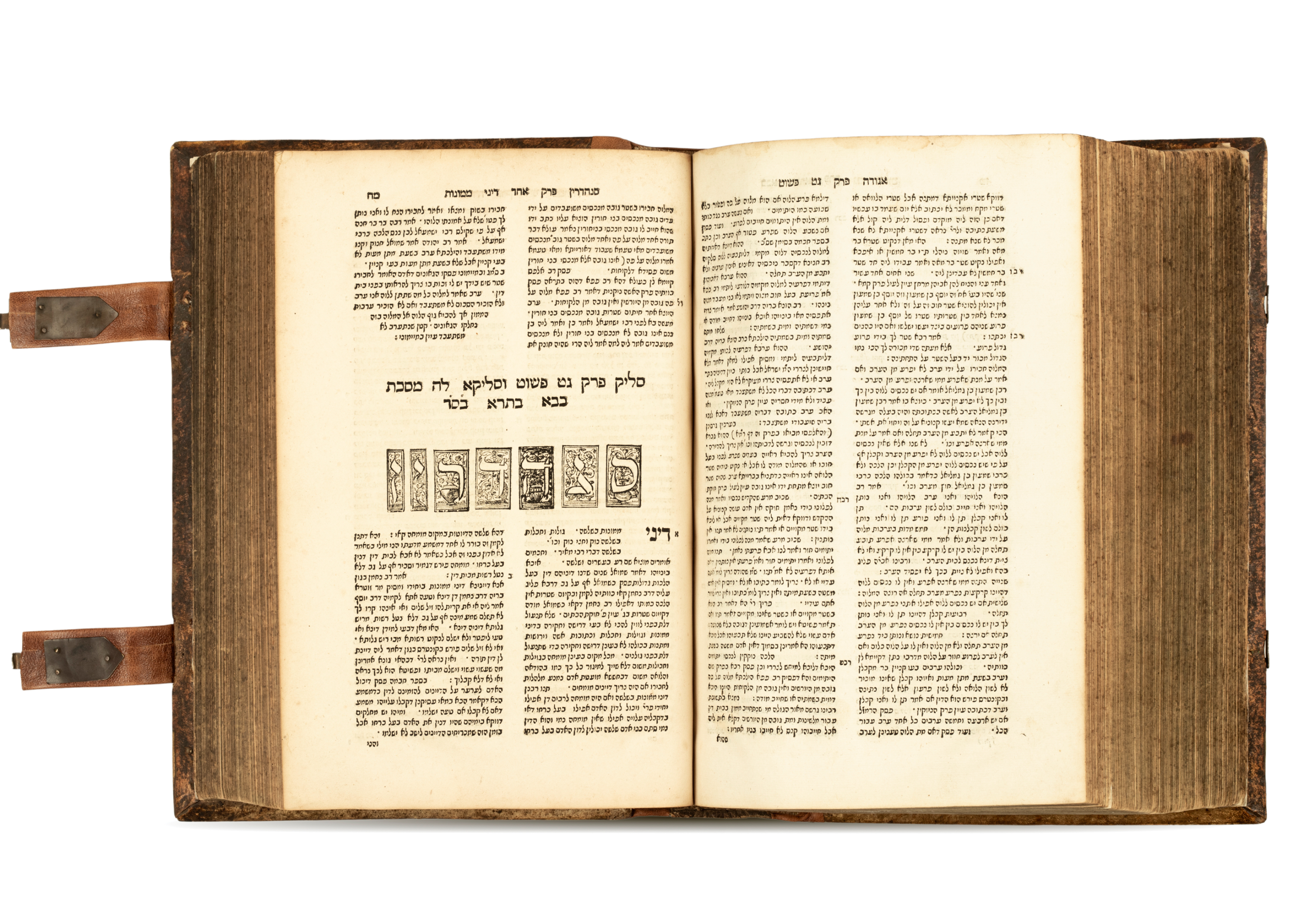
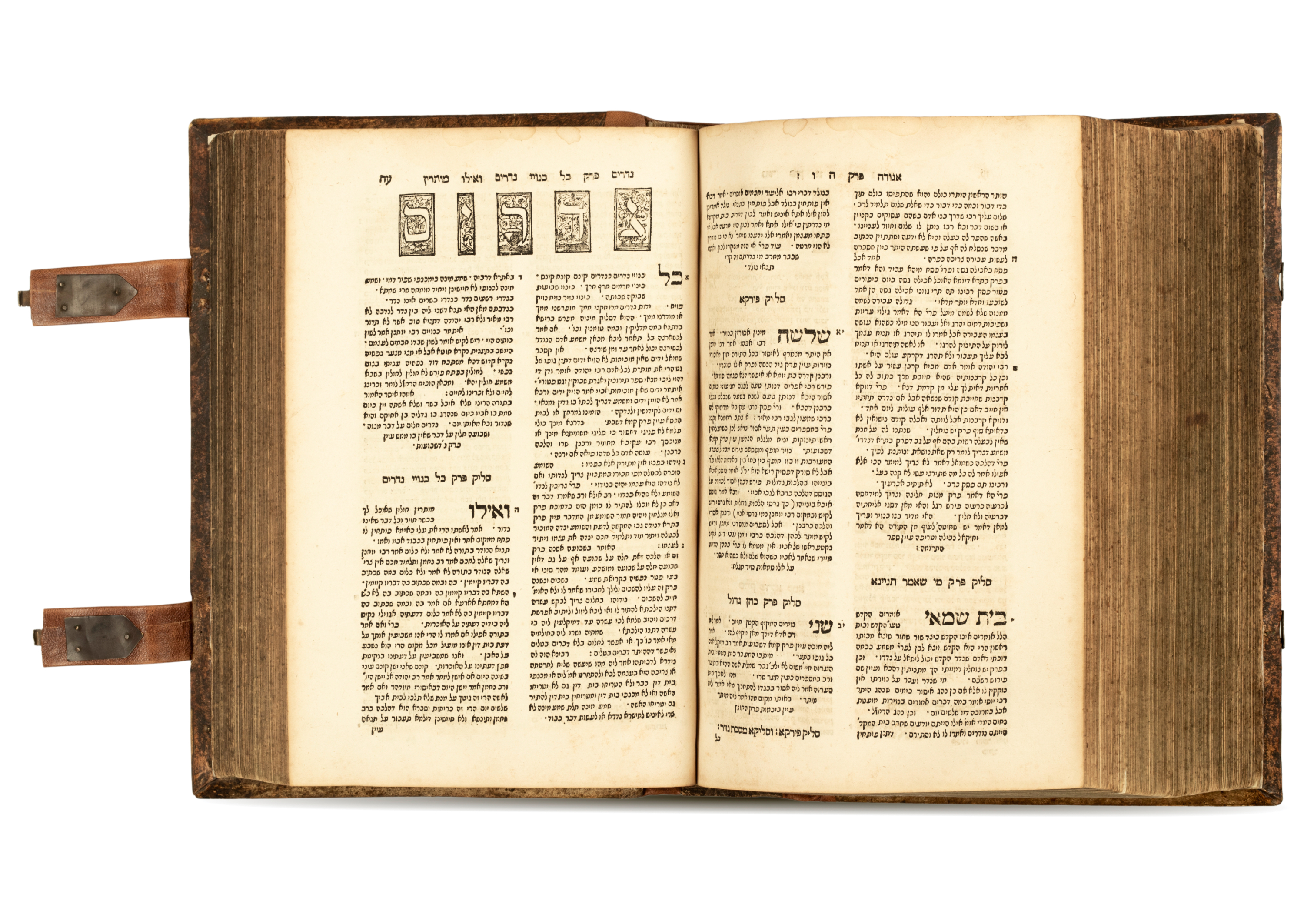
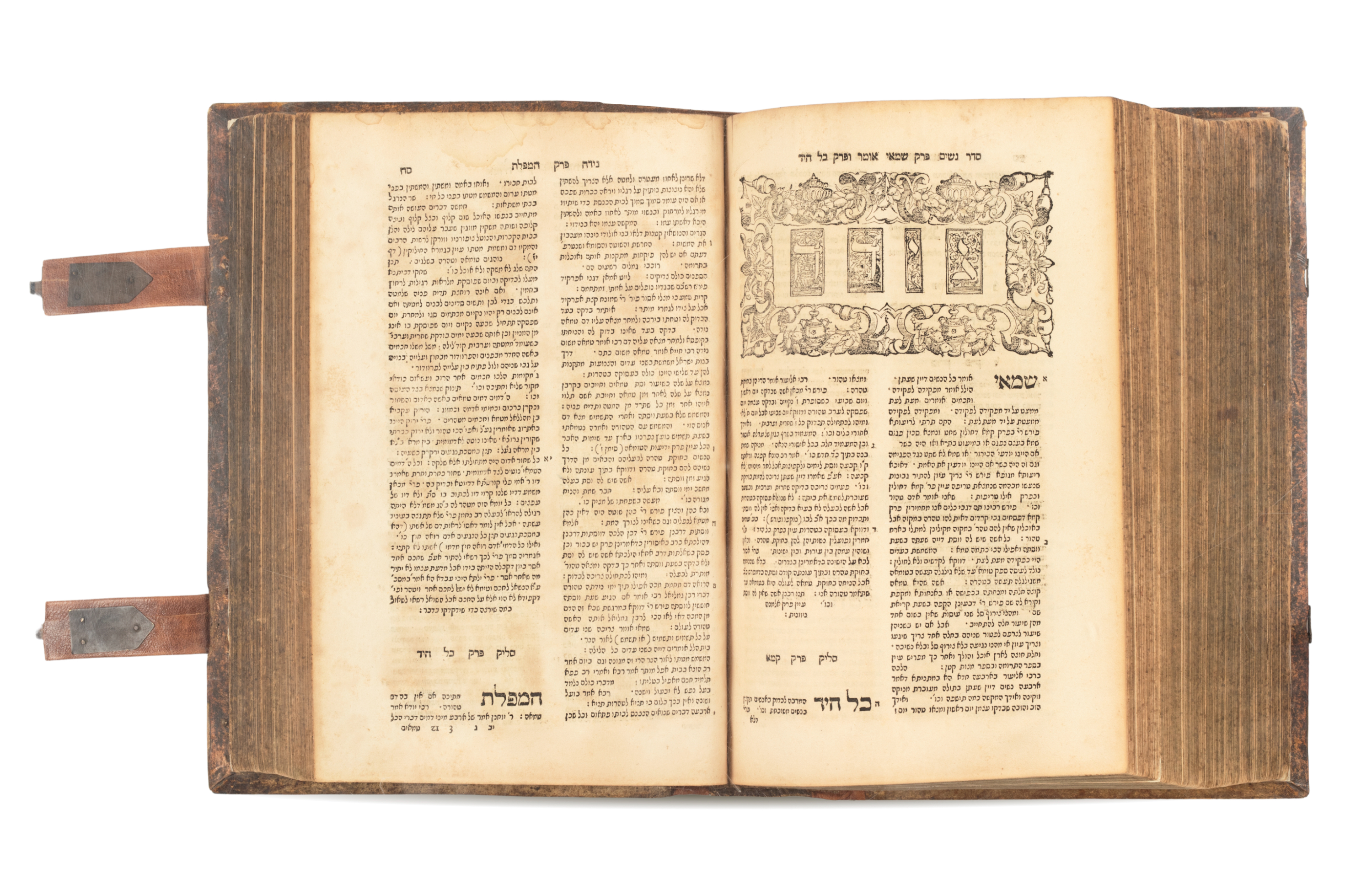
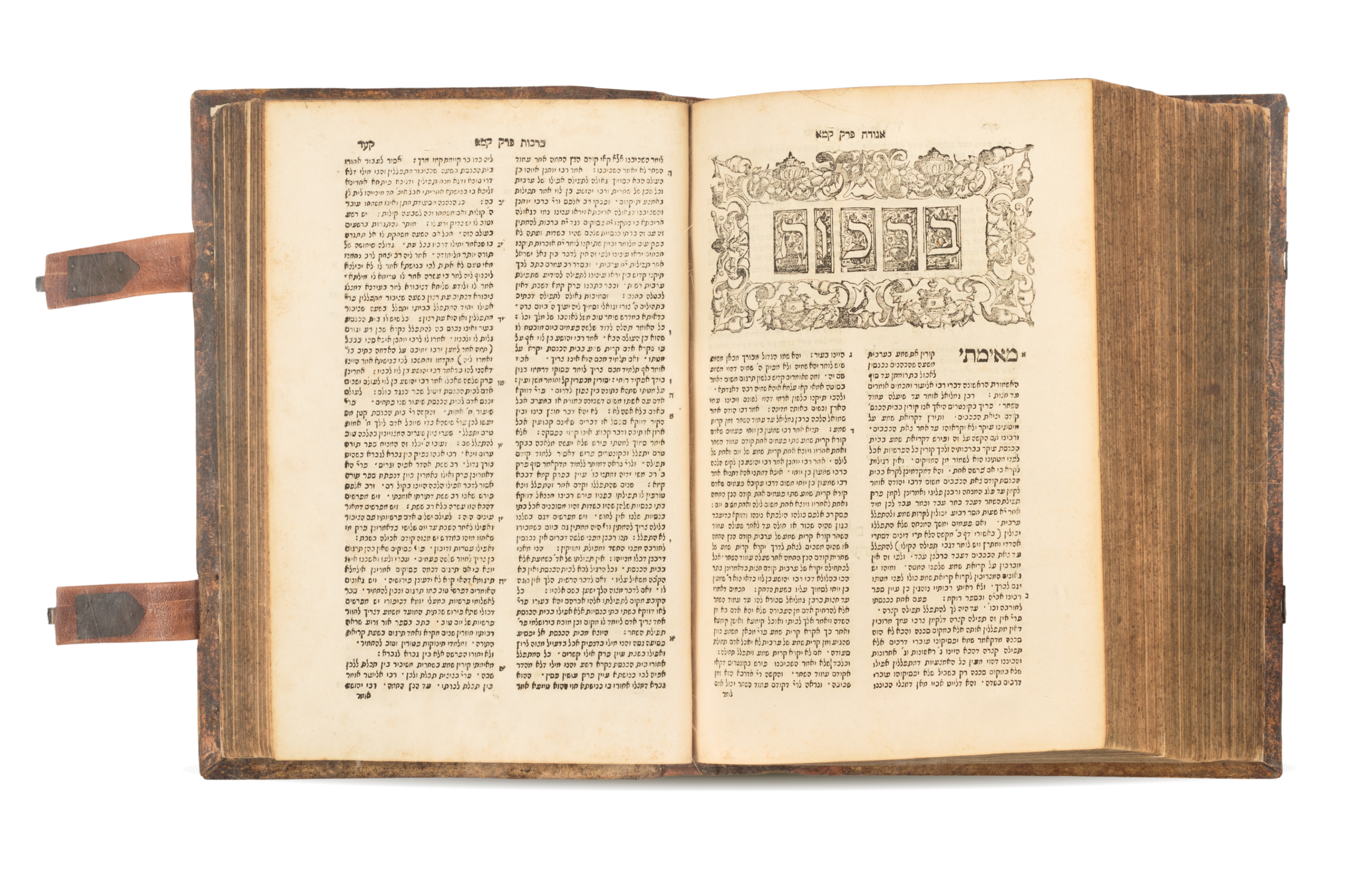
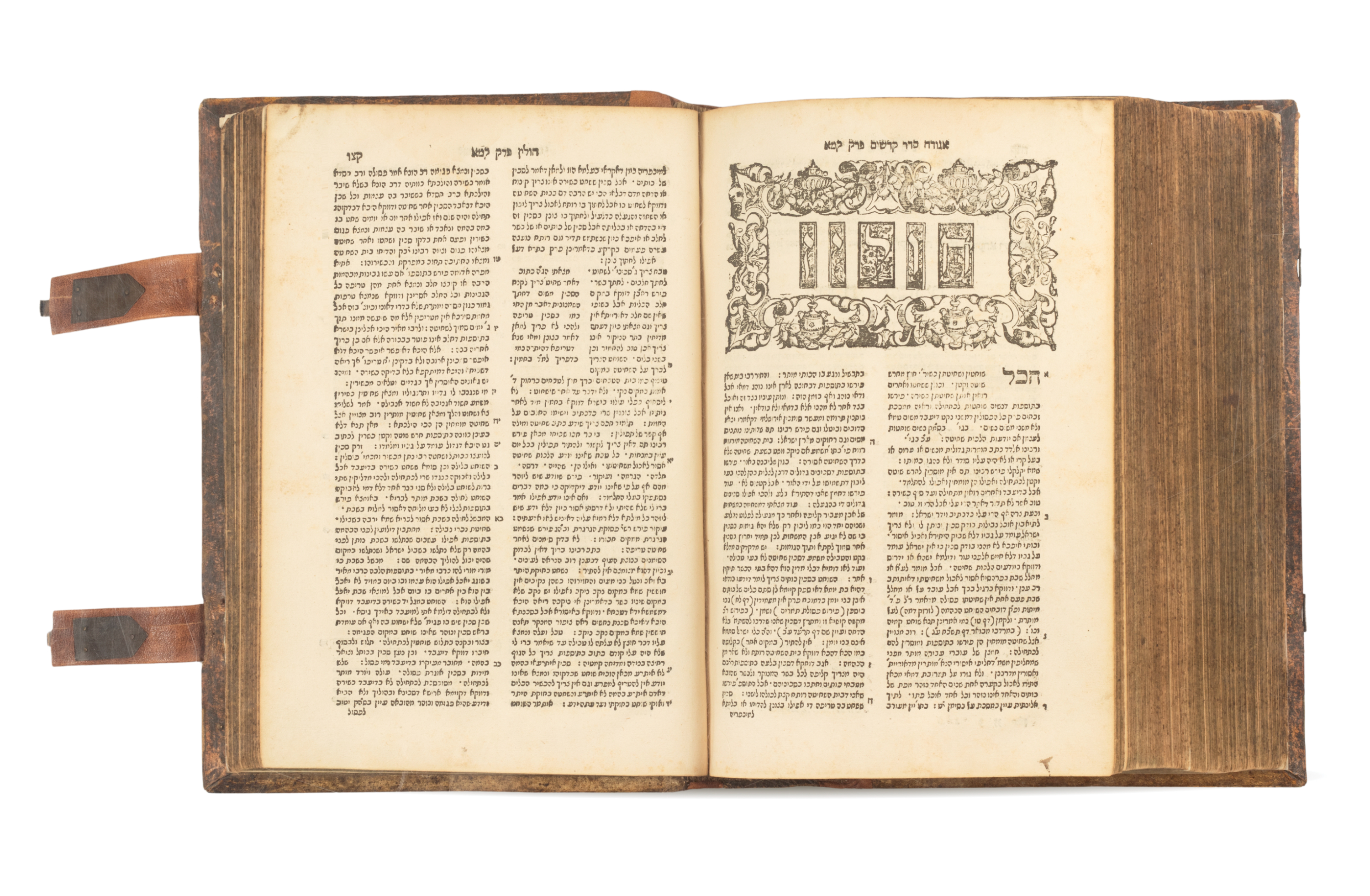
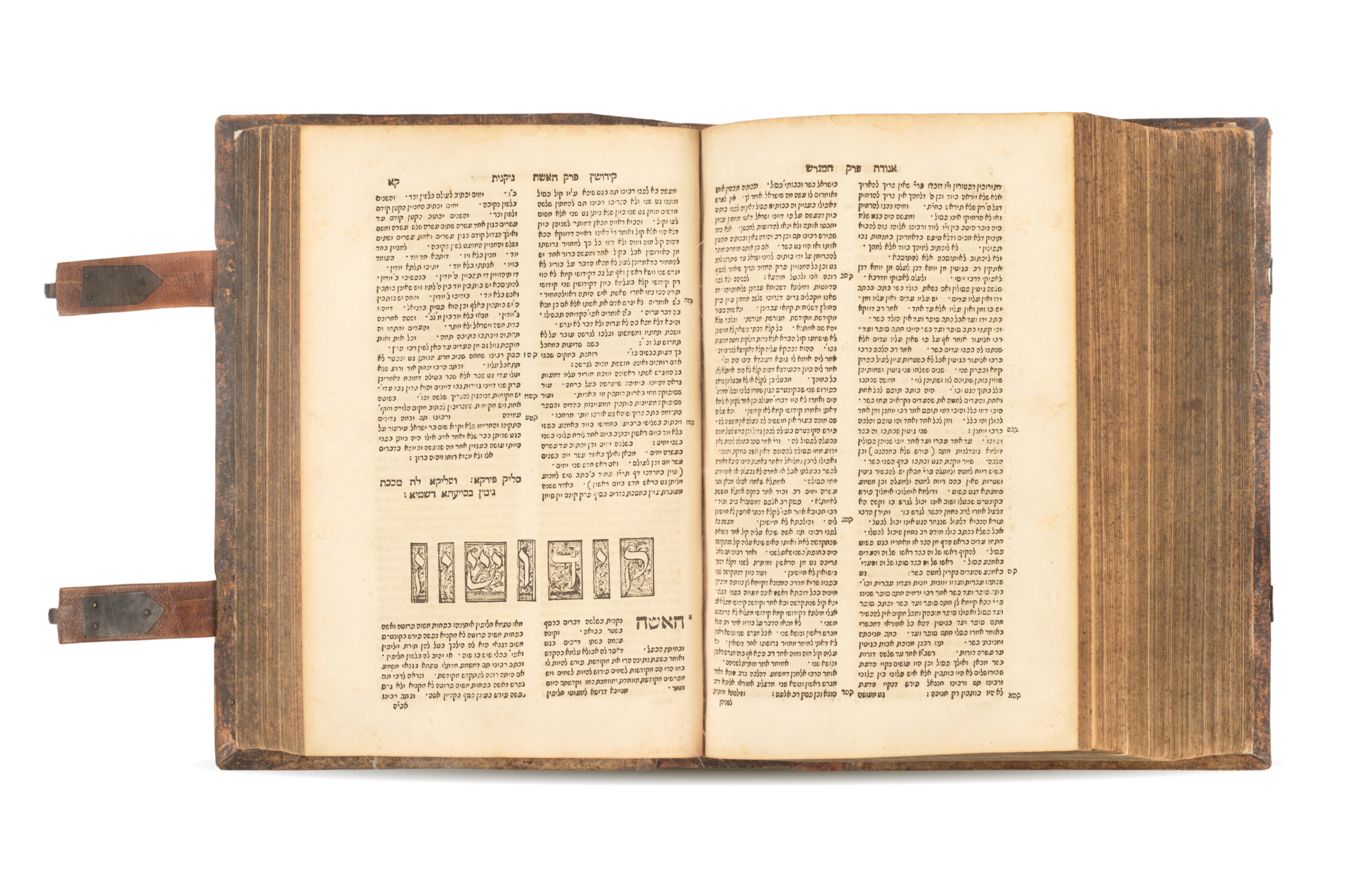
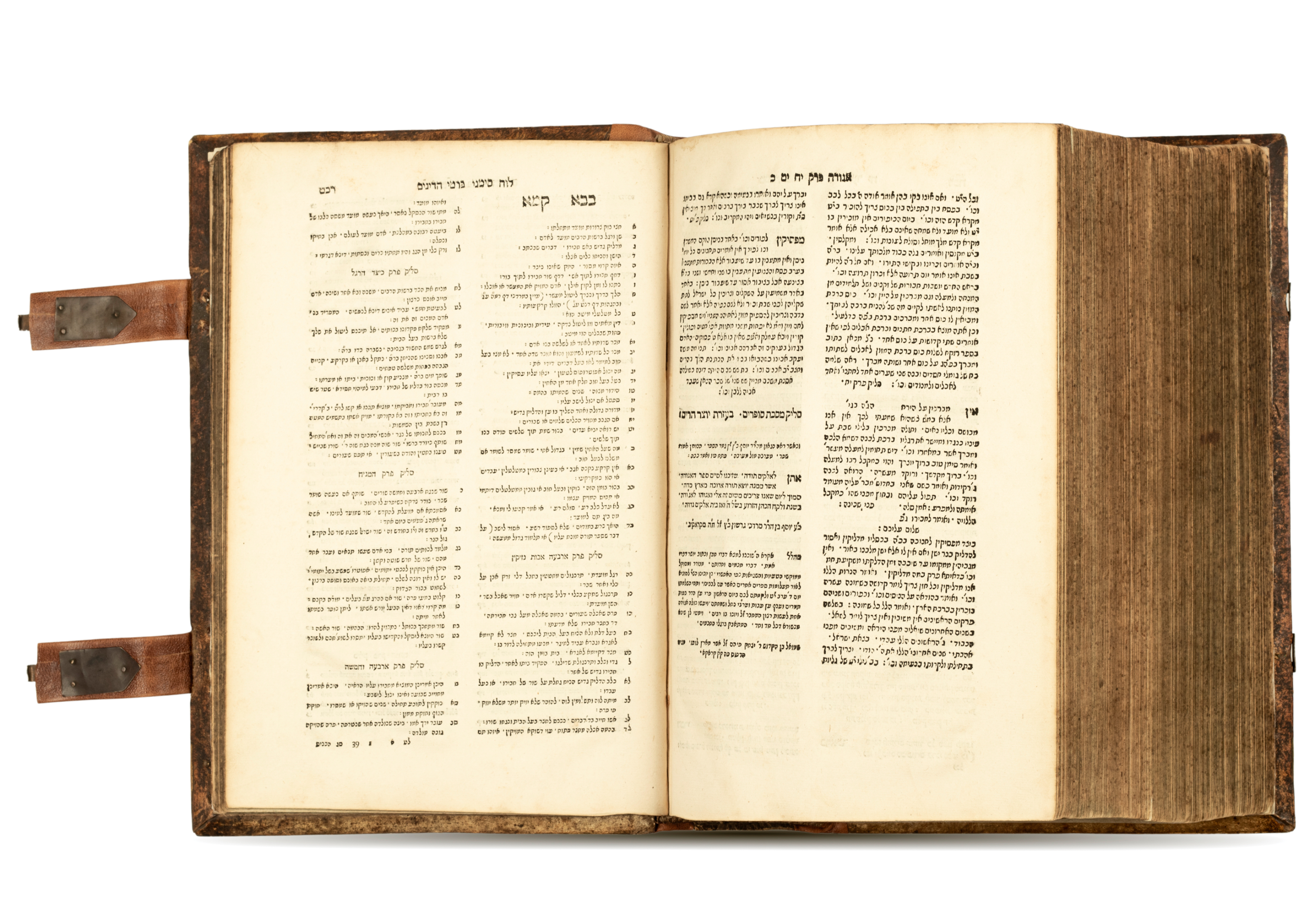
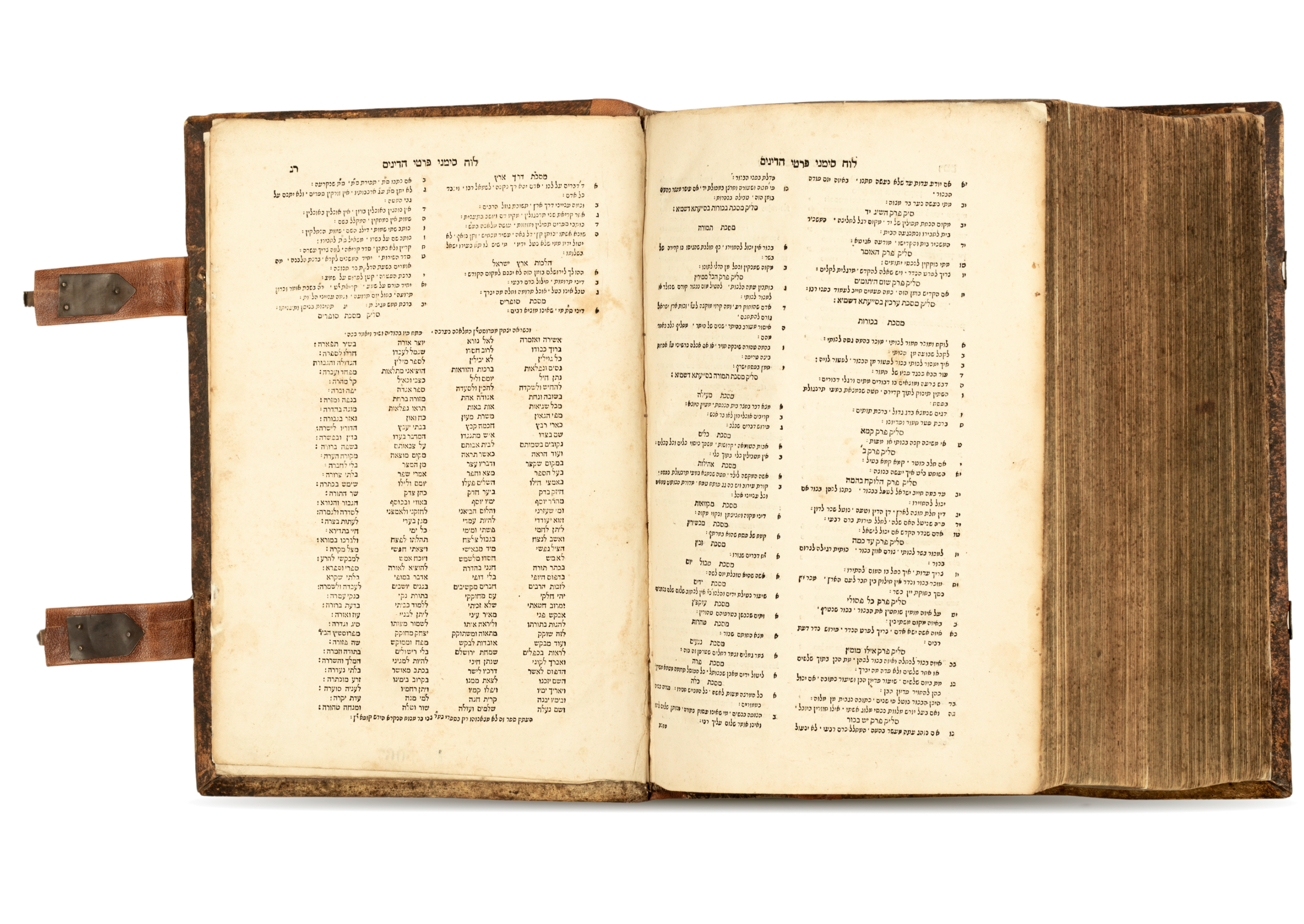
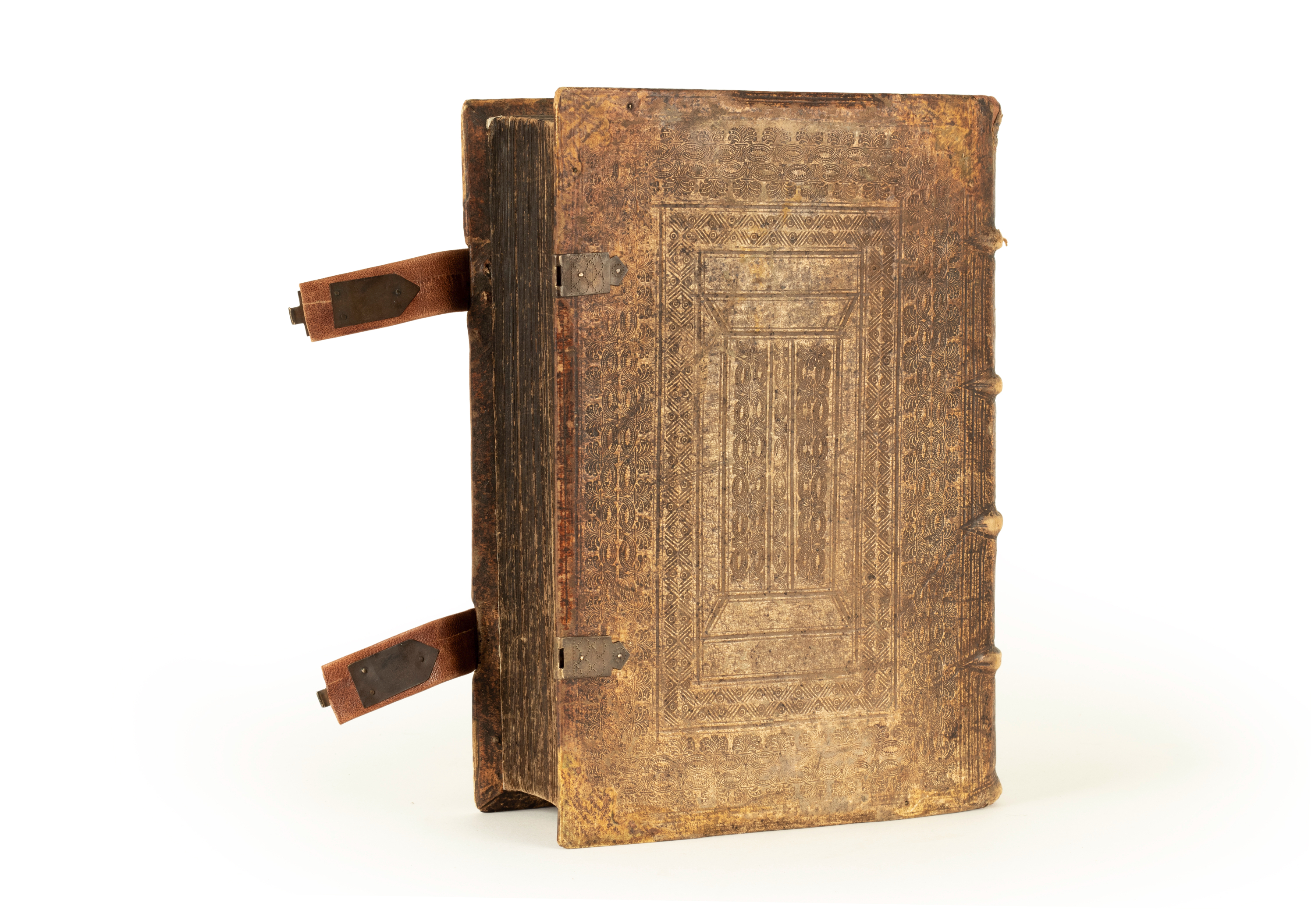
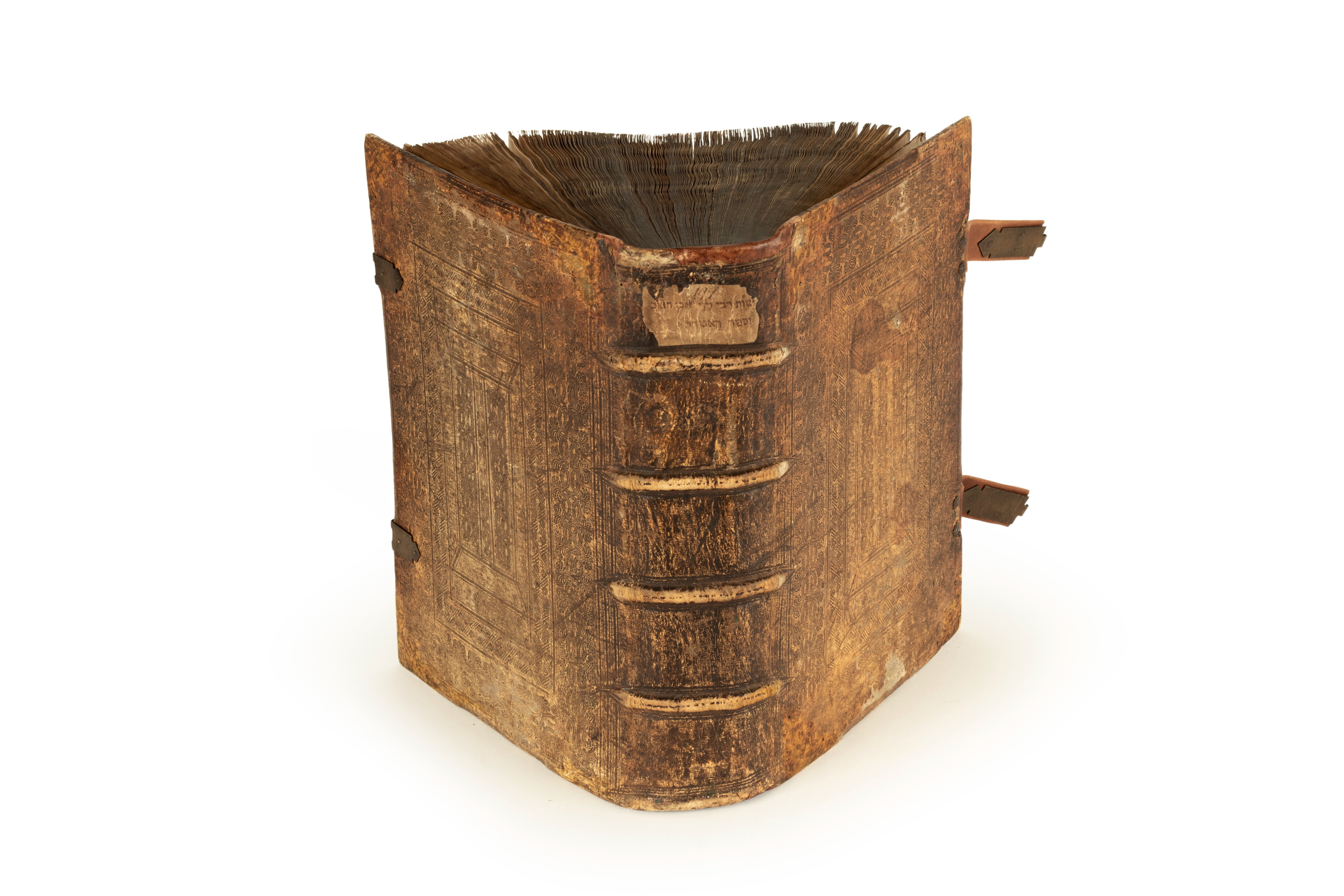
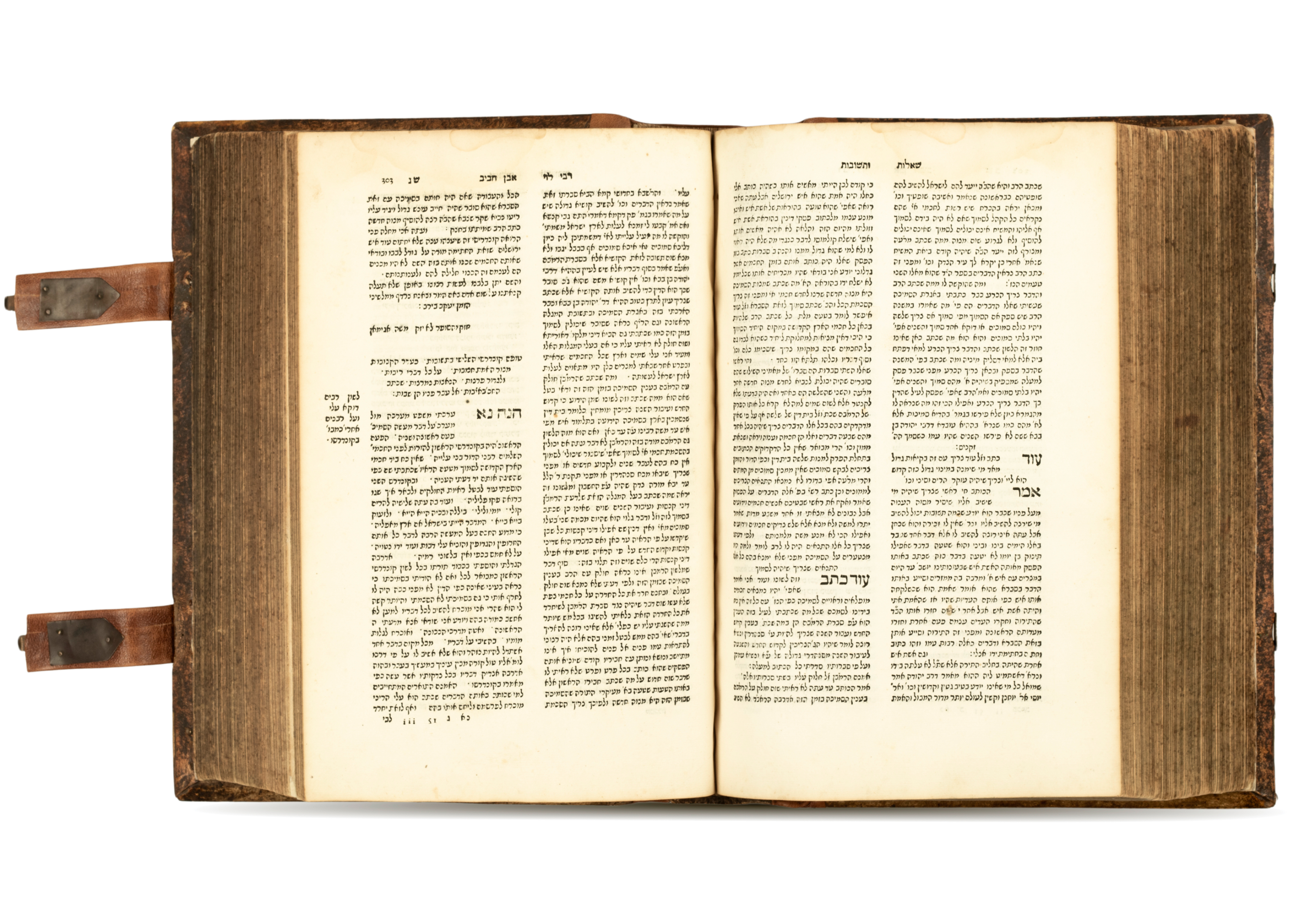
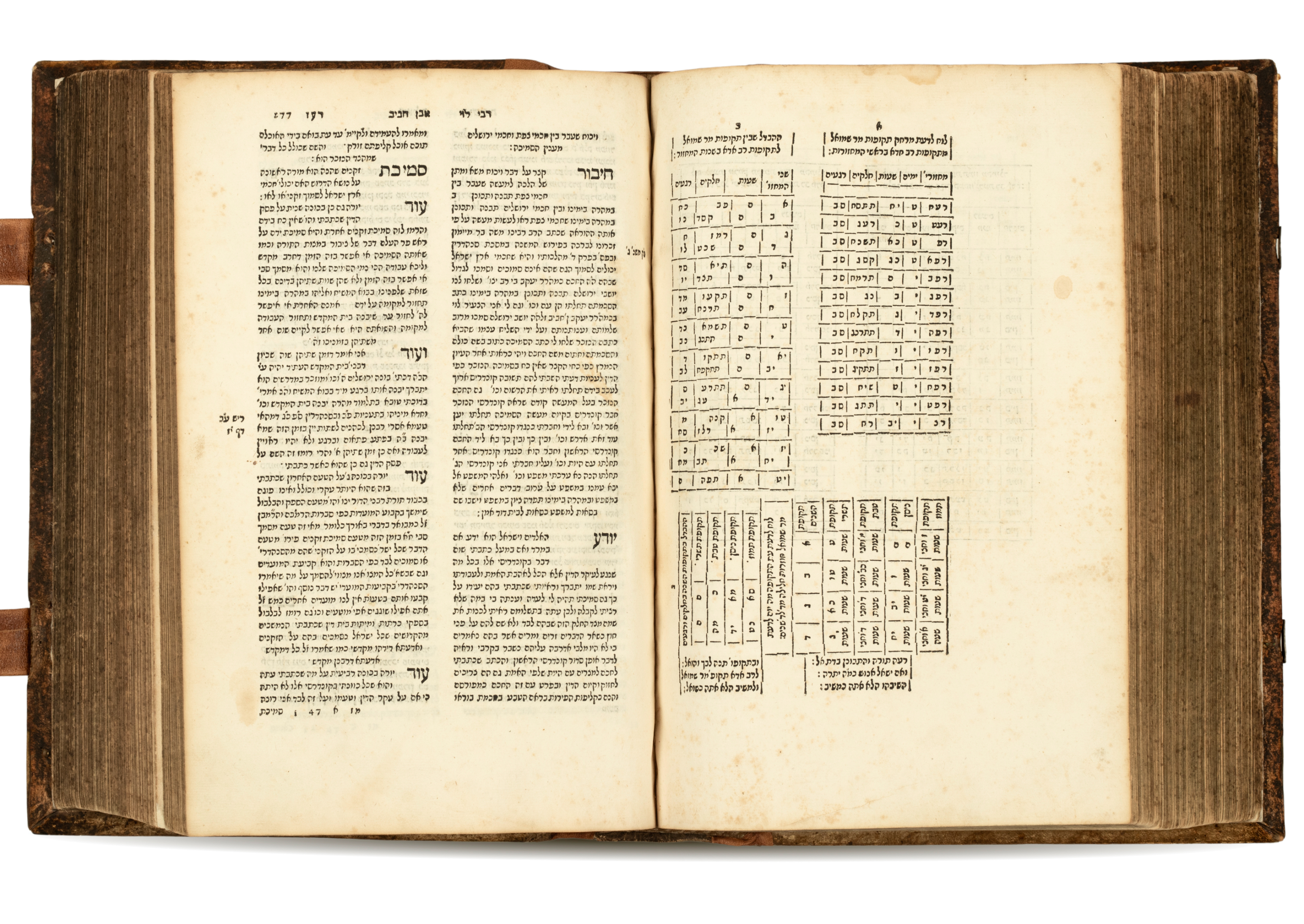
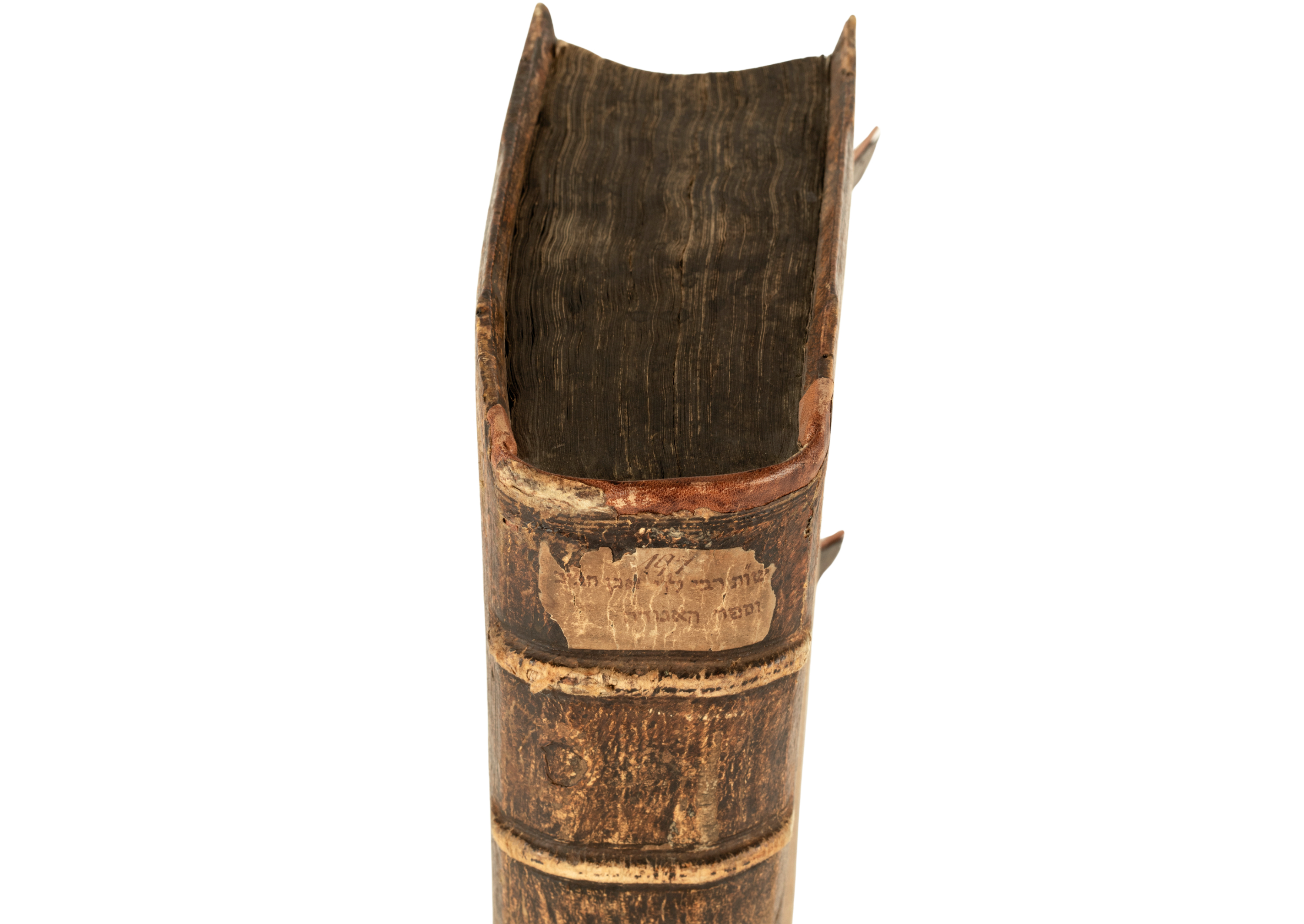
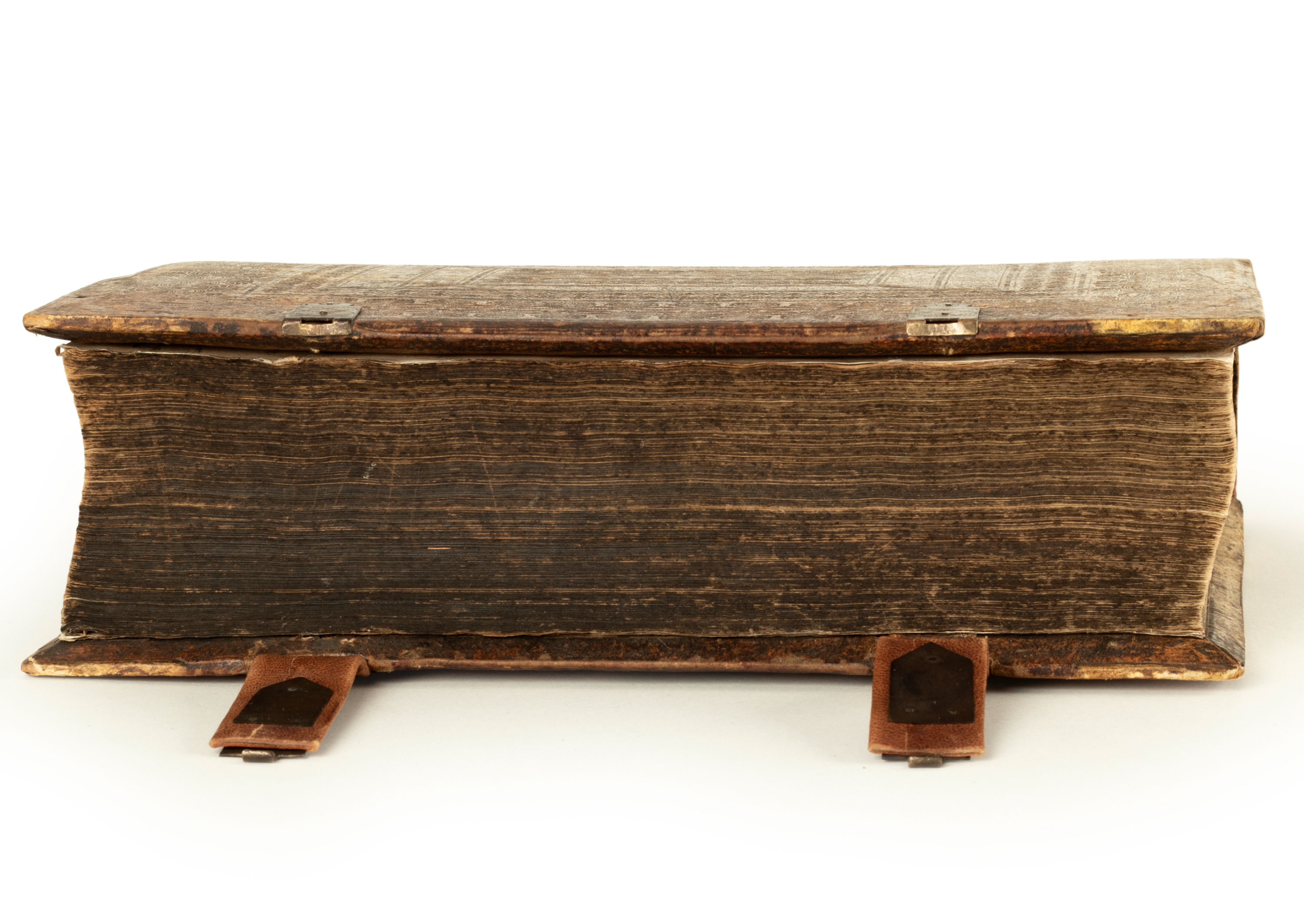
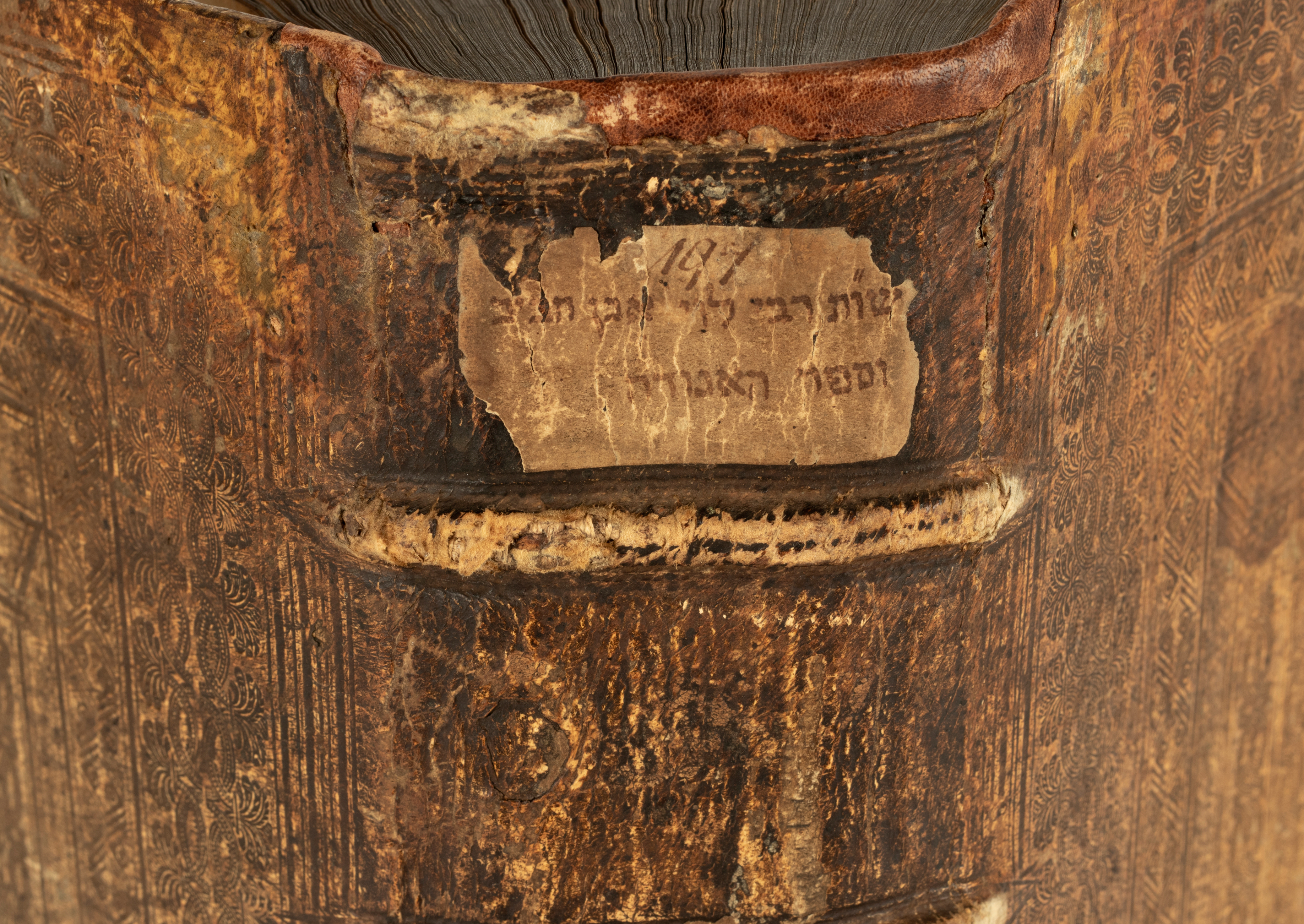
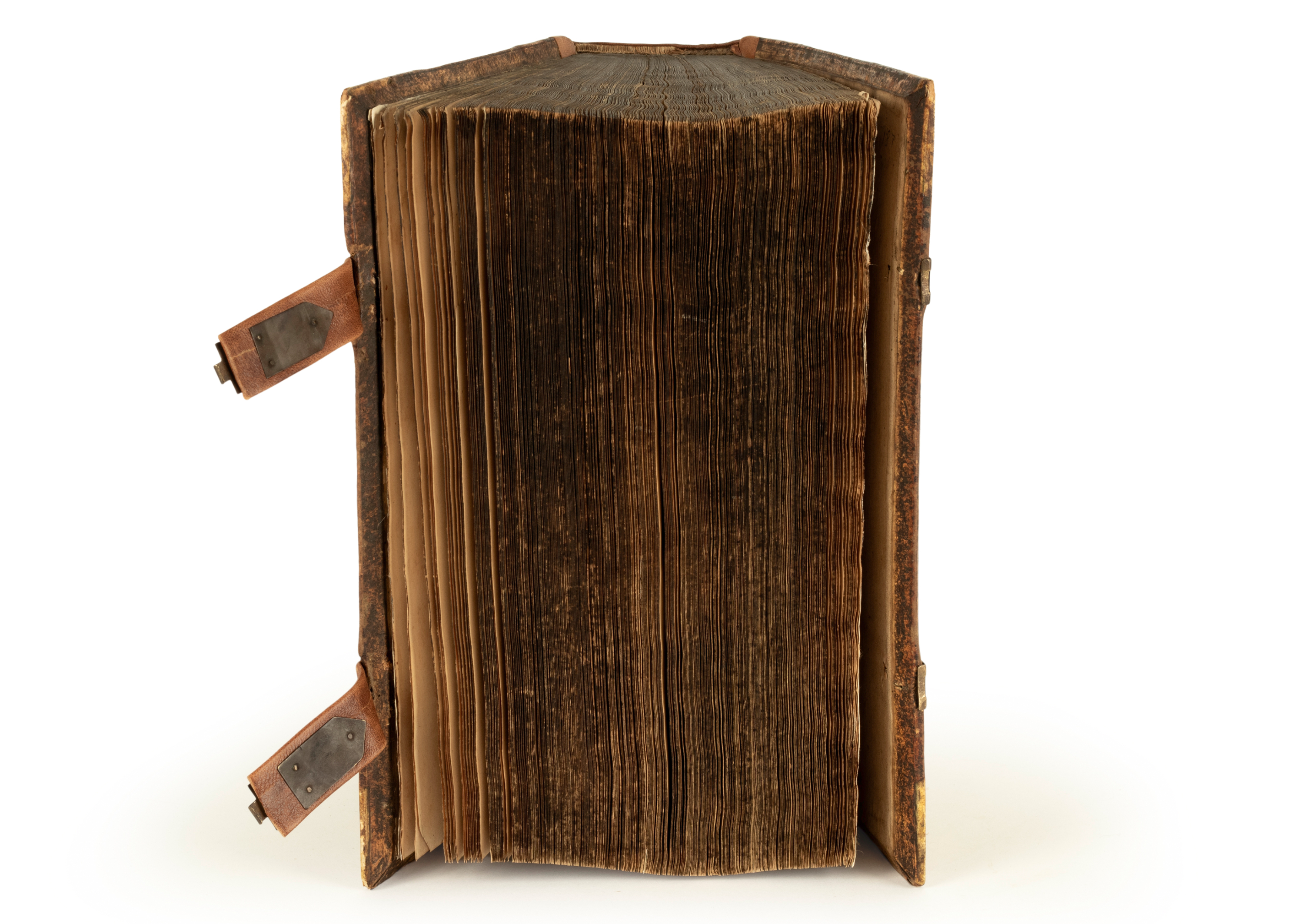
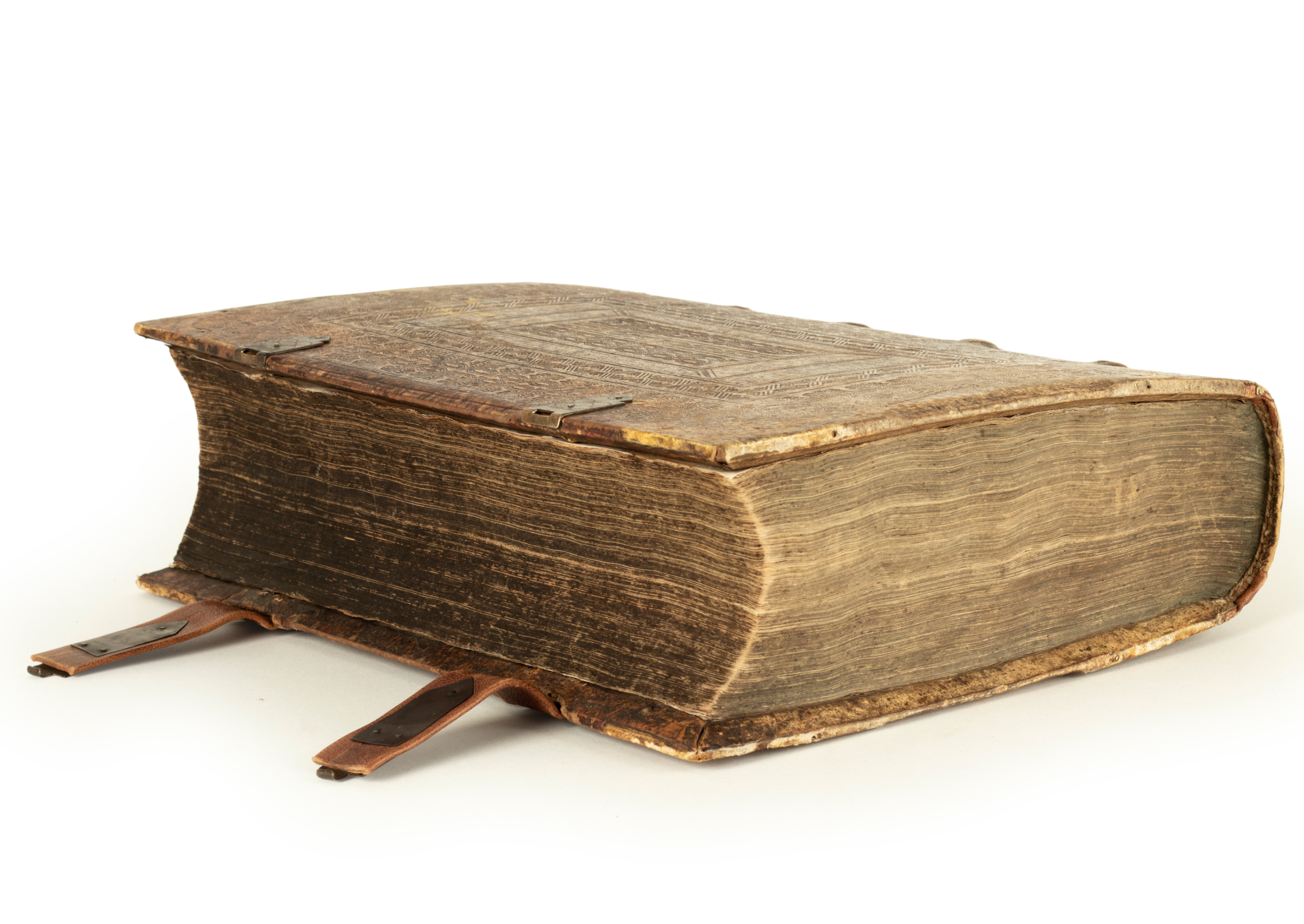
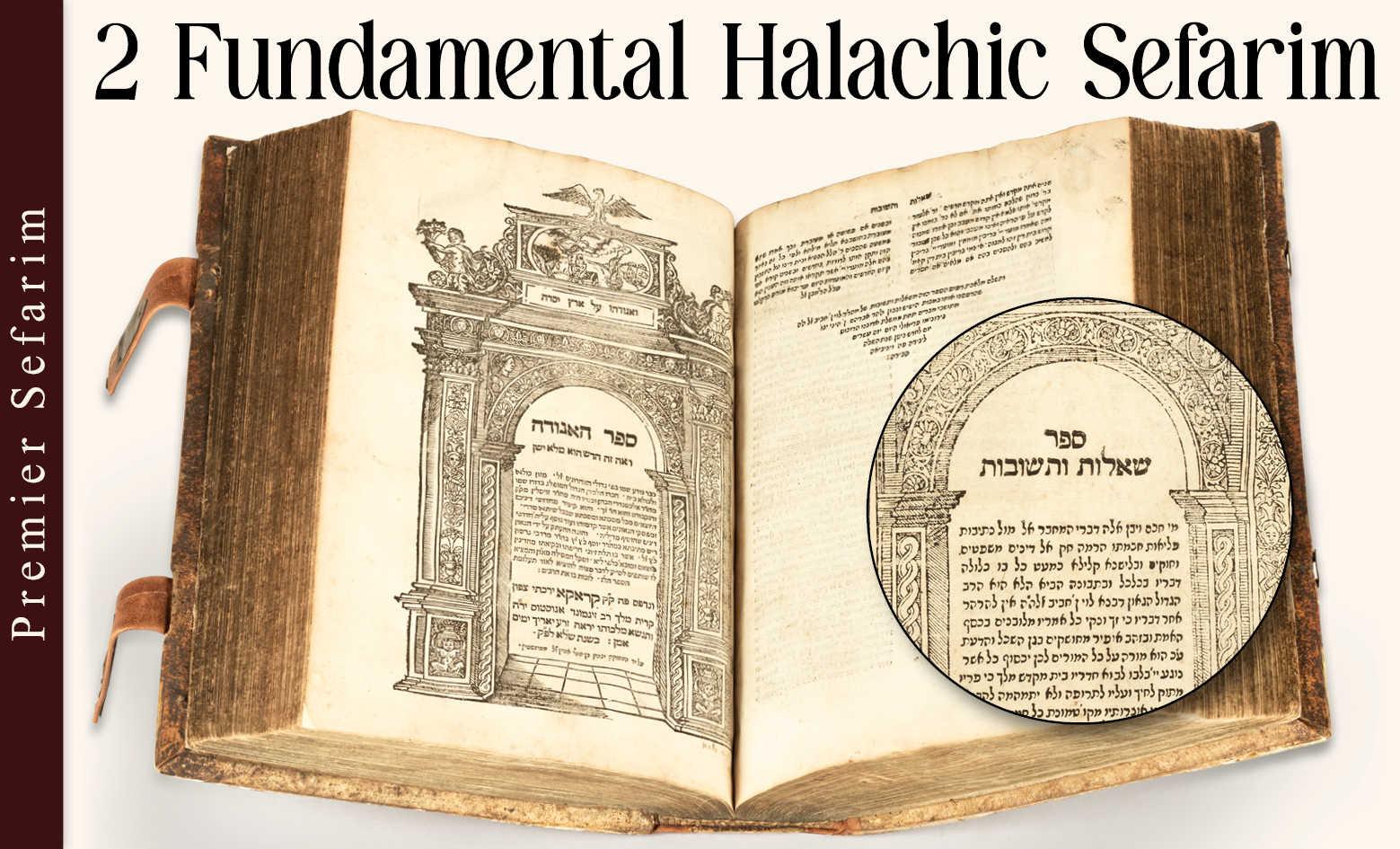
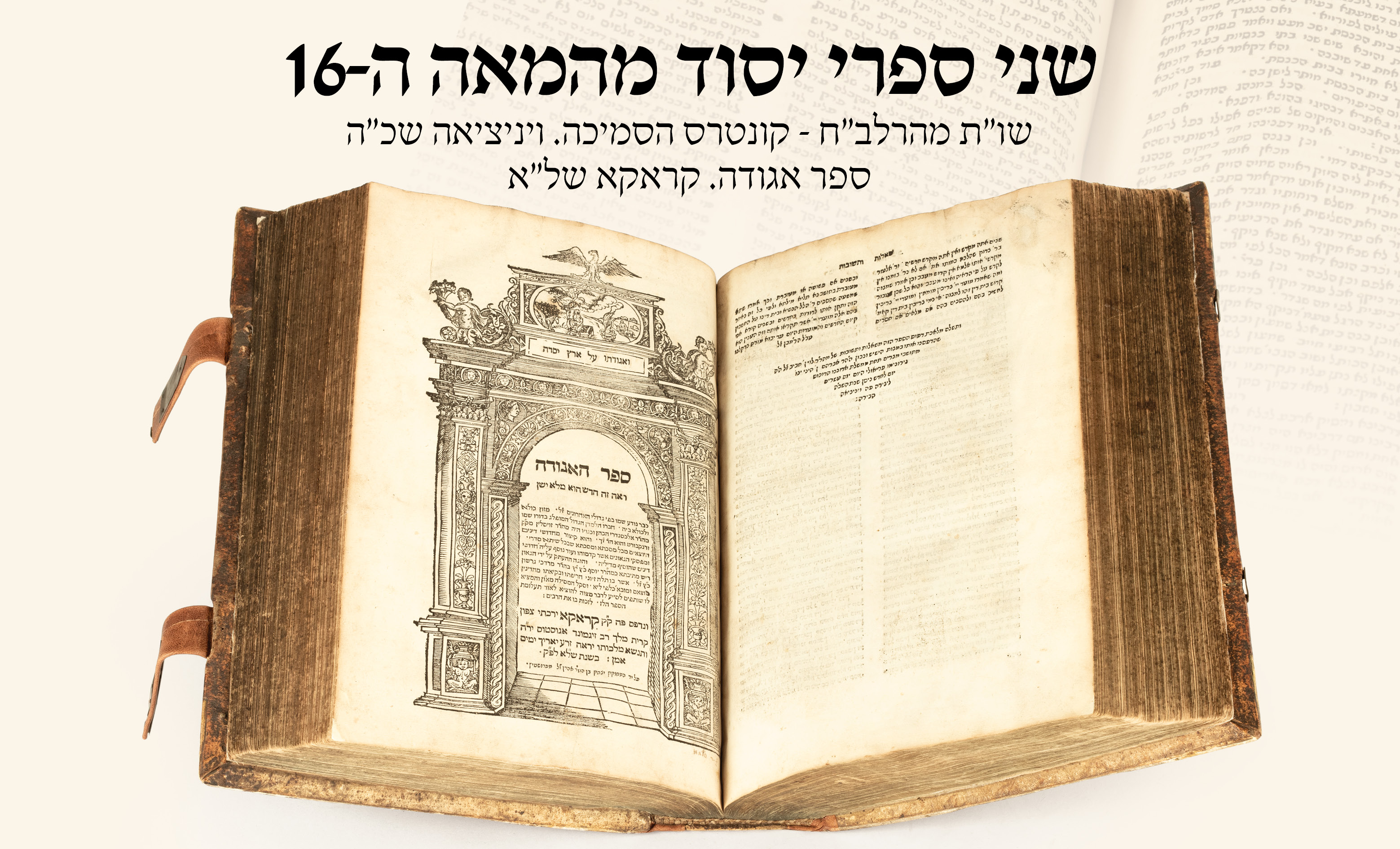
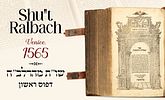
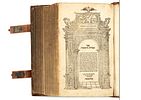
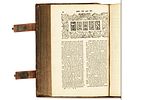
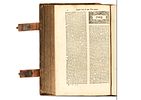
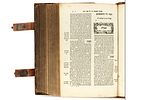
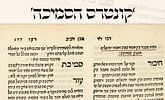
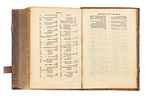
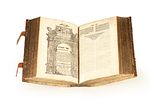
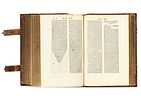
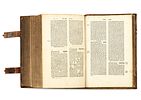
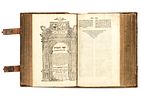
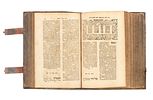
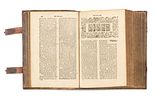
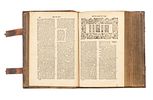
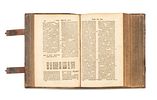
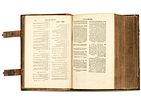
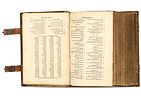
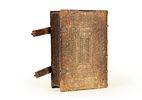
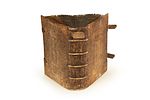
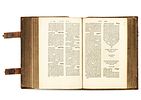
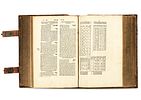
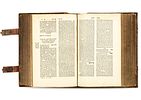
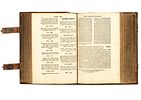
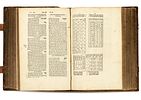
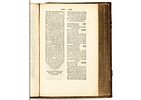
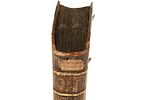
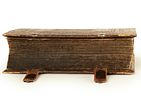
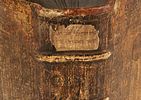
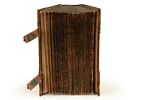
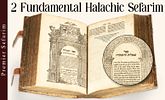
Two sifrei yesod from the sixteenth century – Shu”t Ralbach (Venice, 1565) and Sefer Agudah (Cracow, 1571) – complete and beautiful copies, bound together in an elegant sixteenth-century wooden binding covered in leather, retaining its clasps.

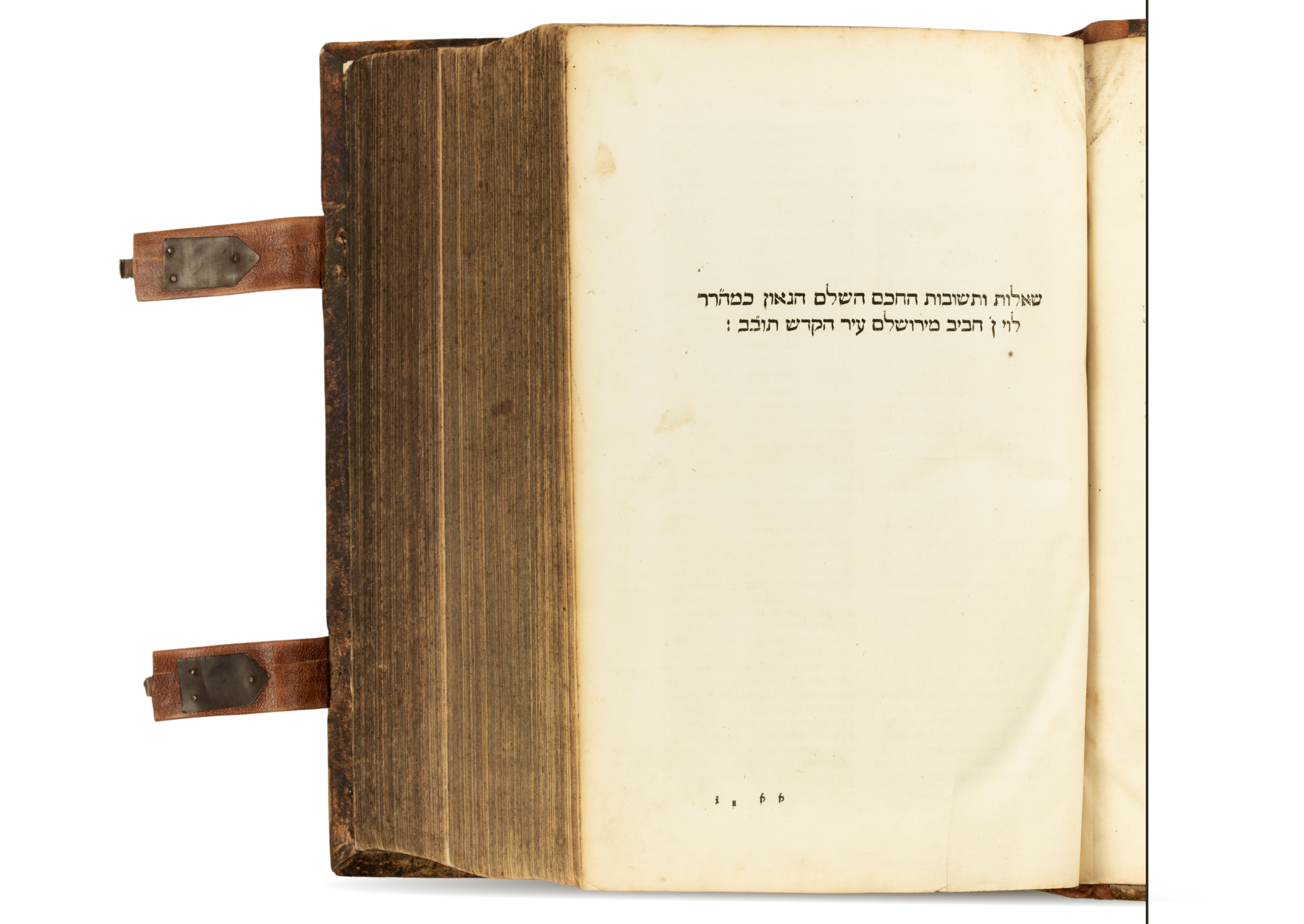
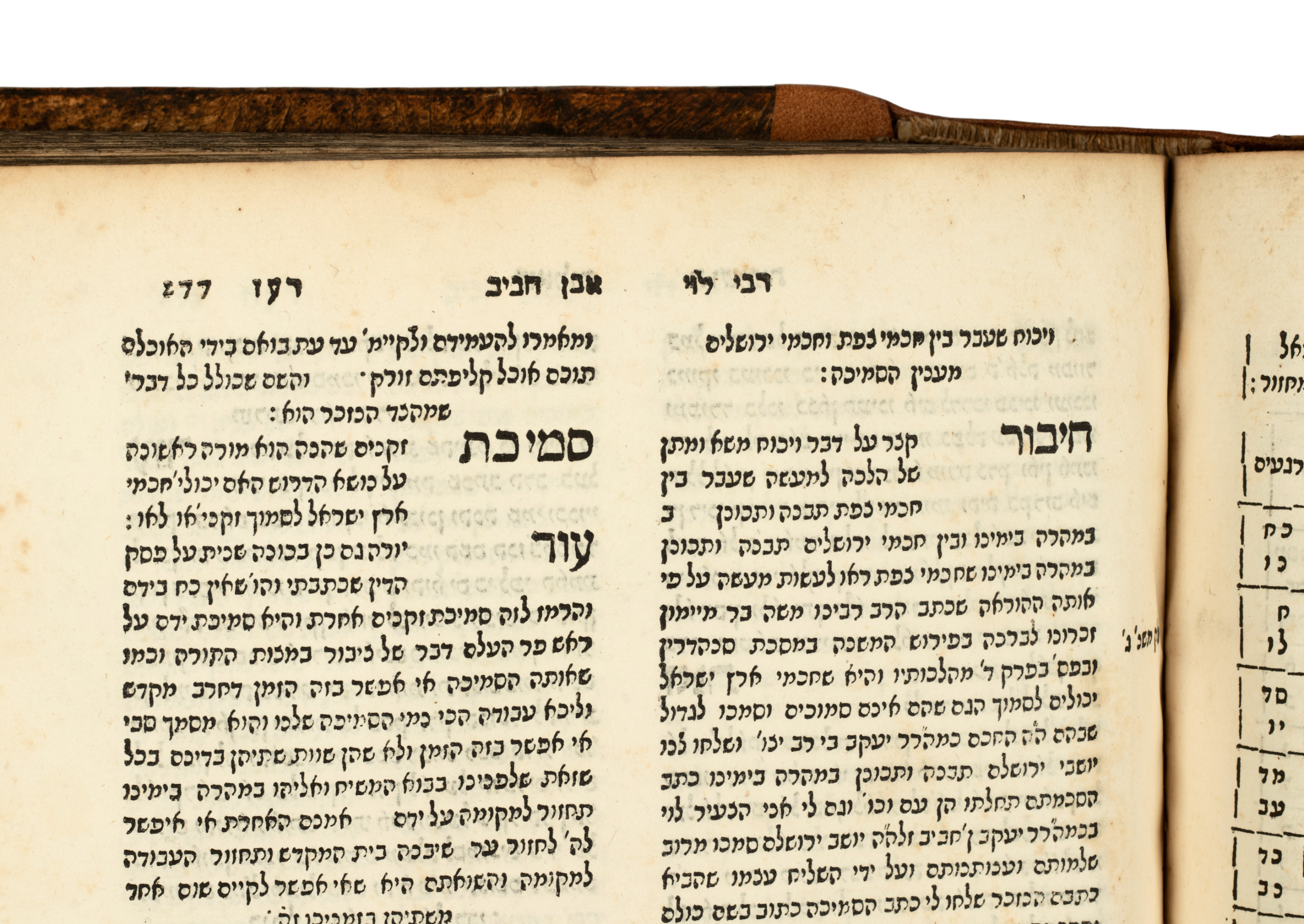
I. Shu”t Ralbach – Responsa by the Ralbach, Rabbi Levi ben Chaviv, together with his commentary on the Rambam’s laws of Kiddush HaChodesh and Kuntres HaSemichah.

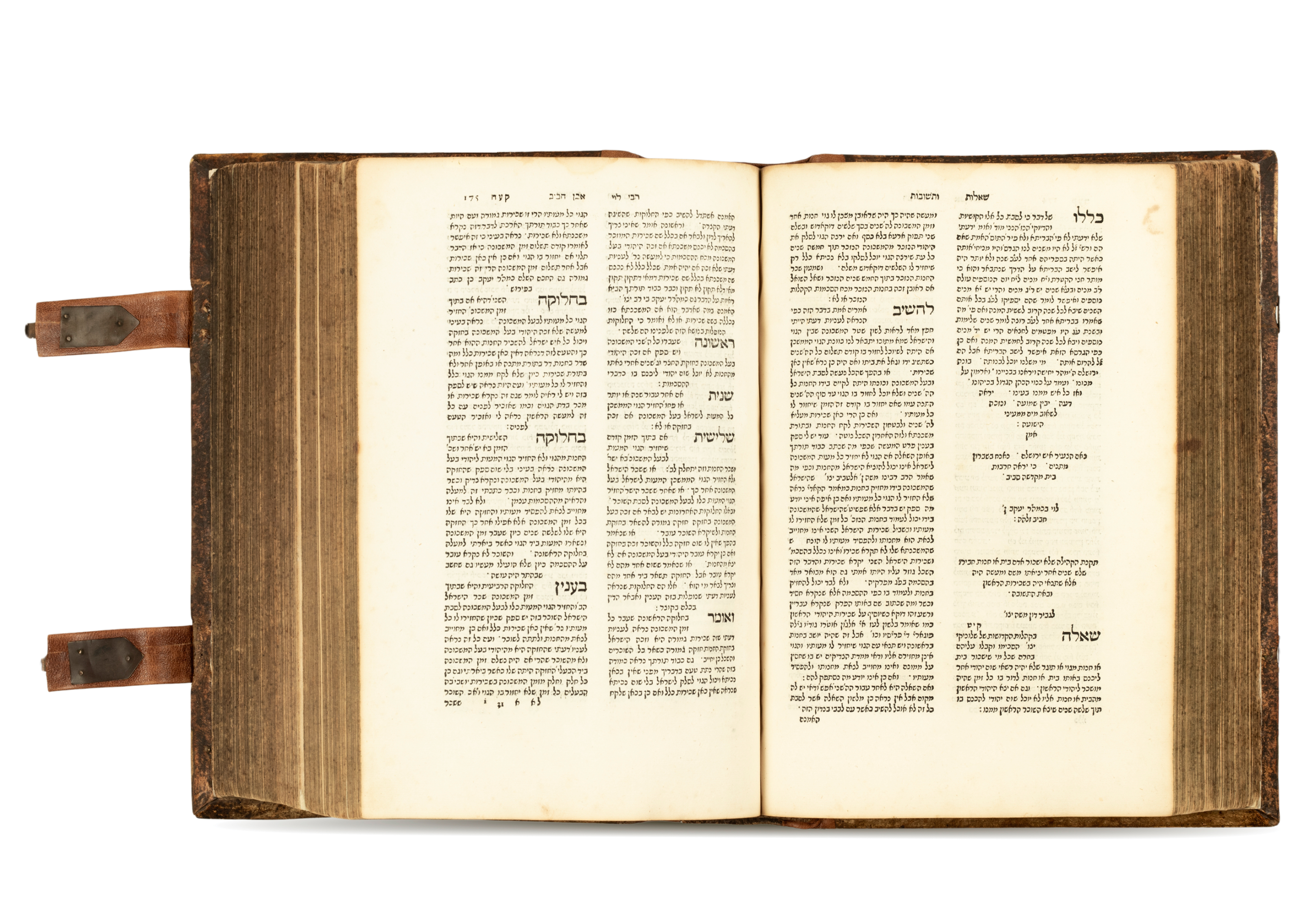
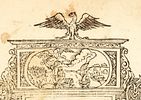
An exceptionally important and foundational work of responsa literature, complete with all title pages, indexes, and the errata leaves. (The two errata leaves are lacking in many copies but are present here; see: Rivkind, Sefer HaYovel Lichvod Alexander Marx, p. 419.)

Venice, 1565. First edition.

Page Count: [6], 209, [1], 217–328 leaves—size: 29.5 cm.

The volume includes two works that can be regarded as independent compositions:
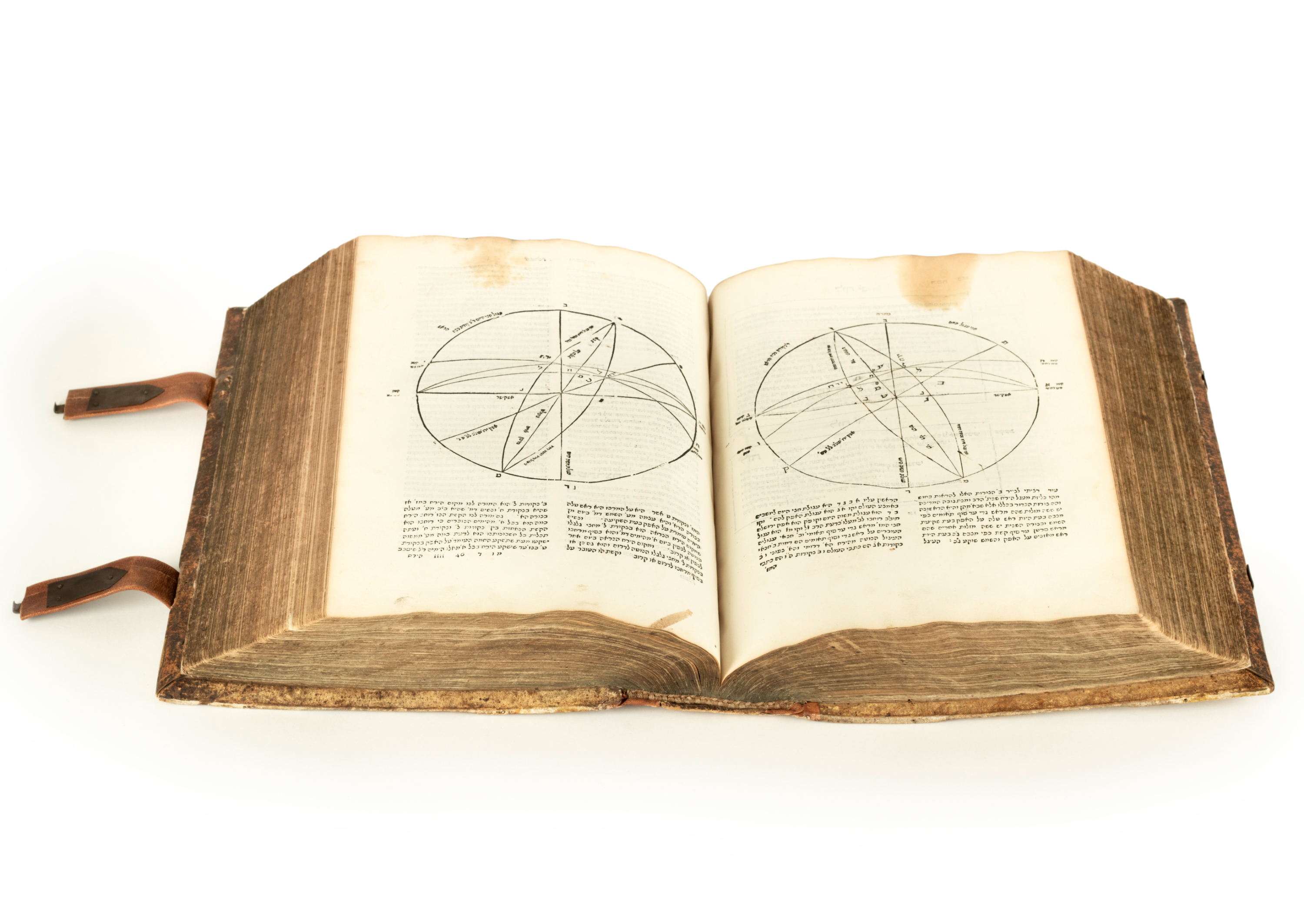
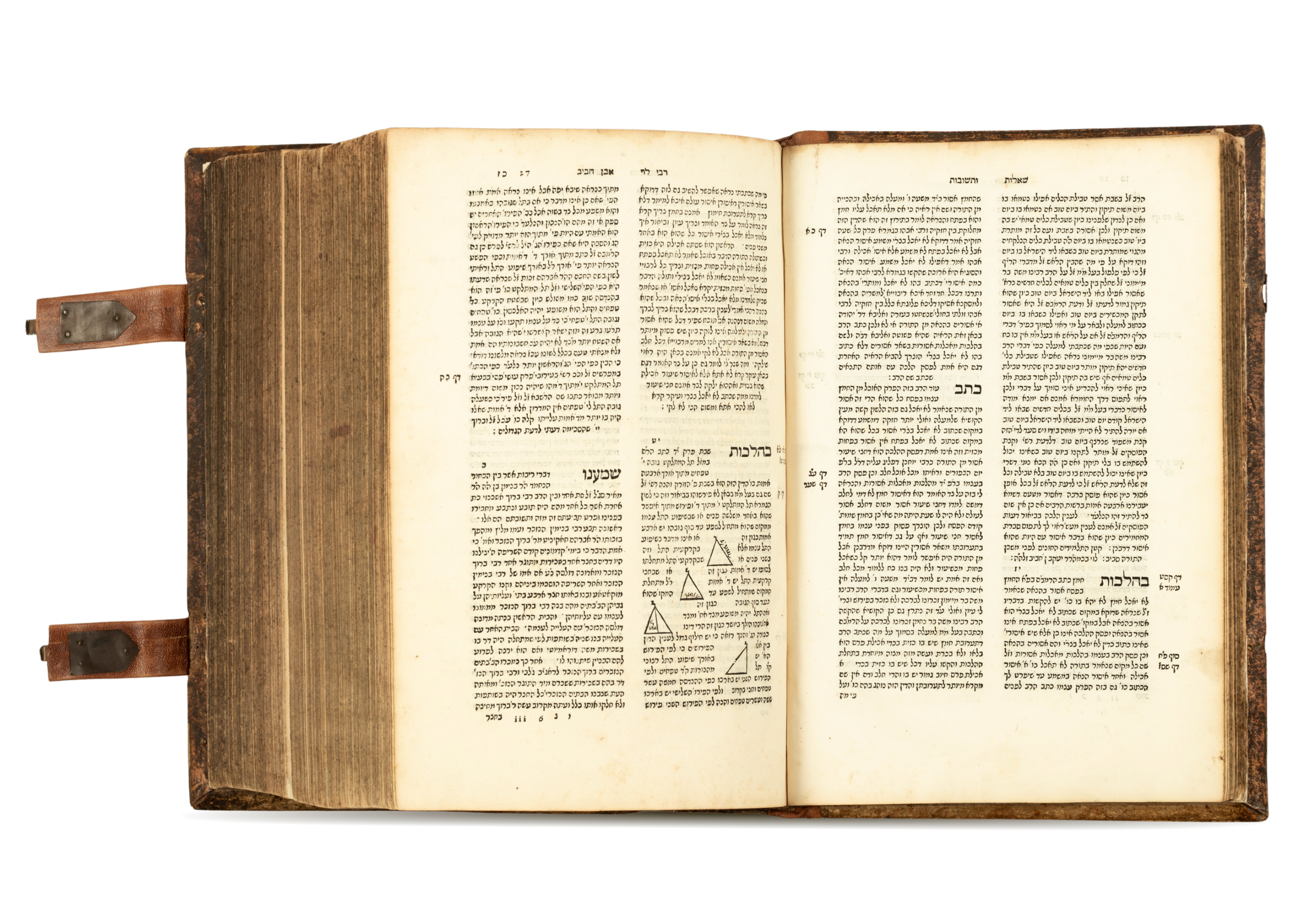
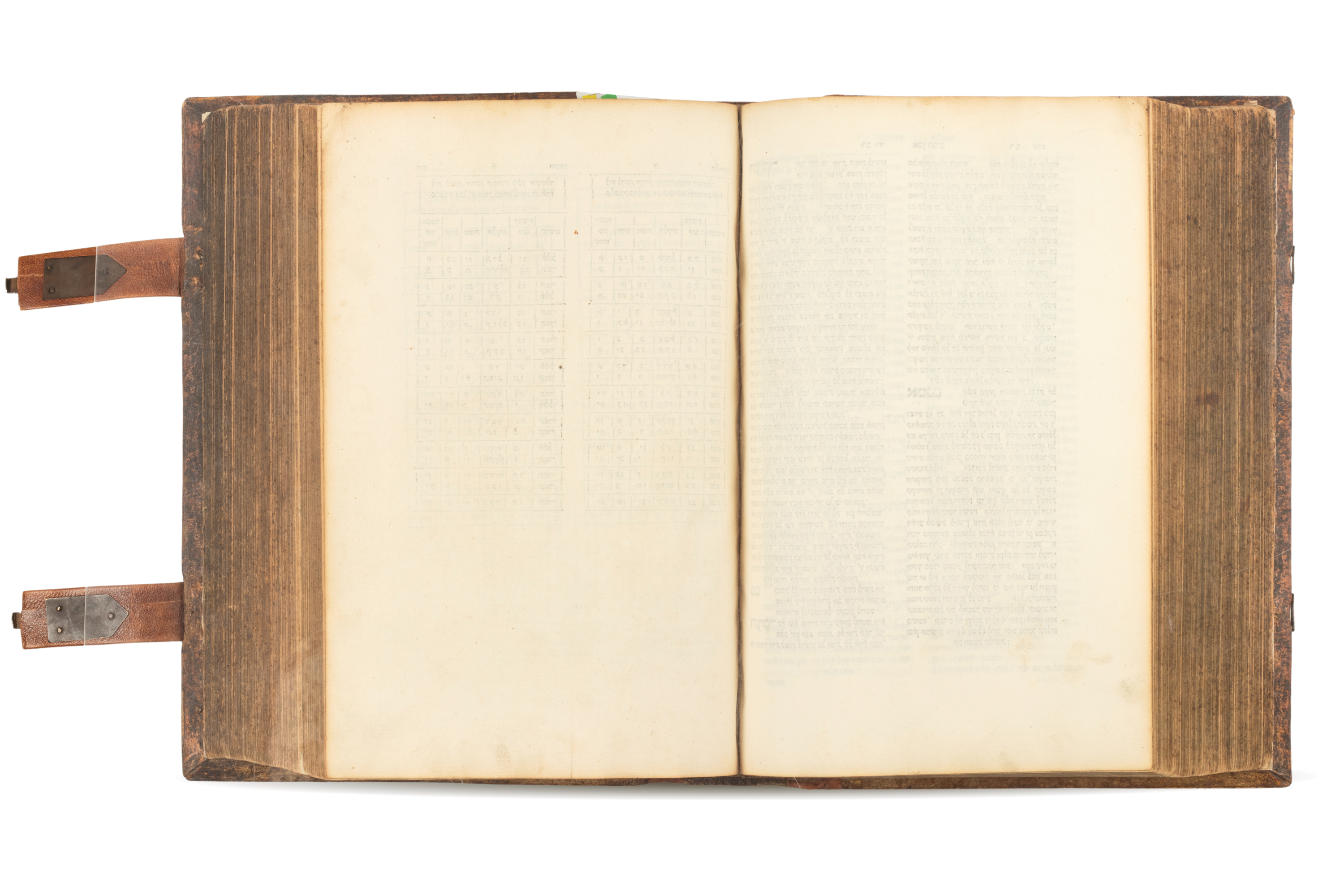
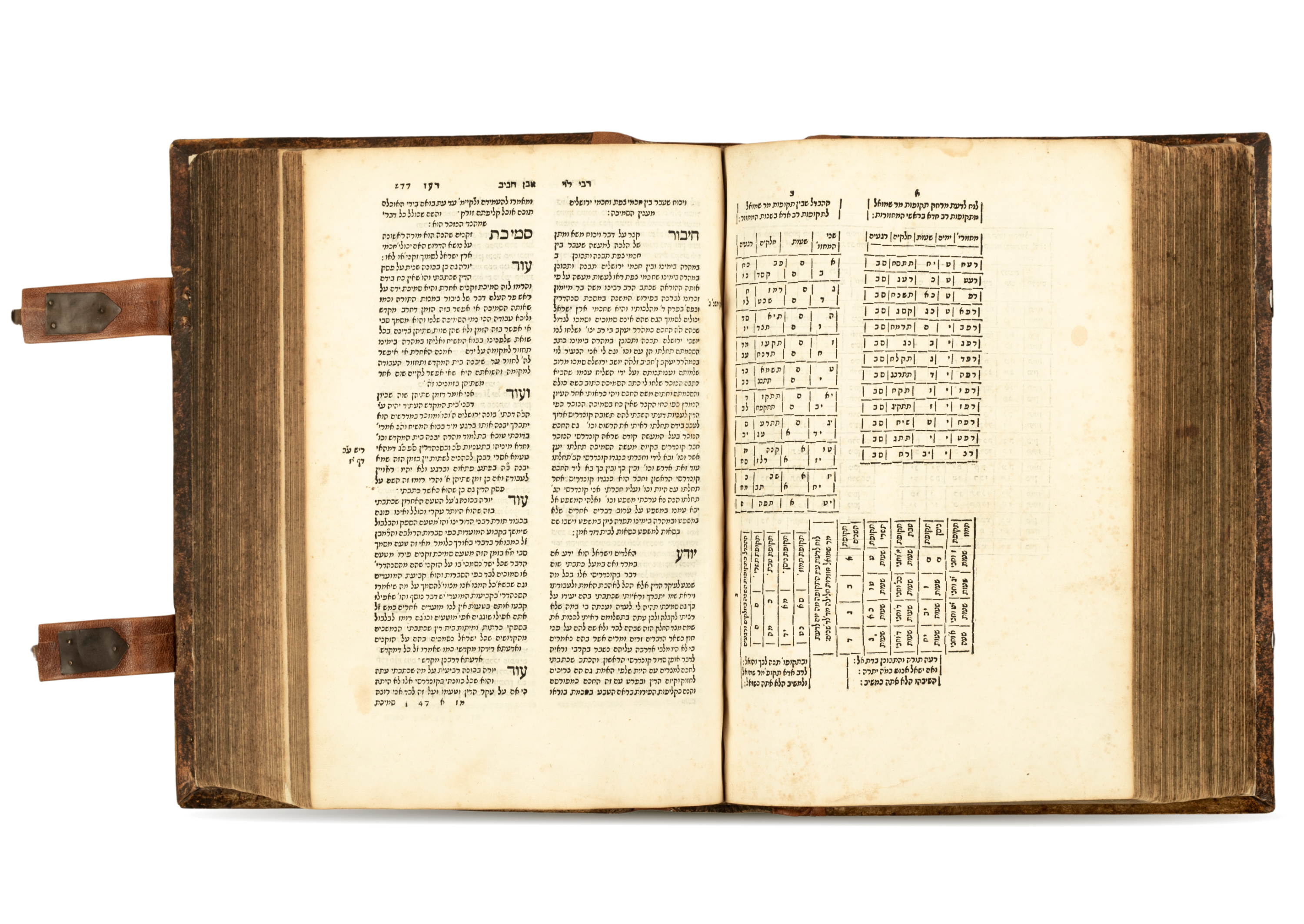
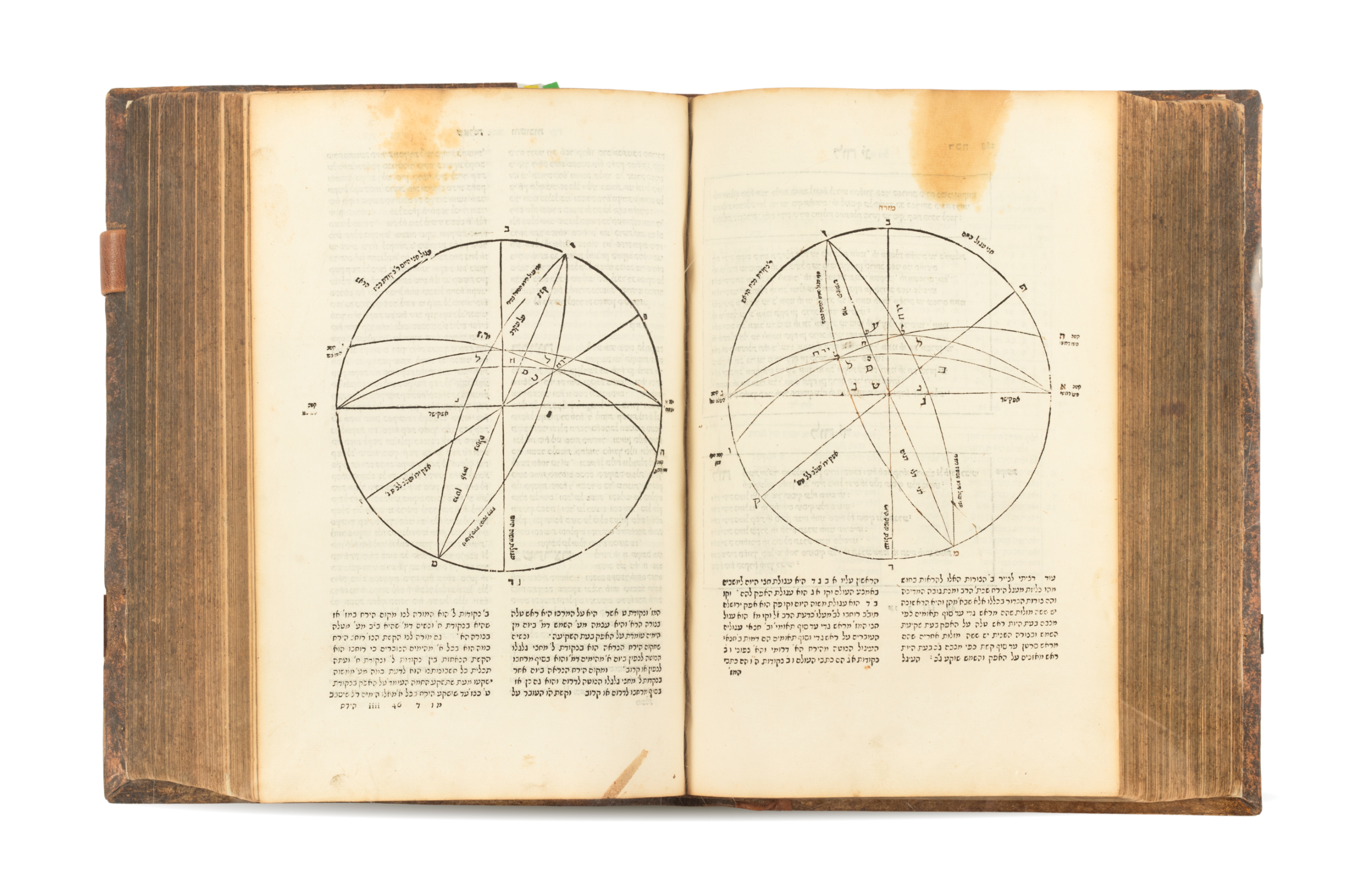
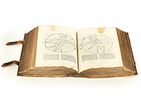
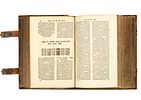
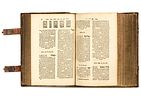
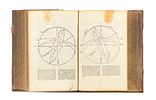
A. The Ralbach’s important commentary on the Rambam’s laws of Kiddush HaChodesh, including illustrations and charts, printed here for the first time and later included in subsequent editions of the Rambam.

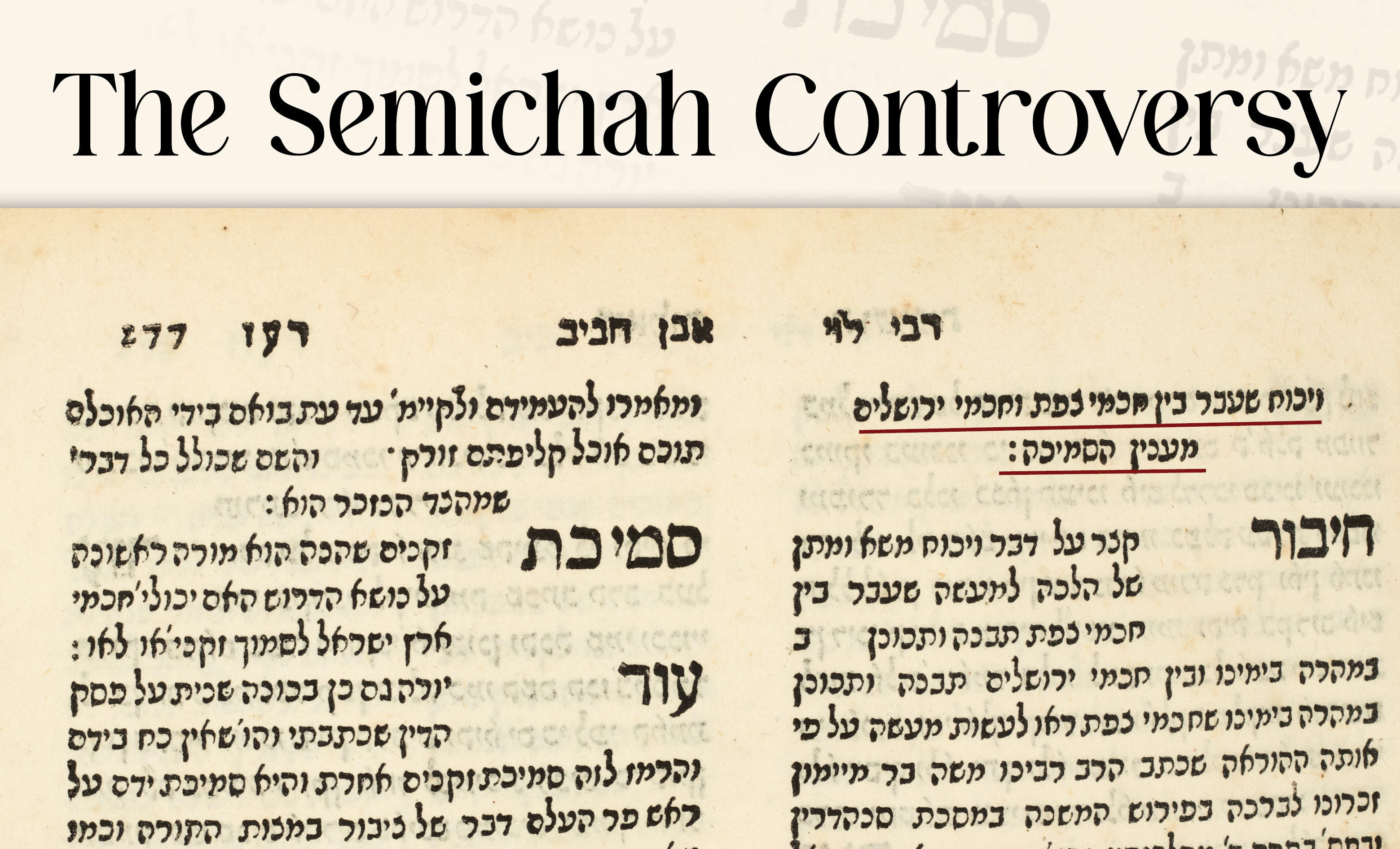
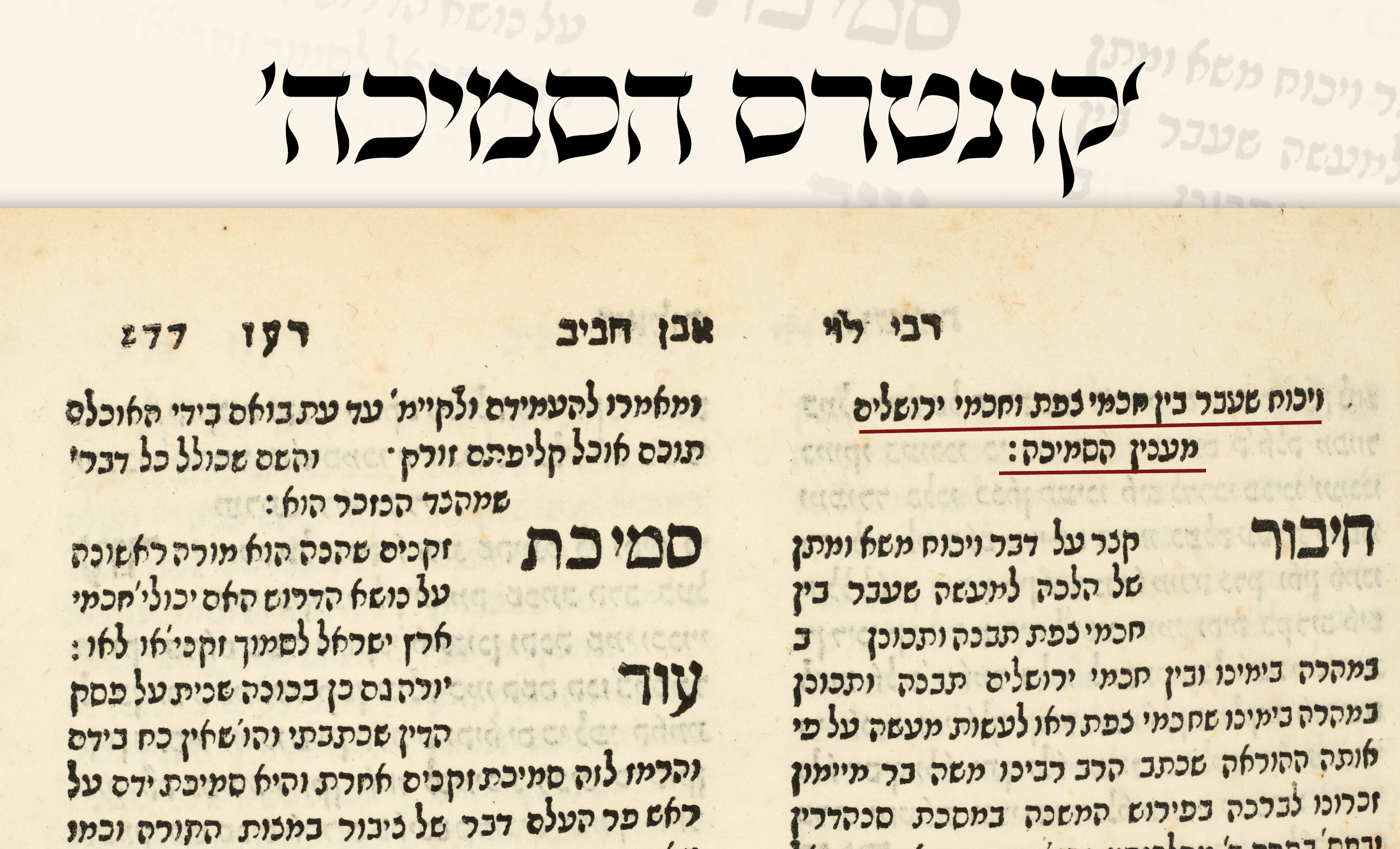
B. Kuntres HaSemichah presents the great debate between the Ralbach and Rabbi Yaakov Beirav regarding the reinstatement of semichah among the sages of Tzfas – see below.


Rabbi Levi ben Chaviv (1480-c. 1541), known as the “Ralbach, ” was one of the great rabbinical figures following the Spanish Expulsion. He was born in Zamora, Spain, to Rabbi Yaakov Chaviv, author of Ein Yaakov, and was exiled with his father from Spain. After his father’s passing, the Ralbach completed and printed the Ein Yaakov in Salonika, and then journeyed to Jerusalem where he settled and served as Rav for many years.

Stefansky, Sifrei Yesod, no. 292


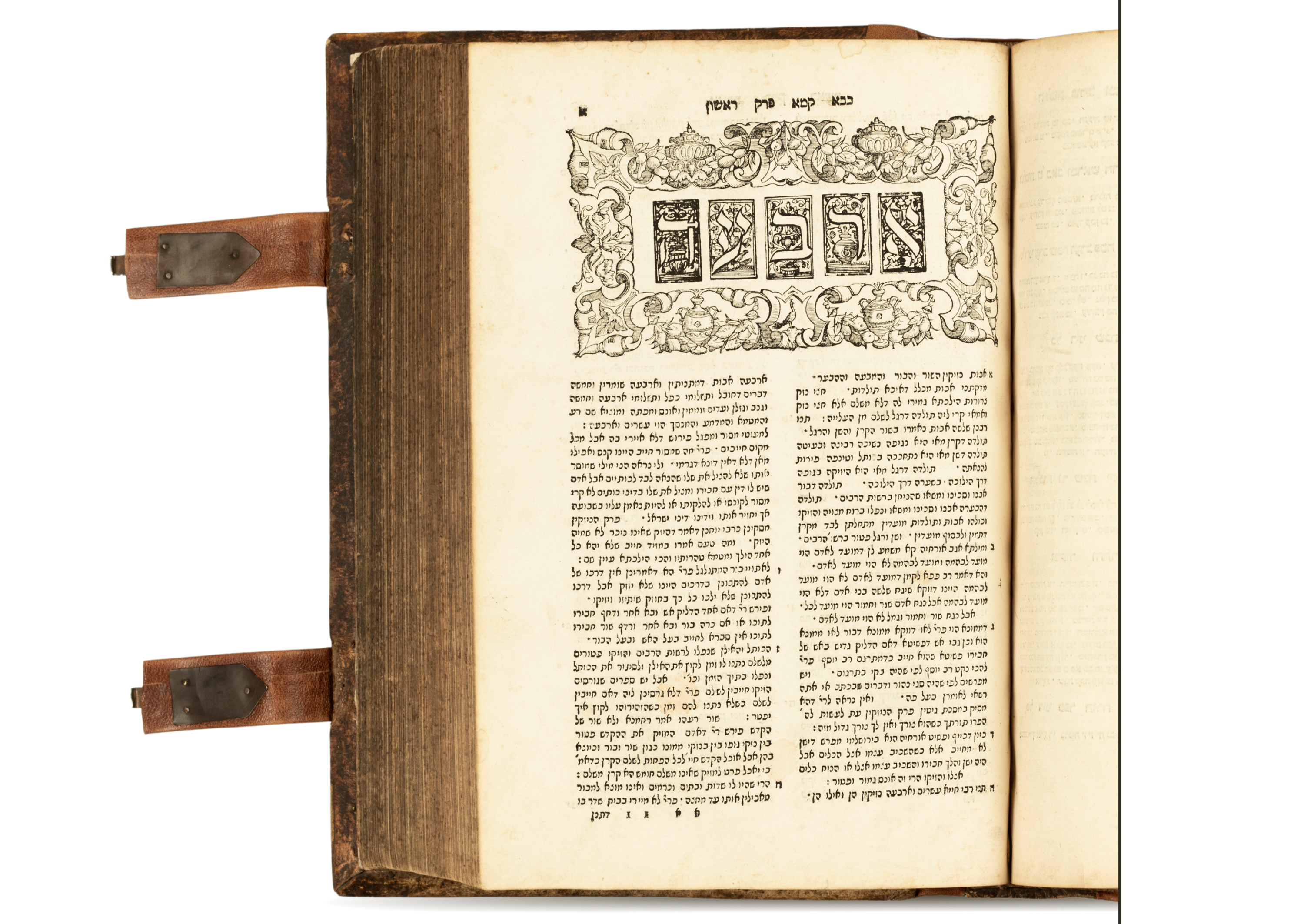
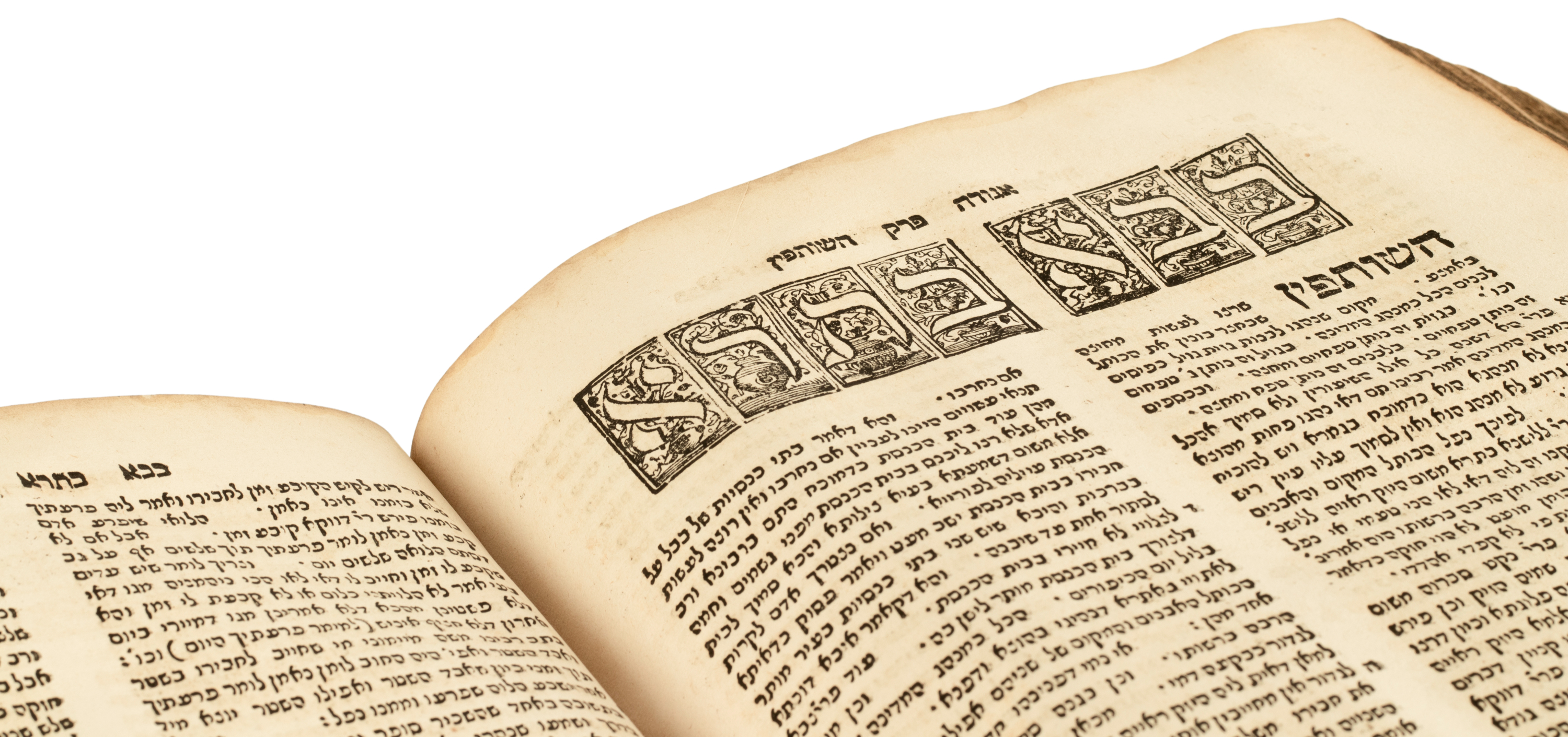
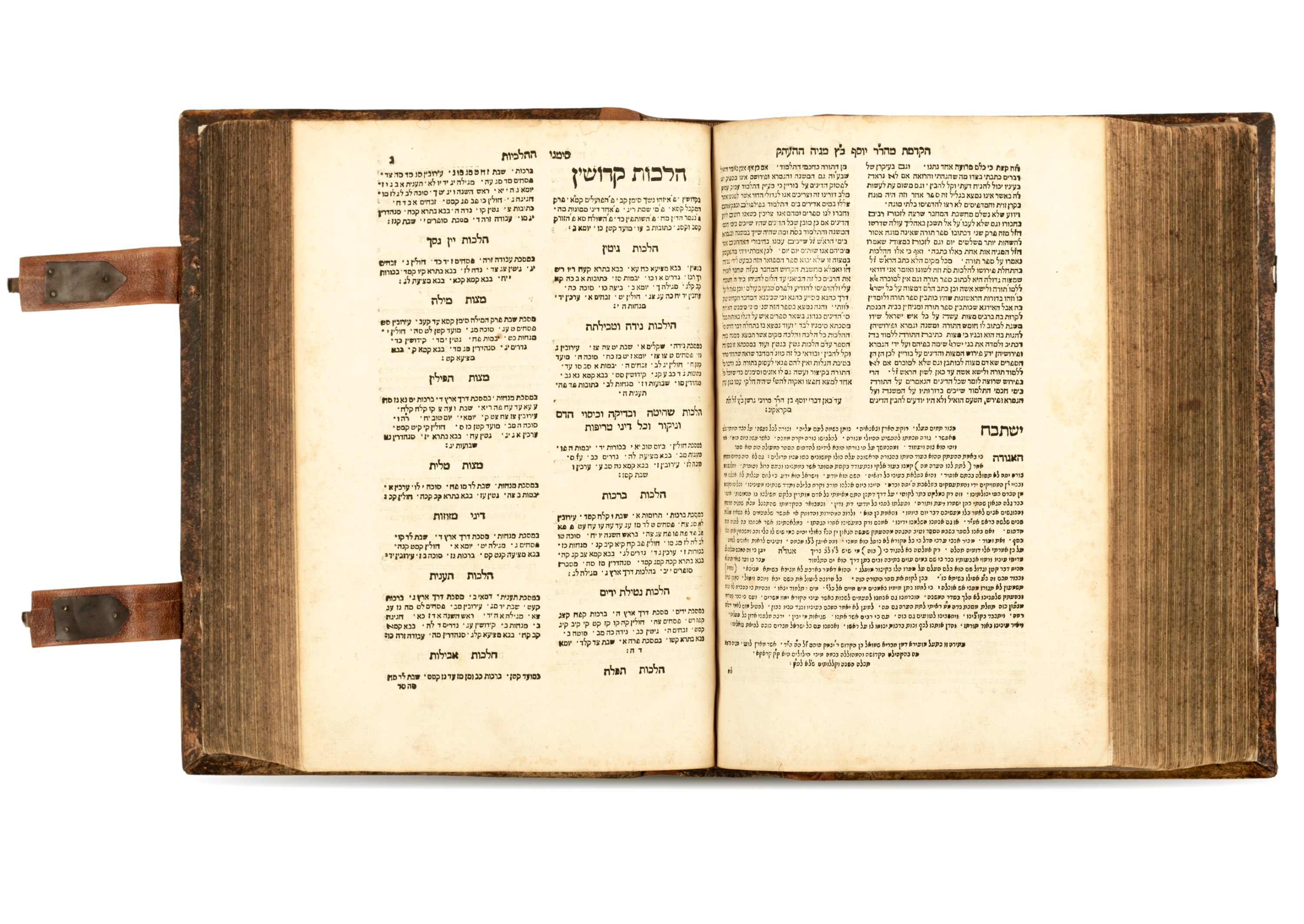
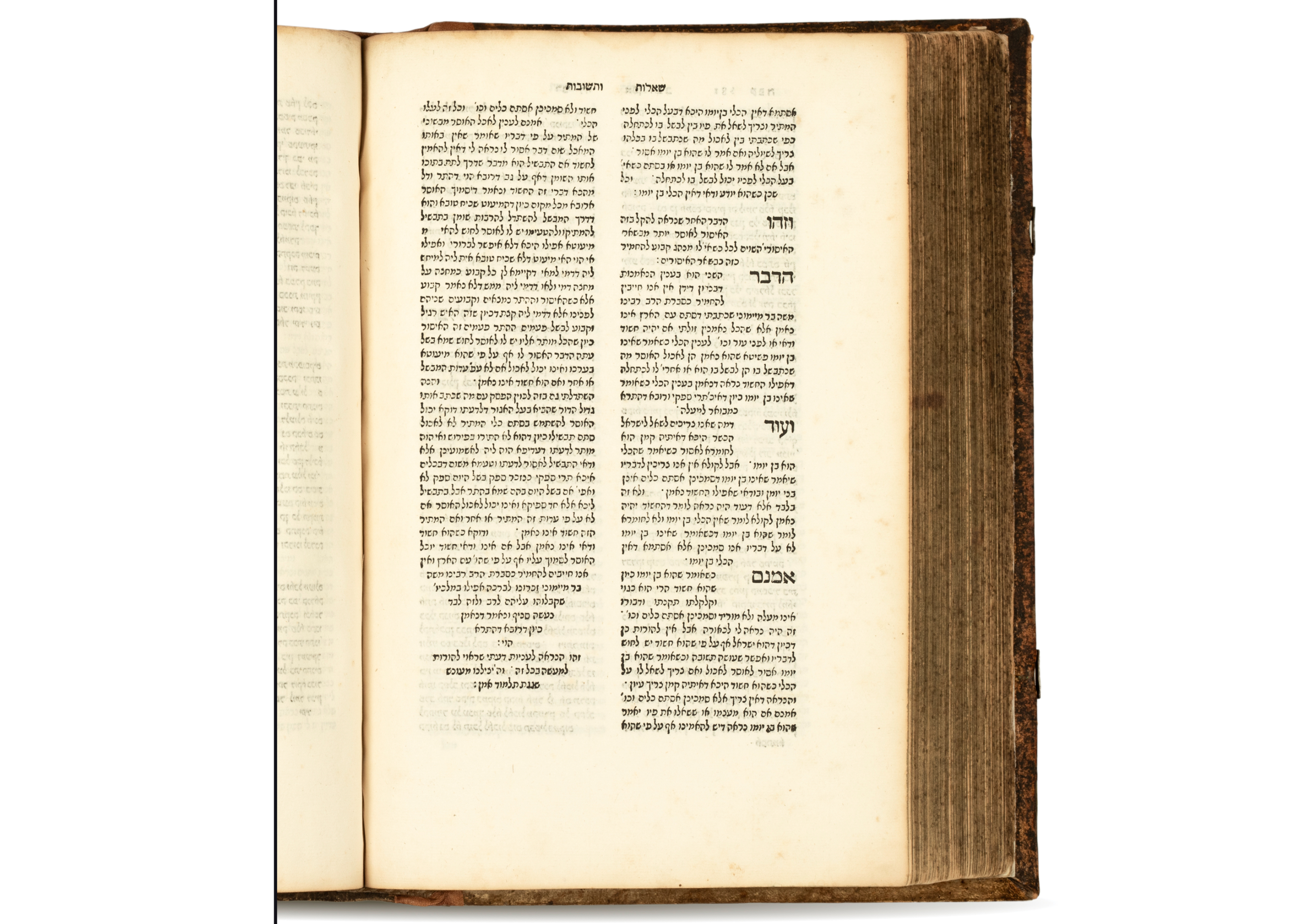
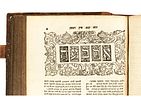
II. Sefer HaAgudah – A compendium of halachic rulings derived from the sugyos of the Talmud, arranged according to the order of the Talmud, by Rabbi Alexander Zuslin HaKohen, one of the Rishonim.

The work was printed and edited by the gaon Rabbi Yosef Katz of Cracow, author of Shu”t She’eiris Yosef and brother-in-law of the Rema, from the sole manuscript known to exist in all of Poland since 1476.

One of the foundational works of halachic literature.

Regarding the importance and uniqueness of the work, Rabbi Yosef Katz writes in his introduction: “This author encompassed the entire Torah in all six orders of the Mishnah, including Taharos, Kodshim, and Zeraim, which most halachic authorities did not address. He recorded the final halachic rulings of all those who preceded him, together with many teshuvos not found in the halachic works available to us, for he was the last renowned author to compose a work on the entire Talmud. Moreover, he added numerous original insights, drawn from both the Babylonian and Jerusalem Talmuds through his expansive heart and refined intellect — many innovations not found in the works of those who came before him.”


Cracow, 1571. First edition.

Page Count: 4, 250 leaves.

Stefansky, Sifrei Yesod, no. 245.

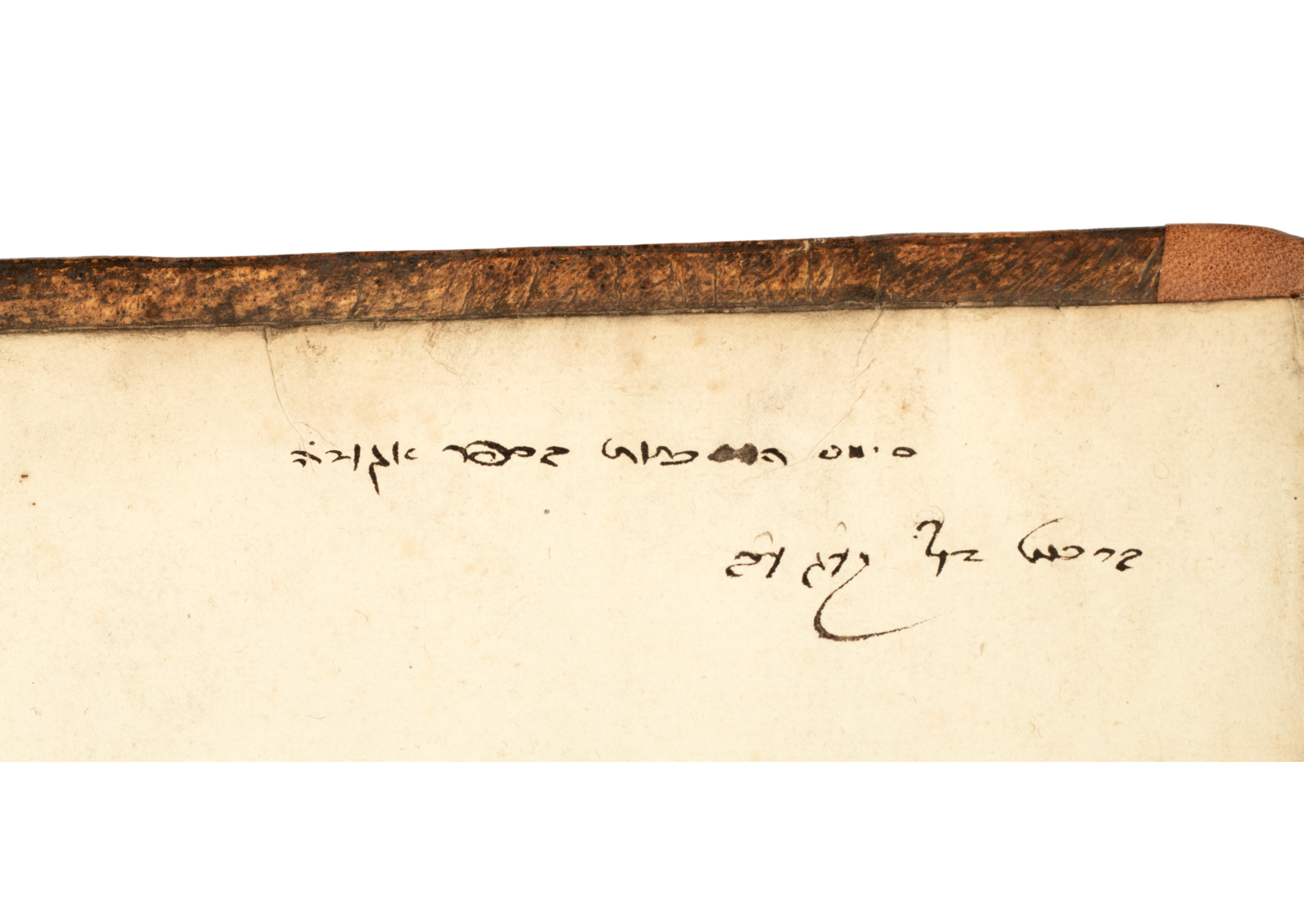
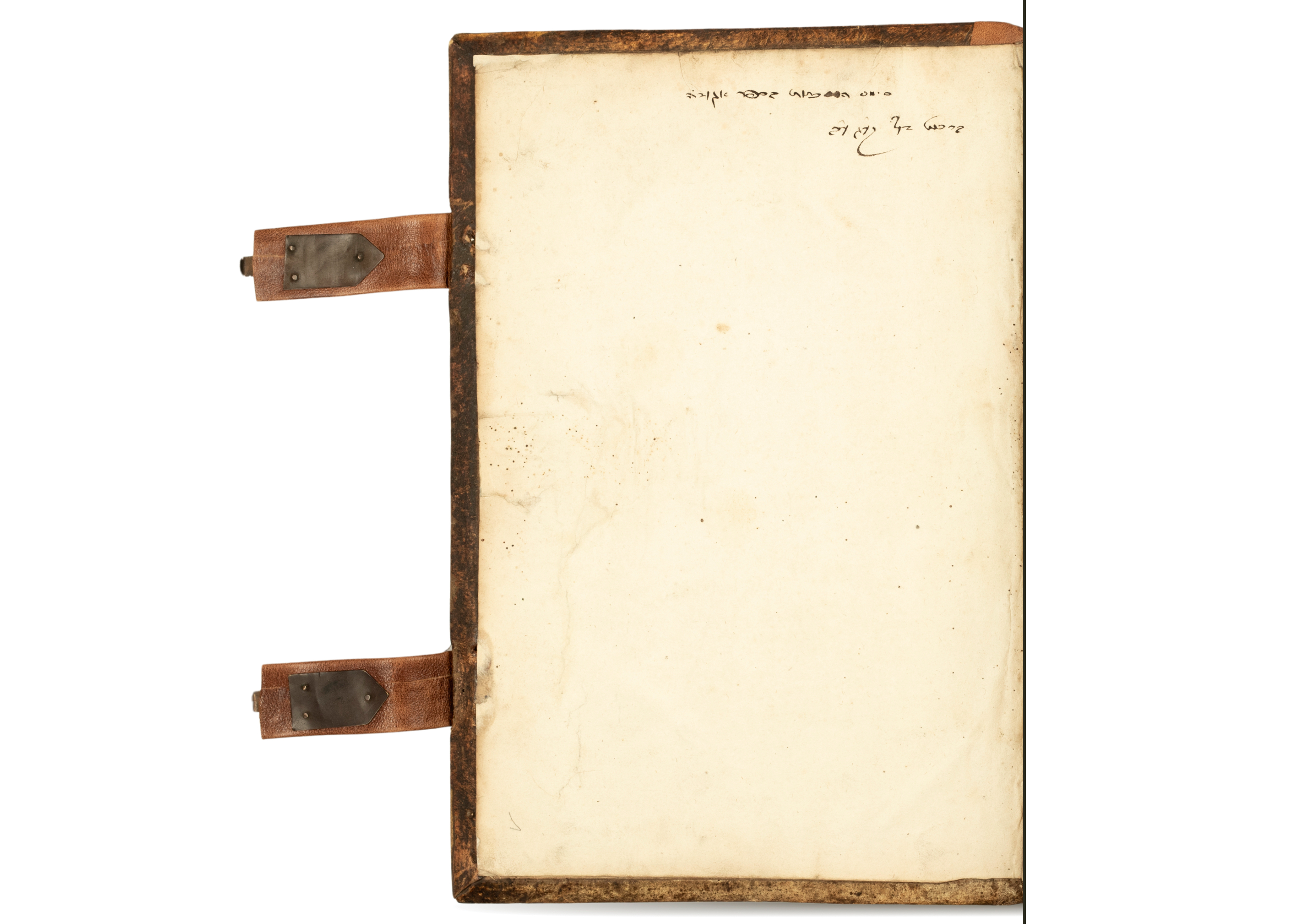
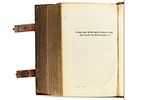
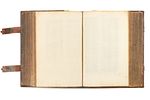
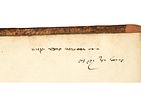
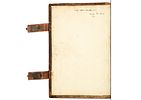
As noted, both works are bound together in a sixteenth-century wooden binding covered in leather, retaining its clasps. On the front flyleaf are signatures and ownership inscriptions of members of the Heilperin and Wetzler families, dating to the sixteenth century.

– – – – – – – – –  

The Semichah Controversy

About four hundred and fifty-eight years ago, Rabbi Yaakov Beirav of Tzfas determined that the time had come to reinstate the tradition of semichah, which is permission delivered from a rav to his disciple to rule in halachah and render judgment in a beis din. In the semichah process, the ordained rav or dayan grants the ordainee halachic authority to rule in both monetary laws and laws of life and death.

According to the Ramban in Sefer HaZechus, Gittin 36a, the tradition of semichah was terminated at the end of the Amoraic period. 

One of Rabbi Yaakov Beirav’s primary objectives in reinstating semichah was to enable the Sephardic anusim (forced converts) who had begun moving to Eretz Yisrael to atone for their sins with lashes, which only an ordained dayan is permitted to mete out to sinners.

In 1538, Mahari Beirav took the initiative to obtain semichah from twenty-five of the venerable rabbanim and sages of Tzfas. Once ordained, he delivered semichah to a select group of disciples, most notably among them Rabbi Yosef Karo, author of the Beis Yosef and Shulchan Aruch, and the Mabit.

The Ralbach, Rabbi Levi ben Chaviv, who was the leading Rav of Yerushalayim at the time, strongly condemned Rabbi Yaakov Beirav’s attempts to reinstate the long-buried tradition of semichah. Citing many halachic sources listed in the present Kuntres HaSemichah, he prohibited the practice and maintained that it was strictly forbidden. He based his opinion on the words of the Rambam himself, which was a source that Mahari Beirav cited when permitting the practice, and the fact that a musmach (ordainee) must be ordained by the majority of Rabbanim in Eretz Yisrael, as opposed to the sages of Tzfas alone.

At the time, the majority of his rabbinical colleagues did not accept the Ralbach’s opinion, and those who had received ordination ordained their own talmidim. Famous examples include Rabbi Yosef Karo, who ordained his talmid, the Alshich HaKadosh, who subsequently ordained Rabbi Chaim Vital. In Maggid Meisharim, Rabbi Yosef Karo writes that he was praised by the Maggid for “sacrificing your soul to restore the crown of semichah to its former glory.”

Nonetheless, the Ralbach’s opinion triumphed four generations later, when his view was universally accepted, and semichah was abolished.


The primary source regarding the fierce rabbinical debate that raged among the illustrious sages of that generation is the present Kuntres HaSemichah, which comprises approximately thirty leaves and was first printed within this sefer.


Lot : 4

Two Sifrei Yesod First Editions Bound Together: 
Shu”t Ralbach - Kuntres HaSemichah, Venice, 1565
and Sefer Agudah, Cracow, 1571

Start price: $10,000
|
Est. Price: $15,000 - $20,000
Two Sifrei Yesod First Editions Bound Together: 
Shu”t Ralbach – Kuntres HaSemichah, Venice, 1565
and Sefer Agudah, Cracow, 1571

Two sifrei yesod from the sixteenth century – Shu”t Ralbach (Venice, 1565) and Sefer Agudah (Cracow, 1571) – complete and beautiful copies, bound together in an elegant sixteenth-century wooden binding covered in leather, retaining its clasps.

I. Shu”t Ralbach – Responsa by the Ralbach, Rabbi Levi ben Chaviv, together with his commentary on the Rambam’s laws of Kiddush HaChodesh and Kuntres HaSemichah.

An exceptionally important and foundational work of responsa literature, complete with all title pages, indexes, and the errata leaves. (The two errata leaves are lacking in many copies but are present here; see: Rivkind, Sefer HaYovel Lichvod Alexander Marx, p. 419.)

Venice, 1565. First edition.

Page Count: [6], 209, [1], 217–328 leaves—size: 29.5 cm.

The volume includes two works that can be regarded as independent compositions:
A. The Ralbach’s important commentary on the Rambam’s laws of Kiddush HaChodesh, including illustrations and charts, printed here for the first time and later included in subsequent editions of the Rambam.

B. Kuntres HaSemichah presents the great debate between the Ralbach and Rabbi Yaakov Beirav regarding the reinstatement of semichah among the sages of Tzfas – see below.


Rabbi Levi ben Chaviv (1480-c. 1541), known as the “Ralbach, ” was one of the great rabbinical figures following the Spanish Expulsion. He was born in Zamora, Spain, to Rabbi Yaakov Chaviv, author of Ein Yaakov, and was exiled with his father from Spain. After his father’s passing, the Ralbach completed and printed the Ein Yaakov in Salonika, and then journeyed to Jerusalem where he settled and served as Rav for many years.

Stefansky, Sifrei Yesod, no. 292


II. Sefer HaAgudah – A compendium of halachic rulings derived from the sugyos of the Talmud, arranged according to the order of the Talmud, by Rabbi Alexander Zuslin HaKohen, one of the Rishonim.

The work was printed and edited by the gaon Rabbi Yosef Katz of Cracow, author of Shu”t She’eiris Yosef and brother-in-law of the Rema, from the sole manuscript known to exist in all of Poland since 1476.

One of the foundational works of halachic literature.

Regarding the importance and uniqueness of the work, Rabbi Yosef Katz writes in his introduction: “This author encompassed the entire Torah in all six orders of the Mishnah, including Taharos, Kodshim, and Zeraim, which most halachic authorities did not address. He recorded the final halachic rulings of all those who preceded him, together with many teshuvos not found in the halachic works available to us, for he was the last renowned author to compose a work on the entire Talmud. Moreover, he added numerous original insights, drawn from both the Babylonian and Jerusalem Talmuds through his expansive heart and refined intellect — many innovations not found in the works of those who came before him.”


Cracow, 1571. First edition.

Page Count: 4, 250 leaves.

Stefansky, Sifrei Yesod, no. 245.

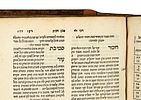
As noted, both works are bound together in a sixteenth-century wooden binding covered in leather, retaining its clasps. On the front flyleaf are signatures and ownership inscriptions of members of the Heilperin and Wetzler families, dating to the sixteenth century.

– – – – – – – – –  

The Semichah Controversy

About four hundred and fifty-eight years ago, Rabbi Yaakov Beirav of Tzfas determined that the time had come to reinstate the tradition of semichah, which is permission delivered from a rav to his disciple to rule in halachah and render judgment in a beis din. In the semichah process, the ordained rav or dayan grants the ordainee halachic authority to rule in both monetary laws and laws of life and death.

According to the Ramban in Sefer HaZechus, Gittin 36a, the tradition of semichah was terminated at the end of the Amoraic period. 

One of Rabbi Yaakov Beirav’s primary objectives in reinstating semichah was to enable the Sephardic anusim (forced converts) who had begun moving to Eretz Yisrael to atone for their sins with lashes, which only an ordained dayan is permitted to mete out to sinners.

In 1538, Mahari Beirav took the initiative to obtain semichah from twenty-five of the venerable rabbanim and sages of Tzfas. Once ordained, he delivered semichah to a select group of disciples, most notably among them Rabbi Yosef Karo, author of the Beis Yosef and Shulchan Aruch, and the Mabit.

The Ralbach, Rabbi Levi ben Chaviv, who was the leading Rav of Yerushalayim at the time, strongly condemned Rabbi Yaakov Beirav’s attempts to reinstate the long-buried tradition of semichah. Citing many halachic sources listed in the present Kuntres HaSemichah, he prohibited the practice and maintained that it was strictly forbidden. He based his opinion on the words of the Rambam himself, which was a source that Mahari Beirav cited when permitting the practice, and the fact that a musmach (ordainee) must be ordained by the majority of Rabbanim in Eretz Yisrael, as opposed to the sages of Tzfas alone.

At the time, the majority of his rabbinical colleagues did not accept the Ralbach’s opinion, and those who had received ordination ordained their own talmidim. Famous examples include Rabbi Yosef Karo, who ordained his talmid, the Alshich HaKadosh, who subsequently ordained Rabbi Chaim Vital. In Maggid Meisharim, Rabbi Yosef Karo writes that he was praised by the Maggid for “sacrificing your soul to restore the crown of semichah to its former glory.”

Nonetheless, the Ralbach’s opinion triumphed four generations later, when his view was universally accepted, and semichah was abolished.


The primary source regarding the fierce rabbinical debate that raged among the illustrious sages of that generation is the present Kuntres HaSemichah, which comprises approximately thirty leaves and was first printed within this sefer.


Two Sifrei Yesod First Editions Bound Together: 
Shu”t Ralbach – Kuntres HaSemichah, Venice, 1565
and Sefer Agudah, Cracow, 1571

Two sifrei yesod from the sixteenth century – Shu”t Ralbach (Venice, 1565) and Sefer Agudah (Cracow, 1571) – complete and beautiful copies, bound together in an elegant sixteenth-century wooden binding covered in leather, retaining its clasps.

I. Shu”t Ralbach – Responsa by the Ralbach, Rabbi Levi ben Chaviv, together with his commentary on the Rambam’s laws of Kiddush HaChodesh and Kuntres HaSemichah.

An exceptionally important and foundational work of responsa literature, complete with all title pages, indexes, and the errata leaves. (The two errata leaves are lacking in many copies but are present here; see: Rivkind, Sefer HaYovel Lichvod Alexander Marx, p. 419.)

Venice, 1565. First edition.

Page Count: [6], 209, [1], 217–328 leaves—size: 29.5 cm.

The volume includes two works that can be regarded as independent compositions:
A. The Ralbach’s important commentary on the Rambam’s laws of Kiddush HaChodesh, including illustrations and charts, printed here for the first time and later included in subsequent editions of the Rambam.

B. Kuntres HaSemichah presents the great debate between the Ralbach and Rabbi Yaakov Beirav regarding the reinstatement of semichah among the sages of Tzfas – see below.


Rabbi Levi ben Chaviv (1480-c. 1541), known as the “Ralbach, ” was one of the great rabbinical figures following the Spanish Expulsion. He was born in Zamora, Spain, to Rabbi Yaakov Chaviv, author of Ein Yaakov, and was exiled with his father from Spain. After his father’s passing, the Ralbach completed and printed the Ein Yaakov in Salonika, and then journeyed to Jerusalem where he settled and served as Rav for many years.

Stefansky, Sifrei Yesod, no. 292


II. Sefer HaAgudah – A compendium of halachic rulings derived from the sugyos of the Talmud, arranged according to the order of the Talmud, by Rabbi Alexander Zuslin HaKohen, one of the Rishonim.

The work was printed and edited by the gaon Rabbi Yosef Katz of Cracow, author of Shu”t She’eiris Yosef and brother-in-law of the Rema, from the sole manuscript known to exist in all of Poland since 1476.

One of the foundational works of halachic literature.

Regarding the importance and uniqueness of the work, Rabbi Yosef Katz writes in his introduction: “This author encompassed the entire Torah in all six orders of the Mishnah, including Taharos, Kodshim, and Zeraim, which most halachic authorities did not address. He recorded the final halachic rulings of all those who preceded him, together with many teshuvos not found in the halachic works available to us, for he was the last renowned author to compose a work on the entire Talmud. Moreover, he added numerous original insights, drawn from both the Babylonian and Jerusalem Talmuds through his expansive heart and refined intellect — many innovations not found in the works of those who came before him.”


Cracow, 1571. First edition.

Page Count: 4, 250 leaves.

Stefansky, Sifrei Yesod, no. 245.

As noted, both works are bound together in a sixteenth-century wooden binding covered in leather, retaining its clasps. On the front flyleaf are signatures and ownership inscriptions of members of the Heilperin and Wetzler families, dating to the sixteenth century.

– – – – – – – – –  

The Semichah Controversy

About four hundred and fifty-eight years ago, Rabbi Yaakov Beirav of Tzfas determined that the time had come to reinstate the tradition of semichah, which is permission delivered from a rav to his disciple to rule in halachah and render judgment in a beis din. In the semichah process, the ordained rav or dayan grants the ordainee halachic authority to rule in both monetary laws and laws of life and death.

According to the Ramban in Sefer HaZechus, Gittin 36a, the tradition of semichah was terminated at the end of the Amoraic period. 

One of Rabbi Yaakov Beirav’s primary objectives in reinstating semichah was to enable the Sephardic anusim (forced converts) who had begun moving to Eretz Yisrael to atone for their sins with lashes, which only an ordained dayan is permitted to mete out to sinners.

In 1538, Mahari Beirav took the initiative to obtain semichah from twenty-five of the venerable rabbanim and sages of Tzfas. Once ordained, he delivered semichah to a select group of disciples, most notably among them Rabbi Yosef Karo, author of the Beis Yosef and Shulchan Aruch, and the Mabit.

The Ralbach, Rabbi Levi ben Chaviv, who was the leading Rav of Yerushalayim at the time, strongly condemned Rabbi Yaakov Beirav’s attempts to reinstate the long-buried tradition of semichah. Citing many halachic sources listed in the present Kuntres HaSemichah, he prohibited the practice and maintained that it was strictly forbidden. He based his opinion on the words of the Rambam himself, which was a source that Mahari Beirav cited when permitting the practice, and the fact that a musmach (ordainee) must be ordained by the majority of Rabbanim in Eretz Yisrael, as opposed to the sages of Tzfas alone.

At the time, the majority of his rabbinical colleagues did not accept the Ralbach’s opinion, and those who had received ordination ordained their own talmidim. Famous examples include Rabbi Yosef Karo, who ordained his talmid, the Alshich HaKadosh, who subsequently ordained Rabbi Chaim Vital. In Maggid Meisharim, Rabbi Yosef Karo writes that he was praised by the Maggid for “sacrificing your soul to restore the crown of semichah to its former glory.”

Nonetheless, the Ralbach’s opinion triumphed four generations later, when his view was universally accepted, and semichah was abolished.


The primary source regarding the fierce rabbinical debate that raged among the illustrious sages of that generation is the present Kuntres HaSemichah, which comprises approximately thirty leaves and was first printed within this sefer.