



To attend this auction live or leave absentee bids
Lot : 43
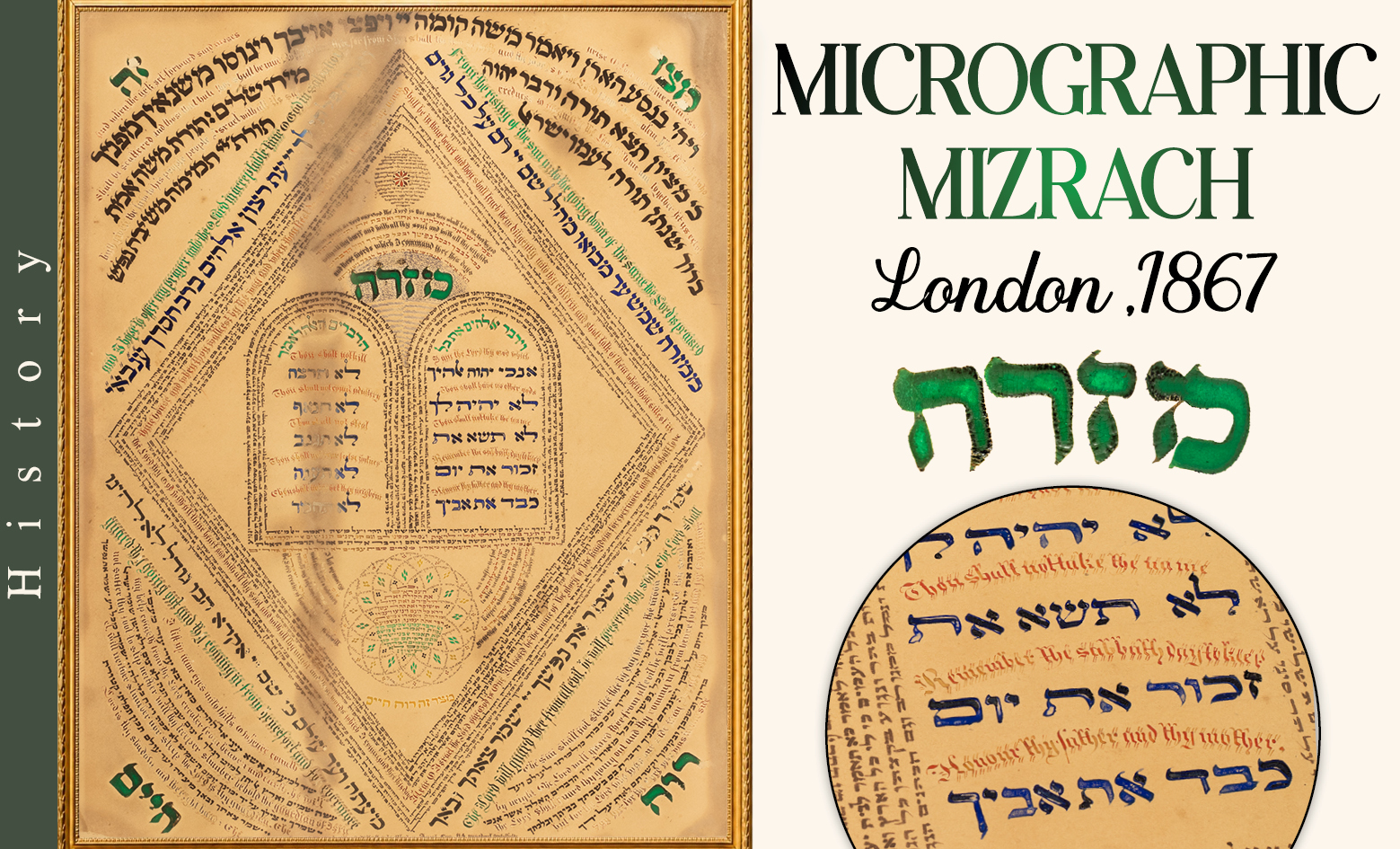
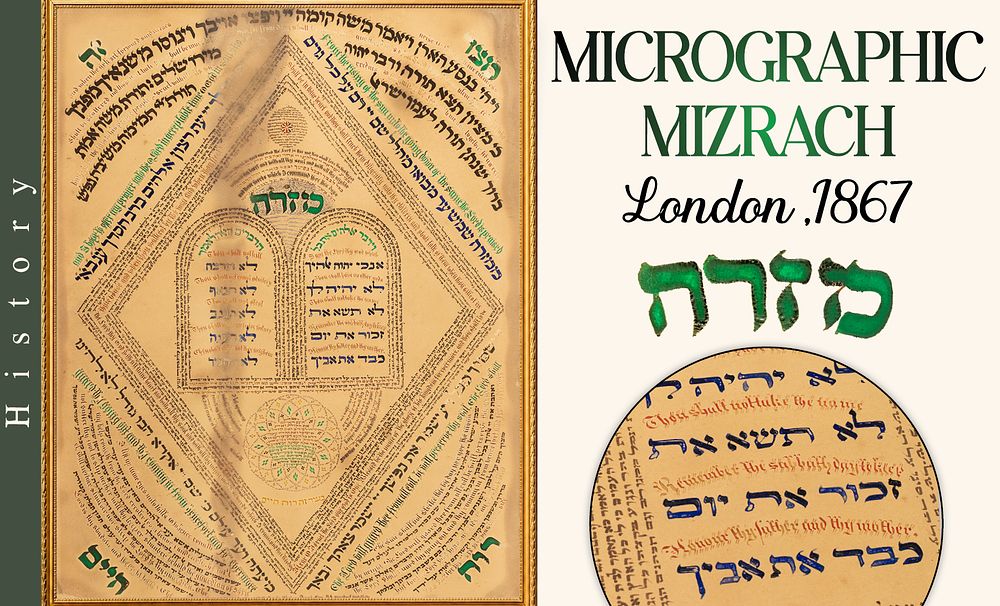
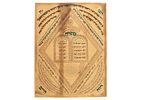
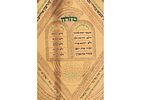
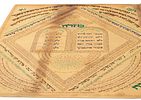
Unique Bilingual Micrographic Mizrach Plaque – London, 1867
Unique Bilingual Micrographic Mizrach Plaque – London, 1867
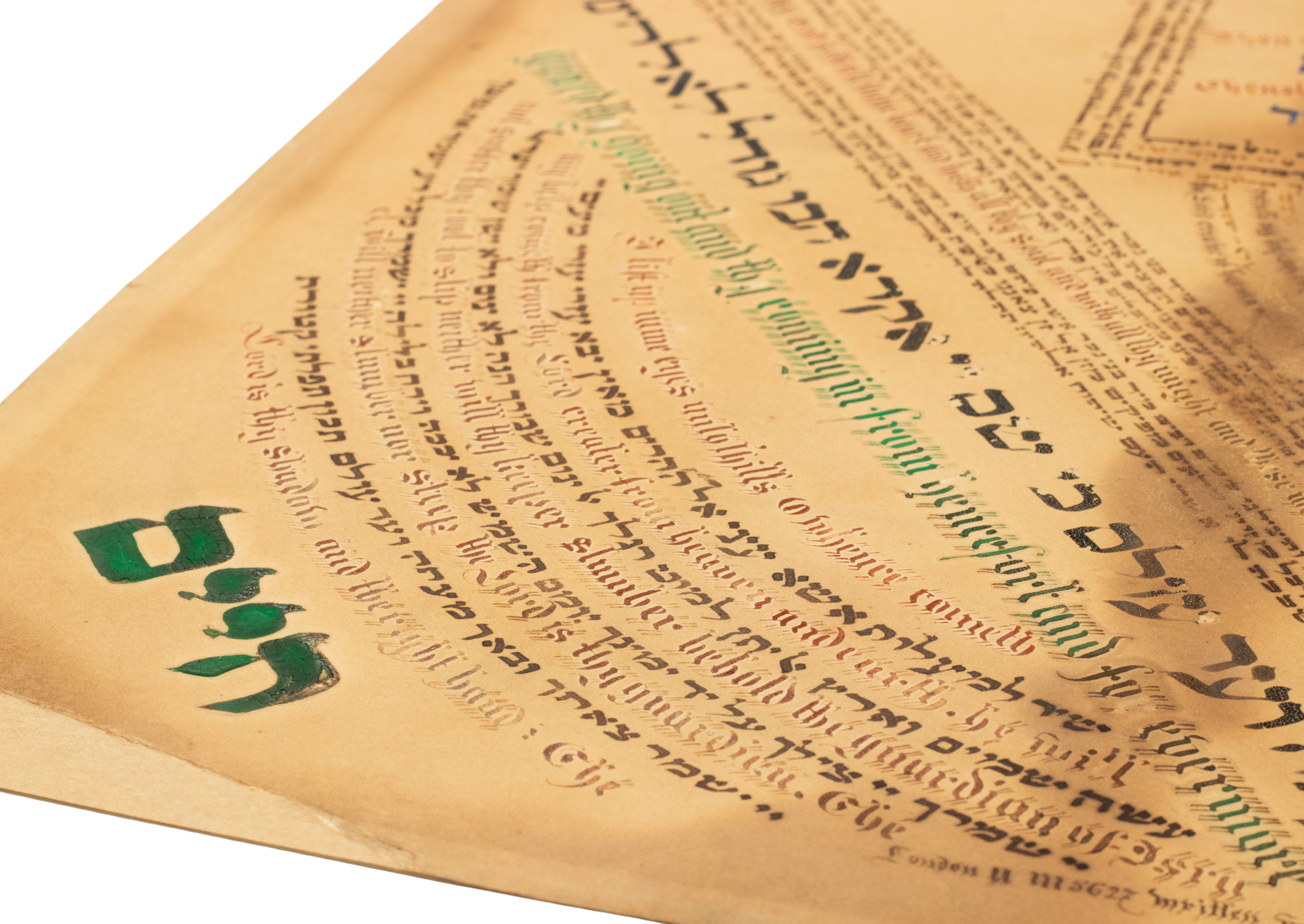
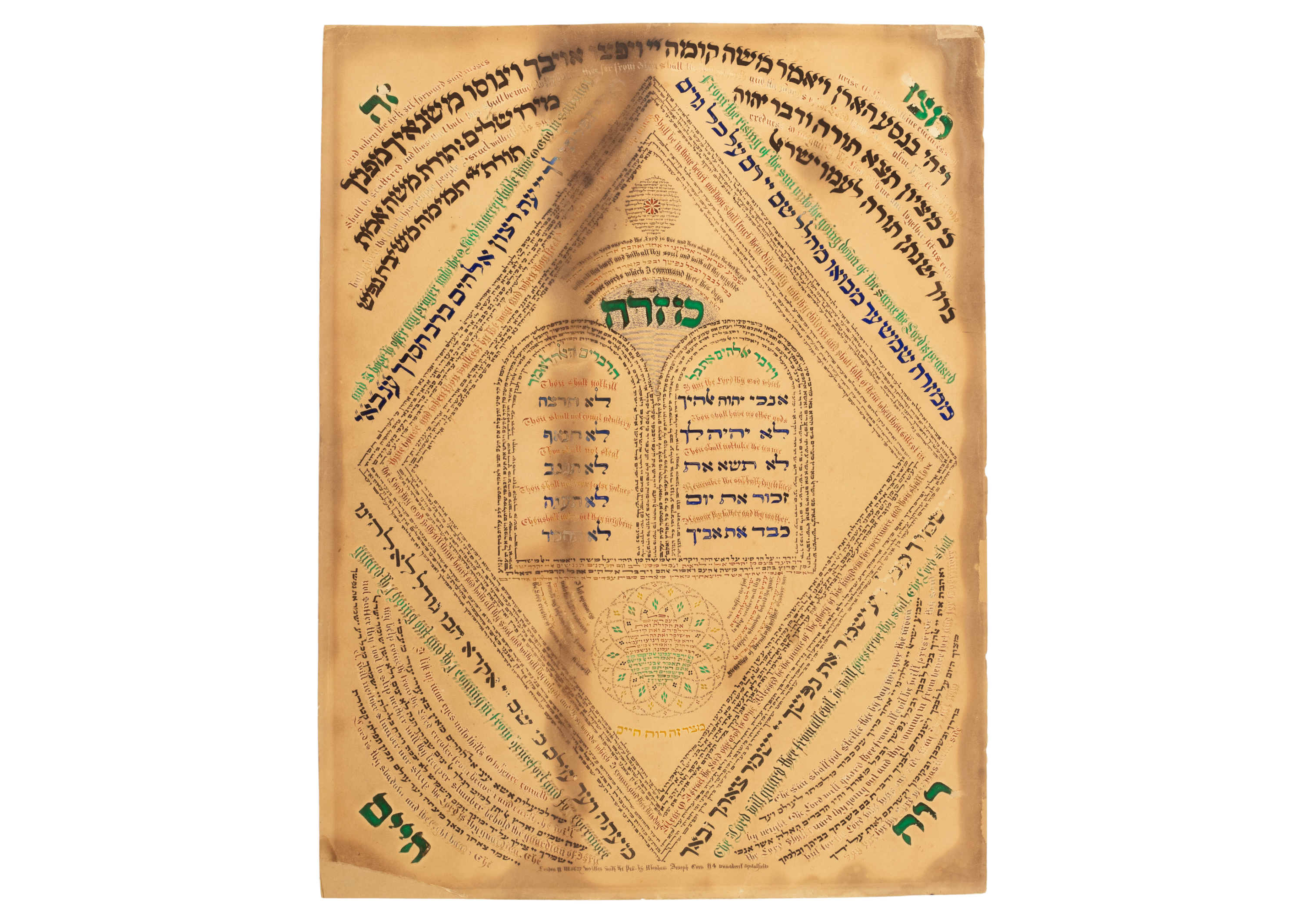
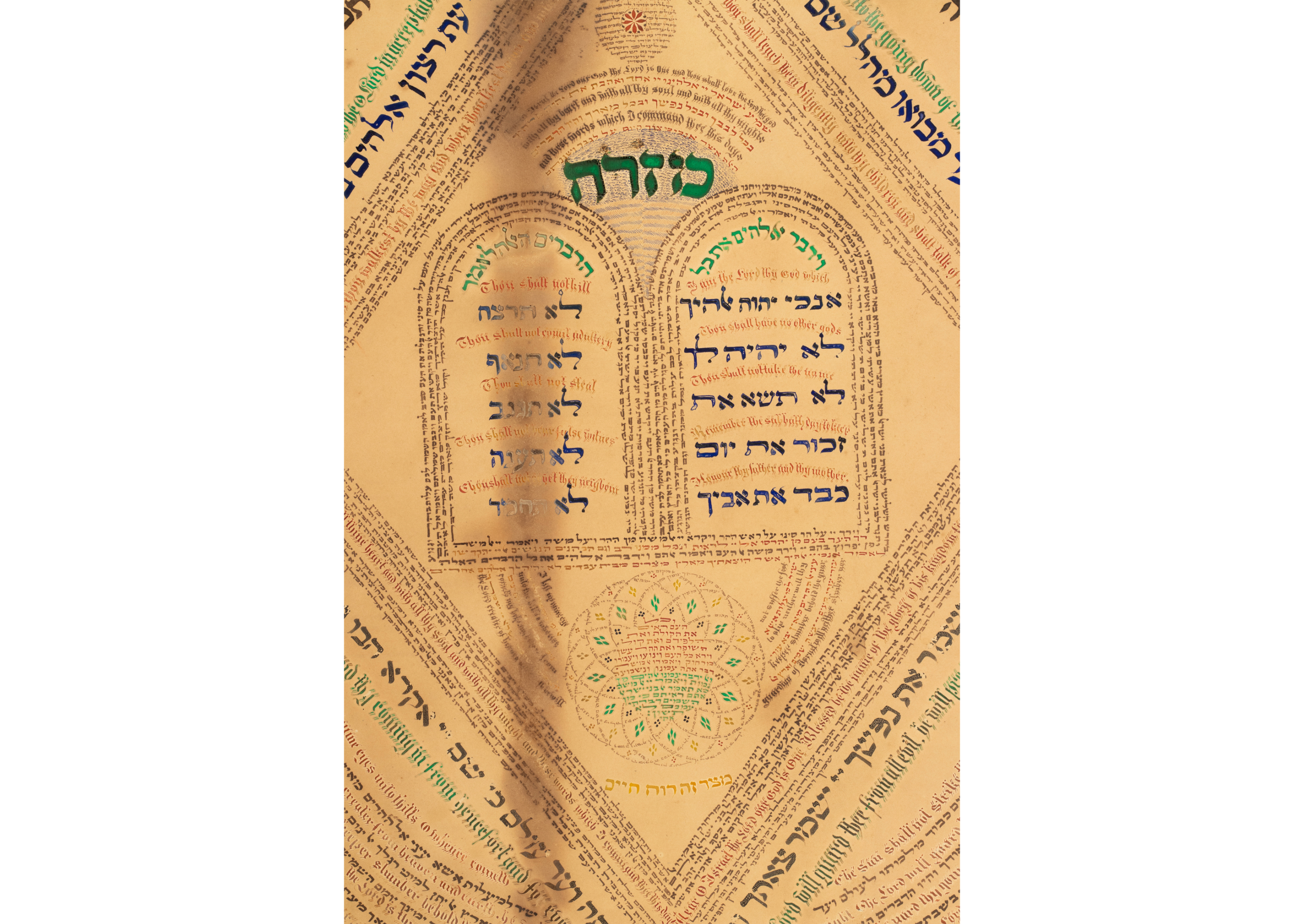
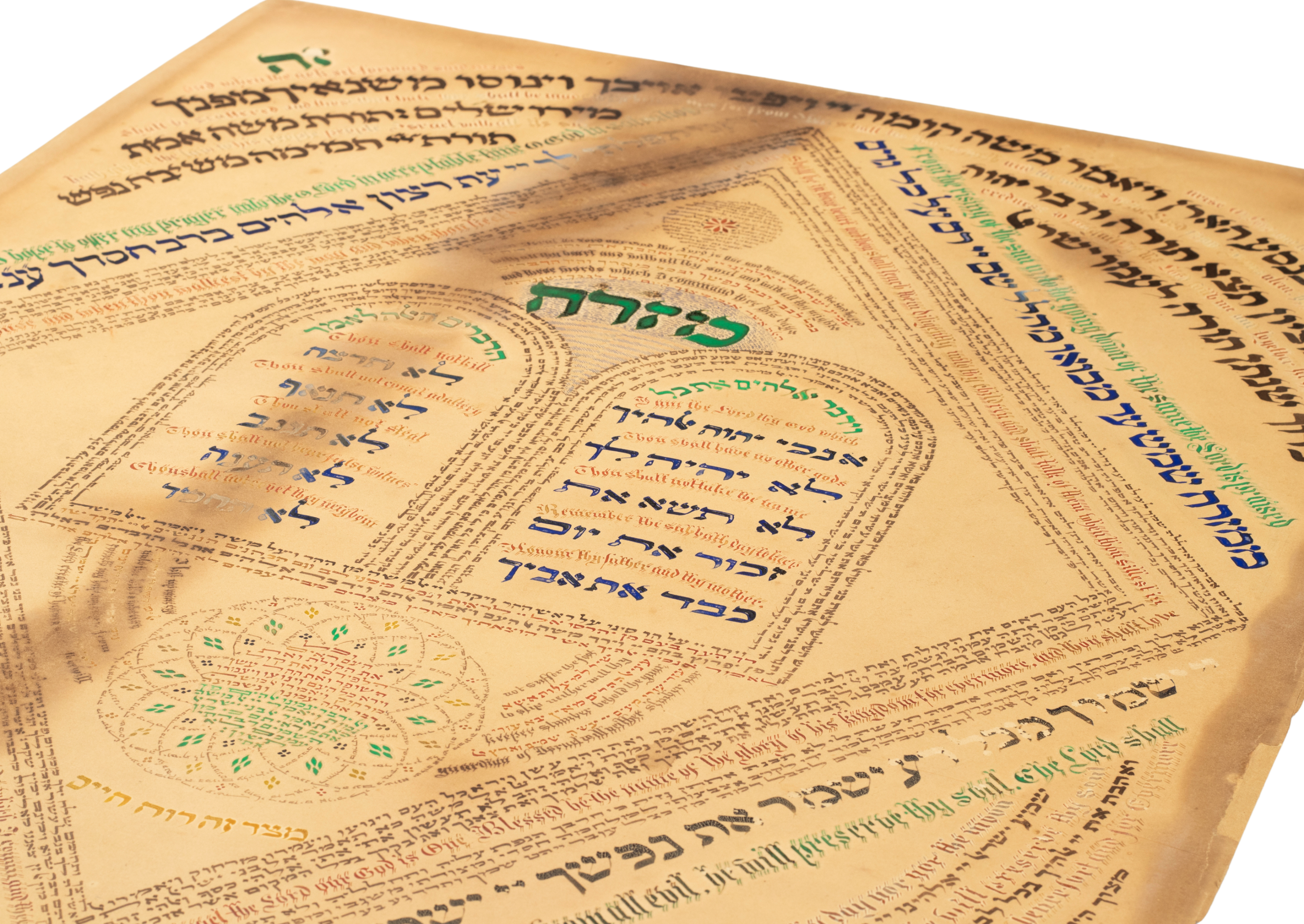
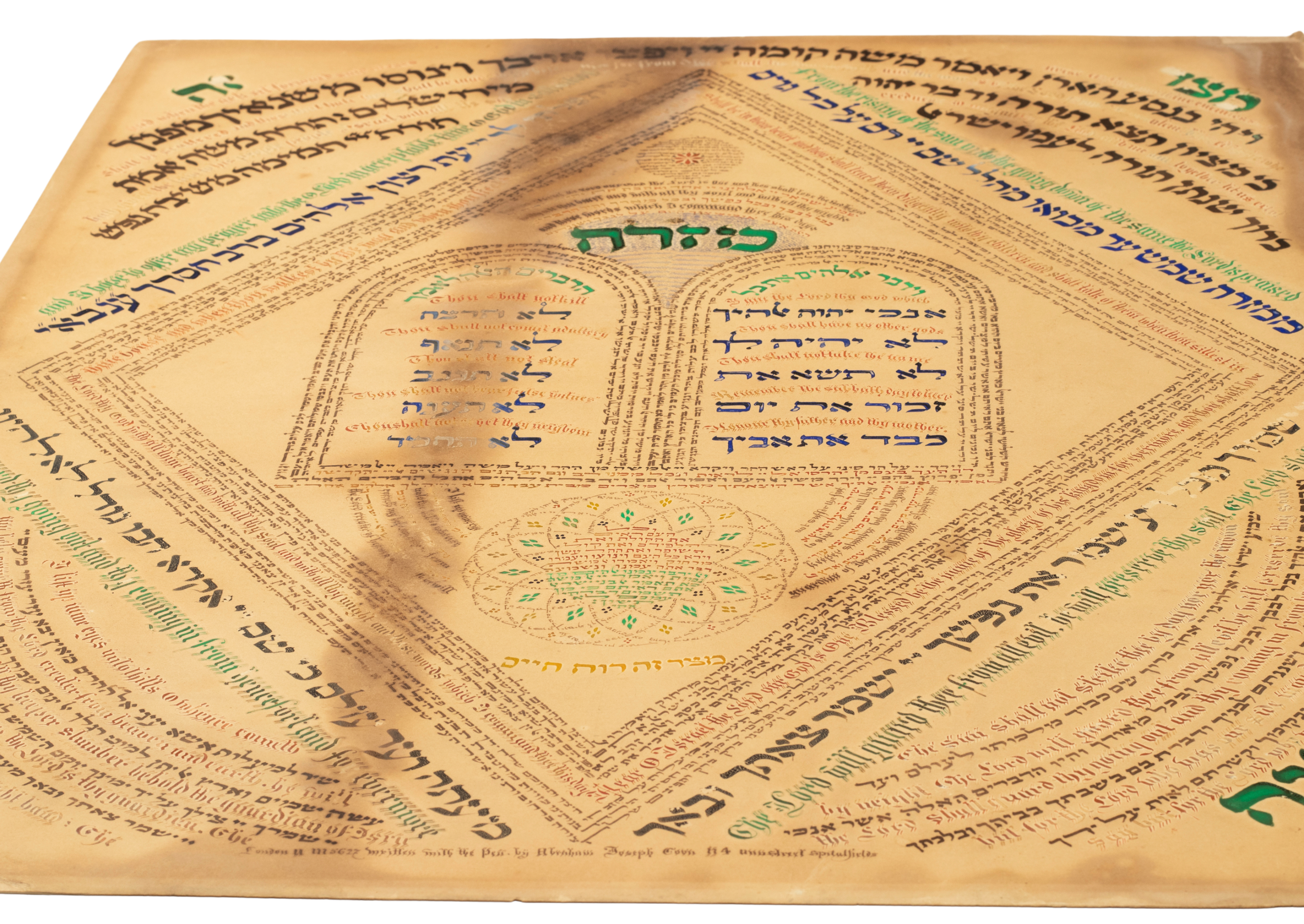
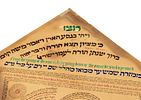
Magnificent large-format micrographic Mizrach, handwritten in Hebrew and English by Abraham Joseph (HaKohen) Coon.
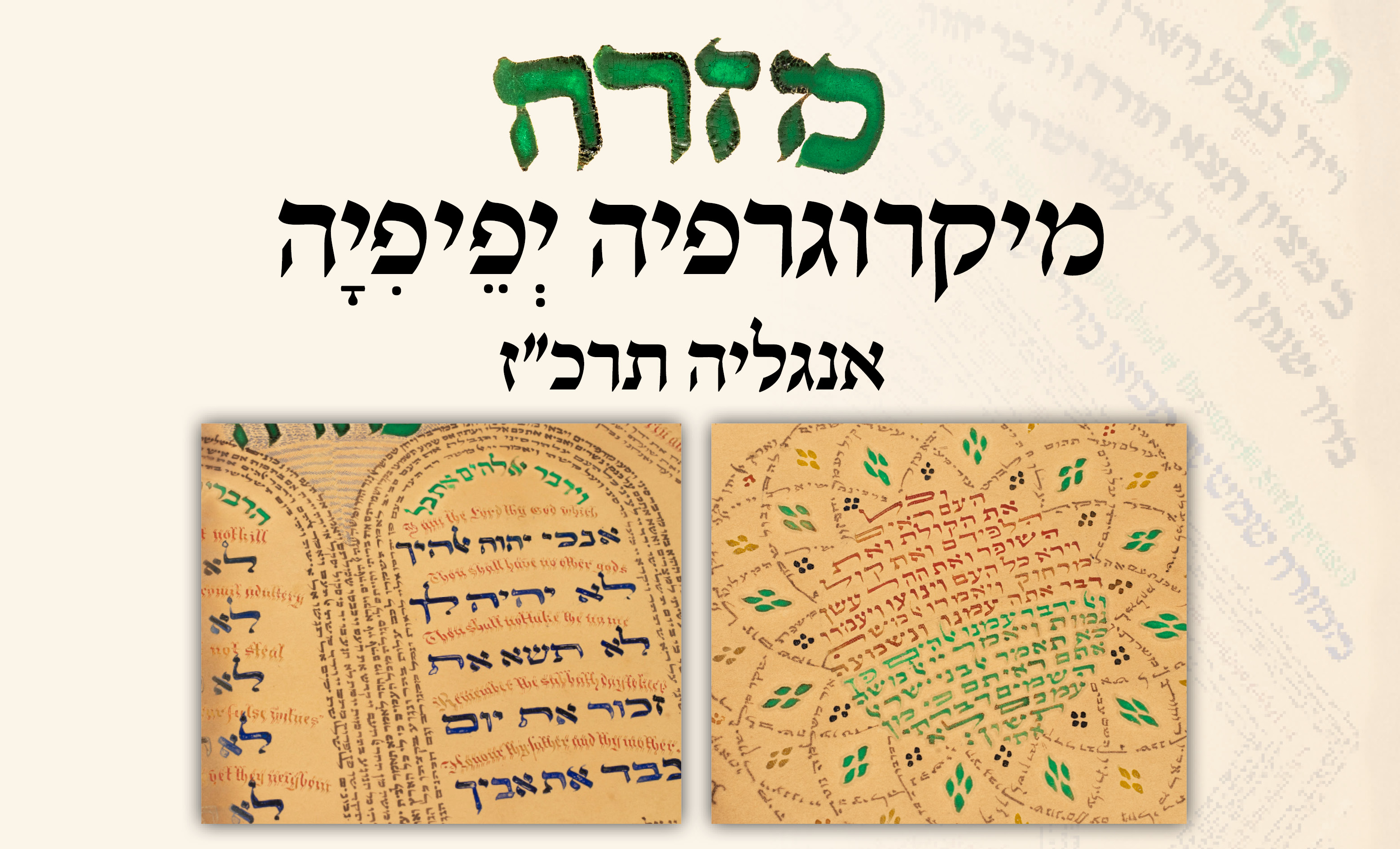
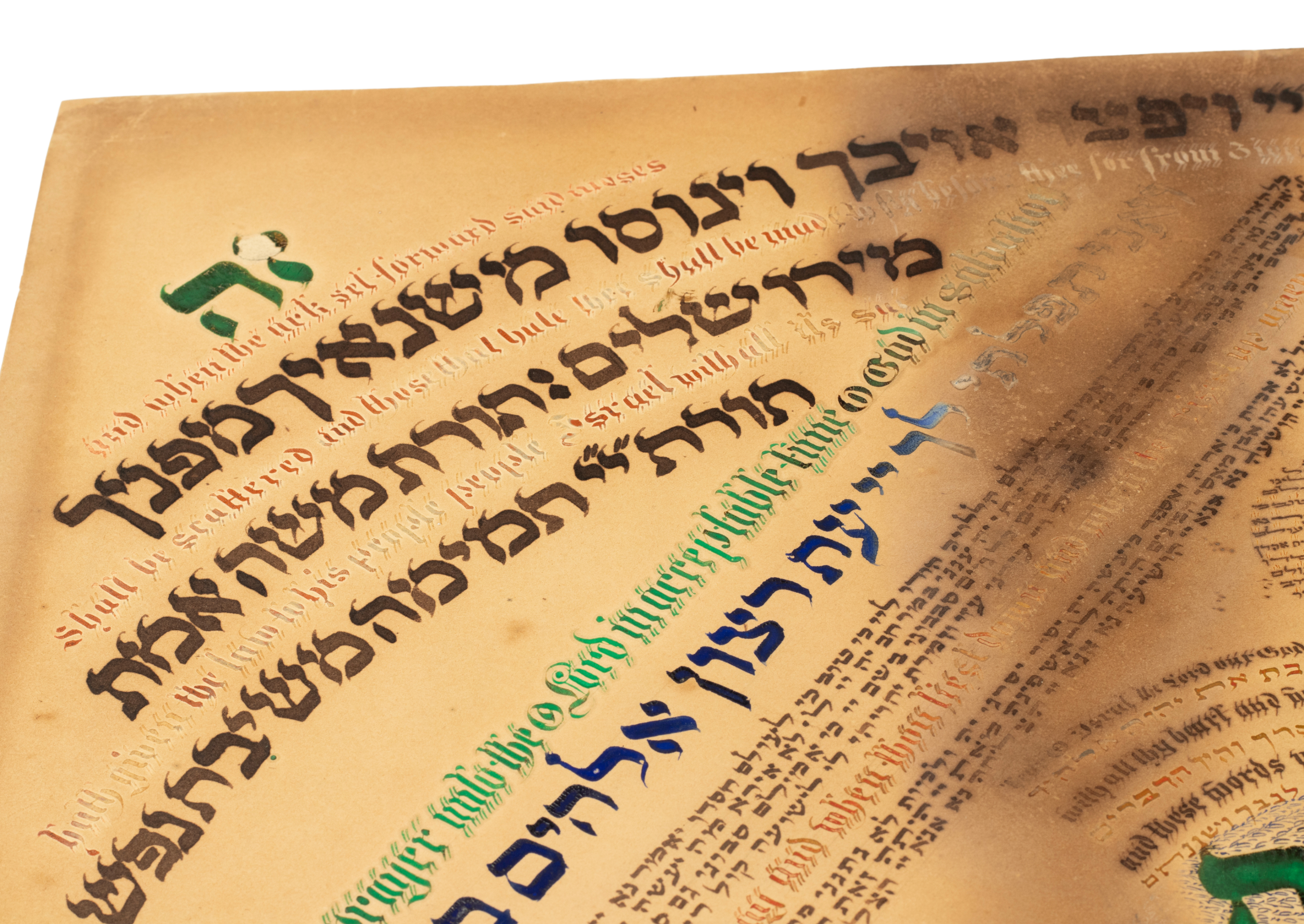
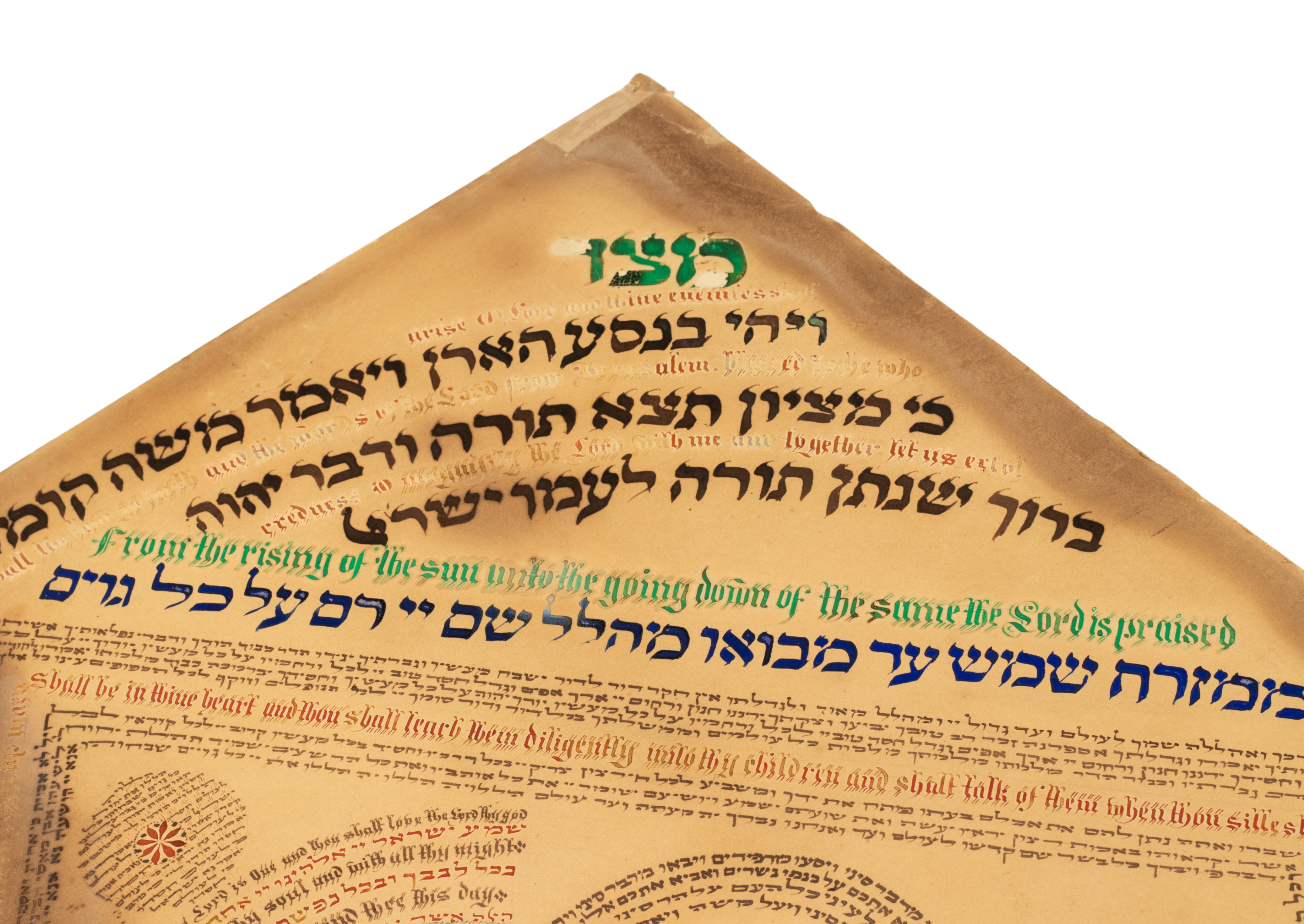
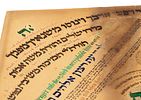
The Mizrach is executed in fine Hebrew and English calligraphic and micrographic script, in brown, green, red, blue, and yellow inks.
A remarkable work of Jewish micrographic art and apparently the only known surviving work by Abraham Joseph (HaKohen) Coon.
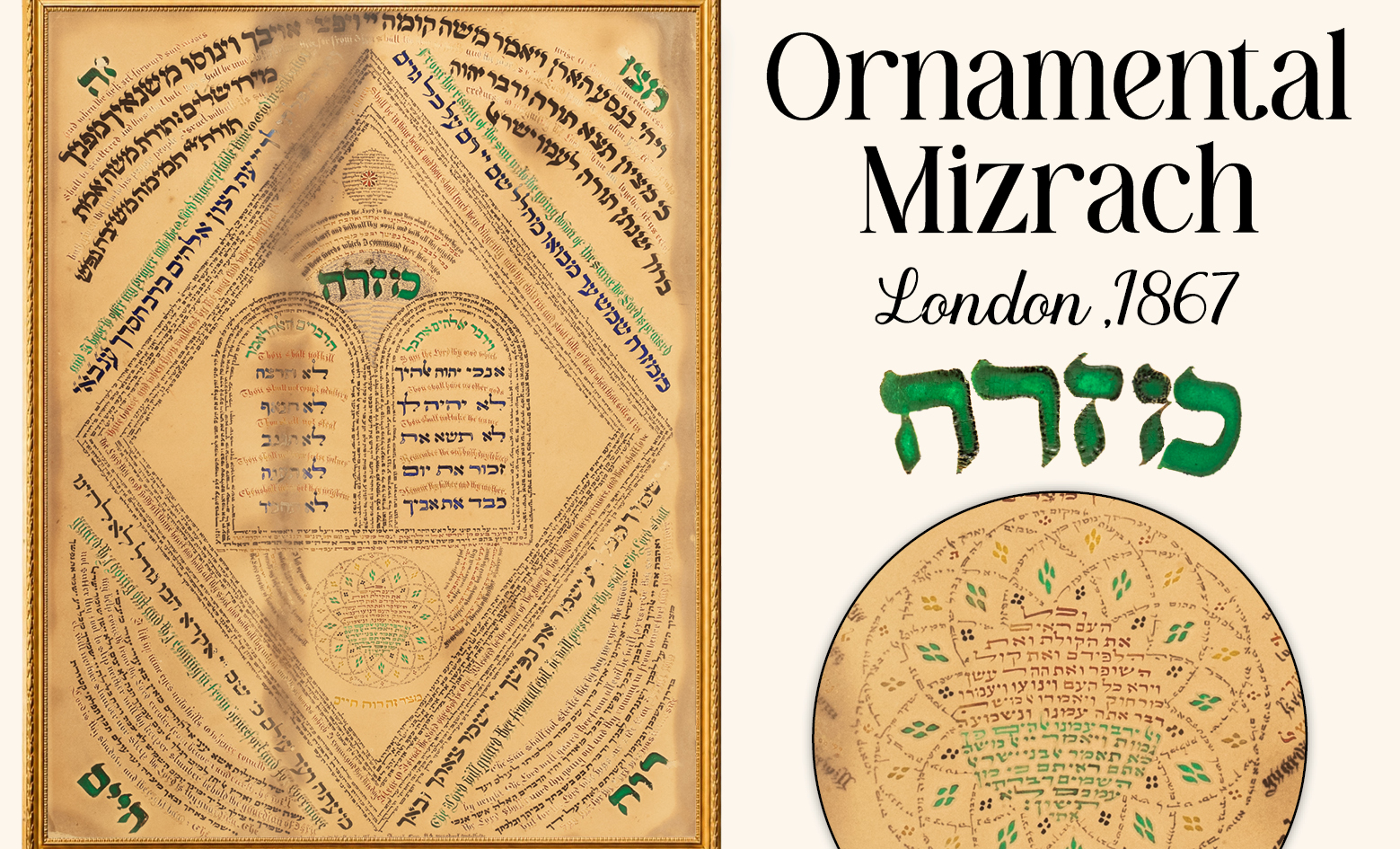
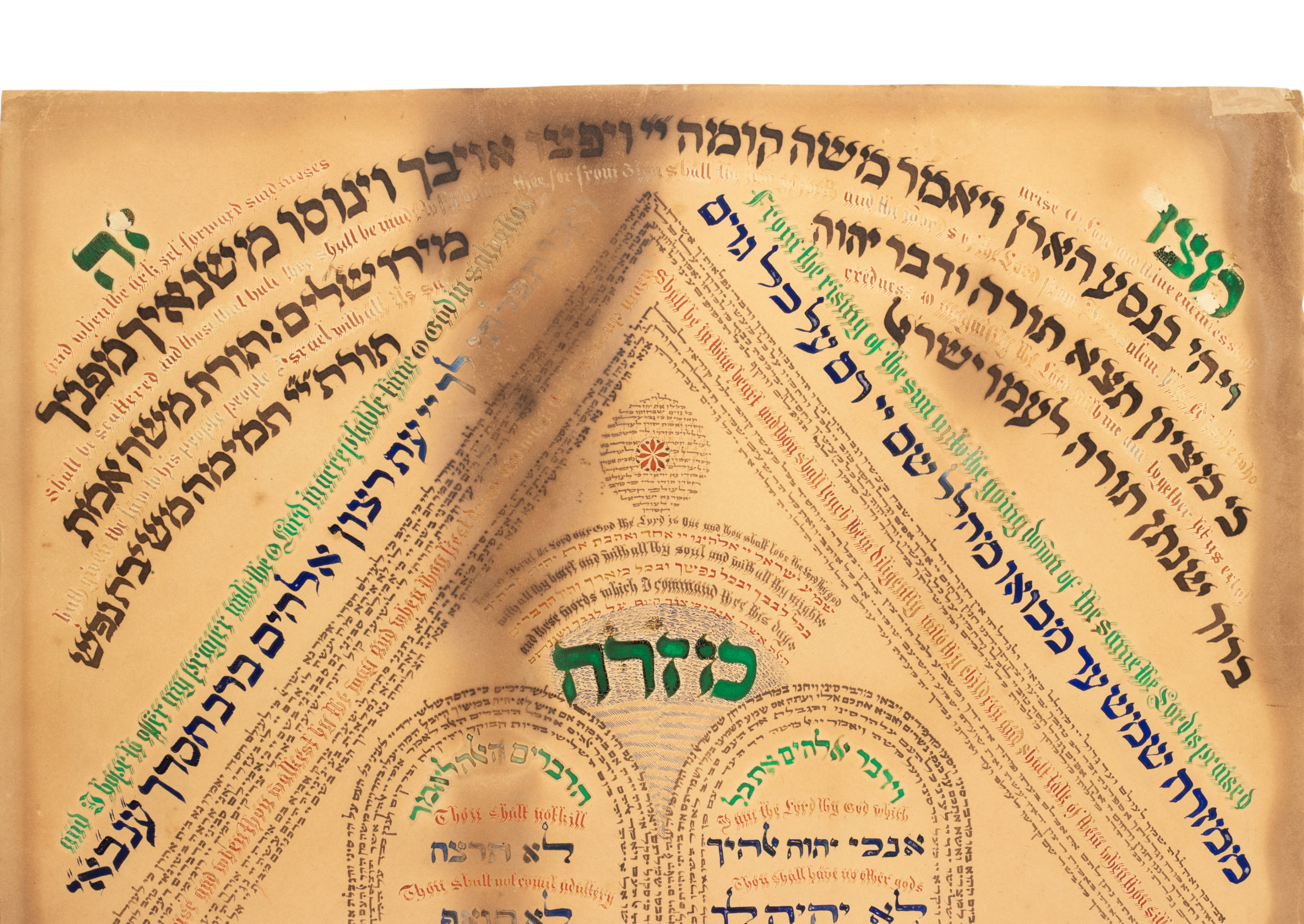
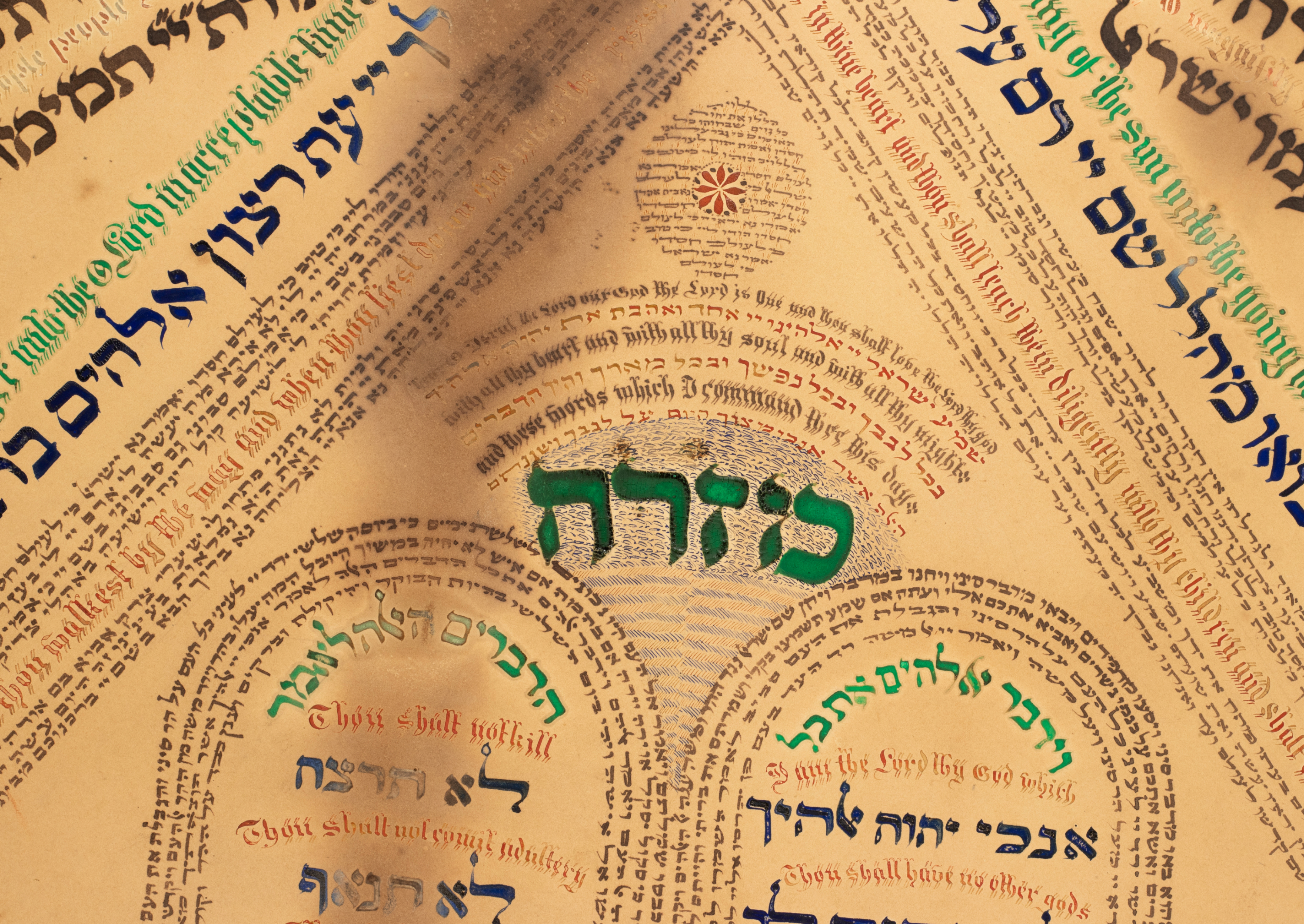
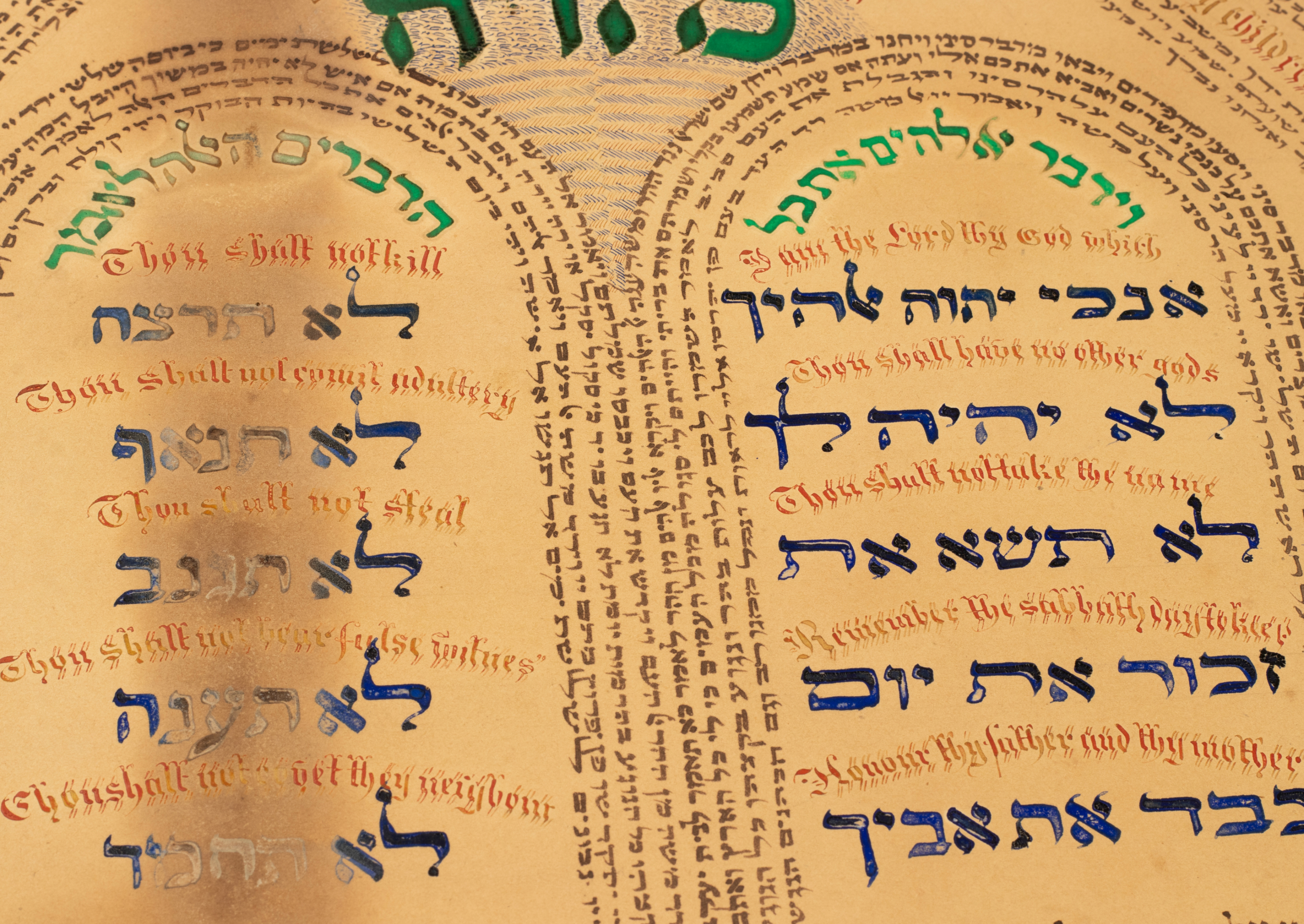
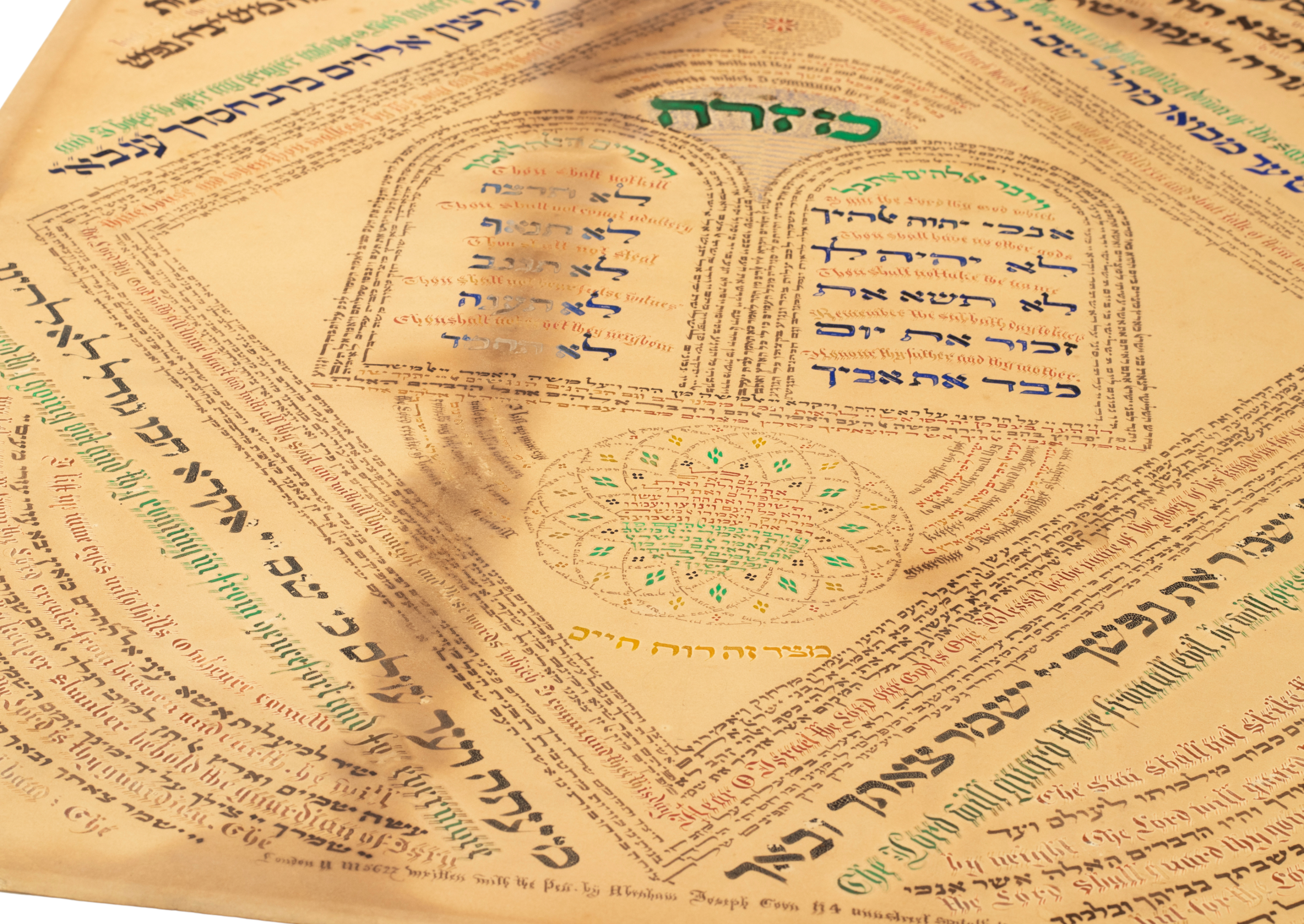
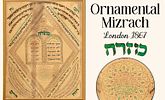
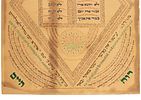
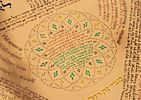
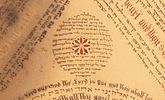
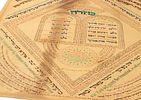
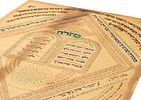
The Mizrach features a central motif of the two Luchos Habris, framed by a large diamond formed of concentric lines of micrographic biblical texts, in the original Hebrew accompanied by selected English translations, in alternating-colored inks.
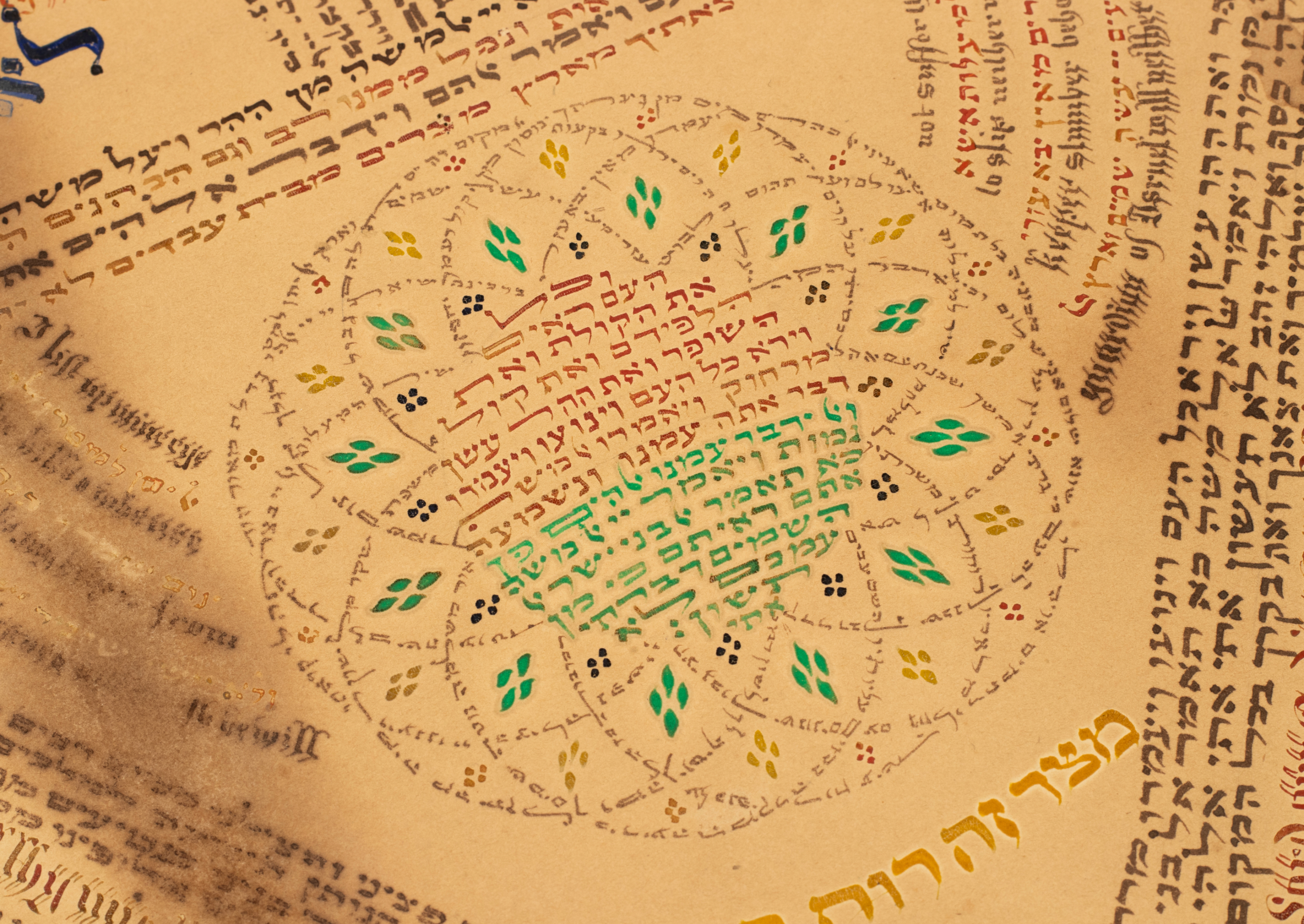
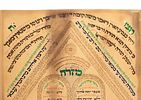
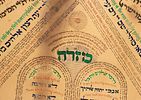
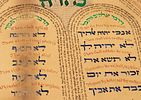
Additional biblical and rabbinic texts are arranged in surrounding geometric forms to complete the rich, sacred composition. The focal point, the depiction of the Luchos Habris, is accomplished in micrographic text, which cleverly uses the actual words of the Aseres Hadibros from Sefer Shemos, in the original biblical Hebrew, with each line mirrored by its English translation.
The texts which comprise this strikingly beautiful micrographic Mizrach are drawn from numerous sources, including Sefer Shemos 19–20; Bamidbar 10; Sefer Devarim 6 and 32; Yeshayah 2; Michah 4; Tehillim 19, 69, 104, 113, 121, 136, 141 and 144; Maseches Bava Basra; and the Pesach Haggadah.
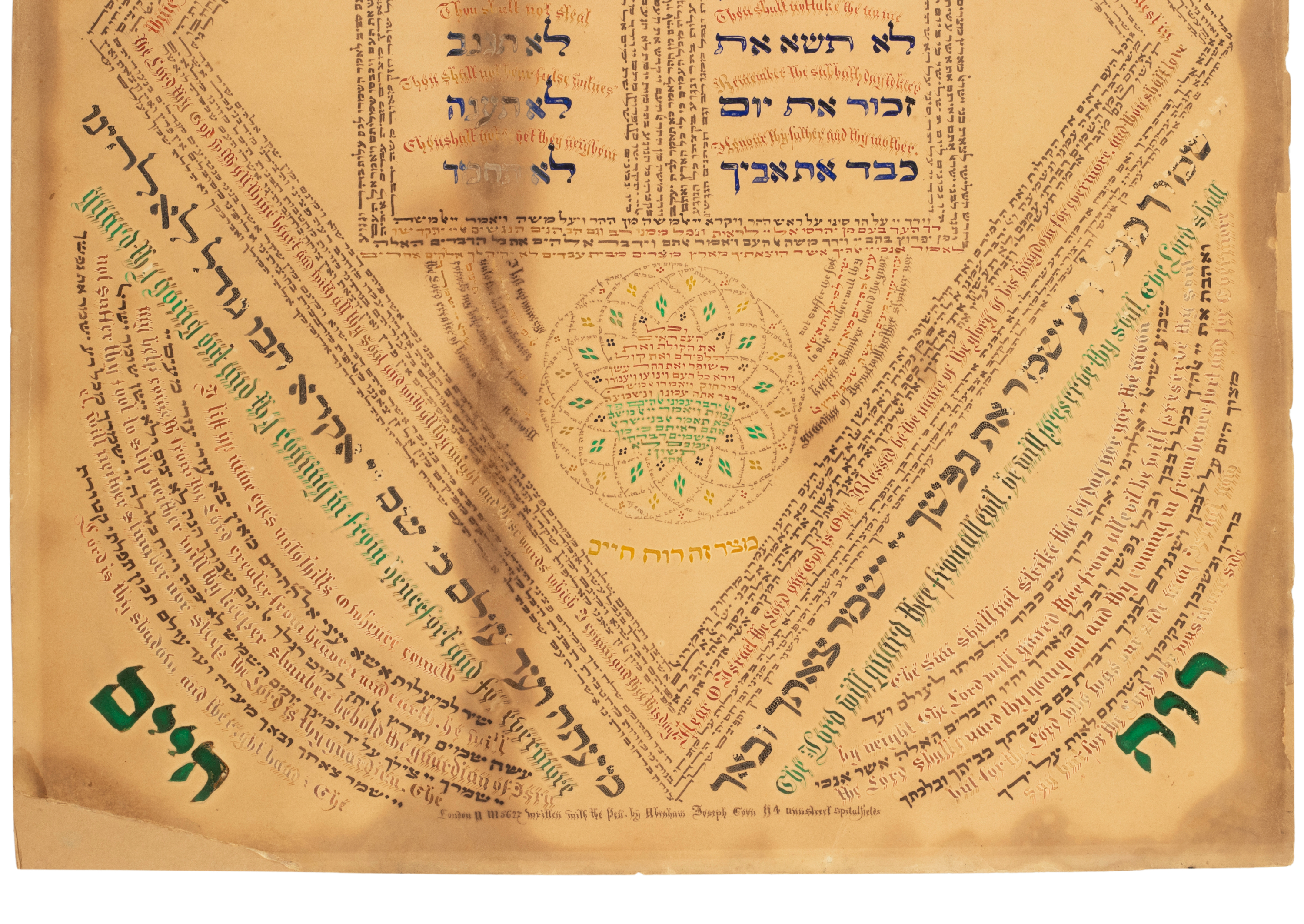
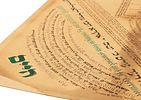
Above the Luchos and in the four corners of the page, are engrossed words in bright green ink. The words in the corners, “Mitzad Zeh Ruach Chaim, ” form an acronym whose initial letters spell "Mizrach." The same phrase appears in yellow beneath the Luchos.
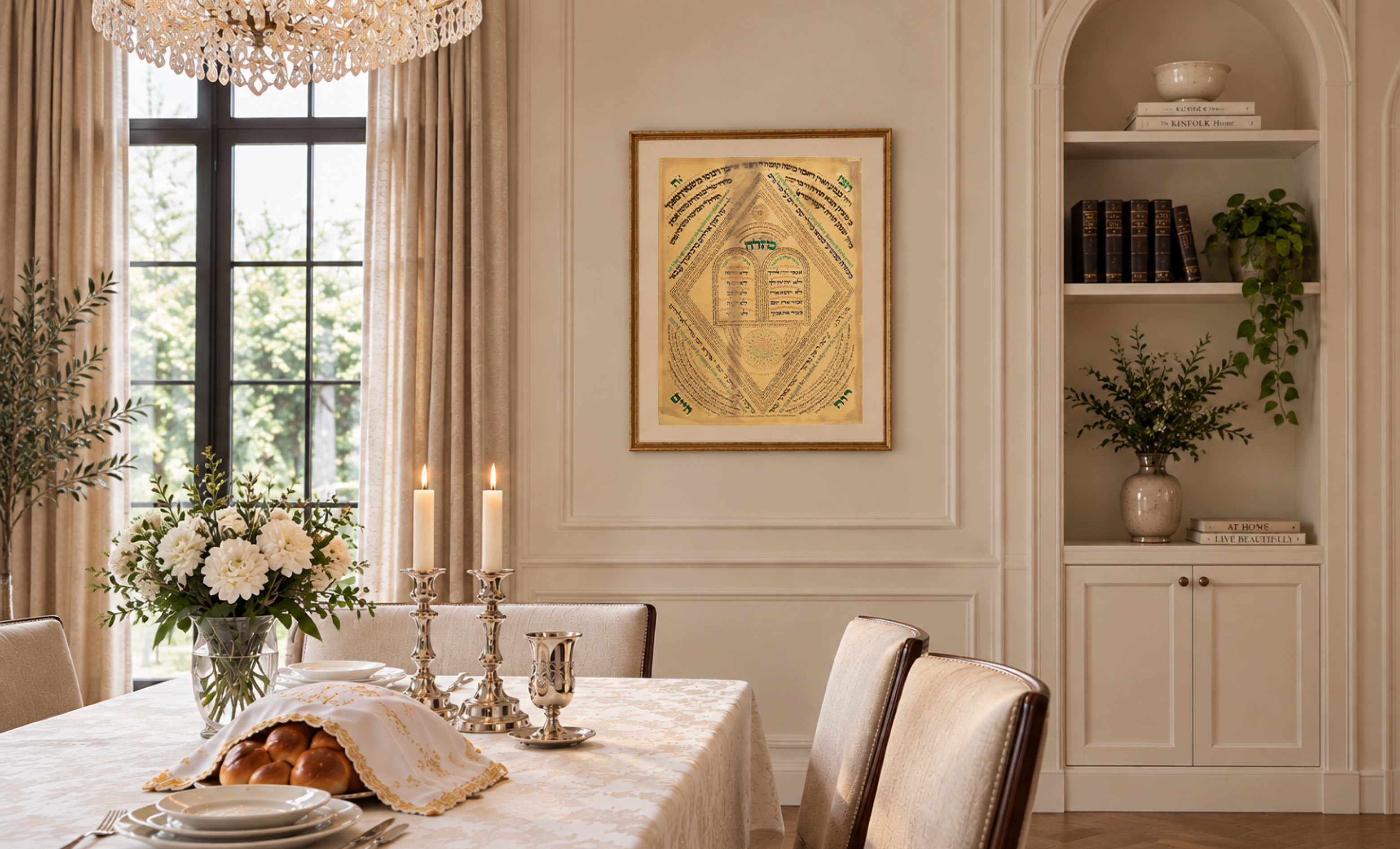
The practice of facing the Beis Hamikdash in Yerushalayim during prayer is already mentioned in Tanach (see Melachim I 8:44, 48; Divrei Hayamim II 6) and was subsequently codified in the Mishnah (Brachos 4:5) and Gemara (Brachos 30a). It remains an important tradition, observed throughout the Jewish world to this day. Over time, this gave rise to the production of decorative Mizrach plaques to indicate which wall faced the proper direction for prayer. Because many of the Diaspora Jewish communities settled to the west of Eretz Yisrael, such ornaments became popularly known as "Mizrach" (lit., East) plaques.
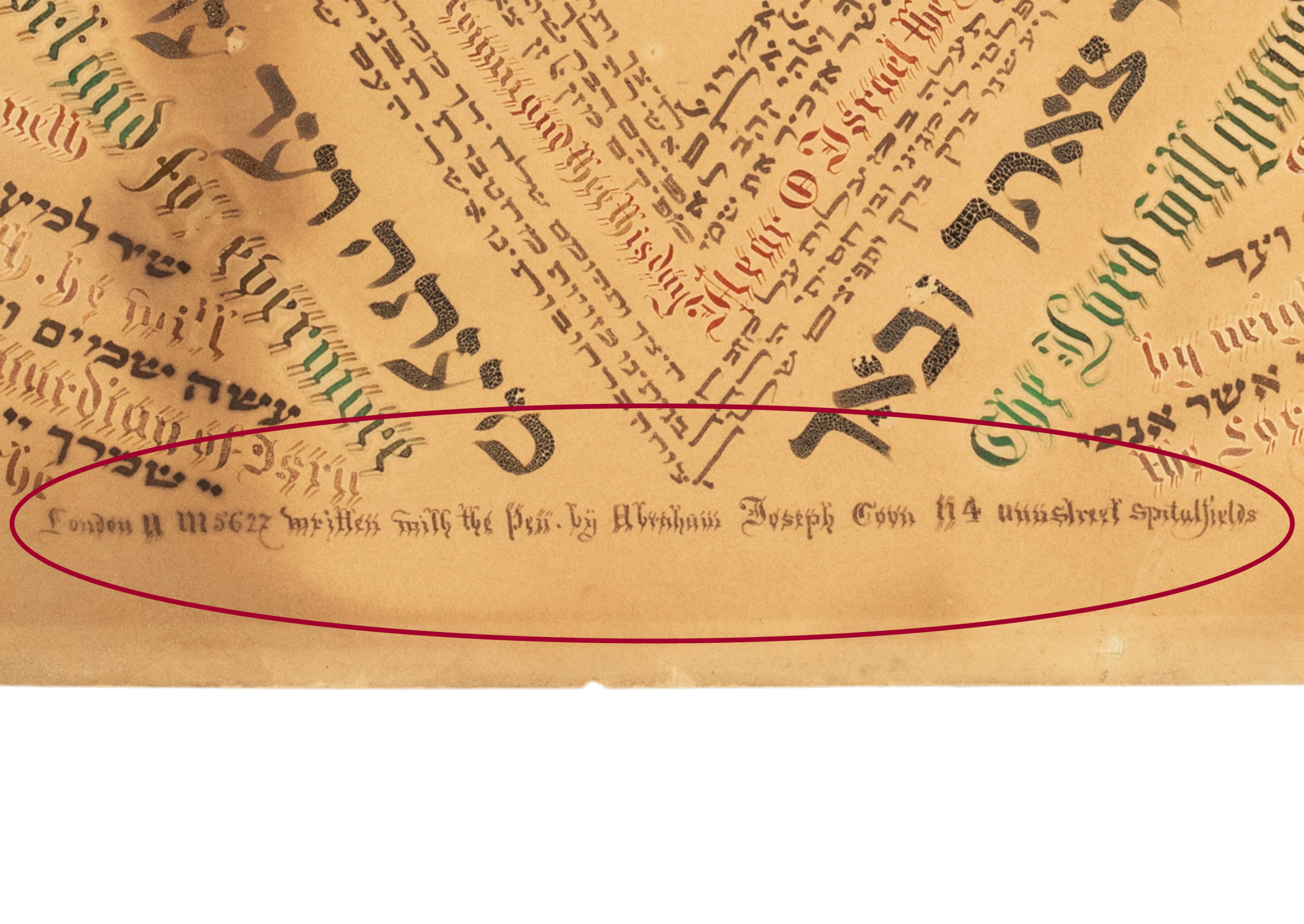
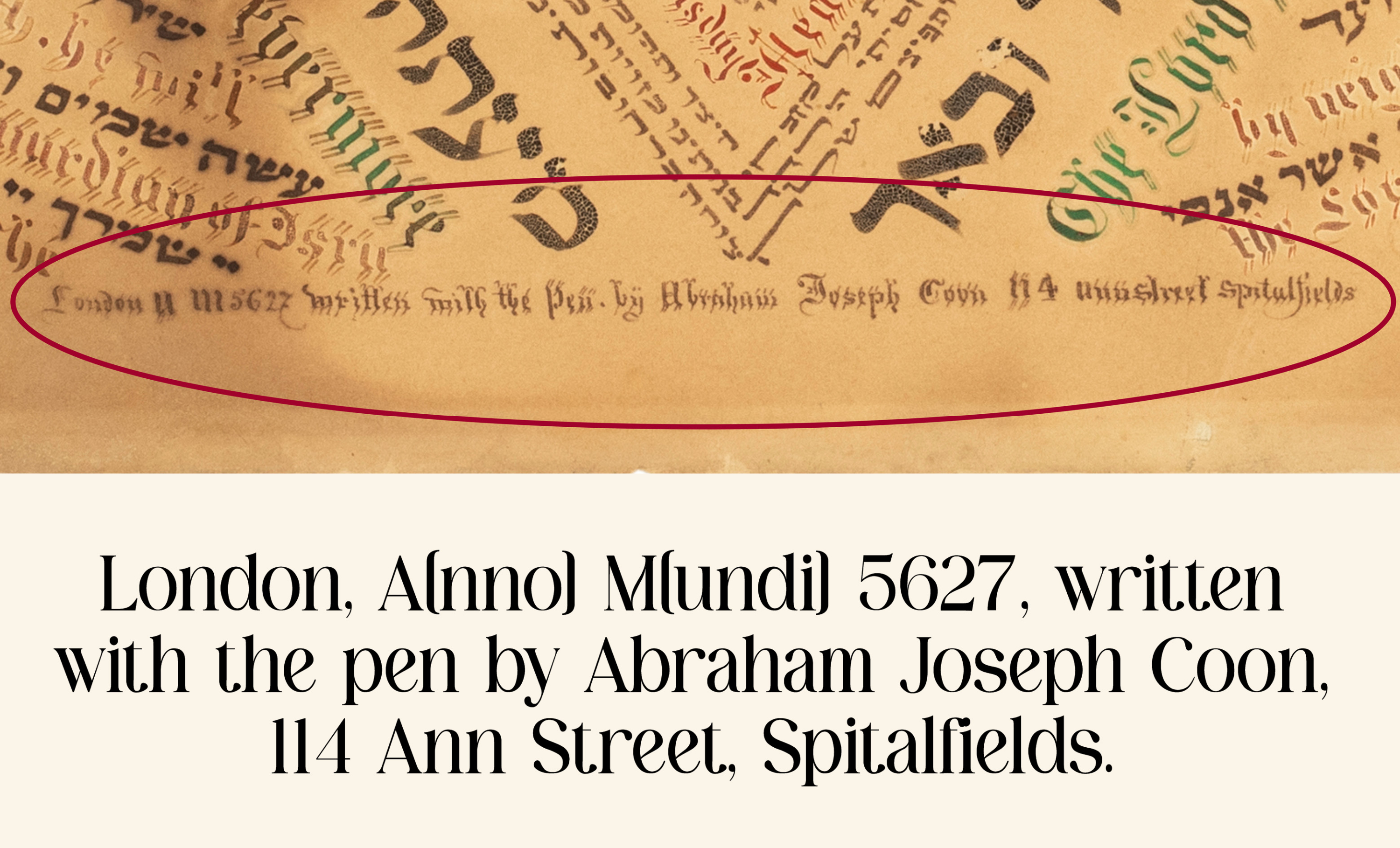
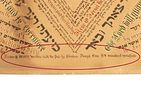
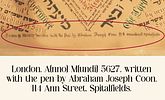
This elegantly penned Mizrach plaque was meticulously executed in both Hebrew and English by Abraham Joseph (HaKohen) Coon. We learn this from the one-line colophon at the very bottom of the Mizrach. It reads: London, A[nno] M[undi] 5627, written with the pen by Abraham Joseph Coon, 114 Ann Street, Spitalfields.
Born in The Hague in 1811, Coon was raised in Amsterdam, where he was exposed to the large devotional works of art, many of them Mizrachs, created by well-known micrographic artist and lithographer, Levi David van Gelder. Sometime before this Mizrach plaque was created in 1867, Coon followed in the footsteps of van Gelder, and relocated to London, and specifically to the area known as Spitalfields, a neighborhood with large numbers of Dutch Jewish immigrants. Coon’s address at 114 Ann Street was less than a half mile from Van Gelder’s residence on Brick Lane. London itself was the single most popular destination to which Dutch Ashkenazic Jews relocated when fleeing the abject poverty of Amsterdam’s appalling slums. During the later part of the 19th and early 20th centuries, the Spitalfields neighborhood was to become the vibrant heart of London’s Jewish East End.
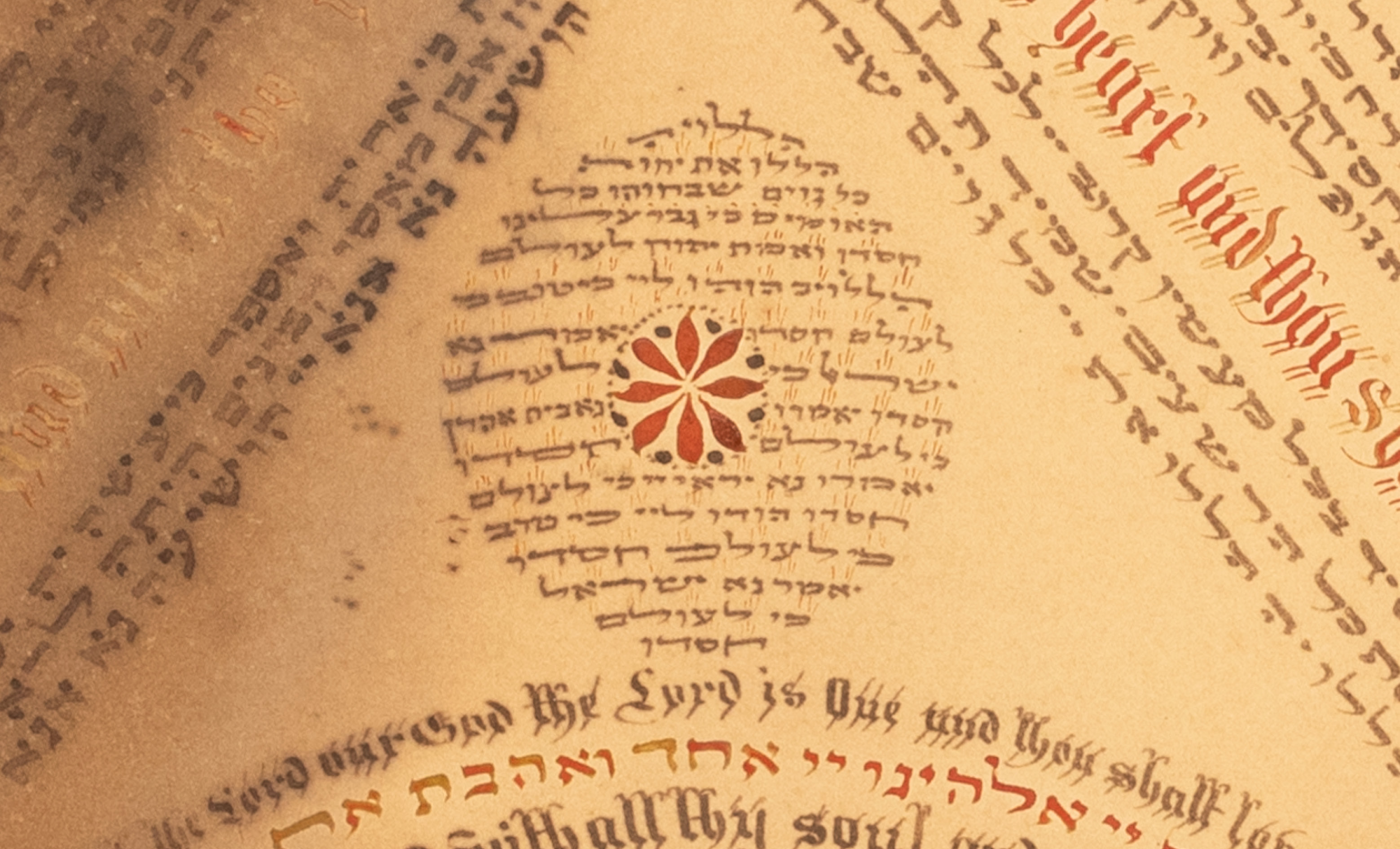
Unlike the relatively prolific Van Gelder, whose heavily decorated works are well represented in both museum and private collections, this is the only known surviving micrographic work by Abraham Joseph (HaKohen). Coon apparently eschewed the monumental plaques, dominated by imagery, that van Gelder produced, in favor of a more traditional, text-based micrography. Coon’s work was built upon the longstanding tradition of masora figurata, the medieval Jewish scribal art form where the traditional textual notes or Masorah magna of the Hebrew Bible are written in tiny micrographic letters shaped into intricate geometric, ornamental, or figurative designs.
Ultimately, this is a masterful example of micrography, in which minute Hebrew letters are meticulously arranged to form the decorative and geometric elements. The central lozenge, the arched Mishkan, and the concentric bands all create a powerful visually pleasing composition with a strong emphasis on calligraphic precision and symbolic symmetry.
London, 1867
Page Count: Single leaf. Size: 58 × 44 cm. Condition: Marginal browning and chipping; some ink biting and fading; some dampstaining, with a noticeable vertical stain on left side.
Bibliography:
Avrin, Leila. Micrography as Art. Centre national de la recherche scientifique / Israel Museum, Department of Judaica, 1981.
Ferber, Stanley. "Micrography: A Jewish Art Form." Journal of Jewish Art, vol. 3-4, 1977, pp. 12-24.
Greenwald, Alice M. "The Masonic Mizrah and Lamp: Jewish Ritual Art as a Reflection of Cultural Assimilation." Journal of Jewish Art, vol. 10, 1984, pp. 87-101.
Jacobus, Aubrey. "19th Century London: A Primary Attraction for Ashkenazi Dutch Immigration." Amsterdam – KehilaLinks – JewishGen.org, JewishGen, Inc., 3 May 2026, kehilalinks.jewishgen.org/Amsterdam/london/.
Liss, Hanna, and Jonas Leipziger, editors. Philology and Aesthetics: Figurative Masorah in Western European Manuscripts. Peter Lang, 2021.
Genazym wishes to thank Mr. David Wachtel for his valuable research on this unique item.
