



To attend this auction live or leave absentee bids
Lot : 15
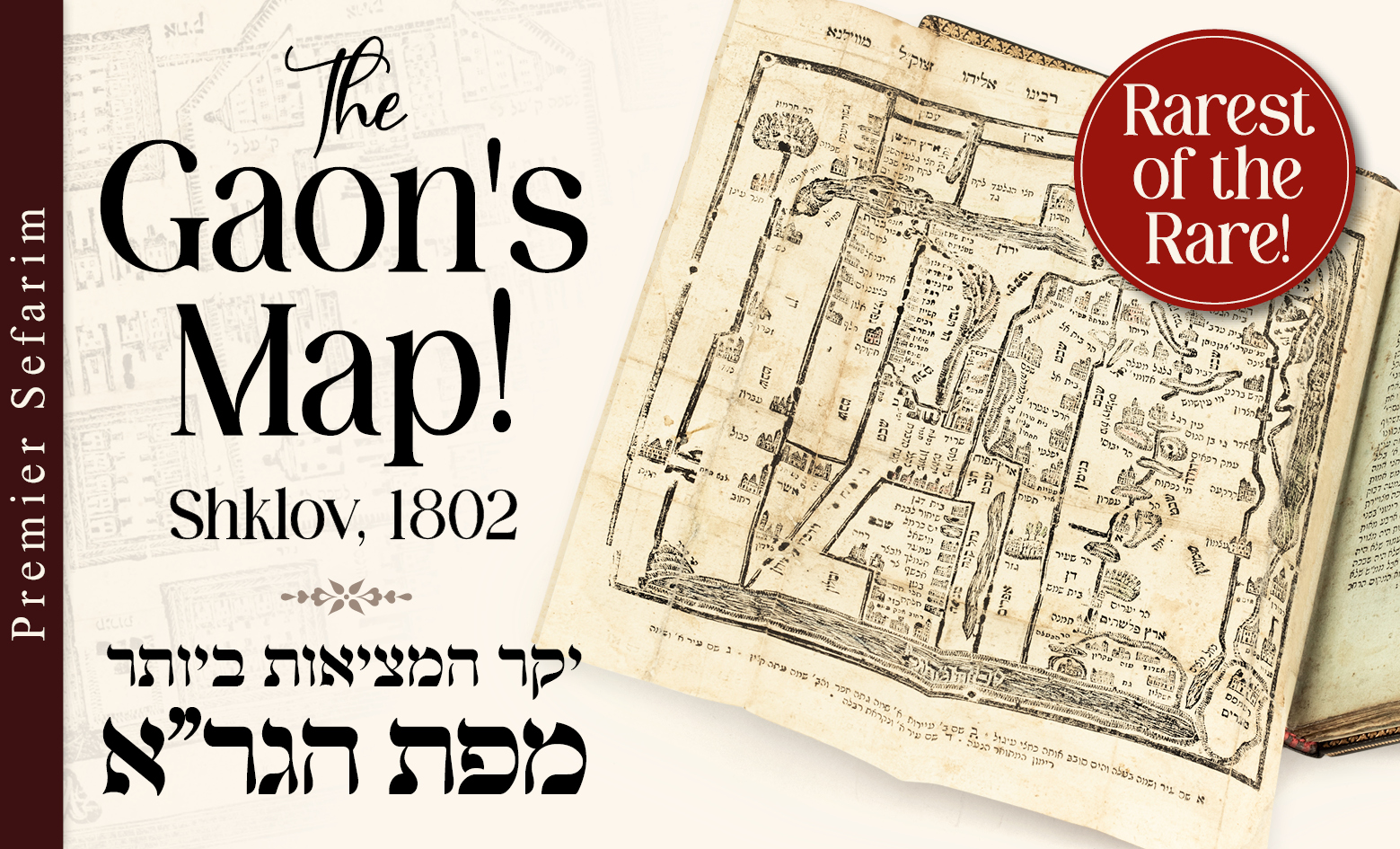
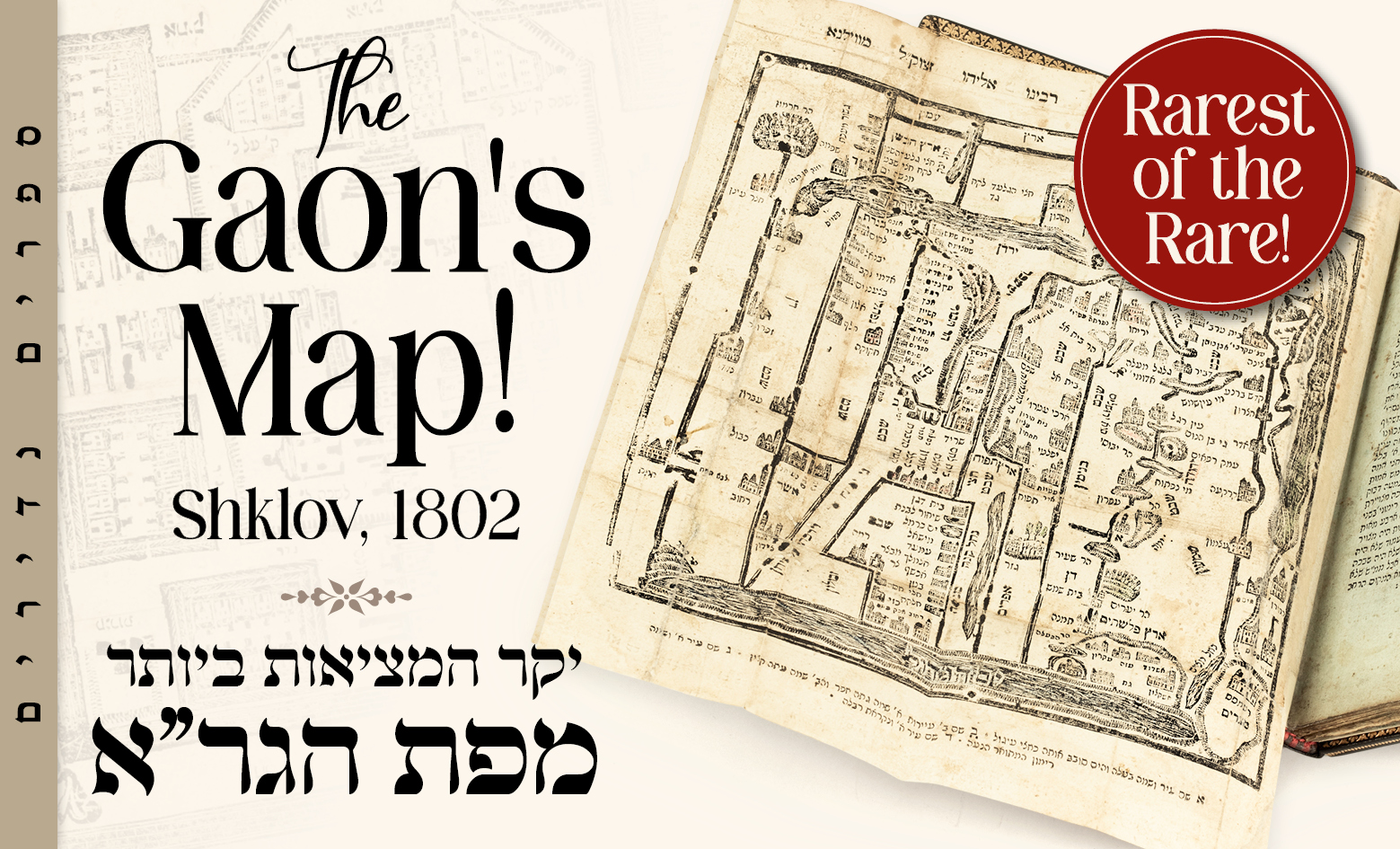
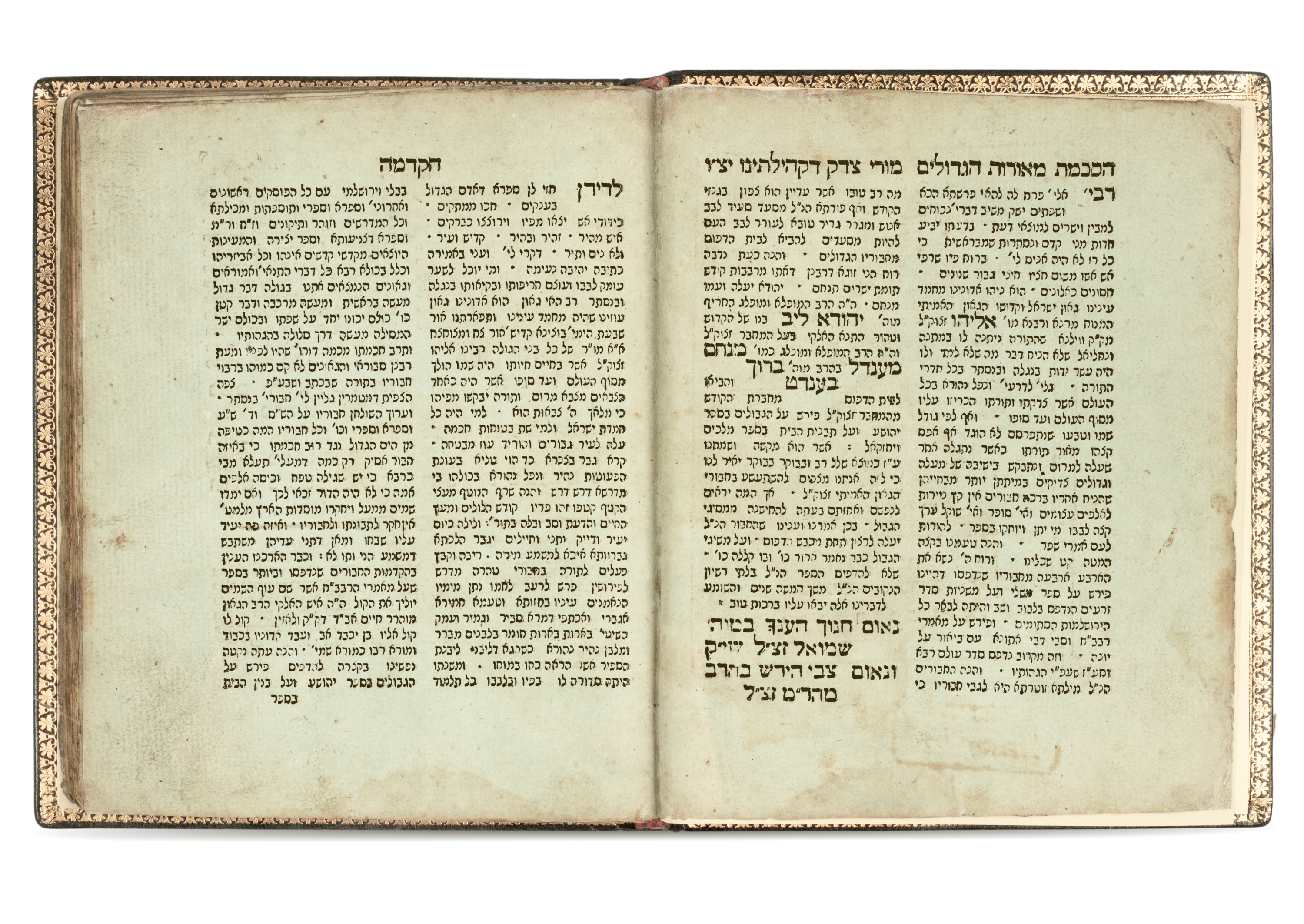
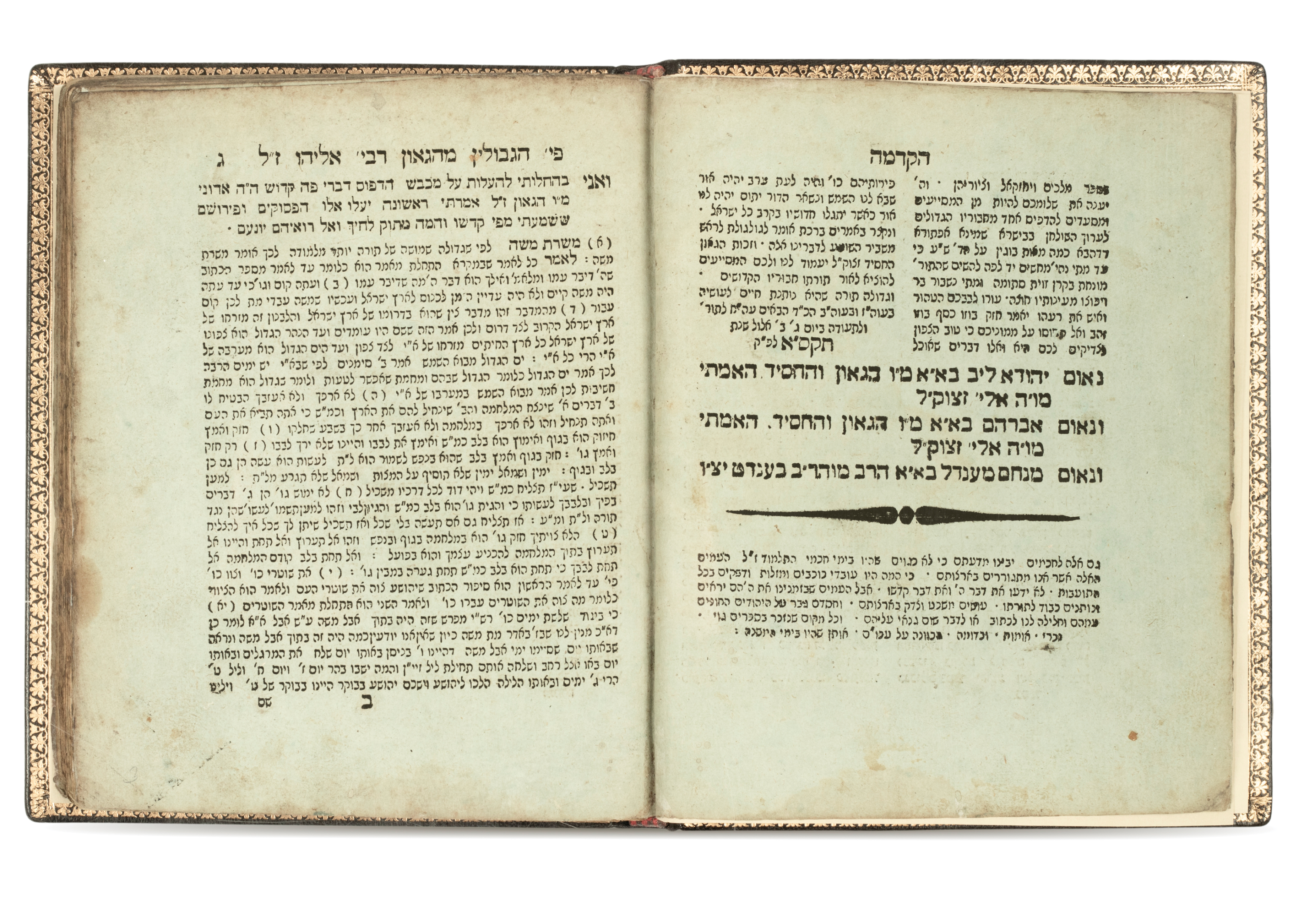
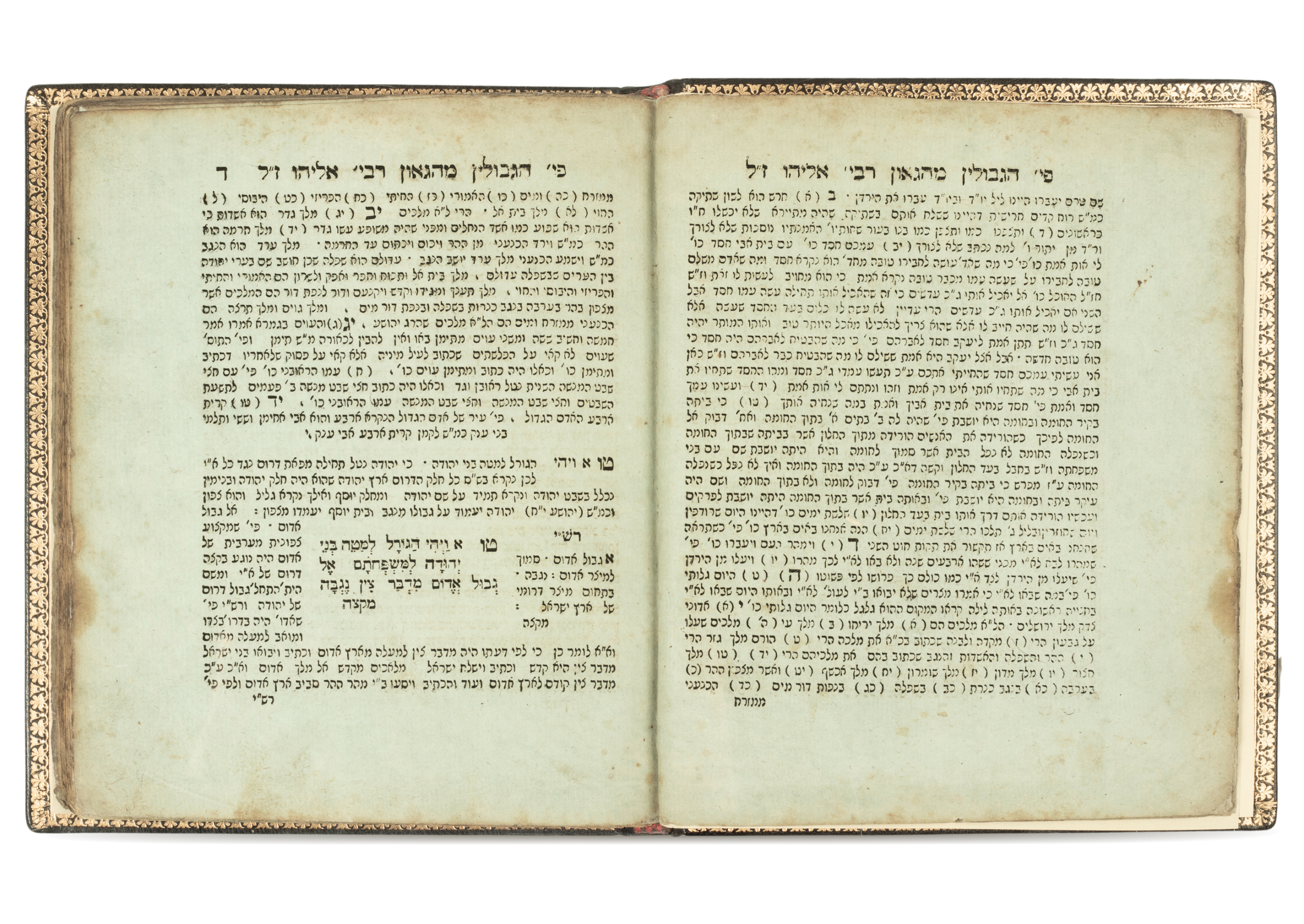
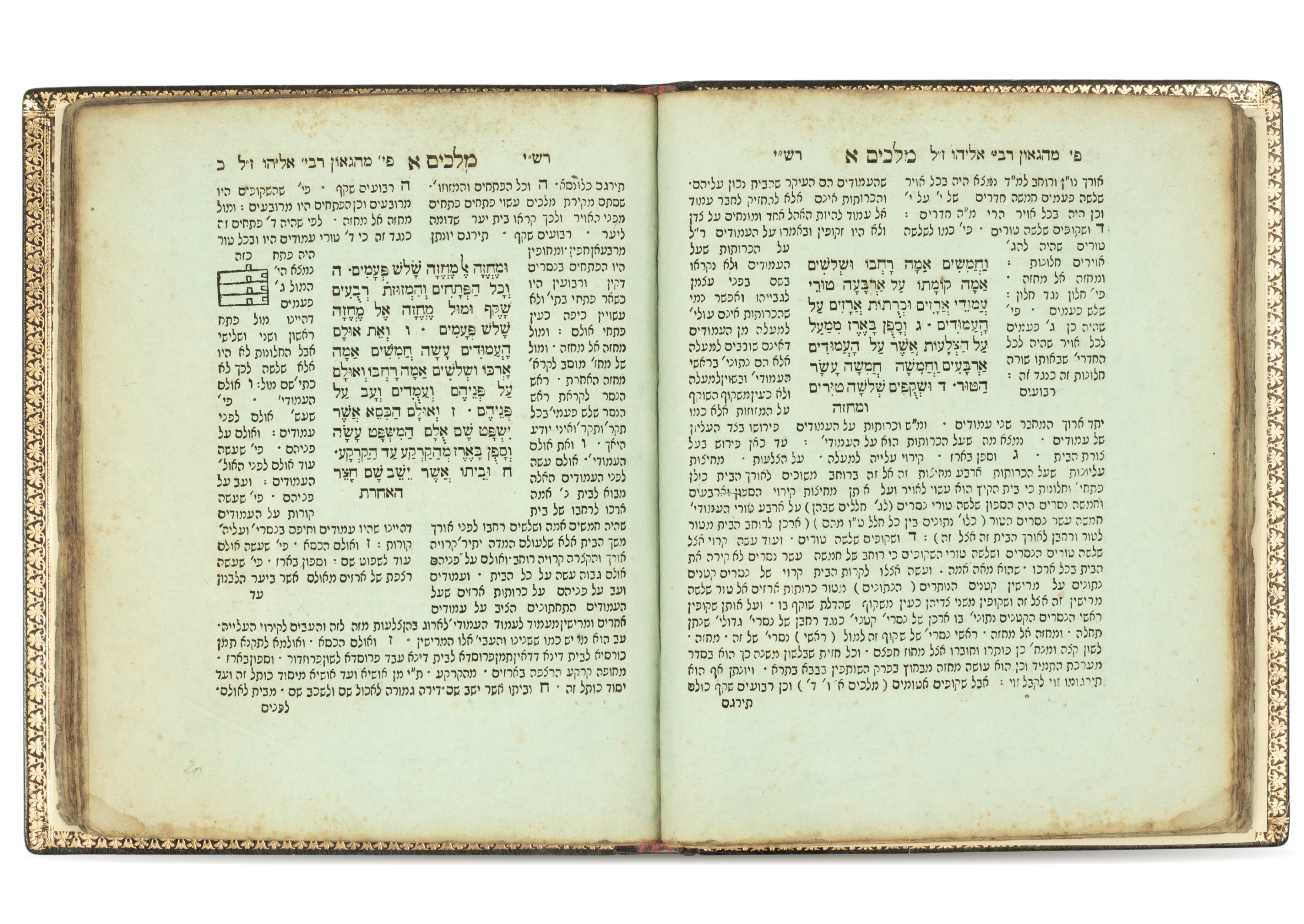
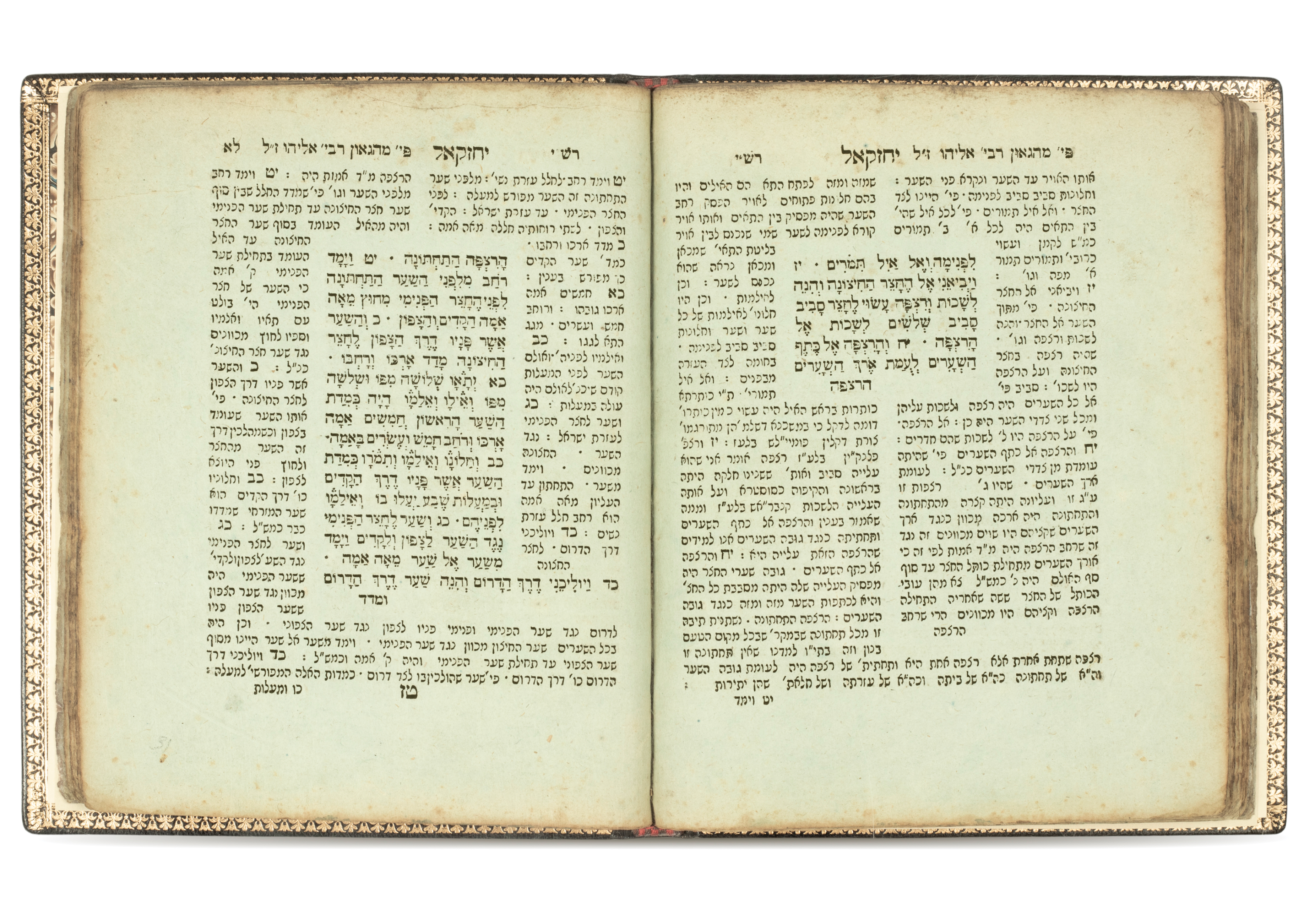
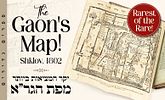
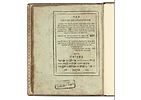
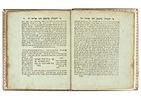
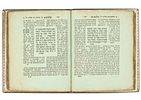
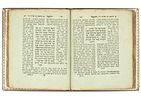
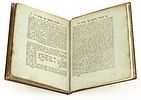
Of Utmost RarityTzuras Ha’aretz by the Vilna Gaon, Including the Rare Map of Eretz Yisrael and the Beis Hamikdash – Shklov, 1802, First Edition
Of Utmost Rarity
Tzuras Ha’aretz by the Vilna Gaon, Including the Rare Map of Eretz Yisrael and the Beis Hamikdash –
Shklov, 1802, First Edition
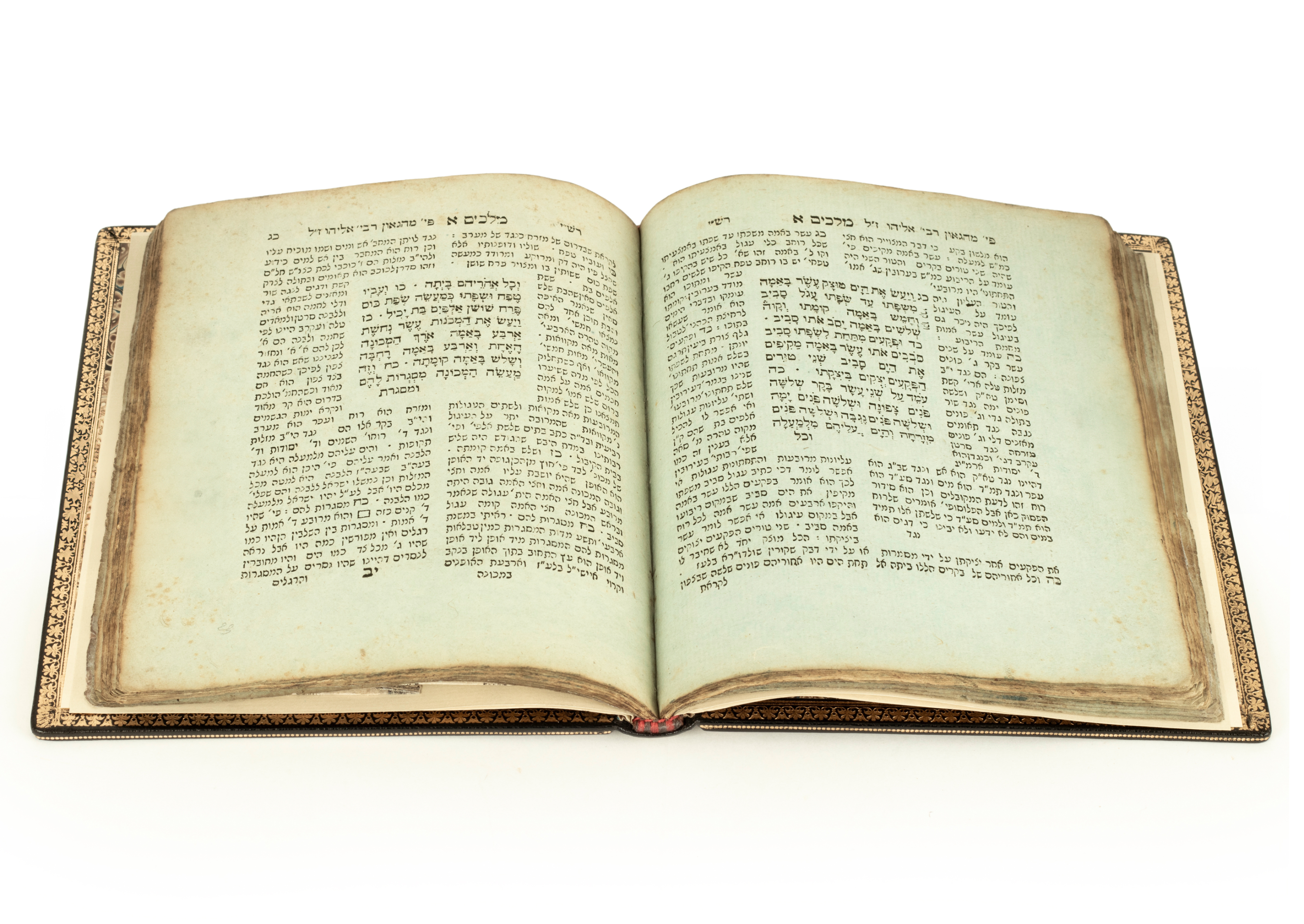
Elucidation on the borders of Eretz Yisrael and the structure of the Third Beis Hamikdash by the Vilna Gaon.
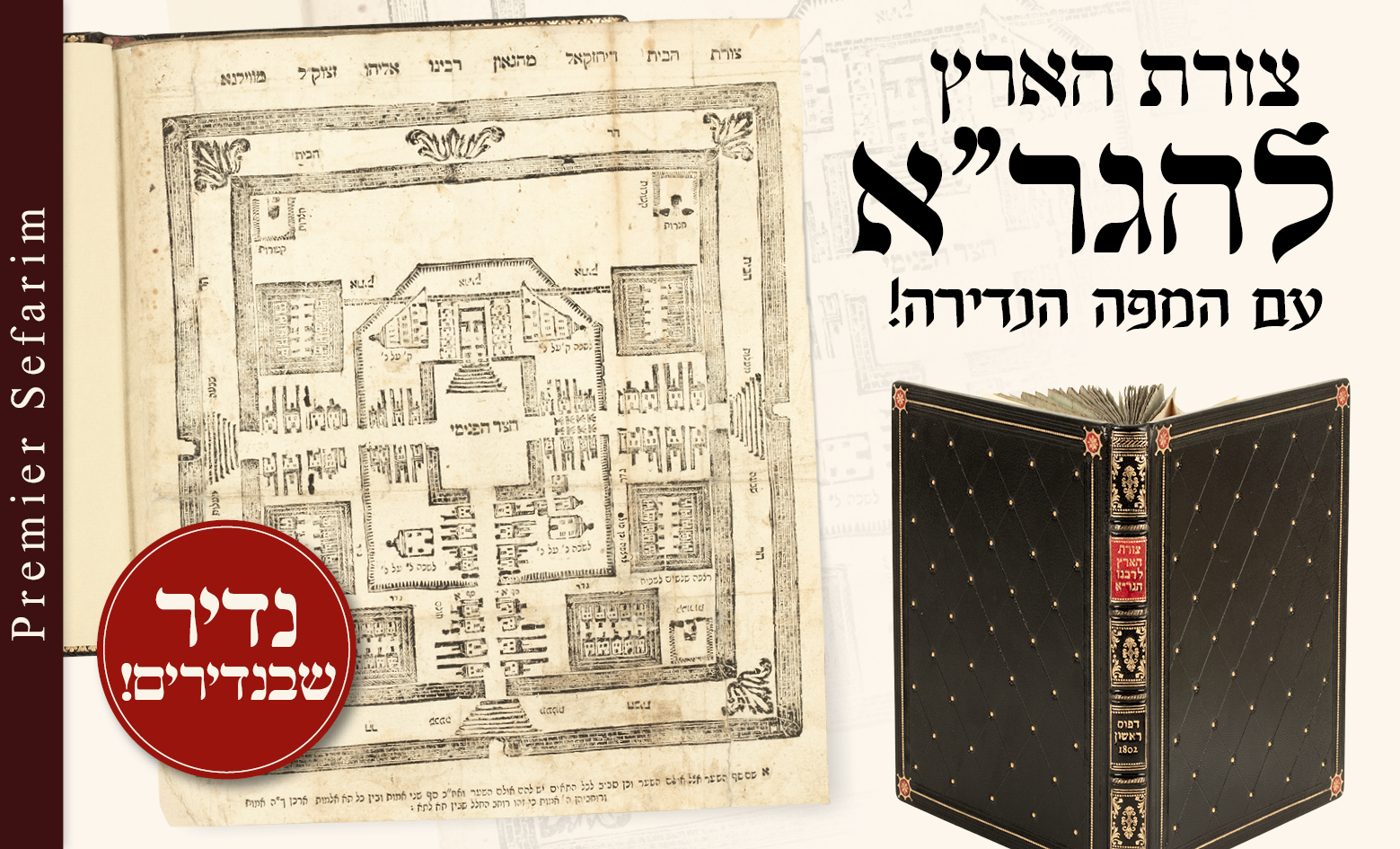
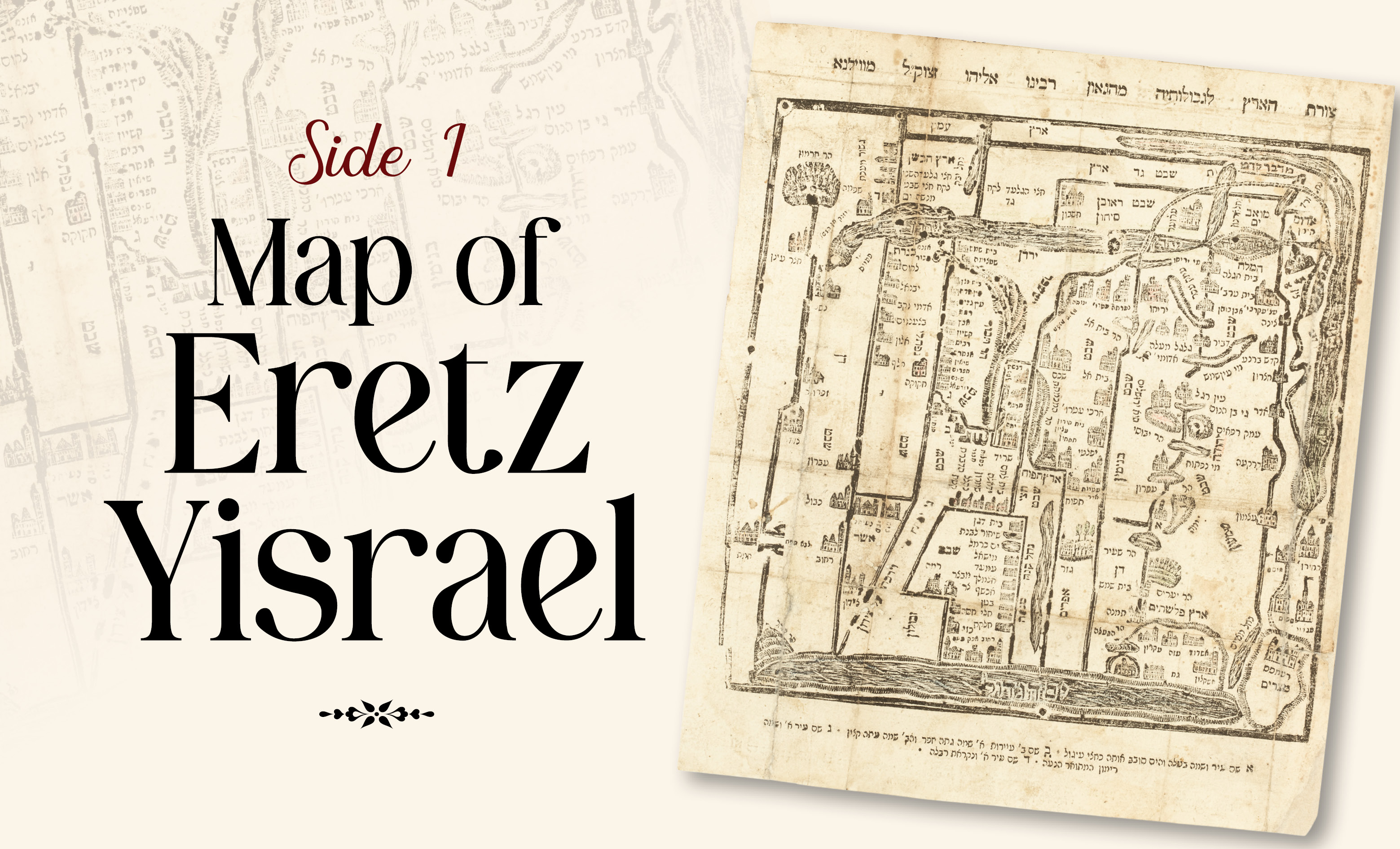
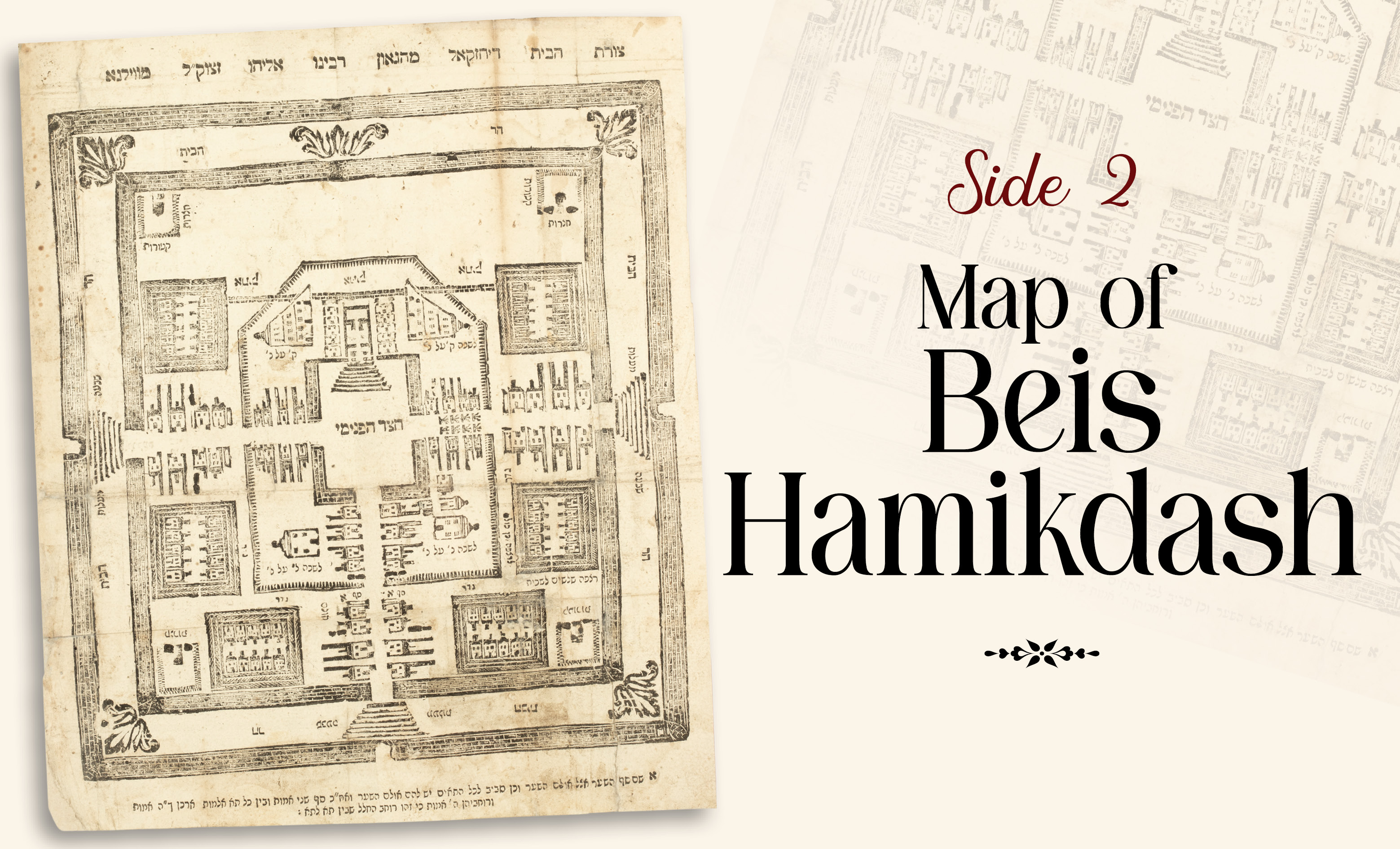
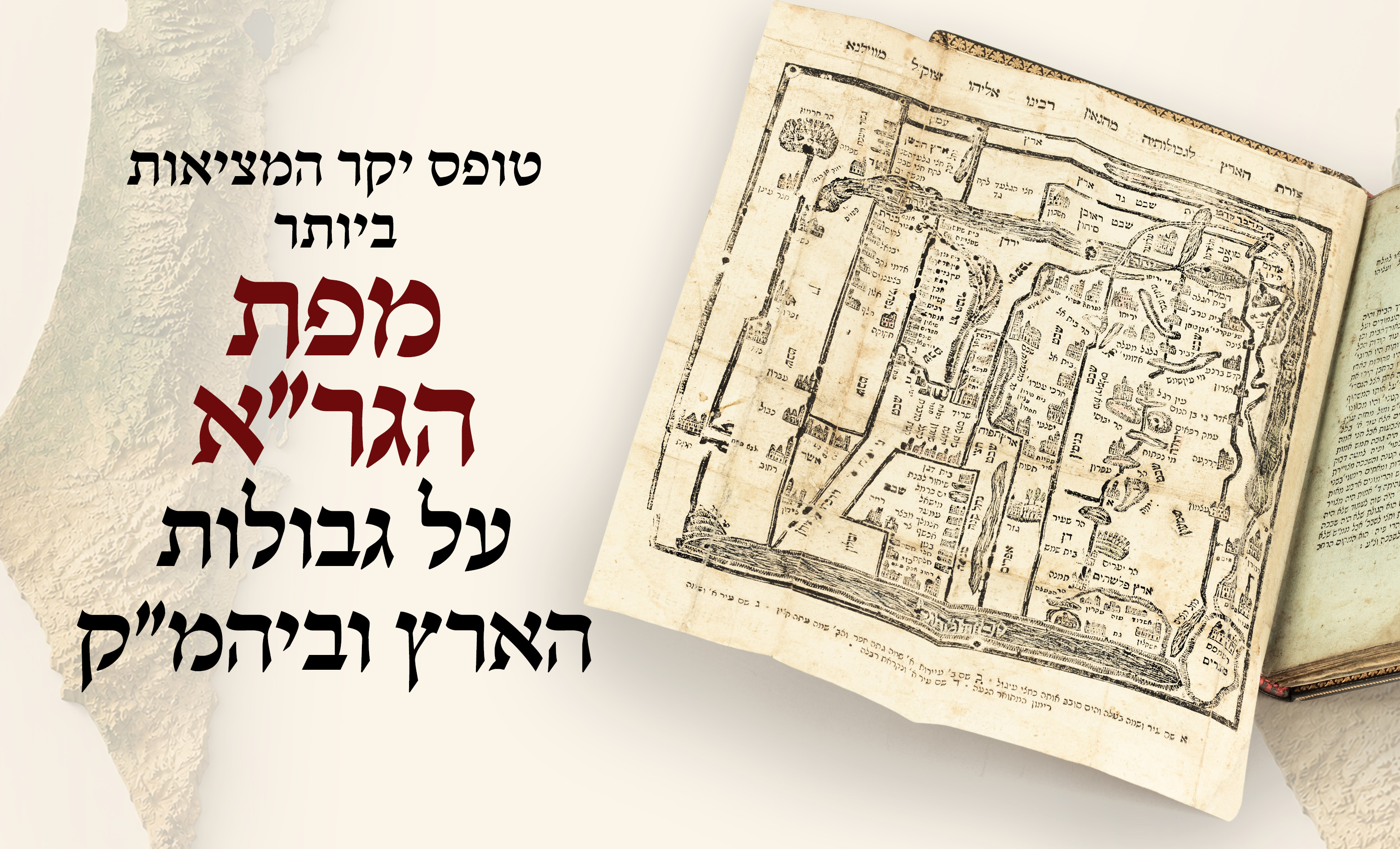
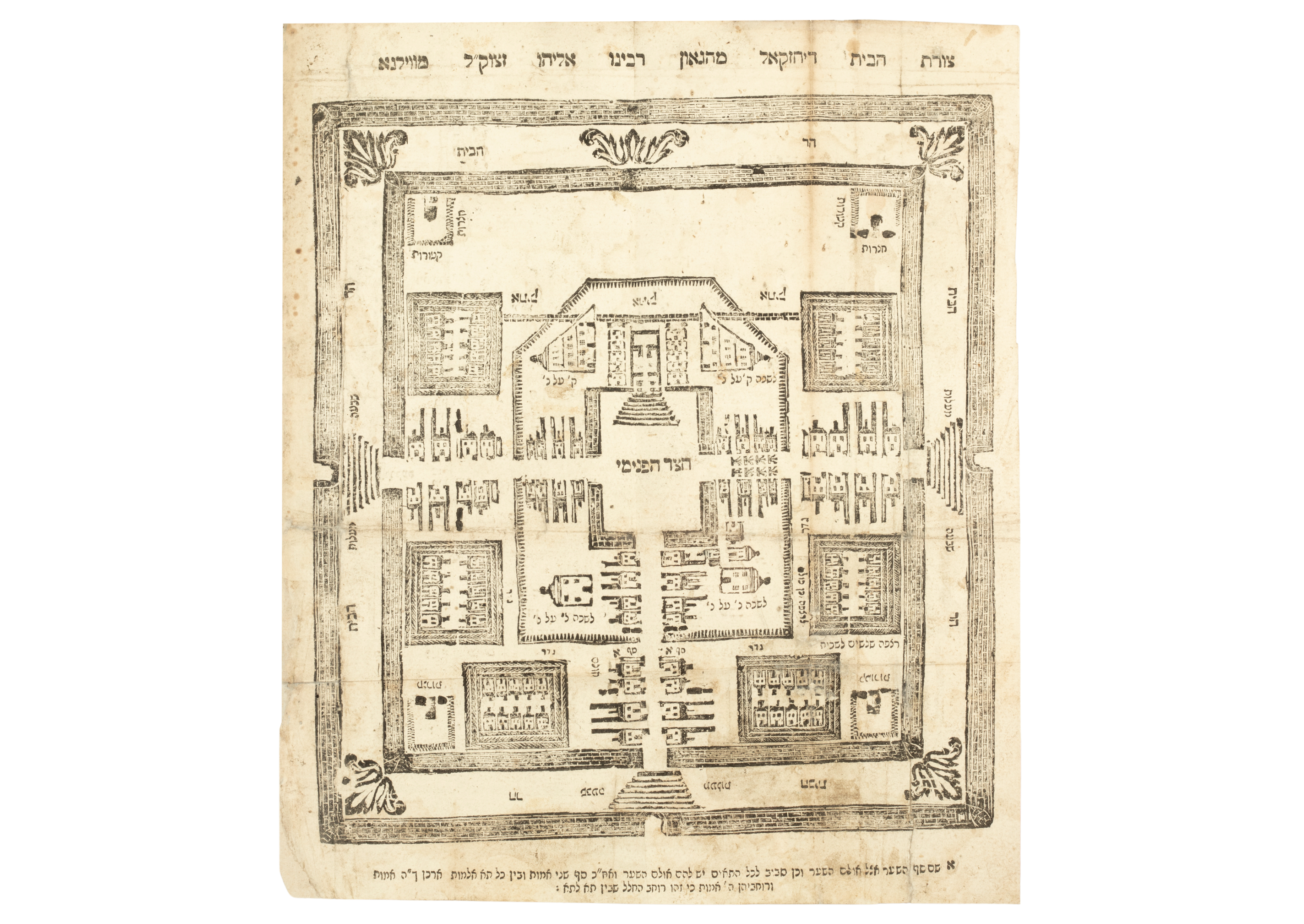
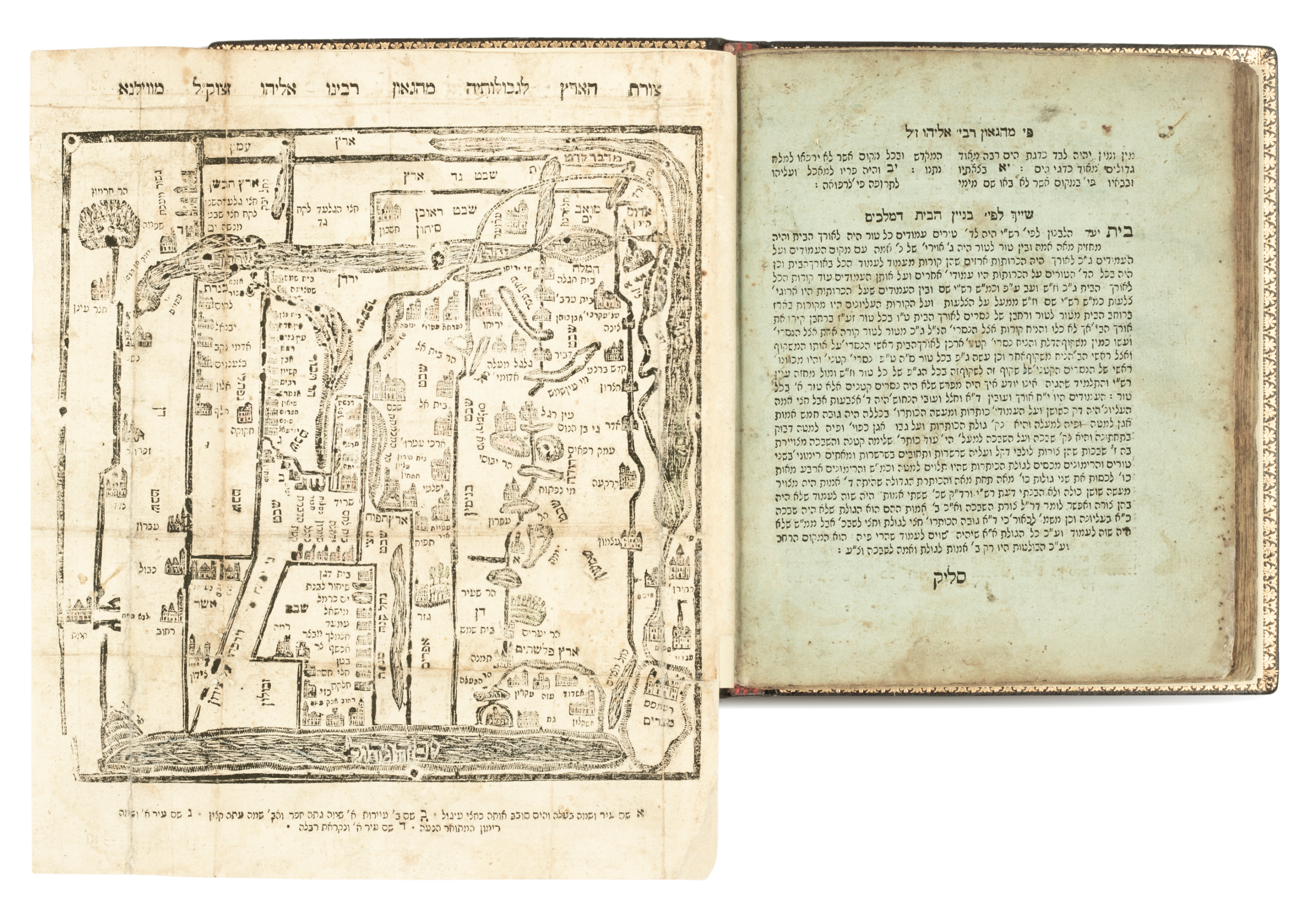
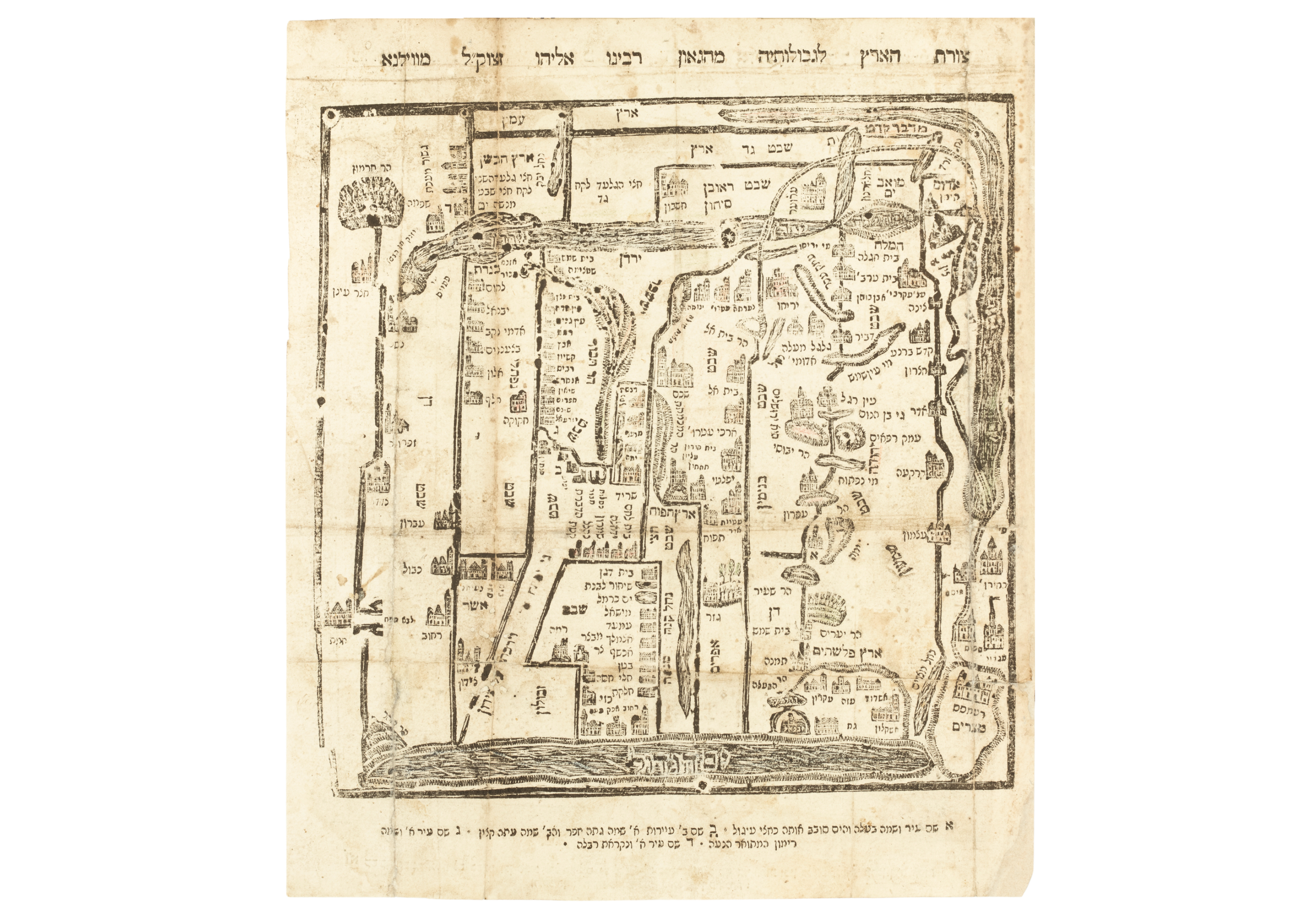
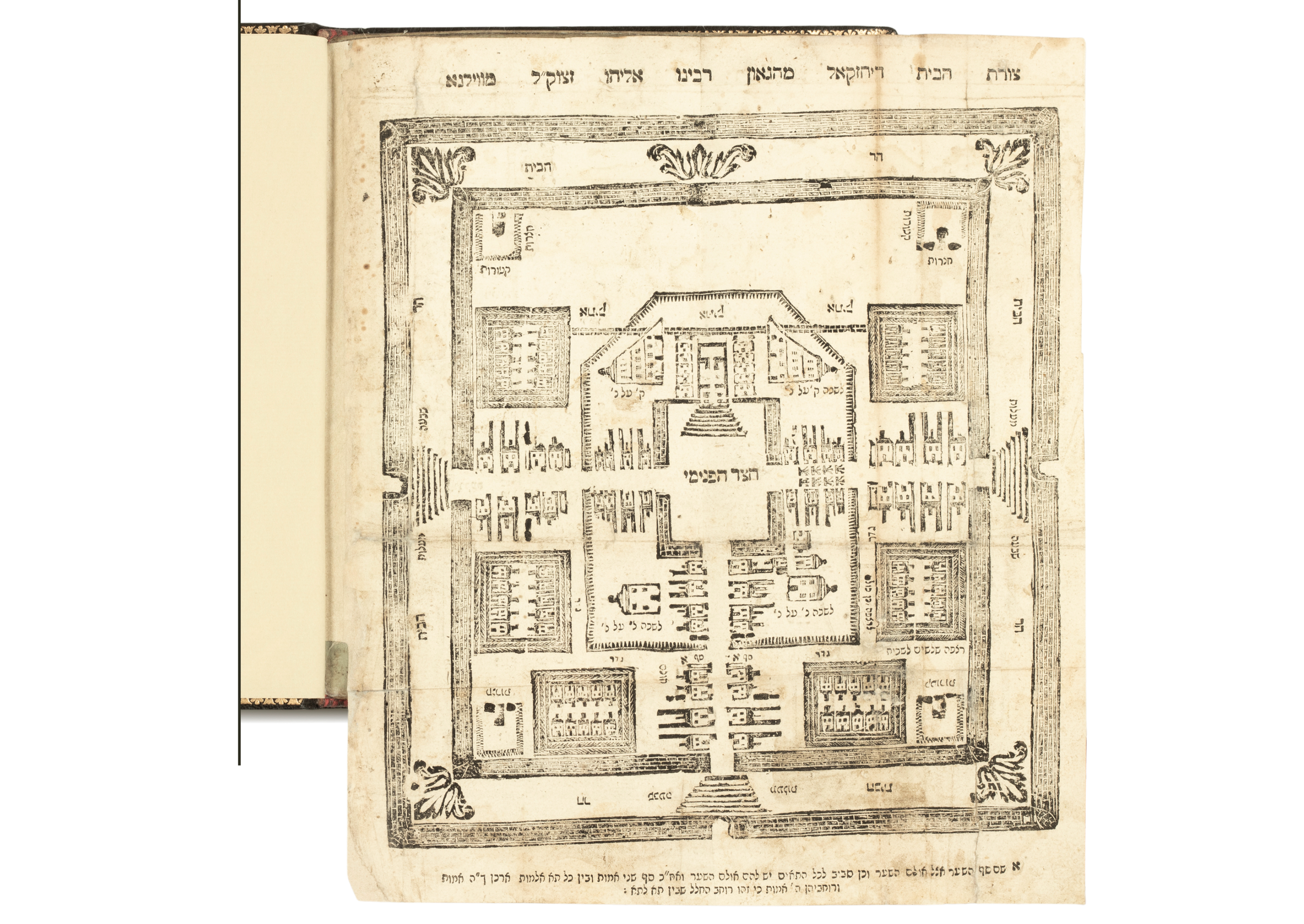
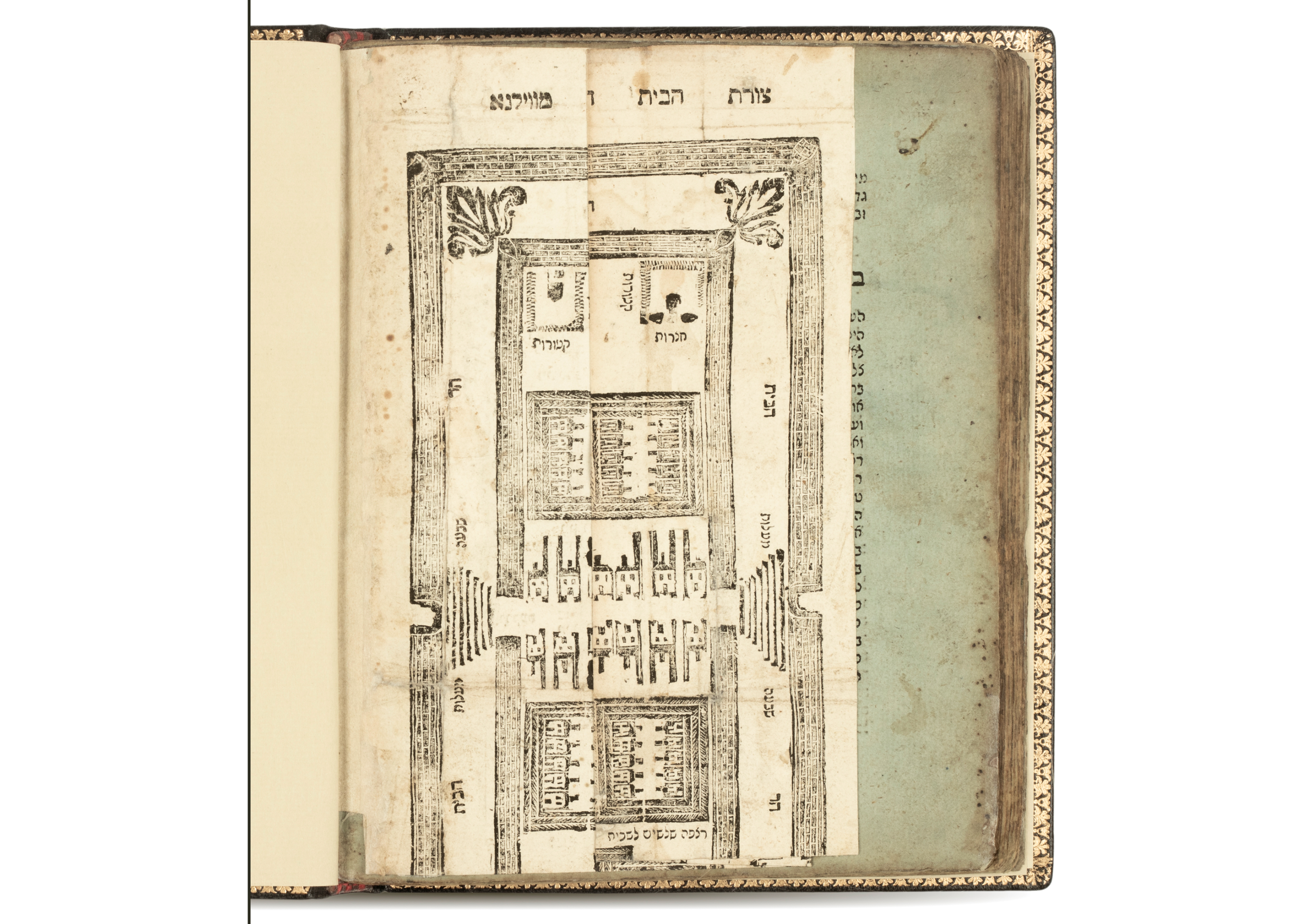
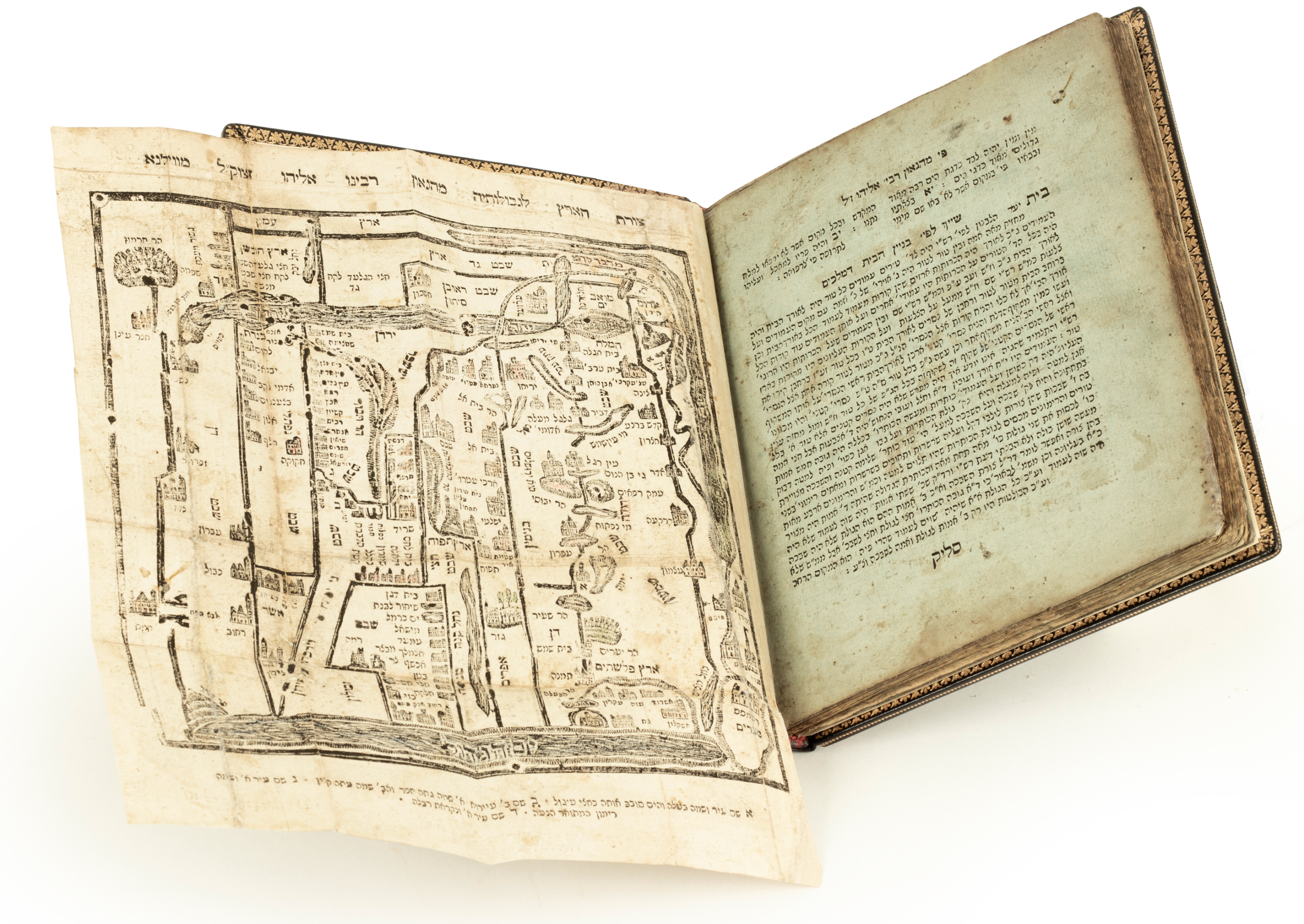
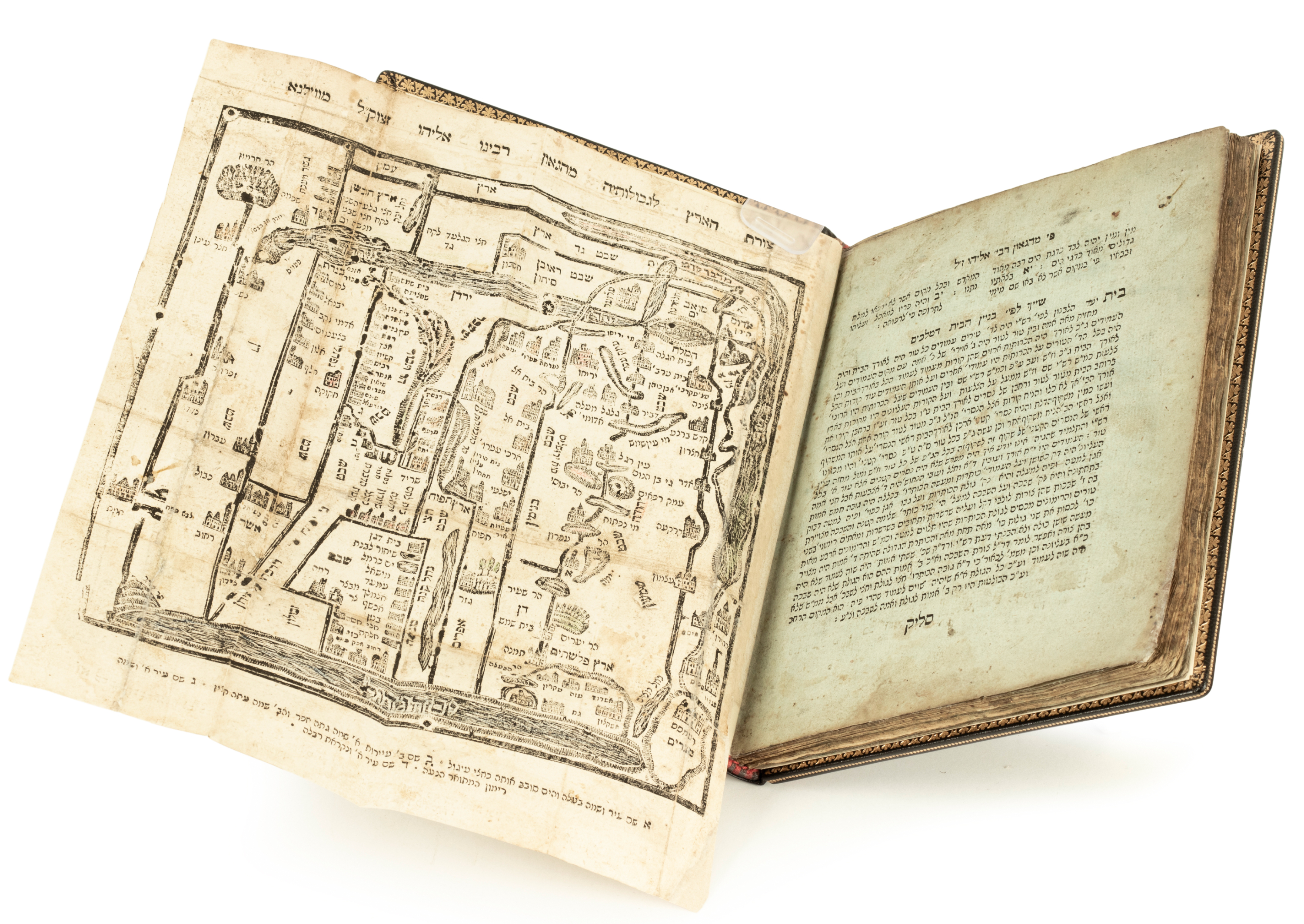
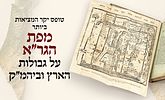
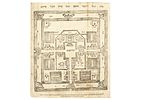
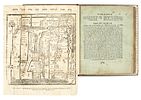
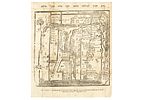
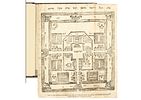
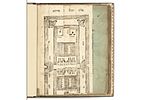
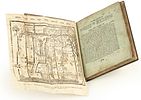
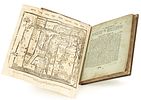
Includes the original foldout sheet issued with the sefer, featuring:
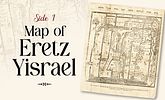
On one side:
“Map of the land and its borders, according to the Gaon Rabbeinu Eliyahu zt”l of Vilna.”
“Map of the land and its borders, according to the Gaon Rabbeinu Eliyahu zt”l of Vilna.”
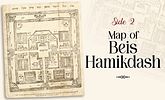
On the reverse:
“Layout of the Beis Hamikdash as in Yechezkel, according to the Gaon Rabbeinu Eliyahu zt”l of Vilna.”
This map is exceedingly rare. It is absent from the overwhelming majority of copies, and for many years, no complete copy with the original map has been seen.
Leading scholars of the Vilna Gaon’s works have emphasized
its rarity:
“Missing from most copies”— Rabbi D. Kamenetsky zt”l, Toras HaGra, p. 341.
“This leaf is extremely rare and is lacking in most copies.”— Winograd, Otzar Sifrei HaGra, no. 22.
Dienstag, in his bibliographical list of the Vilna Gaon’s works, does not mention the map at all.
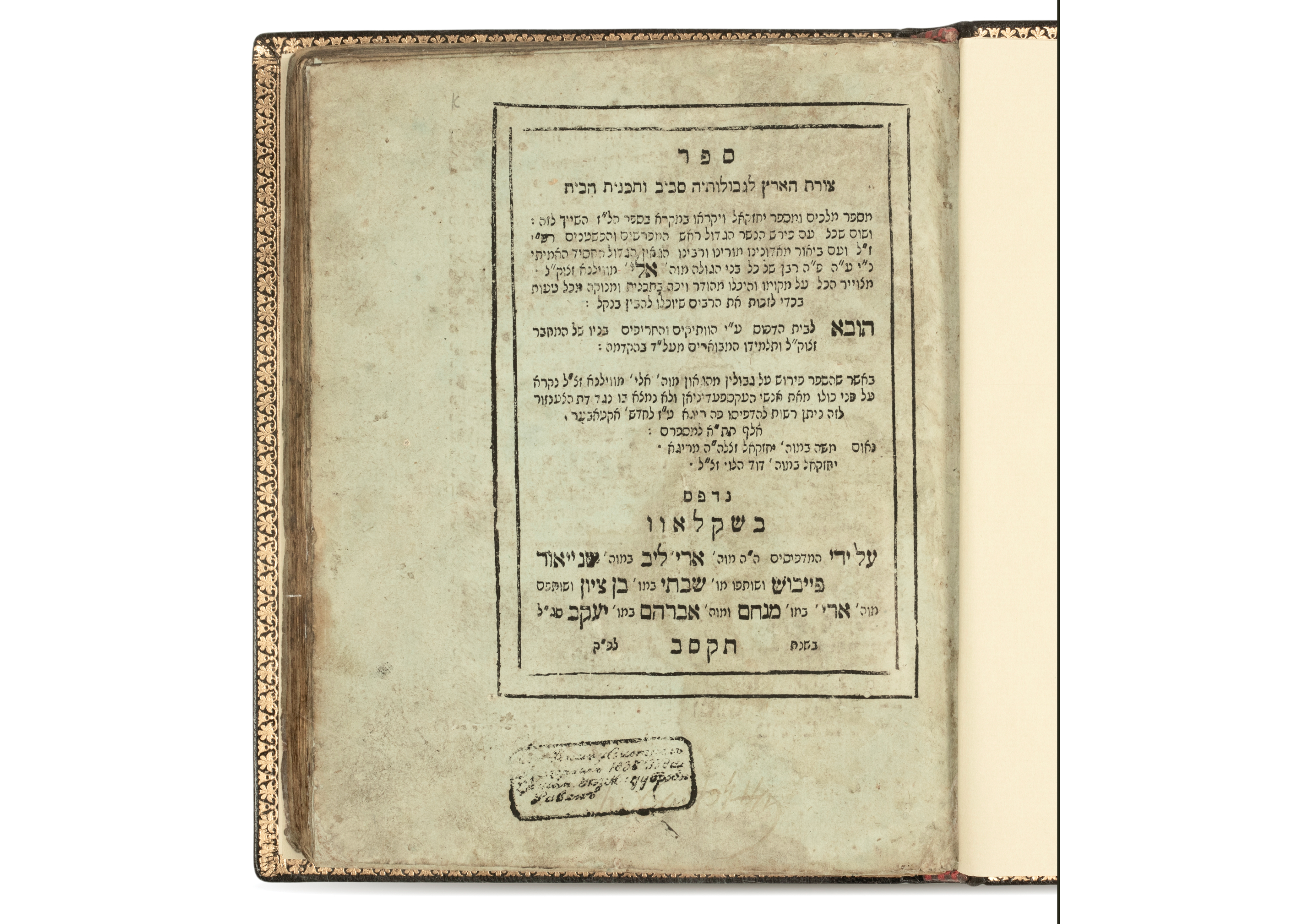
The map is mentioned in the introduction by the Vilna Gaon’s sons:
“We have therefore undertaken to publish, in concise form, our father’s commentary on the borders in the Book of Yehoshua and on the structure of the Beis Hamikdash in the Books of Melachim and Yechezkel, together with their illustrations.”
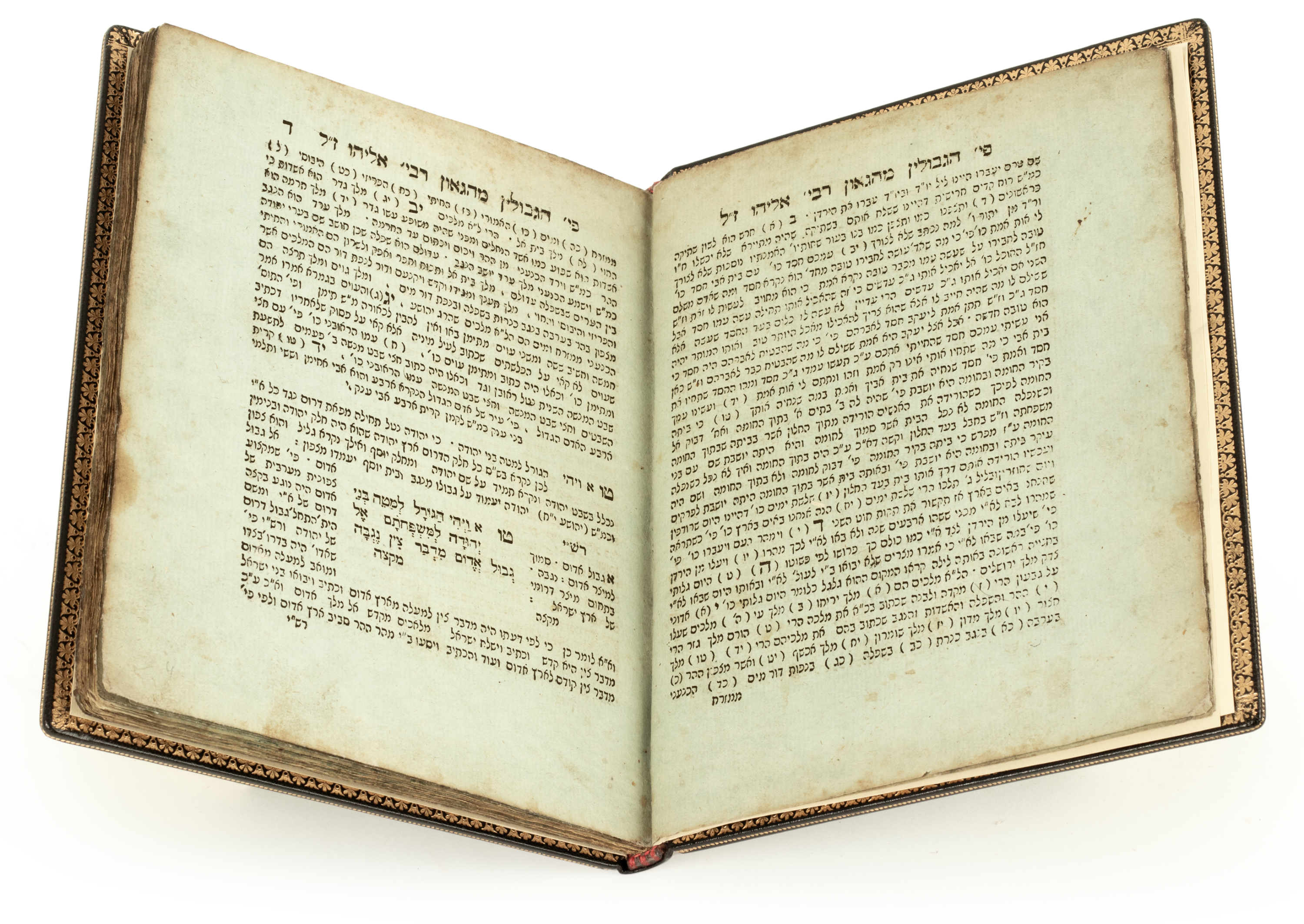
Tzuras Ha’aretz contains the Vilna Gaon’s commentary on passages from Sefer Yehoshua, Melachim, and Yechezkel (printed together with the biblical text) dealing with the borders of Eretz Yisrael and the future Beis Hamikdash. It is the first work by the Vilna Gaon on Nach to be printed, and among the first ten of all his works ever published.
It was prepared for publication by his sons, Rabbi Yehudah Leib and Rabbi Avraham, together with his disciple, Rabbi Menachem Mendel of Shklov. In their introduction, they describe their illustrious father with exceptional words of praise.
Shklov, 1802. First edition.
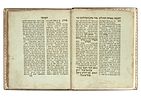
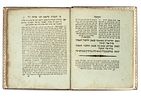
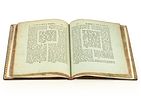
Page Count: 42; 39–40; [1] leaves.
Size: 20.7 cm. Printed entirely on thick blue paper, with the exception of the folding map, which is on regular paper.
Size: 20.7 cm. Printed entirely on thick blue paper, with the exception of the folding map, which is on regular paper.
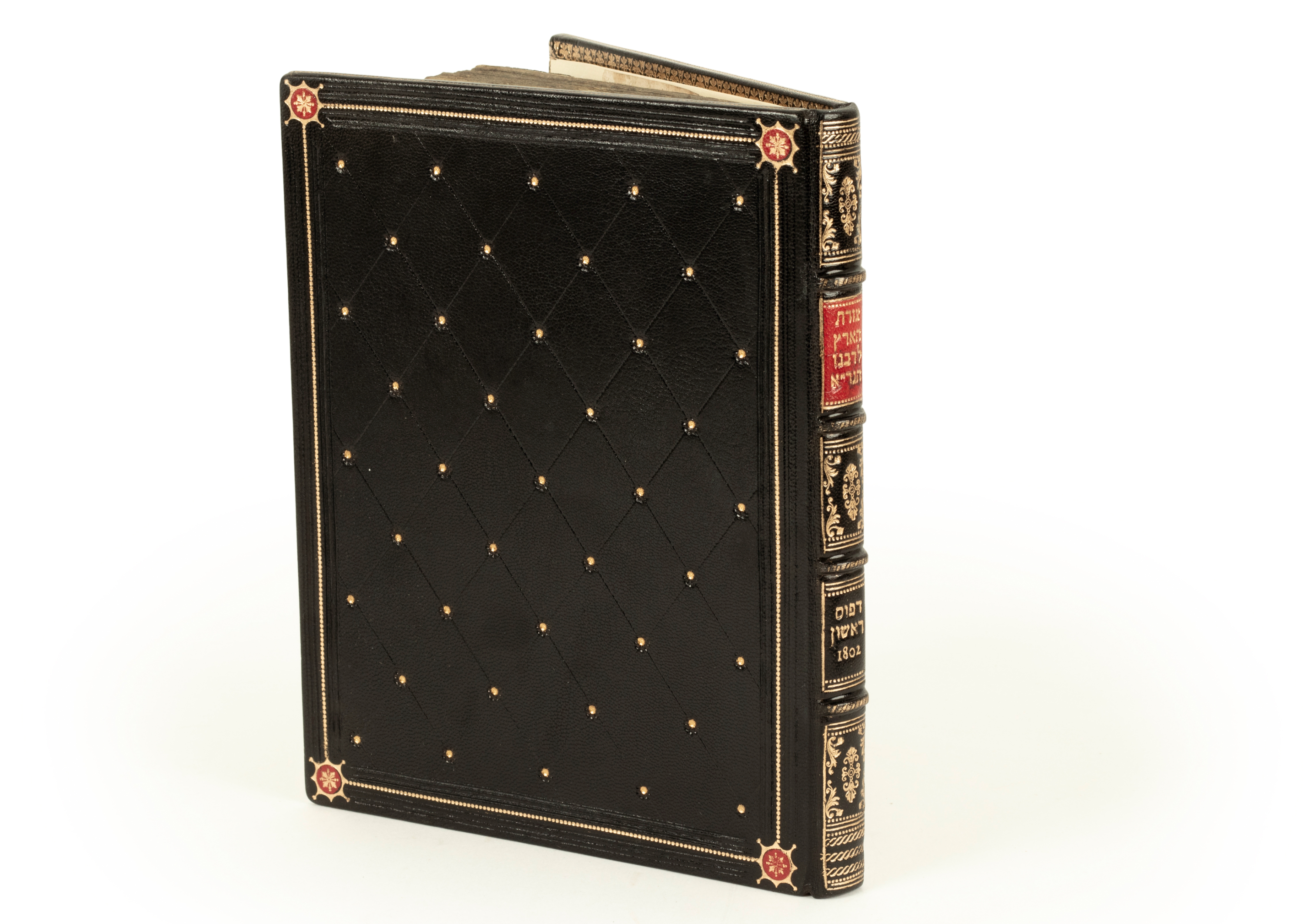
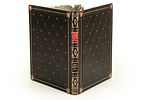
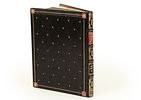
Condition: Good. Wide margins; a few stains in the margins. The folding map is preserved in its best possible state, with only very minor professional restoration. Fine new leather binding.
_______________
Concerning the importance of knowing the borders of Eretz Yisrael, the Vilna Gaon writes:
“Moshe Rabbeinu sought to know every aspect of Eretz Yisrael, for this is a matter of great importance, comparable to the knowledge of Torah itself, since its borders and all its features are matters of Torah” (Yahel Or to the Zohar 157a).
_______________
_______________
Commentary on the Vision of Yechezkel’s Beis Hamikdash
The following remarkable introduction appears at the beginning of the commentary (leaf 26a):
“A commentary on the future Beis Hamikdash by Rabbeinu, the saintly Gaon of blessed memory, offering a clear and faithful explanation of the plain meaning of the verses. The greatest commentators struggled to explain these chapters, attempting to reconcile them with Shlomo’s Beis Hamikdash on the basis of Maseches Middos, often resulting in forced interpretations. They left some passages unresolved, writing that Eliyahu HaNavi would one day explain them. Rabbeinu, however, was granted Divine assistance to illuminate these verses with an interpretation that is as sweet as honey.”
_______________
“His Wisdom Surpassed That of Many Generations Before Him”
The introduction opens with extraordinary praise for the Vilna Gaon.
The following are excerpts:
“The entire Talmud – Bavli and Yerushalmi – together with the works of all the poskim – Rishonim and Achronim, the Sifra, Sifrei, Tosefta, Mechilta, all the Midrashim, the Zohar, Tikkunim, Zohar Chadash, Ra’aya Mehemna, Sifra DiTzniusa, Sefer Yetzirah, and every teaching of the Tannaim, Amoraim, and Geonim, were as familiar to him as if they were arranged before him. From the revealed to the hidden dimensions of the Torah, from the mysteries of Creation to the Divine Chariot, he possessed complete mastery of them all, illuminating every subject with clarity through his incisive glosses.
His wisdom surpassed that of many generations before him. Since the era of the Savoraim and the Geonim, there was no equal to him in the breadth of his writings on both the Written and Oral Torah. He composed works on every area of Torah – both the revealed and the hidden – including commentaries on the Talmud, the Four Sections of the Shulchan Aruch, the Sifra, the Sifrei, and countless other subjects. Yet all of these writings were but a drop in the ocean compared to the vastness of his knowledge. He revealed only a fraction of what he knew, concealing infinitely more, for the generation was not worthy. His understanding was beyond measure, as were his writings, and no words could ever do justice to his greatness.”
