



To attend this auction live or leave absentee bids
Lot : 13
Early Ladino Sefer
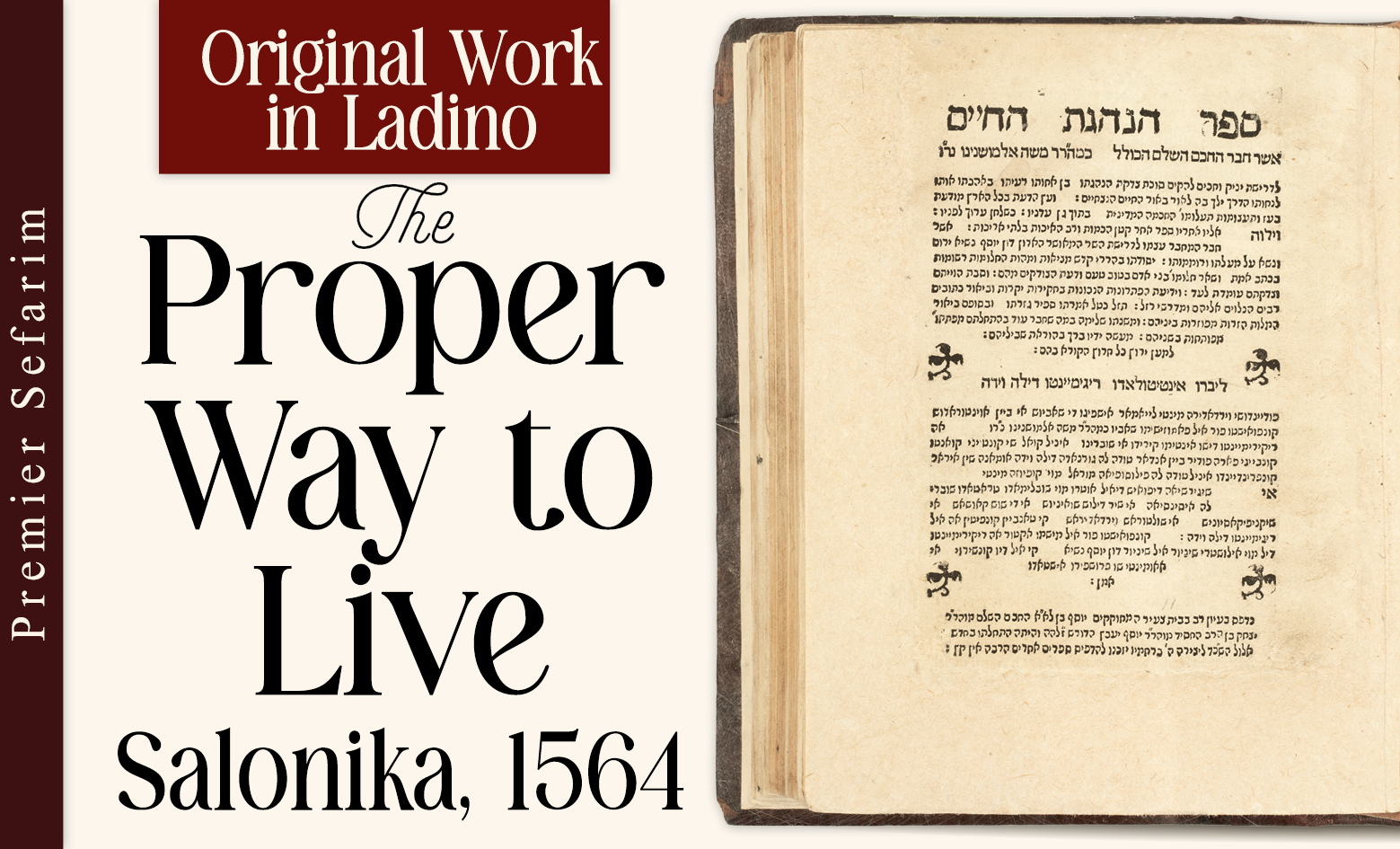
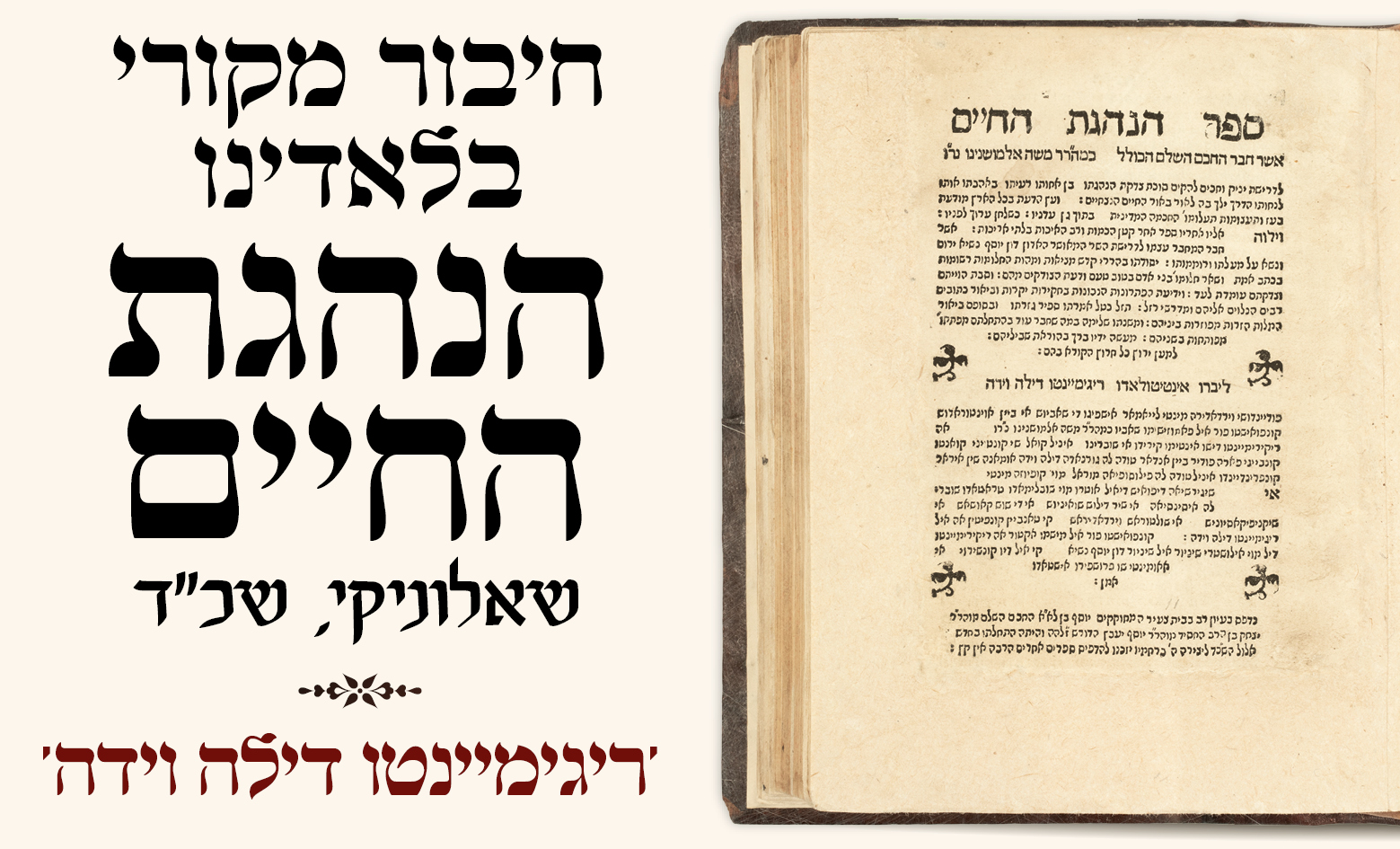
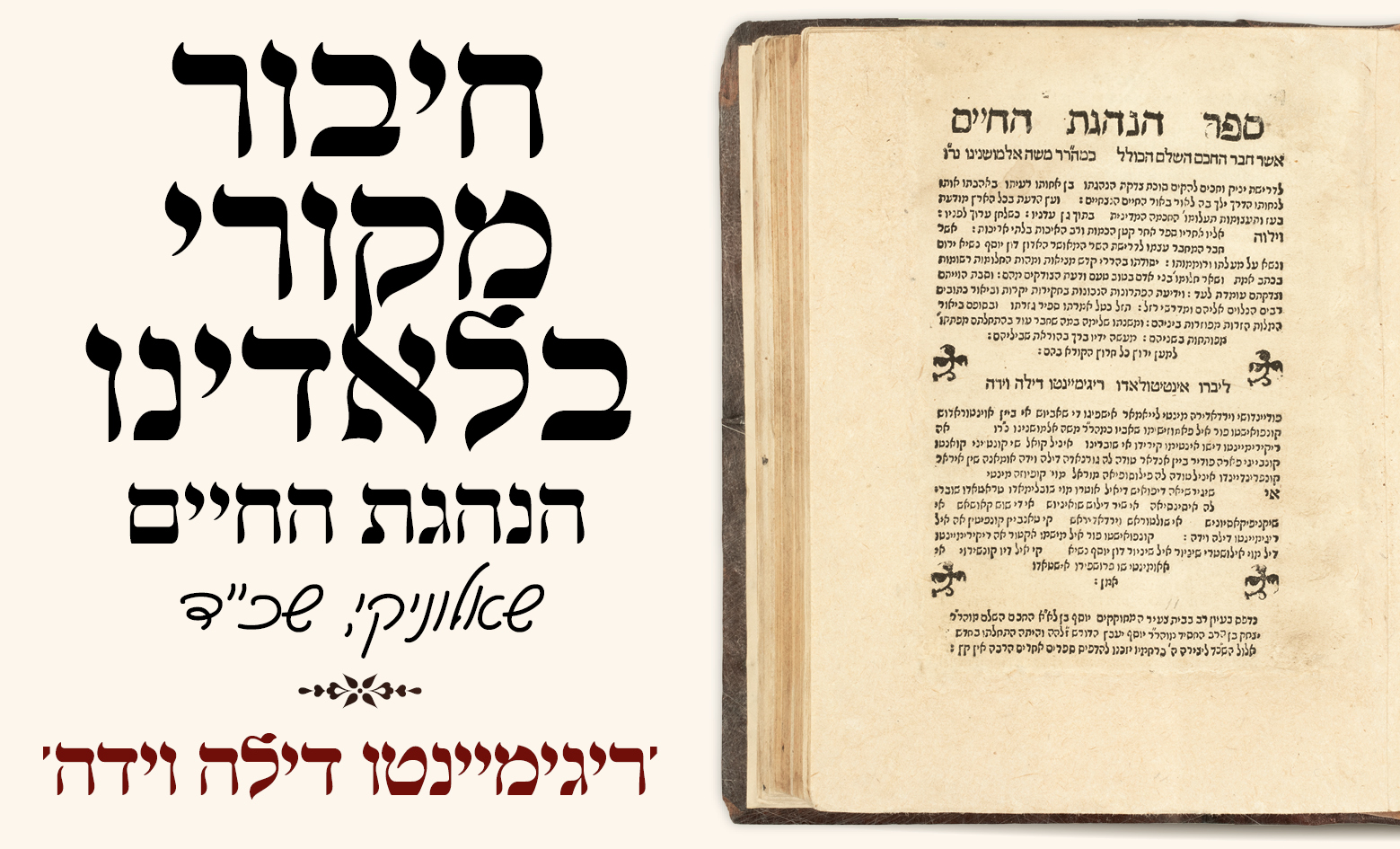
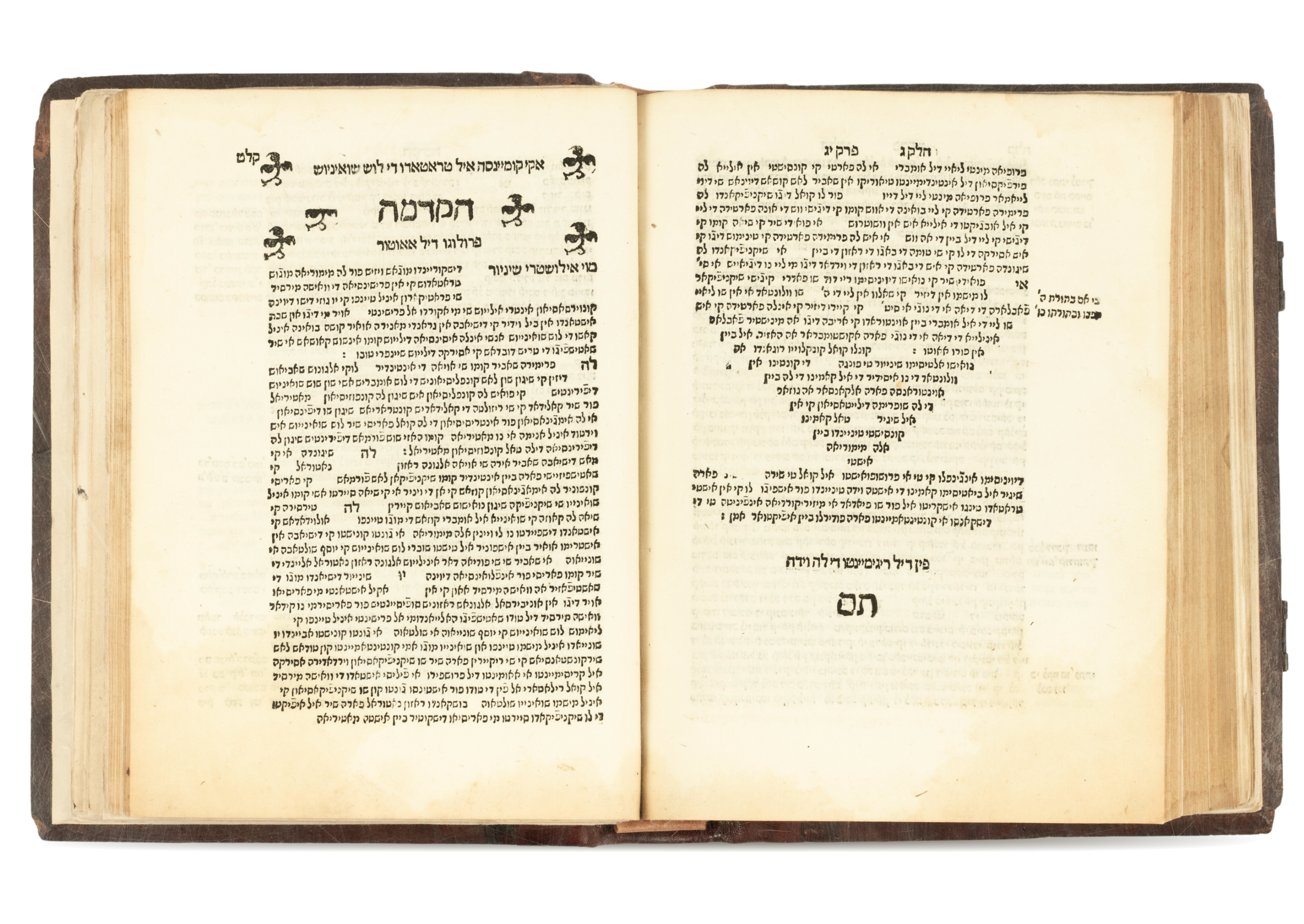
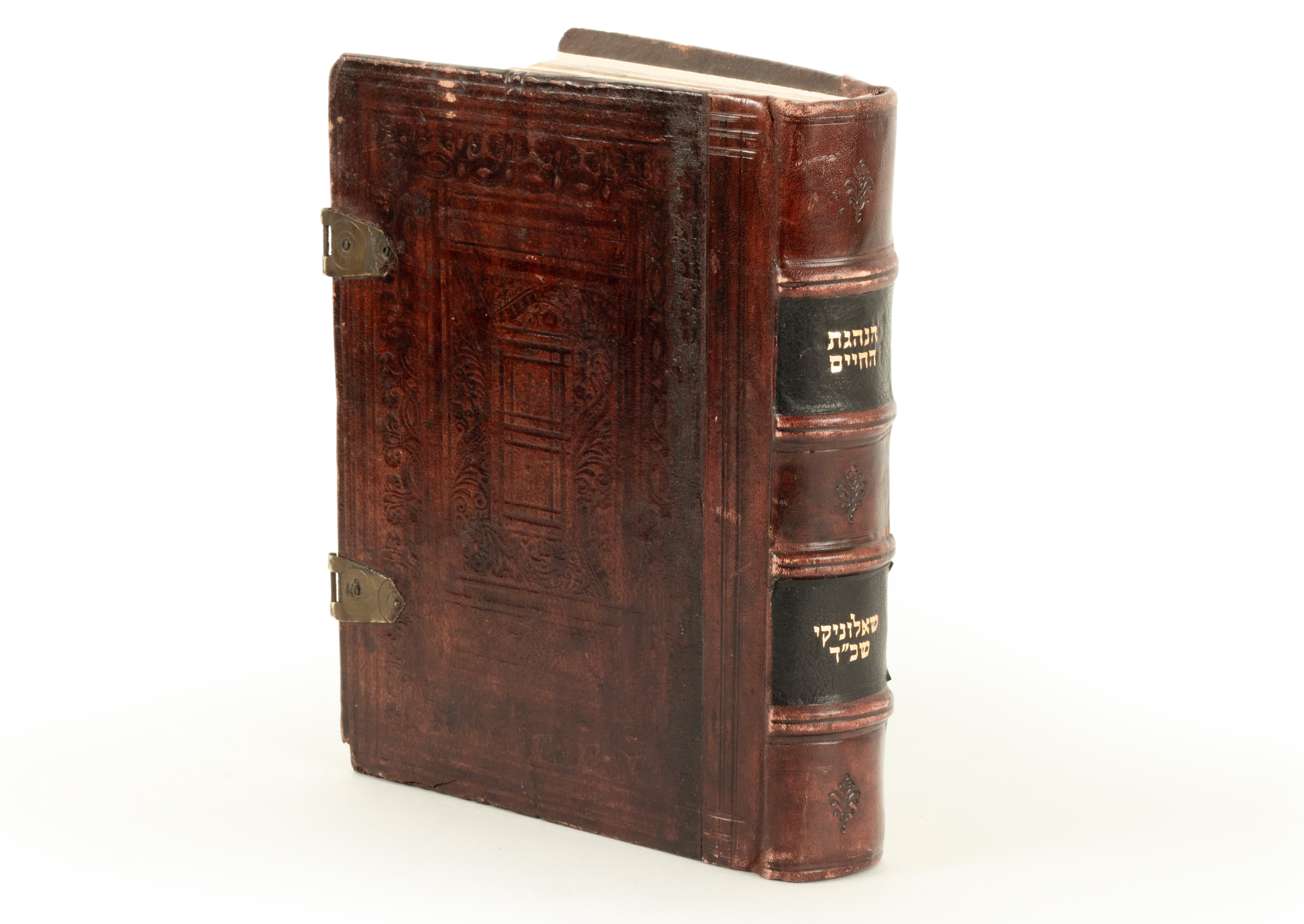
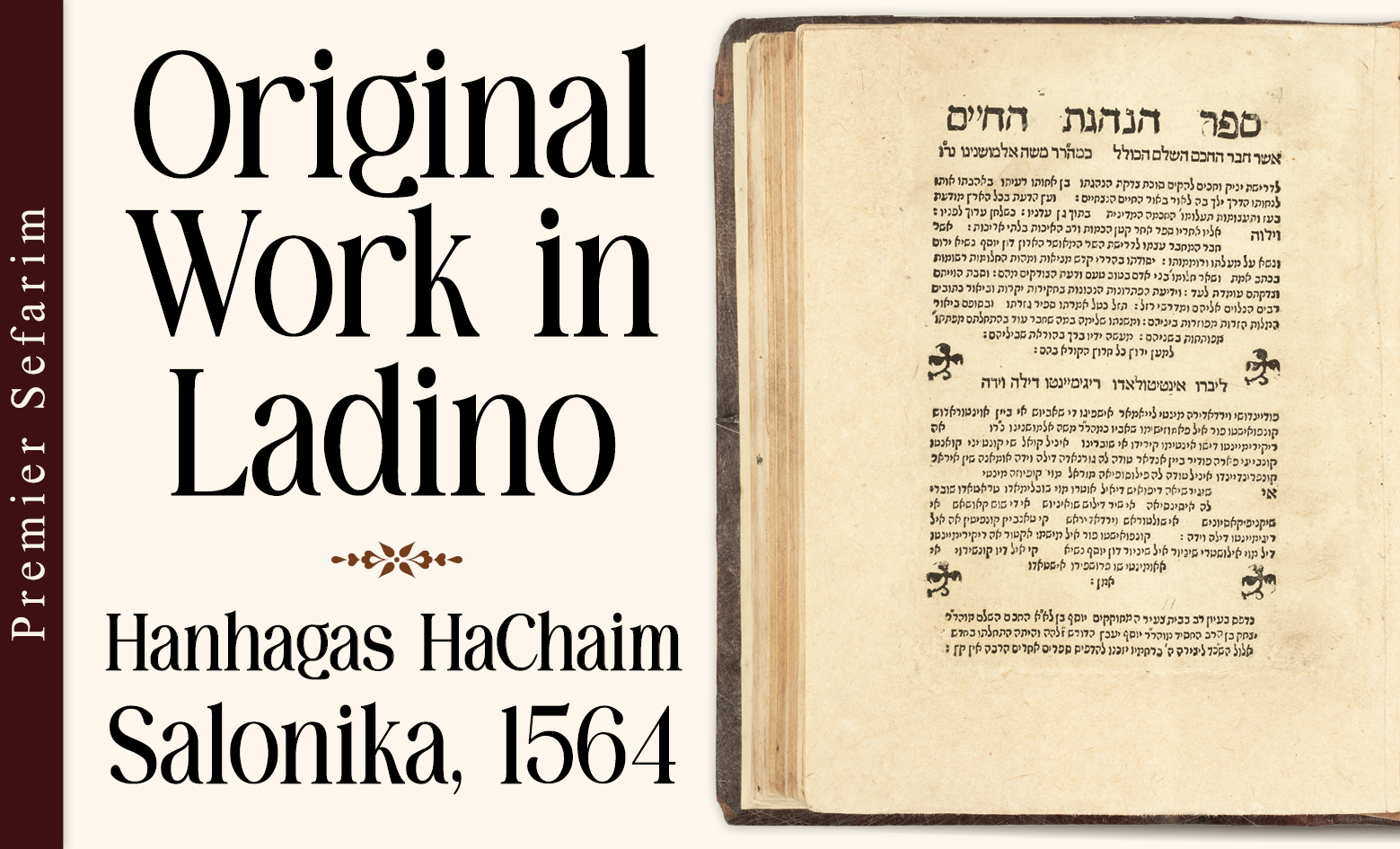
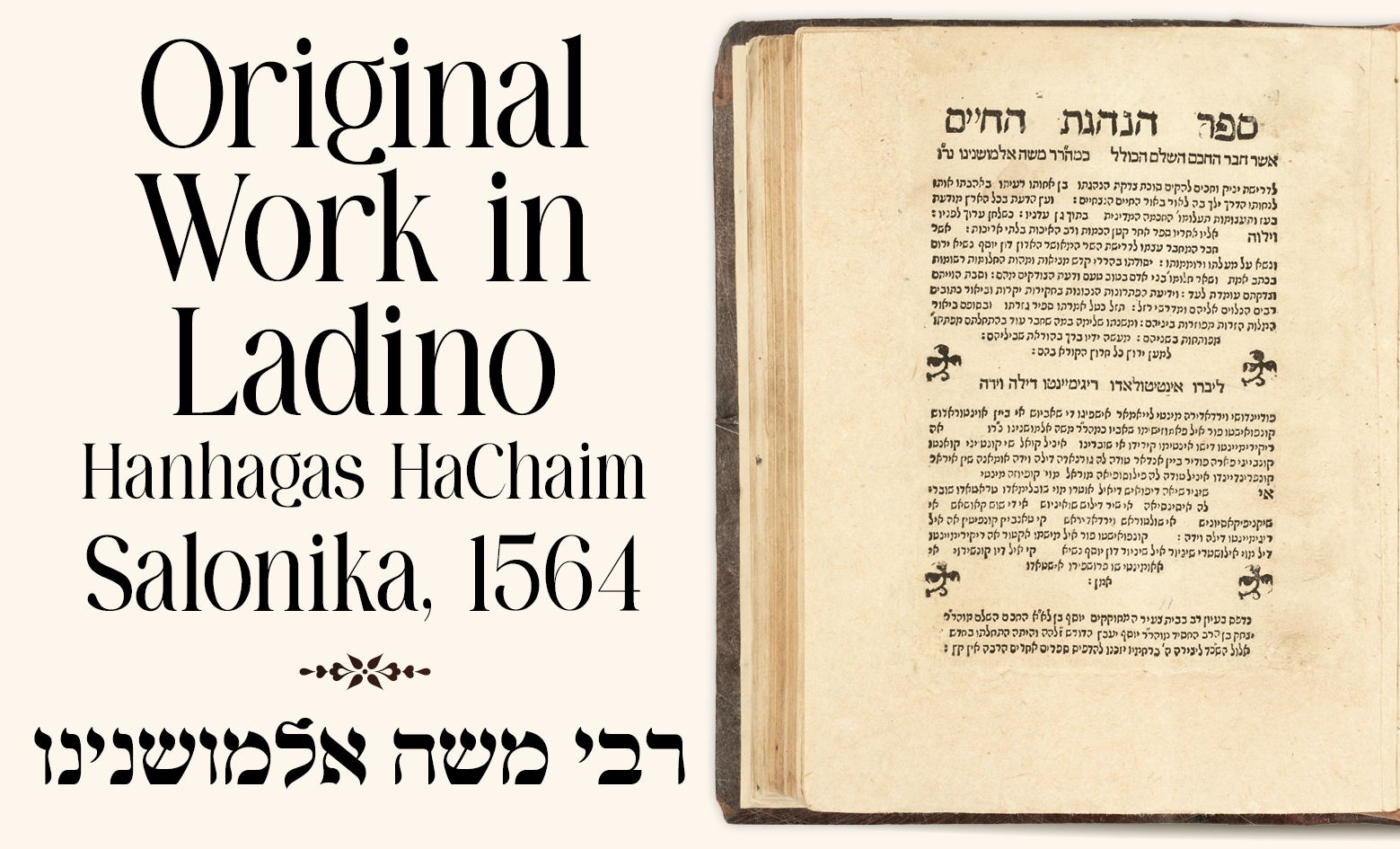
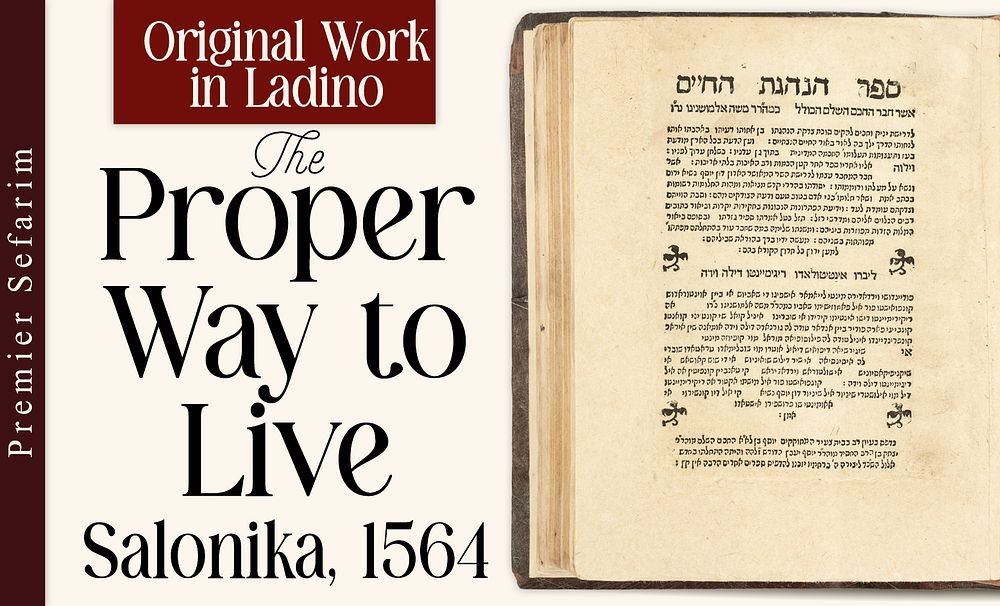
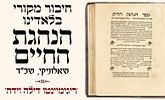
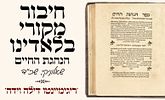
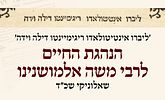
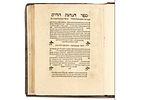
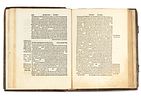
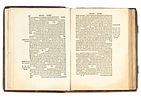
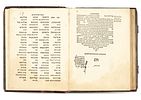
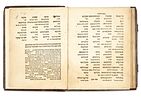
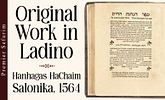
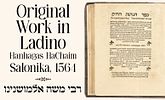
Extremely Rare: Hanhogas HaChaim by Rabbi Moshe Almosnino. Salonika, 1564
Early Ladino Sefer
Extremely Rare: Hanhogas HaChaim by Rabbi Moshe Almosnino. Salonika, 1564
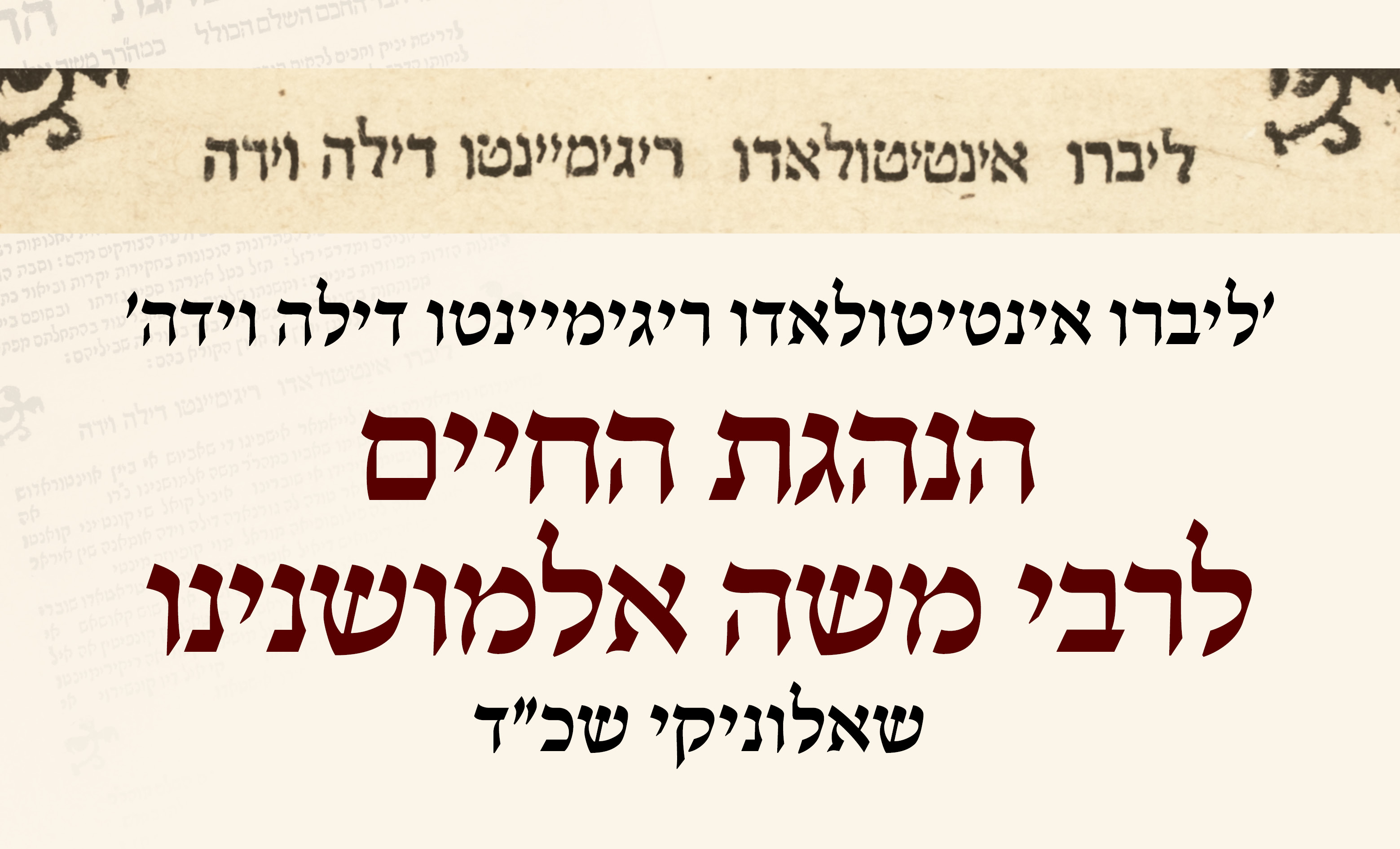
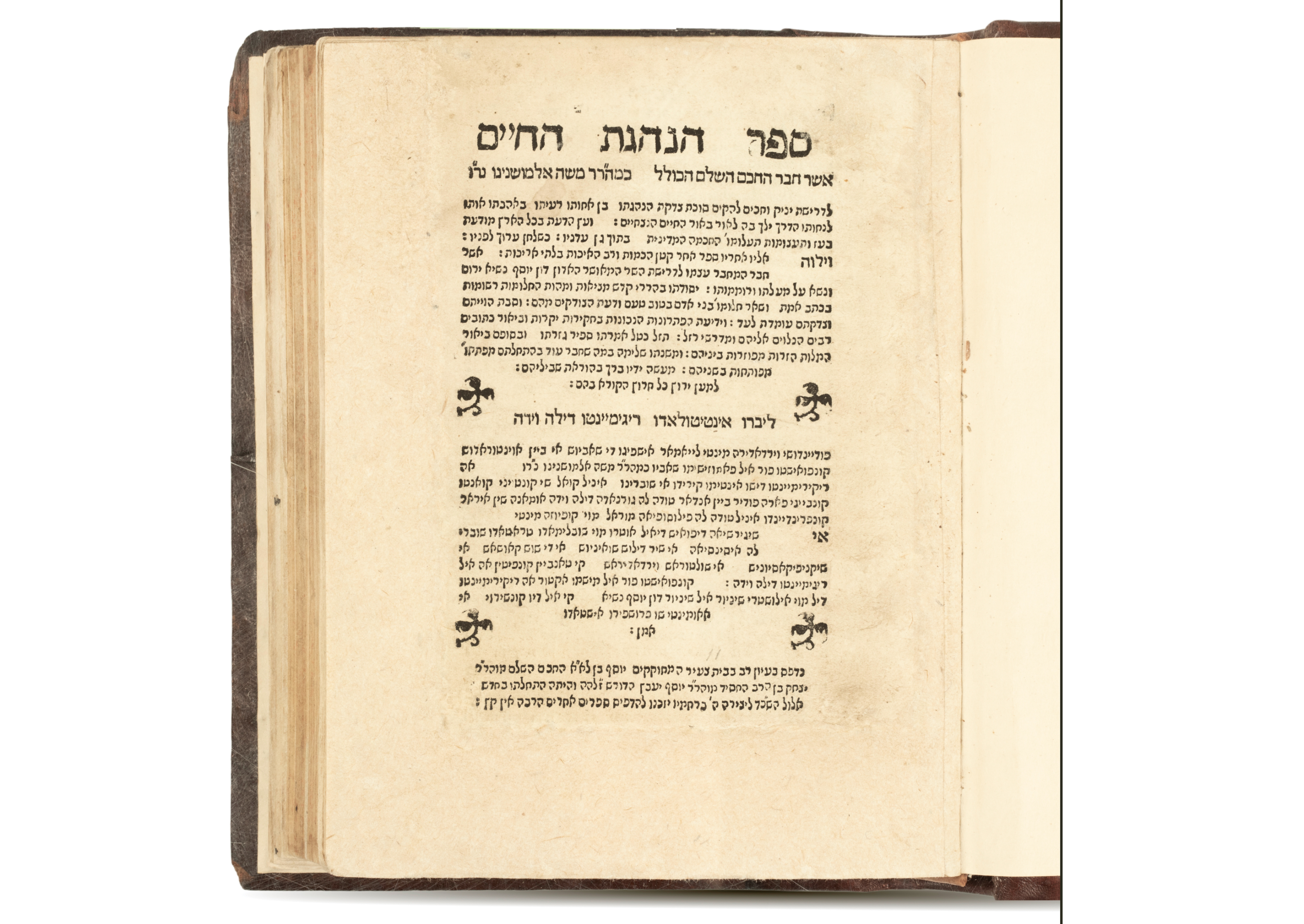
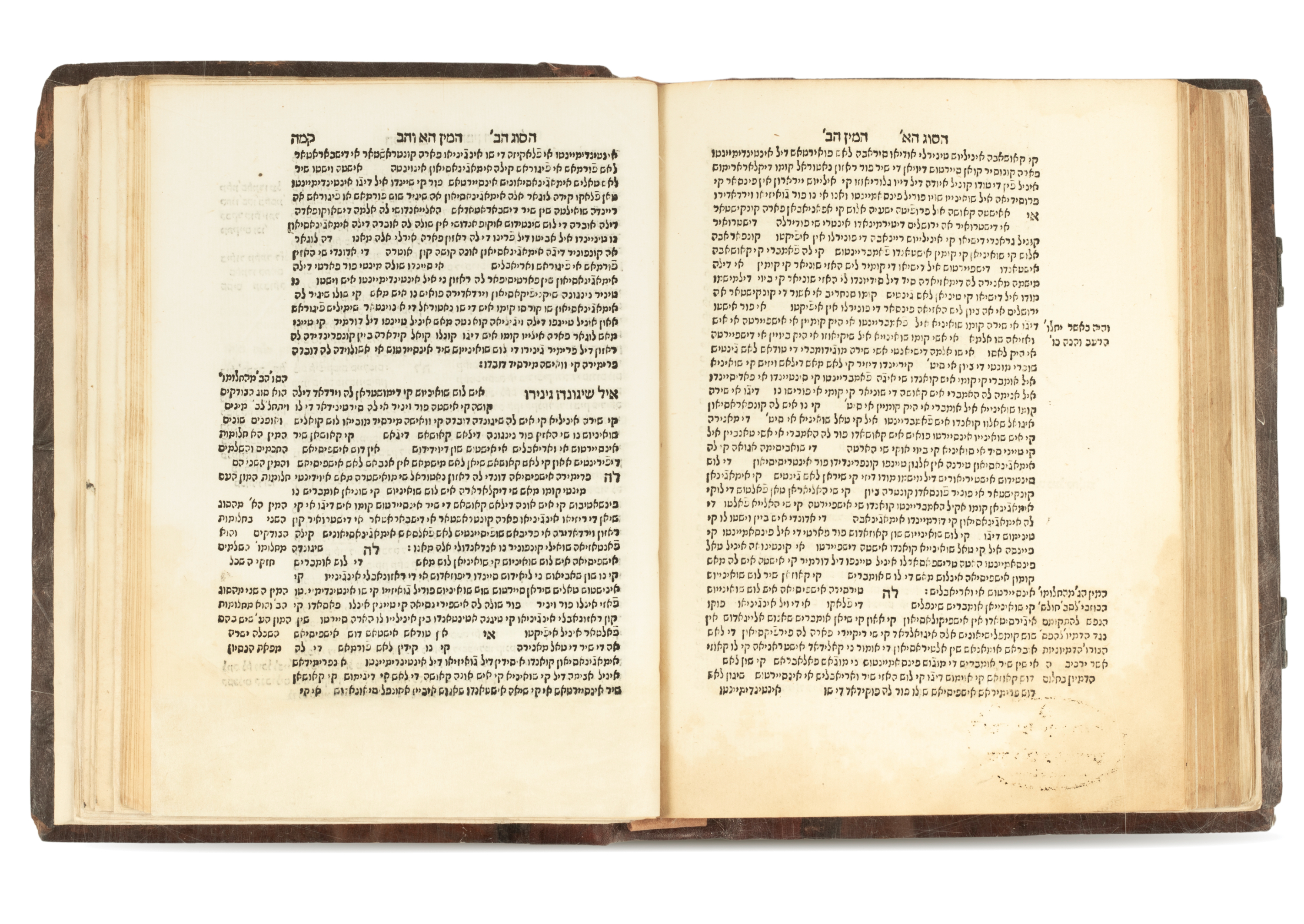
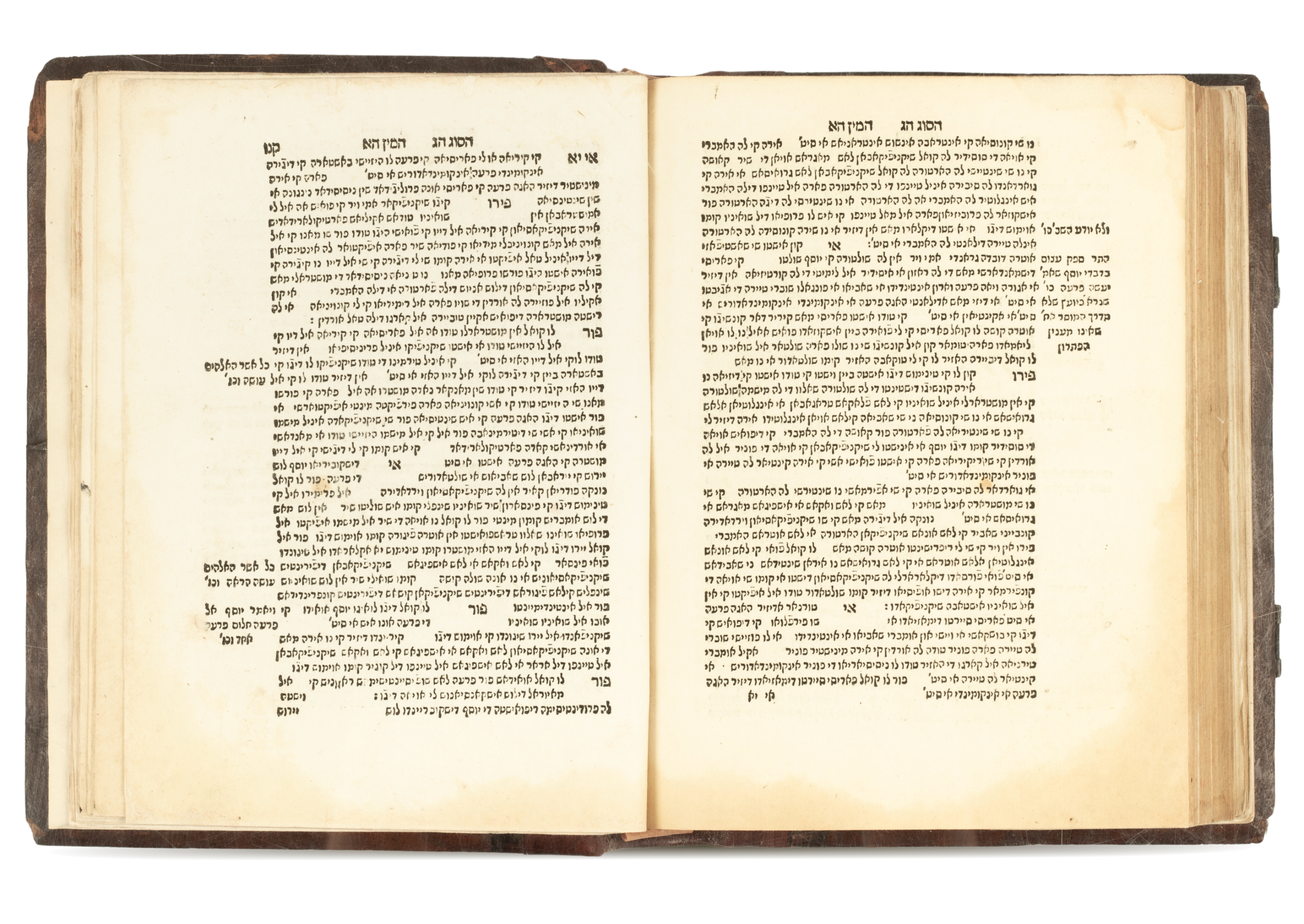
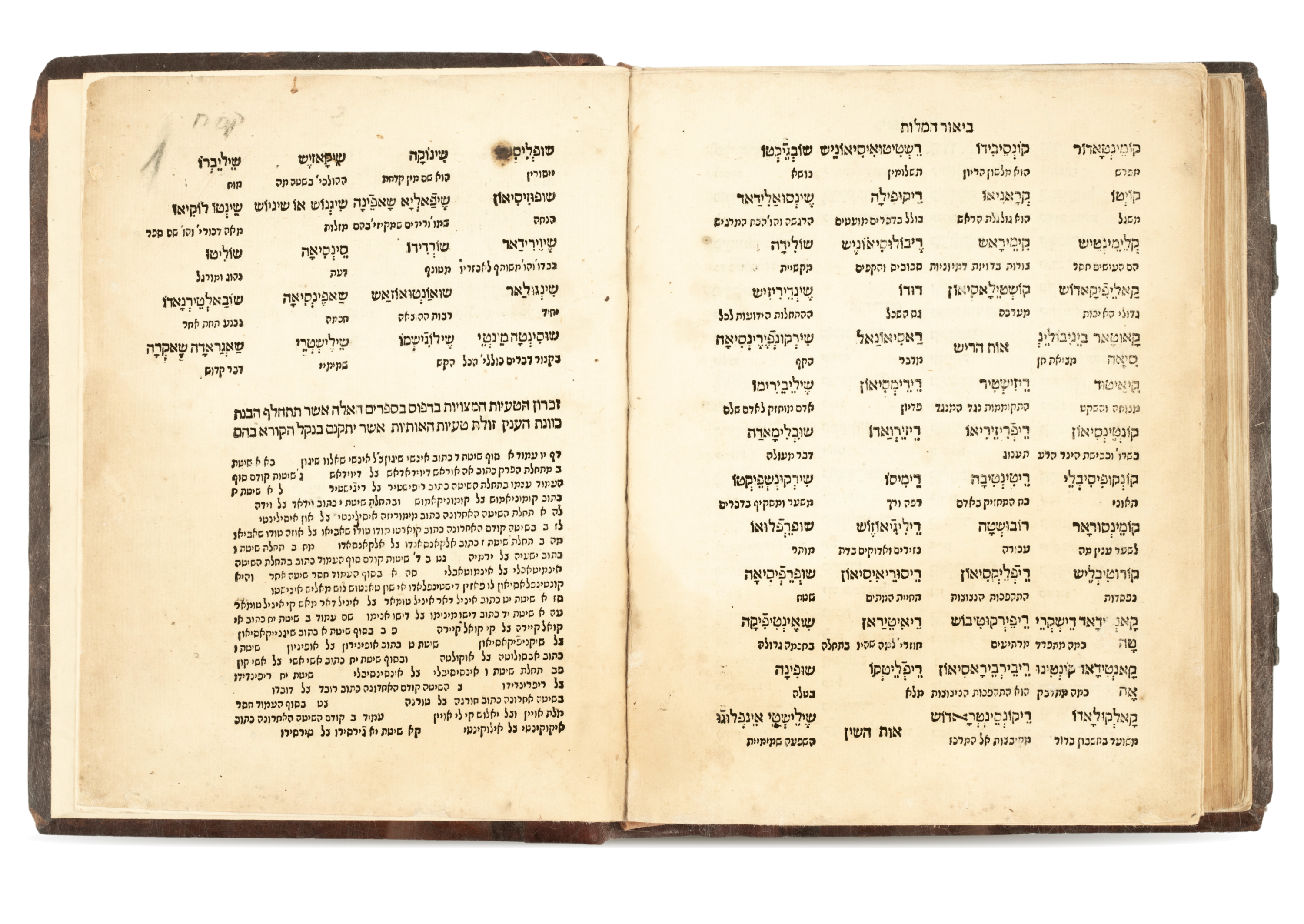
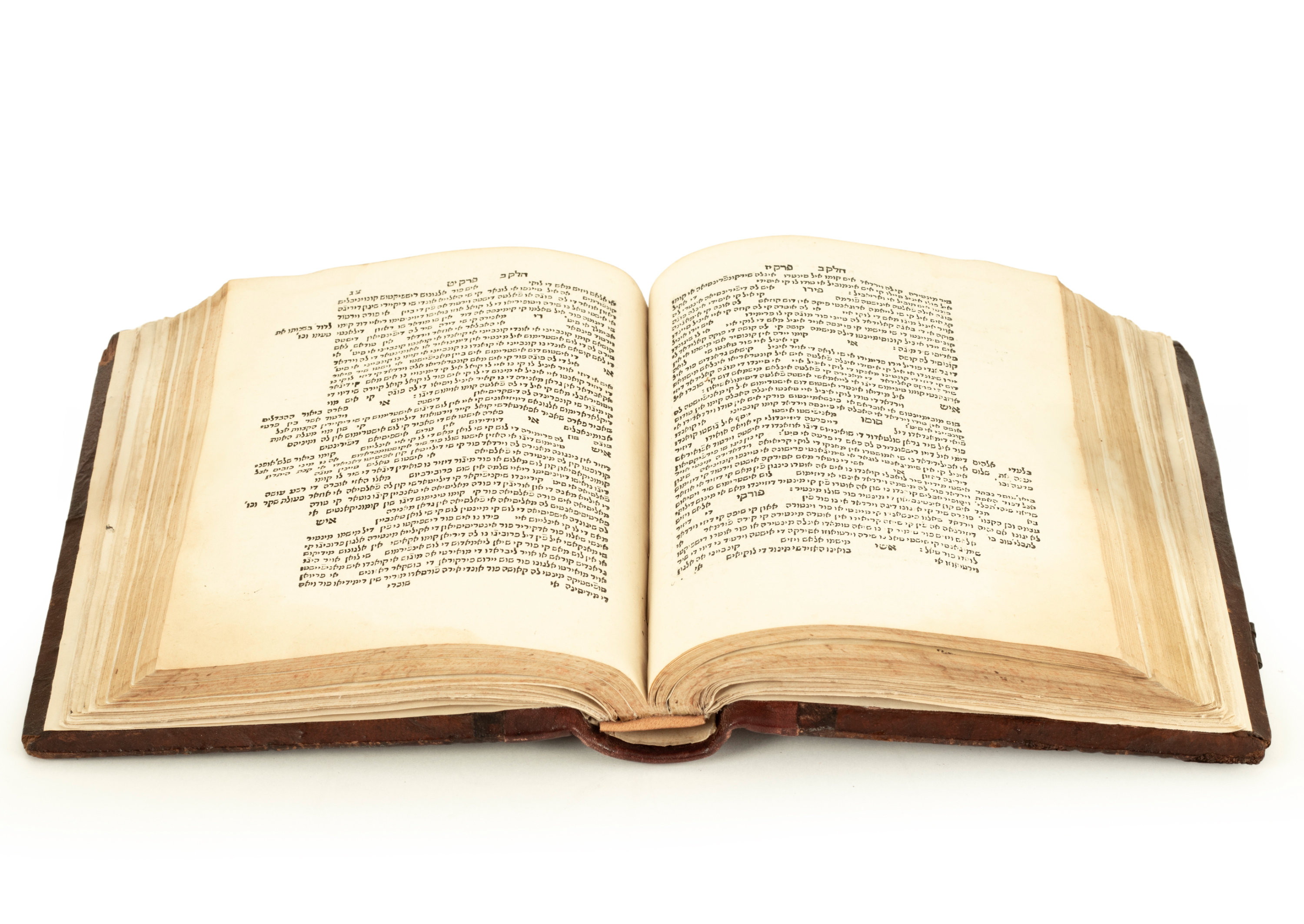
Libro Intitulado Regimiento de la Vida, a work of mussar and guidance for a person’s life, by the great sage Rabbi Moshe Almosnino. An early original sefer printed in Ladino.
To the best of Genazym’s knowledge, this work is the first original composition in Ladino to have been printed. The works printed until then consisted of translations of prayers and Chumashim, adaptations of other works, word translations for Nach, and the like. This sefer, however, is the first independent original work to have been printed in Ladino.
Ben-Menachem noted in his bibliographical list of the writings of Rabbi Moshe Almosnino, that the sefer is
“extremely rare” (Sinai, Vol. 19, p. 275).
Printed during Rabbi Moshe’s lifetime, the work discusses fundamental questions of faith, free will, and Divine Providence; the virtue of good character traits; moral admonition; guidance on eating, drinking, and sleeping; natural phenomena; and dreams.
The sefer was written at the request of the author’s nephew, Rabbi Moshe Garcon, his sister’s son, who asked him to compose a work that would guide him along the proper path. One of his requests was that the sefer be written for him in Ladino (see the introduction and below).
Treatise on Dreams
The sefer also contains a treatise (from leaf 139a onward) which the author regarded as a work in its own right (see title page), devoted to the fascinating subject of dreams — their causes and their interpretation.
This treatise was written following Rabbi Moshe’s stay in Constantinople in 1566 at the home of the prominent statesman Don Yoseph Nasi, one of the illustrious figures of Spanish Jewry, who served as Minister of Foreign Affairs to the Turkish Sultan and wielded enormous influence throughout the Ottoman Empire, then the leading power in Europe.
During this visit, Don Yoseph Nasi asked Rabbi Moshe to compose for him a sefer on the subject of dreams. This work, too, was written in Ladino.
The great sage Rabbi Moshe Almosnino (c. 1518–1580) was one of the leading darshanim, thinkers, and authors of the sixteenth century. He was born in Salonika into a distinguished Spanish family. His ancestors were killed al kiddush Hashem in Spain. Rabbi Moshe studied under Rabbi Yosef Taitatzak, who was also the teacher of Rabbi Yosef Karo, author of the Shulchan Aruch.
He served as a rav in Salonika and worked extensively on behalf of its Jewish community before the Sultan, securing for the Jews of Salonika a charter of freedom that brought an end to the community’s troubles. Rabbi Moshe was a prolific author whose printed works include Pirkei Moshe, Yedei Moshe, Ma’ametz Koach, and others. He passed away in Salonika in 1580.
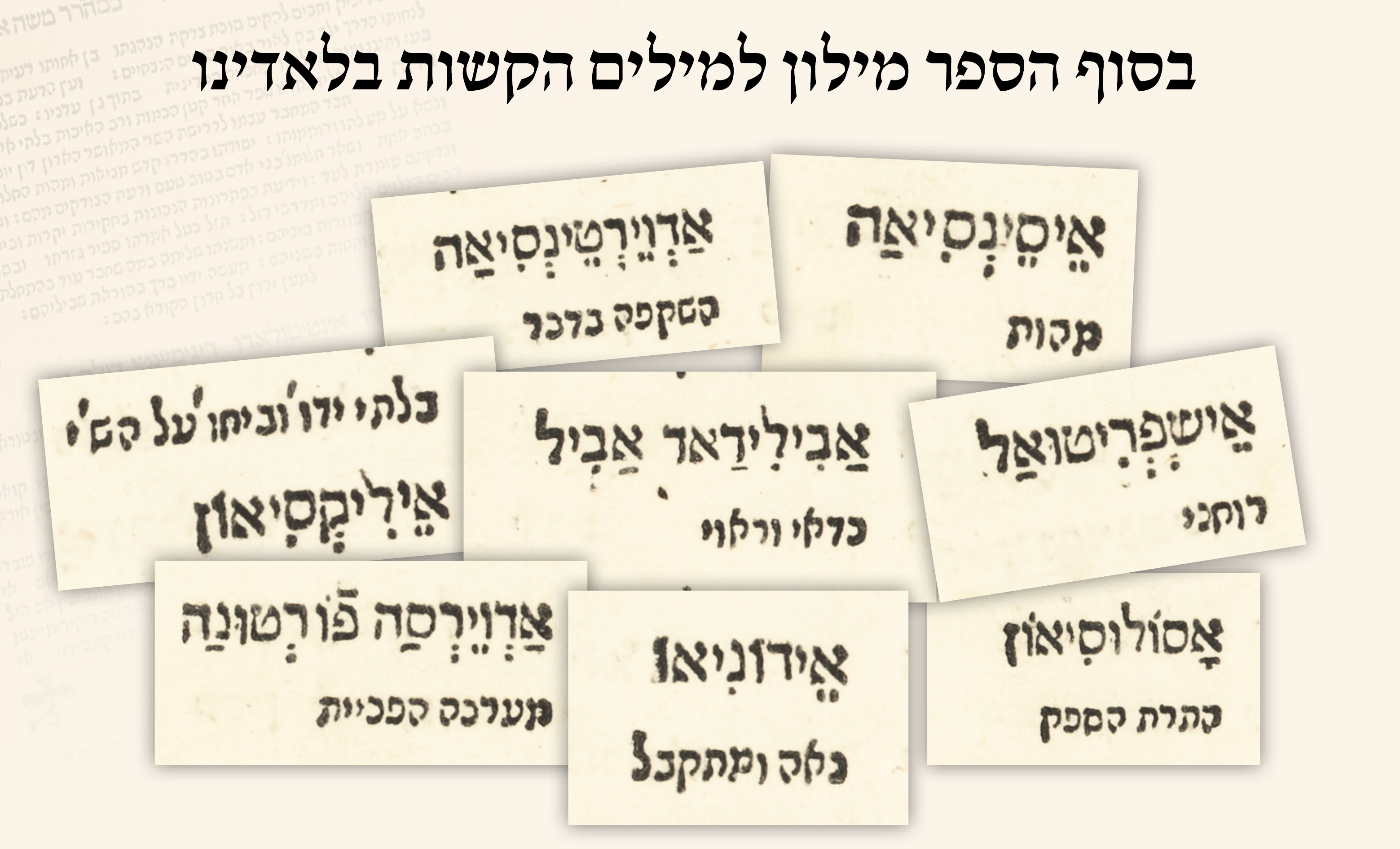
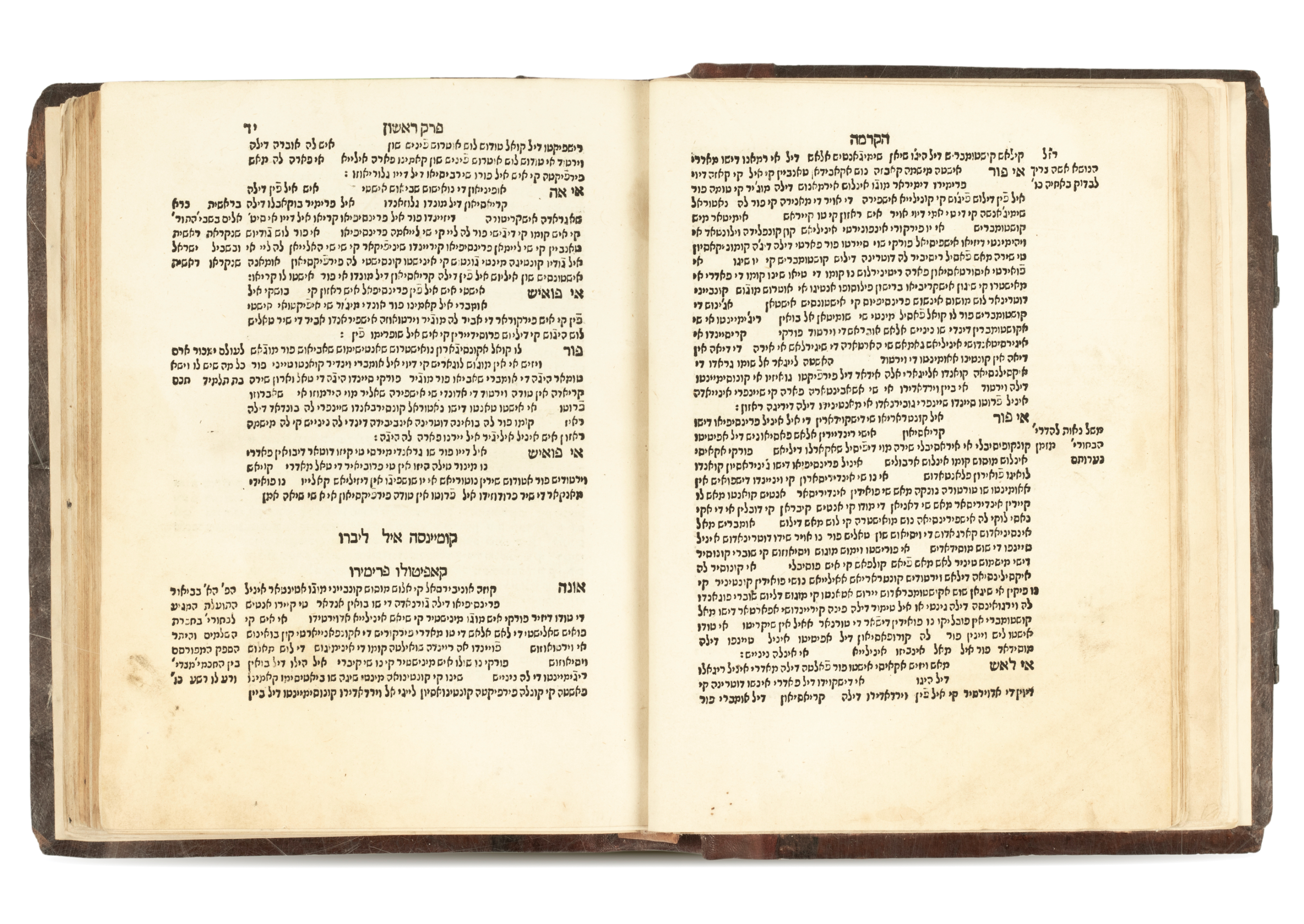
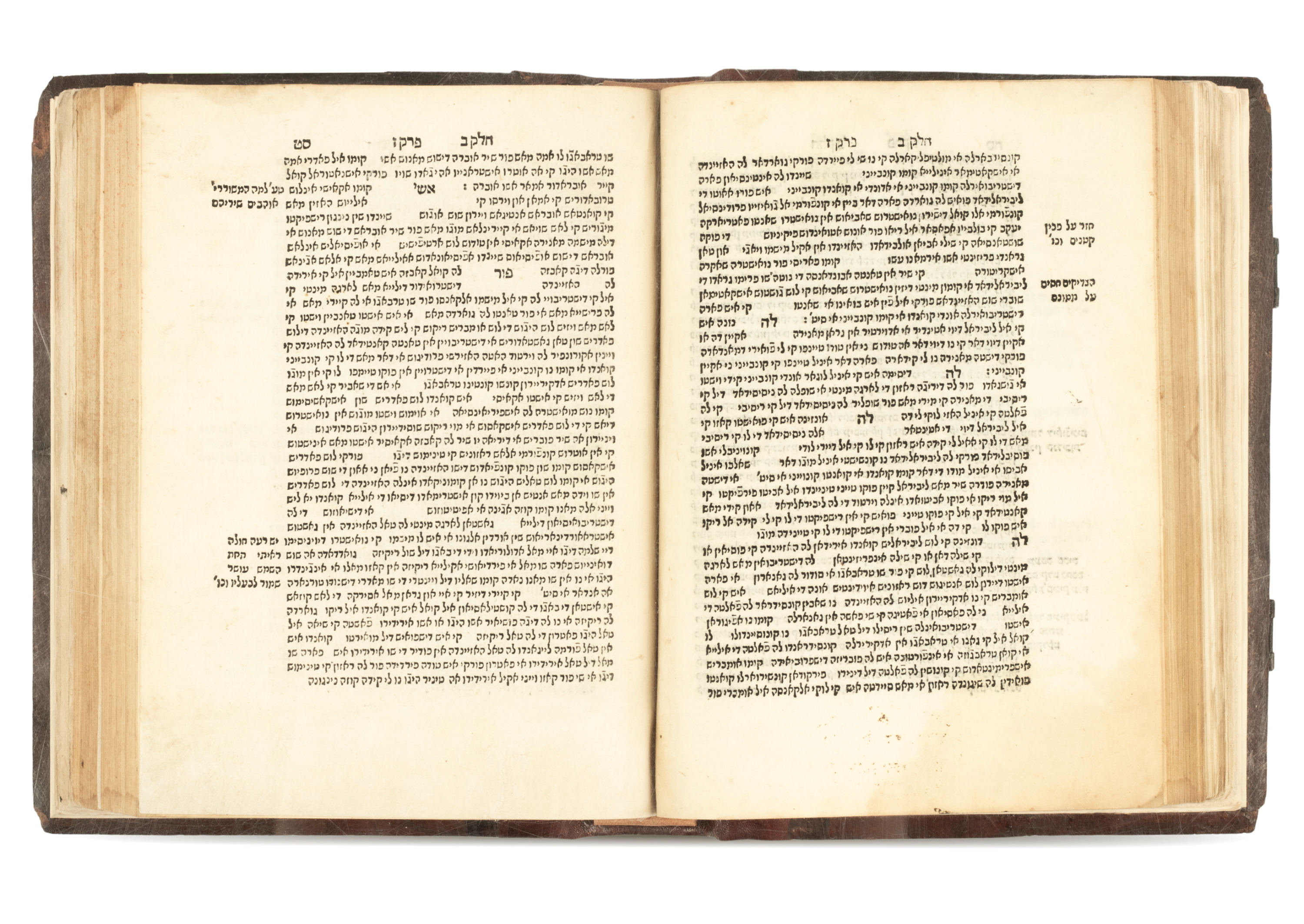
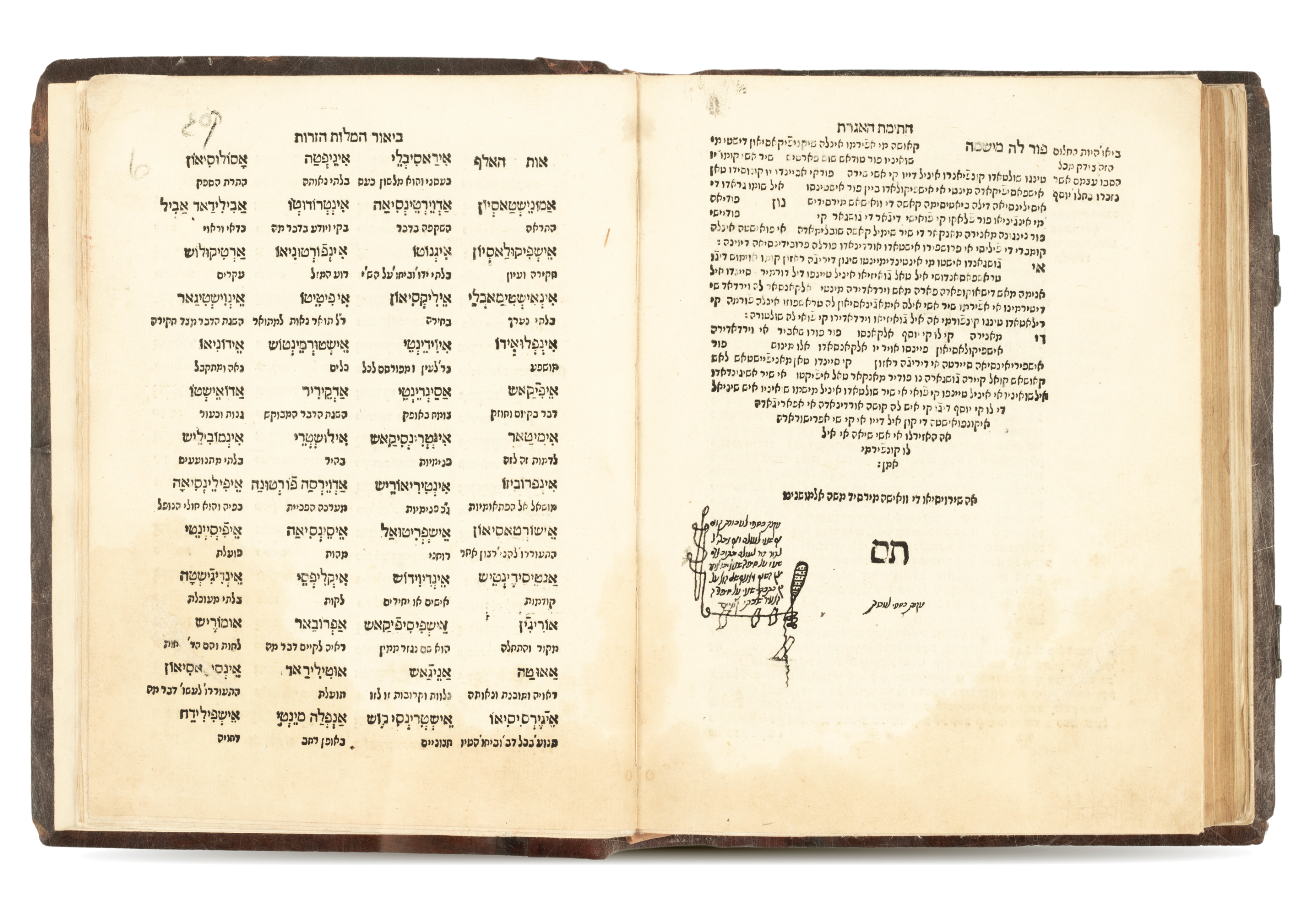
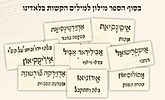
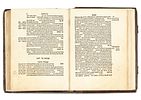
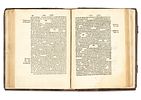
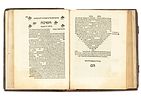
The body of the sefer is in Ladino, printed in Hebrew letters. The first half of the title page, the introduction, and the indexes are also in Lashon Hakodesh. At the end is a glossary of difficult words appearing in the sefer, while the chapter headings (“side headings”) in the margins are in Lashon Hakodesh.
Salonika, 1564.
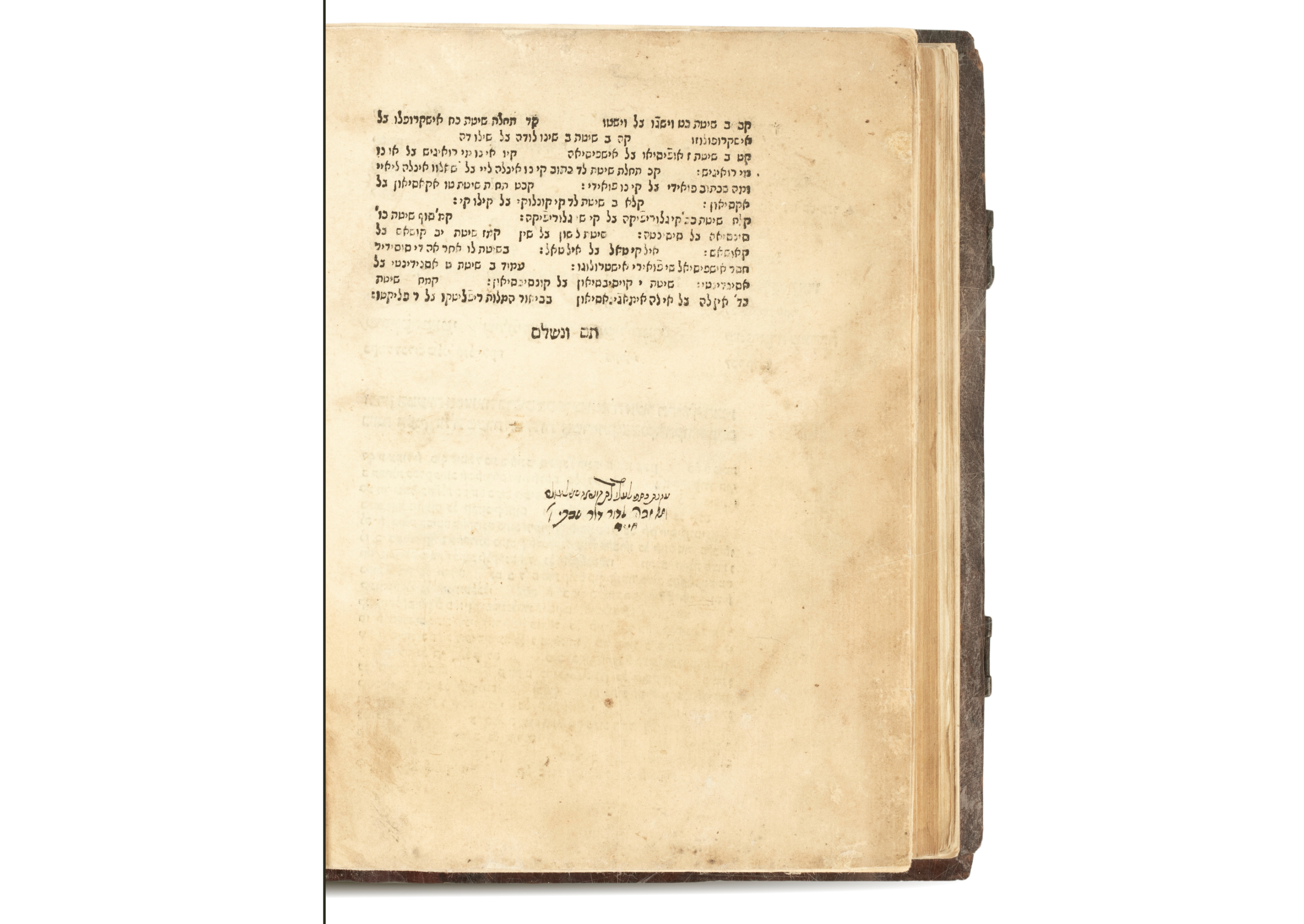
Page Count: 164, [4] leaves.
Size: 20 cm.
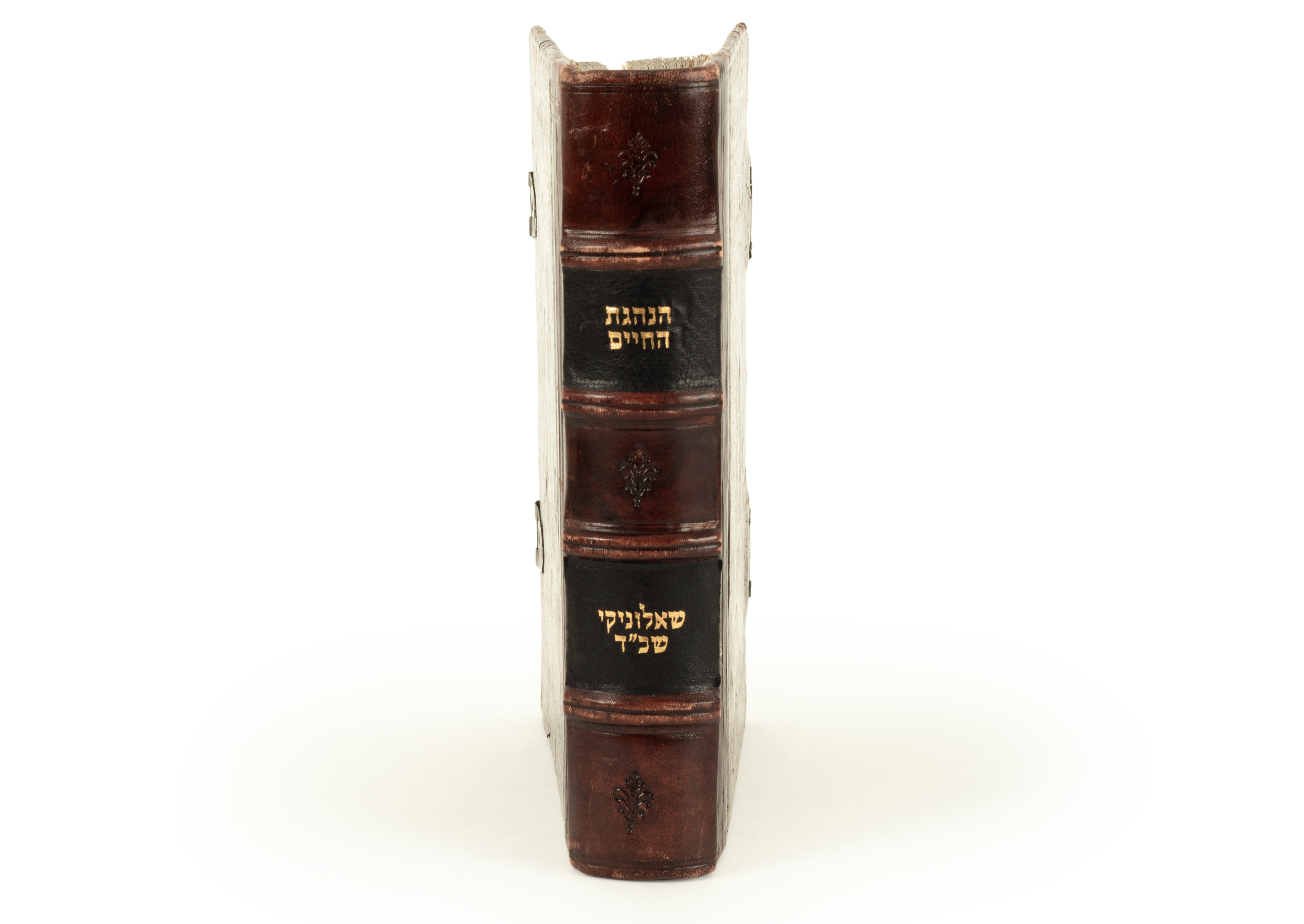
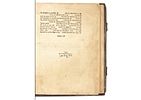
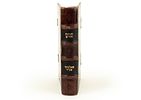
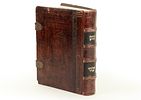
Condition: Age stains in the margins. Margins of the title page restored. A complete, fine copy. Antique leather binding with a new leather spine.
Size: 20 cm.
Condition: Age stains in the margins. Margins of the title page restored. A complete, fine copy. Antique leather binding with a new leather spine.
Bibliography: Cohen, Otzar HaSefarim BeLadino, no. 979; Ginzei Yisrael, no. 1497; Rivkind, Dikdukei Sefarim, Kiryat Sefer, Vol. 9, p. 492; Ben-Menachem, Sinai, Vol. 19; Meir Tzvi Benayahu, Moshe Almosnino Ish Saloniki: Yetzirato VeHaguto (Tel Aviv, 1997). On this work in particular, see Chapter Six
.
Ladino
Ladino is a Jewish language that developed among the Jews of Spain and spread throughout the Jewish world following the expulsion from Spain in 1492. It is based primarily on the Castilian Spanish of the fifteenth century.
Following the expulsion, the language traveled with the Jews to the Ottoman Empire and the Balkan lands. Ladino preserved and perpetuated the Jewish identity of Spanish Jewry, and literature in Ladino became extremely popular among them.
