Grand Winter Event

Auction #17

Part 1

of 3 pages

Lot : 103

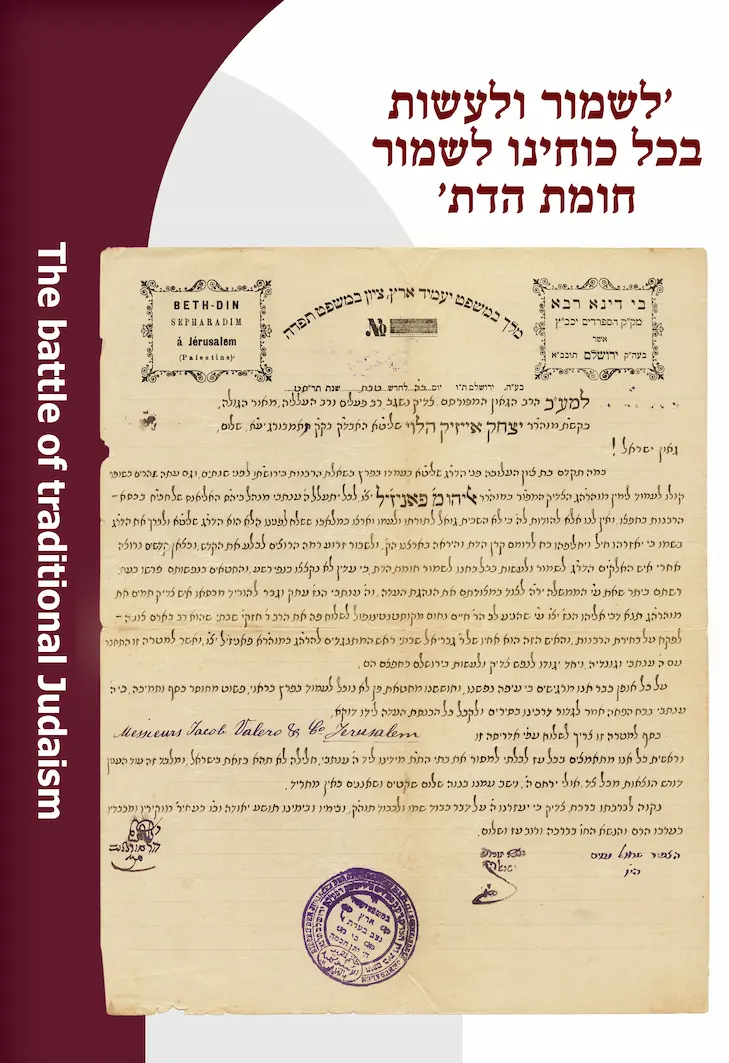
“To protect and do everything in our power to preserve the fortress
“To protect and do everything in our power to preserve the fortress of our faith” Letter Autographed by Sephardic Rabbanim of Jerusalem 1909 Letter from the great Sephardic Rabbanim members of the Sephardic Beit Din in Jerusalem. In this letter, the Rabbanim lament their lack of strength and inability to compete with the efforts of Albert-Abraham Antébi, director of the Alliance Israelite Universelle in Jerusalem. The objective of the Alliance School was to “trap the leadership of the congregation”. The Rabbanim express that “we fear that we shall be unable to narrow this breach properly”. However, “we are striving with all our might not to deliver the houses of the Talmudei Torah to Mr. Antebi. Heaven forbid that this should occur in Israel!” The letter is autographed by the prominent Rabbanim: Rabbi Shmuel Nissim (1841-1916) was Rosh Av Beit Din of the Sephardic congregation in Jerusalem and stood at the forefront of the community for many years (Yehudei Hamizrach B’Eretz Yisrael Vol. 1 p. 470) Rabbi Chaim Dovid Suranga (1842-1915) was one of the renowned Rabbanim of Jerusalem and community activist who had a powerful impact on his congregation. He served as Raavad of Jerusalem and dayan for many years (ibid 480). Rabbi Mordechai Israel (1851-1916) numbered among the great Rabbanim of Jerusalem and Tzfas. During his final years, he served as Raavad. Jerusalem, 25 Teves, 1909. Official stationery of the Sephardic Beis Din. Page count: [1] leaf. Page Size: 29x23 cm. Condition: Creases and several scattered holes. ....................................... Any inquiries about this lot ? We are available also on WhatsApp >>>

Lot : 104

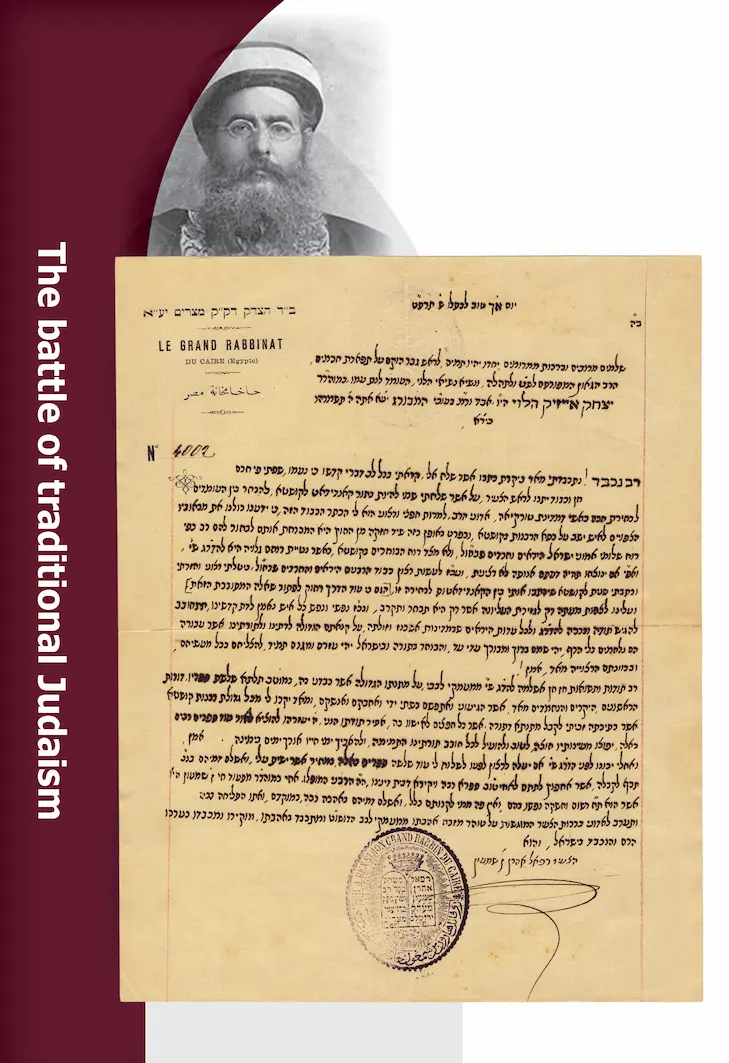
Proposal to Join the Constantinople Rabbinate Letter by Rabbi Rephael Aharon ben
Proposal to Join the Constantinople Rabbinate Letter by Rabbi Rephael Aharon ben Shimon, Av Beis Din of Egypt. 1909 Handwritten letter by Rabbi Rephael Aharon ben Shimon, Av Beis Din of Egypt and author of Nahar Mitzrayim and Tuv Mitzrayim, complete with his autograph and impressive stamp. In the framework of their battle to preserve the spiritual sanctity of Jerusalem and shield it from the schemes of the Enlightenment and Alliance schools, Gedolei Yisrael fought mightily to prevent the appointment of an enlightened Jew to the position of Chacham Bashi, which was the title designated for the Chief Rabbi of Constantinople and Ottoman Empire. The Chacham Bashi exerted powerful influence on Jewish congregations throughout the Empire and, specifically, on the schools and religious institutions in Jerusalem. Rabbi Yitzchak Eisik Halevi, who spearheaded this critical battle, dispatched an urgent appeal to Rabbi Rephael Aharon ben Shimon with a request to announce his candidacy for the coveted position of Chacham Bashi and endeavor to represent the needs of religious congregations in the Ottoman court. Rabbi Rephael Aharon replies that although he personally has no inclination to accept the position, “To fulfill the will of the honorable and [G-d] fearing Rabbanim in the Diaspora, I have annulled my own desires and wrote to Constantinople that they should write my name among the candidates for this position.” Rabbi Rephael Aharon ben Shimon (1847-1929) was born in Jerusalem to Rabbi David ben Shimon, who was renowned as the Tzuf Dvash. (Rabbi Dovid also authored Shaar Hachatzer.) In 1888, Rabbi Rephael Aharon set out twice as a Rabbinical emissary of Kollel Adath Hamaaravim in Jerusalem, and in 1891, was inaugurated as Chief Rabbi of Egypt where he endeavored mightily to cultivate religious observance and battled furiously against the winds of the Enlightenment. In 1921, Rabbi Rephael Aharon returned to his native land in Jerusalem where he passed away seven years later. His legacy includes the works Nahar Mitzrayim and Tuv Mitzrayim. Cairo, 21 Kislev, 1909. Stationery of the Egyptian Beis Din. Page Size: 27x21 cm. Handwritten, autographed and stamped with his impressive seal. Condition: Good. Learn more about Rabbi Rephael Aharon ben Shimon and his correspondence regarding the Constantinople Rabbinate in Igros Rabbi Yitzchak Eisik Halevi (Jerusalem, 1972) p. 156. ....................................... Any inquiries about this lot ? We are available also on WhatsApp >>>
Lot : 105

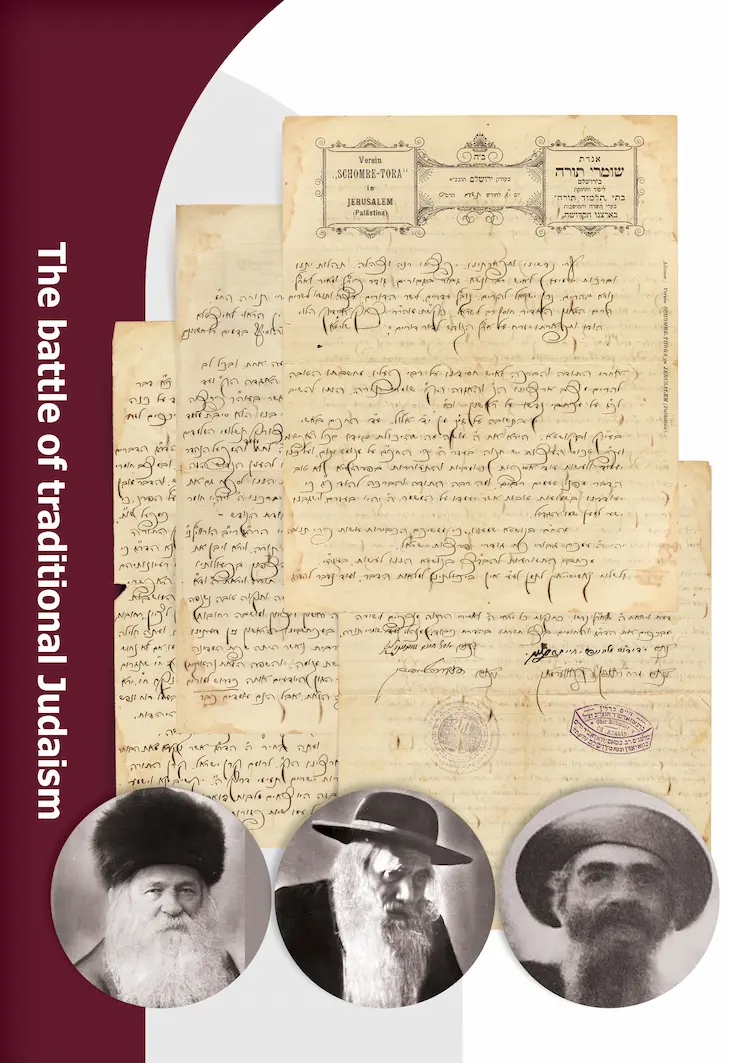
Letter by Rabbi Chaim Berlin, Rabbi Yosef Chaim Sonnenfeld and Prominent Jerusalem
Letter by Rabbi Chaim Berlin, Rabbi Yosef Chaim Sonnenfeld and Prominent Jerusalem Rabbanim Regarding the Compromised State of Religion and Religious Schools in Eretz Yisrael. Jerusalem, 1909 In this letter, four eminent Rabbanim of early 20th century Jerusalem express their thoughts and feelings regarding the campaign to preserve religious schools in Jerusalem. In this letter, they emphasize the need of acting subtly, without grand public assemblies or fanfare that attract undue attention. Further in the letter, the Rabbanim describe at length the efforts taken by Agudas Shomrei Torah which was established in Jerusalem with the goal of opening new religious institutions in the burgeoning new towns and settlements. They specifically describe their vigorous efforts in the cities of Petach Tikva, Rishon Letzion, Rechovot and Ekron. The letter was handwritten by Rabbi Zerach Braverman and autographed by four famous Rabbanim: Rabbi Chaim Berlin (1833-1913) was the son of the Netziv and succeeded his father as Rosh Yeshivah in Volozhin. In 1805, Rabbi Chaim journeyed to the Holy Land and settled in Jerusalem. Following the passing of Rabbi Shmuel Salant, he accepted the spiritual leadership of Jerusalem. Rabbi Yosef Chaim Sonnenfeld (1849-1932) was the first Rav of the Eidah Hacharedis in Jerusalem. He stood at the forefront of the public battles to preserve the spiritual sanctity of Jerusalem. Rabbi Zerach Braverman (1857-1838) was a disciple of the tzaddik Rabbi Nachum’ke of Horodna and prime disciple of Maharil Diskin. He was one of the eminent spiritual leaders of Jerusalem and founder and Rosh Yeshivah of Yeshivas Meah Shearim. Rabbi Dovber Halevi Epstein (circa 1854-1931) was the son of the author of Aruch Hashulchan. As a brilliant scholar and talented public activist, he endeavored greatly on behalf of all institutions and organizations in Jerusalem. Jerusalem, 13 Tishrei, 5669 (1909). Folded leaf with 4 handwritten sides. Page Size: 29x22 cm. Several water stains. ....................................... Any inquiries about this lot ? We are available also on WhatsApp >>>

Lot : 106

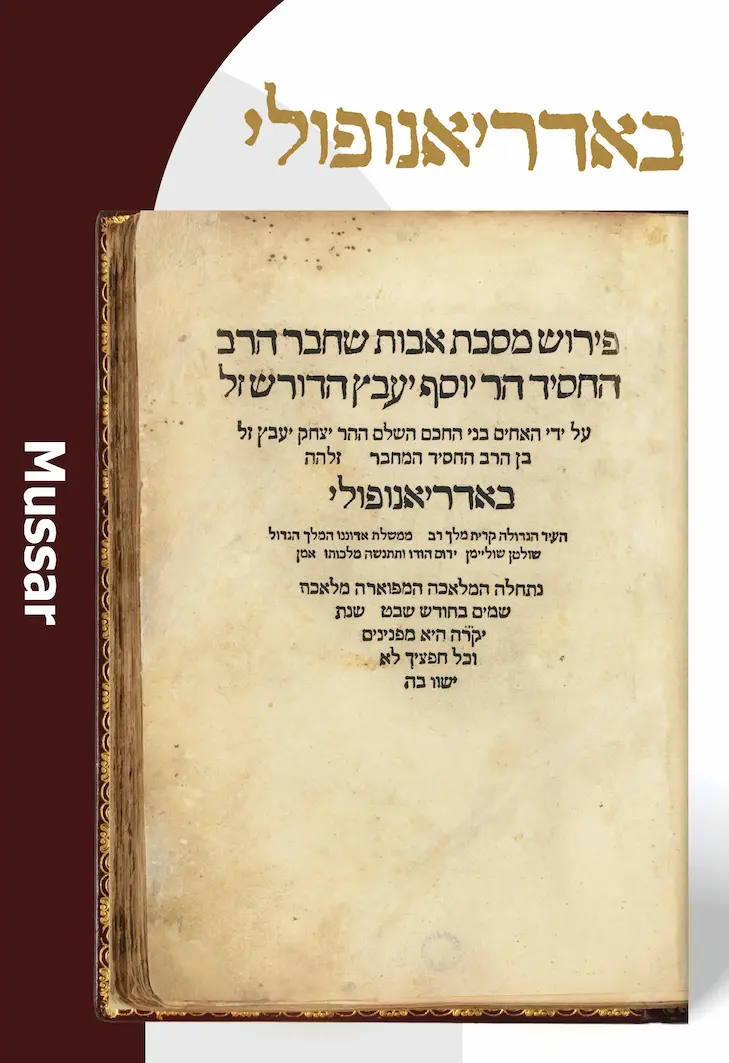
Chassid Yaabetz’s Commentary on Maseches Avos. Adrianople, 1555 This commentary authored by
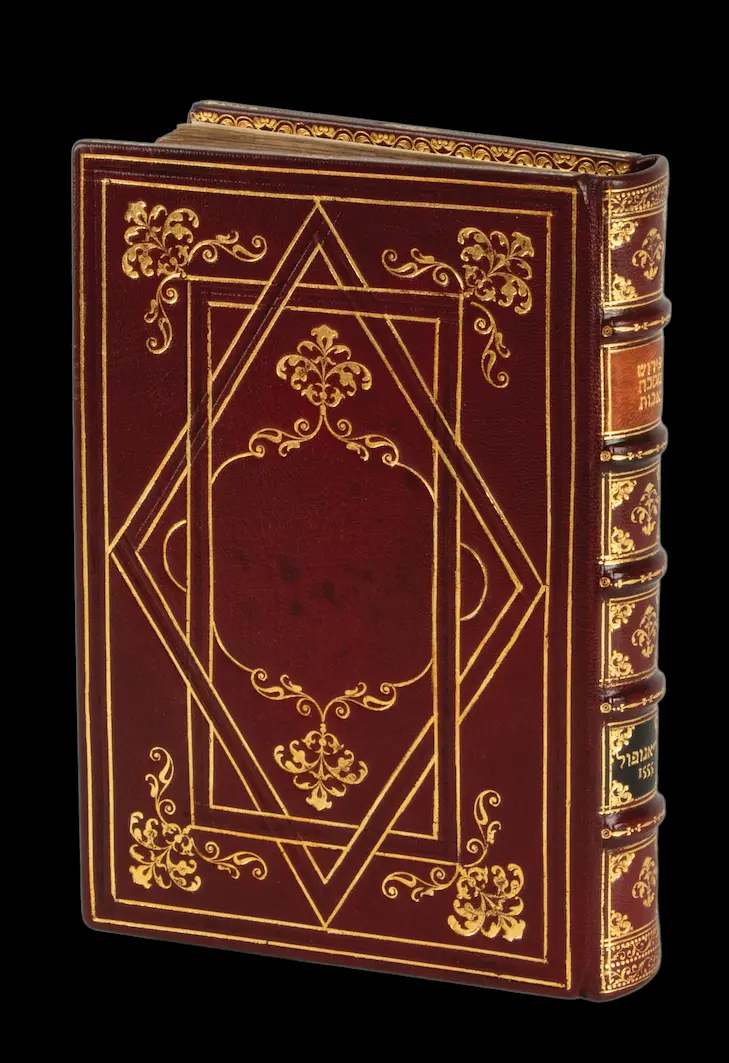
Chassid Yaabetz’s Commentary on Maseches Avos. Adrianople, 1555 This commentary authored by the Chassid Rabbi Yosef Yaabetz is one of the important commentaries on Maseches Avos. It was printed in the Adrianople Press in Turkey in 1555! Rare Print Adrianople, present day Edirne, in Turkey was a city replete with Talmudic scholars, and it was actually there that Rabbi Yosef Karo commenced the writing of the Beis Yosef. A Hebrew press was there in the 16th century, but only four sefarim were ever printed there. This commentary was one of those sefarim. Rabbi Yosef Yaabetz (d. 1508) was venerated as one of the foremost Torah luminaries and spiritual leaders of Spanish Jewry during the era of the Expulsion. He was highly regarded by his contemporary Gedolim and earned the distinguished title “HaChassid Yaabetz”. Rabbi Yosef was born in Lisbon, Portugal where he was a student of Rabbi Yitzchak Abarbanel. He married the sister of Rabbi Yitzchak Arama, and following the cruel expulsion of Jews from his native land, immigrated to Italy. His sefarim were lauded by Gedolim from all sectors, including Chassidic masters. The Admor Rabbi Tzvi Elimelech of Dinov, author of Bnei Yissachar, authored a commentary on three of Chassid Yaabetz’s sefarim. Adrianople, 1555. First Edition. Page Count: [96] leaves. Page Size: 21 cm. Condition: Title page and following two leaves lightly restored on margins; several leaves stained, but otherwise in good condition. Ornate new leather binding with case. Bibliography: Stefansky, Sifrei Yesod. New Edition, 2024 p. 43 ....................................... Any inquiries about this lot ? We are available also on WhatsApp >>>
Lot : 107

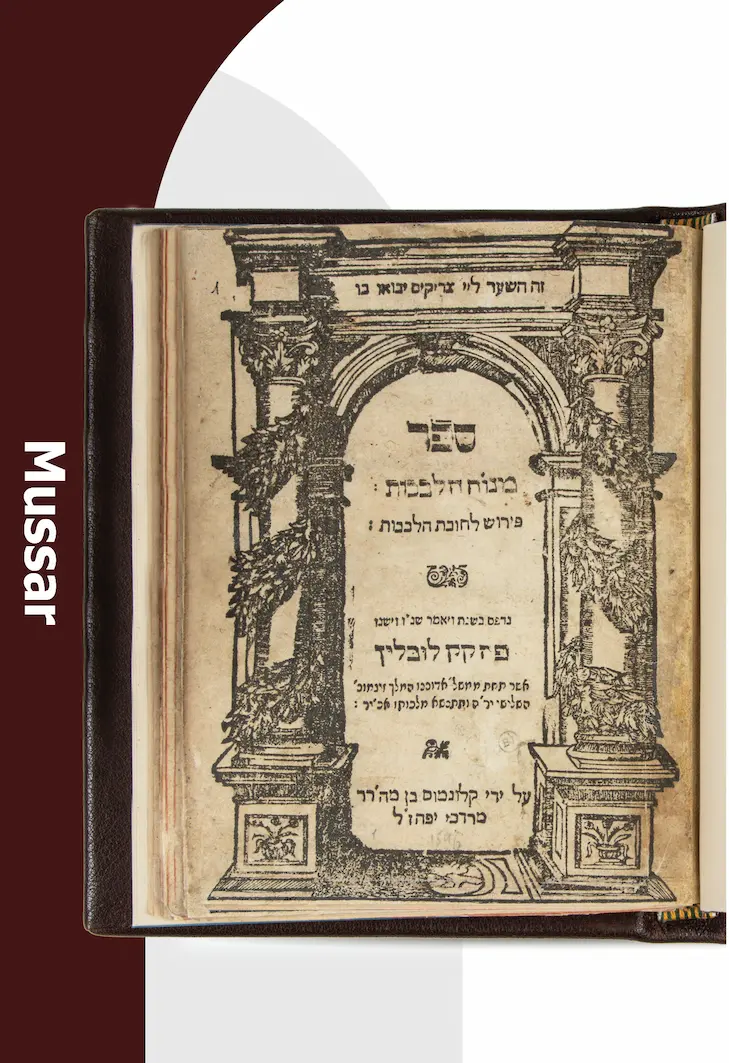
Manoach Halevavos. First Edition. Lublin, 1596 first commentary on sefer Chovos Halevavos
Manoach Halevavos. First Edition. Lublin, 1596 first commentary on sefer Chovos Halevavos This is the first commentary on the sefer Chovos Halevavos by Rabbeinu Bachya, autherd by Rabbi Hendel Manoach ben Shmarya, also known from his renowned work Chochmas Manoach which is printed in the Vilna Shas. The sefer Chovos Halevavos is among the first and most prominent sifrei mussar authored throughout Jewish history. It was translated from Arabic into lashon hakodesh, in a concise form making it difficult for many to understand. Rabbi Manoach authored a comprehensive commentary on the sefer in order for it to be easily understood.. This commentary was enthusiastically received and printed in numerous editions due to its popularity. An original first edition as the present sefer is exceedingly rare. Rabbi Hendel Manoach ben Rabbi Shmarya (circa 1540-1612) was one of the great Polish Rabbis of his era. He was a prolific author who authored numerous sefarim and responded teshuvos along with the great Achronim of his times; his signature appears alongside other Torah luminaries as the Maharam of Lublin and Maharsha. In his latter years, he was involved together with his colleague Rabbi Yehoshua Falk Katz (the Sm”a) in arranging the divorce of a woman from her husband who had become an apostate. The episode, which later gained notoriety as the “Get of Vienna”, stirred great controversy among the Jewish world, although the majority of Gedolim sided with Rabbi Manoach. While he authored many sefarim, only a handful were printed. His sefer Chochmas Manoach also appears in this Catalog see lot # ? . Lublin, 1596. First Edition. Page Count: 45, [1] leaf. Page Size: 18 cm. Condition: Last page and corners of leaves restored. Attractive new leather binding. Bibliography: Stefansky, Sifrei Yesod #458, notes. For more information regarding the author and his works, see Dmuyot V’Eiru’im HIstoriim p. 11-27/ Yeshurun, Vol. 17 pp. 792-799/ ....................................... Any inquiries about this lot ? We are available also on WhatsApp >>>

Lot : 108

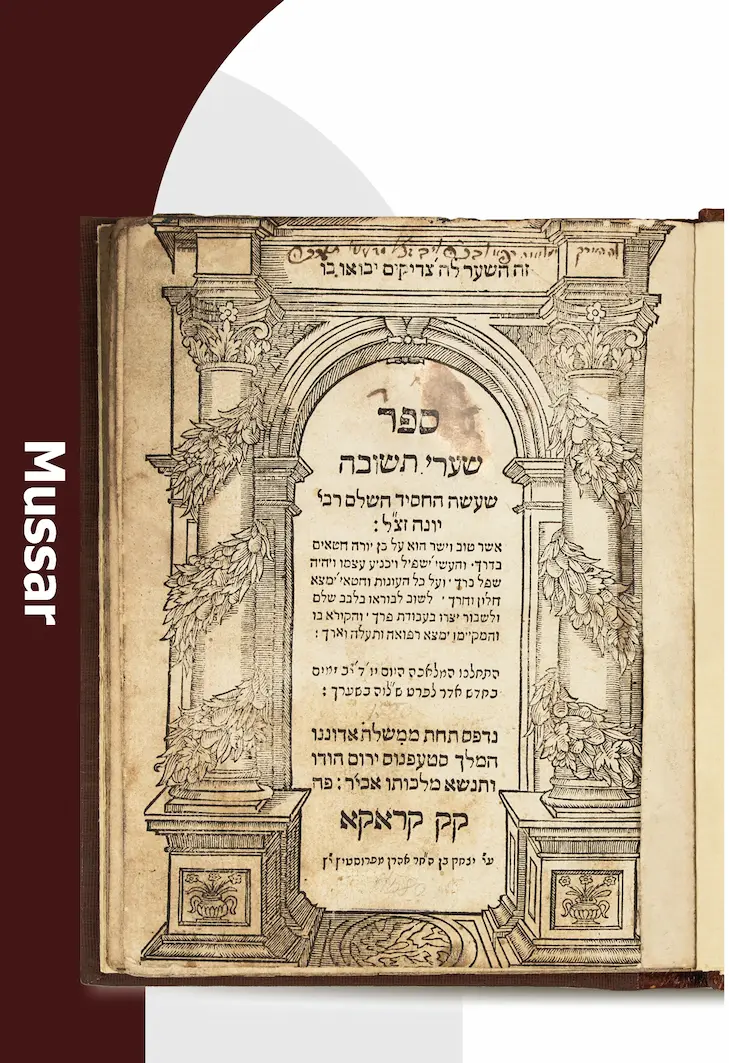
Fundamental Mussar. Shaarei Teshuvah by Rabbeinu Yonah. Cracow, 1581 Shaarei Teshuvah by
Fundamental Mussar. Shaarei Teshuvah by Rabbeinu Yonah. Cracow, 1581 Shaarei Teshuvah by Rabbeinu Yonah of Gerona is the most foundational sefer of mussar and Torah ethics. Sefer Shaarei Teshuvah is the premier work written on the subject of Teshuvah, and it has been described as the “Shulchan Aruch for the laws of repentance.” Rabbeinu Yonah of Gerona (d. 1263) author of Shaarei Teshuvah. As a prominent Rishon, he was renowned for his extreme piety and holiness which earned him the distinguished titles “the Chassid Rabbeinu Yonah” and “Rabbeinu Yonah Hakadosh.” He was the Rabbi of both the Rashba and Rabbi Aharon Halevi, and was both a cousin and mechutan of the Ramban. This sefer includes Sefer Hayirah by Rabbeinu Yonah, which is also regarded as a fundamental work and includes several significant halachic issues that are frequently cited by later Rabbinical authorities. Cracow, 1581. Previous editions were printed in Italy and Turkey; this is the first which was printed in Ashkenaz Page Count: 44 leaves. Page Size: 18 cm. Condition: Top margins cropped; title cropped on several pages. Plain cloth binding. ................................................ Any inquiries about this lot ? We are available also on WhatsApp >>>
Lot : 109

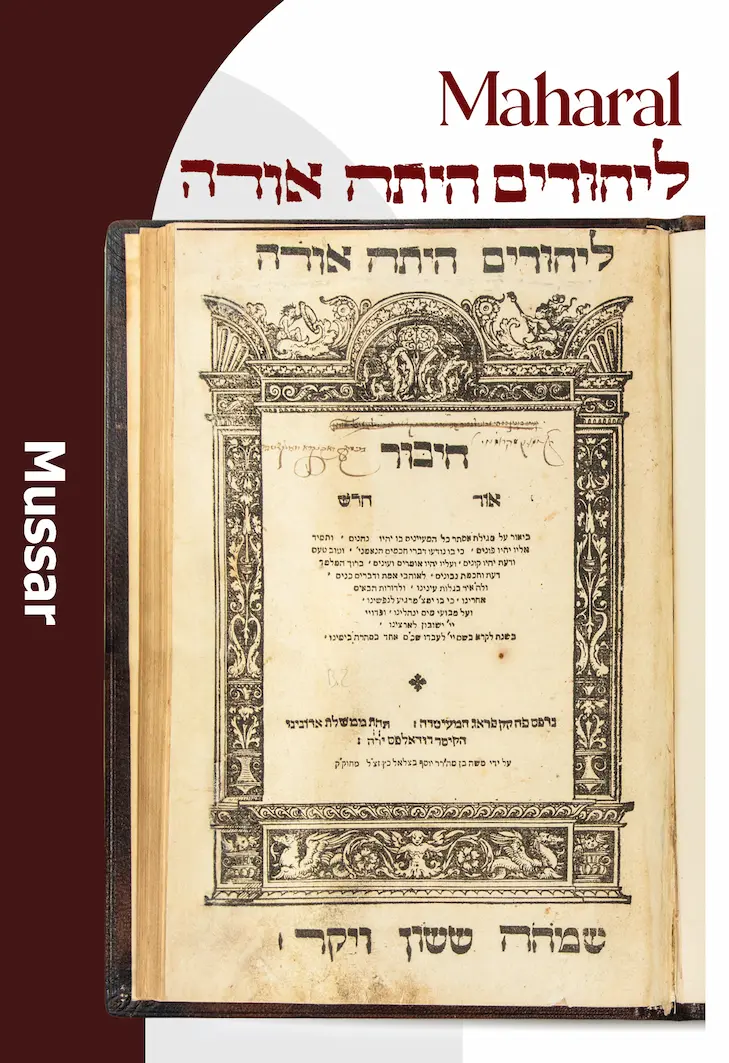
The Maharal on Purim and Chanukah Ohr Chadash by the Maharal of
The Maharal on Purim and Chanukah Ohr Chadash by the Maharal of Prague. First Edition. Prague, 1600 Ohr Chadash – Commentary on Megillas Esther and essays on the miracle of Purim. Ner Mitzvah – Essay on the miracle of Chanukah. The present sefer is the first edition of Ohr Chadash by the great luminary Rabbi Yehudah Loew, the Maharal of Prague; it was self-published. Rabbi Yehudah Loew (c.1512-1609), the Maharal of Prague, was one of the greatest Jewish sages; a prolific author whose deep philosophical works on all realms of Torah are fundamental Jewish classics. He was described as “Crown of the sages and leader of his generation; all the nations followed his light, and his teachings were celebrated by Jews throughout the Diaspora”  (Tzemach Dovid by Rabbi  Dovid Ganz [Prague, 1592]); “He engaged in the Divine spirit” (Rabbi Naftali Katz, his grandson and author of Semichas Chachamim in Shu”t Chacham Tzvi Ch. 76); “He is as strong as an iron pillar; the nation of Yisrael relies on him” (Shu”t Geonei Basrai Ch. 10 by the Tosfos Yom Tov). The works of the Maharal were regarded as an innovative path in Jewish philosophy and gained immediate acclaim throughout the nation. They are considered to be fundamental Jewish works in hashkafah, emunah and commentary on Aggados Chazal. The Maharal was revered by all sectors, including the early Chassidic masters who compared his teachings to those of the greatest kabbalists. Prague, 1600. First edition. Page Count: 60 leaves. Page size: 27.5 cm. Condition: Good. Margins of title page and following page restored. Slight damage to title page border. Title page surrounded by ornamental border. New leather binding. The title page bears the autograph of the tzaddik Rabbi Shimon Kromonoy Oppenheim (1753-1851), a talmid of the Noda B’Yehudah. Rabbi Shimon served for close to fifty years as a dayan and Raavad in Budapest and authored Har Hacarmel and other sefarim. Following the instructions that he left in his last will, the following inscription was engraved upon his tombstone: “I beseech those who visit graves and who wish to linger here at my grave to pray. If, chas veshalom, hardship shall befall them, they should pray at my graveside and give [charity] to elevate my soul, and the Master of Mercy shall hear their cries. Amen.” Until this very day, Rabbi Shimon Kromonoy Oppenheim’s tombstone is a popular pilgrimage site for those seeking salvation, and his grave is perpetually covered with stones and kvittels. ................................................ Any inquiries about this lot ? We are available also on WhatsApp >>>

Lot : 110

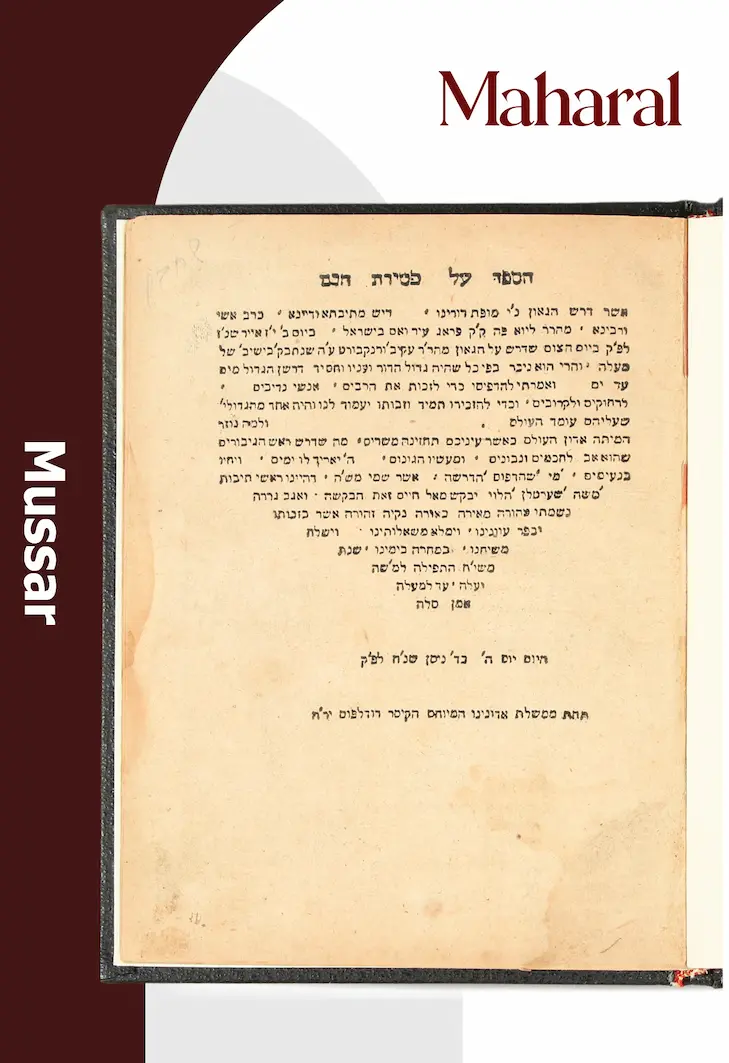
Brought to Print Personally by the Maharal of Prague! The Maharal’s Hesped
Brought to Print Personally by the Maharal of Prague! The Maharal’s Hesped on the Tzaddik Rabbi Akiva of Frankfurt. Prague, 1598 Hesped given by the Maharal of Prague for the tzaddik and chassid Rabbi Akiva Frankfurter. This work was brought to print by the Maharal himself. Whenever faced with trial or tribulation, the Chasam Sofer would donate tzedakah l’iluy nishmas Rabbi Akiva Frankfurter, and his descendants follow this custom until this very day (see Chut Hameshulash p. 170, and Tomer Devorah printed at the end of Minhagei Baal Chasam Sofer p. 158 [photo attached]). Rabbi Akiva (Ginzburg) of Frankfurt (d. 1597) was one of the great Rabbanim of 16th century Germany and renowned for his enthralling lectures and mussar. He was an ancestor of Rabbi Akiva Eiger (see copy of family lineage). Rabbi Akiva Frankfurter’s contemporary, the author of Tzemach Dovid, writes that the former was recalled to the heavenly yeshivah in the year “Shem Tov” which has the numerical equivalent of 5397 (1597), “and from him all the tzedakah funds benefiting the poor of Eretz Yisrael were established”. Testimony to his greatness is evident from the fact that the Maharal not only delivered a eulogy for him, he also undertook the publication of it as well. Prague, 1598. First edition. Extremely rare! Page Count: [7] leaves. Page Size: 8 cm. Condition: Good with water marks at margins. New binding. Genazym 2020 ....................................... Any inquiries about this lot ? We are available also on WhatsApp >>>
Lot : 111

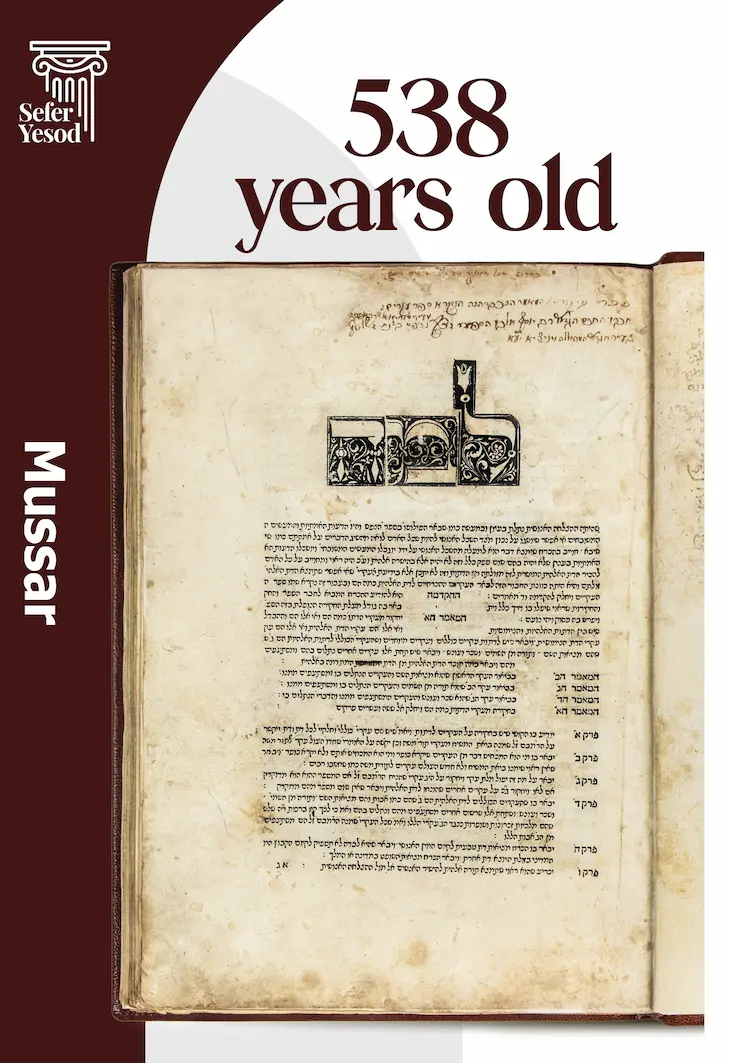
Sefer Yesod Incunable! The principles of faith.  Sefer Ikrim. Soncino, 1486 Complete
Sefer Yesod Incunable! The principles of faith.  Sefer Ikrim. Soncino, 1486 Complete with wide margins. Fundamentals of Jewish faith and principles of emunah by 15th century Spanish scholar Rabbi Yosef Albo. Good copy, complete with the rare pages that were mostly removed by the censor (see below) from most copies. Leaves 56-58 (Kuntress 8, leaves 2-4) contain material with strong arguments criticizing Christian thought and philosophy and were thus torn out of the majority of copies by the censors. The present sefer is complete and includes these leaves in their entirety. The book opens with an introduction by Reb Yisroel Nathan Soncino, renowned as the Mechokek, who was the father of Jewish printing (as described by Gershom Soncino in the subsequent Rimini edition of this sefer (Rimini, 1528). This first edition Sefer Ha’Ikrim was printed in a single column in block letters with headers and bookmarks. The opening words of the introduction and beginning of the book are decorated. The end of the sefer features a fascinating colophon that reads: “…It was completed here in Soncino in the country of Lombard under the government of…the Duke of Milan…on the twenty-first day of the month of Teves Year 5246 to the creation of the world…For Torah will emerge from Zion and the word of Hashem from Soncino.” Rabbi Yosef Albo (circa 1380–1444) was a Spanish Rabbi, scholar and philosopher who was a disciple of Rabbi Chasdai Crescas, talmid of the Ran and author of Ohr Hashem. Rabbi Yosef authored this sefer in response to the bitter decree of 1391 when all Jews in Spain were collectively ordered to convert to Christianity. His goal was to strengthen the spirit and faith of the Jews during these difficult times. Soncino, 1486. First edition. Soncino Sons Press. Page Count: 108 leaves. 14 booklets. Booklets 1-2: (8); Booklet 3: (6); Booklets 4-13 (8); Booklet 14: (6) leaves. Leaves 1a, 108b are blank. Page Size: 2° (29.9 cm.) Condition: Slightly stained in margins. First leaves and last leaf professionally restored at margins. 12 leaves were shorter than the others and were re-margined professionally. New leather binding. The first blank page in the beginning of the sefer features an antique deed (mostly erased) following with “the custom of the holy congregation as Tollitola” (as inscribed at the end of the deed). This draft of deed was common among deeds written during the era of the Spanish expulsion (see Shu”t Ohalei Tam, Ibn Yichya CH. 172). The page margins also boast frequent annotations and markings in old Italian handwriting. Leaf 7a features the owner’s inscription: “This reached our possession, the heirs of Mordechai Mamili z”l.” Bibliography: Stefansky, Sifrei Yesod – Incunabula #i65/ P. Tishbi, Kiryat Sefer 63, 1990-1991 pp. 615-621 #36/Yakirson, Catalog of Hebrew Incunabula from the Collection of Beit Hamedrash LaRabbanim in America #27 Eternal Treasures This sefer endured over half a millennium with all leaves intact! Fortified by the faith of thousands of Jews throughout the ages, it survived 537 years of pogroms, censors, the Inquisition, wars, persecution and public book burnings in Italy and all over the world. This sefer symbolizes the Jewish eternity Incunabula Incunabula (plural of incunable) are books, printed in Europe prior to the year 1500. The word derives from the Latin term ‘cradle’ or ‘swaddling cloth, ’ connoting the infancy of the printed word. While the incunabula actually stretches across a half-century, from 1445-1500, the first Hebrew presses opened only two decades later, and thus the period of Hebrew incunabula is reduced to a mere thirty years, from 1469-1500. The estimated number of Hebrew works printed during the incunable period is approximately two hundred. Incunabula are desirable collectibles, highly sought-after by antique Judaica collectors. The greatest libraries in the world vie for the number of incunabula in their treasured collections. ................................................ Any inquiries about this lot ? We are available also on WhatsApp >>>
Lot : 112

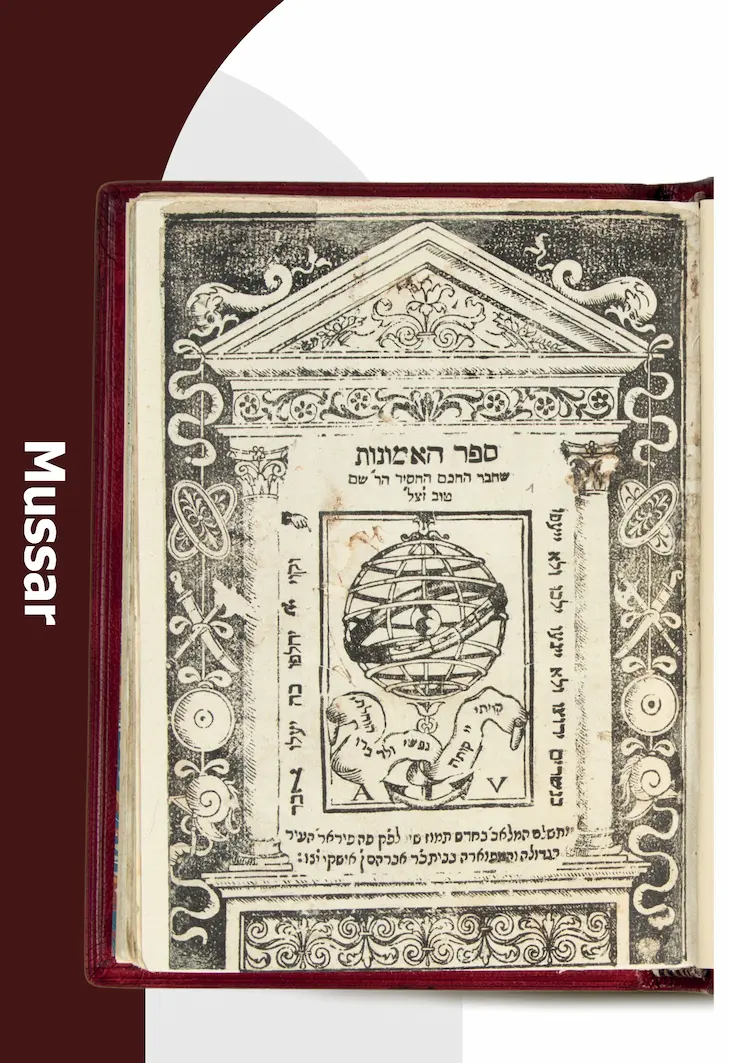
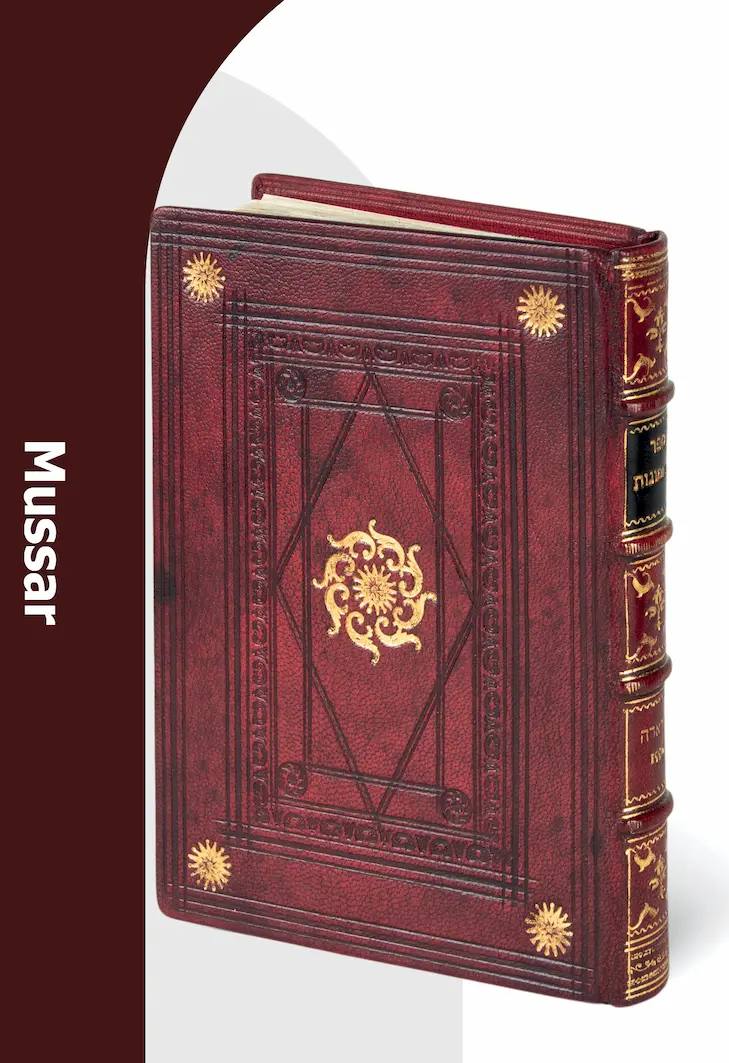
The Book of Faith First Edition. Ferrara, 1556 Rabbi Shem Tov ibn
The Book of Faith First Edition. Ferrara, 1556 Rabbi Shem Tov ibn Shem Tov’s foundational sefer on emunah. In this landmark sefer, Rabbi Shem Tov states that authentic faith must rely on what Jews refer to as “pure faith” - “emunah peshuta”, and condemns those who base their beliefs on philosophical discussion and empirical evidence. In his preface, he warns that many Jews who based their principles of faith on philosophy and evidence ultimately abandoned their faith and became heretics or apostates. The Shl”a Hakadosh writes, “The chassid Rabbi Shem Tov in his preface to his Sefer Ha’emunos was resentful of the philosophers in our nation, and he scorned them, and in his conclusion expressed, ‘When I delved into their words, a fire ignited inside me, for a malignant disease has sprouted among Bnei Yisrael, and I saw that throughout all these generations, they denied and switched [their faith] in their investigations'' (Shl”a, Maseches Shavuos Ch. Ner Mitzvah #59). Rabbi Shem Tov ibn Rabbi Shem Tov (d. 1430) was a 15th century Rosh Yeshivah and kabbalist in Spain, who was one of the foremost opponents to the study of philosophy. His son Rabbi Yosef ben Shem Tov authored the sefer Kavod Elokim (Ferrara, 1557), and his grandson Chacham Rabbi Shem Tov authored the famous commentary on the Rambam’s Moreh Nevuchim (Venice, 1551) and Drashos HaTorah (Salonika, 1525). His commentary on maseches Avos was printed in contemporary times. It is intresting to note that while the grandfather Rabbi Shem Tov was vehemently opposed to the study of philosophy, his own grandson Chacham Shem Tov authored an important commentary on the Rambam’s Moreh Nevuchim! See lot # 63 Comments of Maharam Alashkar The end of the sefer features a special 16-leaf additiont with a separate title page entitled, “Hasagos mi’Rabbi Moshe Alashkar” on this work. In his booklet, Maharam Alashkar defends the Rambam’s and refutes the author’s arguments. (excerpted from Shu”t Maharam Alashkar Ch. [Sabbionetta, 1654]. Ferrara, 1556 (Colophon states 1557). First Edition. Page Count: 117. Page Size: 118 cm. Condition: Good, with lower margin of title page slightly cropped until border. Minor restorations with no missing text. New leather binding with decorative engravings. Printer’s emblem of Avraham ben Osaki appears on both title pages and at the end of the sefer.   Bibliography: Stefansky, Sifrei Yesod, HOsafos L’Sifrei Mavhsheves Yisrael p. 142.) ....................................... Any inquiries about this lot ? We are available also on WhatsApp >>>
of 3 pages