




To attend this auction live or leave absentee bids
Lot : 6
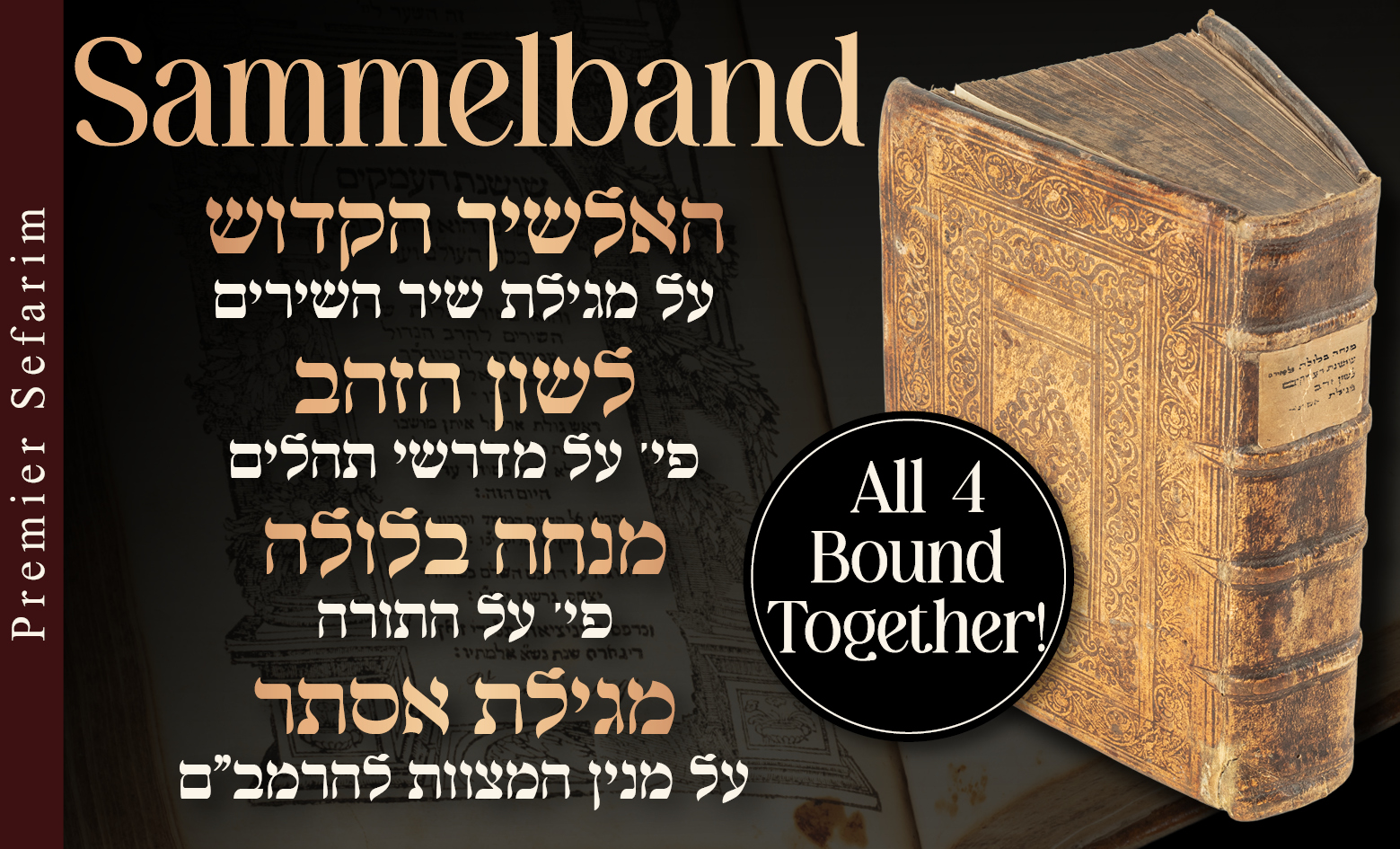
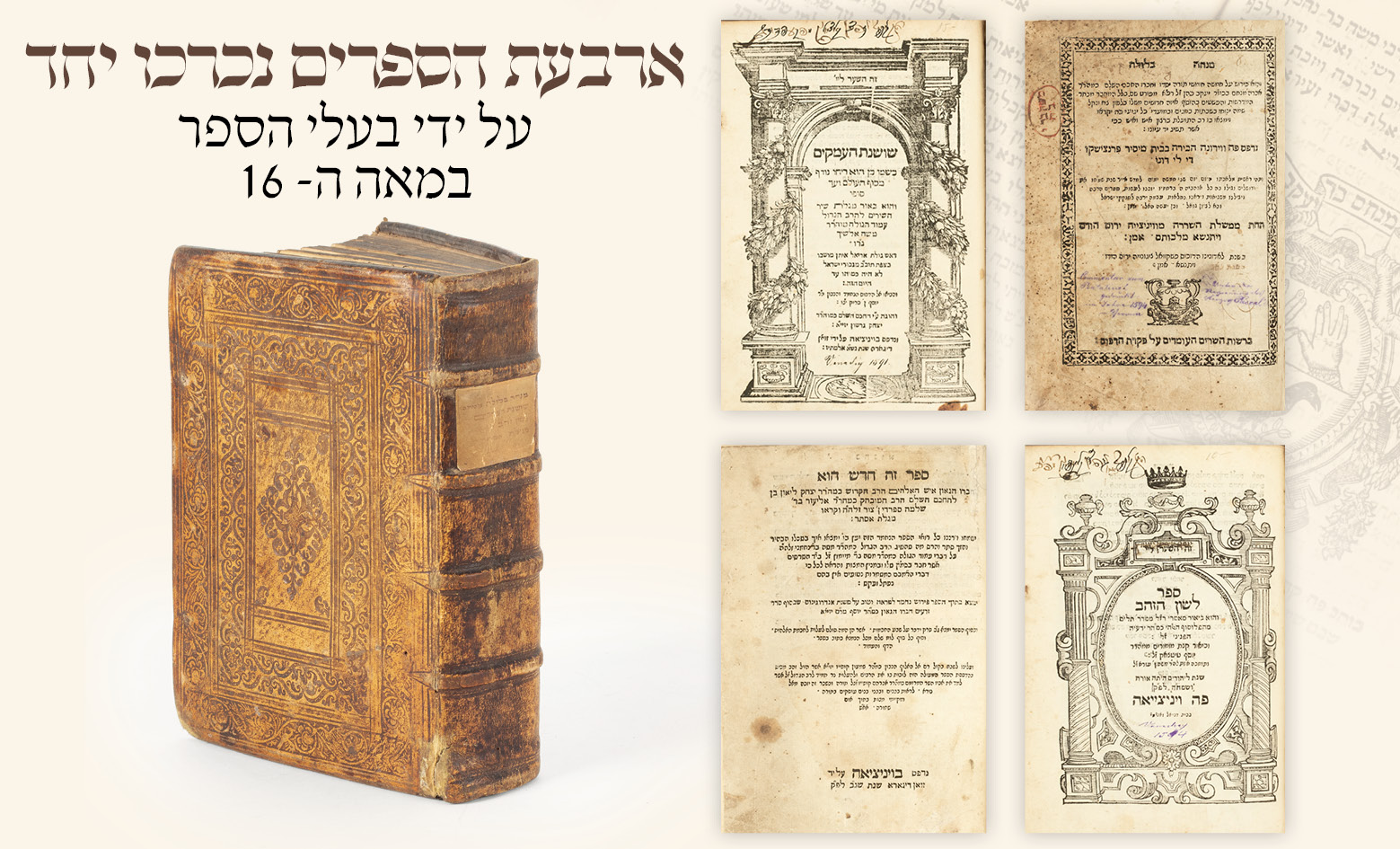
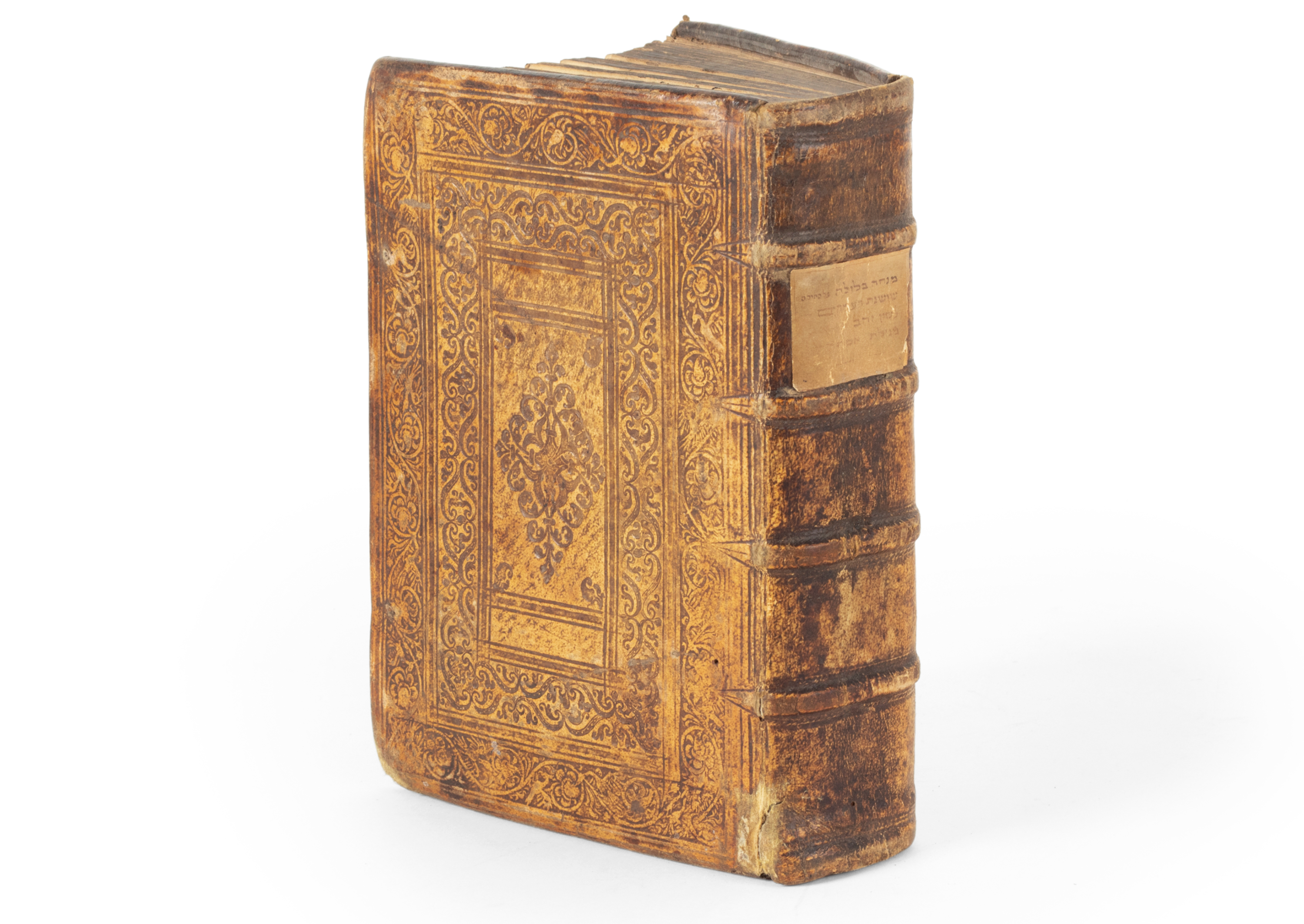
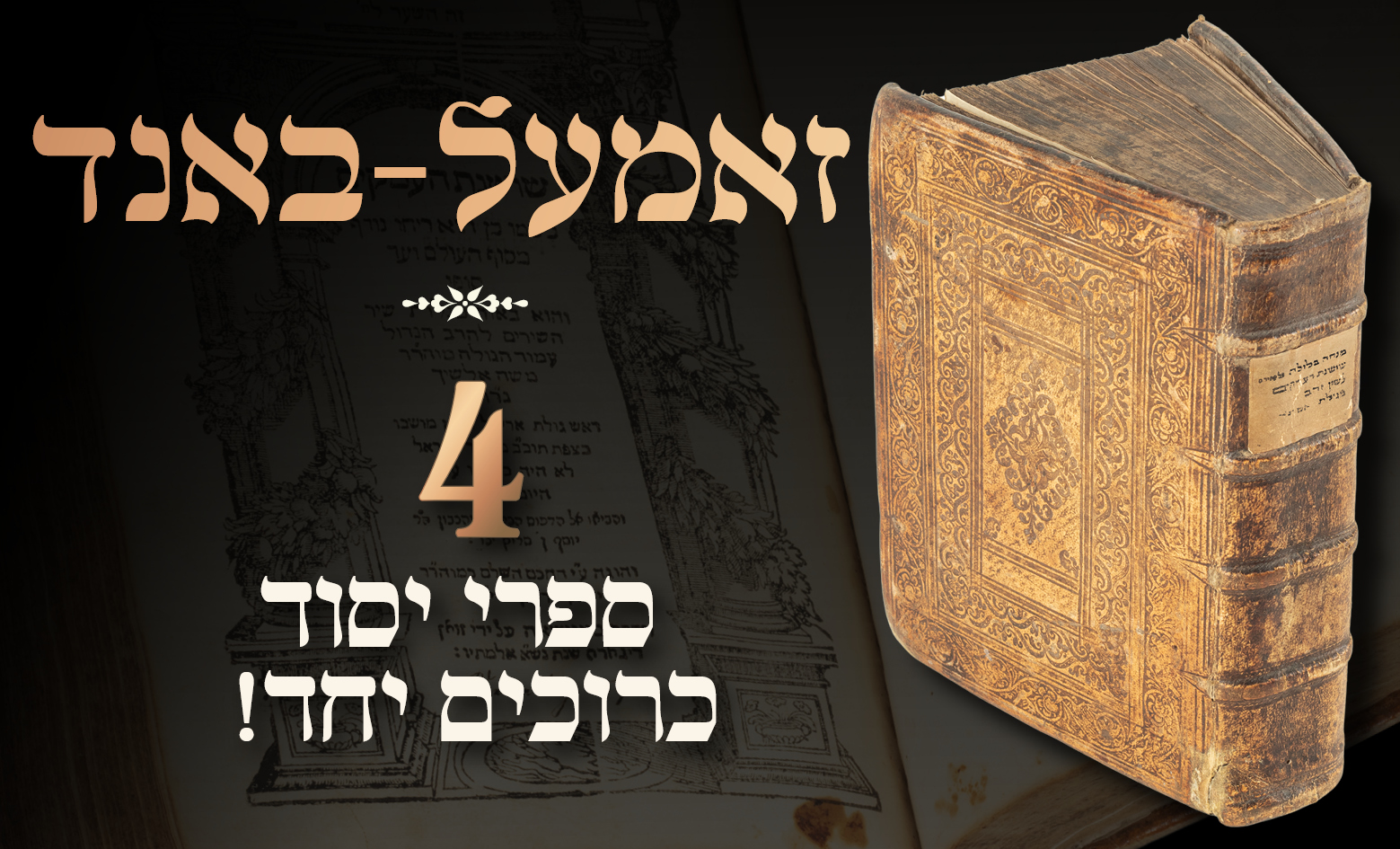
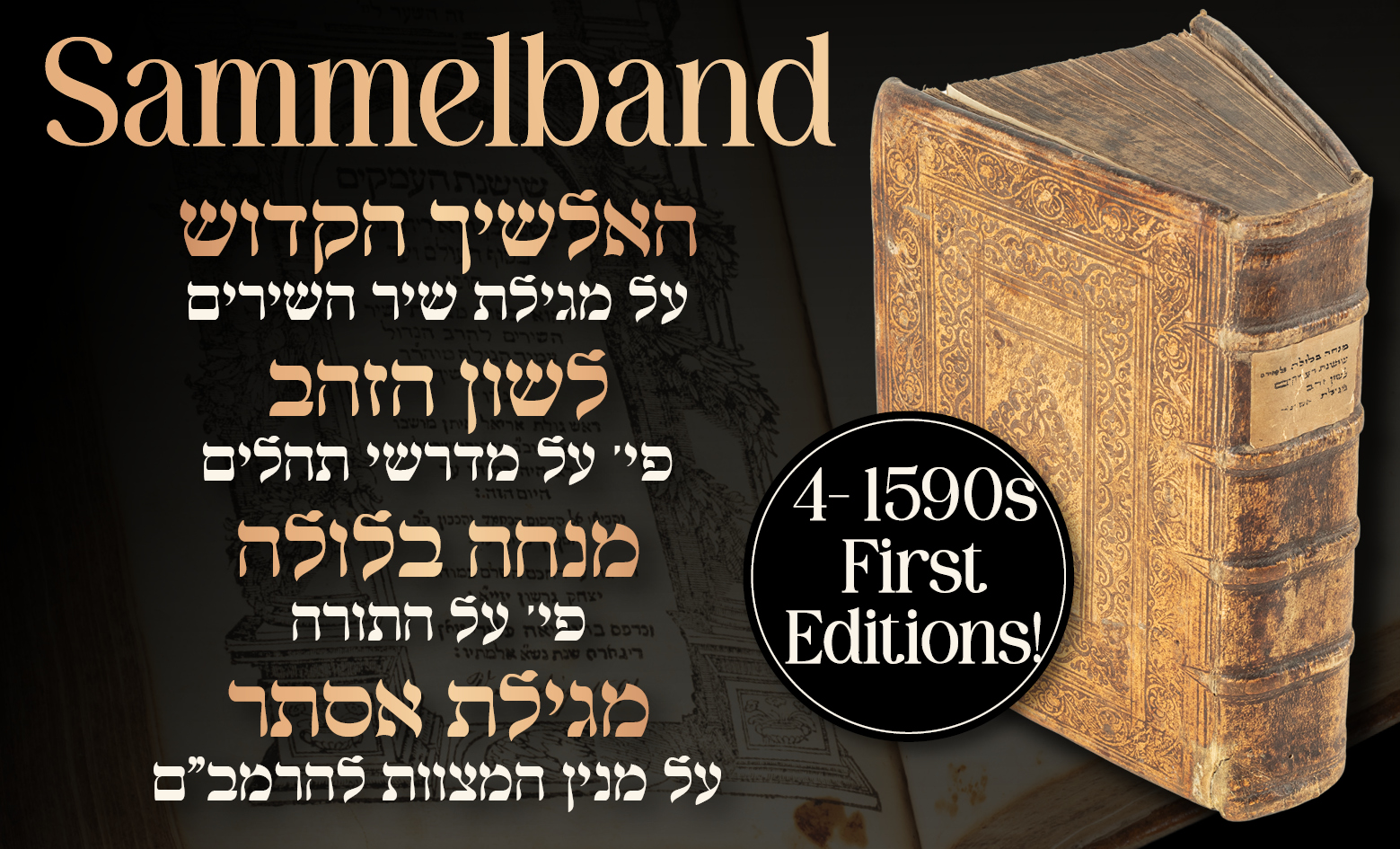
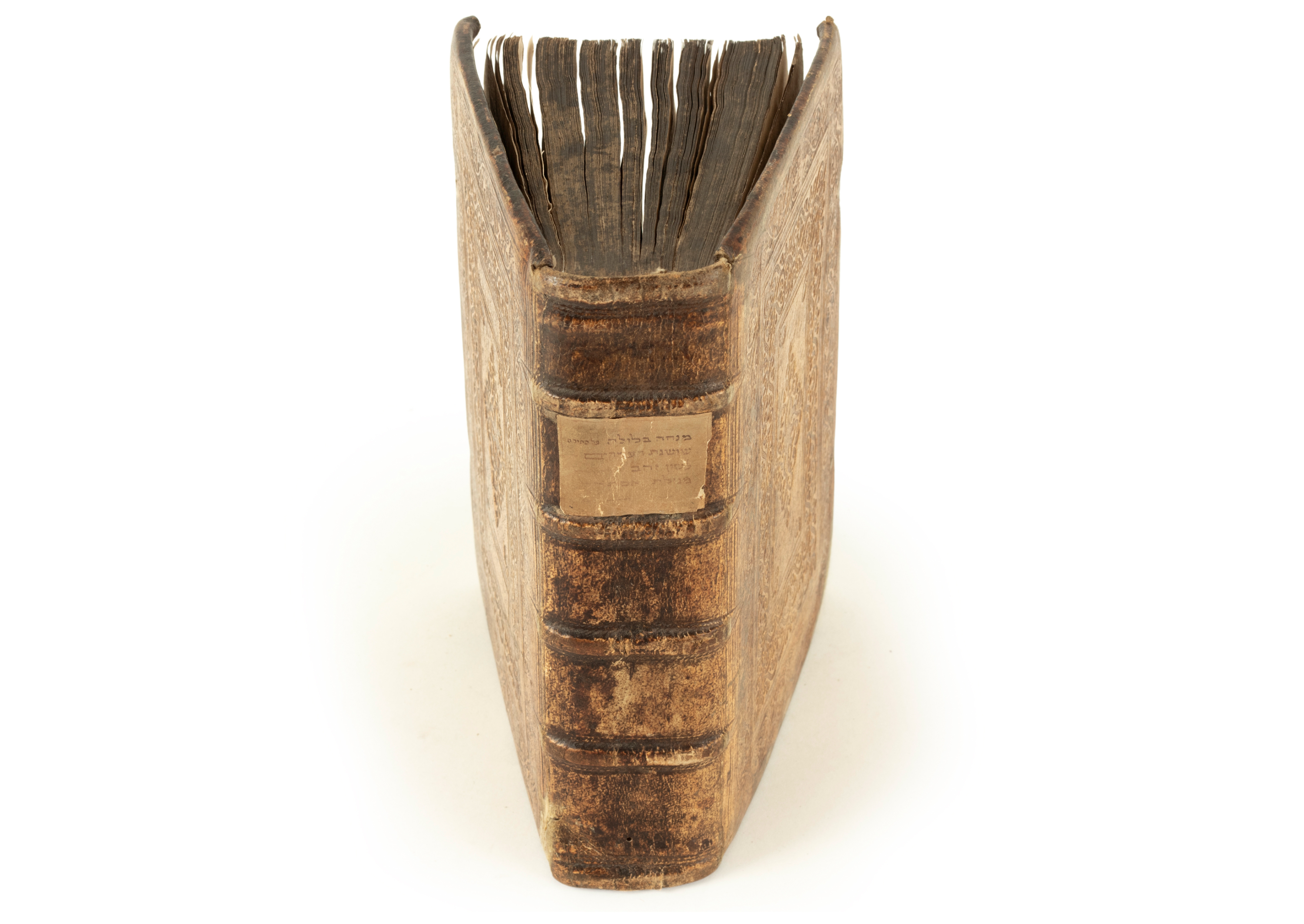
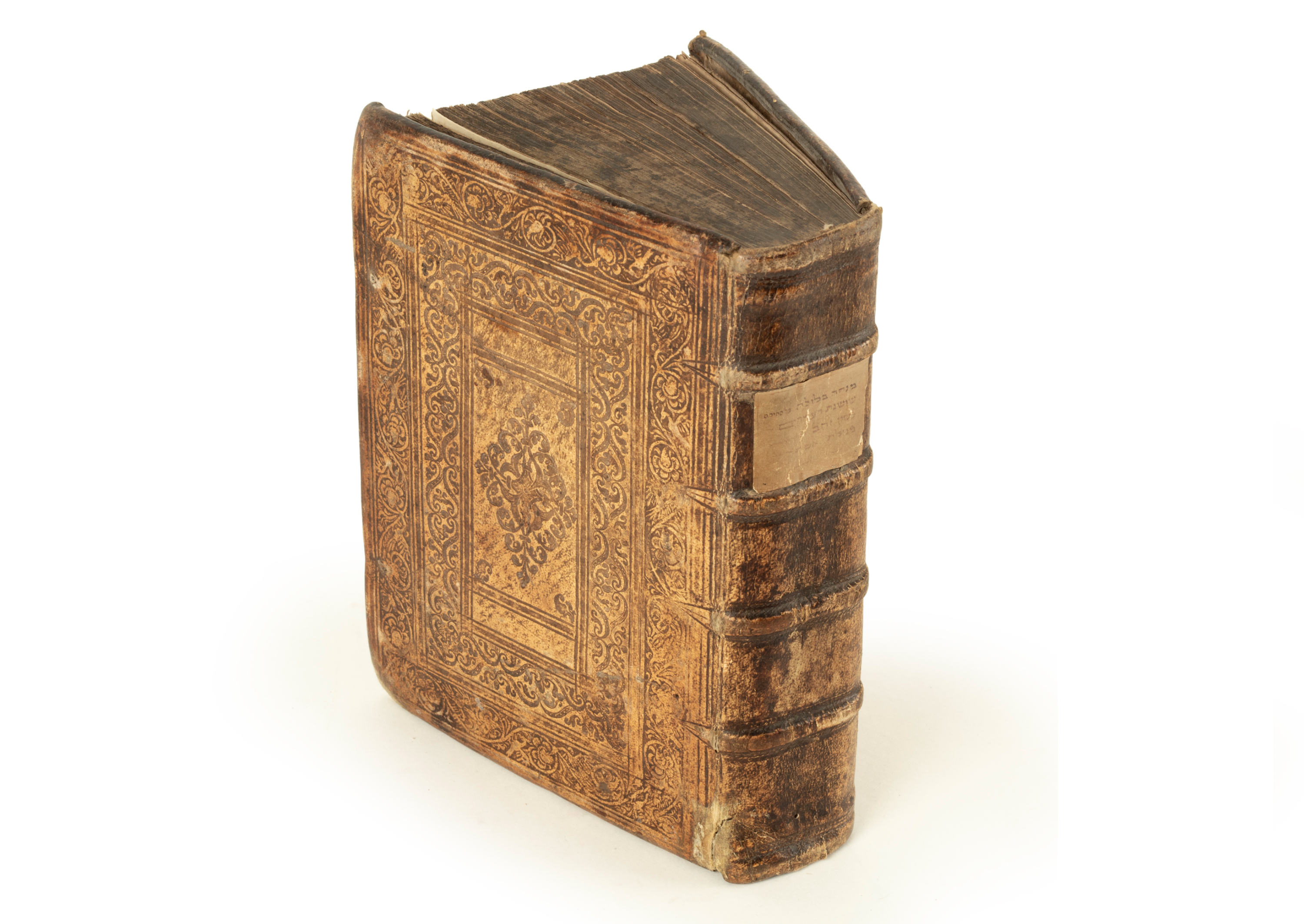
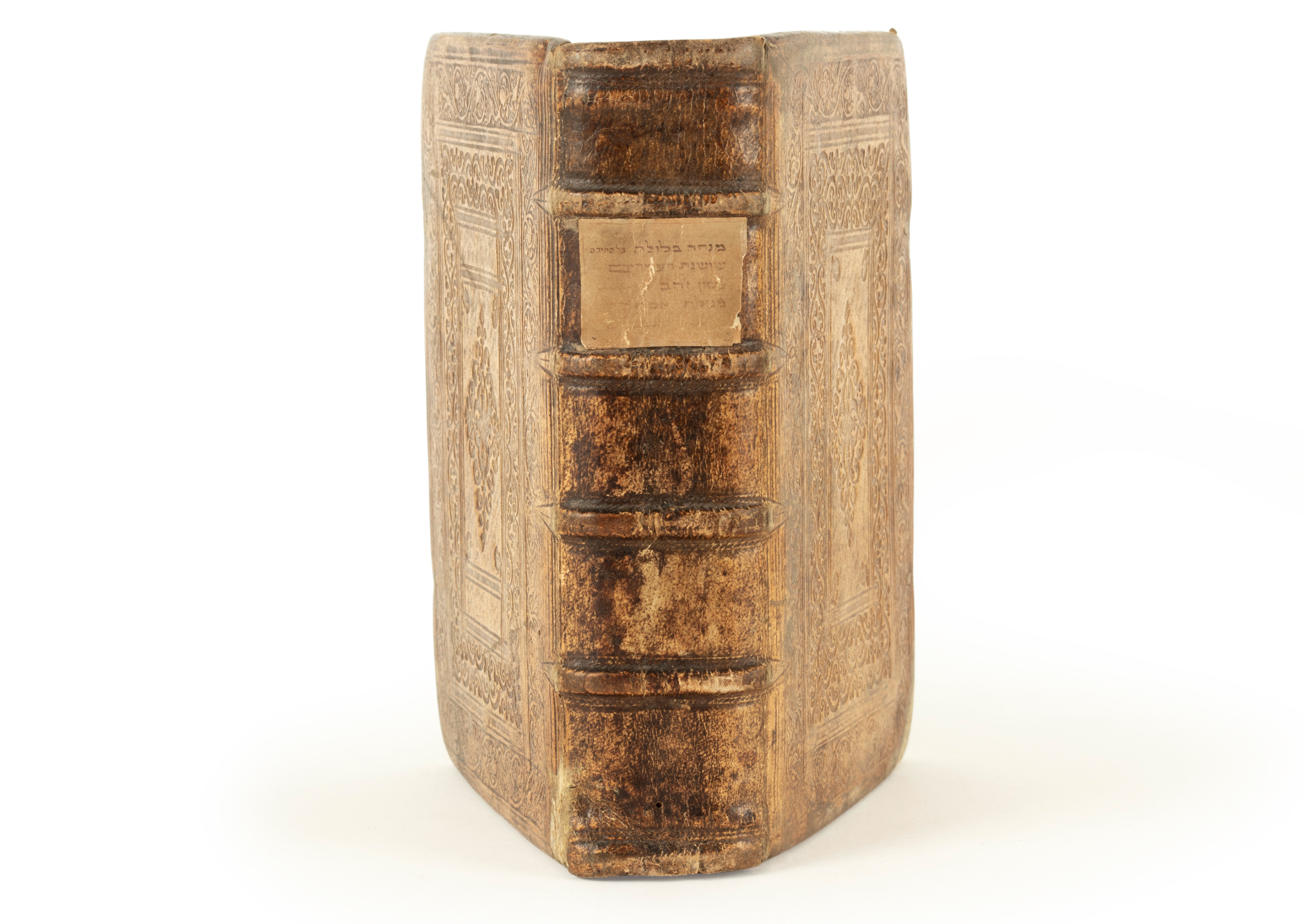
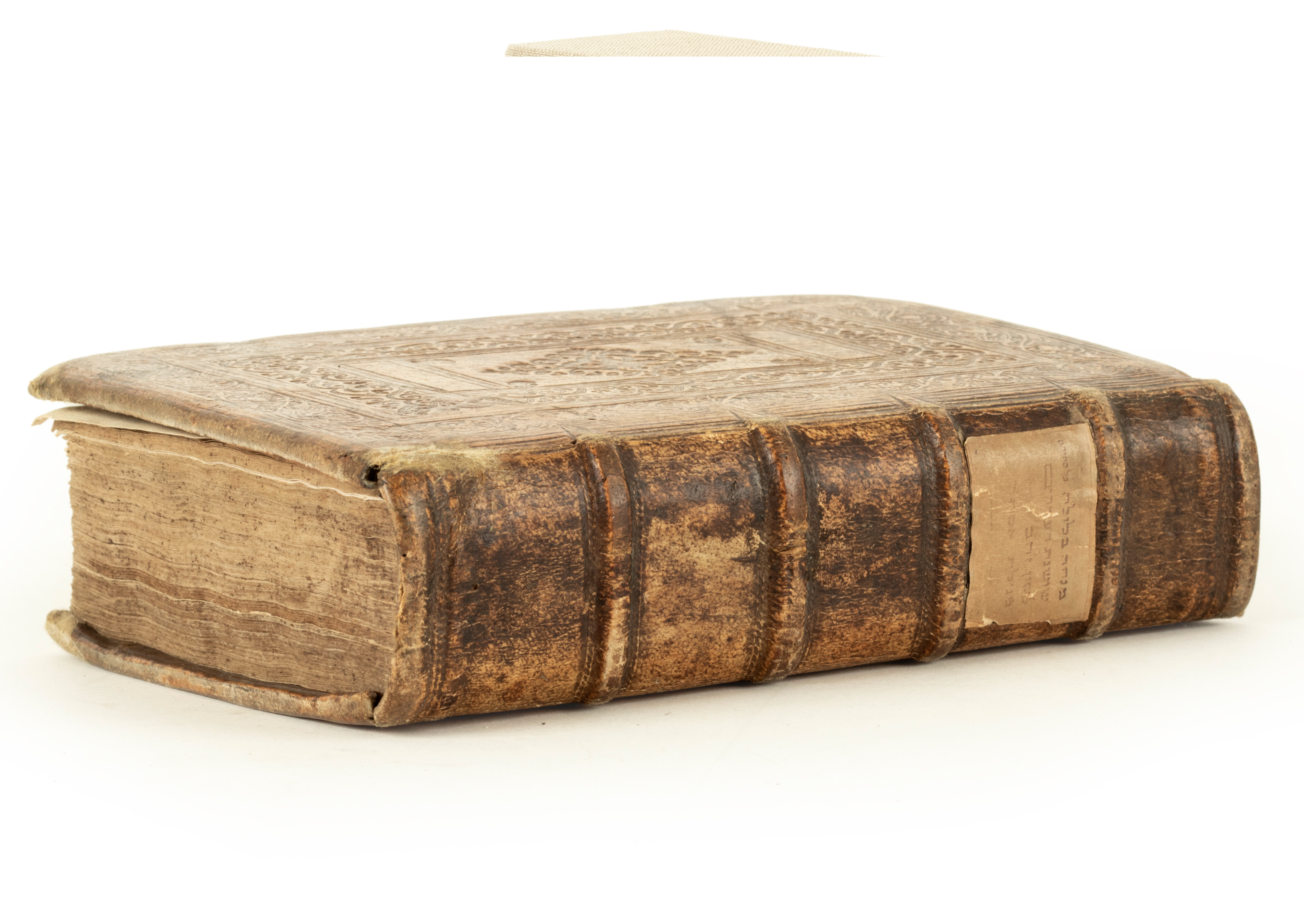
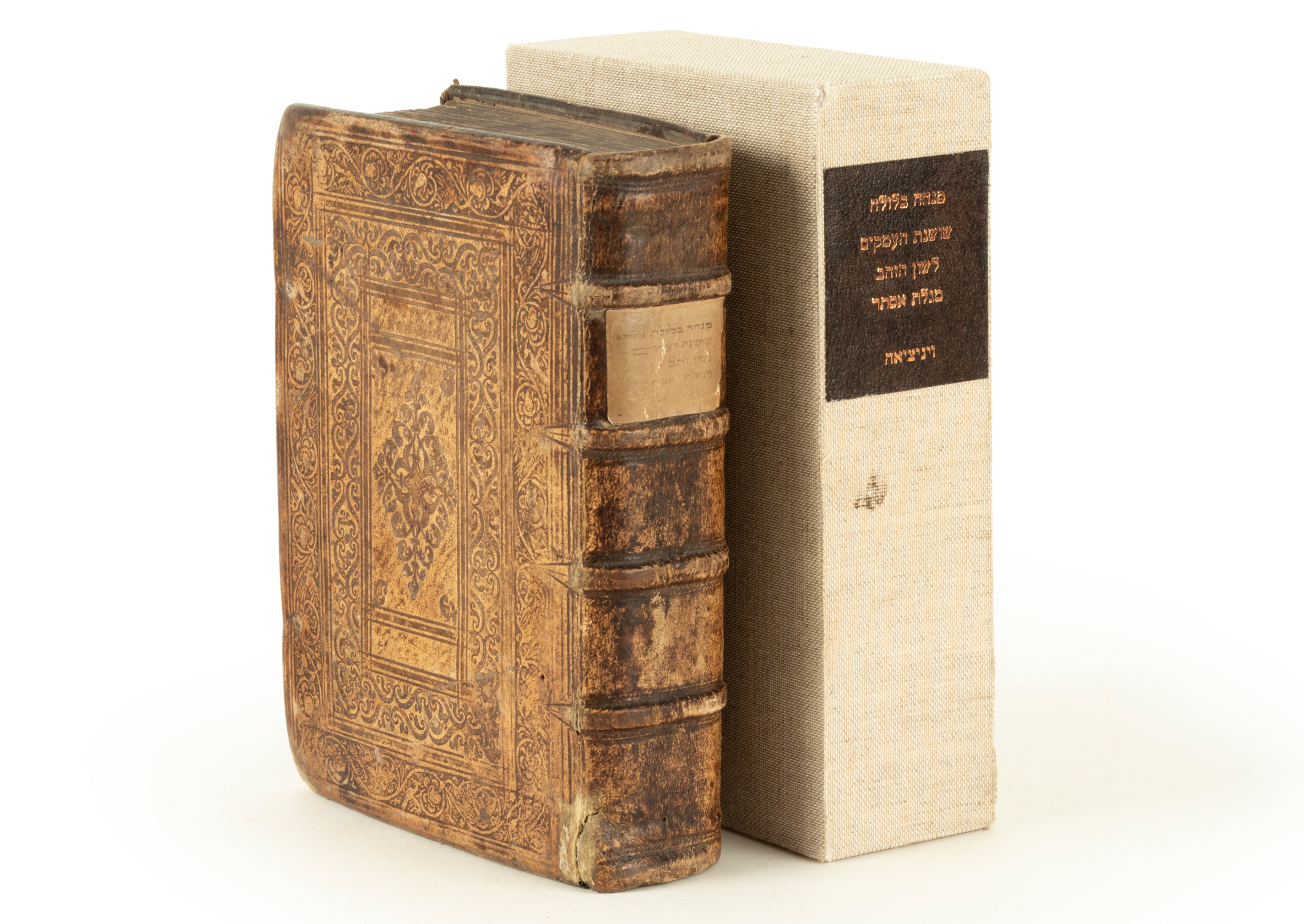
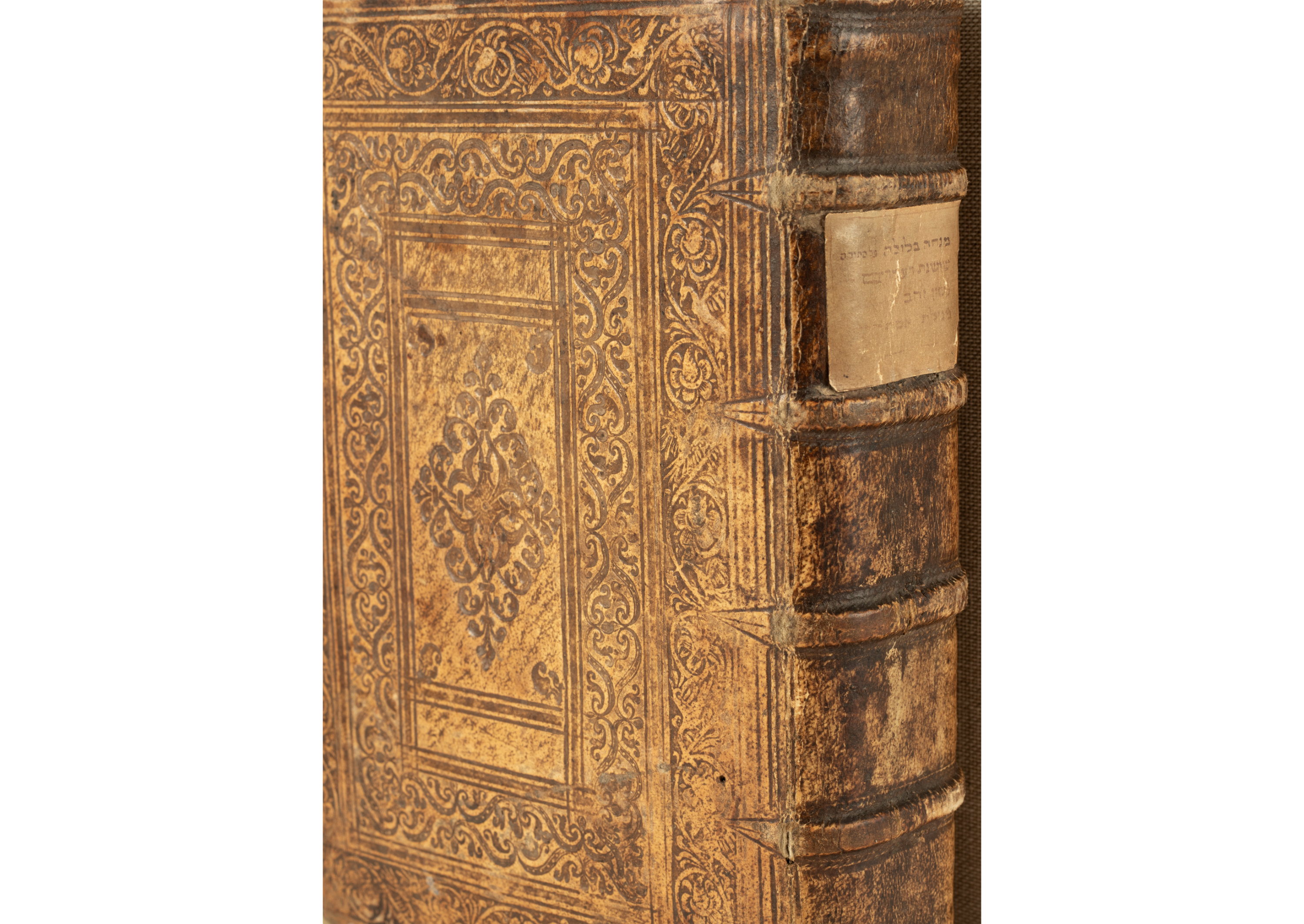
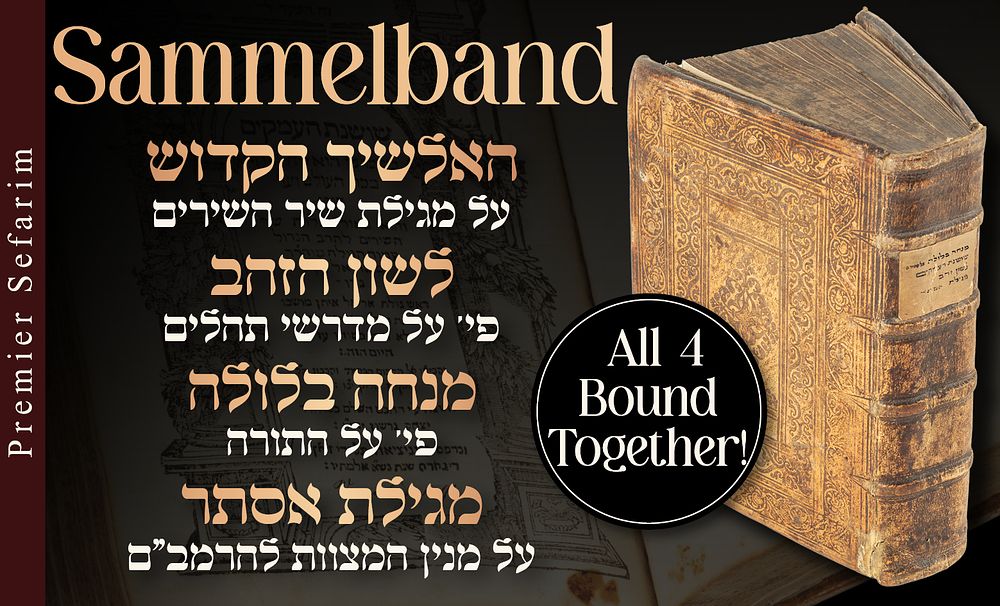
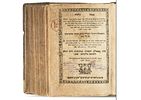
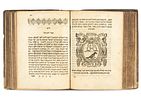
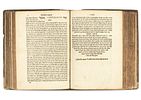
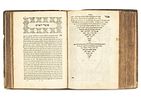
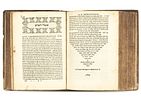
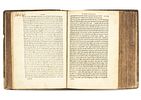
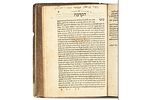
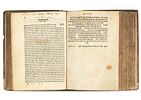
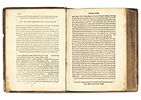
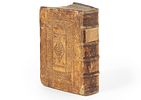
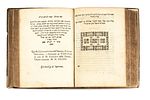
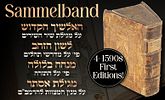
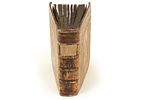
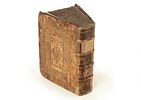
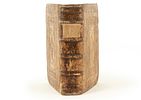
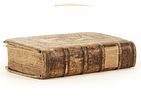
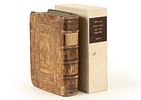
Sammelband: Four Sixteenth-Century Works Bound Together in an Original Binding. printed in Italy
Sammelband: Four Sixteenth-Century Works Bound Together in an Original Binding. printed in Italy during the 1590s, all rare first editions.
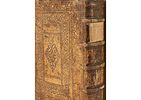
An extraordinary volume, in which the four sefarim were bound together by their owner in the sixteenth century.
“Sammelband” (see below).
The sefarim are listed according to the dates of their publication:
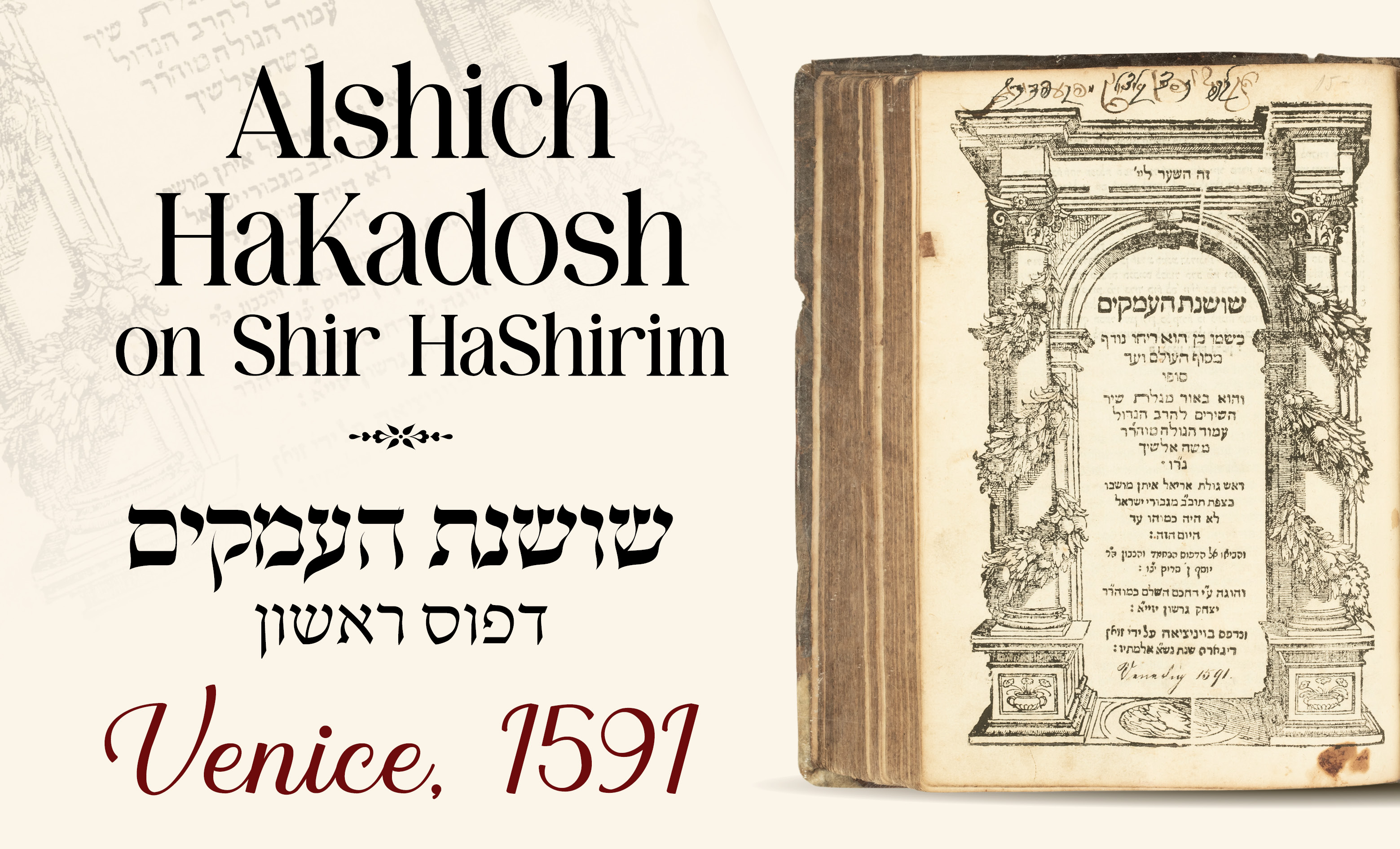
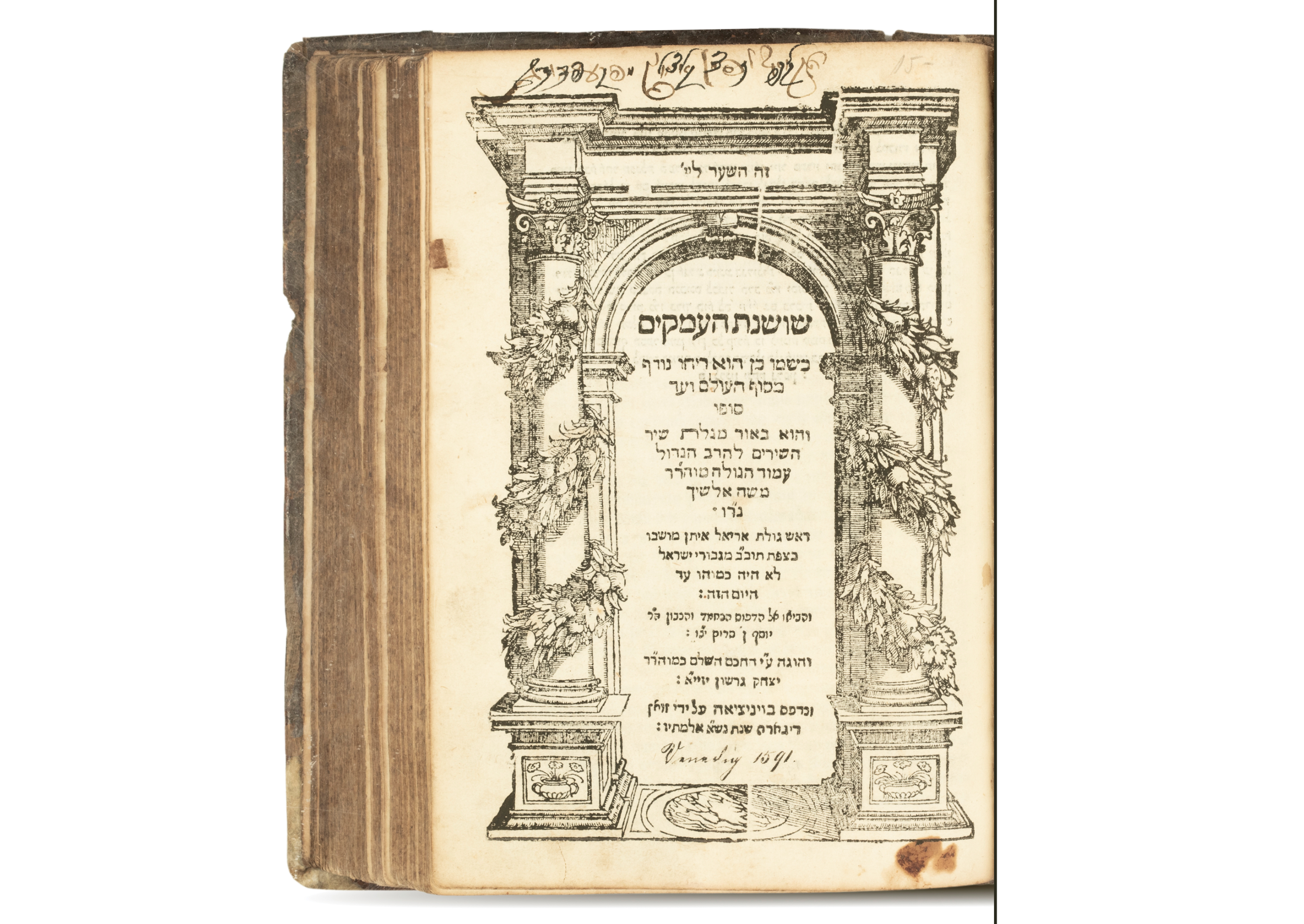
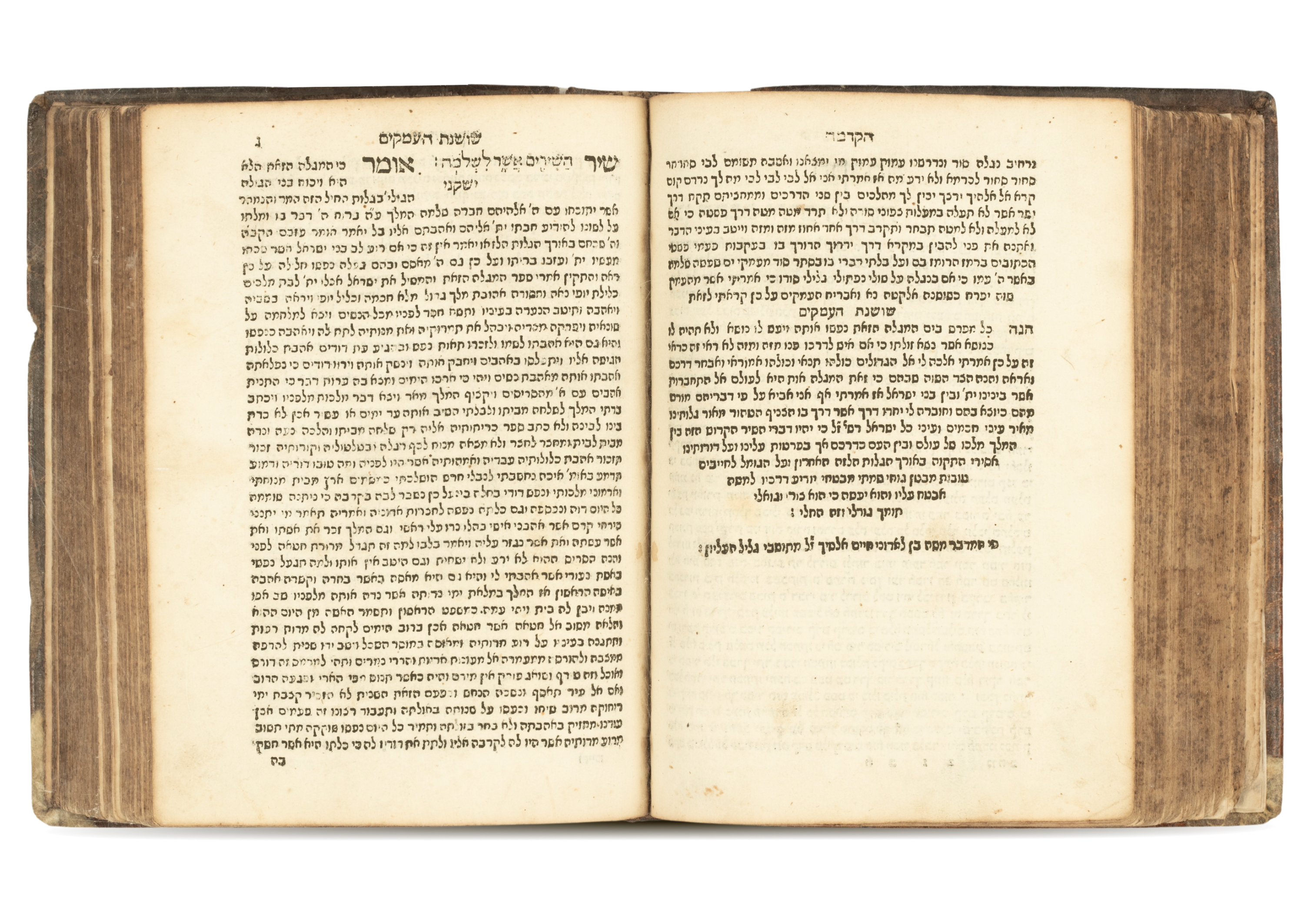
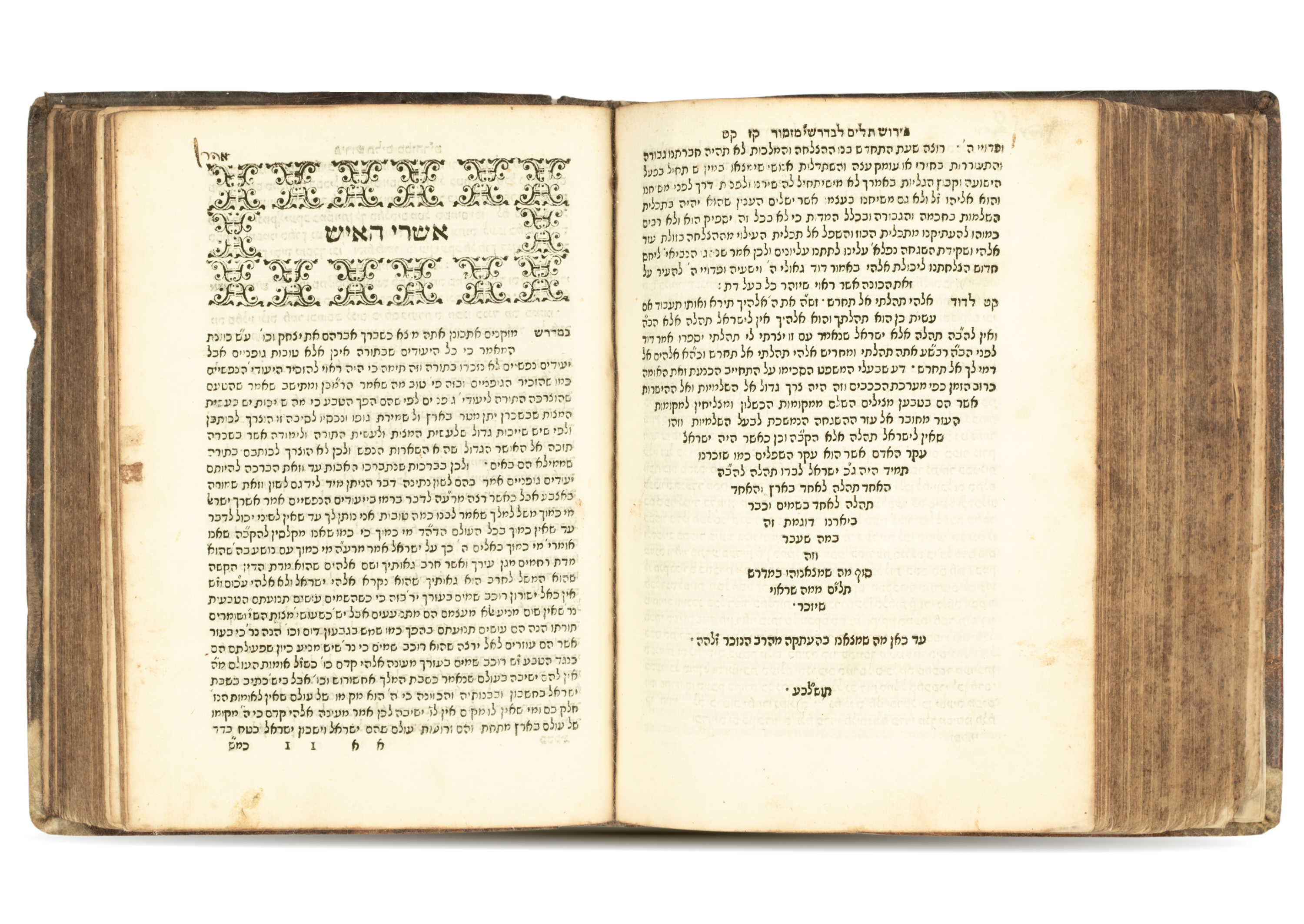
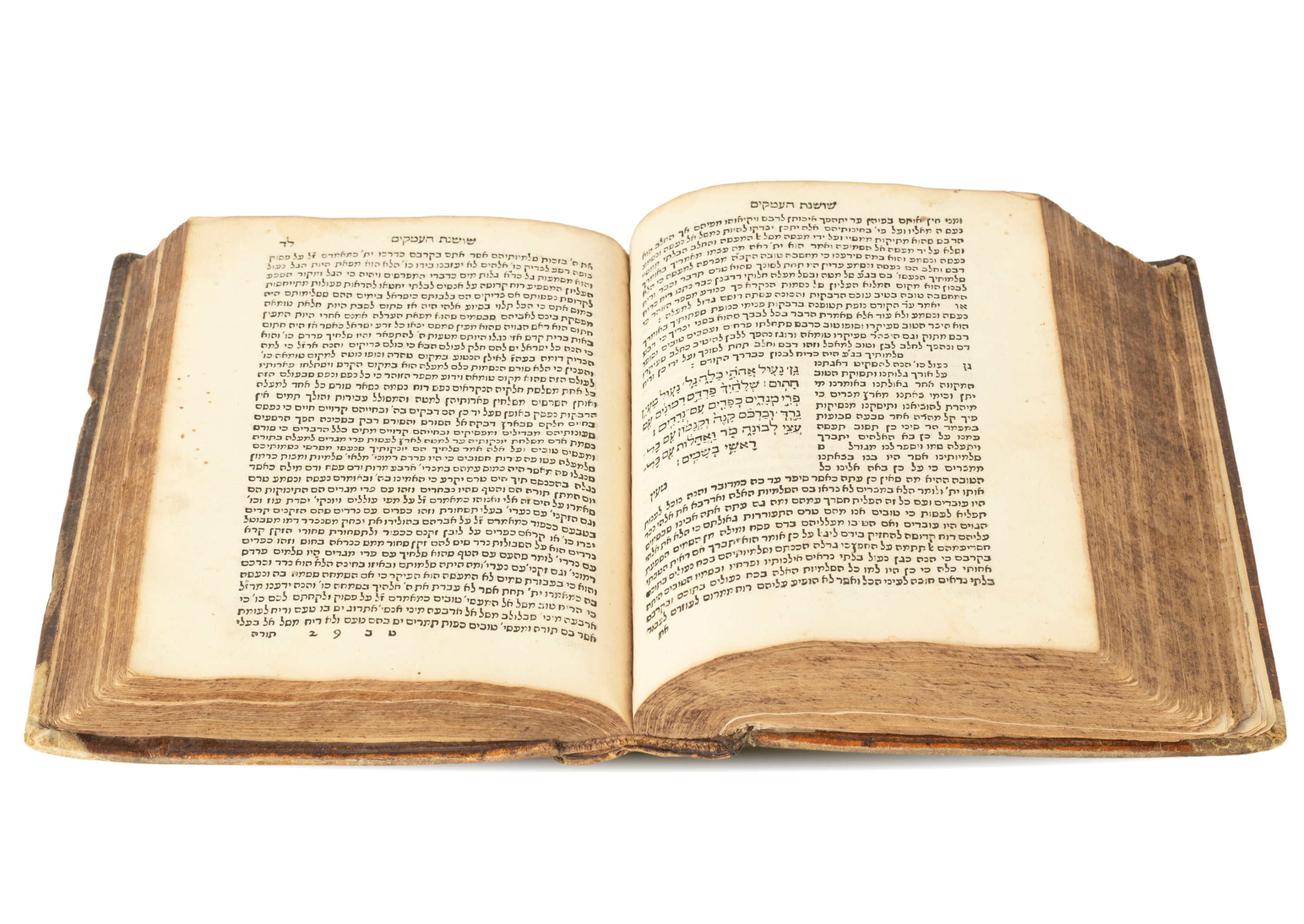
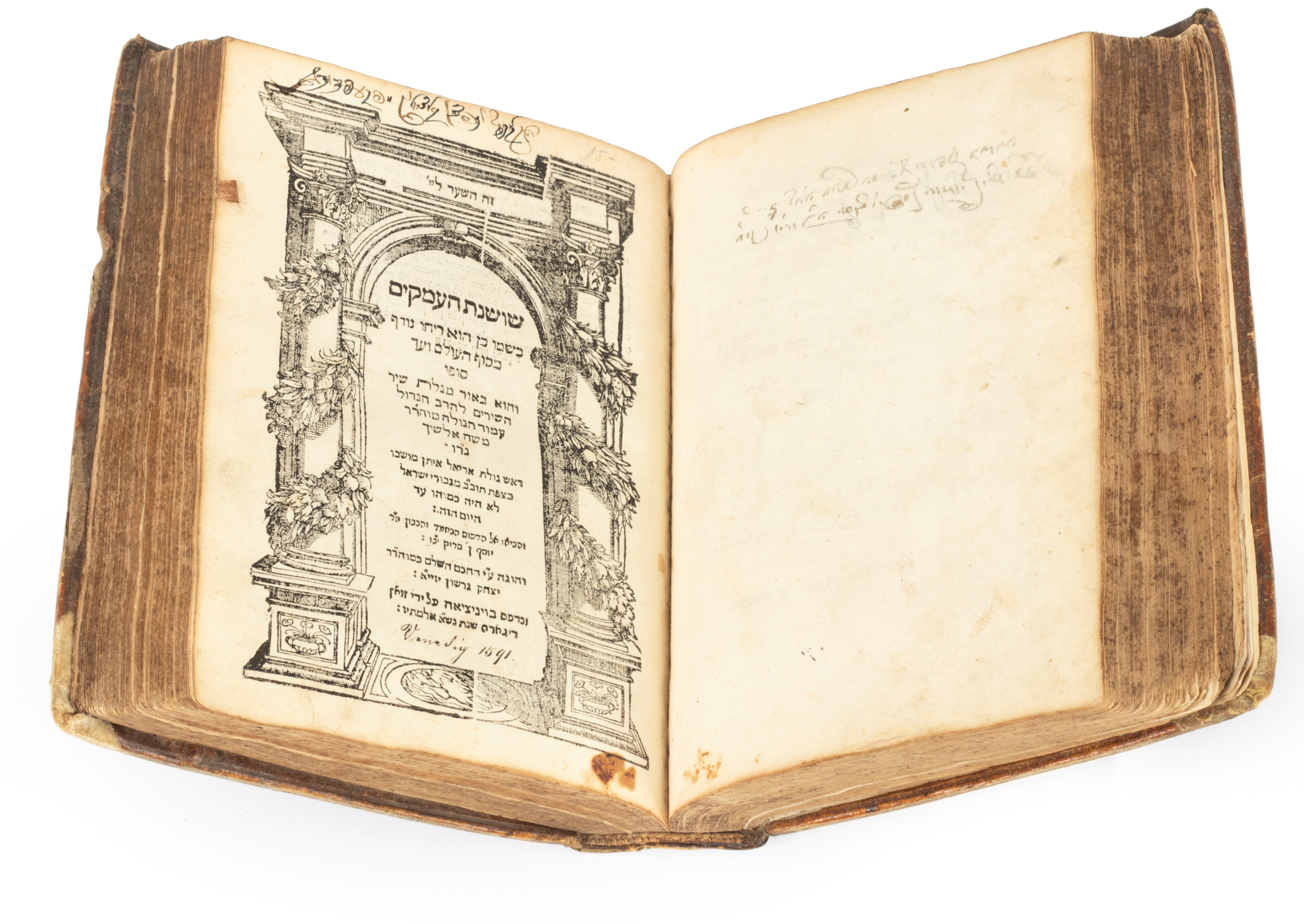
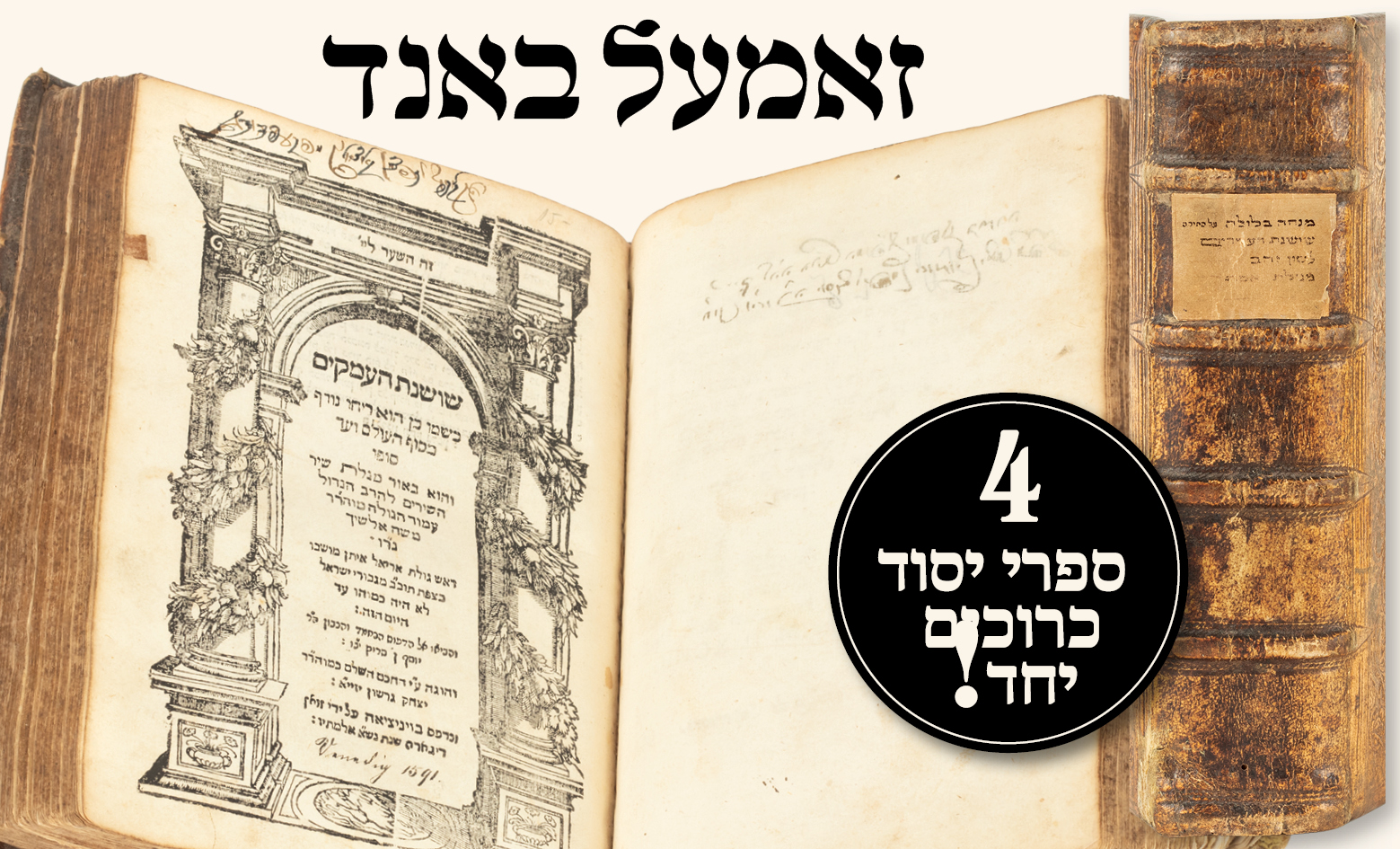
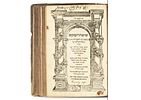
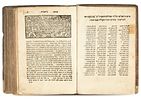
1) Shoshanas HaAmakim – the commentary of the Alshich HaKadosh on Shir HaShirim.
Venice, 1591. First edition and exceedingly rare. Printed during the author’s lifetime.
Page Count: 60 leaves.
Size: 20 cm.
The Alshich’s commentary on Shir HaShirim was the first of his commentaries on the Megillos to appear in print and the only one published by the Alshich himself. His commentaries on the remaining Megillos were printed ten years later, in 1601, after his passing, by his son Rabbi Chaim Alshich.
Stefansky, Sifrei Yesod, no. 20.
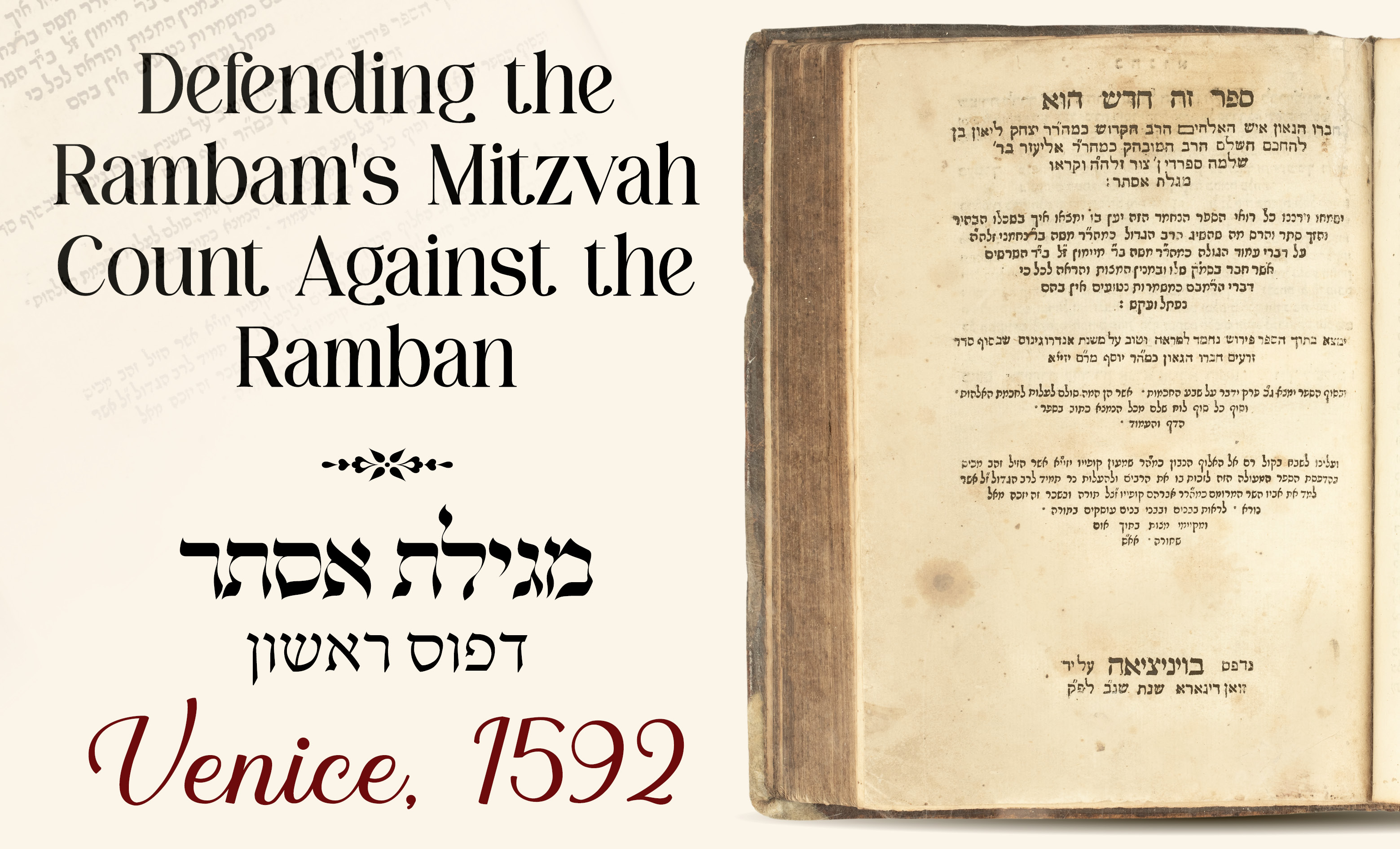
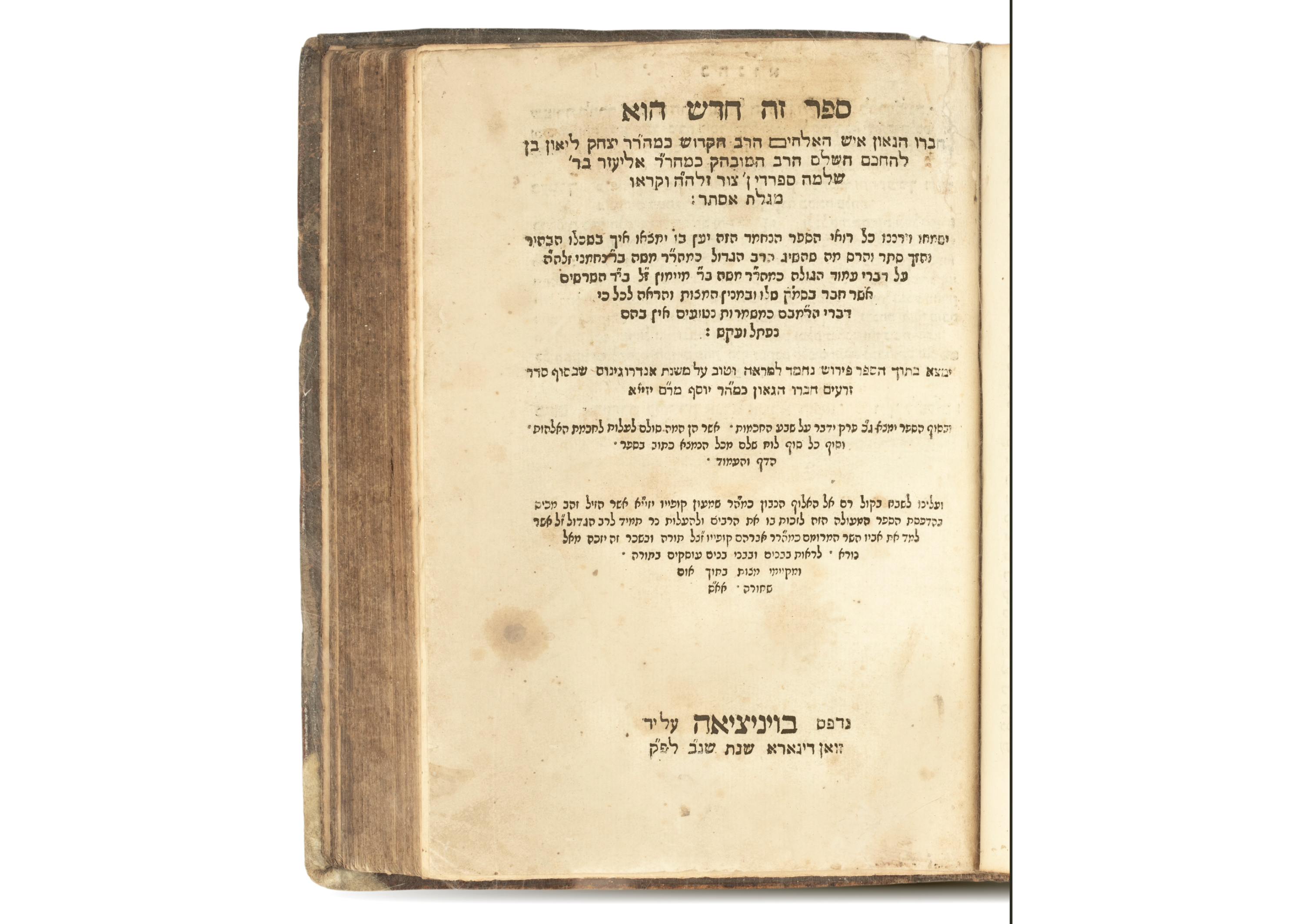
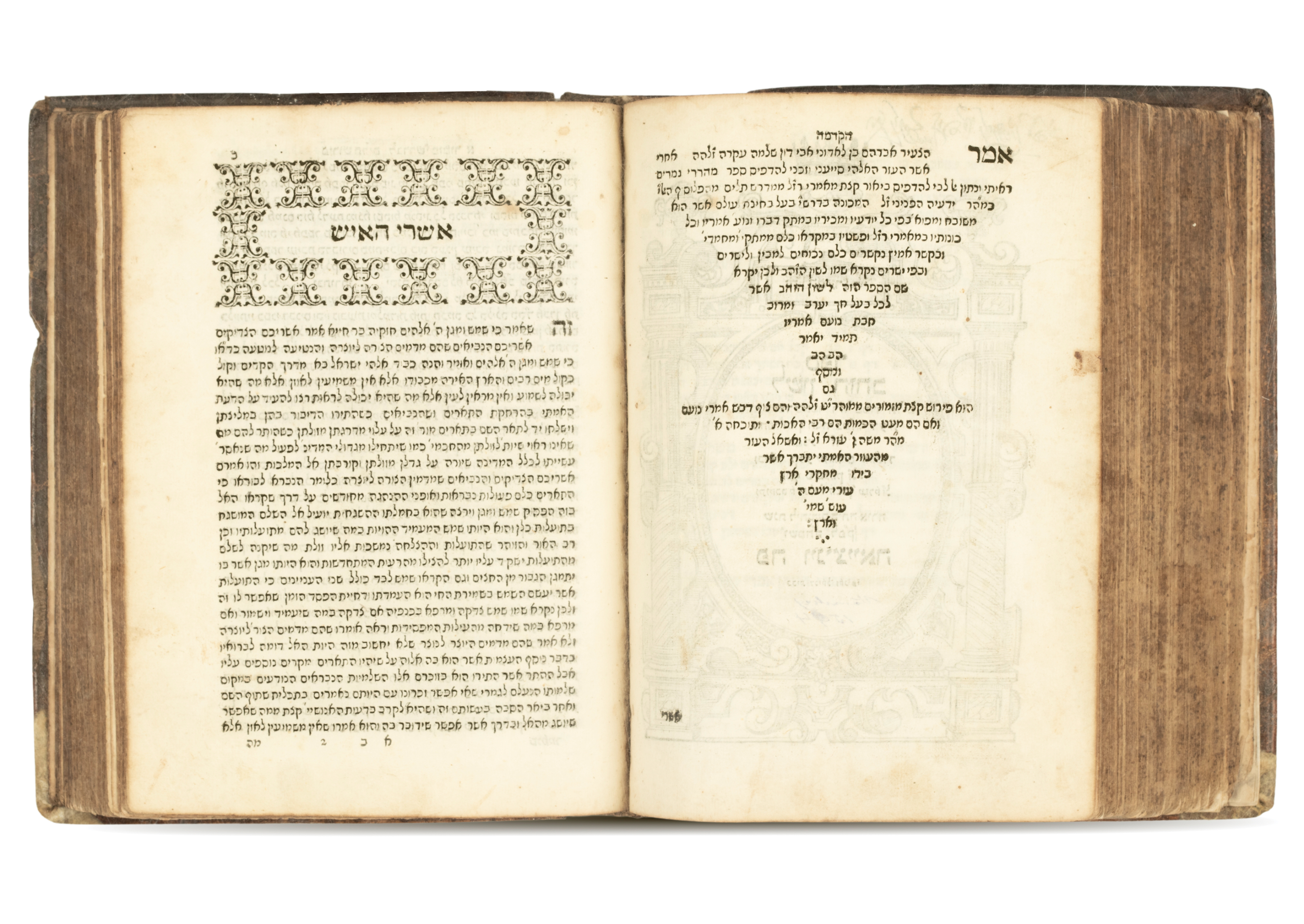
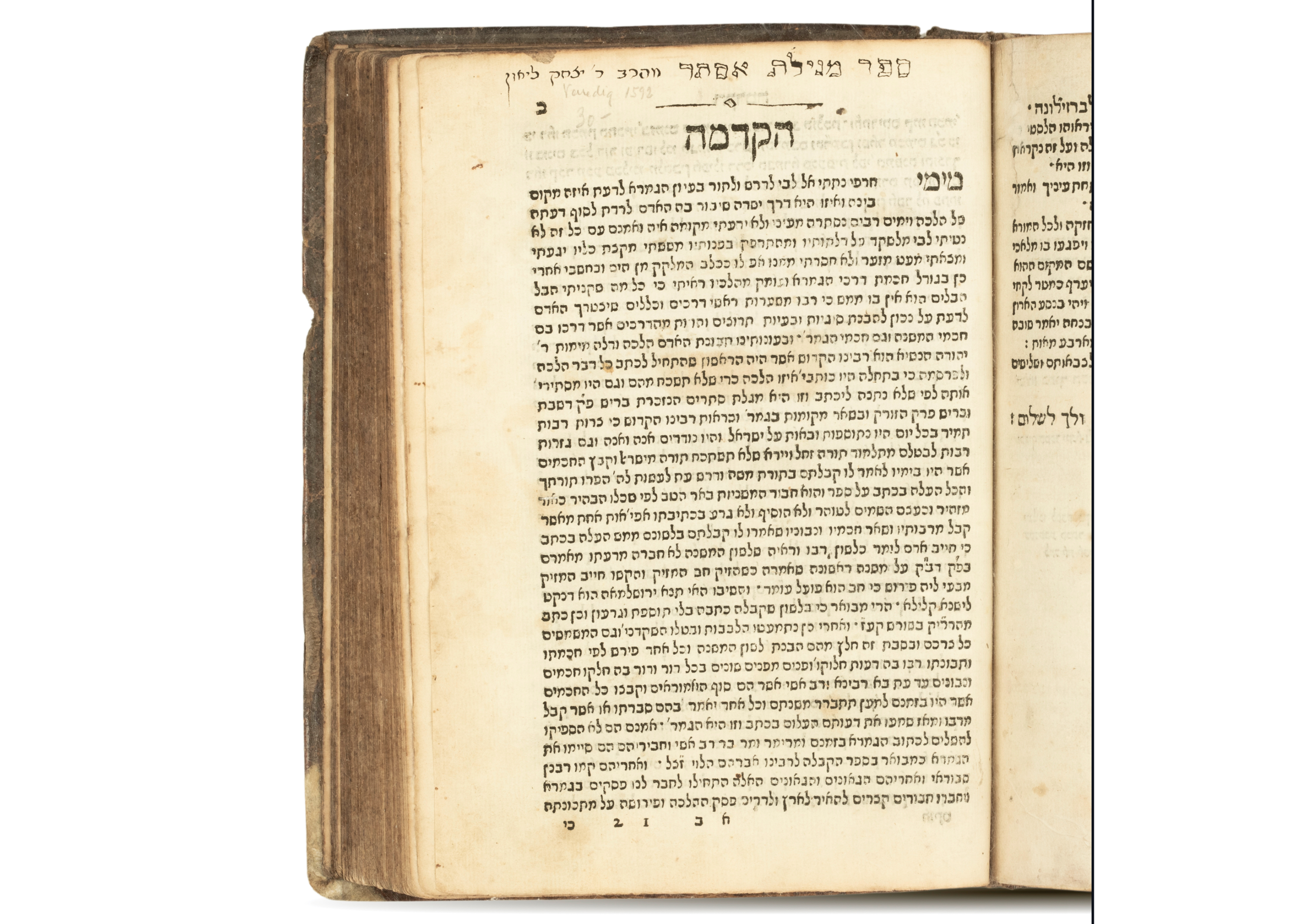
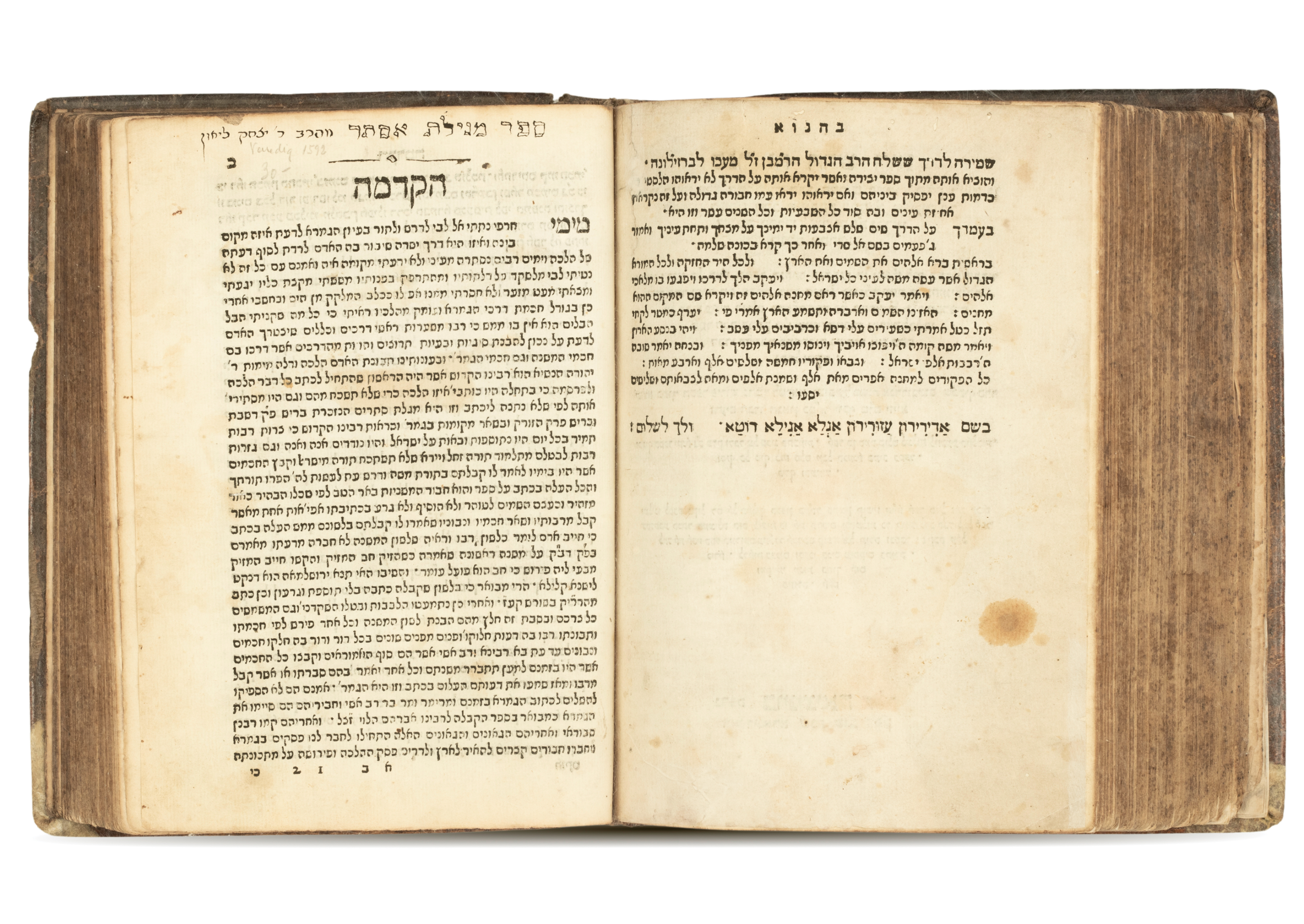
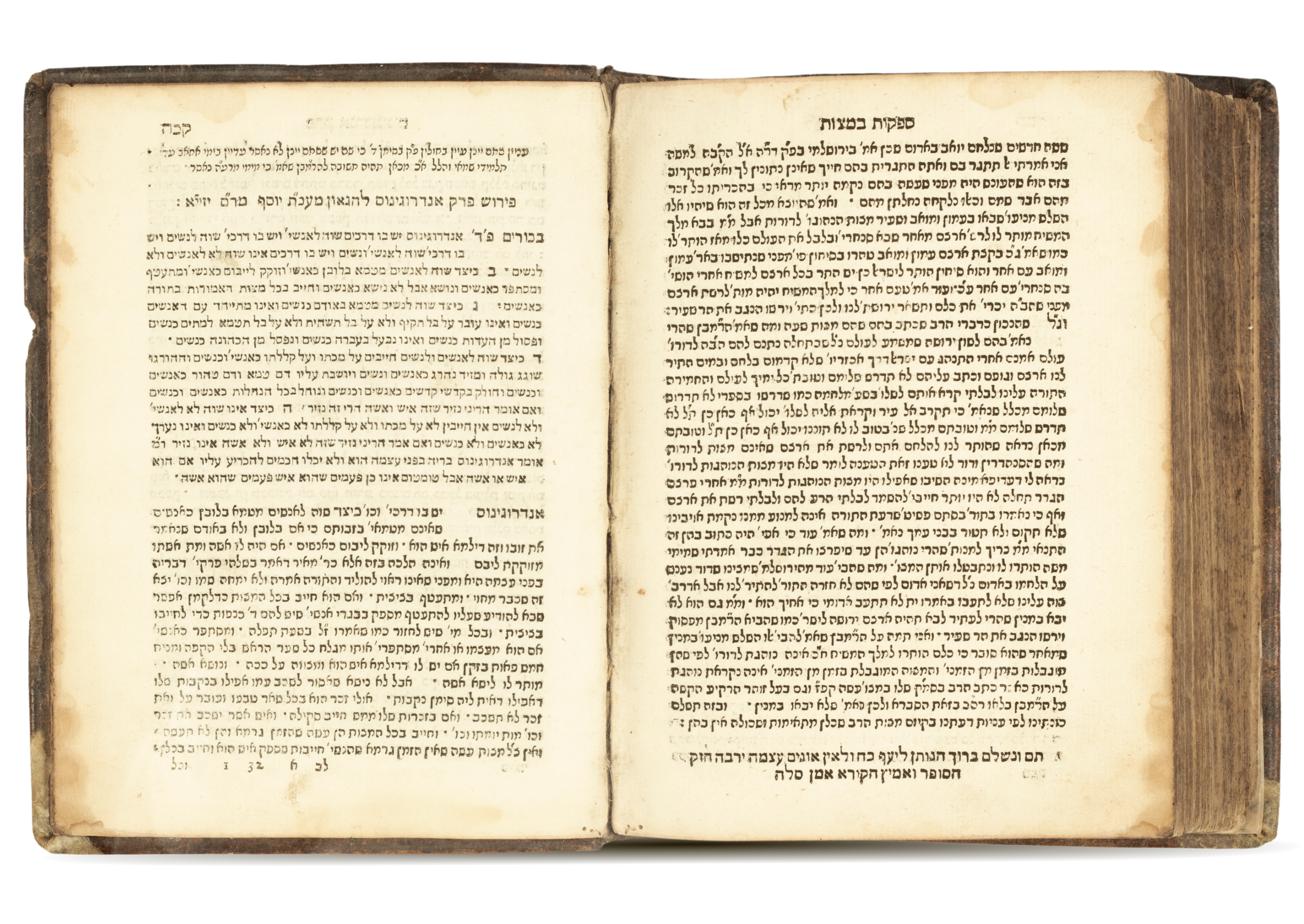
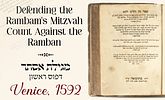
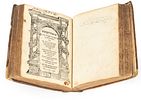
2) Megillas Esther – a defense of the Rambam’s enumeration of the mitzvos against the criticisms of the Ramban, by Rabbi Yitzchak de Leon. One of the sifrei yesod on the Rambam’s Sefer HaMitzvos.
Venice, 1592. First edition.
Page Count: 128 leaves.
The verso of the title page features Shemirah LaDerech by the Ramban.
Printed at the end of the volume is a commentary on the chapter Androginos in Maseches Bikurim by Rabbi Yosef Maram and a treatise on the Seven Sciences; these additions were omitted from later editions.
Stefansky, Sifrei Yesod, under no. 213.
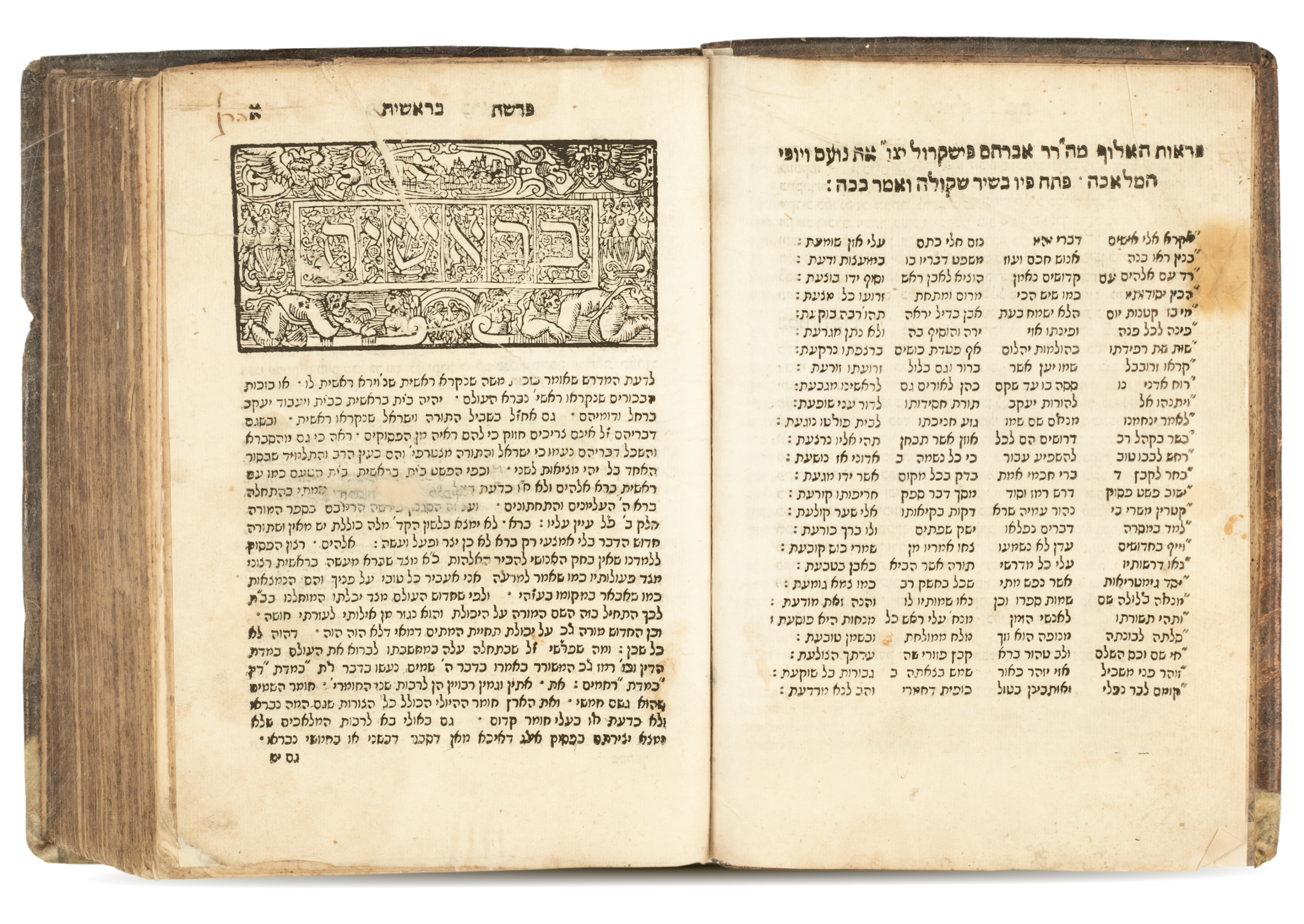
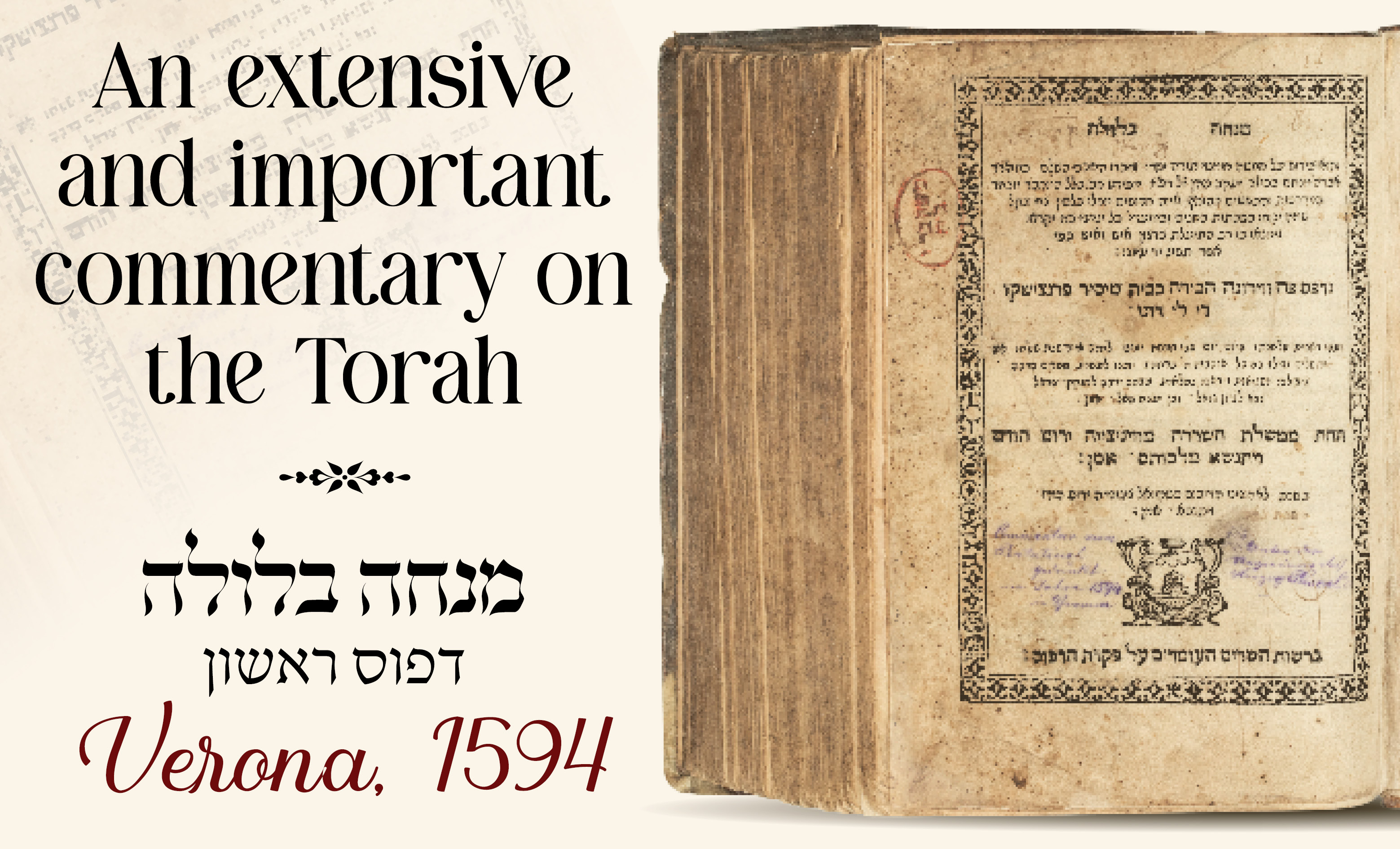
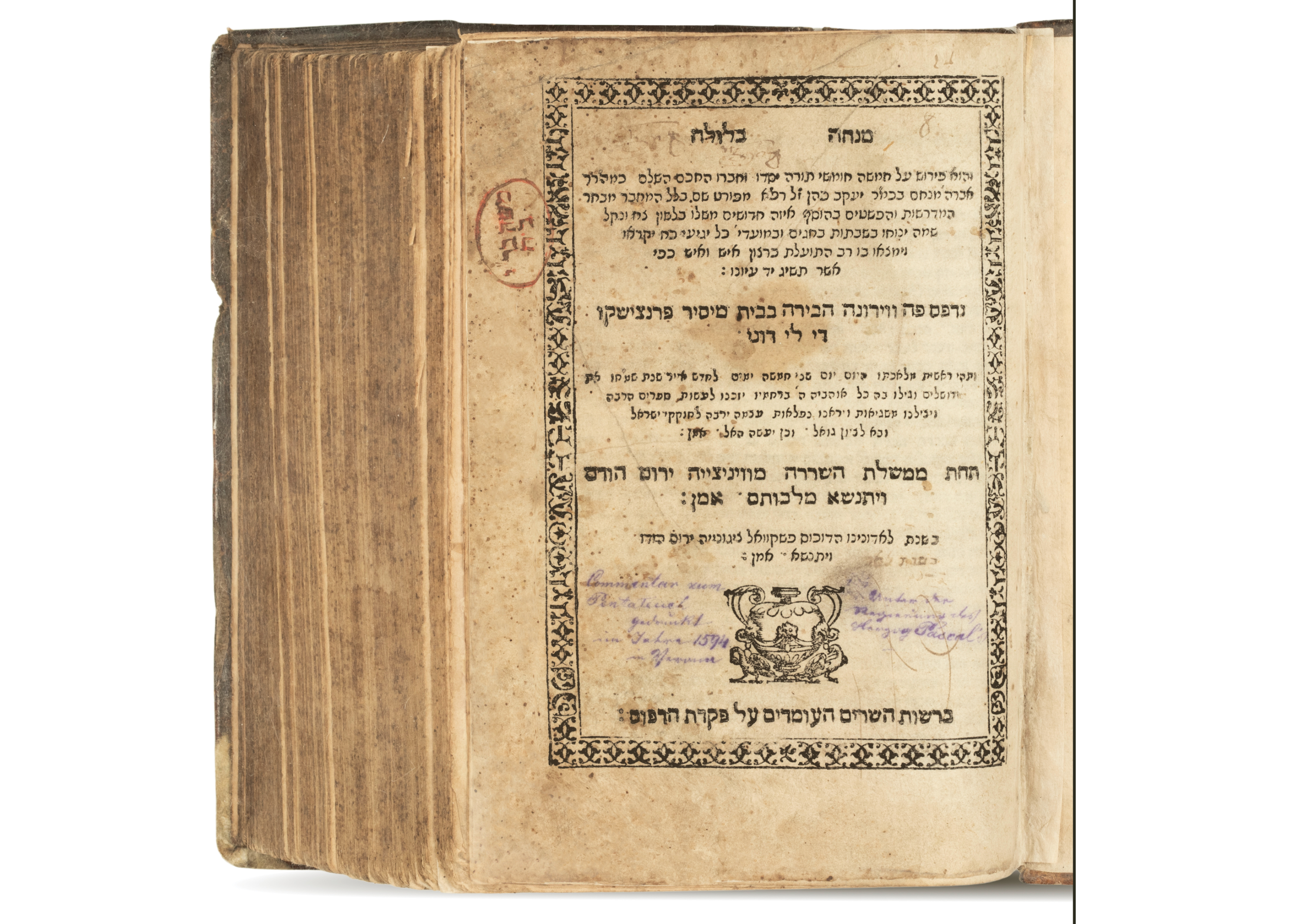
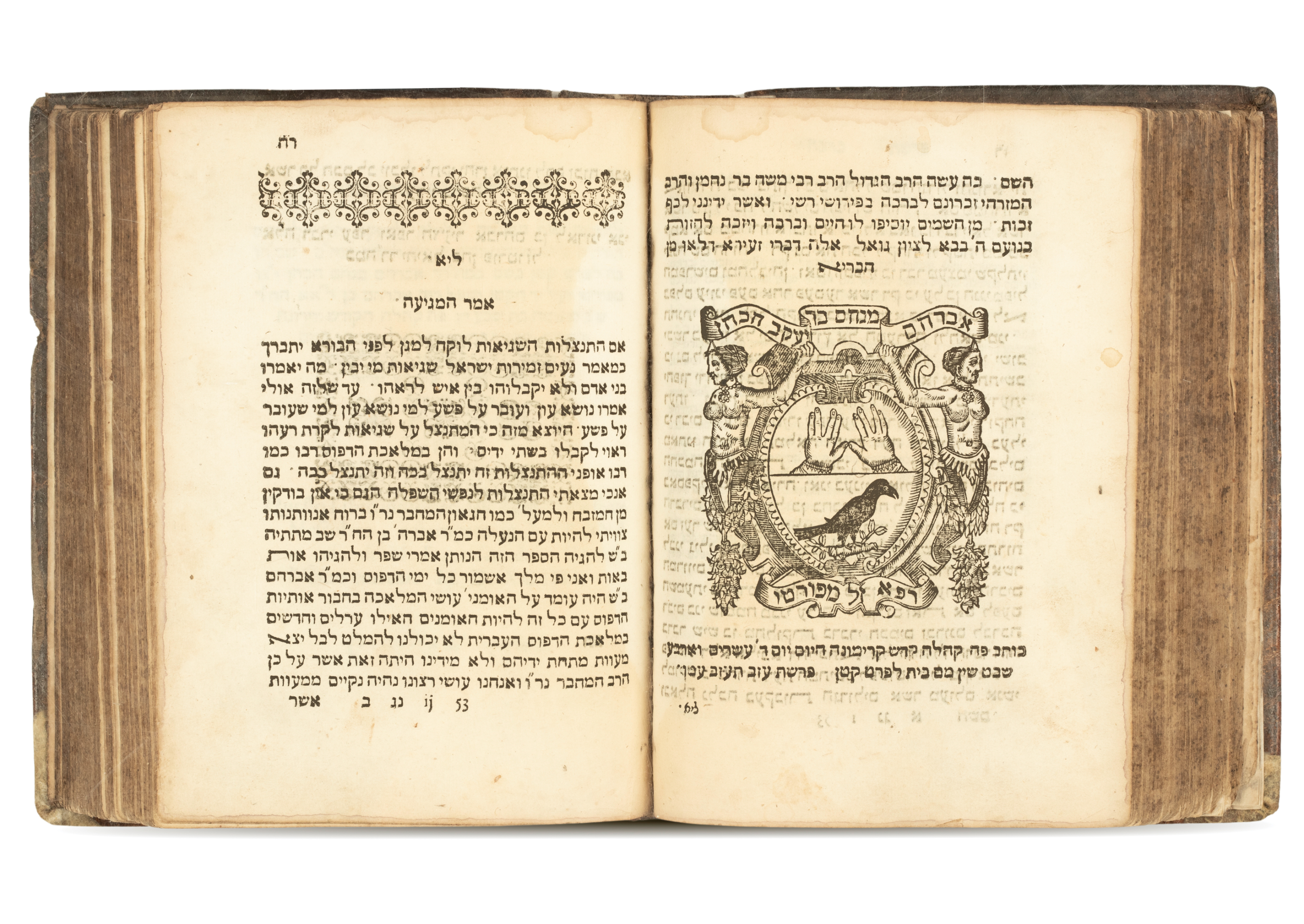
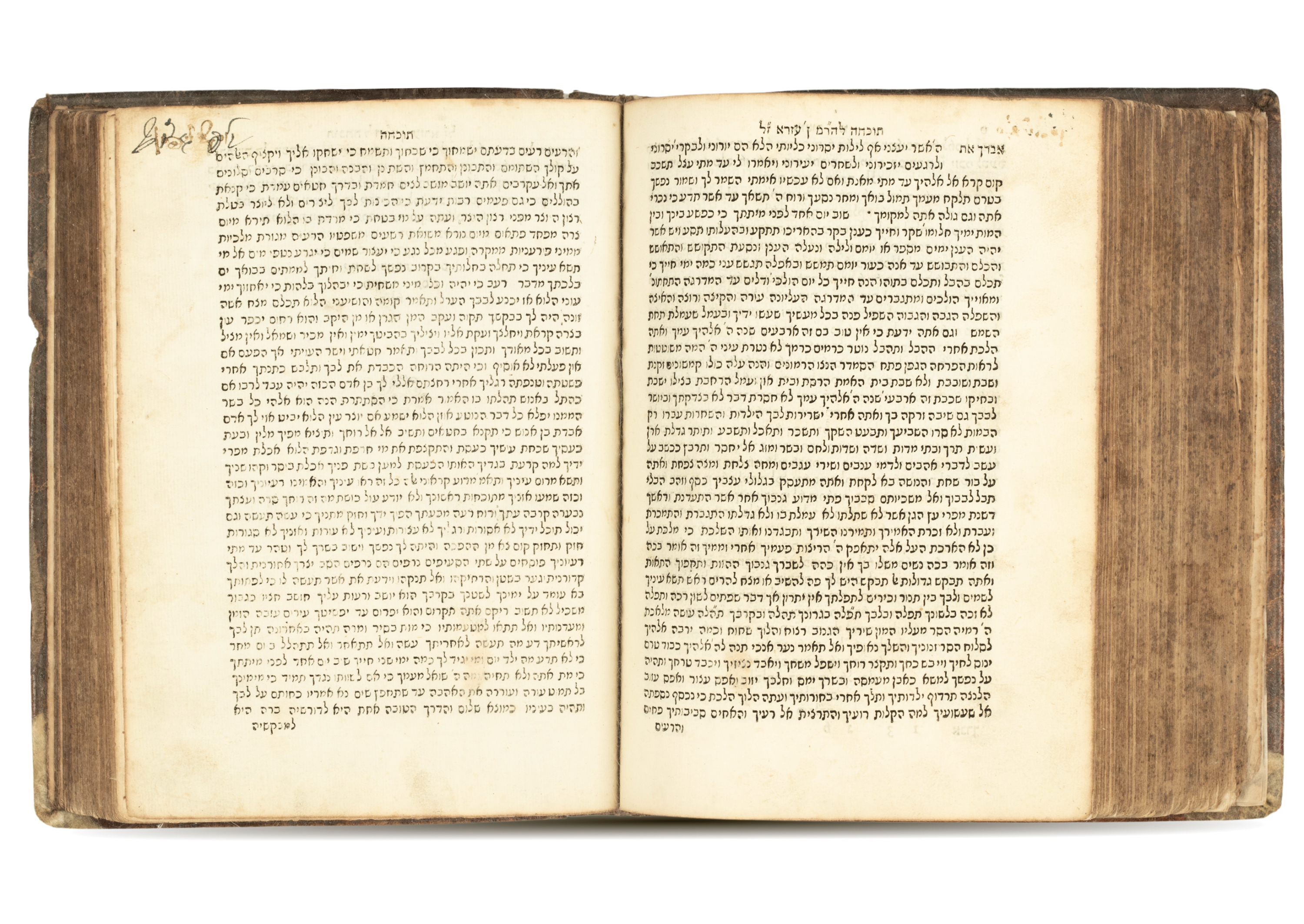
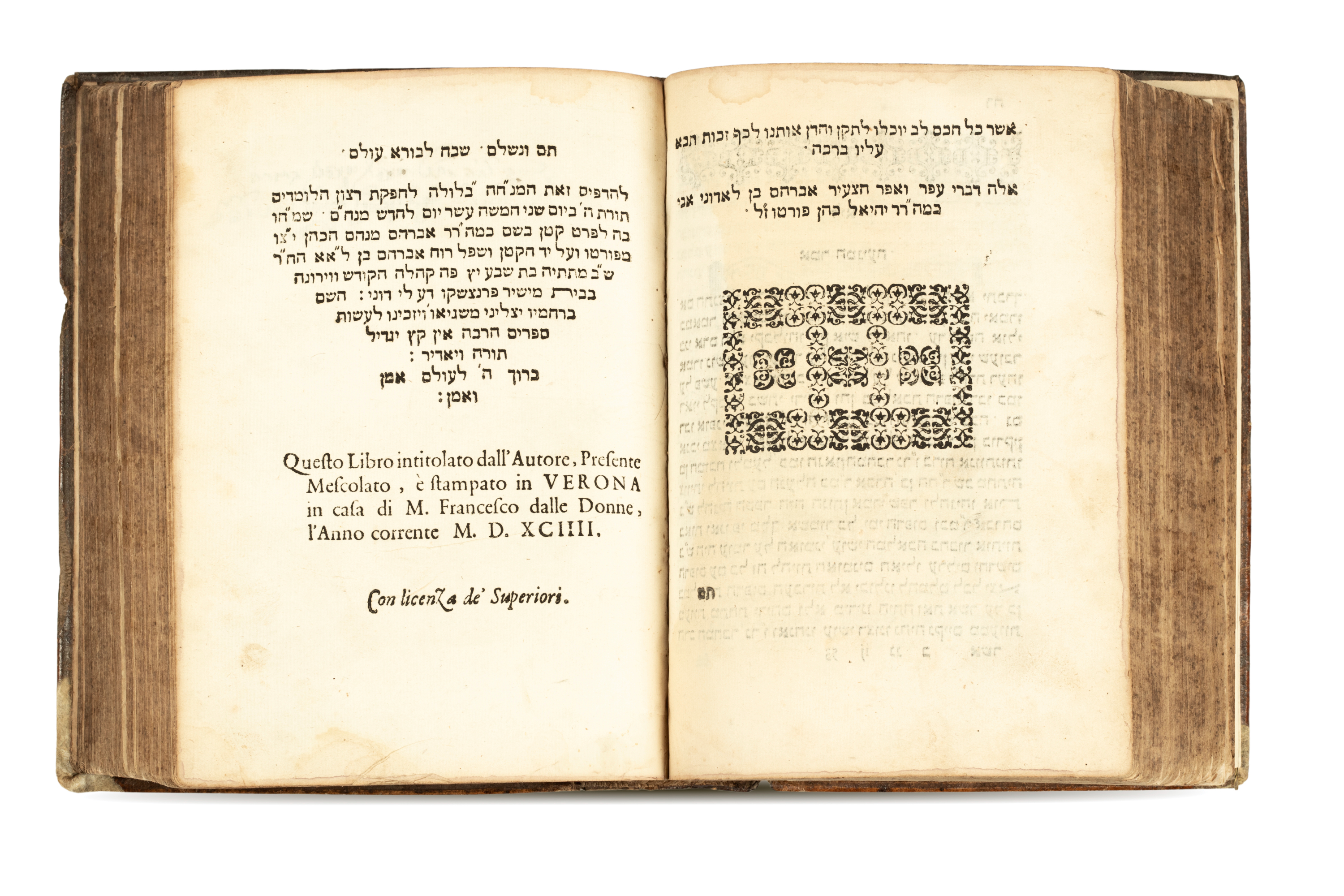
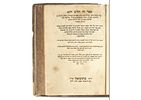
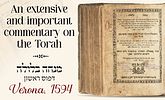
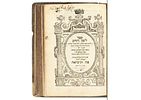
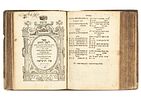
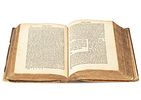
3) Minchah Belulah – an extensive and important commentary on the Torah, incorporating and synthesizing numerous commentaries, with additions by the author, Rabbi Avraham Menachem HaKohen Ashkenazi Rapa of Porto.
Rabbi Avraham was one of the forefathers of the large Ashkenazic Rappaport family, whose descendants included many prominent Torah scholars and communal leaders. On leaf 203b, he records a bitter account of the burning of the Talmud in 1553, noting that he established the date as a fast day.
On leaf 207b, a large and impressive illustration of the Rappaport family emblem features the symbol of the priesthood and, beneath it, a raven—“Rapa, ” meaning “raven” in Old German—with the inscription: “Avraham Menachem son of Yaakov HaKohen Rapa of Porto.”
Verona, 1594. First edition. One of the earliest books printed in Verona.
Page Count: [3], 208, [1] leaves. Condition: Light stains; restoration repairs to the margins of the first two leaves.
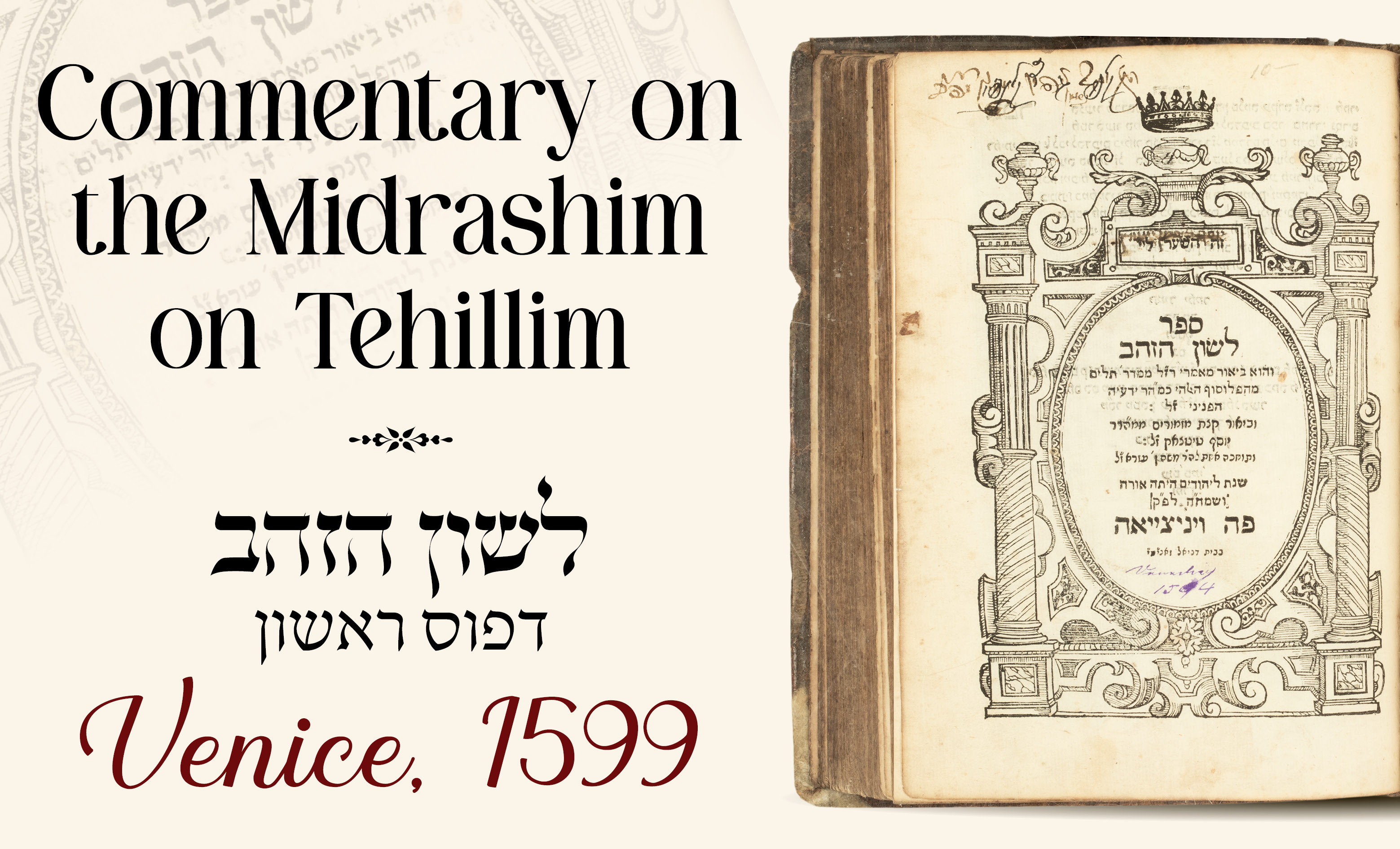
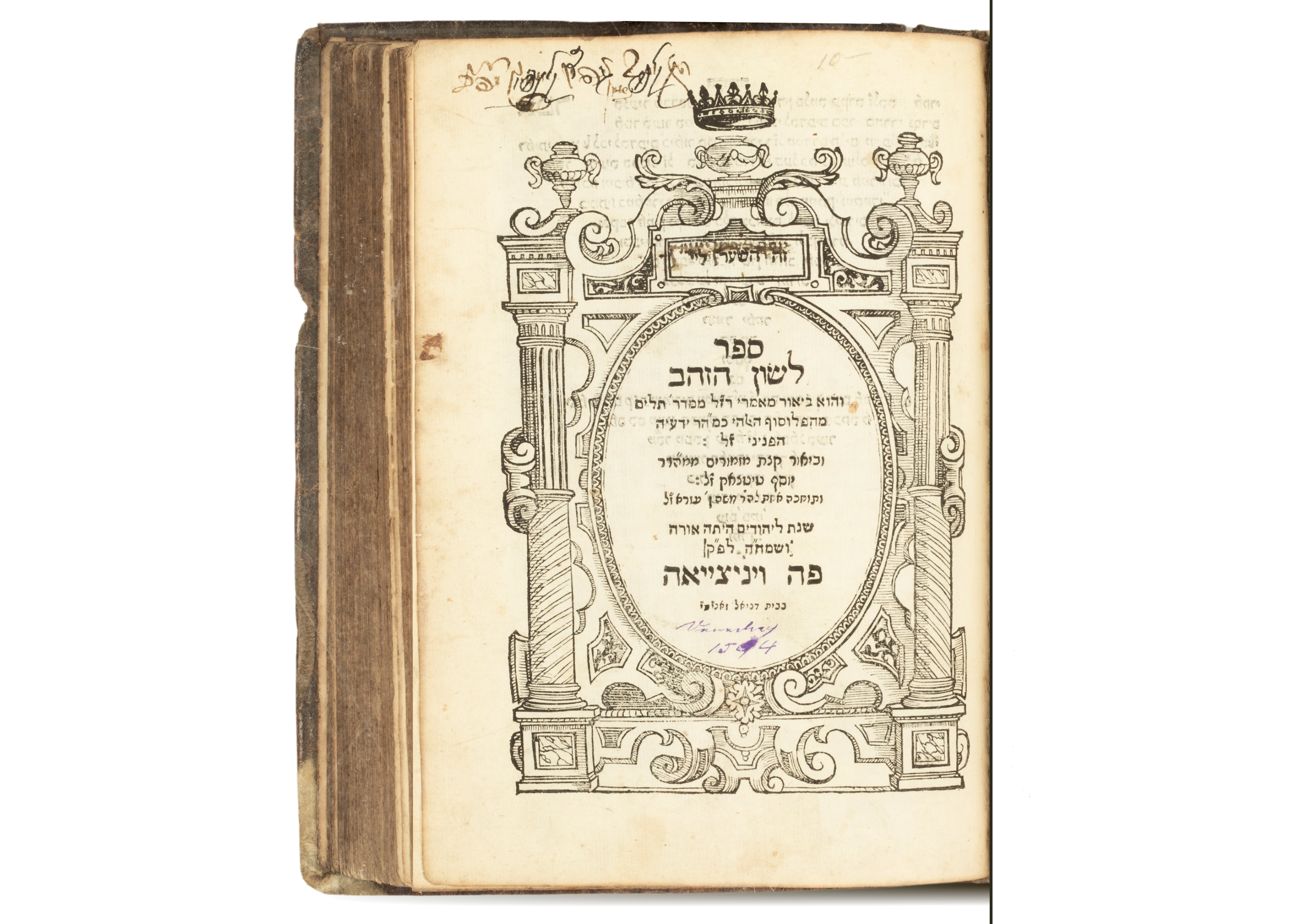
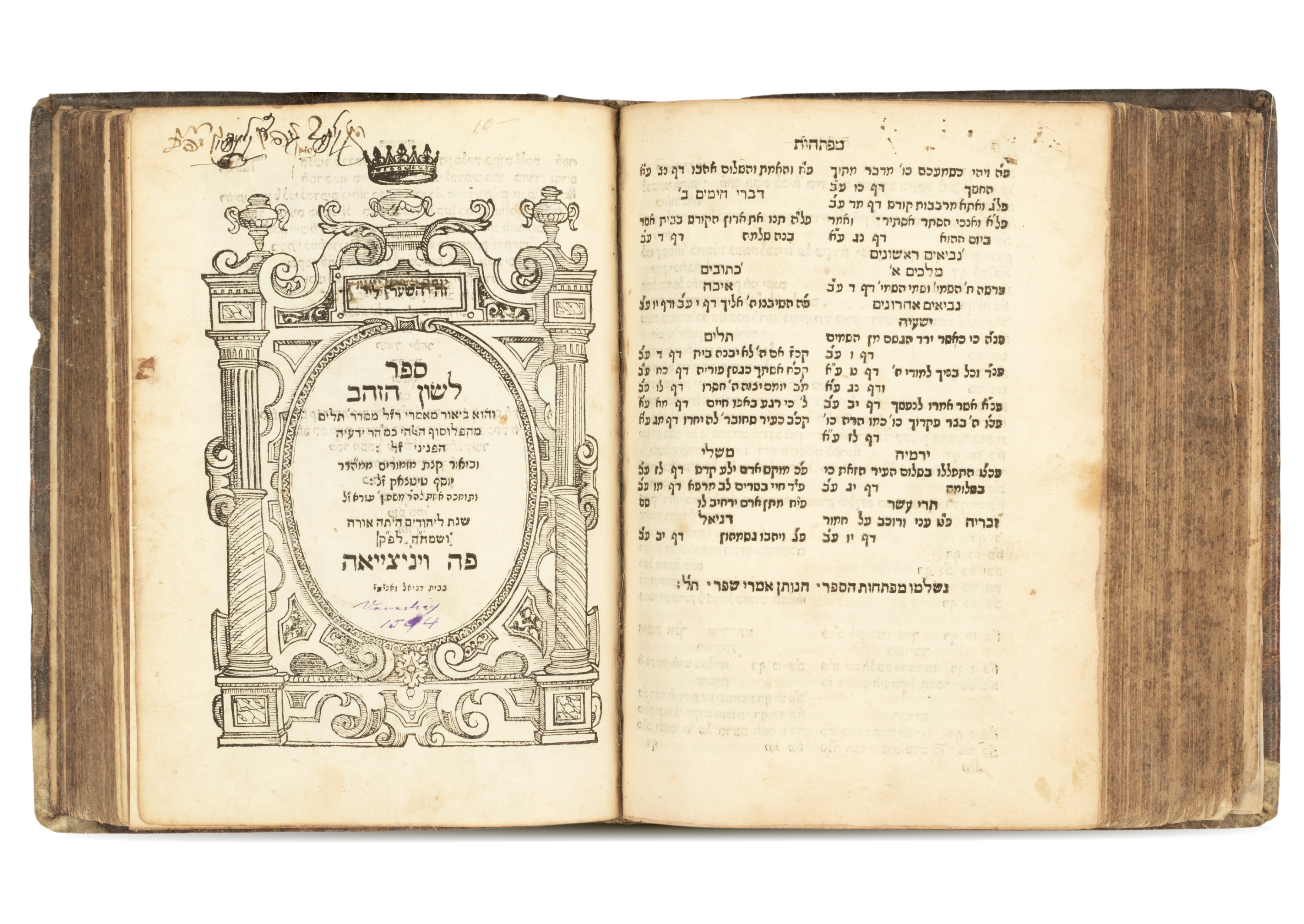
4) Lashon HaZahav – commentary on the Midrashim of Chazal on Tehillim by Rabbi Yedaya HaPenini, commentary on Tehillim by Rabbi Yosef Taitatzak, and words of rebuke by Rabbi Moshe Ibn Ezra.
Venice, 1599. First and singular edition.
Page Count: 16, 10 leaves.
Published by Rabbi Avraham Akra.
The Sammelband: The Practice of Binding Multiple Works Together
In earlier centuries, printers did not always bind the books they printed. Owners frequently commissioned bindings themselves, often combining several works into a single volume. Such composite bindings were created either to gather related texts together or to reduce the considerable cost of binding, as wooden and leather bindings were expensive and required additional storage space.
Today, scholars study this fascinating historical phenomenon because it provides a unique window into the intellectual world of its owners—their interests, reading habits, and the composition of their libraries.
For further information, see: https://sammelband.hypotheses.org
The academic term for a volume containing several works bound together is “Sammelband, ” a German word meaning “a volume of collected texts.”
Many such composite volumes were dismantled during the last century and the individual books sold separately. Modern digitization has further complicated research in this area, as libraries generally digitize each work individually, obscuring evidence of their original grouping.
This is a remarkable historical volume, preserving a sixteenth-century practice.
____________
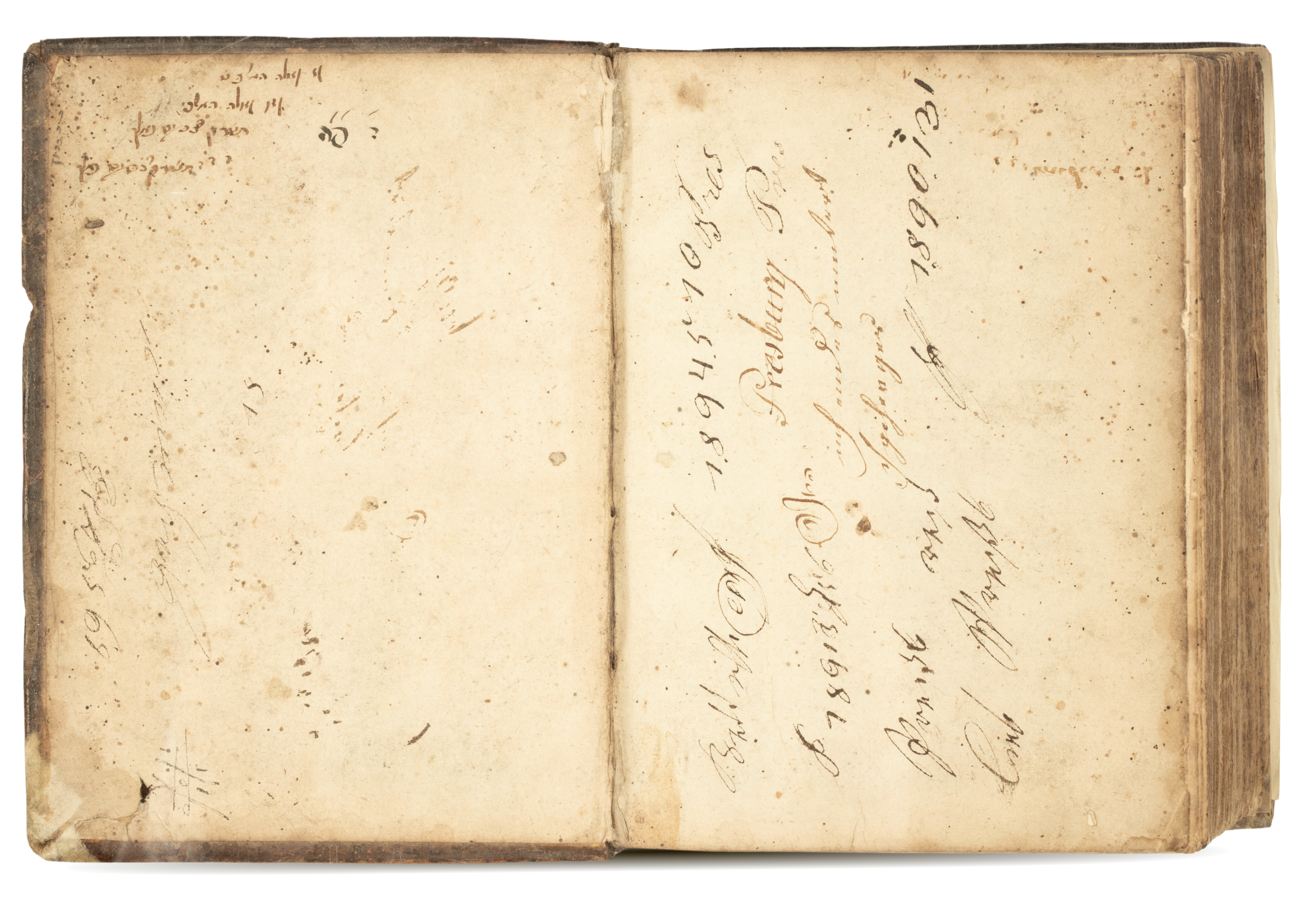
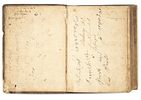
All four works bear the signature of Rabbi Lipman Yosef Janowitz of Pressburg, one of the trusted members of the Pressburg community during the early years of the Chasam Sofer in Pressburg.
Provenance: William Gross Collection
