



To attend this auction live or leave absentee bids
Lot : 50
Historical peace agreement
With the Holy Signature of Rabbi Amram Chassida and Sages of Yerushalayim, Tzfas, and Teveria 1829
With the Holy Signature of Rabbi Amram Chassida and Sages of Yerushalayim, Tzfas, and Teveria
Historical peace agreement
With the Holy Signature of Rabbi Amram Chassida and Sages of Yerushalayim, Tzfas, and Teveria
With the Holy Signature of Rabbi Amram Chassida and Sages of Yerushalayim, Tzfas, and Teveria
1829
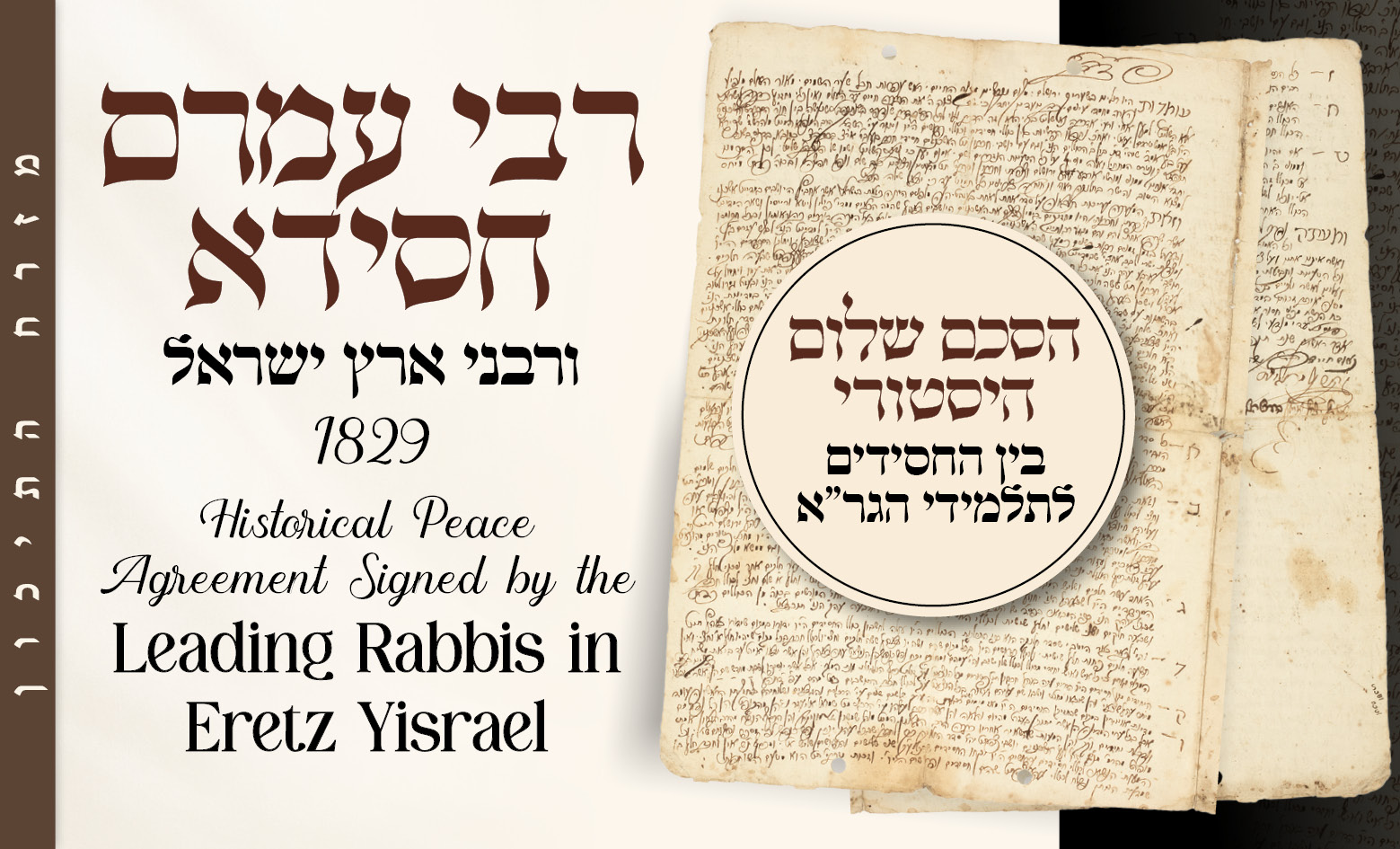
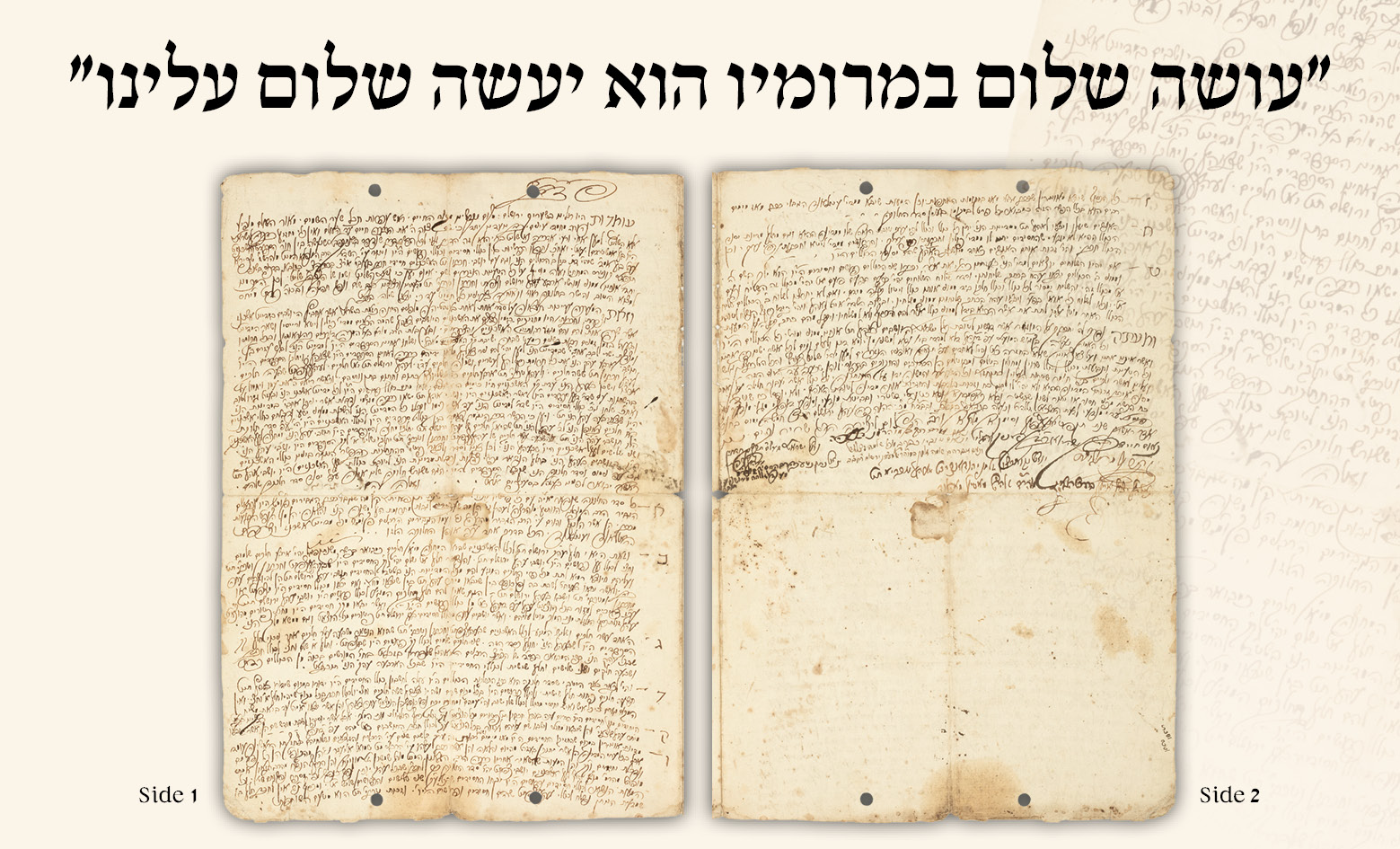
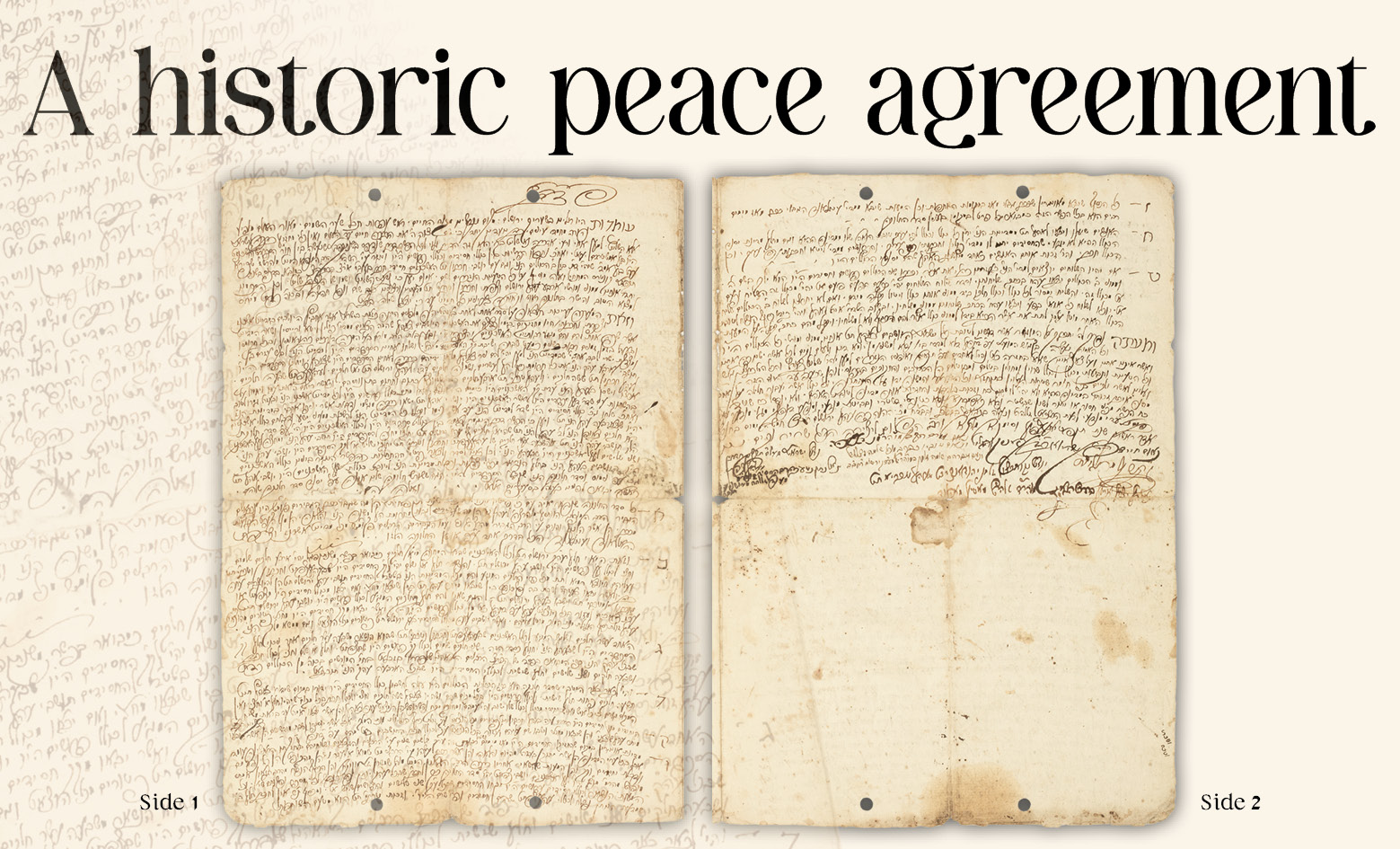
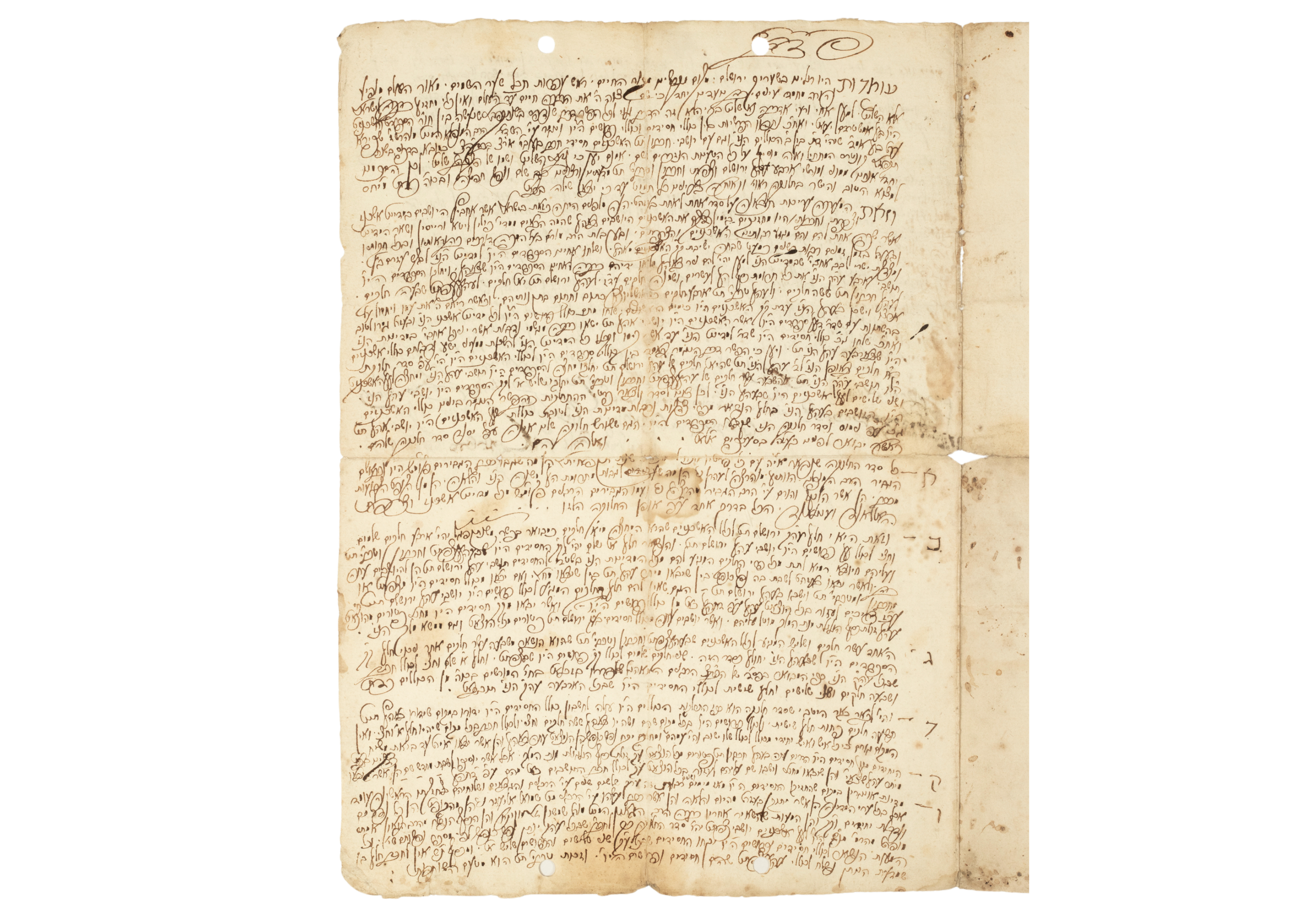
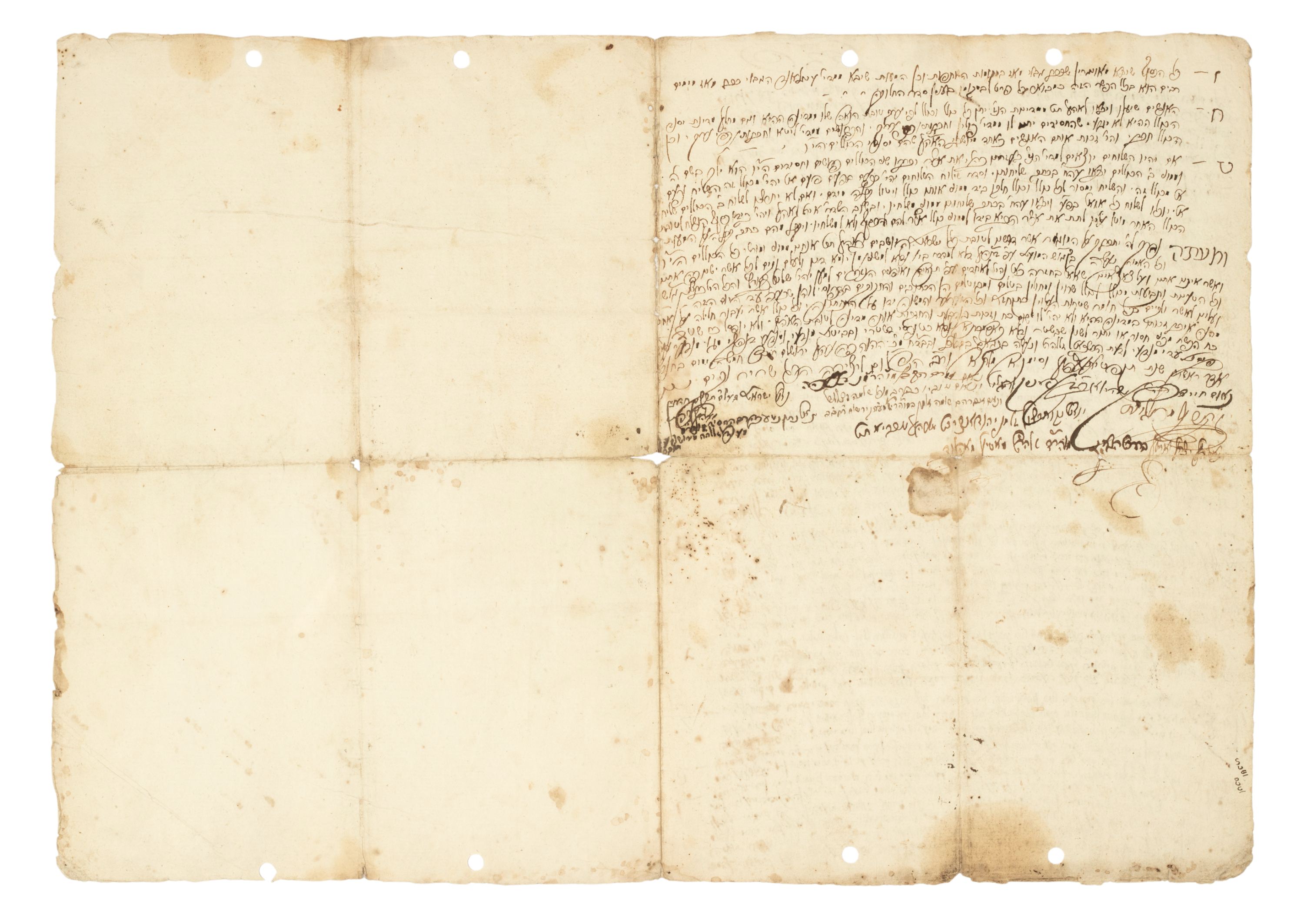
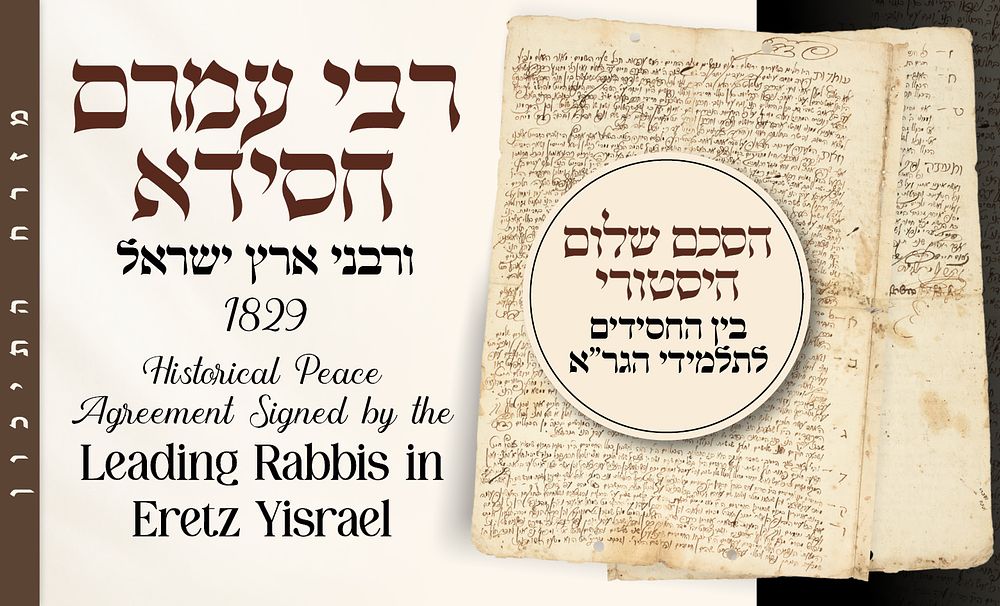
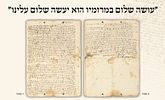
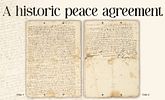
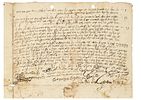
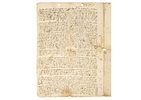
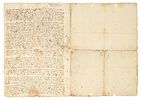
The original peace agreement between the kollelim of the Perushim and the Chassidim in Eretz Yisrael, regarding the division of funds among the residents of the four holy cities: Yerushalayim, Tzfas, Teveria and Chevron.
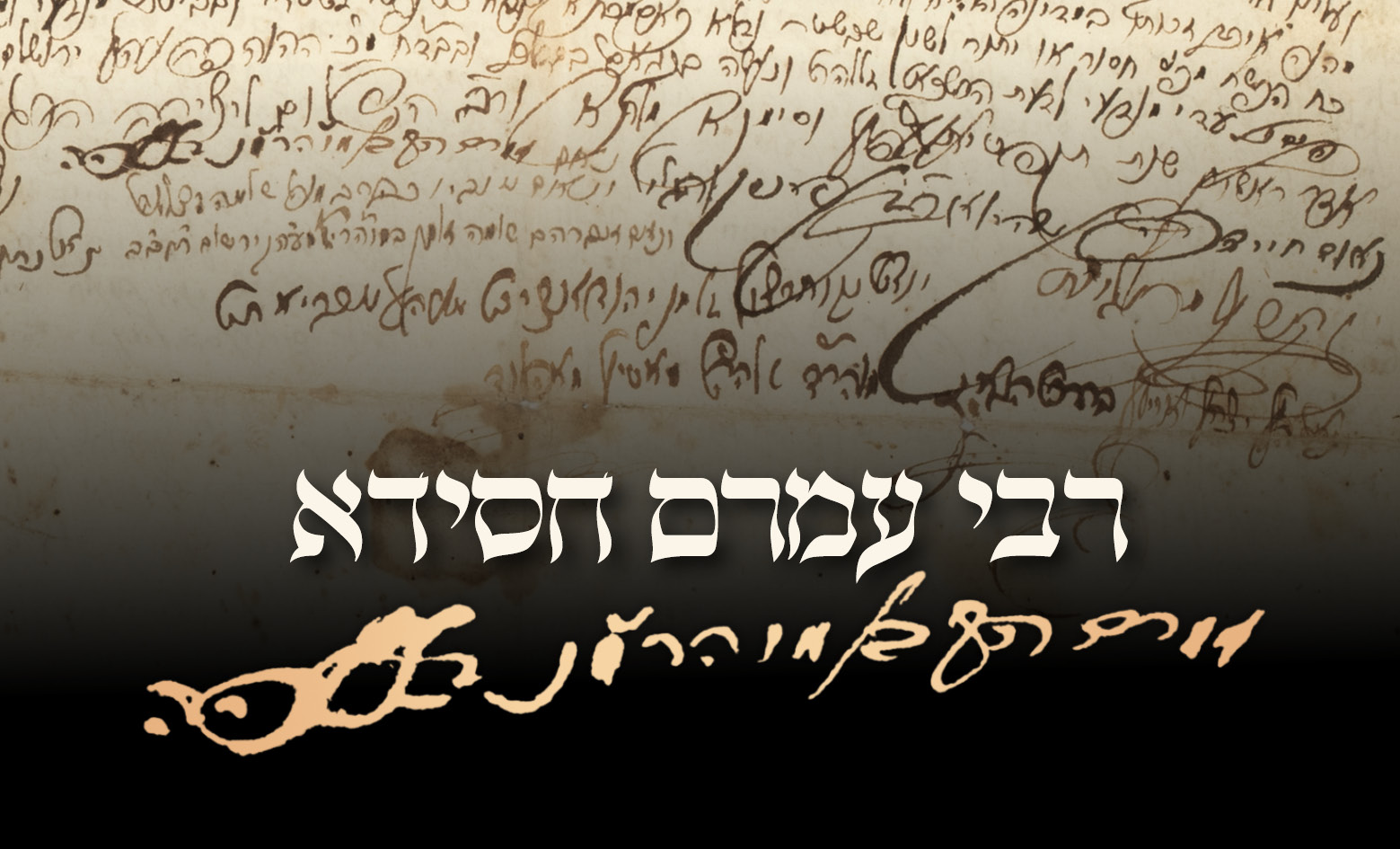
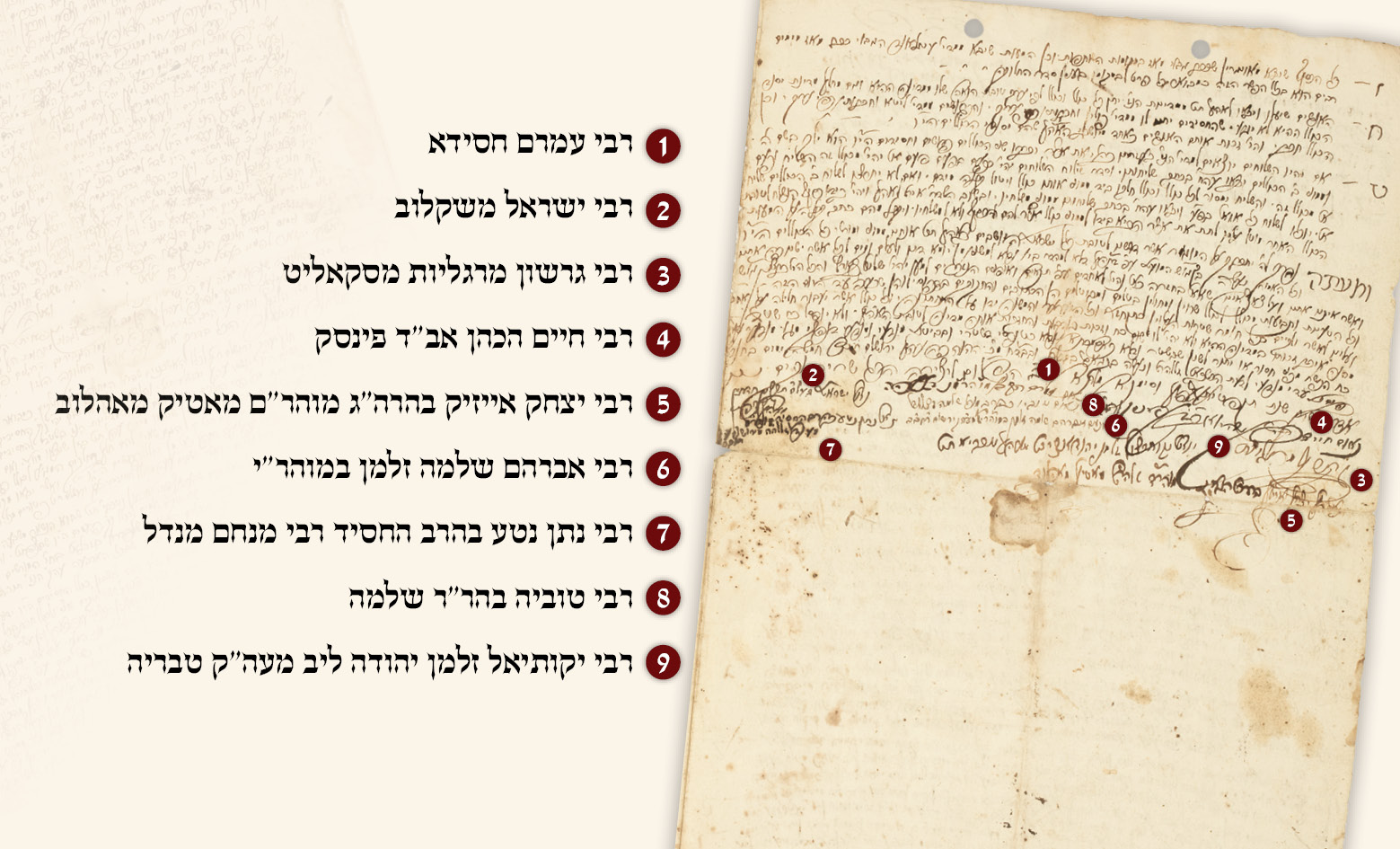
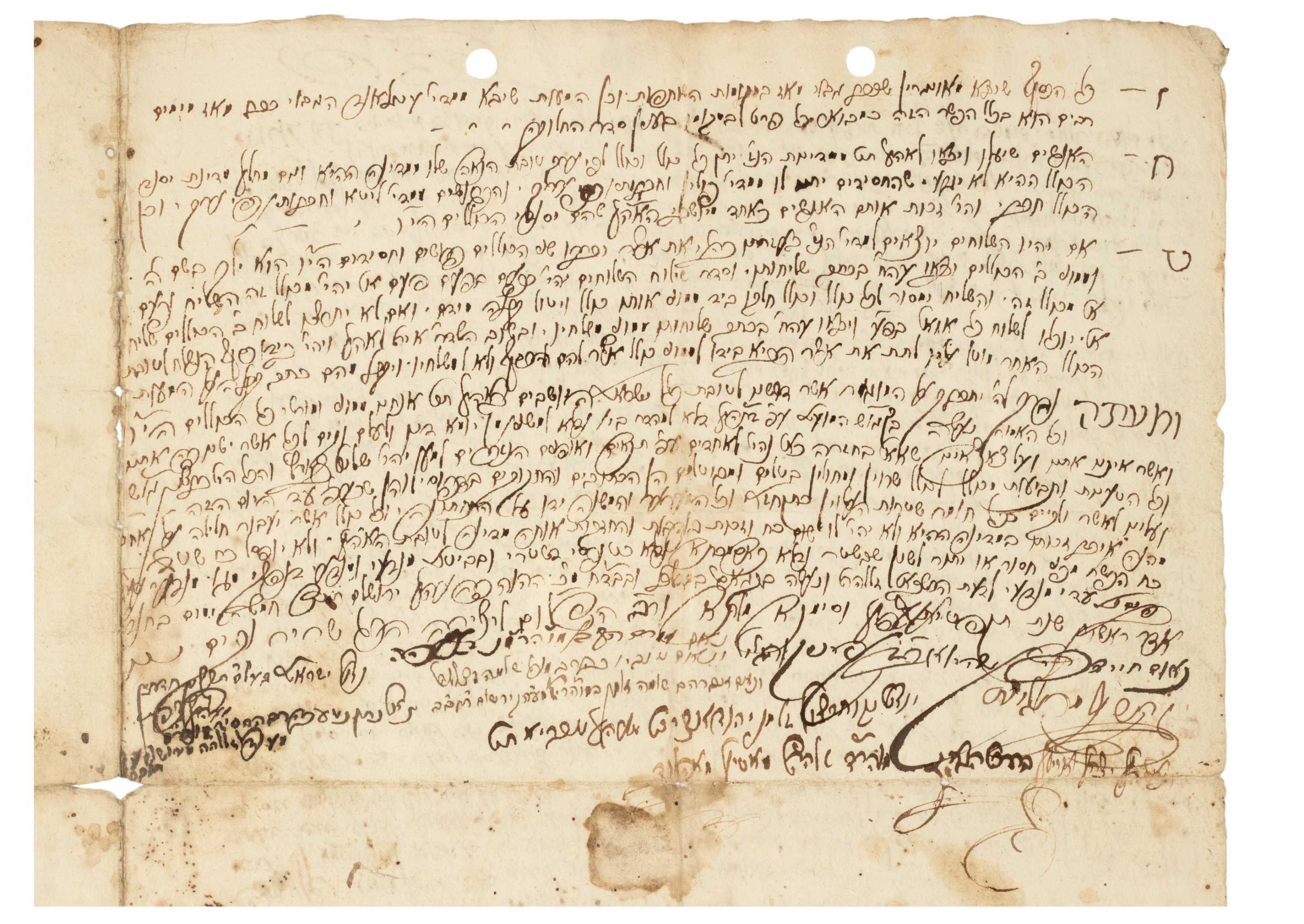
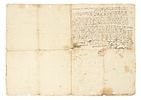
The document bears the signatures of nine of the heads of the kollelim, foremost among them the rare signature of the holy tzaddik Rabbi Amram Chassida and the signature of Rabbi Yisrael of Shklov.
The discovery of this original document is truly remarkable. Until now, the “1829 Compromise Agreement” was known only from a later copy preserved in the Central Archives for the History of the Jewish People, and from collected reports from the letters of Rabbi Tzvi Hirsch Lehren (Iggros Pekidim VeAmarkalim) and other accounts.
However, the full text of the document itself had never been seen or published. Now, before us, is the original agreement, bearing the actual signatures of all the Gedolim and leaders of the yishuv in Eretz Yisrael at the time.
Background to the Agreement
In the years 1808–1809, three groups of disciples of the Vilna Gaon came to Eretz Yisrael, thirty years after the first arrival of the chassidic community. Since the very existence of the yishuv depended on donations from Jews abroad, this led to disputes and quarrels between the kollel of the Chassidim and the kollel of the Perushim.
Finally, in Adar 1829, all the heads of the communities gathered in Yerushalayim and signed a historic compromise agreement. They enacted ordinances and established procedures for the division of funds for each community, all conducted under the supervision of the Pekidim VeAmarkalim organization in Amsterdam, an organization established in 1810 for the support of the yishuv in Eretz Yisrael.
The agreement contains nine detailed clauses, with original signatures, preceded by heartfelt words about the greatness of peace and brotherhood.
Signatories to the Agreement
Tzfas
Rabbi Amram Chassida – Foremost among the signatories is the renowned tzaddik Rabbi Amram Chassida, whose name appears first as “Amram the humble one, son of Rabbi M. N., of blessed memory.” He was the saintly Rabbi Amram, son of Rabbi Moshe Nachum Rosenbaum, Av Beis Din of Vozhany (grandfather of the Arugas HaBosem). His name was coined “Rabbi Amram Chassida” by the Chasam Sofer and the Yismach Moshe. He was a tzaddik known for his holiness and asceticism, and served as Rav in Irsha and Mad. In 1826, he moved to Eretz Yisrael and became the head of the chassidic community, until his passing in his prime in 1830.
He was a good friend of the Chasam Sofer, and on his way to Eretz Yisrael stopped in Pressburg to visit him. The Chasam Sofer’s admiration for him knew no bounds, and upon his passing he eulogized him deeply. His grandson, named after him, was Rabbi Amram Blum, author of Beis She’arim.
Rabbi Yisrael of Shklov – one of the foremost disciples of the Vilna Gaon, author of Pe’as HaShulchan and Taklin Chadatin, leader of the Perushim in Tzfas and Yerushalayim. He moved to Eretz Yisrael in 1810 and passed away there in 1839.
Rabbi Gershon Margolios of Skalat (d. Tzfas 1838) – son-in-law of Rabbi Yissachar Ber of Zlotchov, author of Mevaser Tzedek. Following his father-in-law, he too immigrated to Eretz Yisrael and became head of the Jewish yishuv in Tzfas. He was close to Rabbi Levi Yitzchak of Berditchev, and even lodged in his home, as he relates in his introduction to Tehillim with commentary from the Zohar (Tzfas 1833).
Rabbi Chaim HaKohen, Av Beis Din of Pinsk – head of the Perushim kollel. He immigrated to Eretz Yisrael at the end of 1826, and his name appears as the first signatory on various letters and haskamos. He passed away in Tzfas in 1833. (For a description of the wondrous scene that occurred at the time of his passing, in the presence of Rabbi Yisrael of Shklov, see Toldos Chachmei Yerushalayim, vol. 3, p. 170). Already in Europe he was known as one of the Gedolei Hador, and he gave an approbation for the first edition of Chayei Adam (Vilna 1809), with the rabbanim of Vilna.
Rabbi Yitzchak Eizik, son of Mohara"m Matik-Mahlov – identified as the philanthropist Rabbi Yitzchak Zvonitzer, one of the leading figures of the chassidic community in Tzfas. He is mentioned as one of the administrators of the Tzfas Kollel together with Rabbi Gershon Margalios, in the letter of Rebbe Tzvi Hirsh Leheren to the author of Yismach Moshe. He was imprisoned together with Rabbi Yisrael of Shklov (see Geulah BeDerech HaTeva, p. 229 note 9, and BeShlichus Yerushalayim, p. 33).
Yerushalayim
Yerushalayim
Rabbi Avraham Shlomo Zalman ben Rabbi Yehudah – this is Rabbi Avraham Shlomo Zalman Tzoref (1746–1851), one of the earliest Ashkenazi settlers in Yerushalayim and leading figure of the Perushim community, known as “the builder of the Churva.”
Rabbi Nosson Neta, son of the chassid Rabbi Menachem Mendel of Shklov – who immigrated to Yerushalyaim with his father, Rabbi Menachem Mendel of Shklov, one of the greatest disciples of the Vilna Gaon. He became a leading figure of the yishuv and also served as an emissary. He passed away in 1847.
Rabbi Tuvia son of Rabbi Shlomo – son of Rabbi Shlomo of Tultchin, disciple of the Vilna Gaon and author of Even Shlomo. He was “a great tzaddik in Torah and wisdom” (Toldos Chachmei Yerushalayim III, p. 182), father-in-law of Rabbi Mordechai (Salomon) Tzoref (son of Rabbi Avraham Shlomo Zalman Tzoref mentioned above), and grandfather of Rabbi Yoel Moshe Salomon.
Teveria
Rabbi Yekusiel Zalman Yehudah Leib of Teveria – progenitor of the Barzel family (sons of Rabbi Zalman Leib), one of the chassidic leaders of Teveria, disciple of Rabbi Avraham of Kalisk and Rabbi Ze’ev Wolf of Cherny Ostroh.
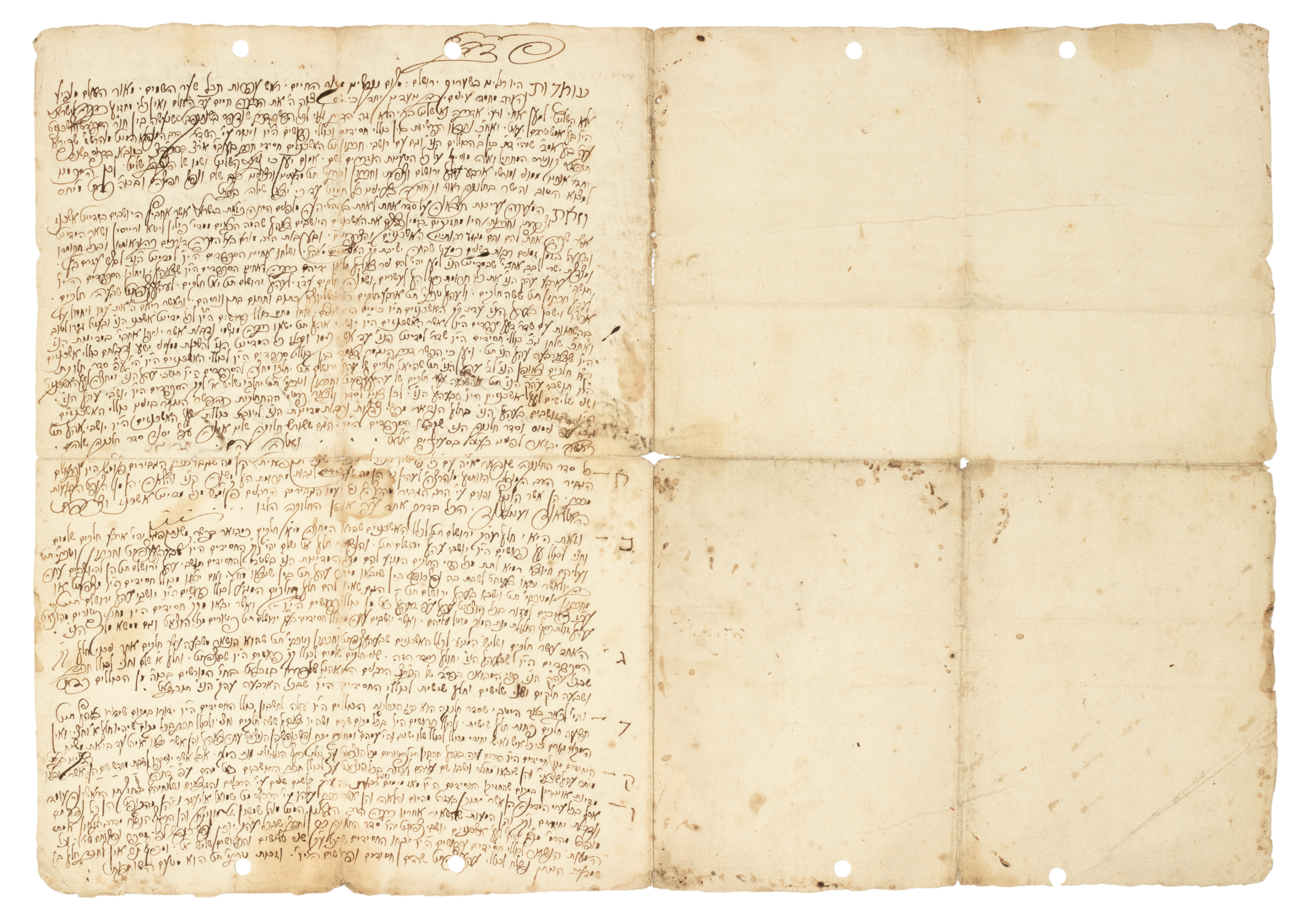
5 Adar I, 1829. One leaf, size: 33×23 cm. Signs of office stapler at top and bottom of page, water stains, and fold marks.
The Chasam Sofer’s Eulogy of Rabbi Amram Chassida
In his drashah of 7 Av 1830, the Chasam Sofer dedicated a major portion to “the eulogy for the gaon Rabbi Amram Chassida, formerly Av Beis Din of Mad, who immigrated to the Holy Land and was summoned to the Yeshiva shel Maalah in Tzfas.”
He described the holy stature of Rabbi Amram:
“The master of Eretz Yisrael, who in his righteousness saved any who were innocent, lifted up his soul in his hand, and traveled with his entire household to the Holy Land. His sole desire was to return and settle in Yerushalayim, the holy city, but circumstances caused him to remain in Tzfas. In a letter he wrote to me last year he mentioned his intention to move to Yerushalayim. Indeed, his prayer was half fulfilled, for after four years of teaching and spreading Torah in Tzfas, he was summoned to the Yeshiva shel Maalah.
The Rabbanim of Eretz Yisrael wrote of him that he literally gave his life in anguish over the Shechinah’s exile. Woe to that day of mourning and upheaval… Thus, the gaon and tzaddik Rabbi Amram, who had already been a great sage and renowned tzaddik in Europe, upon moving to Eretz Yisrael became doubly elevated… Yet he was summoned above at the age of forty. How can I be consoled?”
In a teshuva to him, he writes (Shu”t Chasam Sofer Yoreh De’ah 233):
“Peace and blessing from the G-d of all legions to those who dwell in the upright land, and especially to my dear friend, the delight of my heart, my beloved, the gaon, saintly and ascetic, outstanding in Torah… He is one of ours who traveled there, of whom the Sages said that the wisdom is doubled there……. our teacher, Rabbi Amram, may his light shine, a prince of G-d among the princes of his nation. May Hashem’s protection be upon them, and may Hashem grant them life.”
His Passing
The Minchas Elazar of Munkacs wrote:
“We heard from great talmidei chachamim that the gaon Rabbi Amram Chassida, who was Av Beis Din of Mad (mentioned in Shu”t Chasam Sofer Yoreh De’ah 233–234), famed for his righteousness and piety, later in Eretz HaKodesh — in the hour before his passing, many testified that he recited a blessing with Shem and Malchus that gave a foretaste of the World to Come.” (Divrei Torah, first edition §74).
The Arugas HaBosem related that the text of the blessing was: “Who gives light to His servants from the hidden light from the six days of creation” (Haggadah Arvei Pesachim by his grandson, author of Beis She’arim Budapest, 1927, p. 118).
His Burial
Rabbi Amram Chassida was interred in the old cemetery of Tzfas beside the grave of the Alshich. In later years, his resting place was restored by Rabbi Menashe Klein of Ungvar, author of Mishneh Halachos, who was married to a great-granddaughter of the Beis She’arim, a grandson of Rabbi Amram.
