



To attend this auction live or leave absentee bids
Lot : 68
Magnificent Masterpiece.
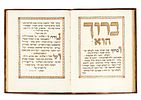
Bordeaux Haggadah.Written and Illustrated by Yaakov Tzoref.Bordeaux, Southern France, 1812
Magnificent Masterpiece.
Bordeaux Haggadah.
Written and Illustrated by Yaakov Tzoref.
Bordeaux, Southern France, 1812
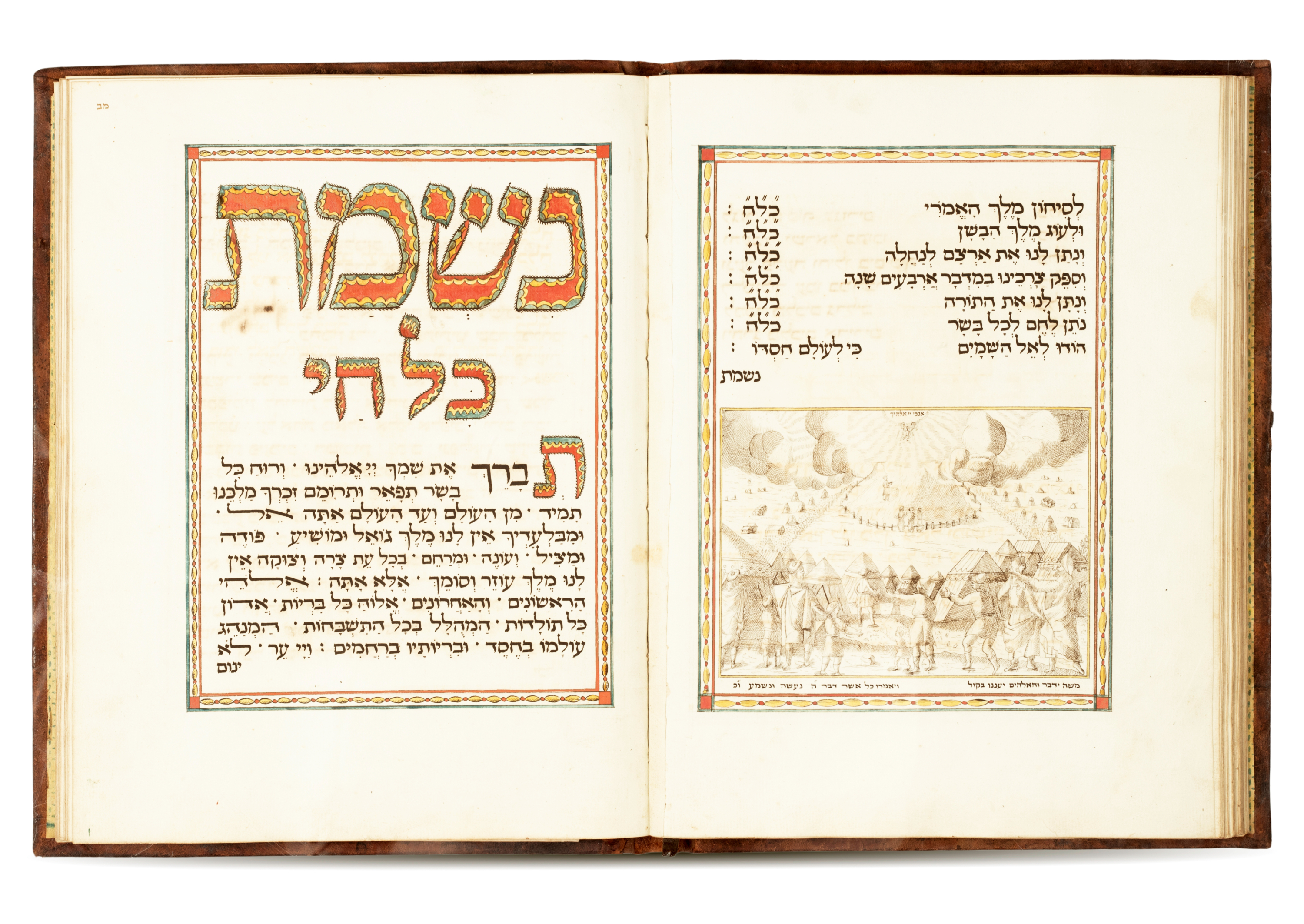
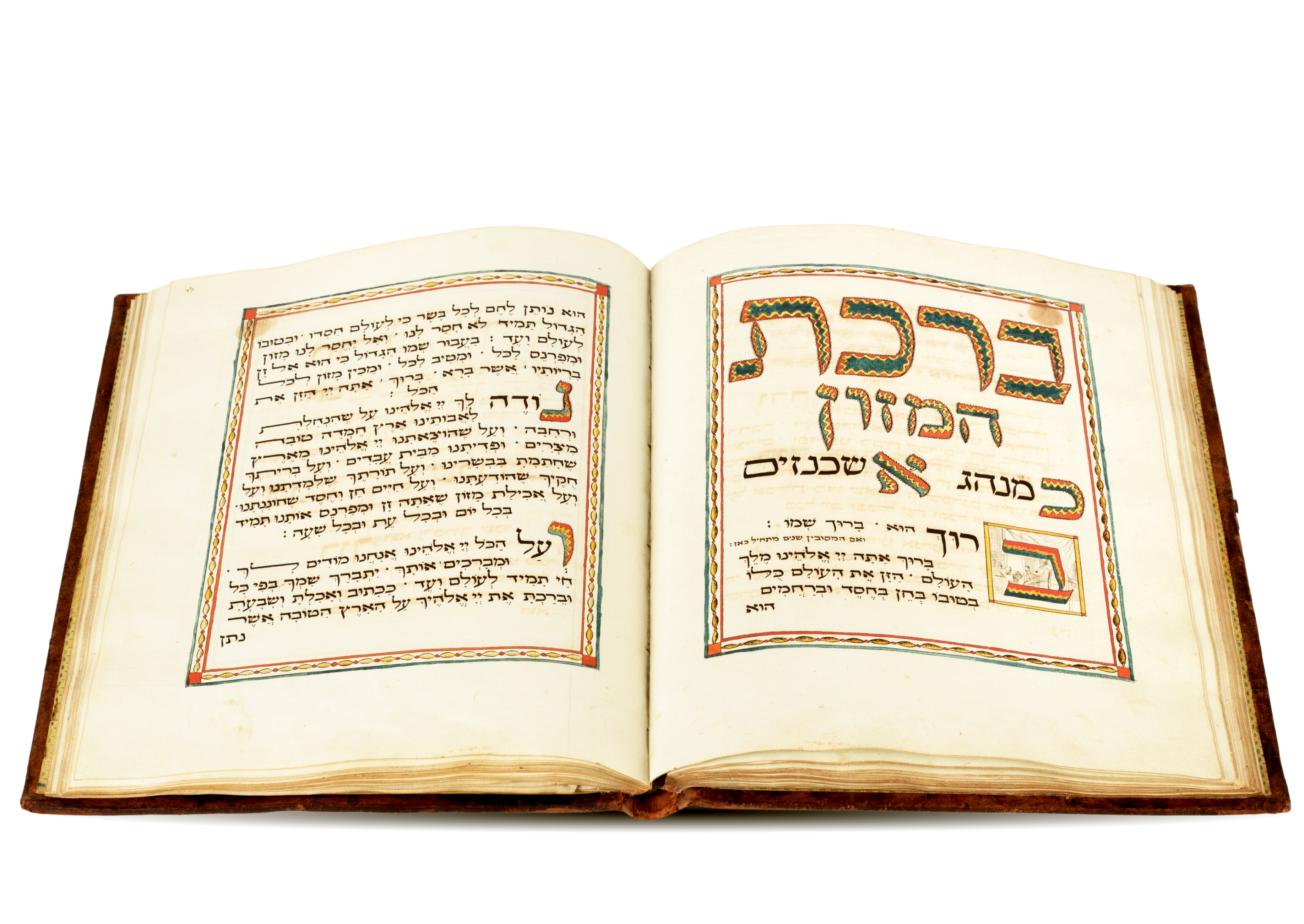
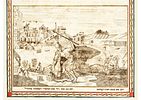
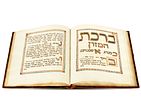
A handwritten Haggadah, richly illustrated and adorned in exceptionally fine script, with more than thirty colorful illustrations in red, yellow, and blue, unusually large opening letters, initials and decorations, and folded maps, all executed with remarkable accuracy and artistic brilliance.
A beautiful and exceedingly rare work of art. Almost no creations of this kind are known from nineteenth-century France.
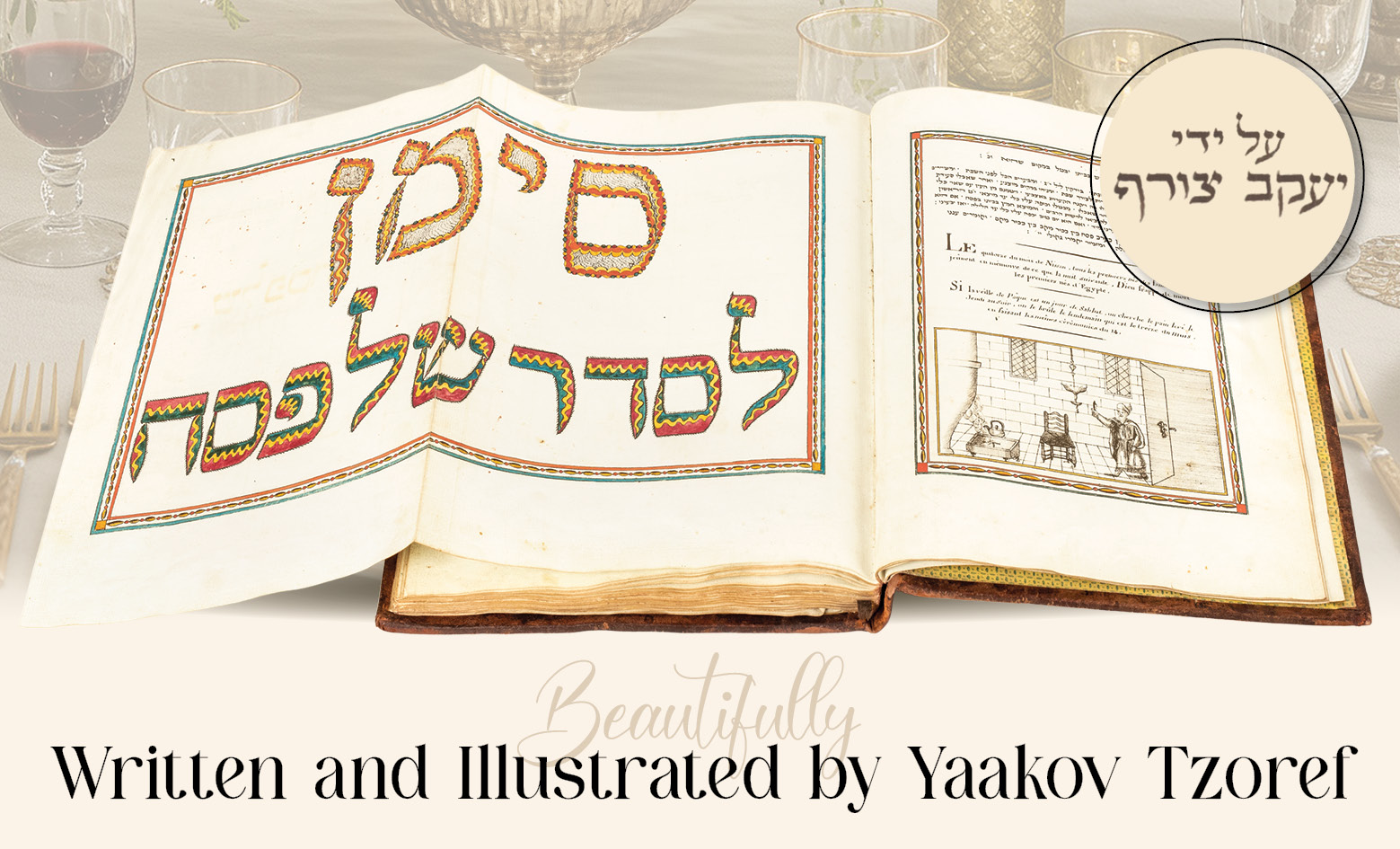
The Haggadah and maps were written and illustrated by Yaakov Tzoref, the community scribe of Bordeaux, an artist-scribe whose additional works grace the collections of the National Library of Israel in Jerusalem and the Israel Museum.
This Haggadah stands as a model and exemplar of a group of manuscripts privately commissioned by families of nobility in Europe, reflecting the stature and prosperity of the Jews of France in the nineteenth century.
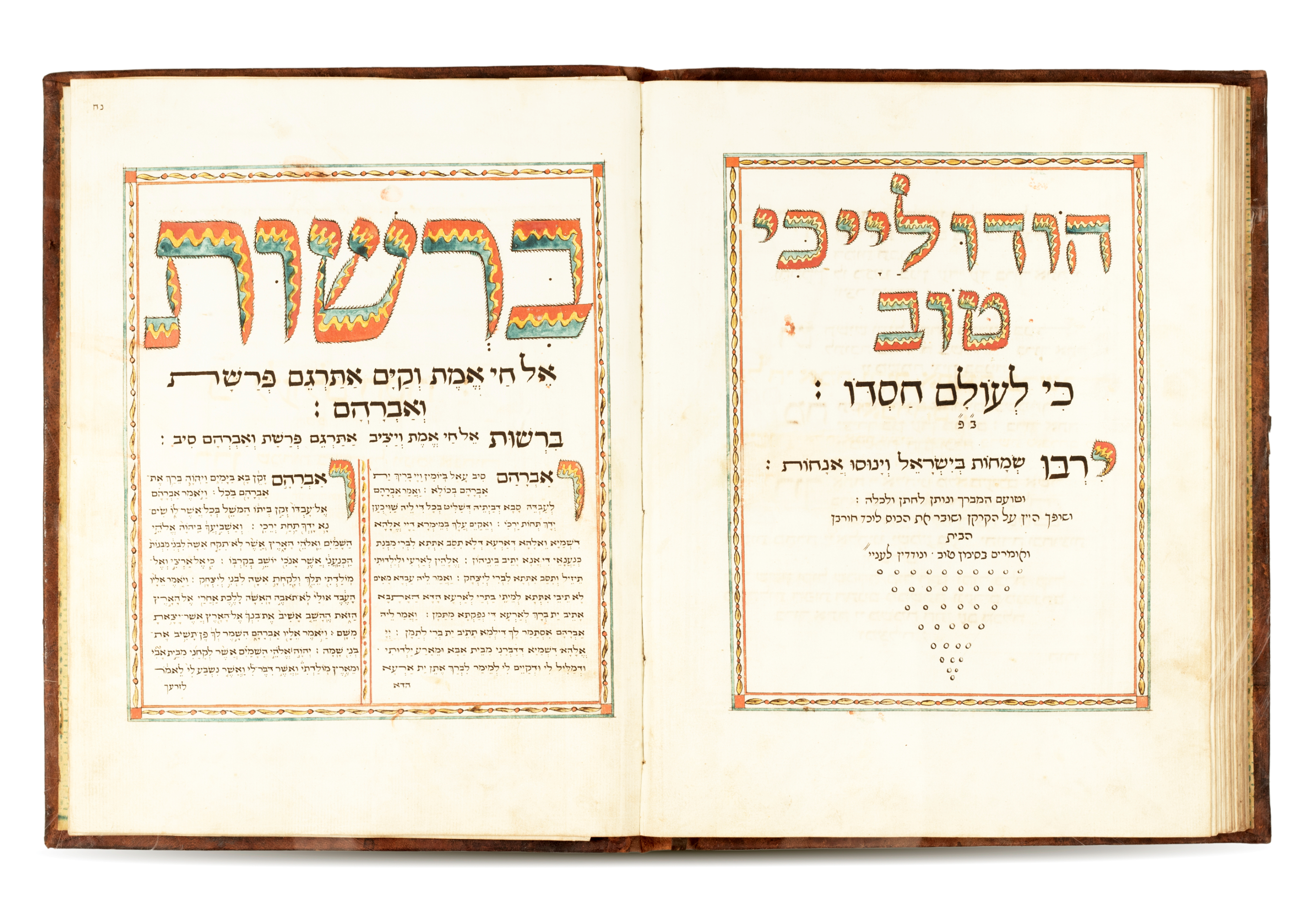
From the supplements added to the Haggadah — the blessing for Sheva Brachos, Parshas “Ve’Avraham Zaken, ” and the blessings for Sukkos — makes it apparent that the volume was presented as a gift to a chassan whose wedding took place close to Sukkos (the date on the title leaf is the sixth of Tishrei).
***
The Scribe and Artist Yaakov Tzoref of Bordeaux
The Tzoref family were part of the Sephardic community of Bordeaux in southwestern France. The parents, Shlomo and Rivkah Tzoref, whose family originated in Portugal, were merchants with two sons and two daughters — the elder, Yaakov, and the younger, Yitzchak (according to archival documents in Bordeaux).
Both brothers were skilled scribes, but Yaakov was also an artist who excelled in drawing. Besides the present Haggadah, several other works of his are known. He illustrated the Haggadah written by his brother in 1813 (Moldovan Collection, Israel Museum; see below), as well as an illustrated and decorated Machzor for the Three Festivals (National Library Manuscript No. 34°1113).
The Jewish-Sephardic community of Bordeaux was large and affluent, founded in the late fifteenth century and composed mainly of descendants of exiles from Spain and Portugal.
At the time this Haggadah was written, more than two thousand Jews lived in Bordeaux, most of them members of the Sephardic community.
One of the well-known Jews of that period was Abraham Furtado (1756–1817), a banker, shipping magnate, and French statesman who served as deputy mayor and as secretary-general of the Assembly of Jewish Notables in Paris during the Napoleonic era.
Contents:
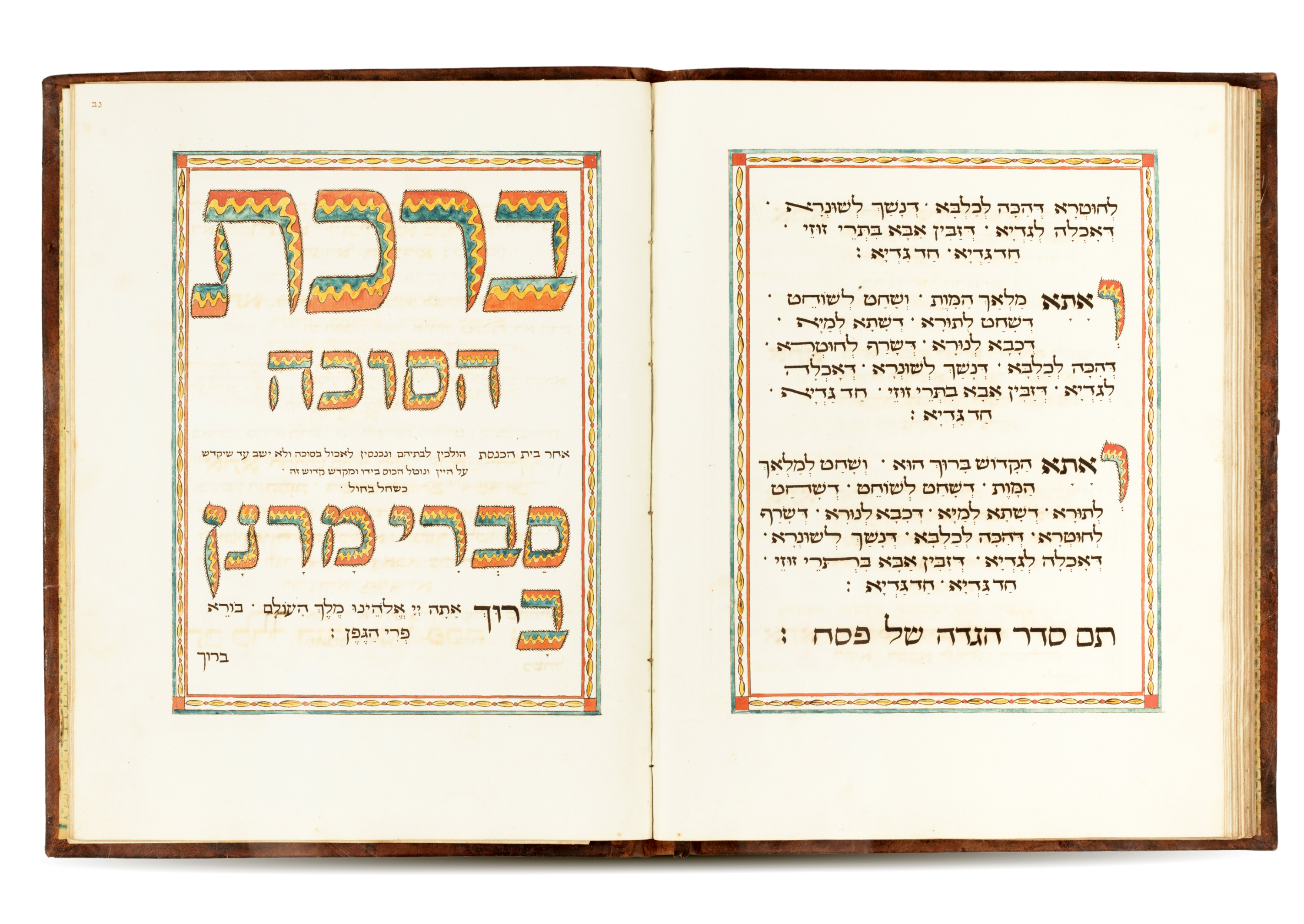
The text follows the order of the Pesach Haggadah according to both Sephardic and Ashkenazic custom, including two versions of Birkas HaMazon — Sephardic and Ashkenazic — and concluding with Ashkenazic piyutim.
At the end of the Haggadah are several appendices:
Blessings of the Sukkah and Kiddush for Sukkos and Shemini Atzeres (leaves 52–54);
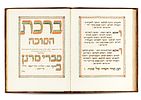
The order of Birkas Eirusin and Sheva Brachos (55–57);
Parshas “Ve’Avraham Zaken” with Targum Onkelos, traditionally read to a chassan called to the Torah in Sephardic communities (leaf 58).
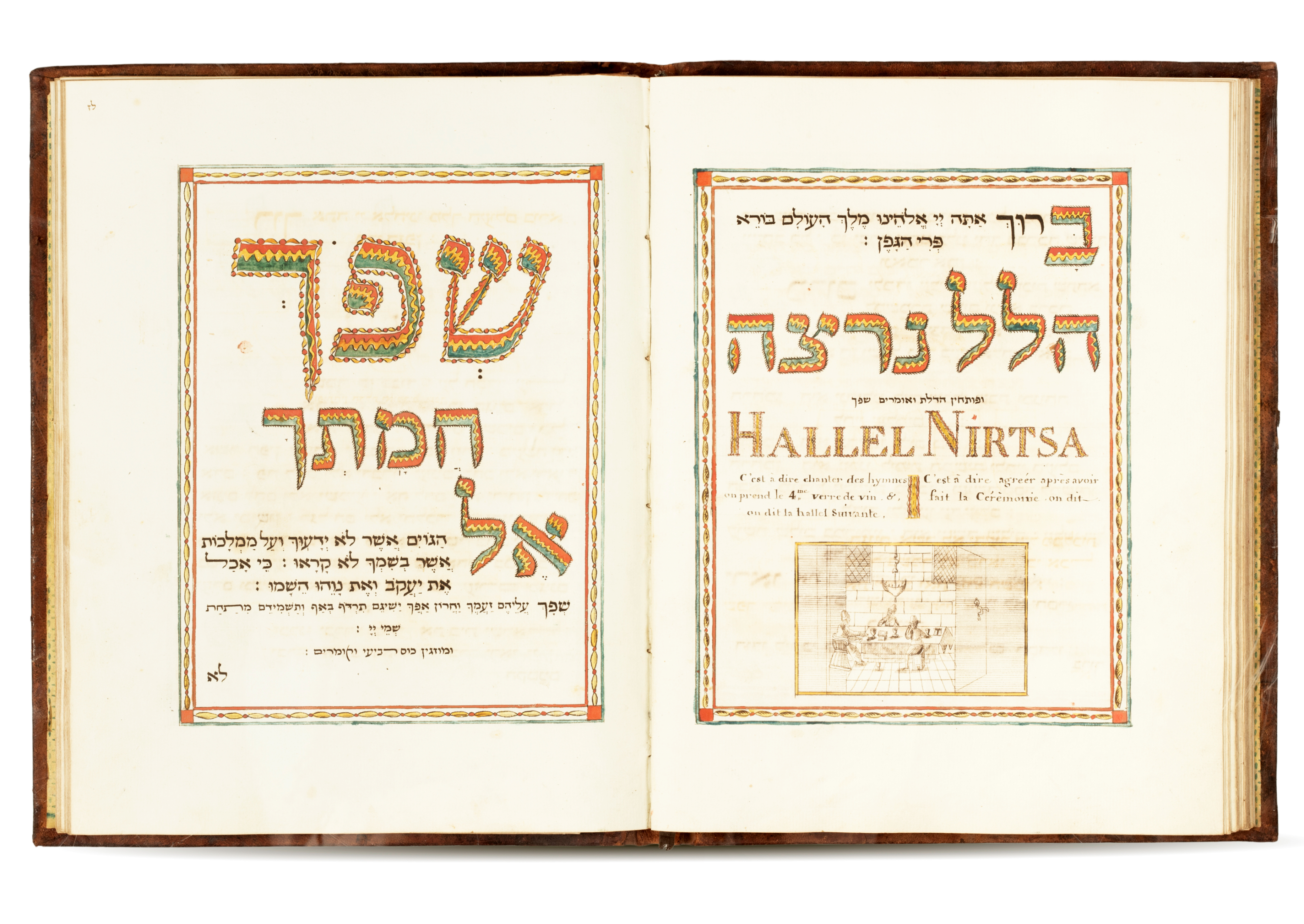
Instructions for conducting the Seder appear in French, and some are also in Hebrew and Ladino.
Description of the Haggadah:
[1], 58 leaves + [2] folded maps.
Height: 31.5 cm.
Width: 23.5 cm.
Width: 23.5 cm.
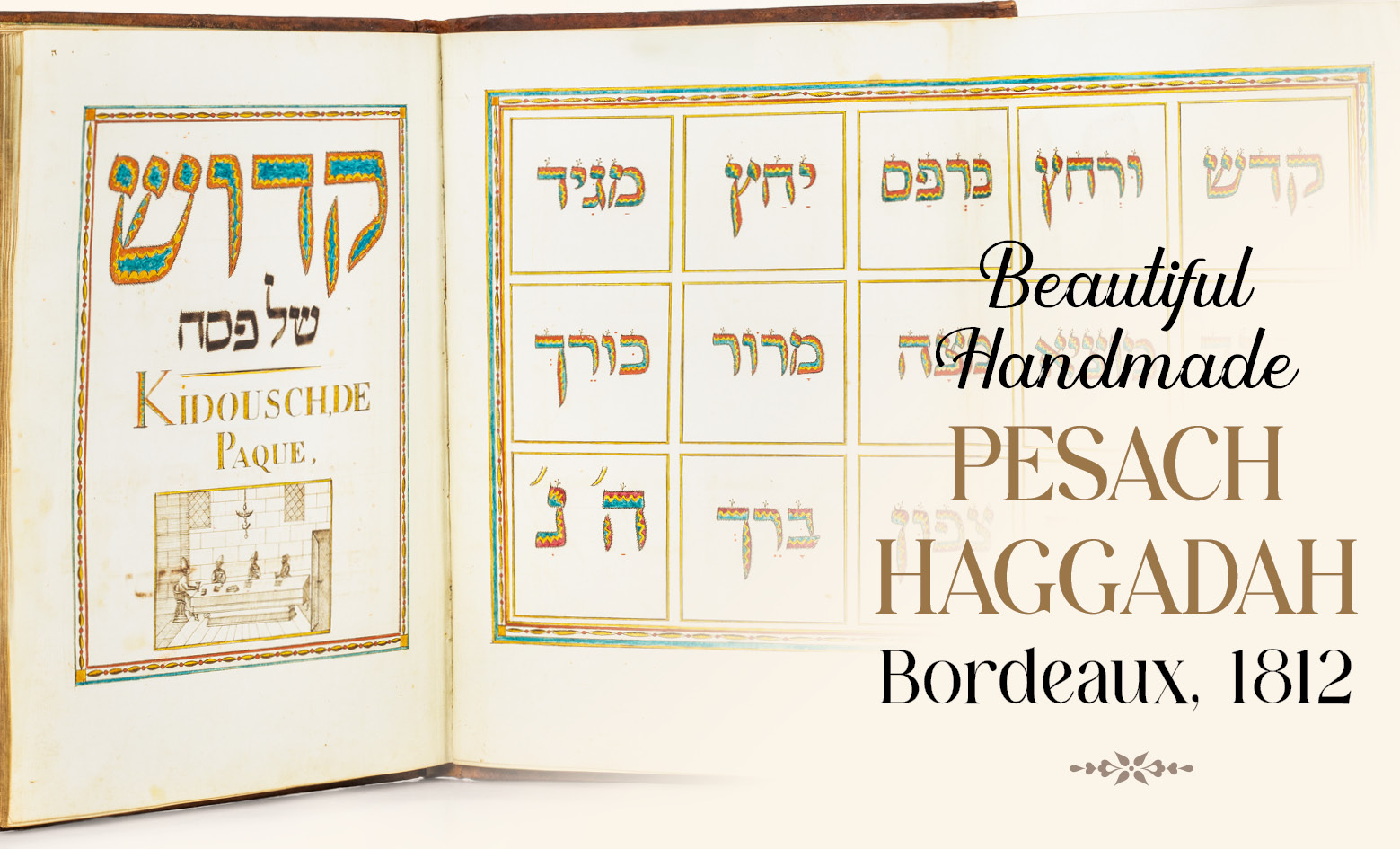
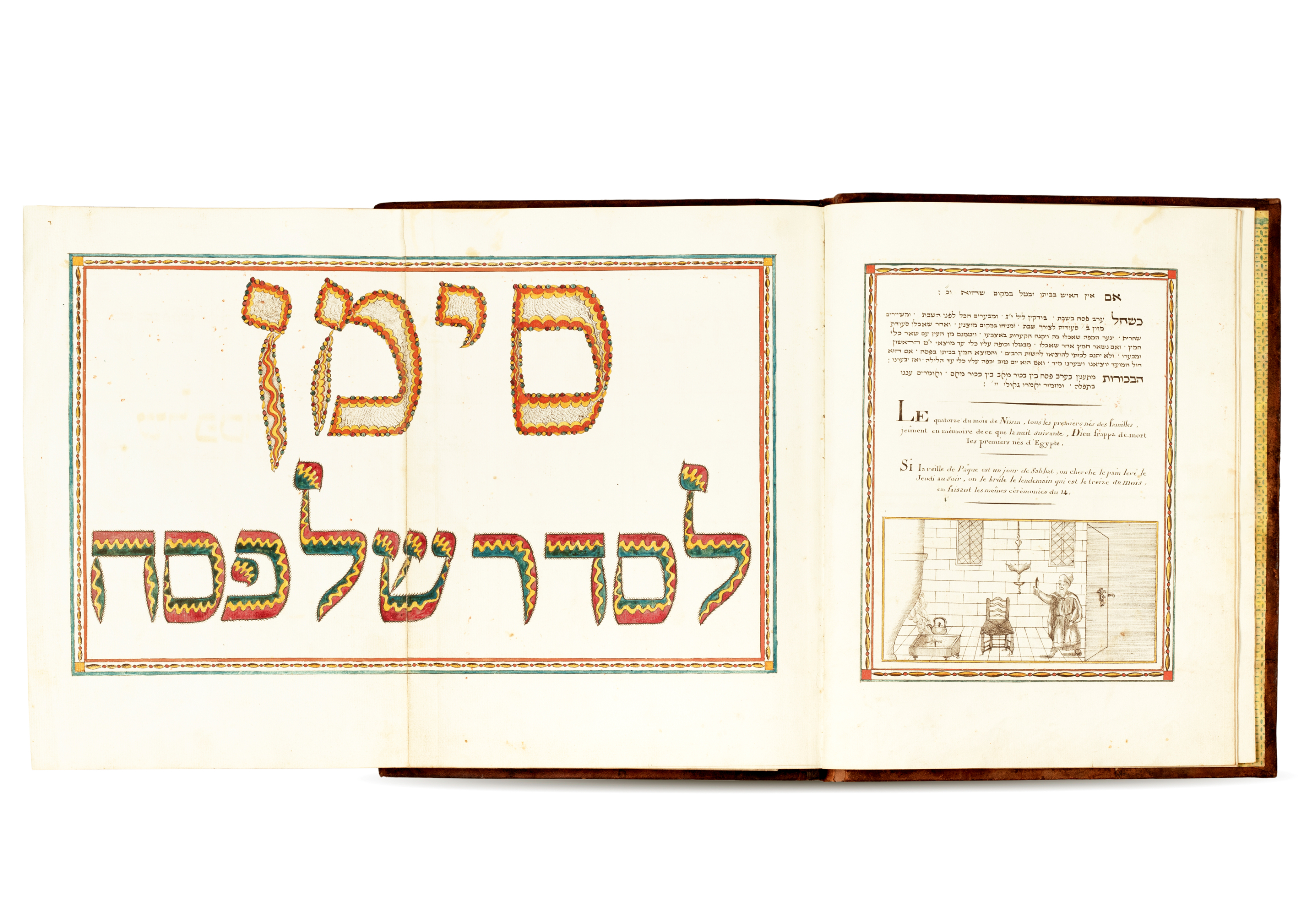
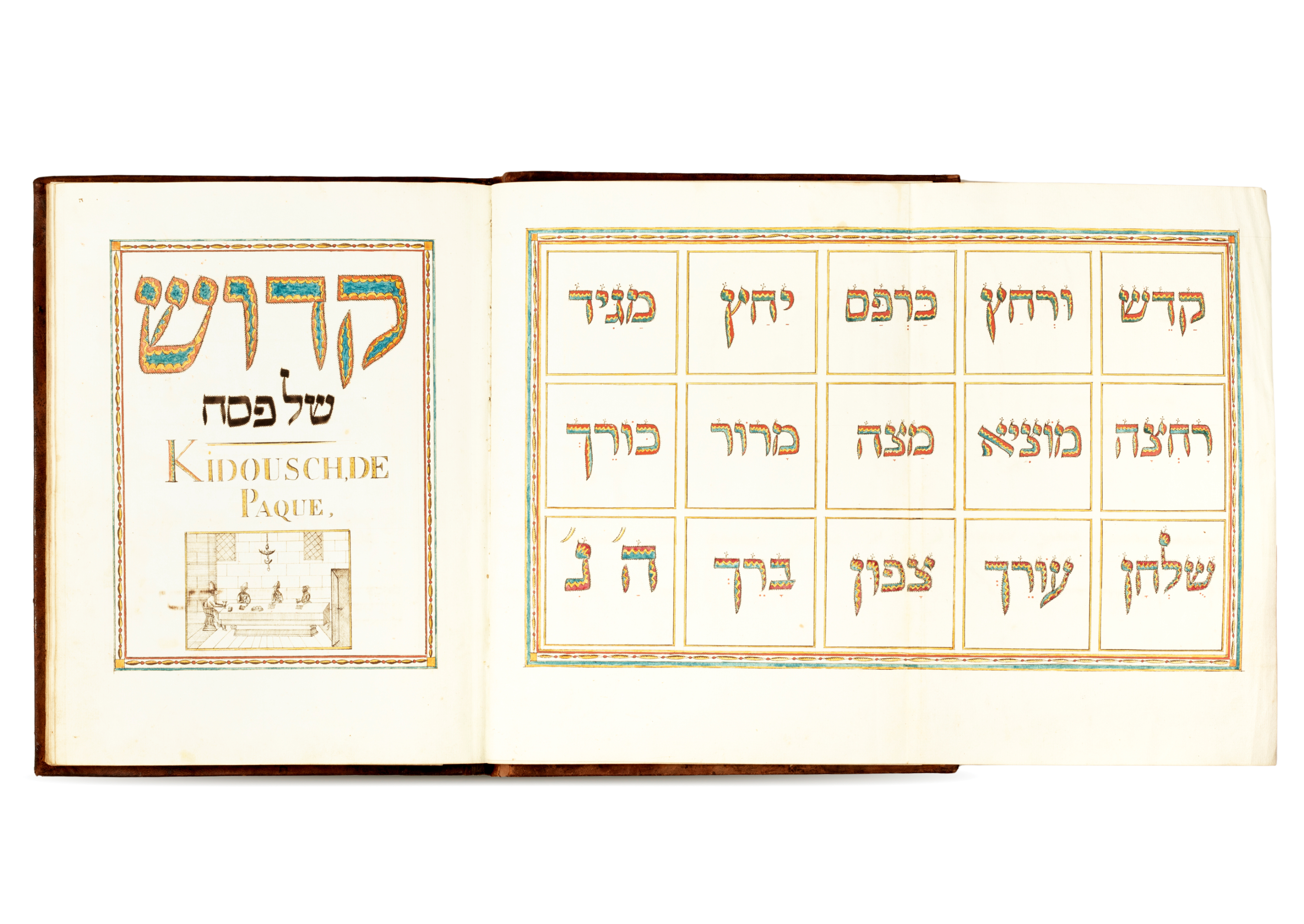
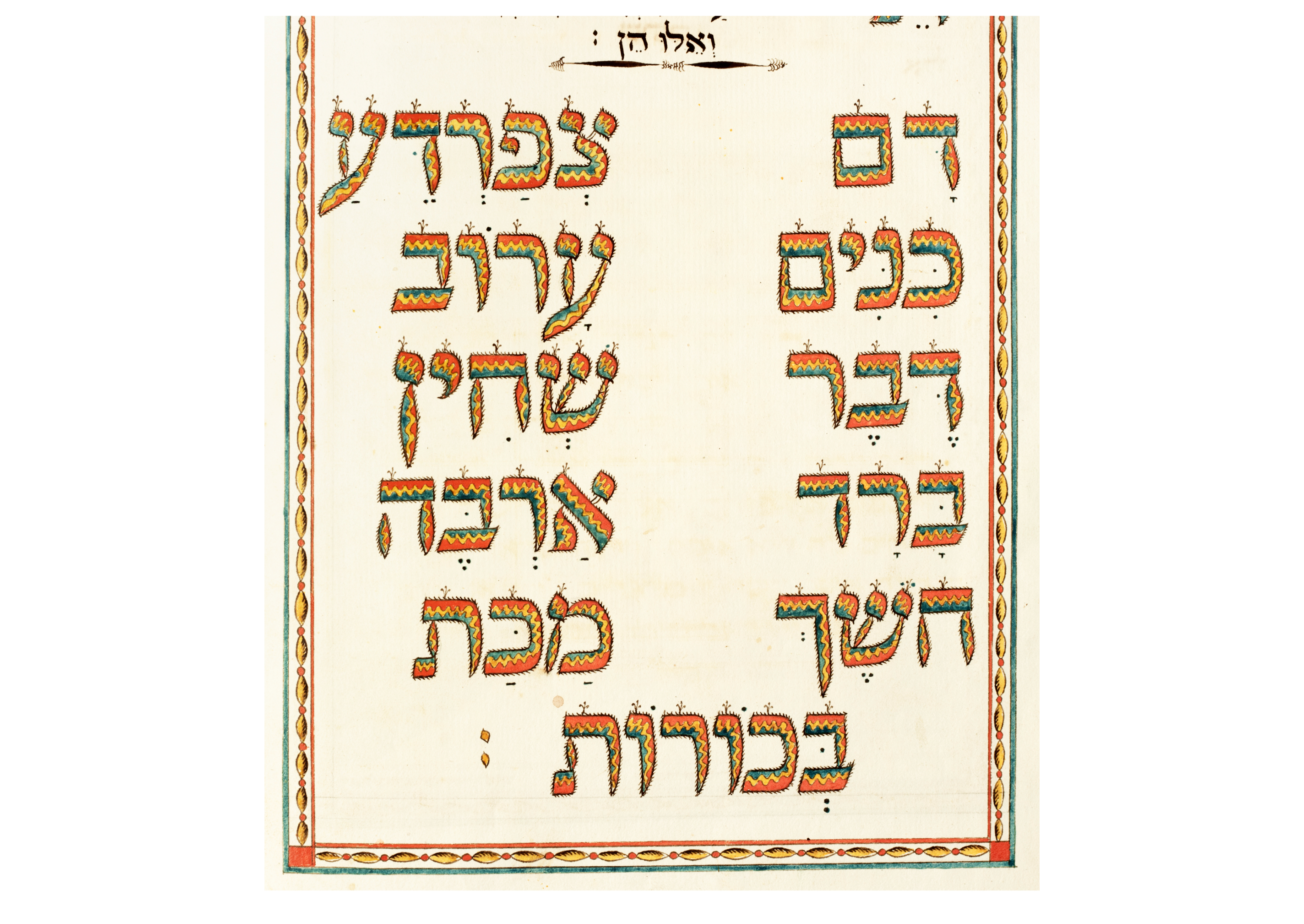
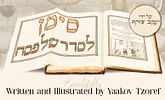
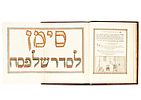
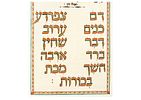
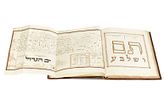
Leaf 4 is a large folded sheet (31 × 43 cm) containing a chart of the simanim of the Seder night in large letters — a unique panel with no parallel in illustrated handwritten Haggados.
Thick, high-quality paper with a slight greenish tinge. Every page has a colored border. Gilt edges. Good condition, with a few wine stains.
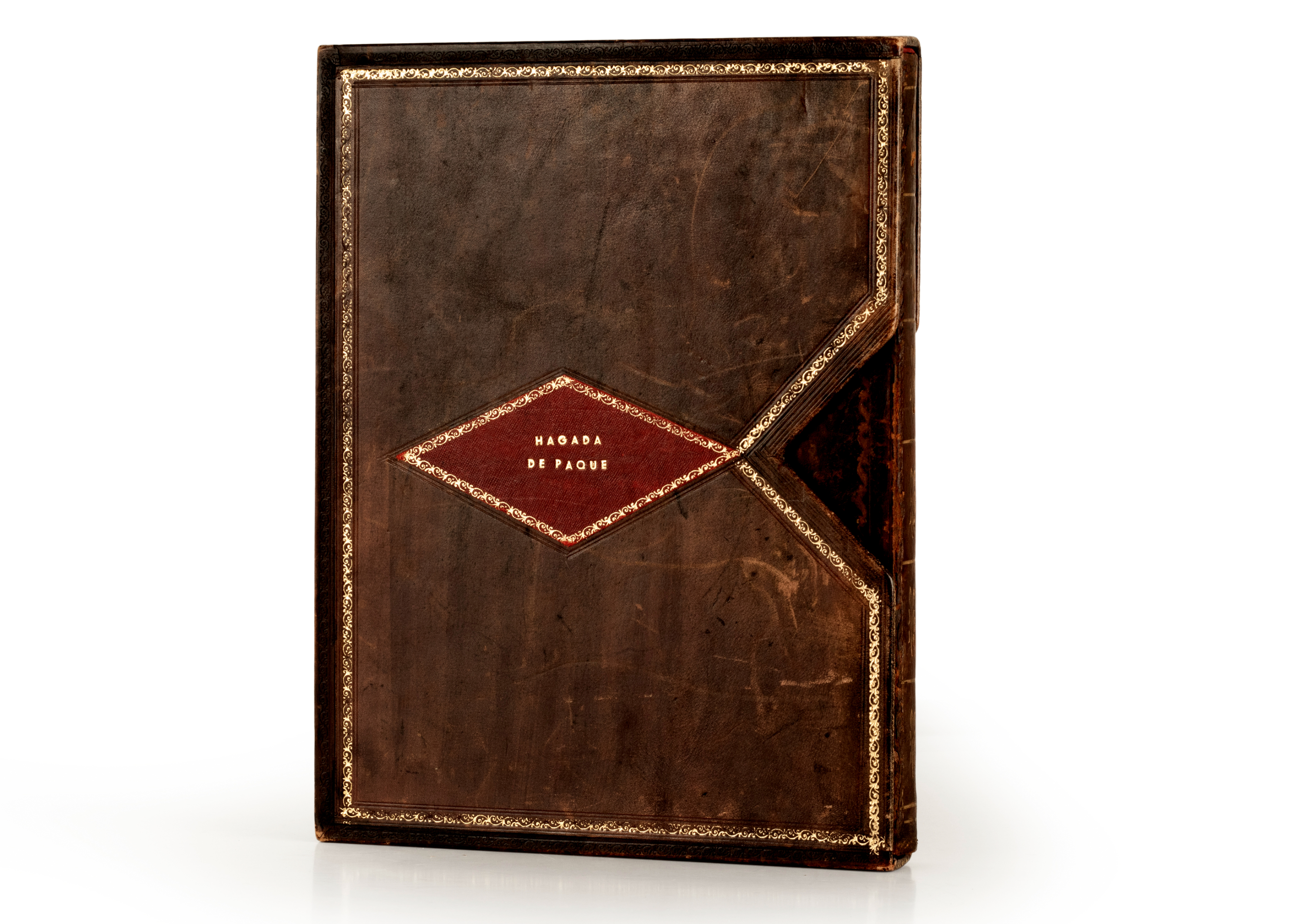
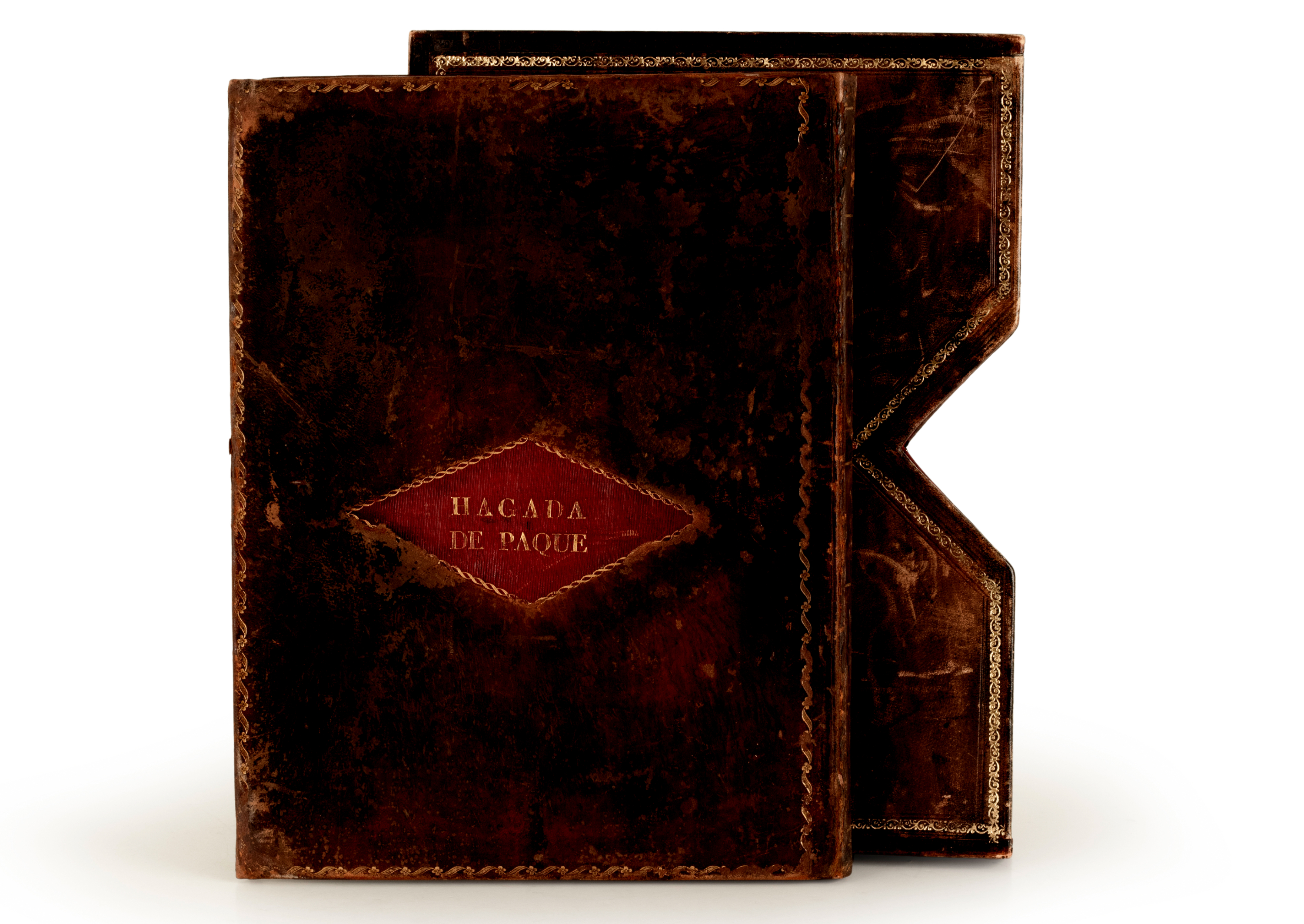
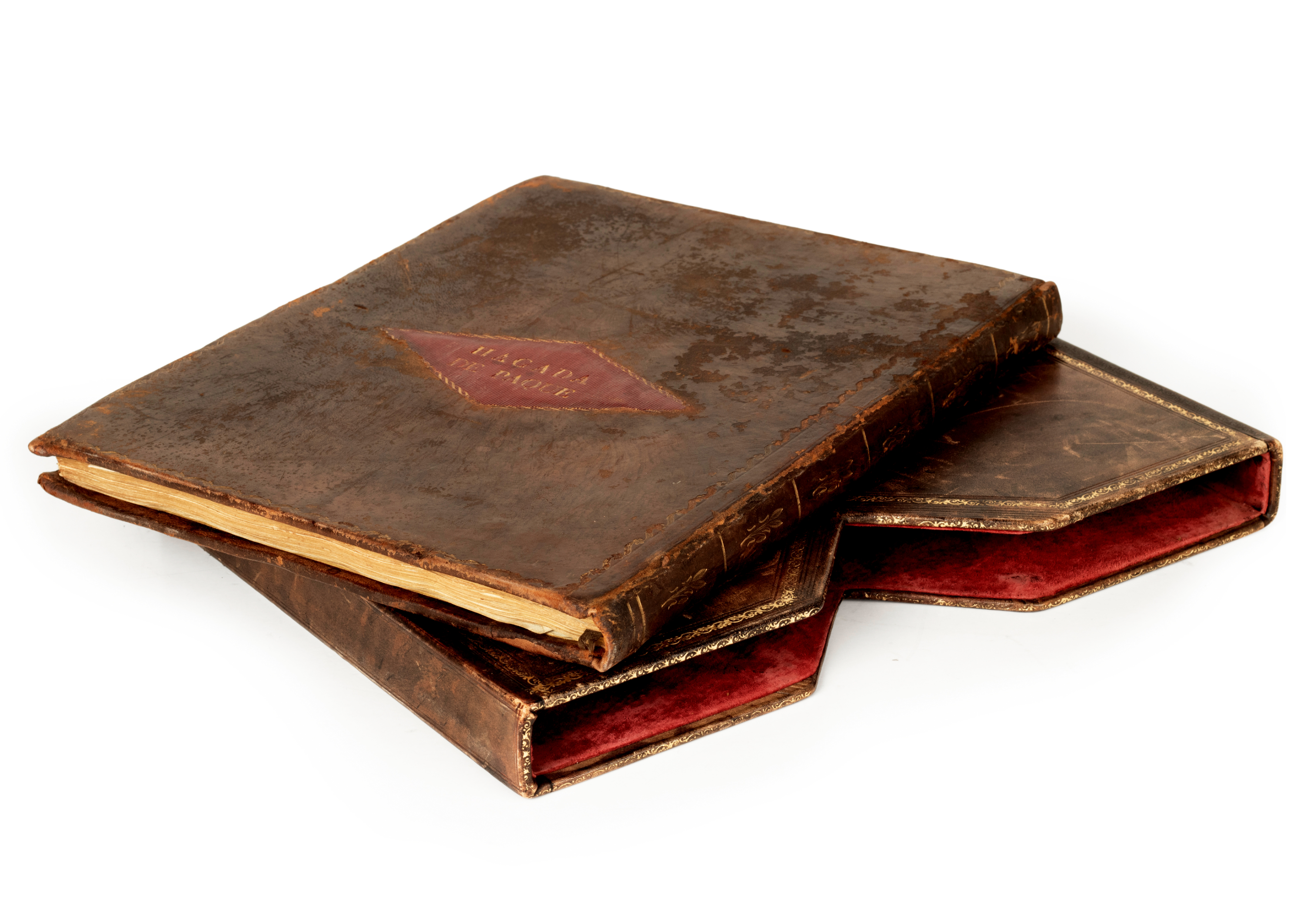
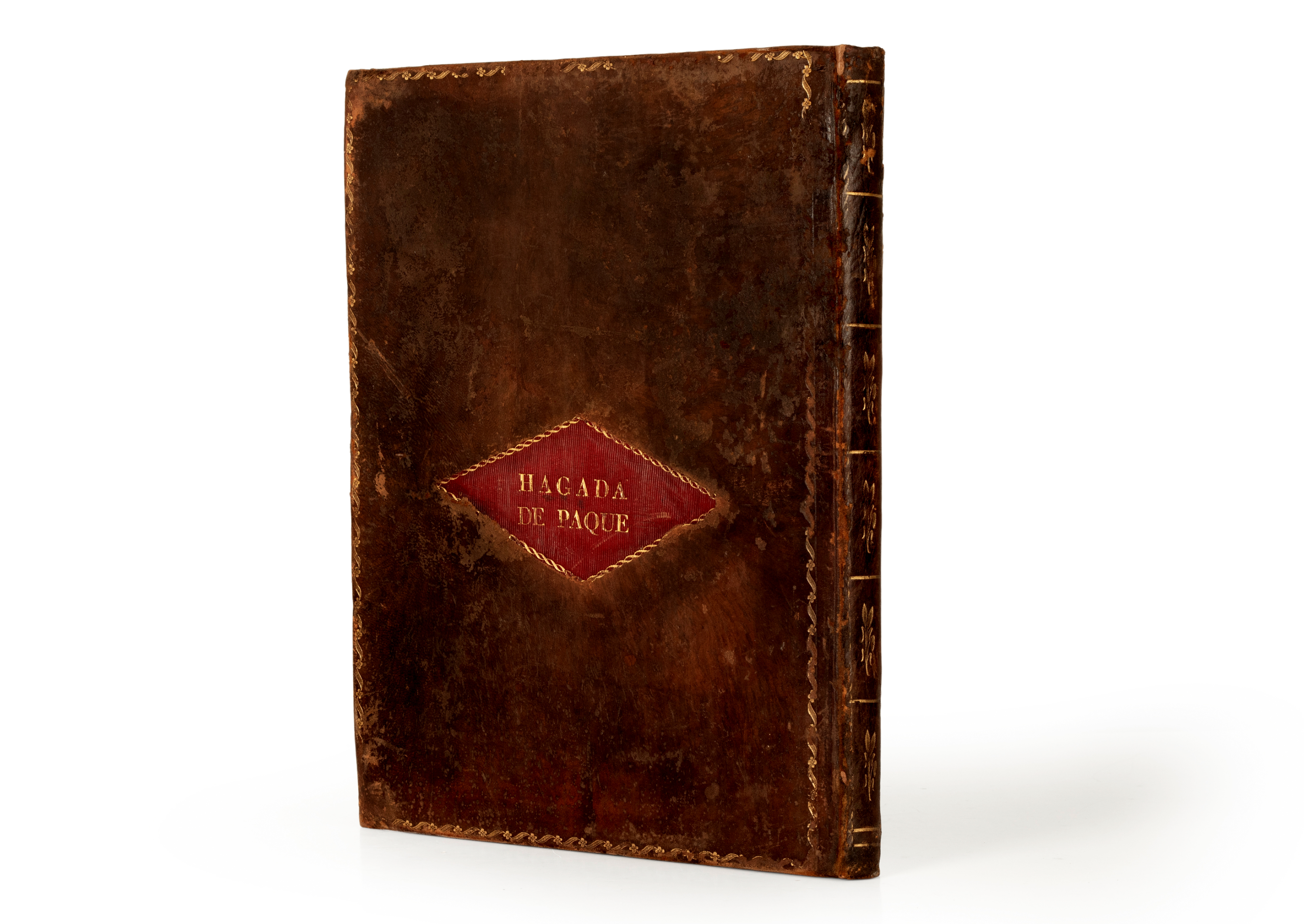
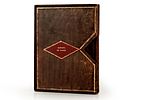
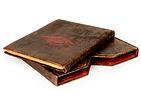
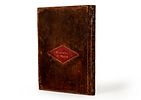
Original leather binding with gilt ornaments (rubbing to the binding). At the center of the picture, embossed in gold letters on a red background, are the words: HAGADA DE PAQUE.
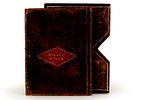
Preserved in a new English leather case.
***
Script
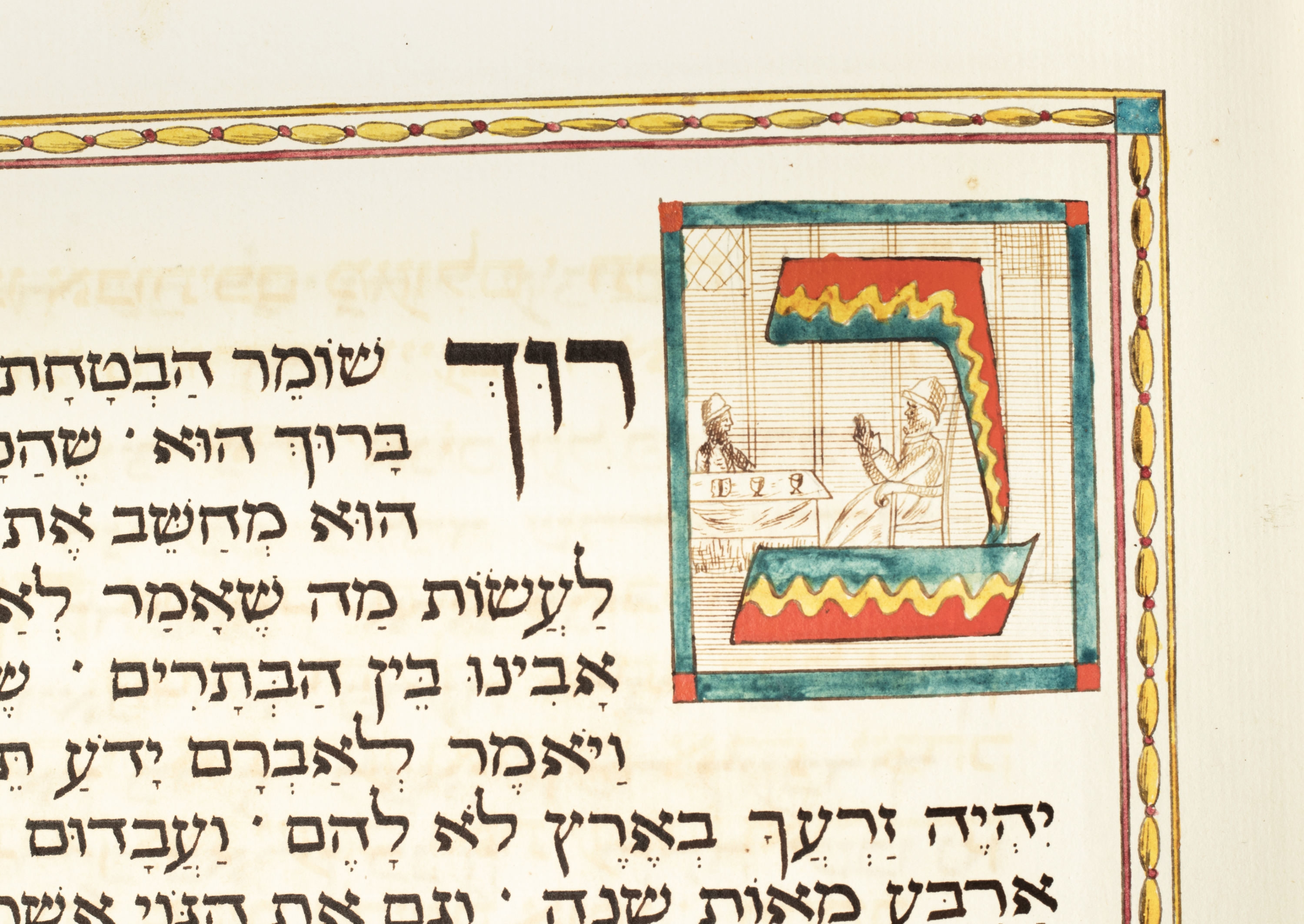
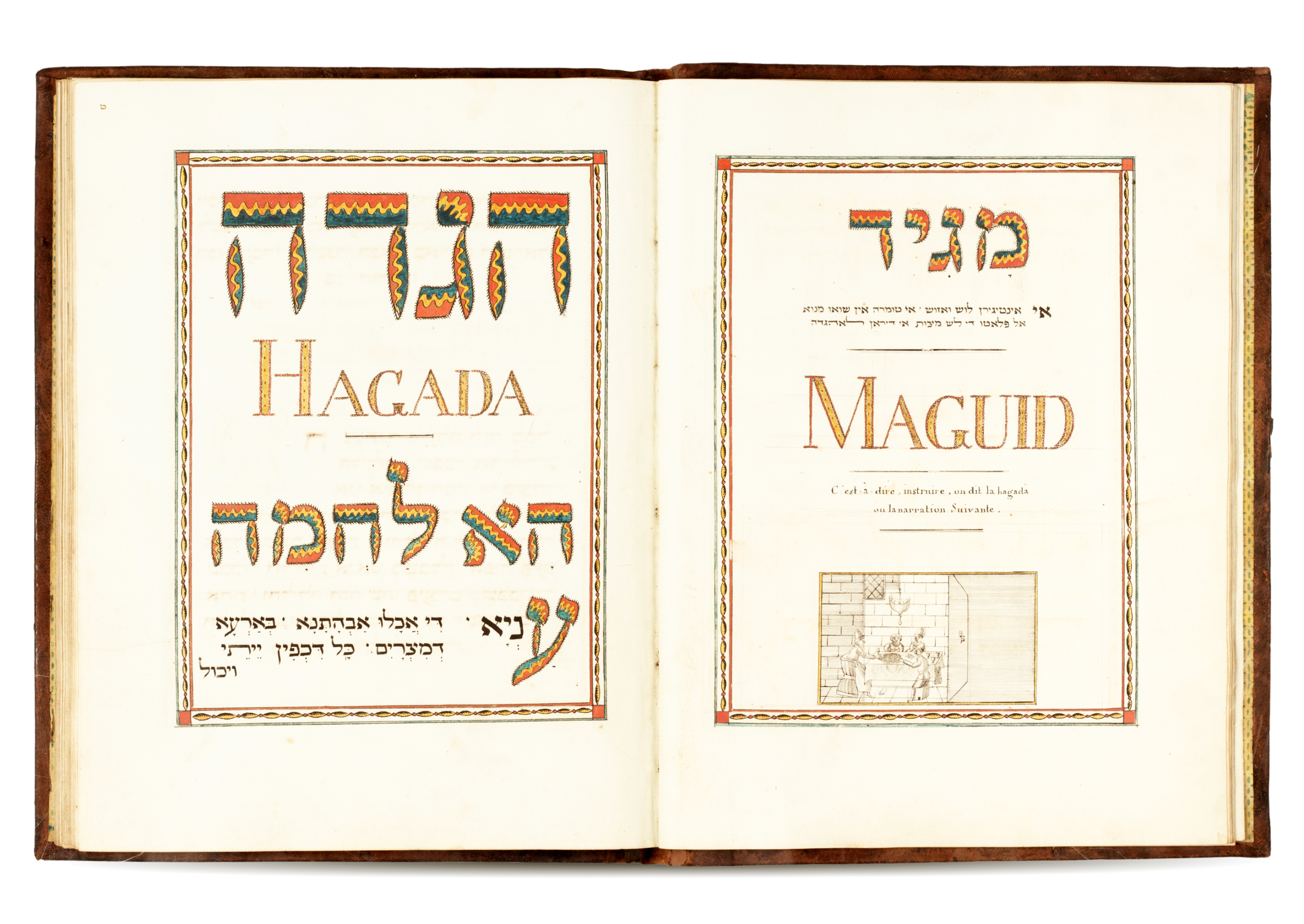
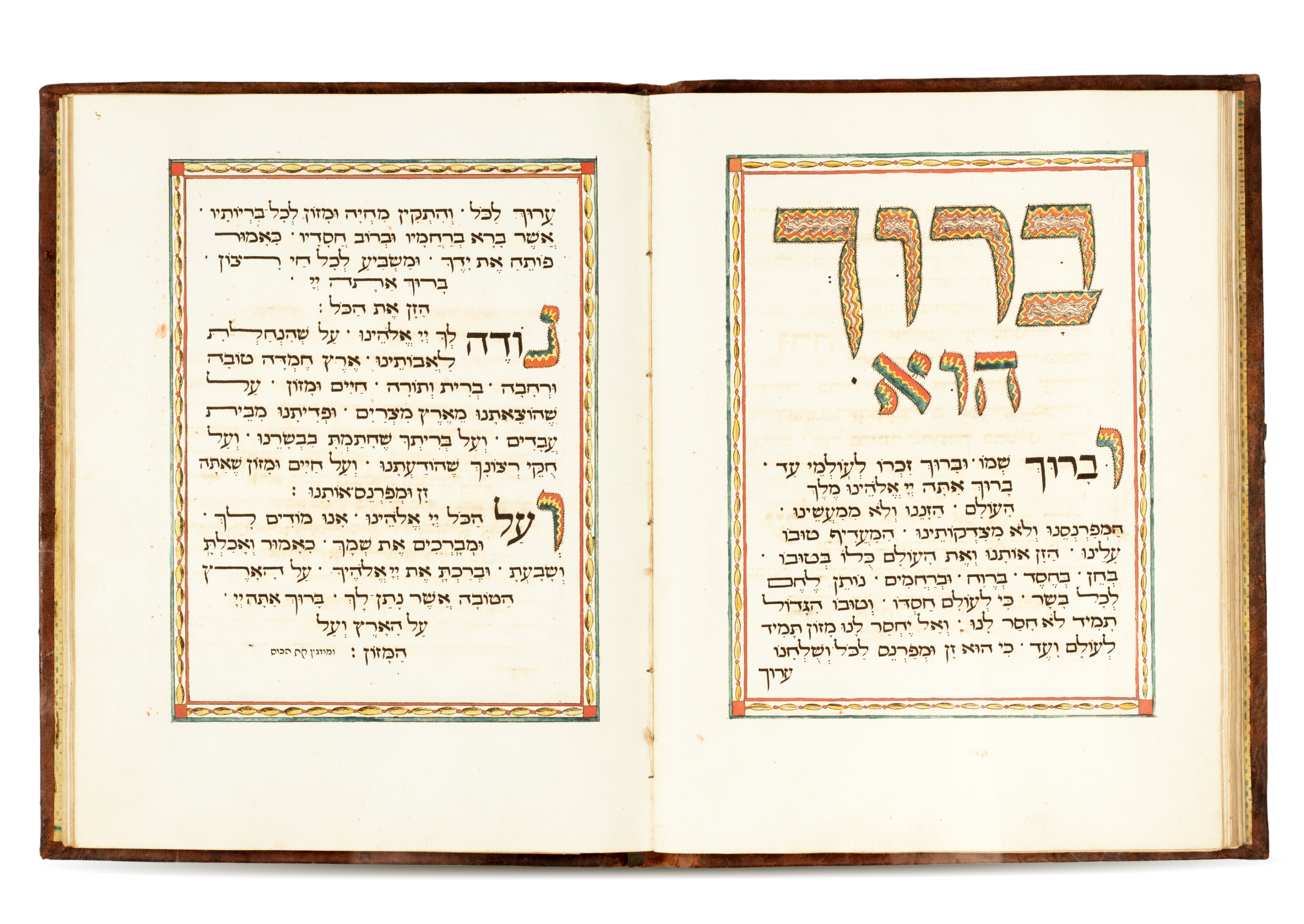
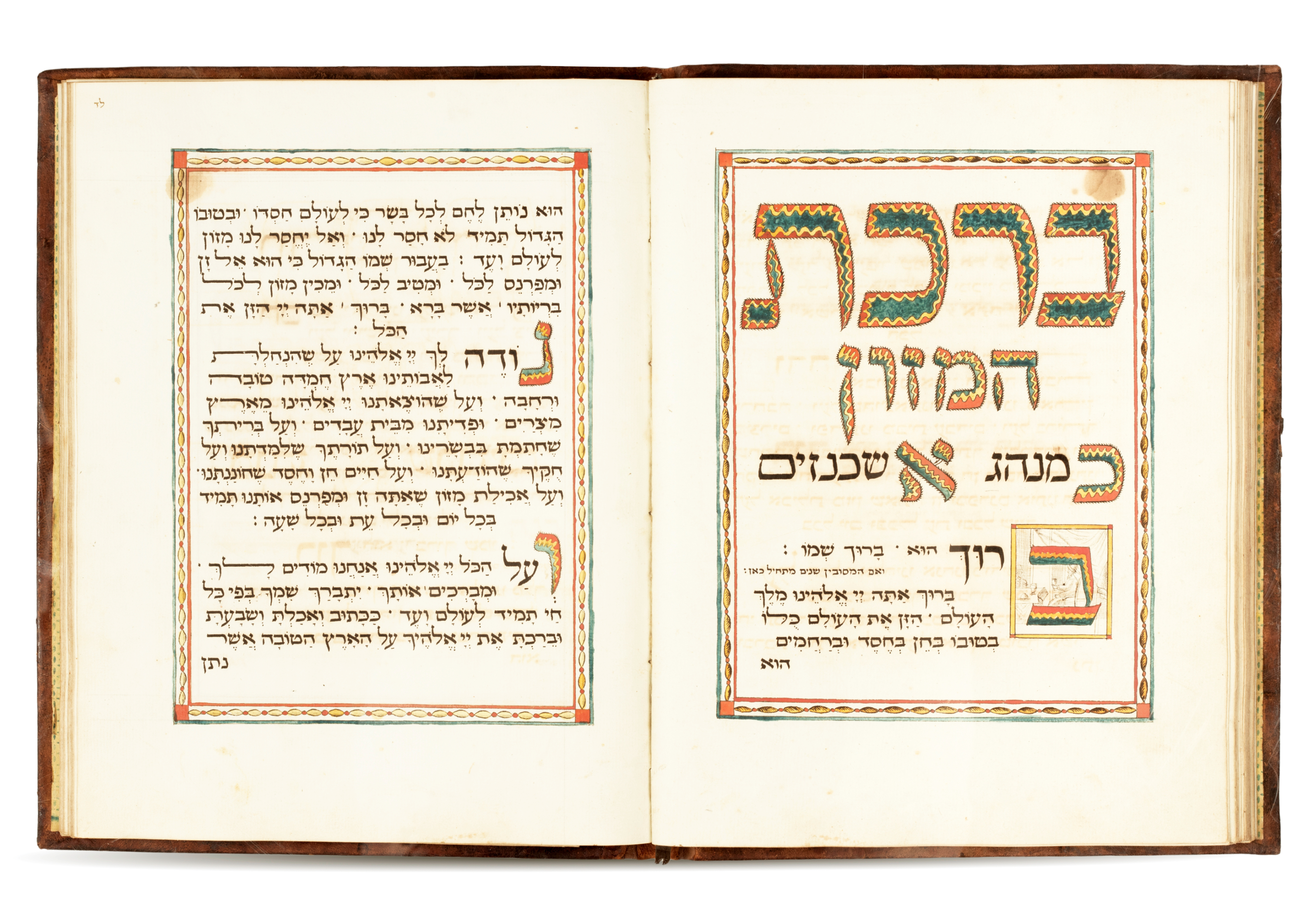
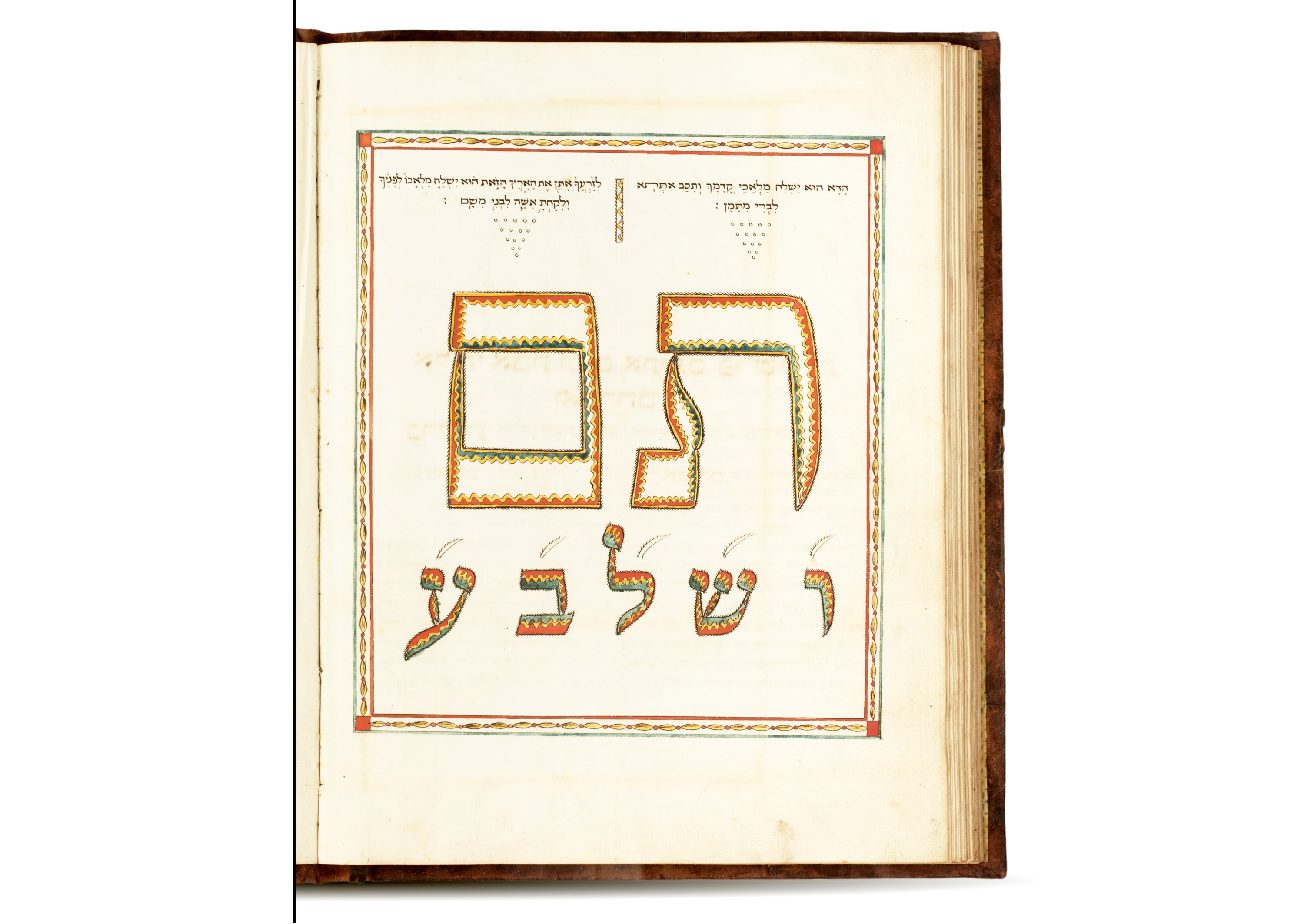
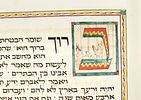
The Haggadah is written in fine script with large letters. Headings, special texts, and initials appear in large letters — some reaching 109 mm — in red, yellow, and blue.
Illustrations
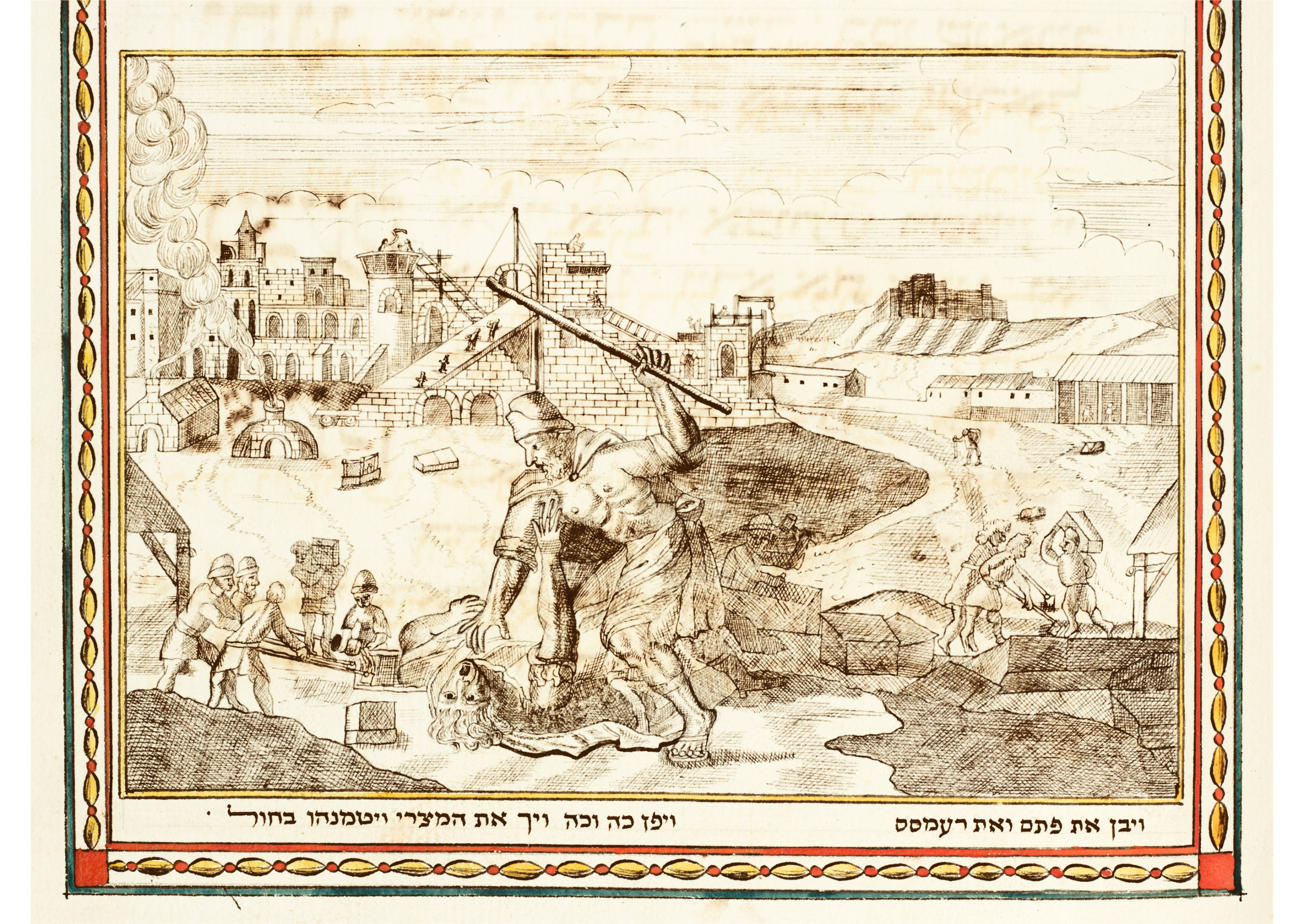
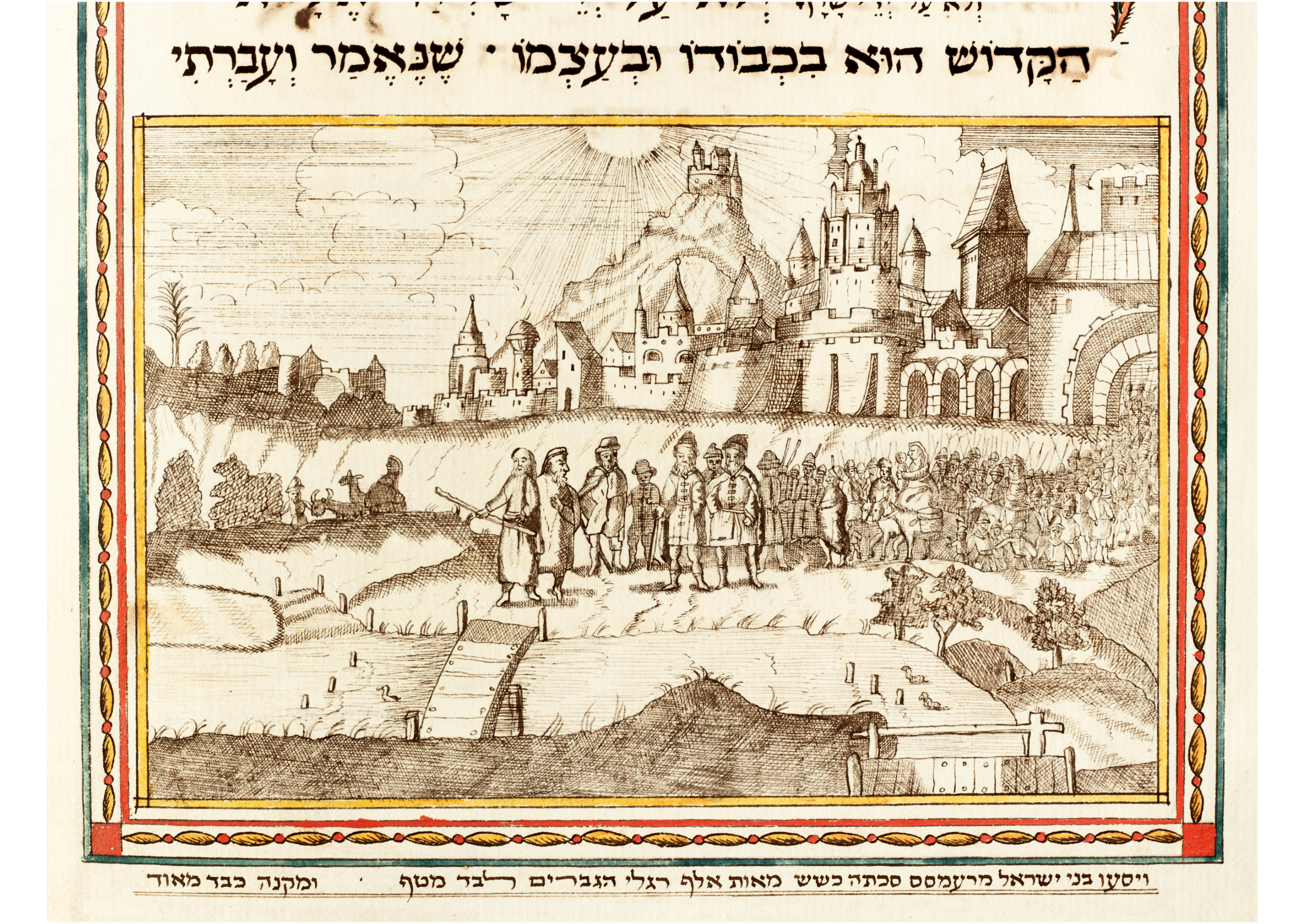
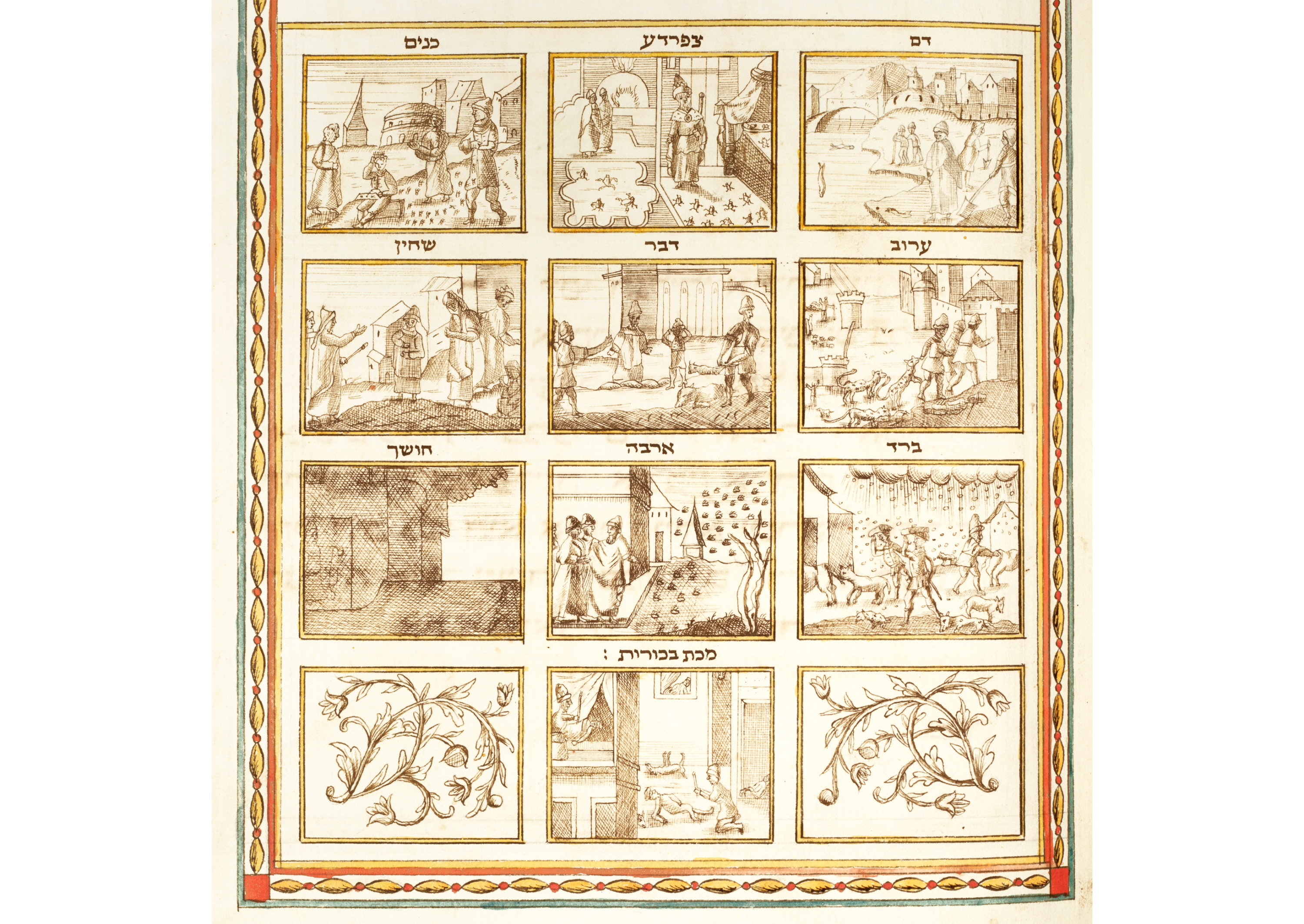
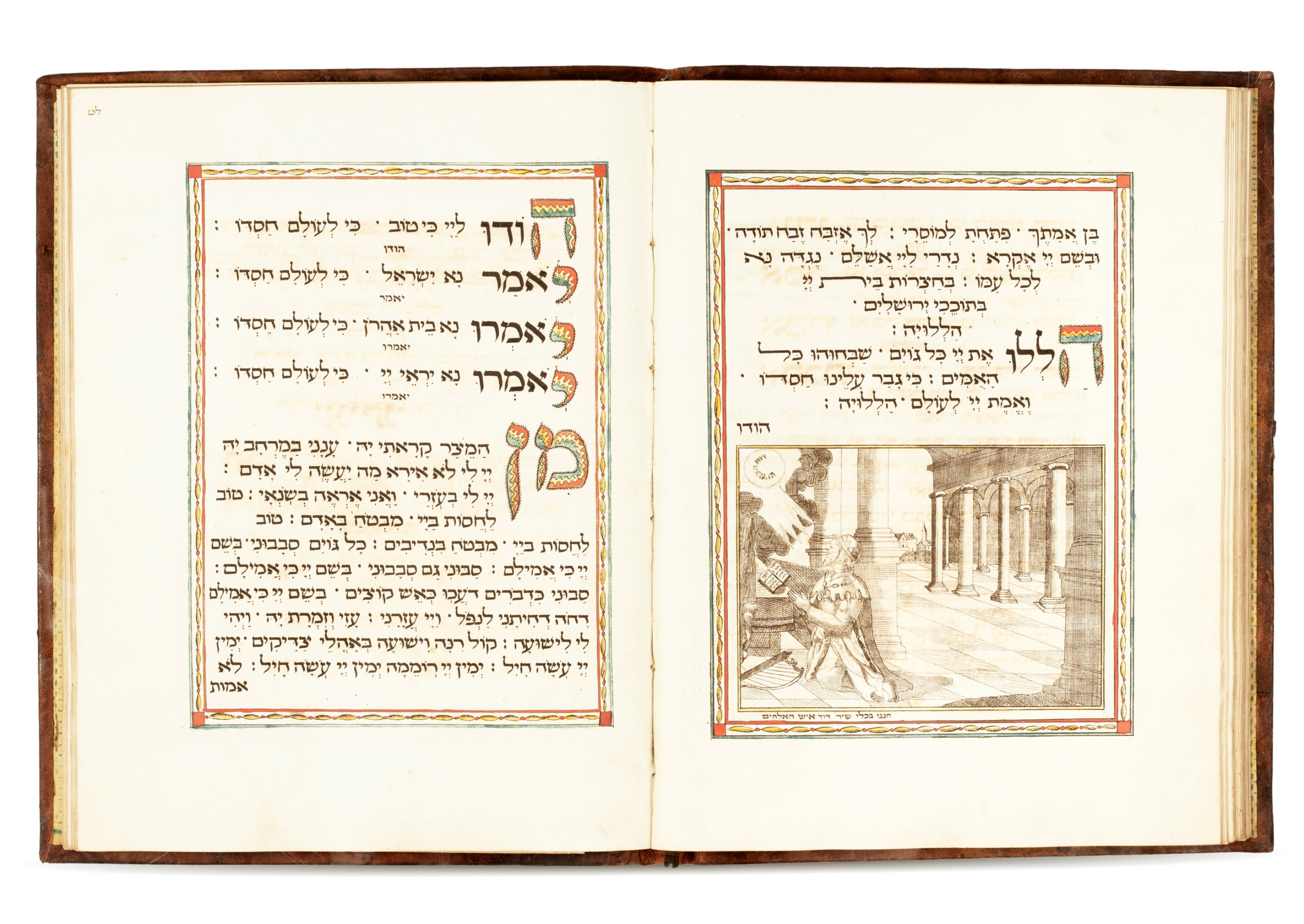
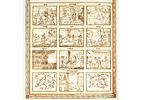
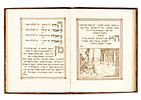
There are thirty splendid illustrations of varying sizes, some spanning more than half a page, plus ten miniature depictions of the Ten Plagues (leaf 18). Decorated letters, including eleven adorned opening initials.
The illustrations are based on the copper engravings of the famed Amsterdam Haggadah, though several scenes appear here that do not exist in the Amsterdam edition.
Maps
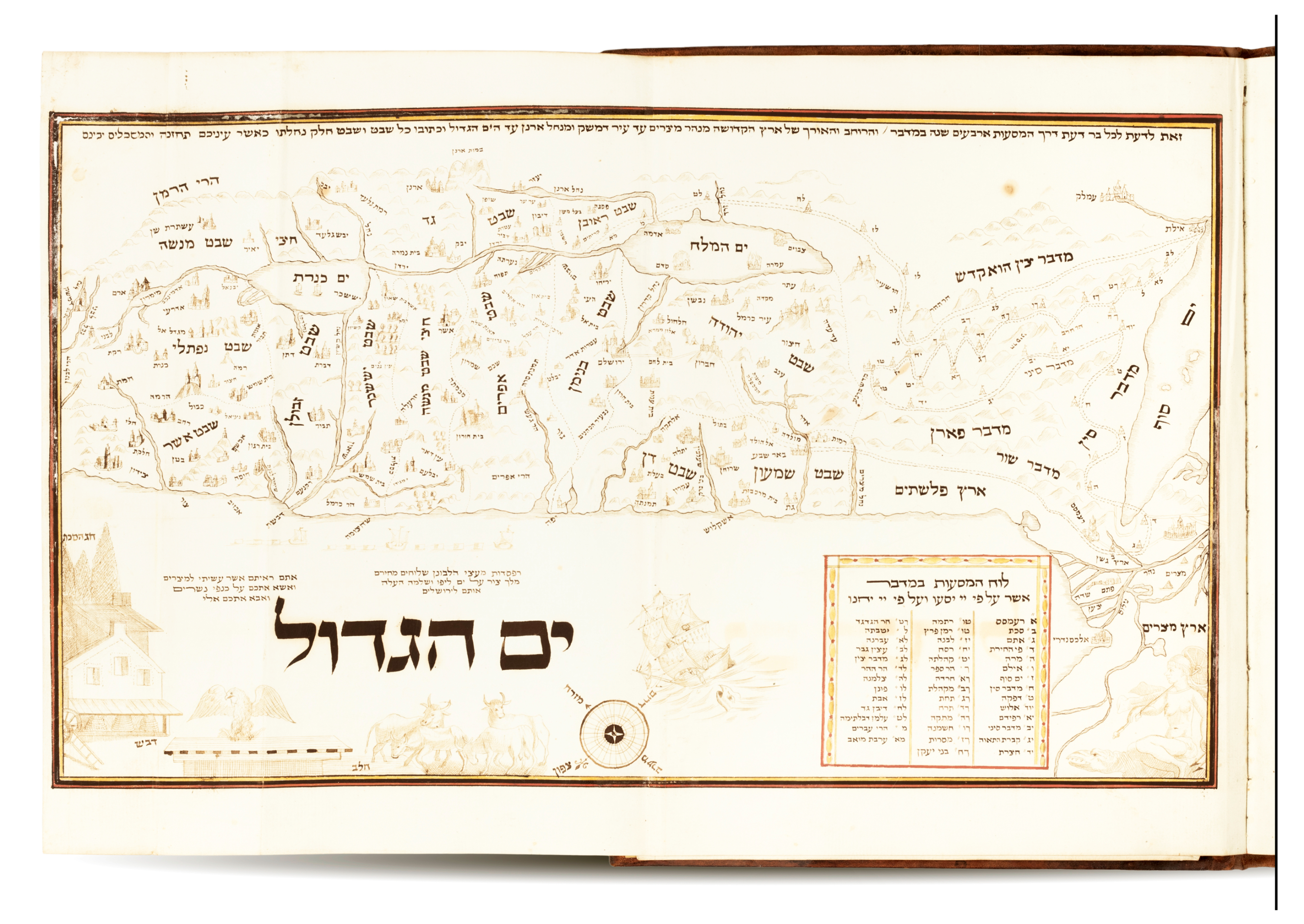
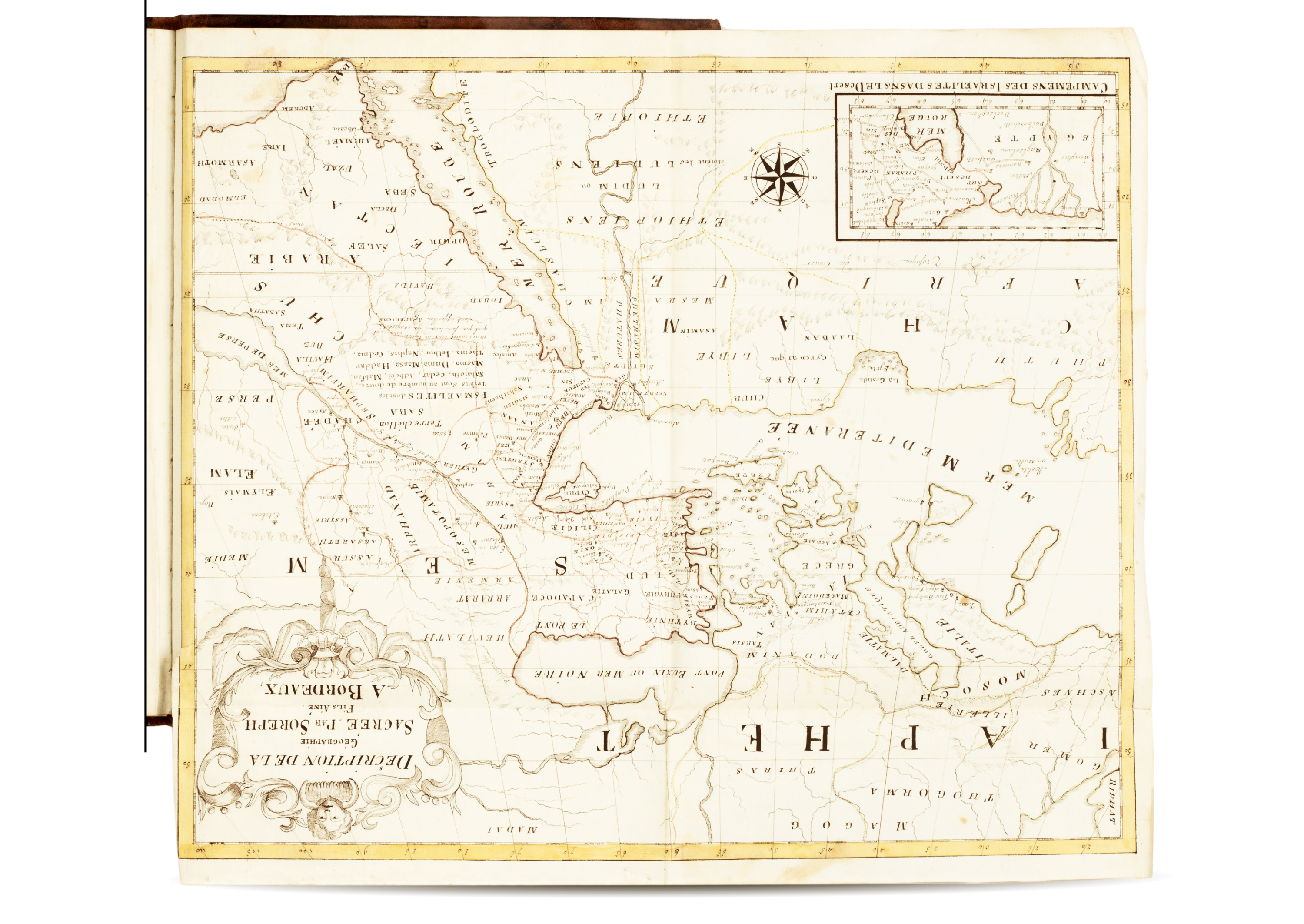
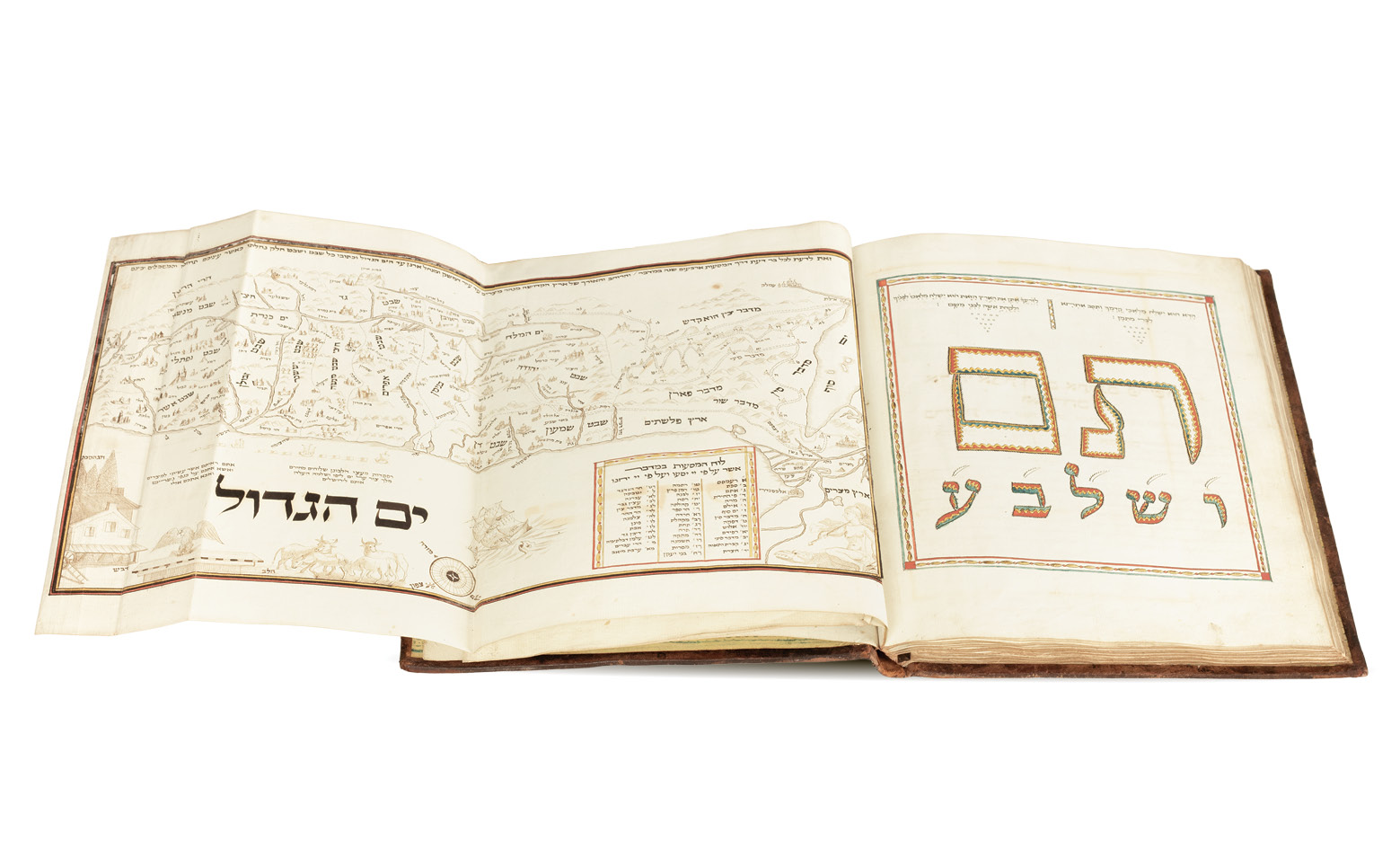
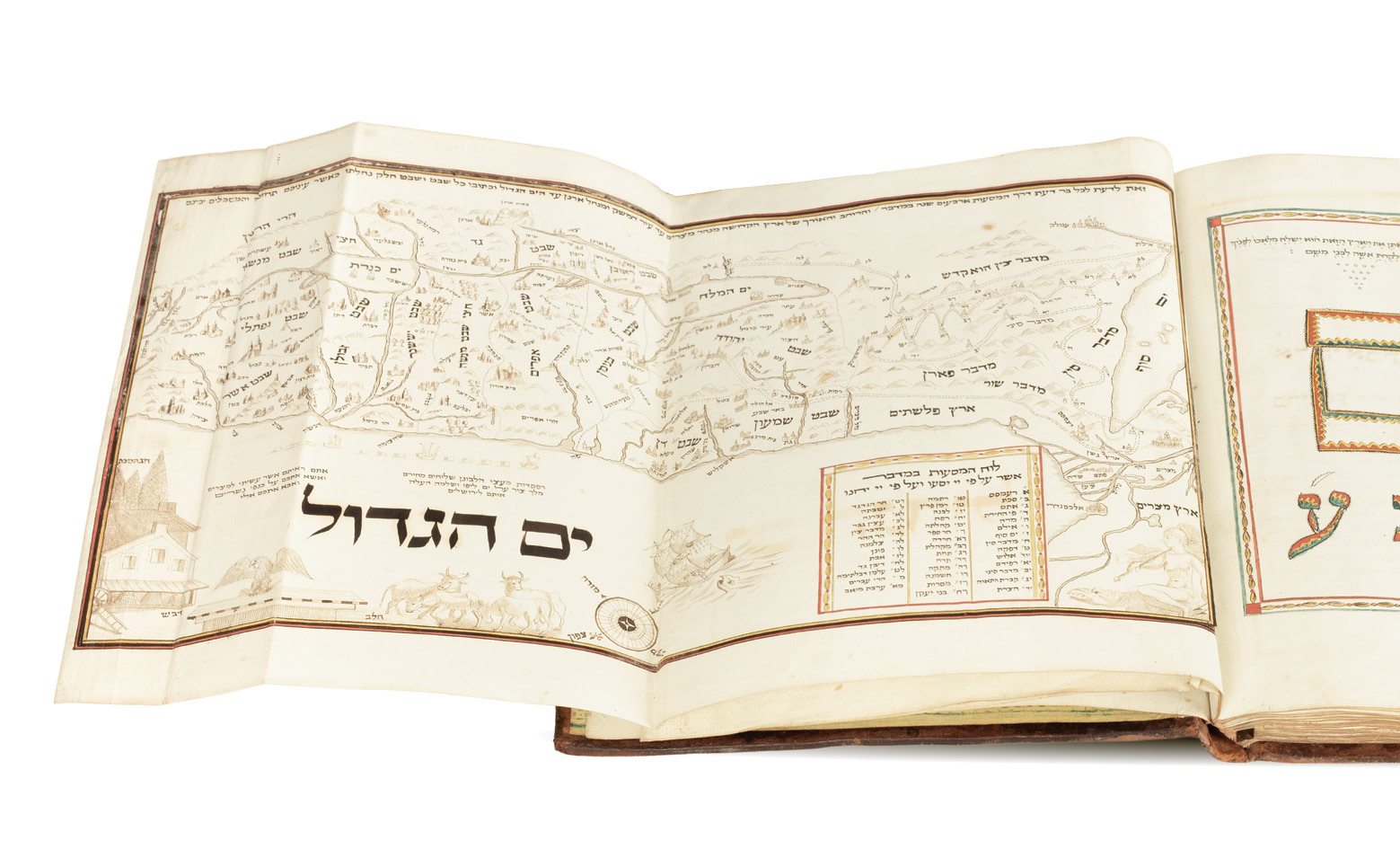
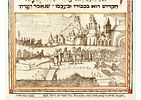
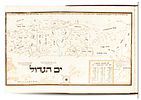
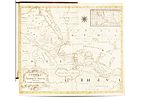
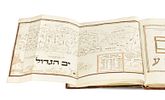
Attached to the Haggadah are two large, folded, beautifully illustrated maps, one in Hebrew and one in French. They are works of exceptional artistry, also executed by Tzoref, as noted in the French colophon on Map 2.
Map 1: A map of Eretz Yisrael, the Land of Egypt and Goshen, and the travels of Bnei Yisrael in the Sinai Desert, according to the Amsterdam Haggadah of 1695 (31 × 47 cm).
Map 2: “The Holy Geography” — a map of the eastern Mediterranean region with Eretz Yisrael at its center, and at the left a smaller map of the journeys of Bnei Yisrael, according to a map printed in The Holy Geography, London 1725 (39 × 44 cm).
Title Pages
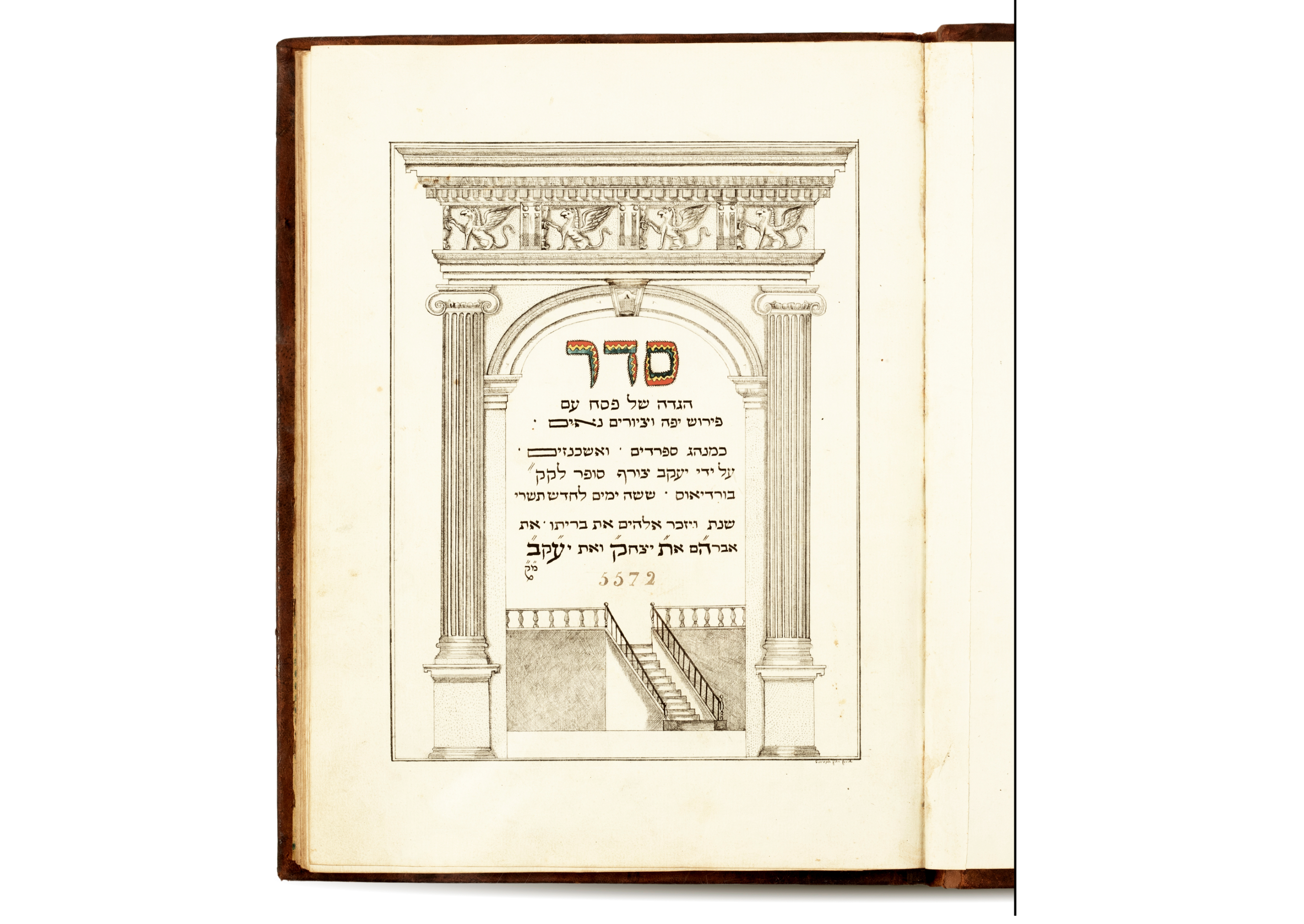
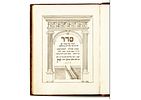
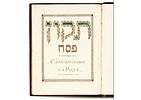
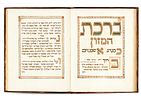
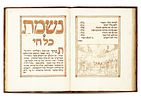
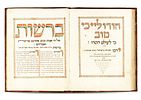
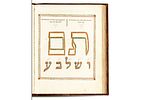
The Haggadah contains three title pages.
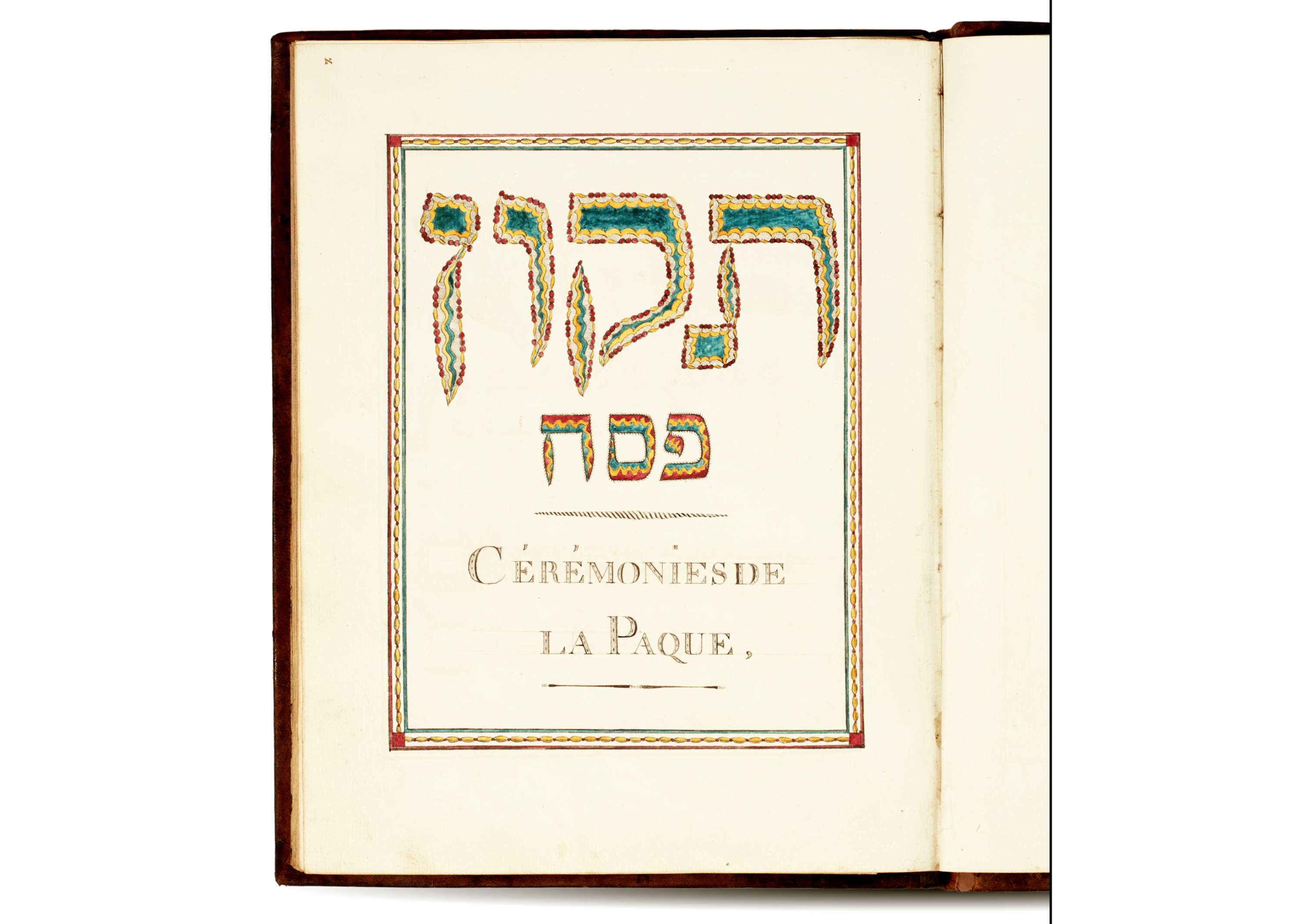
The first features a magnificent architectural frame, with four winged lion figures at its head. The text of the title page includes the name of the artist, the place, and the date of writing
. At the lower right corner is the artist’s signature in French. The title is rendered in colorful letters. Followed by a shortened title page for Tikkun Pesach in Hebrew and French, in large, colored letters.
. At the lower right corner is the artist’s signature in French. The title is rendered in colorful letters. Followed by a shortened title page for Tikkun Pesach in Hebrew and French, in large, colored letters.
The third title page, on leaf 58, is for the ‘Seder Birkas Kiddushin VeEirusin, ’ likewise in Hebrew and French, again in large, colored letters.
Summary
Presented here is an exceptional and exceedingly rare work of art — virtually no comparable creations are known from nineteenth-century France.
Beyond its artistic merit, this Haggadah is distinguished by its French text, its unique appendices, and its two accompanying maps.
Another Haggadah of similar format is known, written by the younger brother Yitzchak Tzoref and illustrated by the brother Yaakov (as noted in French on the margin of its title page), and reproduced in facsimile in 1987; however, the present Haggadah predates that one by a full year and was produced entirely by the elder brother, Yaakov Tzoref.
Provenance: Judaica Catalog, October 1986, item 123. In that auction, the Haggadah was sold for $132,000.
***
List of Illustrations in the Haggadah:
Bedikas Chometz – 2a
Hagalas Keilim – 3a
Combination of Bedikas Chometz and Hagalas Keilim – 3b
Kadesh – 5a
Urchatz – 6a
Karpas – 3b
Yachatz – 8a
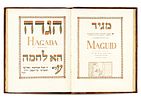
Maggid – 8b
The sages reclining in Bnei Brak – 10b
The Four Sons – 11a
Avraham breaking the idols of his father Terach – 12a
The angels visiting Avraham Avinu – 12b
Building Pithom and Raamses, and Moshe killing the Assaulting Egyptian – 14a
The daughter of Pharaoh and Moshe in the Nile – 15a
Yetzias Mitzrayim – 15b
The plague of Frogs – 16a
Casting the staff before Pharaoh and its becoming a serpent – 17a
The Ten Plagues – 18a
Eating the Korban Pesach – 21b
Rachtzah – 24b
Eating Matzah – 25a
Eating Maror – 25b
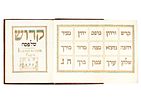
Korech – 26a
Shulchan Orech – 26b
Eating the Afikoman – 27a
Birkas HaMazon – 27b
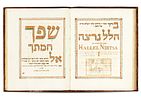
Hallel–Nirtzah – 36b
Dovid HaMelech reciting Tehillim – 38b
The Splitting of the Sea – 41a
The giving of the Torah – 41b
PLUS two maps with illustrations
